© Shutterstock
 Votre guide Ryo
Nice Carnival 2026: Dates, Program, and Everything You Need to Know
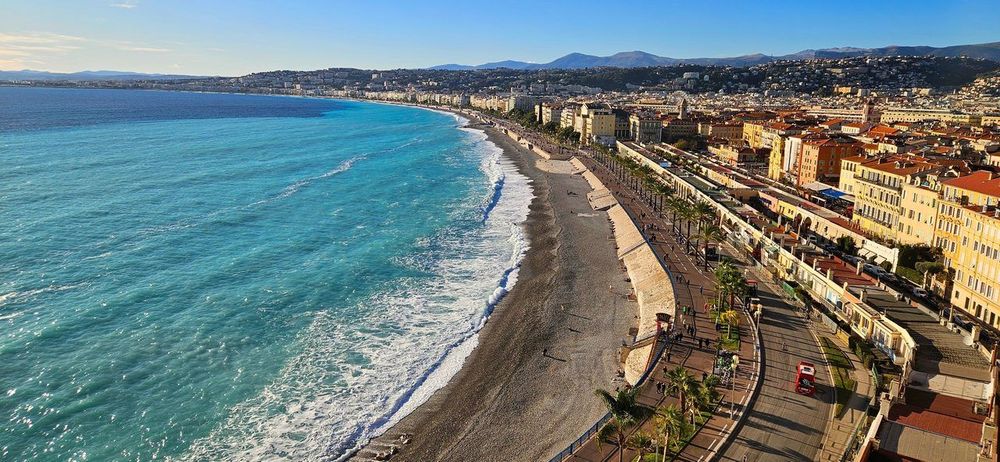
Every February, the Promenade des Anglais ceases to be a simple avenue and transforms into a giant stage. Cars disappear, grandstands rise from the asphalt, and monumental floats parade past tens of thousands of spectators beneath a shower of confetti. The Nice Carnival is France's largest carnival, one of the biggest in the world by visitor numbers alongside Rio and Venice, and a celebration rooted in the city for more than seven centuries. Before diving into the history, program, and ticketing of this extraordinary event, explore the city that hosts this unique spectacle with our Nice audio-guided tour: 28 stops and 7.1 km.
This guide covers the essentials: the medieval origins of the festival and the symbolic role of His Majesty Carnival, the making of the floats and the tradition of the flower battle, the dates of the 2026 edition and those already announced for 2027, ticketing with prices by zone, and all the practical advice for planning your stay, including accommodation, transport, costumes, and safety. Whether you are visiting for the first time or are a seasoned regular, some of the information here will help you avoid unpleasant surprises.
Origins and History: 7 Centuries of Carnival in Nice
It all begins in 1294. That year, Charles II of Anjou, Count of Provence, noted in his chronicles that he had spent "the joyful days of carnival in Nice." This is the earliest known written mention of the Nice festival, though historians agree that similar celebrations existed well before, inherited from Roman bacchanals and medieval pre-Lent festivities that marked, across Catholic Europe, the days of ritual excess before the Lenten fast.
For several centuries, the Nice carnival remained a neighborhood celebration: costumes in the narrow streets of Vieux-Nice, confetti battles between neighbors, impromptu processions along the harbor. The city was under Savoyard rule at the time, and the festival blended Italian and Provençal traditions in a mix that still gives it its distinctive character today. Neither entirely French, nor entirely Italian — simply Niçois.
Everything changed in 1873, when the city, which had only been part of France since 1860, decided to organize the event to attract the winter tourists who were beginning to flock to the Côte d'Azur. The Belle Époque transformed Nice into a fashionable resort for European aristocracy; the festival became as much a tourist attraction as a popular celebration. A festival committee was created, the first floats were built according to a coherent program, and the carnival took on the modern form we know today.
Some key milestones in its history:
- 1882: the first official flower battle on the Promenade des Anglais, organized by ladies of the Nice bourgeoisie who threw bouquets at one another from their carriages
- 1896: the festival surpassed 100,000 spectators at a single parade for the first time
- 1930: the carnival king permanently took the name "His Majesty Carnival" and his papier-mâché effigy was burned at the closing ceremony, a ritual that has continued ever since
- 1947: the first post-war edition, a symbol of reconstruction and collective reunion
- 2016: a major overhaul of the security arrangements, with metal detectors and systematic checks, following the summer terrorist attacks
The festival was suspended during both World Wars, resuming each time with renewed energy. Since the 1960s and the rise of mass tourism on the Côte d'Azur, the event has grown continuously: more floats, more performers, more international visitors. Today, each edition mobilizes more than 1,000 artists and volunteers for about two weeks of festivities.
The uniqueness of the Nice carnival lies in this continuity: a medieval celebration that survived the Revolution, the wars, industrialization, and mass tourism, and that remains, at its core, a city affair. The people of Nice do not watch the carnival from the outside — they make it happen.
His Majesty Carnival: the Ephemeral King of the Promenade
He presides over every corso. Standing 8 to 10 meters tall depending on the edition, his face often sardonic or grotesque, his colors pushed to extremes: His Majesty Carnival is the tutelary figure of the Nice festival, its central symbol and guiding thread. This papier-mâché giant presides over every parade from his special float, offering spectators an incomparable visual focal point throughout the procession.
The tradition of the carnival king is rooted in the medieval festival. For a few days before Lent, a jester figure was appointed "king" of the city, a symbolic inversion of the social order that allowed every excess before the return to Christian austerity. In Nice, this figure crystallized in the 19th century around a monumental effigy whose theme changes with each edition according to the subject chosen by the committee, generally two years in advance. In 2026, the effigy even took the form of a queen, on the theme "Vive la Reine" (Long Live the Queen).
The construction of His Majesty begins 12 to 18 months before the event. The workshops of Nice's sculptors, around thirty specialist craftspeople, first build a welded metal armature to support the entire structure. On this framework, they attach panels of lightweight wood and high-density foam, then apply papier-mâché in successive layers — up to 15 layers in the most voluminous areas, carefully dried between each application to prevent cracking. The eyes, hands, costume elements, and expressive details are sculpted separately and attached last.
His Majesty is then painted, varnished, and often fitted with sophisticated mechanical elements: a rotating head, animated arms, an opening mouth. These mechanisms are operated by operators hidden inside the float, as His Majesty is mounted on a motorized chassis that moves under its own power during the parade.
On the final evening of the edition, His Majesty is burned during the "fire of His Majesty Carnival." This closing ritual, accompanied by a fireworks display over the Baie des Anges, marks the end of the festivities and symbolizes, according to tradition, the victory of Lent over the excesses of the carnival period. For visitors who only have one weekend, this closing evening is the most symbolically charged, and often the most spectacular of the entire edition.
The Floats: 6 Months of Work for 17 Days of Celebration
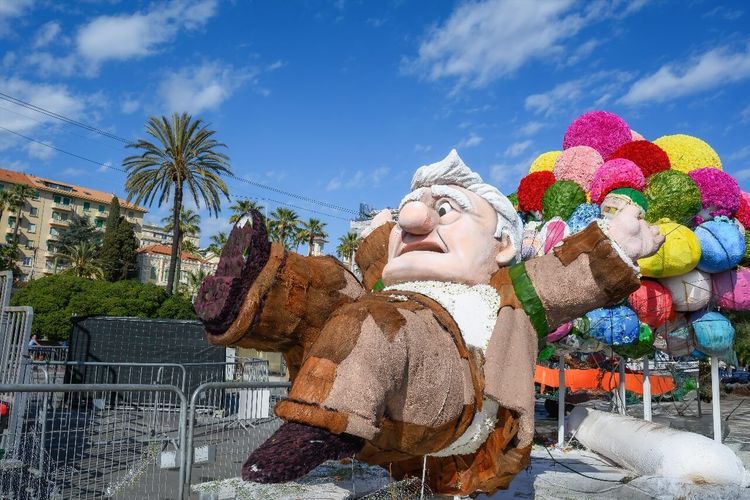
Behind every corso lies months of quiet work, far from the glitter and spotlights. Float construction begins in August, approximately six months before the first parade. In a dozen workshops around Nice, around a hundred craftspeople and volunteers set to work producing the 20 to 22 floats for each edition.
A Nice float is nothing like a decorated truck. It is a complex mechanical structure, often animated, which can weigh several dozen tons and exceed 20 meters in length. The base is a motorized rolling chassis: the floats parade under their own power, driven from the inside by a mechanic. On this chassis, teams progressively attach the decorative structures: welded metal framework, wood or foam panels cut to the desired shapes, then papier-mâché or polyester resin for the visible surfaces.
The final months are reserved for painting, fabrics, sequins, and electrical systems. Each float carries hundreds of LED bulbs and, for the nighttime corsos, animated light elements that transform the parade into an electric spectacle. Some floats also incorporate regulated pyrotechnic elements: colored smoke jets, cold spark fountains, subtle laser effects.
Each float is designed around the theme of the edition. The committee defines this theme two years in advance and communicates the broad outlines to the construction teams, but each float remains the work of a distinct team with its own interpretation. The diversity of styles gives the corso its kaleidoscopic quality, where every float surprises even the seasoned spectator.
The production cost of a large float can exceed €100,000, when you add up the materials (steel, foam, paper, paints, LEDs), specialist labor, and logistics. The entire event represents an annual budget of several million euros, funded in part by the City of Nice and in part by ticket sales.
One important particularity: once the festival is over, the floats are dismantled and destroyed. The nature of the materials and the prohibitive cost of storage make their preservation impossible. Each edition therefore starts from scratch, a guarantee that the spectacle is always new, even for regulars.
For the curious, some editions offer construction workshop tours in the weeks leading up to the parades. Organized by the Nice tourist office, these visits allow you to see the floats being built and to speak with the craftspeople. It is a rare experience, little known to tourists, that completely changes the perception of the parade once you are in the grandstands.
The Carnival Corso: the Grand Parade of the Promenade
The carnival corso is the heart of the festival. This parade, with floats processing along the Promenade des Anglais in front of tens of thousands of spectators, is the highlight of the event. Each edition schedules between 5 and 7 corsos over the roughly two weeks of festivities: some during the day (weekend afternoons), others in the evening with nighttime lighting that radically changes the atmosphere.
The route follows the Promenade des Anglais for approximately 3 kilometers, from the jardin Albert 1er to the vicinity of the casino Ruhl. The grandstands are set up in two rows on either side of the central route. The floats make two or three passes in front of each section so that everyone can see the entire parade; corsos thus last between 2.5 and 3 hours depending on the number of rotations.
Between the floats march the entertainment groups: brass bands, majorettes, dancers, mechanical giants, jugglers. These professional companies, often invited from across Europe, give the corso a continuous musical and visual rhythm that prevents any lull between two structures.
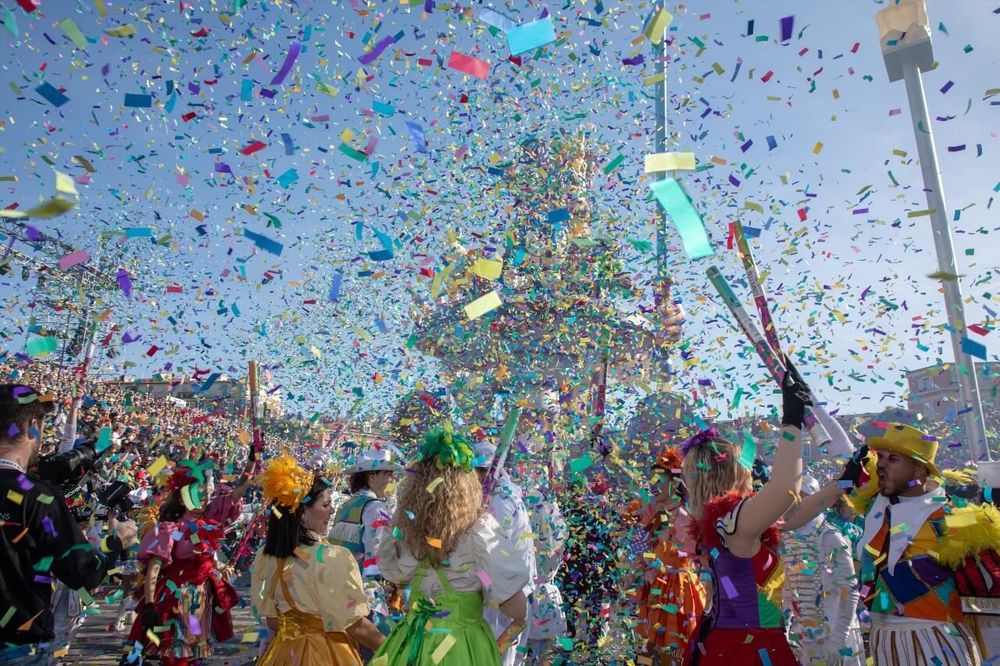
The quantity of confetti thrown during a Nice corso is genuinely staggering: several dozen tons per edition, several tons per corso. Spectators in the grandstands receive handfuls thrown from the floats and the performers on the ground. The front rows end up literally buried; children love it, and photographers protect their lenses.
The nighttime corsos have an additional dimension. The illuminated floats, stage fires, and flashing lights transform the parade into an electric spectacle whose photographs look like they come from another world. If you can only attend one corso, choose an evening session — the difference is spectacular.
The Flower Battle: 150,000 Flowers Thrown by the Handful
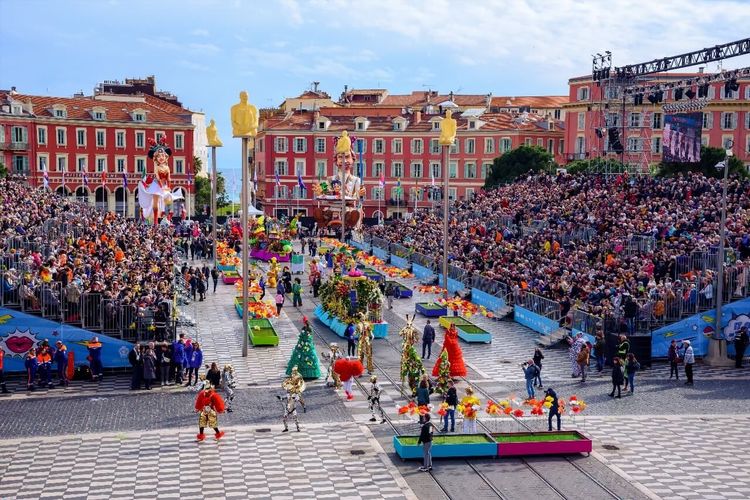
The flower battle is the olfactory signature of the Nice festival. Where the corso relies on monumental floats and confetti, the flower battle offers something different and more delicate: floats decorated with real fresh flowers, steered by performers in elegant outfits who throw their floral compositions by the handful toward the grandstands.
The tradition dates back to 1882, when ladies of the Nice bourgeoisie began throwing bouquets at one another from their carriages during Mardi Gras promenades. From this spontaneous custom grew an official parade, initially reserved for the elite, then gradually popularized throughout the 20th century until it became one of the most photographed events of the entire festival.
A flower battle mobilizes around 20 floral floats. These floats differ from those of the corso: smaller, lighter, entirely dressed in fresh flowers attached to special structures. The floral compositions are ordered weeks in advance from regional producers, as the Côte d'Azur is historically one of the leading flower-growing areas in France, particularly for mimosa, roses, gerberas, and Grasse carnations.
The figure is impressive: approximately 150,000 flowers distributed during each battle. The performers, often women in long dresses in vivid colors, throw the flowers by hand toward the grandstands with calculated generosity: the aim is to shower as many spectators as possible while preserving enough stock to last the entire parade. Children in the front rows often leave with armfuls of mimosa and roses.
The atmosphere of a flower battle is noticeably different from a corso. Less noise, less smoke, fewer confetti. The emphasis is on visual elegance and fragrance: mimosa has a strong scent, and when twenty floats are entirely covered in it, the perfume can be detected from dozens of meters away. If you have pollen allergies, bring an antihistamine — this is sincere advice.
Each edition schedules 3 to 4 flower battles, always during the day (afternoons). They attract a slightly different audience from the nighttime corsos: families with young children, photographers who take advantage of natural light, people sensitive to high noise levels. Technically, these are also the easiest events to photograph: good light, colorful subjects, a slower pace.
Street Arts: Brass Bands, Giants, and Roaming Performances
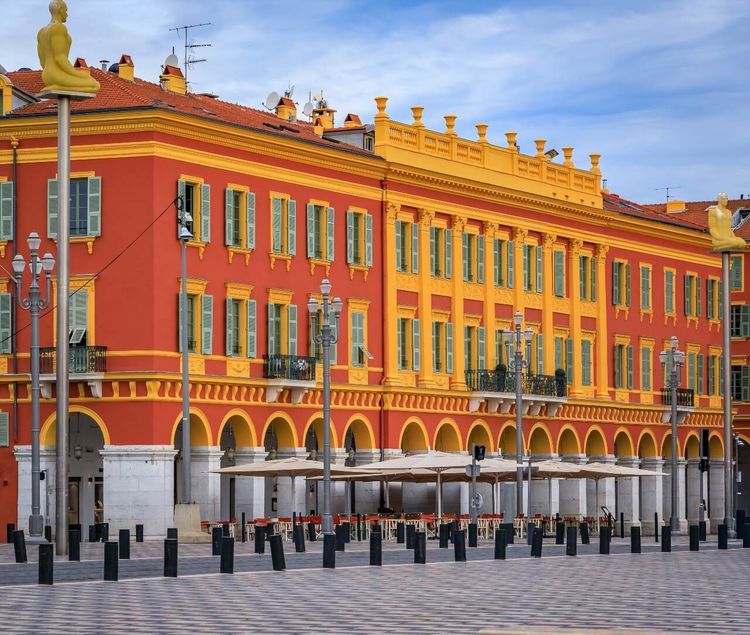
The Nice festival is not solely about grandstands and tickets. Between the official corsos, in the streets of Vieux-Nice and around place Masséna, a parallel life stirs with street artists from across Europe. This is the most accessible dimension of the event, and often the most unpredictable.
Brass bands hold a central place in this parallel program. Several musical companies invited for the edition roam the city center between official parades: classic brass bands in military uniforms, electric Balkan ensembles, New Orleans-style jazz brass bands. Music is ever-present in the alleyways, often surprising in its choices, and it creates a sonic continuity that sustains the festive atmosphere between two corsos.
The giants are another strong tradition of the Nice festival. These are articulated figures standing 4 to 6 meters tall, carried by operators who literally become one with their structures. These giants, with their expressive faces, elaborate costumes, and slow, impressive movements, roam in groups through the crowd, creating moments of intimacy impossible to achieve in the grandstands.
Add to these fire breathers, jugglers, tightrope walkers, and contemporary dance troupes. The committee calls upon selected professional artists, and the quality of the street performances is markedly higher than what you would find at an ordinary local fair.
Vieux-Nice comes particularly alive on carnival days. Its narrow streets, painted in yellow and ochre, its market at the Cours Saleya, and its terrace bars form a natural backdrop for roaming artists. To make the most of these shows, avoid staying stationary near the grandstands between corsos: explore the neighborhood on foot, with the Ryo baroque old town audio guide in your pocket, and you will inevitably stumble upon something unexpected — a giant turning the corner of a street or a Balkan brass band flooding a small square.
The Carnival Village: Free Entertainment and a Popular Atmosphere
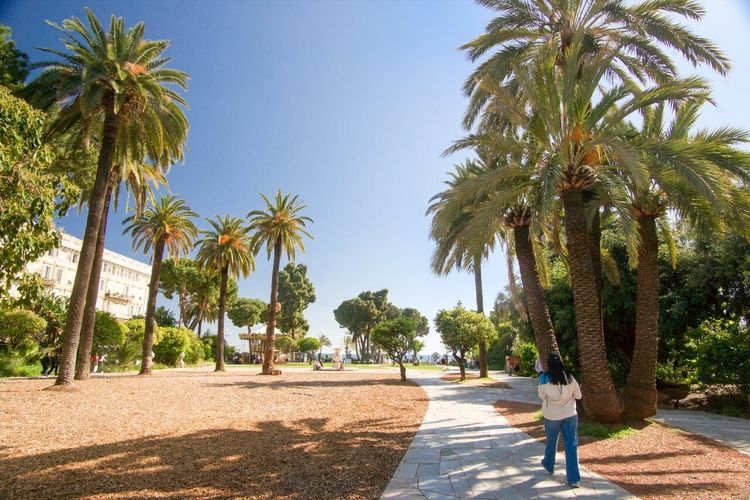
Not all visitors buy grandstand tickets. For them, and for the people of Nice who want to soak up the atmosphere without spending money, the carnival village is a free-access area set up on the edge of the official route, generally around the bandstand of the jardin Albert 1er and the Théâtre de Verdure.
The village brings together craft stalls, food trucks serving local specialties (socca, pissaladière, petits farcis), open-air performance stages, fairground rides, and activities for children. Entry is free, the atmosphere festive, and the music ever-present. It is the ideal spot for families with very young children, those who might be overwhelmed by the density and noise levels of the grandstands.
People in costume traditionally enjoy free access to the corso pedestrian areas (upon reservation of a €0 ticket), subject to the conditions of each edition. This rule may vary from year to year, and the free entry does not cover flower battles, which remain paid: check the exact conditions on nicecarnaval.com before counting on this option. But the encouragement to dress up is genuine — the Nice Carnival loves participants who play along.
Note: on corso days, the village can be difficult to access depending on crowd flows and the security arrangements around the Promenade. Check the traffic plan published by the City of Nice before each edition and plan your pedestrian access accordingly.
The Carnival in Numbers and Records
The festival lays claim to several figures that help convey the true scale of the event.
Around 1 million visitors per edition, from all nationalities combined. Foreign visitors make up a significant proportion: Italians (Nice is 30 km from the border), British, Germans, and Brazilians are the most visible contingents. For the latter, comparisons with Rio come up frequently — a comparison that flatters Nice given the geographical proximity and the constraints of a city of 350,000 inhabitants.
Several dozen tons of confetti thrown per edition. This figure represents several hundred million colored paper discs distributed across the grandstands.
More than 1,000 performers take part in each edition: professional artists, semi-professionals, and local volunteers who make up the street groups, ride the floats, or escort the giants. The preparation of some groups begins several months in advance with regular choreographic rehearsals.
France's largest carnival by size, ahead of Dunkerque, and one of the biggest in the world by visitor numbers, regularly cited in the same rankings as Rio de Janeiro and Venice. Counting methods vary depending on the source, but Nice's position among the world's leading carnivals is uncontested.
On the records front, the festival has in the past produced one of the largest floats ever to parade in a European carnival, a structure over 25 meters long that required exceptional traffic permits. Some editions have also attempted costume gathering records, with several thousand participants dressed in the same theme in the same place at the same time. For visitors who prefer measuring the city rather than the floats, our audio-guided tour of Nice covers 28 stops over 7.1 km.
Nice Carnival Dates in 2026 and 2027
The festival takes place every year in February, over a period of approximately three weeks. Contrary to a common belief, the dates are no longer tied strictly to Mardi Gras: the city now sets its own calendar, often straddling the end of February and the beginning of March.
For 2026, the edition ran from February 11 to March 1, 2026, on the theme "Vive la Reine" (Long Live the Queen), a tribute to the great heroines of history and literature. The opening was launched by the Grand Charivari on Wednesday, February 11, followed by the Bal Veglione at the Opéra de Nice, the Carnavalina on February 14, illuminated corsos (notably on February 14, 17, 21, 24, and 28), daytime flower battles, and the Lou Queernaval on February 27. The full program is published by the committee each autumn on nicecarnaval.com.
For 2027, the edition has already been announced from February 9 to 28, 2027, on the theme "Vive l'Amour" (Long Live Love). The dates have been confirmed by the tourist office and the City of Nice; the detailed program and ticketing will be released in autumn 2026. If you are planning a stay for this edition, now is the time to monitor announcements and pre-book your accommodation.
Good to know: the closing ceremony, with the grand bonfire and fireworks display that set the royal effigy ablaze above the Baie des Anges, takes place on the last evening of the edition, no longer necessarily on Mardi Gras. This is traditionally the most spectacular evening, and the one to prioritize if you are only coming for one weekend.
Ticketing and Prices: Zones and Ticket Costs for the Nice Carnival
Ticketing distinguishes two geographical zones along the route, A and B, each offering seats in seated grandstands and standing pedestrian areas, which are significantly cheaper. The prices below correspond to the 2026 edition.
Seated grandstands: the most comfortable option, with a numbered seat facing the corso route. Expect €28 per adult in zone A and €23 in zone B, with children's prices (ages 6 to 12) at €10 and €8 respectively. The seating is metal: bring a cushion or a folded item of clothing.
Standing pedestrian areas: designated zones where you watch the parade standing, with greater freedom of movement than in the grandstands. Much more affordable, around €14 in zone A and €7 in zone B per adult, with zone B being free for children. Visibility depends entirely on your position and the time you arrive: the front rows form as soon as the gates open.
Two-show pass: the committee offers combined packages including one corso and one flower battle, at €45 in zone A and €40 in zone B, representing a genuine saving compared to buying separately. This is worthwhile for stays of several days.
Children and costumed visitors: reduced children's prices exist across all packages. People in full costume (complete outfit including headwear) enter the corso pedestrian areas for free, upon reservation of a €0 ticket. Note that this free entry does not apply to flower battles, which remain paid.
A few practical tips for ticketing:
- Buy online at nicecarnaval.com rather than at the box office on the day: the best sections sell out several weeks in advance
- Friday evening and Saturday afternoon corsos are the most in demand; weekday sessions sometimes offer better availability at the same price
- Keep your e-ticket in offline mode on your phone: network connections around the Promenade are saturated on corso days
- Ticketing generally opens in autumn for the following year's edition: that is the right time to secure the best sections
- Beware of resellers on third-party platforms: the only official box office is nicecarnaval.com
Zone Map: Where to Sit for the Best Experience
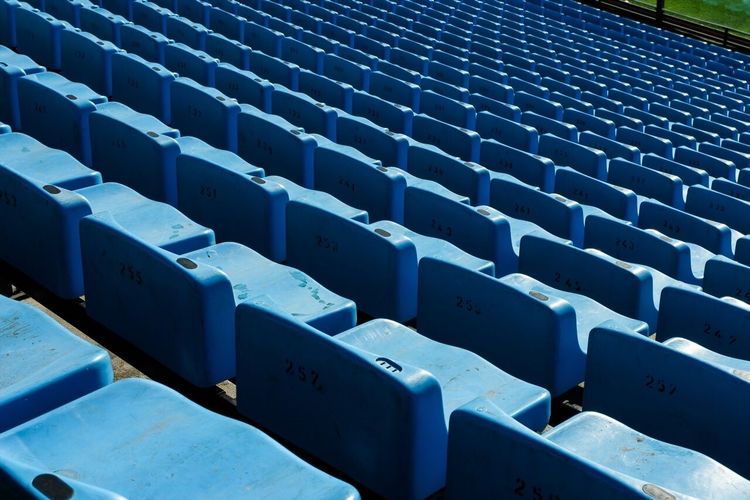
The choice of your section in the grandstands can significantly change your experience. Here is what you need to know before booking.
The corso runs along the Promenade des Anglais from the jardin Albert 1er to the vicinity of the casino Ruhl over approximately 3 kilometers. The floats enter at one end and complete the full route, then repeat two or three times so that all sections see the entire parade. This means each float passes in front of you several times, a considerable advantage for photography and observing details.
The central sections (mid-Promenade, generally numbered at the center of the seating plan) offer the best overall views: the Promenade is wider there, the floats move more slowly, and the ground-level artists interact more with the grandstands. These are also the most sought-after sections and the first to sell out at the box office.
The Albert 1er-side sections (start of the route) allow you to see the floats as they make their entrance, when performers and mechanisms are running at full capacity. The entry lighting is also clearer for photographs. Ideal if you want to capture the manufacturing details.
The casino-side sections (end of the route) sometimes see floats whose performers are beginning to show fatigue after several laps, but the entry queues there are often shorter on busy days, and tickets remain available longer at the box office.
For families with children, "family" sections are indicated in the online seating plan: improved accessibility, dedicated spaces, less jostling at the gates. They are generally located in the mid-Promenade area.
Whatever your section, arrive at least 45 minutes before the corso begins. Security checks — bag searches and metal detector gates — create long queues before the start, and latecomers who enter after the parade has begun systematically miss the first floats. For the most popular corsos (Friday evening, Saturday afternoon), arriving an hour early is preferable.
Planning Your Visit: Costumes, Security, and Practical Tips
The Nice Carnival is a well-secured mass event, but a little preparation goes a long way to ensure you enjoy it comfortably and without unpleasant surprises.
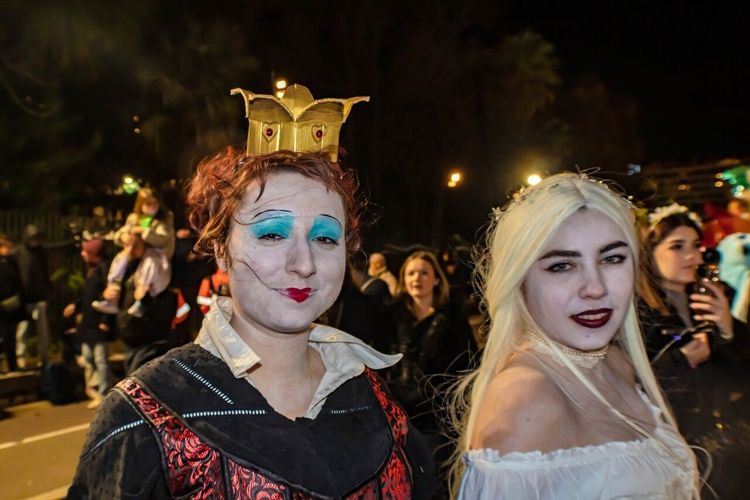
Costumes are not mandatory, but strongly encouraged. This is one of the rare events in the world where adults dress up en masse without inhibition, and the atmosphere in the grandstands is noticeably more festive when everyone joins in. For the grandstands, opt for costumes that allow you to sit comfortably and do not block the view of your neighbors (avoid very tall or very wide hats). In the streets of Vieux-Nice, you can go much further with your creativity.
Security: since 2016, the arrangements have been significantly reinforced. Access to grandstand zones passes through security scanners and systematic bag checks. Certain items are systematically prohibited: glass bottles, large backpacks, scooters, bicycles, umbrellas with metal tips. The Promenade des Anglais is closed to motor vehicles during the afternoons and evenings of corsos. Arrive on foot from your accommodation or by public transport from a peripheral car park.
Clothing: February in Nice is mild (10 to 15°C during the day), but nighttime corsos in exposed grandstands facing the sea breeze can be chilly. A warm jacket, closed-toe shoes (wet confetti makes the ground slippery), and a light waterproof are recommended. Lightweight rain capes are allowed in the grandstands provided they do not obstruct neighbors.
Photographers: cameras are allowed, but tripods are prohibited in the grandstands (they obstruct neighbors and create risks in the event of crowd movement). In the evening, a fast lens (f/1.8 or f/2.8) will be more effective than a stabilized telephoto in a dense crowd.
Children: corsos and flower battles are suitable from around age 4 or 5. For younger children, the noise level of the brass bands may be hard to manage. Ear protection for children is a reasonable precaution for toddlers.
Confetti: it will be in your hair, your pockets, and your clothes from the very first minute. Accept this as an immutable given of the Nice experience.
Where to Stay during the Nice Carnival
Demand for accommodation in Nice during the festival is one of the highest of the year on the Côte d'Azur. Hotels, Airbnb rentals, and serviced apartments show occupancy rates close to 100% during corso weekends, with prices 2 to 4 times higher than the usual February rates.
Book early — very early. Regulars sometimes book 6 to 9 months in advance. If you are planning your visit less than 4 months ahead, affordable accommodation in Nice itself will be scarce and expensive.
Alternative options: Antibes, Cannes, Menton, and Monaco are 20 to 40 minutes from Nice by TER Côte d'Azur, a very frequent line with increased services during the festival period. Accommodation in these towns is generally cheaper and allows you to reach Nice easily without the parking constraints.
Neighborhoods in Nice: Vieux-Nice for the atmosphere (but corso nights can be lively until midnight or later), the Gare – Riquier area for prices and proximity to transport, and the Promenade – Gambetta area to be within walking distance of the corso, with corresponding rates (expect €200 to €500 per night in a standard hotel during high-attendance weekends).
One final option for tight budgets: campgrounds and youth hostels in the Côte d'Azur region are sometimes less affected by price surges than hotels. The option requires more logistical organization, but allows you to attend the festival without spending a fortune on accommodation.
How to Get to Nice for the Carnival
Nice is one of the best-connected cities in France. Three main options, with very different constraints depending on the day.
By plane: Nice Côte d'Azur Airport is the third busiest airport in France. It is served by most European airlines, both low-cost and full-service. From the airport, tram line 2 reaches place Masséna in 20 to 25 minutes without any transfers, a direct and efficient connection even on the busiest days.
By train: Nice-Ville station is served by TGV services from Paris (5h30) and Marseille (2h30), and by Intercités from Lyon. The station is 10 minutes' walk from the start of the Promenade des Anglais. During the festival period, SNCF sometimes runs special trains from major cities — keep an eye out for offers as soon as the official dates are announced.
By car: feasible for the journey there, but not recommended on corso days. Access to the Promenade des Anglais is blocked during parades, and parking throughout the city center becomes extremely difficult. If you arrive by car, use the P+R car parks on the outskirts (Nice Saint-Augustin, Nice Nord) and reach the center by tram.
Tram lines 1 and 2 serve the main points of interest: place Masséna, Vieux-Nice, the Promenade des Anglais. Services are increased on festival days, and tickets can be purchased individually or in books directly from the station machines.
FAQ
When does the Nice Carnival take place in 2026?
The Nice Carnival 2026 ran from February 11 to March 1, 2026, on the theme "Vive la Reine" (Long Live the Queen). The opening took place with the Grand Charivari on February 11, followed by illuminated corsos, flower battles, and village entertainment through to the closing bonfire on March 1. For 2027, the edition is announced for February 9 to 28 on the theme "Vive l'Amour" (Long Live Love). Official dates are published each autumn on nicecarnaval.com.
How much does admission to the Nice Carnival cost?
The 2026 prices ranged from €7 to €28 depending on the option. In seated grandstands, expect €28 per adult in zone A and €23 in zone B (€10 and €8 for ages 6–12). In standing pedestrian areas, it's €14 in zone A and €7 in zone B, with zone B being free for children. A two-show pass (one corso + one flower battle) costs €45 in zone A and €40 in zone B. People in full costume from head to toe enter the corso pedestrian areas for free. The carnival village is freely accessible.
How do I buy tickets for the Nice Carnival?
The official box office is available at nicecarnaval.com, the only reliable online point of sale. Beware of resellers on third-party platforms. Physical ticket offices open in the weeks leading up to the event in Nice, but the best sections sell out online well before the box offices open. Online ticketing generally opens in autumn for the following year's edition.
Can you attend the Nice Carnival for free?
Partially. The carnival village is accessible without a ticket, and the street shows in Vieux-Nice and around place Masséna are free to attend. People in full costume enter the corso pedestrian areas for free, upon reservation of a €0 ticket (this free entry does not cover flower battles). However, seated grandstands remain paid. Check the exact conditions on nicecarnaval.com before counting on this option.
When will the Nice Carnival take place in 2027?
The Nice Carnival 2027 will be held from February 9 to 28, 2027, on the theme "Vive l'Amour" (Long Live Love). The dates have been confirmed by the tourist office and the City of Nice; the detailed program and ticketing will be published in autumn 2026 on nicecarnaval.com. If you are planning this trip, start monitoring the ticketing opening from September 2026 and book your accommodation without delay, as the best options sell out within days.
How long does the Nice Carnival last?
Each edition lasts approximately two to three weeks (February 11 to March 1 in 2026). Over this period, there are generally 5 to 7 carnival corsos and 3 to 4 flower battles, plus daily village entertainment and street shows. It is entirely possible to fully enjoy the festivities in just 2 days: one corso (day or night), one flower battle, and a stroll through Vieux-Nice for the street arts.
What is there to do in Nice outside of the carnival?
Nice is a city in its own right that deserves far more than just the festival days. The baroque Vieux-Nice, the Cours Saleya and its daily market, the Matisse and Chagall museums, the climb up to the Colline du Château for the panorama, and the pebble beaches of the Promenade are some of the highlights to include in your stay. Our guides on activities in Nice and surroundings and on the most beautiful beaches of Nice complement this guide.
The Nice Carnival is a celebration that goes beyond the grandstand spectacle. Behind the floats and confetti lie months of artisanal work, a medieval tradition that survived wars without disappearing, and a city that transforms entirely for three weeks. Coming here means seeing Nice at its most extravagant, and in a certain way, its most authentic.
Before or after the festivities, our Nice audio-guided tour takes you through the baroque old town, the Cours Saleya market, the museums, and the heights of the Colline du Château. The 28 Ryo audio-guided stops cover 7.1 km of routes to make your stay in Nice far more than a festive parenthesis. To follow the full calendar of events in Nice throughout the year, check our Nice events calendar. And if the festivities make you want to compare with other great European masked celebrations, our guide to the Venice Carnival is there for you.
À lire également