© Shutterstock
 Votre guide Ryo
The Venice Carnival 2027: History, Masks, Dates and Practical Tips
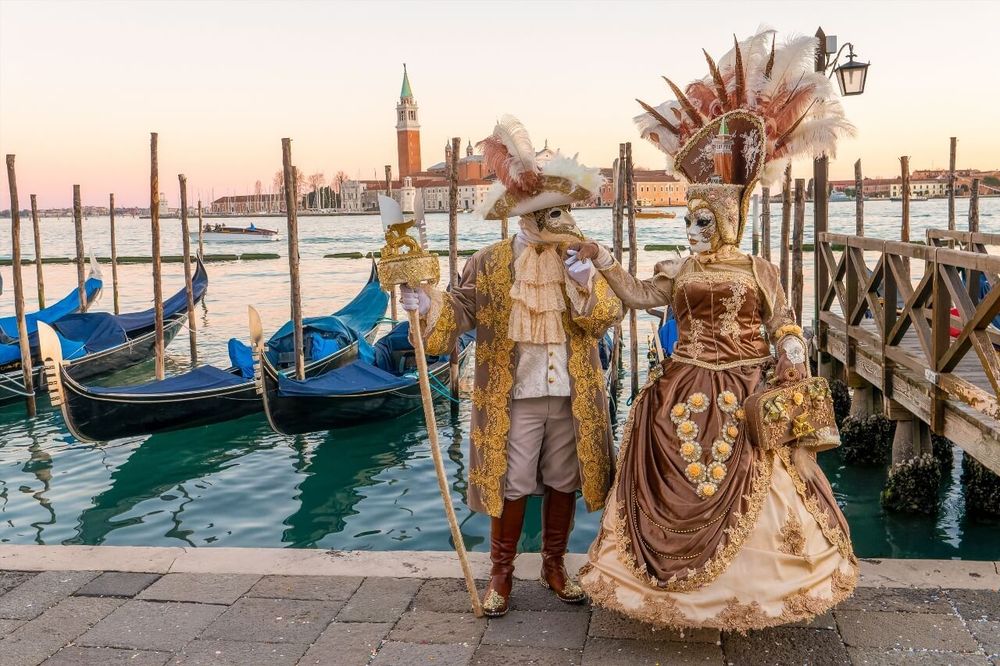
Within hours of arriving in the city, there is no longer any doubt: Venice was made for carnival. From late January, masked figures cross bridges in the morning mist, black capes float past on gondolas along the canals, and Piazza San Marco fills with 18th-century costumes that would make any museum green with envy. The Venice Carnival is one of those rare events in Europe where the existing historical setting and the celebration merge to the point that you can no longer tell what belongs to history and what was invented just last night.
For 2027, the dates are now confirmed: the festival runs from January 30 to February 9, 2027, offering around ten days of festivities leading up to Mardi Gras on February 9. In this guide: the complete history of nine centuries of masks, the highlights of the program (Flight of the Angel, Festa delle Marie, nautical parade), the best masked ball addresses, advice on avoiding paying three times the normal hotel rate, and tips for experiencing the festival like a seasoned regular rather than a lost tourist. And if you'd like to explore Venice beyond the carnival, the Ryo audio-guided tour of Venice takes you through the palaces, alleyways and squares that even the most devoted carnival-goers often miss.
History of the Venice Carnival: Nine Centuries of Masks
The Venetian carnival is unlike any other, in part because it is one of the oldest in the Western world, and because its history reveals as much about Venetian politics as it does about the celebration itself.
The founding date is 1162. That year, the Republic of Venice celebrated its military victory over the Patriarch of Aquileia, and the people gathered en masse in the public squares. The tradition of dancing and coming together before Lent gradually took hold. In 1296, the Venetian Senate took a decisive step: it officially declared the last day before Lent (Mardi Gras) a public holiday. The wearing of masks became legal, and quickly widespread across all social classes.
It was in the 17th and 18th centuries, however, that the carnival reached its peak. At its height, the festivities lasted not two weeks but six months: from early October through to Mardi Gras, Venice lived behind masks. Gambling, otherwise forbidden, was tolerated during this period. Social identity dissolved behind the Bauta, a white mask with a prominent chin that allowed a nobleman to walk the city incognito alongside a craftsman without being recognized. The Republic of the Doges had perfectly understood that the mask was a tool of social regulation as much as an object of pleasure: beneath the Bauta, the classes mingled, and tongues loosened in alleyways that were otherwise carefully guarded.
In 1797, Napoleon Bonaparte conquered Venice and dissolved the Republic. One of his first acts was to abolish the carnival. For nearly two centuries, the festival existed only in memories, in the paintings of Pietro Longhi and in the travel accounts of the Romantics. It was not until 1979 that the city of Venice and its tourism board decided to revive the event, at first in an improvised fashion and then with an official program from 1980 onwards. Since then, the carnival has grown continuously to become one of the most photographed events in the world — which, as we shall see, raises certain crowd management challenges.
One detail that surprises many visitors: the Festa delle Marie, one of the most spectacular ceremonies of the current carnival, was not part of the original medieval tradition. It was reconstructed and incorporated into the modern program from 1999 onwards. The story told about it — twelve young Venetian women kidnapped by Adriatic pirates in 944 and rescued by the city's men — is genuinely ancient, but its integration into the modern carnival is a recent reinvention, as successful as it is deliberate.
Today, the festival attracts between 2.5 and 3 million visitors over the entire period, with the vast majority concentrated on the final two weekends. This success has led the city council to trial, since 2024, crowd flow management measures around Piazza San Marco during peak periods — something worth monitoring for 2027.
Venice Carnival Dates for 2026 and 2027
The carnival follows the Catholic liturgical calendar: it always ends on Mardi Gras, the eve of Ash Wednesday. The duration ranges between 10 and 17 days depending on the year, according to the date of Easter.
Venice Carnival 2026, an edition already past at the time of writing this guide (January 31 to February 17, 2026). Mild weather conditions at the end of the season contributed to exceptional attendance over the final two weekends, with estimates of around 400,000 visitors for February 15 alone.
Venice Carnival 2027: dates are now confirmed from January 30 to February 9, 2027, with Mardi Gras falling on February 9, 2027. The detailed program has not yet been published at the time of writing (June 2026); the official website (carnevale.venezia.it) generally releases the final calendar in October of the preceding year, so keep an eye out from October 2026.
What remains consistent from year to year:
- The opening weekend is dominated by the nautical parade on the Canal Grande and the first performances in Piazza San Marco.
- The second weekend features the Flight of the Angel, the carnival's signature highlight since 2001.
- The final weekend, culminating on Mardi Gras, is the most festive and the most crowded — and by far the most expensive for accommodation.
For bookings, Venetian hotels see their rates triple or even quadruple during the carnival. Reserving 6 to 12 months in advance is not excessive, especially for stays during the final weekend.
Flight of the Angel, Festa delle Marie, Nautical Parade: the Program Highlights
The carnival program features dozens of events, but three of them stand out as the absolute highlights. Knowing them in advance fundamentally changes how you plan your stay.
The Flight of the Angel (Volo dell'Angelo)
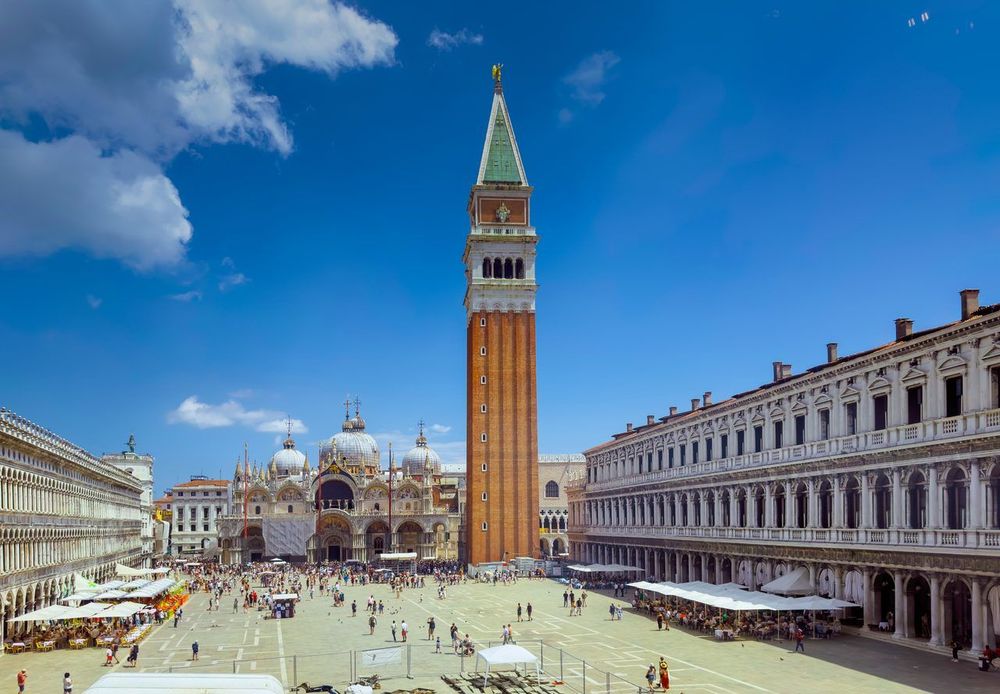
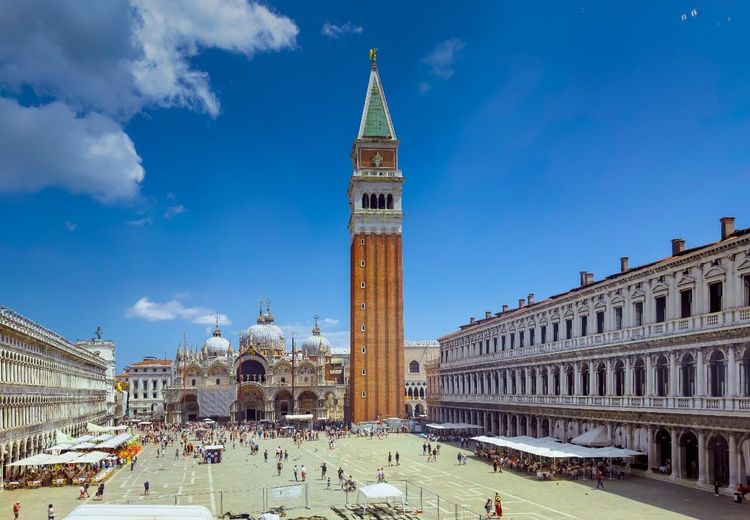
This is the most anticipated event of the carnival: each year, a notable figure descends by zip line from the top of the Campanile di San Marco, approximately 98 metres above Piazza San Marco. The acrobat soars above tens of thousands of spectators packed into the square and the surrounding alleyways, showering costumed revellers below with confetti and flowers.
The flight takes place on the first Sunday of the carnival, in the early afternoon (usually noon). To secure a good spot in Piazza San Marco, you need to arrive at least two hours early — and often three or four hours for a position along the edges of the square. A lesser-known alternative: position yourself in the side alleyways (such as the Mercerie), where the view is partial but the crowds are far thinner. Some hotel terraces nearby offer a bird's-eye view of the event, at prices that naturally reflect the rarity of the vantage point.
Originally, it was not a person who descended but a platform laden with flowers and confetti, known as the 'flight of the Turk'. The modern version featuring a human being dates precisely to 2001, when an Italian actress became the first person to make the descent live before thousands of spectators.
The Festa delle Marie
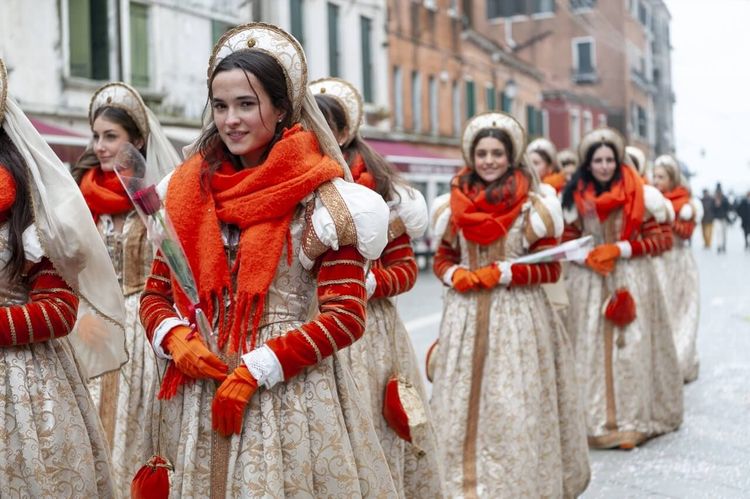
The second Sunday of the carnival is traditionally dedicated to the Festa delle Marie. The procession departs from the Ponte della Paglia (behind the Palazzo Ducale) and winds through the sestiere of Castello to Piazza San Marco, accompanied by musicians, costumed nobles and representatives of the city's ancient guilds.
The twelve young women who embody the Maries wear medieval dresses reconstructed from historical archive descriptions. The procession extends over more than a kilometre and takes around an hour to complete. Unlike the Flight of the Angel, access is less problematic: the procession passes through several points across the city, so you can choose your spot along the route rather than competing for a place in the final square.
The ceremony concludes with a contest among the twelve Maries, judged by a popular jury. The winner receives the Crown of the Maries and represents the city for the remainder of the carnival — a symbolic title, but one that receives considerable media coverage in Italy.
The Nautical Parade on the Canal Grande
Less publicized than the two events above, the nautical parade of the opening weekend is perhaps the most authentically Venetian. Dozens of historic vessels — ceremonial gondolas, regatta bissone, gilded batele — parade along the Canal Grande (Canal Grande, 30100 Venice, rated 4.8/5 on Google with 2,952 reviews) between Santa Croce and San Marco.
The best vantage points are the Ponte di Rialto (crowded but central), the banks of Campo San Stae on the Santa Croce side, and the palaces that open their terraces for the occasion. A handful of operators offer seats on gondolas or private boats to follow the parade from the inside — expect to pay between €80 and €200 per person depending on the vessel and the provider.
Masked Balls and Private Evenings in Venice during the Carnival
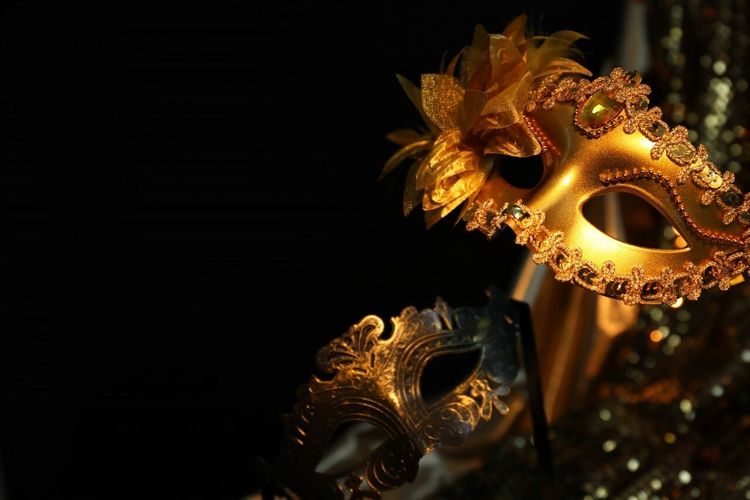
The carnival is not lived out solely in the streets. Its private masked balls — held in palaces, museums and 18th-century banquet halls — offer a radically different experience from the crowds of Piazza San Marco. And they are often unforgettable.
The tradition of masked balls dates back to the Republic of Venice, when nocturnal festivities in palaces allowed the elite to mingle under the cover of anonymity. Today, around twenty official balls are organized each year during the carnival, ranging from public dinner-shows to prestigious balls with mandatory Baroque attire.
The most renowned balls are held in exceptional settings. Palazzo Pisani Moretta on the Canal Grande is one of the most sought-after venues — a 15th-century Gothic palace with its frescoes still visible and its ballrooms lit by candlelight. Palazzo Ca' Vendramin Calergi (where Wagner died in 1883 and which now houses Venice's casino) also hosts prestigious evenings during the carnival.
Expect to pay between €150 and €500 per person for a ball with dinner and a show, and up to €1,500 for the most exclusive events with costumes provided and private access. An intermediate option: Baroque music or opera evenings in more intimate venues, where a masked dress code applies but dinner is optional. Teatro La Fenice (Campo San Fantin 1965, 30124 Venice, rated 4.7/5 on Google with 15,899 reviews) consistently programs special concerts during the carnival; the acoustics are among the finest in Europe and the setting rivals any private palace.
For balls in private palaces, bookings are generally made through the official organizers, whose list is published on the carnival website. Several agencies specializing in Venetian travel offer complete packages including accommodation, a ball and costume rental. Our Ryo guide to masked balls and private evenings at the Venice Carnival provides detailed addresses, price ranges and dress code requirements for each event.
Venetian Masks: History and Types
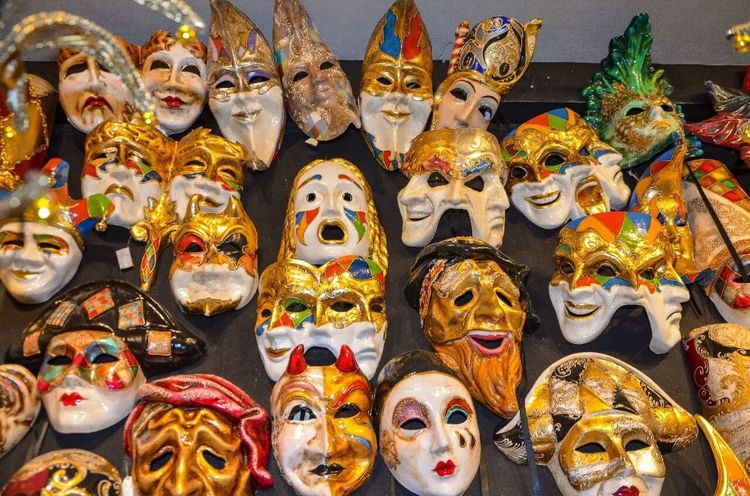
The Venetian mask is not a costume accessory like any other. It has a history, a social function and a vocabulary of its own that most visitors are unaware of — which explains why so many people leave with a generic mask that bears little resemblance to the authentic tradition.
The Bauta
This is the quintessential traditional Venetian mask. White, with a prominent chin that allows the wearer to speak, eat and drink without removing it, the Bauta was worn by both men and women under the Republic. Its social role was precise: to erase class distinctions. A patrician could move through the city incognito, while a craftsman could play cards at the same ridotto as a nobleman without ever being recognized.
The full Bauta ensemble comprises the white mask, the tabarro (black cape) and the tricorn (three-pointed hat). This is the combination you will most frequently see during the photo sessions organized in Piazza San Marco in the early morning; professional carnival participants who come specifically to be photographed favour it above all for its visual clarity.
The Colombina
Lighter than the Bauta, the Colombina is a half-mask that covers only the eyes and nose. It leaves the mouth free and is worn either tied to the face or held up to it on a stick (the so-called 'carnet'). Very popular among women since the 16th century, it comes in simple versions (painted leather) through to highly ornate ones (pearls, peacock feathers, gold leaf). It is the easiest mask to wear in the evening and the one that affords the most freedom for eating and conversation.
The Plague Doctor (Medico della Peste)
With its long curved beak — once stuffed with aromatic herbs to protect the wearer from miasmas — its long coat, gloves and round glasses, the plague doctor mask is the most sinister in the tradition, and paradoxically one of the most photographed. It was not originally part of the carnival tradition but rather the professional equipment worn by doctors during the great epidemics of the 17th century. Its incorporation into carnival costumes is relatively recent, driven by the appeal of its Gothic aesthetic and its reminder of death within the context of festivity.
The Moretta
Perhaps the most mysterious of all: the Moretta is an oval, black velvet mask with no fastenings whatsoever. The woman wearing it holds it in place by biting a button fixed to the inside, rendering her completely silent for the duration. Born in the 16th century as a symbol of feminine elegance and silent seduction, the Moretta is today one of the rarest masks to spot in the square — perhaps precisely because wearing it requires genuine physical endurance.
To buy quality masks (papier-mâché or leather, handcrafted in Venice), the reputable workshops are concentrated in the sestiere of Dorsoduro and around the Rialto. Avoid the plastic masks sold on tourist stalls in Piazza San Marco — they are not made in Italy and have no artisanal value. A quality papier-mâché mask starts at around €30 to €50 in a reputable workshop, and quickly rises to €200–500 for hand-painted pieces.
Where to Watch the Carnival in Venice: the Best Spots
All of Venice is a carnival backdrop, but certain places concentrate the bulk of the official entertainment and the most spectacular encounters with costumed revellers.
Piazza San Marco
Piazza San Marco remains the beating heart of the carnival. This is where the official events take place — the Flight of the Angel, costume contests, evening entertainment — and where the most spectacularly attired carnival-goers gather. Peak hours: between 10am and 4pm on weekends, and from sunset onwards for the musical performances.
One well-known issue: the square can quickly become overwhelming due to crowd density. If your goal is to photograph costumes in good conditions, aim for the morning photo sessions, between 8:30am and 10am, before the tourist groups arrive. Professional carnival participants arrive early and remain accessible until the crowds push them into the surrounding alleyways.
Campo San Polo
Often overlooked in standard guides, Campo San Polo (Campo San Polo, 30125 Venice, rated 4.6/5 on Google with 8K reviews) hosts its own program during the carnival: street performances, family entertainment and open-air concerts. The advantage is twofold: the square is proportionally larger relative to attendance, and the atmosphere is less commercial than on the main square.
The Rive degli Schiavoni
The long waterfront promenade that runs along the lagoon from the Palazzo Ducale to the public gardens is ideal for watching costumed revellers strolling outside of the official events. With the lagoon and the islands as a backdrop, this is where photographs are most successful in terms of depth of field, especially at the end of the day when the raking light gilds the façades.
The Campi of Cannaregio
For a more local experience, move away from the centre and explore the small squares of the Cannaregio district, around the Madonna dell'Orto and the Venetian Ghetto. The carnival here is less crowded, less touristy, and you will have genuine conversations with costumed locals rather than interactions staged for cameras. The neighbourhood's bacari maintain pre-carnival prices during the week.
The Program: Free and Paid Events
Good news: the majority of the entertainment is completely free. Bad news: the best spots from which to watch it are not always.
What is free:
- The Flight of the Angel (watching from the square)
- The Festa delle Marie (procession through the streets)
- The nautical parade (visible from the banks)
- Musical entertainment and street performances in the campi
- The costume contest in Piazza San Marco (open to all, with registration for participants)
- The general atmosphere of the alleyways and canals
What is paid:
- Masked balls in private palaces (€150 to €1,500 per person)
- VIP viewing spots for the Flight of the Angel (hotel terraces, palace balconies)
- Concerts at Teatro La Fenice (€20 to €120 depending on the program)
- Gondolas and boats for the nautical parade (€80 to €200)
- Mask-making workshops and organized carnival experiences (€50 to €150)
One growing trend: 'carnival experiences' sold by private operators — introduction to Baroque costuming, costumed dinners in palazzo settings, mask-making workshops with an artisan. These experiences offer a depth that passive observation cannot, provided you choose your provider carefully.
How to Get to Venice for the Carnival
Venice is an island, which makes the logistics slightly more complex — though less so than you might imagine when travelling from France.
By plane, the nearest airports are Venice Marco Polo (12 km away, with a boat shuttle taking 70 minutes or a bus taking 25 minutes to Piazzale Roma) and Treviso Canova (30 km away, with an Atvo bus taking 70 minutes). From Paris, direct flights are available to both airports with several airlines. During the carnival, prices soar on Friday and Sunday flights — plan 3 to 4 months ahead to find reasonable fares.
By train, the Frecciarossa or Thello and OuiGo trains connect Paris to Venezia Santa Lucia in around 9 hours with a change in Milan or Turin. Venice's Santa Lucia station is located directly in the city, right on the Grand Canal — you arrive straight into the atmosphere with no further transfer needed. This option is often more economical than flying for those departing from Paris, and considerably more comfortable.
Once in Venice, the vaporetto network (mainly lines 1, 2 and 3) allows you to travel along the Grand Canal and out to the lagoon islands. A 24-hour pass costs €25, the 48-hour pass €35, and the 72-hour pass €45. On foot, the city can be crossed from one end to the other in 45 minutes, but the narrow alleyways and carnival crowds significantly extend these times at weekends. Whichever way you get around, the short version of our Venice audio walking tour covers the essentials on foot in 1h40 over 3.6 km.
Where to Stay in Venice during the Carnival
The main obstacle to a successful carnival stay is the cost of accommodation, which multiplies by 3 to 5 times during the period. Here are a few options to limit the damage.
Staying in Venice's centro storico remains the ideal way to experience the carnival without being at the mercy of vaporetto timetables. Accommodation in the sestieri of San Marco, Cannaregio and Castello is the most expensive; Dorsoduro and Santa Croce offer slightly more affordable alternatives. During this period, even a small apartment in the centre easily exceeds €200 to €300 per night.
Staying in Mestre (the mainland town 15 minutes away by train) can halve or even cut costs by two-thirds. The downside: getting into Venice early in the morning and leaving late at night means managing extra travel time and risking missing the latest nocturnal events.
Staying on the lagoon islands — Murano, Burano or the Lido — is an interesting option for those who want to combine carnival attendance with broader exploration. Prices there are less exorbitant, and vaporetti connect you to Venice in 30 to 45 minutes depending on the island. The Lido in particular offers quality accommodation at rates well below those in the centro storico.
Whatever option you choose, book at least 6 months in advance for the final weekend of the carnival, and 3 months ahead for the intermediate weekends.
Budget: How Much Should You Plan for the Carnival?
Here is a realistic estimate based on the type of stay you have in mind.
Backpacker budget (3 nights in Mestre, no paid events, meals at a bacaro): €300 to €450 all in, including transport from Paris by coach or low-cost flight, accommodation, standing meals at the cicheti counter and a vaporetto pass.
Mid-range budget (3 nights in Venice's centro storico, one paid musical evening, dinners at a trattoria): €800 to €1,200 per person. The main variable is accommodation — finding a decent apartment in the centro below €180 per night during the carnival is something of a miracle if you haven't booked very early.
Luxury budget (3 nights in a 4–5-star hotel, a masked ball in a palace, a fine dining restaurant, high-end costume rental): €2,500 and above per person without difficulty.
The main costs to watch: accommodation (by far the most variable), vaporetto or gondola transport, and costumes. Renting a full costume in Venice costs between €80 and €400 depending on quality and duration. For meals, bacari serve cicheti (small savoury bites) at €1–2 each and glasses of spritz at €2–3 — an authentic Venetian way to eat without blowing your budget. Our Ryo guide to Venice's culinary specialities lists the essential addresses and dishes.
Practical Tips for Getting the Most out of the Carnival
Arrive at the start of the week. Carnival weekends draw crowds of 50,000 to 100,000 people in Piazza San Marco during peak hours. During the week, the atmosphere is radically different — more intimate, more Venetian, and paradoxically closer to what the historical carnival must have felt like.
Arrange meetings with costumed participants. Many participants in elaborate costumes are active in social media groups dedicated to the carnival. They announce their dates and locations in advance — a way to organize genuine photo sessions in less crowded spots than the main square.
Bring waterproof shoes. Acqua alta — rising water in the lower-lying parts of the city — remains possible in February, especially around Piazza San Marco. Light boots or waterproofed shoes can save you from an unpleasant surprise that could ruin an entire day.
Book your restaurants well in advance. During the carnival, restaurant tables are reserved like hotel rooms — several weeks ahead for popular addresses. Avoid restaurants displaying menus translated into seven languages with photographs out front; bacari with no English signage serve far better food for half the price.
Learn a few words of Venetian dialect. 'Cicheto', 'ombra' (a small glass of wine), 'bacaro' — words that open doors that standard Italian alone does not always unlock in the most local establishments.
Explore Venice in depth with the Ryo app. Between events, our Venice audio walking tour leads you through the historic districts with audio commentary on the palaces and the anecdotes of the Serenissima, giving substance to everything you see behind the masks.
Day Trips from Venice: Murano, Burano and Torcello
The carnival is not limited to the main island. Several islands in the Venetian lagoon are worth a half-day detour, especially for those staying several days who are looking to vary the atmosphere.
Murano is the island of glassblowers, a tradition dating back to the 13th century, when the Republic of Venice relocated all glassmaking craftsmen outside the city to reduce the risk of fire. During the carnival, some workshops offer special demonstrations and limited-edition pieces in the colours of the festivities. The vaporetto from Fondamente Nove takes around 10 minutes.
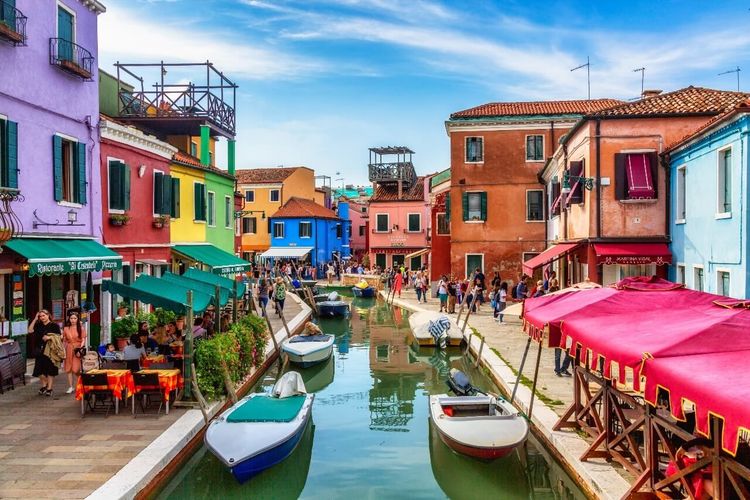
Burano is known for its brightly coloured house façades and its tradition of bobbin lace-making. The crossing from Fondamente Nove takes around 40 minutes. The island is far less crowded than Venice during the carnival — a breath of fresh air — and offers photography in a register completely different from the Baroque gilding.
Torcello is the oldest of the three, with an 11th-century Byzantine cathedral and an almost deserted atmosphere — fewer than 30 permanent residents. For those looking to escape the bustle of the carnival for a morning, it is the perfect antidote to Venice. Our Ryo guide to the islands of Murano, Burano and Torcello details vaporetto timetables, prices and the best addresses on each island.

FAQ
When does the Venice Carnival 2027 take place?
The Venice Carnival 2027 runs from January 30 to February 9, 2027, with Mardi Gras falling on February 9 that year. The detailed program will be published on carnevale.venezia.it from October 2026.
Is the Venice Carnival free?
The vast majority of the carnival is completely free: the Flight of the Angel, the Festa delle Marie, the nautical parade on the Canal Grande, the entertainment in the campi and the general atmosphere of the streets and canals are all accessible without a ticket. Paid events mainly include masked balls in private palaces (€150 to €1,500), concerts at Teatro La Fenice and experiences organized by tour operators. A quality stay during the carnival is therefore entirely possible on a controlled budget, provided you avoid the classic pitfalls (last-minute overpriced hotels, tourist restaurants).
How do you dress up for the Venice Carnival?
There is no obligation to wear a costume; most visitors come in regular clothes. If you wish to wear one, three options are available: renting locally from one of Venice's many workshops (€80 to €400 depending on quality), buying an authentic Venetian carnival costume in papier-mâché or leather (more expensive but worth keeping), or creating your own outfit inspired by Baroque traditions. The dress code at private balls is generally strict, with Baroque or 18th-century attire required, along with a mask. Public balls are more relaxed.
Which mask should you choose for the Venice Carnival?
For a first experience, the Colombina (half-mask) is the most practical: it leaves the mouth free, suits all face shapes, and is available in affordable versions as well as collector's pieces. For a more historical immersion, the Bauta (white mask with black cape and tricorn hat) is the most faithful symbol of the tradition of the Republic of Venice. In all cases, opt for masks made in Venice from papier-mâché or leather rather than imported plastic imitations; the workshops in Dorsoduro and around the Rialto are a safe bet.
How do you get to Venice for the carnival from France?
By train, the Paris–Venezia Santa Lucia journey takes around 9 hours with a change in Milan or Turin, and is comfortable and often competitively priced when booked in advance via SNCF Connect tickets or Eurostar offers. By plane, direct flights exist from Roissy and Orly to Venice Marco Polo or Treviso Canova (1h30–1h45 flying time). Book at least 3 months in advance for the final weekend, as prices rise quickly across all airlines.
How much does a masked ball at the Venice Carnival cost?
Prices vary considerably depending on the event. Evening musical performances in a hall start at around €50 to €80. Balls with dinner and a show in a private palace cost between €150 and €500 per person. The most exclusive events, with a Baroque costume provided and access to palaces normally closed to the public, can reach €1,000 to €1,500. Most of these balls sell out months in advance, so book as soon as the official program is published in October.
Conclusion
The Venice Carnival is one of those events that justifies a journey in its own right. Not because it is the biggest or the most exuberant carnival in Europe — Nice or Rio go further in sheer extravagance — but because Venice itself amplifies everything. An ordinary costume becomes extraordinary when reflected in the Canal Grande. A simple mask takes on depth when it carries nine centuries of history behind it.
To prepare your trip and discover Venice beyond the carnival spectacle, the Ryo audio-guided tour of Venice accompanies you through the districts, palaces and canals of the Serenissima with audio commentary that brings to life everything you see. Before or after the carnival, this city deserves to be discovered slowly.
À lire également