© Shutterstock
 Votre guide Ryo
Nice Neighborhoods in 2026: the Complete Map to Find Your Way Around
Nice neighborhoods explained: in Nice, changing districts often means changing eras in just a few minutes on foot. Understanding the neighborhoods of Nice means grasping why a single city can look both like an Italian postcard and a 19th-century seaside resort. Ten minutes by tram is enough to go from the ochre alleyways of Vieux-Nice, where laundry still hangs from windows, to the white buildings of the Promenade des Anglais, and then to the Belle Époque villas of Cimiez perched on their olive-tree-covered hill. This diversity, often reduced to a few tourist clichés, deserves to be unpacked district by district, as the Ryo audio-guided tour of Nice does, crossing several of these faces of the city in a single walk.
How many neighborhoods does Nice actually have, and which ones should you prioritize depending on what you are looking for? The answer varies depending on whether you consult the official administrative breakdown or the everyday usage of Nice locals. You will find an 18th-century port still in operation, an entire neighborhood named after composers, a 19th-century astronomical observatory nestled in the heights of Gairaut, and an invisible boundary between the Nice that worries some visitors and the one that enchants them. This guide covers around fifteen districts, their postal codes, their real safety reputation, and the best options for choosing where to stay.
Vieux-Nice, the Historic Heart
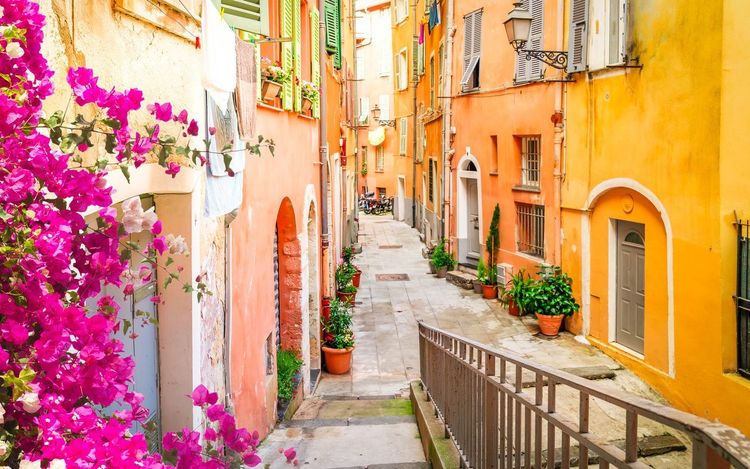
Vieux-Nice is not the kind of place you visit — it is the kind of place you wander through, letting your nose lead the way. Between the ochre and saffron-yellow facades, the scents of hot socca and basil mingle with those of freshly arrived morning fish. It is the densest and oldest neighborhood in the city, built into the hillside from the Middle Ages onward, and it remains the backdrop for most of the postcards sold along the Côte d'Azur.
The heart of the neighborhood beats on the Cours Saleya, a flower and vegetable market in the morning and a lively terrace scene in the evening. Stalls of cut flowers stand alongside olive vendors and pissaladière stands, in an atmosphere that has not changed much in a century.
Heading up toward Place Rossetti, the Cathédrale Sainte-Réparate imposes its glazed dome above the pink-tiled rooftops. The Baroque interior, laden with gilding and polychrome marble, contrasts with the sobriety of the surrounding alleyways.
At the far end of the neighborhood, the Colline du Château (Montée Lesage, 06300 Nice, rated 4.7/5 on Google from 25,336 reviews) has had no castle since the 18th century — razed on the orders of Louis XIV — but its park offers one of the most complete viewpoints over the Baie des Anges. Allow a good half-hour to climb on foot, or take the public elevator near the Quai des États-Unis if you are travelling with young children.
This neighborhood is also home to the Nice Carnival, which takes over its squares every February with flower-covered floats and battles of flowers. If you are planning your stay around this event, our dedicated article on the Nice Carnival is worth reading before booking your dates. You will also notice that traffic is heavily restricted during the period — a detail that significantly changes the organization of a visit to Vieux-Nice.
The Port, Between Tradition and Modernity
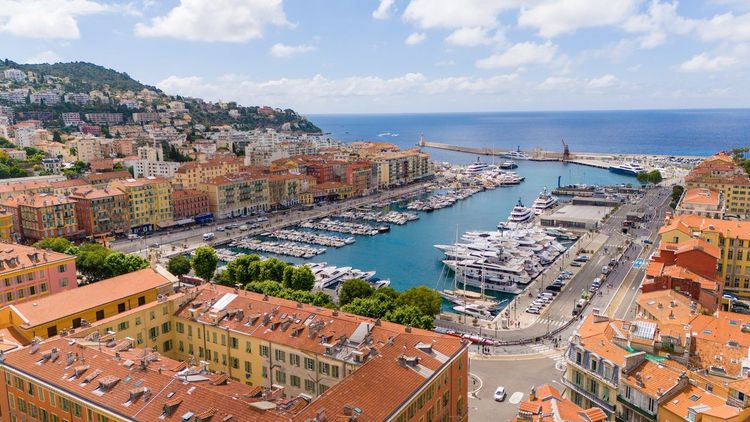
Separated from Vieux-Nice by the Colline du Château, the Port neighborhood retains the feel of a small Italian-style harbor town, with its colorful facades arranged in a horseshoe around the basin. Founded in the 18th century by the King of Sardinia Charles Emmanuel III, it still maintains a fishing and commercial activity that the Promenade des Anglais has long since abandoned.
The Port Lympia, the ancient name of this natural bay, still welcomes yachts, ferries to Corsica, and a few fishing boats moored in the early morning. The quays have filled up in recent years with antique dealers, wine bars, and fish restaurants, without entirely losing their working-class character.
This neighborhood is well worth a Sunday morning visit, when the flea market sets up along the quays and locals come to browse at a leisurely pace. Rents have risen, driven by the immediate proximity of Vieux-Nice, but the atmosphere remains more authentic than on the Promenade. You will also find a fine concentration of fishmongers and wine merchants — a great starting point for anyone wanting to taste Niçois cuisine away from the most touristy addresses. On weekends, it is also one of the liveliest neighborhoods in Nice, with market browsers and terrace-goers arriving at the first sign of fine weather. Port Lympia is in fact one of the stops on Ryo's audio-guided tour of Nice, easily combined with a walk along the Promenade des Anglais afterwards.
The Promenade des Anglais and the Carré d'Or
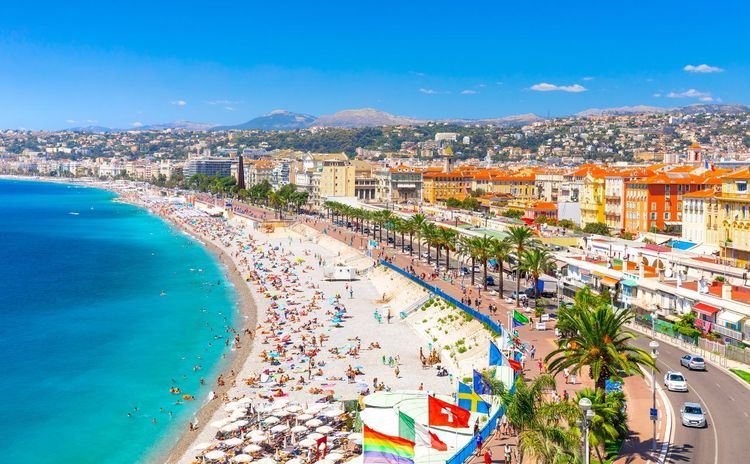
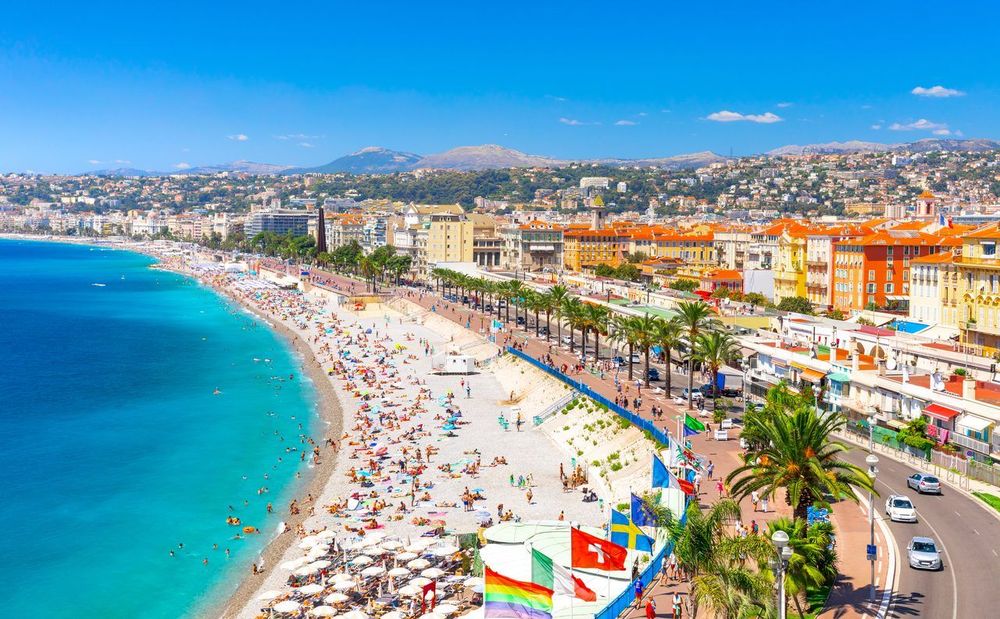
No neighborhood better encapsulates Nice's international image than the Promenade des Anglais, the seven-kilometer ribbon laid out in the 19th century by the British community wintering on the Riviera. The palm trees, the iconic blue chairs, and the line of pebbles sloping down to the sea make it one of the most photographed seafronts in France.
The Hôtel Negresco, with its pink dome and its hall listed as a historic monument, embodies on its own the golden age of this neighborhood. It was built in 1912 by Henri Negresco, a Romanian adventurer who dreamed of attracting Europe's crowned heads to the Côte d'Azur, and its bar remains a must-visit even for those not staying there.
Just behind it, the Carré d'Or lines up luxury boutiques and Haussmann-style buildings along the Rue Paradis. It is the shopping district par excellence, where you are as likely to encounter tourists spending their shopping budget as Niçois regulars who have frequented the same addresses for decades.
The Jardin Albert 1er, at the junction between the Promenade and the old town, serves as an open-air stage for numerous free concerts in summer. Shaded by century-old plane trees, it makes a welcome break between two visits.
If your stay coincides with one of Nice's major events — a fireworks display over the bay or a music festival — check the Nice events page: this neighborhood concentrates the majority of public entertainment organized by the city.
Les Musiciens
Wedged between the train station and the city center, the Musiciens neighborhood takes its name from the streets that make it up, named after Verdi, Rossini, Berlioz, and Meyerbeer. Its urban fabric dates mainly from the Belle Époque, with bourgeois buildings featuring ornate facades and wrought-iron balconies.
The Nice-Ville Railway Station (Avenue Thiers, 06000 Nice, rated 3.7/5 on Google from 2,539 reviews), the historic terminus of the PLM railway line since 1864, marks the northern boundary of the neighborhood. Its 19th-century metallic architecture contrasts with the residential buildings surrounding it.
Less frequented than its seaside neighbors, this area mainly attracts those looking for a practical base, within walking distance of both the Promenade and Vieux-Nice, without the tourist bustle of either. Rents here remain, for now, noticeably more affordable than in the neighboring Carré d'Or.
Wedged between the station and Avenue Jean Médecin, this area also ranks among the best-connected neighborhoods in Nice: the commercial spine of the center puts most tram and bus lines within walking distance. For anyone arriving by train and planning to visit several sites without a car, Les Musiciens is a logistical base that is hard to beat.
Cimiez, Elegance in the Heights
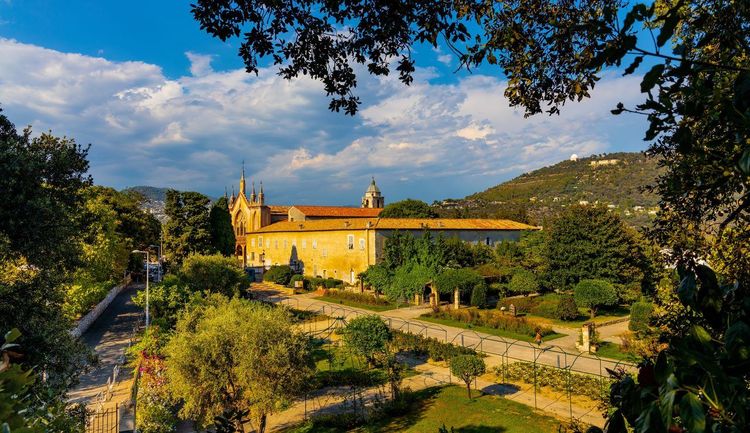
Perched on a hill to the north of the center, Cimiez was the neighborhood where European aristocracy came to spend the winter from the late 19th century onward, drawn by the climate and by the repeated stays of Queen Victoria herself. The grand hotels of the era, since converted into private residences, still define the architectural landscape of this hill planted with century-old olive trees.
The Musée Matisse, housed in a 17th-century Genoese villa amid Roman ruins, holds one of the richest collections of the artist, who lived and was buried in Cimiez. The surrounding gardens, planted with olive trees, offer an open view over the bay.
A few hundred meters away, the Musée National Marc Chagall brings together the largest collection of the artist's works open to the public, including the celebrated Biblical Message cycle. You will easily spend an hour longer than planned there, as the rooms — conceived by Chagall himself with architect André Hermant — lend themselves so naturally to contemplation.
The Monastère de Cimiez (Place du Monastère, 06000 Nice, rated 4.6/5 on Google from 1,476 reviews), occupied by Franciscans since the 16th century, conceals terraced gardens among the most peaceful in the city and a cemetery where Matisse and the painter Raoul Dufy rest. The adjoining church preserves three 15th-century Niçois primitive altarpieces — a rarity that few visitors take the time to seek out.
To explore this rich museum heritage further, the page dedicated to the museums of Nice details the opening hours and admission prices for each of these institutions, which are often free on the first Sunday of the month. Allow a full half-day to explore all of Cimiez at a leisurely pace.
Libération, the Foodie Neighborhood
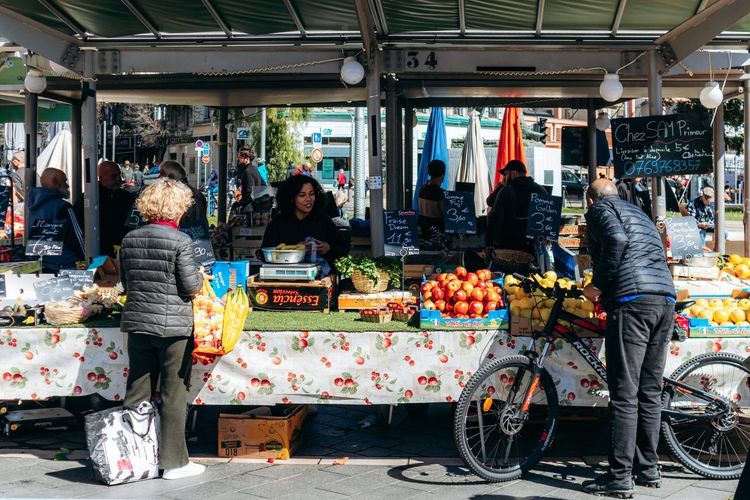
Less photographed than its seaside neighbors, Libération has established itself in recent years as the neighborhood where the Niçois themselves love to shop and go out for dinner. Its urban village atmosphere, with its modest apartment buildings and bustling commercial streets from morning to evening, appeals to a crowd of regulars more than to passing tourists.
The Marché de la Libération (Place du Général de Gaulle, 06000 Nice, rated 4.4/5 on Google from 2,826 reviews) has animated Place du Général de Gaulle every morning since the 1930s. You will find products here that you would search for in vain on the more touristy Cours Saleya: cheeses from the Nice hinterland, Corsican charcuterie, and vegetables grown in the surrounding hills.
Around the market, natural wine bars, delicatessens, and a handful of discreet tables run by young chefs who prefer this working-class neighborhood to the exorbitant rents of the center have gradually moved in. To continue exploring the city's food scene, our page on the culinary specialties of Nice lists the dishes you absolutely must try, from socca to salade niçoise. If you are staying in this area, note that prices here remain noticeably gentler than in the Carré d'Or — a real argument for a longer stay. It is one of the few neighborhoods in Nice where you see more shopping bags than cameras, a sign that the district has stayed true to its residents.
Mont-Boron, Between Forest and Villas
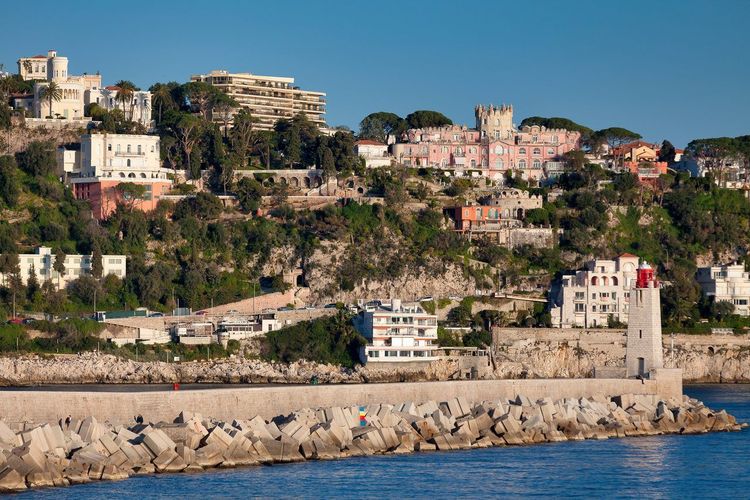
East of the Port, the Mont-Boron hill raises its umbrella pines above the sea, offering one of the sharpest contrasts in the city between dense urban fabric and preserved nature. The upscale villas clinging to its slopes are among the most sought-after properties in the region.
The Fort du Mont-Boron (Mont Boron, 06300 Nice, rated 4.5/5 on Google from 1,776 reviews), built in the late 19th century to watch over the harbor, is not open to visits, but its access path winds through a pine forest that, in places, completely screens out any view of the city below. You could almost forget you were on the Côte d'Azur.
Lower down, several rocky coves welcome swimmers from the first warm days of the year, far from the bustle of the Promenade. To find the best swimming spots in this area and elsewhere along the Côte d'Azur, the selection of the most beautiful beaches in Nice is a useful reference before laying out your towel. Few visitors think to explore Mont-Boron on foot, which is precisely what makes it one of the rare quiet corners less than twenty minutes from the center.
Fabron, la Lanterne, and the Hills
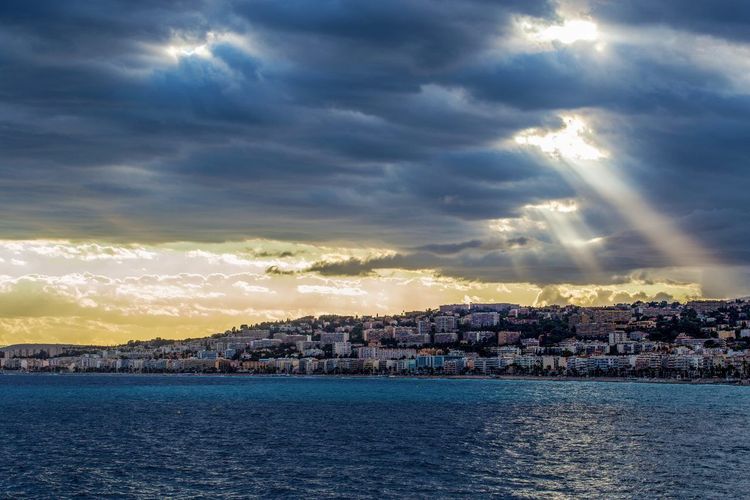
To the west of the city, between the sea and the hills, Fabron and the la Lanterne area form a residential zone where individual housing still dominates — a rarity in a city as dense as Nice. People live here more than they stay here, but one place is well worth a detour for visitors.
The Parc Phoenix (405 Promenade des Anglais, 06200 Nice, rated 4.2/5 on Google from 12,757 reviews), Europe's largest urban exotic garden according to its managers, shelters tropical species under its giant greenhouse, a Japanese garden, and free-roaming flamingos. It is also one of the few spaces in the city where you can take children for a full day without anyone getting bored.
The heights of the Corniche Fleurie, just above, offer photogenic viewpoints over the bay, particularly at sunset. This area remains primarily residential — calm and sought after by families who work in the city center but prefer not to live there.
Along with Cimiez, it is one of the Nice neighborhoods where detached housing best resists property market pressure. This scarcity explains some of the highest per-square-meter prices in the hills, and a population that is often long-established homeowners, giving the area its peaceful suburban atmosphere rather than that of a tourist neighborhood.
Riquier, Saint-Roch, and the Acropolis
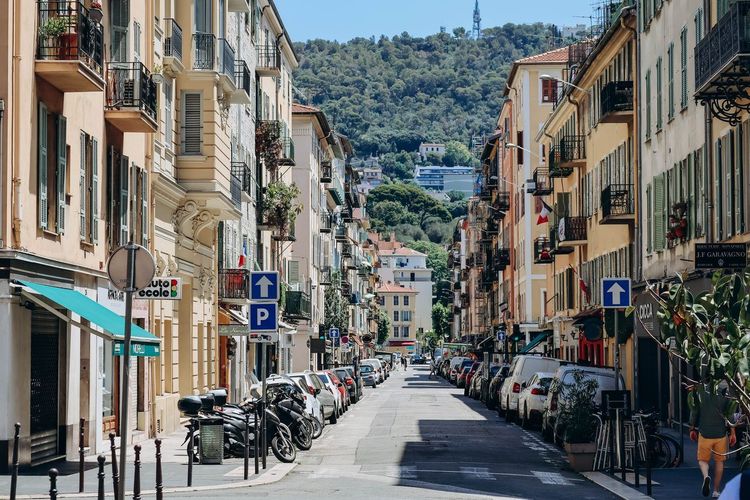
To the east of the center, between the Port and the hills, lies a vast collection of working-class neighborhoods long overlooked by tourist guides: Riquier, Saint-Roch, République. Yet they have retained an intact early 20th-century urban fabric, with their covered market halls and repurposed workers' buildings.
The Palais des Congrès Acropolis (1 Esplanade Kennedy, 06300 Nice, rated 4/5 on Google from 1,607 reviews), opened in 1984 on the edge of this area, hosts dozens of trade fairs and international conferences each year, injecting welcome economic activity into a neighborhood that has remained modest. Its massive concrete architecture, typical of the 1980s, contrasts sharply with the surrounding districts.
Riquier retains a village-like atmosphere with its independent food shops, less expensive than those in the center. If a festival or trade fair brings you to the area, the Nice events page generally lists the events hosted at the Acropolis throughout the year. It is also a practical base for business travelers, a short walk from the train station and the tram.
Magnan, la Madeleine, and Fleurs
Continuing westward along the sea, the Magnan and la Madeleine neighborhoods form a residential area popular with families, offering direct beach access without the tourist density of the center. The Fleurs neighborhood, further north, extends this calm atmosphere with its tree-lined streets.
This area benefits from good tram and bus connections to the city center, while maintaining more affordable rents than the Carré d'Or or the Promenade. Magnan's beaches, less crowded than the central ones in high season, appeal to both local residents and visitors in search of a little breathing room.
With no landmark monument to visit, this part of Nice illustrates well the city's residential side — the part where people settle to live rather than to tick off a sightseeing list.
Historically, Magnan takes its name from the valley and the stream that once descended from the hills to the sea, now channeled beneath the boulevards. The neighborhood has retained from this topography a gently sloping layout, with 1960s and 1970s apartment buildings many of which offer partial sea views at prices bearing no comparison to those on the central seafront. It is one of Nice's most popular residential neighborhoods among families, with la Madeleine climbing just above toward the hills in the atmosphere of a quiet suburb where local shops are still holding their own.
Nice Nord: Gairaut, Rimiez, and Saint-Antoine
Heading up toward Nice Nord means gradually leaving the Mediterranean city behind for an almost mountain-like atmosphere, made up of wooded hills and villages absorbed by urban sprawl. Gairaut, Rimiez, and Saint-Antoine-Ginestière make up this vast area that is often poorly known to visitors, even though it concentrates some of the finest viewpoints over the city.
The Observatoire de Nice (Le Mont Gros, 06300 Nice, rated 4.7/5 on Google from 459 reviews), built in the late 19th century on Mont Gros thanks to the patronage of banker Raphaël Bischoffsheim, was partly designed by Gustave Eiffel for its metal dome. It still dominates the city today and remains active in astronomical research.
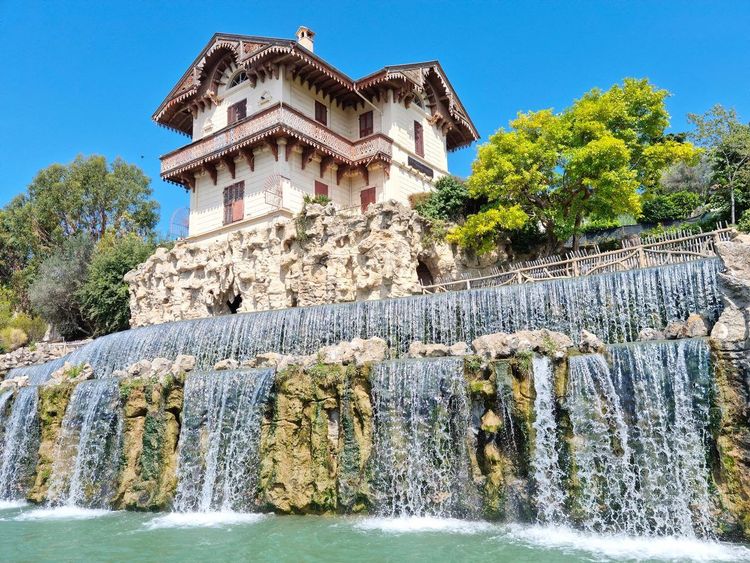
In Gairaut, a 19th-century artificial waterfall fed by the Vésubie canal cascades down the hillside in several pools — a spot that few tourists know about despite its proximity to the center. This area remains primarily residential and working-class, with larger homes and prices far more accessible than on the seafront. They are among the greenest neighborhoods in Nice, appreciated for their gardens and their cooler summer air, at the cost of an almost total dependence on a car or the bus lines that climb up into the hills. To widen the exploration beyond the city, the must-sees around Nice allow you to extend an excursion toward the perched villages visible from these heights.
Nice Ouest: Californie, Saint-Isidore, and Lingostière
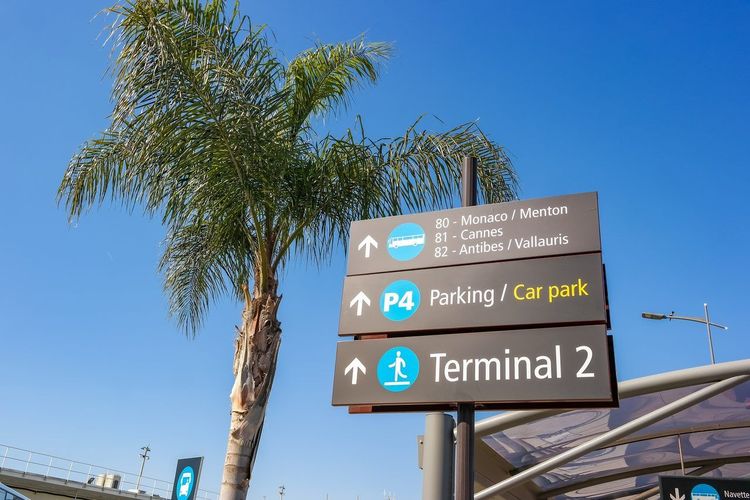
The western part of Nice, stretching from Californie to Saint-Isidore and Lingostière, developed largely in the postwar years around the city's major facilities: the airport, the stadium, and commercial zones. It is a functional Nice, less picturesque, but essential for anyone wanting to understand how the urban area operates on a daily basis.
The Aéroport Nice Côte d'Azur, the busiest French airport outside the Paris region, has shaped the entire economy of this neighborhood since it opened in the 1930s. The business hotels and logistics zones surrounding it occupy a large part of the area.
The Stade Allianz Riviera, inaugurated in 2013, hosts OGC Nice and some major concerts, with a lattice architecture intended to evoke the waves and palm trees of the Côte d'Azur. On match nights, the whole neighborhood changes atmosphere, filled with supporters arriving by tram.
More discreet, the Château de Crémat (Chemin de Crémat, 06200 Nice, rated 4.7/5 on Google from 1,387 reviews), one of the last urban wine estates in France, still produces Bellet, a little-known appellation rarely found outside Niçois restaurants.
If you are planning to rent a car or set off on an excursion from the airport, the activities in and around Nice page gives a good overview of what can be organized in a single day from this area, which is often passed through without ever really being explored.
L'Ariane and the Eastern Neighborhoods
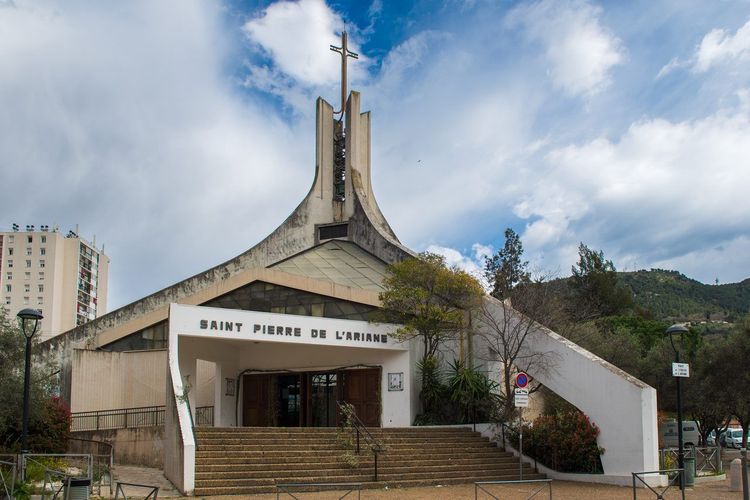
At the eastern edge of the city, bordering Villefranche-sur-Mer, the l'Ariane neighborhood forms a world apart, marked by the large housing estates built in the 1960s to house repatriates from North Africa. Today it is one of the most working-class neighborhoods in Nice, often cited in safety debates that we detail below. It sees very little tourism and remains above all a place of daily life for its residents, with sports and cultural facilities developed in recent years to better connect the area.
Long cut off from the center, l'Ariane has benefited since the 2000s from several urban renewal programs, with new school, sports, and cultural facilities. It is one of the youngest populations of any neighborhood in Nice, and despite its reputation, it remains an area that visitors simply have no reason to pass through during a typical tourist stay.
Map of Nice Neighborhoods: Understanding the Breakdown
Unlike Paris, Nice does not divide its territory into numbered arrondissements. The city uses an informal breakdown into around fifteen major districts, supplemented by the city hall for local management, neighborhood councils, and the distribution of public facilities.
From the seafront to the hills, you can generally distinguish: Vieux-Nice and the Port in the historic center; the Promenade des Anglais, the Carré d'Or, and Les Musiciens in the wider city center; Cimiez and Nice Nord in the heights; Libération, Riquier, Saint-Roch, and the Acropolis to the east of the center; Magnan, la Madeleine, and Fabron to the west along the seafront; then Nice Ouest (Californie, Saint-Isidore, Lingostière) and l'Ariane at the outer edges of the urban area.
This map of Nice neighborhoods serves primarily as a mental reference point rather than a strict administrative division: two locals might draw slightly different boundaries between Libération and Riquier, or between Fabron and la Lanterne, without either being wrong. What matters for a visitor is locating the main poles in relation to one another: the historic center to the southeast, the Promenade to the south, the residential hills to the north, and the functional zones to the west.
The tram network, with its three lines, efficiently connects most of these areas — a factor worth considering before booking accommodation far from the center. To link several of these Nice neighborhoods on foot without retracing your steps, the Ryo audio-guided tour of Nice connects Vieux-Nice, the Port, and the Promenade in a commented loop of under three hours.
Nice Neighborhoods and Safety: What You Need to Know
The question of dangerous neighborhoods comes up frequently in searches about Nice, fueled by a handful of widely reported incidents in recent years. As in most major French cities, the reality is more nuanced than the reputation.
The areas most regularly cited in crime statistics — mainly related to drug trafficking — are l'Ariane and certain peripheral hill districts, well away from the areas frequented by tourists. These neighborhoods face real social challenges, but tens of thousands of residents pass through them every day without incident.
For a visitor, the main tourist zones — Vieux-Nice, the Promenade des Anglais, Cimiez, the Port — present no particular risk by day or by night, beyond the usual precautions against pickpocketing in the crowds at the market or on the beach. The city has also increased video surveillance and police presence in the center in recent years.
In short, the neighborhoods that a tourist should genuinely avoid can be counted on one hand, and they are all located outside the areas this guide recommends for staying or exploring in any case.
Postal Codes by Neighborhood
Nice uses several postal codes depending on the area — a useful detail for locating an address or understanding a property listing.
The 06000 code covers the wider city center: the Promenade des Anglais, the Carré d'Or, Les Musiciens, and part of Cimiez. The 06300 covers Vieux-Nice, the Port, Mont-Boron, and the east of the historic center. The 06100 generally refers to the west and northwest of the city, while the 06200 covers the west, Fabron, the airport, and Saint-Isidore. These boundaries, redrawn through successive postal reorganizations, do not always align precisely with the neighborhood boundaries described above — a frequent source of confusion for newcomers.
In practice, these four codes are sufficient to place almost all Nice neighborhoods: 06100 covers Gambetta, Fleurs, and part of Magnan, while 06200 extends all the way to the airport and the commercial zones of the west. It is therefore better to rely on the neighborhood name rather than the postal code alone to pinpoint an address precisely, especially since some streets change codes from one side of an intersection to the other.
Where to Stay in Nice According to Your Profile
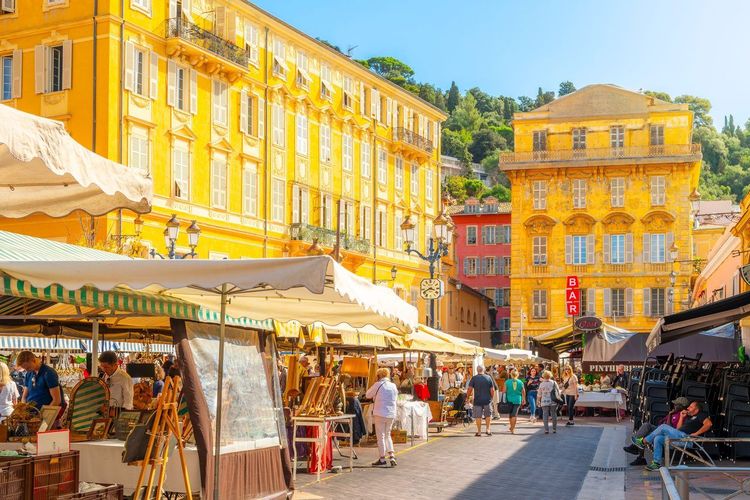
The choice of neighborhood depends mostly on what you are looking for: Vieux-Nice for the atmosphere and walkable proximity to everything, the Promenade for sea views and upscale comfort, Libération or Riquier for a tighter budget without straying far from the center.
For a first visit, Vieux-Nice remains the most logical choice despite high prices in peak season: you sleep within walking distance of the main sights and enjoy a lively atmosphere well into the evening. Be aware, however, of the noise from terrace restaurants on summer nights — an inconvenience that regularly puts off families with young children.
Couples and travelers seeking an upscale experience naturally gravitate toward the Carré d'Or and the Promenade des Anglais, where historic hotels sit alongside more contemporary addresses, all just a few minutes' walk from the beach.
Families will find more to their liking in Cimiez or Fabron — quieter, greener, and close to child-friendly attractions such as Parc Phoenix. These areas do require a tram or bus ride to reach the historic center each day.
Finally, for a longer stay on a limited budget, Libération and Riquier offer a good compromise between price, authenticity, and accessibility — provided you accept a setting that is less photogenic than the seafront. Business travelers and those who prioritize practicality often gravitate toward Les Musiciens or the area around the train station, a few minutes' walk from the tram and the main thoroughfares: among the best neighborhoods in Nice for a short car-free stay, these are probably the ones offering the best balance between central location and reasonable prices.
Whatever your choice, the Ryo audio-guided tour of Nice remains an excellent starting point for connecting several of these neighborhoods on foot without passing through the same spot twice.
FAQ
How many neighborhoods does Nice have?
Nice has around fifteen major districts recognized in common usage, from Vieux-Nice to l'Ariane, without any official administrative division comparable to Parisian arrondissements. The city hall does, however, use neighborhood councils that broadly correspond to this breakdown.
Which is the most dangerous neighborhood in Nice?
L'Ariane and certain peripheral hill districts account for the majority of drug-trafficking incidents, according to local crime statistics. The tourist areas of the center — Vieux-Nice, the Promenade, and Cimiez — present no particular risk for visitors.
What are the best neighborhoods to stay in Nice?
Vieux-Nice is ideal for its walkable proximity to the main sights, the Promenade des Anglais for upscale stays with sea views, and Libération or Riquier for tighter budgets. The choice depends mostly on the style of trip you are looking for.
What are the postal codes of Nice by neighborhood?
Nice mainly uses four codes: 06000 for the wider city center, 06300 for Vieux-Nice and the Port, 06100 for the northwest, and 06200 for the west and the airport. These postal boundaries do not always align precisely with neighborhood boundaries.
Which neighborhood is best for exploring Nice on foot?
Vieux-Nice, the Port, and the Promenade des Anglais form a compact area that can be covered entirely on foot in a single day. Cimiez, set higher up, requires a bus or tram ride from the center.
Does the Nice neighborhood map correspond to an official administrative division?
No, it is an informal convention consolidated by the city hall for its neighborhood councils, without any administrative status equivalent to arrondissements. The boundaries between neighboring districts sometimes remain open to interpretation, even among locals.
Ultimately, it is these shifting boundaries that make Nice so interesting: a city where you can change atmosphere without changing municipality, from laundry drying on Vieux-Nice windowsills to the flamingos of Parc Phoenix. To connect several of these neighborhoods in a single outing and understand their history while walking, the Ryo audio-guided tour of Nice is one of the simplest ways to turn this mental map into a real-life stroll.
À lire également