© Shutterstock
 Votre guide Ryo
Nice Hinterland: Hilltop Villages, Gorges, and Hidden Secrets of the Hills (2026)
The Nice hinterland begins just a few kilometers behind the Promenade des Anglais, yet this backcountry seems to belong to an entirely different world. Where Nice spreads its palm trees and blue Mediterranean, the inland hills reveal villages clinging to rocky spurs at 700 meters above sea level, gorges carved hundreds of meters deep, and wild nature that rivals the Alps themselves.
This territory covers an immense area: from the first hills overlooking the Baie des Anges to the summits of the Mercantour national park at 2,800 meters and the Italian border. Between these two extremes lie some forty villages, spectacular gorges, and winding roads that are, in themselves, attractions. In Èze, an exotic garden suspended at 429 meters offers a view stretching all the way to Corsica on clear tramontane days. In Gourdon, medieval streets overlook a sheer drop of 500 meters. In the Vallée des Merveilles, more than 40,000 rock engravings have lain beneath the stones since the Bronze Age.
This guide covers the entire territory: from the villages most accessible within 30 minutes of Nice to the most remote valleys that require an overnight stay. You will find the must-sees such as Saint-Paul-de-Vence and Mougins, lesser-known gems like Peillon and Sainte-Agnès, practical advice for planning your stay, and itineraries calibrated to the time you have available. The Ryo app can also enrich your exploration of the region: load a Ryo audio-guided tour of Nice before heading into the hills to understand how this city has shaped its hinterland over the centuries.
What Is the Nice Hinterland? Geography and Extent
The term "Nice hinterland" informally refers to the entire inland territory of the Alpes-Maritimes, behind the coastal strip. There is no official administrative boundary: depending on usage, the hinterland can refer to the first hills 15 kilometers from Nice or the entire department up to the Italian border.
The territory is divided into three zones of very different character. The mid-country (up to 800 meters above sea level) encompasses the most touristic villages: Èze, Saint-Paul-de-Vence, Vence, Tourrettes-sur-Loup, Gourdon. This is a landscape of garrigue, olive trees, and white limestone terraces, reachable from Nice in under an hour. The high country (800 to 1,500 meters) opens onto harsher alpine landscapes, deep gorges, and fortress villages like Peille and Lucéram. Beyond that, the alpine valleys — Roya, Tinée, Vésubie — plunge into the heart of the Mercantour national park and form the deep hinterland, often overlooked by travelers who stay on the coast.
The distance from the center of Nice is 30 minutes to reach Èze or Aspremont, 45 to 60 minutes for Vence or Gourdon, and 1h30 to 2h30 for the Vallée des Merveilles depending on the starting point. A car remains essential for the majority of villages, even though a regional bus and train network covers part of the territory.
When to Visit the Nice Hinterland
The Nice hinterland is open to visitors year-round, but the best seasons are not the ones you might expect. Spring (April–May) is the ideal season: the massifs are still green after winter rains, wild broom and lavender are in bloom, and temperatures range between 18 and 24°C in the mid-country villages. The Gorges du Loup reach their optimal level and hikes remain manageable at all altitudes.
Summer (June–August) concentrates crowds in the best-known villages, particularly Saint-Paul-de-Vence and Èze, which become difficult to appreciate on July and August weekends. On the other hand, it is the only season when the Vallée des Merveilles is fully accessible: the trails are only free of snow between June and October, and the most protected rock engravings require a licensed guide.
Autumn (September–October) is the second best season: the light is magnificent over chestnut forests, local markets overflow with mushrooms and truffles, and villages regain their tranquility. Winter holds a few surprises: mountain villages are blanketed in snow, the Mercantour ridges attract ski tourers, and the coastal villages bask in a gentle winter sun.
Getting Around: Car, Mountain Train, or Bus?
The car is by far the most practical mode of transport for exploring the Nice hinterland as a whole. Most hilltop villages have no regular public transport, and the winding roads themselves offer panoramas that are part of the journey. Budget a full tank for a day's circuit and beware of single-track roads with passing places: some links between villages, such as the road between Gourdon and Tourrettes-sur-Loup, do not allow two normal vehicles to pass each other.
That said, several alternatives exist for those traveling without a car. The Train des Merveilles (Nice–Cuneo line) is one of the most beautiful railway lines in France. It connects Nice station to Tende in 1h40, passing through tunnels, vertiginous viaducts, and deep-cut valleys. Along the way, it serves Saint-Dalmas-de-Tende, the gateway to the Vallée des Merveilles. Stops at Saint-Martin-Vésubie or Breil-sur-Roya allow visitors to reach several high-country villages on foot.
The Lignes d'Azur bus network (operated by the Métropole Nice Côte d'Azur) serves several villages from Nice: line 500 reaches Vence and Saint-Paul-de-Vence in about an hour, and line 400 serves Cagnes-sur-Mer and can be combined with connections for Biot or Mougins. Frequency is limited on weekends and virtually non-existent in the evenings.
For the most isolated mid-country villages — Gourdon, Tourrettes-sur-Loup, Peille, Peillon — a taxi from Nice or Grasse is often the only option without a car. Local agencies offer minibus excursions from Nice or Cannes, combining two or three villages in a day. It is a comfortable solution but does not allow you to linger.
A few tips before you leave: car parks in hilltop villages are often paid (€2 to €3 per hour) and saturated from May to September. Leaving before 9am or after 4pm avoids queues. GPS is essential, but bring a paper map as backup: network coverage disappears in the deep valleys of the Mercantour. Petrol is scarce in mountain villages, so fill up in Nice or Grasse before heading up.
Èze: the Suspended Village between Sea and Mountain
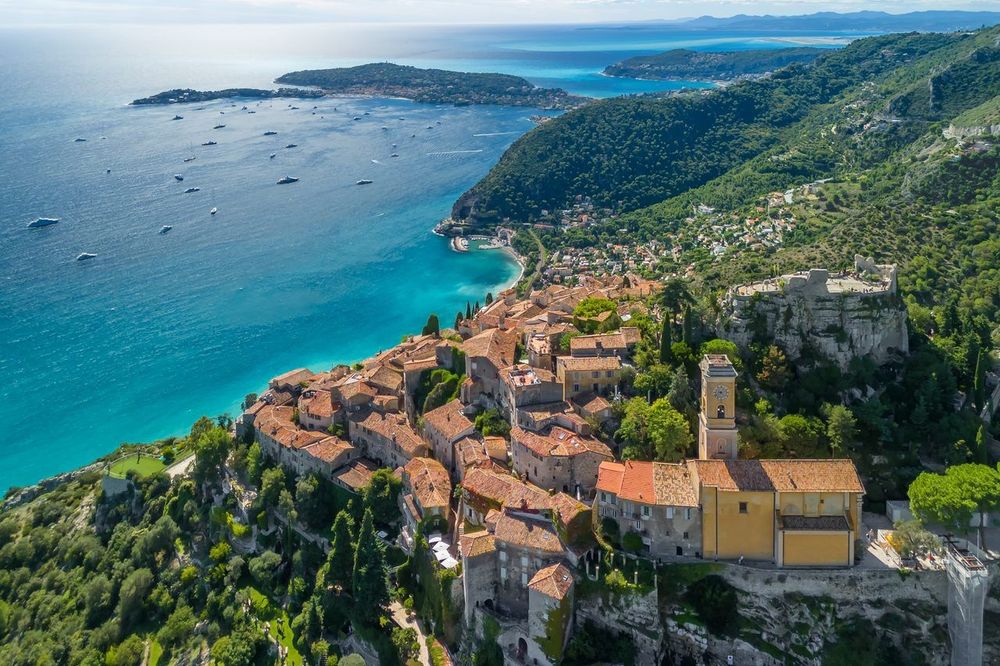
There are hilltop villages throughout Provence, but Èze occupies a singular position. Perched 429 meters above the Mediterranean, it is one of the few places in the world where you can simultaneously see the sea at your feet and the Alpine snows on the horizon. The view from the exotic garden, planted on the ruins of the medieval fortress, is probably the most striking on the entire Côte d'Azur.
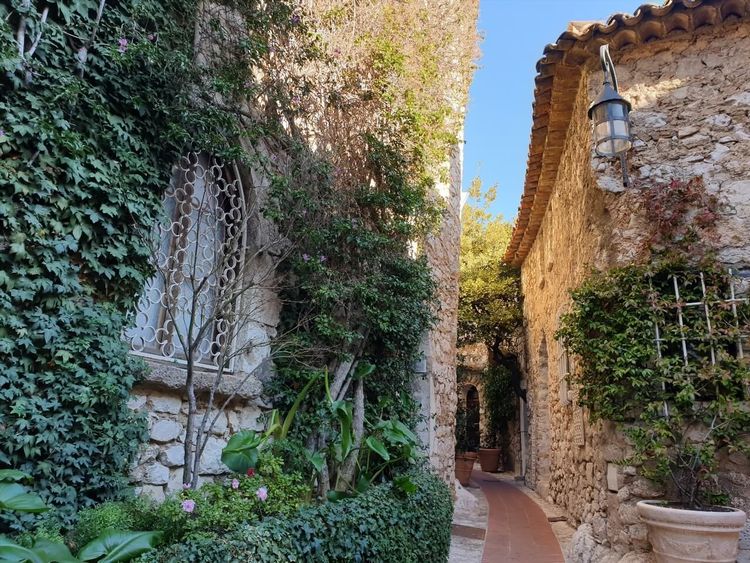
The village itself is a maze of paved medieval alleyways, topped with vaulted passageways and lined with bougainvillea. The limestone houses have been carefully restored since the 1960s, with results that are both authentic and immaculate. Sometimes too immaculate: Èze has more perfumers' boutiques and ceramics shops than permanent residents. Crowds are heavy from May to September, particularly on weekends. To experience the village differently, book a night at one of the hilltop hotels and stroll through the lanes at dawn, before the tour coaches arrive.
The Exotic Garden of Èze richly deserves its reputation. Planted in 1949 by botanists from Nice, it is home to more than 400 species of cacti and succulents, some several centuries old. From the paths that zigzag between the rocks, the view plunges down to the sea 429 meters below, with Monaco visible to the northeast on clear days. Adult admission is €8 (reduced €6), and the garden is open year-round.
The village is divided into three levels corresponding to the three corniches. The medieval village at the top is the most visited. Halfway up, Èze-Village (on the edge of the Moyenne Corniche) has a few restaurants and the famous Parfumerie Fragonard, whose distillery is open for free visits. At the bottom, Èze-Bord-de-Mer is an ordinary seaside resort, accessible from the village via the Friedrich Nietzsche trail — a 45-minute descent through olive trees and pines that the German philosopher regularly walked during his stays at the end of the 19th century, and where he is said to have conceived some of the ideas in Thus Spoke Zarathustra.
From the village, two access roads are worth your attention for the panoramas they offer. The Moyenne Corniche (N7), which passes through the village, is the most frequented. The Grande Corniche (D2564) is higher and more spectacular: built on the Roman Via Julia Augusta, it commands the coast from 500 meters up and allows stops at the Col d'Èze and the Belvédère de la Revère, with views stretching across the entire Riviera.
Before or after Èze, a detour to La Turbie (10 minutes by car) is a must. The Trophée des Alpes (Avenue Albert 1er, 06320 La Turbie, rated 4.5/5 on Google with 1,393 reviews), a Roman monument dating from 6 BC, is one of the best preserved in the entire Roman Empire. Erected to commemorate the subjugation of 45 Alpine peoples by Augustus, it overlooks the Principality of Monaco from its rocky peak at 480 meters above sea level.
Saint-Paul-de-Vence and Vence: Art, Chapels, and Medieval Lanes
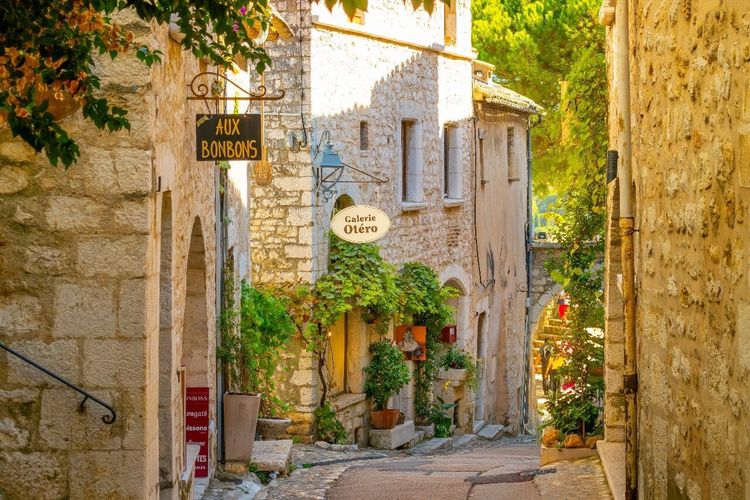
Some 25 kilometers northwest of Nice, Saint-Paul-de-Vence is perhaps the most famous village in the Nice hinterland. Its reputation as an artistic haven dates to the 1920s, when painters such as Soutine and Modigliani settled there, drawn by the light and by the Pension Roux — since renamed the Auberge de la Colombe d'Or — which accepted paintings as payment. Chagall and Picasso stayed there in turn, and the village acquired an aura it has never lost.
Today, the Fondation Maeght (623 Chemin des Gardettes, 06570 Saint-Paul-de-Vence, rated 4.7/5 on Google with 3,784 reviews) is the main reason to stop. Founded in 1964 by art dealer Aimé Maeght, it houses one of the most important private modern art collections in Europe: more than 13,000 works, including Giacometti bronzes placed throughout the gardens and Chagall mosaics integrated into the walls. The building itself, designed by Josep Lluís Sert, is a masterpiece in its own right: light enters through white cupolas calculated never to dazzle the artworks. The sculpture garden, where Miró creations stand alongside centuries-old trees, is not to be missed.
The medieval village itself is beautiful but dense. The main street, paved and lined with art galleries, is pedestrianized and often crowded. The 16th-century ramparts, built under François I, offer a 30-minute walk with views over the countryside and, on clear days, out to sea. The village cemetery, where Marc Chagall rests beneath a simple stone slab, is one of the most moving visits in the region.
Some 4 kilometers northeast of Saint-Paul, Vence is a much livelier town (16,000 inhabitants) than its neighbor. Its medieval old center, enclosed by ancient ramparts, houses an 11th-century cathedral with a Carolingian baptistery and a Chagall mosaic on the façade. But Vence's centerpiece is the Chapelle du Rosaire, known as the Matisse Chapel.
Henri Matisse worked on this chapel from 1947 to 1951, considering it "the work of my life." The interior is almost disconcertingly spare: white walls, black ceramic tiles depicting stylized figures of Christ and the Virgin, and yellow, green, and blue stained-glass windows whose trembling light shifts with each hour of the day. The chapel is open on Tuesdays and Thursdays from 10am to 11:30am and 2pm to 5:30pm, and on Friday mornings only. Places are limited, and advance booking is strongly recommended.
Hikers will note that Vence is the starting point for several trails toward the Plateau de Saint-Jeannet and the Baous — the limestone cliffs characteristic of the hinterland. The Baou de Saint-Jeannet (588 m) offers a panorama over the Var plain and, on clear days, as far as the Îles de Lérins off Cannes.
Gourdon and Tourrettes-sur-Loup: the Sentinels of the Hills
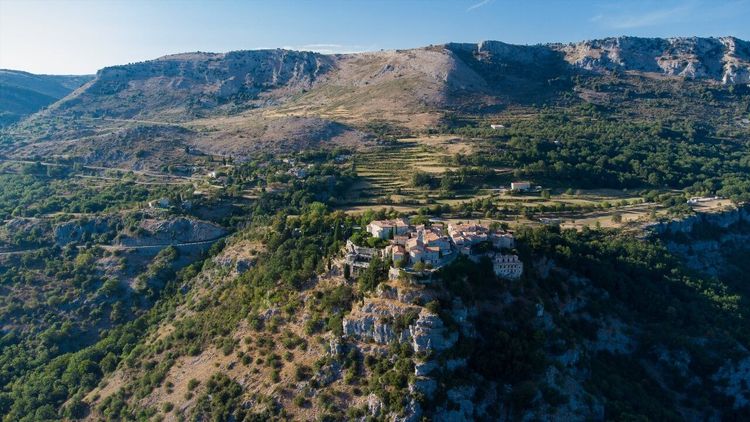
Few villages in France can claim to be visible from the sea. Gourdon is one of them. Perched 760 meters above the Gorges du Loup, this 12th-century fortified village is nicknamed the "eagle's nest" of the Côte d'Azur. On clear days, you can make out from its terraces the entire bay of Cannes, and reportedly the Îles d'Hyères more than 100 kilometers away.
The village has fewer than 500 permanent residents, and its main street is lined with local craftspeople: potters, honey-makers, herbalists, and distillers of aromatic plants. The medieval château of Gourdon, dating from the 13th century on Saracen foundations, houses a museum of decorative and naïve arts, as well as formal French gardens suspended over the void, designed in a style inspired by Le Nôtre. The gardens alone are worth the stop.
Some 10 kilometers below, Tourrettes-sur-Loup is a medieval village of a different kind. Built on a rocky spur at 400 meters above sea level, it overlooks the Loup valley with its 14th-century rampart houses, whose outer façades themselves form the defensive walls. This rare architectural system is perfectly preserved.
Tourrettes-sur-Loup has been known since the 1930s as the "violet capital": the fragrant violet is cultivated here for confectionery, perfumery, and cooking. Every year in March, the Fête des Violettes transforms the village into a festival of colors and fragrances. Out of season, several producers sell their violet honey and jams in artisan boutiques throughout the village.
Between Gourdon and Tourrettes, the D3 road is one of the most vertiginous in the hinterland: it runs along the edge of the gorges for several kilometers, with sheer drops of 300 meters down to the Loup below. An unforgettable experience — provided you have no fear of heights.
The Gorges du Loup and du Cians: Wild Nature on the Doorstep of the Sea
The Nice hinterland is not just a land of villages. Two gorges rank among the most spectacular natural sites in the Alpes-Maritimes, and they are unlike anything else on the Côte d'Azur.
The Gorges du Loup are the most accessible. The Loup river has carved a 6-kilometer cleft through the limestone of the Préalpes, with walls plunging sheer to over 400 meters in places. The D6 runs along the bottom of the gorges through a tunnel of greenery, passing under natural waterfalls and beside rock formations that the late-afternoon light makes almost surreal. The Cascade de Courmes (Saut du Loup) is the unmissable stop: the river plunges 40 meters into a basin of polished rock. In summer, the boldest visitors swim in the natural pools formed at the foot of the falls.
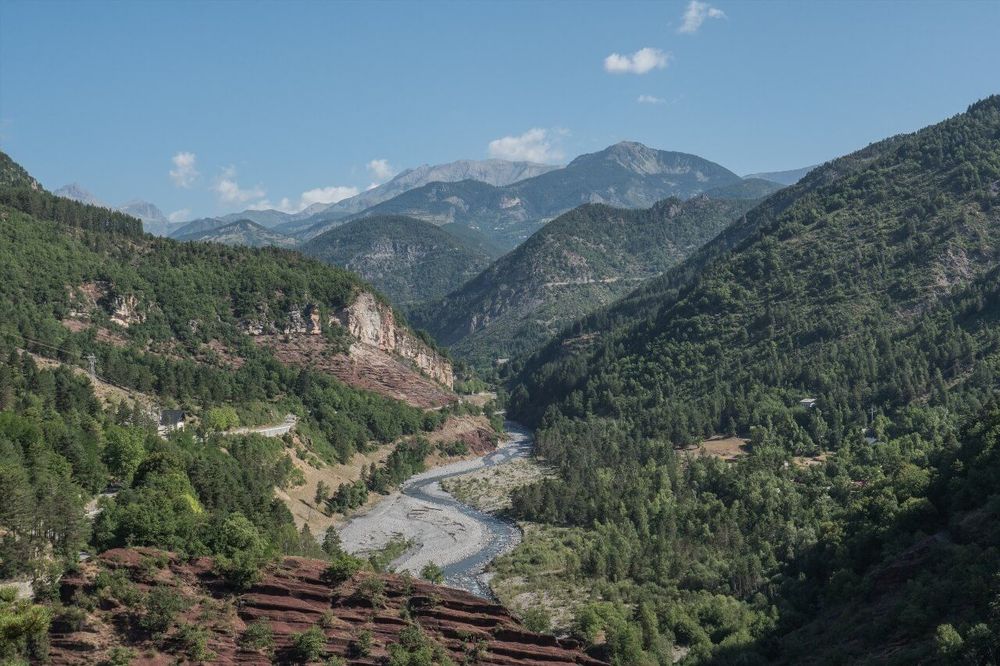
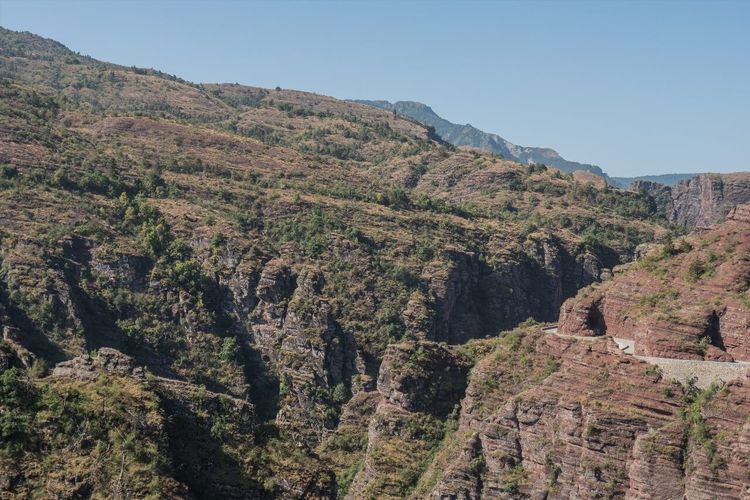
The Gorges du Cians (D28, 06420 Beuil, rated 4.7/5 on Google with 2K reviews) are less well known but offer a radically different spectacle. The Cians has carved its valley through the red schist of the high country, giving the walls a copper and orange hue unique in the entire region. The upper gorges, between Beuil and Valberg, reach in places 25 meters in width against a depth of 800 meters. The D28 road through them is only suitable for drivers comfortable with altitude and narrow roads. Passing geologists will note that the exposed layers of schist form an open book on the formation of the Alps some 300 million years ago.
Both gorges are often overlooked by visitors who focus on villages and museums. Yet they represent what is most singular about the Nice hinterland: the absolute proximity between the Mediterranean gentleness of the coast and an alpine nature that rivals the Gorges du Verdon or the Ardèche.
Vallée des Merveilles and the Mercantour National Park: the Hinterland in Its Purest Form
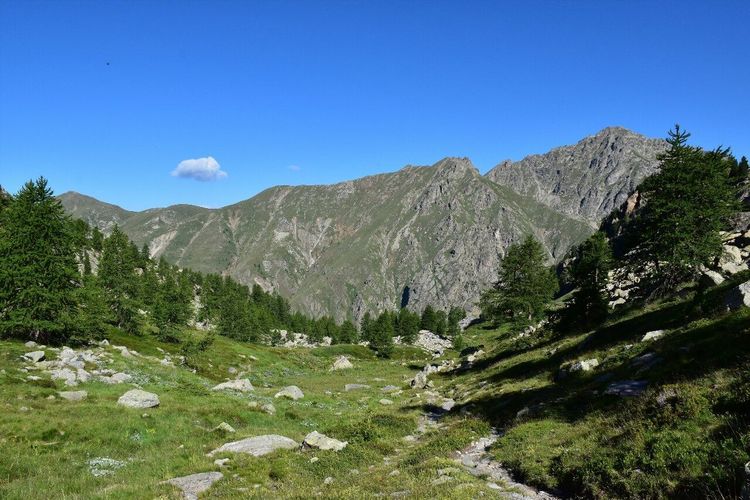
Two hours' drive from Nice, the landscapes change dramatically. The Mercantour national park, established in 1979, covers 685 km² between France and Italy. Its valleys — Roya, Tinée, Vésubie, Bevera — are home to wolves, lynxes, chamois, and ibexes. Its peaks exceed 3,000 meters (the Gélas reaches 3,143 m). And in its central massif, the Vallée des Merveilles conceals one of the most exceptional archaeological sites in Europe.
The Vallée des Merveilles owes its name to more than 40,000 rock engravings carved into the rock by Bronze Age populations between 1800 and 1500 BC. Depicting oxen, weapons, human figures, and geometric symbols, these petroglyphs are engraved on rocks polished by ancient glaciers, above the tree line. The site has been listed as a Historic Monument since 1989.
Important note: the Vallée des Merveilles is only accessible between June and October, once the snow has melted. Access to the heart of the protected site is regulated: the most fragile concentrations of engravings may only be visited with a licensed guide. Guided visits are organized from Saint-Dalmas-de-Tende (morning departure, late afternoon return, allow 8 to 9 hours in total). The hike is of intermediate level: approximately 15 km round trip with 800 meters of elevation gain. The peripheral zone of the site, where engravings can be seen without a guide, is freely accessible from the Mesches car park (1,380 m).
To reach the Vallée des Merveilles, most visitors park at Les Mesches or take the Train des Merveilles to Saint-Dalmas. Driving beyond Les Mesches is prohibited (except for locals and gîte owners).
The village of Tende deserves an overnight stay. This former Sardinian town, annexed to France only in 1947, has a Musée des Merveilles with remarkable museography, entirely dedicated to the petroglyphs and Bronze Age culture of the Alps. The old town, built in terraces above the Roya, has retained its grey stone-slab roofs and arcaded houses — a distinctly alpine architecture that contrasts sharply with the limestone villages of the mid-country.
More accessible but equally impressive, the glacial lakes of the Mercantour feature in every hiking guide to the Southern Alps. The trail that climbs the Vallée de la Madone from Saint-Martin-Vésubie (Place du Dr Cauvin, 06450 Saint-Martin-Vésubie, rated 3.9/5 on Google with 108 reviews) to the Lac de Fenestre (2,600 m) is one of the most popular — and most beautiful — hikes in the deep hinterland. For travelers who wish to explore the Mercantour without intensive hiking, Saint-Martin-Vésubie (1,000 m altitude) is an ideal base: it has hotels, restaurants, and waymarked trail starts for all levels, connected to Nice via the Vésubie road in 1h20. And before heading inland, our Nice audio walking tour covers the city itself in 28 stops, on foot and at your own pace.
Mougins and Biot: Gastronomy, Blown Glass, and Shaded Terraces
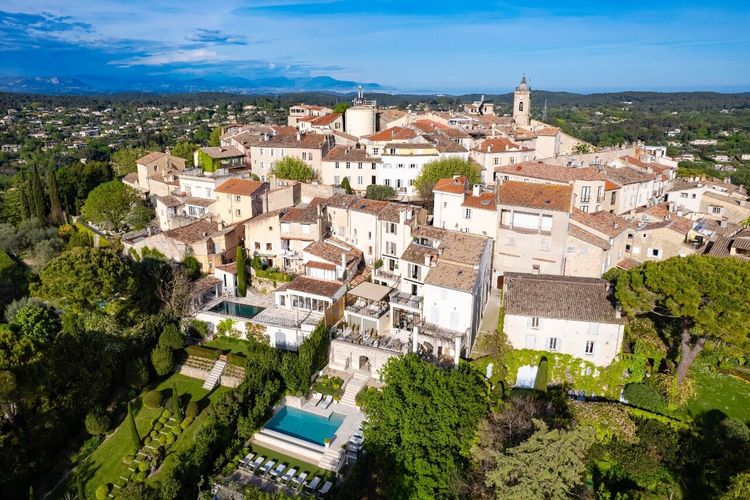
To the west of the Nice area, two villages embody the hinterland in its most hedonistic guise: Mougins for gastronomy, Biot for craft arts.
Mougins is inseparable from the name of Picasso, who chose to spend the last twelve years of his life there (1961–1973) at the Villa Notre-Dame-de-Vie. The village retains a museum of classical and modern art (MACM) presenting its own collections in dialogue with major works. But Mougins is best known for its exceptional gastronomic concentration: the hilltop village of 20,000 inhabitants boasts more than 40 restaurants, several of which hold Michelin stars.
The Mougins Gastronomy Festival (Les Étoiles de Mougins), held every year in September, brings together chefs from around the world for culinary demonstrations and themed dinners open to the public. If your trip coincides with this event, reservations must be made several months in advance.
Some 20 kilometers east of Mougins, Biot is the French capital of blown glass. The Verrerie de Biot, founded in 1956 to revive a medieval tradition, produces its famous bubble glass — air bubbles incorporated through a glassmaking technique unique in France. The workshop is open to visitors, who watch glassblowers at work from a glass gallery and purchase unique pieces in the adjoining shop.
Biot also has the Musée National Fernand Léger (255 Chemin du Val de Pome, 06410 Biot, rated 4.5/5 on Google with 1,141 reviews), set up in 1960 in a large Provençal villa surrounded by parkland. The façade itself is a monumental mosaic visible from the road. Inside, the permanent collection traces the full arc of the artist's evolution, from the dark Cubism of the First World War to the multicolored geometric compositions of his peak — one of the most underrated museums in the region.
The old village of Biot, perched high up, is worth an hour's wandering: its vaulted lanes and small squares shaded by centuries-old plane trees have the quiet charm of Provençal villages before mass tourism.
Peille, Peillon, and Sainte-Agnès: the Forgotten Medieval Gems
Less than an hour from Nice but overlooked by the majority of tourist guides, Peille, Peillon, and Sainte-Agnès form a trio of medieval villages well worth the detour for any traveler wanting to see the hinterland off the beaten track.
Peillon is the most spectacular of the three. Listed among the Plus Beaux Villages de France (Most Beautiful Villages of France), it clings to a prow-shaped rocky spur at 376 meters above sea level, surrounded by a wild valley that seems to shield it from the world. The village is so well preserved that it has barely changed since the 15th century: its five- or six-story houses, built tightly against one another, form a silhouette that merges with the rock. No cars enter; the car park is at the base of the promontory.
Inside stands a Chapelle des Pénitents Blancs from the 15th century whose frescoes, attributed to Giovanni Canavesio, are among the best preserved in the region. The depiction of the Passion of Christ covers the entirety of the walls in some twenty scenes of a realism remarkable for the period.
Some 6 kilometers as the crow flies, Peille is different: larger (900 permanent residents), more lived-in, with an authentic and less museum-like character than its neighbor. Its steep lanes, 17th-century fountains and washhouses, clock tower, and ochre façades form a remarkably coherent medieval ensemble. The village is also the starting point of a panoramic trail to the Pointe de Baudon (1,264 m), with exceptional views over the entire coast.
Sainte-Agnès is, in its own way, unique in Europe. Perched at 671 meters above sea level on a rocky promontory as the crow flies from the sea, it is considered the highest coastal village in Europe — that is, the highest situated less than 10 kilometers from the Mediterranean. This vertiginous position led to its transformation into a military fortress during the Second World War: the fortifications of the Alpine Maginot Line (or Ligne des Alpes), partly open to visitors, include underground galleries several hundred meters long carved into the rock in the 1930s.
The view from the terrace of the church of Sainte-Agnès is one that takes your breath away: Menton, Monaco, and the entire coast between Nice and the Italian border spread out far below. After a coffee on the village square, it is hard to believe you are just 45 minutes from the crowded beaches of Menton.
Where to Stay in the Nice Hinterland
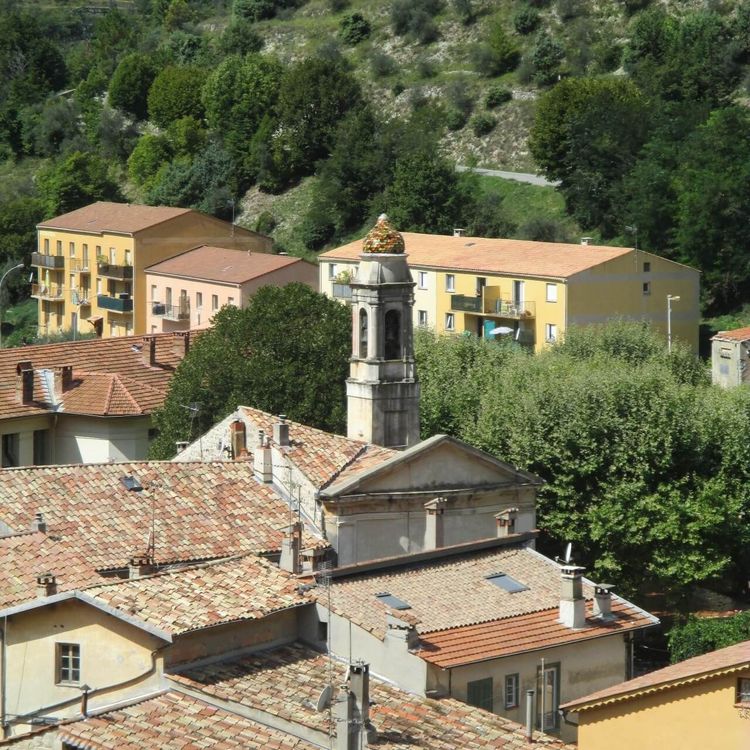
Staying in the hinterland rather than in Nice radically changes the experience. The mid-country villages are best appreciated early in the morning and in the evening, when day-trippers have returned to the coast.
Charming hotels in hilltop villages are the most sought-after category. In Èze, Hôtel Château Eza (Rue de la Pise, 06360 Èze, rated 4.6/5 on Google with 1,584 reviews) (Relais & Châteaux, from €350/night) is literally built into the ruins of a medieval castle, with rooms offering a panorama 429 meters above the sea. More affordable options such as La Bergerie in Vence or Les Remparts in Saint-Paul-de-Vence offer rooms between €90 and €180/night with views over the countryside or the ramparts.
For stays in the high country and the Mercantour, mountain gîtes and refuges are the norm. The Vésubie Valley, around Saint-Martin-Vésubie, offers trail gîtes along the GR52 and GR5 routes. The Refuge de la Madone de Fenestre (open June to September, evening meals served) allows you to spend a night at 1,903 meters and explore the lakes and ridges of the Mercantour from there.
Bed and breakfasts on farms and bastides in the hinterland often offer the best value for money in the region. In the communes around Vence and Tourrettes-sur-Loup, several properties rent rooms between €60 and €120/night with home-cooked breakfast and, sometimes, table d'hôtes in the evening. This is the best way to meet locals and discover regional cuisine: soupe au pistou, Niçoise daube, pan bagnat, and herb tarts from the hillside.
For families or groups, weekly rentals of Provençal farmhouses and bastides are very common in the near hinterland. Prices vary considerably by season: expect €1,000 to €2,000 per week for a villa with a pool in May or October, and considerably more in July–August. The Mas Candille in Mougins, a luxury hotel in an 18th-century farmhouse with a spa and an infinity pool overlooking Cannes, represents the most refined option in the territory.
Practical Itineraries: from 2 Days to a Week
The diversity of the Nice hinterland complicates trip planning: distances are short on the map, but winding roads triple travel times. Here are three itineraries calibrated to the time available.
Weekend (2 days): the best of the mid-country
On the first day, leave Nice early for Èze (30 min) to visit the Exotic Garden before 9am. Head up to La Turbie for the Trophée des Alpes (1 hour), then drive down to Vence for lunch (1h15 from La Turbie). Spend the afternoon at the Matisse Chapel and Vence's old center, before ending at Saint-Paul-de-Vence for the Fondation Maeght (closes at 6pm). Overnight in Saint-Paul or Vence.
On the second day, head up to Gourdon for the morning views (45 min from Vence), descend into the Gorges du Loup (30 min), then head back up to Tourrettes-sur-Loup for lunch in the village. In the afternoon, make for Biot for the Verrerie and the Léger Museum, before returning to Nice or Cannes (40 min from Biot).
Long weekend (3–4 days): mid-country and secret medieval villages
Add a day to explore the Peille–Peillon–Sainte-Agnès triangle, reachable from Nice in 45 minutes. Devote half a day to Peillon, then head up to Peille for the afternoon. The following day, Sainte-Agnès and its Alpine Line fortifications take up the morning. The most energetic travelers can then continue to Mougins in the afternoon (1h15 from Sainte-Agnès via Menton and the A8).
One week: full hinterland including the Mercantour
With seven days, you can cover the entire territory. The first four days follow the long-weekend itinerary. On the fifth day, take the Train des Merveilles from Nice (depart 7:30am) to Saint-Dalmas-de-Tende, with a hike in the peripheral zone of the Vallée des Merveilles and an overnight stay in Tende. The sixth day is dedicated to the Musée des Merveilles (2 hours) and an excursion to the gorges of Saorge or the villages of the Roya. On the seventh day, return via Saint-Martin-Vésubie, with a stop at the Lac de Fenestre if weather conditions allow.
A few ground rules for organizing your stay: never plan more than three villages per day in the mid-country (two is often more enjoyable). Book guided visits to the Vallée des Merveilles several weeks in advance in July–August. Eat early or late: restaurants in hilltop villages are fully booked between 12:30pm and 2pm in high season. Always have a weather backup plan: the hinterland can be overcast when the coast is sunny, and vice versa. The museums in Biot, Vence, or Tende are excellent alternatives in bad weather.



FAQ
What is the Nice hinterland?
The Nice hinterland refers to the inland territory of the Alpes-Maritimes, behind the coastal strip. There is no official administrative definition, but the term generally covers the municipalities beyond the first hills overlooking the coast, from the border with the Var to the west to the Italian border to the east. A distinction is usually made between the mid-country (up to 800 m), with its Provençal villages and garrigue landscapes, and the alpine high country (800 to 3,143 m), which peaks at the summits of the Mercantour national park.
What are the most beautiful villages in the Nice hinterland?
The must-sees are Èze for its sea views, Saint-Paul-de-Vence for the Fondation Maeght, Gourdon for its panorama at 760 meters, Peillon for its medieval authenticity (listed as one of France's Most Beautiful Villages), and Sainte-Agnès for its vertiginous position as the highest coastal village in Europe. Among the lesser-known but equally impressive destinations: Peille, Lucéram, Saorge, and Breil-sur-Roya in the alpine valleys of the Roya.
How do I get to the Nice hinterland without a car?
Several options exist. The Train des Merveilles connects Nice to Tende in 1h40, with stops in mountain valleys. Lignes d'Azur buses serve Vence and Saint-Paul-de-Vence from Nice (line 500, about 1 hour). For the most isolated villages — Gourdon, Peille, Peillon — organized minibus excursions from Nice or Cannes are available. This is the most practical solution if you have no car, though it leaves little time to linger.
Is the Vallée des Merveilles difficult to access?
The peripheral zone is freely accessible from June to October, without a guide, from the Mesches car park (1,380 m). The round-trip hike to the first engravings is about 10 km with 500 meters of elevation gain. To access the heart of the protected site and the densest concentrations of petroglyphs, a licensed guide is mandatory. The access season is strictly limited to June–October due to snow cover. The full hike (15 km, 800 m of elevation gain) is of intermediate level: it requires good physical fitness and appropriate hiking footwear.
Is the Nice hinterland suitable for family travel with young children?
Yes, several sites are very well suited. The Exotic Garden of Èze delights curious children with its giant cacti and spectacular views. The Verrerie de Biot offers fascinating glassblowing demonstrations viewable from a gallery. The Musée des Merveilles in Tende is designed to introduce archaeology to younger visitors. The Gorges du Loup, which can be visited by car without intensive hiking, impresses young and old alike. The Vallée des Merveilles, however, is not recommended for children under 8: the hike is long and the terrain demanding.
How long should I plan to visit the Nice hinterland?
Two days are enough to discover the iconic mid-country villages (Èze, Saint-Paul-de-Vence, Gourdon). Four days allow you to add the lesser-known medieval villages — Peillon, Sainte-Agnès — and the Gorges du Loup. A full week is needed to reach the Mercantour and the Vallée des Merveilles, which require two days on-site on their own. Whatever your pace, leave time for the unexpected: it is in unplanned stops that the hinterland most often reveals its best moments.
Are there easy hikes in the Nice hinterland?
Yes, several. The Sentier des Panoramas around Vence (8 km loop, moderate elevation gain) is accessible to all levels. The path between Peillon and Peille (6 km, 2 hours, intermediate level) links two medieval villages through the maquis. In the Mercantour, the trail to the Lac de la Gravière from Les Mesches (4 km round trip, 200 m of elevation gain) is one of the easiest high-mountain hikes. The Friedrich Nietzsche trail between Èze-Village and Èze-Bord-de-Mer (45-minute descent) is accessible to everyone and offers an immersion in Mediterranean vegetation.
Conclusion
The Nice hinterland is one of those territories that reveals itself gradually. A first visit often leaves the impression of having seen Èze and Saint-Paul-de-Vence like everyone else — beautiful, but predictable. The second time, you push beyond Gourdon, plunge into the Gorges du Cians, spend a night in Peillon after the tourist coaches have gone. And that is when the magic truly begins.
Whether it is the rock engravings of the Vallée des Merveilles or the Matisse Chapel in Vence, the vertiginous Corniche road or the trail between two medieval villages that nobody knows, this territory accumulates experiences unlike anything else on the Mediterranean. Nice is the natural gateway to the hinterland: a Ryo audio guide for Nice is waiting for you there to begin the exploration from the Promenade des Anglais and understand how the city has shaped its hills over the centuries. Load your Ryo audio-guided tour before leaving the coast — the app works offline, which is handy when the signal disappears in the Mercantour valleys. Take a back road rather than the N7, stop at the first viewpoint you come across. The Nice hinterland always rewards those who take the time to stop.
À lire également