© Shutterstock
 Votre guide Ryo
Visiting Nice in 2 Days: Complete Itinerary for 2026
The wind rising over the Baie des Anges carries a very particular scent: salt, grilled chickpea flour, and a hint of orange blossom from the Cours Saleya. It's in this atmosphere that you understand why visiting Nice in 2 days is enough to fall in love with the city — provided you follow the right tempo. Two well-filled days let you cover the essentials between sea and hillside, from the electric blue of the Promenade des Anglais to the ochre lanes of Vieux Nice, without rushing. To get your bearings easily on the ground, the Ryo audio-guided tour of Nice provides commentary on many of the places mentioned here, neighborhood by neighborhood.
Over these 48 hours, you'll cross paths with a king who perched on his hill a thousand years ago, a fleet of traditional fishing boats called pointus returning to port at dawn, a Matisse collection housed in a 17th-century Genoese villa, and a flower market that has animated the Cours Saleya every morning for more than a century. Add in a stop on a pebble beach between visits, a tasting of piping-hot socca served on newspaper, and — if the calendar allows — the confetti of the Carnaval de Nice or the Luminescence projections. Enough to build a real itinerary, not just a list of photos to take.
Nice in 2 Days: How Much Time to Plan for a Successful Stay
Two days is the format most requested by visitors, and it's also the one that offers the best balance between a packed schedule and the pleasure of wandering. Any less and you only get a taste; any more and you start venturing beyond the city center to explore the surroundings, which changes the nature of the trip entirely. This short format works particularly well for a city break from another major French or European city, with a flight or TGV on Friday evening and a return late Sunday afternoon, without sacrificing a moment of the program.
The ideal 2-day itinerary follows a simple geographical logic: the first day focuses on the historic heart and the seafront promenade, the second explores the port, the heights of Cimiez, and its museums. Each day is structured in three parts — morning, midday, and afternoon — a framework that matches the natural rhythm of sightseeing and avoids unnecessary back-and-forth across the city.
Here, in summary, is the example 2-day itinerary detailed further below in this article: Day 1 — Promenade des Anglais and Place Masséna in the morning, Vieux Nice and the Cours Saleya market at midday, Colline du Château in the late afternoon. Day 2 — Port Lympia and the coastal path in the morning, Cimiez and the musée Matisse in the early afternoon, MAMAC and the Promenade du Paillon to finish.
This pace leaves room for a beach break, a coffee on a terrace, or a foodie detour without throwing off the schedule. If you only have a single day, the logic changes completely: the route then tightens around the strict essentials, leaving out the heights of Cimiez and the port. The Nice audio-guided tour still makes a good backbone for that shorter day, especially around Port Lympia and the Promenade des Anglais.
Day 1 in Nice: Promenade des Anglais, Vieux Nice, and Colline du Château
Dedicate this first day to the sea-square-old-town triangle: it's the trio that gives Nice its identity, and it can be covered on foot without any particular effort. At a glance: morning on the seafront and Place Masséna, midday in the lanes of Vieux Nice and at the Cours Saleya market, afternoon and sunset on the Colline du Château (Montée Lesage, 06300 Nice, rated 4.7/5 on Google with 25,471 reviews).
The Promenade des Anglais, Place Masséna, and Promenade du Paillon
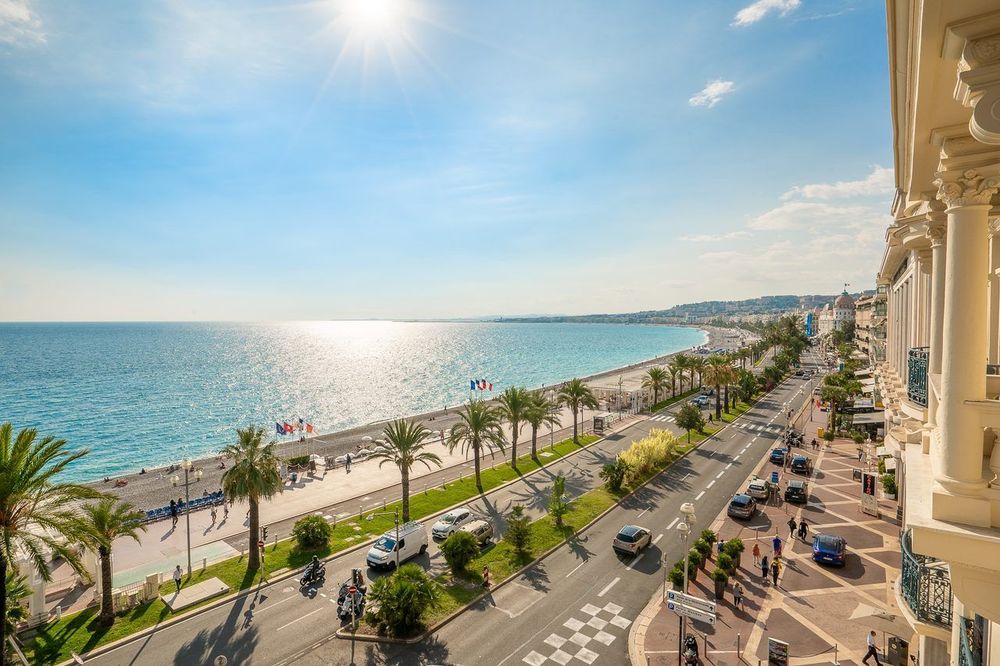
Morning. The Promenade des Anglais opens the day in style. Its seven kilometers of seafront, iconic blue chairs, and the clean sweep of the Baie des Anges make it one of the most photographed waterfronts on the Côte d'Azur. In the morning, before the tourist crowds arrive, the raking light on the turquoise water is worth the trip in itself.
Heading toward the center, you arrive at Place Masséna, with its black-and-white checkerboard paving, Italian-style red ochre façades, and seven statues lit up at night by Jaume Plensa. This is the beating heart of Nice, the junction point between the old town, the shopping district, and the sea.
Just behind it, the Promenade du Paillon stretches out across 12 hectares of gardens, fountains, and water features over the former bed of the river, now covered over. You can stroll through it for a few minutes before diving into the lanes of Vieux Nice, just a short walk away.
One simple tip: keep your sneakers on — the distance between these three points takes about twenty minutes to walk, with no need for the tram.
Vieux Nice and the Cours Saleya Market
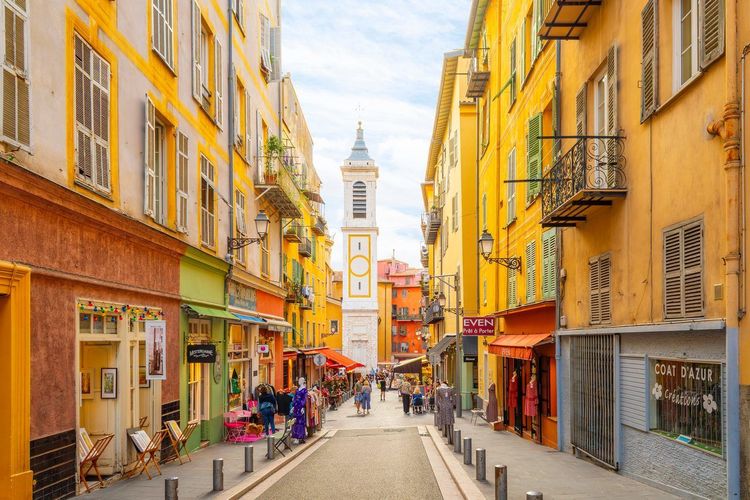
Midday. Vieux Nice begins where the Haussmannian city ends. Narrow lanes, laundry hanging from windows, façades painted in yellow and pink: the neighborhood has kept its Italian soul, a legacy of the centuries when Nice belonged to the Kingdom of Sardinia. Its tight grid plan dates back to its original defensive function: narrow streets protected against sea winds as much as against attack. Today, craftsmen's workshops, galleries, and small independent shops occupy the ground floors, alongside santon figurine sellers and wine cellars offering a glass of Bellet, the local appellation produced on the hills above the city.
At the heart of this maze, the Cours Saleya hosts a flower and local produce market every morning from Tuesday to Sunday — a fixture of Nice life since the 19th century. On Mondays, the stalls make way for an antiques market that is equally worth a visit.
This is where, between the cut-flower stalls and the olive stands, you should eat your first socca: this chickpea-flour pancake, cooked piping hot over a wood fire and served generously peppered, is eaten standing up, straight from a piece of paper. The locals eat it without cutlery, at any hour of the day.
A few minutes' walk from the market, the Cathédrale Sainte-Réparate stands out with its dome of green and yellow glazed tiles, typical of the Nice Baroque style; entry is free outside of services. Right next door, the Palais Lascaris, a 17th-century mansion with a sculpted façade, houses a museum of antique musical instruments: it is one of the city's municipal museums, accessible with the city museum pass (around 10 euros for 24 hours, valid across the entire network).
Continue east through the neighborhood to Place and Tour Saint-François, where a lively small fish market takes place every morning, then on to Place Garibaldi, wider and more open, lined with straw-yellow arcades that evoke Turin more than the Mediterranean.
Colline du Château at Sunset
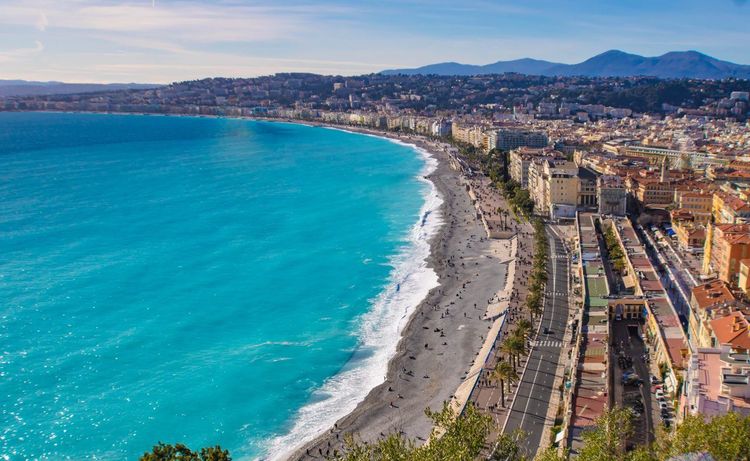
Afternoon. End the day at the Colline du Château, reachable on foot via a shaded stairway from Vieux Nice, or by elevator from the Quai des États-Unis for tired legs. Nothing remains of the fortress that gave the hill its name — razed on the orders of Louis XIV in 1706 — but the panorama it offers is the most complete in the city: the entire Baie des Anges on one side, Port Lympia on the other.
Ideally, go up about an hour before sunset: the golden light on the terracotta rooftops of Vieux Nice, and the blue turning to pink over the sea, offer one of the finest views on the Côte d'Azur, completely free of charge. Do pay attention to the park's closing time, which varies by season — from 6 pm in winter to 8 pm in summer. To continue exploring this neighborhood in the days that follow, the Ryo guide to Vieux Nice details the history of every lane, not far from Port Lympia and the Promenade des Anglais that the Nice audio-guided tour also covers.
Day 2 in Nice: Port Lympia, Cimiez, and Must-See Museums
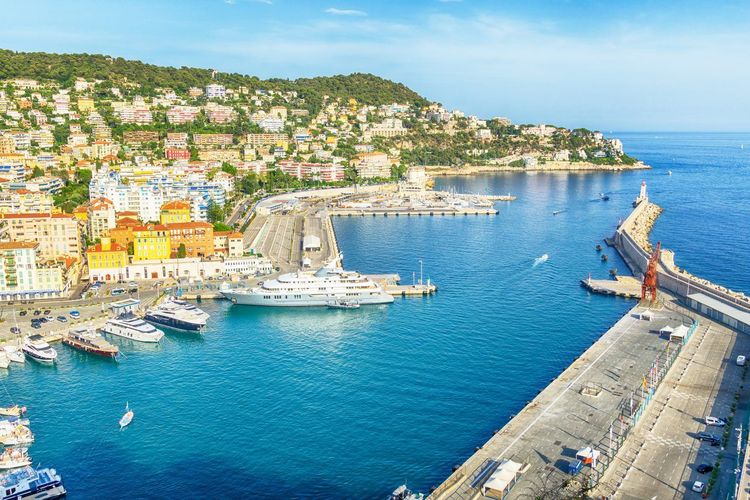
The second day shifts the scenery completely: head to the port with its colorful façades, then up to the heights of Cimiez, a residential neighborhood where art meets Roman history. At a glance: morning along the coast and at the port, midday and a light lunch before climbing to Cimiez, afternoon in the museums then back toward the center at dusk.
Port Lympia and the Coastal Path
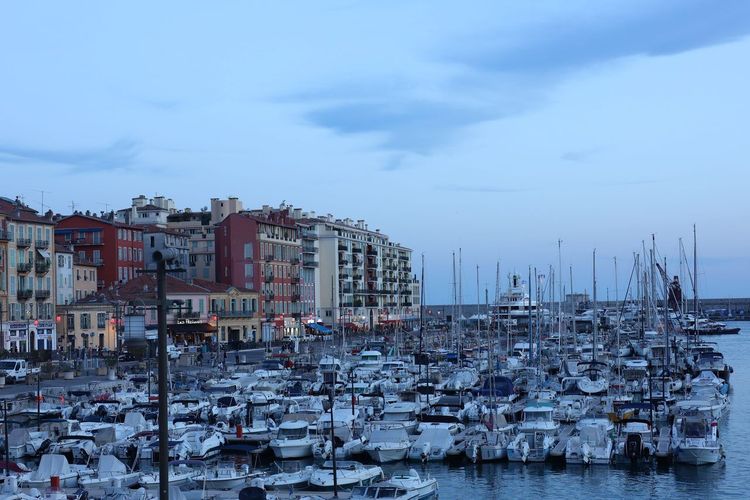
Morning. Port Lympia opens up just behind the Colline du Château, in an oval basin lined with Italian pastel façades: yellow, salmon pink, ochre. Dug out from the mid-18th century onward, it has retained its original layout and remains one of the few pleasure ports on the Riviera where yachts and fishing boats still coexist.
In the morning, you can still spot the pointus — those small traditional fishing boats with a tapered hull, typical of the Nice coastline — returning with their nightly catch. To cross the basin without walking all the way around, hop aboard the Lou Passagin ferry shuttle: the crossing takes under three minutes and costs just a few cents, making it one of the cheapest boat rides in the Mediterranean.
From the quayside, the Nice coastal path follows the sea for several kilometers, carved into the rock between umbrella pines and coves. A short twenty-minute walk leads to the Nice lighthouse, at the port entrance — a viewpoint less well known than the Colline du Château but just as photogenic at sunrise.
Cimiez: Gardens, Monastery, and Musée Matisse
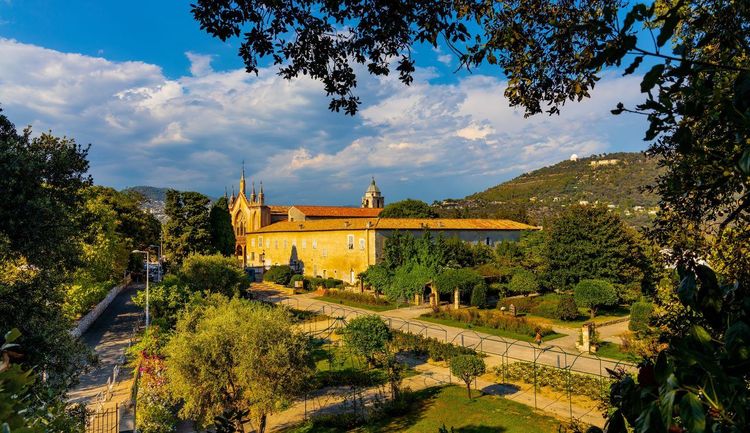
Midday and afternoon. Next, take the bus up to the Cimiez neighborhood, on the heights above Nice. This residential quarter, prized since the Belle Époque by European aristocracy, packs several centuries of history into just a few hundred meters. Its name comes directly from Cemenelum, the Roman city that was home to several thousand inhabitants in the 2nd century, before it declined in favor of the current Nice site, closer to the coast. Wandering among the ruins of the baths and the Belle Époque villas gives a rare sense of the site's historical continuity, from Antiquity to the winter stays of Queen Victoria, who lodged at the Excelsior Regina, just above.
Start with the Jardin des Arènes de Cimiez, planted with centuries-old olive trees and surrounding the ruins of a Roman amphitheater. These arenas long hosted the Nice Jazz Festival, now held in July in the Jardins Albert-Ier and on Place Masséna in the city center. Right next door, the Musée d'archéologie de Nice / Cimiez brings together objects unearthed at the ancient site of Cemenelum and provides access to the Roman baths, the most impressive part of the excavations.
Just nearby, the Monastère de Cimiez and its garden offer a peaceful interlude: a rose garden, terraced olive groves, and an open view over the bay. The adjoining Franciscan church houses several altarpieces by Louis Bréa, a Nice painter of the late 15th century, and the neighboring cemetery is the resting place of Matisse and Raoul Dufy.
The highlight of the neighborhood remains the Musée Matisse, housed in a 17th-century Genoese villa. The painter spent his final decades in Nice, and the museum holds one of the largest public collections of his work: paintings, cut-out gouaches, drawings, and personal objects.
MAMAC and Promenade du Paillon at the End of the Day
Heading back down toward the center in the late afternoon, stop at the MAMAC, the Museum of Modern and Contemporary Art of Nice. Its collection brings together the big names of the École de Nice and Nouveau Réalisme — including Yves Klein and Niki de Saint Phalle — in a distinctively recognizable grey marble building. Don't miss its rooftop terrace, freely accessible during opening hours, which offers a bird's-eye view over the rooftops of Vieux Nice.
Right in front of it, the Théâtre de Verdure, an open-air venue nestled in the Jardins Albert-Ier, hosts concerts and performances in summer. To end the day on a musical or architectural note, the Opéra Nice Côte d'Azur (4-6 Rue Saint-François-de-Paule, 06300 Nice, rated 4.5/5 on Google with 2,779 reviews), just a few streets away on the edge of the Cours Saleya, is worth a look even without a ticket: its late 19th-century façade and Italian-style auditorium are among the most beautiful in the region.
Round off this second day with a stroll along the Promenade du Paillon, lit up as night falls, before choosing where to have dinner.
Nice's Beaches: Where to Enjoy the Mediterranean between Sightseeing
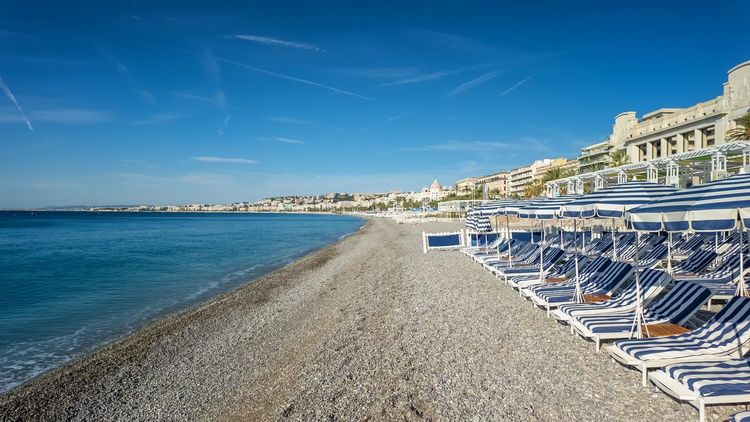
Nice has no fine sand — its beaches are made of pebbles, and that is precisely what makes the water so clear. Between the Promenade des Anglais and the port, about twenty beaches follow one after another, mostly public and free, with a few private establishments offering sun loungers and food service.
Slip a swim break between two stops rather than blocking out an entire half-day: after the Colline du Château on the first day, or just before heading to Cimiez on the second, thirty minutes is enough to cool off. Bring water shoes — the pebbles are unforgiving on bare feet.
The areas closest to the center, between the Negresco and the opera house, are also the liveliest: perfect for watching the city from the water. The further you go east, toward the port and beyond, the quieter and rockier the coves become — more popular with locals than passing visitors.
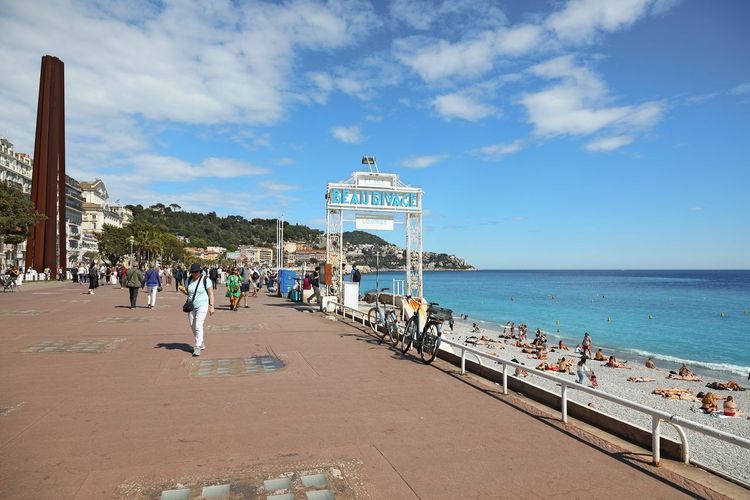
If you're looking for a proper beach break, Plage Beau Rivage (107 Quai des Etats-Unis, 06300 Nice, rated 4.1/5 on Google with 3,784 reviews), right in the center, lines up sun loungers, showers, and a decent food menu for those who don't want to leave the promenade. Expect around thirty euros for two sun loungers for the day in high season on private beaches, significantly less in the shoulder season; public beaches remain entirely free, with public showers and facilities at regular intervals.
The water stays cool until the end of May, around 18°C, then gradually warms to reach 24–25°C between July and September — the most comfortable period for a real swim.
For a full beach-by-beach comparison, including facilities and crowd levels, head to our Ryo article on Nice's beaches, which also details the least crowded spots in the bay.
Extending Your Stay: Visiting Nice in 3 or 4 Days
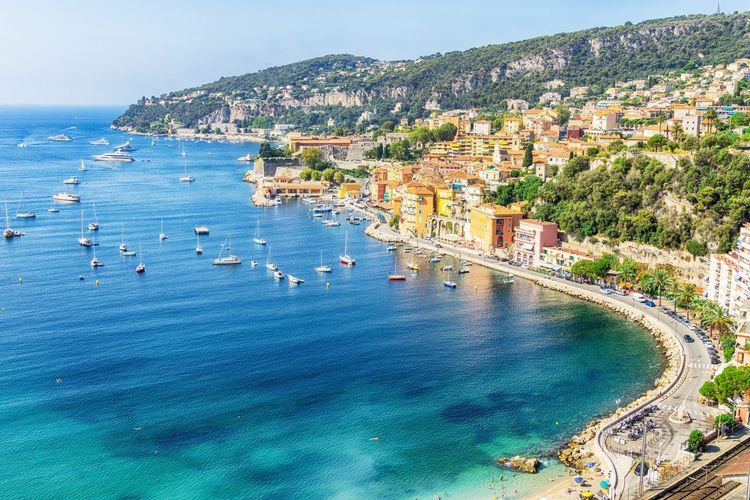
The short format covers the essentials, but Nice reveals itself more fully with extra time. Visiting Nice in 3 days allows you to add an urban hike and a park; in 4 days, you can venture out to nearby villages and along the coast without rushing. Here's how to extend beyond the weekend format without repeating what was already covered in the first two days.
Getting Higher: Mont Boron and the Grotte du Lazaret
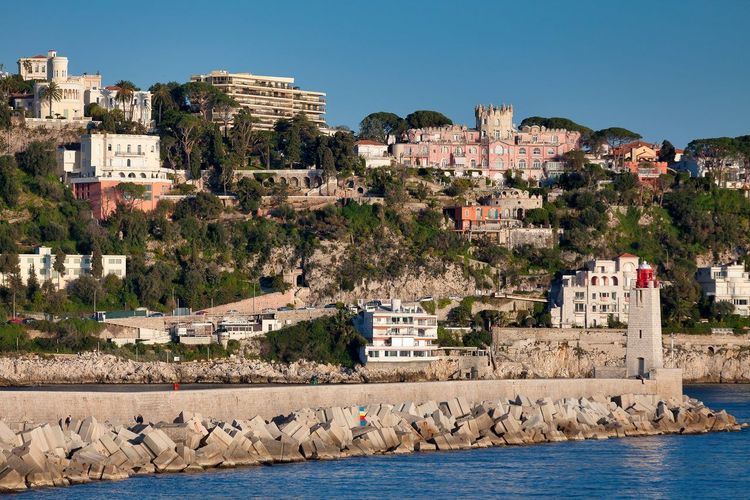
East of the port, Mont Boron rises to 178 meters and can be climbed in just under an hour via a shaded path, also accessible by bus to mid-height for those who want to shorten the effort. The panorama at the top far surpasses the view from the Colline du Château: on a clear day, the vista stretches from Italy to the Estérel, with Cap Ferrat and Cap d'Ail in the foreground.
On the southern slope, by the sea, the Grotte du Lazaret will interest prehistory enthusiasts: this major archaeological site, occupied around 170,000 years ago by groups of Homo erectus, has yielded one of the best-preserved campsites in Europe. Visits are by reservation only, in small groups, with a guide who reconstructs the daily life of its former occupants.
Nature and Day Trips: Parc Phoenix and Saint-Jean-Cap-Ferrat
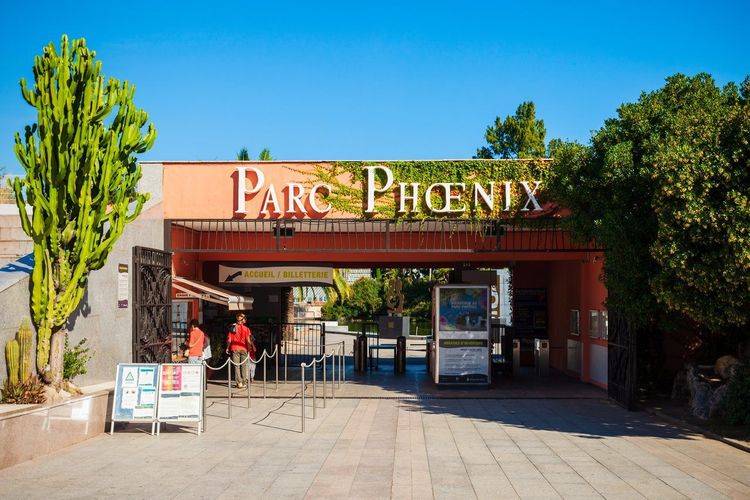
On the green side, Parc Phoenix, west of the city near the airport, gathers around 2,500 plant species from five continents across seven hectares under an enormous tropical greenhouse, with an aviary, ponds, and animals. Allow half a day to enjoy it properly with children.
For a real break between two Nice days, Saint-Jean-Cap-Ferrat (06230 Saint-Jean-Cap-Ferrat, rated 4.7/5 on Google with 10K reviews) is reachable in about thirty minutes by bus from the city center. This upscale peninsula, long the home of Europe's great fortunes, hides less-crowded coastal paths than those in Nice, some of the clearest water on the Riviera, and the Villa Ephrussi de Rothschild, whose nine themed gardens overlook the sea on both sides of the peninsula.
To plan these extra days in detail, two useful resources: the Ryo guide to visiting Nice in 1 day if you need to tighten the schedule instead, and our Ryo selection of the most beautiful villages around Nice to choose the best day trip based on your interests.
What to See in Nice for Free
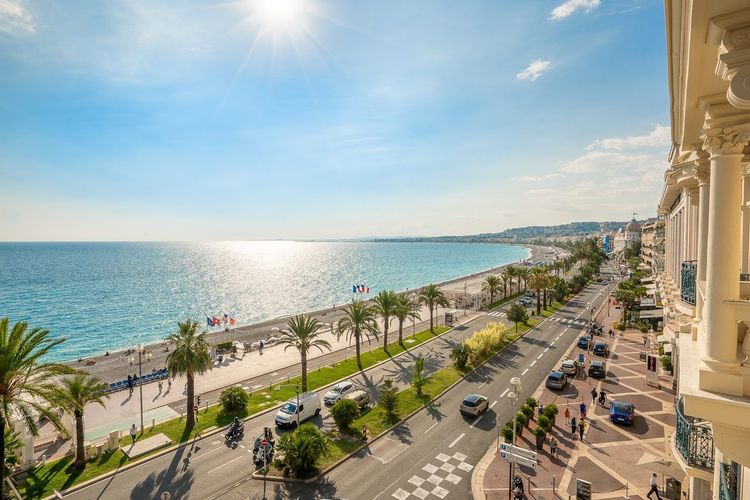
Nice doesn't require an unlimited budget to be fully enjoyed. A good portion of the must-sees mentioned above — the Promenade des Anglais, the Colline du Château, Vieux Nice, the Cours Saleya market, the Promenade du Paillon — can be visited without spending a cent. This is actually one of the city's great strengths compared to other Côte d'Azur destinations, where access to the sea or public gardens sometimes comes with an admission fee.
One place deserves a special mention for anyone wondering what to visit in Nice for free off the beaten path: the Saint-Nicolas Orthodox Cathedral (Avenue Nicolas II, 06000 Nice, rated 4.6/5 on Google with 10,604 reviews), the largest Russian Orthodox religious building outside Russia, with its six colorful onion domes that stand in striking contrast to the Nice cityscape. Built in the early 20th century for the Russian community living on the Côte d'Azur, it can be visited freely outside of religious services, as long as you dress appropriately.
Add to this list the public gardens, the morning markets, and most of the city's viewpoints: free of charge never means less interesting in Nice. The city's municipal museums, including MAMAC and the Musée Matisse, also open their doors for free during regular events such as the European Night of Museums or Heritage Days — a great opportunity to work into your schedule if the dates align.
Even the city's finest views cost nothing: the Colline du Château, Mont Boron, and the coastal path charge no admission, just your time and a good pair of shoes. That is probably the best news for anyone putting together a tight 2-day itinerary.
For a more complete list, including free activities that go a little beyond the classic route, the Ryo guide to free activities in Nice lists around twenty additional ideas.
Where to Eat in Nice: Local Specialties and Good Addresses
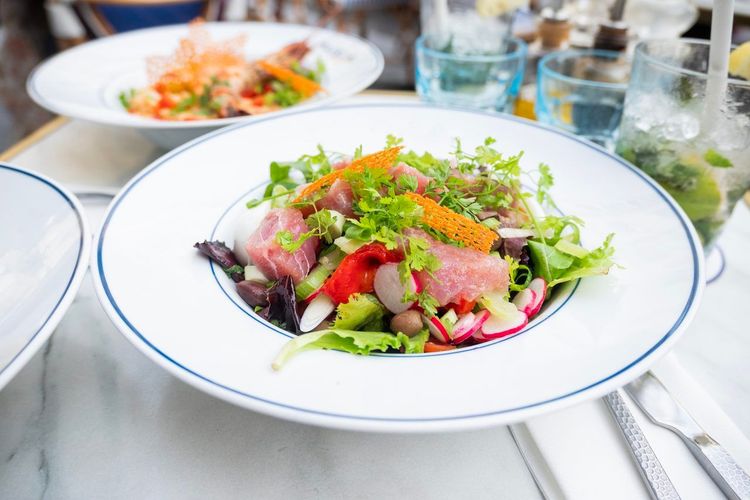
Nice cuisine deserves more than a rushed break between visits. It draws on both Provençal and Italian heritage, built around simple ingredients: sun-ripened vegetables, olive oil, anchovies, and chickpeas.
You can't leave Nice without trying socca: this chickpea-flour pancake, cooked very hot over a wood fire and served generously peppered, is available on the Cours Saleya and throughout Vieux Nice, from vendors who have been competing for the best version for generations. Alongside it, the original salade niçoise often surprises visitors: the traditional recipe contains no potatoes or green beans — just tomatoes, hard-boiled eggs, anchovies, Nice olives, and raw broad beans in season.
Other essentials to work into your program: pissaladière, a tart made with caramelized onions, anchovies, and black olives, and pan bagnat, a round sandwich generously soaked in olive oil and filled like a salade niçoise. Both are available to take away from most bakeries in the center — perfect for a quick lunch between sightseeing stops.
To stock up on fresh produce and local specialties to take home, head to the Marché de la Libération (Place du Général de Gaulle, 06000 Nice, rated 4.4/5 on Google with 2,832 reviews), less touristy than the Cours Saleya and frequented mainly by locals. You'll find fruit, vegetables, fresh fish, and a few regional specialty stands at prices more reasonable than in Vieux Nice.
To accompany a meal, Bellet wine — a tiny appellation nestled on the hills above the city — remains largely unknown outside the region despite a long history of production; a few wine merchants in Vieux Nice offer it by the glass, a great way to taste a terroir that few visitors know.
For a sweet stop, don't leave without trying a tourte de blettes sucrée — a local dessert made with Swiss chard, pine nuts, and raisins — or a cone of socca to nibble while walking. These specialties can be found in the small shops of Vieux Nice just as easily as on the market stalls.
To go deeper and leave with a list of tried-and-tested addresses, the Ryo guide to Nice's culinary specialties details the best places to eat and tips for avoiding the tourist traps along the seafront.
Where to Stay in Nice: Which Neighborhood to Choose for Your Stay
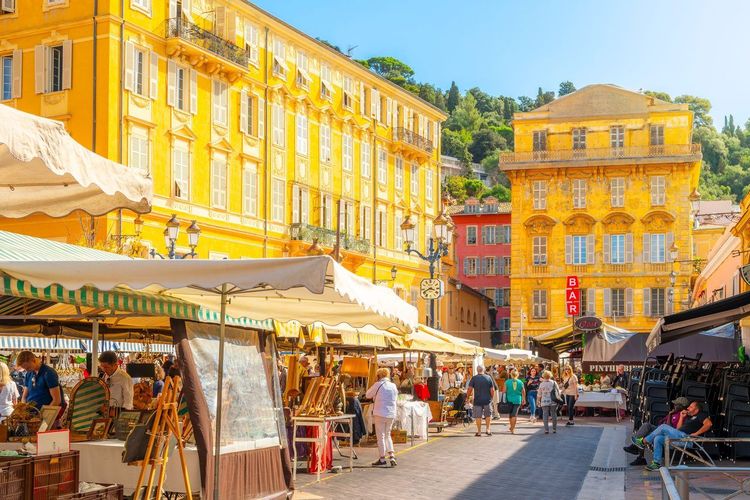
The choice of neighborhood matters as much as the choice of hotel when organizing a 2-day stay: it determines your travel time between morning and afternoon visits. Two areas stand out clearly for a short stay built around the itinerary described above.
Vieux Nice and the City Center, to Be in the Heart of the Action
Staying in Vieux Nice or around Place Masséna puts everything within walking distance: the Cours Saleya market, the Colline du Château, the train station for day trips, and most of the restaurants recommended above. It's the most practical choice for a packed 2-day program, but also the liveliest, with lanes that stay animated late into the evening, especially at weekends.
Expect smaller rooms, typical of older buildings, and book well in advance from spring onward: this is the most in-demand area of the city, particularly during Carnival or in the height of summer.
Promenade des Anglais and the Seafront, for the View
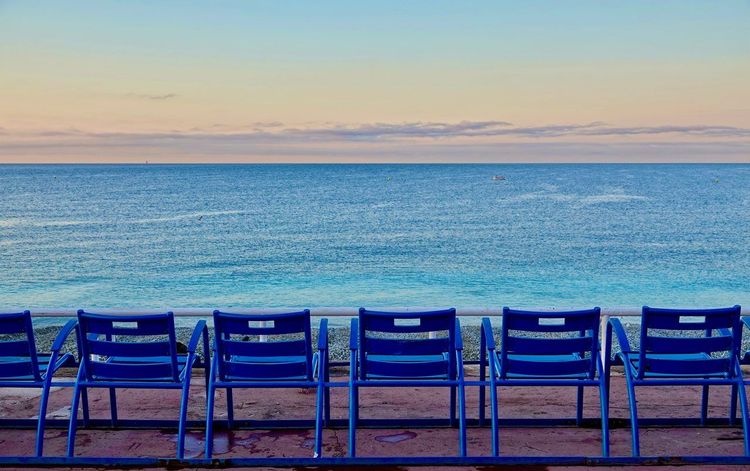
The hotels lined up along the Promenade des Anglais offer the opposite advantage: direct sea views, often a pool or rooftop, and immediate access to the beaches for the swim break described above. On the other hand, expect a 15 to 20-minute walk to reach Vieux Nice or the port, and a little more to Cimiez.
This area suits you particularly well if you plan to start each day with a walk by the water, or if a quiet evening matters more to you than being steps away from restaurants and bars. Rates climb noticeably in summer, sometimes doubling compared to Vieux Nice out of season.
To check exact distances between your hotel and each stop on the itinerary, the Nice audio-guided tour displays the full route map with walking times between each point.
How to Get to Nice and Get Around
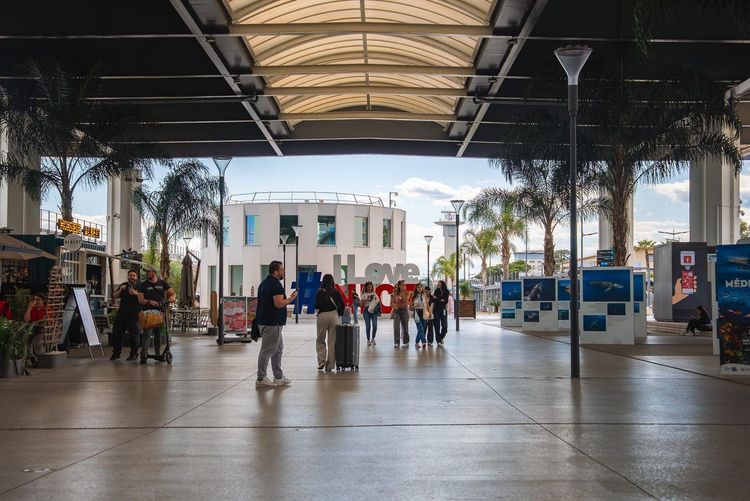
From the Airport or by Train
Nice has France's second busiest airport by passenger traffic, less than 7 kilometers from the city center: the Nice Côte d'Azur Airport. From the terminals, tram line 2 reaches the center in about twenty minutes, with a slightly higher airport-specific fare than a regular ticket — perfectly sufficient for most travelers, with no need to book a taxi or ride-share.
By train, Nice-Ville station is served by TGV from Paris — around 6 hours direct — and by numerous regional services along the Côte d'Azur, useful if you're combining the stay with a day trip to Cannes, Antibes, or Monaco. The station is 15–20 minutes on foot from Vieux Nice, or a few tram stops away.
For those coming by car, it's best to plan ahead: parking in the city center is paid and limited, and driving in the narrow lanes of Vieux Nice is simply not possible. Opt for a park-and-ride on the outskirts connected to the tram, rather than searching for a spot near your accommodation.
Getting Around by Tram, Bus, or on Foot
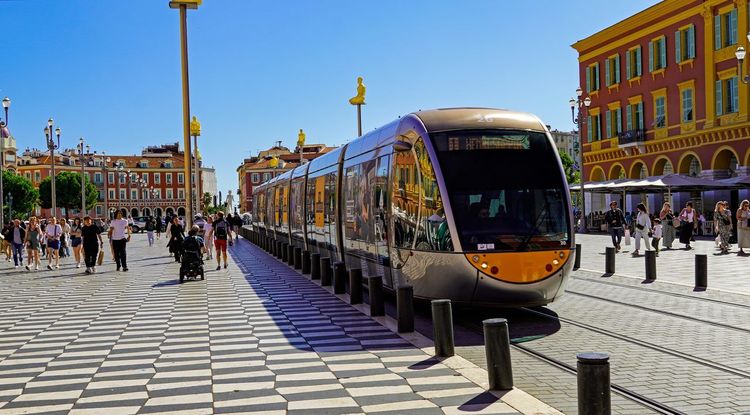
Once you're there, getting around Nice quickly becomes a secondary concern: the city center, between the Promenade des Anglais, Vieux Nice, and the Colline du Château, can be covered entirely on foot in about twenty minutes from one end to the other. This is, in fact, the best way to follow the first day's itinerary as described above.
To reach Cimiez or Mont Boron, which are more out of the way, the three tram lines and the Lignes d'Azur bus network cover most of the city. A single ticket costs around 1.70 euros and is valid for just over an hour including connections; a day pass at around 5 to 6 euros becomes worthwhile from the third journey onward — which matches exactly the pace of a typical day of sightseeing. Consider downloading the transport app before you arrive: it lets you buy tickets directly on your smartphone, without hunting for a machine at every stop.
Self-service bikes are a pleasant option along the Promenade des Anglais, but best avoided in the narrow lanes of Vieux Nice, where walking is both faster and safer.
When to Visit Nice: Weather and Best Time to Go

Nice enjoys a mild Mediterranean climate that makes it visitable almost year-round, but the seasons noticeably shape the experience. When to come to Nice depends mostly on what you're looking for: warmth and swimming, or quieter streets and lower prices.
Spring, from April to June, and early autumn, in September–October, offer the best compromise: temperatures between 18 and 25°C, a sea that is already or still pleasant toward the end of each period, and crowds that are far more manageable than in summer. This is the ideal time for a packed program like the one presented here, without queuing at every landmark.
Summer, in July–August, remains the liveliest season, with temperatures regularly exceeding 28°C and beaches packed from 10 am onward. Winter, milder than elsewhere in France with averages around 12–13°C, suits a cultural and urban visit well — museums and Vieux Nice at the top of the list — even if swimming is off the table. This winter period often coincides with Carnival, detailed just below, which brings the city to life in February. To time your visit around a specific event, the Ryo events calendar for Nice lists up-to-date dates, Carnival included.
Carnaval de Nice and Luminescence: Events Not to Miss
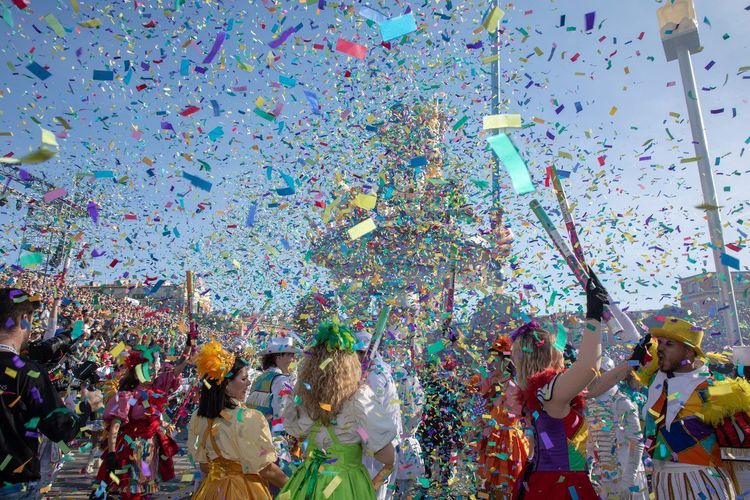
The Carnaval de Nice is the city's most spectacular event: every year in February, for about a fortnight, Place Masséna transforms into a giant stage for the carnival corsos — those processions of monumental floats built around a theme that changes with each edition. Along the Promenade des Anglais, the battles of flowers complete the program, with thousands of stems thrown from the floats toward the crowd. The grandstands are paid, but several standing areas remain freely accessible, particularly on the sides of the square. Book your accommodation months in advance if you're aiming for this period — prices climb and rooms fill up fast.
The other event worth knowing about, Luminescence, takes place inside the Basilique Notre-Dame-de-l'Assomption, Nice's largest church on Avenue Jean-Médecin: an immersive sound and light show that dresses the vaulted ceilings with monumental projections, running after dark outside the summer season. It lasts under an hour, making it easy to slot in at the end of a day of sightseeing, and advance booking is recommended during school holidays.
These events are in no way essential for a successful short stay, but they're worth scheduling in if the dates line up. The Ryo guide to the Carnaval de Nice details the dates, grandstand prices, and the best free vantage points.
What Budget to Plan for 2 Days in Nice
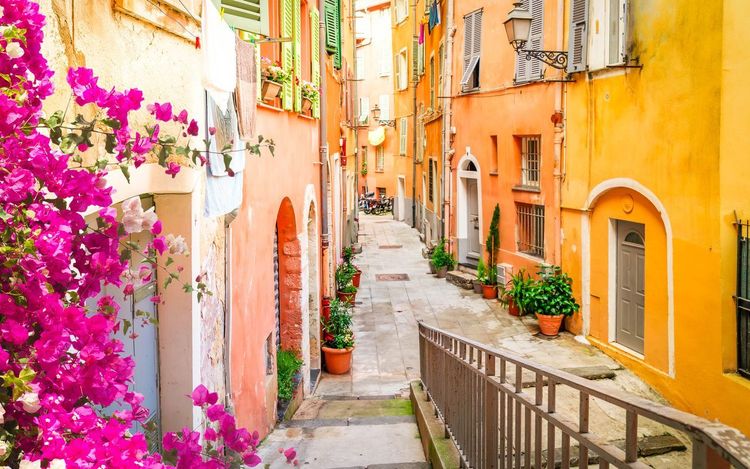
Unlike many Côte d'Azur destinations, a stay in Nice doesn't necessarily require a large budget — especially if you follow the itinerary described above, where the majority of visits (beaches, Colline du Château, Vieux Nice, Cathédrale Saint-Nicolas) are free.
For a weekend with decent accommodation in Vieux Nice or by the sea, expect around 90 to 150 euros per night for a double room in low season, and easily double that in July–August or during Carnival. Niçois food stays affordable: socca or a pan bagnat costs between 5 and 8 euros, and a full meal in a Vieux Nice trattoria runs around 20 to 30 euros per person.
Add in a few one-off expenses: the city museum pass at around 10 euros for 24 hours, covering the Musée Matisse, MAMAC, and the Palais Lascaris among others; a daily transport pass at 5 or 6 euros; and the optional Lou Passagin ferry crossing for just a few cents. Overall, a budget of 200 to 350 euros per person for the short stay, accommodation included, covers the full program comfortably without cutting corners on meals. As a comparison, an equivalent stay on the nearby Italian Riviera or in Monaco costs noticeably more for a similar level of comfort, making Nice one of the best-value bases for exploring the entire Côte d'Azur.
Nice as a Couple, with Friends, or for a Weekend: Adapting Your Itinerary
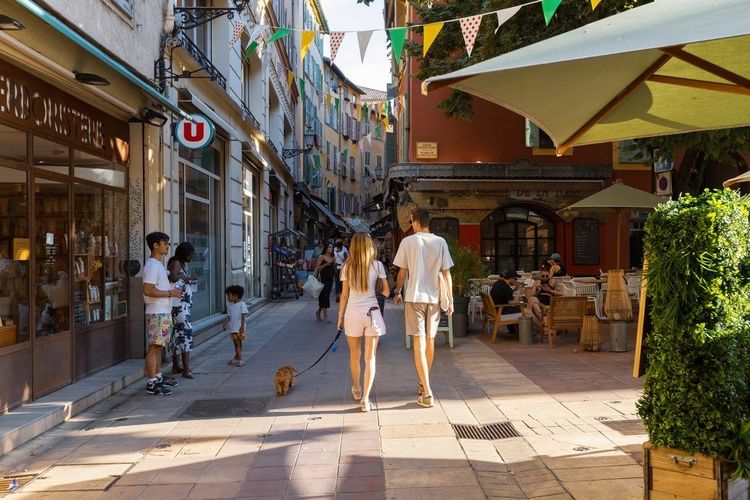
The itinerary presented above works as a shared starting point, but a few adjustments can tailor it to your travel style. What to do in Nice as a couple differs quite a bit from what you'd prioritize with friends or solo, even if the places visited are broadly the same.
As a couple, focus on the bookends of the day: sunset on the Colline du Château, sunrise on the Promenade des Anglais before the crowds arrive, or a terrace dinner in Vieux Nice after dark. The coves along the coastal path, quieter than the central beaches, also offer a more intimate moment than a packed beach in the middle of the day.
With friends, the pace can pick up: tighten the Vieux Nice section to free up time for a late afternoon on the beach or aperitifs on Place Garibaldi, a livelier and less touristy spot than the historic center. Carnival, when the dates align, lends itself particularly well to a friends' weekend, with its collective festive atmosphere.
Which neighborhoods to visit in Nice also depends on how long you actually have: for a simple weekend, focus on Vieux Nice, the Promenade, and the Colline du Château, and leave Cimiez for a future trip. What to do in Nice this weekend ultimately comes down to the same question as this article, just with a slightly tighter time constraint than a full 2-day format.
To explore the city neighborhood by neighborhood at your own pace, whatever your travel style, the Ryo audio-guided tour adapts to your itinerary and comments on each site as you walk, with no fixed schedule.
FAQ
How Many Days Do You Need to Visit Nice?
Two days are enough to cover the essentials: the Promenade des Anglais, Vieux Nice, the Colline du Château, the port, and Cimiez. Three to four days give you time to add Mont Boron, Parc Phoenix, or a day trip to Saint-Jean-Cap-Ferrat at a leisurely pace.
What Should You Visit in Nice in 1 Day if Time Is Short?
Focus on the Promenade des Anglais, Place Masséna, Vieux Nice with its Cours Saleya market, and the Colline du Château at the end of the day. This is the city's most densely packed historic core, entirely doable in a single well-paced day.
What Can You See in Nice for Free?
Most of the iconic sights cost nothing: the Promenade des Anglais, the Colline du Château, Vieux Nice, the markets, the public gardens, and the Saint-Nicolas Orthodox Cathedral. Only museums and certain one-off activities require paid admission.
Which Neighborhoods Should You Prioritize in Nice?
Vieux Nice and its surroundings are the absolute top priority for a short stay, followed by the seafront along the Promenade des Anglais. Cimiez and the port round out a 2-day itinerary nicely.
When Is the Best Time to Visit Nice for Good Weather?
Spring and early autumn offer the best balance between pleasant weather and manageable crowds. Summer guarantees heat but also busy beaches; winter stays mild and suits a more cultural visit.
Is Nice a Good Destination for a Couples' Weekend?
Yes — between its sunset viewpoints, the narrow lanes of Vieux Nice, and the quieter coves along the coastal path, the city lends itself particularly well to a weekend for two.
Forty-eight hours in Nice are enough to understand why the city has drawn so many visitors since the Belle Époque: few destinations pack so many different landscapes into such a small area, from the sea to the hills and the Roman ruins of Cimiez.
Keep in mind that this itinerary is a starting point to adjust to your own pace: it's better to see fewer places and take time to soak them in than to tick off every stop without really enjoying them. An impromptu beach break or an unplanned foodie detour is often worth more than one more item on the list.
To make the most of every neighborhood on the ground, the Nice audio-guided tour is the most practical companion: it provides real-time commentary on every site along the route, without needing to reopen this article at every street corner.