© Shutterstock
 Votre guide Ryo
Beach in Nice in 2026: Pebbles, Private Clubs, and the Best Spots on the Coast
In Nice, the sea starts right at the tram stop—yet finding the right beach takes a little know-how: across the 7 kilometres of the Promenade des Anglais, every beach has its own atmosphere, its own pebbles, and its own price tag. Whether you typed "Nice beach" into a search engine or stepped straight off the tram, this guide to the beach in Nice brings together free public beaches, private clubs with sunbeds and restaurants, the rare spots accessible by wheelchair, and nearby coves to retreat to when the city gets too crowded in August. You will know where to lay your towel, what time the best spots fill up, how much a sunbed costs at a well-known club, and why almost nobody in Nice is really looking for sand. The Nice audio-guided tour follows this very Promenade des Anglais and puts each seaside neighbourhood into context, from the Vieux Nice to Port Lympia.
The Central Public Beaches: Between Vieux Nice and the Casino
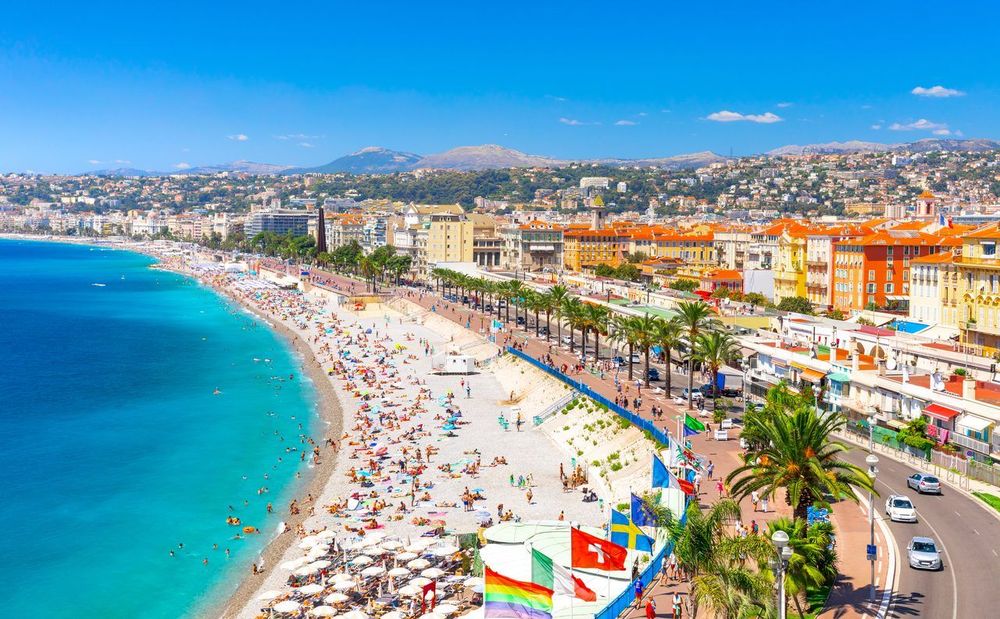
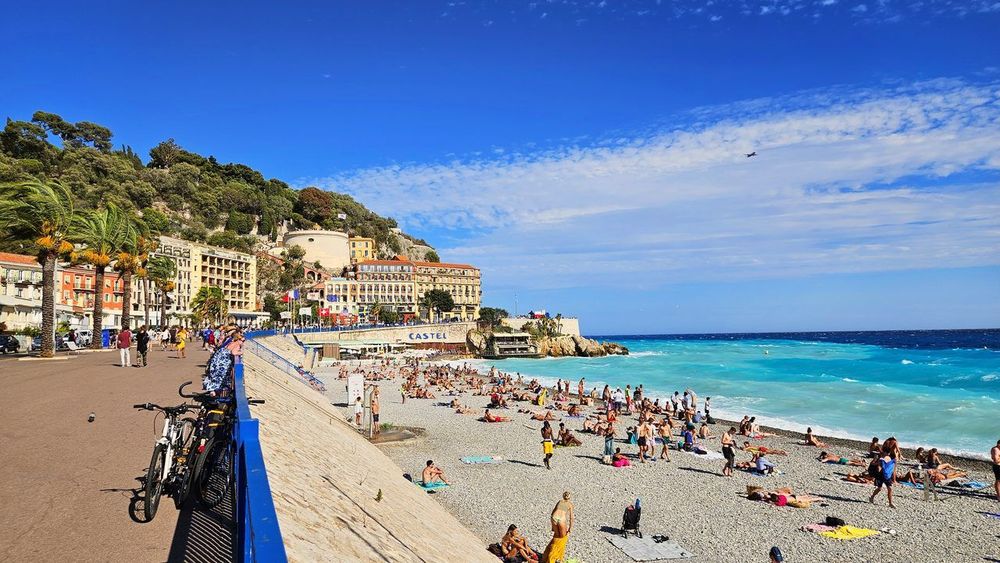
The busiest stretch lies right at the foot of the castle hill, where the Promenade des Anglais truly begins. The Plage Publique des Ponchettes occupies this historic spot at the base of the Cours Saleya, and is probably the most photographed image of Nice on social media: colourful changing huts, turquoise water, and the Vieux Nice as a backdrop.
Heading east, the Plage Publique Beau Rivage shares the same stretch as its private namesake, which often causes confusion: the public section remains free, with showers and restrooms, while the paid area offers sunbeds and waterside service. You can spot the boundary between the two by the line of buoys and the change in furniture.
A little further along, the Plage Publique de Lenval (Promenade des Anglais, 06000 Nice, rated 4.3/5 on Google from 565 reviews) draws a more local, less touristy crowd, with easy access from the Jardin Albert 1er. If you are looking for an authentic taste of Nice beach life without the density of the Ponchettes area in July, this is often the best compromise. The ground is made up of fine, almost round pebbles at this spot, making barefoot walking more comfortable than elsewhere along the coast.
Walking back up towards the Vieux Nice from these beaches, the Nice audio-guided tour tells the story of the seafront, from the first English winter visitors of the 19th century to the recent redevelopment of the pedestrian promenade.
Heading West: Centenaire, Carras, and Magnan, the Everyday Beaches
Past the touristy central stretch, the Promenade des Anglais extends towards the airport and takes on a different character. The Plage du Centenaire, laid out in front of the gardens of the same name, offers a greener setting with shaded lawns just behind the pebble strip—handy for setting up a picnic after a swim.
A little further west, the Plage Publique Carras stands out for its relative calm, even in peak season. Residents of the Fabron and Ariane neighbourhoods come here during the week, and you will find a free spot more easily in the morning than at Ponchettes. Access is directly from the boulevard René Cassin, with surface parking that is often less congested than the city-centre car parks.
Finally, the Plage Publique Magnan (Promenade des Anglais, 06200 Nice, rated 4.3/5 on Google from 565 reviews), close to the airport, marks almost the western limit of Nice's urban coastline. It is popular mainly for its generally calmer water, sheltered by the shape of the bay, and for the proximity of several neighbourhood restaurants that are far less expensive than those on the central seafront. It is also the easiest beach to reach if you land at Nice Côte d'Azur Airport with only a few hours to spare before your return flight.
These three beaches share one thing in common: they are less photographed than Ponchettes, but often more enjoyable for a genuinely relaxed afternoon swim, without needing to arrive by 8 a.m. to find a spot for your towel.
Private Beaches and Beach Clubs: Sunbeds, Restaurants, and a Lounge Vibe
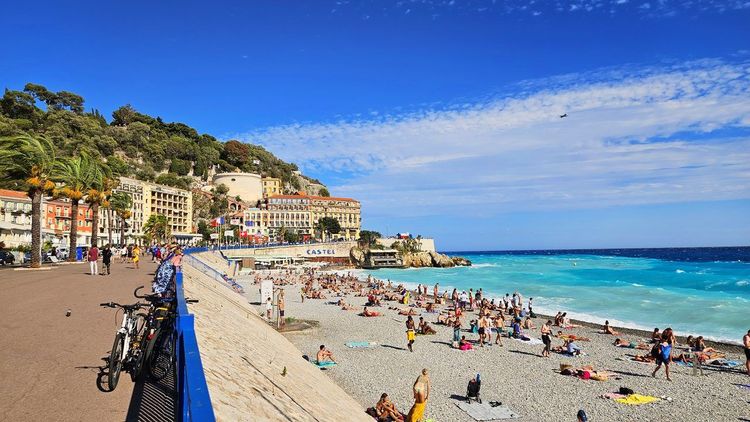
In Nice, around thirty private concessions share half of the urban coastline, with services ranging from a simple sunbed to a full restaurant operation. Castel Plage, set at the foot of the castle hill, has cultivated a chic image for decades and remains a reference point for a lunch with your feet in the water.
Further along the promenade, Cocoon Beach leans into a laid-back atmosphere with its pale wood loungers and a vibe that recalls, without quite copying, Caribbean beach clubs. Expect to pay generally between €20 and €35 for a sunbed for a half-day outside July and August, more in peak season.
Right opposite the hotel of the same neighbourhood, N La Plage (37 Promenade des Anglais, 06000 Nice, rated 4.6/5 on Google from 433 reviews) benefits from a prime position facing the city's historic palace hotel, with elegant service and a menu that highlights Mediterranean cuisine. Booking the day before is recommended in high season, especially for a front-row sunbed.
Most of these private clubs also rent out mattresses by the day with no minimum spend, which is a straightforward option if you just want towel service and direct water access without managing your own gear. It is often the most comfortable way to enjoy a beach in Nice when travelling light, and it pairs nicely with a walk up Castle Hill on Ryo's "Nissa la Bella" audio-guided tour once you're ready to trade the sand for a view of the bay.
Sand or Pebbles? What You Need to Know Before Laying Down Your Towel
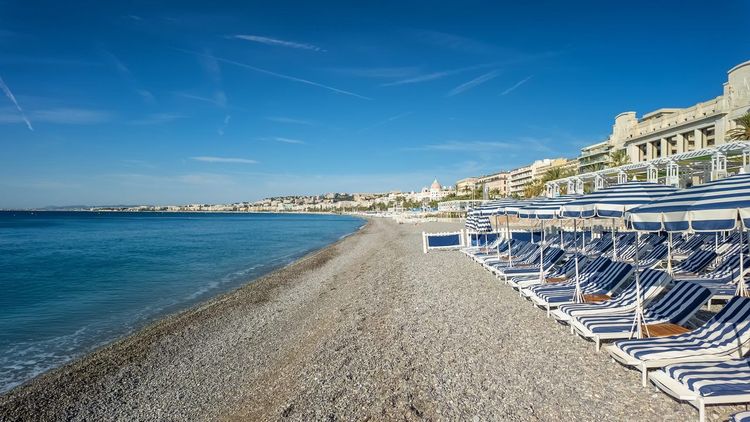
The question comes up constantly among first-time visitors to Nice: no, there is virtually no sand here. The Nice coastline is made up of pebbles, formed by the erosion of the nearby Alps, and this texture changes everything about how you prepare for your day. To put it plainly, the beach in Nice is nothing like a fine-sand beach: every beach in Nice rests on this bed of rounded pebbles that the sea reshapes with every gust of wind.
Bring water shoes if you have sensitive feet: the pebbles heat up quickly in the sun and can make walking uncomfortable in the middle of a summer afternoon. A thick towel or a foldable beach mat also makes a noticeable difference to your comfort, since pebbles never flatten under the weight of your body the way fine sand does.
On the plus side, the water stays remarkably clear year-round, without the cloudiness that suspended sand causes elsewhere in the Mediterranean after windy spells. If you are genuinely looking for fine sand, the nearest beaches are in Cannes or around the Estérel, less than an hour away by car.
Handiplage: Accessible Beaches in Nice
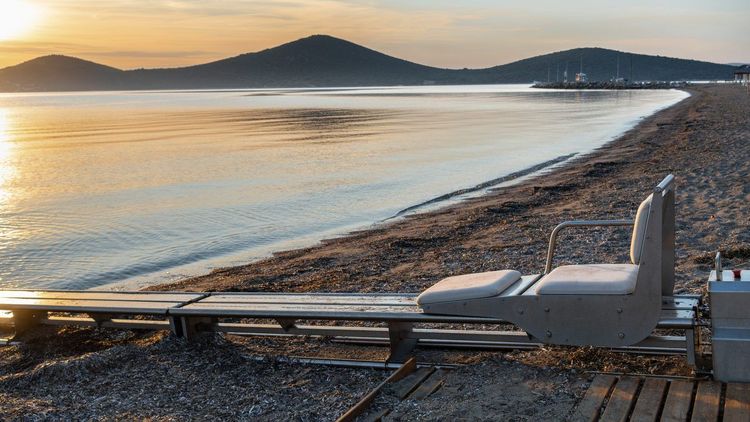
Nice has equipped several of its public beaches with a facilitated access system for people with reduced mobility, known as Handiplage. Rigid mats run across the pebble strip all the way to the water, and water-entry equipment (tiralo chairs, floating wheelchairs) is available free of charge on reservation during the season.
This service generally runs from June to September, with trained staff on site during opening hours. It is advisable to call the town hall or check the day's hours in advance, as they vary depending on the weather and visitor numbers.
Where to Eat by the Sea: Restaurants and Beach Snack Bars
Most private clubs offer on-site dining, often centred on seafood and traditional Niçoise cuisine: salade niçoise, grilled fish, socca as a starter. Prices climb quickly by the water—expect to pay easily €25 to €40 for a main course at the most well-known establishments in the centre.
For a more reasonable budget, the kiosks and snack bars dotted along the promenade serve sandwiches, salads, and ice creams at noticeably friendlier prices, generally between €6 and €12. The Magnan area, more residential in character, has several local spots that are considerably cheaper than the city centre.
If you want to explore beyond the beach clubs, the Niçoise culinary specialities are well worth a detour through the lanes of the Vieux Nice, five minutes' walk from the seafront: pissaladière, pan bagnat, and courgette-flower fritters make a perfect end to a day in the sun.
Paddleboarding, Diving, and Equipment Rental: Water Sports in Nice
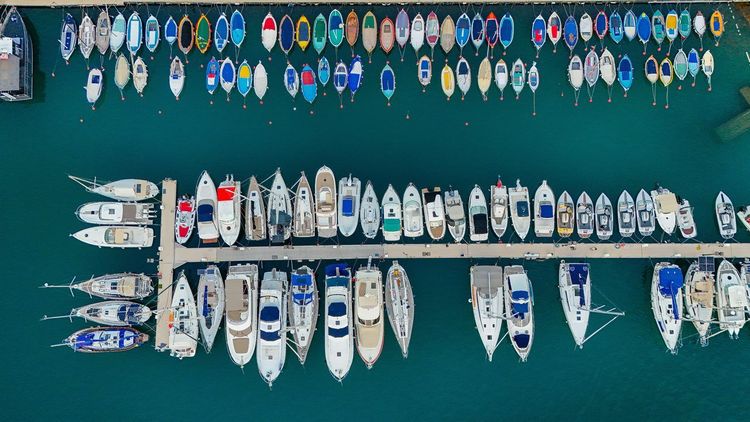
The Baie des Anges lends itself well to water sports, thanks to generally calm water sheltered from the prevailing wind. Several clubs along the Promenade des Anglais rent out paddleboards, kayaks, and snorkelling equipment by the hour, with rates typically around €15 to €20 for a one-hour session.
For diving, two or three wrecks and artificial reefs off the coast of Nice attract local dive clubs, which run guided trips suited to beginners as well as more experienced divers. Booking the day before is advisable in July and August, as spots go quickly.
If water sports are not enough to fill your itinerary, a broader overview of things to do in Nice and the surrounding area can round out your day with options that go beyond the strictly seaside, from hiking in the hills to exploring the port.
Parking, Tram, and Vélo Bleu: How to Get to the Beaches
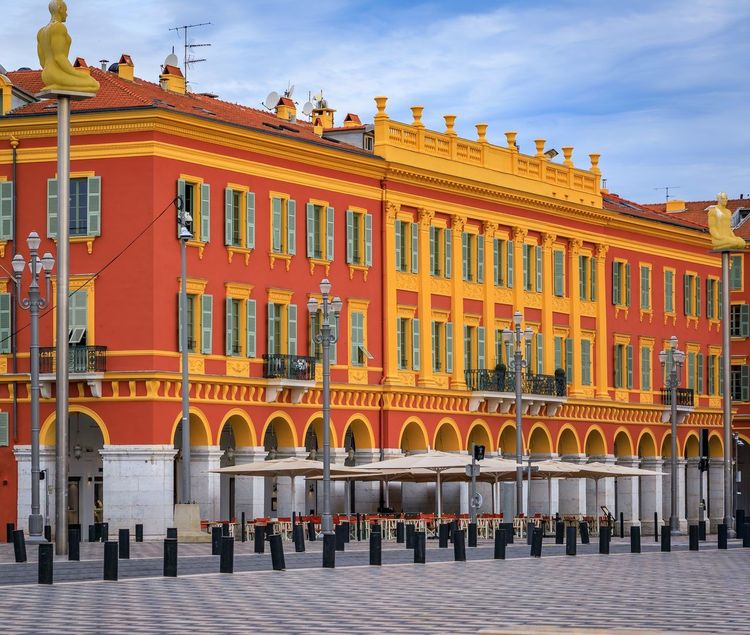
Parking is the most common source of frustration for visitors arriving by car. The underground car parks in the centre, such as the one at place Masséna or on the boulevard Victor Hugo, charge hourly rates that quickly exceed €3 per hour in summer.
The Lignes d'Azur bus network provides good coverage of the Promenade des Anglais, with several lines running along the coast from the centre to the airport. For short trips, the Vélo Bleu bike-share service has stations every few hundred metres, often a faster option than driving during busy summer hours.
On foot, allow around an hour and a half to walk the full length of the promenade from Ponchettes to Magnan, which gives you a chance to scout several beaches before deciding where to settle.
When to Go to the Beach in Nice to Avoid the Crowds
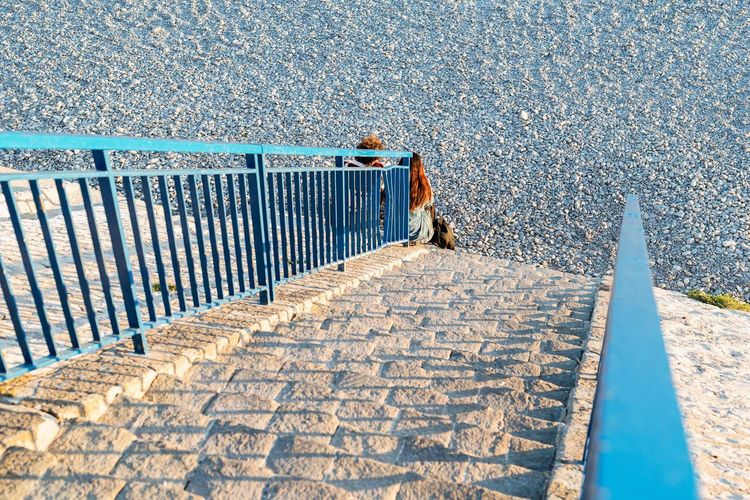
July and August account for the bulk of visitor numbers, with central public beaches often full by 10 a.m. at weekends. Arriving before 9 a.m. or after 5 p.m. completely changes the experience, with far more space available and softer light for swimming. The best beach in Nice is, in the end, whichever one you reach before the crowds do.
May, June, and September remain the most pleasant months to enjoy the coast without the summer density: the water reaches comfortable temperatures from mid-June onwards, and beachside terraces often charge lower prices than in peak season.
Beyond Nice: Villefranche, Cap Ferrat, and the Sandy Beaches Nearby
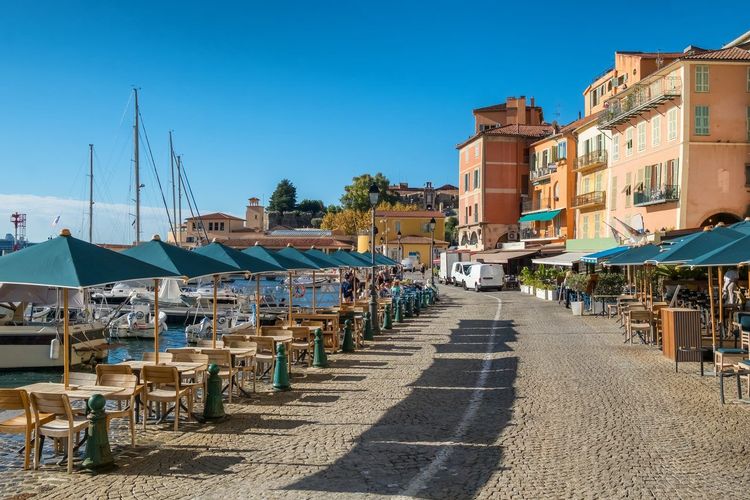
If Nice's pebbles are not for you, several alternatives lie less than twenty minutes away by train or car. The Plage des Marinières (Avenue Général de Gaulle, 06230 Villefranche-sur-Mer, rated 4.4/5 on Google from 1,072 reviews), in Villefranche-sur-Mer, combines sand and fine gravel in a sheltered bay renowned for being one of the deepest natural harbours on the Mediterranean coast.
Further along the peninsula, Cap Ferrat conceals several small coves reachable on foot via the coastal footpaths, with crystal-clear water and far fewer people than Nice even in the height of summer. This broader look at the most beautiful beaches on the Côte d'Azur lets you compare your options before choosing your day out.
For fine sand, head to Cannes: the beaches at Midi and along the Croisette offer what Nice cannot, less than an hour away by car or train from Nice-Ville station. Many visitors combine both cities in a single stay—a morning on Nice's pebble beach and an afternoon on the sandy shores near Cannes.



FAQ
Are Nice's beaches sandy or pebbly?
Nice's beaches are almost exclusively made up of pebbles, the result of natural erosion from the surrounding hills. There is no true fine-sand beach within the city itself; for sand, you need to head to Cannes or certain coves further east.
Which beaches in Nice are free?
The majority of Nice's coastline remains freely accessible: Ponchettes, public Beau Rivage, Lenval, Centenaire, Carras, and Magnan are among the most popular public beaches, all equipped with free showers and restrooms in season.
Where can you swim in Nice with children?
The western beaches, such as Carras or Magnan, generally offer calmer water and fewer crowds than the central area, making it easier to keep an eye on young children. Some public sections also have gently sloping access paths, which are more comfortable for little feet on the pebbles.
How much does a sunbed at a private beach in Nice cost?
Expect to pay generally between €20 and €35 for a sunbed for a half-day outside of July and August, a price that often rises in peak season or at the most well-known establishments in the city centre. Some clubs offer slightly discounted full-day packages.
Where can you park near Nice's beaches?
The underground car parks in the city centre, such as the one at place Masséna, are the closest to the central beaches but also the most expensive in summer. The areas further west, around Carras and Magnan, often offer more affordable surface parking.
Are Nice's beaches accessible to people with reduced mobility?
Yes, several public beaches are equipped with the Handiplage system, featuring rigid access mats and water-entry equipment available free of charge on reservation, generally from June to September. It is recommended to check the day's opening hours directly with the town hall.
Ultimately, the beach in Nice is not just one place but a whole range of atmospheres stretching along the entire Promenade des Anglais, from the historic pebbles of Ponchettes to the quieter coves of Villefranche. Whether you are looking for a sunbed with service or a free public beach, the key is to arrive early in summer and to bear in mind that pebbles require a little more preparation than sand. To extend your exploration of the seafront and the neighbourhoods that line it, the Nice audio-guided tour is a great way to connect each beach to the history of its surrounding district, directly from our Ryo app.
À lire également