© Shutterstock
 Votre guide Ryo
Activities in Nice and Surroundings: The Complete Guide for 2026
Nice has more to offer than you might think. The Promenade des Anglais lives up to its reputation, but the best activities in Nice and surroundings are often found elsewhere: in the ochre alleyways of the Vieux-Nice where socca comes out of the oven every fifteen minutes, on the Colline du Château that simultaneously overlooks the sea and the Alps, or in that unexpected hinterland you can reach in forty minutes from the waterfront. The Baie des Anges is just the opening act. To explore the city on foot through its history, the Ryo audio-guided tour of Nice covers 7.1 km and 27 points of interest in 2h50.
Nice brings together in a single territory what other regions spread across hundreds of kilometres: the sea five minutes from the centre, Monaco thirty minutes away by train, medieval hilltop villages perched on rocky outcrops forty minutes away by car, and the peaks of the Mercantour an hour and a half away. This guide covers the city's must-sees, its under-visited museums, day trips along the coast, and escapes into the Nice hinterland.
The Promenade des Anglais and the Seafront
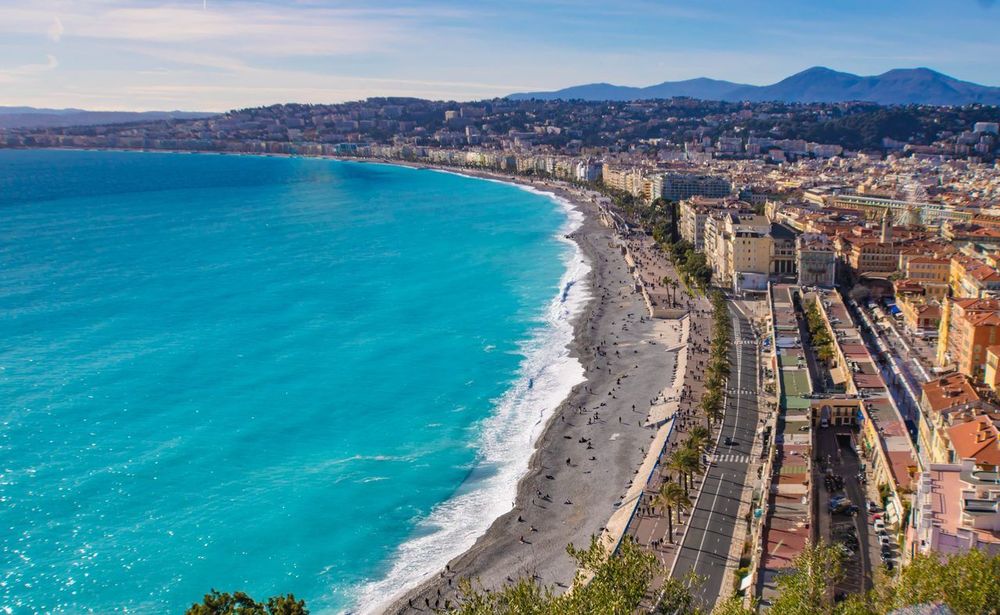
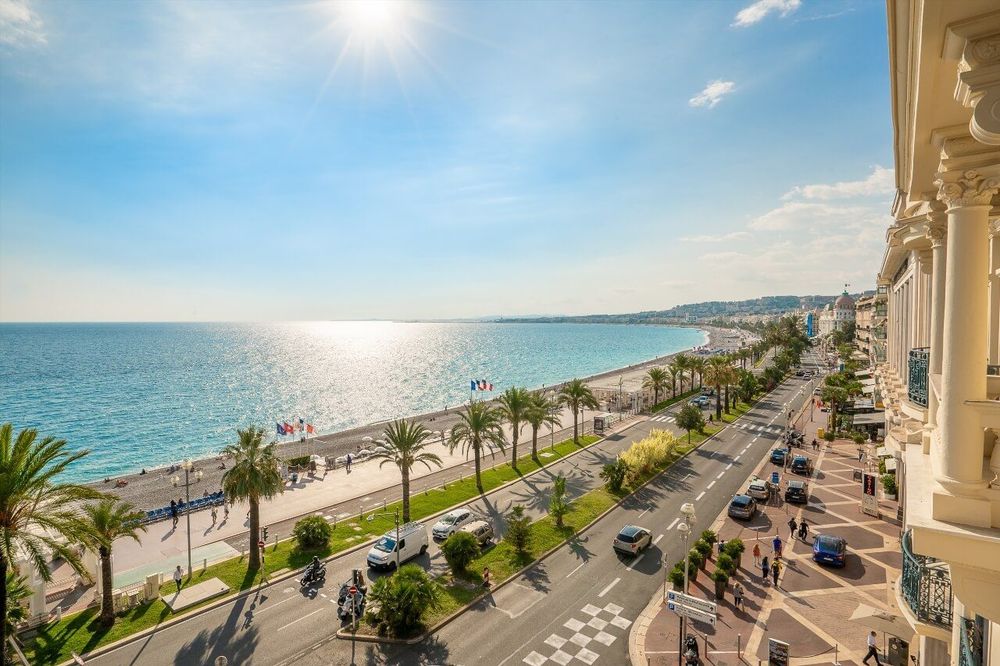
No stay in Nice really begins anywhere else. The Promenade des Anglais stretches for 7 kilometres along the Baie des Anges, laid out in the 19th century by an English community that had understood that this particular light — bouncing simultaneously off the white pebbles and the surface of the Mediterranean — was worth settling near permanently.
The promenade is best walked early in the morning or late in the afternoon, when cyclists share the path with joggers and the air still holds some freshness. By bike, the west-to-east stretch takes under thirty minutes; on foot with stops, allow an hour and a half. The pebbles of the Baie des Anges surprise those used to sandy beaches, but the water is remarkably clear, especially between Castel Plage and Beau Rivage beach to the east of the centre.
The Hôtel Negresco deserves a stop even if you're not staying there. The lobby is open to visitors and is in itself a museum of 20th-century decorative arts: Renoir, Rodin and Matisse collections framed by a dome designed by Gustave Eiffel. Nearby, the Palais de la Méditerranée bears witness to the Art Deco splendour of the 1930s, restored after decades of neglect.
Continuing eastward, the Jardin Albert Ier (5 Avenue de Verdun, 06000 Nice, rated 4.5/5 on Google with 11,995 reviews) marks the transition between the seafront and the Vieux-Nice. This is where terraces and evening entertainment gather, especially in summer. Further east, just before the harbour, Plage du Centenaire offers less crowded access than the central beaches — a good alternative in the height of August.
The Vieux-Nice: Baroque Architecture, Markets, and Neighbourhood Life
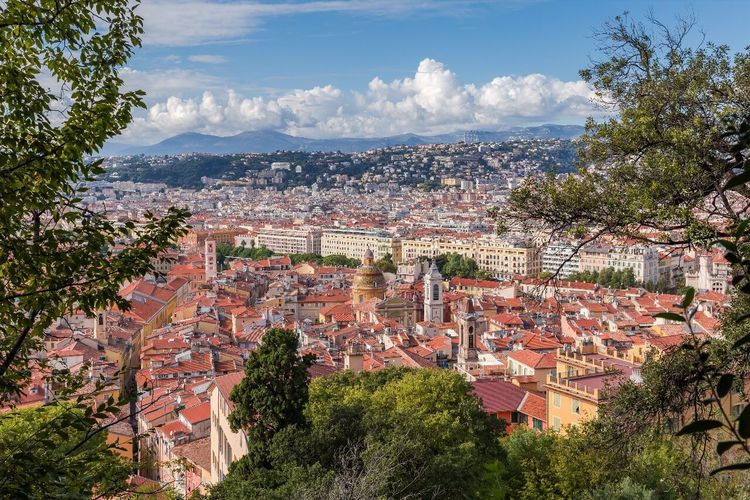
The Vieux-Nice (Baroque district, 17th–18th centuries) is one of the best-preserved historic centres on the French Mediterranean. Its façades painted in ochre, yellow and terracotta owe their colour to the mineral pigments of the Italian Baroque era — a direct legacy of Savoyard rule that shaped Nice far longer than France did.
Start at the Cours Saleya, the beating heart of the neighbourhood. From Tuesday to Sunday morning, the flower and vegetable market fills this long, narrow square just steps from the sea. The stalls of socca (a chickpea flour galette baked in a wood-fired oven — the true speciality of Nice), Provençal cherry tomatoes, herb-marinated olives: the Cours Saleya calibrates your sense of local flavours better than any restaurant. On Mondays, antique dealers take over.
Behind the Cours Saleya, the alleyways narrow. Rue Droite is the main axis of the Baroque district, lined with repurposed aristocratic palaces, stucco-adorned chapels and artisan workshops. The Cathédrale Sainte-Réparate (17th century) rises over the Place Rossetti, surrounded by the city's finest ice cream shops. Gelateria Fenocchio, founded in 1966, offers around a hundred flavours, some made with lavender, basil or rose.
The Chapelle de la Miséricorde on the Cours Saleya is a listed historic monument. Its Baroque interior — painted vaulting, gilded altarpieces, polychrome marbles — is exquisitely refined, in striking contrast with the plain exterior. It is only open at set times, but well worth the wait.
To understand the neighbourhood more deeply, set aside half a day to explore it with the Ryo audio guide for Nice. The 27 listening points cover the squares, palaces and stories that tourist signs rarely mention: the history of the Niçois language, the invisible boundary between Italian and Provençal influences, the hidden inner courtyards behind doors you would never otherwise push open.
The Colline du Château
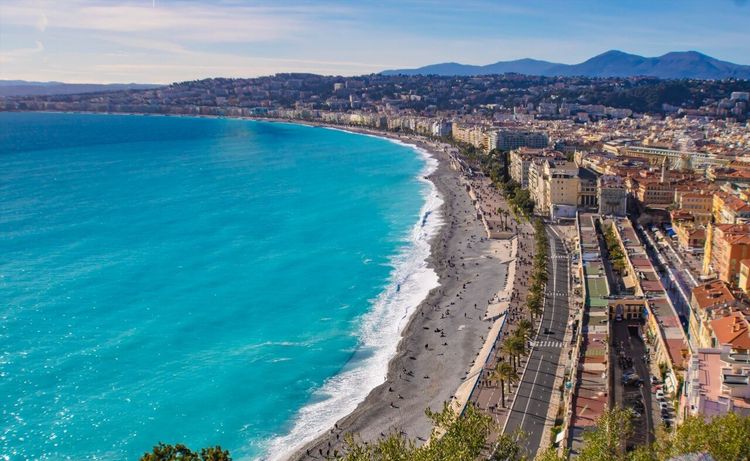
The Colline du Château has had no castle since Louis XIV had it razed in 1706, but it offers the finest panorama in Nice, bar none. From the summit, at 92 metres above sea level, the view takes in the Baie des Anges to the west, the port of Lympia to the east, and the first Alpine foothills in the background on a clear day.
You can climb on foot from the Vieux-Nice in about fifteen minutes, or take the free elevator from the seafront (on the Rue des Ponchettes side). At the top, medieval ruins coexist with terraced gardens and a small seaside cemetery with remarkably well-preserved Victorian tombs. Families with children can easily spend two hours exploring. Descending on the eastern side leads directly to the old harbour — a pleasant way to link both neighbourhoods in a single walk.
Parks and Green Spaces
Beyond the Parc du Château, Nice has several notable green spaces.
Parc Phœnix, to the west near the airport, is one of the largest botanical parks in the region: seven hectares divided into climate zones, a large tropical greenhouse and more than 2,500 plant species. The park also shelters an eco-refuge for wild animals that cannot be released into the wild — flamingos, Aldabra giant tortoises, parrots. Adult admission: €5.50, free for children under 12.
The Promenade du Paillon is Nice's most celebrated recent landscaping achievement. Created in 2013 on the site of a former urban motorway, it forms a 12-hectare green corridor at the heart of the city, linking the Place Masséna to the Cimiez gardens. Water features draw children in summer, fountains are illuminated at night, and the floral planting changes with every season — all at no charge.
Nice's Museums: From Matisse to Terra Amata
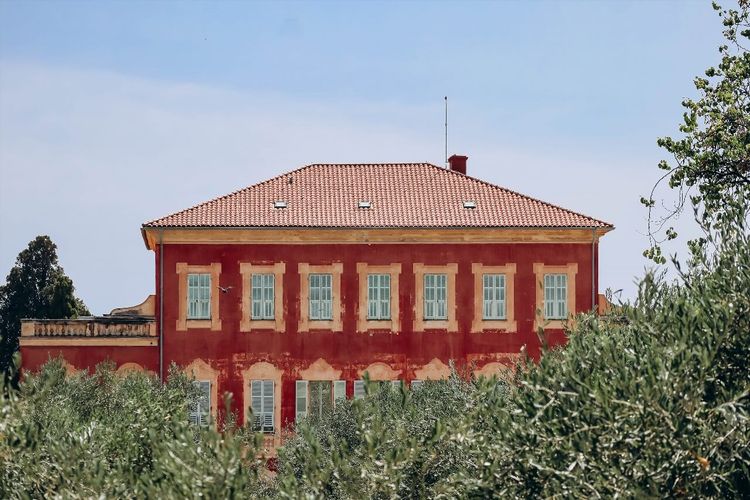
Nice has a remarkable concentration of art museums for a city of 350,000 inhabitants.
The Musée Matisse is housed in a 17th-century Genoese villa in Cimiez, surrounded by a garden of centuries-old olive trees set against the ruins of an ancient amphitheatre. Henri Matisse lived in Nice from 1917 until his death in 1954; the permanent collection brings together his cut-out gouaches, his preparatory drawings for the Vence chapel, his Fauvist canvases and his bronzes. It is the most comprehensive collection in the world for understanding the full arc of his career, and the setting alone is reason enough to visit.
A few minutes' walk away, the Musée National Marc Chagall holds the largest public collection of Chagall's works in the world. Seventeen large canvases from the 'Biblical Message' cycle, conceived by the artist for this building inaugurated in 1973, are displayed in a luminous architecture that integrates stained glass and natural Mediterranean light into the visiting experience.
For a radically different timescale, the Musée de Préhistoire Terra Amata (25 Boulevard Carnot, 06300 Nice, rated 4.1/5 on Google with 559 reviews) stands on the site of a hunter-gatherer camp 400,000 years old, discovered during construction work in 1966. Its reconstructions and original artefacts — including a fossilised footprint — make for a particularly educational visit for children.
Contemporary art lovers should not miss the MAMAC (Museum of Modern and Contemporary Art), on the Place Yves Klein, whose permanent collection is dedicated to the Nouveau Réalisme and Fluxus movements, with a strong American Pop Art section. Our article on the museums of Nice details opening hours, admission prices and current temporary exhibitions.
Beaches and Water Sports
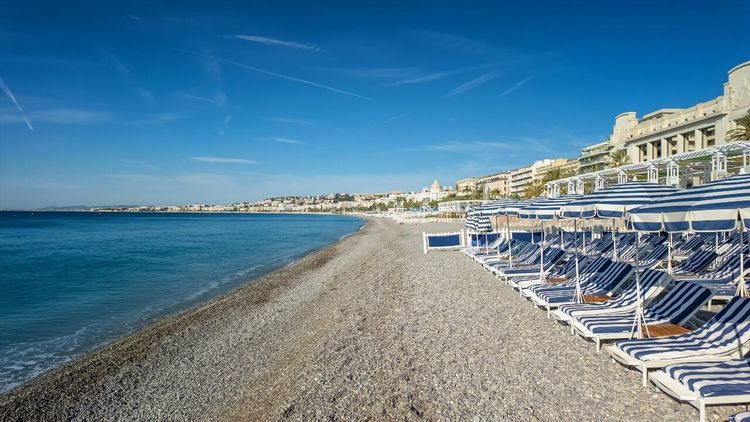
Nice has no sandy beaches — or very few — but its pebble beaches have their devotees: the water is deeper, the clarity remarkable, and you avoid the sensation of wading through an overheated pool in July. Public beaches are interspersed between private ones along the full length of the promenade.
The most beautiful beaches in Nice are concentrated to the east: Castel Plage (at the foot of the Colline du Château, clean water, less crowded than the central beaches) and Plage du Centenaire. For sand, Villefranche-sur-Mer is about ten minutes away by bus.
For water sports, Port Lympia offers sea kayak excursions along the calanques between Nice and Villefranche, paddleboarding, and introductory diving sessions. Underwater visibility can reach 15 to 20 metres in protected areas. Conditions are optimal from May to October.
Day Trips from Nice: Monaco, Èze, Antibes, and Menton
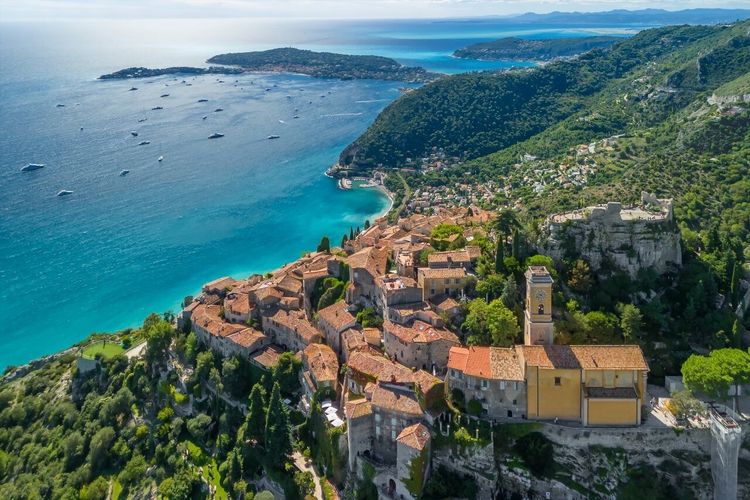
The coast between Nice and the Italian border is home to some of the most accessible day trips in Europe. Allow between 20 and 45 minutes by train from Nice-Ville station to reach Monaco, Èze-sur-Mer, Antibes or Menton — no car, no toll.
Monaco (30 minutes by train) is often reduced to its casino and its Formula 1 race, but the Principality deserves a full day. The Prince's Palace (State Apartments open from late March to mid-October, €13) is open to the public for part of the year. The Oceanographic Museum (Avenue Saint-Martin, 98000 Monaco, rated 4.5/5 on Google with 32,435 reviews), inaugurated by Prince Albert I in 1910, houses an aquarium with 6,000 marine specimens (around 350 fish species) including reef sharks and bioluminescent jellyfish — one of the most respected maritime scientific institutions in the world.
Èze (20 minutes by train + 20 minutes on foot or by shuttle) is the quintessential perched village of the Riviera. At 427 metres above sea level, this medieval village commands a spectacular view of the sea. The Jardin Exotique d'Èze at its summit (€10) offers one of the most photographed views in the region. The Fragonard perfumery, set in an aristocratic house in the village, offers free introductory perfume workshops.
Antibes (30 minutes by train) deserves at least two hours: the 16th-century ramparts, the old town with its covered Provençal market, the Musée Picasso in the Château Grimaldi where Picasso worked in autumn 1946 (70 works from his Antibes period on display), and Plage de la Garoupe on the Cap d'Antibes, regularly ranked among the finest beaches in the region.
Menton (45 minutes by train), on the Italian border, lives to the rhythm of its lemon trees and its gardens. The old town, in particularly warm tones — pink, peach, saffron — looks out over the sea from its steep alleyways. The Jardin Serre de la Madone, designed by Lawrence Johnston in the 1920s and listed as a historic monument, is one of the richest botanical gardens on the French Mediterranean coast. Our article on the must-sees around Nice rounds out these suggestions with transport and timing advice, and back in town our Nissa la Bella audio walking tour covers the old quarters at the same unhurried pace.
The Nice Hinterland: Gorges, Perched Villages, and the Mercantour
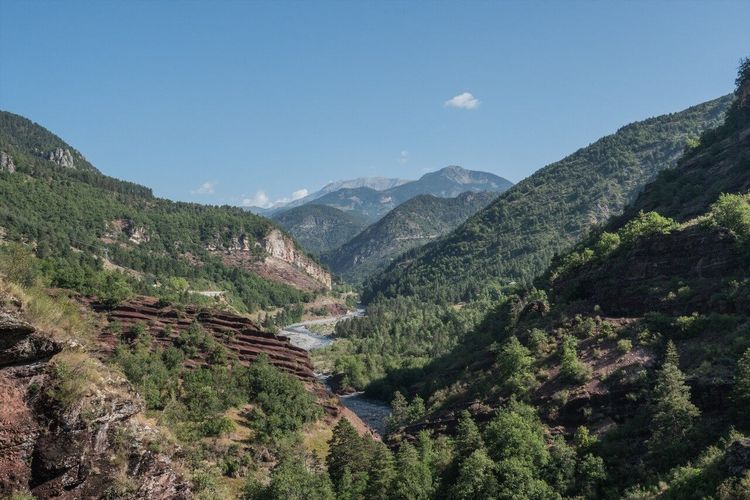
Forty minutes by car from Nice, the Côte d'Azur gives way to a Mediterranean mountain landscape that most visitors never suspect exists. The Alpes-Maritimes descend almost all the way to the sea — it is this unique geography that makes it technically possible to ski in the morning at Isola 2000 and swim in the afternoon in Nice, in April.
Peillon is one of the best-preserved villages in the hinterland: its medieval houses are stacked on top of a rocky outcrop at 376 metres, accessible only on foot from the lower car park. The vaulted covered alleyways, stone fountains and views over the surrounding valleys make it one of the most striking visits in the Nice hinterland — forty minutes from the Promenade des Anglais.
Saorge (1h15 from Nice), in the Roya valley, is listed among the most beautiful villages in France. Clinging to the wall of a limestone gorge, it towers 200 metres above the torrent below. The Monastère de Saorge (18th century, Franciscan) overlooks the village and shelters a terraced garden planted with centuries-old fig trees and olive trees.
The gorges of the Vésubie and the Tinée are the most spectacular itineraries for those with a car. The Vallée des Merveilles in the Parc National du Mercantour (3h30 on foot from the Refuge des Merveilles) brings together more than 40,000 Bronze Age rock engravings — a major archaeological site in the Alps, open from July to September depending on snow cover.
To plan these escapes, the guide on the Nice hinterland details routes, villages and public transport connections from Nice.
Niçois Cuisine: Markets, Socca, and Local Specialities
Niçois cuisine is a borderland cooking tradition that has absorbed Ligurian and Provençal influences without losing its coherence. A few essentials to know before you order.
Socca is a chickpea flour galette baked in a wood-fired oven in copper dishes. It is eaten piping hot, without cutlery, with pepper. The best address on the Cours Saleya remains Chez Pipo (13 Rue Bavastro, 06300 Nice, rated 4.5/5 on Google with 5,874 reviews) (Rue Bavastro, two minutes on foot from the Vieux-Nice), where socca has come out of the oven every fifteen minutes since 1923.
Pissaladière is the Niçois version of focaccia: a thick-crusted tart topped with caramelised onions, anchovies and Cailletier black olives. An authentic salade niçoise contains neither potatoes nor cooked green beans — it is a raw vegetable salad (tomatoes, radishes, peppers, cucumber) with anchovies or plain tuna and olives. The debate over the original recipe is a local passion that has divided families for generations.
Our article on the culinary specialities of Nice details markets, producers and trusted addresses for eating local.
Unusual Activities and Unique Experiences
Nice offers a few experiences that classic itineraries do not always mention.
A perfumery workshop at Molinard (founded in Grasse in 1849, Nice boutique on Rue Saint-François-de-Paule) lets you compose your own fragrance in 1h30 with a professional nose. Three olfactory families to choose from and a personalised bottle to take home: it is one of the most memorable creative activities in the city. To go further, Grasse is only 40 minutes away by bus.
A sailing trip departing from Nice harbour (several operators offer half-day trips towards Villefranche or Cap Ferrat) completely changes your perspective on the coast. Seeing Nice from the sea — with the Colline du Château and the Promenade des Anglais as a backdrop — is one of the most striking views in the region, and one of the least expected.
The Nissa'Venture adventure park, on the heights of Nice, offers forest courses, zip lines and structures suitable from age 3. Rare for a park of this type just 15 minutes from the city centre. Sea kayaking departing from the harbour remains the most accessible nautical option for exploring the calanques between Nice and Villefranche without prior experience.
How to Plan Your Stay in Nice
Recommended length of stay: two days cover the essentials (promenade, Vieux-Nice, Colline du Château, two museums). Three to four days allow you to add a coastal day trip and an escape into the hinterland.
Getting around: the Lignes d'Azur network covers Nice and the coast as far as Antibes (ticket €1.50). The train connects Nice to Monaco in 30 minutes, to Menton in 45 minutes and to Antibes in 30 minutes from Nice-Ville station. A car is only necessary for the hinterland. To plan your walking itinerary through the historic neighbourhoods, the Ryo app offers a 2h50 audio-guided tour linking the main sites in the centre.
Best time to visit: May–June and September–October combine pleasant temperatures (24–27°C) with moderate tourist numbers. July and August remain stunning but busy and expensive. Nice's winter is mild (10–15°C) and sunny — the city receives around 300 days of sunshine per year — with affordable accommodation out of season.
Daily budget: allow €60 to €80 for comfortable spending (off-peak accommodation, museum admissions, local meals). The Nice Carnival (late February) and the Jazz Festival (July) can push hotel rates up by a factor of two.
FAQ
What are the free activities in Nice?
Several of Nice's main attractions are completely free. The Promenade des Anglais, the Vieux-Nice, the Colline du Château (elevator included), the Promenade du Paillon and its water features, and the Cimiez gardens are all freely accessible. The MAMAC is free on the first Sunday of each month. The Villa Arson (contemporary art) is permanently free. However, the major thematic museums (Matisse, Chagall, Terra Amata) are paid, ranging from €10 to €15 depending on the venue.
What can you do around Nice in a day?
Several day trips are easily done by public transport from Nice. Monaco (30 min by train) offers the Prince's Palace, the oceanographic museum and the exotic garden all in one day. Èze (20 min by train + 20 min on foot) is ideal for a half-day. Antibes (30 min by train) combines the old town, the Picasso Museum and the cape's beaches. Menton (45 min by train) draws visitors for its gardens and its warmly coloured old town. For nature lovers, the Vésubie gorges are 1h15 away by car.
Is Nice suitable for families with children?
Yes, with a few precautions. The pebble beaches are not ideal for all children — water shoes are recommended. Parc Phœnix (free for children under 12), the Promenade du Paillon (free water play in summer), the Nissa'Venture adventure park and the Musée Terra Amata (highly educational) are particularly well suited for families. The Vieux-Nice is generally a hit with children for its ice cream and labyrinthine alleyways.
What is the best time to visit Nice?
Spring (April–June) and autumn (September–October) are the best periods: comfortable temperatures, a sea that is already or still warm enough to swim in, and moderate crowds. July and August are stunning but busy and expensive. Nice's winter remains mild (10–15°C) and sunny — the city receives around 300 days of sunshine per year. The Nice Carnival (late February) is the city's major annual event, featuring flower battles and spectacular floats.
Can you visit the Nice hinterland without a car?
Partially. The train line to Tende serves Villefranche, Monaco, Menton and several villages in the Roya valley (including Saorge, by alighting at Breil-sur-Roya). Lignes d'Azur buses connect Nice to Peillon (line 12, 50 minutes) and to several hinterland villages. For the Vallée des Merveilles in the Mercantour, a car is still needed to reach the Lac des Mesches car park.
Is there a tourist pass for Nice?
The French Riviera Pass (€30 for 24h, €45 for 48h, €65 for 72h) includes Nice's museums and certain coastal attractions, Monaco's oceanographic museum, the Jardin Exotique d'Èze and the Prince's Palace. For transport only, the Lignes d'Azur pass covers Nice's bus and tram network. If you visit outside peak season, the free museums and the promenade are more than enough for two days without significant spending.
Conclusion
Nice and its surroundings make up one of the most complete travel destinations in France: a human-scale city, the sea just minutes from the centre, mountains forty minutes away, and a remarkable concentration of destinations within a 45-minute train ride. Whether you come for a long weekend or a full week, there is always another layer to discover.
To explore Nice at your own pace, with the history of each place narrated in your ear as you walk, our audio-guided tour of Nice guides you through 28 points of discovery, from the alleyways of the Vieux-Nice to the gardens of Cimiez.