

Créé par Emilie, le 17 nov. 2026
Votre guide Ryo
Cannes, France
The Riviera’s Red Carpet
Parcours audioguidé pour visiter Cannes en 1 jour
This visit to Cannes offers an immersion into a city of two faces, where global prestige meets Mediterranean charm. Let yourself be dazzled by the luxury palaces of the Croisette and the famous steps of the Palais, before enjoying a timeless escape in the steep narrow streets of Le Suquet. Between the glint of the yachts and the simplicity of the Forville Market, the pearl of the Riviera reveals a character that is both glamorous and local. A stroll on foot, between the red carpet and marine horizons, to capture the full elegance of a city that never sleeps.
Quand partir à Cannes ?
Jan.
9°
7
Feb.
10°
5
March
12°
6
April
14°
8
May
18°
7
June
22°
5
July
24°
2
Aug.
25°
3
Sept.
21°
6
Oct.
17°
10
Nov.
13°
10
Dec.
10°
7
Cannes enjoys an exceptional Mediterranean climate, characterized by hot, dry summers where temperatures hover around 28°C and remarkably mild winters with daytime averages close to 13°C. The ideal periods to enjoy the Croisette and the Lérins Islands are spring (May and June) and early autumn (September and October), offering generous sunshine and a sea that is still warm without the dense crowds of midsummer. The month of May remains the most iconic time to visit the city and experience the vibrant rhythm of its famous International Film Festival, while the late season in October allows you to savor the French Riviera's mildness in a more serene and authentic atmosphere.
Départ conseillé
No need to worry about where to begin! Our tours are designed as a loop, so you can jump in wherever you are. The navigation system and audio-guide will automatically adjust to your location. However, if you happen to be nearby, you can start on the "Promenade de la Croisette".
Parking à proximité
Parking Indigo Cannes Palais Stéphanie : 50 Bd de la Croisette
Découvrez 20 lieux d'intérêt pour visiter Cannes





What to see in Cannes on your 1h50 tour?
This 4.7 km loop takes about 1 hour 50 and links 19 sights in Cannes. From the Croisette and its grand hotels, it climbs to the Suquet, the fortified old village overlooking the bay, before dropping back down past Forville market and the shopping streets of the centre, to return to the seafront. With the Ryo app in your ears, every palace, every lane and every legend tells the story of cinema and Cannes glamour, at your own pace.
Information checked in November 2026 and subject to change.
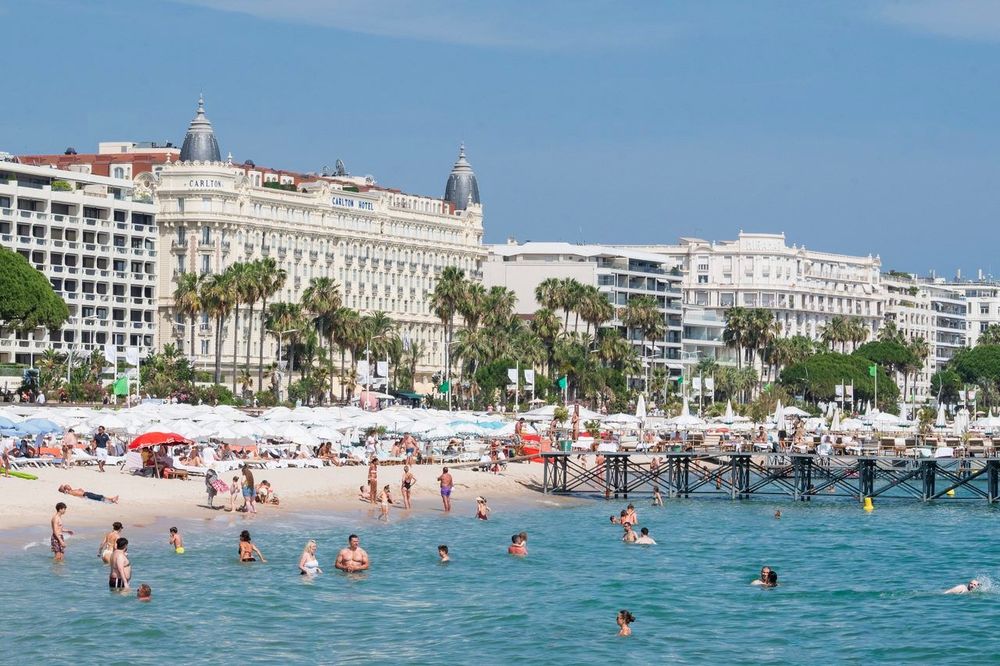
1 - La promenade de la Croisette

Before becoming this palm-lined boulevard dotted with grand hotels, it was little more than a muddy, windswept track used by pilgrims and donkeys. Everything changed in 1853, when the mayor secured authorisation for a public promenade, eventually funded by once-reluctant local residents. The rise of seaside tourism in the 19th century drew aristocrats from across the globe, and further expansions around the 1960s shaped today's seafront. Tradition has it that its name recalls a small cross raised long ago at the headland's tip.
Free entry
2 - The Majestic
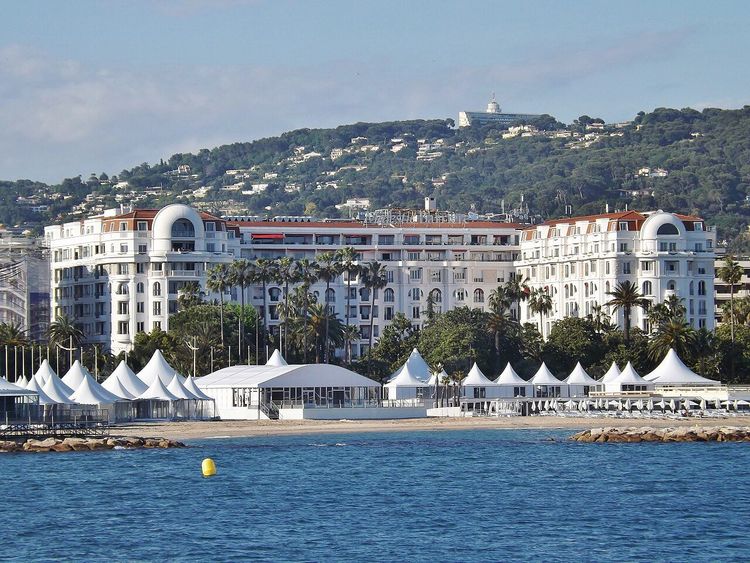
This Art Deco palace, opened in 1926, stands where an older hotel and a villa once stood, both torn down within months on the orders of its founder, entrepreneur Henri Ruhl. Requisitioned as a military hospital during the Second World War, it was bought in 1945 and later passed to the Barrière family, who added extra floors in 1965 before a further extension in 2010. Between its restaurants, spa and lavish suites, it remains, every festival season, a favourite haunt of the biggest film stars.
Free to see from outside
3 - Palais des Festivals
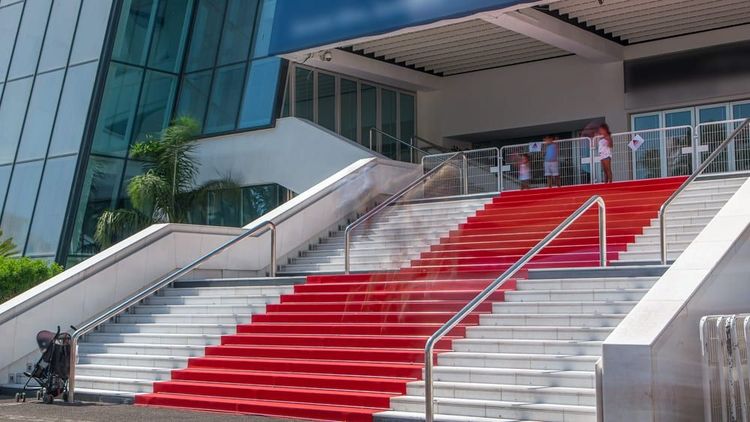
A city of cinema since 1946, Cannes changed venues more than once before opening this building in 1983, soon nicknamed the Bunker for its massive architecture. Every spring since, filmmakers and actors have been celebrated here under the flash of photographers, not without memorable mishaps: a notorious boycott in 1983, or an actress who arrived late and had her hair washed on the tarmac in 2003. Before you leave, try your luck on the famous steps and become, if only for a moment, a star of the screen.
Free to see from outside
4 - Cannes' Walk of Fame
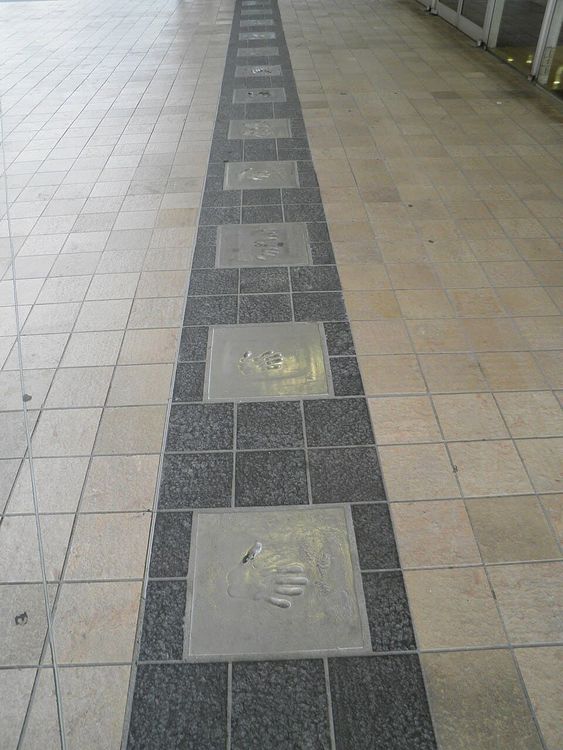
While Los Angeles has its Walk of Fame, Cannes answers with this forecourt, where over 140 handprints and 400 signatures of great names in cinema are set in stone. From Luc Besson to Paul McCartney, by way of Meryl Streep, the tribute lies beneath your feet rather than before your eyes. No need to cross the Atlantic to walk in your idols' footsteps: just look down long enough to spot them, then place your own hand in theirs.
Free entry
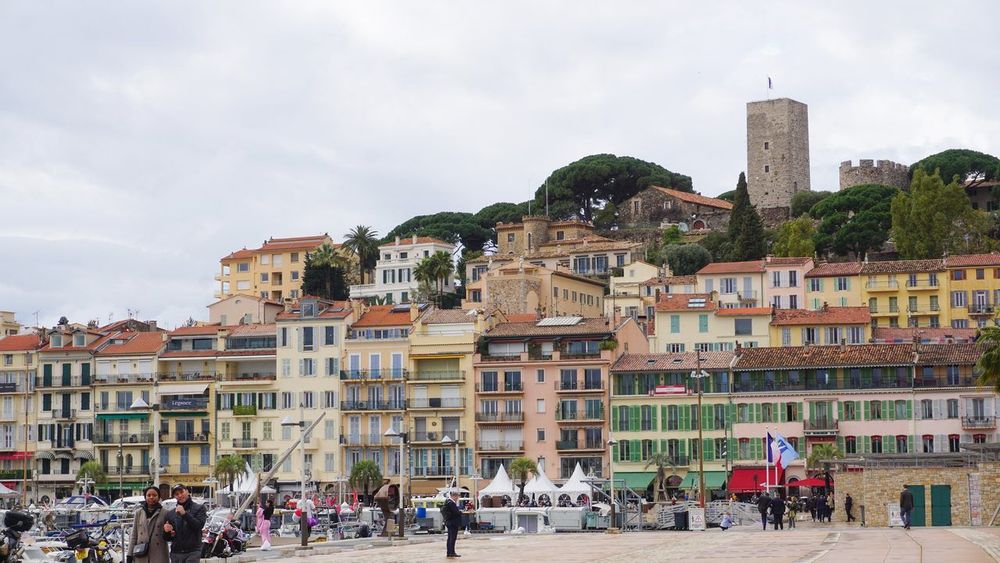
5 - The Old Port of Cannes
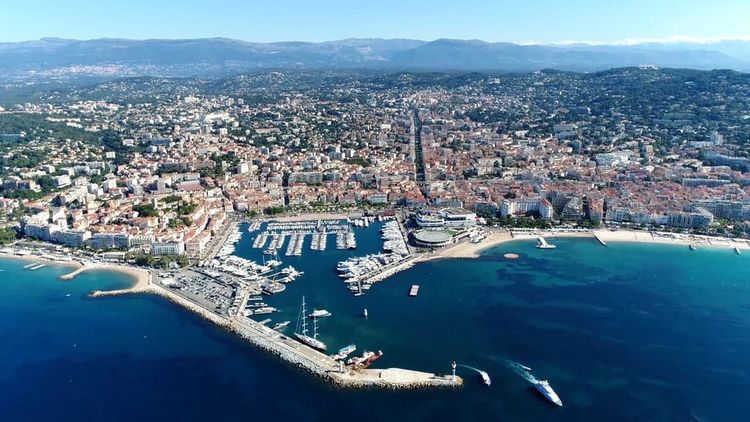
This harbour, among the oldest on the Riviera, owes much to a British politician who stumbled upon Cannes in 1834 and staked everything on its seaside potential. Thanks to his influence, the railway reached the town and this basin took shape at the foot of the Suquet; the jetty's first stone, meanwhile, was laid by a Prince of Wales in 1898. Since then, the port has become a lively stage, hosting royal regattas and international firework displays.
Free entry
6 - The Suquet District
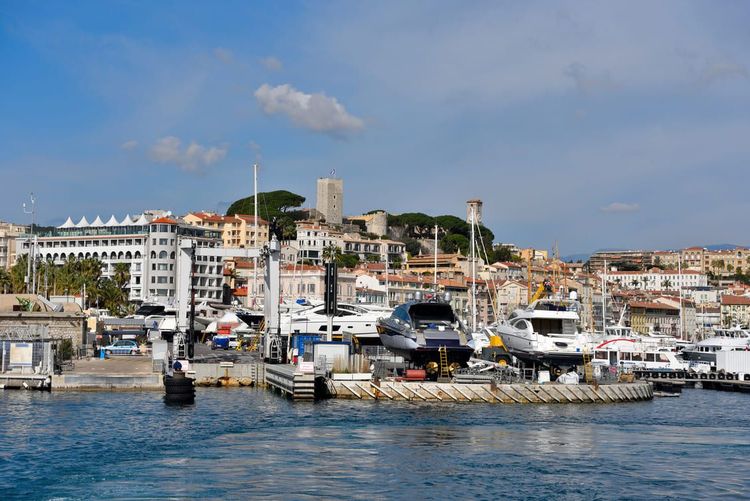
While Cannes is mostly associated with cinema, this hilltop district tells a far older story: that of the town's true birthplace. Fortified from the Middle Ages by the Counts of Provence and then the monks of Lérins, it saw a castle, houses and churches rise between 1080 and 1178. Its ramparts were partly removed in the 18th and 19th centuries to open proper roads, and the castle, partly destroyed, became a factory before its current life as a museum. Every summer, the quarter comes alive with its musical nights.
Free entry
7 - The Iron Mask Tower

This discreet tower, built in the 12th century to watch over the surrounding area from the citadel, owes its name to one of French history's most famous mysteries. The hidden face carved above its gate is said to evoke a prisoner who escaped from Île Sainte-Marguerite to spend his final years within these walls. Immortalised by Voltaire and later Dumas, this man, credited with over sixty possible identities, remains, to this day, without trace or certainty. A timeless enigma that still fascinates historians, writers and filmmakers worldwide.
Free entry
8 - Notre-Dame d’Espérance Church
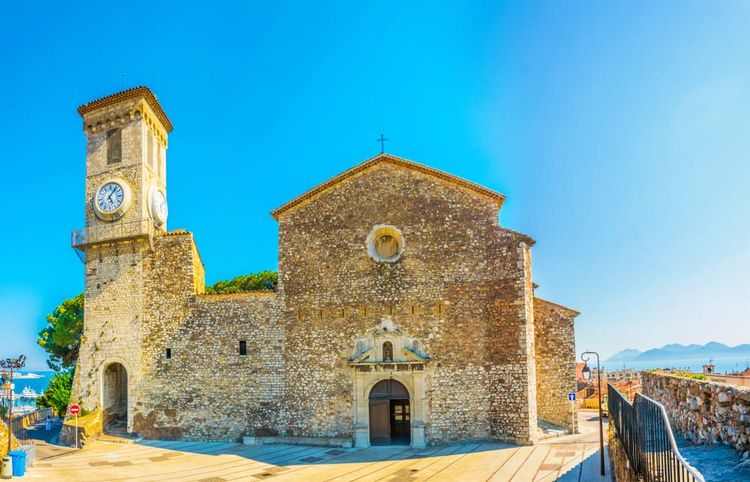
Perched atop the Suquet, this church took over a century to complete, officially finished in 1627 after many extensions. First named Chapelle Sainte-Anne, it only took its current name in 1645. Its blend of Gothic, Romanesque and Renaissance styles hides a seasonal treasure: a mechanised musical nativity scene dating from 1920, animating over 200 figures, though it only reveals itself between December and February. A fine reason to return in winter, once you've enjoyed the sweeping view over the bay.
Free entry
9 - Viewpoint Over the Bay of Cannes
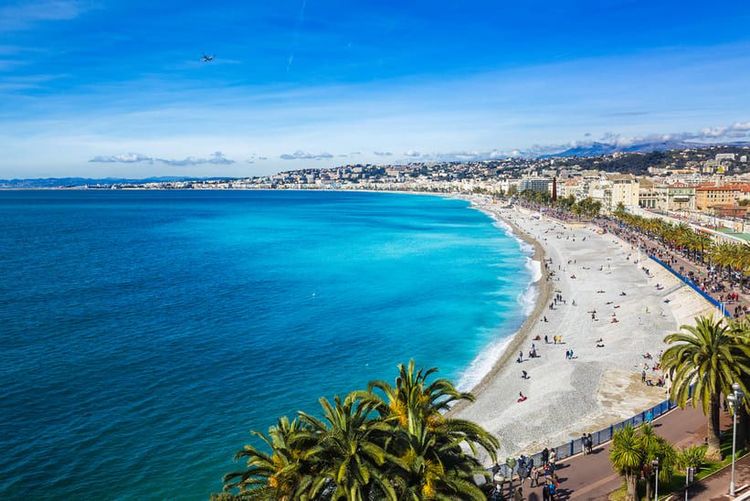
From this square at the top of the Suquet, the Bay of Cannes unfolds in all its splendour, between the deep blue sea and the glittering landmarks of the Croisette. A postcard view, though one with nothing to do with the red carpet: here, there's no chance of spotting a film star climbing the steps of the Palais des Festivals. Just the finest view in town, to enjoy in peace, without flashbulbs or photographers.
Free entry
10 - Museum of World Explorations
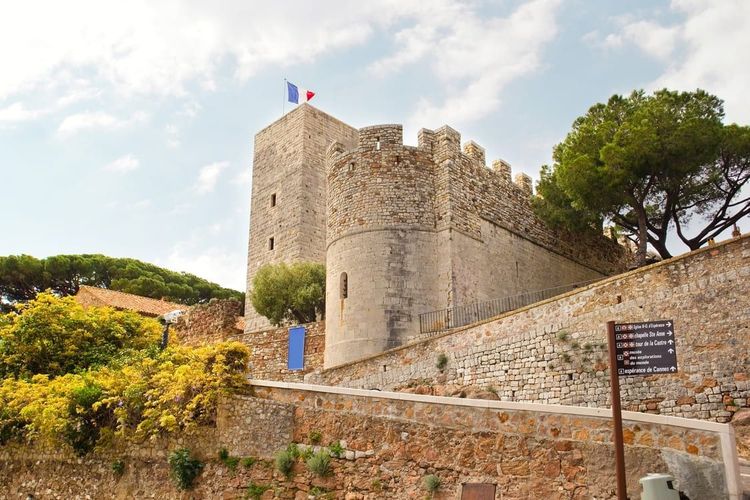
Housed in the ruins of the old fortified castle of the monks from the nearby island, where this museum settled in 1919, it owes its collection to a wealthy Dutch baron, a passionate traveller who brought back from his journeys a vast collection of Mediterranean antiquities and primitive art. Over time, deposits from the Louvre and donations from great families, including the Rothschilds, enriched the holdings further. Several permanent collections and temporary exhibitions now let visitors travel across world civilisations, without ever leaving the top of the Suquet.
Paid entry (about €6)
11 - The Suquet Tower
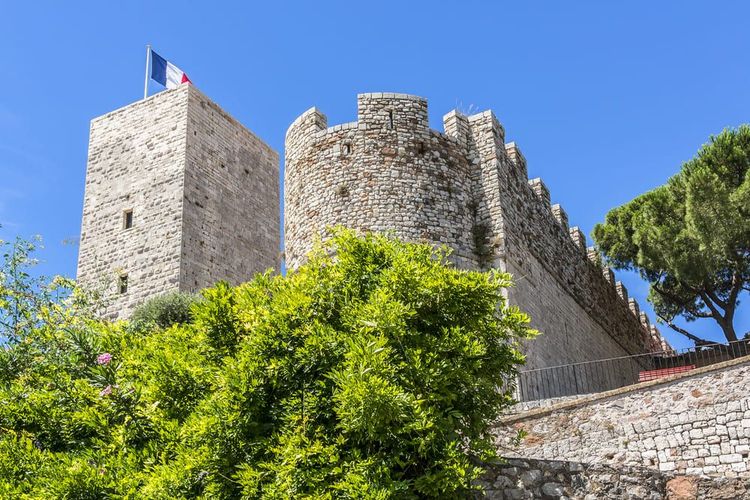
Built between the 11th and 12th centuries by the abbots of Lérins, this 22-metre stone tower once watched over the bay against attacks by land and sea alike. Sturdy and austere, it also served as a prison for a handful of unlucky souls, a role that seemed to suit it rather well. Listed as a historic monument along with the neighbouring museum since 1937, it rewards the climb up its 109 steps with a stunning panorama over the whole town.
Paid entry (about €6)
12 - Vallombrosa Castle
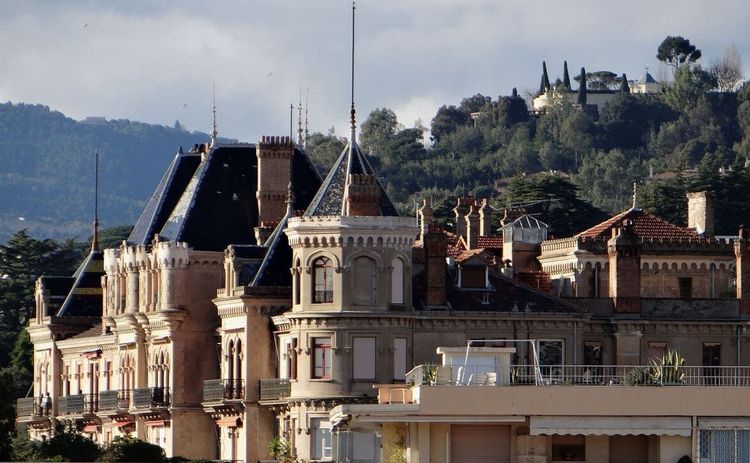
Perched on its rocky spur, this castle with its Scottish silhouette and nine crenellated towers struck a strikingly novel note on the Riviera when it was built in 1852. Bought in 1861 by a wealthy Franco-Italian family who gave it their name, it drew a scathing verdict from writer Prosper Mérimée, who found its architecture painful to behold. Extended with a chapel and a park where Queen Victoria liked to stroll, then turned into a palace, it has been private co-ownership for well-off residents since 1934.
Free to see from outside
13 - The Suquet Artists’ Space
Before becoming the headquarters of Cannes' contemporary art scene, these 850 square metres, renovated in 2016, served as... the city morgue. An unlikely past that contrasts sharply with the space's current calling, where several annual exhibitions and four resident artists open their studios to curious visitors. The perfect chance to dive into the secrets of contemporary art-making, right in the heart of the old town.
14 - Forville Market
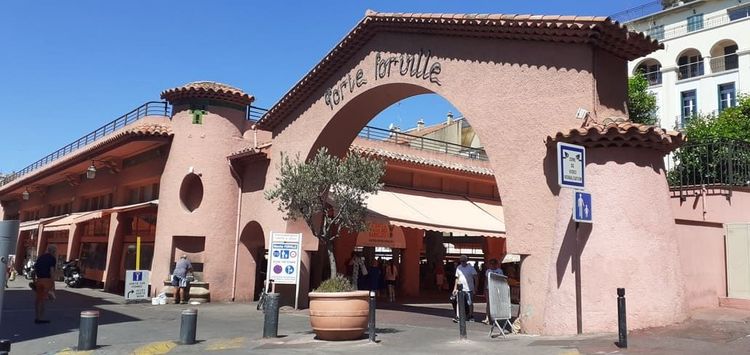
Along with the Mediterranean scents drifting through the air comes the distinctive hum of this covered market, a beloved institution opened in 1929 to replace the old wooden hall. Beneath its ochre, concrete-block exterior, dressed up with pergolas and faux dovecotes in a Provençal style, lies an experience best lived from the inside. Around fifty traders await visitors here, ready to share the region's finest produce between bursts of singsong banter.
Free entry
15 - Meynadier Street
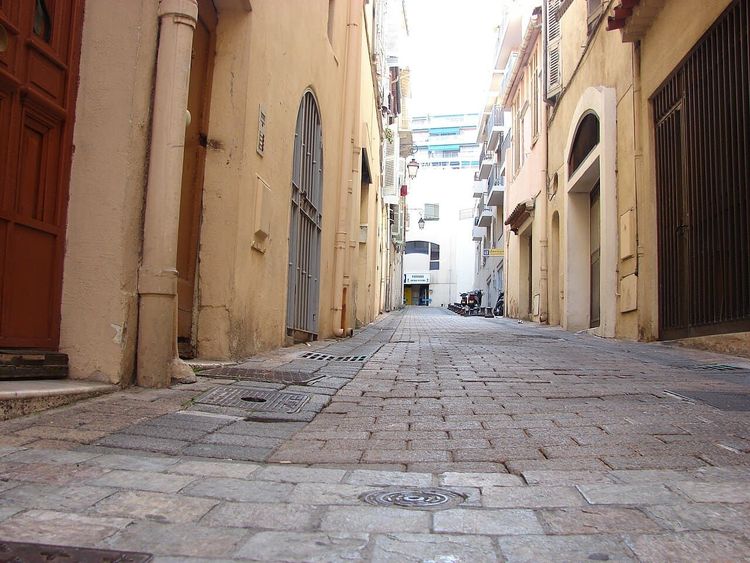
Opened in the 16th century as the Grand-Rue, this street once led the way towards Antibes, some ten kilometres off. Far from the glitz of the Croisette, it built its reputation on its trading spirit, firmly established since the early 20th century. The Tesi hat shop, opened in 1882 and still run by the same family, stands as its oldest witness. Since 1933, the street has honoured a father and son, both officers killed in action during the two World Wars.
Free entry
16 - Notre-Dame-de-Bon-Voyage Church
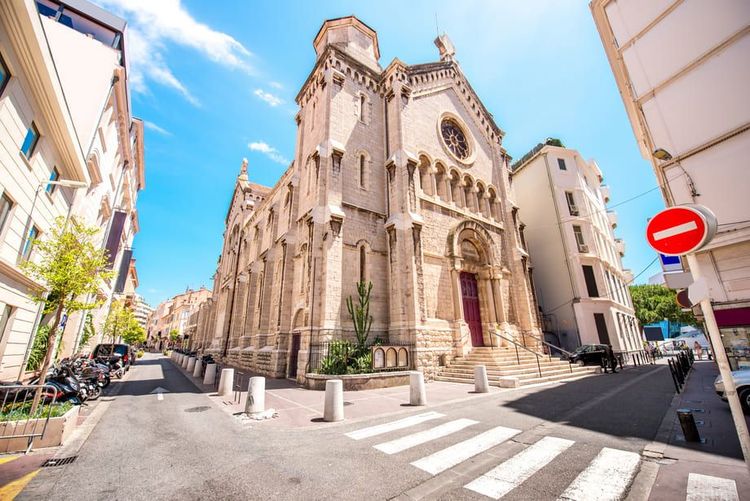
Consecrated in 1879 in a Romanesque-inspired style, this church followed on from a modest 15th-century chapel first dedicated to Notre-Dame des Sables, then to Notre-Dame de Bon Port, a nod to its closeness to the sea. Sailors prayed here before setting off, or returned to thank the Virgin. Right across the street, Napoleon set up camp on the night of 1 to 2 March 1815, straight after landing at Golfe-Juan: the starting point of what is now known as the Route Napoléon.
Free entry
17 - Antibes street
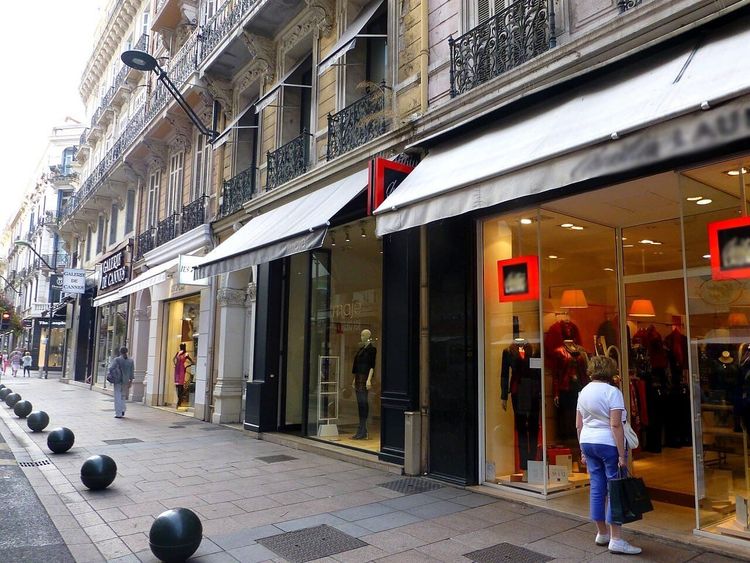
Parallel to the Croisette but worlds away from its glamour, this street, built in 1914, takes its name from the old road that led to Antibes. A true gem of Cannes shopping, it lines up boutiques where you might find a souvenir for your suitcase: a scented soap from the Fragonard house, perhaps, or a bottle of wine from the grape harvest of the monks of Lérins Abbey, best enjoyed later in moderation.
Free entry
18 - La Malmaison Art Centre
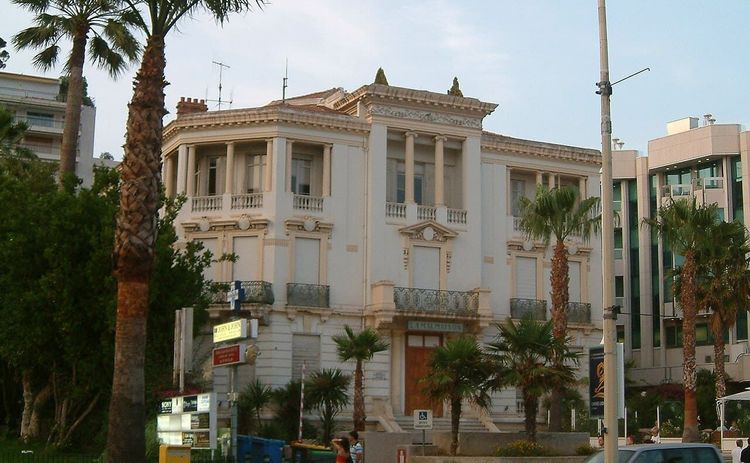
Of the old Grand Hôtel, built in 1863 with its 150 rooms and game rooms, only this small pavilion remains, the sole survivor of its 1950 demolition. Bought by the city twenty years later, it was turned into an art centre, hosting three major exhibitions a year devoted to renowned painters, from Picasso to Matisse and Miro. A fitting way to honour the inspiration the Riviera has offered so many artists.
Paid entry (about €6)
19 - The InterContinental Carlton Cannes

This century-old palace owes its existence to a Russian grand duke who came to Cannes in 1909 to escape the imperial court and live out a forbidden love, financing most of its construction. Opened in 1911 under hotelier Henri Ruhl, recognisable by its twin domes, said to be inspired by a famous cabaret dancer, it has lived through history: a military hospital, an international conference in 1922, a G20 summit in 2011. Linked to the Film Festival since the 1940s, it also served as a backdrop for Hitchcock.
Free to see from outside
What to do in Cannes in 2 or 3 days?
The audio-guided walk through Cannes links 19 sights over 4.7 km, in about 1 hour 50 minutes: from the Croisette and its grand hotels, it climbs toward the Suquet, the old fortified village overlooking the bay, before coming back down past the Forville market and the shopping streets of the centre. With visits and breaks, it easily fills a first day.
The next day, leave the mainland for the Lérins Islands, 15 to 20 minutes by boat from the Old Port that the walk runs alongside at stop 5; each island has its own boat company and ticket, and an adult return to Sainte-Marguerite costs around €20.
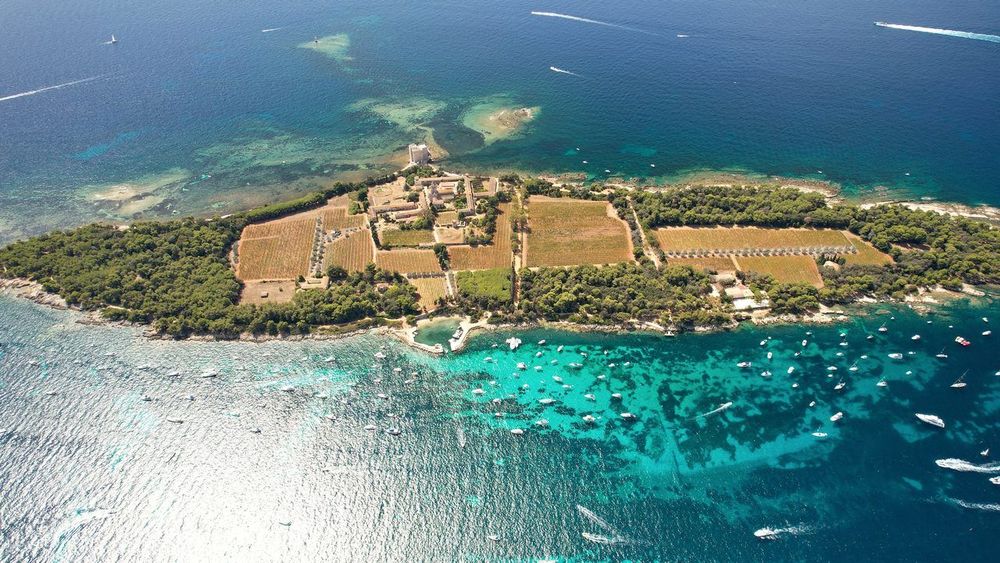
Sainte-Marguerite can be walked in two to three hours under eucalyptus and pine trees, between rocky coves and the Batéguier pond, a haven for waterbirds, up to the fort overlooking the landing stage. Saint-Honorat, smaller and quieter, still belongs to Cistercian monks who grow vines there, around seven medieval chapels; our guide to the Lérins Islands covers the crossings.
For a third day, stay on the mainland: the wooded hill of the Croix des Gardes, 80 hectares on the west side, can be reached without a car, and the La Californie district is best explored by bike.
Which neighbourhoods does the tour cross?
The loop runs through neighbourhoods with contrasting moods, from the glamour of the Croisette to the popular streets of old Cannes.
It first follows the promenade de la Croisette, past the Majestic hotel and the Palais des Festivals, up to the Walk of Fame where film stars' handprints are set in the pavement (stops 1 to 4).
It then reaches the Old Port before climbing into the Suquet, Cannes' old fortified village, past the Iron Mask Tower, Notre-Dame d'Espérance church and the viewpoint over the bay, up to the hilltop with the Museum of World Explorations and the Suquet Tower, then passes Vallombrosa Castle and the Suquet Artists' Space (stops 5 to 13).
It finally comes back down past the Forville market and Meynadier street, passes Notre-Dame-de-Bon-Voyage church and takes Antibes street, then returns to the Croisette at the La Malmaison art centre and the InterContinental Carlton Cannes, not far from its starting point (stops 14 to 19).
How much does it cost to visit Cannes?
Of the 19 stops on the walk, 11 are freely accessible, from the Croisette to the Forville market; four others can only be admired from the outside:
- the Majestic hotel, a grand hotel to admire from the promenade;
- the Palais des Festivals, whose red carpet and steps are open to all outside festival time;
- Vallombrosa Castle, visible from the street;
- the InterContinental Carlton Cannes, another grand hotel seen from the pavement.
Among the paid entries, a single €6.50 ticket covers the Museum of World Explorations and the climb up the Suquet Tower; the La Malmaison art centre requires a separate ticket at the same price. If you plan several municipal museums, ask at the tourist office in the Palais des Festivals about the Cannes Pass Culture, which gives reduced or free entry to them.
Information checked in November 2026 and subject to change.
Where to stop for a bite along the tour?
The walk stops at the Forville market (stop 14), Cannes' covered market hall, where producers and fishmongers set up every morning except Monday, when it turns into a flea market instead.
Here you can try socca, a chickpea-flour flatbread baked in a wood oven and sold warm by the slice, or a piece of fougasse; it is best to come before 11am, as some stalls close once the day's stock runs out.
A little further on, Meynadier street (stop 15) has lined up cheesemongers and delicatessens, bakers and pastry shops for over a century, alongside fine grocers, in the popular atmosphere of old Cannes, far from the Croisette's luxury.
What to do in Cannes with children?
Cannes works well for a family outing, with beaches suited to children and plenty to do on the water.
Plage du Midi, west of the port, has flat access and a strip of pine trees for shade, away from the Croisette crowds; on the Croisette itself, several beach clubs run a kids' club, usually from age 4, so parents can take a break for an hour or two. More ideas are gathered in our guide to Cannes with family.
At the Lérins Islands, Sainte-Marguerite can be explored on foot or on a rented kick scooter, with no cars, and its fort is visited in about an hour, a story that appeals to children over 8; some operators also offer paddling out to the island by kayak, with a treasure hunt open from age 7.
Along the Croisette, a cycle lane separated from the road makes for an easy bike ride: several rental shops in the centre offer tandems, baby seats and children's bikes for €10 to €15 for two hours. As for the climb into the Suquet, steep in places, it is easier with a baby carrier or an all-terrain buggy.
What should you know before visiting Cannes?
A few things are worth planning around before setting off in Cannes.
If the stay falls during the Cannes Film Festival, usually in mid-May, or in the middle of summer, book hotels and restaurants several weeks ahead and expect the Croisette to be crowded by 10am. By car, parking in the centre stays expensive and full from April to September; it is best to head for a day-rate underground car park near the Palais des Festivals or Forville, then carry on by foot.
The ticket for the Museum of World Explorations includes the climb up the Suquet Tower, but the climb is limited to 15 people for 15 minutes at a time: expect a short wait at busy times.
What to see around Cannes?
Cannes is a good base for continuing on to other towns on the French Riviera.
At 10 km, Antibes hides a fortified old town with flower-lined lanes, between market scents and hanging gardens. At 26 km, Nice blends sea and mountains, between the ochre Belle Époque façades and the Baroque heritage of Old Nice.
At 38 km, Monaco mixes luxury and history on its princely rock, between the Grimaldi palace and a glamorous atmosphere. At 43 km, Saint-Tropez keeps, behind its jet-set image, the charm of a Provençal village between harbour and lively streets.
What's on in Cannes right now?
At this time of year, several events bring Cannes' centre to life.
From 27 November to 3 January, the Christmas Village sets up 66 wooden chalets on the Allées de la Liberté and the Cours Félix Faure, with crafts, jewellery, toys and local specialities. It is open from 10am to 9pm, until 10pm on Fridays and Saturdays, and includes a 360 m² ice rink (€5, free on weekday mornings for children aged 4 to 10).
A 32-metre Christmas tree is lit for the same dates in front of the Palais des Festivals. At midnight on New Year's Eve, a drone show followed by a 15-minute fireworks display lights up the bay.
Information checked in November 2026 and subject to change.
Le plein d'inspirations
Explorez le monde en totale liberté, à pied au cœur des villes ou au fil des routes. Nos guides audios transforment chaque destination en une découverte culturelle immersive et unique.










FAQ for visiting Cannes
When is the best time to visit Cannes?
The ideal time to explore Cannes runs from spring to early autumn. May and June offer a perfect climate with generous sunshine and pleasant temperatures, while September and October let you enjoy a still-warm sea without the summer crowds. May remains particularly sought-after thanks to the International Film Festival, which bathes the town in a uniquely electric atmosphere. If you prefer peace and quiet, October will win you over with its Mediterranean mildness and its more authentic feel. Summer suits fans of the beach and lively entertainment, but expect large crowds. The mild winters also let you discover Cannes in a different light, with gentle temperatures ideal for strolling.
How many days do you need to visit Cannes?
Two to three days are generally enough to discover the essentials of Cannes. Over a weekend, you can walk the legendary Croisette, explore the historic Suquet district with its picturesque streets, and soak up the atmosphere of the Forville market. If you have an extra day, devote it to the Lérins Islands for a nature break facing the Mediterranean. Travellers wishing to delve deeper can easily fill four to five days by adding excursions into the hinterland or along the Riviera. Cannes's advantage remains its human scale, which lets you easily branch out on foot from your accommodation to discover its different facets without stress.
How do you get to Cannes from Nice airport?
Nice airport is about thirty kilometres from Cannes, and several options are available to reach the town. The express airport bus is the most economical solution, with regular departures throughout the day. The journey generally takes an hour depending on traffic. Taxis and private-hire vehicles are more comfortable but noticeably more expensive. An interesting alternative is to take the tram to Nice station, then the regional TER train, which serves Cannes in less than forty minutes. This option combines speed and a reasonable price. In peak season, remember to book your transport in advance to avoid waiting, particularly if you arrive during the Festival or major professional events.
What are the absolute must-sees in Cannes?
Cannes reveals its treasures between glamour and authenticity. The Croisette is of course unmissable, with its legendary palace hotels and the iconic Palais des Festivals, where you can pose on the famous steps. The Suquet district will transport you back to old Cannes with its cobbled streets climbing up to the Notre-Dame-d'Espérance church. The Forville market delights the senses with its colourful, typically Provençal stalls. The Ryo audioguide accompanies you precisely on this contrasting journey, revealing the anecdotes that give each place its flavour. Don't forget the old port, with its traditional pointu boats rubbing shoulders with luxury yachts, the perfect symbol of the two-sided face of Cannes. The Rue d'Antibes will satisfy shopping lovers, while the public Midi beach offers an accessible seaside break.
How do you visit the Lérins Islands from Cannes?
The Lérins Islands are a must-do nature getaway just a stone's throw from Cannes. Sea shuttles leave regularly from the old port, generally every hour in peak season. Sainte-Marguerite, the largest, is reached in about fifteen minutes and is home to the famous prison of the Man in the Iron Mask. Saint-Honorat, smaller and more unspoilt, is home to a Cistercian monastery that is still active. Allow at least half a day per island to make the most of the coastal paths, the wild coves and the peaceful atmosphere that contrasts with the bustle of Cannes. Tickets can be bought directly at the counters on the port or online depending on the company. Bring water and a picnic, as dining options remain limited, especially on Saint-Honorat.
Where should you stay in Cannes according to your budget?
Cannes offers accommodation for every budget, even if prices rise noticeably during the Festival and conventions. Wealthy travellers will appreciate the legendary palace hotels of the Croisette, offering exceptional service and stunning views. For a mid-range budget, turn to the town-centre hotels around the Rue d'Antibes or near the station, practical and well located. Those on a tight budget will find what they are looking for in the Californie district or towards Le Cannet, slightly off-centre but well served. Apartment rentals are an interesting alternative for extended stays or families. Be sure to book well in advance if you come in May or during the major professional events, as availability then becomes very limited and prices soar.
What can you do in Cannes when it rains?
Rainy days remain rare in Cannes but offer the chance to discover the town in a different way. The Musée de la Castre in the Suquet presents collections of art and ethnography in a remarkable medieval setting. The Espace Miramar regularly hosts quality photographic exhibitions. Film buffs will enjoy a screening in one of the town's historic cinemas, the birthplace of the seventh art. The covered Forville market lets you stroll in the dry among the local produce. The art galleries of the Rue d'Antibes are also worth a visit, as is the La Bocca shopping centre for a shopping session. Take the chance too to treat yourself to a gourmet break in one of the many cafés or restaurants, true Cannes institutions where you can savour Mediterranean cuisine while watching local life go by.
What is there to do in the Suquet district of Cannes?
Le Suquet is the old town, perched on the hill that closes off the old port to the west. You climb up through cobbled lanes and stairways lined with colourful houses, by way of Rue Saint-Antoine, which comes alive in the evening with its small restaurants. At the top, the church of Notre-Dame d'Espérance and the medieval watchtower overlook the bay: the view takes in the harbour, the Croisette and the Lérins Islands, and is at its finest late in the day.
The Museum of World Explorations, housed in the former castle of the Lérins monks, displays collections brought back from five continents and gives access to the tower. Below, the Forville market and its stalls of Provençal produce round off a morning stroll. The Ryo audio guide offers a dedicated Cannes route that links Le Suquet to the other highlights of the town.
Can you see the Palais des Festivals outside festival time?
Yes. The building, set at the entrance to the Croisette opposite the old port, is accessible all year round: you can walk freely up the famous steps that are covered with the red carpet during the fortnight, and follow the Allée des Étoiles running along the foot of the building, where the handprints of actors and directors are set into the ground. It is one of the most photographed spots in town.
The tourist office also runs guided visits that take you inside the main auditorium and behind the scenes, areas usually closed to the public, while retracing the history of the festival and of the Palme d'Or. During the fortnight itself the screenings are reserved for professionals and the press, but the atmosphere along the Croisette and the red-carpet arrivals can be followed from the barriers set up around the forecourt.
Are the beaches in Cannes public or private?
Both exist side by side. Along the Croisette, much of the sand is taken up by managed beaches, often attached to a hotel or a restaurant, where you settle on a sun lounger with table service; between them are public stretches, freely accessible and supervised in season. West of the Palais des Festivals, the Plage du Midi unrolls a long ribbon of public sand much used by locals, while other coves and family beaches follow one another towards the tip of the Croisette.
The sand is fine and the water shelves gently, which suits families well. In high season, come early in the morning to find a spot, and bear in mind that the mistral can cool the air even under a bright sun. Out of season, those same beaches make for fine walks facing the Estérel hills.
What is the difference between Sainte-Marguerite and Saint-Honorat, the two Lérins Islands?
Both islands are 15 to 20 minutes by boat from Quai Laubeuf. Sainte-Marguerite, the larger one, is a nature reserve covered in Aleppo pines and eucalyptus, with 12 kilometres of trails, beaches such as Plage de la Convention or Plage d'Argent, and the Fort Royal, linked to the mystery of the Man in the Iron Mask.
Smaller Saint-Honorat belongs to the Cistercian monks of Lérins Abbey, who make their own wine, and has seven medieval chapels. No regular shuttle links the two islands, so you have to go back via Cannes.
Plan your crossing with our guide to the Lérins Islands from Cannes.
Which beach should you choose in Cannes for your budget, between public beaches and beach clubs?
Cannes has some thirty beaches along more than three kilometres of coastline, half of them free to access. The eight municipal beaches, such as Zamenhof behind the Palais des Festivals or Plage du Midi facing the Esterel, are raked every morning and have showers; seasonal hirers rent a lounger and parasol for 10 to 15 euros.
On the Croisette, beach clubs charge from 25 euros off-season to 60 or 90 euros at summer weekends, so book the day before. At the tip of the peninsula, Palm Beach offers clearer water.
Compare every spot in our guide to the best beaches in Cannes.
How can you plan a trip to Cannes with children, between beaches and islands?
Plage du Midi, with fine sand and shade from pine trees, is the most practical with young children, while some private beaches on the Croisette run a kids' club from age 4. Sainte-Marguerite, 15 to 25 minutes away by shuttle, is car-free and easy to explore on foot, and its Fort Royal, the former prison of the Man in the Iron Mask, takes an hour to visit.
Allow 17 to 20 euros return per adult, with reduced fares for under-tens. A kayak treasure hunt is open to children from 7, and a 1930s market hall serves hot socca by the slice.
Find all the tips in our family guide to Cannes.
Vos commentaires, idées et suggestions
Aucun avis pour le moment