© Shutterstock
 Votre guide Ryo
The Lérins Islands from Cannes: Complete Guide 2026
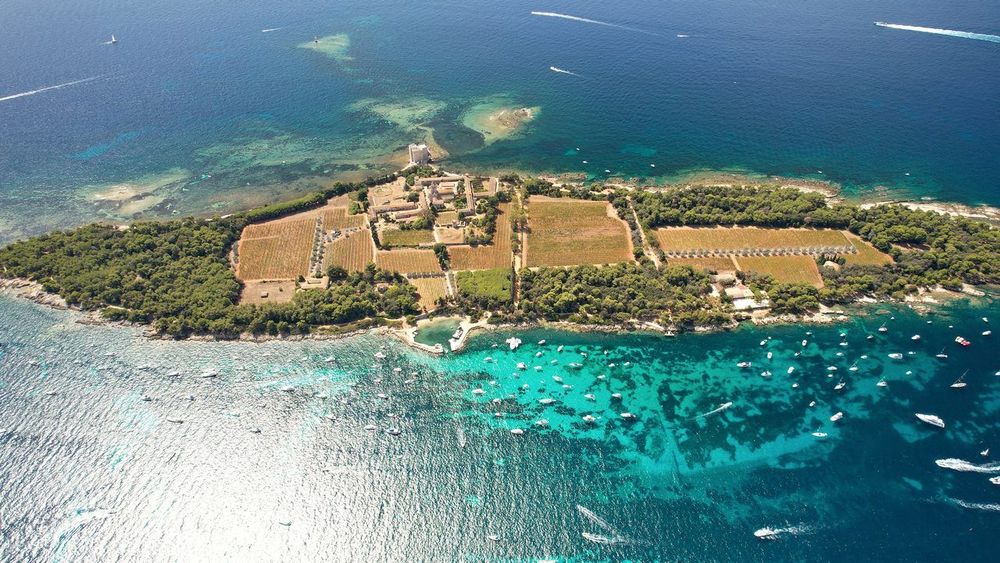
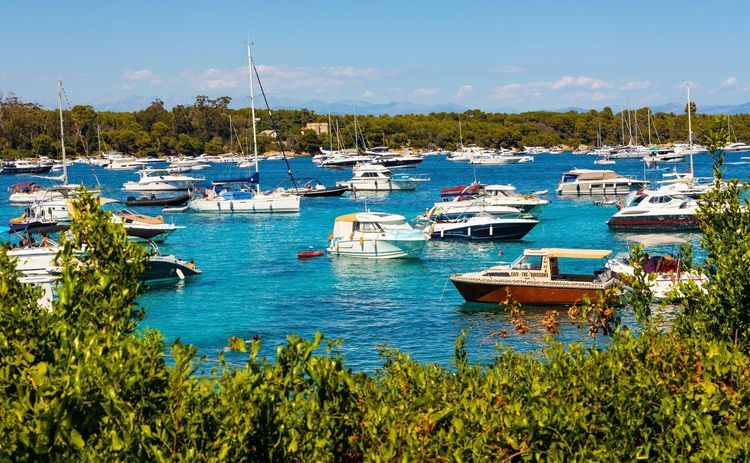
Fifteen minutes by boat from the crowded beaches of the Croisette, the Lérins Islands, off the coast of Cannes, form a striking counter-world: 400 hectares of pine forest and turquoise waters, with no cars, no concrete, and a monastery that has been inhabited since the 5th century where monks still produce their own wine. Most visitors to the Côte d'Azur see them from the seafront as a silhouette beyond the gulf, and leave without ever setting foot on them. This guide will help you avoid that mistake.
Two islands, two radically different characters: Sainte-Marguerite with its white sandy beaches, its royal fort, and the enigma of the Man in the Iron Mask; Saint-Honorat with its Cistercian monks, its seven medieval chapels, and a coastal vineyard unique in France. Allow a full day for each, or plan a two-stage crossing from Quai Laubeuf. If you are exploring Cannes before boarding, the Ryo audio guide of Cannes will take you from Le Suquet to the old port via the Croisette — the best starting point before heading out to sea.
The Two Lérins Islands: Two Worlds 15 Minutes from Cannes
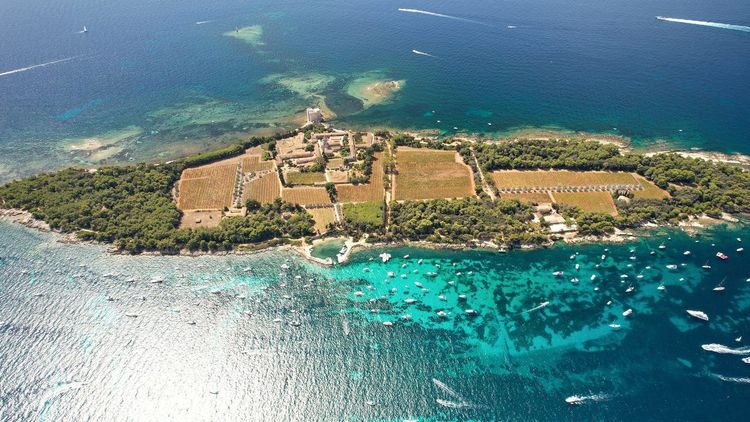
The Lérins Islands form an archipelago of four islands off the coast of Cannes, of which only two are open to the public. Sainte-Marguerite is the largest, roughly 3 km long and 900 m wide, managed by the municipality of Cannes and classified as a regional nature reserve. Saint-Honorat, the smaller of the two (1.5 km by 400 m), belongs to the Cistercian monks of the Lérins Abbey, monastic property for centuries. The other two islets, Grande Cavale and Petite Cavale, are uninhabited and not accessible.
This difference in governance is felt immediately: one is a natural and tourist reserve with beaches, marked trails, and a fine-dining restaurant; the other is a place of spiritual life that welcomes visitors in a spirit of quiet contemplation, with no festive bars or entertainment.
The crossing from Quai Laubeuf in the old port of Cannes takes 15 to 20 minutes to Sainte-Marguerite, slightly longer to Saint-Honorat. The two islands are not connected by a regular service: to visit both in one day, you must return to Cannes in between. This detail shapes the entire organisation of the day.
Geographically, the Lérins Islands lie less than 3 km from the Cannes seafront, between Cap de la Croisette and the Pointe de l'Esquillon. Their position within the gulf shelters them from the prevailing winds, which explains the mild microclimate and the exceptionally clear waters. The marine protection established in 2004 bans certain types of fishing and imposes speed limits on motorised vessels in coastal zones.
Île Sainte-Marguerite: Forests, Beaches, and Coastal Trails
Sainte-Marguerite is the most visited island destination in the Alpes-Maritimes, and for very good reasons. The island is covered by a dense forest of Aleppo pines, eucalyptus, and holm oaks — vegetation that provides precious shade in the height of July. The 12 kilometres of trails criss-crossing the island allow you to walk a complete circuit or venture inland, with panoramic views of the Côte d'Azur from Théoule-sur-Mer to the Estérel.
Disembarkation takes place in a small sheltered cove, where a few restaurants and snack bars welcome arrivals. Most visitors head immediately to the left, towards Fort Royal. If you do the opposite and follow the northern coast towards Plage du Batéguier, you will enjoy two hours of peace before the 9 am and 10 am boats unload their passengers.
The beaches of Sainte-Marguerite are wonderfully varied. Some are stretches of fine sand — Plage de la Convention on the eastern side is the most renowned for its water quality and golden sand. Others are rocky calanques where the water turns green or blue depending on the sunlight, comparable to what you find in Sardinia. Plage du Grand Jardin on the northern side is wilder and half-shaded by the forest. Plage d'Argent (Île Sainte-Marguerite, 06400 Cannes, rated 4.4/5 on Google with 1,234 reviews) is the one Cannes locals spontaneously mention as their favourite.
The island's terrestrial biodiversity is remarkable. Classified as a regional nature reserve since 2009, Sainte-Marguerite is home to endemic species of the western Mediterranean: several varieties of cistus and helianthemum, wall lizards, woodchat shrikes, and colonies of bats in the fort's cellars. Avoid straying off marked trails in summer — not only to protect the vegetation, but also to reduce the risk of fire in this dry forest.
What sets Sainte-Marguerite apart from other French Mediterranean islands, from the Sanguinaires to the Frioul Islands, is the density of its military and carceral history. Venice, the dukes of Provence, the Spanish, and the French all fought over this strategic position at the entrance to the gulf of Cannes. The walls of Fort Royal bear witness to each era, layer by layer.
For divers, the seabed around Sainte-Marguerite contains several wrecks and posidonia meadows classified as a reserve. Diving is only permitted in certain zones — check the boundaries with the ferry companies or Cannes dive centres before going in. Kayaking and stand-up paddleboarding are free along most of the coastline, except in designated swimming areas.
Fort Royal and the Mystery of the Man in the Iron Mask
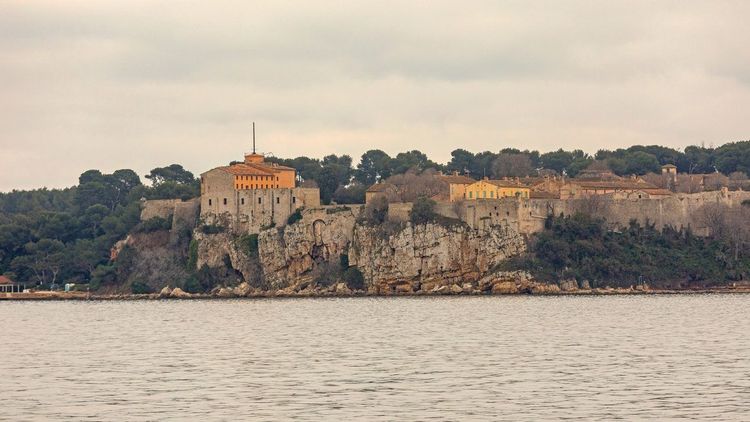
The Fort Royal on Île Sainte-Marguerite (Île Sainte-Marguerite, 06400 Cannes, rated 4.3/5 on Google with 2,077 reviews) is the most imposing structure in the archipelago. Built in the 17th century under Richelieu and reinforced by Vauban in 1712, it overlooks the northern coast from an ochre sandstone cliff. Its bastions, curtain walls, and casemates trace a layout characteristic of classical French military architecture. What gives it worldwide renown, however, is cell number 7 in its dungeons.
The Man in the Iron Mask is one of the best-preserved mysteries in French history. This prisoner of unknown identity was held at Sainte-Marguerite from 1687 to 1698 — the longest stay of his entire imprisonment — before being transferred to the Bastille, where he died in 1703. The cell in Fort Royal is still visible today, with its barred windows overlooking the sea. Alexandre Dumas popularised the story by identifying him as the twin brother of Louis XIV, but no historical source supports this theory. Historians today lean towards Eustache Dauger, a former valet involved in compromising affairs of state, or Ercole Antonio Mattioli, a Mantuan diplomat arrested in 1679 for betraying a secret negotiation with Louis XIV.
The Museum of the Man in the Iron Mask and Fort Royal (long known as the Musée de la Mer), housed within the fort, is a compelling reason to visit even in bad weather. Open daily in summer and closed on Mondays from October to May, it presents the results of underwater archaeological excavations carried out in the gulf since the 1990s: Roman ceramics from the 1st century BC, amphorae and ship objects recovered from wrecks between 15 and 40 metres depth, as well as a reconstruction of the Man in the Iron Mask's cell. Admission is €6.50 full price (€3.50 reduced), free for under-18s.
The fort's terrace is an exceptional viewpoint. To the right, the red ridges of the Estérel and La Napoule; to the left, the Croisette of Cannes and the snow-capped Mercantour massif on a clear day; straight ahead, the open sea and, in fine weather, the first slopes of Corsica on the horizon. Few vantage points in the region offer this perspective over the coastline from offshore.
The fort's walls conceal a little-known testimony: graffiti carved into the stone by Huguenot prisoners held here after the revocation of the Edict of Nantes in 1685. Texts in Latin, religious symbols, depictions of boats — some of these inscriptions, over three centuries old, are still legible on the walls of their cells. The museum guide points them out to attentive visitors; otherwise, look at eye level in the vaulted corridors of the casemates.
One final curiosity of the fort: its seaward moat is now colonised by ocellated lizards, a protected species in France, which seem perfectly at home on Vauban's stonework. They are not shy.
Hiking and Beaches: Walking around Sainte-Marguerite
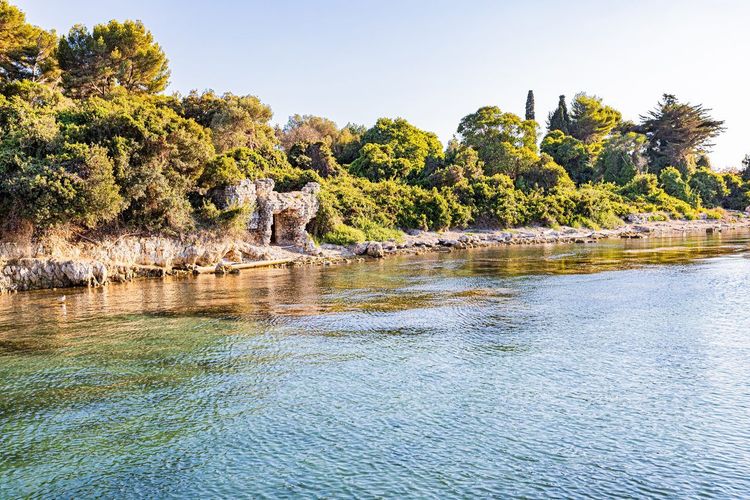
The full circuit of Sainte-Marguerite following the coastal path covers roughly 5 km and takes between 1.5 and 2 hours without stopping, or a full half-day if you stop to swim in the calanques along the way. It is the most popular walk on the island, and by far the most beautiful.
The coastal trail runs along pale limestone cliffs on the southern face, exposed to offshore winds, then descends towards sheltered coves where the water lingers on calm days and turns blue or green depending on the light. The northern coast is gentler and bordered by forest: this is where Batéguier is located, a protected lagoon that attracts migrating flamingos from October to March.
For hikers, a second route crosses the island's interior via forest tracks through the densest parts of the nature reserve. More shaded and less frequented, it is recommended in the height of summer to avoid the glare of the coastal rocks. The two routes can be combined into a loop of about 2.5 hours.
On Sainte-Marguerite, the beaches furthest from the dock are consistently the least crowded. General rule: the more you walk, the better your beach. Calanque de la Cale at the western tip of the island remains deserted even in the middle of August; its bed of smooth pebbles and clear water are worth the 40-minute walk from the dock.
Practical note: bring everything you need with you to the island. Food and drink outlets are concentrated near the dock and close outside ferry hours. At least 1.5 litres of water per person in summer. The Alpes-Maritimes department enforces a year-round ban on open fires and barbecues across the entire island.
The Marine Reserve and the Underwater Ecomuseum
The seabed around the Lérins Islands is among the richest on the Provençal coast, and the regulations of the marine nature reserve (established in 2004) are the main reason for this. The prefectoral order bans spearfishing, limits the speed of motorised vessels, and protects the posidonia meadows that carpet the seabed from a depth of 3 metres.
The underwater ecomuseum of Île Sainte-Marguerite is a project unique in France: a series of sculptures submerged at 3 to 6 metres depth, accessible by swimming or snorkelling from certain beaches. This underwater trail serves both as an artificial reef — the sculptures are colonised by sponges, gorgonians, and soft corals — and as a tool for raising awareness of marine biodiversity. The sculptures feature abstract forms and figures inspired by local fauna.
Posidonia meadows are the most precious ecosystem in these waters. Posidonia is a flowering plant, not an alga, and its growth is extremely slow — around 1 cm per year. These underwater prairies are home to saddled bream, sea bream, groupers, octopuses, and purple sea urchins; they also produce a significant amount of oxygen and serve as nurseries for the juveniles of many species. Trampling and anchoring on posidonia meadows are the two main causes of degradation — protected zones are marked with buoys.
The direct consequence of this protection since 2004 is that the density of marine life in the waters of Lérins is significantly higher than on the seafront beaches of Cannes, even at just 3 km's distance. Visibility in calm water can exceed 15 to 20 metres in summer.
For those who do not dive, glass-bottomed semi-rigid boat trips departing from Cannes allow you to observe the marine life from the surface. Several operators offer these 1 to 2-hour circuits from the old port, sometimes combined with a tour of both islands. The economical alternative: a simple mask, snorkel, and fins are enough to see the ecomuseum sculptures and the shallow seagrass meadows from the beach.
Île Saint-Honorat: The Millenary Abbey and the Monks' Vineyard
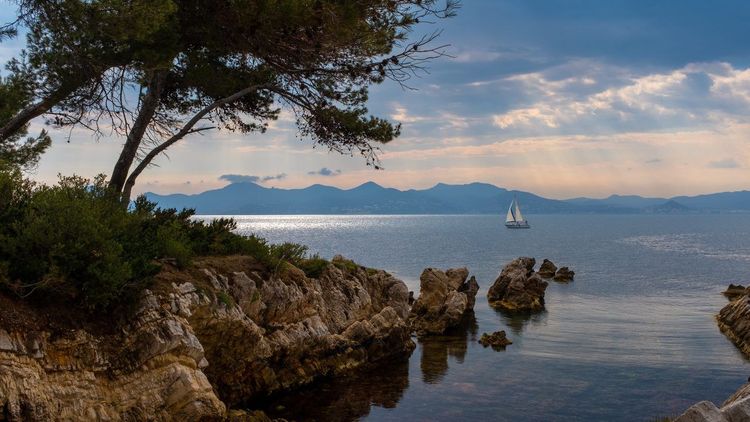
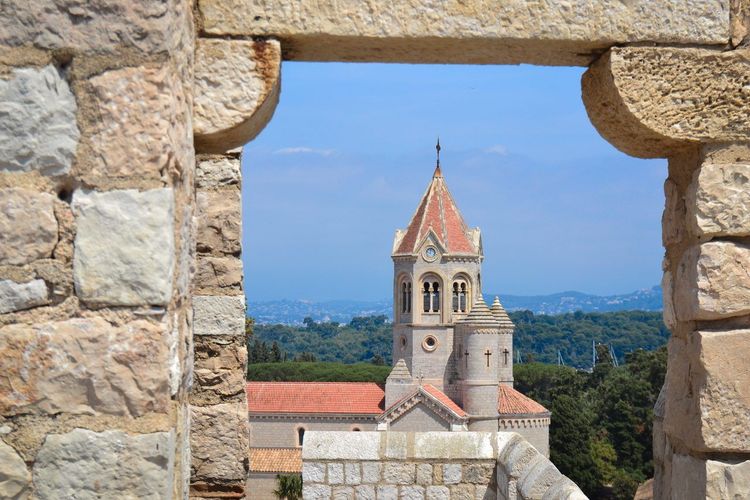
A few minutes by boat from Sainte-Marguerite, Saint-Honorat is an island of an entirely different nature. Smaller, quieter, almost contemplative: since AD 410, monks have lived here without interruption. The Lérins Abbey (Île Saint-Honorat, 06400 Cannes, rated 4.7/5 on Google with 1,371 reviews), founded by Saint Honoratus himself at the dawn of the 5th century, is one of the oldest monastic communities in the Western world. It trained several popes, dozens of bishops, and radiated across all of medieval Europe at a time when this corner of the Mediterranean was the spiritual centre of Western Christianity.
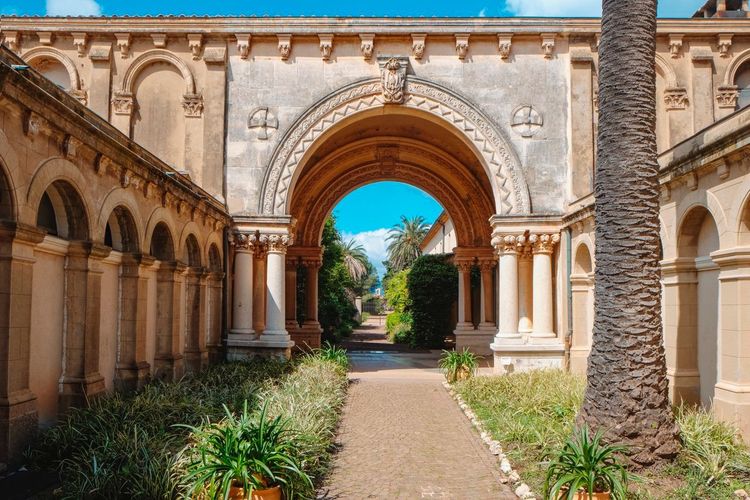
Today managed by Cistercian monks of the Sénanque congregation, Abbaye Saint-Honorat is home to around twenty monks and a few guests on spiritual retreat. The monastery itself is not fully open to visitors, but the abbey church (19th century, Romano-Provençal style) and the monastery shop are accessible to the public. The morning Mass is open to all.
The most architecturally impressive part is the monastic castle, a fortified tower erected by the sea in the 11th century to protect the monks from Saracen raids. Its thick walls, round arches, and crenellated battlements make it one of the best-preserved medieval structures in Provence. The view from the top, which is accessible, encompasses the entire archipelago and the coastline from Cannes to Antibes.
The Saint-Honorat vineyard is one of the great surprises of the visit. Around 8 hectares of vines stretch across the western flank of the island, just metres from the sea — the sea salt and offshore breeze give the wines a pronounced mineral character. The monks produce several cuvées, including a white (Le Frère de la Côte) and a red (Les Pierres à feu). Production is limited and sold almost exclusively at the monastery shop, making it one of the most original purchases in the entire PACA region.
The atmosphere on Saint-Honorat is radically different from that of Sainte-Marguerite. Here, there are no lively bars or equipment hire: the island operates on a monastic rhythm, and visitors are invited to respect it. Loud conversations and phone speakers are frowned upon. That said, families with children are welcome — walking the coastal paths, visiting the castle, and browsing the shop make for a solid 2 to 3-hour programme.
Walking across the island takes about 45 minutes along the coastal path. The shoreline here is rockier than on Sainte-Marguerite, with smooth limestone slabs polished by the sea and a few small coves where you can swim in privacy. The island's interior is almost entirely taken up by the vines and a few copses.
For diving and snorkelling enthusiasts: the seabed around Saint-Honorat is even less frequented than that of Sainte-Marguerite, with sites little known even to Cannes locals. Recreational scuba diving is permitted in the unprotected zones.
The Medieval Chapels and Heritage of Saint-Honorat
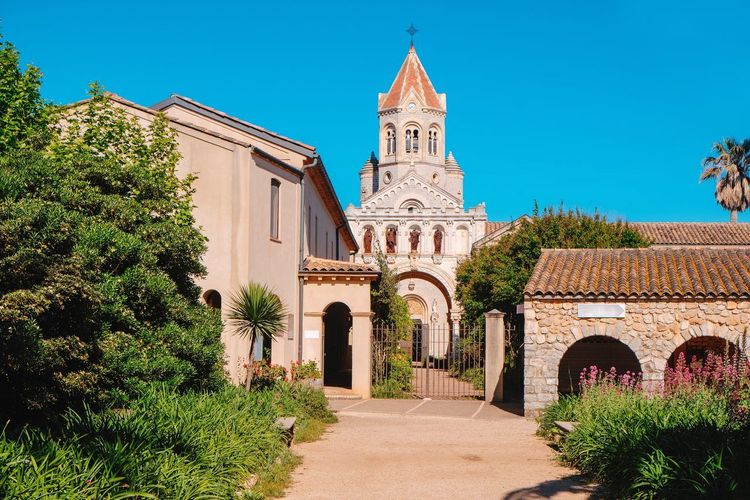
Saint-Honorat has seven chapels scattered across the island, most of which date from the Middle Ages. This network of religious buildings is the direct legacy of the early monastic community, which organised its agricultural and spiritual activities by zone. Each chapel corresponds to a particular use or period in the abbey's history.
The Chapelle de la Trinité to the south-east is one of the oldest and best preserved. Its early Christian trefoil plan, rare in France, dates back to the early Middle Ages. Closed to the public, it remains visible from outside and its layout is perfectly legible from the entrance.
The Chapelle Saint-Sauveur to the north features an octagonal plan and remnants of interior frescoes. Chapelle Saint-Pierre on the eastern side is said to have been built on the very spot where Saint Honoratus landed. Chapelle Sainte-Capraise commemorates the memory of the founder's companion. Some of these chapels are open for a few hours in summer for self-guided visits — ask at the abbey reception on arrival.
The entire ensemble — chapels, monastic castle, and abbey — is listed as a Historic Monument. Yet the site remains understated, with no systematic guided tours and no major tourist infrastructure. That is precisely what makes it precious.
The vineyard deserves a specific mention. The monks vinify everything themselves, without recourse to outside oenologists. The winemaking follows a strict internal set of specifications. A bottle of Lérins white costs several dozen euros at the shop — perhaps the most original souvenir from the entire Côte d'Azur. Lérina, a liqueur made from 44 plants produced according to a monastic recipe, is also available. Stocks of older vintages sell out as early as spring.
The abbey shop is open every day outside of the canonical hours, which punctuate the day at around 9 am, 11:30 am, 2 pm, and 5 pm depending on the liturgical calendar.
Water Activities around the Lérins Islands
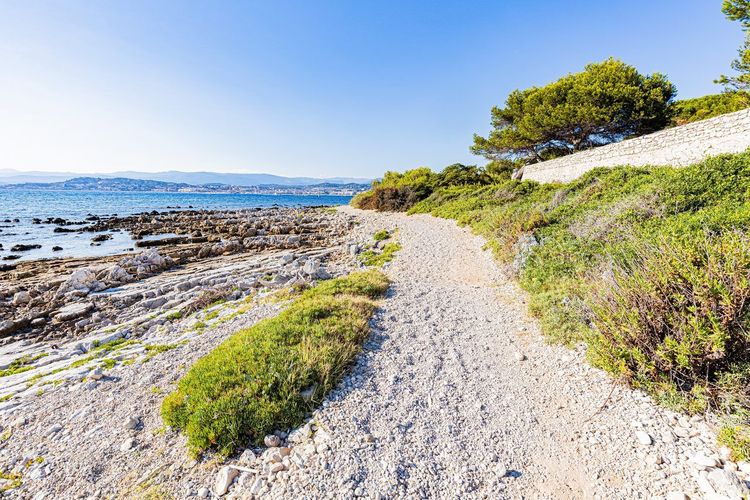
The waters around the Lérins Islands are among the most popular on the Côte d'Azur for water sports, without being as overcrowded as some mainland beaches. The marine reserve regulations govern usage and preserve the quality of the seabed.
Scuba diving is the flagship activity. Several wrecks lie at depths of 15 to 40 metres, including the remains of Roman vessels from the 1st century BC and more recent wrecks. Visibility in summer can exceed 20 metres. Several Cannes dive centres offer guided excursions lasting 2 to 4 hours, sometimes combining wreck exploration with reef or seagrass diving.
Sea kayaking is another popular way to approach the islands. The direct crossing from the old port of Cannes takes about 45 minutes to 1 hour in calm seas — reserved for experienced kayakers and favourable weather conditions. Local operators organise guided outings from the Cannes beaches, with equipment included.
For families, glass-bottomed boat tours are an excellent alternative to diving: one-hour circuits around both islands with underwater observation from the surface, suitable for children from age 5. Several operators depart from the old port of Cannes.
Fishing is subject to strict regulations within the marine reserve: no spearfishing, no pot fishing in protected zones. Shore fishing with a rod is tolerated in certain marked areas. Jet-skiing and high-speed motorised watersports are prohibited in the coastal strip around the islands.
Where to Eat on the Lérins Islands
Dining options on the islands are limited and concentrated mainly on Sainte-Marguerite. This is yet another reason to bring your own picnic — there is no shortage of shaded rest areas, and the quality of local products bought in Cannes before boarding (cheeses, charcuterie, fruit) generally surpasses what is available on the islands.
La Guérite is the best-known restaurant on Sainte-Marguerite and one of the most highly regarded addresses on the entire Côte d'Azur. It serves Provençal cuisine and fresh fish in a direct seafront setting, right on the water's edge. The menu ranges from €35 to €80 per person. Reservations are essential in high season (June–August) — some summer weekends are fully booked three weeks in advance.
Several snack bars and casual eateries near the dock offer sandwiches, salads, ice creams, and cold drinks at more affordable prices (€12–18 per meal). These establishments operate according to footfall, mainly from May to September, and sometimes close outside ferry hours. Do not count on them for the last boats of the evening.
On Saint-Honorat, there is no restaurant. Only the abbey shop, which sells monastic products (wine, liqueurs, honey, jams, biscuits) and a few drinks. The monks tolerate picnicking in the outdoor non-liturgical areas. Many visitors bring their lunch from Cannes — it is the simplest solution.
Practical tip: in high season, queues for restaurants on Sainte-Marguerite form from 11:30 am. Arriving on the first or second boat, eating at 11 am or after 2 pm, and planning to leave before 5 pm will help you avoid queues on the way back.
Crossing from Cannes: Ferries, Schedules, and 2026 Fares
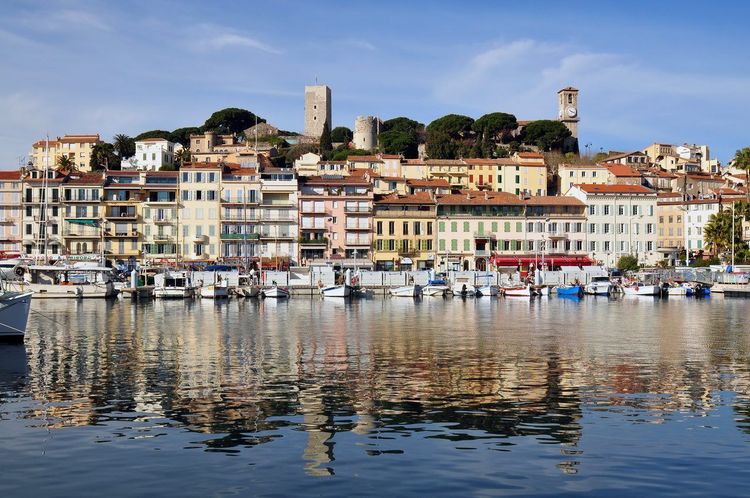
The crossing to the Lérins Islands departs from Quai Laubeuf in the old port of Cannes. Each island has its own ferry companies, with separate timetables.
Riviera Lines, Trans Côte d'Azur, and Horizon serve Sainte-Marguerite, with departures approximately every 30 to 45 minutes in high season (July–August) and every hour in low season. The first crossings leave at around 7:30 am, the last at around 6–6:30 pm depending on the period. The crossing takes 15 to 20 minutes.
The Compagnie Planaria, affiliated with the abbey, is the sole operator serving Saint-Honorat, with several crossings per day in summer and 3 to 4 in low season. Tickets for Saint-Honorat are sold at the Planaria booth on Quai des Îles, behind the Laubeuf car park. The crossing takes approximately 20 minutes.
2026 fares (check at the ticket offices for updated prices):
- Sainte-Marguerite adult round trip: approximately €16 to €18 depending on the operator
- Saint-Honorat adult round trip (Planaria): €19.50
- Children aged 4 to 15: approximately €12 for Saint-Honorat, equivalent reduced fare for Sainte-Marguerite
- Under 4: free
- Combined ticket for both islands: sometimes available at the ticket office
Tickets are available at the docks and online via the ferry companies' websites. In July and August, buy your tickets in advance online to avoid queues that can exceed 45 minutes on busy days. Private boats and launches can also be chartered for groups.
From Cannes SNCF station, Quai Laubeuf is a 10-minute walk along the seafront. Paid car parks are available near the dock (Parking Laubeuf, Parking des Anciennes-Briqueteries). Most Cannes hotels offer negotiated rates at these car parks or luggage storage facilities.
Before boarding, take time to stroll through the old port: it is the most authentic neighbourhood in Cannes, far removed from the Croisette. The Ryo audio guide of Cannes covers Le Suquet, the old port, and the lanes of the Forville market — a pleasant way to fill the time between crossings.
Important ferry rules:
- Dogs are allowed on Sainte-Marguerite (lead required at all times) but prohibited on Saint-Honorat
- Bicycles are not accepted on standard ferries to the Lérins Islands
- All waste must be taken back to the mainland — there is no public waste collection on Saint-Honorat
- There are no medical facilities on the islands — bring any essential medication with you
Accessibility: not all standard ferries are adapted for boarding by people with reduced mobility. The fort and museum on Sainte-Marguerite are partially wheelchair accessible. Contact the ferry companies in advance to make specific arrangements. Back on shore, our Cannes audio walking tour picks up at the Old Port, a few steps from Forville Market.
When to Visit the Lérins Islands and How to Plan Your Day
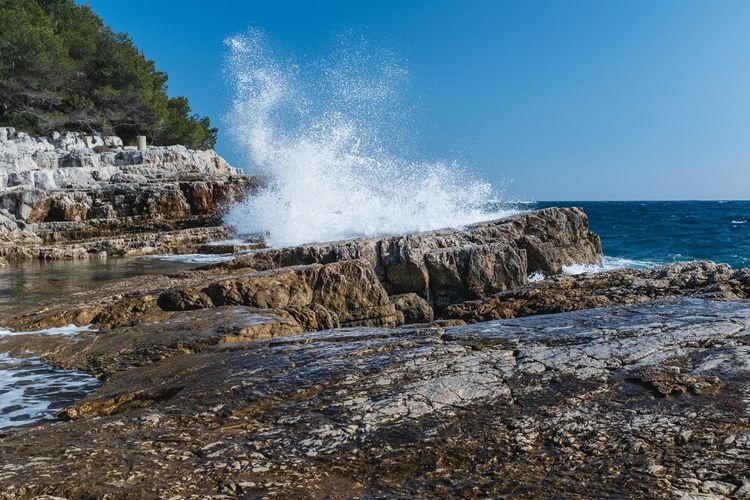
The best time to visit the Lérins Islands is May–June or September. In May, the vegetation is fresh and fragrant, the beaches are deserted, and ferry crossings are already frequent. In September, the sea reaches its maximum temperature (23 to 25°C), the summer crowds gradually thin out, and the Mediterranean light takes on its most photogenic quality.
July and August are still possible, but require careful planning. Catching the first boat at 7:30 am gives you two hours of peace on Sainte-Marguerite before the 9 am and 10 am ferries unload their passengers. Outside the summer season, the islands take on a special atmosphere: silent forests, deserted beaches, occasionally choppy seas. In winter (November–March), crossings are reduced to one or two per day, but both islands remain accessible.
Suggested itinerary for a full day (both islands):
- 7:30 am: first boat to Sainte-Marguerite
- 7:50 am–12:00 pm: full tour of the fort, coastal trails, swimming in the calanques
- 12:30 pm: return to Cannes, quick lunch at the quay
- 1:30 pm: boat to Saint-Honorat
- 2:00–5:00 pm: abbey, monastic castle, island circuit, monastery shop
- 5:15 pm: last boat back
If you truly want to enjoy the beaches of Sainte-Marguerite, dedicate a full day to a single island. Trying to do everything in one day leaves no time for a proper swim in the calanques or an in-depth visit to the fort.
For Mediterranean islands accessible as a day trip from major coastal cities, the comparison sometimes arises with the Lavezzi Islands from Bonifacio or the Frioul Islands from Marseille. Lérins has a decisive advantage over both: the frequency of crossings and the proximity of the port mean you can come and go without complex planning.
What to Know Before You Board
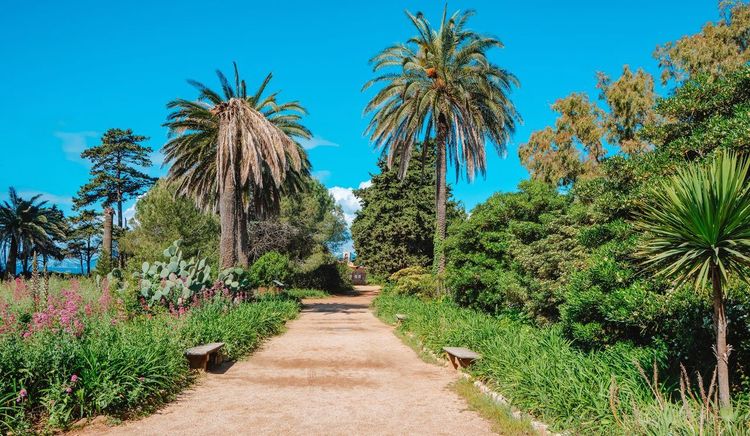
A few practical points to make the most of your day at the Lérins Islands:
On the islands: no ATMs, no pharmacy. Bring cash, sufficient sunscreen, at least 1.5 litres of water per person in summer, and food if you are not planning to eat at a restaurant.
Mobile coverage: decent near the dock on Sainte-Marguerite. Variable and often absent on Saint-Honorat, especially in areas away from the abbey. Download your maps offline before leaving; the Ryo audio guide, once the Cannes route is downloaded, also works without a signal.
Footwear: the coastal paths alternate between fine sand and uneven limestone rock. Sandals with a rigid sole or light closed shoes are more suitable than simple flip-flops for the full circuit.
Clothing: Saint-Honorat is an active place of worship. Covered shoulders and knees are required in the abbey church and monastic areas. A light scarf in your bag is sufficient.
Photography: photography is not permitted inside the abbey and certain chapels. Outside, across both islands, there are no restrictions.
Environmental responsibility: take your litter with you, do not pick vegetation, do not feed wild animals. The Sainte-Marguerite nature reserve is patrolled by wardens.

FAQ
How do you get to the Lérins Islands from Cannes?
Departures leave from Quai Laubeuf in the old port of Cannes, a 10-minute walk from the SNCF train station. Sainte-Marguerite is served by Riviera Lines, Trans Côte d'Azur, or Horizon (roughly every 30–45 minutes in summer, 15–20 minutes crossing time), while the Compagnie Planaria, affiliated with the abbey, runs the service to Saint-Honorat (several crossings per day in high season, about 20 minutes). Tickets are available at the docks and on the ferry companies' websites.
What is the ticket price for the Lérins Islands in 2026?
A round-trip adult ticket costs approximately €16 to €18 for Sainte-Marguerite and €19.50 for Saint-Honorat in 2026. Children aged 4 to 15 benefit from a reduced fare (around €12 for Saint-Honorat), and children under 4 travel free. Combined tickets for both islands on the same day are sometimes available — check directly at the ticket office or when booking online.
Can you visit both islands in one day?
It is doable, but ambitious. The key is to catch the first boat at around 7:30 am to Sainte-Marguerite, spend no more than 3.5 hours there, then take a ferry to Saint-Honorat after a quick lunch in Cannes. This leaves 2 to 3 hours on Saint-Honorat before the last return crossing. If you truly want to enjoy the beaches of Sainte-Marguerite, it is better to dedicate a full day to each island.
Which island should you choose: Sainte-Marguerite or Saint-Honorat?
For beaches, coastal trails, and history (Fort Royal, Man in the Iron Mask, museum): Sainte-Marguerite. For medieval architecture, the monastic vineyard, and a contemplative atmosphere: Saint-Honorat. The two complement each other. With children, Sainte-Marguerite offers more variety. For those passionate about religious heritage or exceptional wines, Saint-Honorat is a rare escape.
Are there restaurants on the Lérins Islands?
On Sainte-Marguerite: yes, including La Guérite (fine dining, reservations essential in summer) and several snack bars near the dock. On Saint-Honorat: no, only the monastery shop selling abbey products. In both cases, bringing water and a snack is advisable, especially outside the summer months.
Are the Lérins Islands open all year round?
Both islands are accessible year-round. However, ferry crossings are considerably reduced in low season (1 to 2 per day in winter) and some tourist services (restaurants, snack bars) close from November to March. The Museum of the Man in the Iron Mask and Fort Royal on Sainte-Marguerite is open daily in summer and closed on Mondays from October to May. The abbey on Saint-Honorat is accessible year-round according to monastic hours.
Can you go scuba diving at the Lérins Islands?
Recreational diving is permitted in the unprotected zones of the marine reserve. Roman wrecks, posidonia meadows, and rocky seabeds offer excellent conditions, with visibility often exceeding 20 metres in summer. Several diving clubs in Cannes organise guided excursions. Spearfishing is prohibited throughout the entire marine nature reserve.
Can you bring your dog to the Lérins Islands?
Dogs are allowed on Sainte-Marguerite, provided they are kept on a lead at all times. They are, however, prohibited on Saint-Honorat by decision of the monastic community. This rule is strictly enforced at the time of boarding for Saint-Honorat.
A Natural Escape Twenty Minutes from the Croisette
The Lérins Islands are one of the true surprises of the Côte d'Azur — not a minor curiosity, but a complete change of scene within ferry distance. Silent forests, clear waters, rich history, and a monastic vineyard: two islands that have almost nothing in common except their proximity to a city the world associates with glamour and celebrities.
Cannes is far more than the Croisette, and its maritime surroundings are richer than one might imagine from the boulevard. To prepare your stay and explore the city before boarding, the Cannes audio-guided tour — 20 audio stops, 1h50 of walking, 4.7 km on foot — is a great way to understand the city before leaving it behind for the open sea.
À lire également