© Shutterstock
 Votre guide Ryo
Beach in Cannes: The Complete Guide to the Most Beautiful Beaches in 2026
Even in the middle of August, Cannes still has a handful of beaches where you can lay your towel without booking a sun lounger for 45 euros. When it comes to beaches, Cannes nurtures a real misconception: people imagine the coastline entirely taken over by the hotels of la Croisette, when in fact the city has around thirty beaches spread over more than three kilometres of shoreline, half of which are freely accessible at no charge. To get your bearings before you go, the Ryo audio guide tour of Cannes places each beach in relation to the neighbourhoods you pass through on foot.
In this guide, we distinguish the fine-sand public beaches from the reservation-only beach clubs, explain why Cannes sand is anything but natural, take a boat trip to the coves of the Îles de Lérins, and break down the real cost of a day at the beach, ranging from 0 to 90 euros depending on the establishment you choose. Everything you need to put together a tailor-made programme, whether you are after la Croisette as seen in magazine spreads or a quiet cove far from the crowds.
La Croisette: The Birthplace of Cannes' Iconic Beaches
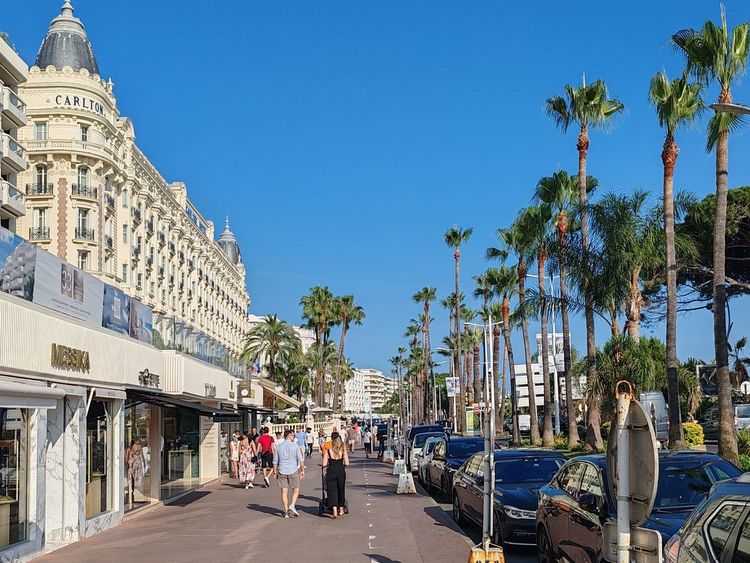
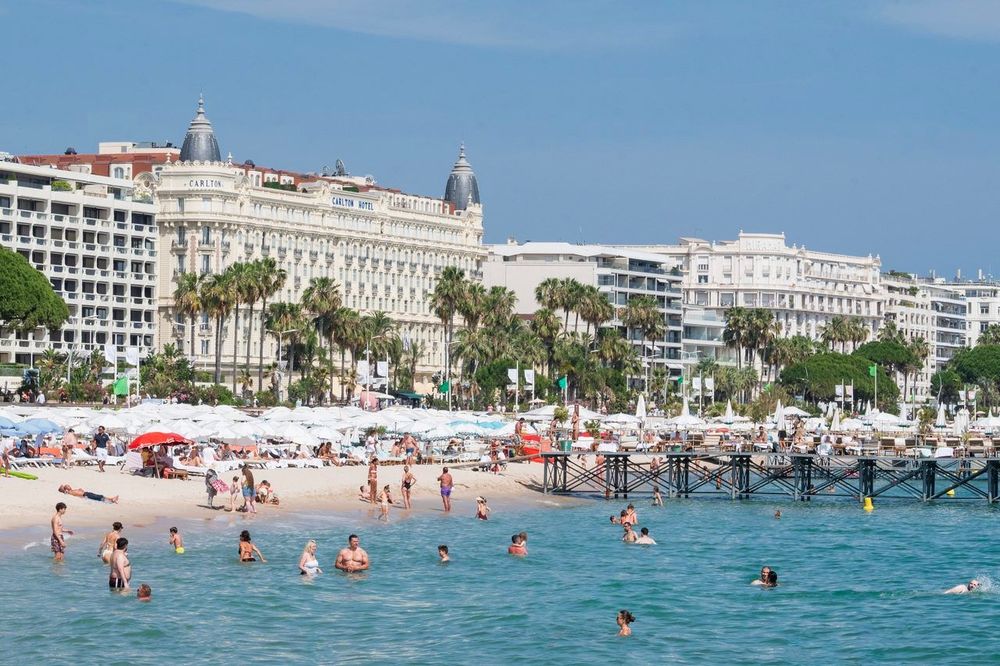
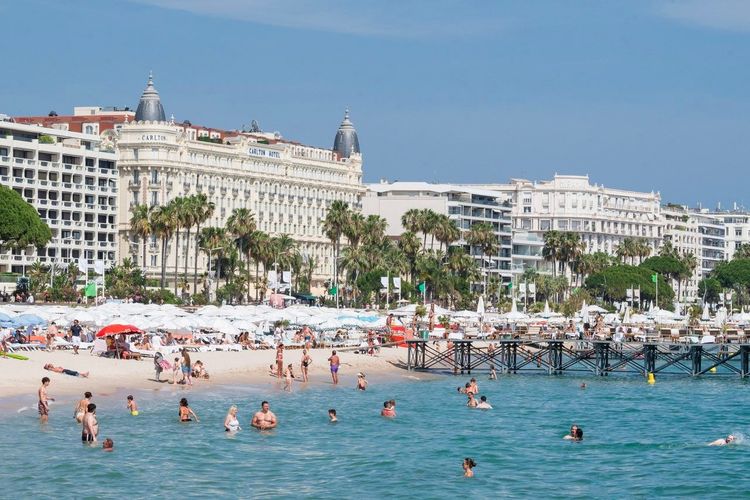
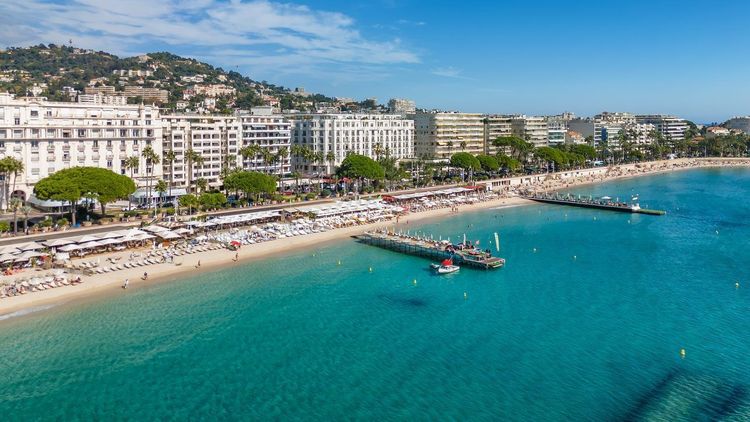
It is impossible to talk about the beaches of Cannes without starting with the boulevard that gave them their worldwide reputation. La Croisette stretches for about two kilometres between the Palais des Festivals and the Pointe de la Croisette, running alongside an uninterrupted succession of beaches, both public and private, separated by simple wooden jetties.
This is where the most famous establishments are concentrated, backed by the great palace hotels. The Martinez beach, in front of the hotel of the same name, cultivates an Art Deco aesthetic right down to its striped parasols, while the Gray d'Albion beach (38 Rue des Serbes, 06400 Cannes, rated 4.4/5 on Google from 1,617 reviews) attracts a younger crowd with its colourful sun loungers and background music from 11am onwards. In between, you will find groups testing an 18-euro cocktail just as often as families simply walking barefoot on the sand without settling in.
Morning remains the best time to walk along this seafront: the light is still low, waiters are setting up tables, and the noise of the city has not yet drowned out the sound of the waves. If you are staying further up in the city centre, allow about fifteen minutes on foot from the train station to reach the sand, a walk that the Ryo audio guide for Cannes punctuates with a few stops on the history of the Festival.
Free Public Beaches: Fine Sand With No Reservation Required
Contrary to the image portrayed by magazines, the majority of Cannes' coastline remains freely accessible. The city maintains eight municipal beaches, raked every morning during the season, equipped with showers and toilets, and open to everyone free of charge.
The Zamenhof beach, just behind the Palais des Festivals, is probably the most frequented: its central location makes it a logical first stop for those arriving by train without a car. A little further west, the Plage du Midi (Boulevard Jean Hibert, 06400 Cannes, rated 4.6/5 on Google from 713 reviews) offers a wider and less crowded setting, with an open view of the Estérel hills at sunset.
These public beaches do not offer an official sun lounger service, but several seasonal rental operators set up their equipment along the edges, at rates well below those of the beach clubs on la Croisette, between 10 and 15 euros per day for a lounger and a parasol. You should still bring your own towel and water, as vendors become scarce after 6pm.
Private Beaches and Beach Clubs: The Premium Experience
While the public beaches of Cannes appeal through their free access, private establishments sell something else entirely: continuous service, on-site dining and often a freshwater pool to complement the sand. There are around thirty of them within the commune's boundaries, most concentrated between the Palais des Festivals and Pointe Croisette.
Sun lounger prices start at around 25 euros on weekdays outside peak season, and can easily climb to 60 or 90 euros on July and August weekends at the most sought-after addresses, not including lunch. Some establishments offer morning or afternoon half-day packages at a reduced rate, an option worth considering if you are not planning to spend the entire day there.
At the tip of the peninsula, Palm Beach cultivates a different atmosphere from the city-centre addresses: fewer people, often clearer water thanks to its distance from the port, and a rocky waterfront entry that appeals to more experienced swimmers. It is also one of the rare spots in Cannes where you can enjoy a wide-open horizon over the bay, facing due south out to sea.
Booking in advance makes all the difference in high season: the most popular addresses are fully booked by 11am on some Saturdays in July. A simple call the day before, or an online reservation, saves a great deal of disappointment.
La Bocca Beach: The Family-Friendly Spot to the West
About fifteen minutes by car or bus from the historic centre, the La Bocca neighbourhood offers a more residential side of Cannes, far from the bustle of la Croisette. Its long, regular beach is aimed primarily at families staying for the week in nearby campsites and holiday residences.
There are fewer beach clubs here than in the centre, more space to spread out a large towel without feeling cramped, and easy access by train from Cannes-la-Bocca station or via the Palm Bus network, which is handy if you are travelling without a car. The seabed slopes gently, an advantage when keeping an eye on young children, and the prices at the few sun lounger rental operators are noticeably lower than those on the Croisette side.
If you are looking for peace and quiet rather than prestige, this area is well worth the trip, even if it means forgoing the view of yachts moored in front of the Palais des Festivals.
The Îles de Lérins: Secret Beaches off the Coast of Cannes
Twenty minutes by boat from the Vieux Port, the Îles de Lérins offer a completely different experience. Sainte-Marguerite and Saint-Honorat boast pine-fringed coves, crystal-clear water and visitor numbers that bear no comparison to the Cannes seafront, even at the height of summer.
On Sainte-Marguerite, the main beach is a few minutes' walk from the landing stage, in the shadow of the Fort Royal where the mysterious Man in the Iron Mask was held. Saint-Honorat, smaller and managed by a community of Cistercian monks, has a more contemplative atmosphere, with pebble coves accessible along a shaded coastal path.
Shuttles depart every hour during the season from the Vieux Port, with a crossing of around twenty minutes. Allow at least half a day to make the most of either island without rushing, and remember to bring water: vendors are rare and more expensive there than in town. Our dedicated article on the Îles de Lérins details the full itinerary, to be paired with the Ryo audio guide for the mainland part of your stay.
Sand or Pebbles? Understanding Cannes' Beaches
A question that often comes up from visitors discovering the Côte d'Azur for the first time: are the beaches in Cannes sandy or pebbly? The answer comes with an important nuance. The natural coastline of the region is fairly rocky and stony, as it is elsewhere along the Côte d'Azur. However, the municipality imports fine sand every year to cover the city-centre beaches, particularly along la Croisette.
As a result, the sand is pleasant underfoot but wears away with winter storms, hence the regular replenishment every spring. The further you move from the centre towards the east or towards the islands, the more the beaches return to their natural state, with pebbles and sometimes flat rocks, as at Saint-Honorat, a contrast worth following up with Ryo's Riviera's Red Carpet audio-guided tour back in town.
Water Sports and Beach Activities
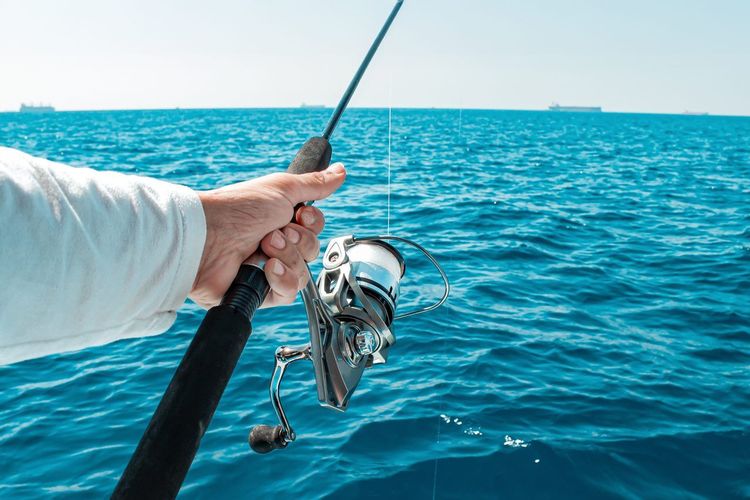
The bay of Cannes, sheltered by the Îles de Lérins, generally offers calm seas, ideal for getting started with various water sports without having to deal with heavy swells. Paddleboarding, kayaking and pedalo hire are readily available on almost all public beaches, usually between 15 and 20 euros per hour.
Those seeking more of a thrill will find water-skiing and wakeboarding clubs near Pointe Croisette, as well as several diving schools that organise trips to the Îles de Lérins, renowned for their posidonia seagrass meadows. For children, several public beaches have a municipal water sports base offering supervised sailing and paddleboarding through a club, an affordable way to fill a morning. In terms of cost, allow around thirty euros for a one-hour supervised introduction, equipment included, a reasonable budget for a first time on the water. To complement a day out at sea, downloading the Ryo app lets you identify which beaches are equipped before you set off.
Parking and Getting to the Beaches
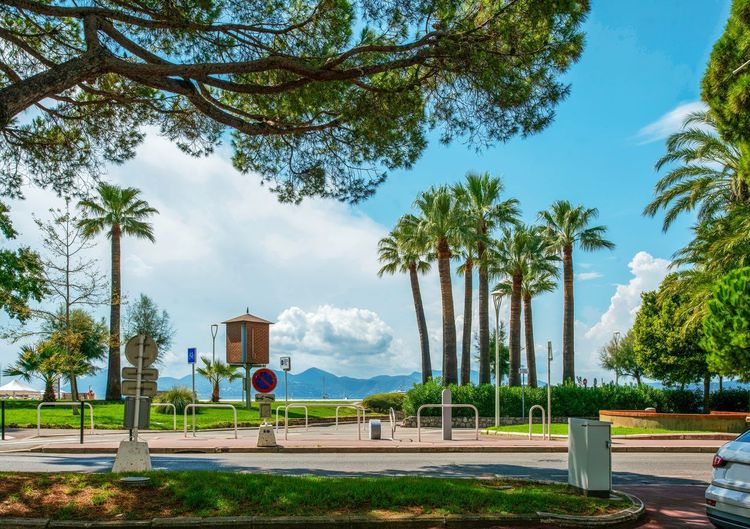
Finding a parking space near la Croisette can be a real headache in July and August, with underground car parks filling up by 10am. The Cannes Palais des Festivals car park and the one at the Hôtel de Ville are the most central options, at around 3 to 5 euros per hour.
The simplest solution is often to leave the car at the hotel or on the outskirts and reach the seafront on foot or by Palm Bus, the local network that serves the entire coastline, including La Bocca. From the SNCF train station, la Croisette is about fifteen minutes' walk away, a journey that many people prefer to the stress of summer parking.
Best Time to Enjoy the Beaches
June and September offer the best compromise between weather and crowds, with water that is already or still warm and beaches that are noticeably less packed than in the height of summer. July and especially the first half of August remain the busiest months, driven by family tourism and the events that punctuate the city's calendar.
Out of season, from November to March, most beach clubs close their facilities, but the public beaches remain accessible all year round for a walk or a quick swim, with water temperatures rarely dropping below 13 degrees.
Budget: Free or Paid, How Much Does It Cost?
A day at the beach in Cannes can cost nothing or close to 100 euros, depending on the establishment you choose. On a public beach, the only potential expense is renting a sun lounger, at around 10 to 15 euros per day.
At private beach clubs, you need to add on-site lunch to the cost of the sun lounger, often charged between 25 and 45 euros per person at the most popular addresses on la Croisette. Some establishments apply a minimum spend rather than a fixed entry fee, which can work out cheaper for a couple simply sharing a few drinks in the late afternoon. For a family of four looking to keep costs down, alternating between a morning on a public beach and lunch in town remains the most economical approach.
FAQ
What is the most beautiful beach in Cannes?
The answer depends mostly on what you are looking for. For atmosphere and views of la Croisette, the Martinez beach and its surroundings remain a benchmark. For tranquility and clearer water, head to Palm Beach or the coves of the Îles de Lérins.
Are the beaches in Cannes free?
Yes, approximately half of the Cannes coastline consists of public municipal beaches with no entrance fee. Only the rental of sun loungers or water sports equipment is charged on these beaches.
Where exactly is la Croisette beach?
La Croisette refers to the boulevard running along the bay between the Palais des Festivals and the Pointe de la Croisette, covering approximately two kilometres. The beaches lining it, both public and private, each have their own distinct name.
Are Cannes beaches sandy or pebbly?
The city-centre beaches, particularly around la Croisette, are covered with imported sand that is replenished every year. Further from the centre, you will find more pebbles and rocks, closer to the natural state of the coastline.
How do you get to the Îles de Lérins from Cannes?
Shuttle boats depart every hour during the season from the Vieux Port de Cannes, with a crossing of 15 to 20 minutes depending on the island chosen, Sainte-Marguerite or Saint-Honorat.
Where can you park near the beaches in Cannes?
The underground car parks at the Palais des Festivals and the Hôtel de Ville are the closest to the centre, but fill up quickly in summer. The Palm Bus network or walking from the train station are often simpler than driving in peak season.
When it comes to beaches, Cannes offers as many options as there are budgets: free public beaches at the foot of the Palais des Festivals, prestigious beach clubs on la Croisette, unspoilt coves at the Îles de Lérins and family-friendly sand at La Bocca. Plan your day according to whether you are after the postcard view, peace and quiet, or value for money, keeping in mind that the most beautiful hours are often early in the morning, before the sun loungers and the crowds arrive.
To plan the rest of your visit, the Ryo audio guide tour of Cannes is a useful complement to this exploration of the coastline, connecting the beaches to the historic neighbourhoods of the city. And if you enjoyed the seaside atmosphere, the beach at Deauville and the beach at Etretat offer, further north, an equally photogenic but radically different take on the French coastline.
À lire également