© Shutterstock
 Votre guide Ryo
Visiting Nice for the First Time: The Complete Guide for 2026
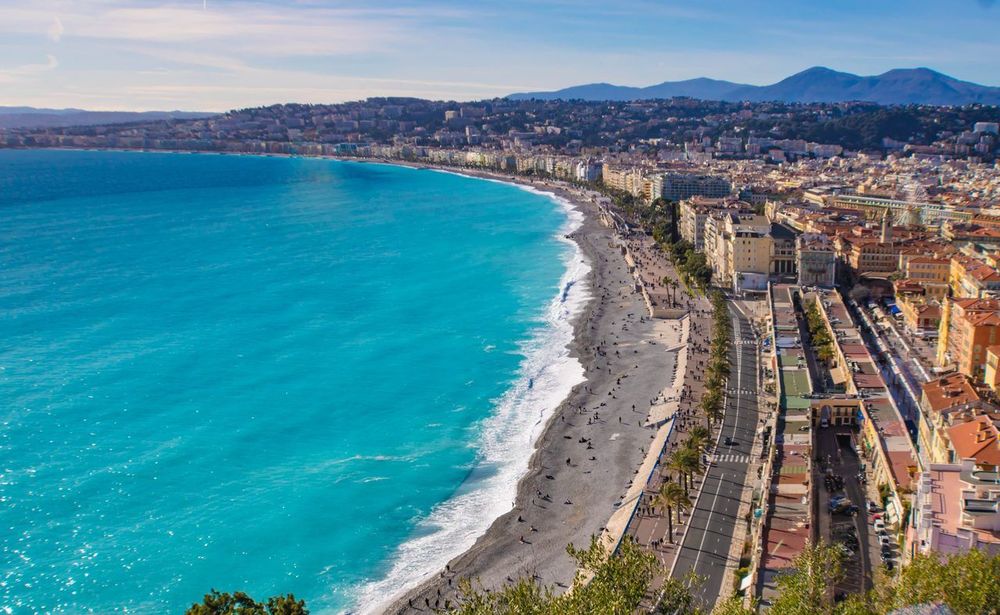
At 8 a.m., the Promenade des Anglais still belongs to joggers and seagulls: you have to wait another hour for the Baie des Anges to fill up with electric bikes, blue parasols and tourists in swimsuits. It is in this shift, between morning calm and Mediterranean bustle, that the whole art of visiting Nice for the first time lies: knowing when and where to position yourself. To get your bearings from the moment you arrive, the Ryo audio-guided tour of Nice tells the story of the city step by step, with earphones in, without having to open a map every five minutes.
Here, a century-old market still sells piping-hot socca first thing in the morning, a hill without a castle rises 92 meters above the bay, and an Orthodox cathedral with golden onion domes is a reminder that Russian aristocrats once spent their winters on this coast. Between the Old Town, Place Masséna and the hills to the east, this guide details a complete itinerary for a first day, the specialties you must taste, the neighborhoods to stay in depending on your budget, and how to extend your stay beyond the classic 24 hours.
The Promenade des Anglais, the Postcard Image of Nice
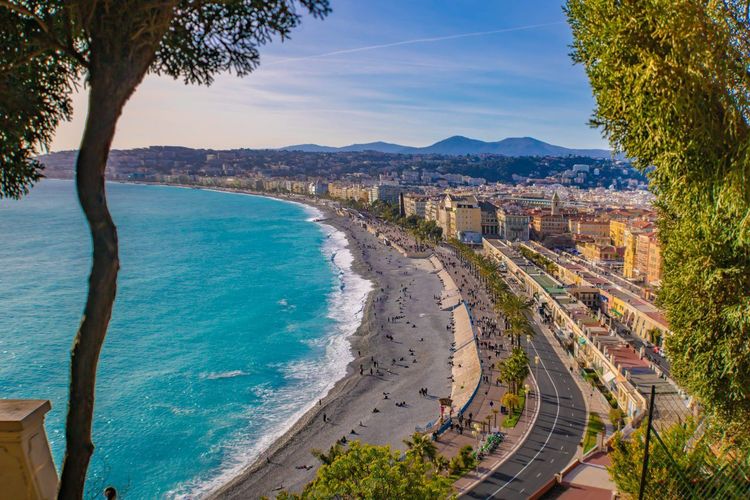
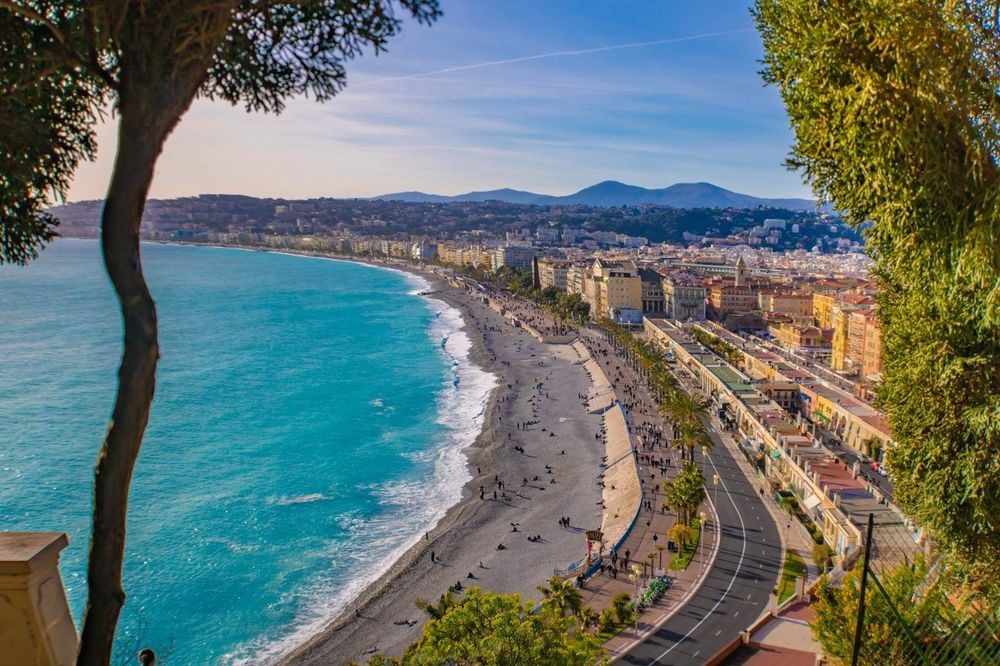
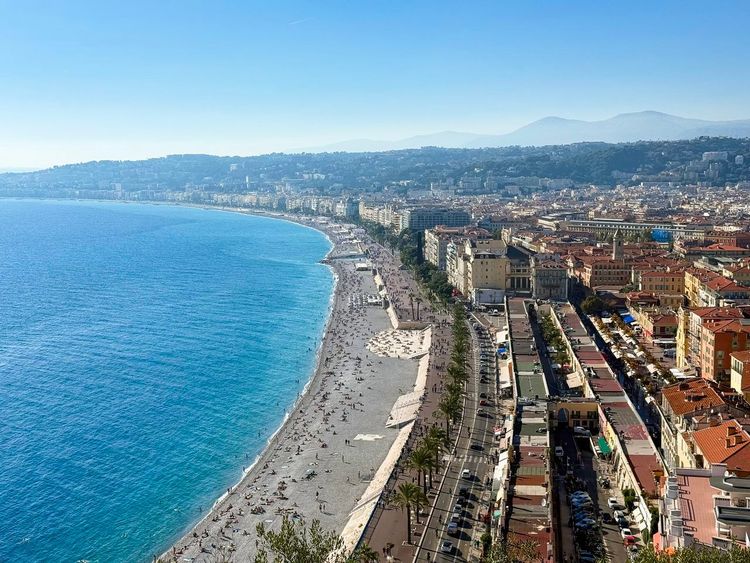
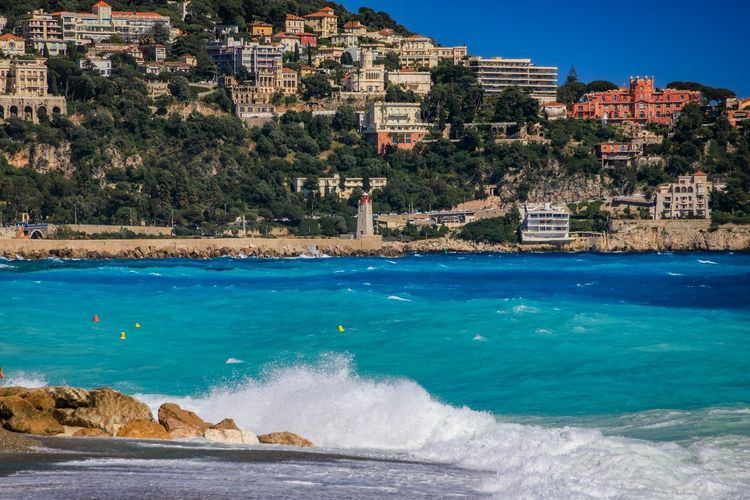
The Promenade des Anglais (Promenade des Anglais, 06000 Nice, rated 4.7/5 on Google from 48K reviews) runs along about seven kilometers of coastline, from the airport to the foot of the Colline du Château, and takes its name from the British community that financed the first coastal path in the 1820s to enjoy the mild winters of the Riviera. Its famous blue chairs remain free and open to anyone who wants to sit facing the Baie des Anges, this wide curve of pebbles whose name comes, according to the most widespread version, from angel sharks, small flat sharks that once populated its waters.
The best time to discover it is still early in the morning, before 9 a.m., when local joggers still have the promenade to themselves and the low light sculpts the bay. You can walk it, bike it or ride an electric scooter thanks to the self-service stations spread along the seafront. Heading east, the promenade naturally leads to the historic district, the logical starting point for your first day in Nice.
Vieux-Nice and the Cours Saleya Market
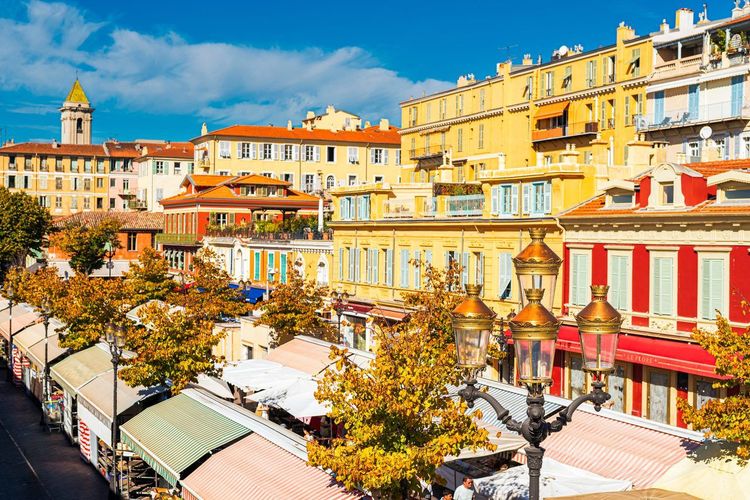
The Cours Saleya marks the heart of Vieux-Nice, and its flower market has been held there since the late 19th century. From Tuesday to Sunday, from about 6 a.m. to 1:30 p.m., stalls of cut flowers sit alongside baskets of olives, bunches of basil and trays of golden socca, this chickpea pancake that locals eat standing up, by hand, without cutlery.
The first time you walk through this market, you are struck by the colors: Menton lemons stacked in pyramids, multicolored soaps, Provençal tablecloths drying in the wind between two stalls. The vendors have known their regular customers by sight for decades and happily offer a cooking tip or a neighborhood anecdote to anyone who takes the time to exchange a few words, even hesitant ones.
Ideally come before 9 a.m. if you want to avoid the crowds of organized groups, or on the contrary around noon if a market that is still lively but less dense suits you better. On Mondays, it is the antique dealers' turn: the Cours Saleya turns into a flea market where collectors and savvy tourists browse.
Nice only joined France in 1860, after centuries under the House of Savoy and then the Kingdom of Piedmont-Sardinia: this Italian history explains the warm colors of the facades, the green shutters and the singsong accent of the Niçois dialect still heard at the stalls. The Chapelle de la Miséricorde, a Baroque jewel set on the Cours Saleya itself, houses an altarpiece of the Virgin of Mercy associated with the painter Louis Bréa.
Behind the market, a maze of narrow alleys climbs toward the hill. Deliberately get lost in this labyrinth: every street corner reveals an ochre or pastel blue facade, a wrought-iron balcony or a Baroque chapel whose interior contrasts with the sobriety of the street. The Palais Lascaris (15 Rue Droite, 06300 Nice, rated 4.4/5 on Google from 2,177 reviews), a 17th-century mansion with a discreet facade, hides a grand staircase and a collection of antique musical instruments that surprises passing visitors. A little further on, the Cathédrale Sainte-Réparate raises its glazed-tile dome above the rooftops.
Further north, toward Place Saint-François, rue Pairolière lines up its shop windows: olive oil shops, local wine cellars, takeaway pissaladière counters. It is a good address for tasting without sitting down, between two visits, and for buying a few souvenirs that don't come from a gadget shop.
When night falls, Vieux-Nice changes its face. The Cours Saleya fills with restaurant tables, waiters announce the catch of the day and the terraces fill up until well past midnight. This is when the old town reveals its nightlife, more discreet than that of the Promenade des Anglais but just as lively.
To miss nothing of this district so dense in details, the short version of the Ryo audio-guided tour, Nissa la Bella goes right through these cobbled alleys to the Cours Saleya, with anecdotes about the century-old market and the history of the Baroque facades told step by step.
The Colline du Château, the Best Viewpoint over the Bay
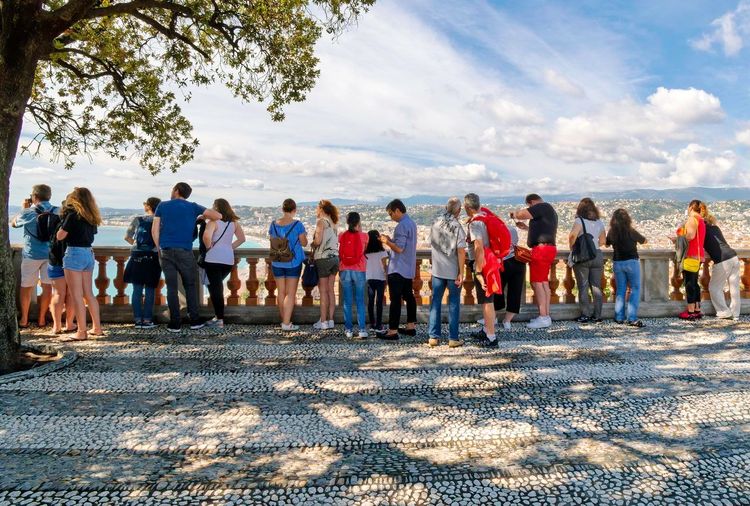
This promontory is called the Colline du Château (Montée du Château, 06300 Nice, rated 4.7/5 on Google from 26,007 reviews) even though no castle stands there anymore: the fortress that once dominated the city was razed on the orders of Louis XIV in 1706, and only a few sections of wall remain, visible along the paths. The site rises 92 meters above the Baie des Anges and offers the widest view of Nice, from the port to the airport.
There are two ways to climb: the public elevator, free and quick, at the junction of rue des Ponchettes and quai des États-Unis, or the Lesage staircase along the hillside, about 15 minutes of moderate effort rewarded by panoramic landings. The park is open to the public from 8:30 a.m. to 8 p.m. from April to October (6 p.m. in winter). Families appreciate the playground and the waterfall at the top, and the Château cemetery, surprisingly peaceful, offers a more contemplative interlude.
Preferably go up in the late afternoon: the low light over the bay and the orange tiled roofs of Vieux-Nice provides the best photographic contrast in the whole city. It is also a stop on the Ryo audio-guided tour of Nice, which tells the story of the vanished castle during the climb: the effort becomes curiosity rather than mere exercise.
Place Masséna and the Promenade du Paillon
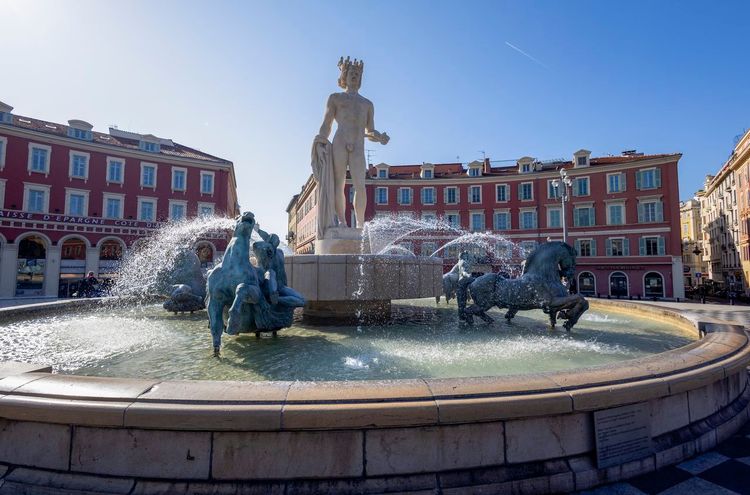
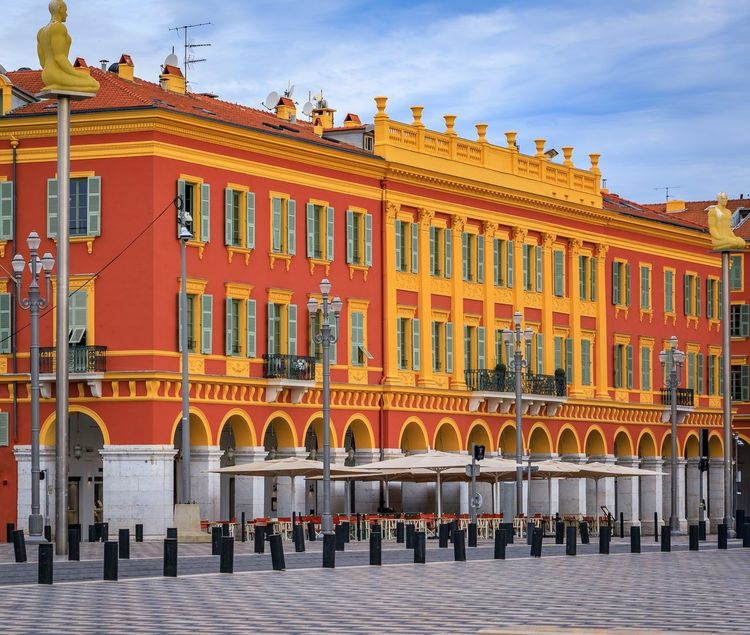
The Place Masséna (Place Masséna, 06000 Nice, rated 4.6/5 on Google from 16K reviews) marks the junction between Vieux-Nice and the more recent districts, recognizable by its checkerboard of black and white paving stones and its Fontaine du Soleil, topped by the statue of Apollo. Since 2007, seven statues by the Spanish artist Jaume Plensa have watched over the square, perched on tall poles: they light up at nightfall in changing hues, an almost surreal atmosphere in the midst of urban bustle. The square pays tribute to André Masséna, Marshal of the Empire, born in Nice in 1758.
Right next to the square stretches the Promenade du Paillon, a 12-hectare green corridor inaugurated in 2013 above the Paillon, the coastal river covered over the decades. Lawns, a water mirror where children splash in summer, playgrounds and shaded paths follow one another over 1.2 kilometers up to the surroundings of the MAMAC.
Take the time to stop there, even without children: the shaded benches offer a welcome break between two visits, and it is often there that the locals themselves come to eat a quick lunch. The water mirror, with its jets and misters that start in sequences, remains the best free way to cool off in the center on July afternoons.
This transition between the lively square and the green corridor is also one of the stops that our Ryo audio-guided tour of Nice covers in its 27 audios: along the way it tells the story of Plensa's statues and the history of the square, between two recommendations for a cooling break.
Port Lympia, the Colorful and Quiet District
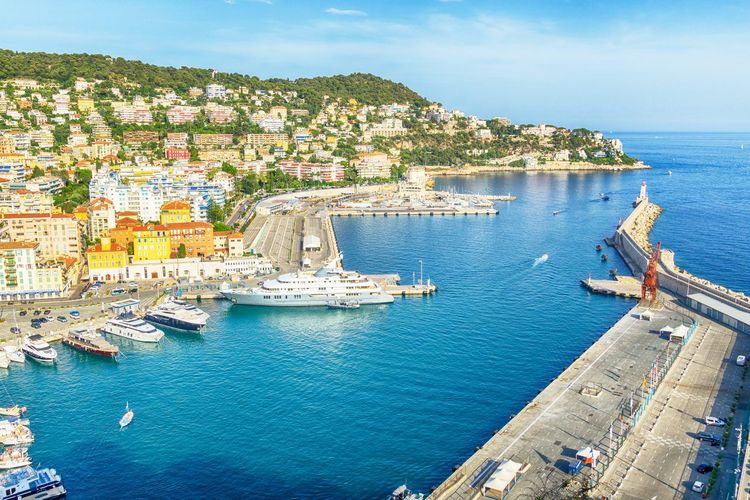
The atmosphere changes at Port Lympia (Quai Lunel, 06300 Nice, rated 4.1/5 on Google from 388 reviews), the historic port of Nice nestled on the other side of the Colline du Château from Vieux-Nice. Dug starting in 1749 on the orders of the King of Sardinia, it now welcomes yachts, traditional fishing boats and ferries to Corsica, all framed by yellow, ochre and pastel pink facades reminiscent of those of the Cours Saleya, in a quieter version.
You will come here for the stroll more than for the monuments: the quays are lined with simple fish restaurants, wine bars and a few independent shops, far from the tourist density of the Promenade des Anglais. At the end of the day, the west-facing terraces enjoy beautiful light on the moored boats.
To explore this district beyond the port, our Ryo article on the neighborhoods of Nice details the特 characteristics of each area of the city, from the Port to Cimiez via the Carré d'Or.
Niçois Flavors: Socca, Pissaladière and Pan Bagnat
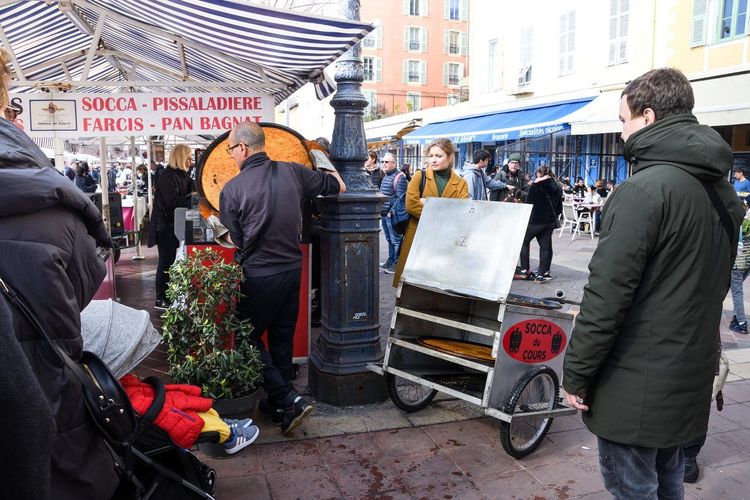
You can't say you have visited Nice for the first time without having tasted three specialties that sum up the local cuisine: socca, pissaladière and pan bagnat.
The socca is a thin pancake made of chickpea flour, water, olive oil and salt, cooked over a wood fire in a large copper pan, then cut into irregular pieces and served piping hot, to be eaten with your fingers. You can find it on the Cours Saleya from the morning, but also at historic addresses such as Chez Pipo (13 Rue Bavastro, 06300 Nice, rated 4.5/5 on Google from 6,730 reviews), which has been baking it since 1923 in the port district.
The pissaladière looks like a pizza without tomato: a bread dough generously topped with onions slow-cooked for hours, anchovies and black Niçoise olives, served warm or cold in thick slices. The bakeries of Vieux-Nice sell it by the slice, ideal for a quick lunch between two visits.
The pan bagnat, literally "bathed bread" in Niçois, is a small round roll filled with tuna, hard-boiled eggs, tomatoes, peppers, radishes, onions and olives, generously drizzled with olive oil. Be prepared for it to drip a little: that is precisely the point, and the locals happily eat it sitting on a bench facing the sea rather than at a table.
To go with these three classics, look for a glass of Bellet wine, a little-known appellation produced on the hills above the city: production is so limited that you almost never find it outside Nice and its surroundings.
For dining beyond these three classics, Vieux-Nice is full of small family-run restaurants that also serve the original salade niçoise (without potatoes or green beans, unlike the tourist versions), zucchini flower fritters or ratatouille. If you want to dig deeper into the subject, our Ryo guide to Niçois specialties details the best addresses by neighborhood and the traps to avoid.
Hidden Gems off the Beaten Path: Mont-Boron, the Russian Cathedral and Cimiez
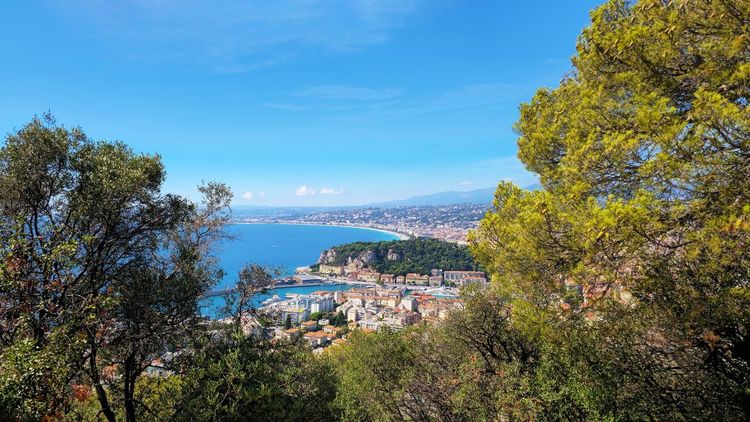
East of the port, Mont-Boron rises to nearly 200 meters and offers a panorama that many passing visitors overlook, rushed as they are by the classic program of Vieux-Nice and the Promenade des Anglais. On a clear day, the view stretches from Italy to the Estérel, taking in the bay of Villefranche-sur-Mer and Cap Ferrat.
Allow about 45 minutes of walking from the port to reach the heights, via pine-shaded paths, or take the bus if the heat discourages the effort. The forest park lends itself equally to a stroll or a picnic facing the sea.
Another curiosity little known to first-time visitors: the Russian Orthodox Cathedral of Saint Nicholas, whose golden onion domes emerge above the villas of the Tsarévitch district. Built between 1903 and 1912 for the aristocratic Russian community that wintered on the Côte d'Azur at the time, it remains one of the largest Orthodox cathedrals in Western Europe. The interior, richly decorated with icons, can be visited for a modest entrance fee.
Toward the north of the city, the hill of Cimiez brings together Roman history and Franciscan spirituality. The Cimiez arena (Arènes de Cimiez, 06000 Nice, rated 4.5/5 on Google from 4,674 reviews), remains of an amphitheater of ancient Cemenelum, stands next to the archaeology museum and its Roman baths. Right beside it, the garden of the Cimiez monastery, planted with century-old olive trees and rose beds, overlooks the city in a calm that contrasts with the bustle of the center. The arena long hosted the Nice jazz festival, which now takes place every July at Place Masséna and at the Théâtre de Verdure.
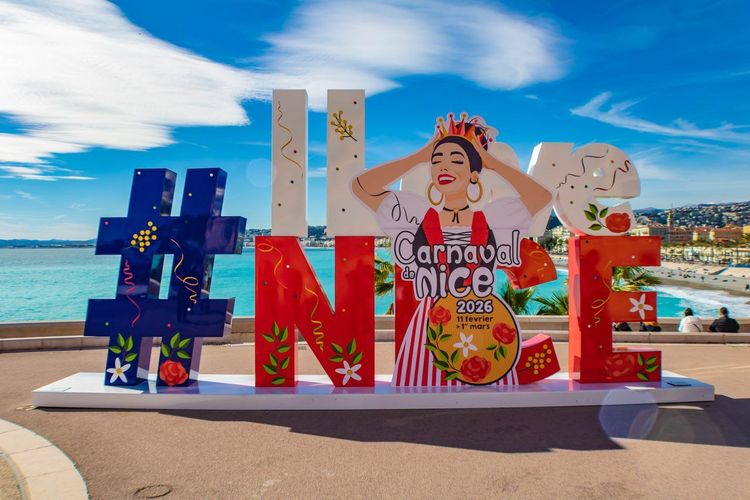
If your stay falls in February, the Nice Carnival turns Place Masséna and the Promenade des Anglais into a parade of giant floats and flower battles for about two weeks, a tradition traceable to the 13th century. The rest of the year, the Basilica of Notre-Dame-de-l'Assomption, on avenue Jean-Médecin, hosts Luminiscence seasonally, an immersive show of 360° projections on the vaults, lasting about 45 minutes (tickets from around a dozen euros): check the schedule before you come.
For museum lovers, Nice has about fifteen, from the Matisse Museum in Cimiez to the MAMAC devoted to contemporary art. These less central stops are precisely covered by the extended versions of the Ryo audio-guided tour, with an anecdote about the Russian aristocrats who wintered here, told as you walk to the cathedral. To dig deeper into museums, our Ryo article on the museums of Nice lists the best options according to your tastes.
Recommended Itinerary for a First Day in Nice
For a first visit, a dense but realistic itinerary is better than a list of 20 places impossible to link together. Here is a sequence designed for a single day on foot, from morning to evening.
8:00 a.m.: start with the Promenade des Anglais, still calm at this hour, for a coffee facing the sea at one of the kiosks along the beach.
9:30 a.m.: walk to the Cours Saleya, about fifteen minutes away, to enjoy the market before the midday crowds. Then get lost for a good hour in the alleys of Vieux-Nice.
11:30 a.m.: go up the Colline du Château by the stairs or the elevator for the overall view of the bay, before the sun is too high in the sky.
12:30 p.m.: have a quick lunch of socca or pan bagnat, ideally in Vieux-Nice or near the port.
2:00 p.m.: head back down to Place Masséna and then the Promenade du Paillon, a quieter pause after the density of the morning market and alleys.
4:00 p.m.: depending on your preferences, head either to Port Lympia for a photogenic stroll, or to Cimiez for the arena and the Matisse museum if history interests you more than the colorful quays.
7:00 p.m.: return to the Promenade des Anglais for the sunset over the bay, one of the best moments of the day in terms of light.
If culture and history appeal to you more than lounging around, devote your afternoon to the Russian Orthodox cathedral and the Cimiez arena rather than Port Lympia: allow a bus ride from the center, about twenty minutes. If you prefer nature and relaxation, replace the climb to Cimiez with a swim in the late afternoon at one of the downtown beaches, directly below the Promenade des Anglais.
Is it possible to visit Nice on foot in a single day? Yes, provided you accept walking about 10 to 12 kilometers in total and not lingering more than an hour in each place. The distances between the places mentioned are all under 25 minutes of walking, which makes the sequence realistic even without motorized transport. If you arrive early by plane or train, drop your bags at the hotel before 9 a.m. and start this program without losing an hour of sightseeing.
If the idea of calculating travel times between each stop yourself puts you off, the Ryo audio-guided tour of Nice follows this sequence almost exactly over 2h50, 7.1 km and 27 audio stops, including the Promenade des Anglais, Vieux-Nice, Colline du Château and Place Masséna. It can be downloaded before departure and then works without a connection, at your own pace.
Extending Your Stay: Visiting Nice in 2 or 3 Days
One day is enough to tick off the main sights of Nice, but not enough to truly understand it. If your schedule allows, planning two to three days completely changes the experience: you gain the time to get lost without watching the clock, to venture out to the villages of the hinterland, and to enjoy a real afternoon at the beach rather than a 20-minute break between two visits.
A second day typically lets you go deeper into what the first day only skimmed: the Matisse Museum and the Cimiez arena for history and art lovers, or a day trip to Èze and Villefranche-sur-Mer for those who want to see something other than Nice itself. The third day finally leaves room for a real beach day, a long lunch at the port or a more distant excursion to Monaco or Saint-Paul-de-Vence.
How many days should you plan, concretely, for a first visit? Two days comfortably cover the essentials without the feeling of racing against the clock. Three days add a real margin for excursions and relaxation, without becoming excessive for a city the size of Nice.
The best time to enjoy these extra days is still spring, from April to June, or the late season, from September to October: temperatures remain pleasant for walking and accommodation prices drop noticeably compared with the height of summer. February also has its fans, for the Carnival and the lemon festival in neighboring Menton.
To build this longer program, our Ryo guide to visiting Nice in 2 days and our Ryo guide to visiting Nice in 3 days each detail a complete itinerary, day by day, excursions included.
Practical Tips: Getting Around, Where to Stay and Where to Eat in Nice
Getting around Nice poses no particular difficulty: the city center, from the Promenade des Anglais to Cimiez, is covered mainly on foot or by tram. Line 1 crosses the city from the north (Henri Sappia) to the east (Hôpital Pasteur), with a convenient stop at Place Masséna. A Lignes d'Azur ticket costs 1.70 euros and is valid for 74 minutes, transfers included.
For longer trips, notably to Mont-Boron or Cimiez, bus lines effectively complete the network. Self-service electric bikes and scooters are a good option for the Promenade des Anglais, which has a bike path along its entire length.
Most people reach Nice via Nice Côte d'Azur airport, the third busiest in France, located about 7 kilometers from the center and connected by tram line 2 in about thirty minutes. If you arrive by train, the Nice-Ville station serves Paris, Marseille and Italy directly, about twenty minutes on foot from Vieux-Nice.
As for accommodation, each district has its own personality. The Carré d'Or, around rue Masséna, concentrates upscale hotels and shops, a stone's throw from the Promenade des Anglais and Vieux-Nice. The Port district, quieter and more authentic, suits those who prefer to avoid the tourist density while staying within walking distance of everything. For a longer stay, Cimiez offers a residential and leafy setting, but requires more bus trips to the center.
For dining, avoid the terraces directly on the Promenade des Anglais or the Cours Saleya at peak hours: prices climb there without quality always following, a classic phenomenon in the most photographed areas. The best addresses for socca and authentic Niçois cuisine are often one or two streets away from the main squares, in Vieux-Nice or toward the port district.
If you arrive by car, park as soon as you arrive in a covered garage in the center, budgeting around 20 euros a day, rather than looking for a spot in Vieux-Nice, where most streets are pedestrian. For a stay of several days, a daily transport pass pays off from the third trip of the day.
What is, at the end of the day, the nicest neighborhood in Nice for a first stay? For many visitors, Vieux-Nice remains the most obvious choice: it concentrates most of the Niçois atmosphere, nightlife and local gastronomy, while remaining within walking distance of the Promenade des Anglais and the Colline du Château.
Excursions around Nice: Nearby Villages and Beaches
Nice also lends itself very well to half-day or full-day excursions, an angle that many guides for first-time visitors neglect by focusing solely on the city itself.
Half an hour by bus, the hilltop village of Èze overlooks the Mediterranean at 427 meters above sea level, with its flower-filled medieval alleys and its exotic garden at the summit. Villefranche-sur-Mer, just past Mont-Boron, offers one of the most beautiful bays on the Mediterranean and a colorful old town much quieter than that of Nice. Further west, Saint-Paul-de-Vence (Saint-Paul-de-Vence, 06570 Saint-Paul-de-Vence, rated 4.6/5 on Google from 12K reviews) attracts art lovers with its Fondation Maeght and its cobbled alleys, 45 minutes away by road.
A few kilometers away, Vence complements Saint-Paul-de-Vence well with its cathedral and the Chapelle du Rosaire designed by Matisse himself, a stop that will particularly appeal to modern art lovers already won over by the Cimiez museum.
For swimming, the downtown pebble beaches, such as Beau Rivage beach, are enough for an afternoon. Families who prefer sand can take the train to Antibes or Juan-les-Pins, about half an hour away.
And what if it rains during your stay? Fall back on the museums (Matisse, MAMAC, Fine Arts, Masséna), the Palais Lascaris or a Luminiscence session at the Notre-Dame basilica if the show is scheduled: Nice has enough indoor options not to ruin a day of bad weather.
To organize these excursions in more detail, our Ryo article on activities around Nice, our Ryo guide to the most beautiful villages of the Alpes-Maritimes, our Ryo selection of beaches near Nice and our Ryo article on what to do in Vence each cover a different angle.
Visiting Nice on a Budget: Free Tips and Activities
Can you visit Nice for free? For the most part, yes. The Promenade des Anglais, the Cours Saleya, the alleys of Vieux-Nice, the Colline du Château and Port Lympia cost nothing to explore, and already make up the essentials of a first visit.
As for museums, a single 10-euro ticket gives access for 24 hours to all the municipal museums (Matisse, MAMAC, Fine Arts, Masséna, Archaeology, Palais Lascaris), and a 7-day pass is available for 20 euros. Several of these institutions are also free on the first Sunday of the month: check with the reception before counting on it. The Colline du Château elevator remains free. Only the Russian Orthodox cathedral and a few private sites weigh on a tight budget, for a fee that remains modest all the same.
To go further on this subject, our Ryo article on free activities in Nice details a complete list of everything you can visit without spending a euro.



FAQ
What is the ideal route for visiting Nice on foot?
The most logical sequence follows the geography of the city: Promenade des Anglais in the early morning, Cours Saleya and the alleys of Vieux-Nice in mid-morning, Colline du Château before lunch, then Place Masséna and Promenade du Paillon in the early afternoon. Plan on 10 to 12 kilometers of walking in total, spread over a full day.
What are the absolute must-sees in Nice?
Five places sum up the essentials: the Promenade des Anglais and the Baie des Anges, Vieux-Nice with the Cours Saleya, the Colline du Château for the view, Place Masséna with the Promenade du Paillon, and Port Lympia for a more laid-back atmosphere. Food lovers will add socca and pan bagnat to this list.
What is the nicest neighborhood in Nice?
Vieux-Nice is generally the visitors' favorite for a first immersion: lively alleys, a daily market, nightlife and typical restaurants are all concentrated there, while remaining within walking distance of the Promenade des Anglais and the Colline du Château.
What can I do and see in Nice in one day?
A well-organized day covers the Promenade des Anglais, Vieux-Nice and its market, the Colline du Château, Place Masséna and the Promenade du Paillon, with a choice in the late afternoon between Port Lympia or the Cimiez district depending on your tastes, history or a stroll.
Can you visit Nice for free?
Yes, for the most part: the city's major outdoor sights (promenades, market, alleys, viewpoint, Château elevator) cost nothing. The municipal museums require a 10-euro ticket valid for 24 hours for all of them, and the Russian Orthodox cathedral charges a modest entrance fee.
How many days should you plan for visiting Nice for the first time?
One day is enough for the main sights, but two to three days let you add Cimiez, an excursion to the surrounding villages and a real afternoon at the beach, without feeling like you are racing against the clock.
What to do in Nice when it rains?
The museums (Matisse, MAMAC, Fine Arts, Archaeology) and the Palais Lascaris are the safe bets in bad weather. The Russian Orthodox cathedral and, depending on the season, the Luminiscence show in the Notre-Dame basilica are also good options for a rainy afternoon.
Conclusion
Visiting Nice for the first time does not require a complicated program, only a good sequence: the Promenade des Anglais as the city wakes up, Vieux-Nice and its market in mid-morning, the Colline du Château for the overall view, then Place Masséna and the surrounding neighborhoods according to your mood. Niçois specialties, the nearby villages and the free tips naturally round out this first immersion.
To turn this itinerary into a truly guided walk, without relying on a paper map or an organized group, the Ryo audio guide to Nice accompanies every stop with its 27 audios and 2h50 of tour, from the first steps on the promenade to the sunset over the bay.
À lire également