© Shutterstock
 Votre guide Ryo
Museums in Nice in 2026: The Complete Guide to 15 Collections You Need to Know
Nice's museums go far beyond Matisse alone: the city runs a dozen municipal museums, complemented by the Marc Chagall National Museum, the National Museum of Sport, and the departmental Asian Arts Museum. From the hills of Cimiez to the alleyways of the Old Town, by way of the Promenade des Anglais, every neighborhood is home to its own collection. The Ryo audio-guided tour of Nice (27 audio tracks, 2h50, 7.1 km) connects several of these neighborhoods and places each site in its historical context.
On the program: Chagall's Biblical Message cycle, a Genoese villa dedicated to Matisse, a prehistoric campsite roughly 400,000 years old preserved in situ, and a baroque palace complete with its 18th-century pharmacy. Two things to know before you go: MAMAC has been closed for renovation since January 2024, and the municipal museums charge admission, with a 4-day pass at €15. This guide covers each collection in detail, how long to allow, verified admission prices, and how to chain several visits on foot.
MAMAC, the Museum of Modern and Contemporary Art of Nice
Before adding MAMAC (Place Yves Klein, 06364 Nice, rated 4.1/5 on Google from 4,321 reviews) to your itinerary, check its status: the museum closed on 7 January 2024 for renovation work linked to the second phase of the Promenade du Paillon project. While work is underway, part of the collections is on display in other museums in Nice and the surrounding region under the banner 'MAMAC Near You', while other works are on loan in France and abroad.
Inaugurated in 1990 just steps from place Garibaldi, the building remains one of the city's architectural landmarks: four marble-clad towers connected by glass walkways, with a rooftop terrace facing the Castle Hill.
Its collections tell the story of the post-war art scene, with the École de Nice at the forefront: Yves Klein and his blue monochromes, Arman and his accumulations of objects, César and his compressions. The New Realism of the 1960s enters into dialogue with American Pop Art, and Niki de Saint Phalle has held a special place since the donation of a significant body of her work in 2001.
Are you in Nice before the reopening? Walk past the building anyway — it is just a few minutes from the Old Town, and the Paillon construction site is reshaping the entire neighborhood. Simply reassign your 1.5 to 2-hour slot to the Matisse Museum or the Fine Arts Museum.
Matisse Museum, the Elegance of Modernism in Cimiez
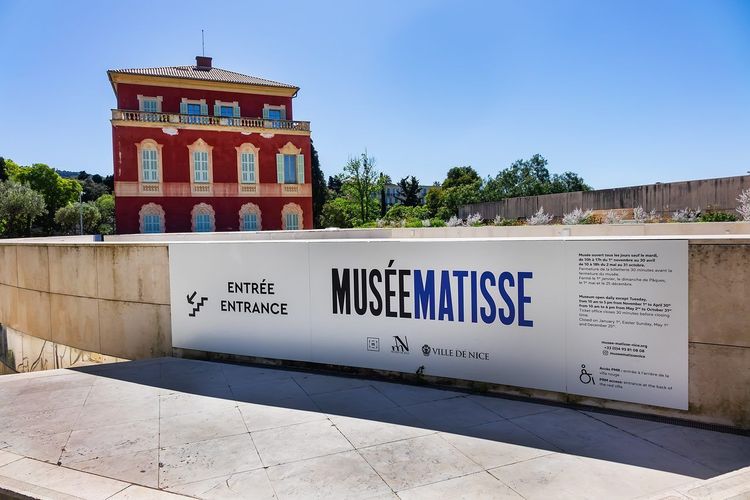
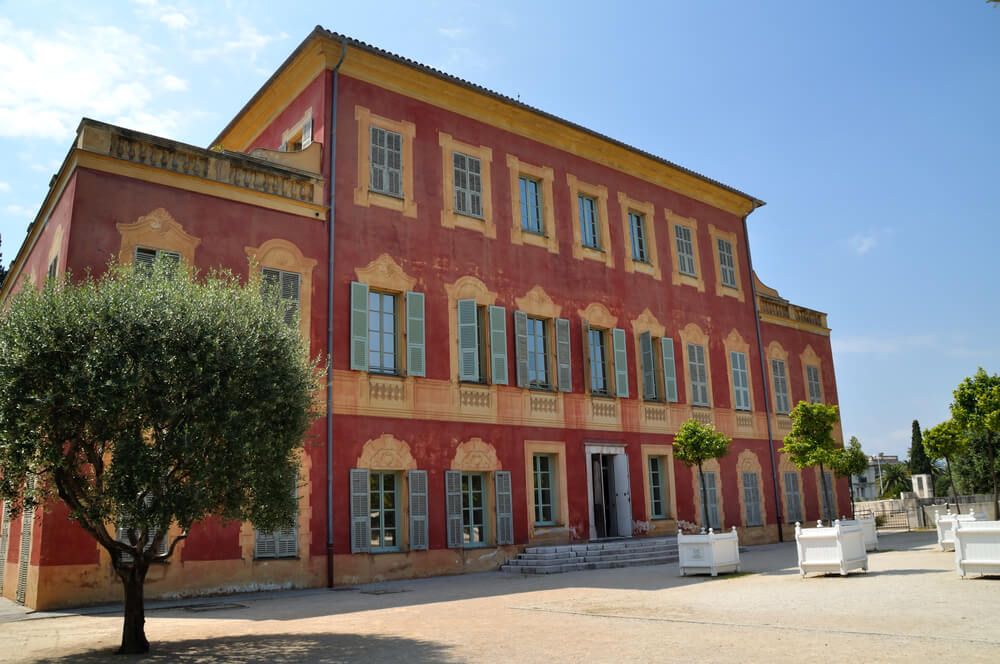
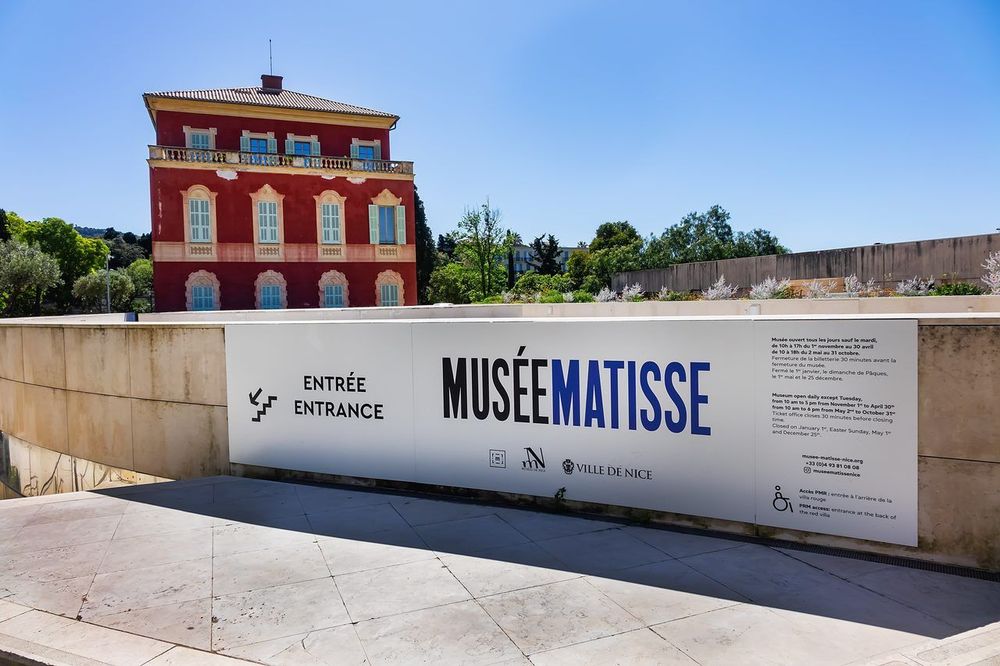
Away from the seafront, on the hill of Cimiez, the Matisse Museum (164 Avenue des Arènes de Cimiez, 06000 Nice, rated 4/5 on Google from 7,070 reviews) occupies a 17th-century Genoese villa surrounded by centuries-old olive trees. Henri Matisse settled in Nice from 1917 and remained there until his death in 1954. The museum, one of the richest dedicated to the painter, holds paintings, cut-out gouaches, drawings, sculptures, and personal furniture and objects rarely shown elsewhere.
The visit traces the artist's evolution, from the dark canvases of his early period to the Mediterranean radiance that made his reputation, and on to the cut-paper works he created in his final years — often from his bed, scissors in hand. Studies related to the Chapelle du Rosaire in Vence round out the picture. Temporary exhibitions regularly place Matisse in dialogue with other creators.
Before heading up to Cimiez, a walk through the city with the Ryo audio-guided tour gives you the keys to the Nice that Matisse discovered: the light over the bay, the Promenade, and cours Saleya, where he lived and painted between 1921 and 1938. You will see his odalisques in a whole new light.
Practical information: the museum is open from 10 am to 6 pm from April to October, and from 10 am to 5 pm from November to March. It is closed on Tuesdays, as well as on 1 January, Easter Sunday, 1 May, and 25 December. A single ticket costs €12. Allow 1.5 hours for the visit, then stroll through the nearby Arènes park, planted with olive trees and dotted with ancient ruins.
Marc Chagall Museum, Color and Spirituality
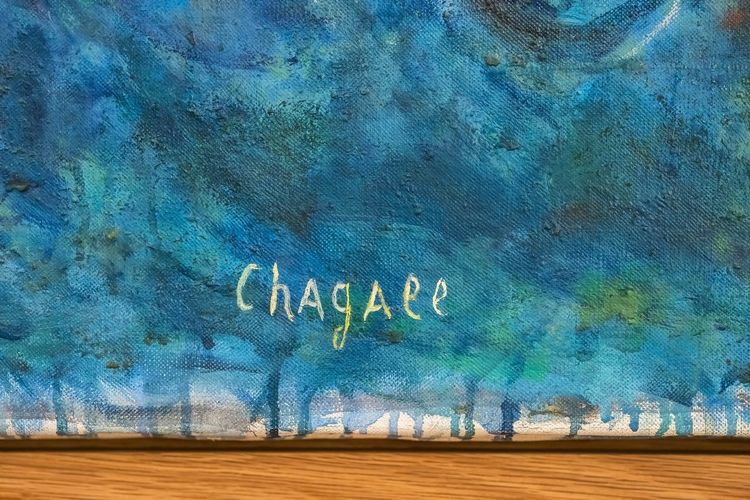
At the foot of the Cimiez hill, the Marc Chagall National Museum (Avenue Docteur Ménard, 06000 Nice, rated 4.4/5 on Google from 8,119 reviews) is one of the few national museums in the city — not a municipal one. It was inaugurated in 1973 in the presence of the painter to house the Biblical Message cycle: seventeen monumental canvases painted between the mid-1950s and 1966, which Chagall donated to the French state.
The building, designed around these works, plays with natural light. In the auditorium, three large blue stained-glass windows dedicated to the Creation of the World filter the daylight. The canvases depict Genesis, Exodus, and the Song of Songs in a palette of saturated reds and blues, where biblical figures interweave with the artist's personal memories — Chagall having settled on the Côte d'Azur from 1950 onwards. This spirituality stands in sharp contrast to the domestic intimacy of the Matisse Museum.
Allow about one hour for the visit. The museum is open every day except Tuesday, from 10 am to 6 pm, with a midday closure from 1 pm to 2:30 pm until 31 October 2026. Its ticket is separate from the municipal museums pass. Before or after the galleries, keep a few minutes for the garden: the mosaic of the prophet Elijah is reflected in a pool. And if you plan to continue on to Matisse, allow about twenty minutes to walk uphill, or take a few bus stops.
Jules Chéret Fine Arts Museum
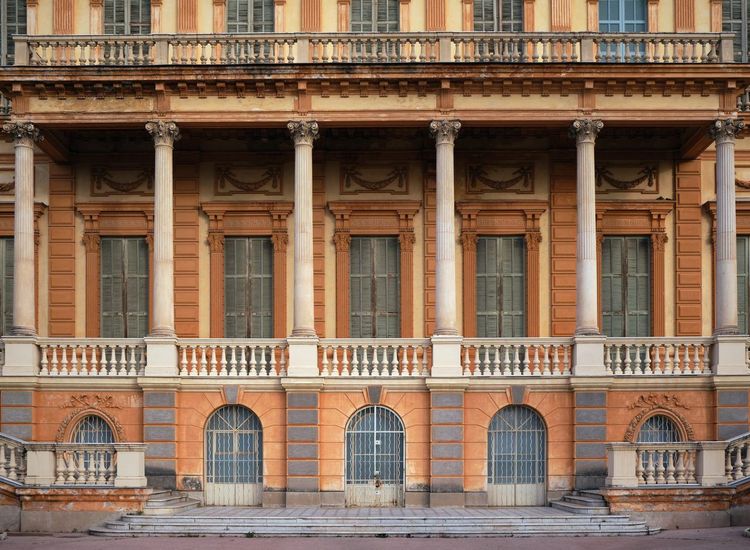
Begun in 1878 for Ukrainian princess Élisabeth Kotschoubey and later completed for a wealthy American, the mansion that houses the Jules Chéret Fine Arts Museum (33 Avenue des Baumettes, 06000 Nice, rated 4.3/5 on Google from 1,756 reviews) was purchased by the city in 1925. The museum opened here in 1928. Its grand staircase and garden are part of the experience.
The collections span several centuries, from regional primitives through to the early 20th century. The Van Loo dynasty features prominently, notably Carle Van Loo, born in Nice in 1705. You will also encounter Raoul Dufy — Norman by birth but devoted to the light of Nice — as well as sculptures by Rodin and Carpeaux. A large section is dedicated to Jules Chéret, who died in Nice in 1932, and whose vividly coloured Belle Époque posters shaped the advertising imagery of the era.
The pace lends itself to lingering: the rooms, arranged around the central staircase, tend to be quieter than those in Cimiez. If you are chaining several museums in one day, note that the Fine Arts Museum is to the west of the center, in the Baumettes neighborhood, about a quarter of an hour's walk from Villa Masséna.
Villa Masséna, History and Prestige of Nice
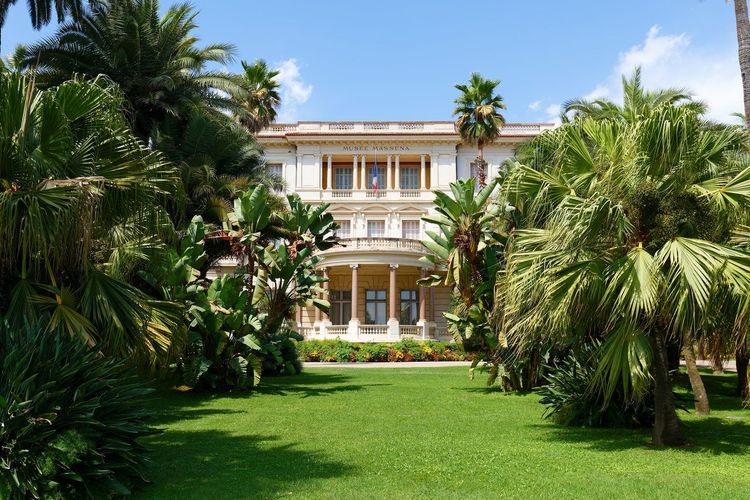
Between the rue de France and the Promenade des Anglais, Villa Masséna was built between 1898 and 1901 for Victor Masséna, Prince of Essling and grandson of Napoleonic marshal André Masséna. Architects Hans-Georg Tersling and Aaron Messiah combined Italian neoclassicism with the Empire style, as a tribute to Napoleon, to whom the family owed its titles.
Ceded to the city in 1919 on condition that it be turned into a museum and its garden opened to the public, the villa has welcomed visitors since 1921. The collections trace the history of Nice from 1792 to 1939: Empire furnishings, First Empire memorabilia — including a portrait of Empress Joséphine by Antoine-Jean Gros — and Belle Époque paintings and objects from the era when British and Russian winter visitors made the city's fortune.
If you are following the Ryo audio-guided tour along the Promenade des Anglais, the villa makes a natural stop: the story of the rise of winter tourism takes on another dimension in front of this white facade. The garden, designed by landscape architect Édouard André and restored in 2006–2007, offers a shaded break between two visits.
Asian Arts Museum, a Zen Journey Near the Center
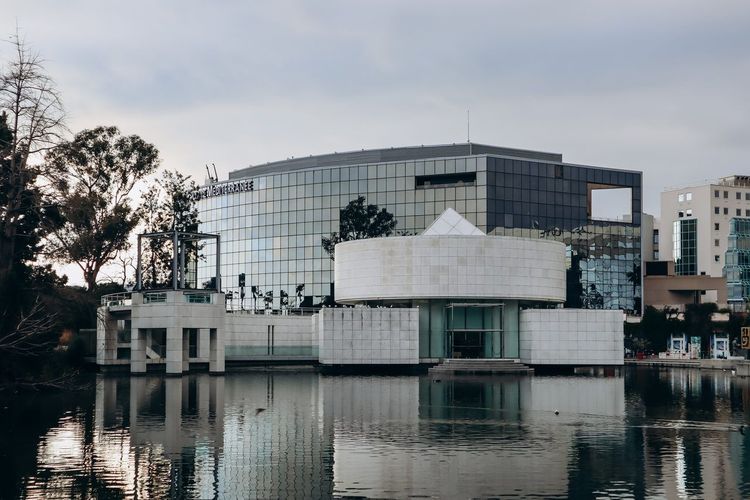
Less well known than its neighbors but just as distinctive, the Asian Arts Museum (405 Promenade des Anglais, 06200 Nice, rated 4.6/5 on Google from 1,833 reviews) is run by the Alpes-Maritimes Department. It occupies a building designed by Kenzo Tange, the Japanese architect and Pritzker Prize laureate. Set on a body of water in the Parc Phœnix, near the airport, the white marble structure plays on pure geometric forms.
The collections survey the art of Japan, China, India, and Southeast Asia, in a pared-down scenography that gives each piece room to breathe. A teahouse regularly hosts tea ceremonies, which must be booked in advance.
Allow 1 hour for the visit, and add the nearby Parc Phœnix if time permits. Set apart from the center, this is one of the city's quietest museums — a real advantage for catching your breath between two livelier stops in the city center.
Palais Lascaris, Baroque Splendor of the Old Town
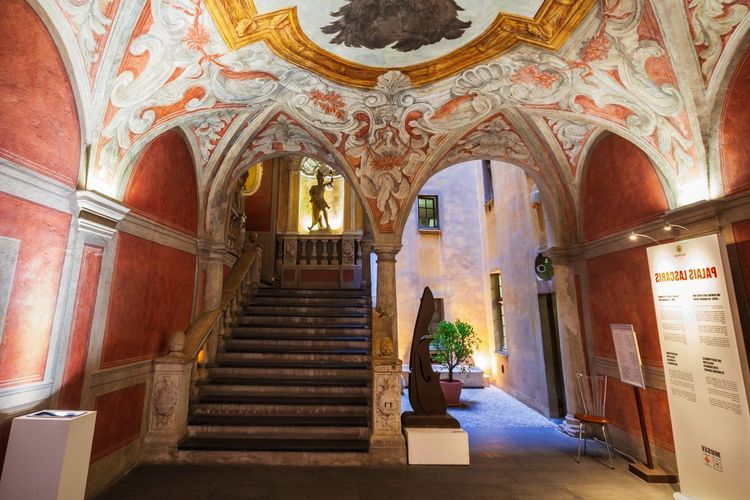
In the heart of the Old Town, on rue Droite, the Palais Lascaris (15 Rue Droite, 06300 Nice, rated 4.4/5 on Google from 2,121 reviews) unfolds across several levels as one of the finest examples of baroque architecture in the city. Built in the 17th century for the Lascaris-Vintimille family, the mansion has retained its painted ceilings and grand staircase.
On the ground floor, an 18th-century pharmacy has been reconstructed, complete with faience jars. The upper floors display Flemish tapestries, period furniture, and a collection of antique musical instruments that ranks among the richest in France: baroque guitars, harps, viols, and wind instruments.
To situate the palace within the maze of alleyways, the Ryo audio-guided walk through Nice passes through the Old Town, between ochre facades and baroque chapels. Half an hour is enough for the ground floor; allow 45 minutes for the whole visit. And if you enjoy the neighborhood, our guide to the Old Town district extends the experience.
National Museum of Sport
A national museum under the Ministry of Sports, the National Museum of Sport (6 Allée Camille Muffat, 06200 Nice, rated 4.3/5 on Google from 982 reviews) is located within the Allianz Riviera, OGC Nice's stadium, on the Var plain. This status sets it apart from the municipal museums on this list.
Across 2,500 m² of permanent exhibition space, the all-sports collection traces the history of sport in France through jerseys, equipment, posters, and trophies. Interactive displays and workshops make it a popular outing for families, and the museum also offers stadium tours.
As the venue is out of the center, it is best combined with a visit to the Allianz Riviera. Check prices and opening times on-site or on the museum's website before you go. With children, our selection for visiting Nice with kids offers more ideas in the area.
Natural History Museum of Nice
Founded in 1846, the Natural History Museum of Nice (60 bis Boulevard Risso, 06300 Nice, rated 3.6/5 on Google from 317 reviews) is one of the oldest natural history museums in France. It stands on boulevard Risso, along the Paillon green corridor, between the old town and the port district.
Its collections cover mineralogy, palaeontology, botany, and zoology, with particular attention to Mediterranean and Alpine flora and fauna. The local geology galleries explain why the region concentrates such varied relief and rock types within such a small territory.
A museum that families enjoy, with display cases at child height and educational activities during school holidays.
Terra Amata Prehistoric Museum
Behind its appearance as a modest neighborhood museum, Terra Amata (25 Boulevard Carnot, 06300 Nice, rated 4.1/5 on Google from 559 reviews) conceals one of Europe's major prehistoric sites. Built on the site of excavations carried out in 1966 by Henry de Lumley during a construction project at the foot of Mont Boron, it presents a campsite roughly 400,000 years old.
A cast of the occupation floor, with traces of a hearth and flint tools, allows visitors to visualize the daily life of hunters who camped on a beach that has long since disappeared. The museum also evokes the fauna of the period: ancient elephants, Merck's rhinoceros, deer, and aurochs.
The visit is compact and takes about 45 minutes. It will appeal to curious visitors who have already seen the major art museums and are looking for a different perspective on Nice's history — one that predates the Greeks of Nikaia and the Romans of Cemenelum.
Museum of the Azurean Resistance
More discreet, the Museum of the Resistance Azuréenne is dedicated to the Resistance in the Alpes-Maritimes during the Second World War. Documents, objects, leaflets, and testimonies trace the clandestine networks, the maquis of the hinterland, the repression, and the Liberation of Nice in August 1944.
It is run by an association, with more limited opening hours than the larger museums: check days and times before making the trip. Best combined with a day devoted to the region's history rather than its art museums.
Other Municipal Museums: Archaeology, Photography, and Naïve Art
The list of museums in Nice does not stop at the big names. Four municipal addresses round out the picture, and your 4-day pass covers them all.
The Nice-Cimiez Archaeological Museum, at 160 avenue des Arènes de Cimiez, is right next door to the Matisse Museum. It presents the remains of Cemenelum, the Roman city that once overlooked the bay: baths, an amphitheater, and everyday objects. It is the ideal stop to make the most of a morning in Cimiez.
Near cours Saleya, the Charles Nègre Photography Museum hosts exhibitions of historical and contemporary photographers in a compact format that fits easily between two alleyways in the Old Town.
To the west, the Anatole Jakovsky International Museum of Naïve Art occupies the Château Sainte-Hélène in Fabron. Its colorful canvases from around the world delight children and enthusiasts alike.
Finally, the Prieuré du Vieux Logis, in the Saint-Barthélemy neighborhood, reconstructs the interior of a historic dwelling with furniture and religious art objects from the Middle Ages and the Renaissance. A curiosity for those who have already seen everything else.
Practical Information: Hours, Prices, and Museum Passes
First thing to know: the municipal museums are no longer free for visitors. At the Matisse Museum, a single ticket costs €12. The 4-day pass, at €15 per person (€10 per person for groups of 10 or more), gives access to all municipal museums: Matisse, Fine Arts, Masséna, Palais Lascaris, Natural History Museum, Terra Amata, Archaeology, Photography, Naïve Art, and the Prieuré du Vieux Logis. From two visits onwards, it pays for itself.
On the free-entry side, the municipal museums are free for residents of Nice and the Métropole Nice Côte d'Azur (on presentation of proof of address less than 3 months old), for those under 18, students, job seekers, and people with disabilities. The Chagall museum, being national, has its own ticketing system, and the Asian Arts Museum falls under the Department. For a day on a tight budget, our list of free activities in Nice usefully complements this program.
The French Riviera Pass, sold by the Nice Côte d'Azur tourist office from €30 in 24h, 48h, or 72h versions, opens access to more than 60 sites on the Côte d'Azur. It is most worthwhile if you also plan visits outside of Nice.
To connect the museums on foot, group them by neighborhood. Matisse, the Archaeology Museum, and Chagall form the Cimiez trio, easily combined in a morning. Palais Lascaris, the Photography Museum, and the Natural History Museum can be done in sequence from the Old Town. Masséna and the Fine Arts Museum pair well to the west, along the Promenade. Between neighborhoods, you can walk without downtime using the Ryo audio-guided tour of Nice: its 27 audio tracks over 7.1 km tell the city's story as you move between areas, without having to reroute at every step. To fit these visits into a longer stay, the itinerary for visiting Nice in 2 days provides a complete framework.
FAQ
Which museums are must-sees in Nice?
The Matisse Museum and the Marc Chagall National Museum form the most frequently cited duo, followed by Villa Masséna for the city's history and Palais Lascaris for the Old Town. MAMAC, closed for renovation since January 2024, will rejoin this list when it reopens.
Are Nice's Municipal Museums Free?
No, not for outside visitors: expect to pay €12 for the Matisse Museum, or €15 for the 4-day pass valid at all municipal museums. Entry remains free for residents of the Métropole Nice Côte d'Azur, those under 18, students, and several other categories.
Which Is the Most Visited Museum in Nice?
The Matisse Museum and the Marc Chagall National Museum attract the widest international audience, driven by the fame of their artists and by organized excursions from across the Côte d'Azur.
How Much Time Should I Allow to Visit Nice's Museums?
Allow 1 to 1.5 hours for Matisse or Chagall, about 1 hour for the Fine Arts Museum or the Asian Arts Museum, and 45 minutes for Terra Amata or Palais Lascaris. To see the main ones without rushing, plan for two days, ideally one dedicated to Cimiez.
Is There a Pass for Visiting Several Museums in Nice?
Yes. The City of Nice 4-day pass (€15) covers all municipal museums. The French Riviera Pass, from €30, gives access to more than 60 sites on the Côte d'Azur for 24, 48, or 72 hours.
Which Hotel Should I Choose to Visit Nice's Museums on Foot?
Staying in the Old Town or around place Masséna puts Palais Lascaris, the Natural History Museum, and the Photography Museum within walking distance, and Villa Masséna a quarter of an hour on foot. For Matisse and Chagall, stay near Cimiez or plan to take the bus from the center.
Which Nice Museums Are Free on the First Sunday of the Month?
Nice's municipal museums do not offer a blanket free admission on the first Sunday: their free entry is based on visitor profile (resident, under 18, student). First-Sunday free admission applies mainly to national museums, such as the Chagall museum, under conditions that vary by season — check with the museum before your visit.
Between the seafront, the Old Town, and the hills of Cimiez, Nice offers a remarkable density of museums for a city of its size, and the 4-day pass makes it all very accessible. To connect the dots between two collections and understand the city that captivated Matisse and Chagall, the Ryo audio-guided tour of Nice tells the story of Nissa la Bella in 2h50 of listening, leaving you free to stop wherever you like.