© Shutterstock
 Votre guide Ryo
What to Do in Vence in 2026: 14 Experiences Between Old Village, Art, and the Outdoors
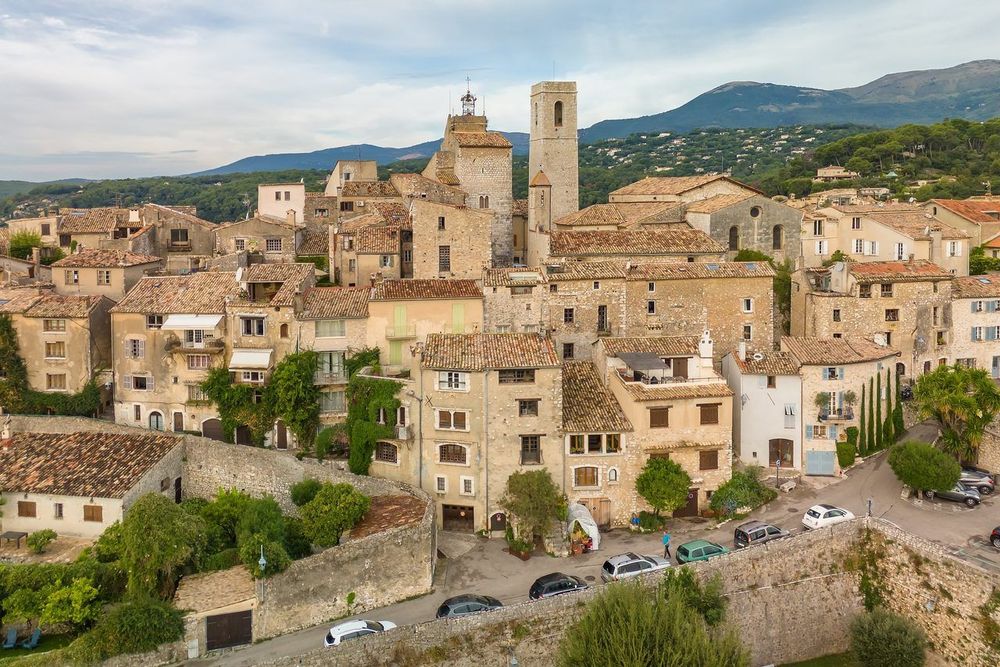
About fifteen minutes from the sea, perched at 325 meters above sea level on its rocky promontory, Vence has long lived in the shadow of Nice and the Côte d'Azur, which never stopped it from attracting artists and curious visitors for over seventy years. What to do in Vence when you have a day, or a long weekend? The question is worth dwelling on, since this city of around 19,000 inhabitants packs medieval ramparts, a masterpiece by Matisse, and hiking trails within a stone's throw of one another.
Between a Romanesque cathedral built on the site of an ancient Roman temple, a chapel that Matisse considered the culmination of his entire career, markets that animate the town almost every day of the week, and baous that tower hundreds of meters above the city, the itinerary is packed with substance. Add to that a neighboring village, Saint-Paul-de-Vence, where Picasso and Braque sometimes settled their bills with paintings, a mountain pass road that climbs to 963 meters with the Mediterranean as a backdrop, and natural waterfalls less than half an hour's drive away: you will understand why two days are rarely enough to see everything.
1. Old Vence: Ramparts, Squares, and Medieval Lanes
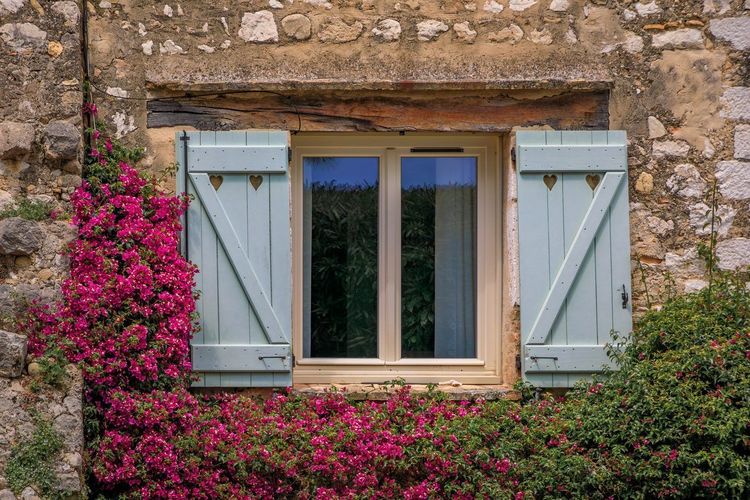
The historic center of Vence fits into a very small area: medieval fortified gates enclose a maze of lanes that can be walked in full in half an hour, if you stop nowhere. Which is to say that almost no one crosses it that quickly. The ochre facades, sculpted lintels, and vaulted passageways tell a story that began long before the Middle Ages, since the city already occupied a Ligurian and then Roman site, under the name of Vintium.
The Porte du Peyra, one of the original gates still visible, opens directly onto the heart of the village. Just next to it stands an ash tree planted, according to local tradition, in 1538, in memory of the passage of François I and Pope Paul III, who came to negotiate the Truce of Nice: the tree gives its name to the small square surrounding it and is a reminder that Vence was long one of the most contested cities in the Nice hinterland.
The Historic Center and the Cathédrale Notre-Dame-de-la-Nativité
The Cathédrale Notre-Dame-de-la-Nativité stands on the site of an ancient Roman temple. The current building layers Romanesque, Gothic, and Baroque elements, the result of several centuries of alterations, making it one of the smallest cathedrals in France. The carved wooden choir stalls, made in the 15th century, are among the most remarkable in the region and are worth studying for a few minutes to take in their scenes, which are sometimes frankly satirical.
In the baptistery is hidden a mosaic signed by Marc Chagall, created in 1979 and depicting Moses Saved from the Waters. Few visitors notice it on their first pass, as the lighting is subtle. Yet it is one of the rare works by Chagall that you can admire for free in a place of worship still in active use.
You can visit the cathedral freely outside of services. Avoid Sunday morning if you want to enjoy the silence: Mass still draws a good portion of the old village's residents, and the pews fill up quickly for a city of this size.
Place de Peyra and Place du Grand Jardin, Heart of Local Life
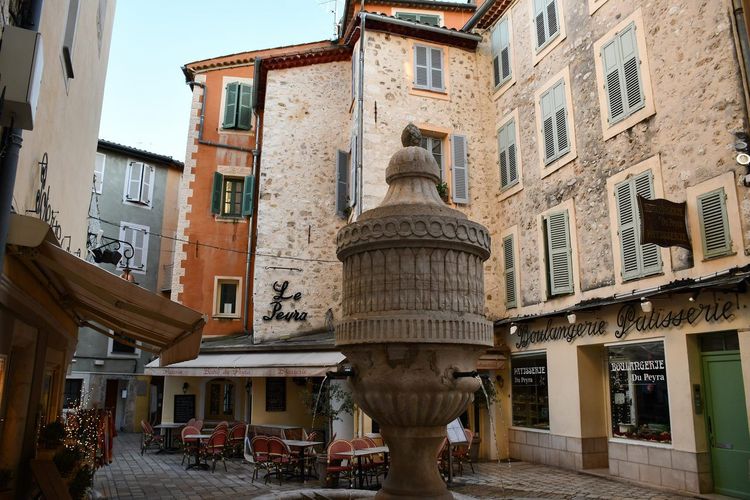
The Place du Peyra (Place du Peyra, 06140 Vence) was already the main square of the medieval town. Its urn-shaped fountain, surrounded by café terraces and narrow facades, forms a natural crossroads between several lanes of the old village. This is where many visitors have their first coffee upon arriving, to the sound of water flowing continuously.
Five minutes' walk away, the Place du Grand Jardin (Place du Grand Jardin, 06140 Vence) opens up a completely different horizon: larger, lined with plane trees, it offers an unobstructed view of the baous that overlook the town. This is where several markets are held, where summer concerts take place, and where local life takes precedence over tourism, especially in the late afternoon when residents gather there.
Vence does not yet have its own Ryo audio guide route: for this ramparts, cathedral, and squares trail, the map provided by the tourist office will do the trick. Save the audio experience for the Vieux-Nice, thirty minutes away by road, where you'll find the same narrow lanes and the same taste for anecdotes that the signs don't display.
2. Matisse's Chapelle du Rosaire and the Key Art Sites in Vence
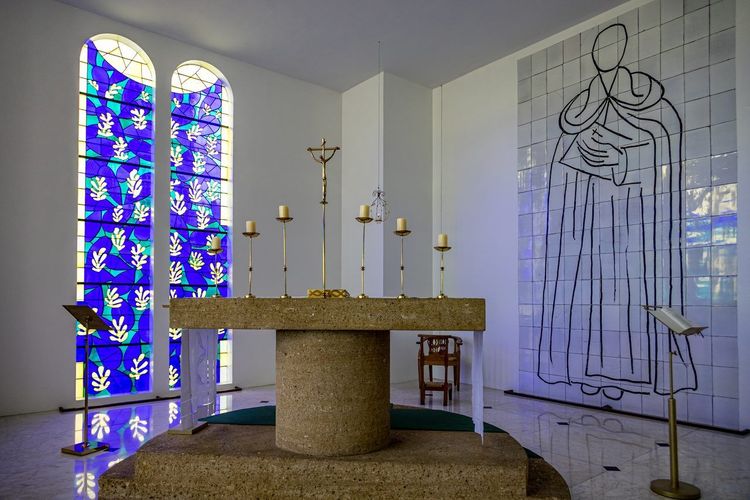
Henri Matisse settled in Vence in 1943, fleeing the bombings that threatened Nice, and rented the Villa Le Rêve until 1949. From this stay would be born the work that he himself considered the culmination of his life as a painter, one that closes his career on an almost spiritual note.
The Chapelle du Rosaire, Matisse's Masterpiece
Built between 1949 and 1951, the Chapelle du Rosaire (466 Avenue Henri Matisse, 06140 Vence, rated 4.4/5 on Google from 980 reviews) was designed by the painter for the Dominican sisters of Vence, at the initiative of Monique Bourgeois, the nurse who had cared for him and had since become Sister Jacques-Marie. The blue, yellow, and green stained-glass windows filter ever-changing light onto the wall ceramics, simple black lines on a white background depicting a stripped-down Stations of the Cross.
Matisse was then nearly 80 years old, weakened by a major operation, and often drew while seated, using a long bamboo stick tipped with charcoal to reach the heights of the walls. He spoke of this project as the masterpiece of his life, despite health that no longer allowed him to stand for long. The liturgical vestments, designed by him down to the smallest motifs, are still presented in an adjoining room.
The chapel only opens on certain days of the week, with reduced hours out of season and an annual closure in late autumn: check the opening hours before making the trip. Photography is forbidden to preserve the contemplative atmosphere of the place. A visit rarely lasts more than twenty minutes, but many people stay much longer, simply sitting on the wooden pews.
Art Galleries and the Espace Muséal Gombrowicz
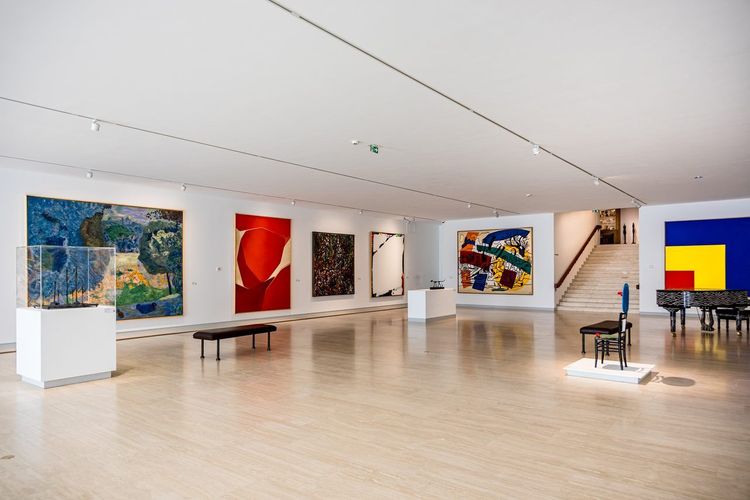
The old village is home to numerous art galleries, a direct legacy of the influx of artists that surrounded Matisse: Raoul Dufy, Chagall, and later Jean Dubuffet all stayed in Vence. Many of these addresses remain family-run, which gives some shop windows an old-fashioned charm, far from the more standardized commercial circuits of the Côte d'Azur.
The Château de Villeneuve, a former manor house turned modern art foundation, rounds out this artistic landscape with temporary exhibitions dedicated to the artists who have left their mark on the city, from Matisse to Dubuffet.
Less well known, the Espace Muséal Gombrowicz is dedicated to the Polish writer Witold Gombrowicz, who spent his final years in Vence until his death in 1969. The modest-sized space retraces his journey as an exile through manuscripts, photographs, and personal objects. You will spend half an hour there at most — a short but rich stop between two more anticipated visits.
3. Vence's Markets, From Tuesday to Sunday
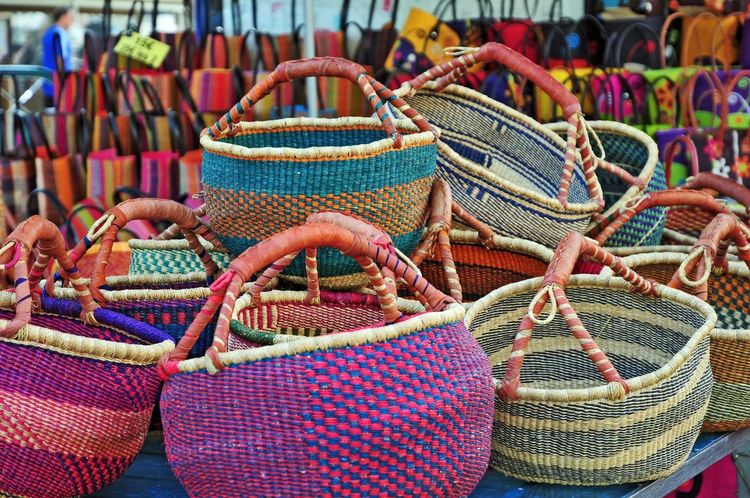
Vence lives to the rhythm of its markets, spread throughout the week on a well-established calendar. On Tuesday, at the place Maréchal-Juin, fashion and accessories fill the stalls. On Wednesday, the place du Grand Jardin hosts antiques and second-hand books, an ideal appointment if you enjoy browsing. Friday mixes food, clothing, and accessories between the place du Grand Jardin and the place Maréchal-Juin.
Saturday remains the highlight for food lovers: from 9am to 1pm, the organic and local market at the place du Grand Jardin brings together producers from the mid-country, with short supply chains. Olive oil, goat's cheeses from the Pre-Alps, seasonal vegetables, honey, and cut flowers are sold by producers who often travel less than thirty kilometers to get there. Arrive before 10am: after that, the cheese sellers have often already sold their most sought-after items.
On Sunday, the historic center shifts register with a world food market, where local restaurateurs cook Asian, Italian, or Indian recipes. Bring cash: some of the smaller stalls do not accept bank cards.
4. Where to Eat: Restaurants and Farm-to-Table Dining in Vence

The old village is full of bistros serving unpretentious Niçoise cuisine: socca, pissaladière, Provençal daube, stuffed vegetables, often served on terraces set right on the cobblestones of the place du Peyra or the place Godeau. It is neighborhood cooking, designed for regulars as much as for passing visitors.
Away from the center, La Table du Cantemerle (258 Chemin Cantemerle, 06140 Vence, rated 4.4/5 on Google from 138 reviews) offers farm-to-table cuisine built around local producers, with outdoor evenings during the summer. The restaurant, located within the hotel of the same name, remains open to non-residents on reservation, and its shaded terrace makes it a sought-after address for summer meals.
Between these two extremes, a few more discreet addresses focus on a Mediterranean menu of three or four dishes per service, refreshed according to what's available. Reserve at the weekend, especially in the evening: the best tables in the old village rarely seat more than twenty covers. At midday during the week, set menus remain significantly cheaper than the evening à la carte.
5. Saint-Paul-de-Vence, the Artists' Village Not to Be Missed
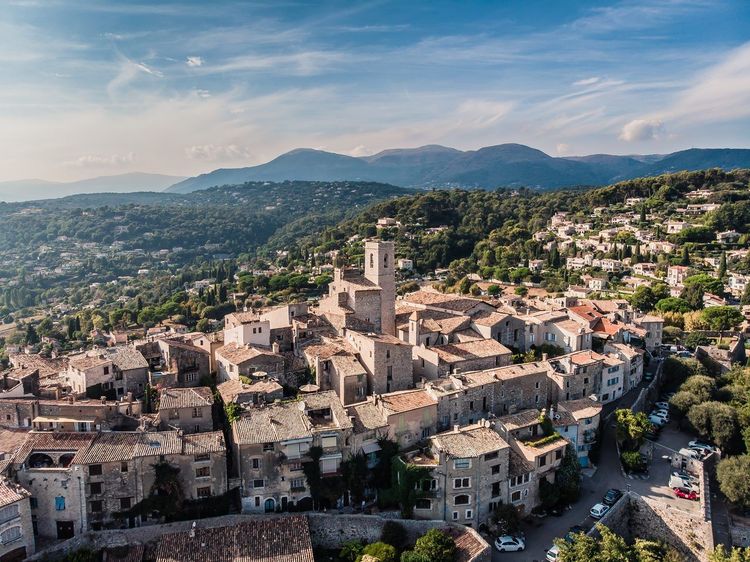
Four kilometers from Vence, Saint-Paul-de-Vence occupies a rocky spur fortified in the 16th century on the orders of François I, to protect the border with the Duchy of Savoy. From the 1920s onward, the village became a refuge for painters and writers seeking Mediterranean light, before achieving worldwide renown.
The Fondation Maeght and Contemporary Art Galleries
Founded in 1964 by Aimé and Marguerite Maeght, the Fondation Maeght houses one of the most important private collections of modern art in Europe. The Giacometti courtyard and Calder mobiles are discovered amid the pine trees, while a basin decorated by Georges Braque closes the promenade on a more intimate note.
An anecdote still circulates in the village: in the 1920s to 1950s, some painters would settle their bills at the Colombe d'Or inn by leaving a canvas rather than cash. The walls of the establishment today display works by Picasso, Braque, and Matisse, accumulated in this way over the decades.
Allow at least two hours to go around the foundation at a leisurely pace, gardens included. The ticket gives access to temporary exhibitions as well as the permanent collection.
Ramparts and Cobbled Lanes of the Village
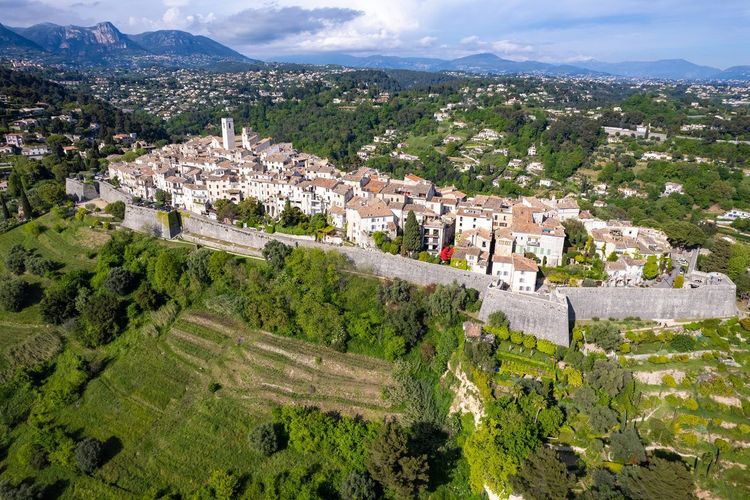
The ramparts of Saint-Paul-de-Vence (Rue Grande, 06570 Saint-Paul-de-Vence, rated 4.8/5 on Google from 173 reviews) can be walked in their entirety, with views of the Pre-Alps on one side and the Mediterranean on the other on clear days. The full circuit takes about thirty minutes and offers a chance to escape the crowds that concentrate on the main street.
The rue Grande, the artery that runs through the village from end to end, is packed with galleries, artisan workshops, and shops selling local products. At the far end of the village, the small cemetery is home to the tomb of Marc Chagall, deliberately simple. The Chapelle des Pénitents Blancs, entirely decorated by Jean-Michel Folon, rounds off the visit if you want to extend your stroll beyond the galleries. Want to avoid the crowds? Go early in the morning or after 5pm, when the tour coaches have left.
6. Hiking the Baous Above Vence
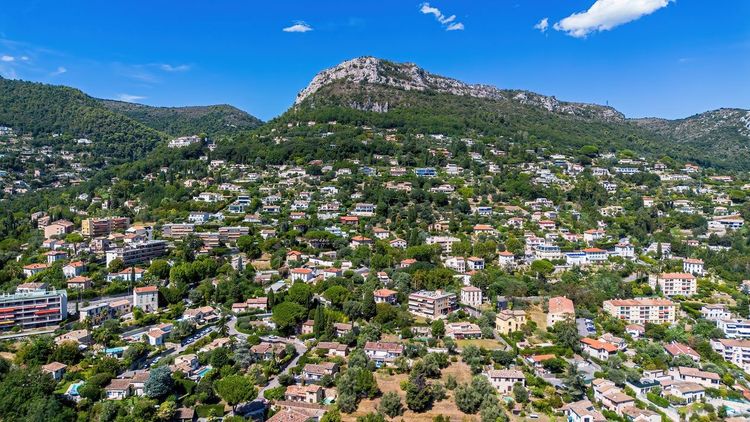
The baous are those steep limestone plateaus, typical of the Nice hinterland, that tower above Vence. Several of them encircle the town, but two lend themselves particularly well to hiking, with very different levels of difficulty.
The Baou de Saint-Jeannet, the Iconic Hike
Peaking at just over 800 meters, the Baou de Saint-Jeannet can be climbed in two and a half to three hours round trip from the village of the same name, with an elevation gain of around 400 meters. The trail, rocky toward the end, requires good footwear and a reasonable level of fitness.
The site has served for decades as a training ground for local climbers, who tackle its vertical walls while hikers reach the summit via a more accessible trail. From the summit plateau, the view stretches all the way to the Baie des Anges and, on a clear day, to the snow-capped Alps.
Set off early in the morning in summer: the trail offers almost no shade on its final section. Bring at least one and a half liters of water per person, as the limestone rock can also be slippery in places.
The Baou des Blancs, the Immediate Panorama From Vence
More modest and closer to town, the Baou des Blancs (Chemin du Baou des Blancs, 06140 Vence, rated 4.7/5 on Google from 112 reviews) can be reached directly from the heights of Vence. The loop takes about an hour and a half, with a much gentler elevation gain than its neighbor at Saint-Jeannet, making it an accessible outing for late morning.
This is the option to choose with children, or at the end of the day to enjoy the sunset over the village. The trail is manageable with a dog kept on a leash, making it a good alternative if you are traveling with your pet. Bring water for it: water points are scarce on this route, which is exposed to full sun.
7. Waterfalls and Nature Adventures in the Préalpes d'Azur
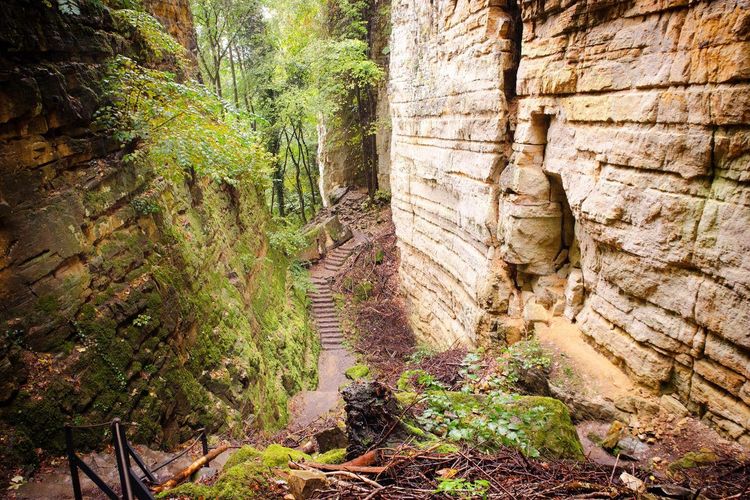
About twenty minutes away by road, the Gorges du Loup form one of the emblematic areas of the Préalpes d'Azur. Short trails lead to natural pools, such as those at the Cascades du Riou (Gorges du Loup, 06620 Le Bar-sur-Loup, rated 4.5/5 on Google from 166 reviews), where the clear water contrasts with the white rock of the cliffs.
The area doesn't stop there: the Saut du Loup and the Cascade de Courmes, visible from the gorge road, can be combined into the same day of exploration. You can also continue on to the perched village of Gourdon, which overlooks the valley.
If you are looking for more thrilling experiences, several local operators organize canyoning trips in the Gorges du Loup, supervised and generally offered between May and September depending on water levels.
Swimming is possible in certain pools during the warm season, but check before jumping in: after heavy rain, the current can become dangerous. Shoes with grippy soles will prevent many slips on the wet rock.
8. The Col de Vence, Between Panoramas and Wide Open Spaces
The road up to the Col de Vence (Route du Col de Vence, 06140 Vence, rated 4.6/5 on Google from 255 reviews) (D2) climbs to 963 meters above sea level in about twenty minutes by car from the town center. The change in scenery is immediate: the Mediterranean mildness gives way to open limestone plateaus, almost steppe-like, where a few flocks still graze.
From the viewpoints along the road, the view takes in the entire coastline as far as the Baie des Anges on a clear day — a striking contrast with the intimate atmosphere of the old village below. At the end of the day, the low-angle light takes on particularly photogenic hues.
Allow an outing of one to two hours if you are content with the viewpoint, longer if you head out on foot across the plateau. In winter, the road can be temporarily closed after a snowfall, which always surprises visitors who came in search of the warmth of the Côte d'Azur.
9. A Day Trip to Nice and the Beaches of the Côte d'Azur
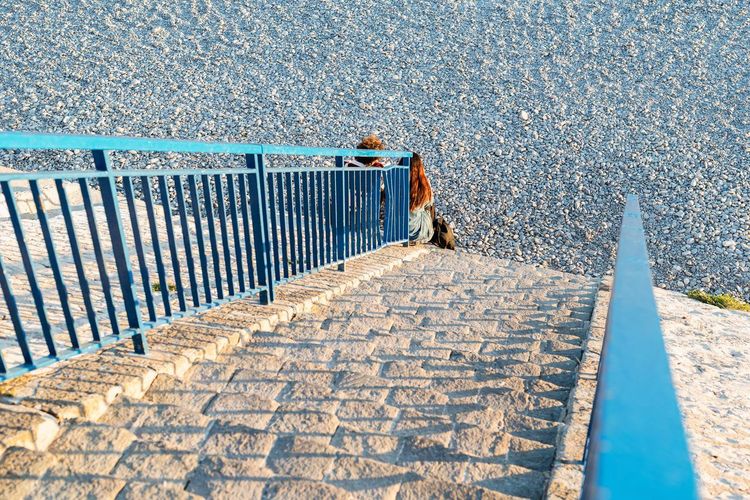
About thirty minutes away by road, Nice lends itself perfectly to a day trip from Vence, sea included.
Nice, Its Beaches and Old Town
The old town of Nice, with its colorful facades and the cours Saleya market (Cours Saleya, 06300 Nice, rated 4.7/5 on Google from 515 reviews), concentrates the essence of Niçoise charm in just a few streets. Flower stalls sit alongside vendors of socca and pissaladière, in an atmosphere that has barely changed in a century.
The Promenade des Anglais then runs along several kilometers of pebble beaches, where you can rent a sun lounger or simply walk with your feet in the water. If you enjoy art, head to the Musée National Marc Chagall, dedicated to the Biblical Message — a natural complement to the mosaic glimpsed in the cathedral of Vence.
To discover the city without a guide or a fixed schedule, the Ryo audio guide tour of Nice strings together 27 audio stops over 7.1 km, approximately 2h50 of listening between the Vieux-Nice, the cours Saleya, and the Promenade. Park on the outskirts and take the tram into the center: parking in the heart of the city remains scarce and expensive.
The Cap d'Antibes and the Coastal Path
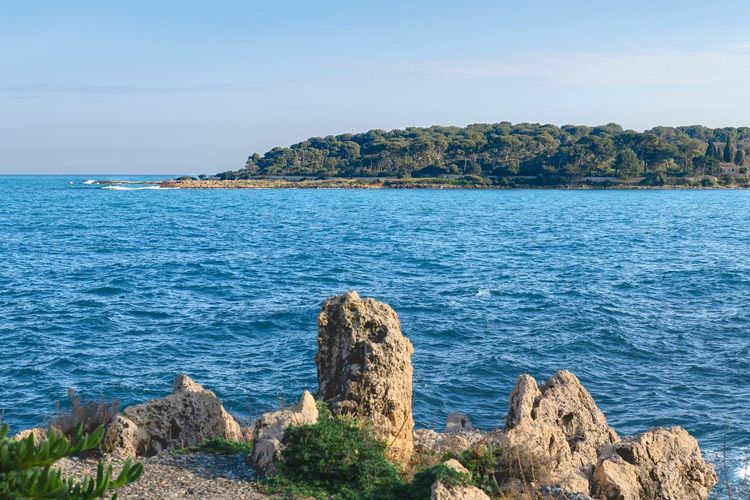
The Cap d'Antibes coastal path follows the tip of the peninsula from the plage de la Garoupe, with sections along a corniche above rocky coves. The route passes at the foot of former villas, and the plage de la Garoupe remains popular for its calm, shallow waters.
Opt for early morning or late afternoon: the heat makes some exposed sections uncomfortable at midday. Before or after the walk, old Antibes is worth a stop: with the Ryo audio guide Cap sur la French Riviera, 22 audio stops over 3 km take you through the city in 1h15, ramparts and port Vauban included.
10. The Most Beautiful Perched Villages Around Vence
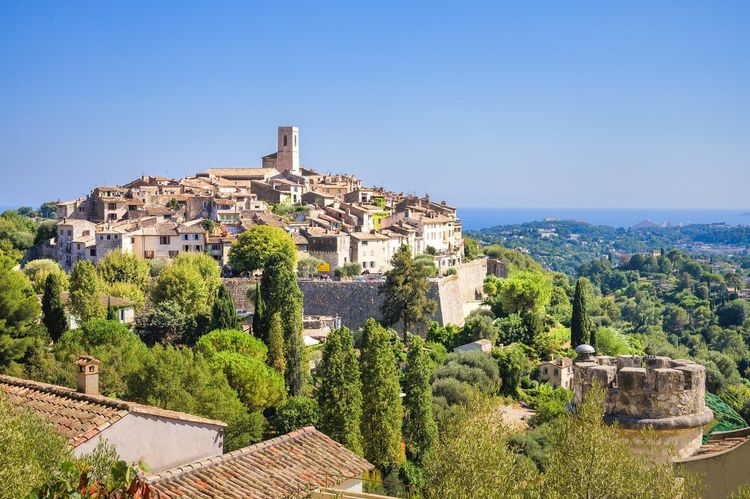
Vence is just one starting point among many in this Nice hinterland dotted with perched villages, each with its own identity, often overlooked by visitors in a hurry who head straight for the coast.
Saint-Jeannet, at the Foot of the Baous
Saint-Jeannet literally clings to the foot of its baou, in a tangle of sloping lanes and stone houses. The terraces of its few restaurants offer a direct view of the cliff face, particularly spectacular at the end of the day when the rock takes on orange hues.
The village long lived off the vine and terraced crops, before becoming a must-visit spot for climbers. A few producers still make the wine of Saint-Jeannet, a small local production worth tasting on the spot.
Tourrettes-sur-Loup and the Villages of the Préalpes d'Azur
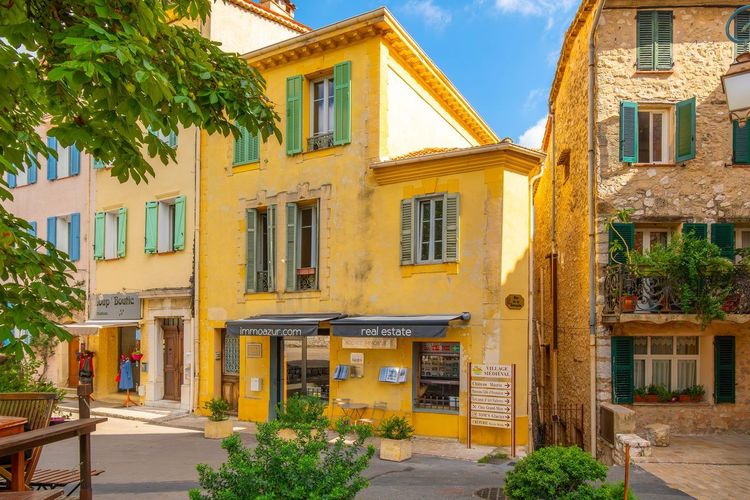
Tourrettes-sur-Loup (Place de la Libération, 06140 Tourrettes-sur-Loup), nicknamed the city of the violet, retains a continuous rampart formed by the back of its medieval houses. Artisan workshops are numerous, and the violet festival still marks the month of March, with its flower-covered floats in the village streets.
A little further on, Coursegoules and Gourdon complete an itinerary over half a day or a full day: the first for its unspoiled tranquility, the second for its château perched at over 750 meters and its vertiginous view over the Gorges du Loup, one of the most breathtaking in the hinterland.
11. Festivals and Cultural Events Year-Round in Vence
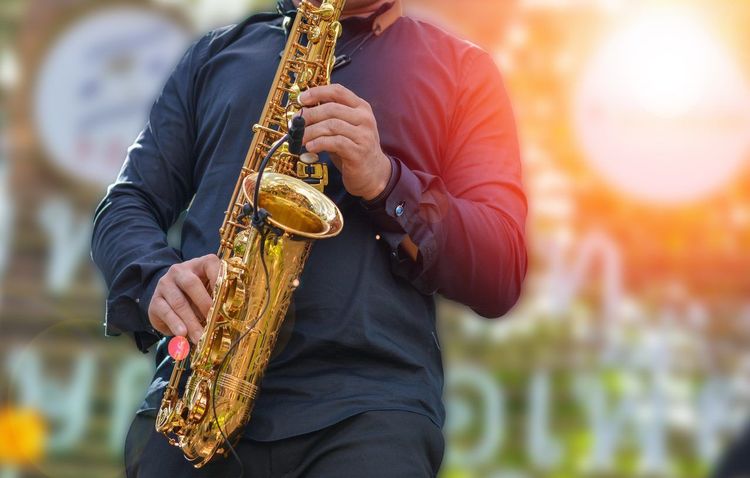
Every summer, the Nuits du Sud transform the place du Grand Jardin into a world music stage. The festival, which has become one of the city's unmissable events, draws both locals and visitors from all along the Côte d'Azur, in a more relaxed atmosphere than in the large coastal venues.
Another highlight, les Tréteaux de Vence set up their theater in the city, with a program mixing contemporary creations and more classic plays. Book early for certain evenings in July: audience capacities remain modest.
For the rest of the year, Vence maintains a dense cultural calendar for a city of this size: temporary exhibitions in the old village galleries, craft fairs, nature outings organized by local associations. A Christmas market traditionally closes out the year.
Check the updated program with the tourist office before your visit, as dates change every year. This is often where the most under-the-radar events slip in, rarely shared beyond the circle of regulars.
12. Where to Stay in Vence: Hotels and Nature Retreats
Vence occupies a particular niche: a nature base between sea and mountains, where families come in search of peace and fresh air without giving up comfort. Several establishments in and around the town center focus on large gardens, outdoor pools, and on-site dining — a practical option after a day of hiking.
On the holiday apartment side, several addresses offer furnished flats with hotel services, a pool, and walking access to the gates of the old village. This is a popular option for stays of several days with family or friends, if you prefer the independence of a self-catering kitchen.
For a more intimate stay, a few bed and breakfasts set up in old bastides on the outskirts offer an alternative to hotels, often with views of the baous or the distant sea. If you are traveling with your dog, several addresses in Vence welcome pets: specify this at the time of booking.
Nightly rates vary considerably by season: July and August prices can easily double compared to spring or autumn. Book several months ahead for Nuits du Sud dates, when the best addresses fill up quickly.
13. How to Get to and Around Vence
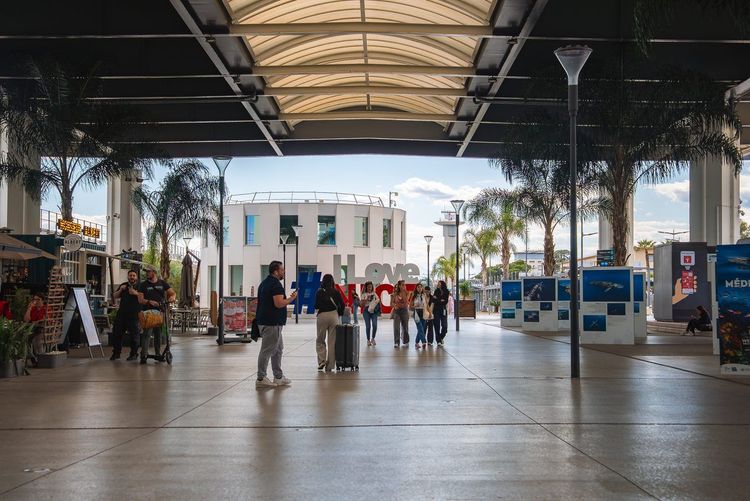
By Car, Train, or Plane
By car, Vence can be reached in about thirty minutes from Nice, via Cagnes-sur-Mer or Saint-Jeannet depending on traffic. Nice Côte d'Azur Airport, the nearest, is about 30 minutes away, making it a convenient gateway if you are coming from further afield.
The town has no train station: the closest is Cagnes-sur-Mer, on the coastal Marseille–Ventimiglia line, from where a bus connects to the center of Vence in about twenty minutes. From Nice, bus line 400 on the Lignes d'Azur network serves Vence directly, passing through Saint-Paul-de-Vence.
Getting Around Vence Once You Are There
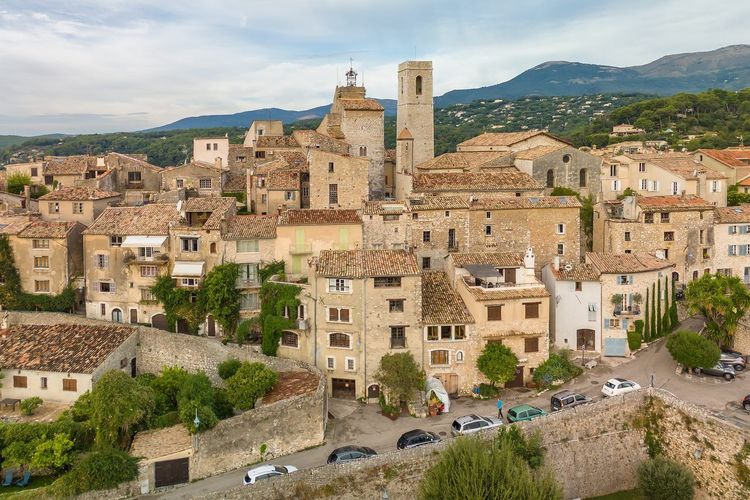
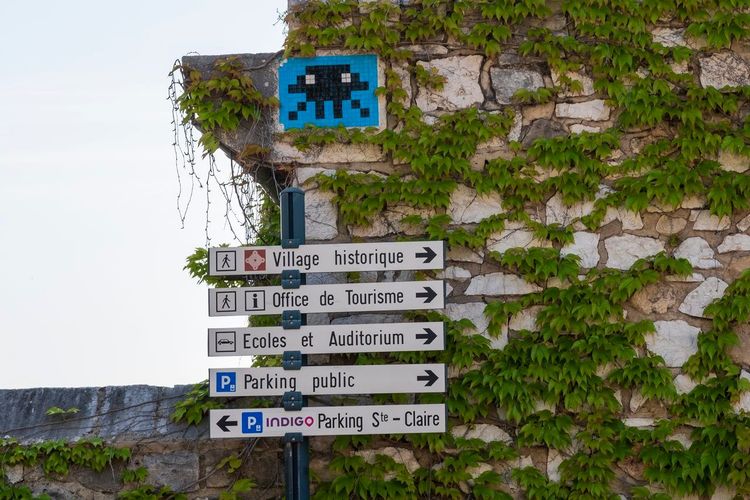
Park your car in one of the car parks on the outskirts of the old village rather than trying to squeeze through the narrow, largely pedestrianized lanes. The historic center can be covered entirely on foot in just a few minutes from one end to the other.
For trips to the baous, the col, or the Gorges du Loup, a car remains strongly preferable: bus routes exist, but with limited frequency outside the season, which can complicate a packed itinerary.
14. Practical Information: Tourist Office, Budget, and Best Season
The Vence tourist office (Place du Grand Jardin, 06140 Vence, rated 4.7/5 on Google from 193 reviews), located in the Villa Alexandrine on the place du Grand Jardin, provides up-to-date opening hours for monuments, the events program, and hiking routes. You will also find maps of the baou trails and advice on current conditions. It is open Monday to Saturday year-round, and on Sunday mornings in July and August.
Spring and autumn remain the most pleasant seasons for visiting Vence, with mild temperatures and lighter crowds. July and August concentrate most of the festivals, but also higher accommodation rates and heat that makes some hikes less comfortable in the middle of the day.
Budget-wise, a day remains affordable if you focus on markets, hikes, and free visits such as the cathedral; costs rise quickly once restaurants and charming hotels enter the picture. Paid admissions — the Chapelle du Rosaire and the Fondation Maeght included — remain reasonable compared to the major sites along the Côte d'Azur.
FAQ
How Much Time Should I Plan for Visiting Vence?
One day is enough for the old village and the Chapelle du Rosaire. Allow two to three days to add Saint-Paul-de-Vence, a hike on the baous, and a trip to Nice without feeling rushed.
What Else Is There to See in Saint-Paul-de-Vence Besides Vence?
The Fondation Maeght, the village ramparts, and the rue Grande with its galleries make up the essentials of a visit. Plan for a half-day, foundation included, and more if you add lunch at the Colombe d'Or.
Where Can I Park to Visit Old Vence?
Several car parks surround the historic center, particularly near the place du Grand Jardin. Avoid looking for a spot in the lanes themselves, which are largely pedestrianized or too narrow.
When Does the Vence Market Take Place?
There is a market almost every day: Tuesday (fashion), Wednesday (antiques and books), Friday (mixed), Saturday morning (organic and local, place du Grand Jardin, 9am–1pm), and Sunday (world food market in the historic center).
What Is the Best Time of Year to Visit Vence?
Spring and autumn offer mild temperatures and fewer crowds. Summer concentrates the festivals but also the heat and the influx of visitors, particularly on the baou trails.
Can You Visit Vence and Hike the Baous With a Dog?
Yes, as long as you keep it on a leash. The Baou des Blancs, being less technical, is better suited than the Baou de Saint-Jeannet with its rocky sections that can be slippery for paws.
In Summary: Vence, Far More Than a Stopover
Between medieval ramparts, Matisse's chapel, markets, and baous overlooking the Baie des Anges, Vence packs a rare diversity into a small area on the Côte d'Azur. Whether you come for a day or a week, Saint-Paul-de-Vence, the Gorges du Loup, and a trip to Nice naturally complement the stay, never requiring more than half an hour by road.
And if you want to extend the journey at your own pace, headphones on, the Ryo audio guide tours of Nice and Antibes are waiting just a short distance away: dozens of audio stops to tell the story of the Riviera street by street, without depending on a guide or a fixed schedule.
À lire également