Créé par Romane, le 17 nov. 2026
Votre guide Ryo
Hyères, France
The City of Palm Trees
Parcours audioguidé pour visiter Hyères en 1 jour
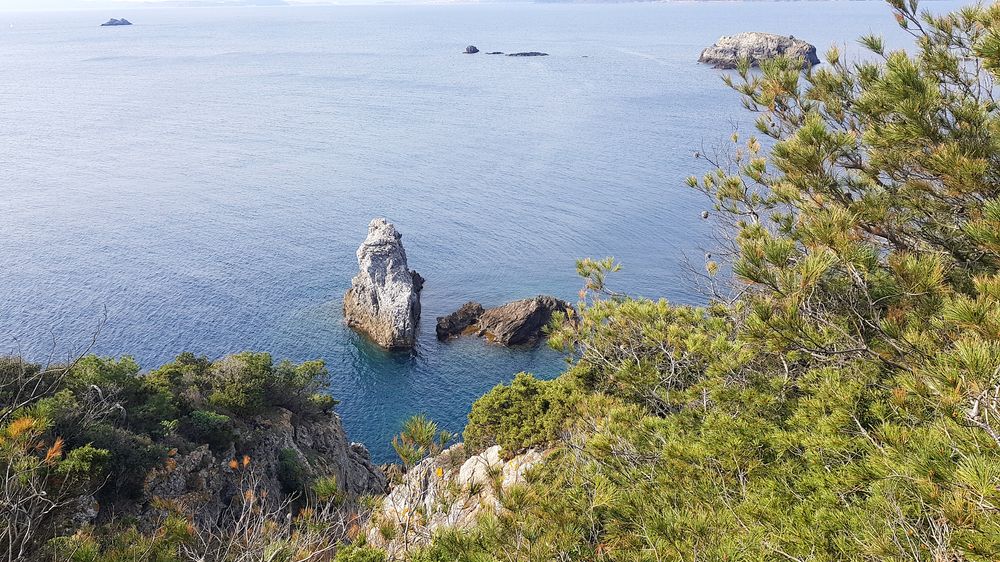
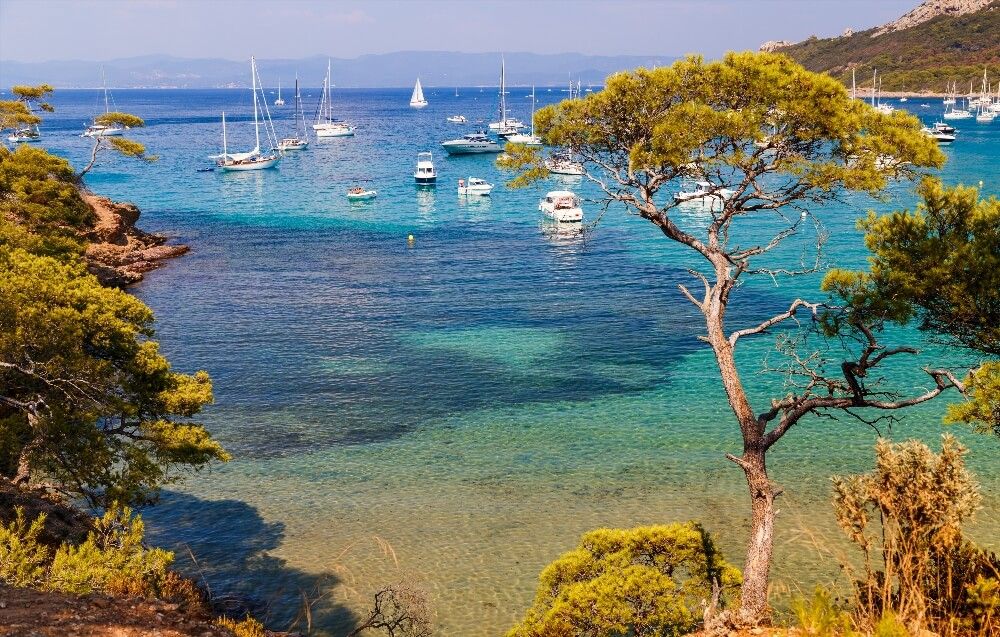
This visit invites you to an immersion into the heart of a city of light, where the scrubland hills meet the serenity of the Mediterranean. Let yourself be charmed by the alleys climbing toward the old castle, offering breathtaking views of the Golden Islands, before descending toward the grace of exotic parks. Between the nobility of Belle Époque villas and the simplicity of shaded squares, the city reveals a character that is both aristocratic and authentic. An exploration on foot, balancing the scent of jasmine and the sea breeze, to capture the full magic of a stopover where time seems to have stood still under an eternally blue sky.
Quand partir à Hyères ?
Jan.
13°
6
Feb.
14°
5
March
16°
5
April
19°
7
May
23°
6
June
27°
3
July
30°
1
Aug.
30°
2
Sept.
26°
6
Oct.
21°
9
Nov.
16°
9
Dec.
14°
7
Hyères enjoys a pure Mediterranean climate, with hot, dry summers climbing to 29°C and very mild winters fluctuating between 6°C and 15°C, often protected by its surrounding terrain. The ideal period runs from May to October to explore the Giens Peninsula and the Golden Islands (Îles d'Or: Porquerolles, Port-Cros). The month of June is perfect for swimming before the crowds, while September offers water that is still warm and a sublime light over the old medieval quarters and botanical gardens.
Départ conseillé
No need to worry about where to begin! Our tours are designed as a loop, so you can jump in wherever you are. The navigation system and audio-guide will automatically adjust to your location. However, if you happen to be nearby, we do have a preferred starting point: Place Georges Clémenceau
Parking à proximité
Hyères Clémenceau Covered Car Park: Place Georges Clémenceau
If you're planning to park in central Hyères, your best option is to use an underground car park. Just a heads-up: spaces and access routes can be quite narrow, so it’s not ideal for larger vehicles. On-street parking is divided into short-stay zones (with a 2-hour limit) and long-stay zones. Don’t forget to pay at a parking meter or via the Flowbird mobile app! If you're looking for free parking, you’ll need to head a bit further out of the city centre — but you can easily get back in by public transport.
À savoir
This tour includes a visit to the ruins of the Château de Hyères. Access is free, but the terrain can be uneven, so we recommend wearing comfortable walking shoes.
You’ll also walk through Sainte-Claire Park and Saint-Bernard Park. Entry is free, but the parks are only open during set hours, so be sure to check the schedule before your visit. If Sainte-Claire Park is closed when you arrive, simply head up Rue Saint-Pierre to continue the route. If Saint-Bernard Park is closed, walk down to Rue du Puits Saint-Pierre, then take Rue Barruc to pick up the route again at the Barruc Gate.
Découvrez 19 lieux d'intérêt pour visiter Hyères







What to see in Hyères on your 1h40 tour?
This 4 km loop takes about 1 h 40 and links 18 stops. From Place Georges-Clémenceau, you pass through the Massillon gate towards the palm-lined avenues, then dive into the maze of the old town, past ancient gates and the Saint-Paul collegiate church. The climb then leads to the Castel, Sainte-Claire park, the ruined castle and Saint-Bernard park, before heading back down to the Saint-Louis church. With the Ryo app in your ears, every stop tells its own story, at your own pace.
Information checked in November 2026 and subject to change.
1 - Place Georges Clémenceau

This central square honours Clémenceau, twice head of the French government and nicknamed Father of Victory after 1918: it took his name in 1922, having previously been called Place de la Rade. Architect Rudy Ricciotti, already behind the Mucem in Marseille, redesigned it in 2019 with metal shade structures and a rose pattern echoing a Michelangelo design in Rome. An equestrian statue stands at one end, a fountain at the other, opening onto the nearby Alphonse Denis garden. Terraces and a carousel make it the gateway to the old town.
Free entry
2 - Massillon Gate
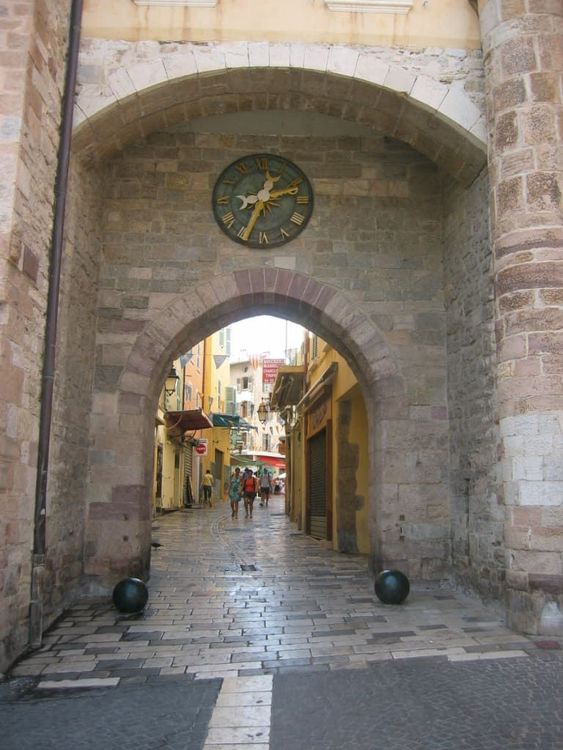
Built in the 14th century, this was one of five gates piercing the city's walls, backed up by nine watchtowers. It takes its name from Bishop Massillon, famed for the eulogy he delivered at Louis XIV's funeral in 1715. Goods arriving from the harbour also passed through here, which explains its other nickname. A clock, fitted much later, tops the archway, and the whole structure entered the protected heritage list in 1926. Step through, and you're in the medieval lanes of the old town.
Free entry
3 - Park Hôtel
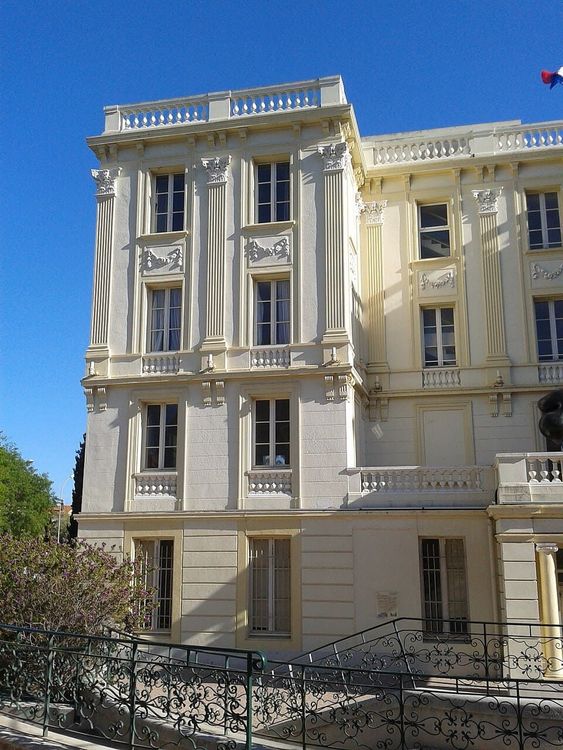
Behind this 1866 neoclassical façade lies an older story: the land already belonged to the Crown in the 16th century, after Catherine de' Medici dreamed of a residence here in 1564, a project that never got built. The grounds instead grew orange trees and rare plants, before a pleasure house gave way to this eighty-room hotel. Bought by the city in 1934, it now houses the Tourist Office and the heritage department, which hosts exhibitions here.
Free to see from outside
4 - Avenue Joseph Clotis
Here's the secret behind the nickname Hyères-les-Palmiers: these trees arrived four centuries ago, brought in by wealthy European settlers drawn to the mild climate. Local growers began cultivating them from 1867, and by the 1920s the city was exporting 1.2 million palms a year; around twenty species are still raised here. The avenue takes its name from a municipal gardener who helped build that trade. Nearby stand the town hall and La Banque, once a bank, now the Museum of Cultures and Landscape.
Free entry
5 - Place du Portalet
This small, pastel-coloured crossroads marks the hinge between two different Hyères: the newer town behind you, built in the 19th century by a wealthy class drawn to the mild climate, and the medieval maze ahead. People have lived on this site since prehistoric times, with Greeks and then Romans passing through long before a fortified town rose in the 11th century beneath a castle now in ruins. Neoclassical façades on one side, narrow cobbled lanes on the other.
Free entry
6 - Rue des Porches
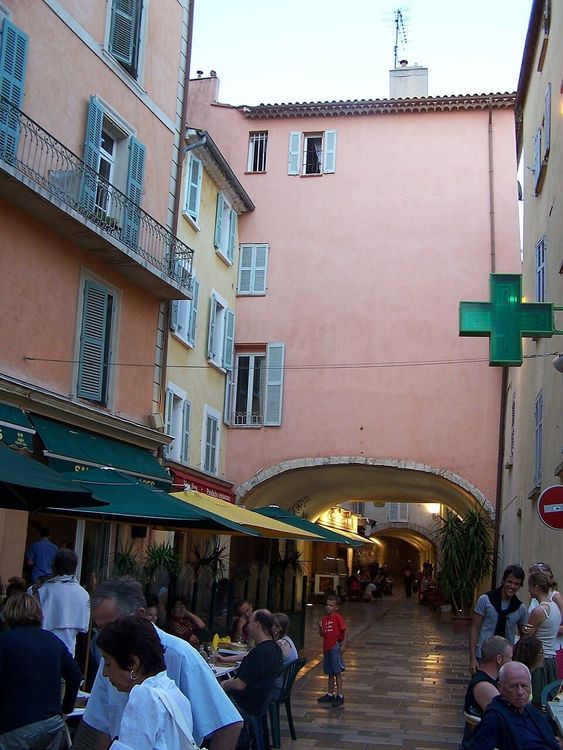
Younger than the lanes it leads into, this street was cut through in the 19th century, when Hyères, like so many French towns, tore down its old walls to make room for new neighbourhoods. The arches overhead were a clever trick for squeezing in extra housing, at a time when aristocrats were flocking here for the sun. Unexpected at first glance, these vaulted passages are exactly what gives the street its distinctive charm, right in the historic centre, just steps from Place du Portalet.
Free entry
7 - Templars’ Tower
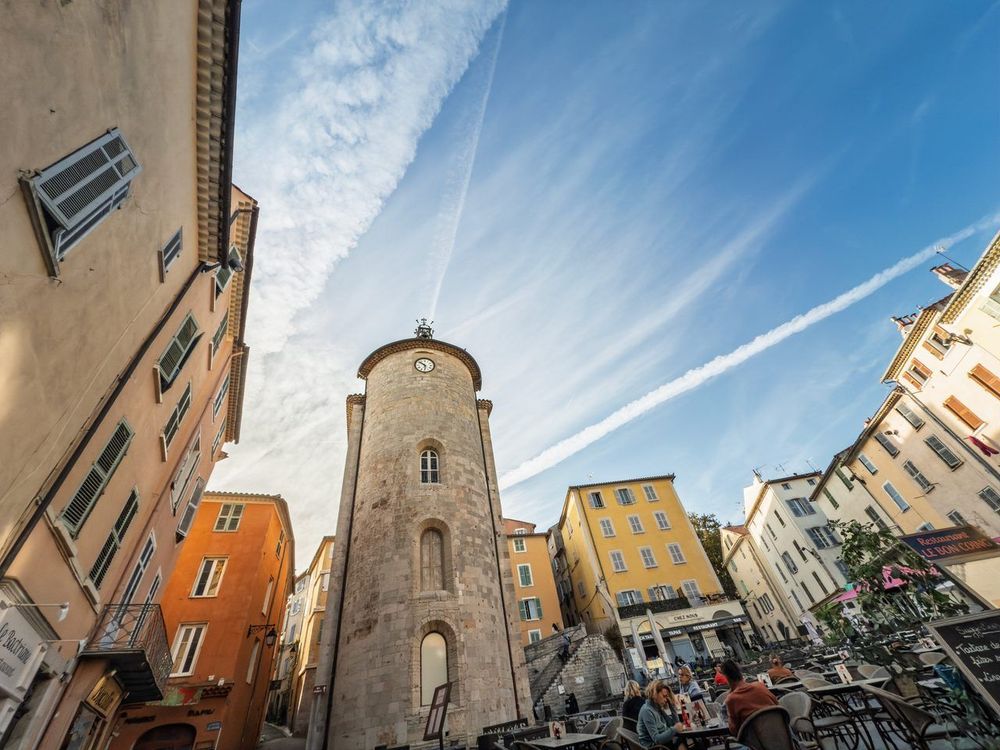
Summer is when Place Massillon truly wakes up, terraces crowding the foot of this 12th-century tower, the last trace of a commandery founded here by the Knights Templar. Also known as the Saint-Blaise chapel, it once served military, religious and farming roles. After 1312 the Templar order was suppressed and the building passed to the Knights of Malta, later serving as Hyères' town hall from 1770 to 1914. Restored in the 1980s, it now hosts exhibitions amid a square full of local life.
8 - Saint-Paul Gate
Tucked beside the collegiate church that gave it its name, this 14th-century gate also carries the word Peñiscola, carved into the stone, a nod to a fortified Spanish seaside town it resembles. Everything behind you once lay outside the medieval city walls. Its arched porch, topped with two storeys and a turret, has survived several rounds of expansion; look up before stepping through to spot its surprising blue-painted ceiling. A short detour to the left leads to a square with a staircase down to a 19th-century washhouse.
Free entry
9 - Saint-Paul Collegiate Church
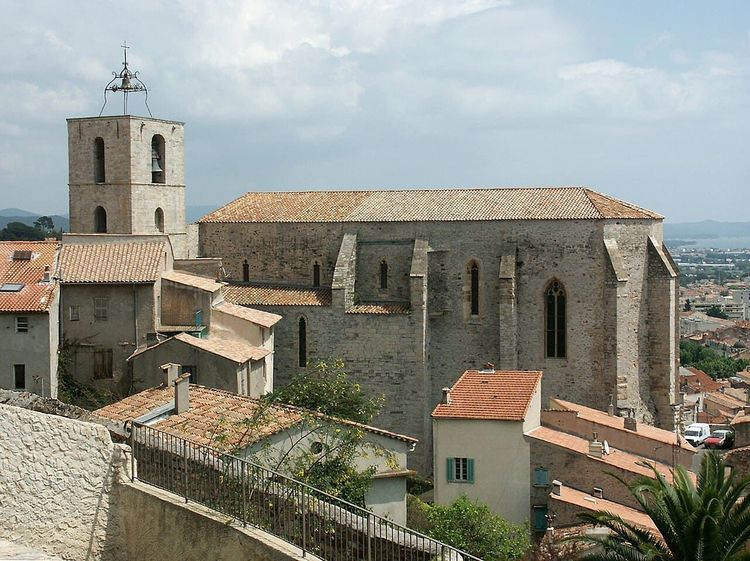
Standing behind you is one of Hyères' landmark buildings, Provençal Romanesque at its core, with a Gothic nave added two centuries later. A simple parish church at first, it was raised to collegiate status in 1572. Its real treasure waits inside: 432 ex-votos, small painted plaques offered in thanks for a blessing received, each one a glimpse into the everyday lives of past townspeople. Fine stained glass and altarpieces round out a collection that ranks among the richest of its kind in France.
Free entry
10 - Princes’ Gate
Tucked around a bend, this lone arch raises more questions than answers. Unlike the other gates on this route, its origins stay hazy: it's thought to date only from the 20th century, built in a Gothic style for a private owner, with no real link to the medieval walls. Mysterious, but undeniably photogenic, it opens elegantly onto the street that shares its name, in the heart of the old Sainte-Claire quarter.
Free entry
11 - Viewpoint over the Old Town
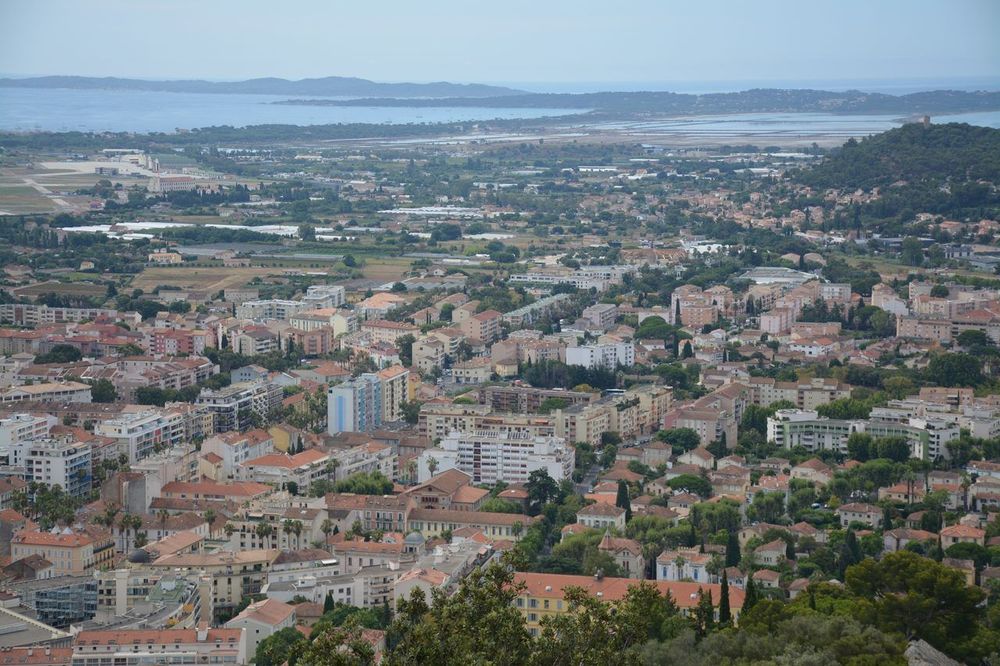
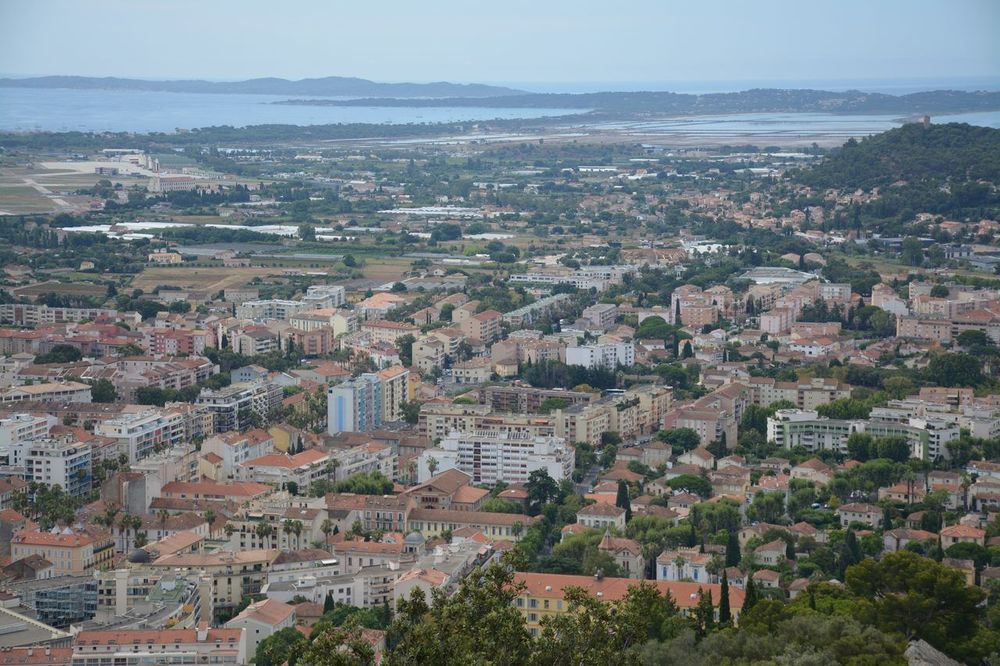
From Sainte-Claire park, the whole town opens up at a glance: ochre rooftops of the old town, the silhouette of the Saint-Paul collegiate church, then the sea and the rugged outlines of Porquerolles and Port-Cros on the horizon. Hyères rises here in tiers along the hillside, lanes and bell towers packed tightly down to the old ramparts. It's the perfect spot to reach for your camera and capture the medieval town and its Mediterranean backdrop in a single frame.
Free entry · Best late in the day
12 - Castel Sainte-Claire
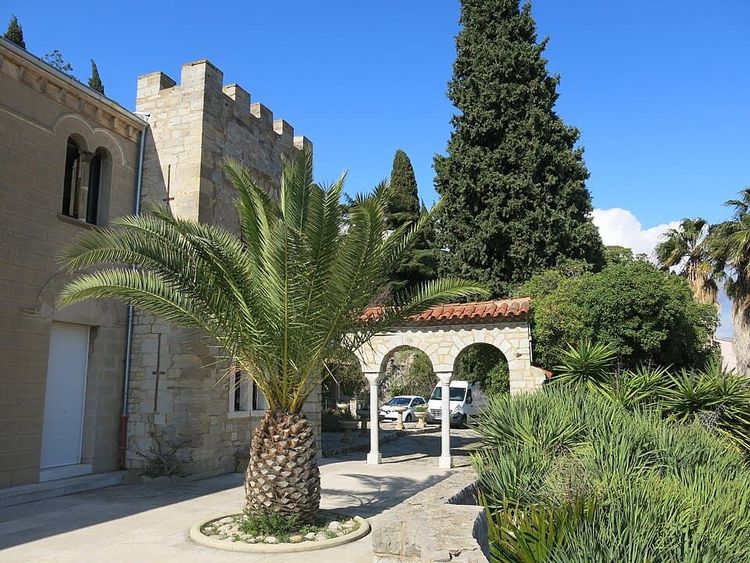
A convent stood on this spot from 1634 until it was torn down after the Revolution. On its ruins, in 1849, naval officer and archaeologist Olivier Voutier, who discovered the Venus de Milo, built this fortress-like neo-Romanesque villa, where he's buried today. Novelist Edith Wharton, the first woman ever awarded the Pulitzer Prize for fiction, lived here for ten years and laid out the garden next door, before the building became in turn a luxury hotel, a local radio station and an insurance office.
Free to see from outside
13 - Sainte-Claire Park
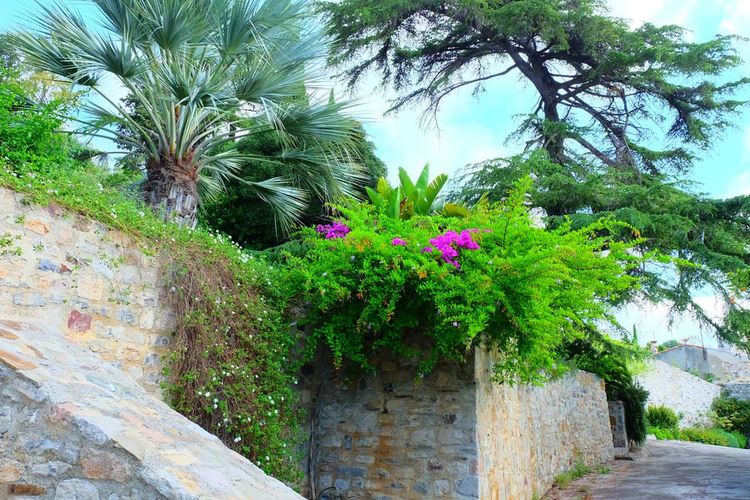
The 6,500 square metres of this botanical garden were laid out in the 1930s, at Edith Wharton's own request. Now officially labelled a Remarkable Garden, it gathers rare species shipped in from as far as South America and Australia, planted far from their native soil. Among the exotic beds and the quiet of the hilltop, this green corner offers a breather away from the bustle below, following in the footsteps of one of the great novelists of her century.
Free entry
14 - Rue Saint-Pierre
This lane connects Sainte-Claire park and Saint-Bernard park at the foot of the castle, with views over the bay and its islands. A legend explains their origin: fleeing pirates at sea, the four daughters of a lord named Olblianus were turned to stone by divine light to escape capture. The three eldest became the islands guarding the bay; the youngest, closer to shore, became the Giens peninsula. That's why locals call them the Golden Islands.
Free entry
15 - Hyères Castle
More than a thousand years separate these stones from the first fortress raised here by the lords of the town, on this hill that watches over the coast. Enlarged two centuries later under a count of Anjou, who made Hyères more powerful than Toulon, the stronghold was torn down by royal order in 1620 to quiet the Wars of Religion. Its romantic ruins drew Victor Hugo, George Sand and Queen Victoria. From up here, you look out over the old town, the bay and, just below, Villa Noailles.
Free entry
16 - Saint-Bernard Park
At the foot of Villa Noailles, this terraced garden grew between 1925 and 1935 under the same patron, the Vicomte de Noailles, a devoted champion of modern art. Like Sainte-Claire park, to which it connects via a nearby lane, it carries the Remarkable Garden label and spreads Mediterranean and exotic species across several levels. Benches and sweeping views over the plain and the sea make it the perfect place to catch your breath between two lanes.
Free entry
17 - Porte de Barruc
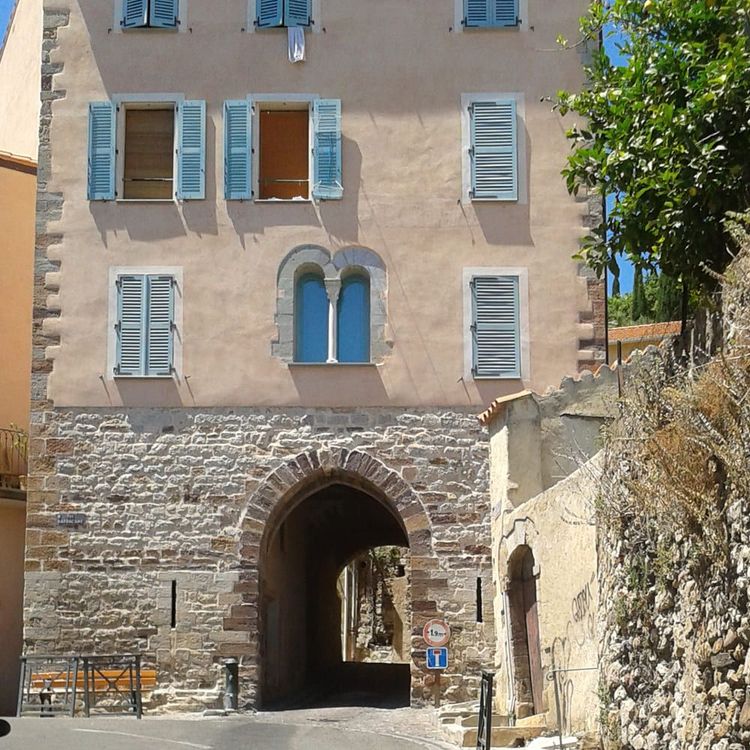
This small stone arch predates the Massillon and Saint-Paul gates by two centuries: it already marked the city's entrance before either of them existed. Its lower section survives remarkably well, keeping traces of the mechanism that once blocked the passage with a portcullis. Listed as a historic monument, it stands just steps from Saint-Bernard park and Villa Noailles.
Free entry
18 - Saint-Louis Church
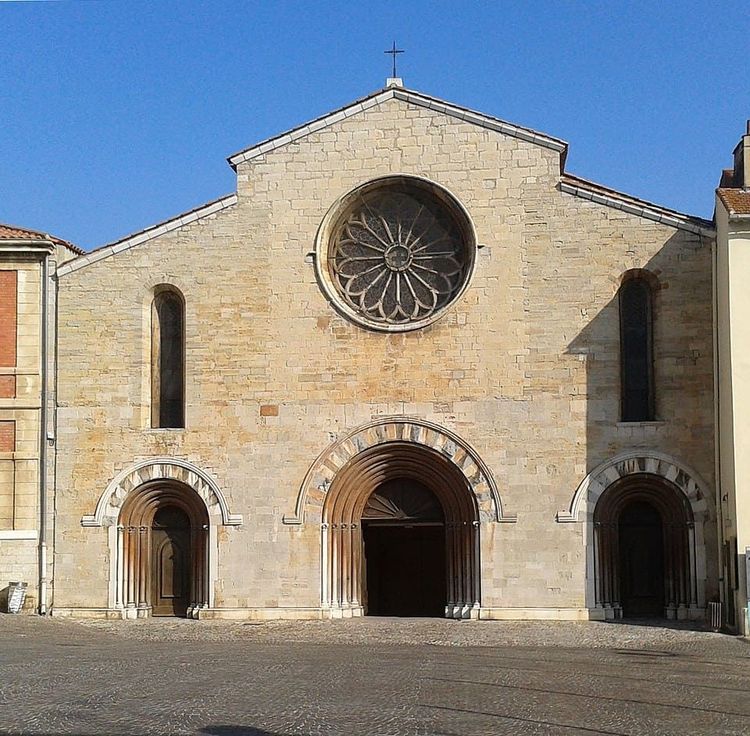
Built in the 13th century for the Franciscans who had just settled in Provence, this church pairs a Gothic nave with two Romanesque side aisles. It honours Saint Louis, a 13th-century guest of the town, and keeps a stone altarpiece, a marble Virgin carved by a Florentine workshop, plus a centuries-old crucifix and a 19th-century organ. It borders Place de la République, once Place Royale, then Place Napoléon, where period buildings and the courthouse close the loop, just steps from Place Georges-Clémenceau.
Free entry
What to do in Hyères in 2 or 3 days?
This 4km audio-guided loop takes about 1h40 and links 18 stops, from Place Georges-Clémenceau up to Saint-Bernard park. With two or three days to spare, Hyères extends onto the Giens peninsula and across to the Golden Isles.
The next day, head for the Giens peninsula, less than 20 minutes by car, past the Pesquiers salt pans and their pink flamingos, then along the tombolo, the double sandbar that links the peninsula to the mainland. Once there, Almanarre beach stretches nearly 4km of sand into the wind, and the village of Giens, perched on its former island, offers a shaded break under the plane trees. Our itinerary for a weekend in Hyères covers this outing.
The third day suits a crossing to Porquerolles from the port of La Tour Fondue: a car-free village, vineyards producing AOC Côtes de Provence wines, and Notre-Dame beach, the island's largest. Our guide to visiting Hyères without a car explains the boat crossings to the island.
Which neighbourhoods does the tour cross?
The loop links the newer town, the medieval old Hyères and the garden-planted heights in a single circuit, three quite different faces of the same town.
It starts at Place Georges-Clémenceau, passes through Massillon Gate and follows Avenue Joseph-Clotis with its palm trees, up to Place du Portalet, the border with the old centre, and Rue des Porches (stops 1 to 6).
The medieval heart then opens up around the Templars' Tower, between the Saint-Paul and Princes gates and the collegiate church towering over the tiled roofs, up to a viewpoint over the lanes below (stops 7 to 11).
The final stretch heads for the heights: the Castel and Sainte-Claire park, then Rue Saint-Pierre, which leads up to the castle ruins. The way back down passes Saint-Bernard park and the Porte de Barruc to reach Saint-Louis church on Place de la République (stops 12 to 18).
How much does it cost to visit Hyères?
None of the 18 stops on the route requires a ticket: most can be visited freely, and two, Park Hôtel and Castel Sainte-Claire, are admired from the street.
To go further, the Provence Med City Card gives access to 14 tourist sites, guided tours and unlimited bus and boat-bus transport: €29 for a day, €49 for 48 hours, or €59 over 3 days usable within 7.
Parking costs something too: on-street short-stay spaces are capped at 2 hours and paid through a meter or the Flowbird app. Our guide to visiting Hyères without a car covers the alternatives on foot, by bike and by boat.
Information checked in November 2026 and subject to change.
Where to stop for a bite along the tour?
On Tuesday, Thursday and Saturday mornings, Place Massillon (stop 7), at the foot of the Templars' Tower, hosts a Provençal market whose stalls spill over under the arcades.
Stalls sell fougasse, tapenade and candied fruit, a local treat dating back to the 16th century; confectioners in the centre keep up the tradition with crystallised melon, fig or clementine to nibble on the go. In summer, a night market joins in after dark, with local olive oil and nougat.
What to do in Hyères with children?
With its car-free lanes and old fortified gates, the medieval centre of Hyères is easy to explore with children.
Place Massillon (stop 7), with its fountain and shaded terraces, makes a good meeting point. Beyond the route, the Giens peninsula has a tombolo where kids can run from one sea to the other in 5 minutes, and car-free Porquerolles offers bikes suited to the youngest. More ideas await in our guide to visiting Hyères with family.
What should you know before visiting Hyères?
Two parks on the circuit close outside certain hours, with a fallback route if their gate is shut.
If Sainte-Claire park is closed on arrival, simply carry on along Rue Saint-Pierre to pick the route back up; if it's Saint-Bernard park that's shut, it's best to go down to Rue du Puits Saint-Pierre and then join Rue Barruc to find the gate of the same name. The ruined castle grounds also stay uneven: sturdy shoes help for this part of the circuit.
Hyères' Mediterranean climate stays mild in winter and hot in summer. The best time to explore the Giens peninsula and the Golden Isles runs from May to October, with June suited to swimming before the crowds and September offering softer light over the old quarters.
What to see around Hyères?
Beyond the circuit and the Giens peninsula, Hyères makes a good base for exploring the Var coast and the other Golden Isles.
About 1 hour by boat from Hyères harbour, the island of Port-Cros belongs, like Porquerolles, to the Port-Cros National Park, which has covered the Golden Isles since 1963. Further afield, the Embiez island, Mont Faron above Toulon's harbour and the hilltop villages of Le Castellet and La Cadière d'Azur all make good day trips.
Other walking routes thread along the coast: Toulon, 16km away, combines its old town, the Cours Lafayette market and Europe's finest natural harbour, while Saint-Tropez, 45km away, keeps an authentic side behind its glamorous image, with its harbour, traditions and lively lanes.
What's on in Hyères right now?
As the year winds down, two exhibitions hold the cultural stage in Hyères.
At Villa Noailles, above Saint-Bernard park (stop 16), the exhibitions of the 41st International Fashion, Photography and Accessories Festival showcase young designers until 28 February 2027. At the Saint-John Perse media library, the exhibition devoted to François Boucq and the art of realism remains on view through 5 December.
Information checked in November 2026 and subject to change.
Le plein d'inspirations
Explorez le monde en totale liberté, à pied au cœur des villes ou au fil des routes. Nos guides audios transforment chaque destination en une découverte culturelle immersive et unique.
FAQ for visiting Hyères
When is the best time to visit Hyères?
The ideal time to visit Hyères runs from May to October, when the Mediterranean climate reveals all its splendour. Summer temperatures hover around 29°C, perfect for enjoying the beaches and the islands. June remains particularly pleasant for swimming before the tourist crowds arrive, while September will win you over with its still-warm waters and golden light that enhances the old medieval quarters. Winter stays very mild, with temperatures ranging between 6°C and 15°C, letting you comfortably explore the town and its botanical gardens. Spring also offers an enchanting spectacle with the blooming of the exotic gardens and the scents of jasmine that fill the lanes.
How many days do you need to visit Hyères?
Two to three days is the ideal length to fully appreciate Hyères and its wonders. A first day will let you explore the historic centre, climb up to the old castle and wander through the exotic gardens. Devote a full day to discovering one of the Golden Islands, Porquerolles or Port-Cros, true Mediterranean jewels. If you have a third day, explore the Giens peninsula with its wild beaches and spectacular viewpoints, or set off to discover the Belle Époque villas and the botanical parks. This length gives you time to savour the unique atmosphere of the city of palm trees without rushing.
How do you get around Hyères and its surroundings?
The historic centre of Hyères is best explored on foot to appreciate the charm of the medieval lanes and the atmosphere of the shaded squares. A network of city buses efficiently serves the various neighbourhoods and links the town centre to the beaches. To reach the Giens peninsula, a car remains practical, but the summer shuttles are an alternative. Departures to the islands leave from the port of La Tour Fondue for Porquerolles and from the port of Hyères for Port-Cros and Le Levant. Bike rental is an excellent option for exploring the coastal cycle paths and discovering the surroundings at your own pace. Taxis and ride-hailing services complete the transport offer for your occasional journeys.
What are the absolute must-sees in Hyères?
Hyères is brimming with treasures that deserve your attention. The perched old castle offers breathtaking panoramas over the Golden Islands and the Mediterranean coast. The medieval lanes of the historic centre carry you back in time with their vaulted passages and flower-filled squares. The exotic gardens, notably the Olbius-Riquier park, unveil lush vegetation from the four corners of the world. The Belle Époque villas bear witness to the town's aristocratic past, while the Villa Noailles embodies architectural avant-garde. The Ryo audioguide accompanies you on this discovery with a narrated tour that reveals the secrets and history of each iconic site, enriching your visit with fascinating anecdotes.
How do you visit the islands of Porquerolles and Port-Cros from Hyères?
Crossings to the Golden Islands are easy to arrange from Hyères. For Porquerolles, shuttles depart regularly from the port of La Tour Fondue, located at the tip of the Giens peninsula. The crossing usually takes around twenty minutes. For Port-Cros, departures leave from the port of Hyères with a crossing of about an hour. The shipping companies offer connections all year round, with increased frequencies in the summer season. It is advisable to set off early in the morning to make the most of your island day and avoid the crowds. Pack sturdy shoes to explore the coastal trails and don't forget your swimming gear to enjoy the crystal-clear waters.
Where are the most beautiful beaches around Hyères?
Hyères offers you an exceptional array of beaches for every taste. The Almanarre beach, popular with water sports enthusiasts, stretches over several kilometres with its fine sand and shallow waters. The wild coves of the Giens peninsula, reachable via the coastal path, reveal unspoilt gems with turquoise waters. The Bergerie beach and the Badine beach appeal to families thanks to their accessibility and amenities. On the islands, the beaches of Porquerolles such as Notre-Dame or Plage d'Argent rank among the most beautiful in France. Port-Cros offers more secluded coves, perfect for snorkelling enthusiasts in the crystal-clear waters of the national park.
Can you visit Hyères without a car?
Visiting Hyères without a car is entirely feasible and even recommended for the historic centre. The SNCF station connects you to the region's major cities, and from there city buses efficiently serve the various neighbourhoods. The medieval heart is discovered exclusively on foot, letting you fully appreciate the atmosphere of the lanes and gardens. To reach the beaches and the Giens peninsula, bus lines run regularly, with increased frequencies in summer. The sea shuttles to the islands leave from ports accessible by public transport. Electric bike rental is an excellent alternative for exploring the surroundings in complete freedom. The Ryo audioguide makes your walks easier with itineraries designed for an optimal discovery without a vehicle.
Is Hyères worth visiting?
Hyères often surprises visitors who only know it by name. Within a few kilometres the town brings together a medieval centre clinging to the Castéou hill, with its lanes, fortified gates and castle ruins, a nineteenth-century seaside resort planted with palm trees, a marina and a peninsula edged with salt pans where migrating birds stop over.
Add the Golden Islands offshore and a twentieth-century heritage that draws lovers of architecture. This variety lets you alternate culture, walking and beach time without spending the day in the car, including out of season, when the climate stays mild and the sites are far quieter. The Ryo audio guide offers a dedicated Hyères route linking the old town and its viewpoints.
What is the Villa Noailles and what can you see there?
Built from the 1920s onwards for Viscount Charles de Noailles and his wife Marie-Laure, this modernist villa is one of the first major commissions of the architect Robert Mallet-Stevens. Perched on the heights, it unfolds terraces, patios, an indoor pool and a cactus garden in a composition of white volumes designed for Mediterranean light. In its day the house welcomed avant-garde artists, filmmakers and writers.
Now an art centre, the villa hosts exhibitions devoted to fashion, design and photography, and stages festivals each year that draw an international audience. The visit extends naturally into the Saint-Bernard park just below, then up to the castle ruins, where the panorama takes in the bay, the salt pans and the islands.
What is there to do on the Giens peninsula?
Linked to the mainland by two narrow sand bars that enclose the former salt pans, the Giens peninsula sets a more built-up, sheltered eastern shore against a wild, wind-battered western one. The coastal path loops around it, alternating coves, pine woods and rocky headlands, with exposed stretches best tackled in decent shoes and in the cooler hours.
Almanarre beach, a long strip open to the bay, is a well-known windsurfing and kitesurfing spot: even if you do not sail yourself, the ballet of the sails is worth the detour at the end of the day. The salt pans attract flamingos and migrating birds depending on the season, and the Tour Fondue, at the tip, is the departure point for boats to Porquerolles.
Which hikes can you do around Hyères, from Giens to Mont Fenouillet?
On the Giens peninsula, the Pointe des Chevaliers circuit (7.6 km, 229 m of ascent) strings together coves and rocky headlands, but may close in summer because of fire risk. The eastern loop (9.3 km, about 2h15) is more sheltered from the mistral and is not subject to these closures.
From Hyères castle, an 8.4 km walk climbs Mont Fenouillet, at 291 metres, for a view over the Golden Isles and the Toulon harbour. The old salt marshes offer an easy 5.3 km stroll among pink flamingos, and the Fort de la Gavaresse can be reached from Le Pradet.
Distances and tips are gathered in our selection of the best hikes around Hyères.
Which activities can you combine in Hyères, from the old town to the Olbia site?
Start with the old town, from the Porte Massillon to the Templars' tower and the Collégiale Saint-Paul, then climb to the castle, at 210 metres, for a view of the Golden Isles. The Villa Noailles, a cubist villa by Robert Mallet-Stevens where Man Ray shot a film in 1929, hosts exhibitions, with free access to the permanent displays.
The Olbia site, discovered by chance in 1913, reveals a Greek city founded in the 4th century BC. Finally, Porquerolles, 83% of which is national park and closed to cars, is reached by boat from La Tour Fondue.
All 18 ideas are detailed in our guide to things to do in Hyères.
How do you plan a weekend in Hyères?
Start day one around 9am on Place Massillon, whose Provençal market runs on Tuesday, Thursday and Saturday mornings, then climb past the Collégiale Saint-Paul and the terraced Parc Saint-Bernard to the Villa Noailles, Robert Mallet-Stevens's modernist villa.
The afternoon belongs to the Giens peninsula: the flamingos of the Salins des Pesquiers, the double tombolo and Almanarre beach, a renowned windsurfing and kitesurfing spot. From June to September, the Ayguade night market livens up the evening. On day two, catch an early boat from La Tour Fondue to car-free Porquerolles.
Follow the full programme in our two-day weekend itinerary for Hyères.
What can you do in Hyères as a family with children?
Old Hyères is explored on foot, free of cars, and its fortified gates such as the Porte Massillon make a fun spotting game. The Villa Noailles offers trails designed for younger visitors, while the Parcours des Arts turns around ten artworks scattered through the streets into a treasure hunt. The castle is about twenty minutes uphill, with benches for breaks, but avoid it between 1pm and 4pm in summer.
On the Almanarre tombolo, the eastern side has calm, shallow water, safer than the windswept western side.
Itinerary and budget are in our family guide to Hyères.
How do you get to Hyères by train, bus or plane?
Hyères station, the end of the line, is about twenty minutes from Toulon, which remains the high-speed train hub for Paris, Lyon or Marseille. Toulon-Hyères airport, a few kilometres from the centre, is served by a Mistral network bus line.
Once there, Mistral buses link the station, the centre, the beaches and the Giens peninsula as far as La Tour Fondue, where TLV-TVM shuttles leave for Porquerolles; boats to Port-Cros and Le Levant depart from Hyères harbour. Zou! coaches serve neighbouring towns, and bikes can be hired for the Route du Sel.
Every route is covered in our guide to visiting Hyères without a car.
Vos commentaires, idées et suggestions
Aucun avis pour le moment