© Shutterstock
 Votre guide Ryo
Visiting Hyères with Family in 2026: Old Town, Giens, Porquerolles, and Practical Tips
In Hyères, kids rarely ask to head home before dark. Blame the pedestrian lanes of the old town, the palm trees planted since the 19th century, and that light that lingers late over the sea well into September. To visit Hyères with family, all you often need is a backpack, a good pair of shoes, and a one-way ticket to the island of Porquerolles. The Ryo audio-guided tour of Hyères helps you build your itinerary without spending hours comparing guidebooks.
A natural tombolo where children can run from one sea to the other in five minutes. An exotic garden in the heart of town, home to monkeys and flamingos. A car-free island twenty minutes away by boat, with bikes adapted for toddlers. A ruined château perched above the rooftops, salt marshes teeming with migratory birds, an escape room for mistral days. This guide covers each of these experiences with the information that prevents unpleasant surprises: boat logistics, stroller accessibility, realistic on-site budget. You will also find a ready-to-copy four-day itinerary, adjustable to your children's ages.
Old Hyères and Its Heritage at Children's Eye Level
Before rushing to the beaches, set aside a morning for the historic center. This is where children best understand why Hyères holds a special place on this stretch of the Côte d'Azur, caught between a medieval town and a 19th-century seaside resort.
The Old Town, Its Lanes, and Place Massillon
The old Hyères is best explored without a fixed plan: its cobbled lanes climb gently toward the château, shaded by ochre façades and vaulted passages that cut through the July heat. Children love this car-free maze, where every staircase hides a little square and where the medieval ramparts serve as a natural thread through the walk. Several fortified gates survive, including the Porte Massillon, easy to turn into a spotting game for younger visitors. This neighborhood corresponds to the route of the audio walking tour of Hyères, la Cité des Palmiers, a Ryo audio guide worth downloading before you leave, since mobile coverage is poor in some of the narrow lanes.
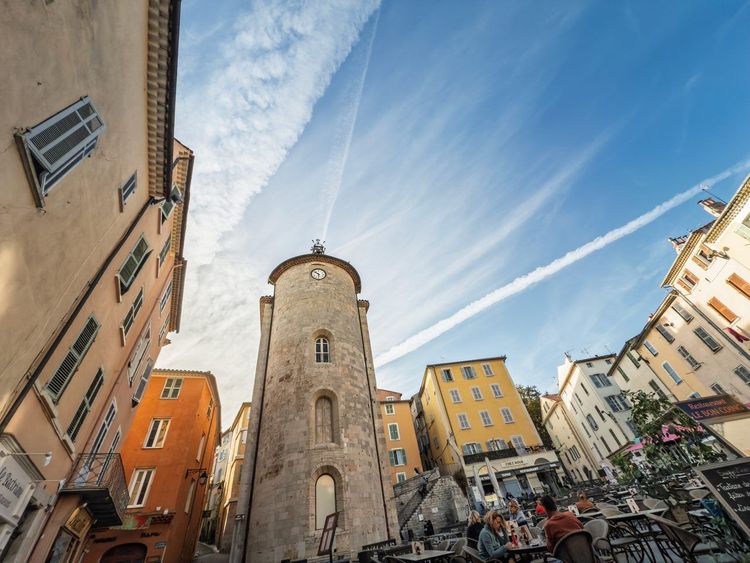
Place Massillon is the natural meeting point: shaded terraces, a fountain, and a daily morning market where children can pick their own fruit for the day's picnic. The Tour Saint-Blaise, a former Templar commandery, closes off one side of the square and regularly hosts exhibitions.
Allow a good hour to stroll through Hyères' lanes at a leisurely pace, stopping in front of the ceramic artists' shops set up in the old merchants' houses. The artisan ice cream parlor halfway along the route makes a welcome break for the shortest legs.
The Villa Noailles and the Parcours des Arts
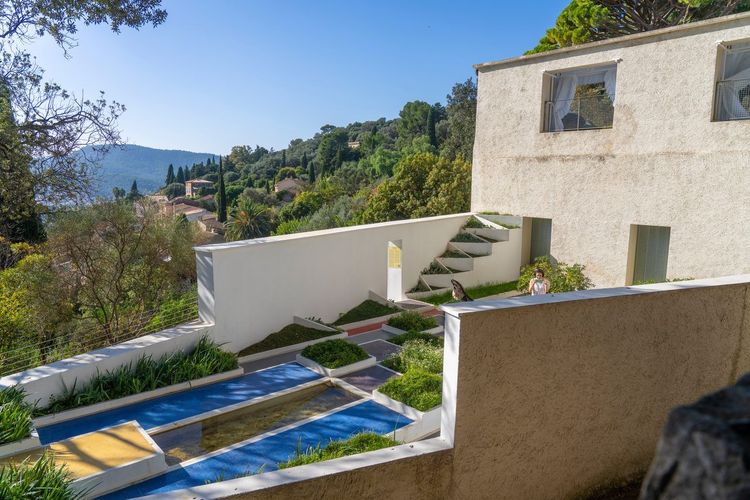
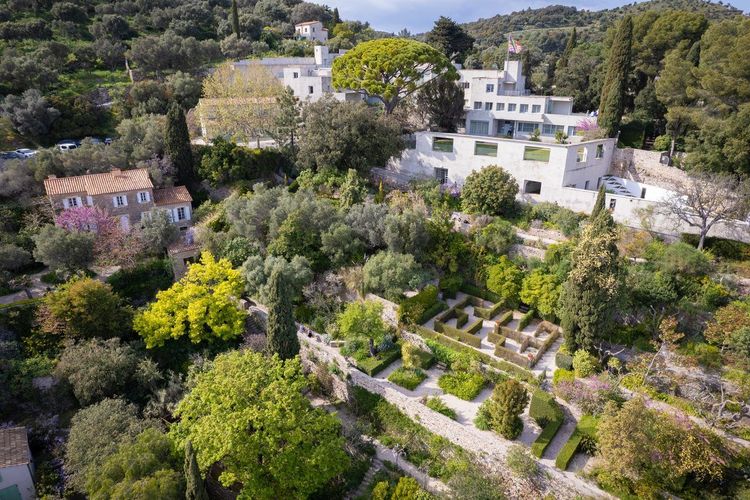
Perched on the hillside, the Villa Noailles (Montée Noailles, 83400 Hyères, rated 4.3/5 on Google based on 1,907 reviews) first surprises visitors with its modernist architecture, designed by Robert Mallet-Stevens in the 1920s for a couple of patrons passionate about modern art. Inside, the temporary exhibitions work very well with children thanks to routes designed to hold younger visitors' attention, featuring light installations and terraced gardens with views over the bay. Check opening days before heading up: the villa closes between exhibitions and its hours vary considerably by season.
On the way back down to the center, the Parcours des Arts extends the visit as a kind of treasure hunt: around ten contemporary works scattered through the streets, on façades or in small squares, which children can track down using a map available from the tourist office. It is a playful way to explore the arts trail without imposing a traditional cultural visit, with each work serving as an excuse for a snack break or a souvenir photo.
If your stay falls in summer, keep one evening free for the night markets and craft markets that liven up Place Massillon and the central alleys: handmade jewelry, local olive oil, nougat, and impromptu concerts. The artisans' stalls often double as demonstration workshops — pottery or glassblowing — in front of which children stand transfixed for a good ten minutes. It is often the moment when they rediscover, full of beach, the energy for one last stroll before bedtime.
The Château d'Hyères and the Panorama over the Bay
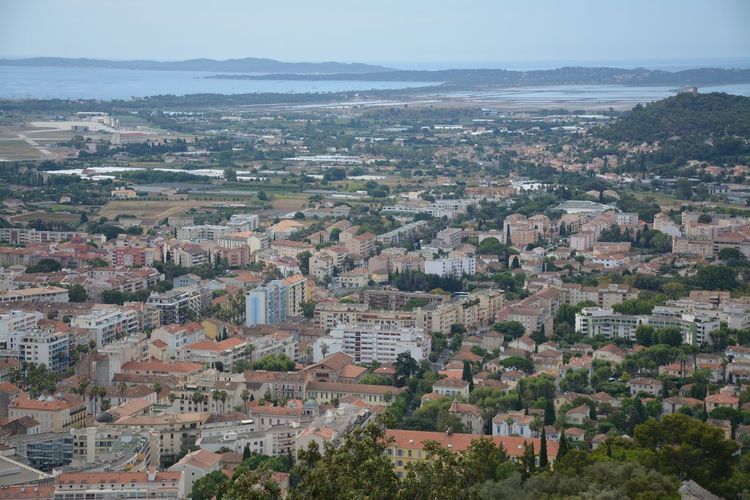
Above the old center, the ruins of the feudal château of the lords of Fos crown the Castéou hill. The climb from Place Massillon takes about twenty minutes through lanes and then a stony path, with enough landings and benches to let six-year-old legs catch their breath.
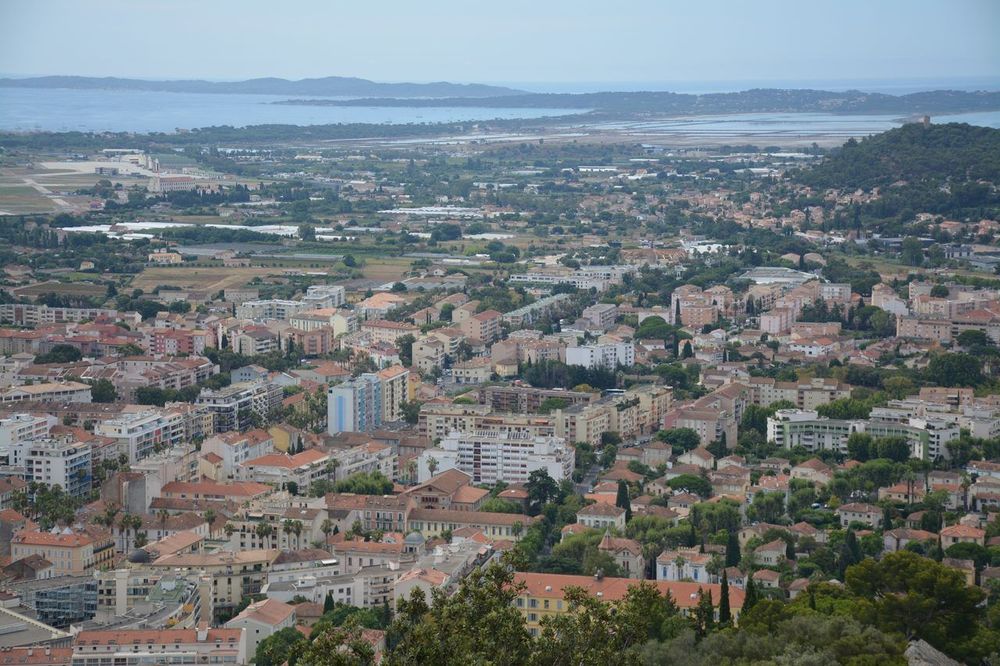
The ascent takes some effort, but it is short and the reward is spectacular: from the top, you take in at a single glance the bay, the Giens tombolo, the salt marshes, and, on a clear day, the outline of Porquerolles offshore. Children usually spot the planes landing at the airport before you have even reached for your camera.
On site, the ruins are free to explore: stretches of curtain wall, the base of the keep, cisterns, and postern gates all lend themselves perfectly to a supervised exploration game. Bring closed-toe shoes and water, and avoid the 1 pm–4 pm slot in summer, as shade is almost nonexistent. The Parc Saint-Bernard, just below, offers a shaded descent and a terraced garden planted with Mediterranean species, perfect for completing the loop without retracing your steps.
The Giens Peninsula: Beaches and Coastal Path with Children
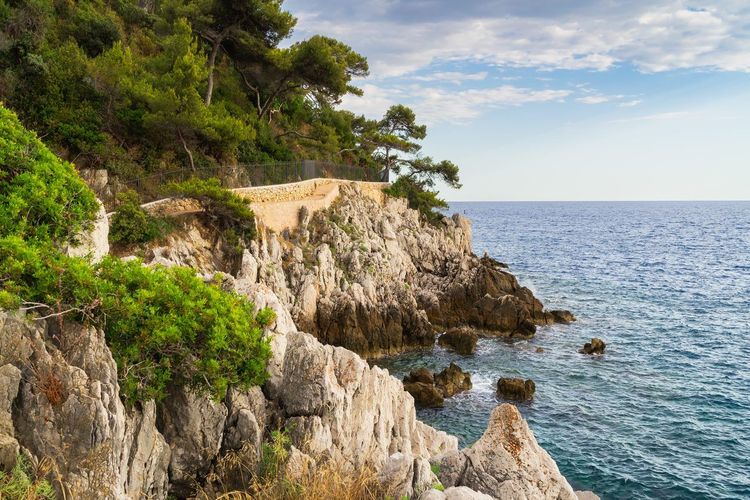
About ten minutes from the center, the Giens peninsula shifts to a completely different setting: dunes, umbrella pines, and a sea that changes color depending on the time of day.
The Almanarre Beach and the Tombolo
The Almanarre beach stretches for several kilometers of fine sand, bordered on one side by the open sea and on the other by the Pesquiers lagoons. It owes its fame to the tombolo, that double strip of sand linking Hyères to the Giens peninsula and separating two bodies of water with opposite characters: waves and wind on the west side, calm and shallow water on the east side, ideal for young children learning to swim.
Stroller access is possible as far as the main car park, but the fine sand then requires carrying younger children or bringing an all-terrain pushchair. Keep a close eye on children on the west side in windy conditions, as swells can build up quickly in the afternoon: the lagoon side, more sheltered, remains the safest choice for a relaxed swim. Our Ryo article dedicated to Hyères beaches details other spots in the area if the Almanarre is packed in the height of summer.
Water sports enthusiasts will also recognize this spot: it is one of the best places in the region to try kitesurfing and windsurfing, activities that some children can discover in supervised lessons from around age 10–12. The schools set up along the Route de l'Almanarre offer week-long courses in July and August, best booked well in advance.
The Coastal Path, an Easy Hike with Children
The coastal path (Presqu'île de Giens, 83400 Hyères, rated 4.8/5 on Google based on 134 reviews) follows the rocky shoreline of the peninsula for several kilometers, alternating between secluded coves and viewpoints over the Îles d'Or. Hiking the Giens peninsula coastal path requires neither special equipment nor training: the section between La Madrague and Pointe des Chevaliers, about 45 minutes there and back, is suitable for children aged 6–7 who can walk on their own.
Wear closed-toe shoes: the path passes in places over flat, slippery rocks near the water. Many walkers combine the hike with an impromptu swim in one of the small coves along the way, sheltered from the wind and far less crowded than the Almanarre in peak season. Our Ryo article on hikes in Hyères lists other coastal routes if this one has given you a taste for more. Relaxing on one of its exceptional beaches after the effort remains the best reward for tired legs.
The Pesquiers Salt Marshes and the Flamingos
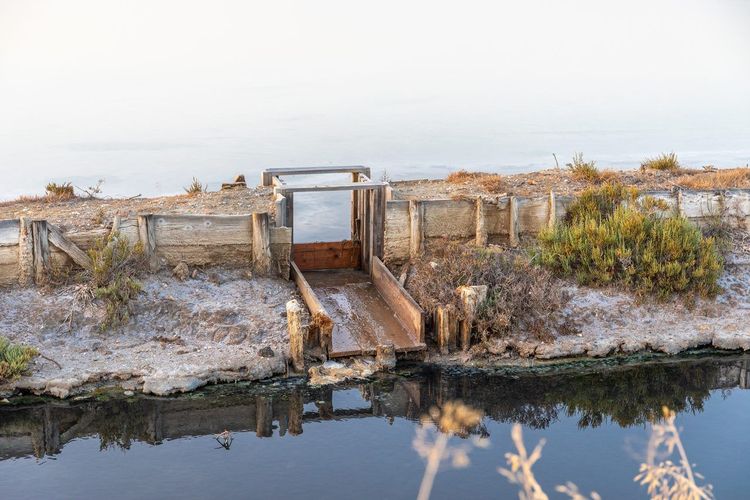
Wedged between the two arms of the tombolo, the Pesquiers salt marshes form one of the largest protected natural areas on the Var coastline. Former industrial saltworks converted into a nature reserve, these expanses of brackish water attract thousands of migratory birds each year, including a colony of flamingos visible for much of the year from the surrounding paths.
You don't need to be an ornithologist to spend a pleasant hour here: marked trails and observation points let you get close without causing disturbance, binoculars around your neck. Bring a pair for each child if you can — it's what turns a simple walk into a treasure hunt. Egrets, black-winged stilts, herons, and terns round out the scene depending on the season, with peak activity in spring and autumn.
Access to the heart of the salt marshes is partly by reservation, through guided visits led by the site's managers: check with the tourist office before heading out, as time slots are limited and very popular in summer. The surrounding paths can be explored freely on foot or by bike along the flat, traffic-free salt road, perfectly suited to small wheels.
A Day on the Island of Porquerolles
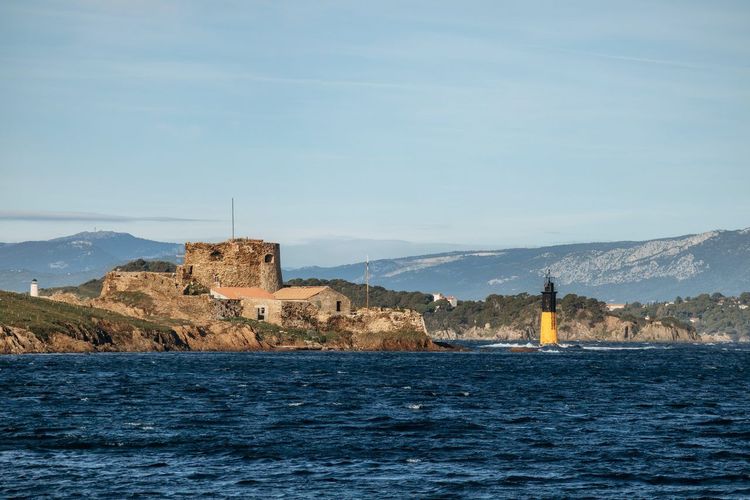
Among the three Îles d'Or, Porquerolles remains the most accessible and the easiest to enjoy in a full day with children.
The Boat Crossing and Notre-Dame Beach
The crossing to the island of Porquerolles takes about twenty minutes from Tour Fondue, at the tip of the Giens peninsula. In high season, it is best to book tickets several days in advance: departures often sell out by 10 am in July and August. The Tour Fondue car park fills up just as quickly, so allow a good half-hour's margin before boarding. Children particularly enjoy the upper deck of the boat, from which you can sometimes spot dolphins before even docking. Our Ryo guide to the island of Porquerolles details timetables by season.
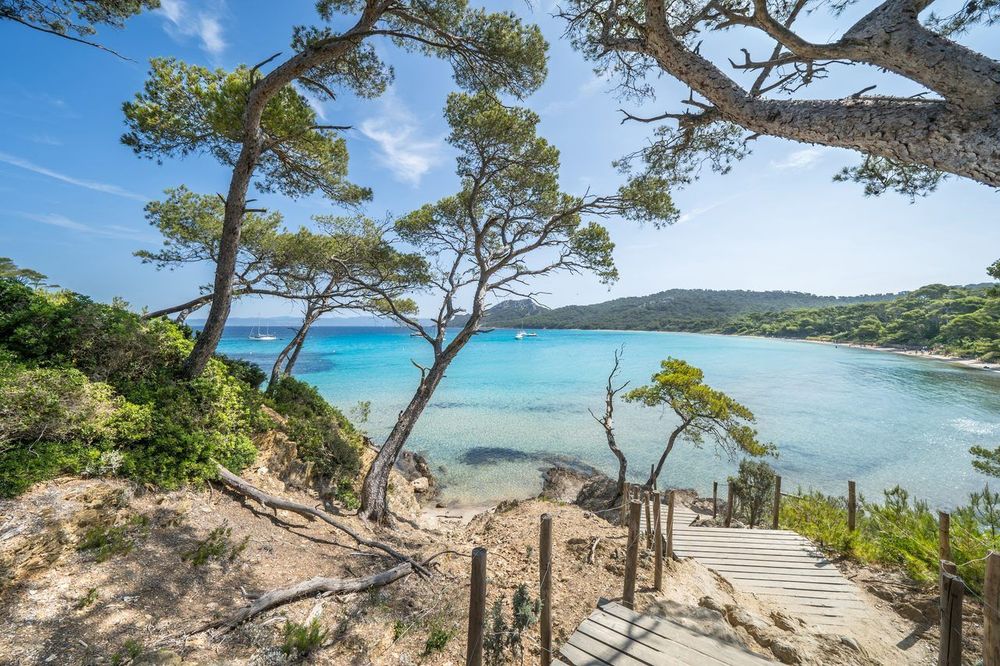
Once ashore, allow fifteen minutes of shaded walking under the pines to reach the village, then another ten minutes to Notre-Dame beach, often cited as the island's most beautiful with its turquoise waters and pale sand.
Shade is scarce in the middle of the day: a parasol or a beach tent is far from a superfluous luxury when it comes to protecting younger children.
Cycling, Fort Sainte-Agathe, and a Foodie Break
Spending a day on the island of Porquerolles almost always means cycling: no cars circulate there, and several rental shops in the village offer models for children from age 4–5, as well as trailers and seats for the youngest. Budget around fifteen to twenty euros per bike per day depending on the rental shop and the season, a cost to factor into the overall holiday calculation. The main paths are flat and wide, but some stony sections leading to the southern beaches require extra care with young cyclists.
By bike, Fort Sainte-Agathe (83400 Porquerolles, rated 4.4/5 on Google based on 984 reviews) has dominated the village since the 16th century and today houses a museum space dedicated to the Port-Cros National Park, with educational panels that appeal to children curious about marine wildlife. From the top of the tower, the view stretches across the entire bay and over the harbor.
What else can you do on the island of Porquerolles beyond the beach and cycling? A foodie break on the Place d'Armes, in the shade of the plane trees, is almost obligatory: artisan ice cream, tarte tropézienne, and small eateries serving the catch of the day. Prices climb quickly in season, but a picnic prepared on the Giens side before boarding remains the most economical option when you are a large group.
If time allows, the island of Port-Cros, a little further offshore, ideally rounds out the Îles d'Or experience: wilder, with no sandy beach but with a marked underwater trail where even children equipped with a mask can observe fish and posidonia from the surface. As the heart of the national park, the island enforces strict rules — no cycling, no smoking — and can only be explored on foot: it is better to visit with walkers aged 7–8 and above. The Ryo article on visiting Port-Cros explains how to organize the crossing from Hyères or from Porquerolles.
The Jardin Olbius Riquier, a Nature Break in the City Center
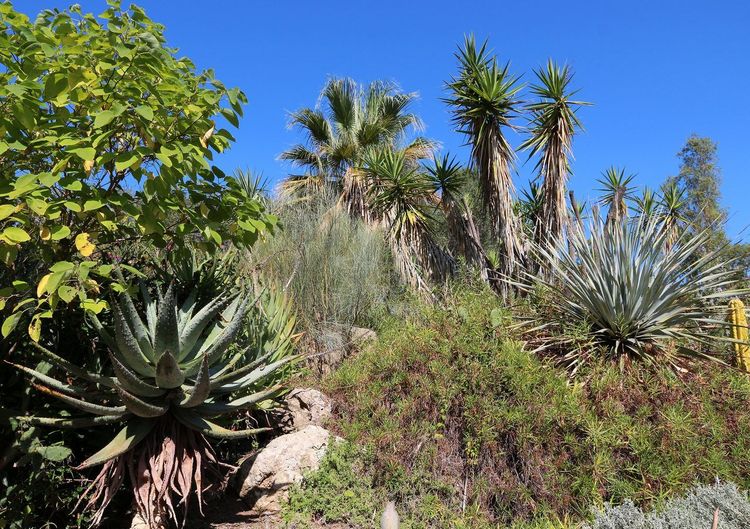
Right in the city center, the jardin Olbius Riquier (Avenue Ambroise Thomas, 83400 Hyères, rated 4.5/5 on Google based on 6,783 reviews) provides a particularly welcome shaded retreat on very hot days. This 19th-century exotic garden brings together century-old palm trees, bamboo, and tropical plants across nearly seven hectares, with ponds inhabited by tortoises and koi carp, and a large heated greenhouse at the center of the park.
What truly sets this park apart is its freely accessible mini-zoo: monkeys, flamingos, dwarf goats, wallabies, and exotic bird aviaries can all be observed without an entry ticket — a major plus for a budget already stretched by boat crossings. A shaded playground completes the picture, with structures suited to children aged 2 to 10, and a small train runs along the paths in the warmer months.
A stroll through the jardin Olbius Riquier works just as well late in the morning, before the heat sets in, as in the late afternoon for a quiet break after the beach. Allow an hour and a half for a full circuit with young children who will want to stop at every enclosure. Closing times vary by season, earlier in winter: check the sign at the entrance to avoid being caught out. It pairs nicely with the Hyères audio-guided tour afterward, for anyone keen to keep exploring the rest of town with commentary in hand.
Unusual Activities and Outings on Mistral Days around Hyères
None of the existing guides bring these options together in one place, yet they often save the day when strong winds or a little rain rolls in.
Escape Rooms and Tree Climbing for Little Adventurers
La Clé du Temps, an escape room in the center of Hyères, offers scenarios accessible from age 8–9, with puzzles graded to the participants' age. It is a great option for filling a rainy late afternoon without giving up on adventure, and time slots fill up quickly at weekends.
For outdoor activities, several treetop adventure courses and supervised jumping parks can be found a few kilometers away, in the wooded massifs around the town, with ground-level workshops for 4–6 year olds and more challenging zip lines for teenagers. The Magic World amusement park, near La Valette-du-Var about thirty minutes by car, rounds out the offer with its rides and covered attractions. Our Ryo Top 5 Activities in Hyères lists more ideas for varying the fun over several days.
The Pic des Fées Observatory and the Olbia Archaeological Site
On the Costebelle hill, the Pic des Fées observatory (Chemin du Pic des Fées, 83400 Hyères, rated 4.5/5 on Google based on 191 reviews) invites visitors to reach for the moon, literally: public stargazing evenings allow you to study lunar craters or Saturn's rings through a telescope, an experience that leaves a lasting impression on children curious about astronomy. Sessions depend on the weather and the schedule of the association that runs the site — check the programme before booking your evening.
At the other end of the spectrum, the Olbia archaeological site, on the Giens peninsula near the Almanarre, allows you to travel back in time to a Greek and then Roman city founded in the 4th century BCE. The site is enclosed and visited according to seasonal opening hours, with an entry ticket: check opening days and guided tour options, often the best format for children. The remains — baths, grid-pattern streets, and ramparts collapsed into the tall grass — can be explored in about an hour and largely speak for themselves thanks to straightforward information panels.
Day Trips: Bormes-les-Mimosas and Le Lavandou
If you have an extra day in the area, two villages on the Var coastline are worth a detour without straying too far from your Hyères base.
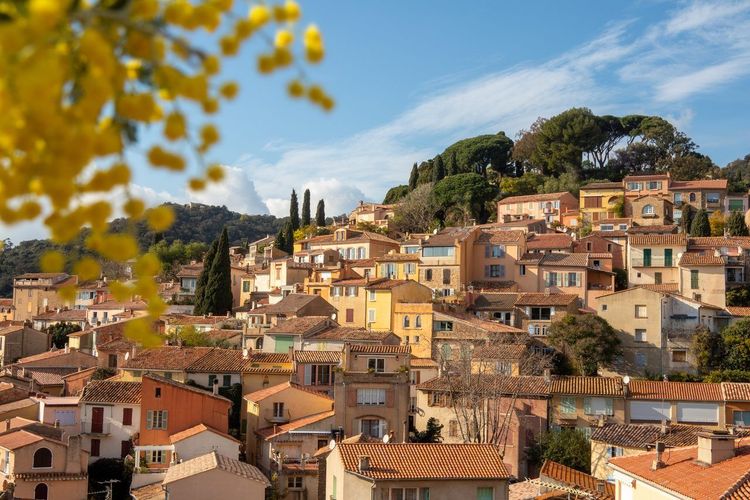
Bormes-les-Mimosas charms with its steep flower-lined old streets, its vaulted passages that locals call cuberts, and its typically Provençal hilltop village atmosphere. The château de Notre-Dame-de-Constance (Bormes-les-Mimosas, 83230 Bormes-les-Mimosas, rated 4.7/5 on Google based on 209 reviews), ruins towering above the village, is reached by a short but steep walk, rewarded by a panoramic view over the bay and the islands offshore.
Le Lavandou, about fifteen minutes by road, lines up twelve beaches along the same stretch of coastline, each with its own character: some equipped with children's play areas and lifeguarded in summer, others wilder and favored by those seeking peace and quiet. The harbor and its promenade round out the day nicely with an ice cream on a terrace before heading back toward Hyères. Between January and March, at the height of the mimosa bloom, the coastal road linking the two towns is worth the trip in itself.
A Ready-to-Use Four-Day Itinerary
Not sure how to organize your time? Here is the schedule that works best for families with children aged 4 to 12, consistently alternating an active morning with a quieter afternoon.
Day 1, the historic center. Morning in old Hyères, Place Massillon market, climb to the château before noon. Picnic in the Parc Saint-Bernard, then the Villa Noailles in the early afternoon and a leisurely descent to the jardin Olbius Riquier to finish at the playground. Evening at the night market if you are there in July or August.
Day 2, the Giens peninsula. Coastal path in the cool of the morning, between 9 am and 11 am, then the lagoon side of the tombolo for an afternoon swim. A detour past the edges of the salt marshes at the end of the day, at the hour when the flamingos draw closer, rounds off the programme nicely.
Day 3, Porquerolles. Catch one of the first boats from Tour Fondue, rent bikes on arrival, Notre-Dame beach in the morning, picnic in the shade, Fort Sainte-Agathe in the early afternoon, and return around 5 pm. Plan a light evening — this day tires everyone out.
Day 4, depending on the weather. Fine weather: day trip to Bormes-les-Mimosas and Le Lavandou. Mistral or rain: escape room, Magic World, and the Olbia site between showers. If you only have twenty-four hours, our Ryo guide to visiting Hyères in one day condenses the essentials.
Where to Stay and Practical Info for a Stay in Hyères
Once the broad outlines of the itinerary are in place, there remain the logistical questions that truly make a difference on the ground.
Campsites, Mobile Homes, and Child-Friendly Hotels
Accommodation in Hyères is mostly split between campsites, mobile home rentals, and city-center hotels. The campsites on the Giens peninsula and at the Almanarre are the most in-demand in summer, often featuring an integrated water park and supervised activities to keep children occupied while parents enjoy a moment of peace.
A mobile home remains the most economical choice when travelling as a group of five or six for a week, with a fitted kitchen and a private outdoor space. On the catering front, most campsites offer a snack bar and pizzeria on site, convenient on evenings when everyone is exhausted from the beach. To reach the campsite in peak season, it is best to book your arrival slot in advance: traffic builds up heavily on the road to Giens in July and August, with near-certain jams on Saturday mornings.
In the city center, several hotels offer interconnecting rooms or suites, an appealing option for a short stay combining the old town and boat excursions without depending on a car.
When to Go, How to Get There, and Budget to Expect
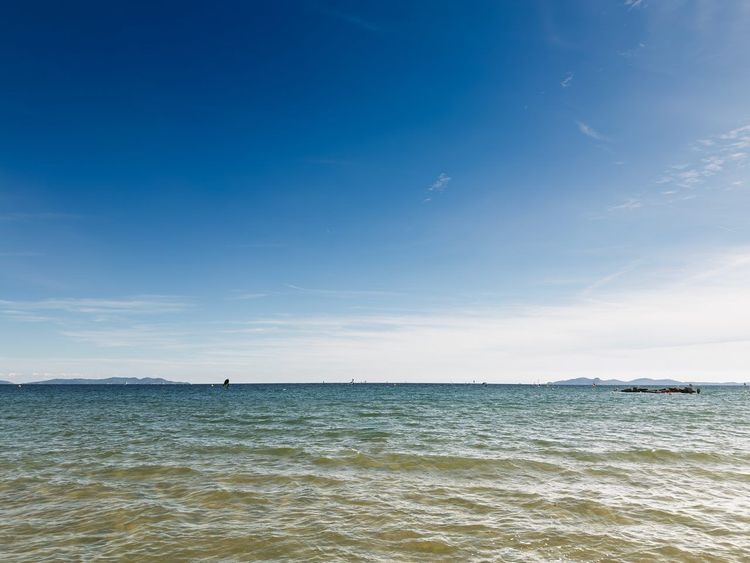
June and September remain the best windows for visiting Hyères with children: the sea is already warm, the beaches are less crowded, and accommodation prices are noticeably lower than in the height of summer. July and August guarantee reliable weather but require booking boats and lodging weeks in advance. From October to March, some tourist sites close or reduce their hours, but the historic center and the trails remain perfectly accessible.
Hyères has its own airport, about fifteen minutes from the center, with direct connections from several French cities in high season. By rail, the town has its own SNCF station, the terminus of a branch served from Toulon; main-line trains stop mostly at Toulon, about twenty minutes away by car and somewhat longer by bus. On the ground, a car makes it easier to travel back and forth to Giens and on day trips to Bormes or Le Lavandou, even though the historic center is entirely walkable. For a shorter format, our Ryo guide for a weekend in Hyères offers a condensed two-day itinerary.
On the budget front, four people can expect a wide range depending on the level of accommodation chosen: between 90 and 200 euros per day including lodging, simple meals, and one activity such as the Porquerolles crossing. Free days — the jardin Olbius Riquier, the château, and the beaches leading the way — help rebalance a bill stretched by boats or bike rentals.

FAQ
How many days should you plan to visit Hyères with family?
Four to five days allow you to comfortably cover the old town, the Giens peninsula, and a full day on Porquerolles without rushing. With only a weekend, it is better to choose between the historic center and the islands rather than trying to do everything.
What is the best time to visit Hyères with children?
June and September offer the best balance between pleasant weather, an already swimmable sea, and manageable crowds. July and August remain possible but require booking boats and accommodation well in advance.
How do you get from Hyères to the island of Porquerolles with children?
The boat departs from Tour Fondue, at the tip of the Giens peninsula, for a crossing of about twenty minutes. In high season, booking tickets several days in advance avoids finding yourself without a spot, especially on morning departures.
Where can you swim safely with young children in Hyères?
The lagoon side of the Almanarre tombolo offers calm, shallow water, ideal for young children. The small coves along the coastal path, sheltered from the wind, are a quieter alternative to the main beaches in high season.
Hyères or Saint-Tropez: which destination for a family holiday?
Hyères offers a significantly better value for money, with a pedestrian historic center, direct access to the Îles d'Or, and more free activities such as the jardin Olbius Riquier. Saint-Tropez appeals more for a festive getaway among adults.
What can you do in Hyères with children on rainy days?
The escape room La Clé du Temps, the Magic World amusement park nearby, and the Villa Noailles with its indoor exhibitions are all good options for filling a dreary day without leaving the area.
What budget should you plan for a stay in Hyères for four?
Budget between 90 and 200 euros per day for four people depending on the level of accommodation, including boat transport to the islands. Days centered on beaches, the château, and the jardin Olbius Riquier can significantly reduce the bill.
Hyères achieves that rare balance between urban heritage, preserved nature, and car-free islands, all within a few kilometers of each other. Whether you stay focused on old Hyères and the Almanarre or venture as far as Porquerolles and Bormes-les-Mimosas, each day naturally finds its own rhythm, between activity and relaxation. To plan your route neighborhood by neighborhood before you leave, the audio walking tour of Hyères is a great starting point, with its audio-guided tours designed for navigating without relying on a mobile network once on site.
À lire également