© Shutterstock
 Votre guide Ryo
Weekend in Hyères: Complete 2-Day Itinerary (2026)
On Friday evening, when the mistral dies down and the light grazes the long palm-lined avenues, Hyères regains an almost village-like calm before the weekend visitors arrive. Spending a weekend in Hyères means stringing together, in two days, the steep lanes of the old town, turquoise water on the Giens peninsula, and a fifteen-minute crossing to the Îles d'Or. To prepare this Hyères weekend without carrying a paper guide, the Ryo audio-guided tour of Hyères covers exactly this itinerary, from the historic centre to the Cité des Palmiers, with commentary that puts each monument in its context.
For this short format, a few key points are enough to organise the stay: the Collégiale Saint-Paul dates from the 12th century and is free to visit, the Salins des Pesquiers salt marshes are home to flamingos just a few minutes from the town centre, and the boat to Porquerolles from the Tour Fondue takes around fifteen to twenty minutes depending on the season. Add to that a summer night market along the seafront at l'Ayguade and an Art Deco villa perched on the hillside, and the programme for a weekend in Hyères fills up quickly without ever feeling overcrowded.
Day 1 Morning: The Old Town of Hyères and Its Medieval Lanes
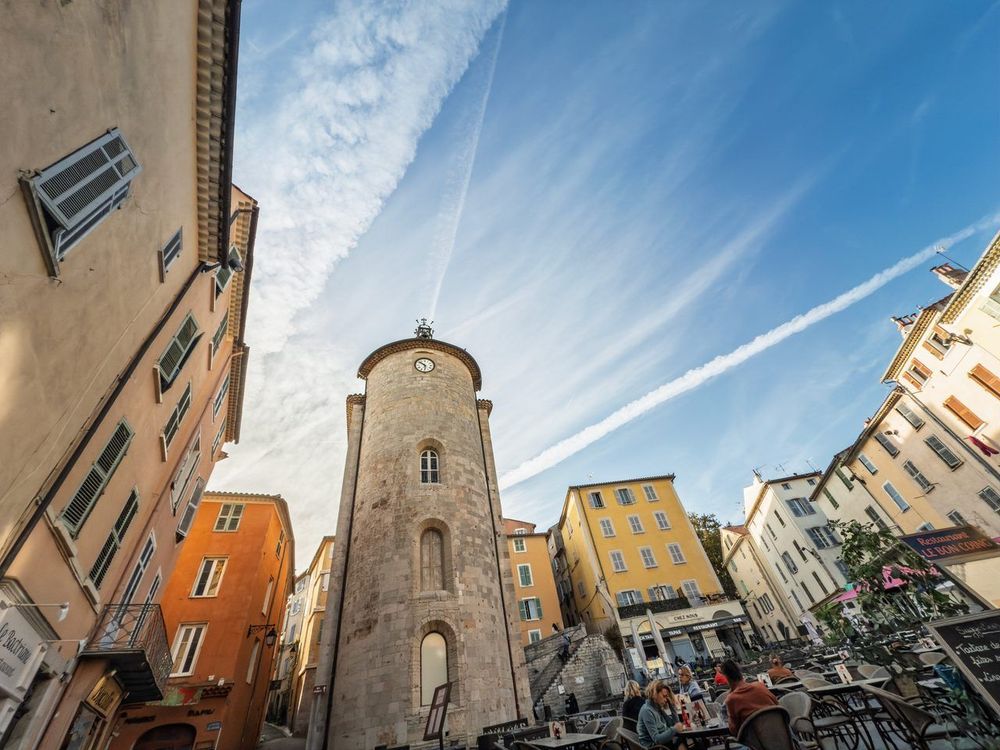
Start the day before the heat sets in, around 9 a.m., on Place Massillon. Lined with ochre façades and café terraces that are only just opening their shutters at that hour, it serves as the natural gateway to the old town. On Tuesday, Thursday, and Saturday mornings, a Provençal market sets up its stalls of olives, goat's cheese, and flowers, and it is not uncommon to find more locals than tourists, as the early hour filters out the hurried visitor.
Walking up the rue Rabaton, just a few minutes on foot are enough to reach the Collégiale Saint-Paul, a Romanesque and then Gothic edifice from the 12th century that dominates a double-flight stone staircase. Entry is free and the interior, cool even in the height of summer, houses votive offerings accumulated over generations of Hyères fishermen and sailors. Just behind it, the rue Sainte-Claire and its vaulted archways lead towards the remains of the medieval ramparts, still visible in places between two restored façades.
The climb then continues towards the Parc Saint-Bernard, a terraced garden laid out in the 1930s on the slopes of the old castle. Yuccas, agaves, and stone pines grow in successive tiers, and each level offers a slightly wider view over the terracotta rooftops and the Hyères bay. Allow a good half-hour to climb at a leisurely pace, stopping on the stone benches scattered along the route.
At the very top, the Villa Noailles (Montée de Noailles, 83400 Hyères, rated 4.3/5 on Google with 1,868 reviews) brings the morning to an unexpected close: a modernist building whose plans Robert Mallet-Stevens drew up as early as 1923, now a contemporary art centre and host to the Design Parade festival each summer. The interior can be visited through temporary exhibitions, and the cubist garden, with its triangular pool designed by Gabriel Guévrékian, remains one of regulars' favourite spots for photographs. To extend the visit with audio commentary on this historic neighbourhood, the audio-guided tour of the Cité des Palmiers details this same route between ramparts and hills.
If you are travelling by car, park in the Parc Saint-Bernard car park or in the spaces along the cours de la République: the old town itself is largely pedestrianised and the streets climb too steeply to manoeuvre comfortably.
Day 1 Afternoon: The Giens Peninsula and Its Beaches
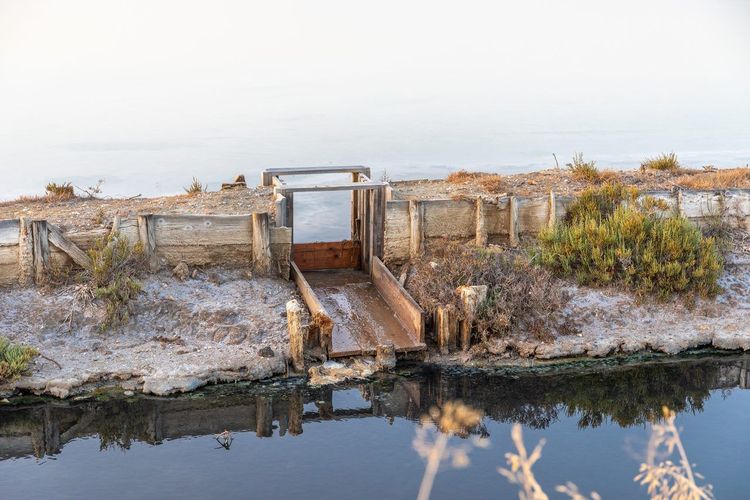
Head back down after a light lunch: the afternoon is spent on the Giens peninsula, about fifteen minutes from the town centre. The road leading there first runs alongside the Salins des Pesquiers, former salt marshes converted into a nature reserve since the 1990s. Flamingos stay there for much of the year, visible from the signposted trails without even getting out of the car for those in a hurry.
Past the salt marshes, the road crosses a double tombolo — two sand bars that connect the peninsula to the mainland while enclosing a former lagoon in between. This geological phenomenon, rare in the Mediterranean, merits a stop: you walk between two seas, one more sheltered than the other, along a strip of sand only a few hundred metres wide.
On the western side, the plage de l'Almanarre (Route de l'Almanarre, 83400 Hyères, rated 4.5/5 on Google with 3,556 reviews) stretches for nearly four kilometres of fine sand and remains one of the most renowned windsurfing and kitesurfing spots on the Var coast, thanks to a steady wind that blows almost every afternoon. At the northern end, the remains of Olbia, a Greek and then Roman trading post founded in the 4th century BC, can be visited freely at an open-air archaeological site.
Bring water and a hat: apart from a few seasonal beach shacks, natural shade is scarce along this stretch of coast, especially between June and August when the sand reflects the heat strongly.
In the late afternoon, push on to the village of Giens, perched on what was once a rocky island before the sand bars connected it to the mainland. Its narrow lanes and plane-tree-shaded square offer a cool pause before heading back down to the port of the Tour Fondue, the departure point for boats to the Îles d'Or the following morning.
Day 1 Evening: Night Market at l'Ayguade and Local Dining
In the evening, head to the Ayguade-Ceinturon neighbourhood on the eastern side of the commune. From June to September, a night market sets up along the seafront with crafts, children's games, and light food stalls, in an atmosphere distinctly more local than the historic centre.
For dinner, the restaurants around the marina focus on the catch of the day and produce from the bay, while the town centre leans more towards Provençal and Italian cuisine. If the evening leaves you a little free time before bed, our top 5 things to do in Hyères usefully rounds out this first-day programme with a few additional ideas depending on the season.
Day 2 Morning: Crossing to Porquerolles
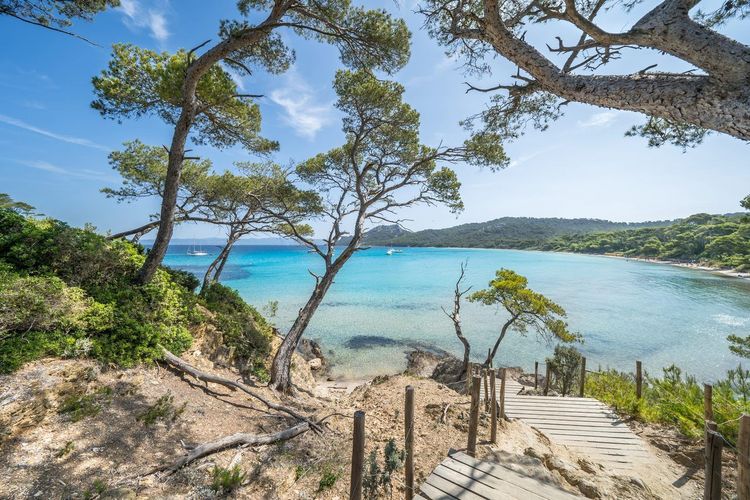
Set off early on the second day: the boats to Porquerolles departing from the port de la Tour Fondue fill up quickly in summer, and the first crossings, around 7:30 a.m. in high season, offer a calmer sea and softer light for photographs. The crossing takes fifteen to twenty minutes depending on the weather and the boat, and lands directly at the village harbour.
Porquerolles is best explored on foot or by bicycle: no private cars circulate there, apart from a few service vehicles. The village, built around a central square planted with plane trees and eucalyptus, is home to bicycle rental shops, restaurants, and the small church of Sainte-Anne, built in the 19th century for the military garrison then stationed on the island.
A ten-minute walk from the harbour, the Fort Sainte-Agathe (Île de Porquerolles, 83400 Hyères, rated 4.4/5 on Google with 972 reviews) has overlooked the bay since the 16th century and today houses an exhibition space dedicated to the Port-Cros National Park, which has encompassed all the Îles d'Or since 1963. The climb is short but warrants good footwear, as the path crosses a dense scrubland of pines and strawberry trees.
The interior of the island surprises with its wine estates: the vines spread across three large domaines (la Courtade, l'Île, and Perzinsky) produce wines classified AOC Côtes de Provence, a rare agricultural activity on such a small island. This vineyard runs alongside the path leading to the southern beaches, reachable by bicycle in about fifteen minutes from the village.
Allow a full morning for this trio of harbour, village, and fort before heading to the beaches, all located on the southern side of the island, fifteen to twenty minutes by bicycle from the centre.
Day 2 Afternoon: Plage Notre-Dame and Return to the Mainland
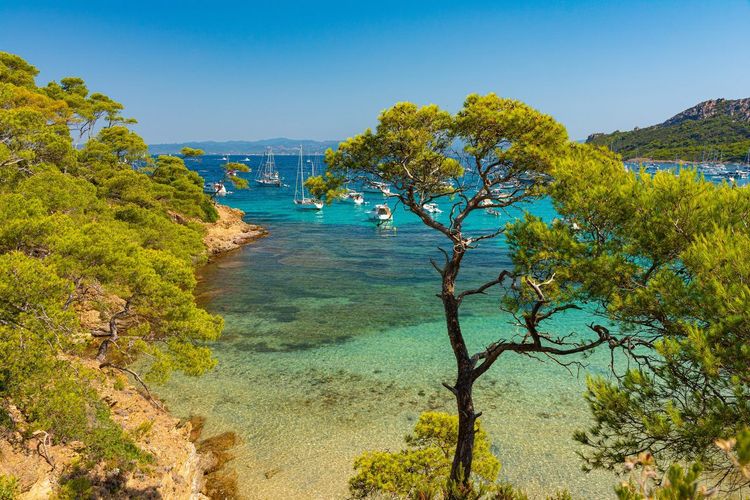
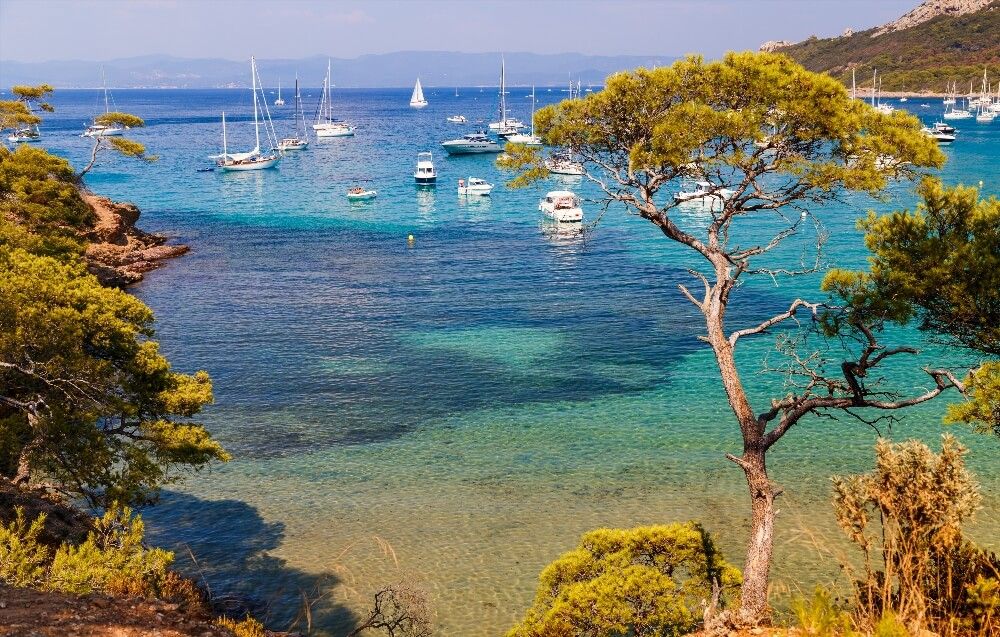
The plage Notre-Dame (Île de Porquerolles, 83400 Hyères, rated 4.6/5 on Google with 1,291 reviews), the largest beach on the island at nearly eight hundred metres of sand, is reached via a pine-shaded track that crosses the vineyard of the Domaine de la Courtade. The water takes on turquoise hues close to those of Corsican coves, and the crowds remain more manageable than at the plage d'Argent, which is closer to the village and therefore busier in the middle of the day.
Plan to catch the last boat in the mid- or late afternoon depending on the season: sailings become less frequent outside July and August. Our article on visiting the island of Porquerolles details the up-to-date timetables and a few alternative cycling loops if time is short.
Before boarding, a final detour to the plage d'Argent, closer to the village, allows for a quick swim without straying too far from the shops. Kayaks and paddleboards can be hired on site to explore the southern coastline at the end of the day, a different way to say goodbye to the island.
Where to Stay in Hyères
Three areas stand out for accommodation. The historic centre concentrates charming hotels in old buildings, convenient for exploring on foot but often without a pool or private parking. Expect to pay between 90 and 140 euros per night for a double room in high season in this area.
The Giens peninsula and the Almanarre area offer more holiday apartments and beachfront campsites, a comfortable option for families or couples who prioritise the beach over heritage. Prices there rise sharply in July and August, sometimes exceeding 180 euros per night for a fully equipped mobile home.
Staying overnight on Porquerolles is possible but limited: a handful of guesthouses and hotels are fully booked from spring onwards for the following summer, with prices considerably higher than on the mainland. Most visitors make the trip as a day return rather than spending the night, which is more than sufficient to explore the island's highlights.
Book at least a month in advance for a July or August weekend: the best addresses in the town centre and on the peninsula fill up quickly.
Where to Eat: The Best Local Spots

The covered market and the stalls on Place Massillon provide everything you need for a picnic: pan bagnat, socca, tapenade, and seasonal fruit bought directly from the producers. It is often the most economical and quickest option for lunch between two visits.
For a more relaxed dinner, the harbour area concentrates fish and seafood restaurants, with a bill that climbs quickly when the produce is fresh and local. The pedestrianised streets of the town centre, meanwhile, tend to offer classic Provençal cuisine: daube, petits farcis, and homemade rouille.
On Porquerolles, prices remain 20 to 30 % higher than on the mainland — island logic applies. Reserve if possible before the crossing, especially for a terrace lunch on the village square between noon and 2 p.m. Back in Hyères, Ryo's audio-guided tour is worth saving for lunch on dry land, between two boat crossings.
Getting Around Hyères and the Peninsula
Toulon-Hyères Airport, less than ten minutes from the town centre, remains the most direct gateway for a weekend from Paris or Lyon. The Hyères SNCF station is on a secondary line: it is often better to aim for Toulon station, about twenty minutes away by car or bus, if you are travelling by TGV.
On the ground, a car makes it easier to travel back and forth to the Giens peninsula and the Tour Fondue, but becomes unnecessary on Porquerolles, where it is prohibited for visitors. A local bus network serves the main beaches in summer, a useful alternative if you would rather not hunt for a parking space in the middle of the season.
If you prefer audio commentary to a paper map, the Ryo app works offline across the entire route, which comes in handy on Porquerolles where the mobile network can sometimes be unreliable.
Hikes and Nature Around Hyères
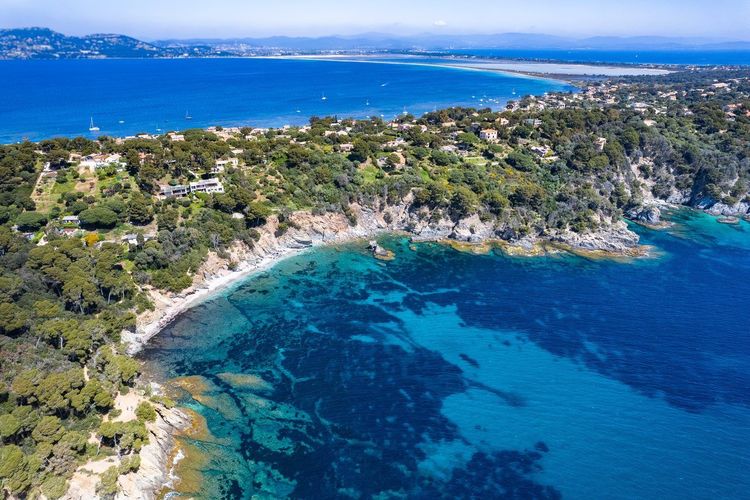
Beyond the beaches covered by the Ryo audio-guided tour, Hyères has several walking routes accessible without a car from the town centre. The coastal path running along the eastern side towards l'Ayguade and Ceinturon alternates between discreet coves and pine forests, along a generally flat route suitable for families.
The Salins des Pesquiers, already crossed by car on the first day, can also be explored on foot or by bicycle along maintained dykes, with panels explaining how the former salt works operated and which bird species can be spotted depending on the season, from flamingos to avocets.
On Porquerolles, the more demanding Sentier des Crêtes climbs towards the lighthouse and its wind-battered cliffs, offering a view that stretches as far as Corsica on a clear day. The return trip from the village takes around three hours on foot, and longer by bicycle given the final gradient, which is impractical in the saddle.
For other detailed itineraries with walking times and difficulty levels, our hikes around Hyères also cover the heights of the Maurettes massif, which are less frequented than the coastline.
Budget for a Weekend in Hyères
Budget around 150 to 200 euros per person for a full weekend including a mid-range hotel, varied meals, and a return crossing to Porquerolles, which costs approximately 24 euros per adult in high season. This budget rises noticeably in July and August, when hotels and rentals charge their highest rates, and drops considerably off-season, between April and June or in September.
When to Go: The Best Season
Between April and June, the light remains gentle, prices are reasonable, and the sea is already swimmable for the bravest from mid-May onwards. July and August guarantee water temperatures above 24 degrees but also maximum crowds on the beaches and in the streets of the old town.
September often extends the summer without the crowds, a good compromise for those who favour hiking and visiting Porquerolles without queuing for the boat.
Good to Know Before You Go
Bring plenty of water to Porquerolles: vendors are clustered around the village and become scarce once you head out onto the paths or southern beaches. Book the crossing online from spring onwards for a summer weekend, as morning slots are the first to go.
For a comprehensive overview of activities available depending on the weather and the season, our article on things to do on the island of Porquerolles remains a solid preparation resource before you leave.
FAQ
How much time do you need to visit Hyères over a weekend?
Two days are enough to cover the essentials: a morning for the old town and the Villa Noailles, an afternoon for the Giens peninsula, then a full day for Porquerolles. A third day would allow you to add the fort de Brégançon or the island of Port-Cros, but it remains optional.
Should you book the boat to Porquerolles in advance?
Strongly recommended in July and August, when morning crossings sell out several days before departure. Off-season, it is generally still possible to buy your ticket directly at the Tour Fondue ticket office on the morning itself.
Where should you park in Hyères for a weekend?
The Parc Saint-Bernard car park and the spaces around the cours de la République are the most convenient for the old town. For the Tour Fondue, a large paid car park borders the jetty and fills up by 9:30 a.m. in midsummer.
What is the best time for a weekend in Hyères?
April to June and September offer the best compromise between pleasant weather, moderate prices, and manageable crowds. July and August guarantee warmer water but require booking accommodation and crossings several weeks in advance.
Can you visit Porquerolles without a car?
Yes, and it is even recommended: no private cars circulate on the island. A bicycle, rented in the village upon arrival, or simply walking are more than enough to reach the beaches, the fort, and the trails in a single day.
What can you see in the old town of Hyères in a morning?
Place Massillon, the Collégiale Saint-Paul, the Parc Saint-Bernard, and the Villa Noailles form a coherent route of about two and a half hours of walking, including the uphill climb, not counting terrace breaks.
A weekend in Hyères fits neatly into this compact format: a morning of medieval and Art Deco heritage, an afternoon of beach and improbable geology on the Giens tombolo, then an island day in Porquerolles set to the rhythm of cycling and coves. Few destinations on the Var coastline allow you to string together so many different landscapes in just two days, without ever getting back in the car for more than about twenty minutes at a stretch.
To prepare each stage with on-site audio commentary, the audio-guided tour of Hyères covers the entire historic centre as far as the Cité des Palmiers, a useful complement to this itinerary for those who want to explore the history of each monument without carrying a paper guide.
À lire également