Créé par Romane, le 17 nov. 2026
Votre guide Ryo
Menton, France
The Pearl of France
Parcours audioguidé pour visiter Menton en 1 jour
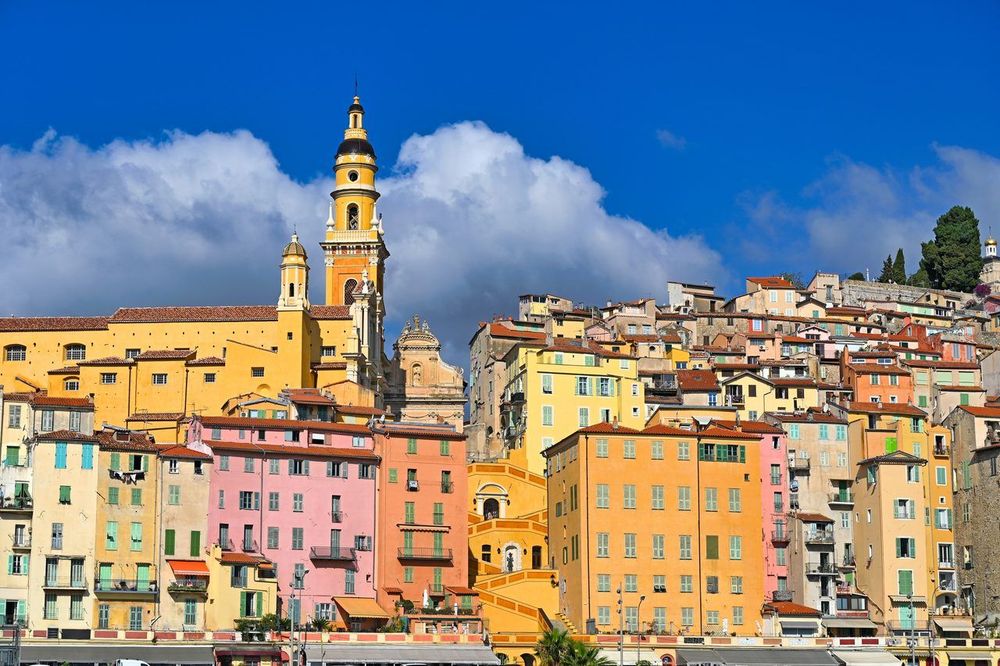
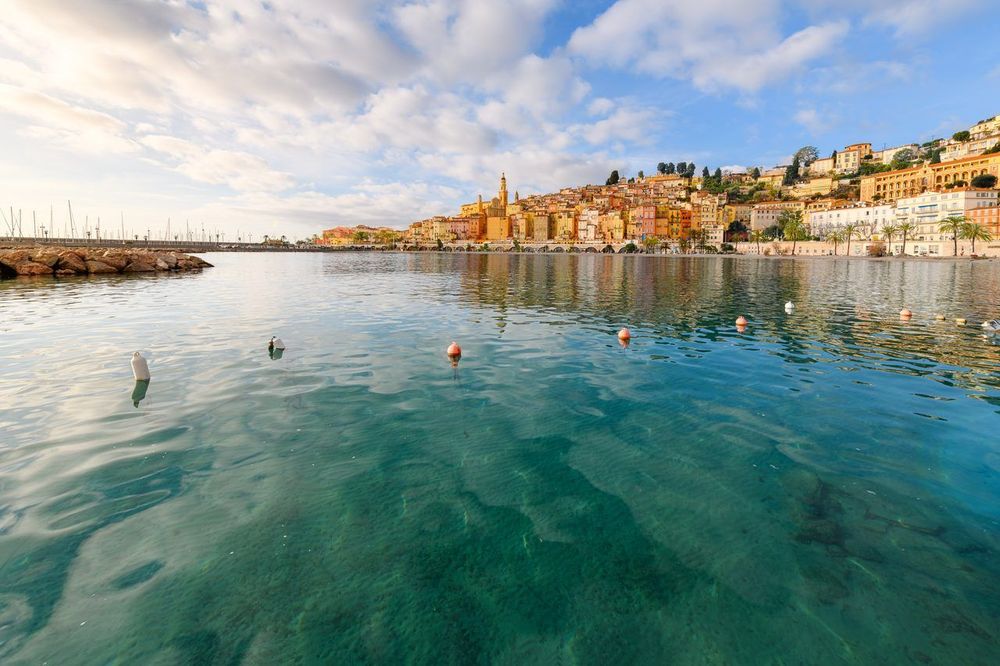
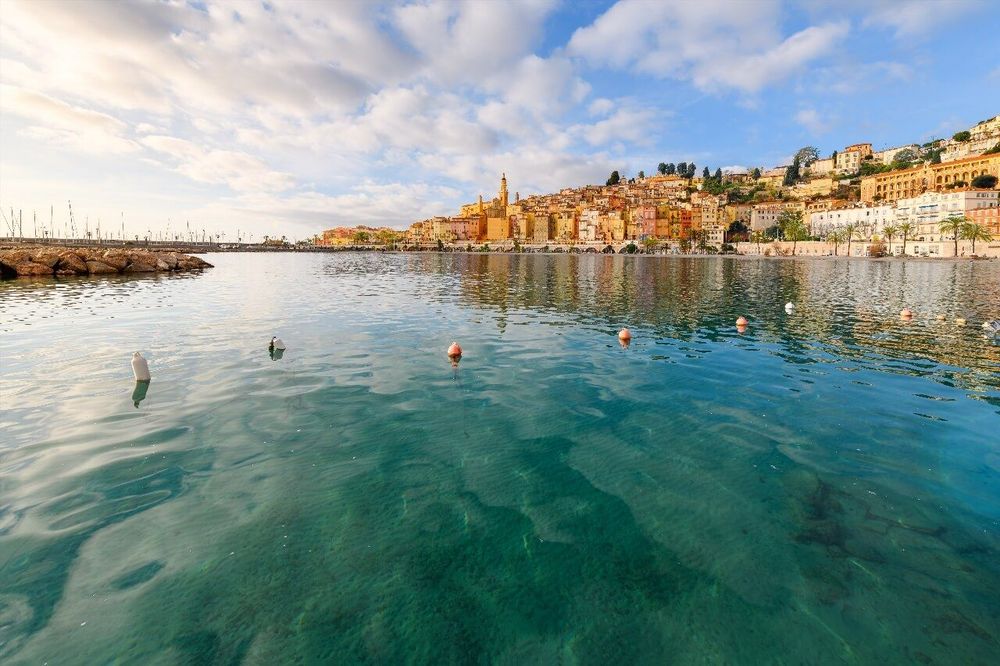
Set right on the Italian border, Menton reveals a radiant town between sea and mountains, where a soft, colorful atmosphere defines everyday life. Its old center, with its vibrant façades, reflects a rich past and a distinctly Mediterranean identity. As you wander through its streets, you settle into a relaxed rhythm shaped by sunshine, café terraces, and the gentle charm of the coastline.
Quand partir à Menton ?
Jan.
11°
5
Feb.
12°
4
March
14°
5
April
16°
6
May
19°
5
June
23°
3
July
26°
1
Aug.
27°
2
Sept.
24°
4
Oct.
21°
6
Nov.
16°
7
Dec.
13°
5
In Menton, the climate is distinctly Mediterranean and remarkably mild, with winters that stay comfortably between 10 and 16°C, and summers that are warm yet often softened by the sea, typically ranging from 26 to 32°C. The best times to visit are from April to June and again from September to October, when temperatures are especially pleasant, the sea is already—or still—ideal for swimming, and conditions are perfect for exploring the historic center, gardens, and coastline in a more relaxed atmosphere than during the height of summer.
Départ conseillé
No need to worry about where to begin! Our tours are designed as a loop, so you can jump in wherever you are. The navigation system and audioguide will automatically adjust to your location. However, if you happen to be nearby, we do have a preferred starting point: in the Jardins Biovès
Parking à proximité
Saint-Roch underground parking lot : 10 avenue Félix Faure
À savoir
The Jardins Biovès are the recommended starting point for the tour. Entry is free, but the gardens are only open during set hours. Don’t forget to check the opening times before you begin your visit. If the park is closed when you arrive, simply start your tour on Rue Pasteur and head towards the next point of interest.
Découvrez 23 lieux d'intérêt pour visiter Menton






What to see in Menton on your 2h tour?
This 4.3 km loop takes about two hours and links 22 sights. From the Biovès Gardens, it dives into the old town, past Rue Saint-Michel and the Basilica of Saint Michael the Archangel, before climbing to the Vieux Château Cemetery. It then drops down towards Garavan along the Promenade de la Mer, and returns past the Vieux-Port and the Market Hall. With the Ryo app in your ears, every colourful lane tells the story of the pearl of France.
Information checked in November 2026 and subject to change.
1 - Biovès Gardens
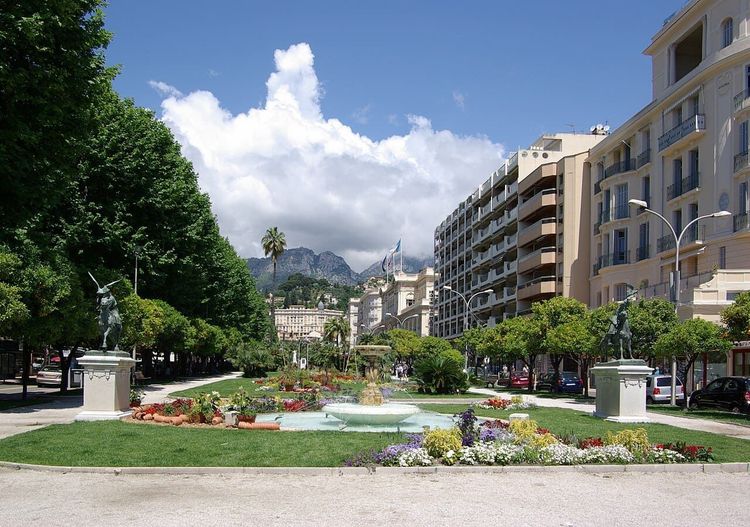
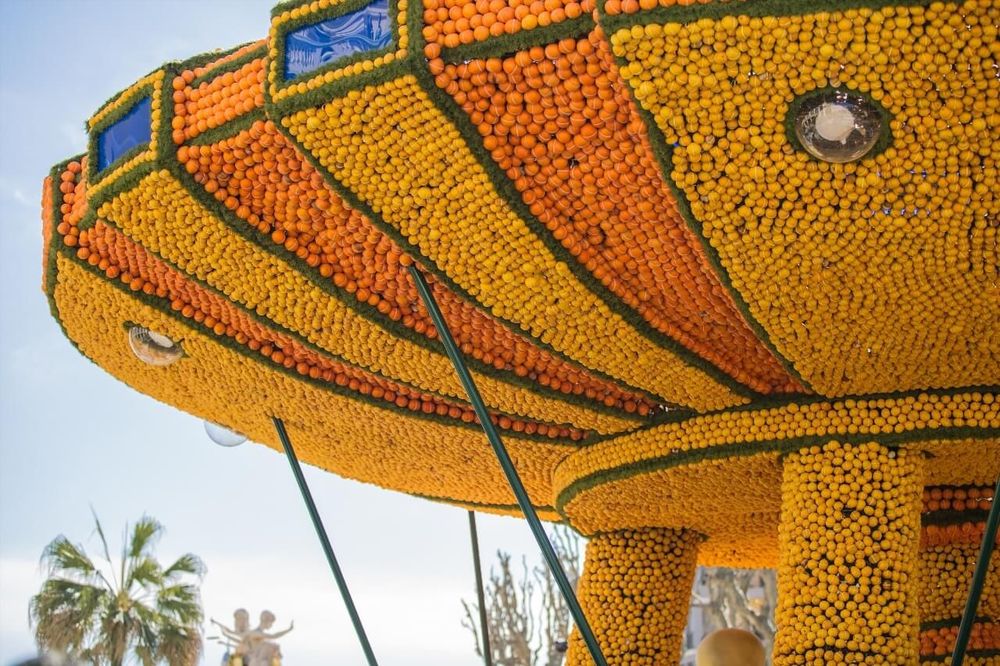
These gardens are named after Émile Biovès, who led the town around the time Menton became the lemon capital. They stretch through town between palm trees and flowerbeds. Lemons have grown here since the 15th century. Every February, more than 200,000 visitors flock to the Lemon Festival, when entire floats are covered in citrus fruit. The walk begins here, under the palms, before plunging into the lanes of the old town.
Free entry
2 - Palais de l’Europe
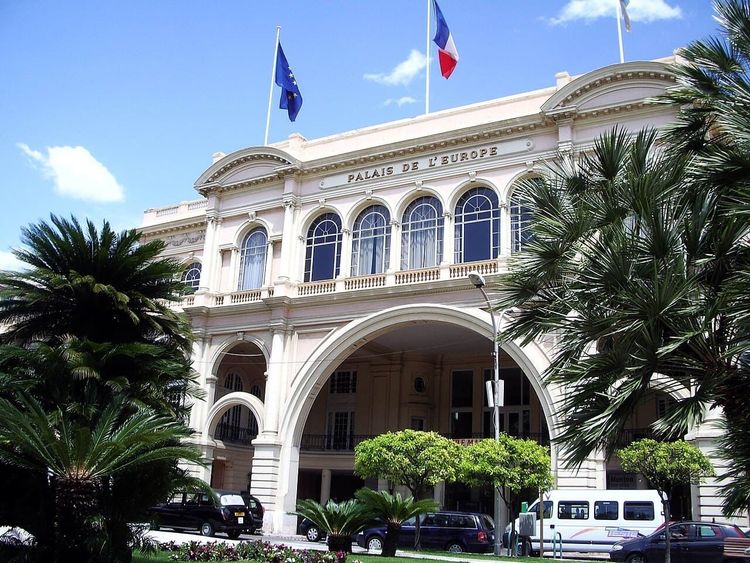
Built in 1908, this lavish building originally housed Menton's municipal casino before serving as a hospital during the war. Since converted into a congress centre and the city's largest theatre, it now hosts concerts, plays and ballet. Its arcaded, columned façade reflects the Belle Époque, the glittering era before 1914 when the whole Riviera filled with palaces for a wealthy clientele wintering in the sun.
3 - Grand Hôtel d’Orient
Built in 1874, this palace started out modest before being transformed in the 1920s into a vast building with an oriental-style decor. Wealthy visitors from across Europe would stay for months each winter, some redecorating their suite to their own taste. Since 1952 the former palace has been a residential building divided into flats, though its white façade and grand scale still recall the golden age when Menton rivalled the Riviera's grandest resorts.
Free to see from outside
4 - Town Hall
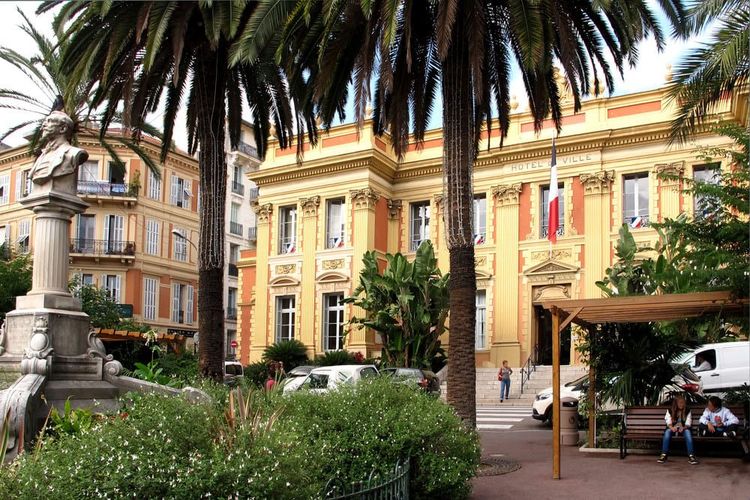
Designed by architect Victor Sabatier and completed in 1861, this building first housed an exclusive club for foreign visitors, lively with balls and concerts. It later became a theatre modelled on the Parisian Folies Bergères, then a casino, before the town bought it for its town hall. Inside, the Wedding Hall is entirely painted by Jean Cocteau in the late 1950s with frescoes of love and Mediterranean myth. The square outside honours Baron Ardoïno, who helped beautify Menton in the 19th century.
Free entry
5 - Rue Saint-Michel
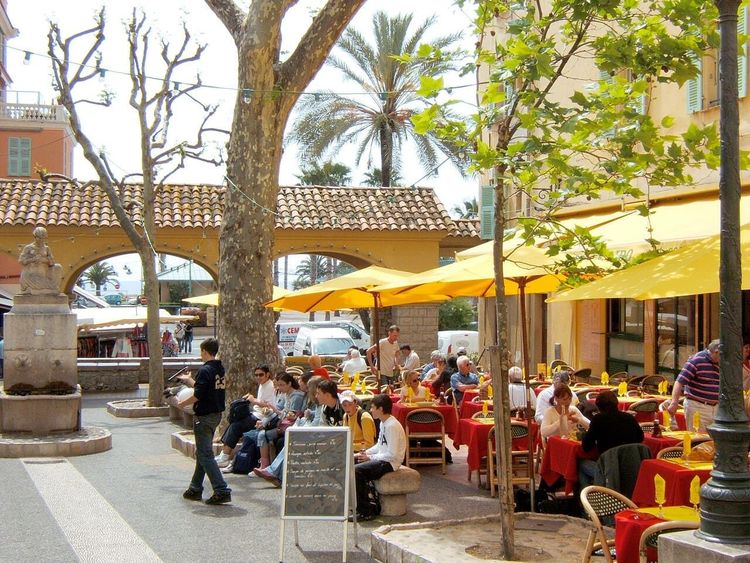
Shops, cafés and terraces line this pedestrian street, where you can taste jams and other treats made from the lemons that symbolise the town. Legend has it the fruit's origin lies with Eve, said to have planted a golden lemon here after leaving paradise. History records that citrus growing, once exported as far as North America at its peak, long sustained Menton before declining, then being revived by the Lemon Festival and a protected status granted in 2015.
Free entry
6 - Place aux Herbes
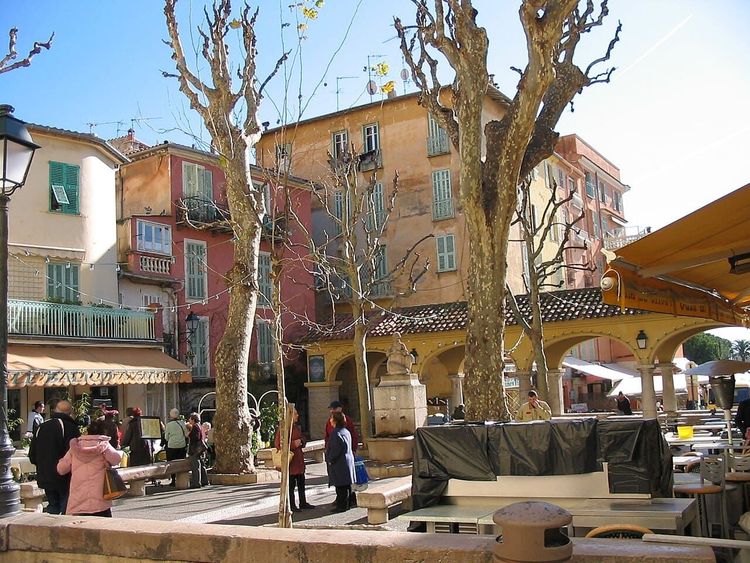
Under the plane trees of this square, once home to the medieval market, Menton reveals its oddity: a town with no known ancient archaeological trace, yet ruled for over five centuries by the Grimaldis of Monaco from 1346. In 1848 it declared itself a free town under Sardinian protection, before France annexed it in 1860. The railway's arrival in 1869 then drew European aristocrats, who shaped the town of palaces you walk through today.
Free entry
7 - Place du Cap fountain
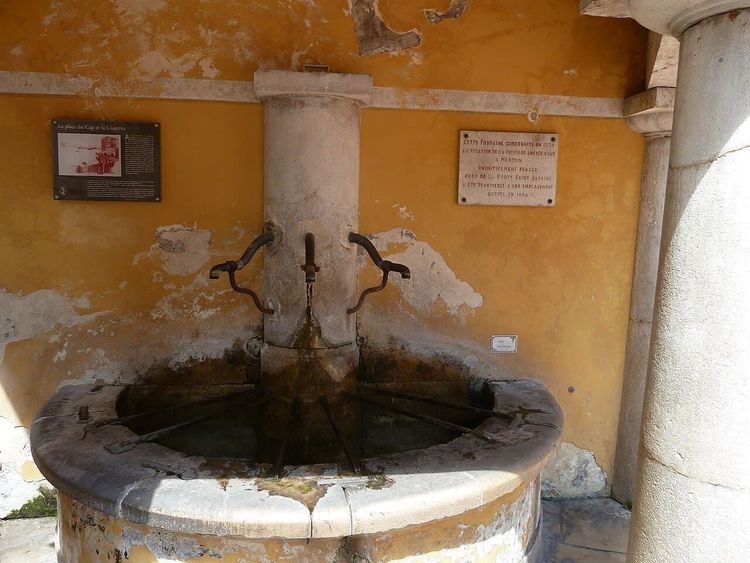
Dated 1779, this is Menton's oldest fountain, the one that first brought drinking water into the town. Originally set near a gateway now called Rue des Logettes, the old Saint-Antoine gate that once marked the town's entrance, it was moved here to stand out. Just behind opens Rue Longue, the old town's historic main street, which followed the route of a great Roman road running through the region.
Free entry
8 - Saint-Michel ramps
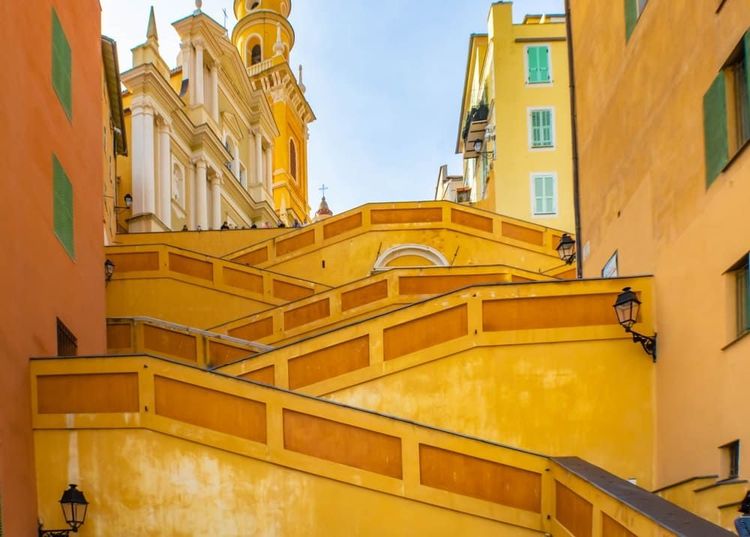
Built in 1753 to link Rue Longue to the sea, these yellow and orange ramps climb towards the basilica's forecourt. They face the Hôtel Pretti de Saint-Ambroise, a 17th-century baroque mansion that housed Alexandre Pretti, knighted in 1705 by Prince Antoine I of Monaco. Damaged by the 1887 earthquake and later restored, the building lost some of its original decor but remains a listed monument, a symbol of Menton's bygone aristocracy.
Free entry
9 - Basilica of Saint Michael the Archangel
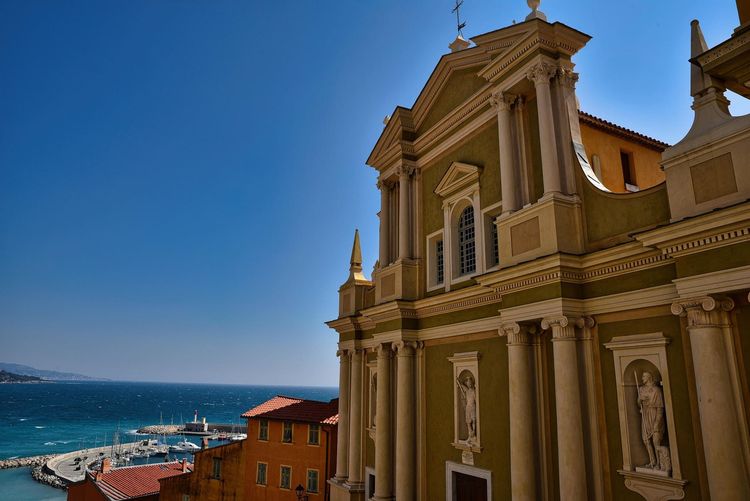
Built from 1639 but only raised to the rank of basilica in 1999 by John Paul II, this is the largest baroque church on the Riviera. Its eight-columned façade and bell tower, however, only date from the 19th century. Inside, a painted wooden statue shows the archangel trampling the devil, beside a 1666 organ. On the forecourt, over 250,000 pebbles form a mosaic bearing the arms of the Grimaldi dynasty, which once ruled the town.
Free entry
Everything about the Basilica of Saint Michael the Archangel
10 - Chapel of the Immaculate Conception
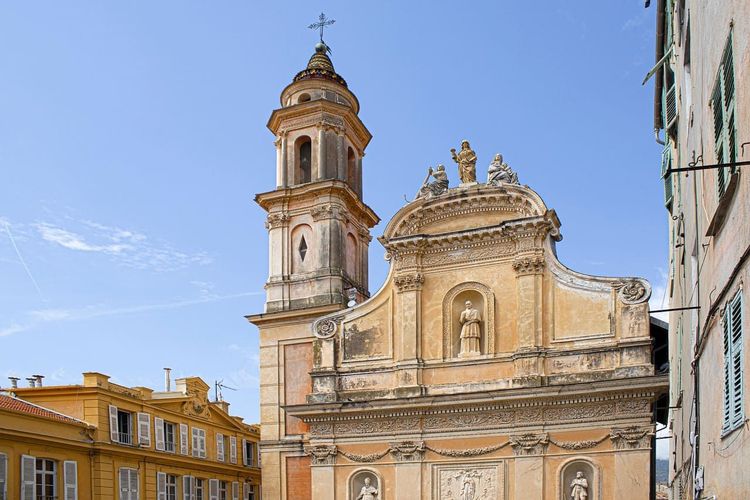
Next door to the basilica on the same square, this chapel was built slightly later, between 1680 and 1687, for the brotherhood of the White Penitents. Closed for over fifteen years during the Revolution, it only returned to worship in 1808, with a new bell and organ. Damaged like its neighbour by the 1887 earthquake, it was restored throughout the 19th century before becoming a listed monument in 1947. Inside stands a statue of the Immaculate Conception amid finely carved decor.
Free entry
11 - Rue des Grenadiers
Narrow and steep, this lane sums up Mentonnais building style in itself: tall, tightly packed façades, bright colours, washing strung between windows. The closeness of Italy is no coincidence; the scene recalls the perched villages of the Cinque Terre, those Italian towns famed for their vivid colours. Many visitors simply stop to photograph this scene, so typical of the South, before continuing their climb towards the top of the old town.
Free entry
12 - Vieux Château street
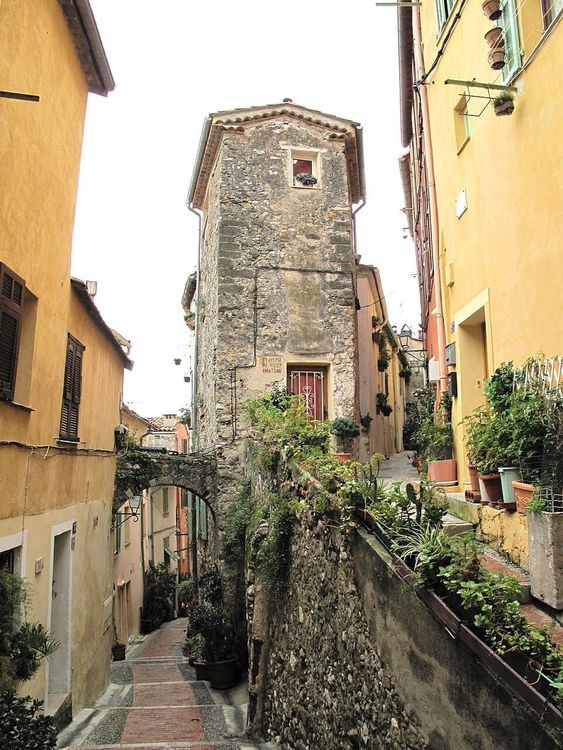
The oldest part of Menton, this quarter has kept its medieval character since the 12th century. Some of its lanes bear the names of three Mediterranean pirates legend credits with founding the town, and were deliberately built as dead ends, a defensive plan devised in the 15th century against barbarian raids. Higher up stands the Vieux Château Cemetery, laid out in the early 19th century over the remains of a 13th-century fortress of which nothing now remains visible.
Free entry
13 - Vieux Château Cemetery
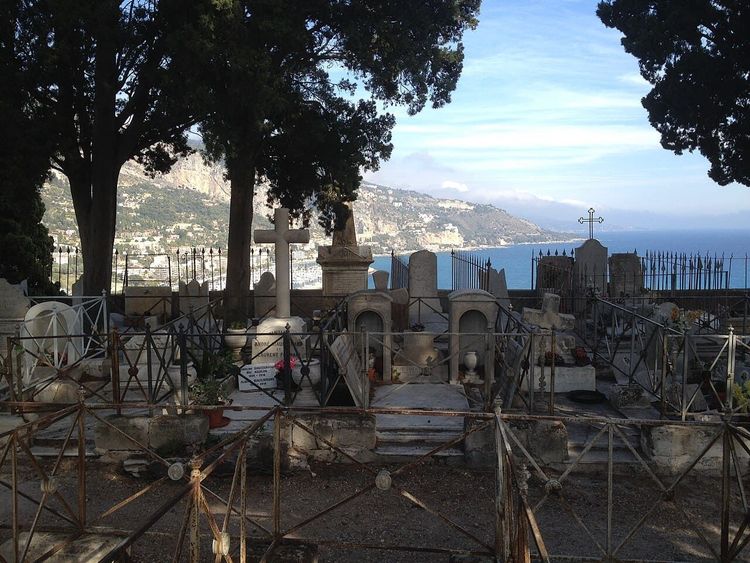
Perched 78 metres above the sea, on the site of a vanished castle, this cemetery was praised by Maupassant and Flaubert as one of the finest in France. The town acquired it in 1807, when only ruins remained. Many British, Russian, Polish and German nationals rest here, having come from the early 19th century onward seeking a cure under its famous climate. One striking statue honours a Polish princess; a chapel recalls a Russian prince who settled here for treatment in 1924.
Free entry
14 - Viewpoint over the bay
From the top of Boulevard de Garavan, the view sweeps across Menton's two harbours at once, linked by the long Sablettes beach: the Vieux-Port on one side, the Garavan marina on the other. On one hand the town's colourful rooftops, on the other the first Italian hills: this viewpoint sums up the whole geography of the bay in a single glance, a fine last look before heading back down to the seafront.
Free entry
15 - Promenade de la Mer
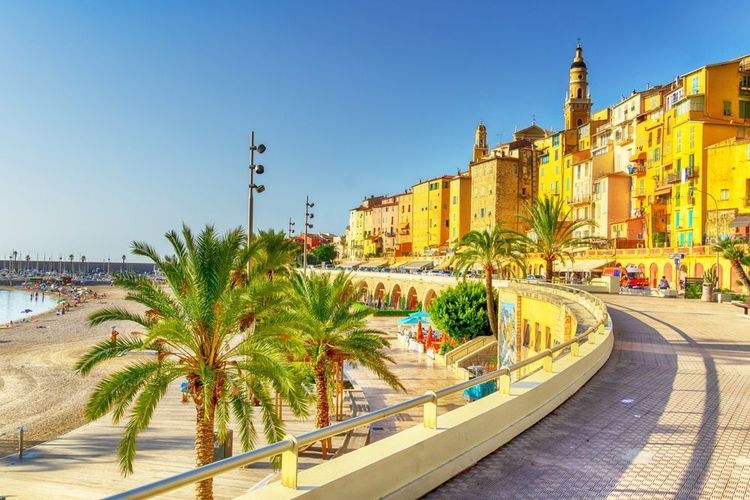
Redeveloped in 2019, this promenade runs along Sablettes beach between the Garavan marina and the Vieux-Port. The restaurant terraces lining it face both the town's colourful houses and the hills that, further on, already belong to Italy. Just as good for sunbathing by day as for a drink at dusk, it captures the easy living that made Menton's reputation as a winter resort.
Free entry
16 - Scenic View of the City
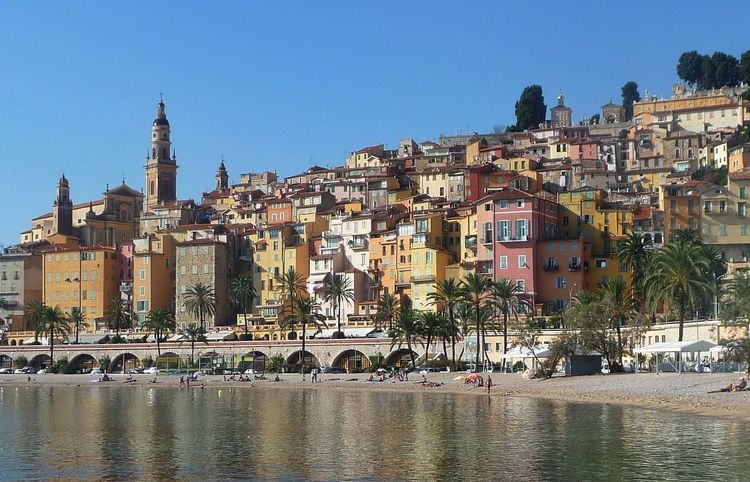
Quai Impératrice Eugénie offers one of the finest views of the old town, stacked in colourful houses up the hillside. The basilica's bell tower crowns the scene, while Sablettes beach stretches below and the Italian mountains close the horizon to the right. A single glance that brings together the sea, the town and the nearby border, at its most striking as the sun sets on the façades.
Free entry
17 - Vieux-Port of Menton
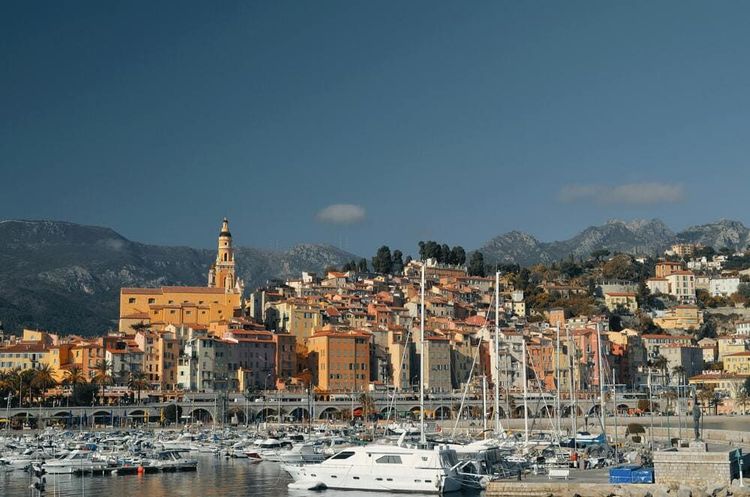
A former fishing harbour, enlarged and modernised over time, the Vieux-Port now shelters pleasure boats along Quai Gordon-Bennett, with Italian mountains in the background. The restaurants lining it unsurprisingly favour fish. It nonetheless keeps a genuine air of authenticity, enjoyed by those who come to stroll by the water in the late afternoon, among moored dinghies and yachts.
Free entry
18 - Place Fontana
Renamed after Louis Fontana, mayor of Menton from 1905 to 1929 and founder of a farming cooperative, this square was previously called Place du Petit Port. It houses the Bastion, a 17th-century fort fully renovated to display some of Jean Cocteau's pastels and ceramics on Mediterranean themes. Most of the artist's paintings, however, sit in the museum's other wing, a few steps away on Quai de Monléon.
Free entry
19 - View from the Esplanade
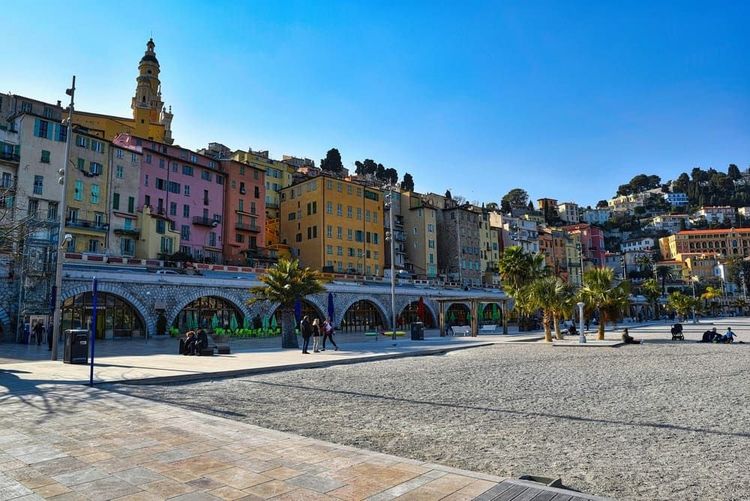
This esplanade looks out to the sea on one side and the mountains enclosing the town on the other, above a pebble beach popular for evening walks. At its centre stands Ulysses, sculpted by Czech artist Anna Chromy, who lived between France and Italy and was honoured for her works on mythology and spirituality, seen in several European cities. A good excuse to take out the camera before walking on.
Free entry
20 - Market Hall
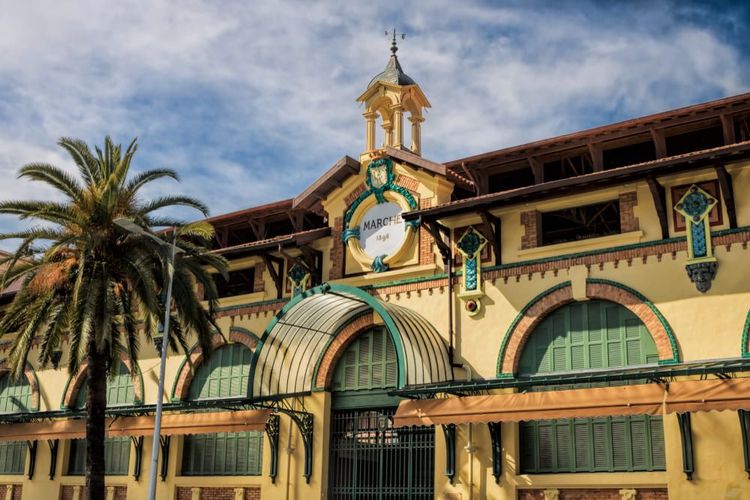
Beneath the coloured bricks and ceramics of this 1898 building, Menton's flavours unfold every day. Lemon reigns in every form, from jam to oil to limoncello, but you can also taste barbajuans, little ravioli fried and stuffed with chard and rice, a socca to share, or an anchovy pichade. Those with a sweet tooth will prefer lemon tart or fougasse mentonnaise, dotted with sugared almonds and orange blossom.
Free entry
21 - Jean Cocteau Museum
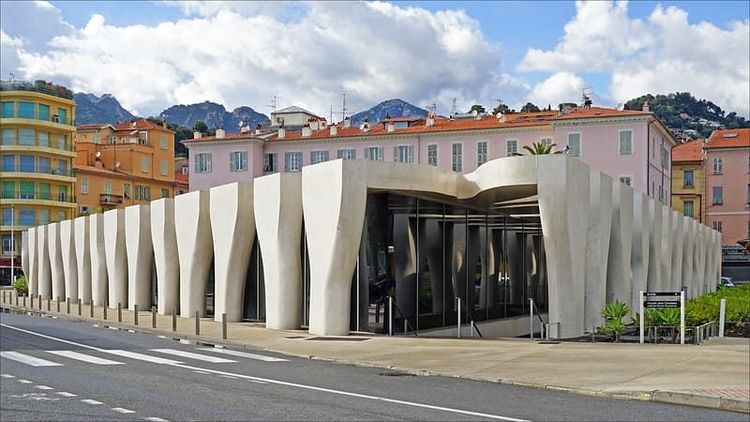
Designed by architect Rudy Ricciotti, who earned France's top architecture honour for this work, this concrete building with its unexpected shapes has housed most of the Jean Cocteau collection since 2011. Its structure, designed to let light filter through, highlights hundreds of paintings made between the 1910s and 1950s by this artist of many talents, also a poet and filmmaker who joined the Académie française in 1955.
Paid entry
22 - Promenade du Soleil
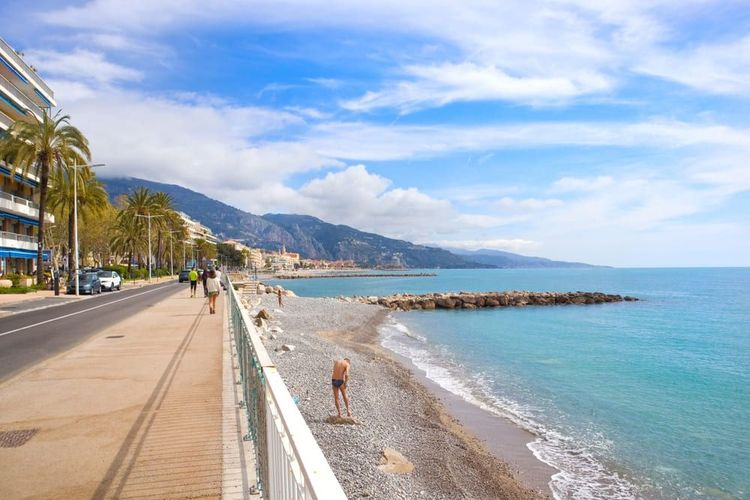
The Promenade du Soleil closes the loop along Plage du Marché, one of the many pebble coves of the Baie du Soleil, where people come to swim, stroll or simply enjoy the sun on a terrace. It continues on towards Cap Martin a few kilometres away, home to the medieval village of Roquebrune. A good reason to keep walking well after the audio tour officially ends.
Free entry
What to do in Menton in 2 or 3 days?
Two hours are enough for this 4.3 km, 22-stop route, which sets off from the Biovès Gardens and climbs up to the Vieux-Château Cemetery before dropping back down to the Vieux-Port. With 2 or 3 days on hand, Menton reveals itself more fully, from its botanical gardens to the perched villages inland.
The next day, head for the hills: the Serre de la Madone, designed by the same English landscaper behind the Hidcote gardens, stacks terraces of rare plants above the town, while the Val Rahmeh botanical garden adds its tropical species for around €7 entry. Our guide to visiting Menton in 2 days sets out the itinerary day by day, with transport, budget and accommodation.
On the third day, head west to Roquebrune-Cap-Martin, less than 15 minutes away by train: the perched village and the 16 m² cabin Le Corbusier built for himself facing the sea fill a whole morning. Back in town, the afternoon winds down at Sablettes beach, paddleboarding or kayaking in the bay; our Menton weekend itinerary spells out the full sequence.
Which neighbourhoods does the tour cross?
Looping out from the Biovès Gardens, the route swings between two sides of Menton: the Belle Époque town of grand hotels, then the baroque old town perched on its rock, before dropping back to the seafront.
It first skirts the Palais de l'Europe and the white facades of the old palace hotels on Rue de la République, among them the Grand Hôtel d'Orient, then passes the Town Hall, before entering the old town along Rue Saint-Michel, the shop-lined main street where lemon products are sold, and Place aux Herbes, shaded by plane trees (stops 1 to 7).
The climb continues up the Saint-Michel ramps to the pebble-paved square in front of the Basilica of Saint Michael the Archangel and its neighbour, the Chapel of the Immaculate Conception, then slips along Rue des Grenadiers and Rue du Vieux Château to the top of the rock, where the Vieux-Château Cemetery looks out over the bay (stops 8 to 14).
The descent reaches the sea on the Garavan side along the Promenade de la Mer, then returns past the Vieux-Port and Place Fontana, takes in the market hall and the Jean Cocteau Museum, and closes the loop on the Promenade du Soleil (stops 15 to 22).
How much does it cost to visit Menton?
Of the route's 22 stops, 19 are free to visit. The other three need a little attention:
- the Grand Hôtel d'Orient, now a block of flats, whose facade is admired from the street only;
- the Palais de l'Europe, whose access depends on what's showing, performances or exhibitions;
- the Jean Cocteau Museum, Séverin Wunderman collection (stop 21), whose large building, damaged by floods, has not reopened.
Le Bastion, the Jean Cocteau Museum's other site, on Place Fontana (stop 18), costs €5; entry is free for under-18s, jobseekers, people with disabilities, and for everyone on the first Sunday of the month. At the Town Hall, the room decorated by Cocteau costs €2.
Information checked in November 2026 and subject to change.
Where to stop for a bite along the tour?
The market hall (stop 20), open every morning from 7:30 am to 1 pm, is Menton's go-to spot for Menton lemons, local olives and freshly made socca eaten standing up. Earlier on the loop, Rue Saint-Michel (stop 5) is also lined with shops and terraces serving lemon-based treats.
On the specialities side, barbajuan, a deep-fried ravioli stuffed with chard and cheese, is sold in old-town bakeries, alongside the sweet Mentonnaise fougasse, flavoured with sugared almonds and orange blossom. Pichade, somewhere between an anchovy pizza and a Niçoise pissaladière, is also found near the market hall; other specialities, from sugelli to limoncello, feature in our top 10 Menton specialities.
What to do in Menton with children?
The old town suits a family outing well: its stepped lanes, known locally as carruggi, quickly turn into a treasure hunt on the way up to the basilica, and the Russian Orthodox Church of Saint Nicholas, topped with a blue onion dome, often surprises the youngest visitors.
With a pushchair, the climb to the Vieux-Château Cemetery is steep; a baby carrier works better, or stick to the wide, palm-lined Promenade du Soleil on a rented bike or scooter. The town also carries the Famille Plus label, which commits shops and sights to welcoming younger visitors; our guide to Menton with children covers a full multi-day programme.
What should you know before visiting Menton?
At the start of the route, the Biovès Gardens are free to enter but only during posted opening hours; if they're closed on arrival, the next stop is reached directly via Rue Pasteur.
The Palais de l'Europe (stop 2) isn't a museum open year-round: access depends on what's currently on, performances or temporary exhibitions. At the Town Hall (stop 4), the wedding room decorated by Jean Cocteau can only be visited on weekdays during office hours, for €2; it is closed at weekends.
As for the museums, Le Bastion on Place Fontana (stop 18) closes on Tuesdays, and the large Jean Cocteau Museum building (stop 21) has been closed since it was flooded. The Basilica of Saint Michael the Archangel keeps hours set by its services: avoid Sunday mornings if you want to look round freely.
What to see around Menton?
Menton's position on the border makes it as good a base for trips inland as for escapes to the Riviera's other towns.
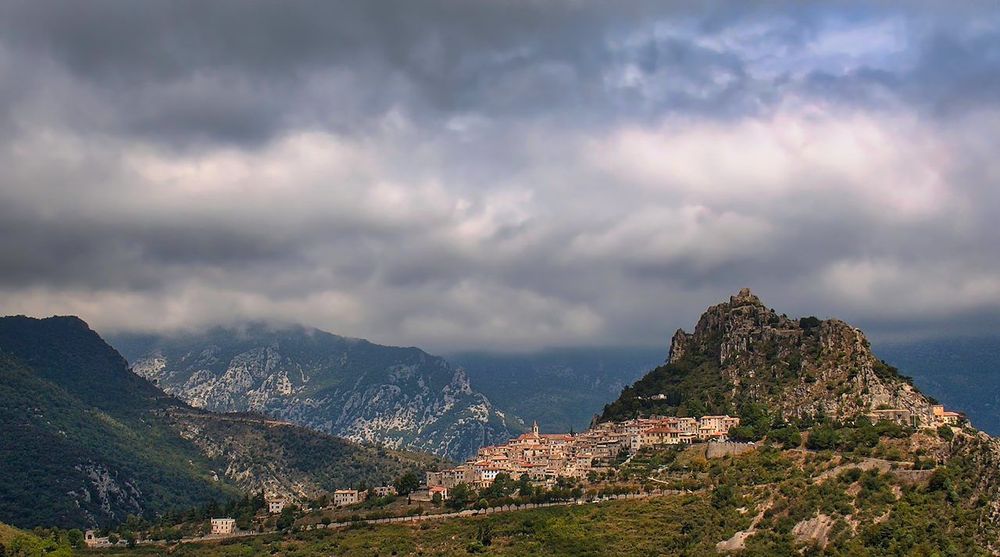
Some 10 km from Menton, the perched village of Sainte-Agnès looks out over the sea from 800 metres up, which would make it the highest seaside village in Europe; our unusual side of Menton also points to a fort cut into the rock right next to it, part of the Maginot Line, keeping watch over the bay.
Several neighbouring towns also have their own audio-guided route: Monaco, 8 km away, blends luxury with the Grimaldi legacy on the Rock; Nice, 20 km away, unveils its Belle Époque facades and the old town; further on, Antibes (37 km) guards its old town behind centuries-old fortifications, and Cannes (47 km) pairs the Croisette's palaces with the lanes of Le Suquet.
What's on in Menton right now?
This time of year, Menton celebrates Christmas across several spots in town.
From 4 December to 3 January, a Christmas market and a food market set up on the Parvis Jean Cocteau, an ice rink joins them there, fairground rides fill the Biovès Gardens, and a trail of nativity scenes spreads across the whole town; Father Christmas himself meets children from 19 to 24 December.
Information checked in November 2026 and subject to change.
Le plein d'inspirations
Explorez le monde en totale liberté, à pied au cœur des villes ou au fil des routes. Nos guides audios transforment chaque destination en une découverte culturelle immersive et unique.










FAQ for visiting Menton
When is the best time to visit Menton?
The best time to explore Menton runs from April to June, then from September to October. During these months, you'll enjoy very pleasant temperatures, ideal for exploring the town on foot and swimming in a sea that is already warm or still mild. Menton's Mediterranean climate offers particularly mild winters, generally between 10 and 16°C, allowing for enjoyable visits even in the low season. Summers are hot, often between 26 and 32°C, but remain bearable thanks to the sea breeze. By choosing spring or autumn, you'll also avoid the summer tourist crowds and can more calmly appreciate the peaceful atmosphere of this pearl of the French Riviera, its lush gardens and its historic centre with colourful facades.
How many days do you need to visit Menton?
To fully appreciate Menton, ideally plan for two to three days. This will give you time to leisurely explore the historic centre with its picturesque lanes and colourful facades, to stroll along the seafront and to discover the town's famous gardens. In two days, you can visit the must-sees while enjoying the Mentonese way of life, savouring a meal on a terrace or swimming in the Mediterranean. With three days, you'll have time to deepen your discovery, perhaps visiting a museum or venturing into the hinterland for a beautiful hike with sea views. If you have more time, you can also explore the surrounding hilltop villages or even take a getaway to nearby Italy.
How do you get around Menton?
Menton is a human-scale town best discovered on foot, especially its historic centre with narrow, steep lanes. For longer journeys, you can rely on the urban bus network, which serves the different neighbourhoods well and lets you reach the beaches or the outlying gardens. Free shuttles also run in season to make it easier to reach the tourist sites. Cycling is a pleasant option along the coast thanks to the dedicated cycle paths. If you wish to explore the surroundings, Menton's SNCF train station connects you easily to the other towns of the Riviera. A car can be handy for the hinterland but remains restrictive in the town centre, where parking is often difficult and paid.
What can you do with children in Menton?
Menton offers many family-friendly activities. The pebble and fine-sand beaches will delight children, who can swim in a calm, shallow sea, particularly at Sablettes beach. The town's gardens, such as the Biovès garden, offer vast spaces to run and play, often with equipped playgrounds. The Jean Cocteau Museum regularly organises creative workshops for younger visitors. A walk through the old town can turn into a treasure hunt in search of fountains and secret passages. Children will also enjoy the seaside Promenade du Soleil, ideal for an artisanal ice cream or a snack break. In summer, free activities are often offered on the beaches and in the parks.
Is Menton easy to reach from Nice?
Menton is very easy to reach from Nice, about thirty kilometres away. The train remains the most convenient and pleasant option, with regular connections roughly every half hour. The journey usually takes between thirty and forty minutes and offers superb views of the Mediterranean. Menton-centre station drops you a few minutes' walk from the historic heart. By car, allow about forty-five minutes via the A8 motorway or one hour by the coastal road, more picturesque but often congested in season. Regular buses also link the two towns, with a journey time of about one hour. From Nice airport, direct shuttles allow you to reach Menton without going through the centre of Nice. This proximity makes Menton an excellent day trip from Nice.
Can you visit Menton in a day?
A day in Menton is enough to discover the essentials of this charming town. You'll have time to explore the historic centre with its colourful lanes, to climb up to the Saint-Michel basilica to admire the view, and to wander through the covered market to taste the local specialities. A lunch break on a terrace will let you savour Mediterranean cuisine before strolling along the seafront or visiting one of the famous gardens. Weather permitting, a refreshing swim will pleasantly round off your day. The Ryo audioguide offers precisely an optimised route for a one-day visit, guiding you efficiently between the major points of interest while telling you the town's history and anecdotes. Of course, a longer stay would allow you to deepen your discovery.
What are the must-see sights in Menton?
Menton's must-sees begin with its old centre of ochre and yellow facades, dominated by the Saint-Michel-Archange basilica, a masterpiece of the Baroque. The basilica's forecourt offers a spectacular view over the sea and the town's rooftops. The exceptional gardens are what make Menton famous, notably the Val Rahmeh exotic garden and the Serre de la Madone garden. The covered Halles market is a must to soak up the local atmosphere and discover Menton's lemons. The seaside Promenade du Soleil, running alongside the beaches, invites you to stroll, while the Jean Cocteau Museum presents the artist's work in a modern setting. For a complete, narrated tour of these iconic sites, the Ryo audioguide accompanies you with routes designed to miss nothing essential while helping you understand Menton's history and culture.
Where can you swim in Menton?
Menton offers several pleasant beaches for swimming along its three kilometres of coastline. Sablettes beach, the largest and most popular, features fine sand and calm waters, ideal for families. It has many amenities such as showers, beach restaurants and the option to rent sun loungers and parasols. The more intimate Fossan beach charms with its unspoilt setting between two rocky headlands. The pebble beaches of Borrigo and the Promenade du Soleil offer crystal-clear waters and are easily accessible from the town centre. For more peace and quiet, head to Garavan beach, near the harbour and the Italian border. Menton's waters are generally calm and clean, with a pleasant temperature from May to October, making swimming particularly enjoyable.
Which gardens should you visit in Menton?
Menton's microclimate has allowed species from all over the world to take root, and the town holds a remarkable collection of gardens. Val Rahmeh, a botanical garden laid out around a villa, brings together tropical and subtropical plants, while Serre de la Madone, created by a British landscape designer on old terraced slopes, mixes terraces, pools and rare species in a valley sheltered from the wind.
Closer to the centre, the Biovès gardens stretch their palms and citrus trees between two avenues, while the Clos du Peyronnet and the Fontana Rosa garden, dedicated to a Spanish writer and covered in colourful ceramics, are seen on more confidential visits. Several of these gardens open only on certain days or require booking, so check before setting off. The Ryo audio guide offers a dedicated Menton route linking the old town to the approaches of these gardens on foot.
What is the Lemon Festival in Menton?
Born in the nineteen thirties, the Lemon Festival celebrates the citrus fruit that made the town famous. Every winter, generally around February, monumental sculptures entirely clad in lemons and oranges are installed in the Biovès gardens on a theme that changes each year, while parades make their way along the seafront.
The town fills up with visitors at that time, so book your accommodation well ahead, favour the train over the car and expect heavy traffic. The exhibition gardens can also be visited in the evening, when the displays are lit up. Outside this period, the citrus heritage remains clearly visible in the orchards on the hillsides and in the sweets and specialities sold at the covered market.
What is there to do in and around Menton beyond the seafront?
Allow at least two days. Old Menton climbs through its carruggi to the Basilica of Saint-Michel-Archange, passing the Marché des Halles, open every morning until 1pm, and the Vieux-Château cemetery, a viewpoint at 74 metres. For gardens, choose between the Serre de la Madone, Val Rahmeh and its 700 or so species, or the Palais Carnolès with over 137 citrus varieties.
The Jean Cocteau Museum holds nearly 1,800 works, and the Museum of Regional Prehistory keeps the skull of Grimaldi Man. Then head to Sainte-Agnès, Sospel, Monaco or Ventimiglia.
Every idea is gathered in our guide to Menton and its surroundings.
How can you make the most of the Lemon Festival: exhibitions, parades and tickets?
Every February, the Lemon Festival draws more than 250,000 visitors in under three weeks. Officially created in 1934, it unfolds in two parts. The citrus sculptures in the Biovès gardens are free and open to all, by day and in the evening.
The corsos, or parades, are ticketed: cheap standing places or seated grandstands. The daytime Golden Fruit Parade runs along the seafront for about two hours, with floats weighing 8 to 25 tonnes, and illuminated night parades complete the programme. For genuine PGI lemons, trust the stalls displaying the official badge.
Dates, tickets and programme are in our complete guide to the Menton Lemon Festival.
Which Menton specialities should you try beyond the lemon?
Menton lemons, PGI-protected since 2015, flavour olive oil, the jams of Maison Herbin, in business since 1974, the citrus wine served as an aperitif and ice-cold limoncello. But the local table goes further.
Try socca, a chickpea flatbread; pichade, halfway between an anchovy pizza and a pissaladière with tomato, found around the Marché des Halles; barbajuans, fried ravioli stuffed with vegetables; and stuffed courgette-flower fritters. Sugelli, handmade pasta served at festivals, and sweet Menton fougasse with orange blossom round off this tasting tour.
All ten specialities are featured in our top food specialities of Menton.
Why is Menton an easy stop when travelling with young children?
Holding the Famille Plus label, Menton packs its highlights into three kilometres of seafront that you can cover on foot. The stepped lanes of old Menton become a treasure hunt up to the Basilica of Saint-Michel-Archange; for the Vieux-Château cemetery, a baby carrier beats a pushchair.
The wide, flat Promenade du Soleil suits pushchairs and scooters, and Garavan harbour offers a quiet view of the bay. Little ones also enjoy the blue dome of the Russian Orthodox church, Sablettes beach, the Biovès gardens and the municipal market hall.
The three-day plan is in our family guide to Menton.
Which unusual places can you discover in Menton and its hinterland?
In old Menton, leave Rue Longue for the Saint-Michel ramps and side passages, then admire the old town from Garavan harbour. The secret gardens are mostly visited on guided tours: the Serre de la Madone, the Fontana Rosa garden dedicated to novelists, or the Citronneraie and its 450 or so lemon trees, by reservation.
The Maison Gannac offers tastings of its PGI lemons, and the forecourt of the Saint-Michel basilica depicts the Grimaldi coat of arms in pebbles. Further afield, the Trophy of Augustus overlooks the coast from La Turbie, and a Maginot Line fort stands near Sainte-Agnès.
The hidden spots are gathered in our guide to offbeat Menton.
How do you plan two days in Menton, from the old town to the gardens and hilltop villages?
Two days are enough to see the best of Menton without rushing. On day one, climb to the Basilica of Saint-Michel, stroll along Rue Longue and the Old Port, visit two gardens such as the Serre de la Madone or Val Rahmeh, then finish in Garavan and along the coastal path. On day two, spend the morning in Roquebrune-Cap-Martin, with its castle and Le Corbusier's cabin, then the afternoon in the hilltop villages of Castellar and Sainte-Agnès.
You'll also find transport from Nice, budget, where to stay by neighbourhood and the Lemon Festival.
Find the day-by-day itinerary in our guide to visiting Menton in 2 days and in our article on a weekend in Menton.
Vos commentaires, idées et suggestions
Aucun avis pour le moment