© Shutterstock
 Votre guide Ryo
Unusual Menton in 2026: Secret Gardens, Hilltop Villages, and Hidden Heritage
Menton is more than where the Riviera ends and Italy begins: it's a city that hides its finest treasures behind ochre facades and private garden gates. An unusual visit to Menton often begins where conventional guides leave off — in a narrow lane of the old town climbing towards the basilica, or behind the gate of a botanical garden that few visitors think to push open. For the old town, the Ryo audio-guided tour of Menton follows a 4.3 km loop in about two hours, from the Biovès gardens to the Old Port via the basilica, with stories that only the locals of Menton know well.
Up on the heights, a Maginot Line fort carved into the rock keeps watch over the bay, right next to the hilltop village of Sainte-Agnès. Further on, in the Roya valley, a Franciscan convent overlooks a village of vaulted alleyways, barely visited by tourists from the Côte d'Azur. Between these two extremes, you'll find a modernist villa long forgotten, Belle Époque market halls where lemon jams are sampled steps from the stalls, an orchard of 450 lemon trees and a bay where you can paddle with the Alps plunging into the Mediterranean before you. Here is where to go, in what order, and why each of these places deserves a detour in 2026.
The Old Town of Menton, a Maze of Alleyways to Explore Differently
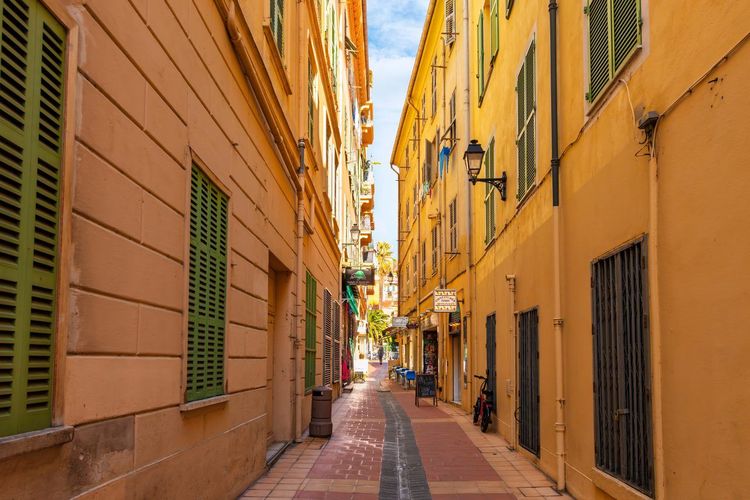
The old town of Menton isn't really visited — it's wandered through at random. From the Halles market, rue Longue (Rue Longue, 06500 Menton) climbs gently between Italian-style facades painted in ochre and pink. This was once the city's main artery, laid along the road that formerly linked Nice to Genoa, long before the seafront became the centre of activity.
Stroll without a strict plan: the side staircases, such as the rampes Saint-Michel, open onto tiny squares where laundry sometimes dries between two windows. Many visitors stick to the main street and miss these shortcuts entirely. Yet this is where the old town retains its soul as a Ligurian village.
At the very top, the Vieux-Château cemetery occupies the site of the former fortress. Its tombs of Russian and British families recall the era when Menton attracted European aristocrats seeking a cure, and its terrace offers one of the finest viewpoints over the round-tiled rooftops. But the most unexpected vantage point lies a little further on, at the Port de Garavan (Port de Garavan, 06500 Menton, rated 4.4/5 on Google from 1,078 reviews), the last marina before the border. From its quays, the old town appears in tiers, backed against the mountain, with Cap Martin as a backdrop.
The rampes Saint-Michel, the rue du Vieux-Château and its cemetery are among the stops covered by the Ryo audio guide, which along the way recounts the families and epidemics that shaped this neighbourhood.
The Secret Gardens of Menton, Between Lemon Trees and Art Deco
Menton owes its mildness to a microclimate that has attracted horticulturists and British lords since the late 19th century. As a result, the town boasts one of the highest densities of remarkable gardens on the Riviera, often overlooked by visitors who stop at the seafront promenade. Menton's exceptional gardens are almost all visited on guided tours, at fixed times or by reservation, which explains why they remain little-known even at the height of the season.
The Serre de la Madone Garden and the Fontana Rosa Garden
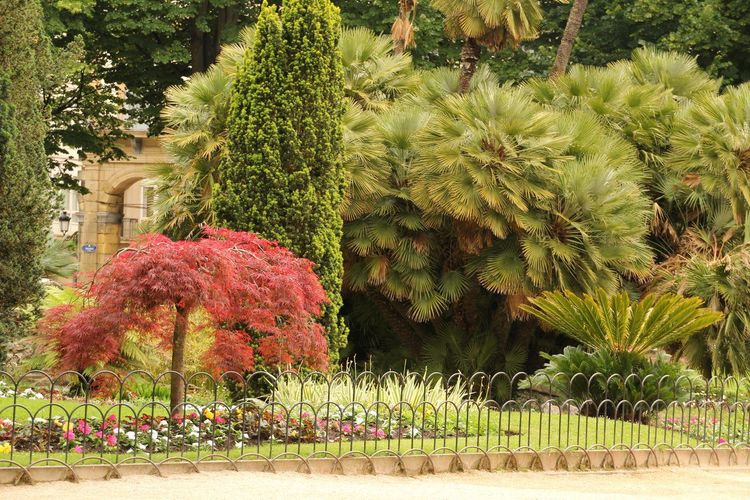
The Serre de la Madone garden was laid out between 1924 and 1939 by Major Lawrence Johnston, who had already created the celebrated Hidcote garden in England. He acclimatised plants brought back from his expeditions, particularly in South Africa and China. Terraced restanques, pools and rare species make up a garden listed as a historic monument in 1990 and awarded the Jardin remarquable label. A guided tour of around two hours departs each afternoon at 3 pm: arrive early in high season.
At the opposite end of the stylistic spectrum, the Fontana Rosa garden was conceived in the 1920s by the Spanish writer Vicente Blasco Ibáñez, who had settled in Menton. Nicknamed the garden of the Novelists, it pays tribute to his masters: Cervantes, Balzac, Dickens, Dostoyevsky and Flaubert all have their busts here, among colourful ceramic benches, pergolas and Andalusian-inspired kiosks. The site, also listed as a historic monument, opens only for guided visits.
The Citronneraie and the Maison du Citron
The Citronneraie, a private garden set on the Garavan corniche, brings together around 450 lemon trees, all of the 'citron de Menton' variety, surrounded by tropical and subtropical plants. Awarded the Jardin remarquable label in 2009, it can only be visited by online reservation, and it is often the owner himself who explains how Menton was long one of the great citrus-producing centres of the Mediterranean basin.
To extend the experience, Maison Gannac, also known as the Maison du Citron (2970 Route de Super Garavan, 06500 Menton, rated 4.8/5 on Google from 415 reviews), grows IGP-certified lemons using organic farming on the heights of Super-Garavan. A free shuttle departs from its shop on rue Trenca to reach the estate, where the visit ends with a tasting of citrus-based products.
The Ryo audio-guided tour does not pass through the gates of these private estates, but it starts in the Biovès gardens, the green lung of the town centre — just enough to whet your appetite before booking one of these visits.
The Basilica of Saint-Michel Archange and the Trophy of Augustus, From Baroque to Antiquity
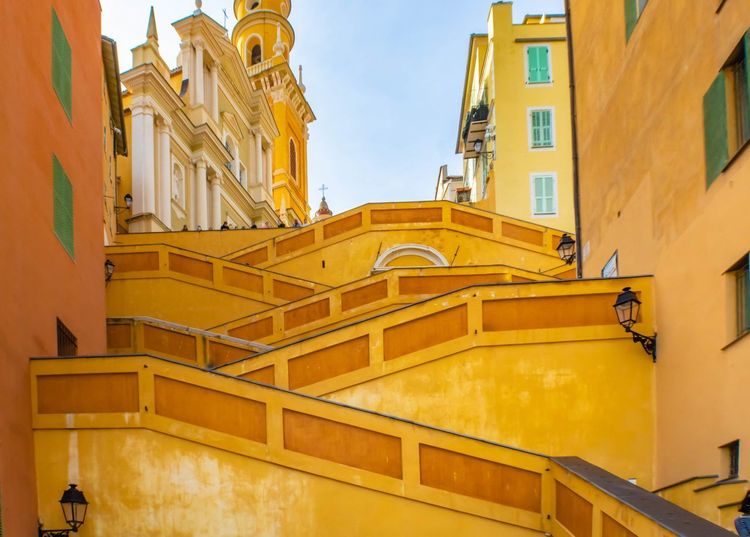
The Basilica of Saint-Michel Archange, which some mistakenly call the Cathédrale Saint-Michel (Menton has never been the seat of a bishopric), dominates the old town from its forecourt. Look down at your feet: the black-and-white pebble calade spells out the coat of arms of the Grimaldi family, former lords of Menton. Built in the 17th century, the church houses a remarkable baroque interior for a town of this size, with its organ, Italian altarpieces and polychrome marble side chapels.
The surprise also lies in how the space is used: every summer since 1950, the forecourt has been transformed into an open-air concert hall for the Menton Music Festival, overlooking the sea.
The Trophy of Augustus and the Village of La Turbie
About half an hour's drive away, the Trophy of Augustus overlooks the entire coast from the village of La Turbie (Place Detras, 06320 La Turbie). This Roman monument, erected in 7 or 6 BC to celebrate the submission of the Alpine peoples, originally stood around 50 metres tall — the equivalent of a fifteen-storey building. Only a portion survives, restored in the 1930s, but the view from the terrace, sweeping across Monaco and the Italian Riviera, remains one of the widest in the region. The site is managed by the Centre des monuments nationaux.
Linger afterwards in the medieval village: its cobbled lanes, where some houses reuse stones from the ancient monument, lead to shaded squares where a few terraces look down over the principality below.
The Villa Eileen Gray in Roquebrune-Cap-Martin, an Overlooked Modernist Gem
A few kilometres from Menton, villa E-1027 (Sentier Massolin, 06190 Roquebrune-Cap-Martin, rated 4.5/5 on Google from 344 reviews), designed between 1926 and 1929 by Irish designer Eileen Gray with architect Jean Badovici, is one of the most remarkable addresses on the Côte d'Azur. Perched on the rocks above the sea, it was long associated with Le Corbusier, who painted murals there in the late 1930s without the consent of its creator — an episode that still fuels debate among architectural historians.
Restored after decades of neglect, it is now part of the Cap Moderne site, managed by the Centre des monuments nationaux, alongside the neighbouring Cabanon de Le Corbusier. Visits are guided only and strictly by prior reservation, from April to the end of October, with four departures per day (10 am, 11 am, 2 pm and 3 pm in 2026). The guide explains the fitted furniture designed by Eileen Gray: swivelling tables, storage planned to the centimetre, folding screens. The simplest way to arrive is by train to the station at Roquebrune-Cap-Martin, very close to the meeting point.
The Fort de Sainte-Agnès and Its Hilltop Village
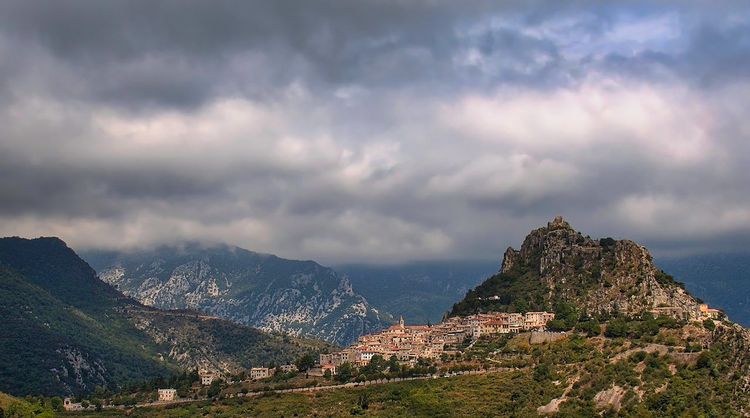
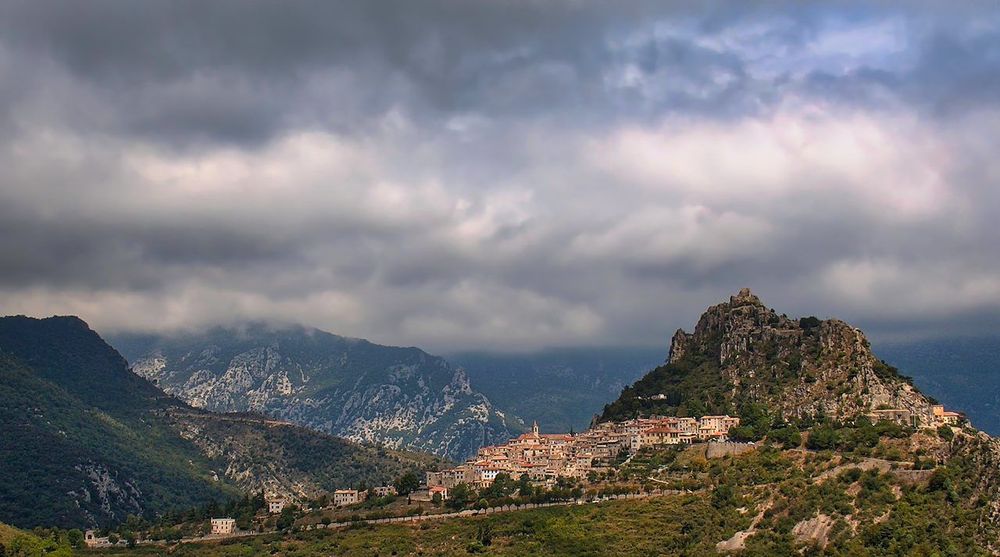
At 780 metres above sea level, Sainte-Agnès lays claim to the title of highest coastal village in Europe. Listed among the Plus Beaux Villages de France, it features stepped alleyways and stone houses that lead to the remains of its medieval castle and a small medieval-inspired garden. The view plunges over the entire bay of Menton and stretches as far as Italy.
At the edge of the village, the fort de Sainte-Agnès (Village, 06500 Sainte-Agnès, rated 4.4/5 on Google from 810 reviews) tells a very different story. Built between 1932 and 1938 as a link in the Alpine Maginot Line, it contains over 2,000 m² of underground galleries and rooms. Up to 350 men could live there self-sufficiently, with a kitchen, power plant and infirmary, and its guns fired during the fighting of June 1940.
Visits are guided only, at 10 am, 2 pm and 4 pm: Wednesday to Sunday from mid-February to the end of September, then weekends only. Book at least 48 hours in advance and bring a light layer, as it stays cool underground even in August.
The Chapelle Notre-Dame-des-Fontaines and the Vallée des Merveilles
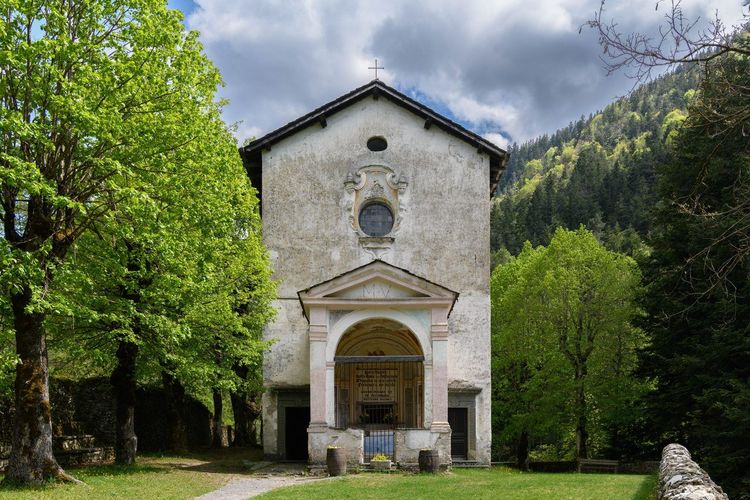
Allow just over an hour's drive from Menton to reach the Chapelle Notre-Dame-des-Fontaines, nicknamed the 'Sistine Chapel of the Southern Alps'. Its frescoes, painted around 1491–1492 by Piedmontese artists Jean Canavesio and Jean Baleison, cover more than 200 m² of walls. The triumphal arch recounts the life of the Virgin, the nave unfolds the Passion of Christ, and the reverse of the façade features a Last Judgement of rare intensity.
Higher still, the Vallée des Merveilles, at the heart of the Mercantour national park, preserves around 40,000 figurative rock engravings scattered between 2,000 and 2,700 metres altitude around Mont Bego. They date from the Chalcolithic period and the early Bronze Age, between 3300 and 1800 BC, and depict mainly horned figures, daggers and halberds. The site is accessible only on foot, from the Lac des Mesches or Casterino, and a certified guide is strongly recommended to locate the engraved rocks and respect the regulated areas. Reserve a full day, ideally between June and September, for one of the most memorable hikes in the hinterland.
The Village of La Brigue
Along the way, the village of La Brigue (Village, 06430 La Brigue) deserves a stop: its green-stone houses, medieval bridge and collegiate church of Saint-Martin make it one of the best-preserved villages in the upper Roya valley, without the crowds that sometimes descend on Sospel or Saorge in summer.
The Monastery of Saorge and the Villages of the Roya Valley
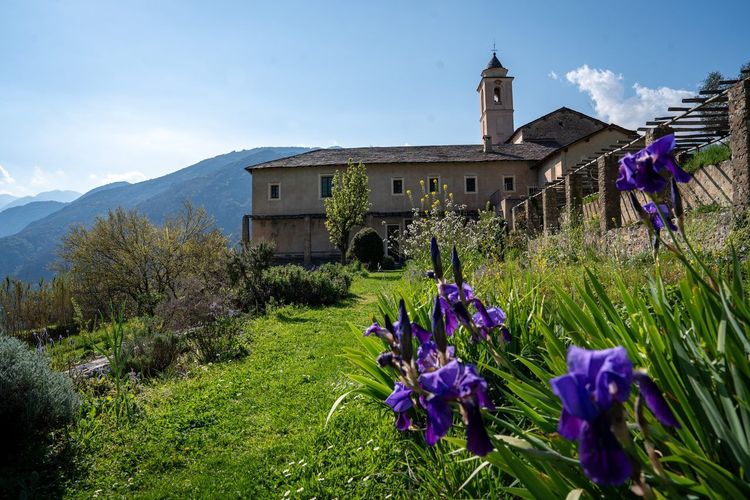
Clinging to the mountainside, the village of Saorge resembles a nativity scene suspended above the Roya gorges. Its tall, narrow houses, stacked one upon another, extend up to the monastery of Saorge, a convent founded in 1633 by Recollect Franciscans.
Its cloister and refectory preserve painted decorations from the 17th and 18th centuries: scenes from the life of Saint Francis, allegories of the virtues, sundials and trompe-l'œil. The last monks left in 1988. The Centre des monuments nationaux, which manages the site, has hosted writers, translators and composers in residence here since 2001, which explains the near-total silence that pervades the corridors — less than an hour's drive from the bustle of the coast.
The village itself can be explored on foot in about an hour, through stepped alleyways, vaulted passageways and the church of Saint-Sauveur, whose baroque interior contrasts sharply with the austerity of the facades.
Sospel and Breil-sur-Roya, Two Typical Villages of the Hinterland
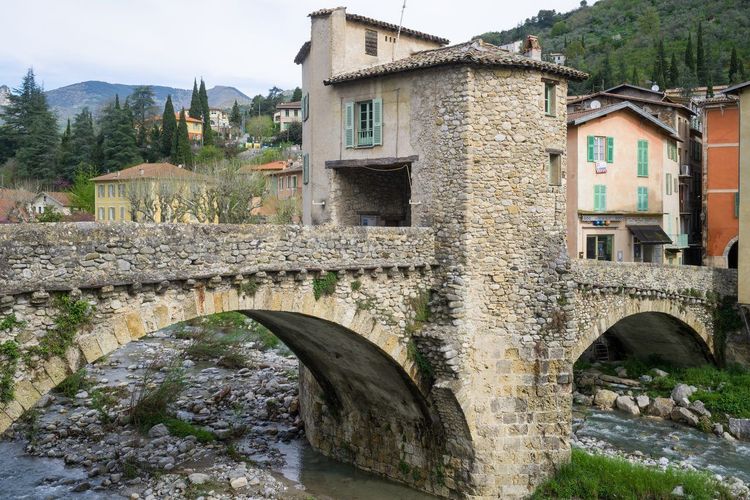
On the road back to Menton, two villages complete the itinerary. Sospel, a former stop on the salt road, has kept its Pont Vieux topped by a tower where travellers once paid a toll. Breil-sur-Roya (Village, 06540 Breil-sur-Roya, rated 4.3/5 on Google from 74 reviews), a little further down the valley, is centred on a stretch of water formed by a dam, popular with kayakers and anglers.
The transition from the coast to the Menton hinterland takes just a few bends in the road, and the change of scenery is complete: Sospel is only about forty minutes from the sea, and the Roya road runs alongside the Italian border several times. If you'd rather walk than drive, our article on hikes around Menton presents several walking routes into these heights.
Water Activities and Swimming in the Bay of Menton
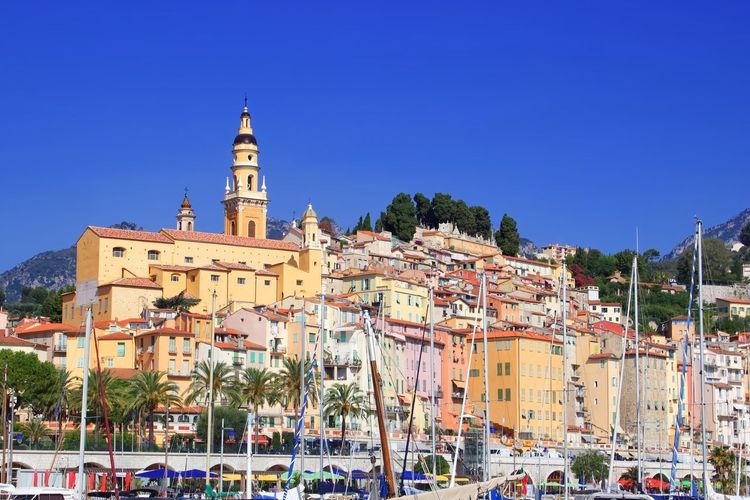
Seeing Menton from the sea completely changes your perspective: the colourful facades of the old town, stacked up the hillside, appear all at once from a kayak or paddleboard. Several rental outfits near the beaches offer one- to two-hour outings suitable for beginners. Head out early in the morning, when the bay is still like glass.
For a more relaxed break, the Plage des Sablettes (Promenade de la Mer, 06500 Menton, rated 4.2/5 on Google from 616 reviews), set at the foot of the old town between the Old Port and the Port de Garavan, is one of the few sandy beaches in this stretch of coast, where pebbles predominate. Calm water, showers and sunbed rentals make it an ideal base for a leisurely afternoon between sightseeing.
The more adventurous will venture as far as the rocky coves of Cap Martin, accessible via the coastal path, for a decidedly wilder swim. To compare options, our selection of beaches in Menton reviews sand, pebbles and coves.
The Municipal Halles Market and the Flavours of the Lemon
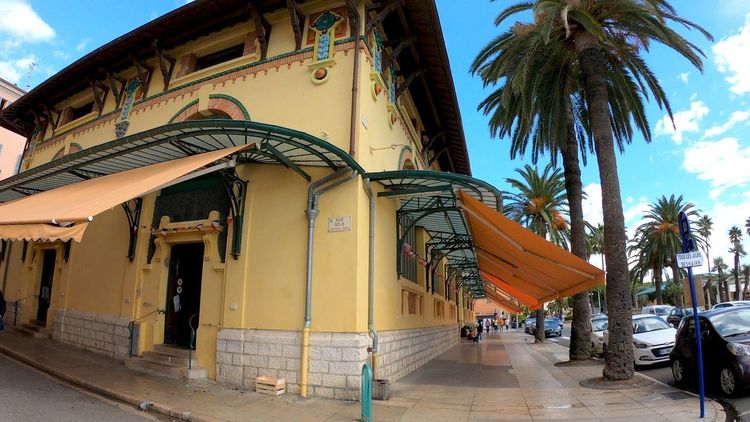
Between the port and the old town, the Halles municipales overflow with colour and flavour from the crack of dawn. Fishmongers, olive growers and market gardeners share the space with entire stalls of citrus fruit, beneath a building completed in 1898 by Menton architect Adrien Rey. Look up: the top of the facade is decorated with polychrome ceramics from the local Saïssi workshop. This is where you'll find the finest lemons of Menton, recognisable by their thick, fragrant skin. The Halles feature among the stops on the audio-guided tour, which recounts the story of their construction.
A few streets away, don't leave Menton without tasting the citrus jams from Maison Herbin (2 Rue du Vieux Collège, 06500 Menton, rated 4.5/5 on Google from 358 reviews). This artisan jam maker, a producer of IGP-certified citron de Menton, offers over a hundred recipes inspired by Menton's gardens, including lemon, orange, bergamot and citron. The workshop can be visited Monday to Friday, with a guided tour on Mondays, Wednesdays and Fridays at 10 am.
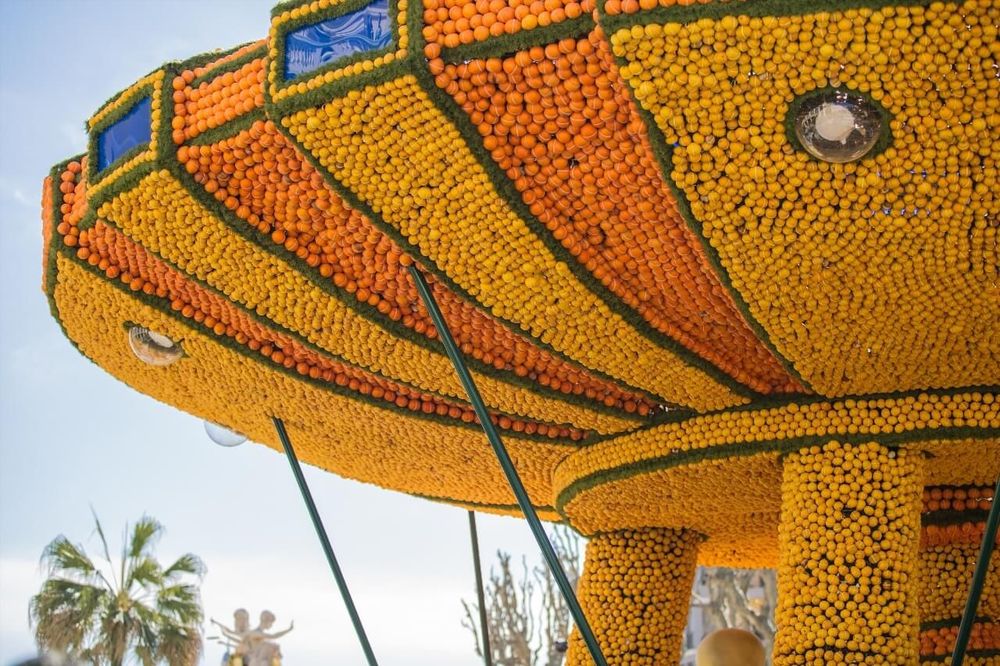
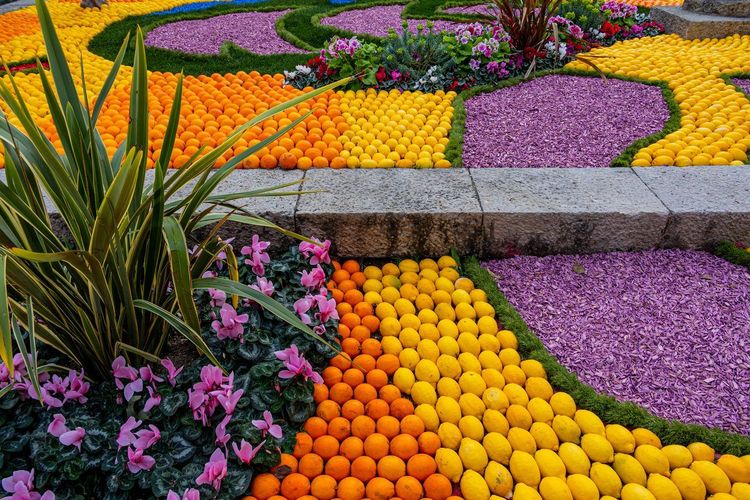
If your visit coincides with the end of winter, the Fête du Citron transforms the Biovès gardens into an exhibition of giant sculptures. The 2026 edition, the 92nd, ran from 14 February to 1 March around the theme 'Wonders of the Living World', with 140 tonnes of hand-fixed citrus fruits and corsos along the promenade du Soleil. To prepare for the next edition, consult our guide to the Fête du Citron.
Menton With Family: Experiences to Share Together
With children, Menton lends itself just as well to off-the-beaten-track discovery as it does for solo travellers or couples. The Citronneraie (69 Corniche André Tardieu, 06500 Menton, rated 4.2/5 on Google from 75 reviews) and the Halles work particularly well with younger visitors, who are curious to smell and taste, while the fort de Sainte-Agnès, with its underground galleries, often captivates children aged 8 to 12. The Menton, Riviera & Merveilles area also offers a wide range of family-friendly activities, from boat trips to lemon-themed workshops.
For a more detailed organisation by age group, our dedicated article on Menton with family lists the best-suited activities, with realistic timings so you don't exhaust young and old alike in a single day.
Practical Information for Organising Your Stay in Menton
Menton is easy to reach by train from Nice (35 to 40 minutes) or Monaco (about ten minutes). You can therefore leave the car for in-town visits and reserve it for excursions to Sainte-Agnès, La Turbie or the Roya valley. For the villa E-1027, the train is sufficient.
The best time to visit is spring (April to June) or early autumn (September–October), outside the summer crowds. Winter, which is very mild, is also suitable, especially if you are aiming for the Fête du Citron in February.
In terms of budget, allow around €60 to €90 per person per day excluding accommodation, including one or two guided visits to a garden or monument, a meal at a restaurant and, if applicable, a kayak rental.
Before you leave, download the Ryo audio-guided tour of Menton: designed as a loop, it can be started from the point closest to you and followed at your own pace.



FAQ
What are the most overlooked places to visit in Menton?
The Serre de la Madone and Fontana Rosa gardens, the villa E-1027 in Roquebrune-Cap-Martin, the Maginot fort at Sainte-Agnès and the monastery of Saorge offer the least-visited experiences around Menton, far from the seafront promenade.
Which secret garden in Menton should you visit first?
The Serre de la Madone garden, for its rare botanical collection and its setting listed as a historic monument. If you're interested in lemons, the Citronneraie and its 450 trees make an excellent complement, by reservation.
How much time should you allow for an unusual visit to Menton?
Allow three full days: one day for the old town and gardens, one day for Sainte-Agnès, La Turbie and the villa E-1027, and one day for the excursion to Saorge, La Brigue or the Vallée des Merveilles.
When should you visit Menton to discover the Fête du Citron?
The Fête du Citron takes place every year in February, over just over two weeks (from 14 February to 1 March in 2026). The Biovès gardens exhibition was free to enter in 2026, but the corsos are ticketed: book accommodation and tickets several months in advance.
How do you get to the Fort de Sainte-Agnès or the Vallée des Merveilles from Menton?
Sainte-Agnès is about a twenty-minute drive from Menton, with parking in the village; fort visits must be booked 48 hours in advance. The Vallée des Merveilles requires over an hour and a half of driving to Casterino or the Lac des Mesches, then several hours of hiking: allow a full day.
Is Menton a suitable destination for a family visit?
Yes: the Citronneraie, the Halles and the Plage des Sablettes offer short, hands-on activities for children, while excursions into the hinterland are better suited to families used to hiking.
An unusual visit to Menton is ultimately built around the gaps in the classic itinerary: a few extra kilometres towards Sainte-Agnès or Saorge, an advance booking for a private garden, a detour through the Halles before the rush. It is this accumulation of small departures that transforms a simple stop on the Riviera into a truly memorable experience.
Whatever your itinerary, keep the Ryo audio guide to Menton close at hand for the old town: its stops provide the historical context needed to understand why this city of lemon trees has so fascinated writers, architects and botanists for over a century.
À lire également