© Shutterstock
 Votre guide Ryo
Menton with Family: the Complete Guide to Visiting the City in 2026
The light changes color three times a day in Menton, and kids notice it before adults do. Visiting Menton with family means first letting yourself be carried by it: golden in the morning on the ochre facades of the old port, white at noon on the pebbles of the promenade du Soleil, warm amber in the evening on the rooftops of the old town. The most Italian city on the Côte d'Azur stretches across three kilometers of seafront, and those short distances change everything when you're moving at stroller pace. The Ryo audio-guided tour of Menton connects these atmospheres without getting lost, headphones on and water bottle in the bag.
In three days, you can wander through eight centuries of history along the lanes of Vieux-Menton, splash around on the equipped plage des Sablettes, run between the citrus beds of the jardins Biovès, and taste a still-warm lemon jam at the municipal market halls. The city also holds the Famille Plus label, a national recognition that commits shopkeepers, hoteliers, and visitor sites to adapting their welcome to younger guests. From the basilique Saint-Michel-Archange to the hilltop villages of the hinterland, this guide details each step with concrete reference points: visit durations, prices, train access, and good addresses for lunch without spending two hours over it. The audio-guided tour of Menton follows much the same thread, from the market hall to the Promenade du Soleil.
Menton, an Ideal Stop between Sea and Mountains
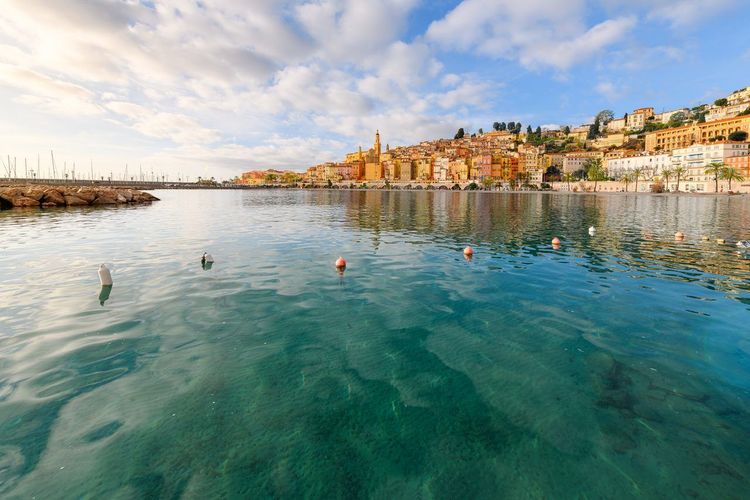
Wedged between the Italian border and the first foothills of the Mercantour, Menton has just under 30,000 inhabitants and concentrates along three kilometers of coastline everything a stay with young children requires: a pedestrian historic center, beaches supervised in summer, shaded gardens, and a climate that allows swimming from late spring onward.
A little history to set the scene. The city belonged to the Grimaldi of Monaco until 1848, declared itself a free city, and was then annexed by France in 1861 along with Roquebrune. This dual culture can still be heard in street names, seen in the ochre and pink facades typical of neighboring Liguria, and tasted on the plate. In the 19th century, the English and Russian aristocracy made a habit of wintering here to treat their lungs: they left behind villas, palaces converted into apartments, and above all a collection of botanical gardens that today earns Menton its classification as a Ville d'art et d'histoire.
The lemon, meanwhile, grows here year-round thanks to a rare microclimate: the mountain blocks cold northerly winds, the sea moderates temperature swings, and winter averages rank among the mildest in metropolitan France. The result is thick-skinned, intensely fragrant citrus fruit protected by a protected geographical indication, and an entire festival dedicated to the fruit each winter.
Why choose this destination over another Riviera town when travelling with young children? First, the size: the essentials can be explored on foot, without depending on a bus or a car. Then the pace, noticeably calmer than Nice or Cannes in July, which makes a real difference for parents of toddlers. And finally the Famille Plus label, which commits the municipality to six concrete promises: a personalized welcome, activities tailored to each age group, sliding-scale pricing, things to experience together or separately, all shops and services within easy reach, and staff trained to welcome younger visitors.
This guide then follows a simple geographical thread that's easy to replicate on the ground: the old town and its alleyways, the beaches and their water activities, the botanical gardens, the gourmet market halls, the human-scale museums, the Fête du Citron if your stay falls in February, then solutions for rainy days and excursions to the surrounding area.
Vieux-Menton and the Seafront: Alleyways and Viewpoints
The Old Town, the Basilique Saint-Michel, and the Vieux Château Cemetery
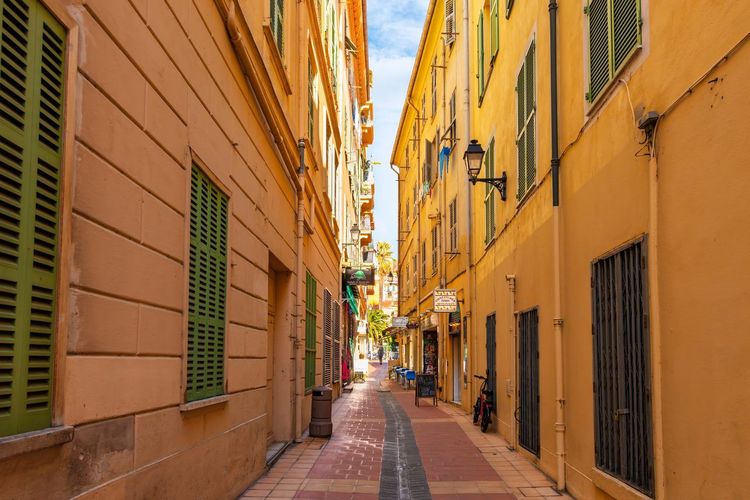
Wander through Vieux-Menton in the morning if possible, when shutters are still opening and the steep alleyways echo with the sound of crockery rather than groups of visitors. The stepped layout, inherited from the Middle Ages, turns a stroll through the city into a natural treasure hunt: counting steps, spotting vaulted passageways, guessing where each lane leads. The covered streets, known here as traverses, act as cool tunnels as soon as the heat rises.
The basilique Saint-Michel-Archange sits at the top of the old town. Its three-tiered baroque facade, completed in the 17th century, remains one of the finest examples of Ligurian religious art in France. Its forecourt, paved with black and white pebbles forming the Grimaldi coat of arms, serves as a stage each summer for a chamber music festival founded in 1950. Warn the youngest before going in: ten minutes of quiet, and the view from the forecourt makes it worthwhile.
Just above, the Vieux Château cemetery occupies the site of the old fortress and offers one of the finest panoramas in the city: the bay of Garavan on one side, the ochre rooftops of the center on the other. Several tombs of consuls, doctors, and foreign aristocrats from the 19th century serve as a reminder of the era of winter visitors who came to treat their chests in the fresh air. The ascent is via a steep staircase: baby carrier rather than stroller.
On the way back down toward the sea, the esplanade Francis Palmero offers a shaded pause with an open view over the port, handy for catching your breath before moving on. A short distance away, one curiosity often surprises the youngest visitors: the Russian Orthodox Church of Saint-Nicolas, topped with its bulb-shaped blue dome, bears witness to the Russian community that settled here from the late 19th century onward.
Port de Garavan, the Promenade du Soleil, and the Old Port
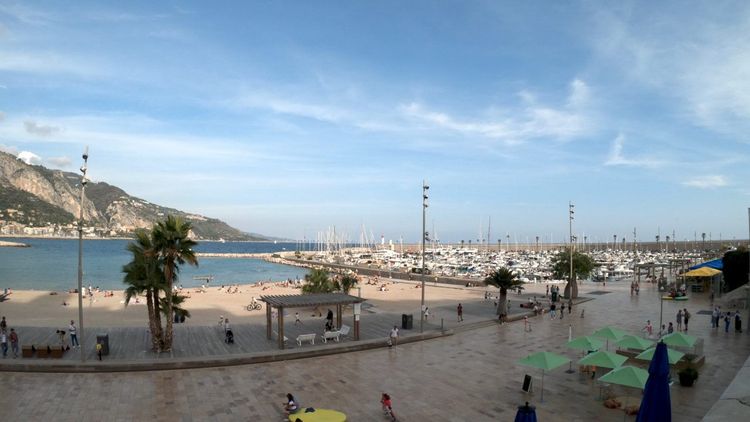
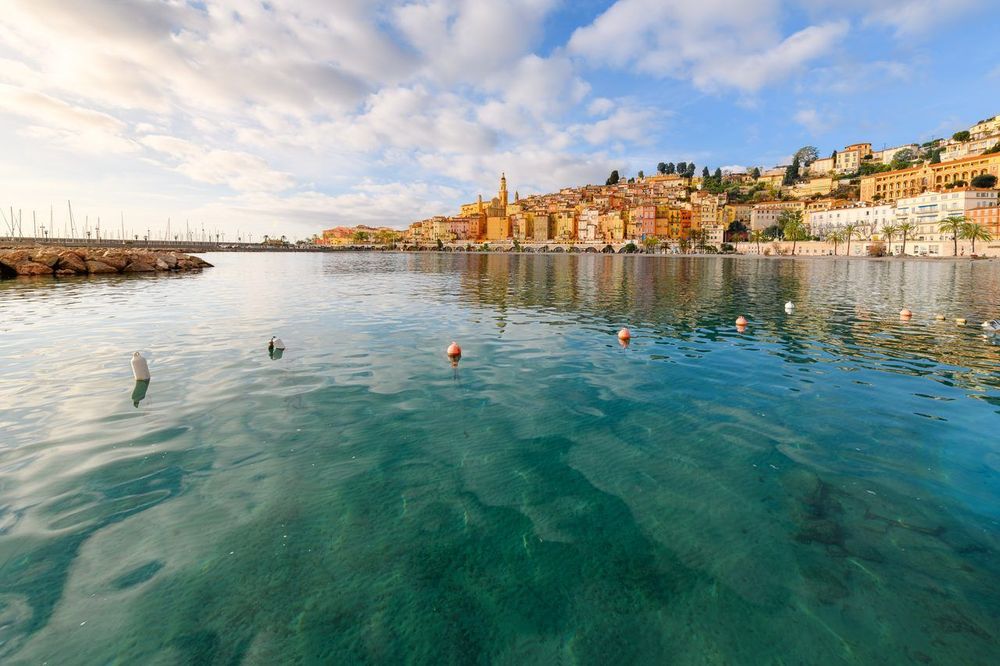
Take in the view of Vieux-Menton from the port de Garavan, at the eastern end of the city, almost at the Italian border. This marina, more recent and more peaceful than the old port, offers an unobstructed view over the entire bay: this is where you take the group photo at sunset, without the crowds of the central seafront.
The promenade du Soleil then connects this neighborhood to the town center over nearly two kilometers. Wide, flat, and lined with palm trees, it lends itself perfectly to strollers, scooters, and rental bikes. Benches facing the sea are plentiful, shade a little less so: aim for late afternoon in the height of summer.
At the foot of the old town, the old port retains the look of a fishing harbor, with its colorful boats moored along the quay. This is often where young children spot their first fish in the clear water, leaning over the parapet. Various spots in the town center also reward an unhurried detour: the place aux Herbes and its terraces, the entirely pedestrianized rue Saint-Michel, or the traverses climbing toward the basilica. It's in these spontaneous diversions that the best memory of the day is often made.
Find this entire route, with commentary at each step, on the La Perle de la France audio-guided tour: 23 audio tracks, 4.3 km, around two hours of walking including ice cream breaks.
Menton's Beaches: an Afternoon of Relaxation and Water Activities
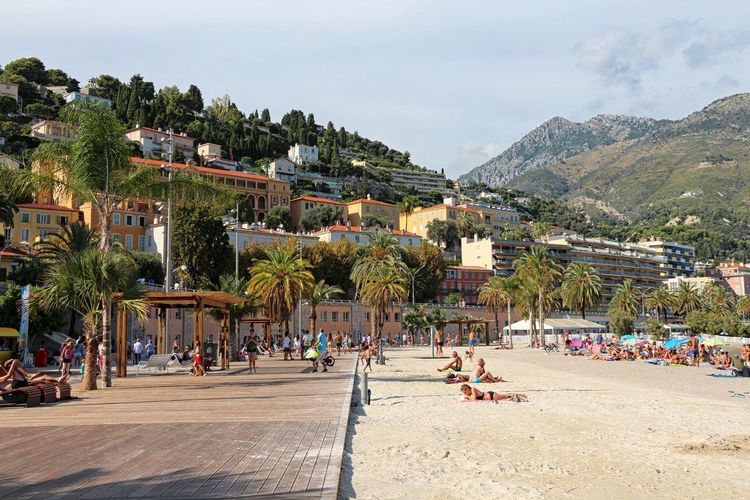
Where to swim in Menton? The answer is straightforward: head to the plage des Sablettes (Promenade de la Mer, 06500 Menton, rated 4.2/5 on Google with 607 reviews), the most central and best-equipped beach in the city. Set up and supervised in July and August, it offers restrooms, showers, a first-aid post, and ground-level access from the promenade de la Mer, making it the number-one choice when you're hauling a parasol, a cool box, and two more towels than planned.
Like most of Menton's beaches, it is made up of pebbles rather than fine sand. Bring water shoes for the youngest: it's the detail that turns an afternoon swim into a genuinely enjoyable experience. The promenade de la Mer runs the full length of the beach and lets you keep an eye on swimmers while walking, with a few shaded spots under tamarisk trees and several ice cream kiosks.
The spot is perfect for a lazy afternoon, but it would be a shame to stop there. Paddling in the bay completely changes your perspective: several watersports clubs along the seafront rent paddleboards and kayaks by the hour, with supervised introductory sessions available from around age 7 or 8 depending on the operator. Seeing the colorful facades of the old town from the water is well worth the effort of those first hesitant paddle strokes. Expect around fifteen euros an hour for a paddleboard, a little more for a two-seater kayak, life jacket included.
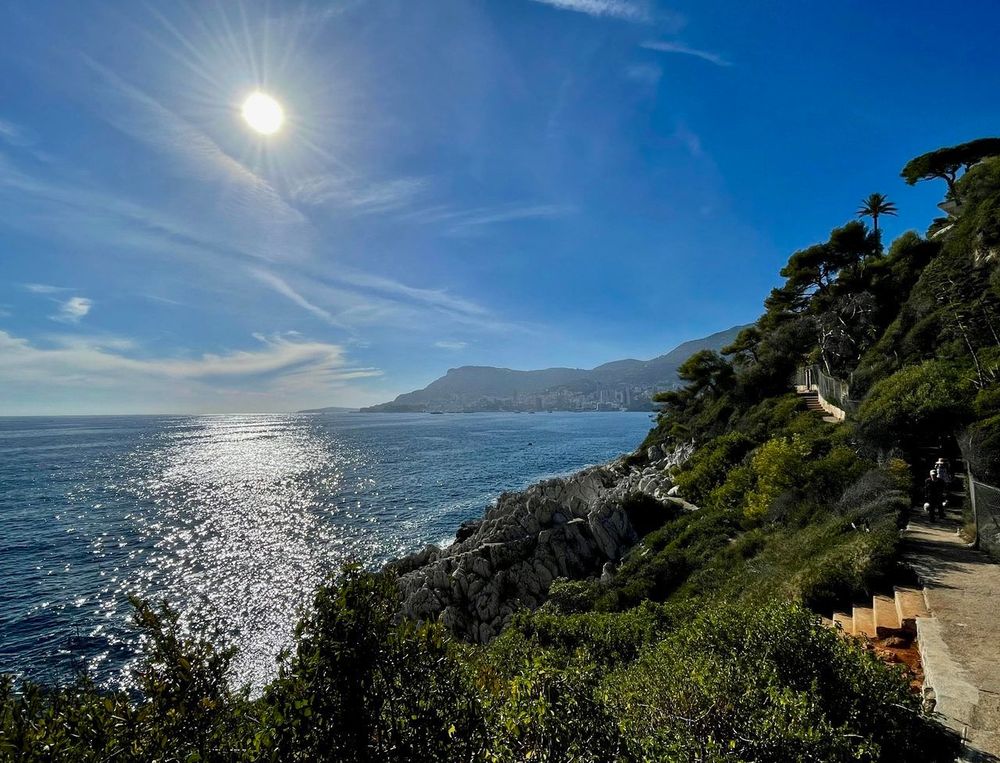
For a quieter moment, the plage du Fossan, below Vieux-Menton, and the coves near Garavan offer an alternative with fewer people at the height of the season. None, however, matches the facilities of the Sablettes for a full afternoon with a toddler. The coastal path heading toward cap Martin also makes for an easy one-hour walk at water level, as long as you set off early and bring plenty of water. Our Ryo article on Menton's beaches details every access point, shower availability, and supervised areas.
Menton's Gardens: an Open-Air Playground
Jardins Biovès and the Jardin du Palais Carnolès, in the Heart of the City
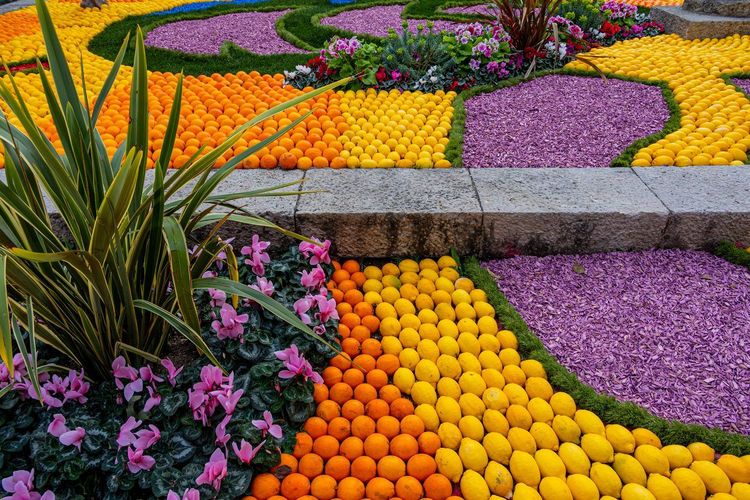
Menton's gardens number in the dozens; two are enough for a first introduction, and they are free. The jardins Biovès form the green artery running through the town center, from avenue Boyer down to the seafront. Open at all times, this space planted with palm trees, orange trees, and lemon trees hosts the giant sculptures of the Fête du Citron each winter, but remains a pleasant spot year-round for a picnic or a scooter ride between visits.
A ten-minute walk away, the jardin du palais Carnolès surrounds the former summer residence of the princes of Monaco, now a fine arts museum. Its paths shelter one of the richest citrus collections in Europe, with over a hundred varieties, and contemporary sculptures scattered among the trees: a ready-made treasure hunt to fill a late morning. Entry to the garden is free even when the museum is closed.
Val Rahmeh, Serre de la Madone, and Fontana Rosa: Botanical Escapes
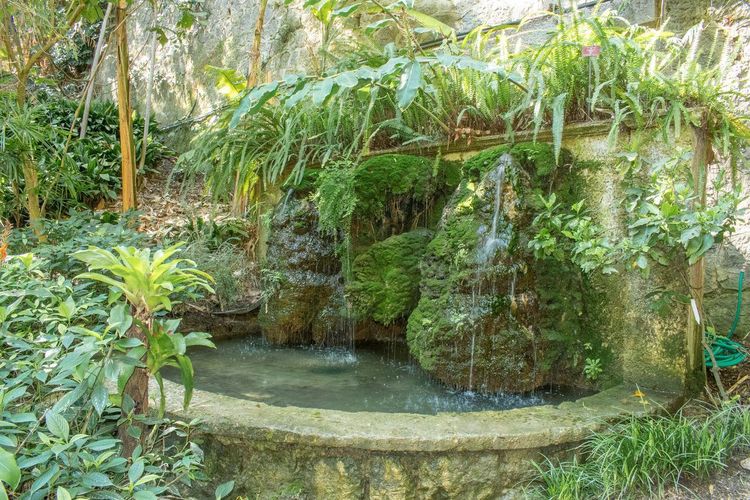
Three paid gardens are each worth a half-day, each with a strong identity. The Val Rahmeh botanical garden, owned by the Muséum national d'histoire naturelle, brings together tropical and subtropical species from around the world on a sloping terrain, with a giant water lily pond that never fails to impress. Allow an hour for the visit, ideally in the late morning before the heat builds.
The Serre de la Madone garden, laid out from the 1920s onward by British landscape designer Lawrence Johnston, rises in successive terraces up the hillside, with pools, staircases, and rare plants brought back from his botanical expeditions. Less frequented than the others, it leaves plenty of room to run from terrace to terrace without disturbing anyone.
The Fontana Rosa garden, conceived by Spanish writer Vicente Blasco Ibáñez as a tribute to literature, is visited on a guided tour by reservation. Colorful ceramic benches, busts of authors, and flowering pergolas create an almost theatrical setting; the guided format suits children over eight better than toddlers.
For a genuinely active break, the parc départemental du Pian (Route du Pian, 06500 Menton, rated 4.4/5 on Google with 443 reviews), on the heights of Garavan, features a centuries-old olive grove, large shaded picnic tables, a playground, and easy woodland trails. Entry is free and, once inside, you completely forget the seafront just a few minutes away.
The Municipal Market Halls and Menton's Sweet Flavors
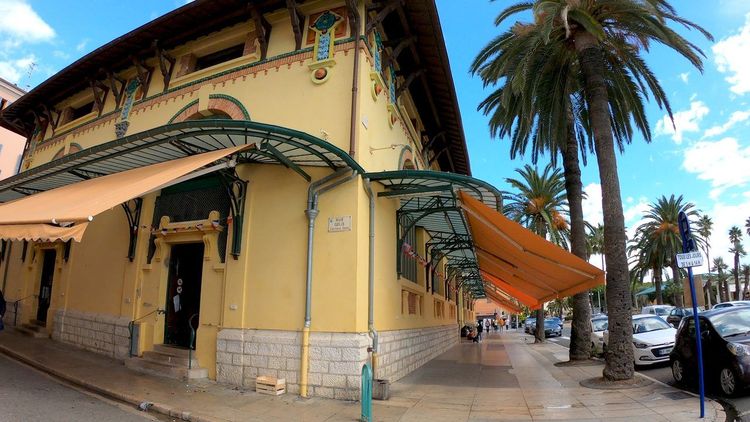
Shop at the municipal market halls: between the port and the old town, this late-19th-century building, all bricks and colorful ceramics, is bursting with colors and flavors. Fish landed that same morning, cheeses, warm socca, cut flowers, and of course citrus fruit stacked in pyramids in front of the stalls.
Younger visitors enjoy spotting the biggest lemon in the market or asking for every sample offered by the stallholders, who tend to be patient with curious little ones. It's also a good moment to explain in a couple of sentences, without a lecture, why an entire city celebrates a piece of citrus fruit every winter. The market halls open every morning and spill out into the open air along the neighboring quay on the busiest days.
Try the lemon jam before you leave. Maison Herbin (2 Rue du Vieux Collège, 06500 Menton, rated 4.5/5 on Google with 349 reviews), a short walk from the market halls, cooks its jams in copper cauldrons and offers workshop visits: you can watch the fruit travel from crate to jar, and the tasting that follows fills the gap between two visits quite nicely. Lemon, mandarin, kumquat, bitter orange, or watermelon-mint — each pot travels easily in a suitcase and costs just a few euros.
And for dining out? The seafront has several spots used to stroller-friendly groups, with high chairs and small portions available without having to ask. Wood-fired pizzerias along the waterfront remain a reliable choice for a quick lunch between visits, while tables tucked into the alleyways offer a quieter setting in the evening. Our Ryo article on Menton's culinary specialties details the dishes to try first, from socca to barbajuan and lemon meringue tart.
Menton's Museums: Short, Easy-to-Digest Visits
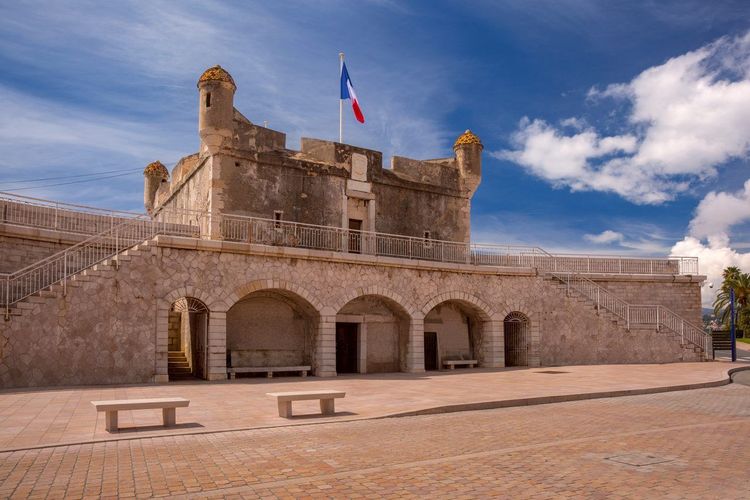
Musée Jean Cocteau and the Fine Arts Museum
Menton's museums have one decisive advantage: none requires more than an hour. The Bastion, a small 17th-century fort perched on the old port, was fitted out by Jean Cocteau himself in the final years of his life. It houses his pebble mosaics, drawings, and ceramics, with floors and walls entirely decorated in ways that invite visitors to hunt for hidden patterns. Thirty minutes flat, which is just right.
The Musée Jean Cocteau collection Séverin Wunderman, a large contemporary building designed by Rudy Ricciotti alongside the quay, holds the exceptional donation made to the city in 2005, comprising nearly 1,800 works. Severely flooded by Storm Alex in October 2020, it remained closed for several years: check its opening status before visiting, as part of the collections is shown on a rotating basis in the other municipal museums.
The Fine Arts Museum, housed in the palais Carnolès mentioned above, presents a collection ranging from Italian primitives to modern art. The visit is more traditional, but short, and the citrus orchard surrounding it allows an immediate break on the way out.
Musée de Préhistoire Régionale and the Contemporary Art Gallery
The Musée de Préhistoire Régionale is the most hands-on stop of the lot. Here you discover the Menton Man, a skull adorned with a headdress of shells and deer teeth uncovered in 1872 in the nearby Grimaldi caves, along with reconstructions, flint tools, and bones of extinct animals that immediately capture a young audience's attention. Many children leave here more talkative than after a room full of paintings.
The contemporary art gallery (Palais de l'Europe, 8 Avenue Boyer, 06500 Menton, rated 5/5 on Google with 1 review) at the palais de l'Europe, right in the heart of the jardins Biovès, hosts temporary exhibitions renewed several times a year. Better suited to teenagers curious about contemporary art than to toddlers, it rounds off a morning already well spent at the Prehistory Museum, a five-minute walk away.
The Fête du Citron: February's Must-See Event

Make the most of the Fête du Citron if your stay falls between mid-February and early March: this one-of-a-kind event transforms the jardins Biovès into an ephemeral exhibition garden, filled with monumental sculptures entirely clad in citrus fruit. Each edition mobilizes more than a hundred tonnes of lemons and oranges, fixed fruit by fruit onto metal frameworks by a team that works weeks in advance.
Each year follows a different theme, from cinema to folk tales, and the figures come to life before the eyes of younger visitors, who rarely get to see a life-size dragon fashioned from yellow and orange fruit. At weekends, the corsi des fruits d'or parade along the promenade du Soleil with floats, brass bands, and costumed groups; the night-time corsi add lights and music, a spectacle that easily keeps little ones awake well past bedtime.
On the practical side, entry to the jardins Biovès is paid, with reduced rates for younger visitors and free entry below a certain age depending on the edition; grandstand seats for the corsi are booked separately. Buy your tickets online in advance: queues can easily exceed an hour at weekends, a wait that's hard to manage with a stroller. A ground-level tip: visiting the gardens on a weekday, right at opening time, avoids the bulk of the crowds. Our Ryo article on the Fête du Citron details the program, the corsi timetables, and the best vantage points.
Activities and Outings Specially Designed for Younger Visitors
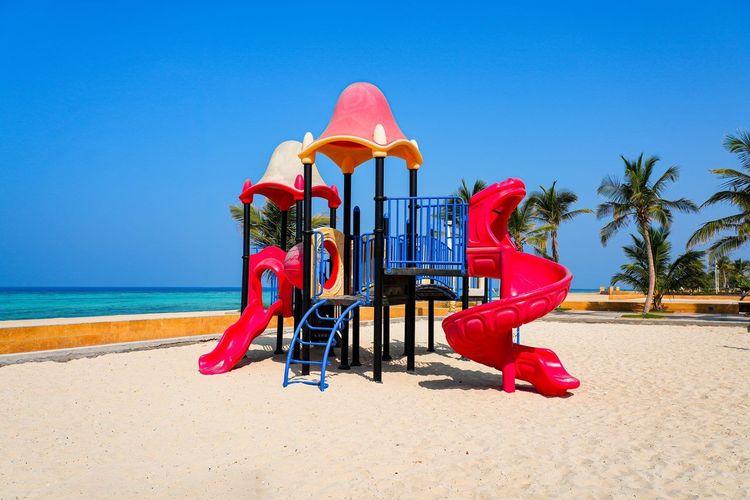
What can you do in Menton with children beyond the classic visits? The city has numerous freely accessible playgrounds, often set up with sea views: the one in the jardins Biovès, the one on the promenade du Soleil near Garavan, and the largest, in the parc du Pian. All are free and provide an active break between two cultural visits.
The program adjusts mainly according to age. Under three, walking is kept to a minimum thanks to the flat seafront and the compact town center: beach in the morning, nap, gardens in the afternoon, and the day is done. Between 6 and 12, the paid botanical gardens become a quest for exotic plants, the Prehistory Museum holds attention without effort, and the tourist train that runs in season spares parents end-of-day negotiations. Teenagers, meanwhile, prefer paddleboarding in the bay, climbing to Sainte-Agnès, or exploring the nearby Italian border almost independently.
What can you do in Menton when it rains? The question comes up quickly, even though the local sunshine record ranks among the most generous in the country. Museums are the first instinct, with the Bastion and the regional Prehistory museum leading the way for their short format. The covered municipal market halls offer a sheltered interlude with something to look at on every stall. The municipal media library has a children's area open to all, useful for an hour or two. Finally, several venues in the Menton, Riviera & Merveilles area offer creative workshops, film screenings, and occasional leisure programs — check with the tourist office depending on the time of year.
The wider area never runs short of ideas for the rest of the year: easy hiking trails in the hinterland, supervised snorkeling sessions along the coastal path, visits to citrus farms with local producers outside the festival season, or the vallée des Merveilles and its rock engravings for seasoned walkers. The Famille Plus label extends even to the choice of accommodation, identifiable by their dedicated signage at the tourist office. To put together a tailor-made program without spending the evening on it, our Ryo guide to activities in and around Menton lists the best options by age group — the audio-guided tour itself makes a good fallback plan, looping past the market hall and along the Promenade du Soleil.
Day Trips around Menton
The Hilltop Villages of the Menton Hinterland
What is there to see nearby when you feel like a change of scenery for half a day? The Menton hinterland lines up hilltop villages reachable in under thirty minutes by road, a complete change of atmosphere just a few kilometers from the seafront. Sainte-Agnès (06500 Sainte-Agnès), often described as the highest coastal village in Europe, sits at around 800 meters with a vertiginous view over the entire bay. Its vaulted alleyways and the military fort carved into the rock — the southernmost outpost of the Alpine Maginot Line — easily fill a morning of exploration.
Gorbio, nestled in the neighboring valley, charms with its absolute quiet and the elm planted on the village square in the early 18th century. Castellar, less well known, features a fishbone urban layout unique in the region and serves as a starting point for several easy trails, walkable on the first stretches even for short legs. These villages are connected to Menton by inexpensive buses, but departures are infrequent: check the last return time before setting off. Allow half a day to combine two without rushing.
Heading to Nice, Monaco, and the Italian Riviera
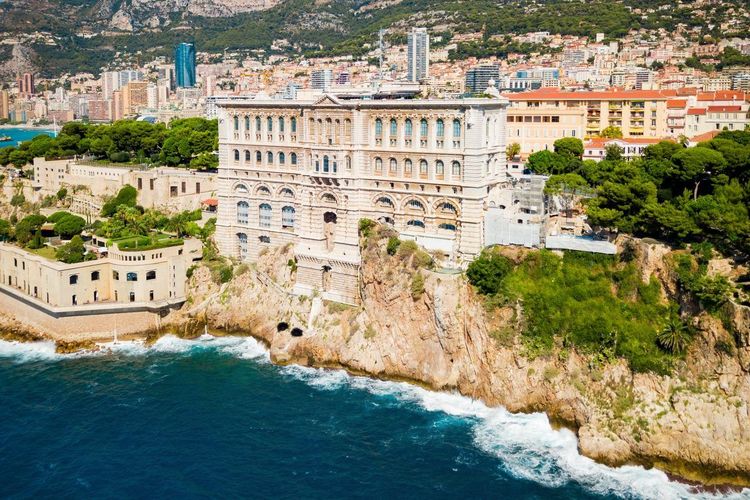
Monaco is about ten minutes away by train, with an oceanographic museum that remains one of the safest bets on the Côte d'Azur: a touch pool, Mediterranean aquariums, and sharks in the basement. Further along, Nice is worth a full day, from the promenade des Anglais and the old town to the Colline du Château and the games in the jardin Albert Ier. The train hugs the coast and turns half the journey into a spectacle; between Nice and Menton, Villefranche-sur-Mer, Èze-sur-Mer, and Roquebrune-Cap-Martin each deserve a stop.
What is there to do in Liguria on the Italian side? The border can be crossed on foot from Garavan in just under an hour, or in a few minutes by train. Vintimille hosts a huge open-air market every Friday, a guaranteed sensory experience and a paradise for bargain hunters looking for three-euro swimsuits. A little further on, the medieval village of Dolceacqua and its humpback bridge painted by Monet, or the seaside resort of Bordighera and its palm trees, round out a full-day excursion. Simply remember to bring a form of ID for everyone.
Practical Information for Planning Your Stay in Menton
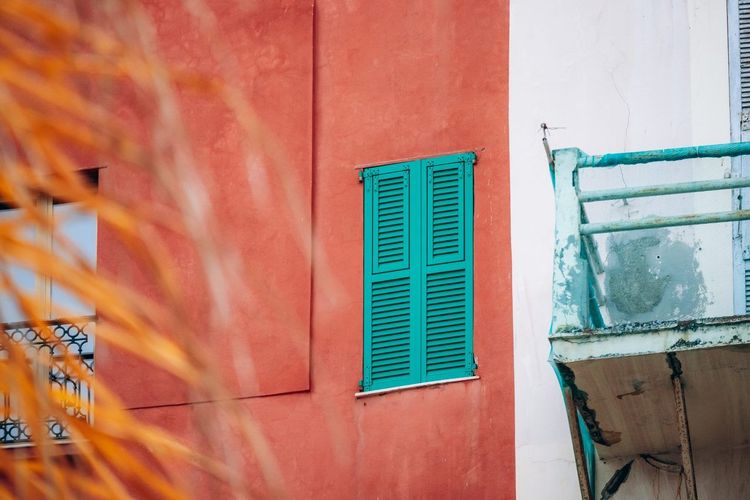
A word first on Menton's layout, which is easy to remember: the city revolves around three zones. Vieux-Menton and the historic center concentrate the cultural visits and pedestrian streets; the Garavan neighborhood, to the east, is residential, green, and quiet, with the finest gardens; the Sablettes and station area groups hotels, shops, and direct beach access. The whole thing fits into a rectangle of roughly three kilometers by one.
How to Get to Menton (Train, Bus, Car)
The train remains the simplest option from Nice: the TER hugs the coast, takes around forty minutes, and serves two stations in the city, Menton and Menton-Garavan. It's also the most comfortable mode of transport with a stroller, without worrying about parking or traffic on the lower corniche. From Nice airport, allow around an hour and a half door to door combining tram and train.
The bus works well too: regional lines on the Zou! network run along the coast between Nice and Menton at a flat fare, a slower but scenic alternative for taking in the corniche from the window. Urban lines also serve the upper areas and hilltop villages from the bus station.
By car, the A8 motorway serves the city directly. Parking becomes noticeably trickier in July and August around the seafront: opt for underground car parks in the center, or park once on your first day and leave the keys alone until departure.
Where to Stay and How Long to Visit
Where to stay in Menton? The Sablettes and town-center area remains the most convenient: everything is walkable, beach included. Garavan appeals to those looking for peace and quiet, even if it means a slightly longer walk to the historic heart. The upper neighborhoods, around Carnolès or Borrigo, have several residence-style properties with pools, well suited to a week-long stay, provided you're happy with a hill on the way back from the beach.
How long to stay? Two days are enough for the old town, a beach, and a garden. Three days allow you to add the museums, the market halls, and an excursion to the hinterland or nearby Italy, at a comfortable pace that still leaves room for naps and spontaneity. A week is worthwhile if you plan to venture out to Monaco, Nice, and Liguria.
When to visit? Spring, from April to June, and early autumn, in September and October, offer the best compromise: pleasant temperatures, swimmable or still-warm sea, and crowds well below those of July and August. February is unmissable for the Fête du Citron, as long as you accept cooler days and hotels booked up well in advance. Book your Ryo audio-guided tour of la Perle de la France before you go to shape your itinerary around the season you have chosen.

FAQ
How Many Days Should You Plan for Menton?
Two days are enough to discover Vieux-Menton, a beach, and a garden. Three days let you add the museums, the market halls, and an excursion to the hinterland or nearby Italy without ever feeling rushed.
Is Menton Suitable for Toddlers?
Yes: the town center is flat and pedestrian-friendly, the promenade du Soleil can be covered by stroller for nearly two kilometers, and the city holds the Famille Plus label, which guarantees adapted facilities in shops and at visitor sites.
What is the Best Beach in Menton for Young Children?
The plage des Sablettes remains the benchmark: central, supervised in season, equipped with restrooms, and accessible at ground level from the promenade. Bring water shoes, as Menton's beaches are mostly made up of pebbles.
What is the Best Time of Year to Visit Menton?
Spring and early autumn offer the best balance between pleasant weather and moderate crowds. February draws fans of the Fête du Citron, while July and August bring heat, high prices, and large crowds.
How Do You Get around Menton without a Car?
The TER from Nice takes around forty minutes and serves two stations in the city. On the ground, the historic center and the seafront are entirely walkable; regional buses take over for Monaco, Italy, and the hilltop villages.
Are Menton's Gardens and Museums Free?
It depends on the site: the jardins Biovès, the jardin du palais Carnolès, and the parc du Pian are freely accessible, while Val Rahmeh, the Serre de la Madone, and the municipal museums charge reduced rates or offer free entry to younger visitors depending on their age.
What Can You Do in Menton When It Rains?
The museums (Bastion, regional Prehistory), the covered municipal market halls, the media library, and the supervised activity venues of the Menton, Riviera & Merveilles area all offer enough to fill a rainy day without going in circles.
Menton ultimately reveals itself at stroller height, between short alleyways, an accessible beach, and gardens that unfold like open-air playgrounds. Whether your stay lasts two days or a full week, the city offers enough variety to alternate brief cultural visits, swimming afternoons, and escapes to the hinterland or nearby Italy, without ever depending on a car for the bulk of the program.
To plan each step without spending hours on it, the audio-guided tour of Menton remains the simplest starting point: a route that tells its story as you walk, suited both to those who want to see everything in two days and to those who prefer to stop at every lemon ice cream.