© Shutterstock
 Votre guide Ryo
Weekend in Menton in 2026: Complete Itinerary among Lemon Trees, Baroque Alleys and the Sea
On Saturday morning, Menton smells of lemons before the market halls even fill up. A weekend in Menton is built around that citrus scent drifting from the gardens to the port, between 17th-century Italianate façades and steep paths climbing towards neighbouring Italy, just a few minutes away by road. In two days, you can climb the steps of the Basilique Saint-Michel, lose yourself in a garden listed as a historic monument, dip your feet in still-warm water in September and venture up to a hilltop village where you hear almost as much Italian as French. This guide follows a chronological route, from Saturday morning to Sunday evening, with addresses, walking distances and the budget to plan for each stage. To keep track of the city's history while you walk, the Ryo audio-guided tour of Menton accompanies your stroll: 22 commented stops between the old town and the seafront, over 4.8 km.
Strolling through Old Menton and Admiring the Basilique Saint-Michel
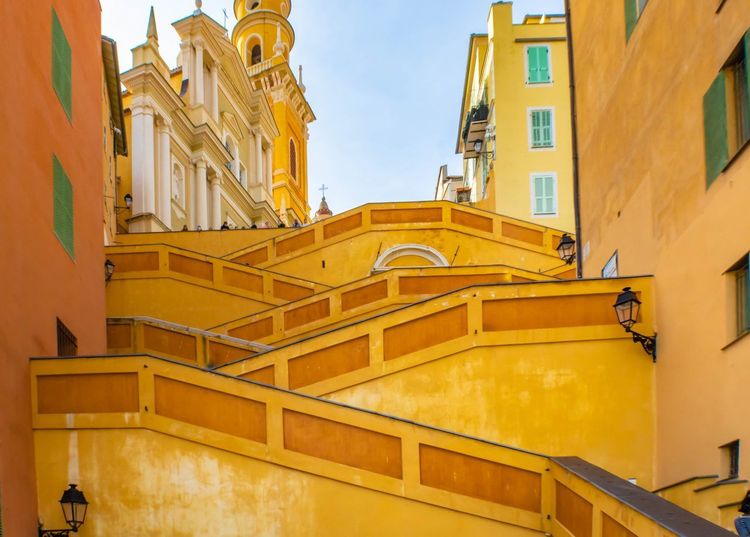
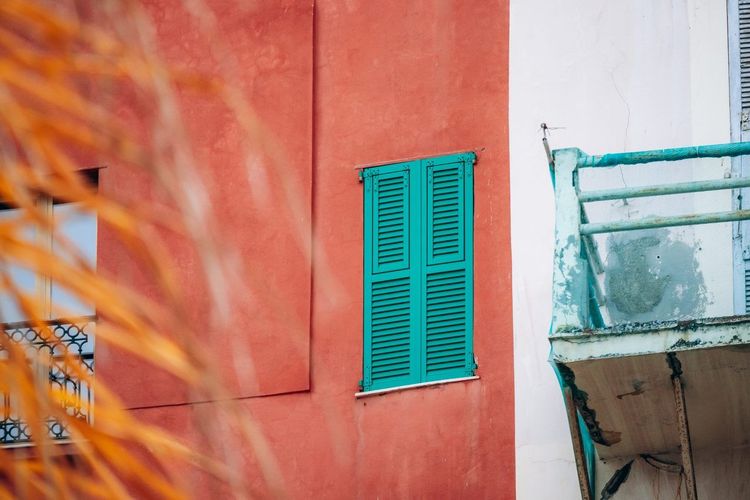
Old Menton climbs in steps from the seafront to the top of the hill, and it is on the way up that you understand its medieval urban layout: the alleyways narrow, the façades are painted yellow, powder pink and burnt ochre, and lines of laundry link windows from one side to the other. Start with rue Saint-Michel (Rue Saint-Michel, 06500 Menton), the pedestrian shopping street that runs along the foot of the old town and leads into the lateral lanes, almost all of them stepped.
At the top of the ramp stands the Basilique Saint-Michel Archange (Parvis Saint-Michel, 06500 Menton, rated 4.7/5 on Google from 1,625 reviews), often described as the largest Baroque church in the region, built in the 17th century above a forecourt paved with black and white pebbles arranged in the Grimaldi coat of arms. The interior is worth lingering over: a monumental organ, gilded altarpieces and a bell tower that dominates the entire neighbourhood.
From this forecourt, the view plunges down over the ochre rooftops and across the bay as far as Garavan. It is one of the best free viewpoints in the city, almost deserted before 10 a.m. Visiting Menton on foot presents no particular difficulty: allow a good hour for this neighbourhood alone, a little more if you deliberately get lost in the side streets, which is frankly recommended on a Saturday morning. Push on to the cimetière du Vieux-Château right at the top: the tombs of English and Russian aristocrats from the Belle Époque look out to sea.
This is typically the kind of neighbourhood where an audio commentary transforms the visit: the Ryo audio-guided tour tells the story of the façades and Menton's families as you climb the steps, with no group guide or panels to decipher.
Shopping at the Municipal Market Halls and Taking a Foodie Break
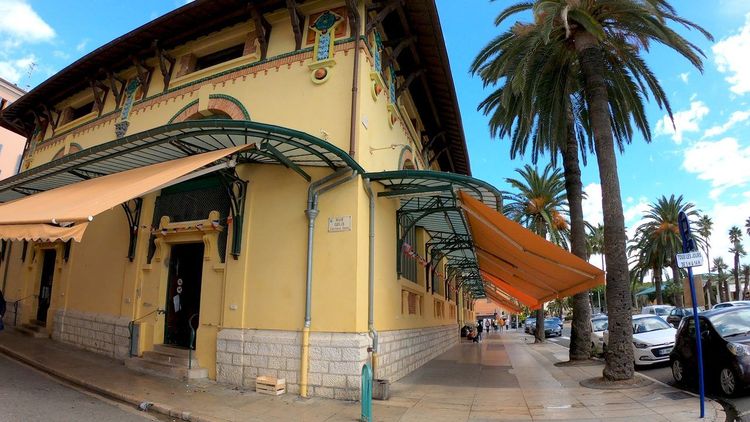
Halfway between the port and old Menton, the Municipal Market Halls welcome around thirty traders every day from 7:30 a.m. to 1 p.m. (slightly fewer stalls on Mondays). The 1898 building, with its polychrome ceramics from the Menton-based Saïssi factory, is worth a look in its own right. Fresh fish, hinterland cheeses, courgette flowers ready to stuff: it is the locals of Menton who do their shopping here, not just tourists.
Two addresses are worth a detour for a foodie break. Restaurant Leone serves simple Mediterranean cuisine, often centred on fish: remember to book for lunch, as tables go quickly. At Place Saint-Roch, La Socca de Mémé sells its chickpea pancake from 9 a.m. to 1 p.m., to take away or eat in, hot and crispy at the edges.
Come towards the end of the morning, but not too late: the best stalls empty quickly and the socca disappears well before lunchtime.
Celebrating the Lemon Festival and Visiting the Maison du Citron
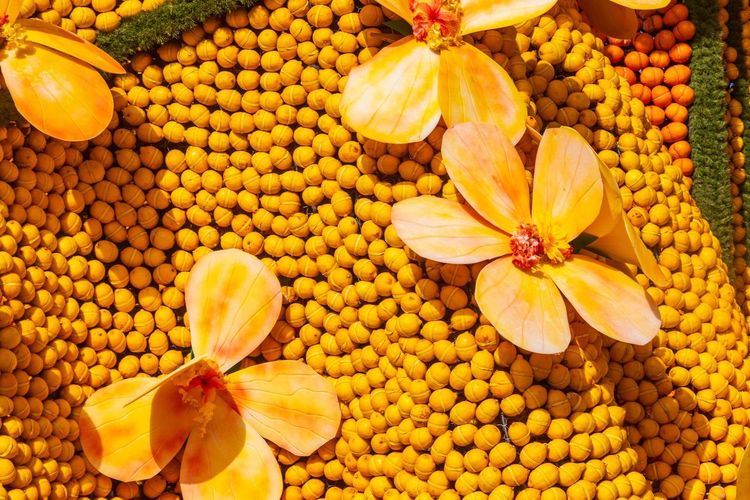
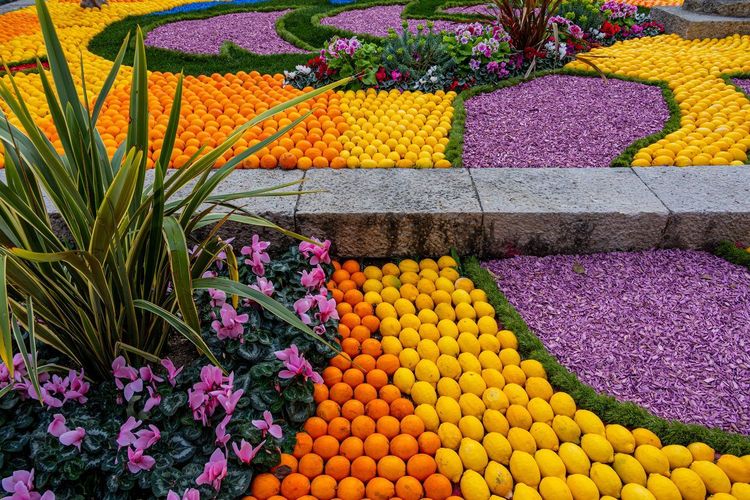
Menton would not be Menton without its favourite citrus fruit. Every February since 1934, the city has hosted the Fête du Citron, which transforms the jardins Biovès into giant sculptures made of tonnes of lemons and oranges, on a theme that changes each year. Even out of season, the imprint of the lemon remains visible everywhere: on market stalls, in shop windows, even in restaurant desserts.
To see real lemon trees, head up to the heights of Garavan and the Maison du Citron (Maison Gannac), a family lemon grove farmed organically that produces IGP-certified Menton lemons. The Gannac family leads tours of their 250 trees, including more than a hundred lemon trees, ending with a tasting: jams, lemonade, liqueur. Book in advance, as visits are held in small groups.
In the town centre, Maison Herbin (Rue du Vieux Collège, 06500 Menton, rated 4.5/5 on Google from 359 reviews) has been making citrus jams and marmalades for decades: classic lemon, but also kumquat, bergamot and bitter orange. Tasting the lemon jam at the counter and leaving with a jar will give you a far more genuine souvenir than a fridge magnet.
If you are aiming for February, our article on the Lemon Festival in Menton helps you plan your stay around the 2027 edition and choose between daytime parades and night-time processions.
Exploring Menton's Gardens: Serre de la Madone and the Green Diamonds of the Riviera
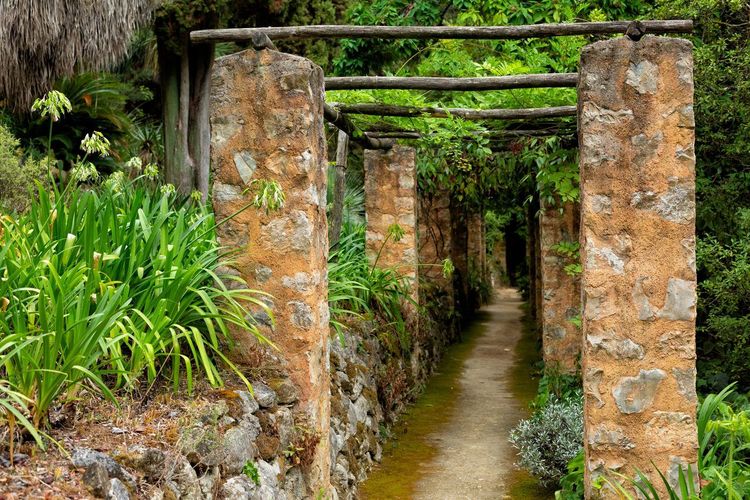
Menton enjoys an almost tropical microclimate, sheltered from the wind by an amphitheatre of hills, and the city has made this its horticultural signature. Few towns on the Côte d'Azur concentrate so many remarkable gardens in such a small area.
The Serre de la Madone, created between 1924 and 1939 by British botanist Lawrence Johnston (already the creator of the famous Hidcote garden in England), covers around six hectares, three of which are terraces where rare plants from Asia, South Africa and Latin America have been acclimatised. Listed as a historic monument in 1990, it was saved from ruin just in time. Entrance costs 10 euros; a 90-minute guided tour costs 15 euros on Tuesdays, Thursdays and Saturdays.
If time allows, continue to the jardin botanique Val Rahmeh (Avenue Saint-Jacques, 06500 Menton, rated 4.6/5 on Google from 2,470 reviews), more modest but managed by the National Museum of Natural History, specialising in tropical and subtropical, fruit-bearing and medicinal plants. Admission costs around 7 euros. Both gardens make up what is fondly called the green diamonds of the Riviera: collections assembled by enlightened enthusiasts at the start of the 20th century who had made Menton their experimental ground.
Unwinding at the Parc du Pian, the Weekend's Relaxation Break
Between two busy visits, the Parc du Pian (Boulevard de Garavan, 06500 Menton, rated 4.4/5 on Google from 448 reviews) offers a welcome breathing space. This three-hectare olive grove, laid out in terraces facing the sea, contains 540 olive trees, some of them several centuries old. You can enter via avenue Blasco-Ibanez or boulevard de Garavan, free of charge and year-round.
Bring a picnic from the market halls: the lawns in the shade of the olive trees are perfect for it.
Following in Jean Cocteau's Footsteps in Menton
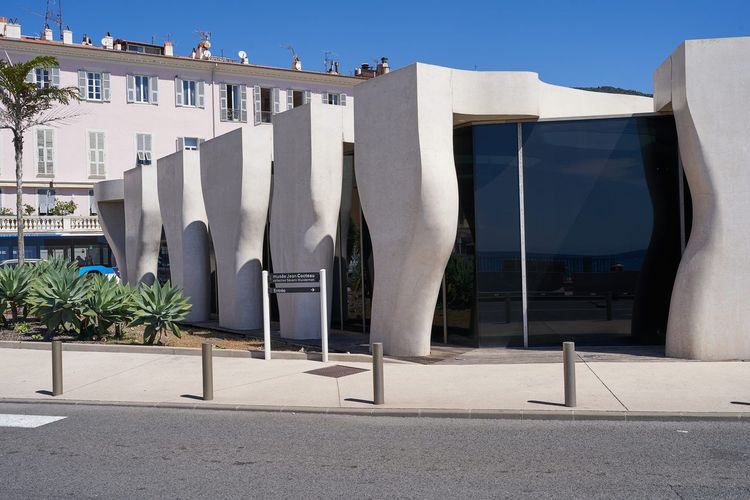
Jean Cocteau left a strong mark on Menton, and two places allow you to appreciate it in under an hour. The Musée Jean Cocteau Le Bastion (Quai Napoléon III, 06500 Menton, rated 4.2/5 on Google from 368 reviews), housed in a small 17th-century coastal fort at the end of the port, is the first museum dedicated to the artist, opened in 1966. It hosts the exhibition 'Jean Cocteau, Le château de la Bête' until 16 November 2026 and opens every day except Tuesday. The large Séverin Wunderman collection building near the market halls remains closed following flood damage.
On a weekday, also pop into the wedding room of the town hall, entirely decorated by Cocteau: entrance costs 2 euros, open Monday to Friday during office hours. Note that it is closed on Saturdays and Sundays: if you arrive on a Friday, that is the moment to visit.
Beach Day and Water Activities: Sablettes and a Paddle Tour of the Bay
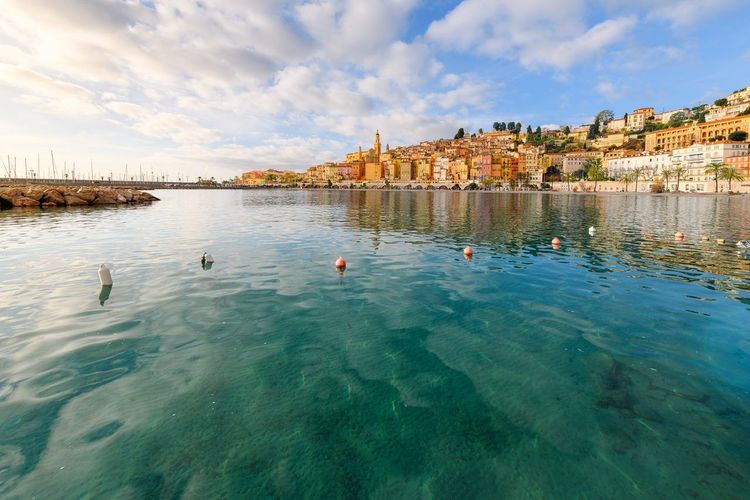
Sunday morning shifts to a different pace. Head to the Plage des Sablettes (Promenade de la Mer, 06500 Menton, rated 4.2/5 on Google from 618 reviews), at the foot of old Menton, with its fine sand and the old town climbing right behind you. Arrive early in July and August: it is the most central beach, and therefore the busiest.
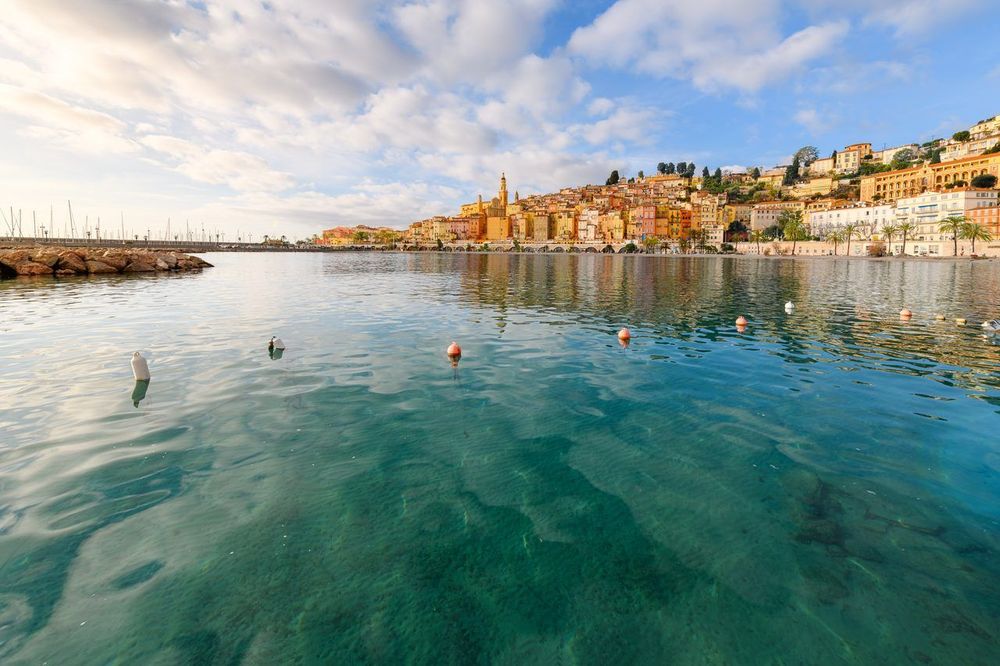
For a change of perspective, several rental outfits offer paddleboarding or kayaking in the bay of Menton. Seen from the water, the city reveals a different face: the colourful façades of old Menton stand out against the mountain backdrop, and you can make out the route of the promenade you walked the day before.
Allow one hour of rental for a first try, two if you want to follow the coast as far as the port of Garavan and back. In the morning, the sea is often calmer, making it easier for beginners to find their balance.
Strolling along the Bay Eastward to the Port of Garavan
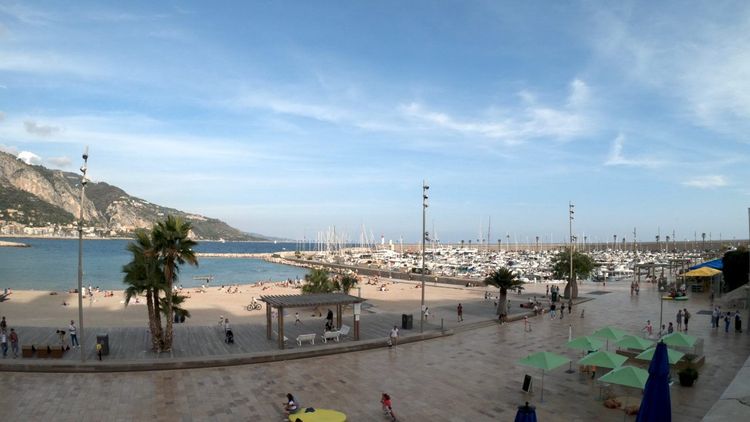
After a swim, follow the seafront eastward. The promenade passes the old port and then reaches the residential neighbourhood of Garavan, where Belle Époque villas hide behind gates covered in bougainvillea. The neighbourhood is quiet, almost entirely residential, the opposite of the bustle of the town centre.
The port de Garavan (Avenue Katherine Mansfield, 06500 Menton, rated 4.4/5 on Google from 1,080 reviews) closes off the bay to the east, a stone's throw from the Italian border, and offers — when you turn around — the most photogenic viewpoint over the ochre rooftops of old Menton piled up to the basilica.
If you prefer to complete this entire coastal loop with headphones on, the Ryo audio-guided tour of Menton takes around 2 hours: enough to connect the old town and the seafront while listening to stories about the 'pearl of France' rather than consulting a map.
An Excursion into the Menton Hinterland and the Most Beautiful Border Villages
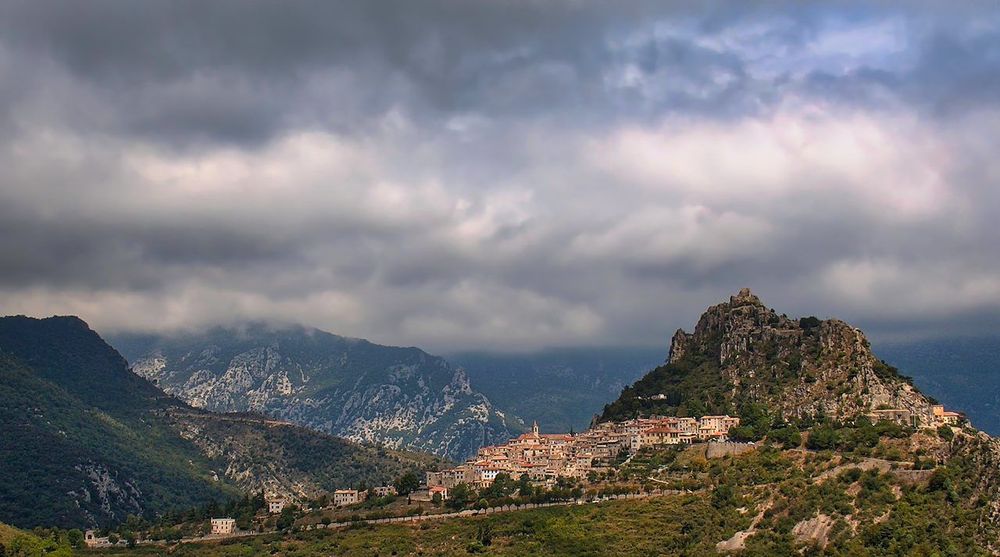
If your weekend stretches to three days, or if you have a car, the Menton hinterland is well worth the detour. In a quarter of an hour by road, you leave the seaside atmosphere behind for hilltop villages that seem to belong to another century.
Sainte-Agnès, often cited as the highest coastal village in Europe, peaks at 780 metres and offers a sweeping view over the entire bay as far as Bordighera on the Italian side. Its Maginot Line fort, carved into the rock, can be visited. Gorbio, perched at 360 metres, retains a more discreet charm with its vaulted passageways and its elm tree planted in 1713 on the square — the year of the Treaty of Utrecht — now classified as a remarkable tree.
On the border side, the Italian town of Vintimille can be reached in a few minutes by train, and its large Friday market still draws many visitors from Menton. The change of scenery is complete just a few kilometres from Menton, making it a credible option for a half-day. To link these villages on foot, our article on hiking around Menton details the trails.
Where to Stay in Menton for a Successful Weekend
The choice of a hotel in Menton depends mainly on the neighbourhood you are targeting. For direct walking access to old Menton, the market halls and the basilica, opt for the town centre, around rue Partouneaux and the jardin Biovès: you will be five minutes from everything, even if that means giving up a sea view.
In Garavan, establishments are quieter and often have gardens and bay views, at the cost of a fifteen-to-twenty-minute walk to the centre. Near the Sablettes, you will find places oriented towards the beach, practical if the sea is the priority of the trip.
Book six to eight weeks in advance for a spring or summer weekend, and much earlier for the Lemon Festival: Menton remains a very popular short break for residents of Nice and Monaco.
Where to Eat in Menton: Our Top Picks
Beyond Leone and the socca de Mémé, Menton has a dense culinary scene for its size, driven by its Italian proximity and the abundance of citrus fruit and fish. Restaurants near the port focus on the daily catch, while tables in old Menton lean towards Mentonnais and Niçois cuisine: barbajuans, pissaladière, courgette flower fritters, lemon tart.
For a more refined dinner, several addresses along the seafront and in Garavan use the Menton lemon in both savoury dishes and desserts. Budget between 20 and 35 euros for a full meal, noticeably more at establishments with a view.
To go further, our article on Menton's culinary specialities lists the typical dishes and pastries to try during your stay.
How to Get to and Get around Menton
Menton is easily reached from Nice: allow around 35 to 45 minutes by regional train from Nice-Ville, with a one-way ticket costing under 10 euros. By car, the A8 motorway links the two cities in forty minutes to an hour, depending on summer traffic.
Once there, a car becomes almost unnecessary: the historic centre, the market halls, the basilica, the Bastion and the seafront can all be covered on foot within a compact perimeter. Only the Serre de la Madone, the Maison du Citron or the hinterland justify a vehicle or a taxi; the local bus network also serves these sites.
How Long to Stay and What Budget to Plan for a Weekend in Menton
Two full days are enough for the essentials: old Menton, the basilica, the market halls, a garden, Cocteau and the beach. Visiting Menton in a single day is still possible if you focus on the historic centre and the seafront, but you will then have to sacrifice the gardens or the hinterland.
On the budget side, an affordable weekend in Menton is perfectly achievable: old Menton, the basilica, the Parc du Pian and the beaches are free, and a simple hotel outside peak season can be found for around 90 to 120 euros per night. Budget 15 to 20 euros per day per person for snacks on the go (socca, barbajuans, pastries), 7 euros for Val Rahmeh, 10 euros for the Serre de la Madone and 2 euros for the wedding room.



FAQ
How long does it take to visit Menton?
Two full days allow you to cover old Menton, the Basilique Saint-Michel, the market halls, a botanical garden and the Plage des Sablettes at a relaxed pace. One day is enough for the essentials of the historic centre if time is short.
What is the best time for a weekend in Menton?
Spring (April–June) and early autumn (September–October) offer pleasant temperatures without the crowds of July and August. February stands apart with the Lemon Festival, but hotels are fully booked weeks in advance.
How do you get around Menton without a car?
The town centre is entirely walkable. For more outlying gardens or the hinterland, the local bus network supplements walking, and the train connects Menton to both Nice and Vintimille.
Where should you stay in Menton for a short break?
The town centre, around rue Partouneaux, offers the best compromise between budget and walking access to the main sights. Garavan suits those who prefer peace and quiet.
What are the unusual places to discover in Menton?
The cimetière du Vieux-Château with its Belle Époque tombs, the wedding room decorated by Cocteau and the lemon grove at the Maison du Citron are well off the beaten track. Our article on the unusual side of Menton lists many more.
What are the most beautiful villages to visit around Menton?
Sainte-Agnès, perched at 780 metres, and Gorbio, more discreet with its vaulted passageways and its 1713 elm tree, make an accessible duo reachable in less than twenty minutes by road from the centre.
Menton in Two Days: Our Conclusion
At the end of this weekend, Menton leaves a rare impression on the Côte d'Azur: the feeling of having seen a great deal in a short time, without ever rushing. Baroque alleyways, lemon trees, listed gardens and the seafront all fit within a perimeter you can cover on foot, provided you follow a coherent route rather than zigzagging. To walk with your ears rather than your nose in a map, download the Ryo audio-guided tour of Menton: 22 audio stops to listen to from the moment you step off the train.
À lire également