© Shutterstock
 Votre guide Ryo
Visiting Menton in 2 Days: The Complete Itinerary Through the Old Town, Gardens and Hilltop Villages (2026)
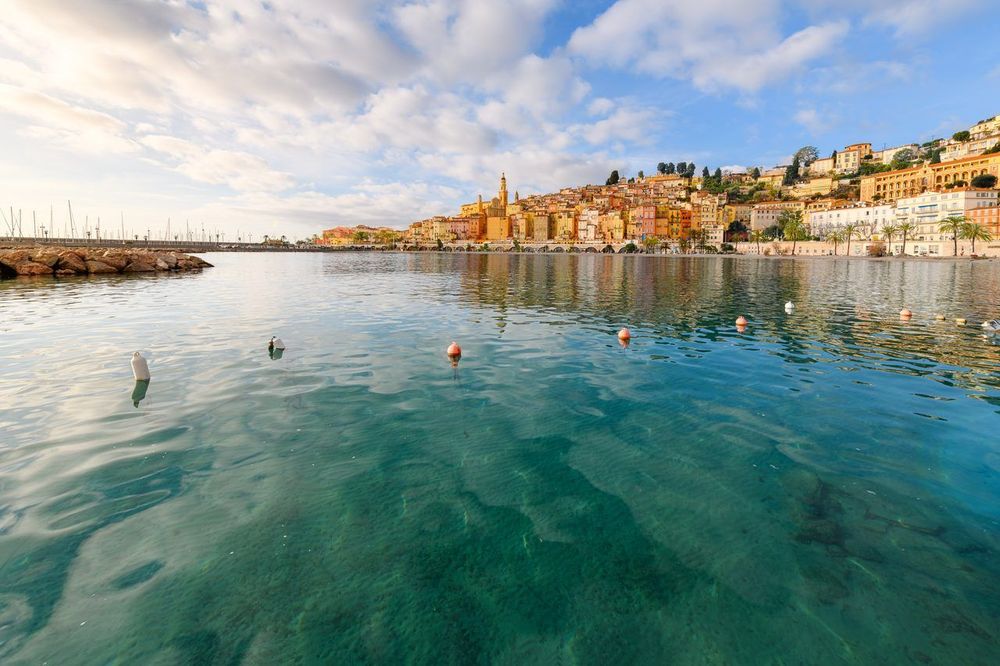
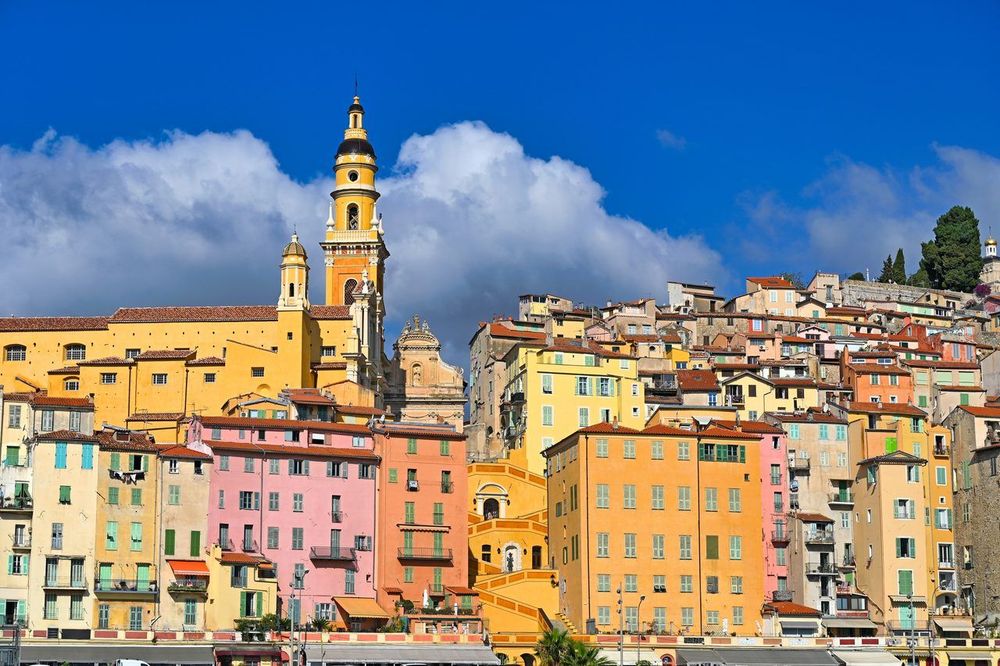
Between Nice and the Italian border, Menton sits in an amphitheatre of hills that shelters it from the wind and earned it the nickname "the Pearl of France". Visiting Menton in 2 days lets you take in the essentials without rushing, and you will understand the nickname as soon as you climb the Rue Longue, lined with ochre and pink facades, up to the pebble-mosaic forecourt of the Basilica of Saint-Michel. On the programme: the old town and its Old Port, four gardens that each tell a different story (including one designed by the creator of the Hidcote English garden), a hilltop village at nearly 800 metres of altitude and a morning out to Cap Martin, where Le Corbusier had a 16 m² cabin built facing the sea. This guide details a day-by-day itinerary, from the historic centre to the lanes of Castellar, followed by practical information: transport from Nice, budget, accommodation by neighbourhood and the Lemon Festival, which every winter transforms the Biovès gardens into an exhibition of citrus sculptures. To follow this route without keeping your nose in a map, the Ryo audio-guided tour of Menton tells the story of the historic centre directly in your ears, at the pace of your walk.
Day 1 Morning: Menton's Old Town and the Old Port
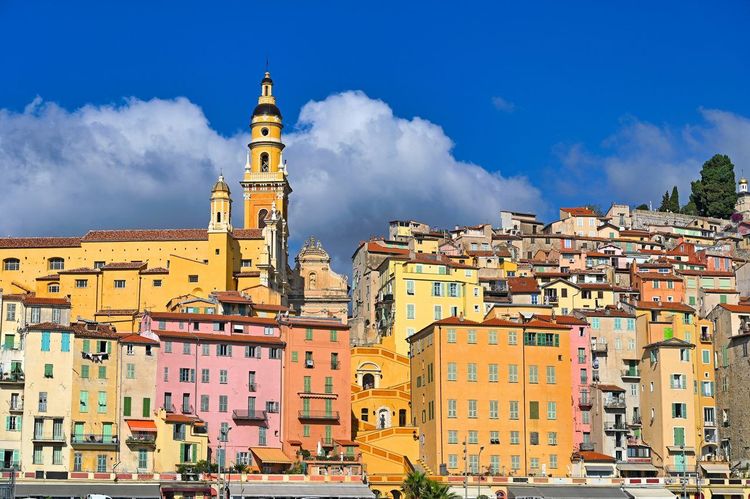
The Basilica of Saint-Michel and the Baroque Forecourt
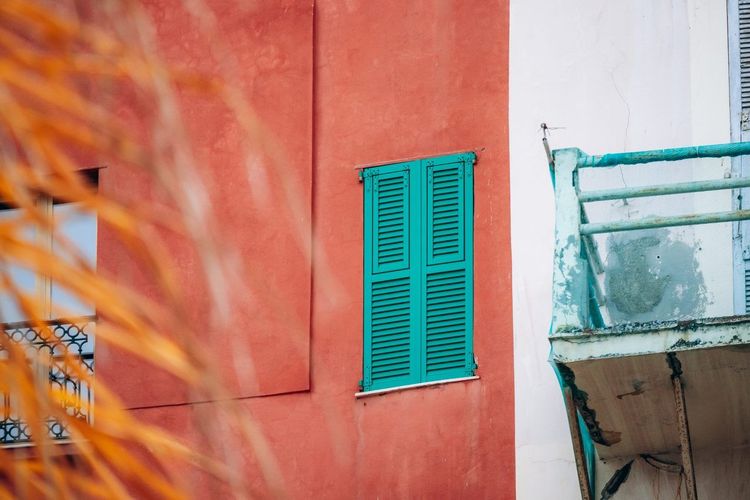
Head up early to the Saint-Michel forecourt, before the terraces at the bottom of the old town fill up. The lanes climb in steps between houses with colourful shutters, and the early-morning silence lets you hear the shutters opening one by one.
The Basilica of Saint-Michel-Archange has dominated the old town since the 17th century. Its Baroque facade and its glazed-tile bell tower house a richly gilded interior, but it is the forecourt that catches the eye: a pebble pavement of black and white stones forming the Grimaldi coat of arms, a reminder of the time when Menton belonged to the Principality of Monaco, before its annexation to France in 1861. Every summer since 1950, the Menton Music Festival has set up its chairs here for open-air chamber music concerts, one of the most photogenic stages on the Côte d'Azur.
Entry to the basilica is free and opening hours broadly follow religious services: avoid Sunday mornings if you want to visit without constraints. Right next door, the Chapel of the Conception, with its more modest facade, completes the Baroque ensemble of the forecourt.
Behind the basilica, climb another five minutes to the Old Castle Cemetery, laid out on the town's former fortified site. The tombs of wealthy English and Russian winter visitors from the 19th century, including that of the illustrator Aubrey Beardsley, bear witness to the era when Menton was a winter resort prized by European aristocrats, well before the seaside Riviera. The upper terrace offers the best overview of the orange rooftops and the bay.
Rue Longue, Covered Market and Old Port
On the way back down, take the Rue Longue (Rue Longue, 06500 Menton, rated 4.5/5 on Google from 500 reviews), the former main street of the medieval town, which once followed the route towards Italy. Over a few hundred metres, this cobbled pedestrian street strings together food shops, craftsmen's workshops and old facades; slow down to spot the carved doors, remnants of the noble residences from before the 19th century.
Below, on the seaward side, the Halles municipales (the covered market) deserve a stop, even if you buy nothing: their Belle Époque facade, decorated with colourful ceramics, dates from the late 19th century. Inside, depending on the season, the stalls sell Menton lemons, recognisable by their thinner skin and juice that is less acidic than standard lemons. The traders are happy to explain the varieties, so you can leave with some good addresses for the rest of your stay.
A few minutes' walk further on, the Old Port closes the morning loop. Fishing boats share the basin with pleasure yachts, under the gaze of the Bastion, a 17th-century fort that Jean Cocteau himself turned into a museum dedicated to his work. The artist also decorated the wedding room of the town hall, a curiosity that can be visited in ten minutes when it is not reserved for a ceremony. Walk out to the jetty for a view that sums up the morning: the old town stacked on its hill, the basilica as the crowning point, and the Mediterranean as a backdrop.
Want to place these sites in their historical context without reading signs? The Ryo audio guide to Menton roughly follows the route of this morning, from the basilica to the Rue Longue and the Old Port, with an audio stop at each key place, to listen to at your own pace.
Day 1 Afternoon: Menton's Gardens, Between Sea and Alps
The afternoon changes register completely: head for the gardens, the true signature of Menton. The town's microclimate, sheltered from cold winds by the Alps and warmed by the sea, attracted botanists and English lords from the late 19th century, who came to winter here with their collections of exotic plants. Four gardens hold most of this heritage, and a single afternoon is enough to visit two of them in depth.
Biovès Garden and Serre de la Madone
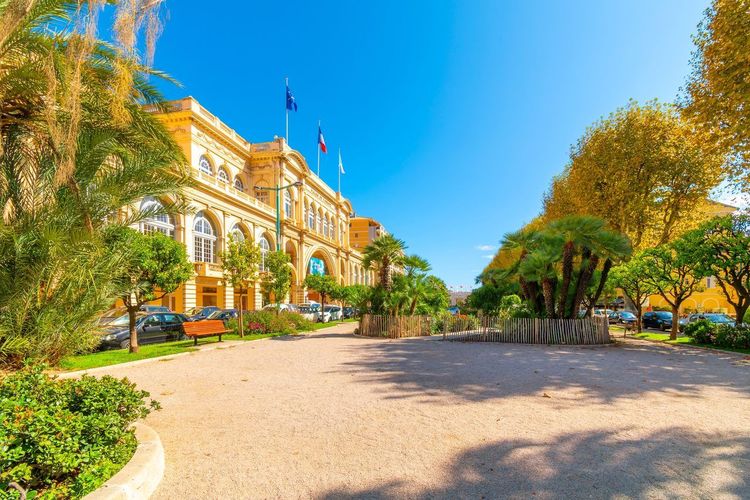
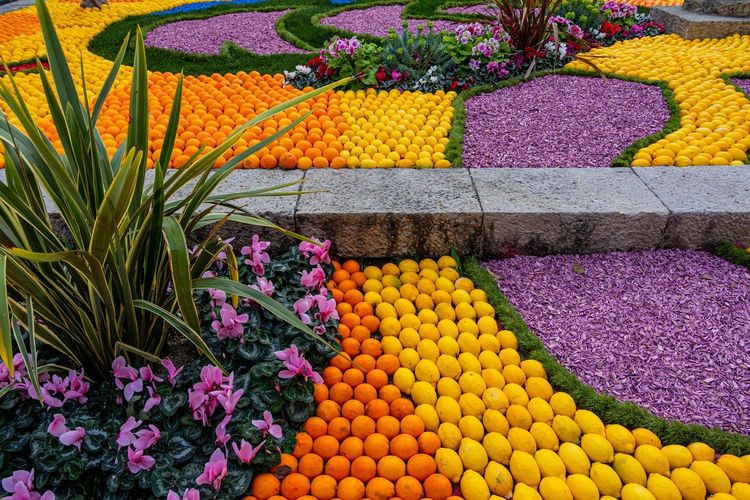
The Biovès Garden stretches through the very centre, a long promenade planted with palm and citrus trees that serves above all as a setting: every February, this is where the giant citrus sculptures of the Lemon Festival take place. Out of season, it is a pleasant passage between the station and the seafront, ideal for a break in the shade.
Next, head up to the heights, on the road to Gorbio, for the Serre de la Madone. This terraced garden was designed from the 1920s by Lawrence Johnston, the same landscape gardener who created the gardens of Hidcote Manor in England. Abandoned for several decades and then purchased by the Conservatoire du littoral, it has recovered its pools, its staircases and its collections of rare plants brought back from around the world. Allow 1.5 hours for the full visit, ideally in the middle of the afternoon when the light filters through the vegetation.
Val Rahmeh and the Domaine Gannac
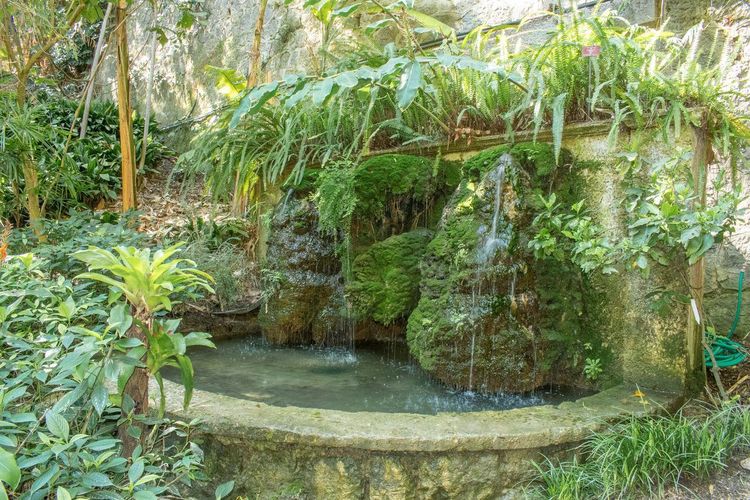
Back towards the seafront, on the Garavan side, the botanical garden Val Rahmeh completes the visit with a more scientific approach: owned by the Muséum national d'Histoire naturelle, it preserves tropical and subtropical species on a sloping site above the bay. The shaded paths make it a pleasant stop even in midsummer, and the benches scattered around invite you to slow down more than elsewhere.
If time allows, add the Domaine Gannac (Route de Gorbio, 06500 Menton, rated 4.8/5 on Google from 427 reviews), a family-run citrus estate planted with lemon and olive trees, which opens its orchards for guided tours by reservation. The tour, lasting about 1 hour, traces the history of lemon growing in Menton and usually ends with a tasting. As for Domaine Gannac's prices and hours, expect around 10 to 15 euros per adult, with time slots that vary by season: book the day before, especially at weekends, as groups are limited. Access is via a small winding road, poorly suited to people with reduced mobility.
This microclimate also runs through the Ryo audio-guided tour: several stops explain why Menton, and not Nice or Cannes, became the French capital of lemons and exotic gardens, an anecdote that few paper guides develop.
Day 1 Evening: Garavan and the Coastal Path
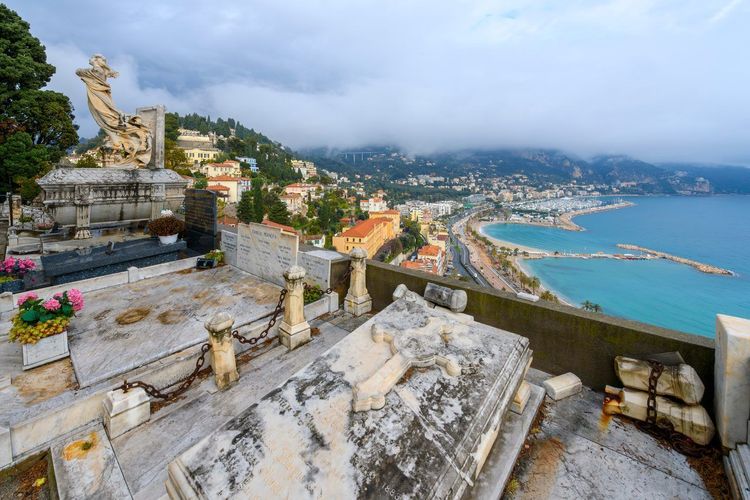
End the first day gently, on foot, heading east. The Garavan district lines up its Belle Époque villas and private gardens all the way to the Italian border, marked by the Pont Saint-Louis, up on the heights.
From the Garavan port, follow the seafront and then the coastal path towards the border; the most motivated can climb towards Mounta Cala (Sentier du littoral, 06500 Menton), on the heights of Garavan, one of the least frequented corners of the area despite its proximity to the centre. Allow about 30 minutes' walk each way for the coastal stroll, preferably at the end of the day: the sun then sets over Italy and the low light on the Garavan villas is well worth the detour.
To extend the evening without getting back in the car, this Ryo article on activities in and around Menton lists a few seaside ideas for dinner with a view of the bay.
Day 2 Morning: Excursion to Roquebrune-Cap-Martin
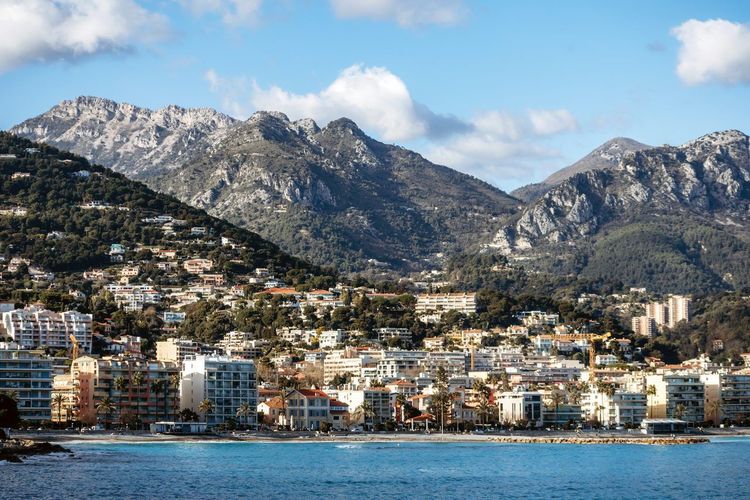
Second day, heading west. Roquebrune-Cap-Martin is less than 15 minutes by train or bus from Menton, on the Nice-Ventimiglia TER line, making it the easiest excursion to improvise without a car. Allow the whole morning if you plan to combine the hilltop village and the tour of Cap Martin; if you keep only one of the two, you can head back earlier. The most energetic can walk from Menton to Roquebrune on the Menton to Roquebrune-Cap-Martin stroll, following the Promenade du Soleil and then Carnolès beach before joining the cape's coastal path.
The Medieval Village and Roquebrune Castle
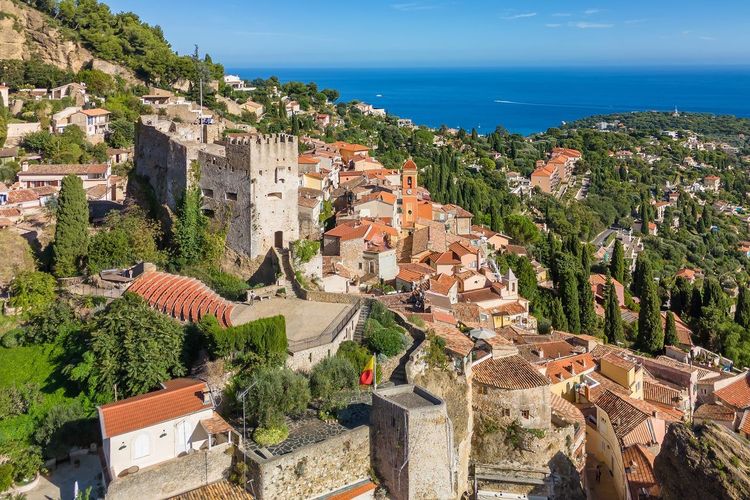
The hilltop village of Roquebrune can be visited in one to two hours: stepped lanes, vaulted passages, and at the top, Roquebrune Castle (Rue du Château, 06190 Roquebrune-Cap-Martin, rated 4.6/5 on Google from 2,441 reviews), presented as one of the oldest feudal castles in France, with origins dating back to the 10th century, before being remodelled by the Grimaldi in the 15th century. The furnished rooms recount medieval daily life and the keep offers a view stretching as far as Cap Martin.
A little way from the village, on the path to Menton, look for the thousand-year-old olive tree, one of the oldest trees in the region, whose twisted trunk largely escapes tourist crowds even in high season. Then sit on a terrace on the Place des Deux Frères for a coffee: the view plunges directly onto the Mediterranean and the distinctive profile of Cap Martin, your next stop.
Cap Martin and Its Coastal Path
Then head back down towards the sea to reach Cap Martin, a peninsula wooded with pines and olive trees where Belle Époque and early 20th-century villas are hidden. The coastal path, renamed the Promenade Le Corbusier, follows the coast for about 4 km between Roquebrune-Cap-Martin station and Carnolès beach, sometimes on laid-out paths, sometimes between the rocks. It is the most pleasant way to walk around Cap Martin.
Along the way, a sign points out the Le Corbusier Cabanon, a 16 m² wooden cabin that the architect had built in 1952 next to his friend Thomas Rebutato's beach bar L'Étoile de mer, a stone's throw from Eileen Gray's villa E-1027. He spent his summers there until his death in 1965, drowned not far away. Listed as a UNESCO World Heritage site along with the architect's work, the site can only be visited on a guided tour by reservation, but the exterior can be seen freely from the path.
If the full walk seems long for a morning, limit yourself to the section from Roquebrune-Cap-Martin station to the Cabanon, about 45 minutes round trip, to be back in Menton in time for lunch.
Before leaving, check the seafront stops on the Ryo audio-guided tour of Menton: they help you work out where the town ends and where the road to Roquebrune begins. This Ryo article on hiking around Menton details other variations of this outing, especially for more experienced walkers.
Day 2 Afternoon: The Hilltop Villages of Castellar and Sainte-Agnès
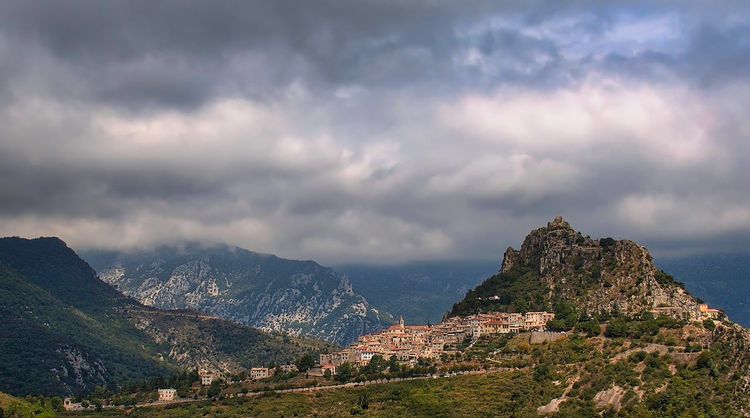
Back up to the heights for the second half of the day. The two villages overlooking Menton, Castellar and Sainte-Agnès (Place du Village, 06500 Sainte-Agnès, rated 4.7/5 on Google from 269 reviews), look alike on paper but offer quite different atmospheres; visiting both in a single afternoon is possible by car but tight, so it is better to choose according to the time you have.
Castellar and Its Medieval Lanes
Castellar, about fifteen minutes by road from Menton, was rebuilt in the 15th century on a regular plan of parallel streets linked by vaulted passages. The village, inhabited year-round, keeps its old facades almost intact, without the tourist density of the coastal Riviera.
From the square, a viewpoint overlooks the hills of Menton and, on a clear day, the sea. Allow 45 minutes to 1 hour for a leisurely visit, a little more if you have lunch there: terraces are rare but peaceful.
Sainte-Agnès, the Highest Seaside Village in Europe
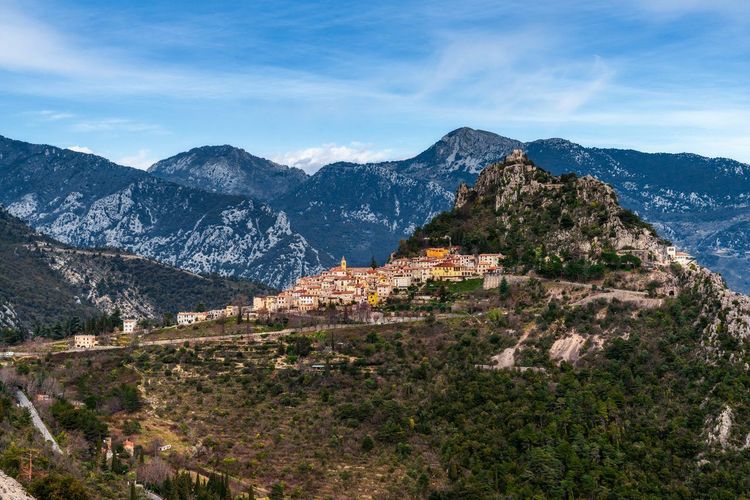
Sainte-Agnès claims the title of the highest coastal village in Europe, perched at about 780 metres of altitude while the Mediterranean remains visible below. The road up winds for about twenty minutes from Menton, with viewpoints that justify slowing down rather than rushing.
The village combines two attractions rarely found together: the ruins of a medieval castle clinging to the rock, surrounded by a small medieval garden, and the Sainte-Agnès fort, a Maginot Line work built in the 1930s and now open to visitors. The contrast between the old stones of the castle and the military concrete of the fort sums up the two layers of the village's history.
From the lanes, the view takes in Menton, the Italian border and, on a very clear day, Corsica on the horizon. If you must choose only one of the two villages, Sainte-Agnès generally wins for this panorama and for the fort, which is more unusual than Castellar's lanes alone.
Prefer to walk? Both villages can be reached on foot from Menton, without a car or bus. The Menton-Castellar loop via the municipal paths climbs in about 2.5 hours along old mule tracks, with a considerable elevation gain but no technical difficulty. Towards the other village, the Menton loop via Sainte-Agnès is longer, often taking a full half-day: reserve it for those in good physical condition and plan to come back down before nightfall.
On the way back down to Menton at the end of the day, you will generally have enough time for a final stroll in the old town. This is the moment to launch the Ryo audio-guided tour on the sites seen the previous morning: the anecdotes take on new depth once the lanes feel familiar.
Where to Eat in Menton: Niçois Specialities and Menton Lemon
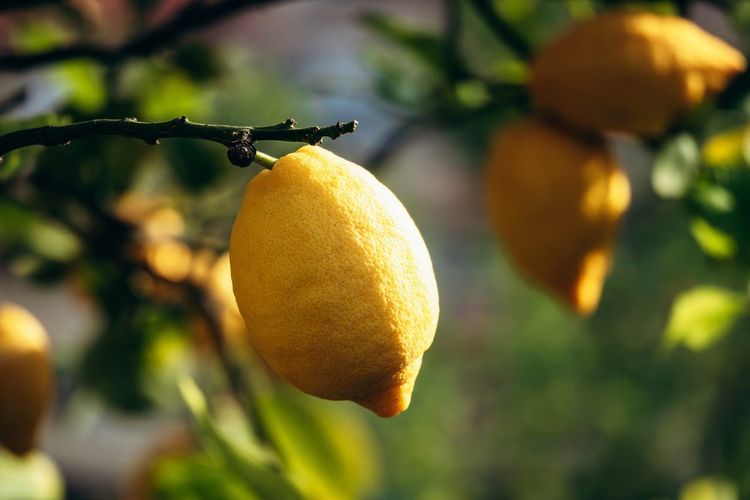
Menton's cuisine blends Niçois classics with an identity of its own built around the lemon, less well known than the town itself.
The Menton lemon, protected by a PGI since 2015, stands out for its thinner skin, rich in essential oils, and a milder acidity than standard lemons. You will find it in all forms: lemon tart of course, but also liqueur, jam, or as an accompaniment to grilled fish in the Old Port restaurants.
As for savoury dishes, two specialities travel between Menton, Nice and Monaco. The socca, a chickpea flour pancake baked in a wood-fired oven and served piping hot, is eaten standing up, between two visits. The barbagiuan, a fried turnover stuffed with chard, rice and cheese depending on the recipe, is more of an aperitif, often served with a squeeze of Menton lemon, naturally.
For a fuller meal, look for restaurants that work with local catch: sea bass, red mullet or sardines, served simply with local olive oil. The Old Port terraces charge higher prices for the view; two streets up towards the Rue Longue, prices drop noticeably for comparable cooking.
On the sweet side, don't leave Menton without trying the fougasse mentonnaise, a flat brioche flavoured with orange blossom and sprinkled with sugar, sold in the bakeries of the centre: perfect for breakfast before the basilica.
The morning Halles municipales also let you put together a takeaway picnic for the Biovès garden or the Old Port, a more economical option on a two-day weekend. However, book Old Port restaurants for the evening in high season (July-August and the Lemon Festival period): the best tables fill up quickly.
This omnipresence of lemon on the plate is no marketing accident: Menton has grown renowned citrus fruits for centuries, and it is this agricultural tradition that gave rise, in 1934, to the Lemon Festival. This Ryo article on culinary specialities in Menton details specific addresses if you want to dig deeper beyond these classics.
The Lemon Festival and Menton's Major Events

Every year, between mid-February and early March, the Biovès gardens are transformed into an open-air exhibition of giant sculptures made of citrus fruit: the Lemon Festival, created in 1934, remains Menton's most emblematic event. The idea goes back to a Menton hotelier who had displayed citrus fruits in the gardens of his establishment to attract winter visitors; its success turned the initiative into a municipal festival, then a national event.
The theme changes with each edition (cinema, fairy tales, travel...) and the sculptures, some exceeding 10 metres in height, use tonnes of lemons and oranges that are replaced during the event. Golden fruit parades, processions of floats decorated with citrus fruits, liven up the seafront on certain weekends. The event is often paired with the Nice carnival and the lemon festival in Menton in organised trips, two highlights of the same winter period on the Côte d'Azur, even though their programmes remain independent.
If your 2-day stay coincides with this period, plan for an admission ticket to the Biovès gardens exhibition (around fifteen euros for an adult, reduced rate for children) and book accommodation several weeks in advance: attendance rises sharply and prices follow. The event attracts more than 200,000 visitors each edition, in the middle of the low season.
Outside the Lemon Festival, Menton also fills its calendar with the Music Festival on the basilica forecourt in August, and with lights in December along the seafront. Outside these periods, the Biovès gardens remain a pleasant promenade, simply without the sculptures. This Ryo article on the Lemon Festival in Menton gives the dates and theme of each edition.
How to Get to and Around Menton
By train, Menton is connected to Nice in 30 to 40 minutes by the Nice-Ventimiglia TER line, with frequent departures during the day. From Monaco, the journey takes only about ten minutes, which lets you combine the two destinations on a longer weekend. Menton station is about a ten-minute walk from the old town.
By car, Menton is served by the A8 motorway. Allow about 40 minutes from Nice Côte d'Azur airport and about fifteen minutes from Monaco. Parking in the town centre remains complicated in high season; several paid car parks line the seafront and the Old Port, with rates that climb quickly beyond 2 or 3 hours.
By plane, Nice Côte d'Azur airport, the nearest, offers direct connections with most major European cities. From the airport, the train (with a change in Nice) or regional bus lines remain the simplest options without a rental car.
Once there, Menton is visited mostly on foot: the old town, the Old Port and the central gardens are concentrated within a radius of less than 2 km. For the more distant gardens (Serre de la Madone, Domaine Gannac) and excursions to Roquebrune, Castellar or Sainte-Agnès, Zest network buses complement walking, with lower frequencies at weekends and to the villages. Check the timetables the day before: it is often cheaper than a rental car if you only plan to explore Menton and its immediate surroundings.
As for accessibility for people with reduced mobility, the seafront and the Carnolès district are flat and accessible; the old town, however, has many sloping cobbled streets and stairs, which seriously complicates wheelchair travel beyond the Old Port.
Where to Stay in Menton: Neighbourhoods and Budgets
Three neighbourhoods share most of the accommodation on offer, with quite different atmospheres for the same budget.
The old town and the Old Port concentrate charm and immediate proximity to the basilica, the Rue Longue and the seafront. It is the logical choice if you want to do everything on foot, at the cost of more noise in the evening around the terraces, especially in summer. Expect nightly rates of around 90 to 160 euros for a 3-star hotel in mid-season.
Garavan, to the east towards the Italian border, focuses on calm and Belle Époque villas surrounded by gardens. A good compromise if you prioritise tranquillity and accept 15 to 20 minutes' walk to the centre; a few guesthouses have set up there in former mansions.
Carnolès, to the west, more residential, often offers better value for money, with direct access to pebble beaches wider than those in the centre. Families more easily find apartments with a kitchen there, handy for limiting the dining budget.
For a weekend built around this guide's itinerary, the old town or the Old Port remain the most practical despite a slightly higher price: the time saved on journeys makes up for the difference.
If your visit coincides with the Lemon Festival, book at least six to eight weeks in advance: hotels in the centre fill up quickly and prices rise sharply. For small budgets, a few seasonal rentals exist in Carnolès and near the station, with simpler comfort and often no view.
Budget and Best Season to Visit Menton in 2 Days
For a 2-day weekend, plan on a wide range depending on your travel style: between 150 and 300 euros per person for mid-range accommodation and varied dining (hotel, a few restaurant meals, entry to the paid gardens), excluding transport to Menton. If you rely on picnics, free sites (basilica, old town, Old Port, coastal path) and simpler accommodation, you can come in under 100 euros per day.
Paid entries remain modest: a few euros for each garden (Serre de la Madone, Val Rahmeh), around 10 to 15 euros for the guided tour of Domaine Gannac, while Castellar and Sainte-Agnès can be visited freely once there.
As for the season, spring (April-May) and autumn (September-October) offer the best compromise: pleasant temperatures for walking, gardens in bloom or still green, and attendance far lower than in summer. Summer (July-August) is still workable but requires starting visits early to avoid the heat and crowds, particularly in the old town where shade is scarce after 10 a.m. Winter, outside the Lemon Festival, offers lower accommodation rates and a surprisingly mild climate, but several gardens reduce their hours.
Two days are enough to cover this guide's itinerary without rushing; a third day mainly lets you go further, towards Sospel or the Ventimiglia market, just across the border.
Practical tip: the Ryo audio-guided tour of Menton works offline once downloaded in the app, useful in the lanes of the old town where mobile coverage is sometimes poor.



FAQ
How many days do you need to visit Menton?
Two days are enough to see the essentials: the old town, the Old Port, two or three gardens and an excursion to Roquebrune-Cap-Martin or the hilltop villages. With a third day, you can add Castellar and Sainte-Agnès to the same trip, or go as far as Sospel.
What budget should you plan for a 2-day weekend in Menton?
Plan on 150 to 300 euros per person for mid-range accommodation and varied dining, excluding transport to Menton. A more economical trip, with picnics and free sites, can come in under 100 euros per day.
What is the best time of year to visit Menton?
Spring (April-May) and autumn (September-October) offer the best compromise between pleasant weather and moderate crowds. Summer is still manageable if you start early in the morning; winter, outside the Lemon Festival, offers lower prices.
How do you get from Nice to Menton?
The TER train connects Nice to Menton in 30 to 40 minutes, with frequent departures during the day. Driving via the A8 motorway takes a similar amount of time depending on traffic, with more difficult parking in the town centre.
What should you see in Menton if you only have one day?
Focus on the old town, the Basilica of Saint-Michel, the Rue Longue, the Old Port and a single garden (Serre de la Madone or Val Rahmeh, depending on the neighbourhood where you are staying). Save the Roquebrune excursion for a future visit.
Can you visit Menton on foot, without a car?
The town centre, the old town, the Old Port and the nearby gardens can all be explored entirely on foot. For Roquebrune-Cap-Martin, Castellar or Sainte-Agnès, the train (for Roquebrune) and the Zest network buses let you get around without a rental car.
When is the Lemon Festival held in Menton?
The Lemon Festival takes place every year between mid-February and early March in the Biovès gardens, over a period of about two to three weeks. The exact dates change every year and are announced several months in advance.
Menton in 2 Days: The Essentials to Remember
Two days in Menton are enough to understand what drew English botanists and Russian winter visitors, long before tourists, to this Franco-Italian border softened by its microclimate. Between the Basilica of Saint-Michel, the gardens climbing towards the Alps and the hilltop villages of Castellar and Sainte-Agnès, this guide's itinerary covers the essentials without ever rushing.
To give a voice to each stop in the old town, from the Old Port to the basilica, launch the Ryo audio-guided tour of Menton: you move at your own pace, and the stories of the Grimaldi, the winter visitors and the lemon await you around every corner.
À lire également