© Shutterstock
 Votre guide Ryo
Italian Lakes by Motorhome: the Complete Guide to Itineraries and Stopovers (2026)
The Italian Lakes region hides a contradiction that few itineraries point out: the landscapes that wealthy Milanese have coveted since the 18th century remain, by motorhome, among the most accessible and most rewarding in Northern Italy. Between Lake Garda, Lake Como and Lake Maggiore, you can park your vehicle a few hundred metres from the waterfront, grab a coffee in a lakeside village for 3 euros, and pass through panoramas that grace the covers of travel magazines — no hotel booking, no shuttle, no compromise.
This guide takes you through an Italian Lakes motorhome circuit designed for 10 to 15 days, covering the essential stops, reliable stopovers validated by the van life community, the traffic rules you need to know before crossing the Alps, and budget tips for keeping costs below 80 to 100 euros per day. You will discover that Lake Iseo is twice as quiet as Lake Garda for an almost identical landscape, that the Italian green vignette can cost you a 100-euro fine if you forget it, and that September is objectively the best month to drive between the shores. To explore the region's cities on foot with quality audio commentary, our Ryo app covers several Northern Italian destinations with full guided walking tours.
Why Choose a Motorhome to Discover the Italian Lakes?
Freedom is the most overused argument in the motorhome world. In the Italian Lakes region, however, it takes on a very concrete dimension: public transport between the lakes is slow, taxis between villages are expensive, and lakefront hotels charge rates that double in July. With your vehicle, you sleep 50 metres from Lake Garda at Bardolino for 18 euros a night, you drive in the morning before the tourist traffic builds up, and you switch lakes in two hours.
The region also has a geographical density that suits this style of travel: the five major lakes are concentrated within a 150 km radius between Milan, Verona and the Swiss border. A loop is perfectly achievable without unnecessary mileage. You can link Garda, Iseo, Como, Lugano and Maggiore without ever exceeding 80 km between two stops.
A third advantage that is often overlooked: the campsites and stopovers in the region are among the best equipped in Europe. ACSI and Stellplatz facilities are plentiful, waste disposal points are easy to find, and several municipalities have invested in free or sub-10-euro municipal stopovers. Lombardy and Veneto have a motorhome-friendly culture that is on a par with the Netherlands or Germany.
Finally, the roads around the lakes are spectacular — certain corniche routes such as the Gardesana Occidentale or the coastal road between Menaggio and Gravedona on Lake Como are driving experiences in their own right, provided you know the size restrictions that apply to certain sections (see the dedicated section).
The 5 Italian Lakes You Need to Know Before You Go
Northern Italy has dozens of lakes, but five of them account for the vast majority of motorhome itineraries. Here is a quick overview before the detailed sections.
Lake Garda is the largest in Italy (370 km²) and the most visited. It offers a unique variety of landscapes: wild, alpine northern shores and soft, Mediterranean southern shores lined with olive and lemon trees. Perfect for 3–4 nights.
Lake Como is probably the most internationally famous, made popular by Hollywood villas and luxury advertising. Its inverted-Y shape creates arms with very different characters. The central arm around Bellagio is a must, but the northern arms are quieter. Allow 2–3 nights.
Lake Maggiore stretches between Italy and Switzerland and impresses with its width and its Borromean Islands, including Isola Bella with its terraced gardens. It is the most "grand" lake in atmosphere, with towns such as Stresa and Verbania that have retained a Belle Époque elegance. Allow 2 nights.
Lake Iseo is the least well-known of the major lakes, unfairly so. Monte Isola, the largest inhabited lake island in Europe, sits at its centre. The atmosphere is more authentic, prices are more reasonable, and motorhome stopovers are better spread around the shore. One night is enough; two are ideal.
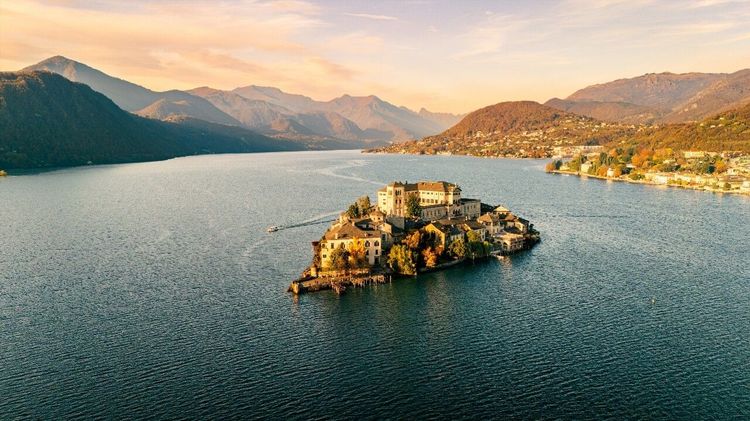
Lake Orta is the best-kept secret. Small (18 km²) and tucked away to the west of the other lakes, it draws no crowds but offers a preserved medieval setting around the village of Orta San Giulio and its island. One night at a campsite here is the bonus you will never regret.
Lake Garda by Motorhome: the Essential Stops
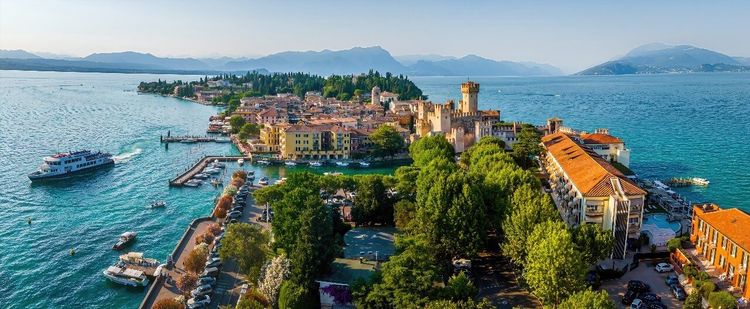
Garda is the lake that justifies the trip on its own. With its 370 km² and 150 km of shoreline, you need a strategy: doing the full loop by motorhome takes 2–3 days, and certain sections are inaccessible to vehicles exceeding 3.5 metres in width on the western shore.
The eastern shore (Veneto side) is the most motorhome-friendly and has the best stopovers. Peschiera del Garda is the ideal south-eastern entry point: a well-equipped municipal stopover, direct access to the UNESCO-listed fortified historic centre, and ferries to the other shores.
Heading north, Bardolino is a must for wine lovers: the town produces one of Veneto's most acclaimed DOC wines. Camping Cisano San Vito, just north of Bardolino, is one of the highest-rated campsites on the lake with direct beach access. Malcesine is the next stop, with its Scaliger castle perched on a lakeside rock and the Monte Baldo cable car climbing to 1,760 metres for a guaranteed 360° view over the lake.
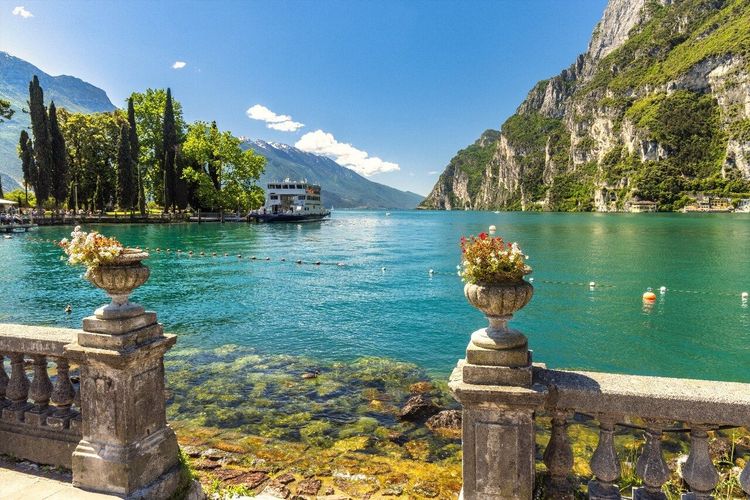
Riva del Garda, at the northern tip, marks the boundary between Veneto and Trentino. The town is clean, lively and very much oriented towards water sports and cycling. The municipal stopover "Parcheggio Brione" accepts motorhomes up to 7 metres and is a 15-minute walk from the centre. This is also where the Gardesana Occidentale begins — the spectacular corniche road heading south, best avoided if your vehicle exceeds 2 metres in width on certain sections.
The western shore (Lombardy side) is harder to reach but offers villages such as Limone sul Garda and Gargnano, which are more authentic and less crowded. From Riva, if your motorhome is less than 3.5 m wide and meets the tunnel height limits (check your specific model), the Gardesana Occidentale is one of the most beautiful roads in Italy. Otherwise, return via the eastern shore.
At the southern end, Sirmione and its peninsula are unmissable, though vehicles cannot enter the historic centre — a paid motorhome car park is available outside the walls. The peninsula is home to the Grottos of Catullus (Via Catullo, 25019 Sirmione BS, rated 4.5/5 on Google with 17,498 reviews), 1st-century Roman ruins with a direct view over the lake on both sides.
Lake Como by Motorhome: Bellagio and the Lake's Arms
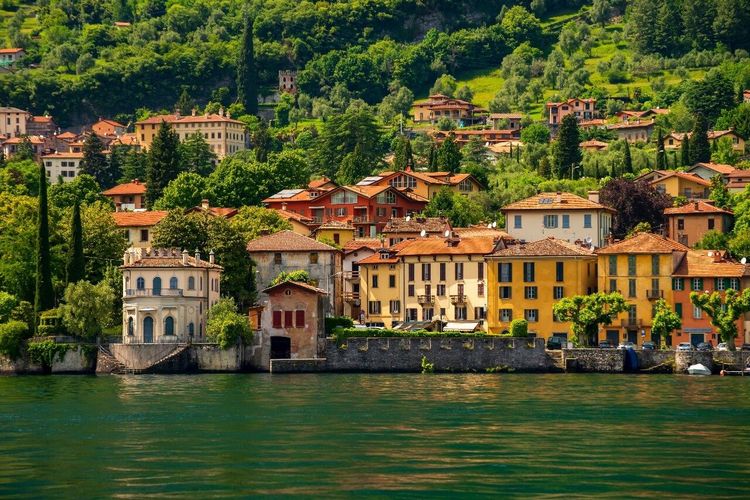
Lake Como has a reputation for being difficult to access by motorhome. This is partly true: the town of Como itself is congested, and the roads running along certain arms are narrow. But with proper planning, Como remains entirely manageable and offers visual sequences that few other European lakes can match.
The recommended strategy: avoid the town of Como and head directly to the eastern shore of the lake (SP583) or the central arm. Approaching via Lecco to the south-east is significantly easier with less demanding roads.
Varenna is often cited as the most beautiful village on the lake. Perched on the eastern shore with its stepped, colourful houses, it is accessible by motorhome via an elevated car park at the village entrance (max height ~2.5 m). From there, the village is a 10-minute walk downhill.
Bellagio occupies the tip of the central headland where the three arms of the lake meet. The access road is manageable but parking in the centre is restricted to residents. A car park at the town entrance accepts vehicles up to 6.5 metres. The ferry from Varenna takes 15 minutes and allows you to avoid driving on the winding headland roads.
For overnight stays, the best motorhome options are concentrated around Dervio and Dongo on the eastern and northern shores, and around Menaggio on the western shore. Menaggio has a municipal campsite directly on the waterfront, with ferry access to Bellagio and Varenna — the ideal solution for exploring the lake without driving on its narrowest roads.
The northern arm towards Gravedona is the least visited but reveals a wilder, more mountainous side of Como, with medieval villages such as Dongo and Gravedona themselves. For audio guides to the towns you pass through, the Ryo app offers guided commentary on several Northern Italian destinations.
Lake Maggiore by Motorhome: Stresa, the Borromean Islands and the Swiss Border
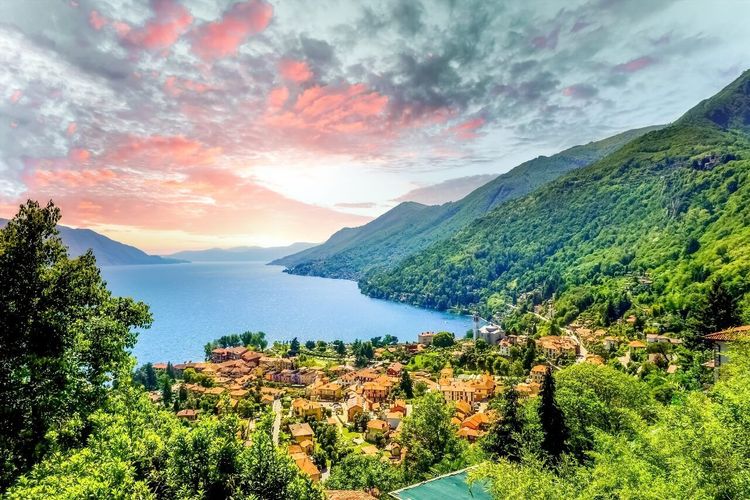
Lake Maggiore is Italy's second largest lake after Garda (212 km²) and the only one that crosses the Swiss border to the north. This international configuration gives it a character all its own: the Lombard shores are elegant and well equipped, while the Swiss section (Locarno (Piazza Grande, 6600 Locarno, rated 4.5/5 on Google with 10,057 reviews), Ascona) is more Swiss in its organisation and pricing.
Stresa is the reference town on the western shore. Its grand Belle Époque hotels facing the Borromean Islands give it the feel of a bygone spa resort. The nearest motorhome stopover is in Baveno, 5 km to the north, with direct access to the ferries for the islands. Expect 12–16 euros per night in low season, more in July–August.
The Borromean Islands are the highlight of this stop. Isola Bella with its baroque terraced gardens (planted since the 17th century), Isola Madre with its botanical gardens and free-roaming parrots, and Isola dei Pescatori whose narrow lanes give the impression of a floating medieval village — all three deserve half a day each. The combined ticket costs around 25 euros per adult for the first two islands.
Verbania offers a quieter alternative to Stresa, with the gardens of Villa Taranto (28 hectares, 20,000 plant species) and a less touristy feel. A service area is available at Verbania-Pallanza, accepting vehicles up to 8 metres.
If your itinerary includes the Swiss section, Locarno is 30 km north of the Italian border. Bear in mind: Switzerland is not in the European Union. You will need the Swiss motorway vignette (40 CHF, valid from 1 December to 31 January of the following year, i.e. 14 months) if you use the motorways. Crossing the border is straightforward; Swiss customs officers rarely stop European tourist motorhomes, but keep your documents within reach.
Lake Iseo and Lake Orta: the Off-the-Beaten-Track Stops
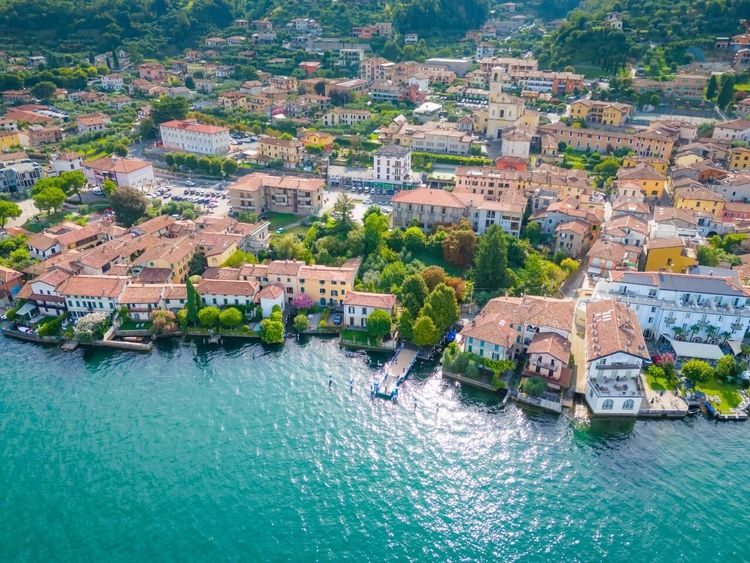
These two lakes work well as transition stops or as destinations for those looking to escape the crowds of the major lakes.
Lake Iseo
Lake Iseo is often described as "Garda without the tourists". That is not entirely accurate — it draws its own visitors, particularly from Bergamo and Brescia — but the atmosphere is undeniably more local. The lake's defining feature is Monte Isola, an island of about 4.5 km² with 1,700 inhabitants, entirely car-free and reachable by ferry from Sulzano or Iseo. Getting around is by bicycle, on foot or by minibus: no private cars are allowed, except for the rare service vehicles.
The village of Iseo has a decent motorhome stopover (free off-season, 10 euros in summer). The northern shore of the lake towards Lovere is the most spectacular, with limestone cliffs plunging into the water. The road is accessible to motorhomes up to 2.5 metres wide.
Lake Orta
Lake Orta is a surprise to the west of Lake Maggiore, often overlooked by standard itineraries. The village of Orta San Giulio (Piazza Mario Motta, 28016 Orta San Giulio NO, rated 4.7/5 on Google with 4.9K reviews) is one of Italy's most beautiful villages according to the national ranking: Renaissance houses, cobbled streets, and Isola San Giulio floating on the lake just a few strokes away by rowing boat. The motorhome car park is at the village entrance (height limit 3.5 metres) and is free outside July–August.
Lake Lugano: the Optional Swiss Stop
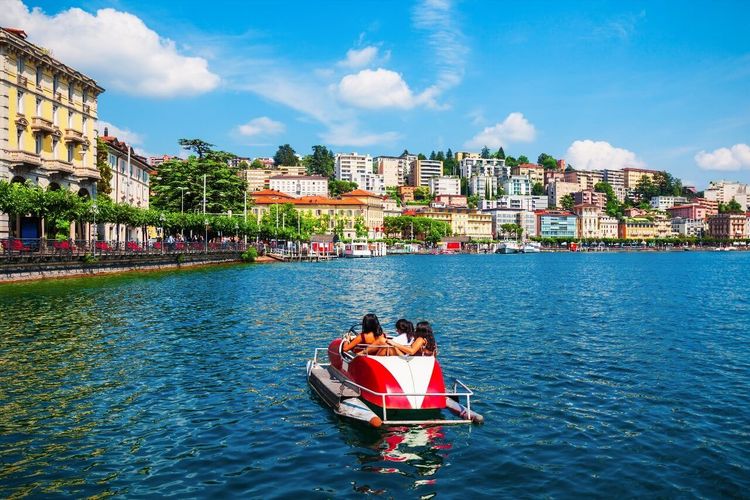
Located two-thirds in Switzerland and one-third in Italy, Lake Lugano is an interesting option if you push on to the Swiss border. The city of Lugano (Piazza della Riforma, 6900 Lugano, rated 4.6/5 on Google with 1,063 reviews) is often described as the Swiss Riviera: palm trees, Italianate architecture, guaranteed sunshine and a standard of living that is… Swiss.
For motorhomes, the campsite at Lugano-Muzzano is the most accessible, 5 km from the centre. Budget 35–45 CHF per night (Swiss campsites are significantly more expensive than Italian ones). The connection with Lake Maggiore is easy via the national road through Bellinzona.
10-Day Itinerary: the Essential Italian Lakes Circuit
Here is an optimised 10-day itinerary, looping from France or from Milan. The loop covers approximately 600 km in total, with short legs designed to make the most of the lakeshores rather than clocking up motorway miles.
Day 1: Arrival in Verona and Entry into the Region
If you are arriving from France via the A8 (Lyon–Turin) or via the Mont Blanc tunnel, Verona is the logical gateway to the lakes. Settle in at Verona's motorhome stopover (Camping Castel San Pietro, 15–20 euros/night), visit the Roman Arena and the lanes of the UNESCO-listed historic centre. Verona deserves half a day without rushing.
Days 2–4: Lake Garda (Eastern Shore)
From Verona, Peschiera del Garda is 30 km away (30 min). Stay for 3 nights and explore from there: Bardolino and its DOC wine, Malcesine and Monte Baldo, Riva del Garda for water sports. Avoid the Gardesana Occidentale if your vehicle exceeds 2 metres in width. To the south, a there-and-back trip to Sirmione (4 km peninsula, car park outside the walls) is unmissable.
Day 5: Brescia + Lake Iseo
From Peschiera, take the A4 towards Milan (30 km) then divert to Brescia. The city is underrated and hides a 1st-century Roman Capitol and a first-rate art gallery. Then head to Iseo (40 km), settle in at the village stopover and take the evening ferry to Monte Isola for a car-free stroll at sunset.
Day 6: Lake Como (via Lecco)
From Iseo, head to Lecco via the A4 then the A59 (75 km, 1 hr). Settle in at the campsite at Dervio or Menaggio depending on whether you prefer the east or west shore. In the afternoon, take the ferry to Bellagio or drive the scenic route to Varenna. Do not attempt to enter Bellagio or Varenna by motorhome — use the external car parks only.
Day 7: Exploring Lake Como
A full day on the lake: ferry between the three arms, a visit to Varenna, lunch in Bellagio. If you prefer the northern arm, the road to Gravedona and Dongo is manageable. In the late afternoon, scout your route towards Lake Maggiore.
Days 8–9: Lake Maggiore
From Como or Lecco, head to Baveno (90 km, 1 hr 15). A minimum of two nights to cover the Borromean Islands (half a day), Stresa, and an optional excursion to Verbania and its gardens. If you have the Swiss vignette and want to see Locarno, it is 30 km north of the border.
Day 10: Return via Milan or Completing the Loop
From Lake Maggiore, Milan is 80 km away. If you are heading back to France, the A26 goes towards the Mont Blanc tunnel or towards Genoa–Nice. The loop is complete at around 600–650 km driven. Estimated fuel cost: 100–130 euros at 20 L/100 km and 1.65 euros/L.
15-Day Itinerary: the Extended Grand Tour with Lake Orta
With 15 days, you can add stops and spend more time at each lake without rushing. Here is how to build on the 10-day itinerary with 5 extra days well spent.
Days 1–10: Same route as above, with the luxury of adding an extra night on Lake Garda (western shore, Gargnano or Limone for smaller vehicles) and one more night on Lake Como (northern arm, Gravedona).
Day 11: Lake Orta
From Lake Maggiore, Lake Orta is 40 km to the west. Arrive late morning, park at the Orta San Giulio motorhome car park, stroll through the medieval village, and take the rowing boat ferry to Isola San Giulio (5 minutes, a few euros). In the evening, dinner at a village trattoria with a lake view — the atmosphere is guaranteed.
Days 12–13: Piedmont and Aosta Valley in Transition
If you are heading back to France via the Mont Blanc tunnel or the Great St Bernard Pass, two days in Piedmont are well worth it. Turin for its baroque architecture, museums and gastronomy, then the Aosta Valley for alpine panoramas. Ryo audio guides are available for several Italian cities, including in Northern Italy, to enrich your visit effortlessly.
Days 14–15: Gradual Return or an Extra Stop
These buffer days allow you to take a breath, empty the waste tanks at a fully equipped campsite (rarer in France than in Italy), or push on to Bergamo to see the medieval upper town. Bergamo is 50 km from Milan and 1 hr 30 from Lake Iseo — a detour that fits neatly into the loop.
The 15-day itinerary covers approximately 900–1,000 km in total, averaging 60–70 km of driving per day — a reasonable pace for making the most of the stops and scenery rather than chewing through motorway miles. Milan, the usual start or finish point, is itself covered by a 24-stop audio-guided loop around the Duomo.
Motorhome Stopovers Around the Italian Lakes: Where to Park?
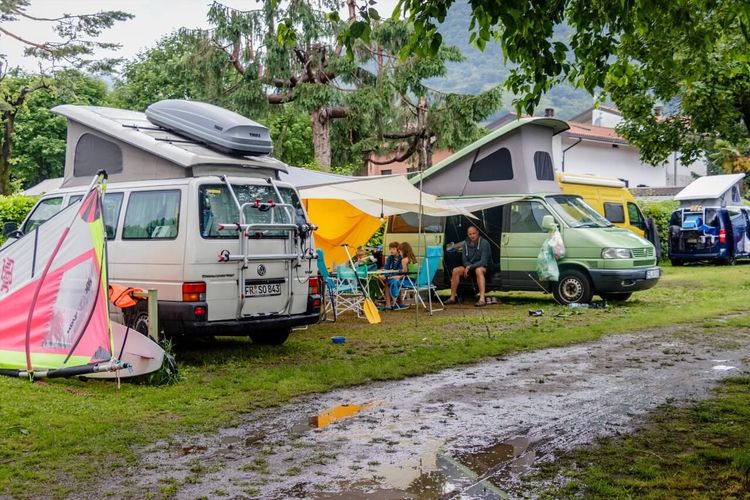
Parking is often the first concern for campers heading to Italy for the first time. The good news: the lakes region is one of the best-equipped in the country. The less good news: the best stopovers fill up from June onwards at weekends.
Lake Garda: the Best Options
Peschiera del Garda has a municipal stopover on the Lungolago, 25 pitches, water and electricity available, 15–18 euros per night. Bardolino has several lakeside campsites (Camping Serenella, Camping Cisano). Riva del Garda: two public stopovers, including the one at Brione north of the town (free off-season, 8 euros in summer, no electricity).
To avoid: car parks in historic villages such as Torri del Benaco or Garda town, where overnight parking is prohibited for motorhomes and enforcement has been stepped up since 2023.
Lake Como
Menaggio: municipal campsite Camping Menaggio directly on the lake, ferries on foot. Dervio (eastern shore): free municipal stopover off-season. Lecco: several motorhome car parks on the upper slopes, walkable to the town. The centre of Como itself is best avoided by motorhome in high season — head instead to Cernobbio or base yourself in Cantù (10 km away).
Lake Maggiore
Baveno: well-equipped stopover 800 m from the ferries to the Borromean Islands. Verbania-Pallanza: recently built stopover, max 8 metres, with showers. Arona to the south: municipal motorhome park, good for an arrival or departure stop. On the Swiss side, Locarno has a campsite directly on the Maggia delta.
Lake Iseo
Iseo town: central stopover, free November–March, 8–10 euros in season. Sulzano (Monte Isola ferry departure): small municipal stopover, around ten pitches, in demand in summer. Lovere: elevated motorhome car park with lake views, 6 euros/24h.
Lake Orta
The Madonna del Sasso car park overlooking the lake accepts motorhomes up to 3.5 m in height and offers exceptional panoramic views. Expect 8–12 euros per night depending on the season.
Useful Resources and Apps
The Park4Night app and the ACSI Camping guide cover the region well. For free or low-cost municipal stopovers, the Camper Contact network compiles community feedback. Always check size restrictions on the municipality's website before arriving — some stopovers have been modified since apps were last updated.
Traffic Rules and Tolls: What You Need to Know Before You Go
Italy has a few regulatory quirks that regularly catch French motorhome drivers off guard. Here are the critical points.
Environmental Vignettes (ZTL and Green Zones)
ZTL (Zona a Traffico Limitato) zones are restricted traffic areas in Italian historic centres. Almost every town in the region has one. The camera system is automatic, the fine is guaranteed, and the administrative process takes 3–6 months — you will receive the penalty notice at home. Never attempt to enter a ZTL with your motorhome without first checking that tourist vehicles are permitted and during which hours.
Some major cities (Milan, Turin) also impose an environmental vignette for older diesel vehicles. Check your engine's Euro standard before planning a city stop.
Motorway Tolls
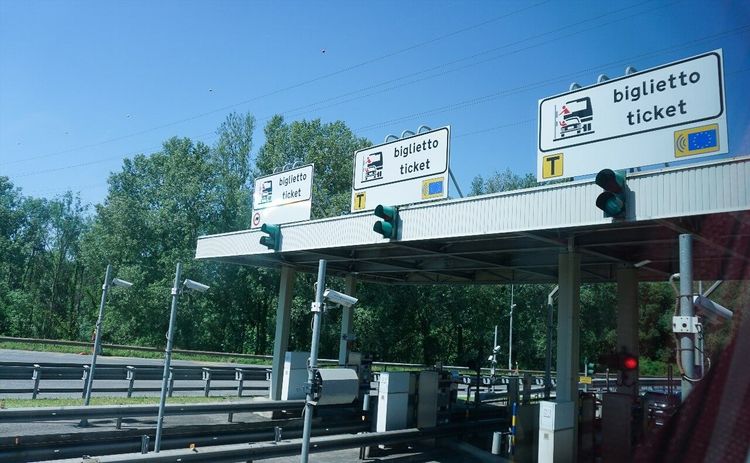
Italy is a toll country. The motorways around the lakes (A4 Milan–Venice, A8 Milan–Varese, A9 Milan–Como, A26 towards Genoa) are all paid. In Italy, the toll category depends on the number of axles and the height measured at the front axle:
- Class A: two-axle vehicles with a front-axle height ≤ 1.30 m (cars, low-profile small vans)
- Class B: two-axle vehicles with a front-axle height exceeding 1.30 m, which covers most motorhomes
- Classes 3, 4 and 5: combinations with a trailer or caravan (3, 4 or 5 axles and above), higher rate applies
A standard two-axle motorhome will therefore almost always fall into class B. For a 600 km motorway loop around the region, budget 30 to 50 euros in tolls. Towing a trailer or a car moves you into class 3 and almost doubles the bill.
The Telepass (Italian electronic toll badge) is compatible with French interoperable badges — charges are billed directly in euros to your account.
Narrow Roads and Size Restrictions
Several scenic roads are incompatible with larger motorhomes:
- Gardesana Occidentale (Riva del Garda – Gargnano): tunnels 2.00–2.30 m wide. Accessible only to the smallest vehicles.
- Northern arm of Lake Como (Menaggio–Gravedona): passable up to 2.50 m in width most of the time, but some sections are tighter.
- Village entrances: Sirmione, Bellagio, Varenna, Orta San Giulio — all have barriers or bans on motorhomes entering the historic core.
Check the Camperstop app or Caravane & Camping forums for recent accounts from drivers who have done the same itinerary with a vehicle similar to yours.
Speed Limits and Specific Rules
Speed limits in Italy for motorhomes (based on GVW):
- Motorway: 130 km/h (if GVW < 3.5t), 110 km/h (if GVW > 3.5t)
- National road: 110 km/h (< 3.5t), 90 km/h (> 3.5t)
- Built-up areas: 50 km/h for all vehicles
A high-visibility vest must be accessible from inside the vehicle. Warning triangles are compulsory. Your insurance green card must cover Italy (check your policy).
What Is the Best Time to Visit the Italian Lakes by Motorhome?
The Italian Lakes region enjoys a particular microclimate — mild and relatively stable thanks to the body of water and the Alps blocking northerly winds. But not all seasons are equal for a motorhome trip.
September and early October are objectively the best period. Daytime temperatures hover between 18 and 25°C, the summer crowds have gone, campsite prices drop by 30–50%, and the autumn light on the shores is often more beautiful than the flat brightness of summer. The water is still warm enough for swimming (22–23°C in early September). It is also harvest season around Lake Garda.
May and June are an excellent alternative. The vegetation is at its peak, rhododendrons and azaleas are still in bloom, and the crowds have not yet arrived. June can be warm (28–30°C) but not stifling. The Whitsun weekend sees northern European visitors arrive in numbers — avoid it if you want peaceful pitches.
July and August: the lakes are saturated. Stopovers fill up by Thursday evening, the shore roads are congested, and prices double. If you have no choice, opt for Lake Iseo and Lake Orta, which remain noticeably quieter than Garda or Como in peak season.
November to March: campsites close en masse (a large proportion shut after All Saints' Day). Temperatures drop to 5–12°C and rain is frequent. That said, it is a magnificent period for those who embrace winter conditions: light, atmosphere and near-zero cost. Some municipalities have free stopovers open all year round.
Equipment and Preparation: Specifics for Northern Italy
Travelling by motorhome in Northern Italy does not require exotic equipment, but a few destination-specific preparations will save you from unpleasant surprises.
Electrical adaptors: Italian campsites mostly use type L sockets (3 pins in a line) or blue CEE 16A sockets (the camping European standard). The CEE socket is the most common in modern campsites — make sure you have the right cable.
Water and waste disposal: Tap water is safe to drink throughout the lakes region. Italian public fountains ("fontanelle" or "nasoni") are generally potable and free — ideal for topping up your tanks. Grey and black water disposal points (acque grigie e nere) are available at almost all equipped campsites and stopovers in the region.
Connectivity: 4G and 5G coverage is excellent around the major lakes. If you plan to use your phone as your primary GPS, save your data plan with the Ryo audio guide available in offline mode — practical for city walks where GPS drains the battery fast.
Documents to bring:
- Original vehicle registration document and insurance certificate (green card)
- Valid driving licence
- European Health Insurance Card (EHIC)
- National identity card or passport
- Swiss motorway vignette if you plan to cross into Switzerland (40 CHF)
Spare tyre: The puncture repair kit supplied with some motorhomes is not sufficient for all repairs. In Italy, tyre workshops (gommista) are plentiful and open on weekdays. A European breakdown assistance number is strongly recommended.
Navigation: Google Maps is reliable but does not always recognise size restrictions. Use CamperMate or a dedicated motorhome app for specific routes, and cross-reference with recent forum posts before tackling the narrow corniche roads.
Estimated Budget for Two People over 10 Days

Here is an honest cost estimate for two people over 10 days. These figures are based on 2025–2026 rates, excluding July–August.
| Item | 10 days (estimate) | |---|---| | Fuel (600 km at 20 L/100 km, €1.65/L) | €198 | | Nights at campsite/stopover (average €15/night × 10) | €150 | | Motorway tolls (including return journey) | €80–100 | | Food (supermarket + markets) | €250–300 | | Entry fees (Grottos of Catullus, Borromean Islands, Monte Baldo, etc.) | €120–160 | | Inter-lake ferries (Bellagio, Borromean Islands, Monte Isola, etc.) | €60–80 | | Restaurants (trattoria dinner 2–3 times) | €80–120 | | Miscellaneous (ice creams, coffees, optional Swiss vignette) | €50–80 | | Estimated total | €988–€1,188 |
That works out to around 100 to 120 euros per day for two people. Significantly less than a hotel stay in the same region (€150–300/night on average on Lake Garda or Lake Como in low season).
Tips to cut costs:
- Favour free or municipal stopovers (cheaper than campsites)
- Shop at COOP, LIDL or Esselunga supermarkets rather than grocery shops in tourist villages (prices 30–40% higher)
- Prioritise free attractions: the lakeshores, walking paths, medieval villages — the best panoramas are mostly free
- Avoid July–August: every line in the budget above roughly doubles
For longer trips (15 days), add approximately 400–500 euros for the extra stops at Lake Orta, in Piedmont and in Turin.
FAQ
Can You Drive All the Way Around Lake Garda in a Motorhome?
The answer depends on the size of your vehicle. The eastern shore (Veneto side) is fully accessible without major restrictions. The western shore, between Riva del Garda and Gargnano, follows the Gardesana Occidentale, a corniche road with tunnels that can be as narrow as 2.00 to 2.30 metres. For a standard-width motorhome (2.20–2.30 m excluding mirrors), the passage is physically possible but stressful. If your vehicle exceeds 2.35 m in width, avoid this section and return via the eastern shore. Camper vans get through more easily than full-size motorhomes.
How Long Does It Take to Visit the Italian Lakes by Motorhome?
Ten days is the minimum to cover the three main lakes (Garda, Como, Maggiore) without rushing. Fifteen days allow you to add Lake Iseo, Lake Orta, and cultural stops in cities such as Bergamo, Brescia or Verona. Under 10 days, you will spend more time driving and manoeuvring than enjoying the lakeshores. The full loop covers between 600 and 1,000 km depending on detours.
Do You Need to Book Pitches in Advance?
Outside July and August, advance booking is generally not necessary for municipal stopovers. However, lakeside campsites with direct water access get snapped up as early as April for the summer season. If you are travelling in July or August, book at least 4–6 weeks ahead via ACSI or directly on the campsite's website. In September, pitches are almost always available on arrival, except during long weekends.
What Toll Costs Should You Expect for a Motorhome in Italy?
A standard two-axle motorhome with a front-axle height exceeding 1.30 m falls into class B on Italian motorways. For a 600 km motorway route around the lakes region, budget 30 to 50 euros in tolls. Towing a trailer or a car moves you into class 3 and can roughly double that amount. You can pay in cash, by bank card (accepted at almost all Italian toll booths) or via Telepass/compatible French electronic toll badge.
Can You Do the Trip Without Crossing into Switzerland?
Yes, absolutely. Switzerland (Lake Lugano, Locarno) is an option for those who want to enrich their itinerary, but it is not essential. The Garda–Iseo–Como–Maggiore loop is entirely within Italian territory. If you do wish to enter Switzerland, make sure you have the motorway vignette (40 CHF, valid from 1 December to 31 January of the following year), which is compulsory on Swiss motorways even for a short transit. The fine for being caught without a vignette is 200 CHF, on top of having to purchase one immediately.
Conclusion
An Italian Lakes motorhome circuit is one of the most rewarding itineraries in the Alps, provided you prepare it without rushing. Knowing the size restrictions before committing to the Gardesana, booking pitches ahead in peak season, and choosing September over July: these are the three adjustments that make the difference between a trip you merely endure and one you talk about for years.
The Italian Lakes are rich in experiences: a week is not enough, two weeks is a luxury well earned. Before you arrive and to prepare your city visits, the Ryo app offers audio-guided tours for several Northern Italian destinations. If you are setting off from the Paris region, our guide on motorhome rental in Paris will help you plan your departure logistics from France. For more van and motorhome travel inspiration across Europe, check out our guides on the Côte d'Azur by motorhome and motorhome travel on Lake Geneva to extend your alpine adventure.