© Shutterstock
 Votre guide Ryo
Milan Neighborhoods: the Complete Guide to Choosing the Right One in 2026
Milan's neighborhoods don't visit like a single city: they form a collection of small capitals that politely ignore each other. In ten minutes by metro, you go from the Art Nouveau facades of Brera to the old industrial warehouses of Tortona, with no gentle transition between the two worlds. Many travelers arrive with the image of a slightly cold economic capital and leave surprised by the diversity of Milan's neighborhoods, each with its own pace, its bars, and its residents. The Ryo audio-guided tour of Milan explores precisely this mosaic neighborhood by neighborhood, to avoid getting lost between two museums.
This guide details nine areas, from the lively canals of the Navigli to the hushed lanes of the Quadrilatero della Moda, by way of Isola, a former working-class neighborhood turned designer haven. You will also find a simple mental map of Milan's neighborhoods, areas to avoid at night, and reference points for choosing where to sleep according to your budget. Between rising rents in Porta Romana and sky-high prices around the Duomo, each area tells a different part of the city's economic history — enough to build an itinerary that suits you rather than following a fixed list.
The Centro Storico, Around the Duomo
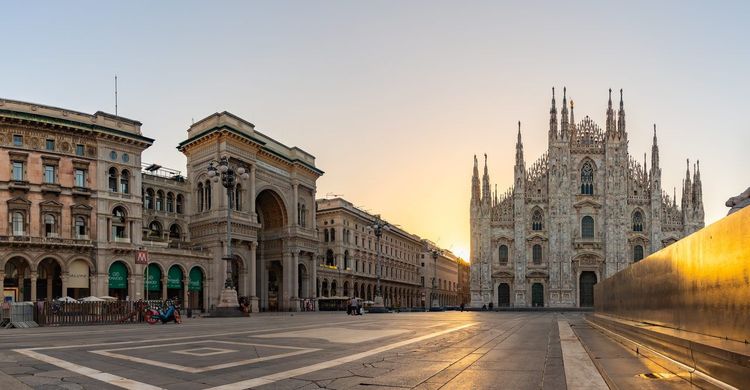
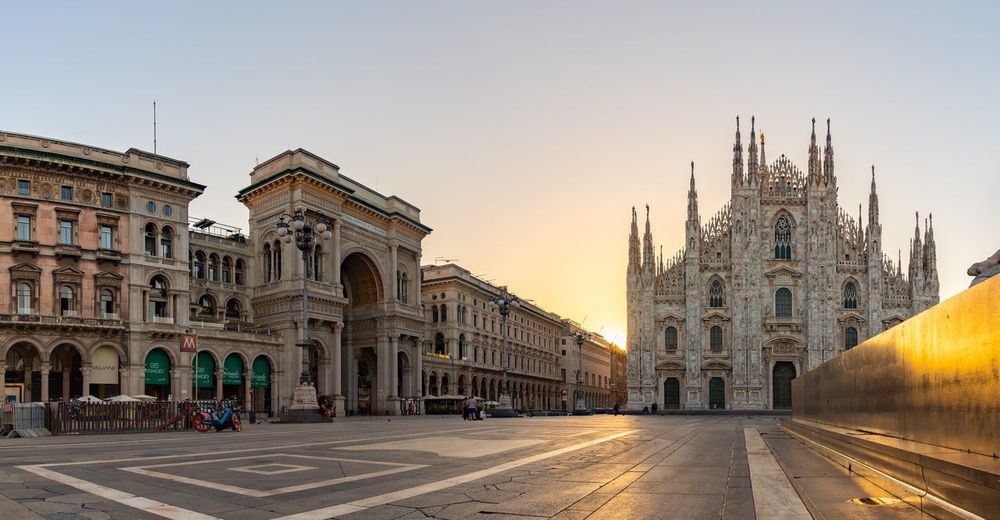
The historic center holds all the postcard imagery: this is where almost all visitors set foot when they step off the train or out of the metro. The Gothic cathedral dominates a square that sees up to 200,000 people pass through daily in high season, between tourists, pigeons, and street vendors. The Duomo di Milano took nearly six centuries to complete, from 1386 to 1965 for its final details, which explains the mix of styles visible on its facade.
Arrive before 8:30 a.m. if you want to photograph the square without a dense crowd in front of you. After that hour, head to the Galleria Vittorio Emanuele II (Piazza del Duomo, 20123 Milano, rated 4.7/5 on Google for 130K reviews), this 19th-century covered arcade where Milanese locals still come to drink a coffee standing at the counter, despite prices double those found elsewhere in the city.
Just nearby, the Museo del Novecento traces a century of Italian art from floor-to-ceiling windows looking directly onto the square — a far less crowded alternative to the cathedral itself. If you are looking for more affordable accommodation while staying central, Via Torino and its surroundings offer more reasonable options than the immediate vicinity of the square, just a five-minute walk from the Duomo.
The neighborhood remains sparsely inhabited: most of the buildings around the square are offices, shops, or hotels, not residential homes. After 9 p.m., the streets empty quickly, except for Via Dante, which leads toward the Castello Sforzesco and concentrates a good share of the area's tourist terraces. For accommodation, expect high rates year-round: the Centro Storico remains the most expensive area in the city, without necessarily being the most pleasant for a stay of several days - it's still where Ryo's "Secrets and Treasures of the Lombard Capital" audio-guided tour begins, weaving from the Duomo to the Galleria Vittorio Emanuele II.
Brera, the Artists' and Antique Dealers' Neighborhood
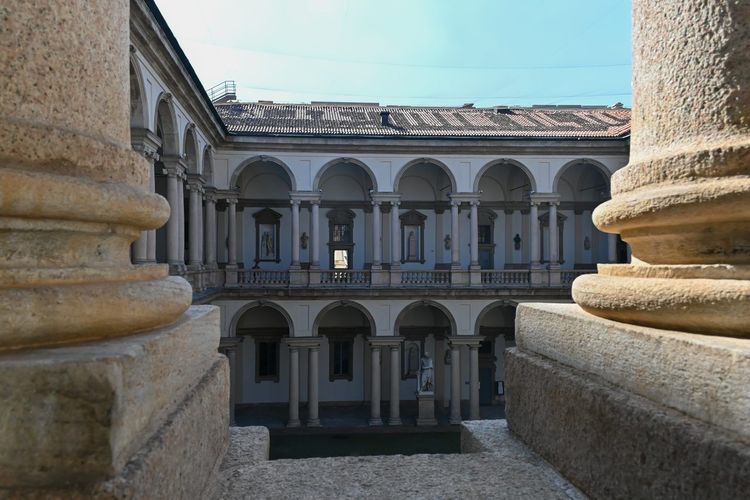
Brera was long the neighborhood of painters and fine arts students, before becoming one of the most sought-after areas in Milan for real estate. The cobbled lanes, closed to traffic, nonetheless retain their village atmosphere despite gentrification.
The Pinacoteca di Brera houses one of the country's finest collections of Italian painting, from Mantegna's Dead Christ to Raphael's canvases, inside a former Jesuit palace.
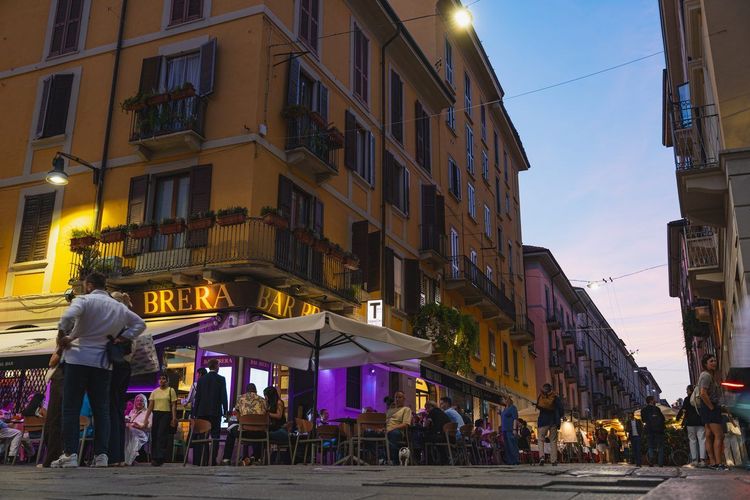
In the evening, the atmosphere shifts. The wine bars on Via Fiori Chiari and Via Madonnina fill with a mix of well-heeled residents and tourists seeking the bohemian side promised by travel guides. On the third Sunday of the month, a small antiques market sets up along Via Fiori Chiari — smaller in scale than the one at the Navigli but often featuring rarer pieces. Many contemporary art galleries have opened over the past ten years between the Academy of Fine Arts and the Pinacoteca, extending the neighborhood's artistic vocation well beyond old masters.
Just below stretches Parco Sempione (Piazza Sempione, 20154 Milano, rated 4.6/5 on Google for 85,494 reviews), a 38.6-hectare green lung bordering the Castello Sforzesco.
On fine days, the lawns fill with picnickers and informal basketball players — a sharp contrast with the hushed calm of the art galleries just a few streets away. Brera works well as an accommodation base for a culture-focused stay, provided you accept prices that rival those of the historic center.
The Navigli, Nightlife Along the Canals
The Navigli takes its name from the canals dug as early as the 12th century to transport the marble used in building the Duomo. Only two visible stretches remain today, but they are enough to make the neighborhood the epicenter of Milan's nightlife.
The Naviglio Grande concentrates most of the action, with its quaysides lined with bars that host the most generous happy hour in the city: from 6 p.m., a cocktail often grants access to an unlimited buffet — a local institution known as the aperitivo.
On the last Sunday of the month, the Mercatone dell'Antiquariato takes over the quaysides with hundreds of flea market vendors — a tradition that draws collectors and curious visitors alike. During the day, the neighborhood reveals a quieter, almost provincial character, with artisan workshops converted into galleries and buildings with crumbling facades not yet surrendered to renovation. Some rental operators also offer short boat rides along the Naviglio Grande in summer, an unusual way to see the neighborhood from the water rather than from the crowded quays.
The Darsena di Milano (Piazzale Cantore, 20123 Milano, rated 4.4/5 on Google for 9K reviews), a former port basin redeveloped in 2015, now serves as the main promenade between the two naviglios.
For a meal that breaks away from the tourist routine, head instead to the small trattorias set back from the quays — cheaper than those with a direct water view. The Ryo guide to Milan's culinary specialties also lists several addresses in the neighborhood, useful if you prefer to build your own food trail rather than following the first restaurant you come across. Come evening, expect a noisy atmosphere until 2 a.m. on weekends — not ideal if you are looking for a quiet night's sleep.
Isola, the Former Working-Class Neighborhood Turned Creative Hub
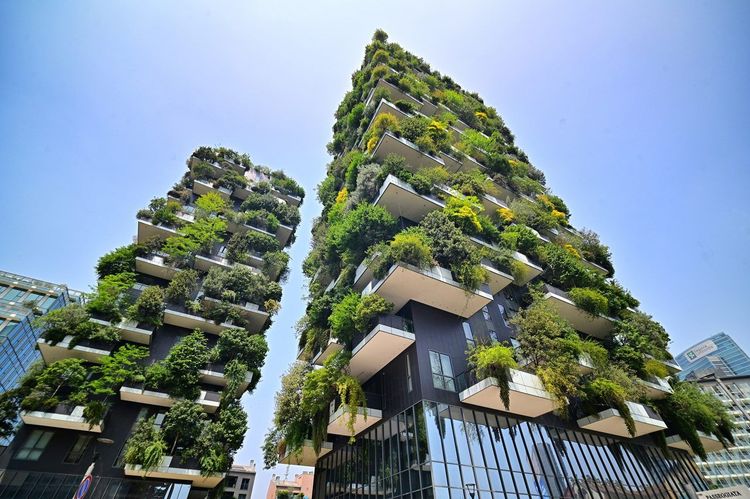
Isola is changing its face. Long a working-class neighborhood isolated by railway tracks — as its name suggests — it has been absorbed by the expansion of the Porta Nuova business district since 2010.
The towers of the Bosco Verticale — two residential buildings covered in 900 trees and 20,000 plants — symbolize this rapid transformation.
They are visible from almost every street in the neighborhood, a practical landmark when you get lost in the maze of small residential streets. Street art covers many walls in the area, particularly along Via Borsieri, where new murals appear every year during a local festival.
Around them, former factories have given way to concept stores, design studios, and a handful of Asian street food spots — a sign of the diversity that has settled in with the new residents. Isola remains more affordable than Brera or the Centro Storico for accommodation, while staying just ten minutes on foot from Corso Como (Corso Como, 20154 Milano, rated 4.3/5 on Google for 10K reviews) and its clubs.
The Corso Como marks precisely the neighborhood's southern boundary, with its trendy bars and its one-of-a-kind concept store 10 Corso Como, a global reference in creative retail since the 1990s.
Porta Venezia, Between Gardens and Community Life
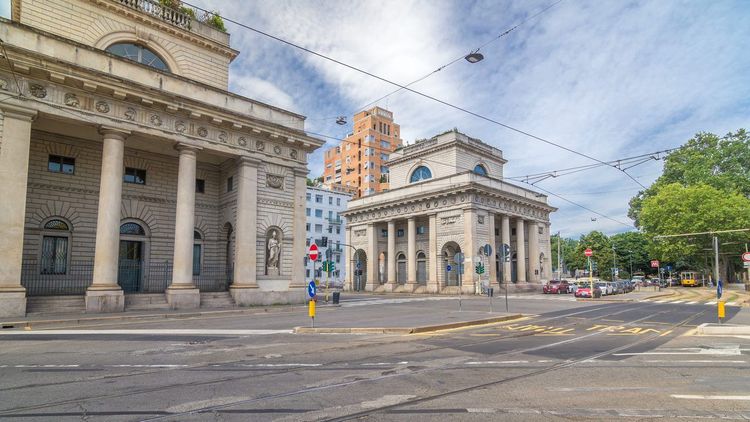
Porta Venezia takes its name from the former gate of the Spanish city walls, long since gone, but the neighborhood has kept its identity as a crossroads. It is historically Milan's most vibrant LGBT+ area, with a concentration of bars and associations around Via Lecco.
The Giardini Indro Montanelli, the city's first public park, opened in 1784, offer just over ten hectares of greenery in the heart of the city, with a planetarium and a natural history museum along their edges.
A little further north, the Cimitero Monumentale (Piazzale Cimitero Monumentale, 20154 Milano, rated 4.8/5 on Google for 2,556 reviews), opened in 1866, is well worth a visit for its tombs sculpted by some of the greatest Italian artists of the 19th and 20th centuries — a free open-air museum rarely mentioned in mainstream guides.
The neighborhood is also home to a significant Eritrean and Somali community, visible in the restaurants and grocery stores that punctuate Via Lazzaro Palazzi. If you are looking for a lively neighborhood without the prices of the historic center, Porta Venezia ticks most of the boxes, provided you accept a social mix that can be noisy in the evenings.
Porta Romana and Città Studi, the Up-and-Coming Neighborhoods
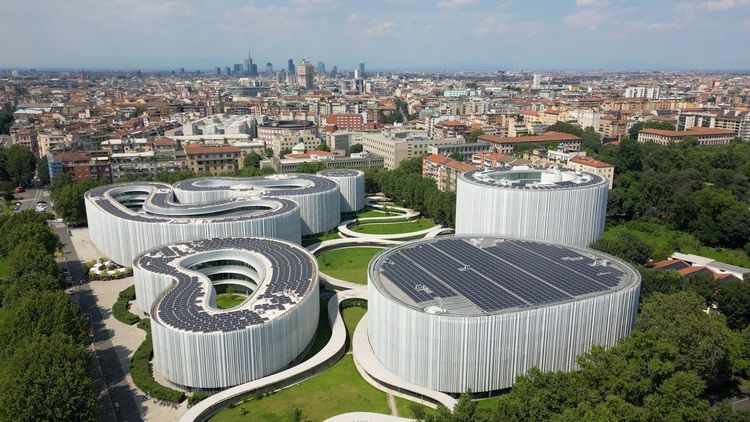
To the southeast of the center, Porta Romana long lived in the shadow of Brera and the Navigli. Yet the area has been attracting more and more young professionals since the arrival of several corporate headquarters and the renovation of the former municipal Macello, transformed into a university and cultural hub that now hosts part of the Bocconi campus and several temporary exhibition spaces.
A little further away, Città Studi owes its name to the presence of the main campus of the Politecnico di Milano (Piazza Leonardo da Vinci 32, 20133 Milano, rated 4.4/5 on Google for 1,831 reviews), one of Europe's most highly regarded engineering schools.
The neighborhood lives to a university rhythm: student-priced bars, kebab shops open late, and an atmosphere considerably less polished than the city center. Rents here remain around 20% lower than in Brera for an equivalent surface area — a strong argument if you are planning a stay of more than five days rather than a simple weekend.
The Quadrilatero della Moda, the Upscale Neighborhood Par Excellence
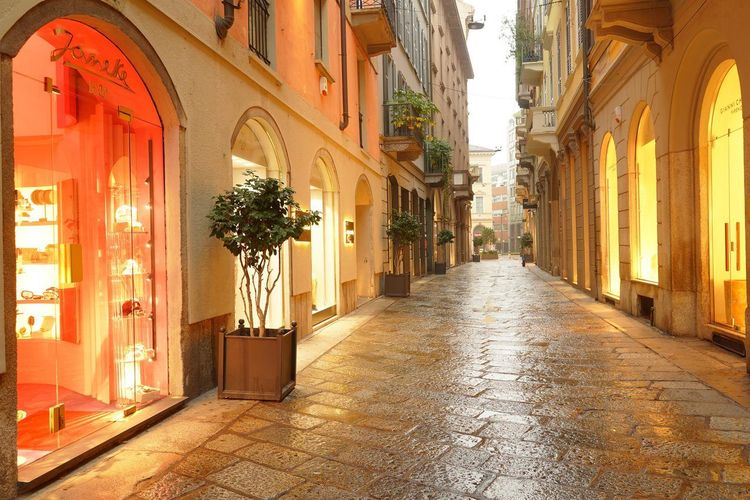
No discussion of Milan's neighborhoods would be complete without mentioning the triangle formed by Via Montenapoleone (Via Montenapoleone, 20121 Milano, rated 4.5/5 on Google for 1,611 reviews), Via della Spiga, and Via Sant'Andrea. This handful of streets concentrates the boutiques of the greatest Italian and international fashion houses within a radius of less than 500 meters.
The neighborhood is primarily commercial: few residents, many storefronts, and some of Europe's highest per-square-meter prices for the rare apartments available to rent. Footfall surges during Fashion Week, in February and September, when the streets turn into a permanent parade of carefully put-together figures.
You don't need a luxury budget to enjoy the neighborhood. Many Milanese simply come here for a Sunday stroll, with no intention of buying, to admire the window displays and the architecture of the palazzi housing the boutiques. A few historic cafés, such as those lining Via Manzoni, allow you to sit without breaking the bank — as long as you stay at the counter rather than on the terrace.
The neighborhood also borders La Scala, the country's most prestigious opera house. Inaugurated in 1778, it has seen Verdi and Puccini perform before becoming one of the world's most closely followed lyric stages, with standing tickets sometimes available for less than €20 on the night. A quick visit to the neighborhood is generally sufficient, unless fashion or opera are among your travel priorities.
Neighborhoods to Avoid, Especially at Night
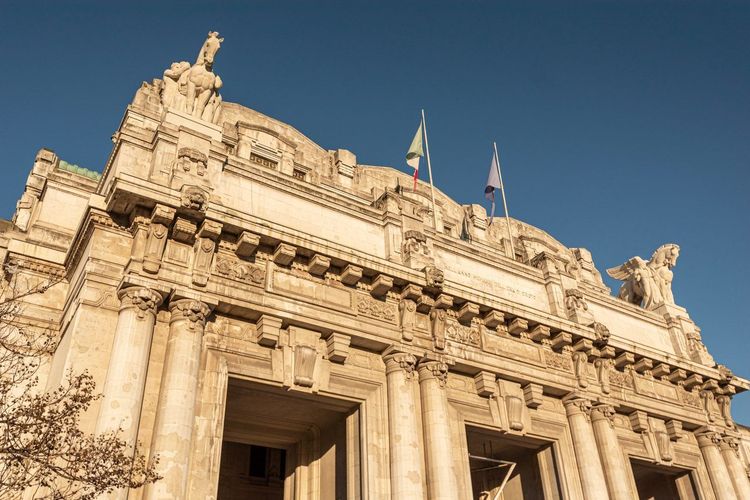
Milan is broadly a safe city, but some outlying areas warrant extra vigilance after dark. Quarto Oggiaro, to the northwest, and certain streets around the Stazione Centrale di Milano (Piazza Duca d'Aosta, 20124 Milano, rated 4.2/5 on Google for 14,210 reviews) accumulate reports of petty crime and sometimes inadequate street lighting.
The area around Via Padova, long stigmatized, has on the other hand largely calmed down over the past ten years, even if its reputation persists beyond its current reality. The San Siro neighborhood, outside match nights, also remains quiet after dark without presenting any particular danger. The sensible rule is simple: avoid deserted streets after 11 p.m. and stick to busy commercial routes — good advice in any major European city.
A Map of Milan's Neighborhoods: How to Find Your Way Around
Milan is organized in concentric circles around the Duomo, somewhat like Paris with its arrondissements, but without official numbering. A simple mental map of Milan's neighborhoods involves remembering four rings: the Centro Storico at the core, a crown of historic neighborhoods (Brera, Navigli, Porta Venezia, Isola), then the areas in transition (Porta Romana, Città Studi, Tortona), and finally the residential outskirts.
As the Ryo guide to Seville's neighborhoods points out, each neighborhood there has retained its village identity despite the city's expansion. Milan works the same way, through juxtaposition rather than fusion, which explains why two neighboring streets can seem to belong to two entirely different eras.
The metro, with its five color-coded lines, remains the most reliable way to move between these worlds that touch without truly blending. The Ryo audio-guided tour of Milan groups its stops by neighborhood, which helps you visualize the real distances between each area rather than relying solely on a paper map.
Where to Stay According to Your Travel Profile
The choice of neighborhood matters more in Milan than in many other Italian cities, given how much the atmosphere varies from one area to another. For a first visit focused on monuments, the Centro Storico or Brera remain the most practical choices, despite high prices.
If your budget is tighter, Città Studi or Isola offer a good compromise between price and quick metro access to the center. Expect an average of €90 to €120 per night for a decent hotel in these areas, compared to €180 to €250 for a comparable establishment around the Duomo — a gap that alone justifies stepping outside the historic center. Families generally appreciate Porta Venezia for its parks and relative calm during the day, while travelers in search of nightlife naturally gravitate toward the Navigli, at the cost of some lost sleep on weekends.
To refine your activity choices once you have settled on a neighborhood, the Ryo guide to things to do in Milan usefully completes this overview, with suggestions organized by area of the city. Whatever neighborhood you choose, you will rarely need more than 25 minutes by metro to reach the historic center, which limits unpleasant surprises when it comes to accommodation.
Getting Around Between Neighborhoods
The ATM network (metro, tram, bus) efficiently covers all the neighborhoods mentioned above, with a single ticket valid for 90 minutes including all connections. The red (M1) and green (M2) metro lines serve most tourist areas, while the historic trams remain a pleasant option for exploring residential neighborhoods at a leisurely pace. Expect around €2.20 per single journey, or opt for a day pass at €7.60 if you plan multiple trips between the far ends of the city. The BikeMi bike-sharing service usefully complements the network for short journeys between neighboring areas, with a daily subscription of around €4.50.
FAQ
What is the nicest neighborhood in Milan?
It depends on what you're looking for. The Navigli charms with its lively atmosphere and canals, Brera with its artistic village feel, and Isola with its mix of street art and contemporary design. Many visitors recommend combining two neighborhoods rather than settling on just one.
Which neighborhood in Milan should you avoid?
No central area poses any particular danger during the day. Caution is advised mainly at night around Quarto Oggiaro and certain streets near the central station, where street lighting can be insufficient in places.
Where to stay in Milan according to your budget?
On a tight budget, opt for Città Studi or Isola, both well connected to the center by metro. For a comfortable stay close to museums, Brera or the Centro Storico remain the safe bets, despite higher prices year-round.
What is the upscale neighborhood in Milan?
The Quadrilatero della Moda, around Via Montenapoleone, concentrates the luxury boutiques and the highest property prices in the city. Porta Romana has also been gaining in prestige over the past few years.
What is the youngest and most vibrant neighborhood in Milan?
Isola and the Navigli attract the youngest crowd, with cocktail bars, creative workshops, and late-night events. Città Studi rounds out this trio thanks to its large student population.
How to use a map of Milan's neighborhoods to plan your stay?
First locate the Duomo as your central reference point, then find your neighborhoods of interest along the metro lines that radiate from it. This approach avoids unnecessary back-and-forth and lets you group visits by geographical area rather than by popularity.
Is Milan an expensive city for accommodation?
The historic center and Brera charge rates comparable to Paris or London for equivalent accommodation. Moving just a few metro stops away, toward Città Studi or Porta Romana, prices drop noticeably without sacrificing proximity to the main sights.
Milan rewards curious travelers who are willing to step outside the Duomo-Scala-Galleria triangle. Each neighborhood in Milan tells a different facet of the city, from the lively canals of the Navigli to the hushed storefronts of the Quadrilatero della Moda, by way of the plant-covered towers of Isola. Building your own itinerary, neighborhood by neighborhood, is often more rewarding than following a fixed list of monuments in order.
To explore each area at your own pace, the Ryo audio-guided tour of Milan offers a practical thread connecting these different worlds, with on-site explanations rather than just a map to consult — enough to turn a list of neighborhoods into a real walk, without depending entirely on a map.