© Shutterstock
 Votre guide Ryo
Activities in Dijon and Surroundings: The Complete 2026 Guide
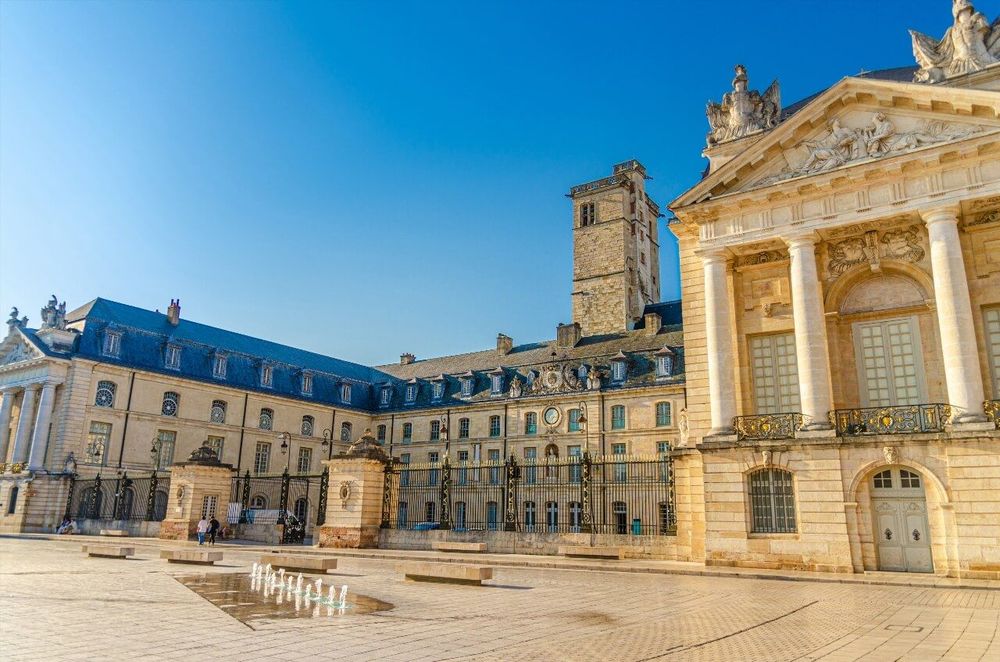
Dijon surprises. You arrive expecting a provincial museum-city known for its mustard, and discover a medieval center as dense as Colmar, threaded with half-timbered lanes and secret courtyards alive well into the evening. Activities in Dijon and its surroundings cover a range that few cities of 160,000 inhabitants can claim: a free musée des Beaux-Arts ranked among the ten best in France, a Unesco-listed Route des Grands Crus, and golden-stone villages perched on the first hills of Côte-d'Or. To enter the city from the right angle, the Ryo audio guide of Dijon offers 24 commented stops in 1h30, from the palais des Ducs to the banks of the canal de Bourgogne.
This guide covers the historic core, the gastronomic scene, and the surroundings within a one-hour radius: the Route des Grands Crus, villages ranked among the most beautiful in France, the Unesco-listed Cistercian abbaye de Fontenay, and the MuséoParc Alésia. Planning a day trip or a weekend? Here's how to organize it, with the best addresses and tips to keep you focused.
The Old Town on Foot: Owls, Dukes, and Secret Courtyards
Dijon's historic center is best explored on foot — that's its first quality. Starting from the place de la Libération, a semicircular square lined with classical arcades designed by Jules Hardouin-Mansart in 1686 (the same architect as Versailles), the entire medieval heritage unfolds within a 600-meter radius.
The tour Philippe le Bon has dominated the palais des Ducs et des États de Bourgogne since the 15th century. Climbing to its summit (316 steps) rewards you with an unobstructed view over Dijon's rooftops — those glazed tiles in geometric patterns that Burgundy made famous. Visits are made in groups with a guide and must be booked at the Dijon Tourist Office.
Rue des Forges and rue Verrerie concentrate the finest medieval façades: 16th-century townhouses, inner courtyards accessible by pushing open carriage gates, and discreet fountains tucked into recesses. On a buttress of the église Notre-Dame de Dijon, a small owl carved in the 15th century has become the city's talisman. Stroked with the left hand for generations, it is polished smooth as marble. Local tradition holds that it grants a wish made while touching it.
Ten minutes on foot, the Halles de Dijon (Rue Quentin, 21000 Dijon, rated 4.5/5 on Google with 4,582 reviews), built by Gustave Eiffel, are worth a visit even outside market days for their remarkable iron framework. It is on Tuesday, Friday, or Saturday mornings that they reveal their true character: farm-produced époisses, artisan pain d'épices, Bresse poultry, and Burgundy wines by the glass. The Saturday crowd peaks between 11am and 1pm.
The Ryo audio tour of Dijon covers precisely this area with 24 commentaries that place each monument in its ducal context. To understand why Dijon remains so deeply marked by its past as the capital of the Valois dukes, it is the most effective entry point.
Museums and Dijon Culture
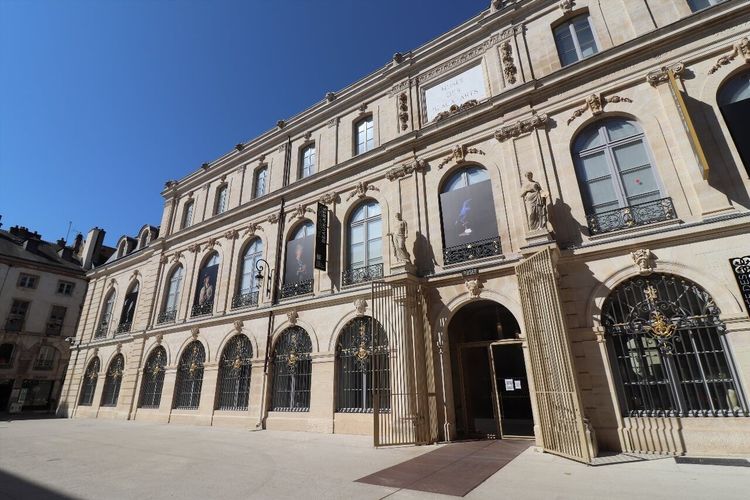
The musée des Beaux-Arts de Dijon is one of France's great regional museums, and one of the rare ones to be entirely free for permanent collections. Housed in the wings of the former ducal palace, it brings together 120,000 works across several floors: Flemish paintings, medieval sculptures, Renaissance furniture, and an Egyptian collection. The guardroom, with the polychrome alabaster tombs of the Valois dukes, stops visitors almost physically in their tracks.
Fifteen minutes on foot, the Chartreuse de Champmol deserves a short but essential visit. Founded in 1383 by Philippe le Hardi, this is where Claus Sluter sculpted the Well of Moses, considered one of the masterpieces of European Gothic sculpture. The site is integrated into a specialist hospital, but an entrance is reserved for visitors. Allow 45 minutes.
For the contemporary scene, Le Consortium (37 Rue de Longvic, 21000 Dijon, rated 4.3/5 on Google with 436 reviews) is one of the most recognized contemporary art centers in Europe. Its permanent collection brings together works by Basquiat, Koons, and Buren in a building designed by Shigeru Ban. Open Wednesday to Sunday, paid admission.
Gastronomy: Markets, Cellars, and Local Products
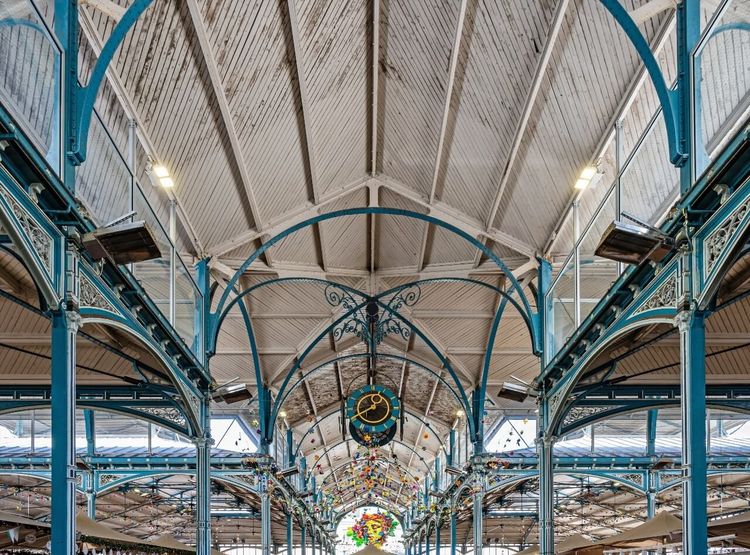
Dijon is a city where you eat well. The Halles de Dijon (Tuesday, Friday, and Saturday mornings) bring together local producers, cheesemakers, and charcutiers. The farm époisses, Burgundy snails, and Côte-d'Or roseval potatoes reach a level close to the best Parisian markets, at noticeably lower prices. Arrive before 10am on Saturdays for the best selection.
The moutarde de Dijon refers to a recipe, not an origin: unlike moutarde de Bourgogne, which holds a PGI, it has no protected geographical indication and its seeds are today mostly imported, notably from Canada. For an authentic artisan mustard, look for Dijon producers who maintain local production: the blackcurrant and old-style whole-grain versions are the most characteristic. The pain d'épices dijonnais, made since the 18th century, deserves a few boxes in your luggage.
Several wine merchants in the center offer introductions to Burgundian grape varieties with selections from local estates. To go deeper into local gastronomy, Ryo's 10 culinary specialties of Dijon you must try details what you absolutely must taste during a visit to the Burgundian capital.
Parks and Natural Spaces
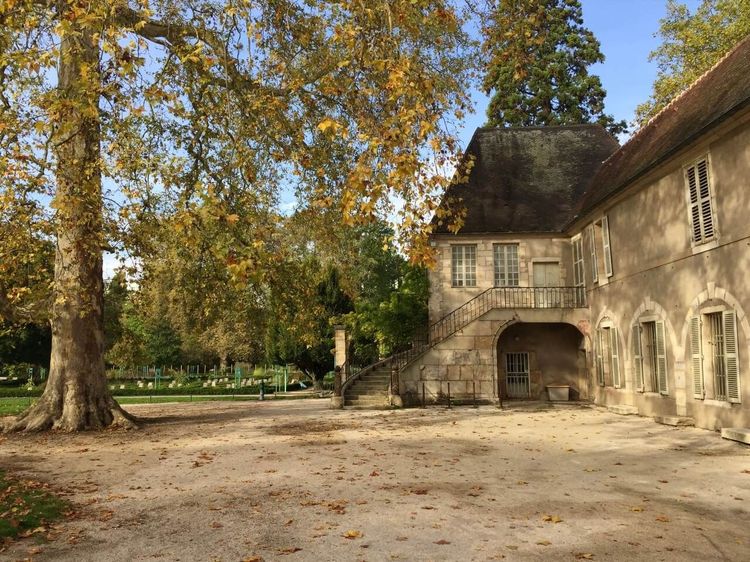
The city is greener than you might expect. The jardin de l'Arquebuse houses a botanical garden with over 3,500 plant species and a natural history museum, both freely accessible. The tropical greenhouses, open year-round, provide a welcome refuge in cold weather.
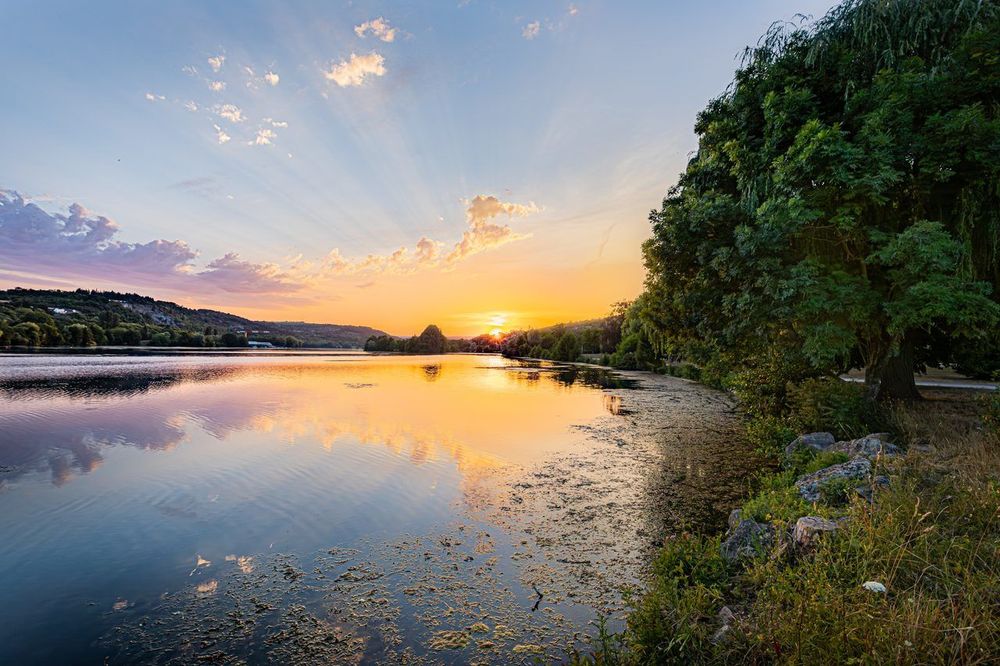
Two kilometers from the center, the parc de la Colombière offers 25 hectares of English-style parkland along the Suzon, with alleys lined with century-old cedars. Very popular with Dijonnais for jogging and Sunday strolls. Leaving the park, a cycle path leads to lac Kir (Boulevard Chanoine Kir, 21000 Dijon, rated 4.4/5 on Google with 2.1K reviews), a 37-hectare artificial lake with rowboat and bicycle rentals in summer.
For more ambitious hikes, the combe Lavaux, fifteen kilometers to the east, offers marked trails through a landscape of limestone gorges and oak forests. Free access, with free parking at trailheads.
Unique Activities in Dijon
The owl trail is the old town's official treasure hunt: the Tourist Office distributes a map guiding participants through around twenty symbols carved on the monuments. Allow 1h30 to 2h depending on your pace. Free with the map available at the Tourist Office or as a download.
The underground passages of Dijon offer a more off-the-beaten-path experience: medieval galleries dug beneath the old town, visitable through guided tours organized by the Tourist Office. The entrances are barely signposted above ground, making them all the more interesting to discover.
For outdoor enthusiasts, the hills above Dijon — notably the Corcelles-les-Monts site — offer natural rock-climbing routes frequented by local clubs. The site is accessible from Dijon in 20 minutes by car. In winter, the cross-country ski slopes of the plateau de Langres (1h30) and the snowshoeing routes of the Morvan nicely round out the region's offering.
The Route des Grands Crus
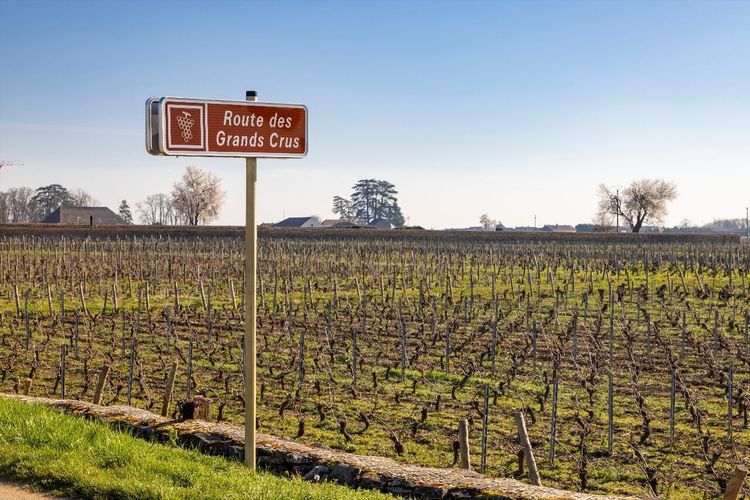
The Route des Grands Crus de Bourgogne, which runs alongside the Climats du vignoble de Bourgogne listed as Unesco World Heritage since 2015, starts just outside Dijon, at Marsannay-la-Côte. From there, it stretches 60 kilometers south through Gevrey-Chambertin, Chambolle-Musigny, Vougeot, and Beaune, crossing the most celebrated vineyards in the wine world.
Gevrey-Chambertin is the first great appellation after Dijon. Roadside signs indicate the names of the grand crus with their respective surface areas: Chambertin, Clos de Bèze, Mazis-Chambertin. Several estates offer tastings directly at their cellar, some open on presentation, others by appointment.
The Château du Clos de Vougeot (Route des Grands Crus, 21640 Vougeot, rated 4.5/5 on Google with 4,086 reviews) deserves a stop. This former 12th-century Cistercian estate, with its vaulted cellars and large medieval wooden press, illustrates the monastic origins of the Burgundian vineyard. Daily guided tours, modest admission fee.
In Beaune, the Hôtel-Dieu is probably the most photographed monument in Burgundy. This former 15th-century hospital, with its diamond-patterned glazed tile roof, houses a collection of works from the ducal era including the famous polyptych of the Last Judgment by van der Weyden. The city also has an extensive network of underground cellars beneath its medieval ramparts, some of which are open to visitors. Back in Dijon, our audio walking tour covers the ducal centre in 25 stops.
Day Trips from Dijon
The one-hour radius around Dijon is among the richest in France in terms of historical heritage. Here are four particularly memorable day trips.
Châteauneuf-en-Auxois (45 min from Dijon) is listed among the Plus Beaux Villages de France. The perched medieval village overlooks the Panthier reservoir with a 360-degree view over the Burgundian countryside. The 14th-century feudal castle is open to visitors. To discover other remarkable villages around the Burgundian capital, Ryo's guide to the most beautiful villages around Dijon compiles the best addresses with practical details.
Flavigny-sur-Ozerain (55 min) is known for its anise sweets made in a Carolingian abbey since 1591 without interruption. The village, with its intact medieval ramparts and quiet lanes, served as the setting for the film "Chocolat" (2000) with Juliette Binoche. The anise factory is open for free visits.
The abbaye de Fontenay (1h15) is listed as a Unesco World Heritage Site. It is the oldest Cistercian abbey in France still preserved in its original 12th-century state. The complex, comprising the Romanesque church, cloister, monastic forge, and gardens, is of exceptional architectural coherence.
The MuséoParc Alésia (Route des Laumes, 21150 Alise-Sainte-Reine, rated 4.4/5 on Google with 3,427 reviews) (1h from Dijon) allows you to discover the site of the battle of Vercingetorix against Caesar in 52 BC. The contemporary museum, designed by Bernard Tschumi, presents the reconstruction of Roman fortifications across 38 hectares. It is one of the best pedagogically conceived visitor sites in the region.
Dijon with Families
Dijon offers several good options for families with children. The Muséum d'Histoire Naturelle de Dijon (1 Avenue Albert 1er, 21000 Dijon, rated 4.6/5 on Google with 1,038 reviews), located in the jardin de l'Arquebuse and freely accessible, features paleontological collections, fauna-and-flora dioramas, and a geology gallery that captivates children aged 5 to 12. The visit takes about one hour at a steady pace.
The treasure hunt "In Search of the Owl," available at the Tourist Office in paper form, turns the old town into a playground with around twenty clues carved on monument façades. Allow 1h30 to 2h. Plan a gastronomic reward to round off the route: homemade pain d'épices or Flavigny anise sweets sold at specialty food shops in the center.
For outdoor activities, lac Kir offers pedalo and rowboat rentals, a fitness trail, play areas, and picnic tables in a shaded setting 3 km from the center. In summer, a guinguette sets up on the banks. It has been the Sunday afternoon gathering spot for Dijonnais families for decades.
The MuséoParc Alésia, an hour's drive away, is one of the most successful family day trips in the region: scale models, life-size reconstructions, and open-air archaeology. The site is designed for children and adults alike, with educational workshops available on weekends.
Practical Information
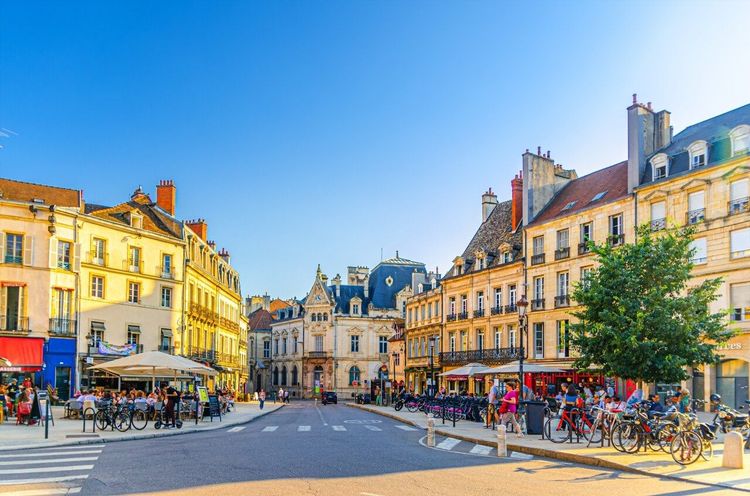
Dijon is a dynamic university city with a wide range of accommodation at reasonable prices outside peak season. Expect €70 to €130 per night at a 3-star hotel in the center, or €55 to €80 for an apartment rental for two. The high season (June–September) and the Christmas Market period (December) can push some prices up significantly.
The historic center can be explored entirely on foot: the old town is pedestrianized or has restricted traffic. The Divia network (bus and tram) covers the rest of the city well. To explore the surroundings, a car is still recommended, as Burgundian public transport is infrequent outside main routes. Car rentals are available directly at the SNCF train station.
The TGV Paris–Dijon connects the two cities in 1h30 from Paris Gare de Lyon, making Dijon fully accessible for a car-free city weekend. To explore the surroundings without driving, an electric-assist bike (available for rent at the station and at several points around the city) lets you ride the Route des Grands Crus over two days without excessive effort. For a romantic stay with off-the-beaten-track ideas, Ryo's guide to an unusual weekend in Burgundy offers less conventional experiences and addresses.



FAQ
What to do in Dijon in one day?
A well-organized day lets you cover the essentials. Morning: visit the old town (place de la Libération, palais des Ducs, the owl of Notre-Dame) and stop by the Halles if it's a market day. Afternoon: musée des Beaux-Arts and Chartreuse de Champmol. End of the day: stroll along the canal or head to lac Kir. To optimize navigation and historical context, the Ryo audio guide of Dijon covers the center in 1h30 with 24 commented stops.
Is Dijon worth visiting?
Yes, and often more than expected. The city combines exceptional medieval heritage, gastronomy deeply rooted in Burgundian terroir, a free musée des Beaux-Arts ranked among the richest in France outside Paris, and immediate proximity to the Route des Grands Crus. Unlike Lyon or Strasbourg, tourist footfall remains moderate, making visits more relaxed and interactions with locals more natural.
What surroundings should you visit from Dijon?
Châteauneuf-en-Auxois (perched medieval village, 45 min), Flavigny-sur-Ozerain (anise, intact medieval ramparts, 55 min), Beaune with the Hôtel-Dieu (1h), the Unesco-listed abbaye de Fontenay (1h15), and the MuséoParc Alésia (1h). For wine lovers, Gevrey-Chambertin and the Château du Clos de Vougeot are the key stops. Two days allow you to comfortably combine two or three of these destinations.
Is the Route des Grands Crus accessible without a car?
Partially. The Dijon–Beaune train takes 20 minutes with several daily departures, and bikes can be rented in Beaune to head north. However, the intermediate villages — Gevrey-Chambertin, Chambolle-Musigny, and Vougeot — are poorly served by public transport. An electric-assist bike is the best option: the Dijon–Beaune distance along the Route des Grands Crus is approximately 45 km, very manageable in a day with tasting stops.
How much time should you plan for Dijon and its surroundings?
Two days for Dijon intra-muros at a relaxed pace. Add one day for the Route des Grands Crus (Gevrey, Vougeot, Beaune) and another for the villages and sites of northern Côte-d'Or (Châteauneuf, Fontenay, Alésia). A four-day stay covers everything without rushing and leaves time for tastings at the estates.
When should you visit Dijon?
Spring (April–June) and autumn (September–October) are ideal: the vines are beautiful, temperatures are mild, and tourist numbers moderate. September combines the Fêtes de la Vigne (early in the month, folk troupes from forty countries) and the first colors of the vineyards. December is worth a trip for the Christmas Market, one of the most important in Burgundy.
Conclusion
Dijon and its surroundings form a rare combination: a human-scale city traversed by intact medieval heritage, a gastronomy deeply rooted in its terroir, and a Unesco-listed vineyard less than fifteen kilometers from the center. Whether you have a day or a week, there is always a cellar, a village, or a trail you haven't explored yet.
To start at the best point, the audio-guided tour of Dijon guides you through the 25 essential stops of the historic center in 3h10. An efficient starting point before setting off to explore the Burgundian surroundings.
À lire également