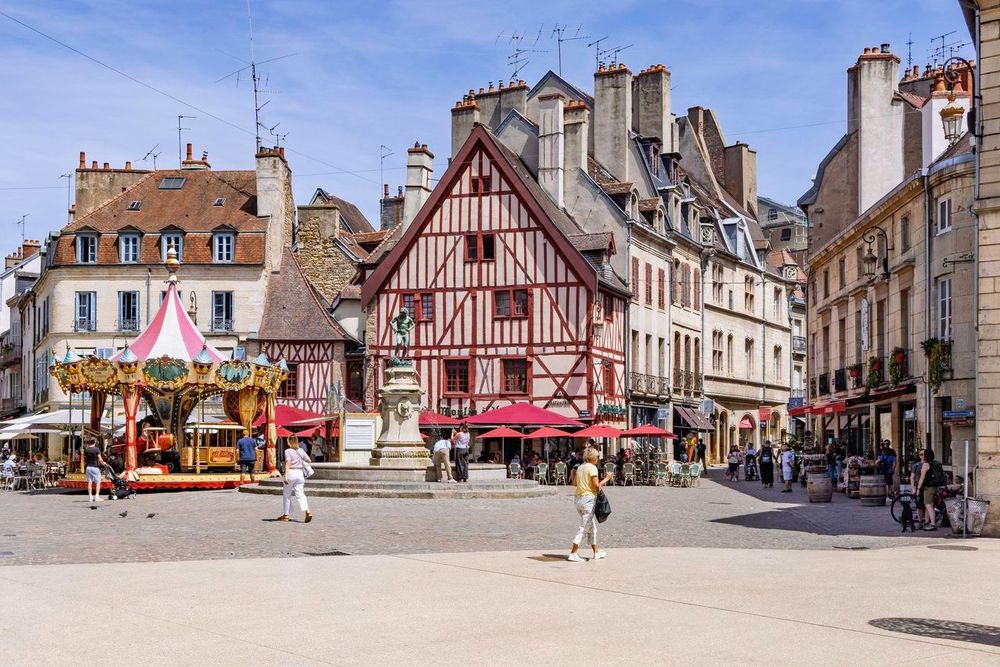
© Shutterstock
 Votre guide Ryo
Dijon Gastronomy: 12 Culinary Specialties You Absolutely Must Try in 2026
Dijon is a city meant to be eaten as much as visited, and every local culinary specialty tells a piece of its history. The historic capital of Burgundy, it has accumulated for centuries a rare gastronomic density for a city of two hundred and fifty thousand inhabitants: condiments exported to all five continents, pungent-smelling cheeses, confectionery inherited from the Middle Ages, and wines inscribed on Unesco's World Heritage List. Each of Dijon's culinary specialties has its own reference house, its own history and its own ideal season. If you only know Dijon through the yellow mustard jar in your refrigerator, you have seen only a fraction of it. The Ryo audio guide of Dijon, 24 audio tracks, 1h30 of walking through the historic centre's streets, immerses you in this history from the moment you arrive.
This guide covers twelve culinary specialties to taste during your visit to Dijon: a ham concealed in a herbed jelly, a little-known woodland truffle, a snail the city has been cooking in its shell since the 16th century, and of course that intense violet blackcurrant that gave rise to one of France's most imitated aperitifs. We also tell you where to buy them, where to taste them at their best, and which ones to slip into your suitcase before you leave.
Dijon Mustard, the World Queen of Condiments
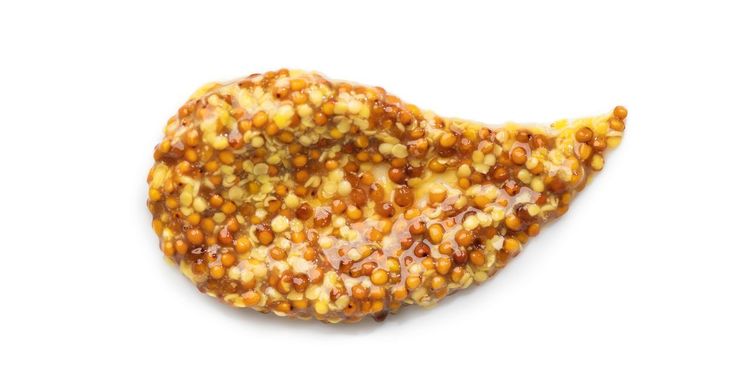
Let us start with the obvious. Dijon mustard is probably the most globally recognised of Dijon's culinary specialties, and yet few travellers know how it is made or why its taste is so different from other mustards.
The difference comes down to two details: the absence of water and the use of verjuice. Whereas most American or English yellow mustards incorporate vinegar diluted in water, Dijon mustard blends brown or black mustard seeds with verjuice, the acidic juice extracted from unripe grapes, and sometimes white wine. The result: a finer texture, an almost creamy paste, and that frank heat that hits the nose before it even reaches the palate. No colouring, no preservatives in the original formula.
The house of Maille, founded in Paris in 1747 by Antoine-Claude Maille, has established itself as the world reference. Its Dijon boutique, located on Place de la Libération opposite the Palais des Ducs, sells more than twenty-eight varieties of mustard today: with Burgundy truffle, blackcurrant, tarragon, mango, champagne. The most curious visitors will stop at the fresh mustard pumps, where mustard is dispensed into reusable stoneware pots, a Dijon ritual that is hard to replicate elsewhere.
The house of Fallot represents the other great Dijon tradition, with one important distinction: Fallot is today the only artisan mustard maker still based in Burgundy, in Beaune (40 km from Dijon). Unlike Maille, Fallot still grinds its seeds on millstones, as it did in 1840. The Beaune workshop offers paid visits with tastings, a well-spent half-day if you hire a car.
One point that often surprises: Dijon mustard is not a PDO. The term 'Dijon' refers to a production method, not a geographical origin. The direct consequence: approximately 70% of global production of so-called 'Dijon' mustard is made outside Burgundy, notably in Canada or the United States. In 2022, a shortage of seeds imported from Canada shook French supermarket stocks, a reminder that even the world's most Dijonnais product depends on an international supply chain.
Want to bring back the real Dijon mustard? Look for a jar labelled 'made in Burgundy', or go directly for fresh Maille or Fallot's artisan versions. Expect to pay between €4 and €15 per jar depending on the variety and container.
Burgundy Snails, a Living Gastronomic Tradition
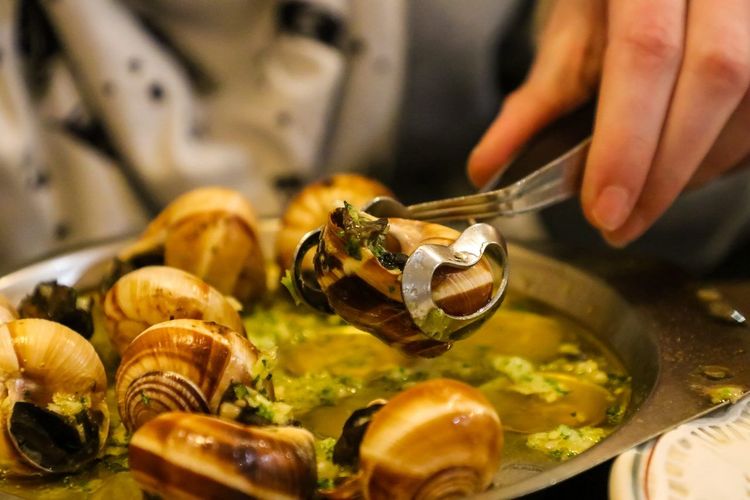
The Burgundy snail (Helix pomatia) is one of the most widely consumed land molluscs in France, and Dijon is, symbolically, its culinary capital. France consumes around 40,000 tonnes of snails per year, a large share coming from Eastern Europe (Poland, Czech Republic), but the Burgundy-style preparation remains the international benchmark.
The classic recipe is of absolute simplicity: pre-cooked snails replaced in their shells, topped with snail butter made from butter, garlic, chopped parsley and shallot. The whole dish goes into the oven at 220°C for six to eight minutes, just long enough for the butter to bubble inside the shell and lightly brown on the surface. They are traditionally served six or twelve at a time, in a ceramic dish with indentations, with a shell pick and country bread to soak up the melted butter.
To find quality snails in Dijon, the Halles are the best starting point: live or prepared snails depending on the season, with a few producers who still raise their own animals in Burgundy. Look for the label 'raised in Burgundy' to ensure provenance. Tinned snails with no indication of origin are often imported products from Morocco or Central Asia.
The best tasting period: from September to the end of March. In summer, snails are in their breeding season and their flesh is less firm and less flavourful. This is one of the few truly seasonal Burgundian specialties, and this Dijon culinary specialty is best savoured in the cool season.
Boeuf Bourguignon and Charolais Beef
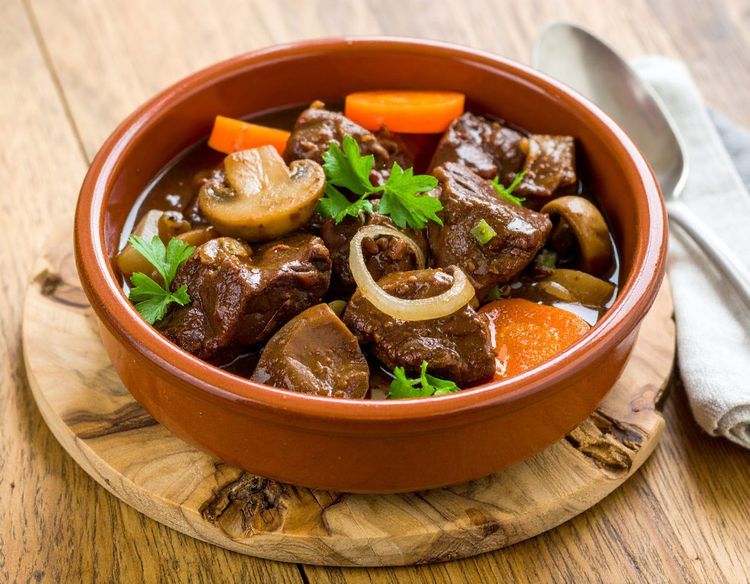
Boeuf bourguignon was not born in a Parisian brasserie. It is a peasant dish, slow to prepare, which perfectly encapsulates the Burgundian culinary philosophy: take time, wine, patience, and transform ordinary cuts of meat into something extraordinary. This culinary specialty from Dijon and its surroundings better than any other illustrates the Burgundian art of slow cooking.
The canonical recipe combines chuck or cheek of Charolais beef, smoked lardons, carrots, pearl onions, button mushrooms and an entire bottle of red Burgundy, a Pinot Noir from the Côte de Nuits or Côte de Beaune. The meat simmers three to four hours in this aromatic wine bath: it will melt under the fork, soaked in a reduced, glossy sauce.
The Charolais breed, originally raised in the Charollais area (Saône-et-Loire) but now found throughout the Côte-d'Or, is recognised for the quality of its red meat, marbled and tender. Dijon butchers offer it as fresh cuts; the Halles de Dijon make it one of their prides. Beware of restaurants that prepare their bourguignon with ordinary table wine: the choice of vintage makes all the difference to the final result.
To enjoy an honest boeuf bourguignon in Dijon, two simple options: the city-centre bistros that make it to order at weekends (expect between €18 and €28 depending on the establishment), or buy the meat at the Halles and prepare it yourself. If you prefer a revisited gastronomic version, Dijon's starred restaurants offer interesting takes in autumn, often accompanied by a slice of Burgundy truffle.
Époisses and Burgundian Cheeses
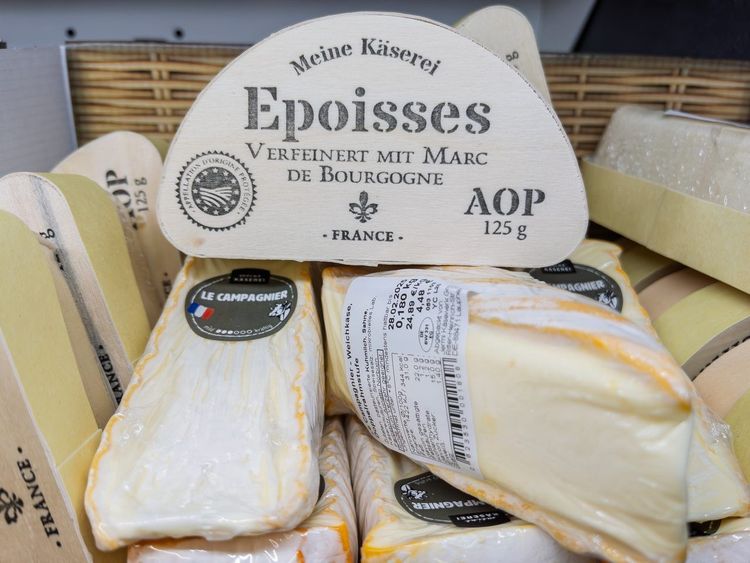
Burgundy is not as renowned for its cheeses as for its wines, but it produces several that are well worth seeking out. The most famous, and by far the most striking, is Époisses: a soft-ripened, washed-rind cheese, made in the village of the same name, forty kilometres north-west of Dijon.
Époisses has held a Protected Designation of Origin since 1991. Its ageing lasts four to eight weeks; during this period, the cheesemaker regularly washes the rind with Burgundy marc, the eau-de-vie made from grape skins after winemaking. It is this repeated washing that gives the rind its characteristic orange colour and powerful aroma. Some describe it as France's most pungent cheese. The flavour, however, is milder and creamier than its smell might suggest: this gap between reputation and taste is often a pleasant surprise for the curious.
To accompany it, choose a white Burgundy (Meursault or Puligny-Montrachet) rather than a red: the acidity of Chardonnay balances the fatty texture of the cheese in a way that Pinot Noir rarely manages to equal.
Two other cheeses deserve a mention. Brillat-Savarin is a triple-cream cheese (75% fat content minimum) with an unctuous, slightly tangy flavour, ideal with a Crémant de Bourgogne. Cîteaux cheese, produced by the Cistercian monks of the abbey of the same name about twenty kilometres from Dijon, is sold in limited quantities directly at the abbey and at a few Dijon cheesemongers: uncooked pressed curd, mild milky aroma, pinkish rind, the discreet cheese of the Côte-d'Or, well worth actively seeking out.
Dijon Blackcurrant and the Burgundian Kir
Blackcurrant is a modest fruit, a small black berry with a frank, slightly acidic and very aromatic flavour, but it has shaped Dijon's gastronomic fortunes since the 18th century. The Côte-d'Or is today France's leading blackcurrant production basin, and Burgundy blackcurrant cream holds a Protected Geographical Indication (PGI).
Artisan blackcurrant cream is between 16 and 20% alcohol by volume; it contains a minimum of 400 grams of sugar per litre and is made from fresh berries macerated in neutral alcohol. The great Dijon houses, Védrenne, Gabriel Boudier, Briottet, have been competing for generations for supremacy in this market. Each has its advocates, its slightly different ratios and its loyal customers. If in doubt, buy two and compare at home.
The shop Grain de Cassis (9 Rue du Bourg, 21000 Dijon, rated 4.7/5 on Google with 104 reviews), located on Rue du Bourg in the heart of Dijon, offers a complete range of blackcurrant-based products: creams of various concentrations, jams, syrups, filled chocolates and sweets. It is the ideal address for understanding the full extent of Dijon's 'blackcurrant territory', well beyond the liqueur alone.
The Kir is a more recent invention than the blackcurrant itself: this Dijon culinary specialty was popularised in the 1950s by Félix Kir, canon and mayor of Dijon from 1945 to 1968. This convinced Burgundian served the local aperitif, aligoté white wine and blackcurrant cream, to all his official visitors. The recipe is simple: one part blackcurrant cream to four or five parts Burgundy aligoté white wine. The 'royal' version substitutes a Crémant de Bourgogne for the aligoté.
The authentic Kir is drunk with aligoté, not Chablis, not generic Chardonnay. Burgundy aligoté, acidic and lively, balances the sweetness of blackcurrant cream in a way that other white wines do not faithfully reproduce.
Dijon Gingerbread, a Medieval Sweetness
Dijon gingerbread is not a distant cousin of the Christmas gingerbread sold in supermarkets. It is a distinct recipe, with its own history and its own constraints: rye flour, honey, anise, no eggs, no butter, no fat. This is what gives it that tight, dense, slightly moist texture, and that ability to keep for several weeks without going hard.
Dijon's gingerbread tradition is said to date back to the 14th century, brought from Flanders by Philip the Bold. Exotic spices (cinnamon, ginger, anise, cloves) served as preservatives and luxury goods; offering them was a gesture of prestige. The recipe took root in Dijon, a trading city at the crossroads of European commercial routes, and never left.
The house of Mulot & Petitjean (13 Place Bossuet, 21000 Dijon, rated 4.3/5 on Google with 366 reviews), founded in 1796, is the unmissable institution. Its main shop is on Place Bossuet, a short walk from the Cathédrale Saint-Bénigne. The interior has kept its original character: antique display cases, dark woodwork, the scent of honey and spices as you enter. The range includes gingerbread in loaf form (to slice and spread with butter), individual small loaves, nonettes and gift sets in decorated metal tins.
Dijon gingerbread pairs remarkably well with foie gras, with an aged Époisses or with a simple slice of salted butter. Some Dijon chefs use it as a crust for game or in seasonal sweet-and-sour sauces.
The Protected Geographical Indication (PGI) 'Pain d'épices de Dijon' was obtained to protect this recipe from industrial imitations. If you see a gingerbread 'Dijon-style' without this label, there is a good chance the rye flour has been replaced by ordinary wheat, and the difference in texture is noticeable from the very first bite.
Nonettes and Dijon Confectionery
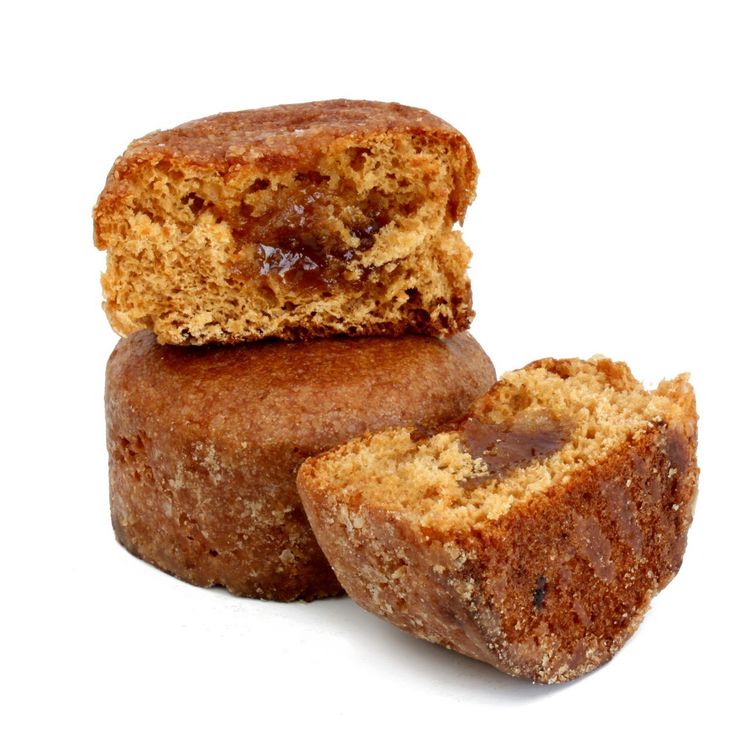
Dijon nonettes are a variation on gingerbread: small round cakes, glazed with white or brown sugar, filled with orange jam or marmalade. The name is said to derive from the nuns who prepared them in Burgundy's medieval convents. They are available at Mulot & Petitjean and in most of Dijon's fine food shops.
About thirty kilometres from Dijon, the village of Flavigny-sur-Ozerain, featured in our Ryo selection of the most beautiful villages around Dijon, is home to a confectionery factory that has been operating without interruption since 1591, one of the oldest in Europe. Anis de Flavigny are small round sweets a few millimetres in size, consisting of an anise seed coated in sugar through a candying process that takes two weeks. Their flavour is delicate and slightly medicinal, with that anise taste reminiscent of an aperitif but in a sweet, alcohol-free version. They are sold in small oval metal tins illustrated with vintage motifs, as much a decorative object as a sweet.
Biscuits Mistral, founded in the 19th century, round out this Dijon panorama with notable Dijon mustard biscuits, a combination that surprises at first taste but works surprisingly well with an aperitif or a soup.
The Burgundy Truffle, a Woodland Treasure
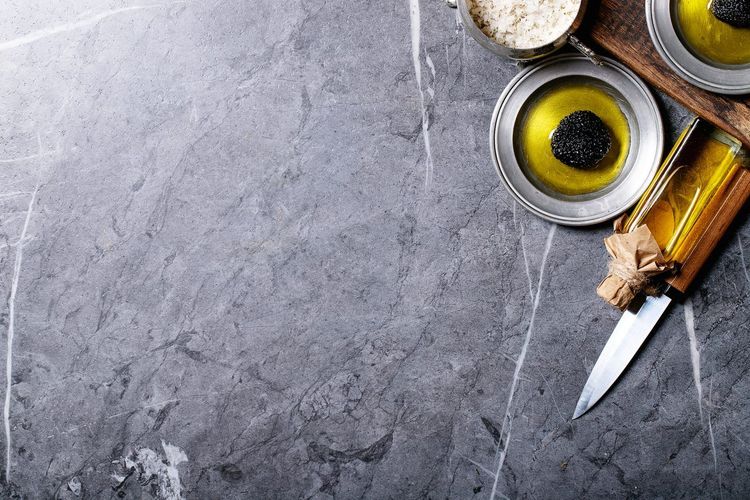
Less well known than the Périgord truffle, the Burgundy truffle (Tuber aestivum, also known as the summer truffle) is no less real, and considerably more accessible. This culinary specialty from Dijon and its limestone slopes deserves to be rediscovered. It grows under the oaks, hornbeams and hazel trees of the Côte-d'Or and adjacent limestone areas, between August and December. Its aroma is less powerful than that of the Tuber melanosporum, but it develops hazelnut and woodland notes that pair well with egg dishes and risottos.
Its price makes it far more affordable: expect between €200 and €500 per kilogram depending on the season and quality (compared with €600 to €1,200 for black Périgord truffle). Some open-air markets in the Côte-d'Or offer them in autumn, and a few Dijon restaurants feature them as a highlight of their seasonal menu, in dedicated tasting menus or as an accompaniment to pan-fried Charolais beef.
Looking to bring some home? Opt for fresh truffle stored in rice (which also perfumes the rice for cooking later) or vacuum-packed truffle in a jar, less aromatic but stable in transit. The fine food shops in Dijon's centre stock them in season, especially in October and November.
Burgundian Parsley Ham
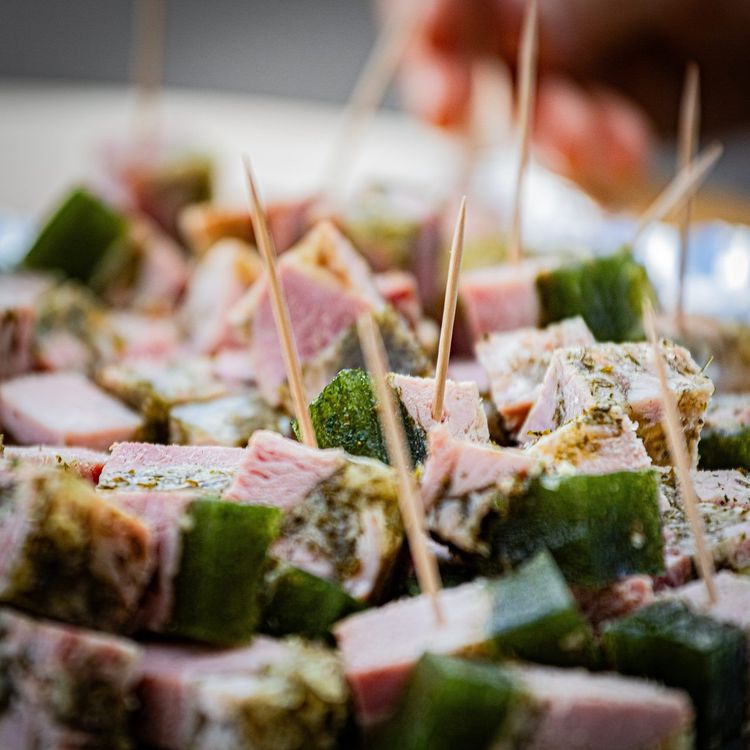
Jambon persillé is one of the most representative dishes of Burgundian charcuterie, and yet this Dijon culinary specialty remains one of the least known outside the region. It consists of a clear, slightly wobbly jelly in which hand-shredded pieces of white ham are embedded, generously scattered with chopped parsley.
Preparation is lengthy: the ham is first cooked in a broth with aromatics, then shredded, mixed with garlic and fresh parsley, and poured into a terrine with the gelled broth. Once chilled in the refrigerator, it unmoulds into a green and pink block, marbled and translucent. It is served in thick slices, as a starter, with gherkins and a well-chilled glass of Burgundy aligoté.
Traditionally served at Easter in Burgundy, jambon persillé is now available year-round at Dijon's charcutiers and at the Halles de Dijon. It is an excellent choice for composing a complete Burgundian plate before setting off to explore the city.
Burgundy Wines, Jewels of the Dijon Table
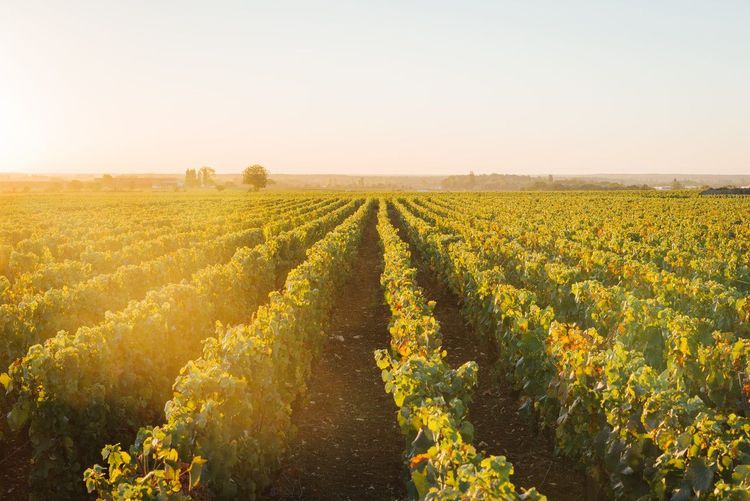
It is impossible to speak of Dijon's culinary specialties without dwelling on its wines. Burgundy is one of the world's most complex and coveted wine regions, with one absolute distinction: just two grape varieties dominate the entire vineyard, Pinot Noir for reds and Chardonnay for whites (with Gamay in the Mâconnais and Aligoté as a secondary white variety).
The Route des Grands Crus runs along the N74 from Dijon to Santenay over around sixty kilometres. It passes through the world's most celebrated appellations: Gevrey-Chambertin, Vougeot (with its Clos, former property of the Cîteaux abbey), Vosne-Romanée, Nuits-Saint-Georges, Pommard, Meursault. The Romanée-Conti, a plot of 1.8 hectares in Vosne-Romanée, produces a few thousand bottles a year that fetch more than €10,000 per bottle at auction.
The Burgundy Climats, these plots delineated over centuries by Cistercian monks, were inscribed on the Unesco World Heritage List in 2015, recognising a cultural and landscape heritage that is unique of its kind.
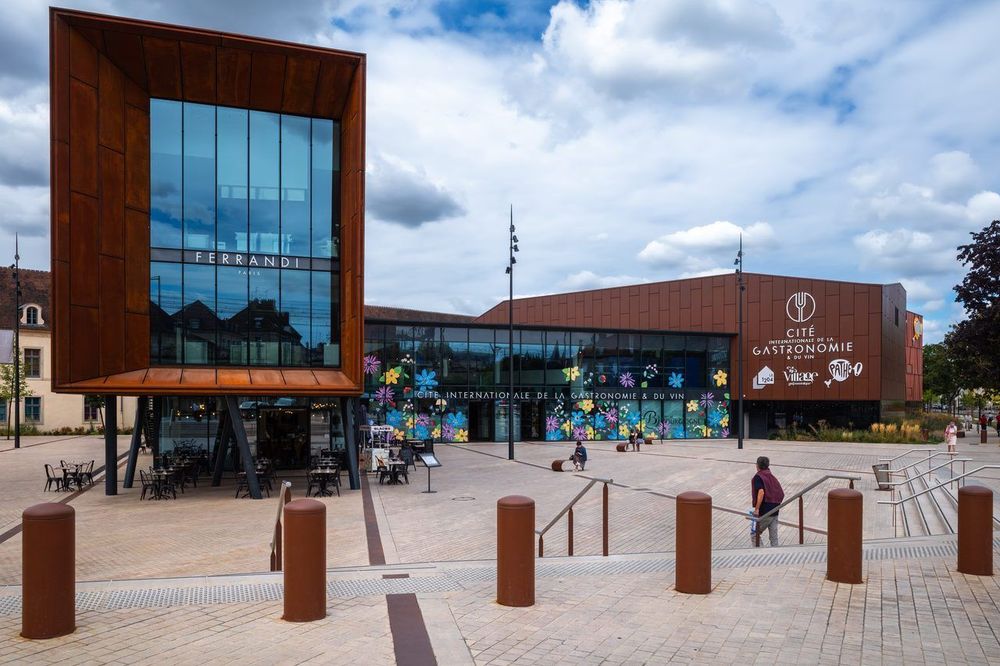
To taste Burgundy wines in Dijon without breaking the bank, several options are available. The Cité Internationale de la Gastronomie et du Vin offers guided tasting workshops on reservation. The wine cellars in the city centre (Rue Bannelier, Rue du Bourg) allow purchases by the glass or bottle in a relaxed setting. Some estates on the côte organise chai visits by appointment, sometimes free with a minimum purchase.
For the uninitiated, two entry-level wines to remember: Bourgogne Aligoté (white, lively and mineral, the base of the Kir) and Bourgogne Pinot Noir (light red, fruity, easy to approach). Beyond that, each village has its own character, and therein lies all the fascination of the Burgundian vineyard. A glass of either rounds off a morning in the old town, which our Dijon audio-guided tour crosses in 25 stops.
Dijon Pastries and Chocolates
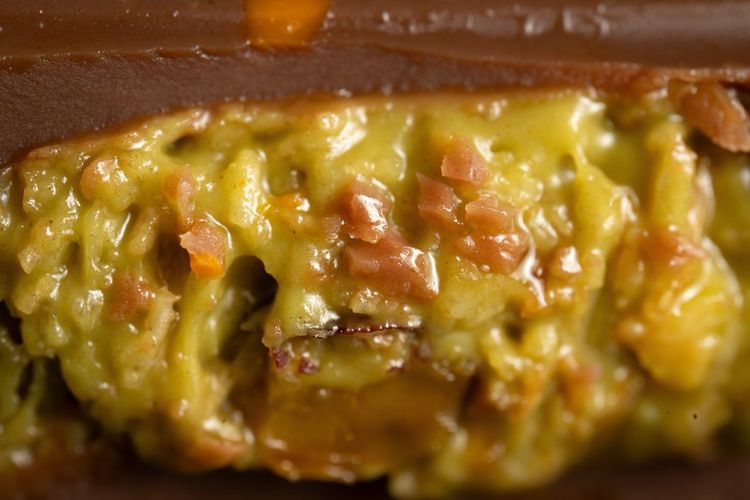
Dijon's pastry and chocolate scene is worth exploring, even if it receives less media coverage than the cheeses or wines.
The croquant de Bourgogne is a dry biscuit with lightly caramelised flaked almonds that crunches under the tooth, hence its name. Simple, effective, ideal to nibble with a coffee or a glass of Crémant de Bourgogne. Several Dijon patisseries and biscuit makers offer them in bags, and the Halles generally stock them on their stalls.
The house of Fabrice Gillotte, chocolatier and Meilleur Ouvrier de France, is Dijon's chocolate reference. His Rue du Bourg boutique offers intense dark chocolate bars, praline confections and creations flavoured with Burgundian products: Burgundy marc, blackcurrant, Burgundy honey. His lightly cocoa-dusted chocolate truffles are among his best-selling specialties.
Burgundy honey, produced in the meadows and forests of the Côte-d'Or, also deserves a mention. Local beekeepers offer wildflower, linden and acacia honeys with characteristic floral notes. Some are available at the Halles de Dijon on Saturday mornings, others in the fine food shops in the centre.
The Cité Internationale de la Gastronomie et du Vin
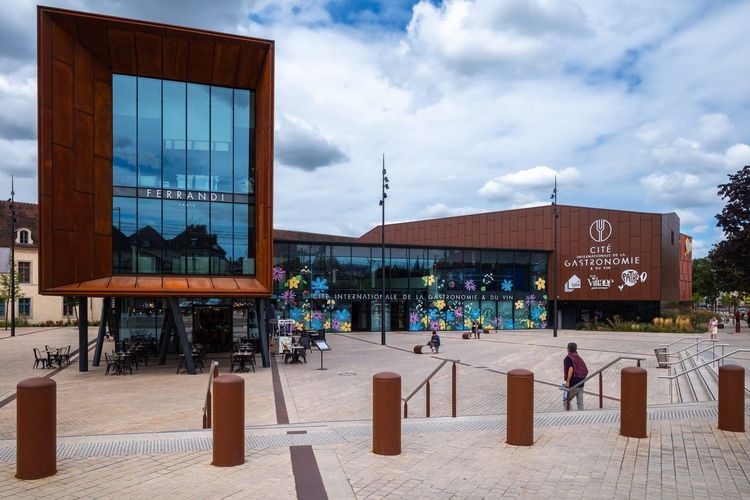
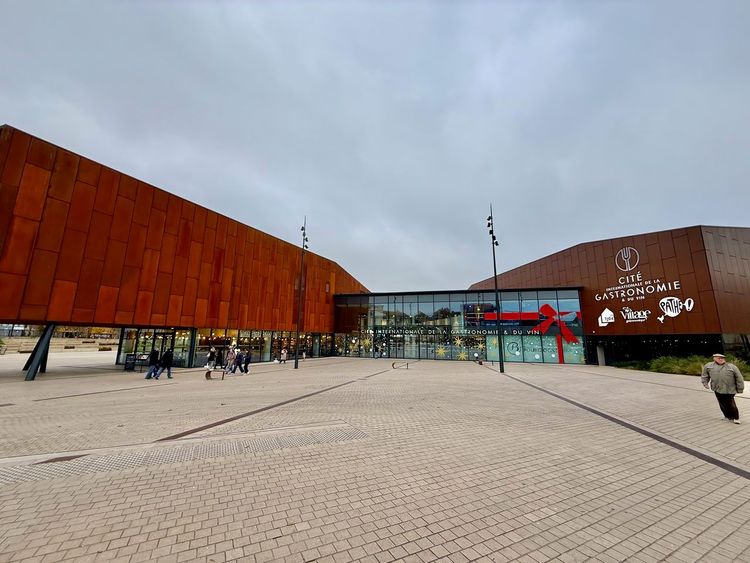
Inaugurated on 6 May 2022 on the site of the former Hôpital Général, rehabilitated across nearly 6.5 hectares, the Cité Internationale de la Gastronomie et du Vin (Rue du Docteur Maret, 21000 Dijon, rated 4/5 on Google with 3,580 reviews) is the most ambitious cultural project in Dijon for decades. The institution combines museum space, restaurants, producers' shops, cooking workshops and temporary exhibition halls.
The permanent exhibition traces the history of French and Burgundian gastronomy from the Middle Ages to contemporary cuisine. Interactive terminals allow visitors to learn to identify wine aromas, recognise the main grape varieties or understand the stages of winemaking. The tasting workshops (paid, by reservation) are particularly well regarded: introduction to Burgundy wines, mustard workshop, Burgundian cooking class.
The Cité also hosts several restaurants at varying levels, from a relaxed brasserie to a gastronomic address, all focused on regional produce. A good starting point for understanding Dijon's culinary specialties as a whole before heading out to taste them in the city.
The Halles de Dijon, Heart of Local Flavours
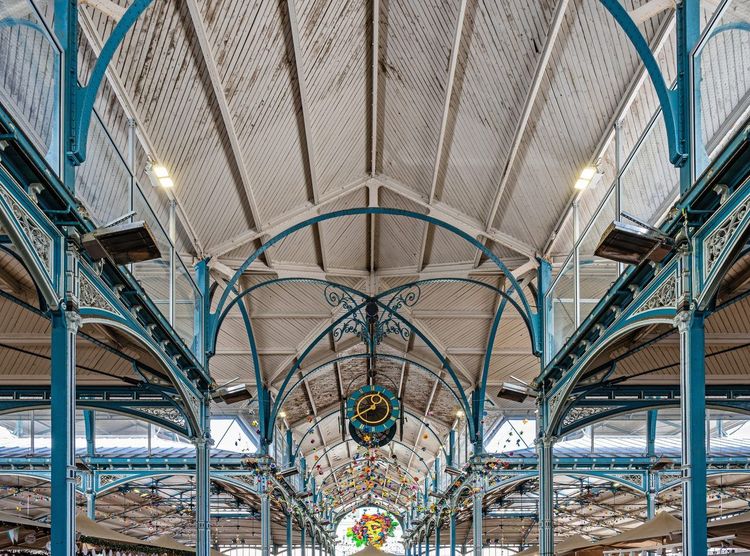
The Halles de Dijon (Rue Quentin, 21000 Dijon, rated 4.5/5 on Google with 4,596 reviews) are one of the region's most vibrant covered markets. Built in the late 19th century, they house more than a hundred stalls on Saturday mornings: vegetables, cheeses, charcuterie, poultry, fish, spices, wines and spirits.
Main opening days: Tuesday, Thursday and Friday from 7am to 1pm; Saturday from 7am to 3pm. Arrive on Saturday before 9am if you want to choose from the best produce before the mid-morning crowds arrive.
What to look for at the Halles? Époisses from local cheesemongers (some offer on-site tastings), prepared or live snails depending on the season, jambon persillé sliced to order, Charolais beef from the butcher, Bresse Label Rouge poultry and, depending on the season, a few Burgundy truffles under a cloche. It is also one of the only places where you will find both an artisan blackcurrant cream producer and a Côte-d'Or wine grower under the same roof.
Our Dijon audio-guided tour passes within walking distance of the Halles across its 25 stops: take advantage of it to combine historical discovery and gastronomic shopping on the same morning.
Where to Buy Dijon's Culinary Specialties
Dijon has several clusters of gastronomic addresses that make shopping efficient. Each of Dijon's culinary specialties has its neighbourhood and its reference house: here are the key retailers to know depending on what you are looking for.
For mustard: the Boutique Maille (Place de la Libération, 21000 Dijon, rated 4.3/5 on Google with 1,193 reviews) is the main address, with its fresh mustard pumps and twenty-eight varieties. If you want the artisan stone-ground version, plan a half-day in Beaune to visit the Atelier Fallot (31 Rue du Faubourg Bretonnière, 21200 Beaune, rated 4.5/5 on Google with 3,652 reviews).
For gingerbread and nonettes: Mulot & Petitjean (Place Bossuet) remains the essential stop. Their gift set range (illustrated metal tins, individual nonette bags, pre-sliced gingerbread loaves) is perfectly designed for travelling.
For blackcurrant and related products: Grain de Cassis (Rue du Bourg) offers the most comprehensive range, creams, syrups, jams and confectionery, in a space entirely dedicated to Dijon blackcurrant.
For wines and spirits: several cellars in the centre (Rue Bannelier, Rue du Bourg) offer a selection of Burgundies ranging from entry-level to grand cru, with knowledgeable advice. For a guided tasting, the Cité Internationale de la Gastronomie et du Vin organises workshops on reservation.
For a complete basket: the Halles de Dijon on Saturday mornings remain unrivalled: cheeses, charcuterie, seasonal vegetables, snails, estate wines. One hour at the Halles is worth more than three hours in a fine food shop.
Note: the most fragile products (Époisses, fresh snails, meats) travel poorly. Plan ahead with a cool bag or buy them at the very end of your stay. Mustard, confectionery, wines and spirits are perfectly transportable.
The Best Addresses for Dining in Dijon
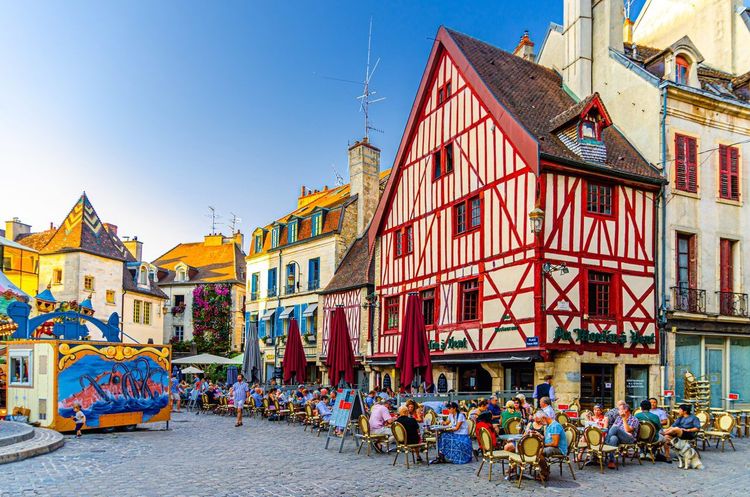
Dijon boasts, for a city of its size, a remarkable number of quality restaurants, from neighbourhood bistros to starred establishments. Here are the addresses to know for eating Dijonnaise cuisine at different budget levels.
William Frachot (Hôtel Le Chapeau Rouge, Rue Michelet) holds two Michelin stars and stands as Dijon's gastronomic reference. His cuisine revisits Burgundian tradition with remarkable technical precision: reinterpreted snails, Bresse poultry in a gingerbread crust, Charolais beef in various preparations. Advance reservation is essential.
Loiseau des Ducs (Rue Vauban), Dijon outpost of the celebrated group founded by Bernard Loiseau, holds one Michelin star in a charming hotel setting. The menu highlights regional produce with a better value-for-money ratio than some of the city's other starred tables.
La Maison des Cariatides (Rue Chaudronnerie), also starred, occupies a listed Dijon building with an intimate upstairs dining room. The cuisine follows the seasons and Burgundian produce: truffles in winter, snails in spring, game and harvest in autumn.
For a less formal meal, several city-centre addresses serve excellent Burgundian dishes without the gastronomic label: bistros around Rue Amiral Roussin, cave-à-manger spots where you dine seated among barrels. To build your complete itinerary, the Ryo guide to activities in Dijon and the surrounding area lists the best addresses and outings.
Average budget at the table: between €20 and €35 per person for a full menu in a decent bistro; between €80 and €180 at starred establishments (excluding wines).
Dijon Specialties to Give and Take Home
Dijon is an ideal city for gastronomic gifts. Not every Dijon culinary specialty travels equally well, but most are easy to transport and universally appreciated. Here is what fits best in a suitcase.
Mulot & Petitjean nonettes in illustrated metal tins are the iconic gift: attractive, sturdy and labelled 'Dijon', which saves all explanation. Anis de Flavigny in their small vintage oval tin are more discreet but equally elegant: they travel indefinitely and appeal to children and adults alike.
For wine lovers, a bottle of Bourgogne Aligoté paired with a jar of artisan blackcurrant cream from Briottet or Védrenne makes an original and complete gift. Add a glass and the Kir instructions to create a ready-made Burgundian aperitif kit.
Gift sets from the Boutique Maille (two or three different flavoured mustard jars) are always appreciated; the truffle, blackcurrant or tarragon versions are impossible to find in supermarkets. For romantic getaway ideas to extend around Dijon, the Ryo article on an unusual romantic weekend in Burgundy offers a complementary programme.
Two practical points: mustard, blackcurrant cream, wines and dry confectionery travel in checked luggage without any issue. Liquids over 100 ml (mustard, blackcurrant cream) cannot go in carry-on luggage if you are flying. By TGV from Paris, Dijon is 1h35 away, so returning with arms full is perfectly feasible.
FAQ
What is Dijon's most famous culinary specialty?
Dijon mustard is without question the most internationally recognised specialty. Made using a specific method based on brown or black mustard seeds and verjuice (juice from unripe grapes), it is found in kitchens around the world. In Dijon itself, the Boutique Maille (Place de la Libération) and the Moutarderie Fallot (in Beaune, 40 km away) are the two key references for tasting and buying it. But the city offers many other noteworthy specialties: blackcurrant, gingerbread, Époisses and Burgundy wines together form an exceptional gastronomic heritage that this guide covers in detail.
Where can I buy authentic Dijon mustard?
To buy quality mustard, there are two addresses to know. The Boutique Maille (Place de la Libération, Dijon) offers twenty-eight varieties including a fresh mustard served on tap into reusable stoneware pots. The Moutarderie Fallot in Beaune is Burgundy's only artisan mustard maker still grinding its seeds on millstones, and it offers guided workshop tours with tastings. In supermarkets, look for the label 'made in Burgundy' to ensure an authentically Burgundian product.
What is a Kir and where does it come from?
The Kir is an aperitif born in Dijon: it combines Burgundy aligoté white wine and blackcurrant cream (roughly one part to five parts of wine). It takes its name from Félix Kir (1876–1968), canon and mayor of Dijon, who served it at the city's official receptions in the 1950s. The 'Kir Royal' version replaces the aligoté with a Crémant de Bourgogne or Champagne. Today the term 'kir' has become generic in France, but the true Dijon Kir is drunk with Burgundy aligoté, paired with an artisan blackcurrant cream.
What are the typical cheeses from the Dijon region?
Three cheeses deserve a special mention. Époisses (PDO since 1991, aged in Burgundy marc, soft-ripened with an orange rind, produced 40 km from Dijon) is the most iconic. Brillat-Savarin (triple cream, 75% fat content, very unctuous) pairs perfectly with a Crémant. Cîteaux cheese (uncooked pressed curd, mild and milky, produced by the monks of the eponymous abbey) is available in limited quantities at a few Dijon cheesemongers. The Halles de Dijon and the cheese shops in the centre allow you to taste all three in a single morning.
When is the best time to visit Dijon to enjoy its culinary specialties?
Every season has its gastronomic appeal in Dijon. Autumn (September to November) is ideal: Burgundy truffles in full season, harvests on the Côte-d'Or, markets stocked with game and mushrooms. Winter is the high season for boeuf bourguignon and aged cheeses. Spring sees snails return to the market halls alongside the first early produce. In summer, the Cité Internationale de la Gastronomie et du Vin is in full swing and wine cellars often offer outdoor tastings. In short: Dijon can be savoured year-round, but autumn, with its truffles and grape harvest, remains the prime season for food lovers.
Is Dijon mustard a protected designation?
No, and this often comes as a surprise. Dijon mustard is not a Protected Designation of Origin (PDO). The term 'Dijon' refers to a production method (brown or black seeds, verjuice, no water), not a geographical requirement. As a result, approximately 70% of global production of so-called 'Dijon' mustard is made outside Burgundy, notably in Canada or the United States. For an authentically Burgundian product, opt for the Maille (Dijon) or Fallot (Beaune) houses, both of which maintain their production in the Côte-d'Or.
Conclusion
Dijon more than lives up to its reputation as France's gastronomic capital. Mustard, blackcurrant, snails, gingerbread, Époisses, jambon persillé, Burgundy truffle, Pinot Noir wines: each of Dijon's culinary specialties carries at least a century of Dijonnaise history within it, and all can be bought, tasted or taken away from the city centre with ease. To explore the city between meals and understand the history underpinning its gastronomy, the Ryo audio-guided tour of Dijon, 24 audio tracks spread over 3.5 km, is the ideal companion. Palais des Ducs, Halles, medieval streets: in Dijon, history and gastronomy intertwine at every turn.
À lire également