© Shutterstock
 Votre guide Ryo
Dijon with Kids: 2026 Family Guide from Old Dijon to Gourmet Workshops
On the pavement of rue de la Chouette, a girl of about six stops dead in front of a bronze arrow embedded in the cobblestones. She has understood the rules of the game before anyone has explained them: follow the arrows, look for the small owl carved into the facades, and earn the right to tell the story to her parents. That one scene sums up everything that makes Dijon with kids so straightforward to organise: the city fits almost entirely within its human-scale historic centre, with the Ryo audio-guided tour of Dijon to connect the highlights without getting lost.
The programme often surprises parents who expected little more than a mustard detour between château visits. There is a 46-metre tower with 316 steps to climb for a panorama over the glazed-tile rooftops, a botanical garden paired with a planetarium where you lie back to watch the stars, a workshop where you make your own mustard to take home, and a park of over 30 hectares with enough playgrounds to fill an entire afternoon. Between visits, everything is walkable, with no complicated transport or pushchair struggles, which makes a real difference over a two-day weekend.
Exploring Old Dijon as a Family: the Parcours de la Chouette and Treasure Hunts
Before heading to the museums, start with the game that frames every family visit to the historic centre: the Parcours de la Chouette. Twenty-two brass arrows set into the cobblestones link the essential landmarks, from the église Notre-Dame to the Palais des Ducs, over just over a kilometre. Allow one to one and a half hours with curious children who stop at every stage, half that for a brisker pace. The trail is free, available as a leaflet from the tourist office or via a dedicated app, making it the first activity to slot into any itinerary, rain or shine.
The highlight remains the chouette de Notre-Dame de Dijon, a small stone sculpture nestled on a buttress of the church at child height. Local legend has it that stroking its belly with the left hand while making a wish brings good luck: younger visitors love to make a ritual of it, and the stone polished by generations of visitors is proof enough. Then look up at the facade: the rows of false gargoyles stacked across three levels are easy to count from the square, an observation game that fills five more minutes for free.
The city has paired this heritage experience with a treasure hunt called les Explorateurs, designed to extend the walk without boring younger children. Three themes unfold through the streets: the city's heritage (sculpted facades, grand townhouses), the Dijon terroirs — a playful introduction to the Unesco-listed Burgundian vineyard plots without leaving the city — and a module called Dijon, heads or tails, where each riddle is solved by a binary choice. It is free, accessible from around age 7–8, and turns a stroll into a treasure hunt with no equipment to hire.
Along the way, stop in front of the Maison Millière (10 Rue de la Chouette, 21000 Dijon, rated 4.4/5 on Google from 809 reviews), a half-timbered house from 1483 that has survived five centuries without losing a beam. The leaning, carved facade fascinates children as much as photographers, especially when you point out the cat and owl perched on the roof: it is one of the rare medieval houses in the city still open to the public, with a shop-tearoom on the ground floor where you can catch your breath for five minutes.
Allow half a day to combine the Parcours de la Chouette with a taste of les Explorateurs, saving the interior of the Palais des Ducs for another outing: Old Dijon lends itself well to a split pace, with frequent breaks in the shaded inner courtyards of the grand townhouses. To extend the walk beyond the historic centre, the Ryo article on things to do in Dijon and the surrounding area lists other stops to add to the programme depending on the children's ages.
The Palais des Ducs de Bourgogne and the Tour Philippe le Bon
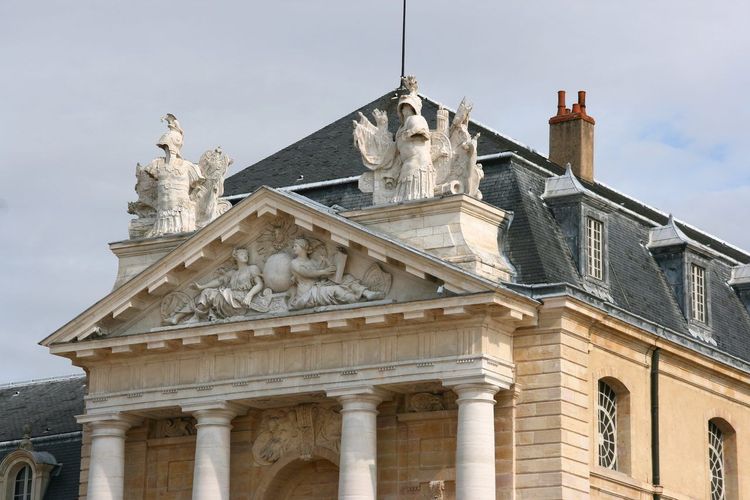
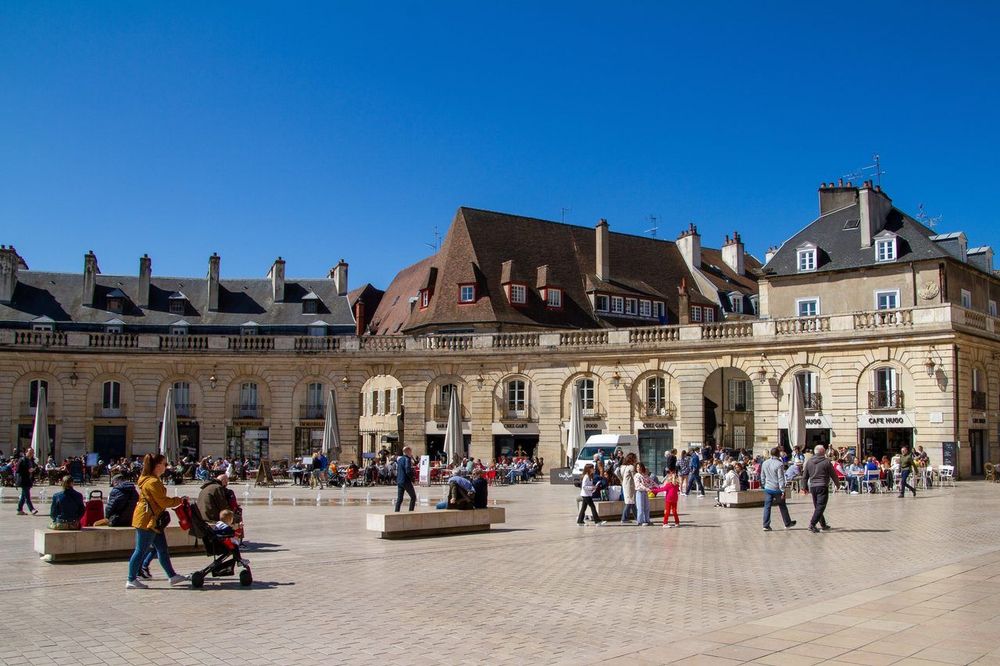
The Palais des Ducs et des États de Bourgogne sits at the very centre of the city, and its main courtyard alone is enough to impress children: colonnades, fan-shaped cobblestones, and a sweeping view of the wing that now houses the musée des Beaux-Arts. Admission to the museum's permanent collections is free for everyone, allowing for a short, targeted visit if younger children's attention starts to flag after twenty minutes. The medieval gallery, with the ducal tombs and their sculpted mourners, is consistently the room that makes the strongest impression on children aged 6 to 10.
It is from this same palace that the climb to the top of the Tour Philippe le Bon (Place de la Libération, 21000 Dijon, rated 4.6/5 on Google from 606 reviews) begins. Three hundred and sixteen spiral steps lead up 46 metres, with rest landings along the way. The ascent is made only in small guided groups on a timed slot, and a minimum age applies for the youngest children: check the conditions on the day with the tourist office, which manages departures and ticketing.
At the top, the reward is immediate: Dijon's glazed-tile rooftops stretch out 360 degrees, with the Burgundian hillsides as a backdrop on a clear day. This is often the moment children recount first when they get home, even before the mustard workshop or the gingerbread museum. Wear closed-toe shoes and avoid the hottest hours in summer: the stone staircase heats up quickly and there is no ventilation. Aiming for the first departure of the morning solves both the queue and the heat in one go.
The Jardin des Sciences: Nature, Planetarium and Educational Workshops
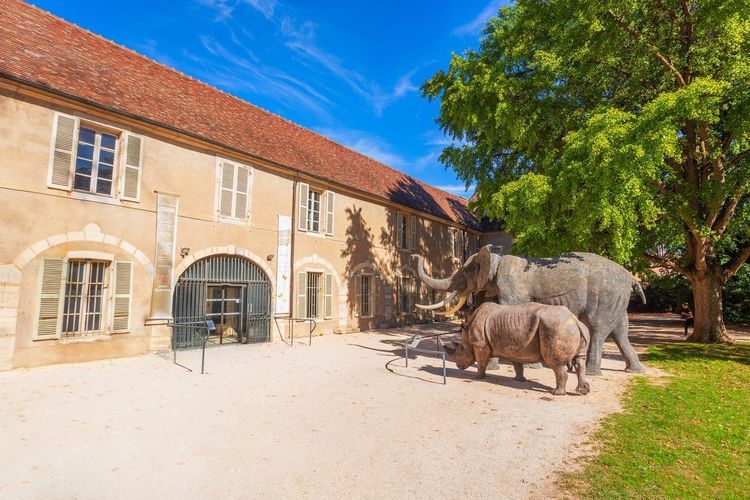
The Jardin des Sciences brings together on a single site three experiences that guides often list separately: the Arquebuse botanical garden, a natural history museum and a planetarium. Entry to the garden is free, as is entry to the museum, which means you can pop in for a quarter of an hour, head back out to run among the ancient trees, and return without paying twice.
The museum, spread across several rooms, blends classic natural history collections (minerals, taxidermied animals, skeletons) with displays designed with children in mind: eye-level display cases, hands-on activities and observation trails. The weekend and school-holiday educational workshops change with the seasons, often linked to local wildlife or the rhythm of the garden, and should be booked in advance once school groups free up the time slots.
The planetarium is the highlight of the site for many visitors: shows, suitable for children from around age 6, project the starry sky onto an immersive dome with lively commentary and no astrophysics jargon. It is one of the few paid activities on the site; allow about an hour and arrive ten minutes early, as seats are limited and sell out quickly on Wednesdays and weekends.
This variety on a single site — garden, museum and planetarium all within ten minutes' walk of the station — makes it a reliable choice for a rainy afternoon as much as for a breather after a morning of walking through Old Dijon.
Child-Friendly Museums: Vie Bourguignonne and the 1204 Workshops
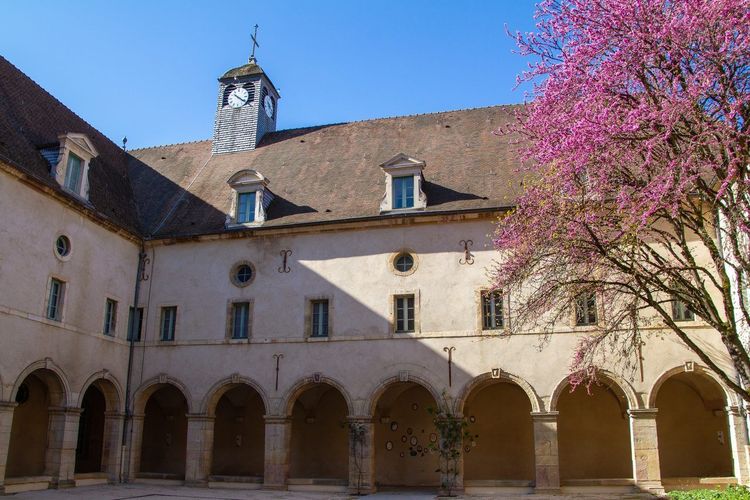
Housed in a former convent, the musée de la Vie Bourguignonne (17 Rue Sainte-Anne, 21000 Dijon, rated 4.5/5 on Google from 1,464 reviews) reconstructs 19th- and early 20th-century interiors and shop fronts: a period classroom, a grocery, a craftsman's workshop. Children find their bearings quickly because everything is at eye level with no long labels to decipher, and admission to the permanent collections is free, as in the city's other municipal museums.
A few minutes' walk away, the 1204 interpretation centre takes the opposite approach: a digital, interactive trail that tells the story of the city and its dukes through touchscreen terminals, recognition games and sound installations. The workshops held regularly — often on Wednesdays and during school holidays — invite children to handle reconstructions or solve small historical riddles as a team.
The two sites complement each other far more than they compete: the first grounds children in everyday Burgundian life of the past, the second in the political and symbolic history of the city. Paired in the same afternoon, they take two hours without losing anyone's attention, with a snack break in between. Watch out for the weekly closing day — Tuesday for Dijon's municipal museums — a detail that can derail a programme built around a long weekend.
Mustard and Gingerbread Workshops: a Gourmet Family Experience

No visit to Dijon is complete without a stop on the mustard square, but the family-friendly version goes well beyond tasting in a shop. Several houses in the city offer a mustard-making workshop: children weigh the seeds, mix the vinegar and verjuice, choose their aromatics (honey, blackcurrant, tarragon) and leave with their own hand-labelled jar. Sessions generally last an hour, are open from around age 6–7 with an adult, and must be booked in advance at weekends, with Saturday slots often filling up a week ahead.
The gourmet trail continues at Mulot & Petitjean (13 Place Bossuet, 21000 Dijon, rated 4.3/5 on Google from 368 reviews), a maker of Dijon gingerbread since 1796 whose historic shop doubles as a heritage showcase. The displays tell the story of the recipe, from the honey to the slow baking, and a tasting usually accompanies the visit. Children happily leave with a nonnette or an animal-shaped slab, easier to carry home than a glass jar of mustard.
The gingerbread museum, installed in the house's former workshops, rounds out the experience with carved wooden moulds and production techniques, presented concretely enough to hold an 8-year-old's attention. The visit ends with a tasting and takes around an hour in total: an ideal length to slot between two longer outings.
To explore the gourmet theme further after your walk, our Ryo selection of Dijon's culinary specialities details other addresses where you can introduce children to Burgundian cuisine, from a non-alcoholic kir with blackcurrant and lemonade to an introductory taste of snails.
Parks, Gardens and the Green Trail: Where to Unwind with Kids
After a morning of cobblestones and museums, head for the green. The parc de la Colombière, more than 30 hectares laid out in the French formal style in the 17th century with star-shaped avenues, is Dijon's historic green lung: wide, shaded paths for cycling or scooting, playgrounds, a small animal enclosure with fallow deer and red deer, and enough space for a picnic well away from the city centre crowds. Local joggers share it happily with pushchairs in the morning, and older children appreciate the straight avenues that cut straight through the park.
More central, the jardin Darcy plays a different register: laid out in terraces above a former water reservoir, steps from the station, it opens onto a monumental replica of François Pompon's Polar Bear — the sculptor was born in Saulieu, about an hour's drive from Dijon. Children sit at its feet for the obligatory photograph before heading to the playground, small but effective for a twenty-minute break between visits, while the basins and water jets do the rest on hot days.
Other quieter squares, such as the jardin de l'Arquebuse already mentioned or the small green spaces tucked between the grand townhouses of the historic centre, offer quick breaks without leaving the tourist perimeter.
The promenade de l'Ouche (Avenue du Lac, 21000 Dijon, rated 4.4/5 on Google from 32 reviews), nicknamed Dijon's green trail, completes the picture for those who want to walk or cycle without worrying about traffic. The route follows the river and the Canal de Bourgogne for several kilometres, suitable for pushchairs over most of its length, with regularly spaced benches for snack breaks and direct access to lac Kir, where supervised swimming is available in summer. Afterwards, the audio-guided tour of Dijon covers the old town at an equally gentle pace.
Escape Rooms, Quizzes and Fun Activities to Keep Kids Busy
When the Burgundian sky turns grey, an escape room often saves the day. Several venues in the city centre offer scenarios open from around age 8–10, with adjustable difficulty levels and puzzles designed to be solved as a team rather than solo; quiz formats, timed and displayed on screen, work with even younger children and suit siblings of mixed ages.
The city also maintains a busy children's and youth programme: creative workshops, storytelling sessions in libraries, shows and free or low-cost events, particularly dense during school holidays. The municipal museums add their own interactive visits, often on Wednesday afternoons, with an activity booklet given out at the entrance. Checking dates before you leave avoids missing the workshop that happened to fall on just the right day.
Family Day Trips and Villages Around Dijon
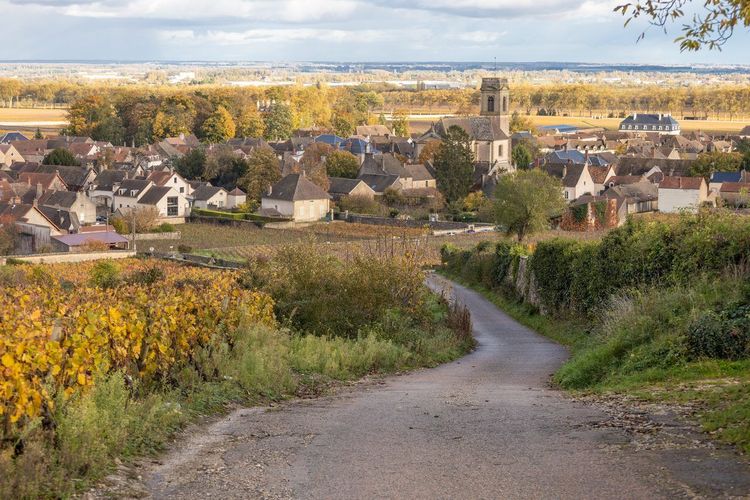
Dijon lends itself well to a two- to three-day stay, but the surrounding region deserves at least half a day extra. The route des grands crus starts almost at the southern edge of the city: not ideal for wine tasting with young children, but the villages along the way, with their glazed-tile steeples and traffic-free lanes, are well suited to a lunch stop or a short walk.
To plan these excursions, our Ryo guide to the most beautiful villages around Dijon details the most accessible stops in a day, from châteaux open to the public to listed villages.
Further to the north-west, the abbaye de Fontenay and its wooded valley offer a sharp contrast to the urban fabric of Dijon: enough space to run between monastic buildings, a natural setting that appeals to children who have had their fill of museums, and the status of the oldest preserved Cistercian abbey in France, inscribed on the Unesco World Heritage List. Allow just over an hour's drive from Dijon.
For a longer stay in Burgundy, head to Beaune and its multicoloured-roofed hospices, about thirty minutes by train, or to the Burgundian lakes for a swimming day in summer. Those travelling by car will appreciate the flexibility: the region is easily covered in a star pattern from Dijon, without having to change accommodation every night.
Where to Eat as a Family in Dijon: Good Restaurants and Gourmet Breaks
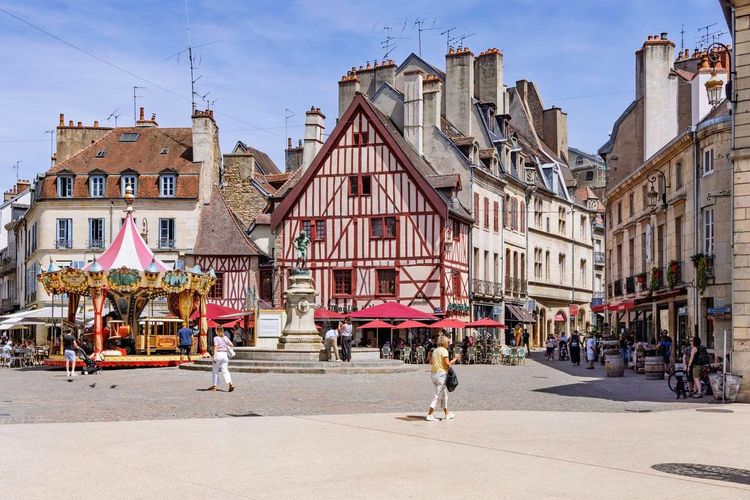
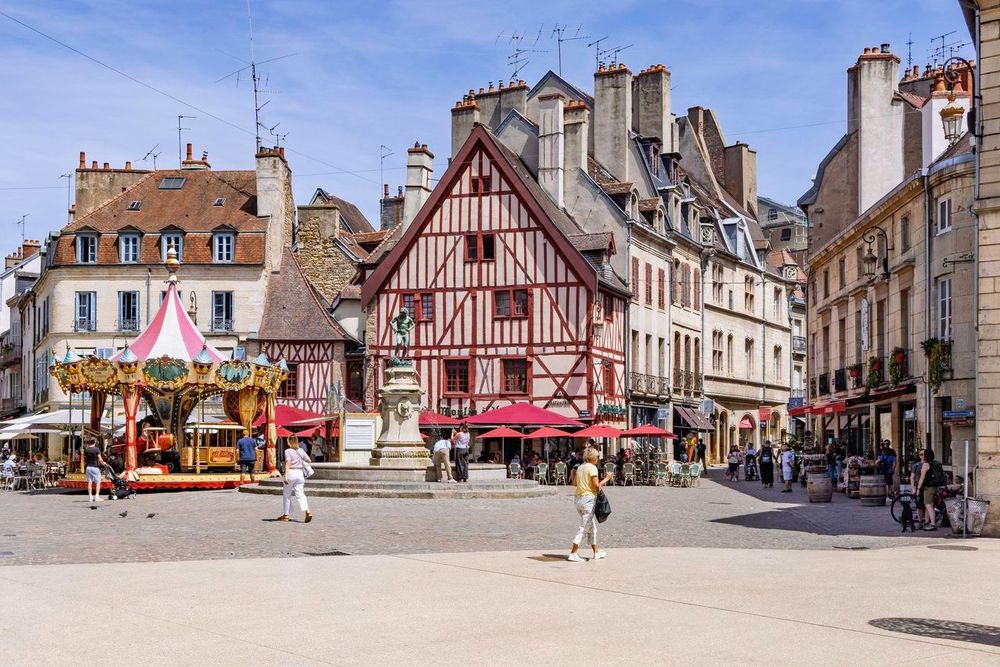
The city centre is full of family-friendly restaurants with high chairs and children's menus almost everywhere around place François-Rude, locally nicknamed place du Bareuzai after its fountain with a grape-harvester. Terraces are plentiful and the area is entirely pedestrianised, making it easy to keep an eye on small children who wander between bites.
The halles de Dijon (Rue Odebert, 21000 Dijon, rated 4.5/5 on Google from 4,642 reviews), a 19th-century iron-frame market hall attributed to the circle of Gustave Eiffel, are worth a detour on market mornings for a quick snack: local cheeses, charcuterie and pastries to nibble standing up, a format that avoids waiting for a table with impatient children.
For a more traditional sit-down meal, the Burgundian bistros in the centre offer lighter versions of local classics — œufs en meurette, jambon persillé — often available in smaller portions on request. Our selection of Dijon's culinary specialities, mentioned above, remains a good basis for putting together a menu that pleases the whole table without sacrificing regional discovery.
Where to Stay and Practical Tips for a Family Trip to Dijon

For accommodation, two options stand out. City-centre hotels, within walking distance of Old Dijon and the station, suit short stays without a car: family or interconnecting rooms, often with breakfast included. On the outskirts, self-catering apartments with kitchenettes and campsites with mobile homes offer more space and a more manageable budget over several nights, at the cost of a tram or car journey into the centre each morning.
The best time to visit remains spring and early autumn: moderate temperatures for exploring Old Dijon on foot, gardens in bloom or in colour, and lighter tourist crowds than in midsummer. Winter retains its appeal around the Christmas market, with an outdoor ice rink and events in the pedestrian streets, provided you dress the children warmly before tackling the climb up the Tour Philippe le Bon.
For getting here, Dijon is about 1h40 from Paris by TGV, with the central station just a few minutes' walk from Old Dijon, making it entirely possible to do without a car for an urban stay. By car, the city sits at the junction of the A31 and A38 motorways, with park-and-ride facilities on the outskirts linked to the centre by tram — a practical solution when you don't want to search for parking with tired children in the back. On the ground, the two tram lines and the bus network cover most of the sites mentioned here, and are free for children under 4.
For those adding a day of walking or cycling to their stay, the Ryo guide to hikes around Dijon lists short routes, suitable for younger legs, in the hills that border the city. Before you set off, the audio-guided tour of Dijon remains the simplest starting point for putting together a first walking itinerary as soon as you arrive.

FAQ
How many days should you plan to visit Dijon as a family?
Two full days are enough to cover Old Dijon, the Tour Philippe le Bon, the Jardin des Sciences and a gourmet workshop, without rushing. A third day opens up the possibility of an excursion to the wine villages or the abbaye de Fontenay, to extend your stay in Burgundy.
What is the best time to visit Dijon with children?
Spring and early autumn offer the best compromise: pleasant temperatures for walking, blooming gardens, and lighter crowds than in summer. The Christmas market in December adds a special atmosphere but requires dressing the younger ones warmly for outdoor visits.
Is the Parcours de la Chouette free and suitable for young children?
Yes, entirely free and with no reservation required. The route, flat and short, is suitable from age 4–5, provided you accept a leisurely pace rather than a brisk walk, with many stops in front of the facades and monuments along the way.
What can you do in Dijon with children when it rains?
The Jardin des Sciences (natural history museum and planetarium), the musée de la Vie Bourguignonne, the 1204 interpretation centre and the escape rooms in the city centre are all excellent indoor options. A mustard or gingerbread workshop rounds out a rainy day nicely, without spending too much time outside.
How do you get around Dijon with a pushchair?
The historic centre, largely pedestrianised but unevenly cobbled in places, is manageable with an all-terrain pushchair. The promenade de l'Ouche and the parc de la Colombière offer smooth, wide paths, considerably more comfortable than the old cobblestones for a standard city pushchair.
Is Dijon a suitable city for toddlers?
Yes, thanks to its compact size: most of the sites mentioned here are reachable on foot in under 20 minutes from the centre. The free municipal museums and the many parks make it easy to alternate activity and rest without long journeys, a real advantage for children under 3.
What family excursions can you do around Dijon?
The villages of the grands crus route, the abbaye de Fontenay, Beaune and its hospices, or the Burgundian lakes in summer are among the easiest day trips from Dijon, all accessible within about an hour's drive for a full day out.
Dijon with kids ultimately comes down to a simple formula: a city that is dense but never overwhelming, where heritage turns into a treasure hunt and every gourmet break doubles as a lesson in local history. Between the lucky owl, the panorama from the Tour Philippe le Bon and the homemade mustard pot, the youngest visitors rarely leave empty-handed or empty-headed.
To plan the first day without worrying about the route, the Ryo audio-guided tour of Dijon is the quickest solution: 24 audio tracks spread over 1h30 of walking and 3.5 km, to follow at the children's pace, with the option to stop and resume at any time via the Ryo app.
À lire également