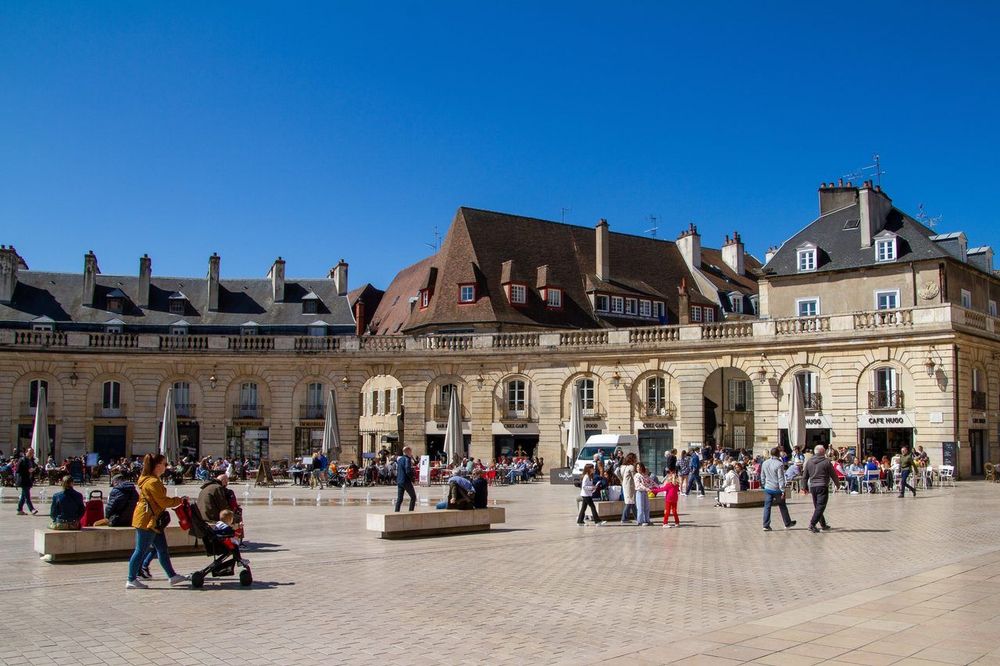
© Shutterstock
 Votre guide Ryo
The Most Beautiful Villages around Beaune: 15 Stops in Côte-d'Or (2026)
Beaune stands as one of Burgundy's best-preserved cities, with its Hospices, ramparts, and cellars carved into white limestone. But leave the city a few kilometres in any direction, and you will find villages that no postcard can do justice to. Vineyards listed as a UNESCO World Heritage Site since 2015, moated châteaux lost in the hills, medieval market towns clinging to limestone plateaus: the area around Beaune concentrates a density of heritage that few French territories can claim on this scale. If you are looking for the most beautiful village around Beaune, know from the outset that the answer changes depending on what you seek, and this guide lists 15 serious candidates. To set the scene before venturing into the countryside, start with Beaune itself: the Ryo audio-guided tour of Beaune Entre pierres et grands crus, 19 audio commentaries, 2.5 km, 1 hour, provides the historical and wine-related context that makes every detail of the surrounding villages infinitely more readable.
This circuit covers stops from gleaming Pommard to the pink bastions of Semur-en-Auxois, from Puligny-Montrachet tastings to the half-timbered lanes of Noyers-sur-Serein where the Middle Ages never quite took their leave. Some villages are less than 10 minutes by car, others an hour's drive, but each rewards the journey in a way that Beaune alone cannot offer. The area around Dijon is also covered — Châteauneuf-en-Auxois, Flavigny-sur-Ozerain and Vougeot are equally accessible from the Burgundian capital.
Pommard: When the Village Name Alone Is Worth the Trip
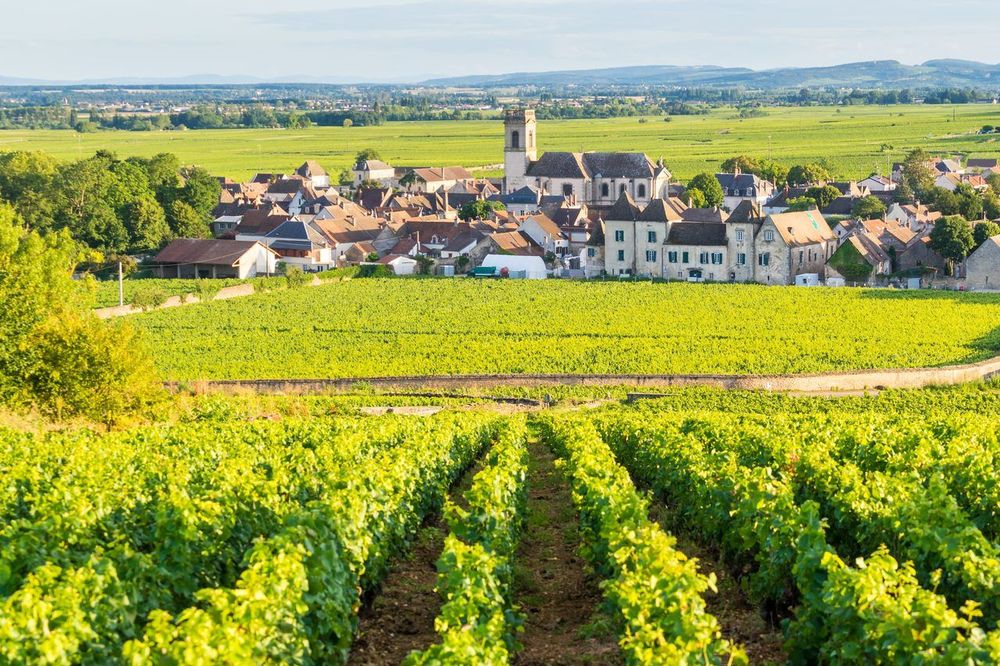
It is hard to find a village in Burgundy whose very name conjures so many images. Pommard lies 4 km south of Beaune along the N74 — three minutes by car — and you enter a different world. Where Beaune is a city of trade and tourism, Pommard is a wine-growers' village: 300 inhabitants, around 350 hectares of vines, and a reputation built since the 18th century on red wines of a tannic structure that once surprised Parisians who came to taste them.
The village deserves an hour on foot. The main road cuts through its centre but does not dull the atmosphere: on either side stand winemakers' houses from the 18th and 19th centuries, their gateways opening onto inner courtyards where barrels are stacked. The Église Saint-Martin, built in the 12th and 15th centuries, dominates the central square with a sturdy bell tower typical of the Côte-d'Or. Inside, notice the baroque altarpiece and the funerary slabs of the great wine-growing families whose generations made the village's reputation.
The Château de Pommard (Route Nationale 74, 21630 Pommard, rated 4.3/5 on Google from 326 reviews) is the main and most spectacular attraction. It is the largest walled single-owner monopole in the Côte-d'Or: the Clos Marey-Monge, 20 hectares of vines enclosed in a single block within a stone wall since 1812 — an absolute rarity in an appellation split among dozens of properties. The paid visit (around €35) includes a tour of the 18th-century cellars and a guided tasting. For something more intimate, stop at one of the village's smaller producers: Domaine Billard or Domaine Courcel welcome visitors by appointment with direct-sale prices.
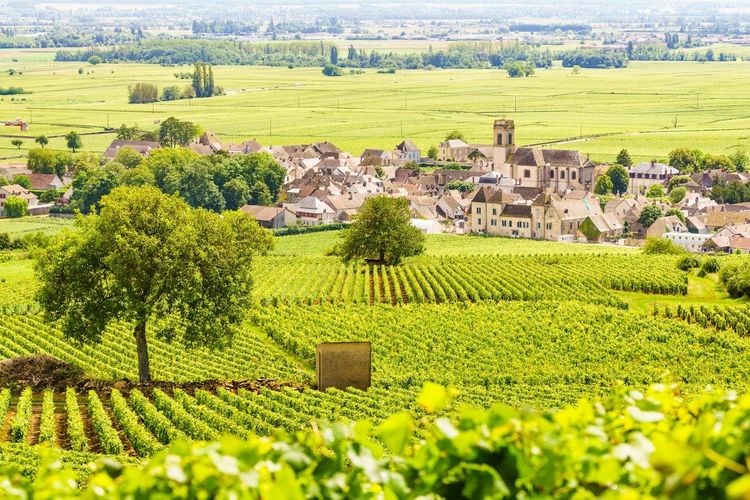
The walk through the vines above the village, heading towards the lieu-dit Les Rugiens (premier cru), takes around 45 minutes and offers an open view over the Saône plain. The difference in exposure between the lower-slope plots and those higher up — where the vines receive more morning sun — is explained simply by looking at the gradient. On the way back, the setting sun lights up the glazed tiles of the bell tower in an ochre hue that travel guides struggle to describe without resorting to cliché.
Pommard also works very well combined with Volnay, its immediate neighbour to the south — two kilometres on foot between the two villages, two appellations with contrasting personalities (Pommard powerful and tannic, Volnay elegant and silky) — a terroir comparison that no cellar tasting can replace.
Meursault, Capital of Burgundy's White Wines
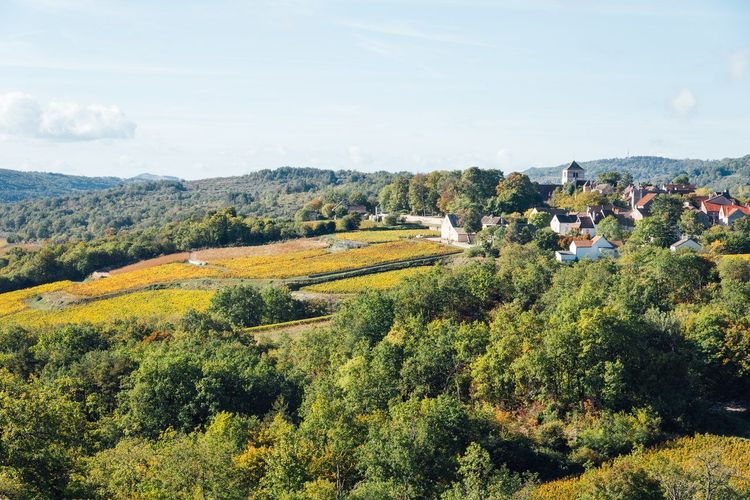
Meursault is 8 km from Beaune, about ten minutes along the N74, or 25 minutes by bike along the wine-growing paths that run beside the vines. It is the village that most rivals Beaune in terms of architectural density for a town of this size: its 14th-century church, its 15th-century market hall, and its winemakers' townhouses in Comblanchien stone form a coherent ensemble that few French towns of 1,600 inhabitants can claim.
But Meursault is first and foremost about Chardonnay. The village produces some of the most complex dry whites in the world: Les Perrières, Les Charmes, Les Genevrières among the premiers crus — wines that combine the buttery richness of limestone minerality with the tension of a well-managed oak ageing. Almost every house in the village conceals a cellar.
The Château de Meursault (Rue du Moulin Foulot, 21190 Meursault, rated 4.3/5 on Google from 415 reviews), a former property of the Comte de Moucheron and now owned by a Beaune négociant, opens its 12th-century vaulted cellars for visits. Allow 45 minutes for the gallery tour and tasting of current cuvées. The quality-to-experience ratio is excellent, and the setting — thousands of bottles lined up in pointed-arch galleries — is hard to forget. In November, the Paulée de Meursault gathers the village's wine-growers around a festive banquet marking the end of the harvest and the third day of Burgundy's Trois Glorieuses.
Take time to walk through the streets north of the church. Maison Bouzereau-Gruère, Domaine des Comtes Lafon and several other properties simply signal their gateways — a discreet sign, a few steps — and you enter a 17th-century cellar where the temperature stays at 12 °C year-round. It is this kind of discovery that sets a visit to Meursault apart from a visit to a commercial cellar: the vines are spoken of as a family garden passed down through the generations.
Towards the end of the afternoon, walk up to the vine cross marking the boundary of the lieu-dit Les Charmes. From above, the view over the village, the church and the Saône plain in the background gives a sense of this landscape: it is not a backdrop built for tourism, but a scenery that has taken centuries to form and is still at work.
Puligny-Montrachet: The Silence of the Great Whites
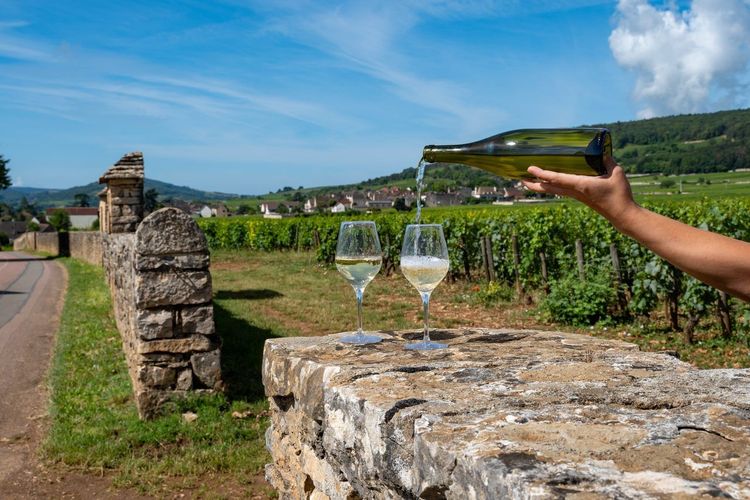
Puligny-Montrachet (Place du Monument, 21190 Puligny-Montrachet, rated 4.5/5 on Google from 820 reviews) is 12 km from Beaune, at the end of a road that passes through Meursault before plunging even deeper into the world of Côte-d'Or whites. The village shares with Chassagne-Montrachet the right to append the name of the grand cru 'Le Montrachet' to its own — 8 hectares of classified vines producing what many sommeliers consider to be the world's greatest dry white wine.
With fewer than 500 inhabitants, Puligny is one of the quietest villages on the Côte. No spectacular monument, no museum, no souvenir shop: what draws visitors here is the vine itself and the way it has shaped village life for centuries. The dry-stone walls delimiting the plots, the vine crosses marking the boundaries of the lieux-dits, the subtle gradient of the land from the village up to the forest — everything speaks of viticulture and geology.
The Domaine Leflaive is the village's best-known estate, a pioneer of biodynamics in Burgundy from the 1990s onwards. Without a prior appointment, you cannot enter the cellars, but the house and its outbuildings facing the street merit a photographic stop. Several Puligny estates accept individual visitors between May and October: Domaine Carillon and Domaine Chavy-Chouet in particular — contact them by email a few days in advance.
The walk to Montrachet itself takes less than 20 minutes from the village. The plot is identified by a sign and enclosed by a low wall. You cannot enter, but seeing for yourself this particular patch of land — a gentle slope facing due east, a calcareous, stony soil with nothing visually spectacular — helps you understand that great wine depends on terroir details that the uninitiated eye does not immediately perceive. It is a lesson in agricultural geography that no cellar tasting can replace.
Savigny-lès-Beaune: Two Châteaux and a Thousand Motorcycles
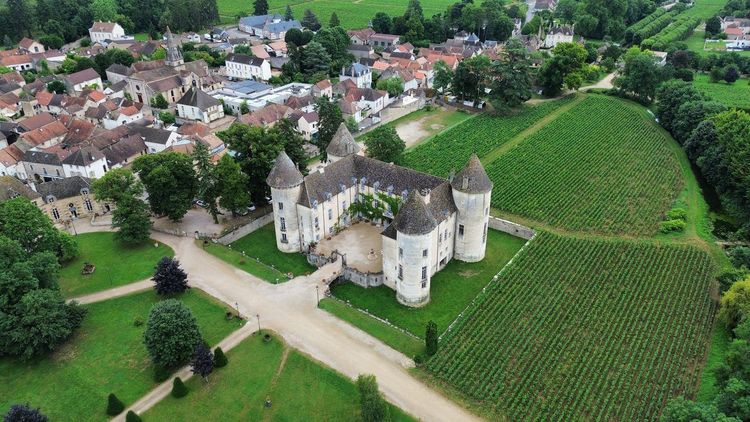
Savigny-lès-Beaune is 7 km northwest of Beaune along the D18, nestled in the combe where the Rhoin stream descends towards the plain. It is a livelier village than its wine-growing neighbours — around 1,400 inhabitants — and its setting is different: not the main road running along the slope, but a narrower valley where the houses climb gently towards the first woodland.
The village has two châteaux, which is exceptional at this scale. The Château de Savigny-lès-Beaune (Rue de Bourgogne, 21420 Savigny-lès-Beaune, rated 4.5/5 on Google from 3,494 reviews) has housed since the 1990s an unlikely collection: 1,000 vintage motorcycles, 25 fighter jets and around a hundred racing cars, all gathered by the same owner within the medieval buildings. The contrast between the 15th-century architecture and the 1970s Ducatis works better than you might expect, and children who were bracing themselves for yet another Burgundy cellar leave delighted.
The second château, Château Corton-André, recognisable by its polychrome glazed tile roofs (yellow, brown, green, red) visible from the main road, belongs to the house of Pierre André. These rooftops rank among the finest examples of Burgundian glazed tiling, the same technique found on the Hôtel-Dieu in Beaune and the great estates of the Côte.
Allow an hour for the vineyard circuit above the village. The climb towards the Hautes Côtes de Beaune offers a bird's-eye view over the Savigny combe and, on a clear day, as far as the first foothills of the Morvan on the horizon. The return along marked footpaths brings you back to the centre through the premiers crus vineyards.
Nolay: The Medieval Market Hall That Withstood Seven Centuries
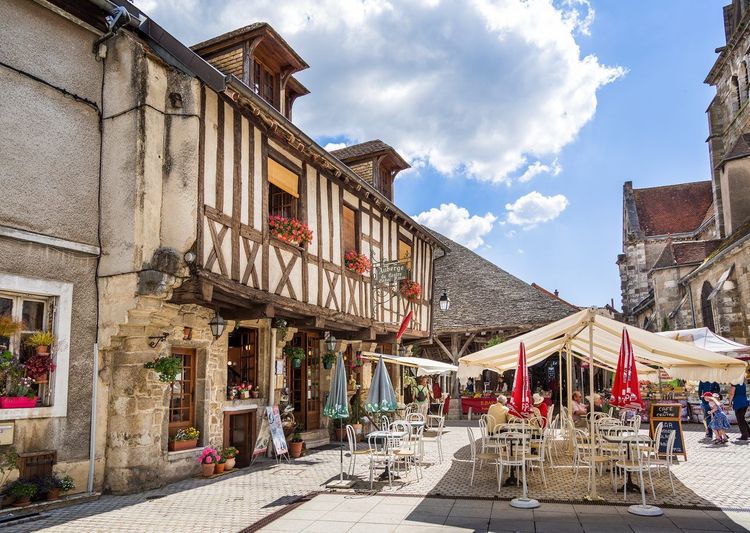
Nolay is 25 km southwest of Beaune, in a small basin carved by the Cozanne. The approach via the D973 then the D973b crosses the Hautes Côtes before descending into a market town with a distinctly medieval character. Nolay is not on the Route des Grands Crus — that is its advantage: fewer tourist coaches, more residents for whom the lanes are nothing out of the ordinary because they have always lived there.
The 15th-century market hall is the village's most photographed monument. Its chestnut timber frame supported by stone pillars, its lauze (limestone slab) roof, its floor still partially earthen: the structure survived the Wars of Religion, the Revolution and two world wars virtually intact. Markets are still held there every week, just as they were under Louis XIV.
The village has an unexpected connection with history: Lazare Carnot, mathematician, engineer and Revolutionary statesman nicknamed 'the organiser of victory', was born in Nolay in 1753. A commemorative plaque and a bust mark the fact. His grandson Sadi Carnot would become President of the Republic from 1887 until his assassination in 1894. Few villages of 1,600 inhabitants can claim such an intellectual lineage.
For walkers, the Falaise de Baubigny 3 km north of the village is worth half a day. This limestone escarpment 40 metres high, extended by a plateau covered in box and Scots pine, offers a panorama over three valleys simultaneously. The waterfall of the same name, more modest in scale, flows at its foot in spring — between March and May, the volume transforms the site into something you would not expect to find 25 km from Beaune.
A café, a few local shops, a small cheese shop — Nolay is not a museum village but a living town. That is precisely what makes it one of the most authentic stops on your outing through the Beaune area.
Santenay: At the Southern Edge of the Côte-d'Or, between Vines and Spa
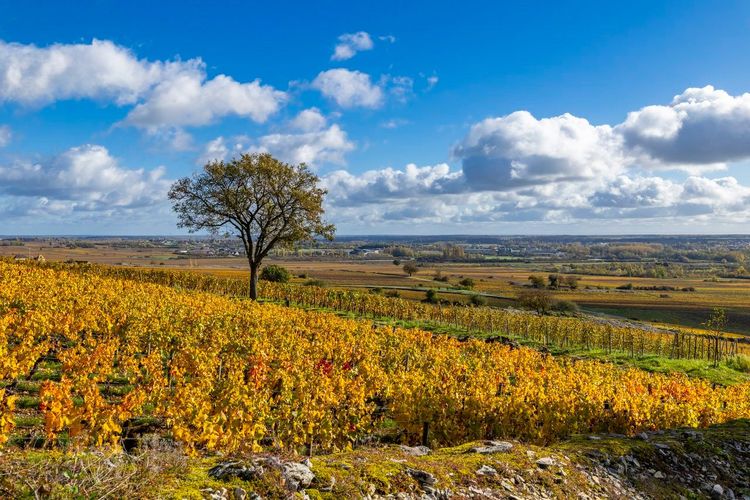
Santenay closes the wine-growing Côte-d'Or from the south — it is the last village on the Route des Grands Crus before the Côte-d'Or gives way to the Côte Chalonnaise. From Beaune, the distance is 22 km along the N74, about twenty minutes.
The village is divided into two distinct parts that locals clearly distinguish: Santenay-le-Bas (the wine-growing centre with its substantial houses and cellars) and Santenay-le-Haut (where the thermal baths and the old salt spring are located). The Thermes de Santenay (1 Rue des Sources, 21590 Santenay, rated 3.7/5 on Google from 411 reviews), known since antiquity for their sodium chloride waters, still welcome spa guests and day visitors — a 90-minute treatment in a 19th-century neoclassical establishment, steps away from the classified vines. The combination of thermal baths and grand crus is rare enough to be worth the detour.
The Église Saint-Jean from the 14th century, its Romanesque doorway and bell tower topped with a Burgundian helmet-shaped roof, concentrates the village's built heritage. Inside, the modern stained-glass windows from the 1960s contrast with the ancient stone in a way that divides visitors — but it is precisely this kind of tension between eras that keeps Santenay alive rather than frozen.
Several estates offer tastings on-site: Domaine Lucien Muzard, Domaine Pousse d'Or (with vines also in Pommard and Volnay) and Domaine Roger Belland among others. In Santenay, both reds (Pinot Noir) and whites (Chardonnay) are produced, making it one of the most versatile appellations for a comparative tasting.
Chagny: The Table, the Canal, and the Saône-et-Loire Border
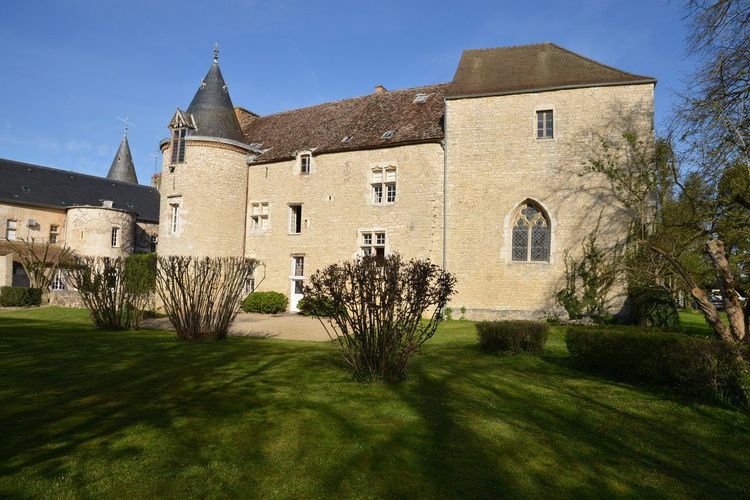
Chagny is 15 km south of Beaune on the N74, and technically belongs to Saône-et-Loire, but its ties to the Côte-d'Or are so close that all Beaune tourist maps include it naturally. It is more of a staging-post town than a village (around 5,000 inhabitants), but its role as a crossroads justifies lingering.
Chagny's reputation far exceeds its size. The restaurant Lameloise, housed in a 15th-century coaching inn on the Place d'Armes, has held three Michelin stars since 1979 — one of the most consistent tables in French gastronomy. Even without dining there, passing the inn's cream façade is a reminder of the historical density of this Paris–Lyon axis.
The Canal du Centre runs through Chagny and offers a pleasant stroll for those who prefer waterside paths to vineyards. The junction with the Canal de Bourgogne occurs further north at Thorey-sur-Ouche. Moored barges, boating stops, late-afternoon light on the canal: Chagny provides a breathing space between two wine villages, and its Saturday morning markets remain lively year-round.
Bligny-sur-Ouche: The Valley That Itineraries Forget
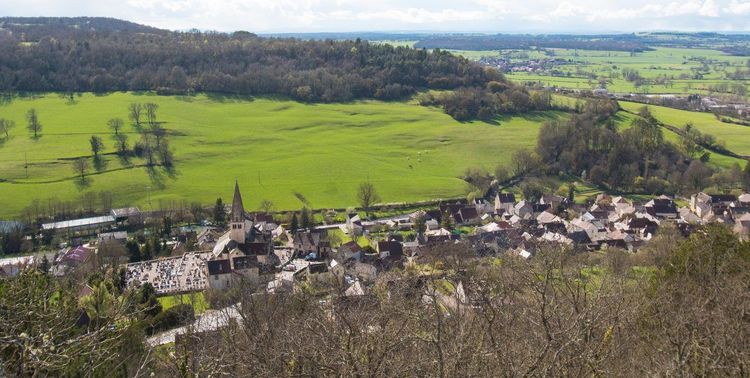
At 20 km west of Beaune up the Ouche valley, Bligny-sur-Ouche appears on almost no standard tourist circuit — and that is precisely why it deserves a mention. The town of 700 inhabitants grew up at the foot of a limestone hill crowned by a 12th-century Romanesque chapel, whose silhouette dominates the valley for kilometres around.
The walk up to the Chapelle Notre-Dame de Bligny (Bligny-sur-Ouche, 21360 Bligny-sur-Ouche, rated 4.5/5 on Google from 42 reviews) along the marked path from the town takes 25 minutes. From the terrace surrounding the building, the panorama over the Ouche valley, the pastures and the Hautes Côtes forests creates a rare sense of open space in a region often perceived as exclusively devoted to wine. The village cellars allow you to taste the wines of the Hautes Côtes de Beaune — less well-known and often less expensive than their Côte neighbours.
The Cistercian abbey of Sainte-Marguerite 5 km away, founded in the 12th century, is partially visible from the road. The conventual buildings have been converted into a farm, but the medieval cellar and part of the enclosure walls survive. A brief stop is enough to appreciate the austerity of Cistercian architecture in its bocage setting — an aesthetic that contrasts sharply with the wine châteaux of the Côte.
Châteauneuf-en-Auxois: The Fortress That Overlooks the Motorway and the Plain
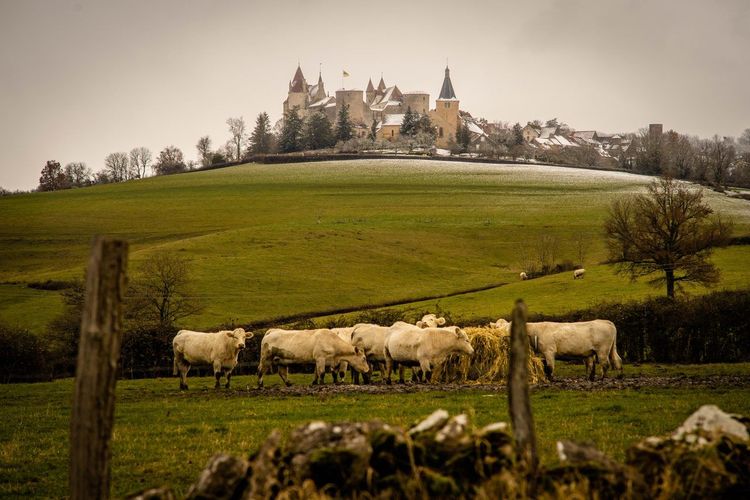
Some villages are visible before you arrive. Châteauneuf-en-Auxois, perched on a promontory at 353 metres altitude, can be seen from the A6 motorway that passes at its foot — the silhouette of the 12th-century castle is cut against the Burgundy sky like a geographical marker that motorists notice without always being able to name. The village is 35 km from Beaune and 45 km from Dijon — less than 30 minutes from either city.
The castle is state-owned and open year-round. Built between the 12th and 15th centuries and enlarged by Philippe Pot, chamberlain to the Duke of Burgundy and one of the most fascinating figures of ducal Burgundy, it retains a large Romanesque tower, Gothic living quarters and virtually intact ramparts. The self-guided visit takes around 45 minutes; the guided tour available in July and August gives access to rooms normally closed, including the guardroom and the watchtower. The battlements offer a 360° view over the Canal de Bourgogne below, the Lac de Panthier and the hills of the arrière-Côte.
The village itself is listed among the "Most Beautiful Villages of France" — a distinction that validates what the eyes confirm immediately: white limestone lanes, carefully restored 15th- and 16th-century houses, flowers at the windows, a silence broken only by the bells of the Romanesque church of Saint-Jacques-le-Majeur on the hour. The village has only around a hundred permanent residents, but several art galleries, a boutique hotel and a restaurant allow you to stretch the visit into a full half-day without effort.
Drive or walk down to the Lac de Panthier, an artificial reservoir created in the 19th century to feed the Canal de Bourgogne. The bank is ideal for a summer picnic, and the round trip on foot from Châteauneuf takes an hour along a marked path that follows the old mills. In December, the village hosts a small but quality Christmas market, with local artisans and mulled wine that the residents make no pretence of disdaining.
May is ideal for the light on the castle's golden stones. The flowering of wild cherry trees in the moats and on the slopes around the promontory lasts two to three weeks — a short window that local photographers watch for from one year to the next.
Commarin: The Château That Still Lives
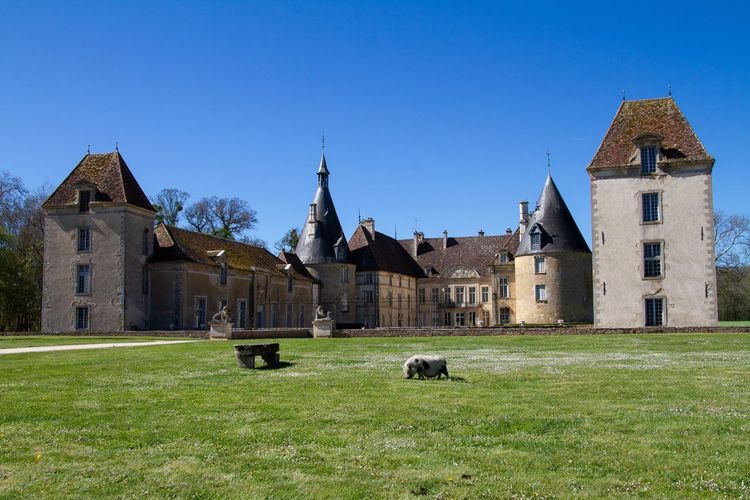
Commarin is 30 km from Beaune and 25 km from Dijon, on the arrière-Côte plateau. The village has fewer than 200 inhabitants and makes no claim to scenic grandeur. What justifies the detour is the Château de Commarin (Commarin, 21320 Commarin, rated 4.4/5 on Google from 1,236 reviews): a complex of 15th- and 17th-century buildings surrounded by a water-filled moat, one of the rare châteaux in Burgundy still inhabited by the owning family since the 15th century.
The de Vienne-Commarin family has occupied the estate for six hundred years. It is this continuity that makes the visit special: the château is not a reconstructed museum but a living interior, with furniture that has spanned the centuries and family portraits that tell Burgundian history without any staging. The 17th-century Flemish tapestries, among the best-preserved in the region, adorn the large ground-floor rooms. The guided tour lasts around an hour and remains financially accessible.
The moat reflects the château's towers with a fidelity that makes photographs almost symmetrical. In spring, the wild irises lining the ditches add a touch of violet that the watercolourists who stay in the village do not spurn. Pair Commarin with Châteauneuf-en-Auxois (15 km away) to build a half-day of medieval châteaux in Auxois, returning to Beaune via the D18 through the Hautes Côtes. And if you head back to Dijon, our audio walking tour of the Burgundian capital strings together 25 stops in the historic centre.
Flavigny-sur-Ozerain: The Village of Anise Sweets
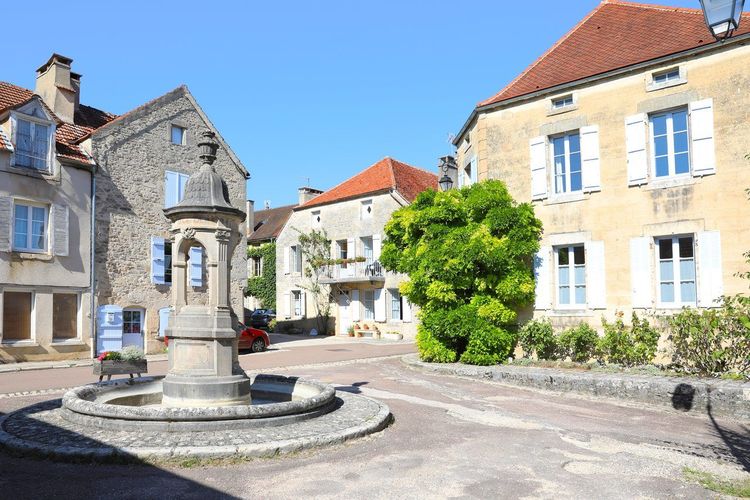
Between Beaune and Dijon, one detour demands a stop: Flavigny-sur-Ozerain, 55 km from Beaune and 40 km from Dijon, perched on a limestone spur at 400 metres altitude. The village is listed as a "Most Beautiful Village of France" and shares with Châteauneuf-en-Auxois the quality of a preserved medieval town, but Flavigny has a unique olfactory identity in France.
It is here, in the vaulted cellars of a former 8th-century Benedictine abbey, that the anis de Flavigny (Place de l'Ancienne Abbaye, 21150 Flavigny-sur-Ozerain, rated 4.7/5 on Google from 2,128 reviews) have been made since 1591 — those small oval anise sweets whose round metal tin has become a Burgundy souvenir recognisable far beyond the region. The factory occupies the abbey buildings and opens for free visits on weekdays. The production process — an anise seed gradually coated in layers of sugar over several weeks in revolving drums — is visible through windows and explained on panels. At the shop, around ten flavours line the shelves: violet, liquorice, blackcurrant, mint, rose.
The village itself can be explored in 30 to 45 minutes. The cobbled lanes are lined with 15th- and 16th-century houses in golden stone. The Basilique Saint-Reine from the 19th century (built on the site of a Carolingian oratory dedicated to Saint Regina, martyred here in the 3rd century) houses alabaster statues. A few craftsmen's workshops — pottery, jewellery, bookbinding — have moved into the old houses.
Flavigny has a connection with cinema that film lovers will appreciate. Lasse Hallström filmed his 2000 movie "Chocolat" here, starring Juliette Binoche and Johnny Depp, and the angles of the main square as well as those of the fortified gate are recognisable to anyone who knows the film.
The orientation table to the north of the village looks out over the Brenne plain and, on a clear day, as far as the hills of the Châtillonnais. The sunset from this vantage point offers one of Burgundy's least-photographed views — chiefly because few visitors take the time to walk there after the anise factory has closed.
Nuits-Saint-Georges: The Gateway to the Côte de Nuits
Nuits-Saint-Georges is 22 km north of Beaune on the N74, less than 20 minutes away. It is the main town of the Côte de Nuits (around 5,500 inhabitants), renowned for its red wines of a depth that has fascinated enthusiasts since the 17th century — notably Louis XIV, who consumed them daily on the medical prescription of his physician Fagon, according to the Versailles archives.
The Basilique Saint-Denis from the 12th century is the best-preserved Romanesque edifice on the Côte de Nuits. Its remarkably intact Romanesque apse, its porch adorned with sculpted capitals, and its interior with austere proportions create an atmosphere of medieval devotion that late-afternoon oblique light amplifies considerably. Inside, the historiated capitals of the choir columns deserve close attention — some depict wine-growing scenes, proof that the vine and the sacred have been inseparable in this territory since the Romanesque period.
The archaeological and wine museum of Nuits-Saint-Georges, housed in the former chapel of the Pénitents, presents excavations from the Gallo-Roman sites of Les Bolards — an ancient settlement of 10,000 inhabitants whose remains include an amphitheatre, baths and several sanctuaries. Continuous excavations since the 1930s have yielded thousands of objects (ceramics, coins, votive offerings) showing that this Côte road was already a major commercial axis under the Roman Empire.
For tasting, Domaine Henri Gouges — one of the great names in Nuits-Saint-Georges and a pioneer of grafted Pinot Noir in Burgundy — and several négociants on the Rue du Général de Gaulle offer introductory tastings for non-specialists. Duration: 1 to 1.5 hours, by reservation.
Continue north to Gevrey-Chambertin (12 km) to complete the Côte de Nuits: the birthplace of Chambertin offers similar architecture, but the Château de Gevrey (11th–13th century), a communal property open for visits in summer, merits its own half-hour.
Vougeot and the Clos Vougeot: Viticulture as Monument
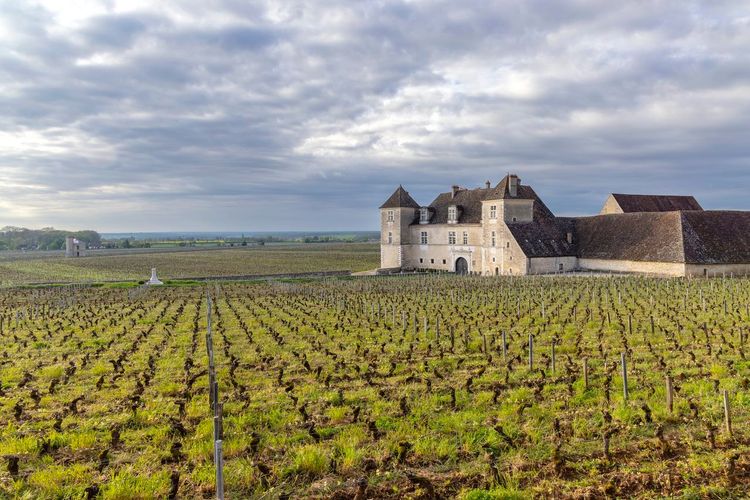
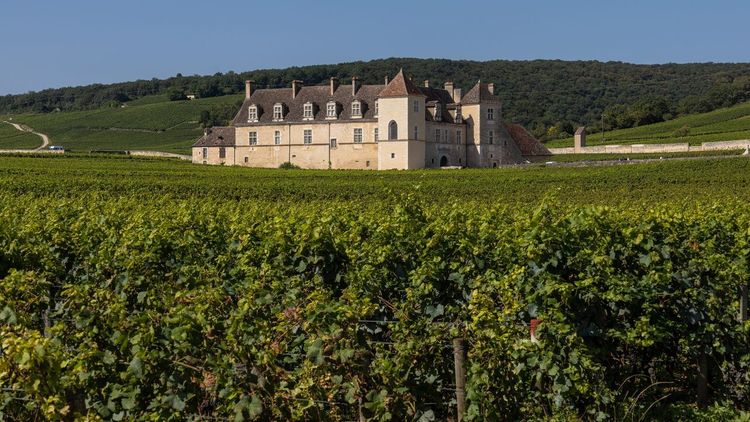
Vougeot has only 180 inhabitants, but its name resonates worldwide for one specific reason: the Clos Vougeot, 50.5 hectares of grand cru vines enclosed within a limestone stone wall since the 12th century. The village is 25 km from Beaune and 15 km from Dijon — ideally positioned for a half-day from either city.
The Château du Clos Vougeot (Rue de la Montagne, 21640 Vougeot, rated 4.5/5 on Google from 4,086 reviews) is Burgundy's viticultural symbol. Built by the Cistercian monks of Cîteaux (10 km to the east), who planted these vines in the 12th century and cultivated them for six centuries before the Revolution, the château today houses the Confrérie des Chevaliers du Tastevin, an association of wine-growers and enthusiasts who hold lavish banquets there several times a year and induct new members in a ritual that is half serious, half theatrical. The château visit open to the public outside chapter events lasts 45 minutes and includes the four great 12th-century wine presses — the oldest still in place in Burgundy — and the 14th-century vaulted cellars.
Beyond the château, the village can be crossed in ten minutes on foot. The crossing is still worth doing slowly, to take in the small private cellars and the old winemakers' houses. On the main road, opposite the Clos, the premiers crus vineyards extend across east-southeast-facing slopes.
To round off the day, continue to Vosne-Romanée (2 km south) — a village modest in population but whose appellations (Romanée-Conti, La Tâche, Richebourg) represent the world's most expensive wines. The village itself takes no more than 30 minutes to explore, but passing in front of the gates of the Domaine de la Romanée-Conti amounts to something of a pilgrimage for wine lovers.
Semur-en-Auxois: The Pink City on Its Granite Spur
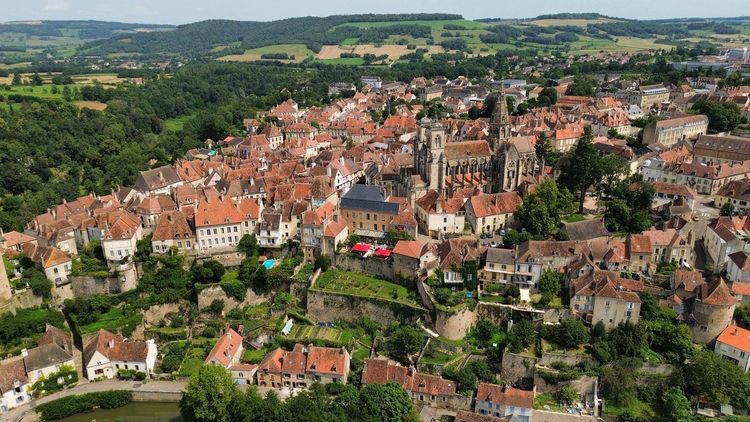
Not all Burgundy's towns are limestone. At 60 km from Beaune and 75 km from Dijon, Semur-en-Auxois emerges from a bend in the Armançon valley in all its chromatic singularity: pink ramparts, pink cylindrical towers, a pink Gothic collegiate church — the colour comes from the local granite of the rocky spur on which the town has stood since the 9th century. It is a palette that Beaune and its golden limestone villages simply cannot offer.
The comparison most often made by visitors is that of a perfectly preserved miniature medieval city. Semur has barely 4,000 inhabitants, but its urban fabric — the ramparts, the towers, the Pont Joly spanning the Armançon, the collegiate church Notre-Dame — forms an architectural coherence that towns ten times its size cannot claim.
The Collégiale Notre-Dame de Semur is the most remarkable building. Built between the 13th and 15th centuries, it features a richly sculpted north portal — notice Saint Thomas touching Christ's wound, accompanied by an ox in homage to the town's medieval butchers who commissioned the portal — 15th-century side chapels, and a contemporary stained-glass window illustrating Semur's craft trades. The height of the nave vaults, disproportionate relative to its width, creates a striking sense of verticality.
The castle towers (14th century), four in number, two of which are open to visitors in summer, offer from their battlements a panorama over the meander of the Armançon, the gardens below and the slate rooftops of the old town. The Promenade des Remparts, accessible on foot year-round, follows the dry moat of the fortification and allows you to appreciate the military architecture without having to climb the towers.
In May, the Fête Jeanne d'Arc — the oldest in France, documented since 1639 — brings Semur to life over three days: a procession in historical costume, a horse race on the fairground, a medieval market. If you are in the region at that time, look no further.
Noyers-sur-Serein: The Middle Ages without Reconstruction
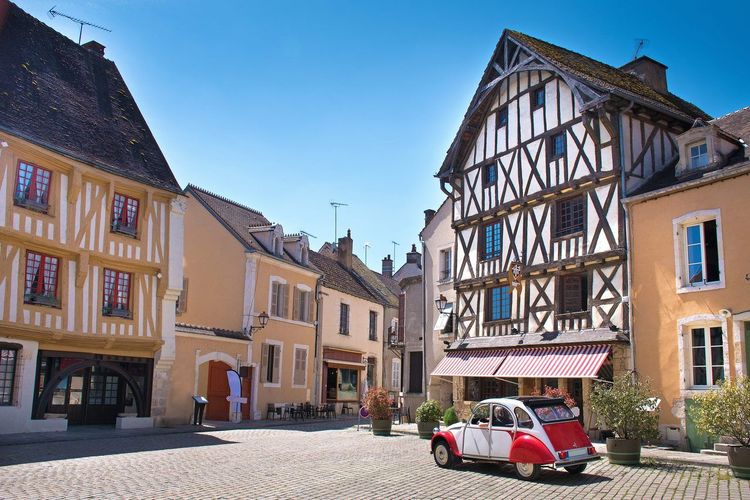
Noyers-sur-Serein (Place de l'Hôtel de Ville, 89310 Noyers-sur-Serein, rated 4.7/5 on Google from 1K reviews) is 80 km from Beaune and 100 km from Dijon — the most distant stop in this guide, in the northern Côte-d'Or on the border with the Yonne. The road there from Beaune follows the Serein through bocage and riverside landscapes that even Burgundians rarely know. It is this semi-inaccessibility that has preserved Noyers in an exceptionally fine state.
The town is listed as a "Most Beautiful Village of France", and here the distinction is entirely deserved. The 16 medieval towers of the 14th-century fortified wall are virtually intact. The half-timbered and jettied houses of the 15th and 16th centuries line cobbled lanes whose names have remained unchanged: Rue du Poids du Roy, Place du Marché-au-Blé, Rue des Fosses. The 700 permanent residents live in this setting without it needing to be staged for visitors — that is rare.
The Musée des Arts Naïfs et Populaires, housed in a 16th-century townhouse, displays a collection of outsider and naïve art of unexpected quality for a village of this size, with works by local artists and international creators. The permanence of this collection in such a discreet town says something about the cultural character of the place.
The River Serein, which loops around the promontory on which Noyers is built, allows for a 45-minute walk offering the best views of the ramparts and towers from outside the walls. The anglers who frequent the river will confirm: the Serein is a good trout stream, and the calm of its banks is worth lingering over even without a rod.
Planning Your Trip around Beaune: Practical Tips and Itineraries
By car is the essential mode of transport for covering most of this guide. The majority of villages are not served — or are very poorly served — by public transport. From Beaune, you can cover the Côte villages (Pommard, Meursault, Puligny, Savigny, Santenay) in a full day with an early start. The arrière-Côte villages (Châteauneuf, Commarin, Flavigny) make a good additional half-day.
By bike, the Route des Grands Crus is cycle-friendly and signposted between Dijon and Santenay (around 75 km). Several electric bike rental operators work out of Beaune — expect to pay €25 to €35 per day. The terrain is broadly flat along the Côte but becomes more demanding towards the Hautes Côtes or the arrière-Côte.
When to visit? The harvest (late September, early October depending on the vintage) brings all the Côte villages to life but makes tastings less available — the wine-growers are in the fields. Spring (April–May) is the ideal season for cellar visits and the light on the budding vines. Avoid the weekend of the Vente des Hospices de Beaune (third Sunday in November) if you do not wish to find accommodation fully booked months in advance.
Where to stay? Beaune offers a wide choice of hotels within the old town walls. For atmosphere, opt for a chambres d'hôtes stay with a wine-grower in Meursault, Pommard or Savigny-lès-Beaune — a morning tasting over breakfast ranks among the experiences that justify a trip to Burgundy.
Before you set off, the Beaune audio-guided tour, Entre pierres et grands crus takes you through the ramparts, the Hospices and the medieval lanes with 19 audio commentaries (2.5 km, 1 hour) — a way of arriving in the surrounding villages with the historical context already in place and visual reference points that make every detail of stone and vine a little more readable along the way. The Ryo audio guide downloads before departure and works offline, which is practical in the arrière-Côte villages where the mobile network is often sparse.
FAQ
What is the most beautiful village around Beaune?
The answer depends on what you are looking for. For a perched, listed medieval village, Châteauneuf-en-Auxois (35 km) stands out — the 12th-century castle dominating the plain and the restored lanes of this "Most Beautiful Villages of France" member are photographed for obvious reasons. For an authentic wine-immersion experience just steps from Beaune, Pommard or Meursault (4 to 8 km) allow you to step directly into the culture of the Grands Crus. And if it is intact medieval atmosphere without tourist frills, Noyers-sur-Serein (80 km) is in a league of its own, with its 16 medieval towers and period lanes.
Can these villages be visited without a car?
Partly. The Route des Grands Crus is cycle-friendly and signposted from Dijon to Santenay (75 km). Regional trains serve Nuits-Saint-Georges and Beaune from Dijon (around 25 minutes, SNCF station at Nuits-Saint-Georges). However, the arrière-Côte villages — Châteauneuf-en-Auxois, Commarin, Flavigny, Semur-en-Auxois — are only accessible by car, unless you arrange local taxis or guided tours from Beaune or Dijon. For Noyers-sur-Serein, a car is essential.
What is the best time of year to visit the area around Beaune?
April to June for the budding vines and cellars available for tasting, without the pressure of high season. October for the colours of the leaves on the vines and the atmosphere of the final harvests. Summer (July–August) is lively but more crowded and more expensive for accommodation. Winter (December–March) offers low light on the golden stone, fewer people in the villages, and the Christmas markets of Châteauneuf-en-Auxois and Beaune make up for the weather, provided you come prepared.
How many days are needed to visit the area around Beaune?
A weekend covers the Côte villages (Pommard, Meursault, Savigny, Nolay, Santenay) and one arrière-Côte village (Châteauneuf or Flavigny). To complete all 15 villages in this guide, plan for 4 to 5 days — and even then you must avoid lingering too long in the cellars or at the table. A full week leaves time to breathe, explore hiking trails, and push on to Semur-en-Auxois or Noyers-sur-Serein at a leisurely pace.
Are there villages listed as 'Most Beautiful Villages of France' near Beaune?
Three villages in this guide carry this national label: Châteauneuf-en-Auxois (35 km), Flavigny-sur-Ozerain (55 km) and Noyers-sur-Serein (80 km). Bourgogne-Franche-Comté has around ten villages listed in this selection in total, meaning the region around Beaune and Dijon offers an exceptional concentration of built heritage on a national scale.
Can you taste wines in the villages without a reservation?
Some estates and cooperative cellars accept walk-in visitors, particularly in Meursault, Pommard and Nuits-Saint-Georges, where tourist flows are organised enough to absorb spontaneous visitors on weekdays. For smaller family estates — often those producing the most interesting wines — getting in touch by email 2 to 3 days in advance is strongly recommended. The tourist offices of Beaune and Nuits-Saint-Georges publish updated weekly lists of estates open to visitors.
Conclusion
The villages around Beaune are not merely wine backdrops: they are human geographies that have shaped their landscape over centuries, and that depth shows in every stone, every cellar and every gateway opened to you. From Pommard to Noyers-sur-Serein, from the moats of Commarin to the pink ramparts of Semur-en-Auxois, this territory deserves as much time as Burgundy's great tourist sites — if not more.
Before leaving Beaune for these stops, the Ryo audio-guided tour of Beaune — 19 audio commentaries on the Hospices, the ramparts and the medieval lanes — lays the foundations for a reading of the villages that makes every detail of stone and vine a little more legible along the road.
À lire également