





Walk
Among Stones and Great Wines
Beaune, France
Walk
Among Stones and Great Wines
Beaune, France
2.5 km
Distance
1h10
Durée
20
Audios
Loop
Parcours
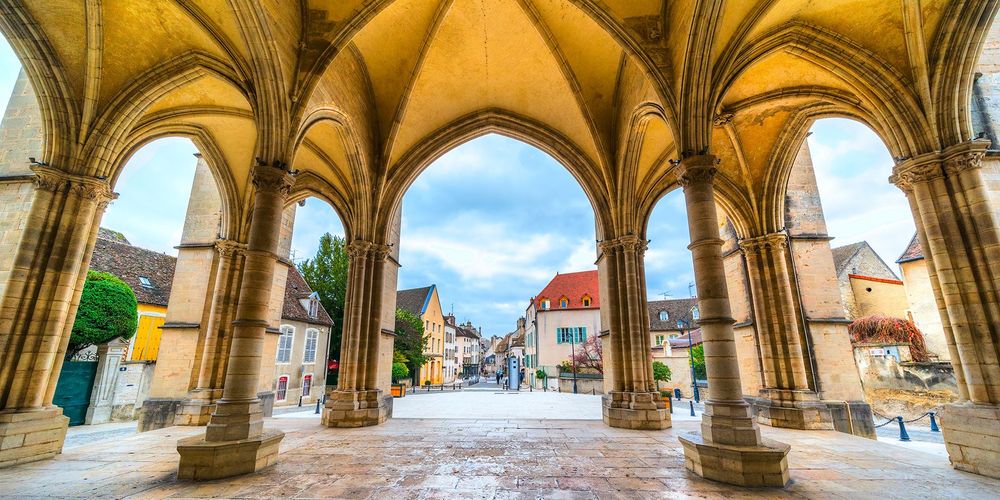
Beaune—a town famous for its wine, of course, but also steeped in history. These days, the name Beaune might bring to mind grand crus and the iconic Hospices, but there’s so much more to the story. It all starts back in Antiquity, when the Romans settled here and built the first infrastructure, including a castrum, or fortified military camp.
But it was in the Middle Ages that Beaune really began to shine. Fortified with walls—some of which you can still see today—the town grew in importance and prosperity. In the 14th century, Burgundy became a powerful duchy, so influential it was almost a kingdom within a kingdom.
Beaune, second only to Dijon, played a major role during this golden age. The town expanded, trade fairs flourished, skilled craftsmen set up shop, and elegant townhouses popped up everywhere. In 1443, Chancellor Nicolas Rolin founded the now-famous Hospices de Beaune, a hospital for the town’s sick and poor.
This stunning example of flamboyant Gothic architecture still stands as a powerful symbol of that prosperous era. But Beaune isn’t just a historic town—it’s also the beating heart of Burgundy wine. Since the Middle Ages, the monks and dukes of Burgundy have cultivated the region’s exceptional vineyards.
Beaune soon became the centre of it all—a place to buy, sell, and store wine. Cellars were dug beneath the houses, with barrels stacked high in underground corridors. By the 18th century, major wine merchants like Bouchard Père & Fils and Patriarche had made Beaune their home, some even moving into former convents.
And since 1859, the legendary wine auction at the Hospices has drawn buyers and wine lovers from around the world. Over time, Beaune has firmly established itself as the capital of Burgundy wines. The centuries that followed brought their share of turmoil—religious wars, revolution, and downturns in the wine trade—but through it all, Beaune held on to its role as a wine capital.
From the 19th century onward, the town began to modernise while staying true to its roots. The Hospices were restored, new roads were laid, and above all, the wine trade expanded across France and beyond. Today, Beaune may be small in size, but it’s big in character—rich in heritage, proud of its traditions, and passionately devoted to wine, culture, and warmly welcoming its visitors.
Aucun avis pour le moment
