© Shutterstock
 Votre guide Ryo
23 Free Activities in Paris in 2026: Museums, Parks, Walks and Secrets
Finding a free activity in Paris is no impossible mission: it's one of the rare major world capitals where you can spend an entire day, even a complete weekend, without spending a single euro on entry fees. Two municipal contemporary art museums open permanently, a dozen historical gardens, entire neighborhoods classified as heritage sites, street-accessible frescoes, riverside promenades developed for kilometers: the list is much longer than imagined. The Ryo audio-guided tour of Paris allows exploring the city's main axes with 18 audio commentaries over 8.9 km, ideal for connecting these treasures without getting lost. This guide lists 24 experiences without entry fees, from the most famous to the most unknown, with practical information that makes the difference.
A few figures to whet your appetite: the Carnavalet Museum reopened in 2021 after five years of renovation and now presents 140,000 objects tracing 4,000 years of Parisian history, without entry ticket. The Père-Lachaise cemetery welcomes several million visitors per year and no ticket is required. The pedestrian Seine riverbanks on the left bank extend over 2.3 km developed into terraces, floating gardens and sports areas. And every first Sunday of the month, several major national museums (Orsay, Centre Pompidou, Cluny) open their permanent collections to all without booking a ticket. Enough to replan your next Parisian weekend.
1. The Museum of Modern Art of Paris
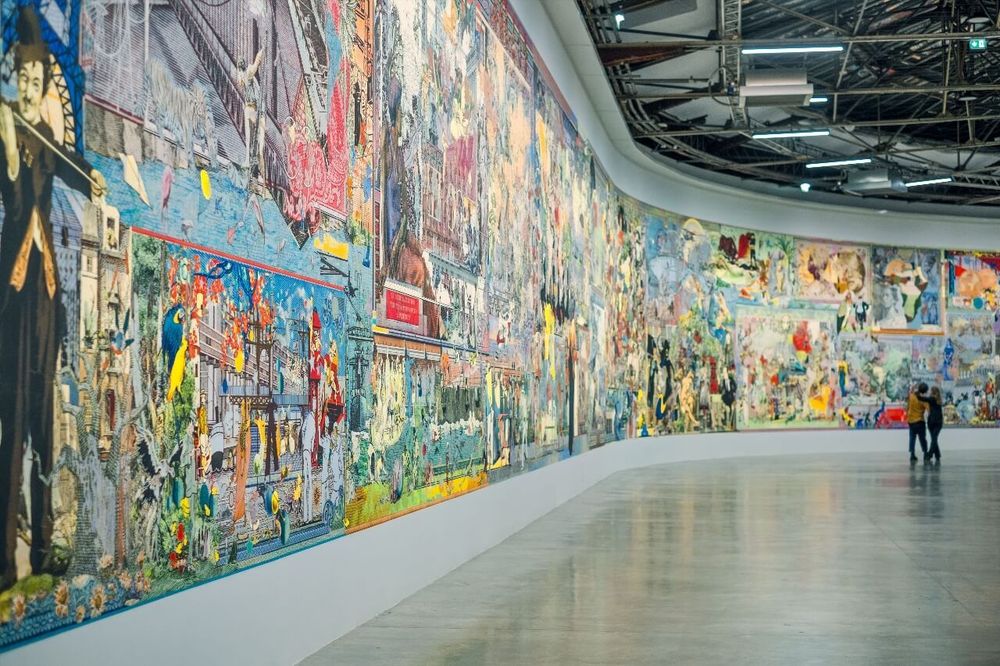
Located in the east wing of Palais de Tokyo, the Museum of Modern Art of Paris (11 Avenue du Président Wilson, 75016 Paris, rated 4.5/5 on Google for 8,619 reviews) (MAM) is one of the capital's pleasant surprises for those seeking culture without sacrificing their budget. Its permanent access is free 365 days a year, only temporary exhibitions are paid.
The permanent collection brings together more than 15,000 works covering major 20th-century movements: Fauvism, Cubism, abstract art, new realism. The room dedicated to La Fée Électricité by Raoul Dufy, a monumental canvas of 600 m² commissioned for the 1937 Universal Exhibition, justifies the trip alone. It's one of the world's largest paintings, and few foreign visitors know it's viewable without ticket.
Plan at least 1h30 for the permanent collection. The museum is closed on Mondays. On weekdays, the ground floor rooms are particularly quiet between 10am and noon, that's also where you'll find Sonia Delaunay's works and Simon Hantaï's large abstractions.
2. The Petit Palais, Museum of Fine Arts of the City of Paris
The Petit Palais is one of Paris's most elegant buildings: a Belle Époque palace built for the 1900 Universal Exhibition, with a columned inner garden whose free access few passing tourists suspect.
Its permanent collections cover Greek and Roman antiquity, Flemish painting, 18th-century decorative arts and a beautiful section of 19th-century French painting. The grand staircase, main salon mosaics and central dome are worth as much as the exhibited canvases. Allow 1h30 to 2h to tour it without rushing.
The inner garden café is paid, but you can sit freely on the peristyle benches to enjoy the architecture. Closed on Mondays. Free access concerns the permanent collection year-round; temporary exhibitions have standard pricing. If you're hesitating between several museums in one day, combine the Petit Palais with the nearby Grand Palais (paid exhibitions) and pont Alexandre III for a half-day in the 8th without spending a euro on entry.
3. Victor Hugo's House
In the heart of place des Vosges, Victor Hugo's House (6 Place des Vosges, 75004 Paris, rated 4.5/5 on Google for 5,390 reviews) is a museum dedicated to the author of Les Misérables, installed in the apartment he occupied from 1832 to 1848. Visiting the permanent collections is free access.
Here you discover his period furniture and ink drawings (few people know Hugo was also a prolific and inventive draughtsman), his reconstructed interior décors and original manuscripts. The Chinese salon he had decorated himself in Guernesey has been reconstructed here. The view from the windows onto place des Vosges is an appreciable bonus. The museum is compact (five main rooms) but dense: allow 45 minutes to 1 hour. Closed on Mondays, like all Paris City museums.
4. The Carnavalet Museum, History of Paris
If you only visit one museum in Paris without taking out your wallet, make sure it's the Carnavalet Museum (23 Rue de Sévigné, 75003 Paris, rated 4.7/5 on Google for 12,067 reviews). Reopened in 2021 after five years of work representing 86 million euros of investment, this institution is now one of the capital's most impressive museums. Entry remains free access.
The museum occupies two private mansions in the Marais, Hôtel Carnavalet (16th century) and Hôtel Le Peletier de Saint-Fargeau (17th century), connected by an underground gallery. Together, they offer 3,000 m² of renovated spaces distributed over 48 rooms. The collection counts 140,000 objects, some unique in the world: Marcel Proust's bedroom reconstruction moved from his boulevard Haussmann apartment, the original sign from café de Foy (theater of the Bastille storming in 1789), Madame de Sévigné's handwritten letters sent from this very mansion.
The chronological route begins in Prehistory and ends in the 20th century, crossing medieval Paris, Court splendors, the French Revolution, Haussmannian transformations, Belle Époque and interwar period. Allow between 2h30 and 3h for a complete route. History enthusiasts can easily spend half a day there.
Practical aspect to know: Hôtel Carnavalet's courtyard of honor, with its Renaissance balustrades and sculpted medallions representing seasons, is accessible without even entering the museum. It's often quiet in late afternoon and constitutes one of the Marais's most beautiful architectural spaces. Open Tuesday to Sunday, closed on Mondays and certain holidays.
5. The Memorial of the Shoah
The Memorial of the Shoah (17 Rue Geoffroy l'Asnier, 75004 Paris, rated 4.7/5 on Google for 3,844 reviews) is one of Europe's most important memorial sites. Inaugurated in 2005 in the heart of the Marais, it includes a permanent museum with free access, a crypt, the Wall of Names engraving the names of 76,000 Jews deported from France, and a library-documentation center among the continent's richest.
The permanent exhibition traces Jewish persecution in Europe from 1933 to 1945, with particular attention to Vichy France and deportations organized from Paris. Archive documents, photographs and testimonies are presented with rare historical rigor and emotional force. It's not a light visit, but it's a necessary one.
Allow 2 hours minimum to do justice to the exhibition. The memorial regularly hosts temporary exhibitions with free entry on related themes. Closed on Saturdays and certain Jewish holidays, check the program before visiting.
6. The Basilica of Sacré-Cœur de Montmartre
The Sacré-Cœur basilica is often reduced to a simple viewpoint over Paris. This is largely reductive: it's also a major architectural work, a place of uninterrupted prayer for over a century, and the beating heart of a neighborhood that the Ryo audio guide of Pigalle and Montmartre explores with 18 audio commentaries in 3h40.
The Romano-Byzantine basilica was built from 1875 to 1914 in Château-Landon travertine stone, a rock that whitens in rain rather than blackening, explaining its persistent candor after more than a century. The interior is impressive: a 480 m² mosaic representing Christ in majesty adorns the apse, and the crypt descends under the nave in quasi-monastic silence. Entry to the basilica and crypt is free; only the dome climb (360° panorama) is paid.
To avoid dense crowds around the forecourt, arrive before 9am or after 7pm. At these hours, the basilica regains a contemplative dimension that daytime crowds completely erase. The forecourt, with its monumental staircase of 270 steps (or the funicular, paid), offers one of Paris's most photographed views, without spending a cent.
Also note square Louise-Michel at the hill's foot: terraced gardens with fountains, shaded benches and Wallace fountain. Often forgotten by guides, it's the place ## 7. Notre-Dame Cathedral of Paris (6 Parvis Notre-Dame, 75004 Paris, rated 4.7/5 on Google for 93,065 reviews)
After the April 2019 fire and five years of restoration mobilizing over 2,000 craftsmen and artisans, Notre-Dame de Paris reopened its doors on December 8, 2024. It's one of the decade's most anticipated cultural events. Visiting the nave is free; timed tickets without charge are distributed online and on-site to manage flow.
The restoration was an occasion for colossal work: the framework entirely reconstructed in oak with medieval techniques, Viollet-le-Duc's spire reconstructed identically, stained glass restored again diffusing their blue and red light on pillars. The interior benefited from new museography respecting Gothic structure while enabling better understanding of the edifice.
Book your slot on Notre-Dame's official website several days in advance, especially in high season. Tower climbing (access to gargoyles and Seine view) remains paid and subject to separate booking. A tip before or after visiting: walk along quai de la Tournelle to square de l'Île-de-France at the island's eastern tip for the classic cathedral photo from the Seine, much less crowded than the main forecourt.
7. Père-Lachaise Cemetery
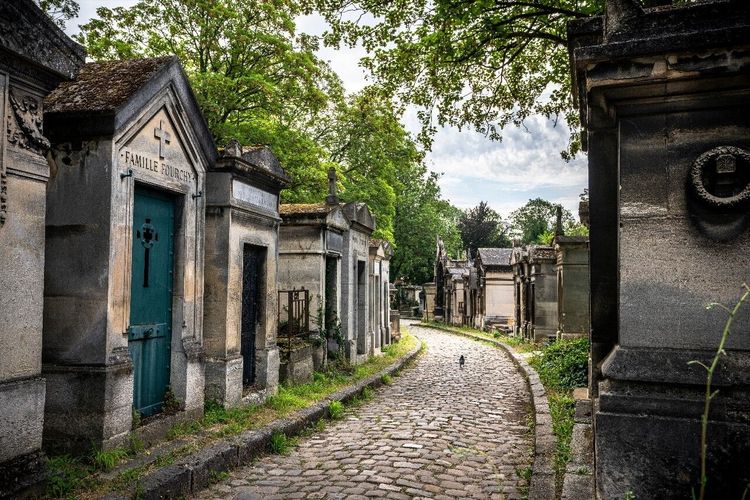
With several million visitors per year, Père-Lachaise cemetery (16 Rue du Repos, 75020 Paris, rated 4.6/5 on Google for 4,493 reviews) is one of Paris's most visited sites, and entry is free. It's also the 20th arrondissement's largest green space: 44 hectares of winding paths, neo-Gothic chapels, century-old trees and tombs forming a true open-air city of the dead.
Père-Lachaise concentrates burials of some of world cultural history's most famous personalities: Jim Morrison, Édith Piaf, Oscar Wilde (whose tomb is protected by glass since 2011 after years of lipstick marks), Frédéric Chopin, Marcel Proust, Molière, Colette, Simone Signoret and Yves Montand buried side by side. To explore the cemetery with hidden stories behind the most famous tombs, the Ryo Père-Lachaise route offers an audio-guided wandering that goes beyond simple name listing.
Beyond celebrities, the cemetery is an open-air architectural document. 19th-century funerary chapels mix neo-Renaissance, neo-Gothic and Second Empire eclecticism with compositional freedom seen nowhere else in the city. Division 97, in the eastern part, hosts the Federates Wall, memorial site of Commune insurgents shot here in May 1871, one of Parisian worker memory's high places.
Allow 2 to 3 hours for satisfactory exploration. Maps are available at main entrances (boulevard de Ménilmontant and rue du Repos). In autumn, paths under chestnut trees offer particularly striking atmosphere. Wear comfortable shoes: terrain is hilly. Our own Père-Lachaise audio-guided tour runs to 22 stops and takes you from Chopin to Jim Morrison without hunting for the path.
8. Pedestrian Seine Riverbanks
Since 2013, Paris City has transformed 2.3 km of Seine's left bank into permanent pedestrian promenade, from quais d'Orsay to Invalides esplanade. It's one of the decade's most successful urban transformations in Paris.
On these riverbanks, you'll find floating gardens placed on metal structures at water level, free-service ping-pong tables, yoga spaces, sunbathing on deck chairs. In summer, the atmosphere recalls an urban beach. In winter, the promenade remains open and offers views of Notre-Dame and historic bridges in appreciable calm, with much fewer people.
The right bank also has pedestrian portions between Louvre and Hôtel de Ville. Connecting both banks by crossing pont des Arts or pont Neuf creates a 5 to 6 km water-side itinerary, with changing views of islands and quays.
9. Canal Saint-Martin
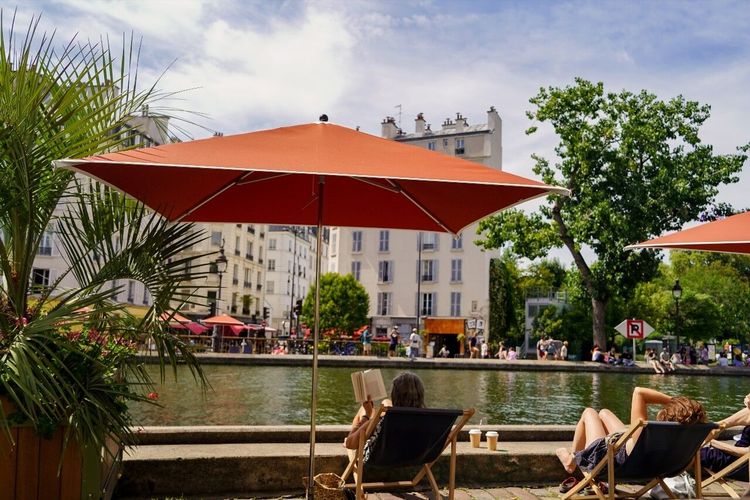
The canal Saint-Martin (Quai de Valmy, 75010 Paris, rated 4.6/5 on Google for 18,000 reviews) is one of the places where Paris least resembles the postcard, and that's exactly what makes it endearing. This 4.5 km canal dug by Napoleon's order in 1802 to supply the capital with drinking water is now bordered by plane trees, inhabited barges, trendy cafés and independent galleries.
The walk along Valmy and Jemmapes quays is open to all. The nine locks and two cast iron swing bridges create an industrial-romantic landscape photographed for decades. The film "Amélie Poulain" (2001) immortalized this popular Paris atmosphere and made it essential on cinema-loving tourists' maps.
On Sundays, the quays are partially pedestrianized and become an open-air salon where Parisians gather for improvised picnics. If you visit on weekdays, arrive early morning to see locks functioning during barge passage: a hypnotic mechanical spectacle, operated by Paris City lock keepers.
10. Luxembourg Garden
The Luxembourg Garden is Paris's most frequented garden with its 23 hectares in the heart of the 6th arrondissement. Entry is free at any opening time, year-round.
Founded in 1612 by Marie de Medicis, who wanted to recreate the Italian gardens of her Florentine childhood, Luxembourg presents formal geometry in its central part (French-style parterres, large octagonal fountain) and becomes more romantic as you approach the edges. The octagonal basin hosts miniature sailboats for rent on fine weather days; watching children handle their boats obviously costs nothing.
Among details not to miss: the experimental orchard in the southeast part, where the Senate maintains over 600 fruit trees according to 19th-century horticultural methods. And the Medici fountain, a 17th-century nymphaeum nestled in a shaded path, with its long narrow basin bordered by plane trees, one of Paris's most peaceful corners just tens of meters from boulevard Saint-Michel.
The garden is open year-round. It closes at nightfall in winter (around 5pm) and stays open until 9:30pm in summer. The green metal chairs, freely moveable, are a Parisian institution: settle wherever you want. The atmosphere differs radically between student weekdays and family weekends, both worth the trip at different times.
11. Buttes-Chaumont Park
If we had to designate Paris's most spectacular park, Buttes-Chaumont (1 Rue Botzaris, 75019 Paris, rated 4.7/5 on Google for 55,000 reviews) would be a serious candidate. Created under Haussmann in the 1860s on former gypsum quarries and an old waste dump, this 24.7-hectare park in the 19th arrondissement plays on elevation changes, artificial cliffs and a lake with temple island.
The Sybil temple atop Belvedere island (accessible by two suspension bridges) offers a 360-degree view of Paris: Montmartre hill to the northwest, Eiffel Tower to the southwest, Marais heights to the east. The climb takes five minutes from the main entrance. The 30-meter chalk cliffs surrounding the island constitute an unusual geological curiosity for an urban park.
The park is open year-round, 7 days a week. On weekdays, it attracts joggers and neighborhood professionals on lunch break; weekends see families and friend groups settle for long hours. It closes at nightfall in winter and around 10pm in summer.
12. Tuileries Garden
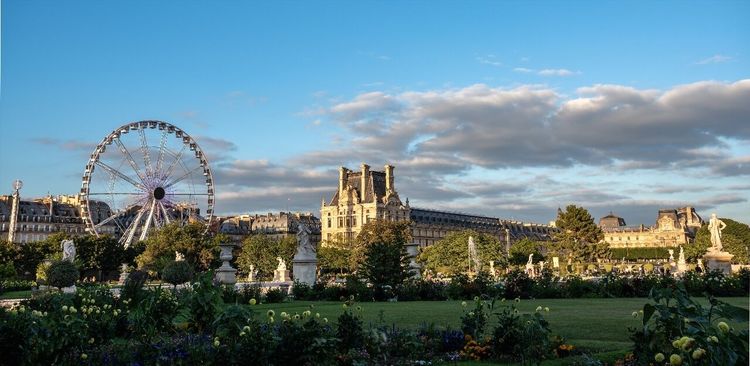
Extending over 28 hectares between Louvre and place de la Concorde, Tuileries Garden (Place de la Concorde, 75001 Paris, rated 4.6/5 on Google for 117,772 reviews) is royal Paris's historical green axis. Created by Catherine de Medicis in 1564, redesigned by Le Nôtre in 1664, it still defines Paris's historical axis perspective to La Défense today.
Entry is free and permanent. Contemporary sculptures (Henry Moore, Aristide Maillol) punctuate paths in dialogue with classical basins. In summer, deck chairs are installed around the two round basins. The central axis from Arc de Triomphe du Carrousel to the seasonal Ferris wheel on Concorde is one of the world's most beautiful urban walks, entirely open-air and ticketless.
13. Monceau Park
The Monceau Park (35 Boulevard de Courcelles, 75008 Paris, rated 4.6/5 on Google for 23,370 reviews), in the very upscale 8th arrondissement, is a gardening curiosity: an English-style "romantic" space created in 1778 for the Duke of Chartres, populated with architectural follies, an Egyptian pyramid, a Roman colonnade invaded by vegetation, a moss-covered bridge, blending into natural groves.
The atmosphere is calmer and more bourgeois than in other Parisian parks. Gilded iron railings and manicured paths make Monceau an elegant setting, open year-round, with free and permanent access.
14. Jardin des Plantes
The Jardin des Plantes is simultaneously a botanical garden, natural history museum network and living laboratory. Founded in 1626 as royal medicinal plant garden, it extends over 28 hectares in the 5th arrondissement and houses one of Europe's most important botanical collections.
Access to gardens themselves is free: outdoor tropical greenhouses, thematic botanical squares (aromatic plants, medicinal plants, grasses), three-century-old plane tree avenues and alpine collections. Museums (Grande Galerie de l'Évolution, Mineralogy Galleries) and Menagerie are separately paid.
The great rose garden is particularly spectacular from May to July. The labyrinth atop the hill, France's oldest structure of this type, planted in 1640, is often deserted, giving it particular atmosphere. Also seek the Lebanon cedar planted in 1734 by botanist Jussieu, one of Paris's oldest trees, standing amid paths like a plant monument in its own right.
15. Champ-de-Mars
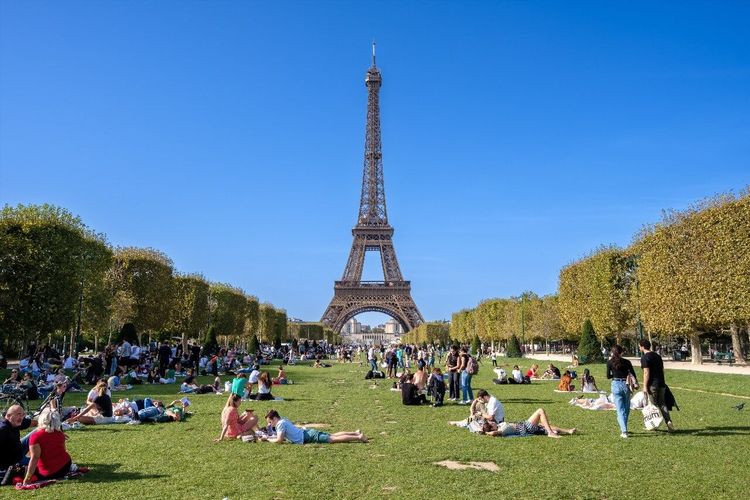
The axis between Champ-de-Mars and Eiffel Tower is one of the planet's most photographed perspectives, and it costs nothing. This 24.5-hectare park extends from the Eiffel Tower's foot to École Militaire.
In summer, lawns welcome picnics, outdoor concerts and screenings during festivals. In the evening, Eiffel Tower sparkles for five minutes every hour (until 1am in summer) thanks to its 20,000 bulbs, spectacle visible from Champ-de-Mars without ticket or queue. Arrive around 10pm on a summer evening and settle on the grass for one of Paris's most emblematic shows.
16. Montmartre Neighborhood
Montmartre isn't just a neighborhood, it's a city within the city, with its own topography, vineyard, working-class, bohemian, revolutionary history. You can spend an entire day there without paying a single entry fee.
From Abbesses station (with its Art Nouveau décor signed Hector Guimard, one of only two Parisian metro stations to have preserved its original glass canopy), climb via rue Lepic to place du Tertre, where street painters have worked for generations. The Paris view from Sacré-Cœur forecourt, described above, crowns the ascent.
Montmartre reveals its soul in side streets that tourist groups avoid: rue Norvins, place du Calvaire (plunging Paris view without forecourt crowds), villa Léandre with its Anglo-Norman facades seemingly from nowhere. The wall of I love you in square Jehan-Rictus (Abbesses station) is also a curiosity to see: 311 earthenware tiles engraved with "I love you" in 250 languages, designed by calligrapher Frédéric Baron in 2000.
The Montmartre vineyard, between rue des Saules and rue Saint-Vincent, is one of Paris's last intra-muros vineyards: 1,850 vine plants producing a few hundred bottles sold at auction each autumn. Outside harvest time (first October weekend, very busy), the vineyard can be discovered from the sidewalk. The clos Montmartre is also occasion for a photographic break in village atmosphere that Paris gives nowhere else.
If you want to structure your hill discovery with precise anecdotes about Picasso, Toulouse-Lautrec or the Commune, our Montmartre audio-guided tour covers the neighborhood in depth over 19 listening points.
17. Marais Neighborhood
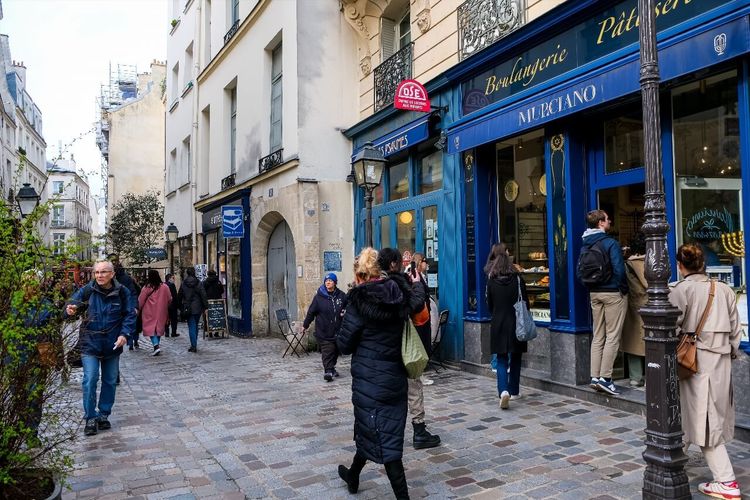
The Marais neighborhood is one of Paris's rare sectors to have preserved most of its medieval and Renaissance architecture intact, notably thanks to classification of numerous private mansions from the 19th century. Walking its streets is an open-air architecture lesson, open at any time.
The place des Vosges (Place des Vosges, 75004 Paris, rated 4.6/5 on Google for 32,622 reviews), created by Henri IV between 1605 and 1612, is Paris's oldest planned square. Its 36 houses of red brick and white stone arranged in perfect square of 140 meters per side define an architectural style that would be copied throughout Europe. Access is free; covered ground-floor galleries house art galleries and tea salons where consumption isn't required for entry.
In surrounding streets, seek Hôtel de Sully (62 rue Saint-Antoine): Renaissance interior courtyard accessible during daytime, with allegorical sculptures on façades representing four seasons and four elements. It's one of the capital's most beautiful courtyards open to public, virtually unknown to passing tourists. Rue des Rosiers, heart of Parisian Ashkenazi Jewish community, is cultural and olfactory immersion without the slightest cost: kosher caterers, Eastern European bakeries, specialized bookshops.
18. Latin Quarter and Sorbonne
The Latin Quarter owes its name to the language in which Sorbonne students and professors communicated in Middle Ages. Today still, the neighborhood lives to university rhythm: specialized bookshops, philosophical cafés, amphitheaters. Walking its streets is an activity in itself.
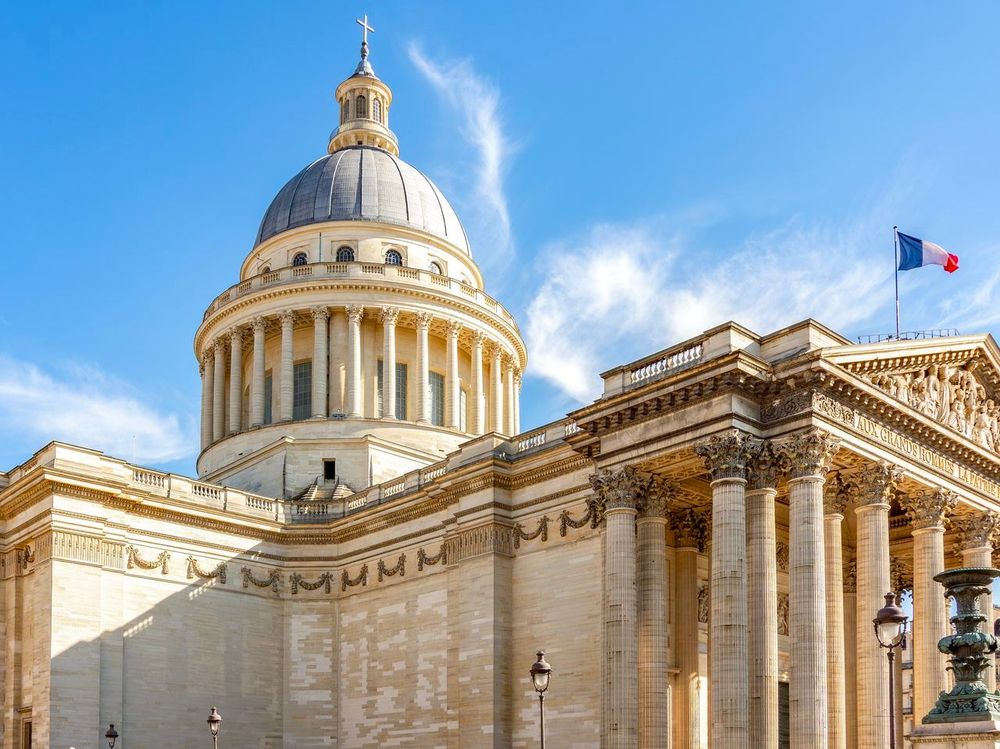
The Sorbonne facade (Université Paris-Sorbonne, founded in 1257) faces place de la Sorbonne, whose café terraces are ideal observation post on student life. The courtyard of honor is accessible during heritage days or certain public events. The Panthéon sits atop montagne Sainte-Geneviève; its access is paid, but the neoclassical façade and surrounding square remain free access. The Latin Quarter audio-guided tour covers this sector with audio commentaries on Sorbonne, Panthéon and Luxembourg gardens.
The rue Mouffetard, "la Mouffe" for Parisians, is one of the capital's oldest commercial streets, following a Roman road route. Its open-air market (Tuesday-Saturday morning) can be strolled without spending anything: cheese stalls, vegetables, fishmongers. End with square René-Viviani (4th) to see one of Paris's oldest trees, a false acacia robinia planted around 1602, supported by concrete crutches since the 1930s.
A bit further east, the Arènes de Lutèce (5th, rue de Navarre) are remnants of a 2nd-century AD Gallo-Roman amphitheater. Discovered in 1869 during Baron Haussmann's works, they now welcome pétanque players and strollers in the adjacent square, free entry year-round. You are a few streets from the Panthéon and the Luxembourg Gardens, which our Latin Quarter audio-guided tour links across 23 stops.
19. Trocadéro and Its View of Eiffel Tower
Paris's most famous view costs nothing. The Trocadéro, place du Trocadéro et de Chaillot, between two wings of the eponymous palace, offers frontal perspective on Eiffel Tower from terraced gardens adorned with fountains, golden statues and basins.
Best time is early morning (before 8am), when Trocadéro is still calm and low-angled light gilds Eiffel Tower. In evening, the sparkling night view from gardens is Paris lovers' favorite rendezvous. Trocadéro fountain jets operate during daytime from May to September, a water and light spectacle completing the Tower perspective. Our audio walking tour from place de la Concorde closes on the Eiffel Tower, just across the river from this viewpoint.
20. Paris Covered Passages
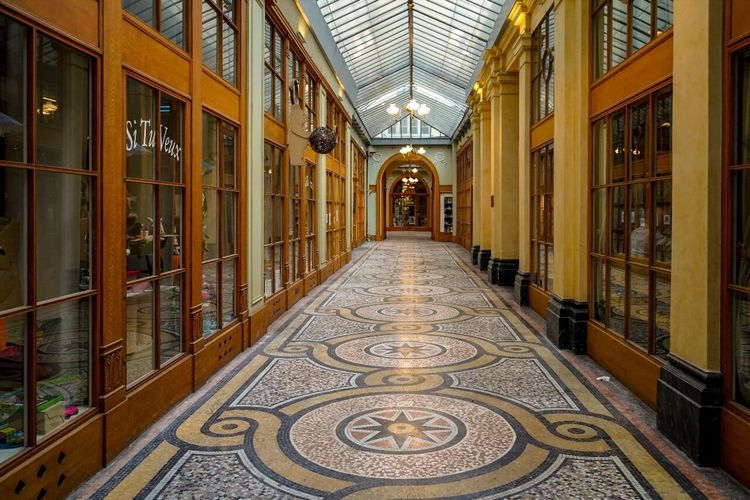
Paris counts about twenty 19th-century covered passages, glazed commercial arcades built between 1800 and 1860, precursors to modern shopping galleries. Some have disappeared, others were destroyed by Haussmann, but the most beautiful are intact and freely accessible.
The Galerie Vivienne (4 Rue des Petits Champs, 75002 Paris, rated 4.6/5 on Google for 6,400 reviews) (75002, between rue Vivienne and rue des Petits Champs) is the most elegant: floor mosaics, ornate glass roof, period bookshops and boutiques. It dates from 1823. The Passage des Panoramas (75002, boulevard Montmartre), inaugurated in 1799, is Paris's oldest covered passage still in activity; its period advertising posters and philatelists create timeless atmosphere.
For immersion in 19th-century popular Paris, seek Passage Brady (75010, boulevard Strasbourg): specialized in Indo-Pakistani cuisine, it concentrates thirty restaurants in covered space with yellow earthenware tiles. Passage du Grand-Cerf (75002, rue Saint-Denis) offers the ensemble's most beautiful glass roof, 11 meters high under glass, and houses independent contemporary art creators. Strolling between these passages in the 2nd arrondissement constitutes a complete half-day without any cost.
21. National Museums on First Sunday of Month
Every first Sunday of the month, between October and March mainly, several major national museums open their permanent collections to all visitors, regardless of nationality. The list includes some of the world's most important institutions.
Notably concerned: Musée d'Orsay (Impressionism and Art Nouveau), Musée de l'Orangerie (Monet's Water Lilies), Centre Pompidou (20th-century contemporary art), Musée de Cluny (medieval arts, Unicorn tapestries), Musée du Quai Branly (primitive arts), Musée Guimet (Asian arts) and several establishments outside Paris. Note: the Louvre no longer practices first Sunday free entry, but offers free access evening on first Friday of month (except July-August), from 6pm to 9pm.
Warning: these openings attract crowds. At Musée d'Orsay particularly, lines can exceed one hour on first Sunday morning. Effective strategy: book time slot online when museum offers it, arrive at opening, or target less crowded museums like Cluny or Guimet. For under-26s from European Union, access to national collections is free year-round, without date restriction.
22. Centre Pompidou and Its Forecourt
The Centre Pompidou is one of Paris's most iconoclastic buildings: its air conditioning pipes, plumbing and electrical cables are exposed outside, color-coded (blue for air, green for water, yellow for electrical circuits, red for circulation). Designed by Renzo Piano and Richard Rogers and inaugurated in 1977, it divided Paris before becoming one of its major attractions.
The forecourt before the Centre is a public life zone open to all: street artists, dancers, improvised concerts, onlookers on steps. Human spectacle is permanent there. The public information library (BPI) within the Centre is accessible without ticket, it's one of Europe's largest public libraries with 2,200 reading places over six levels. National Museum of Modern Art (MNAM) permanent collections are paid, but open to all on first Sunday of month.
The Beaubourg neighborhood around Centre also merits pedestrian exploration: Stravinsky fountain (place Igor-Stravinsky), with its kinetic sculptures and colored water jets by Jean Tinguely and Niki de Saint-Phalle, is freely visible at any time.
23. Seine Quay Booksellers
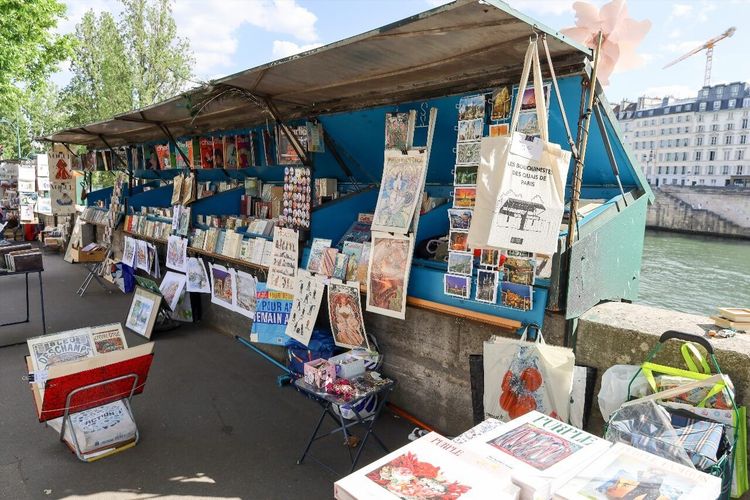
Since the 16th century, booksellers have kept their green metal boxes on Seine quay parapets. Listed on France's intangible cultural heritage inventory since 2019 and candidates for UNESCO recognition, they form a 3-kilometer open-air bookshop, from Hôtel de Ville to quai de la Tournelle.
More than 900 boxes managed by some 240 booksellers offer antique books, engravings, posters, postcards, comic books, out-of-print magazines. Strolling between stalls without buying costs nothing, it's a form of open-air museum where treasures nestle in box depths. Some booksellers specialized in antique geographical maps or 18th-century bound books are destinations from several countries. Open mainly on sunny days, closed during rain and high wind periods.
FAQ
Which Museums Are Really Free Access Permanently in Paris?
Several Parisian museums open their permanent collections for free access year-round, without date conditions: the Museum of Modern Art of Paris (MAM, 16th), the Petit Palais (8th), the Carnavalet Museum (3rd), Victor Hugo's House (4th), the Cognacq-Jay Museum (3rd) and the Museum of Romantic Life (9th). All belong to the Paris City museums network. National museums (Louvre, Orsay, Pompidou) are paid outside occasional arrangements like the first Sunday of the month.
What to Do in Paris Without Spending Anything on Weekends?
On weekends, the Marais, Montmartre and Seine riverbanks are ideal for a day without entry budget. On Sundays, the quays of central districts are partially pedestrianized. The markets of Aligre (12th, Saturday-Sunday morning), place Monge (5th, Wednesday-Friday-Sunday) and the Saint-Ouen flea markets (18th, Saturday-Sunday) are experiences to explore without paying. Buttes-Chaumont park and Jardin des Plantes entertain families without any entry expense.
What Activities to Offer Children in Paris Without Paying?
For children, prioritize the Paris Farm in Vincennes (free-roaming animals), parks with playgrounds (Buttes-Chaumont, Luxembourg, Montsouris), Stravinsky fountain in front of Beaubourg, Sacré-Cœur forecourt from square Louise-Michel lawns, and Paris City museums (Carnavalet, Petit Palais) which offer spaces dedicated to young visitors. Marine Museum and Army Museum at Invalides welcome under-18s without charge permanently.
What to Do in Paris in the Evening Without Paying?
In the evening, the first program to see is illuminations: sparkling Eiffel Tower from Trocadéro or Champ-de-Mars (every hour until 1am in summer). Notre-Dame forecourt after 8pm regains appreciable calm. Seine riverbanks come alive until nightfall in summer. Several theaters offer public rehearsals open to public, check their official websites. Marais neighborhood and its art galleries (often open until 7pm) also constitute cultural evening without cost.
Is Paris Accessible Without Paying for Under-26s?
A large part of national museums is free access for European Union citizens under 26: Louvre, Orsay, Centre Pompidou, Versailles, Cluny, etc. This measure applies to permanent collection year-round. Under-18s access almost all national museums without charge regardless of nationality. Some museums have specific rules, check case by case on their official website.
How to Explore Paris at Your Own Pace With an Audio App?
The Ryo app offers audio-guided tours to explore Paris at your own pace. The main route guides you over 8.9 km with 19 audio commentaries covering major monuments and emblematic neighborhoods. Themed sub-routes cover Montmartre, Père-Lachaise, Latin Quarter and Mona Lisa axis, Notre-Dame. These routes provide historical and cultural context to your walks without guide or paid entry.
Conclusion
Paris is, in many respects, the most generous European capital with budget-conscious visitors. Municipal art museums, MAM, Petit Palais, Carnavalet, hold comparison with international-level paid institutions. Gardens, historic neighborhoods, riverbanks, covered passages, markets and monument-cemeteries compose a program of several full days without spending a euro on entry.
To structure your explorations and enrich them with anecdotes and historical context, our Ryo app provides several audio-guided tours of Paris: a complete 8.9 km version covering main axes, and thematic sub-routes on Montmartre, Père-Lachaise or Latin Quarter. Downloadable directly on your phone, without booking or ticket. Happy exploring.
À lire également