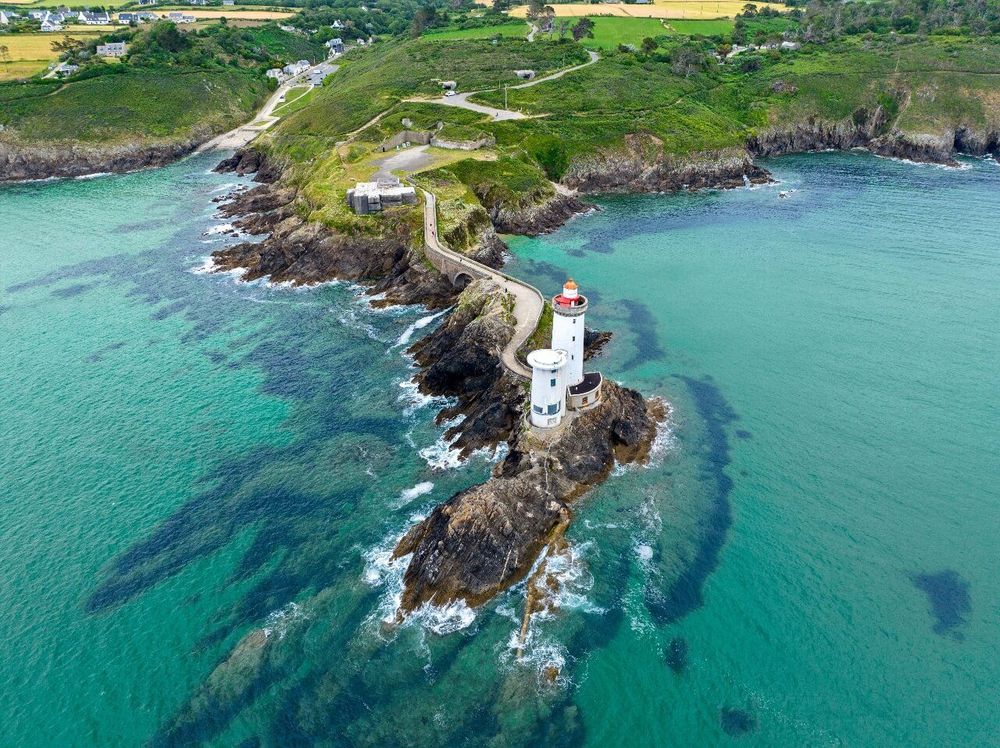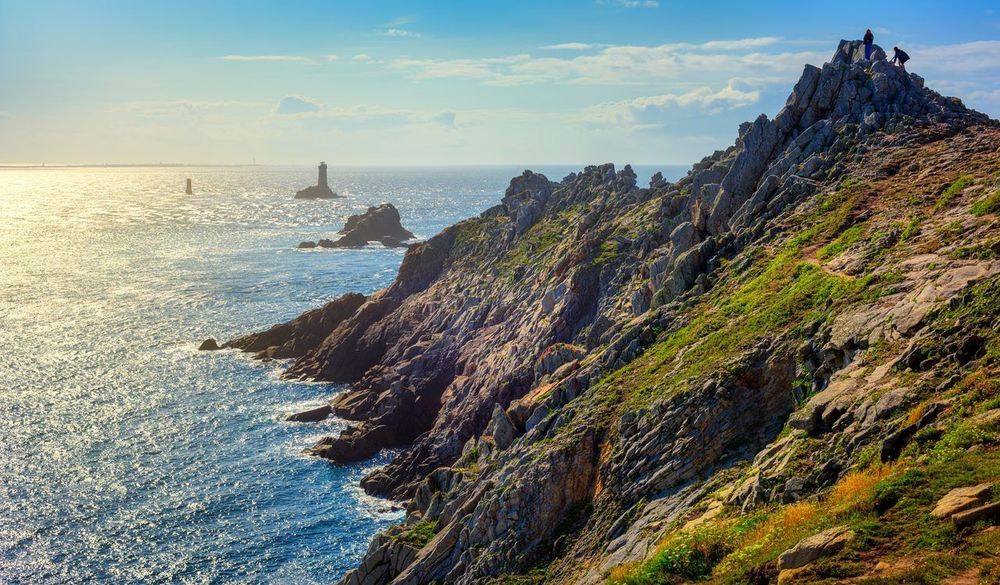
© Shutterstock
 Votre guide Ryo
30 Must-See Places in Finistère to Visit in 2026
Visiting Finistère means going to the ends of the earth: here, the land meets the Atlantic in a crash of cliffs, wind, and sea spray, just as the Gaulish name of this department promises. With 1,700 kilometres of coastline, two massifs of mysterious moorland, islands inhabited by a few hundred souls, and towns that have retained their Breton character, this department remains one of the most spectacular in France. The Ryo app offers audio-guided tours along several of its stops, with historical commentary in your ear, so you can explore Cornouaille or Léon without getting lost in museum notices.
What you will find in this article: a Gothic cathedral whose spires come within centimetres of the facades of neighbouring houses, an archipelago with turquoise waters compared to the Caribbean just 25 kilometres from the coast, lighthouses battered by winds exceeding 120 km/h in winter, a rocky chaos that Arthurian legend claims as Merlin's lair, and the most active artisanal fishing port in France. Thirty stops, from Léon to the Pays Bigouden, to visit Finistère in a structured way and miss none of the must-see highlights of the department.
1. Quimper, Capital of Cornouaille
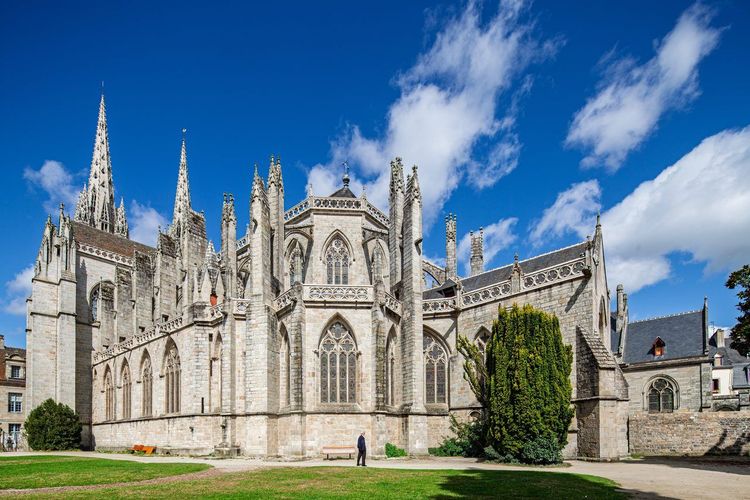
It is impossible to visit Finistère without starting with Quimper, the natural gateway to Cornouaille. Its old town packs a rare density of heritage for a conurbation of 63,000 inhabitants: half-timbered lanes in the Terre-au-Duc quarter, a Gothic cathedral whose nave tilts slightly, renowned museums, and faience workshops still active since the 17th century.
The Cathédrale Saint-Corentin (Place Saint-Corentin, 29000 Quimper, rated 4.6/5 on Google with 6,773 reviews) is worth a visit on its own. Built from the 13th to the 15th century, its two spires rise to 76 metres and pass within a few dozen centimetres of the neighbouring canonical houses, giving it a uniquely compressed silhouette in Brittany. Inside, the Flamboyant Gothic chancel and 15th-century stained glass capture the light in unexpected ways depending on the time of day. The slight deviation of the nave relative to the chancel, visible from the great organ, is not a construction error but a constraint imposed by the houses already in place when the medieval extension was built.
The Halles Saint-François quarter and the banks of the Odet invite a leisurely stroll after visiting the cathedral. Every July, the Festival de Cornouaille transforms the city into a capital of Breton culture for an entire week: festou-noz, bagadoù, and bombarde players fill the cobbled streets. Outside the festivals, the workshops of the HB Henriot faience factory (founded in 1690) welcome guided visits on weekdays and allow you to watch the hand-painted decorations being applied in real time, a craft listed as part of France's intangible cultural heritage.
Allow at least half a day for the historic centre, and a full day if you add the Musée des Beaux-Arts with its paintings from the Pont-Aven school, and the Musée Départemental Breton housed in the former 16th-century episcopal palace. The city has a varied hotel offering, making it a good base from which to explore Locronan, Douarnenez, and Concarneau.
2. The Pointe du Raz
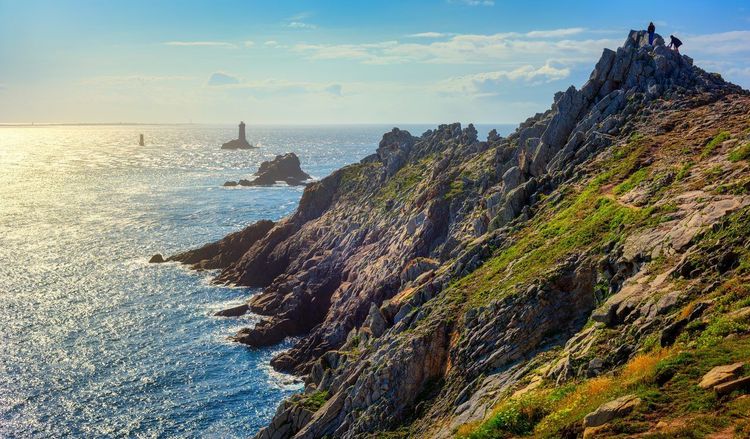
Among the must-see sites, the Pointe du Raz (Route de la Pointe du Raz, 29770 Cléden-Cap-Sizun, rated 4.7/5 on Google with 6,810 reviews) is the most visited natural site in Brittany: 800,000 visitors per year come to this granite headland that plunges into the Atlantic 72 metres above the waves. A Grand Site de France since 2004, it benefits from strict management that has allowed coastal vegetation to recover after decades of intensive trampling.
From the mandatory paid car park (located 2 km from the headland), a path crosses gorse and broom moorland towards the end of the world. On a clear day, the eye reaches as far as the île de Sein, barely 8 kilometres away, and as far as the Glénan in good visibility. The Raz de Sein, the swirling marine current between the headland and the island, made navigation mortally dangerous for sailing ships before the lighthouses were installed: the wreckers of this coast lay in wait for stricken vessels, a practice documented as late as the 19th century.
Bring warm clothing even in summer: the wind never lets up here. The late afternoon light, when the sun strikes the cliffs at an angle from the west, provides the most striking photographs. Avoid Saturdays and Sundays in July and August, when the 2,000 parking spaces reach capacity by 11am.
3. Brest, the City of the Oceans
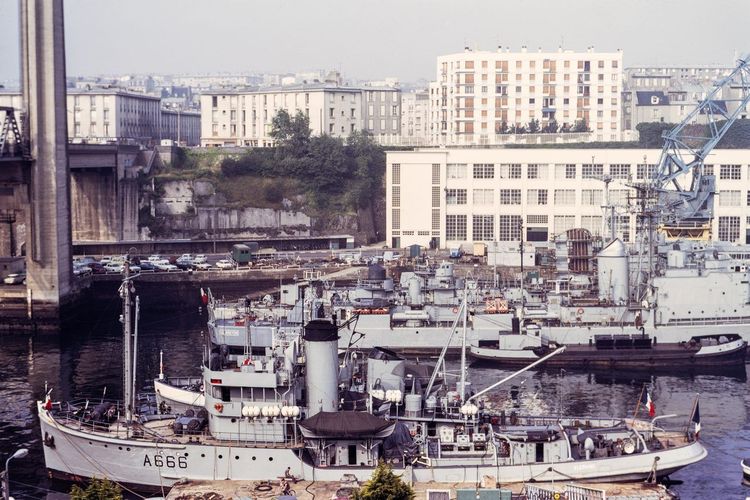
Brest often surprises visitors who expect a charmless rebuilt city. The military town, 86% destroyed by the 1944–1945 bombings, was quickly rebuilt in a sometimes austere functionalist style. Yet it holds assets that few other Breton cities can claim. The Ryo audio guide covers central Brest with anecdotes about the navy and post-war reconstruction that bring the seemingly ordinary facades of the city centre to life.
The Château de Brest (Place du Château, 29200 Brest, rated 4.5/5 on Google with 301 reviews), one of the few buildings to have survived the bombings, houses the Musée National de la Marine. Its collections trace twelve centuries of military presence on the harbour, with models of ships of the line and naval battle paintings of serious museographic quality. The view from the ramparts over the Rade de Brest, one of the world's largest natural harbours at 180 km² of sheltered waters, is worth the climb.
Five kilometres from the centre, Océanopolis remains Brittany's most visited aquarium, with 10,000 animals spread across three themed pavilions. The polar pavilion, with its penguins in a low-temperature reconstructed environment, fascinates adults as much as children. The Pont de Recouvrance, a moveable drawbridge 64 metres high that allows submarines to pass between the harbour and the Penfeld river, still opens regularly and puts on an impressive mechanical display from the quayside.
4. The Crozon Peninsula
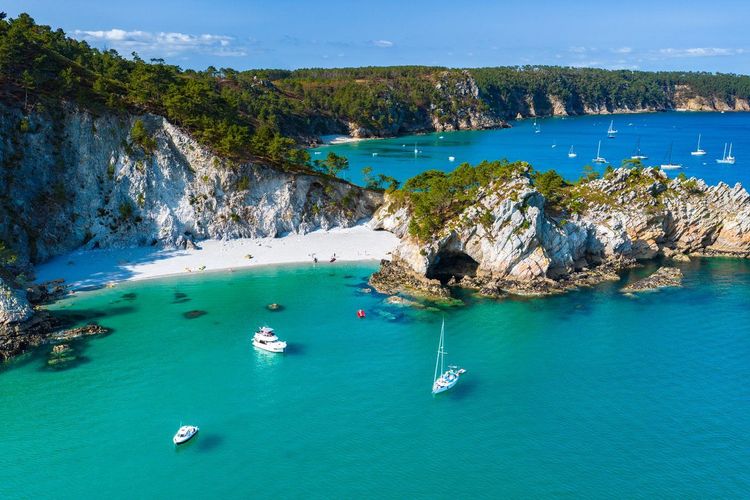
Between the Rade de Brest to the north and the Baie de Douarnenez to the south, the Crozon peninsula concentrates some of Finistère's most spectacular scenery in a strip of land 18 km long. Classified as part of the Parc Naturel Régional d'Armorique, it unfolds red schist cliffs, isolated coves, and panoramas that rival the finest headlands in western Europe.
The Calanques de Penhir (Route des Calanques, 29160 Crozon, rated 4.8/5 on Google with 7,400 reviews) are the showpiece. A series of cliffs drops sheer into the Atlantic, with the "Tas de Pois" – four rocks just breaking the surface – standing before them, obstacles that sailors have learned to avoid for centuries. Access is on foot from the car park, a 20-minute walk along a marked path. Do not venture onto unmarked areas at the cliff edge: rockfalls are frequent and there are no safety nets.
The peninsula deserves at least two days. The village of Crozon makes a practical base with its shops and restaurants, while Camaret-sur-Mer offers its colourful harbour, fishing boats, and the ruins of the UNESCO-listed Vauban tower. The GR34 coastal path, which runs along the entire Breton shoreline, passes through some particularly wild sections here between the Cap de la Chèvre and the Pointe des Espagnols. The peninsula is accessible from Brest by car in 45 minutes or by ferries crossing the harbour in 30 minutes, a far more picturesque option.
5. Concarneau and Its Walled Town
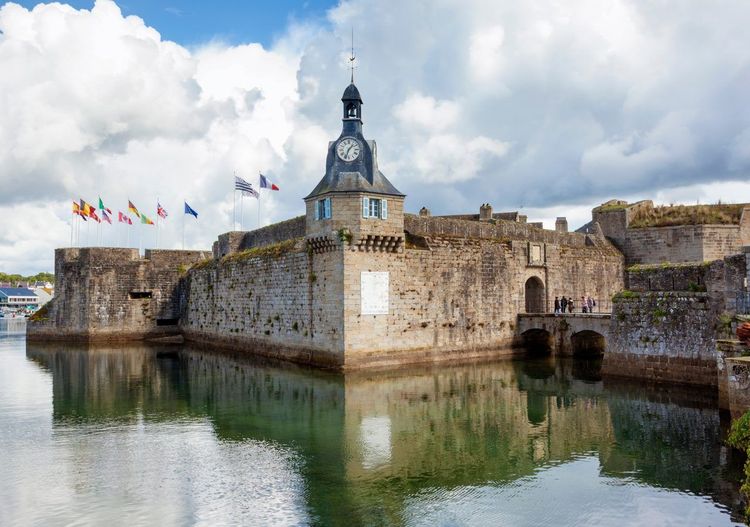
Concarneau holds a special place in the Breton imagination: it is at once an industrial fishing port (the 3rd largest in France by landed tonnage), a family seaside resort, and a medieval walled town that visitors explore from ramparts encircled by the sea.
The ville close occupies an island connected to the harbour by two drawbridges. Its 14th-century ramparts, remodelled by Vauban in the 17th century, enclose a maze of lanes, Breton craft shops, and fish restaurants. Entry is free; only access to the rampart walkway is charged (around 4 euros, open year-round). From the top, the view of the fishing boats returning to port late in the morning is well worth the admission.
The Musée de la Pêche, housed in the ville close's arsenal, traces 5,000 years of maritime history in Cornouaille with an impressive collection of tools and models. Outside the walled town, the Plage des Sables Blancs, 1.5 km on foot, offers fine sand and generally calm waters. Every August, the Festival des Filets Bleus turns the quays into a stage for Breton music – one of France's oldest folk festivals, created in 1905 to support fishermen ruined by a sardine crisis.
6. Locronan, a Medieval Gem
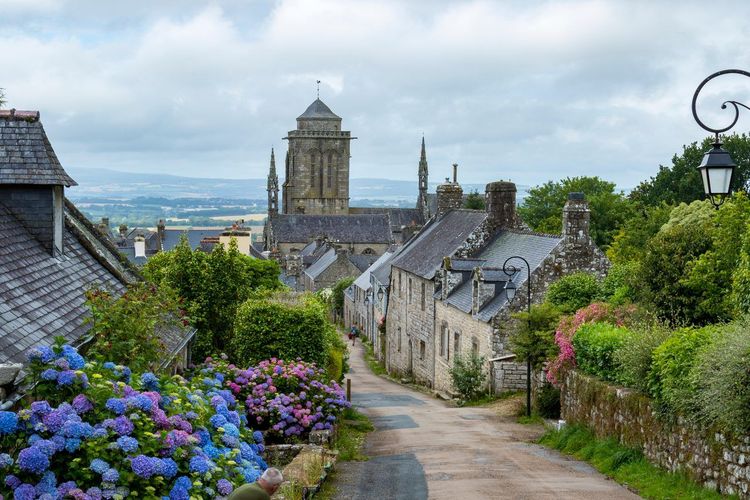
Locronan ranks among the most beautiful villages in France, and that reputation is well deserved. Its central paved square, framed by granite houses from the 16th and 17th centuries that have remained almost entirely intact, exudes an authenticity that few Breton villages have managed to preserve.
The architectural consistency is explained by the town's economic history. Locronan prospered through trade in sailcloth exported to Spanish and British fleets, reaching its peak in the 16th–17th centuries. When Norman and Flemish competition ruined this industry, the town lacked the means to modernise and so kept its period urban fabric intact. The Église Saint-Ronan and the adjoining Chapelle du Pénity date from the 15th century. Inside, a recumbent effigy of the saint depicted as a bishop rests in a side chapel.
The Petite Troménie, an annual procession of 12 km around the mountain of Locronan, takes place every July. The Grande Troménie is held only once every six years. Locronan also hosts around twenty permanent artist galleries. Arrive before 9am or after 6pm in high summer to enjoy the square without the tourist coaches.
7. The Île d'Ouessant
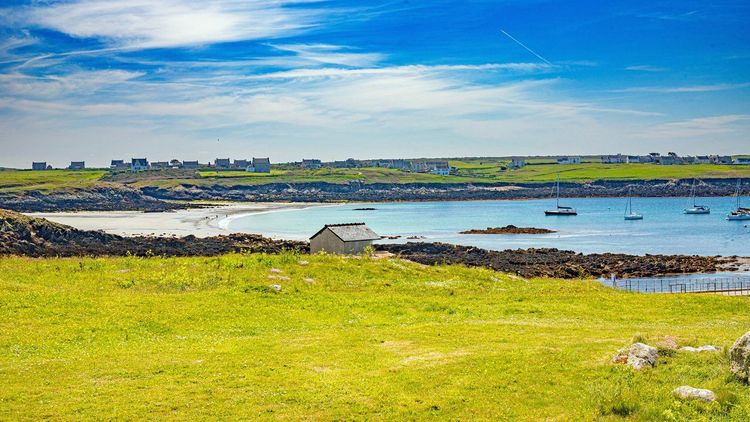
Ouessant is an island apart. Sitting 20 kilometres off the tip of Finistère, swept by average winds of 60 km/h and flanked by the busiest shipping lane in the North Atlantic, it is home to fewer than 800 permanent residents yet attracts tens of thousands of visitors every summer. The crossing from Brest takes 2h30; from Le Conquet, it is reduced to 1 hour.
The Phare du Créac'h (Route du Créac'h, 29242 Ouessant, rated 4.6/5 on Google with 57 reviews) is the island's most iconic landmark. With a light range of 54 kilometres, it is one of the most powerful lighthouses in Europe. It now houses the Musée des Phares et Balises, whose collection of Fresnel lenses and 19th-century optics has an unexpected technological beauty. For Ryo users, the île d'Ouessant is one of the destinations where the app brings together audio resources on Finistère's maritime history.
The island measures 7 km by 4 km, making it possible to cycle around it in half a day. The northern coastal path, between the Phare de la Jument and the Pointe de Pern, crosses jagged cliffs that rival the Irish coast. The Ouessant sheep, one of the smallest indigenous breeds in Europe with their spiral horns, graze freely all over the island. If driving (the rare vehicles that do), be especially cautious on bends.
Book the boat several weeks in advance if you are going in July or August: places are limited on the crossings and weather conditions can cancel departures at the last minute.
8. Roscoff, the Corsair City
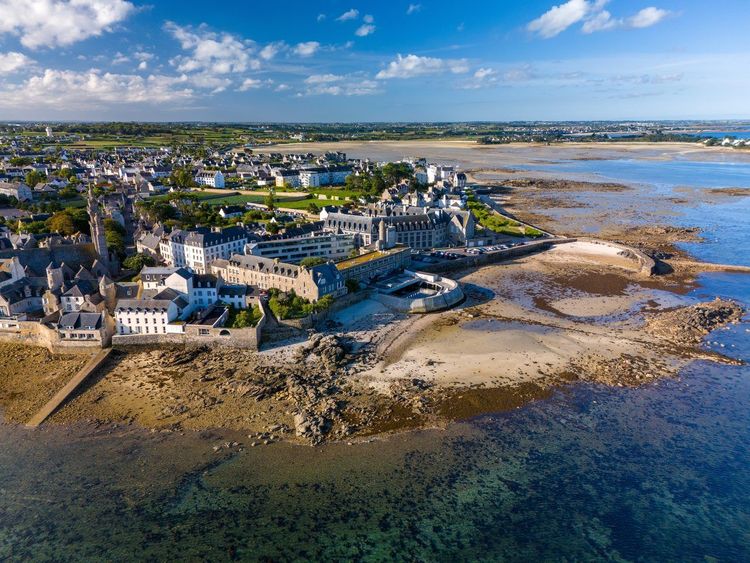
Roscoff looks out over the English Channel from Finistère's northern coast with a distinctive character: a recognised thalassotherapy spa resort, an international ferry port, and a historic town whose granite houses with carved dormers bear witness to past wealth built on trade and privateering.
The Église Notre-Dame-de-Croaz-Batz (16th century) impresses with its Renaissance bell tower adorned with lanterns and balustrades, a style rarely seen in Brittany. Two minutes' walk from the centre, the Jardin Exotique owes its originality to the microclimate created by the Gulf Stream: across 1,700 m², agaves, palm trees, and dragon trees grow alongside the usual Breton vegetation in a combination that baffles northern visitors.
From Roscoff, Brittany Ferries sails to Cork in Ireland (14-hour crossing) and Plymouth in England (6 hours), a practical option for combining Finistère with an island stay.
9. Douarnenez and Its Port-Musée
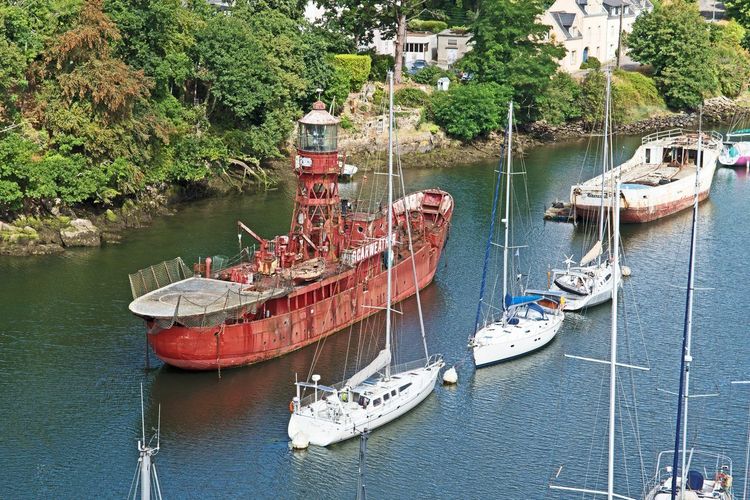
Douarnenez suffers from an unfair reputation as a charmless industrial town. In reality, this former sardine-canning city is home to the world's largest floating museum of traditional boats.
The Port-Musée (Place de l'Enfer, 29100 Douarnenez, rated 4.4/5 on Google with 1,922 reviews) occupies the port of Rosmeur and a covered hall: around a hundred vessels from around the world are gathered here, several of which can be visited from the inside. Adriatic trabaccoli, Breton luggers, and Polynesian boats stand alongside a sea-rescue launch and former tuna boats. In summer, some listed vessels moor in the harbour during maritime festivals. The indoor hall hosts exhibitions on traditional boatbuilding in Cornouaille.
The Baie de Douarnenez, seen from the port of Rosmeur at the end of the day, offers a typically Breton light show on the water. Sunsets here take on an intense orange hue that 19th-century painters, Eugène Boudin among them, attempted to capture on canvas. Allow 2 to 3 hours for the Port-Musée depending on your interest in seafaring.
10. The Monts d'Arrée
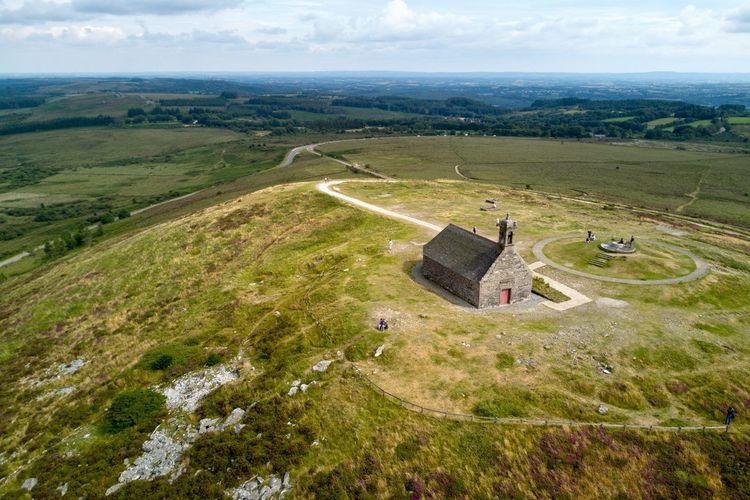
The Monts d'Arrée form the roof of Brittany: the highest point reaches 385 metres (the Roc'h Ruz), far from Alpine altitudes, but compensated by a unique atmosphere halfway between Irish moorland and the landscape of Celtic legend.
The massif belongs to the Parc Naturel Régional d'Armorique, Brittany's largest natural park. Its peat bogs, ponds, and heather moorland shelter rare species: the European otter, the marsh harrier, and several wild orchids that flower between May and July. The Montagne Saint-Michel (Route de la Montagne, 29690 Brasparts, rated 4.8/5 on Google with 434 reviews) (also known as Tuchenn Gador), the second summit at 380 metres, offers a 360-degree panorama over the entire massif from its summit cross when weather permits.
The village of Brasparts serves as a starting point for several marked hiking trails. Lac du Drennec, held back by a dam built in the 1970s, reflects the changing colours of the Breton sky with particular intensity in autumn and winter. Lovers of mythology will be interested to know that the Monts d'Arrée are traditionally associated with the ankou (Death personified in Breton culture), and that several stories from the Barzaz Breiz collection, published in the 19th century, are set here. In winter, fog regularly covers the summits for several consecutive days, an atmosphere that some visitors seek out precisely for its mystical quality.
11. Pont-Aven, the Painters' Town
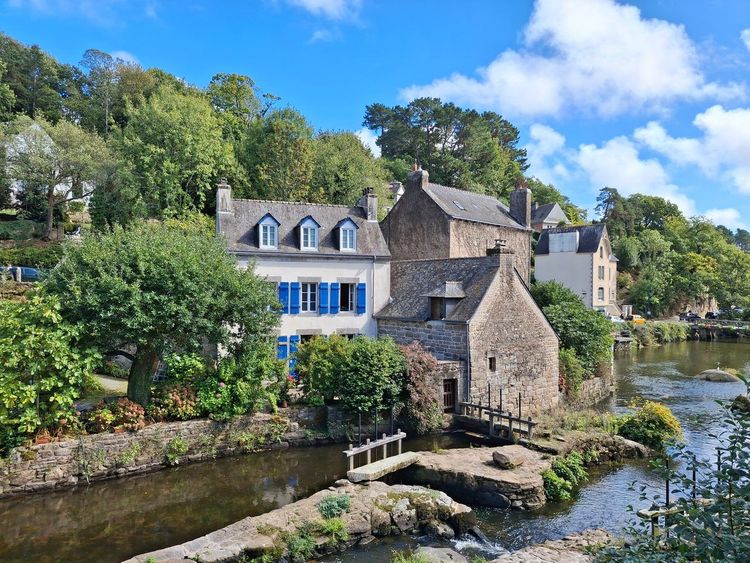
Pont-Aven changed the course of Western art history. It was here that Paul Gauguin, weary of Impressionist conventions, developed in 1886 the first foundations of Synthetism: flat areas of pure colour, black outlines, and simplified forms that would influence Fauvism and Expressionism two decades later.
The Musée de Pont-Aven (Place Julia, 29930 Pont-Aven, rated 4.4/5 on Google with 2,126 reviews) presents works from the school that bore the town's name, with canvases by Paul Sérusier, Émile Bernard, and other painters who stayed here between 1880 and 1900. The permanent collection is solid; it is the annual temporary exhibition, generally centred on an artist from the school or a thematic influence, that justifies the trip for connoisseurs.
The town itself is worth a visit for its 15 mills on the Aven, some of which are still working. The Sentier des Meuniers follows the river between granite buildings and mill wheels on a walk of around 1 hour. Pont-Aven today has more than 40 art galleries for 3,000 inhabitants, one of the highest concentrations of art per capita in France. Do not leave without tasting the galettes de Pont-Aven, shortbread biscuits produced since the 19th century by the Traou Mad bakery.
12. The Glénan Archipelago
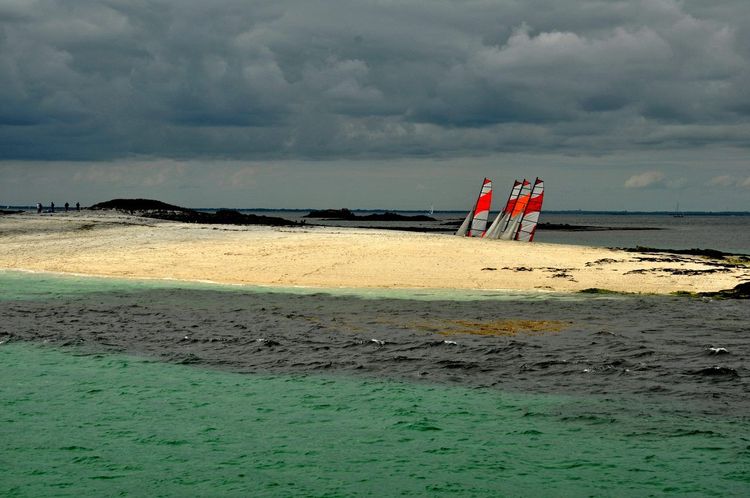
Some 25 kilometres off the southern Finistère coast, the Glénan islands form an archipelago of tropical beauty that feels incongruous at Breton latitudes. The waters of the Saint-Nicolas lagoon, sheltered from waves by the surrounding islets and sandbanks, reach turquoise shades that seem borrowed from the Caribbean rather than the Atlantic.
The archipelago comprises 9 main islands and a constellation of islets. The île de Saint-Nicolas, the most accessible, is home to the Centre Nautique des Glénan, one of Europe's largest sailing schools with 30,000 trainees a year from across the continent. The islet of Penfret has an active lighthouse visible from the mainland in clear weather. Europe's most celebrated endemic flower grows here: the Glénan narcissus, an orange-crowned plant that blooms only here, in March–April, and nowhere else in the world.
Shuttle boats leave from Concarneau, Bénodet, Beg-Meil, or Loctudy between April and September. Allow around 90 minutes for the crossing from Concarneau. Accommodation on the archipelago is very limited (a few beds in a gîte on Saint-Nicolas); the vast majority of visitors make it a day trip and catch the last boat back in the evening.
13. Le Guilvinec, France's Leading Artisanal Fishing Port
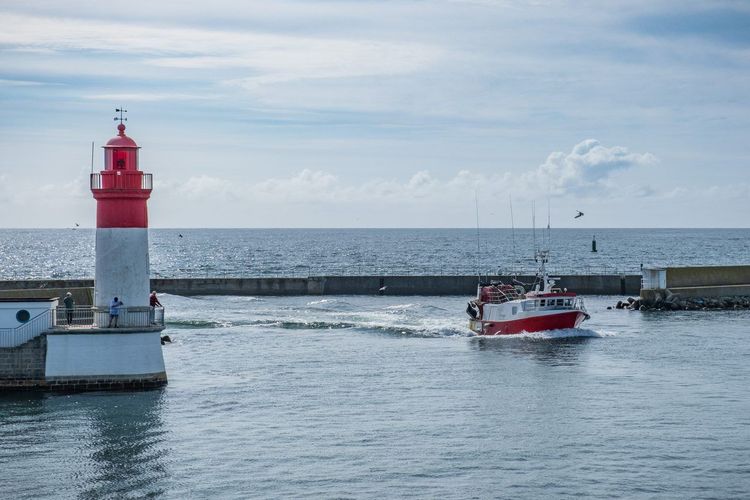
Le Guilvinec proudly holds its title: France's leading artisanal fishing port by volume landed. Here, langoustines caught overnight arrive at dawn on the wholesale market before reaching the plates of Parisian restaurants within twelve hours.
Haliotika, the Cité de la Pêche, is the port's living museum. Guided tours allow visitors to watch the fish auction (around 5pm on weekdays) and go below deck on a trawler to understand the working conditions of fishing crews. The return of the boats in the late afternoon, when crates of langoustines are unloaded from the holds in front of onlookers crowding the quays, is one of the most authentic and unscripted spectacles in Finistère.
Several restaurants at the port serve langoustines boiled within two hours of the auction. Book ahead from June onwards for tables with a view of the quay.
14. The Huelgoat Forest
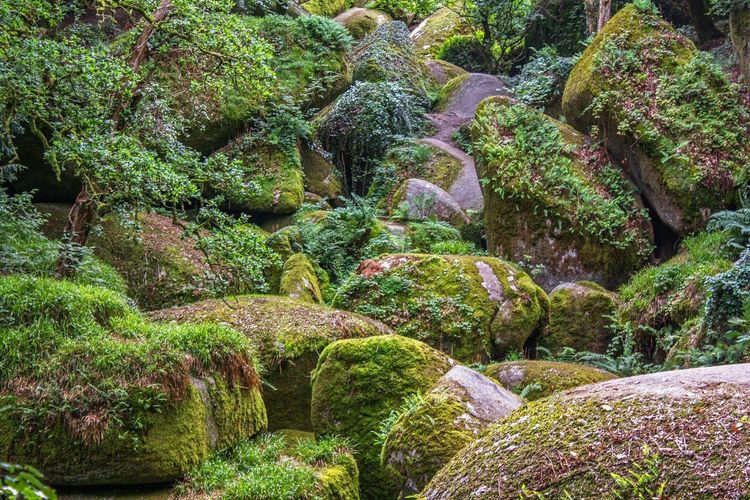
The Huelgoat forest shelters what the Bretons call the "rocky chaos": a natural accumulation of colossal granite boulders that slid into a wooded valley floor during the Quaternary glaciations. Some blocks weigh several hundred tonnes and appear to be held in balance by an invisible force.
The most famous is the Rocher du Champignon (Mushroom Rock), which has balanced on a narrow base for millennia. The Grotte d'Artus (Arthur's Cave), a crevice beneath the boulders, is said by oral tradition to have sheltered King Arthur himself, one of his Breton lairs. The Camp d'Artus, visible a few minutes' walk away, is in fact a Gaulish oppidum from the 2nd century BC, but the Arthurian legend seized upon the name with enthusiasm and the debate between archaeologists and storytellers has continued for two centuries.
The marked path through the chaos takes 1 hour to 1h30 for a complete round trip. The rocks are slippery after rain: wear walking shoes. The Rivière d'Argent, which flows beneath the boulders, creates subterranean waterfall sounds that amplify the otherworldly atmosphere. The village of Huelgoat has a few restaurants and simple accommodation, handy if you combine the chaos with a hike in the Monts d'Arrée.
15. The Abers, Coast of Legends
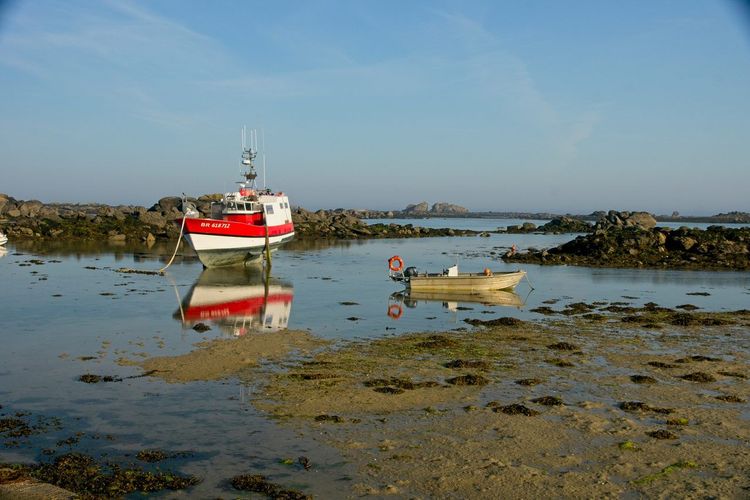
Between Brest and Roscoff, the Léon coast takes the name "Côte des Légendes" (Coast of Legends) and carves out three abers (estuaries in the Breton language) that reach inland: Aber Wrac'h (Village de l'Aber Wrac'h, 29870 Lannilis, rated 5/5 on Google with 9 reviews), Aber Benoît, and Aber Ildut.
The Aber Wrac'h is the widest and most visited: its estuary, reaching 5 kilometres inland, is colonised by sailing boats in summer and by swans and grey herons in winter. The village of Aber Wrac'h, with its low granite houses and marina, has several seafood restaurants open year-round. Aber Benoît, wilder, draws kayakers and walkers seeking spots free from traffic. The Côte des Légendes takes its name from the tales of wreckers and fairies that populate local oral tradition: the Abers area was long feared by sailors for its near-surface islets and unpredictable currents.
16. Penmarc'h and Its Lighthouses
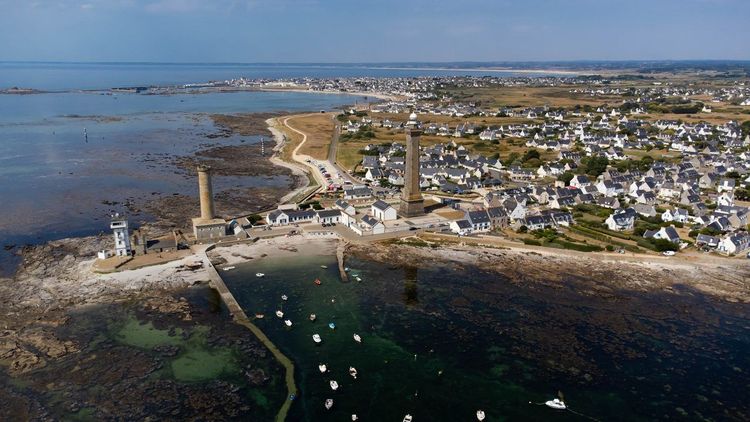
Penmarc'h occupies the southern tip of Finistère with a distinctive atmosphere: flat moorland, lighthouses on the horizon, and the sea omnipresent from every point in the commune.
The Phare d'Eckmühl (Pointe de Penmarc'h, 29760 Penmarc'h, rated 4.6/5 on Google with 7,972 reviews) is the main attraction. Built in 1897 and standing 65 metres tall, it is one of the tallest stone lighthouses in France. It was funded by the Marquise de Blocqueville, daughter of Marshal d'Eckmühl, as a token of gratitude to Brittany for supporting her father after the defeat of 1870. Climbing its 307 steps rewards visitors with a 360-degree view of the headland and, in clear weather, as far as the Glénan archipelago.
A few hundred metres away, the former Penmarc'h lighthouse (known as the "Vieille Tour") has risen 34 metres of grey stone since the 16th century. Visit both: the contrast between the medieval architecture and the bourgeois neo-Gothic of Eckmühl illustrates the evolution of maritime signalling techniques across four centuries. The surrounding landscape, with its cauliflower fields running down to the coastal rocks, is quintessentially Bigouden. On the way back, our Rennes audio walking tour unfolds over 4.7 kilometres, from the Portes Mordelaises to the place des Lices.
17. The Île de Sein
The île de Sein is a geographical marvel: 0.8 km² of granite barely above water level, rising to just 9 metres at its highest point, home to 200 permanent residents, and accessible only from Audierne via a 1-hour crossing.
The island's history is deeply marked by the appeal of 18 June 1940. In the days that followed, virtually all the able-bodied men of fighting age – nearly 130 fishermen – sailed to join de Gaulle in London on their boats. Noting that they represented around a quarter of the first Free French to arrive in London, de Gaulle uttered his now-famous phrase: "l'île de Sein, c'est le quart de la France" (the île de Sein is a quarter of France). The commemorative stele on the Quai des Français Libres and the island's small museum recount this epic story in its most moving human detail.
Life on the island revolves around the harbour and the few lanes of low-slung houses. Motorised vehicles are non-existent: everything is done on foot or by bicycle. Winter storms sometimes partially flood the lowest roads, reminding inhabitants that their island clings to the sea by the narrowest of margins. Take the first boat of the morning (departing around 9:30am from Audierne) to have a full day before the last return in the evening.
18. La Torche Beach
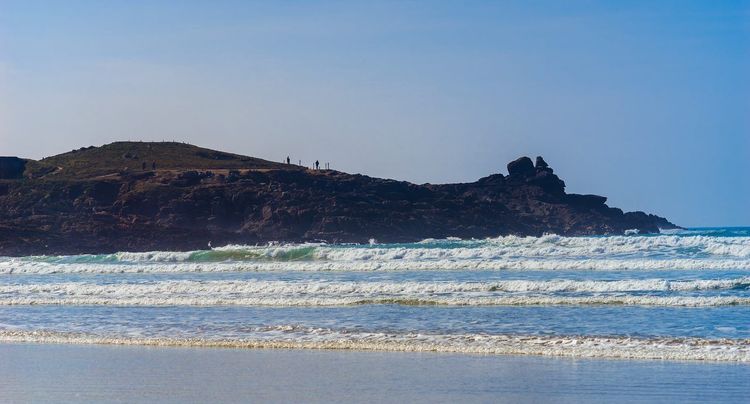
The Plage de la Torche (Pointe de la Torche, 29120 Plomeur, rated 4.8/5 on Google with 90 reviews) is to Penmarc'h what Hossegor is to the Landes: the mecca of Breton surfing. Its long, regular waves, driven by Atlantic low-pressure systems, have hosted Surfing World Championships on several occasions since the 1980s.
The Pointe de la Torche is in fact a dune bar between two bays, creating variable conditions depending on wind direction. When a north-westerly swell hits the main break, intermediate and expert surfers line up at the peak. When the wind shifts, the more sheltered Anse de la Joie bay suits beginners. Near the car park, a solitary menhir has been pointing skyward for around 3,000 years, one of the few megalithic remains in the Pays Bigouden still standing. The beach stretches for 3 km and stays relatively clean even at peak season thanks to natural currents.
19. Bénodet
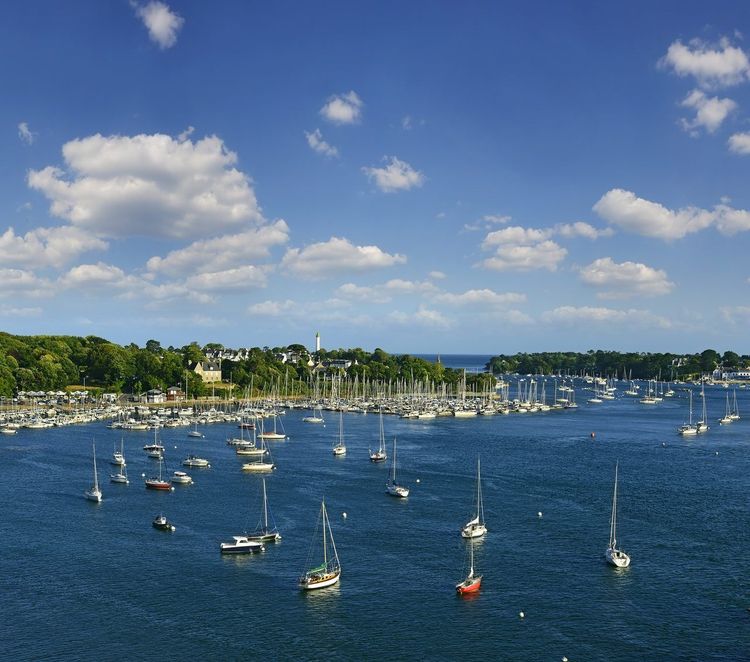
Bénodet is southern Finistère's most elegant seaside resort. Its Odet estuary – a Breton river with dark waters descending from the Montagnes Noires – opens here into a wide tidal channel lined with well-kept Belle Époque villas and gardens.
The Plage du Trez Bellec (Avenue de Trez Bellec, 29950 Bénodet, rated 4.7/5 on Google with 330 reviews), the main sandy beach, stretches for 2 km facing the open sea. It is supervised in July and August and offers relatively mild water for Brittany (between 16 and 20°C depending on the year and the season's weather). Odet river cruises from Bénodet to Quimper are one of the best activities in the area: the boat travels upriver for 1h30 between wooded banks dotted with manor houses and medieval chapels that the road cannot reach. Several daily departures in season, with on-board commentary.
20. Le Conquet and the Pointe Saint-Mathieu
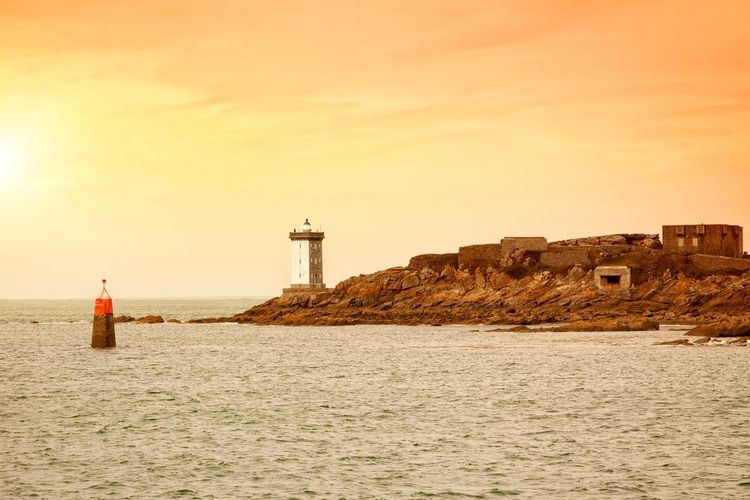
Le Conquet is the embarkation point for Ouessant and the Molène islands. But this village of 2,800 inhabitants deserves a stop in its own right for its seafront granite houses and its panoramic lighthouse covering the entrance to the Rade de Brest.
Some 4 km from Le Conquet, the Pointe Saint-Mathieu (Rue de la Pointe Saint-Mathieu, 29217 Plougonvelin, rated 4.7/5 on Google with 1,834 reviews) is home to one of Brittany's most photographed abbey ruins: a 12th-century Benedictine nave rises against the Atlantic sky, flanked by an active lighthouse built on its own walls in the 19th century. The Abbaye Saint-Mathieu de Fine-Terre, founded according to tradition in the 6th century, is said to have kept the relic of Saint Matthew's head until the Wars of Religion. The ruins and lighthouse can be visited in 45 minutes; the view over the Mer d'Iroise and, in clear weather, the île d'Ouessant makes the short trip from Le Conquet well worthwhile.
21. The Pointe du Millier
The Pointe du Millier marks the eastern tip of the Baie de Douarnenez, between Douarnenez and the Crozon peninsula. Less well known than the Pointe du Raz (a few kilometres to the south-west), it offers a comparable view over the bay in a tranquillity that the more famous sites no longer enjoy.
The Phare du Millier (Pointe du Millier, 29790 Beuzec-Cap-Sizun, rated 4.7/5 on Google with 624 reviews), red and white, stands at the end of a 30-minute path from the car park. The trail follows a ridge from which the eye takes in simultaneously the Baie de Douarnenez to the north and the first cliffs of Cap Sizun to the south. The spot is known for dolphin-watching, as dolphins regularly follow the fishing boats on their morning outings. You can reach the Pointe du Raz from here via the GR34 in 3 hours of walking along the coastal path.
22. The Calvary of Tronoën
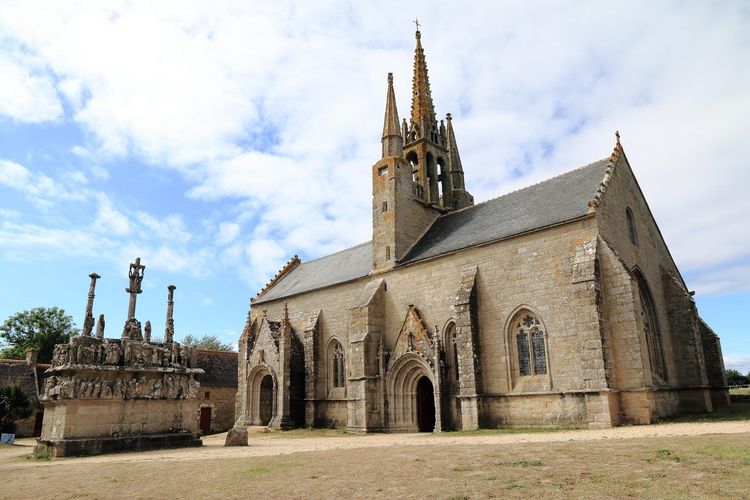
The calvary of Tronoën (Route de Tronoën, 29120 Saint-Jean-Trolimon, rated 4.5/5 on Google with 1,154 reviews), at Saint-Jean-Trolimon, is the oldest monumental calvary in Brittany and one of the oldest in France: its bas-reliefs depicting the Passion of Christ were carved in the 15th century in local granite that shows only modest signs of erosion after six centuries.
The monument rises 6 metres on a windy coastal plain, facing the Chapelle Notre-Dame-de-Tronoën. The Nativity scene on the pedestal is considered by art historians to be a masterpiece of Breton Gothic sculpture for the quality of its drapery and the expressiveness of the faces. A pardon takes place here every last Sunday in August: a procession and blessing that keep alive a centuries-old tradition on a plain open to the sea wind.
23. The Tréompan Dunes
At Ploudalmézeau, on Finistère's northern coast, the Tréompan dunes (Plage de Tréompan, 29830 Ploudalmézeau, rated 4.6/5 on Google with 16 reviews) offer one of the department's rare preserved dune landscapes. The site is listed and managed by the Conservatoire du Littoral, which restricts motorised access.
The beach, facing north-west, receives the prevailing Atlantic winds that have built these dunes over the centuries. Clumps of marram grass, the grass that anchors the sand, can be found here, along with a few dune orchids in spring. Swimming is inadvisable (no supervision, strong currents) but the spectacle of waves whipped up by winter storms is impressive from October to March. Ornithologists appreciate the area for observing migrating seabirds.
24. Névez and the Port of Rosbras
The commune of Névez, between Concarneau and Pont-Aven, hides a harbour that long featured in the accounts of painters frequenting the coast in the 19th century.
Rosbras is Névez's hamlet-port: a few granite houses, pleasure boats, and lobster pots on the quays. It is above all the starting point for kayak trips to the Raguenès islands and the Plage de Raguenès, accessible on foot from the mainland only at low tide. The coastal path runs through the area between Névez and Port-Manec'h over 8 km of rias and rocky inlets, one of the GR34's least-visited sections.
25. The Cap Sizun Ornithological Reserve
Between the Pointe du Raz and the Pointe du Van, the Cap Sizun ornithological reserve (Route de la Pointe du Van, 29770 Goulien, rated 4.7/5 on Google with 750 reviews) has protected since 1959 colonies of northern gannets, European shags, and kittiwakes nesting on the coastal cliffs.
The reserve is managed by the Ligue pour la Protection des Oiseaux and is open from mid-March to the end of August only. Observation hides set back from the cliff edge allow visitors to see nests from just a few metres without disturbing the birds. The spectacle of 400 to 600 pairs of gannets and kittiwakes in full nesting season (May–June) is breathtaking. The Pointe du Van, a few kilometres away, offers panoramas comparable to those of the Pointe du Raz in near-solitude even in July.
26. Saint-Pol-de-Léon
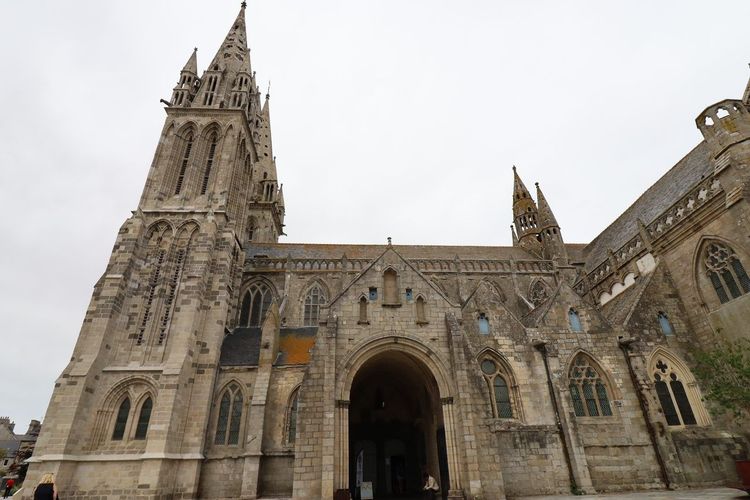
Saint-Pol-de-Léon was the religious capital of Breton Léon for centuries. Its historic centre preserves two Gothic monuments that justify a stop.
The Cathédrale Saint-Paul-Aurélien (Rue de la Cathédrale, 29250 Saint-Pol-de-Léon, rated 4.6/5 on Google with 1,083 reviews) (13th–18th century) features a Norman Gothic chancel influenced by Coutances Cathedral, with slender proportions remarkable for Brittany. Even more striking, the Chapelle du Kreisker and its openwork spire of 78 metres have dominated the town since the 14th century: it is Brittany's tallest spire, whose design has been copied on around forty other bell towers across northern Finistère. The town is also France's leading vegetable market for Breton cauliflowers and artichokes, a living legacy of the Léon plain.
27. Landerneau and Its Inhabited Bridge
Landerneau deserves a stop that is often absent from tourist itineraries. Its Pont de Rohan (Pont de Rohan, 29800 Landerneau, rated 4.5/5 on Google with 2,000 reviews), built in 1510, is one of the few inhabited bridges still in existence in western Europe.
Four half-timbered medieval houses cling to the bridge deck above the Élorn river, one of which now houses a restaurant. The concept – houses built on a bridge in the manner of Florence's Ponte Vecchio – is an architectural rarity well worth photographing from the quays. The town also houses the Fonds Hélène et Édouard Leclerc pour la Culture, a contemporary art centre opened in 2012 in the restored former Capuchin convent, which has become the leading cultural destination in western France with major exhibitions throughout the year. A remarkable surprise for a town of 16,000 inhabitants.
28. Morlaix and Its Parish Closes
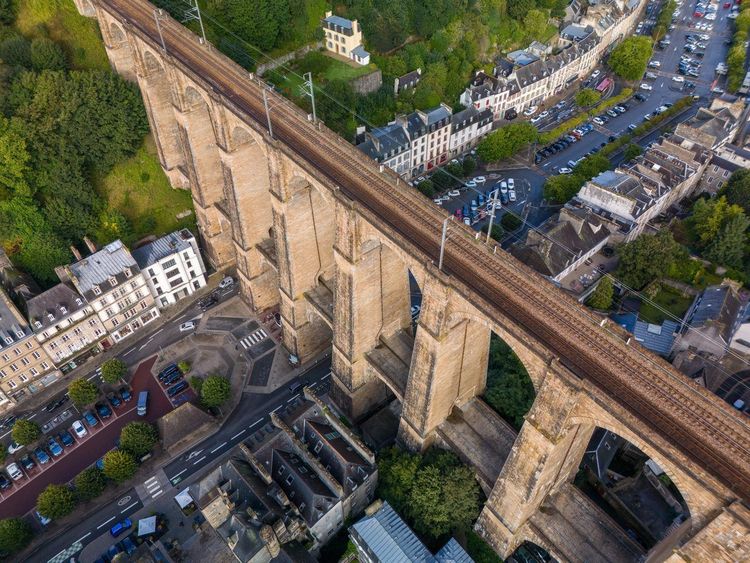
Morlaix is dominated by a railway viaduct 285 metres long and 58 metres high, built in 1863, which straddles the town with its two superimposed rows of arches. From the lanes of the old town, the perspective on this stone giant is striking.
The old town retains several "maisons à pondalez", those large Breton bourgeois townhouses with an inner courtyard and a spiral staircase visible from the street. But the true treasure of the Morlaix region lies in the immediate surroundings: the parish closes of Saint-Thégonnec, Guimiliau, and Lampaul-Guimiliau are three monumental ensembles from the 16th–17th centuries combining a triumphal arch, an ossuary, a calvary, and a church within a single granite enclosure. The enclosure at Saint-Thégonnec in particular is listed as a historic monument for its calvary peopled with 120 sculpted figures. Allow half a day to visit all three sites in a loop from Morlaix.
29. Châteaulin and the Aulne
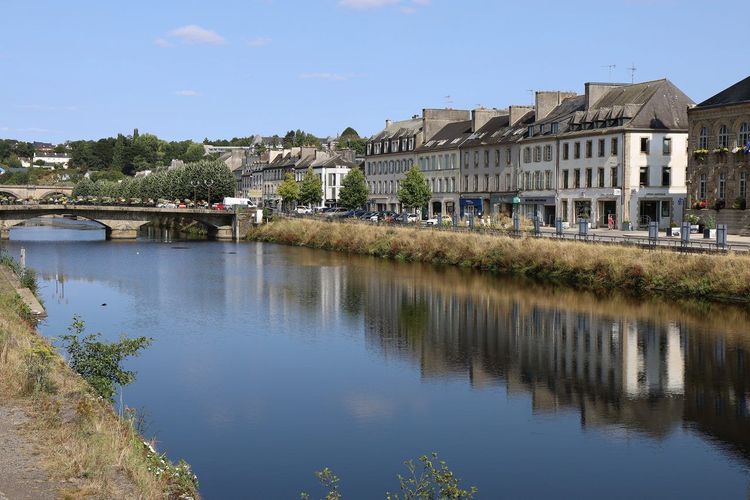
Châteaulin is a little-visited town whose main reason to stop is the Aulne river. This salmon river that runs through the town beneath the willows is one of Brittany's most celebrated for fly fishing.
Anglers come from across Europe to try to catch the salmon that run the Aulne between November and March. Non-anglers will enjoy the towpaths that follow the river for several kilometres in both directions. The Chapelle Notre-Dame, to the east of the town on a hill, offers a panorama over the bend the Aulne makes in the green plain below – a viewpoint used by 19th-century Breton landscape painters.
30. Saint-Guénolé and Its Rocks
Saint-Guénolé, a hamlet of Penmarc'h, has one of southern Finistère's most jagged coastlines. Its pinkish-grey granite rocks, polished by the ocean over millennia, form natural sculptures that waves highlight in white foam at the slightest swell.
The Musée Préhistorique Finistérien (Rue du Phare, 29760 Penmarc'h, rated 4.1/5 on Google with 142 reviews), housed in a former seaside villa, presents collections of flint tools, polished axes, and bronze jewellery found along the Bigouden coastline. Archaeological excavations in this area have revealed continuous human occupation for 6,000 years. The coastal road between Saint-Guénolé and the Pointe de Penmarc'h offers views of low rocks where grey seals sometimes haul out in winter to rest.
FAQ
How long does it take to visit Finistère?
A week is the minimum to cover the essentials without rushing. In 3 days, you can trace a triangle of Quimper – Crozon peninsula – Brest, taking in the major sites of each area. For the islands (Ouessant, Sein, Glénan), allow additional full days: each crossing takes at least an hour, and weather conditions can delay departures.
What is the best time to visit Finistère?
May, June, and September offer the best balance: fewer crowds than in July–August, ideal Breton light for photography, and mild temperatures between 15 and 20°C. July–August is lively but crowded at popular sites. Winter rewards lovers of wild landscapes and dramatic weather, but several sea crossings to the islands are suspended.
How do you get around Finistère?
A car remains essential for reaching the scattered coastal sites. The Breizhgo public transport network serves the main cities but barely reaches the headlands and peninsulas. Cycling works well on the Crozon peninsula and around Ouessant. Crossings to the islands (Ouessant from Brest or Le Conquet, Sein from Audierne, Glénan from Concarneau) are exclusively by boat.
What to visit in northern Finistère in a week?
From Brest, organise your stay around the Crozon peninsula, Ouessant (a full day), the Abers, Roscoff, Saint-Pol-de-Léon, and the parish closes around Morlaix. The Monts d'Arrée fit naturally between Léon and Cornouaille for an inland crossing from north to south.
Where to stay when visiting Finistère?
Quimper and Brest are the two main hotel hubs with the best range of services. For the coasts, Douarnenez, Concarneau, and Bénodet have the highest concentration of accommodation. On the islands, book several months in advance in summer: available beds number in the dozens, not hundreds, and allocations go quickly once bookings open in January.
Are Finistère's natural sites free to visit?
The vast majority of natural sites are freely accessible: the Crozon peninsula, the Pointe du Raz (paid parking but the site itself is free), beaches, the Abers, and the GR34 coastal path. Museums, lighthouse climbs, and certain managed sites (the cap Sizun ornithological reserve, the Port-Musée de Douarnenez) charge admission, generally between 3 and 12 euros per adult depending on the site.
To plan your stay, the Ryo app brings together audio commentary on several historical and urban stops in Finistère. To extend your exploration of Brittany beyond the department, the Ryo guide to the most beautiful villages around Rennes lists other regional gems within easy reach. Whether you have three days or three weeks, Finistère always rewards curious travellers who stray from the beaten path: behind every headland hides a cove, and behind every village a forgotten chapel with its story of sailors and Breton saints.
À lire également