© Shutterstock
 Votre guide Ryo
The Most Beautiful Villages to Visit Around Rennes in 2026
You don't need to cross all of Brittany to find villages that take your breath away. Less than an hour and a half from Rennes, a dozen medieval hamlets, lakeside towns and green havens are waiting to be explored, and most of them remain largely overlooked by the usual tourist circuits. Looking for the most beautiful villages around Rennes? You're about to discover a 15th-century citadel with near-intact ramparts, a village perched on the banks of the Rance listed among France's most beautiful, a forest where Arthurian legend still feels alive in every clearing, and a town entirely devoted to books with around fifteen bookshops for barely 650 inhabitants. Before you set off by car, download our audio walking tour of Rennes, the Ryo audio guide to the Breton capital: it covers the city across 26 points of interest over 4.7 km and makes an excellent starting point before venturing into the surrounding area. This guide takes you to twelve iconic villages, with the must-sees, distances from the Breton capital and practical tips to plan your day trip for each one.
Vitré, the Best-Preserved Medieval Citadel
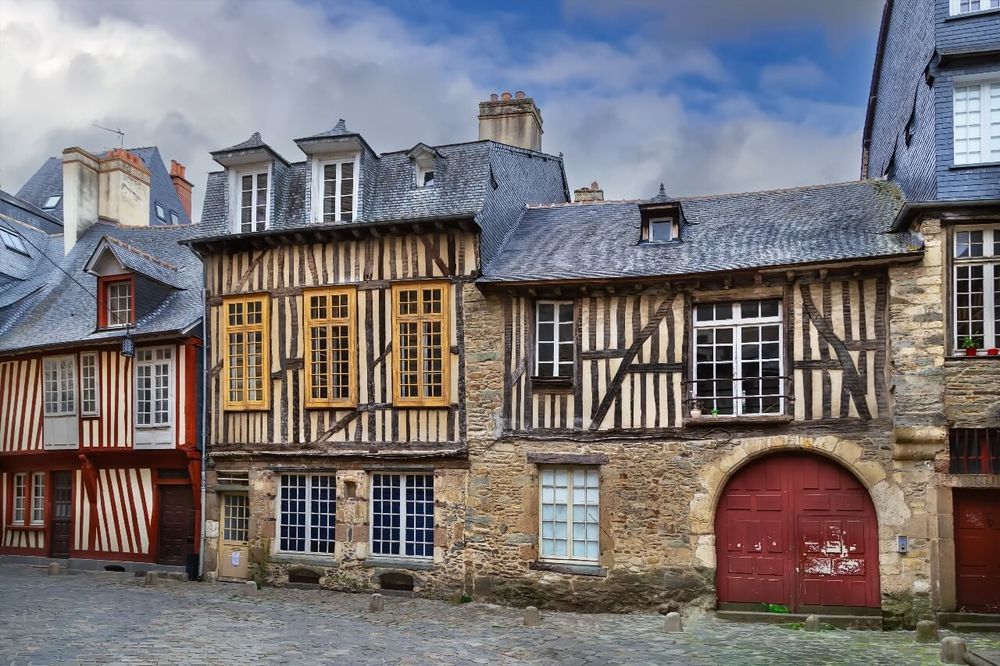
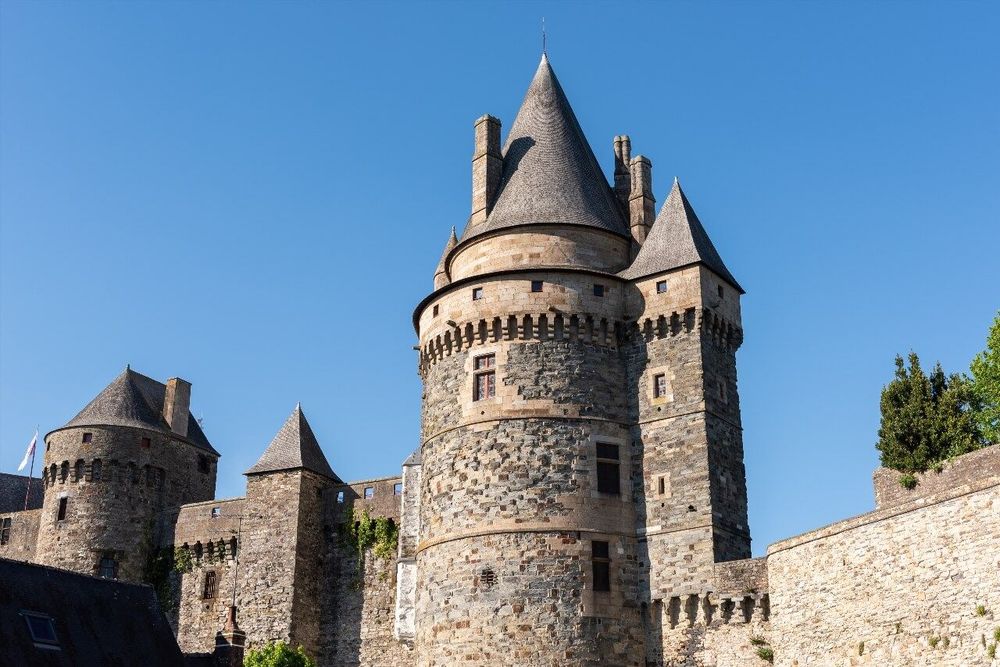
Just 32 km east of Rennes, Vitré is often cited as the best-preserved medieval town in all of Brittany, and the claim is no exaggeration. Its 14th-century ramparts still fully encircle the old town: 1,200 metres of walls with towers, a wall walk and moats, all in dark granite and perfectly restored. The triangular castle that dominates the town has survived every war and now houses a museum whose collections include the renowned Vitré earthenware, well-regarded enough to feature in national collections.
The old town can be explored on foot in two to three hours without any effort. The Rue de la Baudrairie, cobbled and lined with half-timbered houses from the 15th and 16th centuries, is one of the best-preserved medieval streets in the region. Climb up to the rampart terrace to see the slate rooftops and the castle silhouetted against the Breton countryside — the kind of panorama that stays with you. The Saturday morning market in the covered market hall adds a slice of local life far removed from the frozen scenery of museum towns.
Vitré is accessible by TER train from Rennes in 30 minutes, making it the easiest day trip in this guide. Plan to have lunch on site — several restaurants offer menus that showcase buckwheat galettes and Ille-et-Vilaine produce.
Dinan, the Corsair Town 1 Hour from Rennes
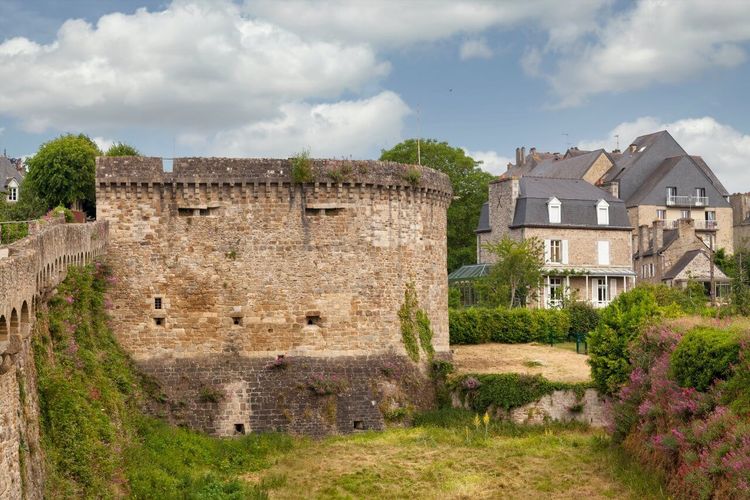
Dinan stands out as the flagship excursion in this guide: 57 km to the north, the medieval town perches on a rocky spur 75 metres above the Rance, connected to the port by a cobbled street of more than a hundred steps. The 3 km of 14th-century ramparts surrounding the historic centre are among the best preserved in Brittany — you can walk the entire circuit along the wall walk.
The historic centre boasts an exceptional density of half-timbered houses, particularly around the Place des Merciers and the Rue de la Ferronnerie. The Basilique Saint-Sauveur houses the tomb containing the heart of Bertrand du Guesclin, the famous Constable of France born in the region — a historical curiosity that illuminates his entire military career. Walking down to the port of Dinan (Rue du Quai, 22100 Dinan, rated 4.7/5 on Google from 4,466 reviews) along the Grande Rue, you pass through several centuries of architecture without ever leaving the medieval perimeter.
The port on the banks of the Rance is worth the trip in itself: moored barges, riverside restaurants, and in summer the option to rent a kayak and paddle upstream to Léhon, the abbey village two kilometres upstream. If you'd like to explore the Breton coastline after Dinan, our article on the most beautiful beaches in Brittany gives you the best nearby options.
Saint-Suliac, the Village Perched Above the Rance
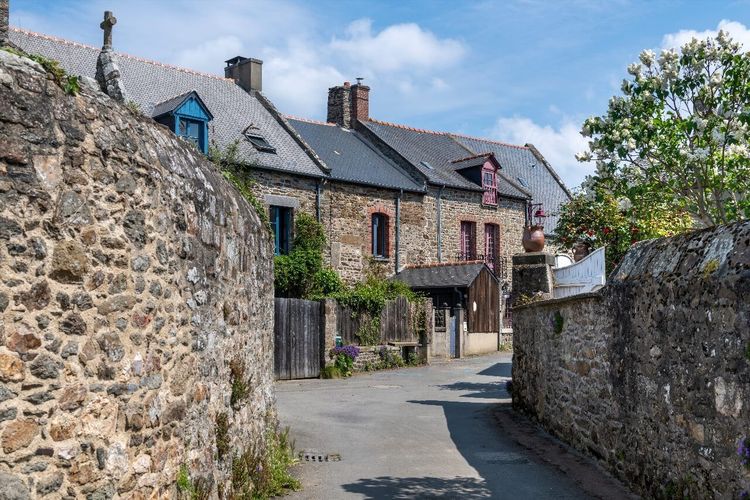
Listed among the Most Beautiful Villages of France since 1999 — a label awarded to fewer than 180 communes in the country — Saint-Suliac overlooks the Rance estuary 52 km north of Rennes. This granite fishermen's village can be explored in an hour's leisurely stroll, and it is precisely its modest scale that gives it its charm: no vast car parks, no invasive souvenir shops, just narrow lanes that open onto breathtaking views of the river.
The essential walk is up to the Mont Garrot, a 69-metre hill overlooking the estuary, where you'll find traces of an ancient monastery and an 1894 oratory. On a clear day, you can see as far as Saint-Malo to the north. The village pairs perfectly with Dinan: plan a morning in the medieval town and lunch facing the Rance at Saint-Suliac, followed by an afternoon walk along the coastal paths that line the estuary.
Combourg, Chateaubriand's Castle
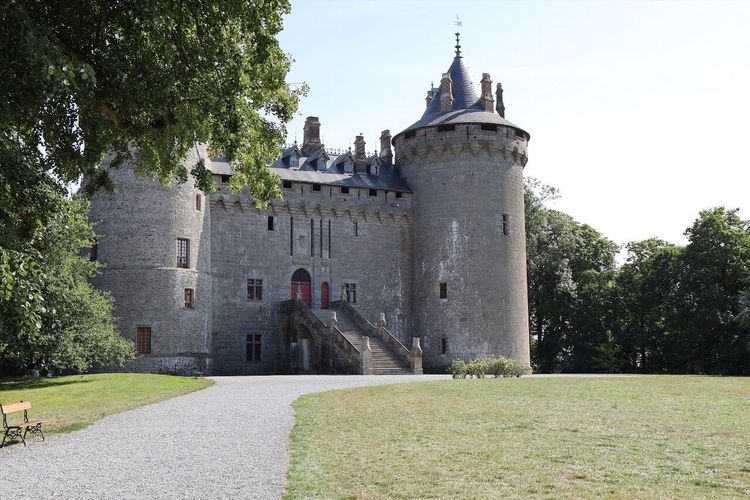
Combourg lies 38 km north of Rennes, beside an artificial lake that reflects the pointed towers of its medieval castle in ideal photographic conditions. This 11th–15th-century castle is best known as the place where François-René de Chateaubriand spent part of his adolescence, an episode the writer immortalised in his Mémoires d'outre-tombe. The guided tour of the interior apartments (open April to October) recounts this solitary childhood with genuine attention to literary context.
The lake at Combourg and its landscaped shores invite a stroll before or after visiting the castle. The town itself is modest but pleasant, with a lively weekly market and a few crêperies that do justice to Breton tradition. Combourg pairs naturally with Bécherel, 20 km to the south-west, for a full day in the Rennes hinterland.
Bécherel, Brittany's Book Town
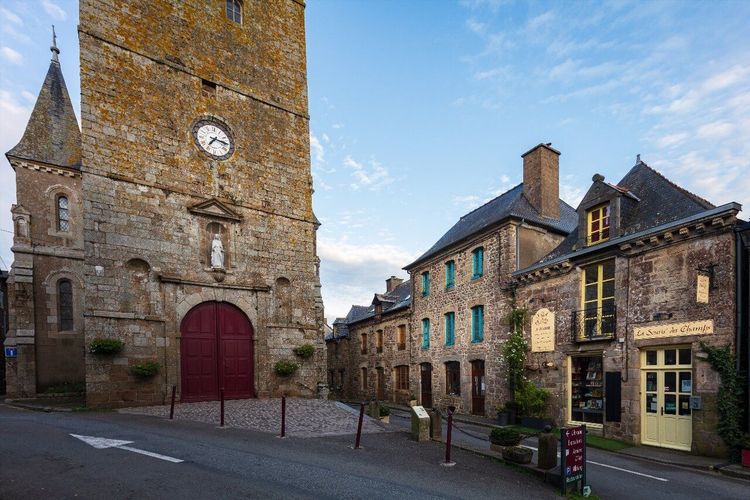
With around 650 inhabitants and around fifteen bookshops, Bécherel holds a record: the highest density of second-hand and independent booksellers per inhabitant in all of Brittany. This hilltop village 30 km north-west of Rennes, listed as a Petite Cité de Caractère, reinvented itself as a 'book town' in the late 1980s — a renaissance that transformed its granite houses into havens for bibliophiles and rare book lovers.
The specialist bookshops (comics, antiquarian books, Breton literature, science fiction) often close on weekdays: plan your visit for the weekend, or better still, the first Sunday of the month, when the book market draws treasure hunters from across the region. The village also offers a fine view over the Ille-et-Vilaine bocage from its partially preserved ramparts.
Châteaugiron, the Fortified Town on Rennes' Doorstep
Just 16 km east of Rennes, Châteaugiron is the closest village to the Breton capital in this guide, and paradoxically one of the least visited by Rennes residents themselves. Its 11th–15th-century medieval castle, with its cylindrical keep dominating the town, is freely accessible from the landscaped gardens at its foot. The association that manages the site offers guided tours at weekends and during the Heritage Days.
The town centre around the Église Saint-Jean-Baptiste features several half-timbered houses from the 15th century, including a remarkable medieval wooden market hall. The Vilaine river runs through the commune and its developed riverbanks make for a pleasant family walk. At this distance, Châteaugiron is easily visited in half a day, or even by bike from Rennes via the metropolitan greenways — an option detailed in our article on the best cycling routes from Rennes.
Paimpont, in the Heart of the Brocéliande Forest
The Brocéliande forest is one of the only forests in France with its own mythology. The Arthurian legends — Merlin the wizard, the fairy Viviane, the Knights of the Round Table — have made their home in these roughly 7,000 hectares of oaks and beeches 38 km west of Rennes, and the village of Paimpont is its natural gateway. If you're curious to discover Brittany beyond the postcards, this forest is a must.
The village itself centres on a 13th-century medieval abbey built beside a pond, with an abbey church housing a Black Madonna and remarkable carved choir stalls. But Paimpont's real draw is the forest: the waymarked trails leaving the village lead to the Fontaine de Barenton (where water is poured to invoke rain according to tradition), the Val sans Retour (Forêt de Brocéliande, 56430 Tréhorenteuc, rated 4.6/5 on Google from 1,379 reviews) (a rocky site associated with the fairy Morgane, with its red schist escarpments) and the Tombeau de Merlin, a megalith repurposed by Arthurian legend.
Allow at least half a day for the forest, a full day if you want to tackle several trails. The Brocéliande tourist office provides detailed maps of the walking routes and themed itineraries based on Arthurian legend.
La Gacilly, the Village of Arts and Nature
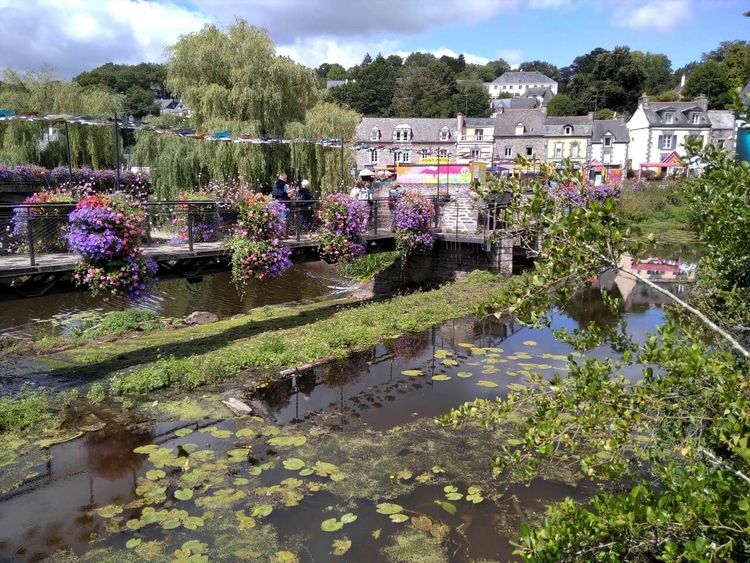
Located 65 km south of Rennes, La Gacilly owes its present-day fame to Yves Rocher: the founder of the cosmetics brand was born here and set up his first greenhouses in the village. But La Gacilly has since developed its own identity around arts and crafts. Its cobbled lanes are home to studios of ceramicists, weavers, glassblowers and jewellers, all open to visitors.
Every summer, La Gacilly hosts the Festival Photo La Gacilly, one of the most important open-air photography festivals in Europe, with giant exhibitions on the walls of houses and along the lanes. The photographs, focusing on major environmental issues, blend seamlessly into the village's green setting. Outside the festival, La Gacilly still makes for a pleasant two-hour stroll, ideal to combine with Josselin, 35 km to the west. And for Rennes itself, our Queen of Brittany audio walking tour counts 26 stops over 4.7 kilometres.
Lohéac, the Unusual Car Museum

Lohéac is unlike any other village in this guide. This small town of 1,400 inhabitants 38 km south of Rennes has neither a medieval castle nor spectacular cliffs, but it is home to the Manoir de l'Automobile, one of the most important car museums in France with over 400 vintage cars displayed across 14,000 m².
The collection covers the history of the automobile from its earliest days to the present, with extremely rare pieces: legendary racing cars, prototypes that never went into production, vehicles that once belonged to famous figures. The town itself is modest, but the museum is well worth the detour for motoring enthusiasts and families looking for an original outing. Allow two to three hours for a full visit.
Léhon, the Abbey on the Banks of the Rance
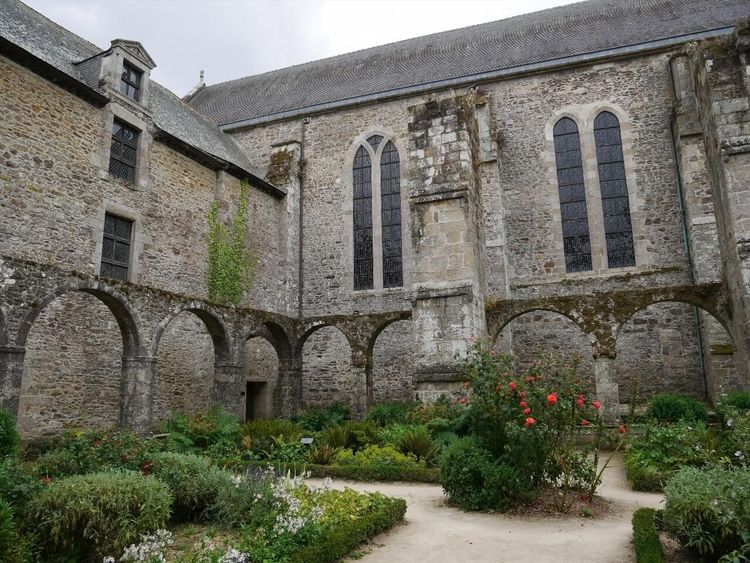
Little known outside the region, Léhon is nonetheless listed as a Petite Cité de Caractère and ranks among the prettiest villages in the Côtes-d'Armor. Just 2 km from Dinan going up the Rance (the commune merged with Dinan in 2018), this valley-floor village is built around a Benedictine abbey founded in the 9th century and a ruined medieval castle that overlooks the whole scene from its hilltop.
The Abbaye Saint-Magloire, partly restored, is open to visitors and retains a beautiful cloister. The monastic garden, reconstructed according to historic plans, displays medicinal plants and medieval kitchen garden species in their original context. The walk along the Rance between Dinan and Léhon is one of the most enjoyable in the area: the ideal way to do it is on foot or by bike, stopping at the Vanne de Léhon, an old lock that still regulates the river level. This is exactly the kind of stop that combines perfectly with the corsair town for a full day out.
La Guerche-de-Bretagne, the Royal Market Town
Located 48 km south-east of Rennes, La Guerche-de-Bretagne is home to one of the oldest markets in France, documented since 1121: nearly nine centuries of weekly trade on the same square, to the point that a local saying claims you can 'find everything there, like at La Guerche.' The medieval arcades lining the square frame this Tuesday market, which still brings together local producers and craftspeople today, in the shadow of the imposing Basilique Notre-Dame.
The town centre of La Guerche features a fine ensemble of half-timbered houses from the 15th and 16th centuries that give it a well-preserved medieval character, without the tourist crowds of a Vitré or a Dinan. If you're passing through the area, combine the visit with a trip to the Lac de la Forge at the entrance to the town, a leisure lake with a watersports centre popular with locals.
Josselin, the Château des Rohan on the Oust
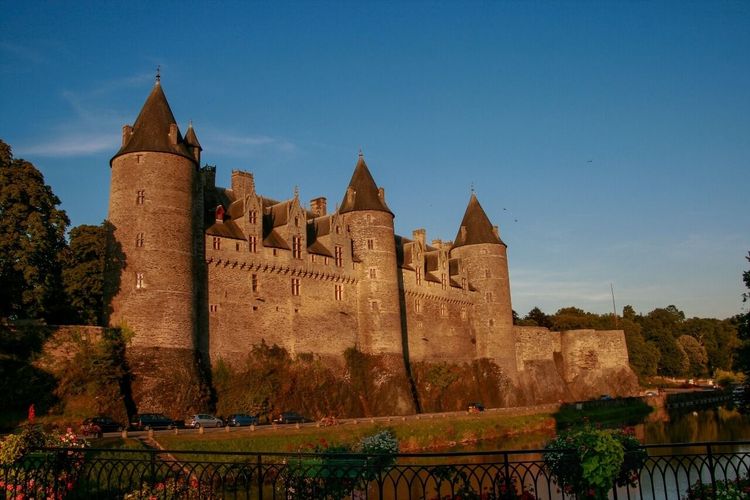
At 76 km west of Rennes, Josselin slightly exceeds the radius of a standard day trip, but every kilometre is worth it. The Château des Rohan, rising directly from a rock face overhanging the Oust river, displays a 15th-century Flamboyant Gothic façade of rare decorative richness: ornate dormers, plant-motif balustrades and French-style slate rooflines compose a silhouette with few equals in Brittany.
The castle is still the property of the de Rohan family and is open to visitors from May to September. The interior blends period furniture, family portraits and collections in rooms decorated in 19th- and 20th-century styles — less impressive than the exterior façade but informative on the history of one of Brittany's great noble families. The Basilique Notre-Dame-du-Roncier (Place Notre-Dame, 56120 Josselin, rated 4.6/5 on Google from 306 reviews), just steps away, houses one of Brittany's most visited Marian shrines. The medieval town linking the two monuments in a ten-minute walk is pleasantly well preserved.
Practical Guide: Distances, Getting There and Best Seasons
Most of these destinations can be visited as a day trip from Rennes, with or without a car depending on the village.
By car, Rennes is ideally located: Châteaugiron at 16 km (20 min), Bécherel at 30 km (35 min), Vitré at 32 km (35 min), Combourg at 38 km (45 min), Paimpont at 38 km (40 min), Lohéac at 38 km (40 min), La Guerche at 48 km (50 min), Saint-Suliac at 52 km (55 min), Dinan at 57 km (1h), Léhon at 58 km (1h), La Gacilly at 65 km (1h). Josselin, at 76 km (1h10), is the guide's most distant destination.
By train, only Vitré is directly accessible from Rennes station in 30 minutes, with frequent TER connections. For Dinan, take a TER to Dol-de-Bretagne then a regional coach, or a direct coach from Rennes. Most other communes are not served by train.
Seasons: these Breton villages can be visited year-round, but spring (May–June) and autumn (September–October) offer the best balance between manageable crowds and favourable weather. The Brocéliande forest is spectacular in autumn for its colours. The Festival Photo La Gacilly runs from June to September, making it the best time to visit that village in particular. To plan a broader itinerary, our guide to Brittany's must-sees gives you an overview of the best times to visit each site.

FAQ
What are the most beautiful villages around Rennes?
The most remarkable villages are Vitré (intact medieval citadel 32 km away), Dinan (corsair town 57 km away), Saint-Suliac (listed as one of France's Most Beautiful Villages, 52 km away), Paimpont (gateway to the Brocéliande forest, 38 km away) and Châteaugiron (medieval castle just 16 km away). For a longer day trip, Josselin and its Gothic castle are well worth the journey at 76 km.
Which medieval village should I visit near Rennes?
For well-preserved medieval architecture, Vitré is the absolute benchmark: intact ramparts, a triangular castle and half-timbered streets. Dinan comes in second with its 3 km of ramparts and Gothic old town. Closer by, Châteaugiron (16 km) offers a castle and 15th-century wooden market hall in a very authentic setting.
Can you visit these villages without a car from Rennes?
Vitré is accessible by train from Rennes in 30 minutes (frequent TER connections). Châteaugiron can be reached by bike via the metropolitan greenways. For the vast majority of other destinations (Dinan, Saint-Suliac, Paimpont, La Gacilly), a car remains necessary or strongly recommended, as the regional bus network is limited on weekends.
Which villages around Rennes are listed as 'Most Beautiful Villages of France'?
Saint-Suliac is the only village in the immediate vicinity of Rennes to hold the official 'Most Beautiful Villages of France' label, which it joined in 1999. This is a highly selective national distinction awarded to fewer than 180 French communes. Vitré is not among them but is regularly cited in rankings of Brittany's finest medieval towns, and Léhon carries the complementary Petite Cité de Caractère label.
Are there unusual villages to visit around Rennes off the beaten track?
Yes: Bécherel (a book town with around fifteen bookshops for roughly 650 inhabitants) is an atypical village that surprises on every visit. Lohéac and its Manoir de l'Automobile (over 400 vintage cars) is the most unexpected excursion in the area. La Gacilly and its open-air photography festival offer a unique cultural experience in a preserved village setting.
Conclusion
From Vitré and its 14th-century ramparts, to the mysterious Brocéliande forest around Paimpont and the book village of Bécherel, the surroundings of the Breton capital form one of the most varied areas for exploration in all of Brittany. Twelve very different villages, each with their own character, history and atmosphere, enough to fill a dozen weekends without ever repeating the same journey. If you're planning your stay from Rennes, start with the Rennes audio-guided tour to discover the Breton capital itself before venturing into the surrounding area: with the Ryo audio guide, that's 26 stops, 1h50 of walking and just as many stories to discover about the city that serves as the base for all these excursions.
À lire également