© Shutterstock
 Votre guide Ryo
Activities in Rennes and Surroundings: The Complete Guide 2026
Activities in Rennes and surroundings hold real surprises. Rennes is full of paradoxes: one of France's youngest regional capitals (a third of its population are students), yet two thousand years of history are etched into its half-timbered facades. You think you know Brittany from its coastline, and then the inland countryside takes you by surprise. The Ryo audio guide of Rennes covers 25 points of interest in 1h50 and 4.7 km -- a taster before venturing out into the surrounding area.
Activities in Rennes and surroundings extend well beyond the city limits. Less than an hour's drive away you'll find the Brocéliande forest with its Arthurian legends, the medieval ramparts of Vitré, the cliffs of the Émeraude coast and the unmistakable silhouette of Mont-Saint-Michel. This guide covers the city-centre highlights, nature escapes, nearby châteaux, Breton gastronomy and practical tips for planning your stay.
The Old Town: Medieval and Very Much Alive
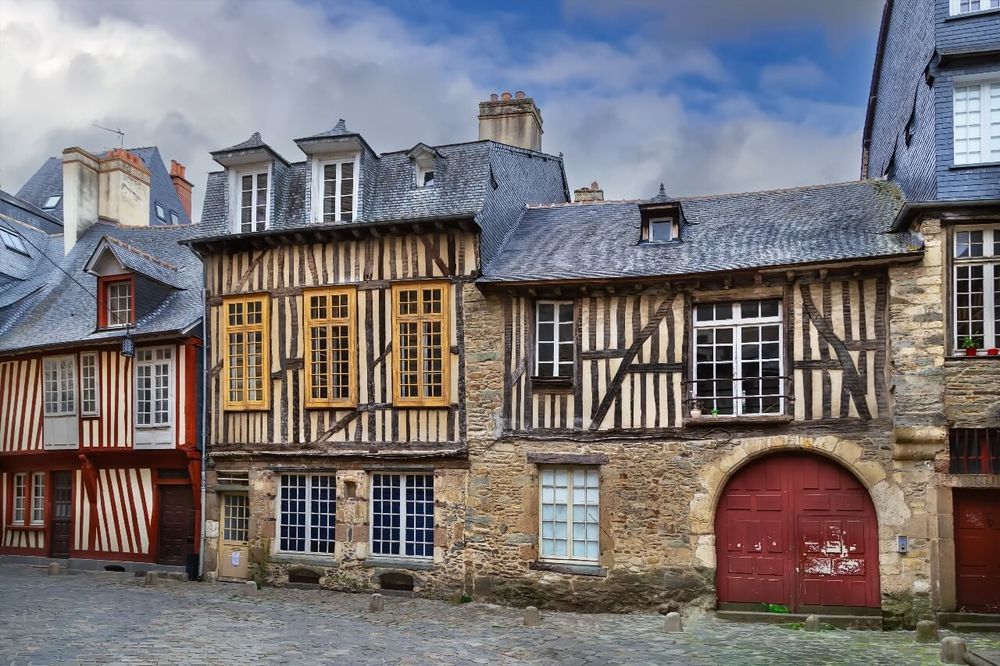
Few French city centres have preserved as many timber-framed houses. The historic heart of Rennes has around 200 half-timbered houses dating from the 15th and 16th centuries, clustered around the place des Lices, rue Saint-Georges and rue du Chapitre. This is no frozen backdrop: the ground floors house cafés, independent bookshops and crêperies that keep the neighbourhood buzzing at all hours.
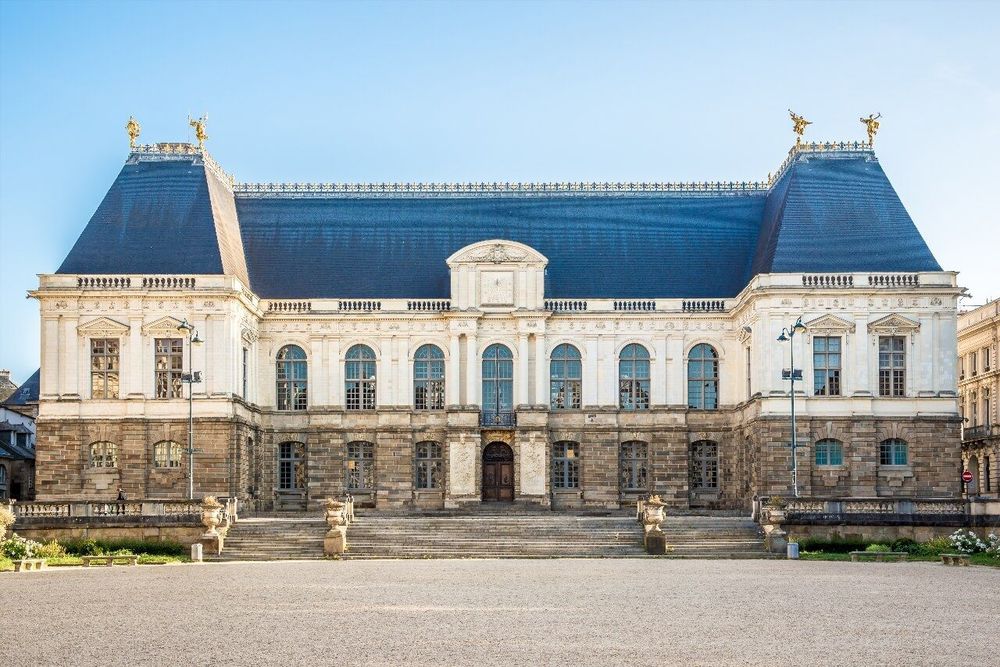
Start with rue Saint-Michel, nicknamed "la rue de la Soif" (the street of thirst) for decades by Rennes' students: a string of relaxed bars that come alive from late afternoon. Just next door, place Sainte-Anne is one of the main social hubs of Rennes, framed by 17th-century facades that have weathered the years remarkably well. The transition from these alleyways to the Parlement de Bretagne is striking: the classical 17th-century facade dominates the place du Palais as though two eras had agreed to coexist without clashing.
The Cathédrale Saint-Pierre closes this walking circuit. Rebuilt from 1787 and completed in 1845 on the foundations of a Romanesque basilica, it houses a remarkably fine 16th-century Flemish altarpiece. The neoclassical facade sits slightly at odds with its medieval surroundings, but the interior is worth a stop. The old town is easy to cover in two hours, more if you make a habit of looking up: the carved details on the half-timbered facades tell as much of a story as any information panel.
A practical tip: avoid Saturday between 11am and 1pm if you're after peace and quiet -- that's peak hour for the nearby Lices market (Place des Lices, 35000 Rennes, rated 4.8/5 on Google from 582 reviews), which spills its visitors into the old town at lunchtime. On weekday mornings, the lanes are all yours.
Parc du Thabor: Ten Hectares in the Heart of the City
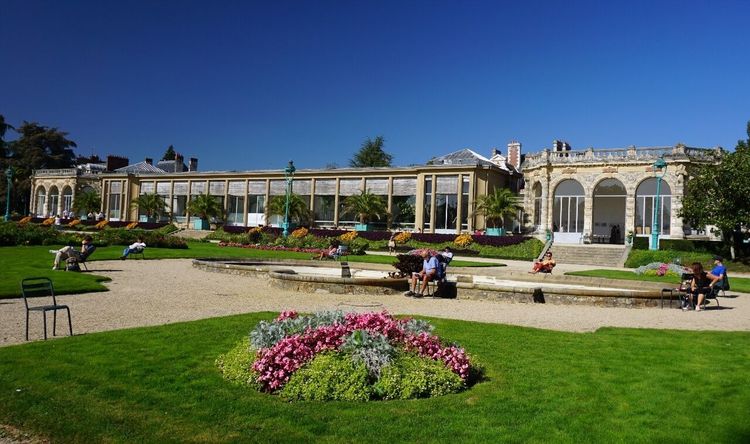
The parc du Thabor (2 Place Saint-Melaine, 35000 Rennes, rated 4.7/5 on Google from 13,663 reviews) is an unexpected haven within the urban fabric of Rennes. Its 10 hectares combine a formal French garden, a rose garden with over 2,000 rose bushes, a botanical garden home to some 3,000 plant species, an aviary and shaded walkways that invite you to slow down. Open year-round and free of charge, it is one of the best-kept public parks in Brittany.
The rose garden is at its peak from May to July. Out of season, the perennial beds and botanical greenhouses still hold interest. The park is also the natural starting point for a walk to the church of Notre-Dame-en-Saint-Melaine, whose 11th-century Romanesque bell tower is visible from the main paths. Allow an hour to stroll at a leisurely pace.
Museums in Rennes: Three Addresses Worth the Visit
Among the activities in Rennes and surroundings, museums hold a place of honour. For a city of 225,000 inhabitants, Rennes has a solid museum offer.
The Musée des Beaux-Arts de Rennes occupies a 19th-century building and brings together paintings, sculptures and drawings spanning five centuries. Works by Rubens, Georges de La Tour and Gauguin are among the highlights, along with an Egyptology and antiquities department that comes as a pleasant surprise. Permanent collection entry €4; free on the first Sunday of the month. A richer collection than its relative national anonymity might suggest.
The Musée de Bretagne, housed in the Champs Libres since 2006, offers a chronological reading of Breton history from prehistoric origins to the present day. The building itself, designed by architect Christian de Portzamparc, is worth a look from the outside. The same complex is home to the Espace des sciences, with interactive temporary exhibitions on natural sciences and technology. This is the address to remember for families with children aged 6 and up.
Finally, the FRAC Bretagne (19 Avenue André Mussat, 35000 Rennes, rated 4.2/5 on Google from 643 reviews) (Fonds Régional d'Art Contemporain), housed in a spectacular building by Odile Decq with its metal mesh facade, is one of the most dynamic contemporary art spaces in western France. Temporary exhibitions change regularly and entry is free on the first Sunday of the month.
The Lices Market: A Saturday Morning Ritual
Every Saturday morning, the place des Lices transforms into one of the largest open-air markets in France. Around 300 producers and traders set up across two hectares between 7:30am and 1pm. The stalls overflow with Breton cheeses, freshly baked kouign-amann, buckwheat galettes, vegetables from local market gardens, artisan ciders and fish landed the night before.
It is as much a social experience as a food shop. Rennes residents come as families, meet up with friends, debate who makes the best artisan butter and end up at a café to put the world to rights. The market works in concentric circles: the covered halls for cheesemongers and butchers, the square for market gardeners, and the surrounding lanes for flowers and bric-a-brac. Arrive before 9am for the full atmosphere. After noon, the stalls pack up quickly.
Culture and Nightlife: Rennes After Dark
The cultural scene in Rennes is dense, especially considering the size of the city.
The Couvent des Jacobins is probably the most photogenic concert venue in Brittany: a 14th-century Gothic nave converted into a congress and concert centre, where ribbed vaulting contrasts with contemporary lighting installations. Classical concerts, exhibitions and conferences take place here throughout the year.
The Théâtre National de Bretagne (TNB) is a major force in contemporary theatre in France. Its programme blends original productions, artist residencies and international co-productions. For live music in more intimate settings, the venues L'Ubu and La Citrouille host local bands and national tours in a neighbourhood atmosphere.
Festivals mark the annual calendar: Les Tombées de la Nuit in early July (a multidisciplinary street festival, one of the most important in France), Les Trans Musicales in December (showcasing world music since 1979), and Mythos in spring for the spoken word arts. Most of these events take over the squares and monuments of the old town, giving them a character all their own.
Sports and Active Leisure: What Gets Rennes Moving

Activities in Rennes and surroundings are not limited to cultural visits. For an active outing in the city, there is no shortage of options. Indoor climbing has grown rapidly in recent years. Several gyms offer introductory sessions with no equipment needed, suitable for groups of all levels. Padel has followed the same trend: a few covered courts on the outskirts offer pay-per-session slots for €15 to €20 per person.
For nature, the banks of the Vilaine are the reliable choice. The river runs through Rennes from north to south, and the cycle paths along its banks extend for several kilometres both upstream and downstream. The Ryo guide to the most beautiful cycling routes around Rennes details the best options for cycling from the city centre, with distances and difficulty levels.
The tree-climbing park at Forêt Adrénaline, about twenty minutes north of Rennes, offers courses for all ages in a woodland setting. A great half-day out for families.
On the Vilaine: Revamped Quays, Kayaking and River Outings
Rennes has a particular relationship with the Vilaine. The river, channelled through the city centre, gradually opens up as you move further out and offers calm stretches of water well suited to water sports.
In the city, quai Chateaubriand (Quai Chateaubriand, 35000 Rennes, rated 4.4/5 on Google from 1,100 reviews) and quai Saint-Cast have been redeveloped in recent years. They now form a continuous riverside promenade, enlivened by terraces and a few moored barges serving as bars or cultural spaces. It is the ideal spot for a break between visits, particularly in the evening when the city lights reflect on the water.
Further downstream, the Canal d'Ille-et-Rance waterway allows for kayaking, paddleboarding or electric boat outings. Several operators offer one-and-a-half-hour trips for up to five people in summer: perfect for a laid-back outing with a real change of scenery. On sunny weekends, the riverbanks become a popular spot for picnics and running among local residents.
Creative and Unusual Activities: Outings off the Beaten Track

On the unusual side, activities in Rennes and surroundings still have a few surprises in store. Rennes offers a range of creative and leisure activities you might not expect from a city of this size.
Escape rooms have proliferated in recent years. Among the most highly regarded, Brain L'Escape Game offers scenarios of progressive difficulty suitable for first-timers and experienced groups alike. For something calmer but equally original, kokedama workshops (the Japanese art of moss ball plants) have multiplied in creative studios in the city centre. Allow an hour and a half to leave with a plant you have shaped yourself.
Ouest-France visits deserve a special mention. The regional daily, based in Rennes, is the best-selling newspaper in France by circulation. Newsroom and printing press tours are offered a few times a year: a behind-the-scenes look at a paper that prints over half a million copies every day.
For technology enthusiasts, Virtual Room Rennes offers multiplayer virtual reality experiences suited to groups. An effective alternative for a rainy evening. And for something truly out of the ordinary, it is possible to pilot an electric aircraft from Rennes-Saint-Jacques aerodrome with specialist operators, after a few hours of training. An experience that stays with you.
Brocéliande: The Legendary Forest 30 km Away
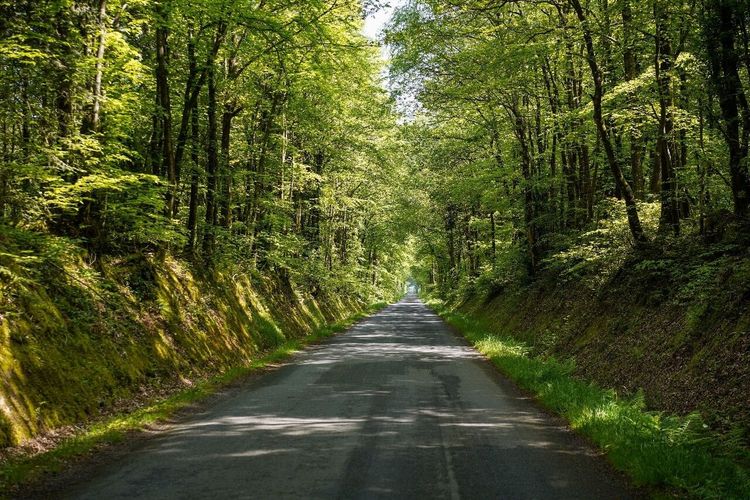
About thirty kilometres west of Rennes, the Paimpont forest -- identified by Arthurian tradition as the forest of Brocéliande -- is one of the most visited natural destinations in Brittany. 9,000 hectares of oak and beech crossed by marked hiking trails, with a dense understorey that filters the light and creates a distinctive atmosphere even in clear weather.
Legendary sites follow one after another. The Val Sans Retour is a steep-sided valley where Morgan le Fay was said to hold unfaithful knights captive -- a 13 km marked trail takes you all the way round, with views over the nearby lake. The fontaine de Barenton, a spring said to bring on storms when water is poured into it, lies deeper in the forest and requires about an extra hour's walk from the Val. Merlin's tomb, in reality a Neolithic dolmen, has become a popular pilgrimage site for centuries: visitors leave flowers, ribbons and various offerings, giving it a strange character somewhere between archaeology and living belief.
The Château de Comper (Château de Comper, 56430 Concoret, rated 4.2/5 on Google from 2,347 reviews), in the heart of the forest, houses the Centre de l'Imaginaire Arthurien: a museum and cultural space dedicated to the legends of Brittany, open from April to October with exhibitions and shows in season. The water surrounding the château makes for a lovely pause after a hike. For those who want to extend the experience beyond a day trip, the Ryo guide to unusual accommodation in Brittany lists options for sleeping in the forest or in houses with a legendary atmosphere just minutes away.
Allow at least half a day for the forest, a full day if you are doing the legends circuit. Bring a picnic: dining options in the forest are limited out of season.
Saint-Malo: The Corsair City 1 Hour from Rennes
Saint-Malo (Avenue du Général Patton, 35400 Saint-Malo, rated 4.1/5 on Google from 20,875 reviews) is 70 km from Rennes, one hour by car or direct train. The corsair city is among the most visited coastal destinations in France, and there is a compelling reason for that: the ramparts encircling the old town (the Intra-Muros) stretch for nearly 2 km and offer a walk above the waves with views out to the offshore islands. Walking the ramparts in a strong wind, with spray rising from the rocks, is an experience in itself.
Inside the ramparts, cobbled lanes hide seafood restaurants, artisan shops and markets selling Breton produce. The birthplace of Chateaubriand can be seen from the outside, in the Saint-Malo neighbourhood itself. On the outskirts of the town, the Grand Aquarium is one of the largest in France: 600 marine species, 10,000 animals, a shark tank and an underwater cinema room that impresses children and adults alike.
At low tide, you can walk out to the Fort National -- built by Vauban in 1689 -- and the Grand Bé, the rocky islet where Chateaubriand is buried. Access depends strictly on the tidal schedule: check before you go, as the sandbanks can close over quickly. Allow a full day for Saint-Malo. The best approach is to set off early in the morning for the ramparts before the crowds arrive, then explore the inside of the town in the afternoon. Back in Rennes, our audio walking tour of the old town covers 4.7 km at whatever pace suits you.
Mont-Saint-Michel: About 1 Hour from Rennes
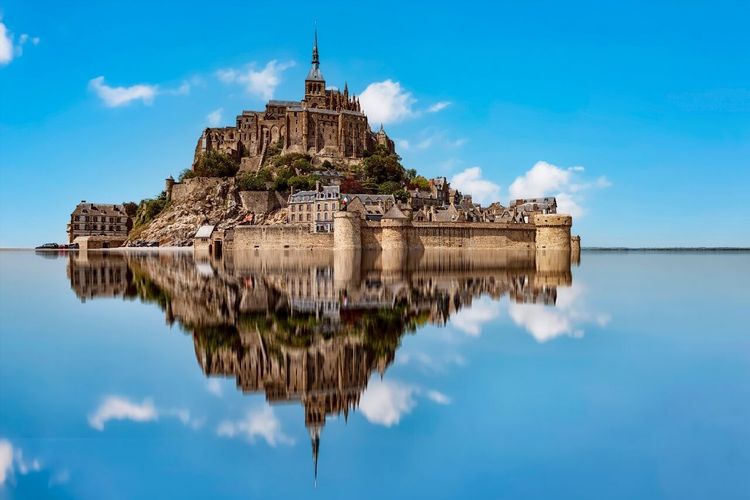
At 85 km from Rennes (just over an hour by car), Mont-Saint-Michel (Mont-Saint-Michel, 50170 Le Mont-Saint-Michel, rated 4.7/5 on Google from 1,960 reviews) is technically in Normandy, but its proximity makes it a natural excursion from the Breton capital. The Benedictine abbey perched on its granite rock dates from the 8th century. It has been a UNESCO World Heritage Site since 1979 and attracts 3 million visitors a year -- which calls for some planning ahead.
Visiting the abbey takes between 1h30 and 2h30. The highlights: the crypts, the 13th-century Gothic cloister and the Salle des Chevaliers. Outside, the bay revealed at low tide is worth exploring. A word of warning: the quicksands of the bay of Mont-Saint-Michel have a well-deserved reputation. Unaccompanied walks across the mudflats remain risky; several operators offer guided crossings from the village of Genêts.
To avoid the crowds, visit on a weekday outside July and August, or arrive at opening time (9am). If you have extra time on the way, the abbey at Dol-de-Bretagne (a Gothic cathedral, roughly halfway) merits a stop. The episcopal city of Dol is often overlooked by standard tourist circuits, which gives it a welcome tranquillity.
The Breton Coastline: Beaches and Cliffs Within Reach of Rennes
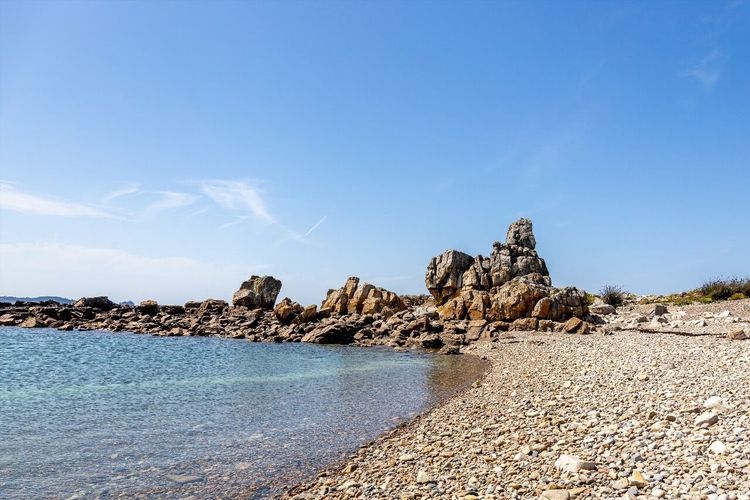
From Rennes, the sea is closer than you might think. Several options present themselves depending on your mood and the time available.
The Émeraude coast (from Saint-Malo to Erquy) is the most accessible: fine sandy beaches, rocky headlands and water that genuinely turns emerald green in fine weather. Dinard, just across the Rance from Saint-Malo, offers the atmosphere of Belle Époque villas and a quieter beach. The shuttle crossing from Saint-Malo takes just five minutes.
Cap Fréhel (Cap Fréhel, 22240 Plévenon, rated 4.8/5 on Google from 595 reviews), 90 km from Rennes, is one of Brittany's most spectacular headlands: 70 metres high, a heather moorland, a pink granite lighthouse and colonies of puffins and gannets. The GR 34 coastal path runs along the headland for several kilometres. For longer, wilder beaches, the most beautiful beaches in Brittany according to Ryo gives a full overview of options from the north coast to the Quiberon peninsula.
Fougères and Vitré: Medieval Châteaux Within 50 km
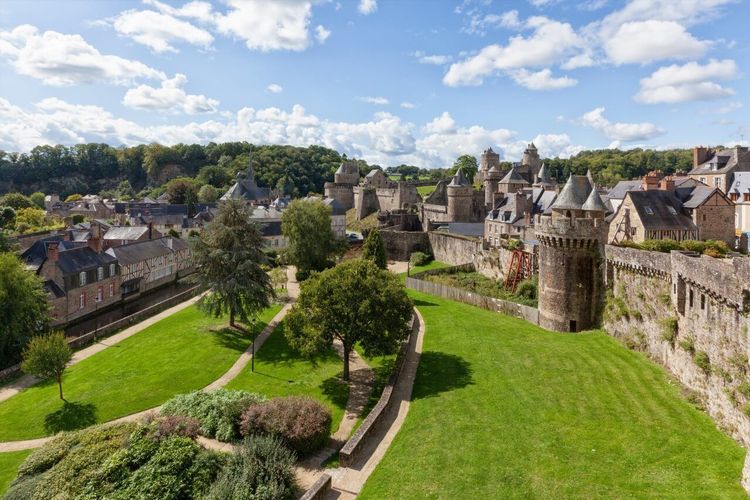
The two nearest towns to Rennes for a plunge into medieval history are Fougères (50 km to the east) and Vitré (36 km to the east). Each deserves a half-day and they can be combined in a single excursion.
The Château de Fougères (Place Pierre Symon, 35300 Fougères, rated 4.6/5 on Google from 12,136 reviews) is one of the largest medieval châteaux in Europe still standing: 13 defensive towers and 2 hectares in area. Built from the 11th century onwards, it served as a romantic backdrop for Victor Hugo and Balzac, who stayed here. The medieval upper town rounds out the visit nicely with its collegiate church of Saint-Sulpice and steep lanes over which the château seems to keep watch.
Vitré sees fewer visitors, which is paradoxically an advantage. Its spur castle, with its three pepperpot towers, is one of the best preserved in Brittany. The town's ramparts have stood up well over time and allow a walk along the former sentry paths. The lower town, with its 15th- and 16th-century half-timbered houses, completes the picture of a medieval town that has remained almost intact.
If these two stops leave you wanting to explore further, the Ryo guide to the most beautiful villages to visit around Rennes lists other lesser-known stops to round out a tour of Ille-et-Vilaine.
Rennais Gastronomy: What You Must Try

Rennes takes its food seriously, and the buckwheat galette is not simply a dish: it is a ritual. The best crêperies in the centre cook with local buckwheat flour and toppings that go well beyond ham and cheese. The simplest quality indicator: if the galette is crisp at the edges and soft in the centre, you are in the right place.
Among regional products, andouilles de Guéméné feature on every serious charcuterie board. Kouign-amann -- literally "butter cake" in Breton -- is a buttery, caramelised pastry not to be confused with a dry Breton biscuit. The Saturday Lices market remains the best gateway into local gastronomy: producers talk about their products and recipes circulate between customers.
For good restaurants, the city centre of Rennes is home to many bistronomic establishments that champion producers from Ille-et-Vilaine. The place des Lices area and the lanes of the old town account for a good number of them. To go further in exploring local produce, the Ryo guide to the culinary specialities of Rennes details the addresses and culinary traditions not to be missed.
Rennes in Practice: Transport, Seasons and Budget
A few logistical pointers for organising your activities in Rennes and surroundings.
When to visit. Rennes can be visited year-round. Summer (June–August) is high season for the coastal surroundings and the Brocéliande forest. Spring (April–May) is ideal for the city, with the Thabor in bloom and mild temperatures. Autumn, quieter, lends itself to museums and gastronomy. Cultural festivals punctuate the calendar from October to June.
Getting around. The metro network (lines A and B) and STAR bus routes cover the city efficiently. A single ticket costs €1.70, a book of 10 trips costs €15.30. For the surrounding area, a car remains the most flexible option, particularly for Brocéliande and Fougères which are poorly served by public transport. The TER train connects Rennes to Saint-Malo in 1h, to Vitré in 30 min and to Dol-de-Bretagne (with a connection for Mont-Saint-Michel) in about 30 min.
Budget. Rennes is a student city with reasonable prices. Budget €30 to €50 per person per day for food (galettes, brasseries). Most parks are free. Museums are affordable (€3 to €8), with free entry on the first Sunday of the month at several venues.
Where to Stay in Rennes and the Surrounding Area
The city centre is home to most 3- and 4-star hotels, with rates between €80 and €150 per night. Hotels near the train station make it easy to catch early TER trains for day trips to Saint-Malo or Vitré. For a different experience, several characterful guesthouses exist in the Ille-et-Vilaine countryside, less than 30 minutes from Rennes. The Ryo guide to unusual accommodation in Brittany lists options for sleeping in forest cabins, restored manor houses or yurts less than an hour from the Breton capital.



FAQ
What can you do in Rennes in a single day?
In the morning, start with the old town: place Sainte-Anne, rue Saint-Michel, Cathédrale Saint-Pierre and the Parlement de Bretagne. If you're there on a Saturday, the Lices market is unmissable before 10am. Follow up with a break in the parc du Thabor. In the afternoon, choose between the Musée des Beaux-Arts and the Champs Libres depending on your interests. End with dinner at a crêperie in the historic centre. The Ryo audio guide of Rennes (25 points of interest, 1h50, 4.7 km) efficiently structures your morning of discovery and highlights details the naked eye might miss.
What activities can you do with children in Rennes?
The Espace des sciences at the Champs Libres is the safe bet for children aged 6 and up: regularly refreshed interactive exhibitions. The parc du Thabor with its aviary delights younger children, especially in spring. For more active outings, the tree-climbing park at Forêt Adrénaline (20 minutes north) offers courses for children from age 3. For a full-day trip, the Grand Aquarium in Saint-Malo (1 hour by road, 600 marine species) and the Château de Fougères (13 towers to explore) are solid options. The Brocéliande forest works particularly well for children aged 8 and up who are drawn to Arthurian legends.
What are the must-see destinations around Rennes?
Among the activities in Rennes and surroundings, trips to the coast and the forest are unmissable. Three destinations stand out for a first visit. Mont-Saint-Michel (85 km, 1h) for the abbey and the bay. Saint-Malo (70 km, 1h) for the ramparts, beaches and Grand Aquarium. The Brocéliande forest (30 km, 30 min) for hiking and Arthurian legends. For medieval history, Vitré (36 km) and Fougères (50 km) are lesser known but very well preserved and far less crowded. The Émeraude coast (Cap Fréhel, Dinard) ideally rounds out a multi-day stay.
When do Rennes' main festivals take place?
Three festivals shape the cultural calendar in Rennes. Les Tombées de la Nuit is held every year in early July: a multidisciplinary street festival (theatre, dance, visual arts) that takes over the city's squares and monuments for free over several days. Les Trans Musicales takes place every year in early December: an international showcase of emerging music since 1979, held across several venues in the city. Mythos, in spring (April–May), is dedicated to the spoken word arts: readings, performances and theatre shows in unexpected locations.
How do you reach the surrounding area from Rennes without a car?
The TER train is the most practical option for Saint-Malo (1h, frequent services from Rennes station) and Vitré (30 min). For Mont-Saint-Michel, tourist coaches run day excursions from Rennes station during the season, with a connection to the site. The Brocéliande forest and Fougères are poorly served by public transport. Coaches do exist but with limited frequency. For these destinations, carpooling or car hire are the most realistic alternatives.
Is there a tourist pass for Rennes?
The Pass Rennes Loisirs bundles discounts on paid leisure activities (not municipal museums). For museums, the Champs Libres offers a family pass and regular reduced rates. Municipal museums (Musée des Beaux-Arts, Musée de Bretagne) are free for under-18s and on the first Sunday of the month for everyone. Admission to the parc du Thabor is always free. For outings in the surrounding area, most châteaux (Fougères, Vitré) offer family rates between €5 and €8 per adult.
Rennes and Its Surroundings: A Region to Discover on Your Own Terms
An often underestimated regional capital, Rennes reveals its treasures to those who take the time to look for them. The old town and its half-timbered houses, the Lices market, the surprising museums, the rich cultural scene -- the city stands on its own merits even before you venture towards the coast or the forests. And that is the advantage of this region: Rennes is not simply a gateway to somewhere else, it is a destination in its own right that then opens onto an exceptional hinterland. Ultimately, activities in Rennes and surroundings make for a stay as rewarding in the city as in the great outdoors.
To structure your exploration on foot, the Ryo audio guide of Rennes offers 26 commented stops over 4.7 km -- a solid thread to follow before heading out to explore the Brocéliande forest or the ramparts of Saint-Malo. It is available directly on the app, with no connection needed once downloaded.