© Shutterstock
 Votre guide Ryo
Must-Do Activities in Rennes: 6 Experiences to Have in 2026
Choosing the must-do activities in Rennes is a delightful puzzle: Brittany's capital resists categories, neither a frozen museum city nor an anonymous metropolis. It accumulates 2,000 years of history, medieval half-timbered facades alongside bustling terraces, and a cultural scene that many cities twice its size would envy. If you are looking for a starting point, begin with the Ryo audio-guided tour of Rennes, 25 listening points over 4.7 km, designed to grasp the logic of the city centre in one hour and fifty minutes.
This guide brings together the must-do activities in Rennes that are truly worth the detour: the Lices market, held every Saturday on the square of the same name since the 17th century, the second-largest market in France and capable of drawing up to 10,000 visitors in a single morning; the Parlement de Bretagne, the only courthouse in France to have preserved its 17th-century painted ceilings; the Thabor park and its rose garden of more than 2,000 varieties. And much more for those who stay two days.
The Historic Centre: Half-Timbered Houses and Iconic Squares
Rennes burned in December 1720. For eight days, the fire destroyed more than 900 houses and reshaped the appearance of a quarter of the city. What you see today is a singular patchwork: on one side, the grey granite facades designed by architect Jacques Gabriel after the disaster, and on the other, the medieval survivors clustered around place Sainte-Anne and rue Saint-Georges.
It is in this second area that Rennes best reveals its character. Rue Saint-Georges is one of the oldest commercial streets in the city: its half-timbered houses date from the 15th and 16th centuries, some with such pronounced overhangs that the upper floors almost seem to touch across the narrow lane. You will find restaurants, galleries, and a few craftsmen's workshops here.
The place du Champ Jacquet deserves a few minutes of your time, especially at sunset when the light strikes the medieval half-timbered facades. It is one of the few homogeneous ensembles in the city listed as a Historic Monument. Several excellent brasseries line the square.
Just nearby, place Sainte-Anne forms the lively heart of this historic quarter: terraces, Rennes residents of all ages, a few tourists, and the church of the same name converted into a performance venue — a rare occurrence for a 15th-century building. The square brings together buildings from very different eras, an architectural confusion that, strangely, works.
To connect these different pockets and understand the superimposed historical layers, the Ryo audio guide of Rennes offers a structured introduction, particularly through the sequences devoted to the medieval remains of the city centre.
The Parlement de Bretagne, a Renaissance Jewel
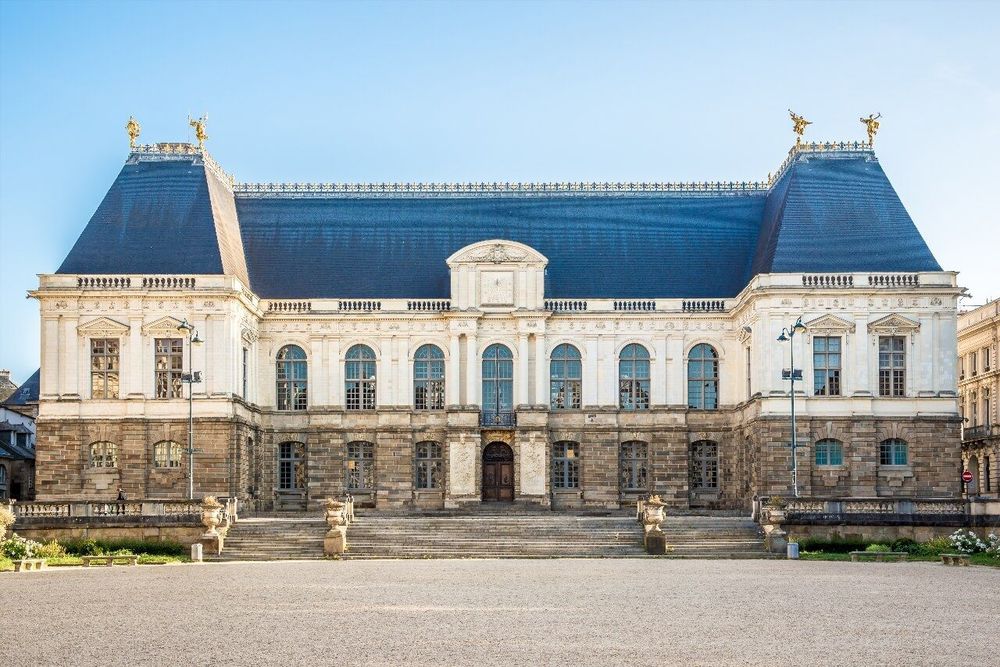
The Palais du Parlement de Bretagne is the most spectacular monument in Rennes, and arguably one of the most underrated in France. Built between 1618 and 1655 to plans by Salomon de Brosse, the architect of the Palais du Luxembourg in Paris, it served for a long time as the seat of the sovereign court of Brittany before becoming a courthouse.
What sets it apart from its equivalents: the fire of 4 and 5 February 1994, accidentally started during a protest by Breton fishermen, did destroy the roof, but the restoration work carried out over a decade made it possible to recover and restore the 17th-century painted ceilings to their original state. Gilded coffered ceilings, royal allegories, portraits of sovereigns — the Grand'Chambre and the Chambre de la Tournelle rank among the best-preserved interiors of the Grand Siècle in Europe.
Guided tours are offered every week. The visit lasts approximately 1h30 and includes the courtrooms. On days when the Parlement does not open its doors, the square in front of it, punctuated by fountains and stone benches, is already worth the visit.
Place des Lices and Its Legendary Market
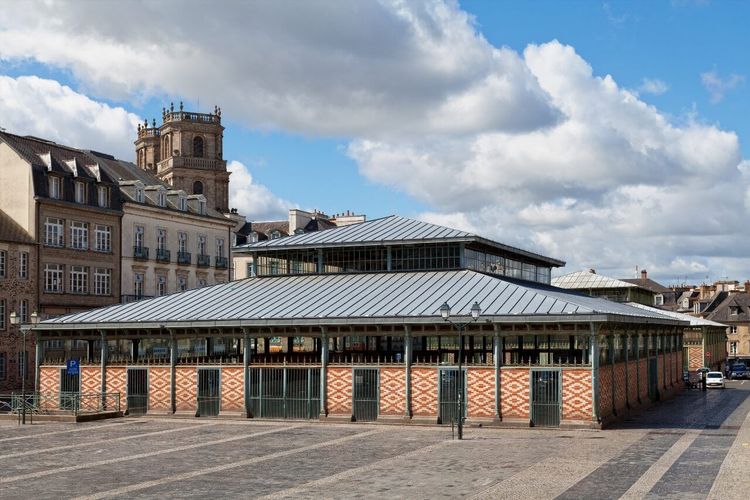
Every Saturday morning, place des Lices transforms into the second-largest market in France. Established on place des Lices in 1622 during a plague epidemic, and heir to a market documented as far back as 1483, this weekly gathering brings together Breton producers, coastal fishmongers, cheesemakers, and market gardeners. In fine weather, the market attracts up to 10,000 visitors between 7:30 am and 1:00 pm.
The two 19th-century cast-iron and glass covered halls, the Halles Martenot, shelter the cream of the offering: farm demi-sel salted butter, Cancale oysters served freshly opened on the spot, fresh galettes to take away. Outside, the stalls spread across the entire square and spill into the adjacent streets. Come before 9 am to enjoy the atmosphere of the halls when the crowd is still manageable. If you miss Saturday, a smaller version takes place on Wednesday morning at the same location.
The Saint-Pierre Cathedral of Rennes
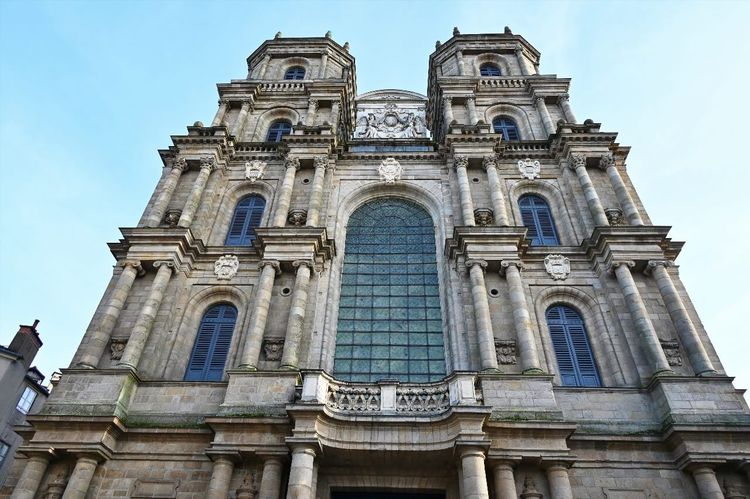
The Cathédrale Saint-Pierre (Place Saint-Pierre, 35000 Rennes, rated 4.5/5 on Google based on 2,946 reviews) closes the perspective of rue de la Monnaie and surprises with its proportions. Built and rebuilt over more than three centuries, from the 15th to the 19th century, it combines several architectural styles in an unexpected coherence. Its neoclassical columned facade contrasts with the Gothic-Baroque interior, where the 16th-century Flemish altarpiece is the centrepiece.
This altarpiece, known as the 'Antwerp altarpiece', originates from the Southern Netherlands and displays numerous scenes from the life of the Virgin in oak panels carved with a remarkable wealth of detail. It is listed as a Historic Monument in its own right. The cathedral is open every day and admission is free.
Something rarely mentioned in other guides: the remains of the Gallo-Roman wall are visible near the building, and the location concentrates layers of occupation dating back to Antiquity. These superimposed strata alone tell two millennia of urban occupation on this very spot.
Portes Mordelaises: a Window onto the Middle Ages
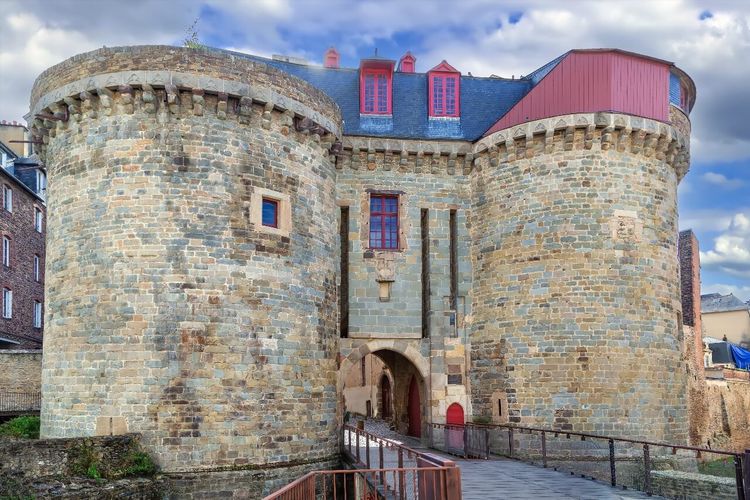
A short walk from the cathedral, the Portes Mordelaises are the last remaining vestige of the 15th-century medieval city walls. This double granite tower framed the main entrance to the walled city; the Dukes of Brittany passed through it during their ceremonial entry into Rennes. You can freely access the vaulted passageway between the two towers.
The contrast between the dark granite of the ramparts and the 18th-century buildings that frame them is striking. A reconstructed double wooden door completes the scene. Allow 10 to 15 minutes for this stop — just enough for a great photo and a moment of reflection on the centuries separating this archway from the café you just left.
The Thabor Park: Rennes' Green Jewel
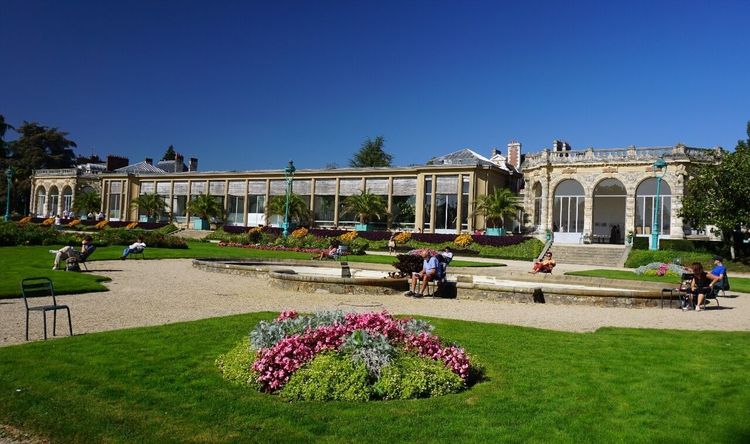
The Thabor park (Place Saint-Melaine, 35000 Rennes, rated 4.7/5 on Google based on 13,663 reviews) is a gentle anomaly in the middle of a dense city: 10 hectares of formal French gardens, an arboretum, rose garden, botanical garden, and aviary, open for free all year round. It is the most visited green space in Rennes and one of the finest urban parks in Brittany.
The rose garden is the highlight from late May to early July: more than 2,000 varieties of roses bloom in cascades of colour, and the mingled fragrances at this time of year defy any reasonable description. Out of season, the botanical garden takes over with its collections of more than 3,000 species from around the world, from primitive ferns to rare conifers.
For families, a modern play area borders the northern section, and a permanent aviary houses exotic species. For those who prefer more contemplative greenery, the arboretum catalogues numerous tree species across a surprisingly generous area.
What guides often forget to mention: the Thabor park occupies the former terrace of the Benedictine abbey of Saint-Melaine, whose origins go back to the early Middle Ages, where Saint Melaine, bishop of Rennes, was buried in the 6th century. The abbey church of the same name, right at the park entrance, is worth five minutes for its architecture and historiated capitals.
Rennes' Museums: Art and History Under One Roof
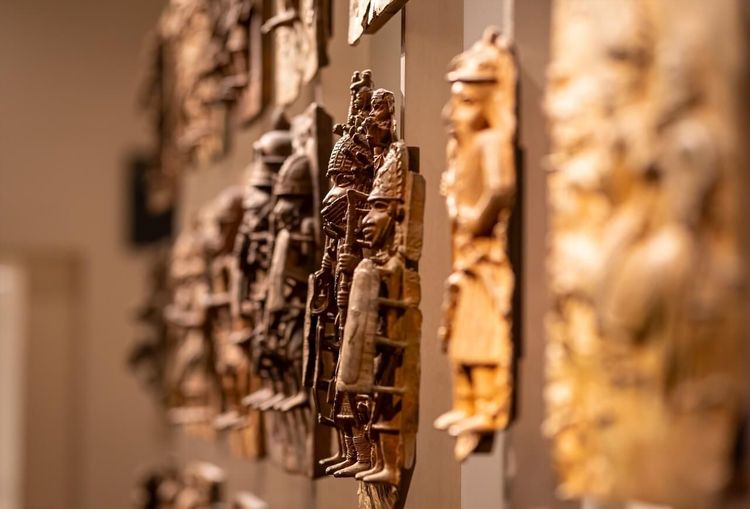
Rennes is home to two particularly well-endowed museums. The Musée de Bretagne (10 Cours des Alliés, 35000 Rennes, rated 4.6/5 on Google based on 725 reviews) occupies the Champs Libres building, a vast modern cultural space located near the station, while the Musée des Beaux-Arts lines the banks of the Vilaine (Quai Émile Zola, 35000 Rennes, rated 5/5 on Google based on 3 reviews).
The Musée des Beaux-Arts de Rennes, whose collections were assembled from 1794 onwards through revolutionary seizures, holds several thousand works spanning five centuries of European painting. The Egyptology and antiquities sections are worth lingering over: the Egyptian collection, enriched by deposits from the Louvre, features several human and animal mummies that never fail to fascinate visitors. Upstairs, the Flemish and Dutch painting galleries are particularly rich.
The Musée de Bretagne, at the Champs Libres, takes a different approach: ethnographic and historical, it traces Breton identity from prehistory to the present day. The collections on the Chouannerie, lace-making, and traditional Breton culture are presented with care and originality.
Both museums are generally open Tuesday to Sunday. Be sure to check current opening days and admission prices on the Champs Libres website before your visit, as the temporary exhibition programme can affect access conditions.
The Banks of the Vilaine: Strolling and Urban Culture
The Vilaine flows through Rennes on a gentle slope, its banks offering a perspective and a change in elevation that makes a pleasant contrast to the flatness of the historic centre. Between quai Saint-Cast and quai Duguay-Trouin, the 18th-century facades are reflected in the water and café terraces multiply as soon as the sun appears.
This is also where much of the city's alternative cultural life is concentrated: independent galleries, specialist bookshops, artists' studios in some of the courtyard buildings. The Piscine Saint-Georges, built in 1925 in a sumptuous Art Deco style, is worth a look even if you are not planning to swim: its ceramic decor is one of the most remarkable in the city. For a broader introduction to Rennes on foot, Ryo's audio-guided tour of the Queen of Brittany covers the wider old town.
In the evening, the banks come gently to life — it makes for a pleasant stroll before heading to rue Saint-Michel for the rest of the night.
Gastronomy: Crêpes, Galettes, and Breton Flavours

No visit to Rennes can end without having eaten a galette — but not just any galette. The distinction between a crêpe (wheat flour, sweet) and a galette (buckwheat flour, savoury) is fundamental in Brittany, and the people of Rennes uphold it with a certain pride. A well-made galette complète — a whole egg, country ham, melted cheese, demi-sel butter folded into a marguerite shape on top — is a dish in its own right.
Rue Saint-Georges and its surroundings concentrate the majority of the best crêperies in the centre. The area around place Sainte-Anne also has several long-established addresses. Prices remain very reasonable: expect to pay 8 to 12 euros for a full meal of a savoury galette + sweet dessert crêpe + bowl of Breton cider.
Beyond the crêperies, the Saturday Lices market is the ideal place to discover the full range of regional produce: Cancale oysters, cider sausage, far breton with prunes, kouign-amann. For more detail, our Ryo article on the culinary specialities of Rennes covers the key addresses and the products to bring home.
Demi-sel butter deserves a special mention: produced on Breton farms for centuries, it goes into absolutely everything, from the morning bread to the buckwheat galette. There is no point resisting — it is a surrender in the best possible taste.
Rennes by Night: Rue Saint-Michel and Its Terraces
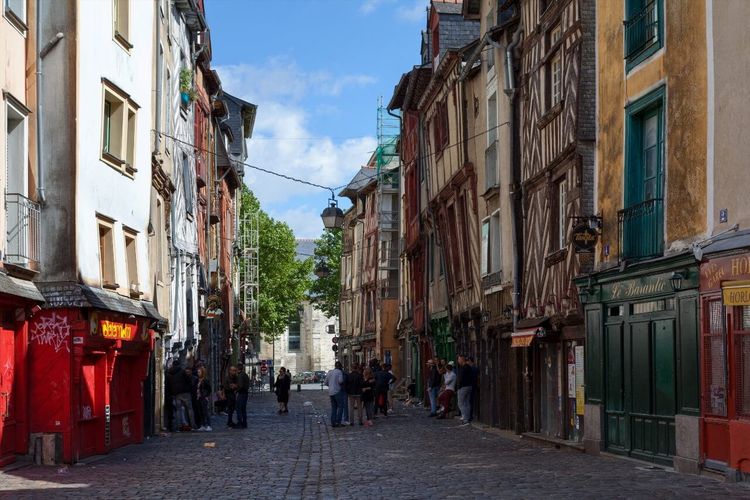
Rue Saint-Michel concentrates Rennes' nightlife into a single pedestrian street, locally nicknamed the 'rue de la Soif' (Street of Thirst). The name says it all: a succession of bars and brasseries stretches over a few hundred metres, with terraces spilling onto the pavement as soon as the temperature allows.
The entire quarter, bounded by place des Lices to the north and the banks of the Vilaine to the south, offers very different atmospheres depending on the evening. Thursday is traditionally student night (the Rennes 2 university is just around the corner), while Friday and Saturday attract a more mixed crowd in age and style.
For a quieter evening, the Opéra de Rennes steps in: this Italian-style auditorium, inaugurated in 1836 in a neoclassical style, offers an excellent programme of opera and dance throughout the season.
How to Get Around Rennes
Rennes is compact: the vast majority of must-do activities are within a 2-kilometre radius of place de la Mairie. Walking covers the essentials of the programme in one or two days without any effort. For the museums and the area around the station, the metro, with two intersecting lines, is fast and reliable.
The Star network (bus + metro) offers single tickets or day passes at reduced rates. Cycling is a serious option: the Star Vélo service has stations throughout the centre, and the banks of the Vilaine offer a pleasant cycle path. From Paris, the TGV from Gare Montparnasse reaches Rennes in 1h25, with up to 18 daily departures — one of the most frequent rail links in France.
Where to Stay in Rennes
The city centre concentrates the majority of the hotel offer. For atmosphere, opt for hotels in the historic quarter, around rue Saint-Georges or place des Lices: a handful of well-renovated boutique hotels at reasonable rates compared to similar French cities.
The average budget for a night in a 3-star hotel ranges between 80 and 130 euros depending on the season, with peaks during major cultural events (Les Trans Musicales festival in December, Les Tombées de la Nuit in summer). For group stays or longer visits, the city offers a good network of apartments and tourist residences.
The immediate surroundings of the station offer more availability at more accessible prices, just 10 minutes' walk from the historic centre. If you are planning a broader weekend trip, our Ryo selection of the most beautiful villages around Rennes can complement your itinerary.
Day Trips from Rennes
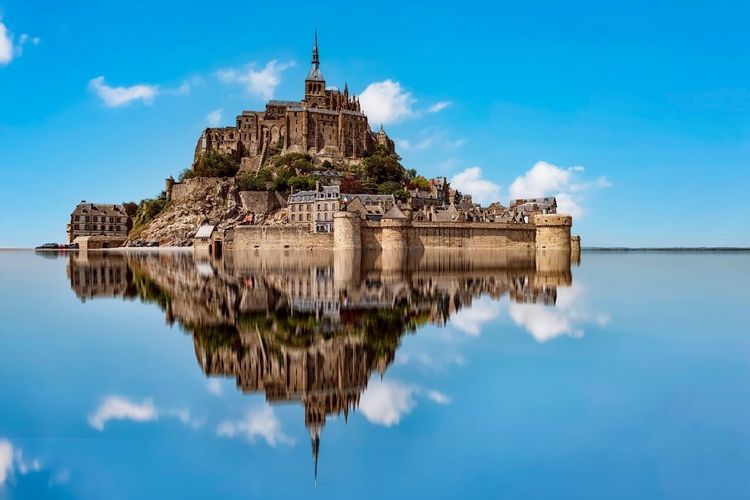
Rennes is an excellent base for exploring Brittany. About 1 hour away by car or train, Saint-Malo and its historic intra-muros centre can be explored in half a day. Mont-Saint-Michel, on the edge of the bay, can be reached in around 1h15 from Rennes.
For a shorter outing, Fougères, with its medieval fortress considered one of the largest in Europe, is less than an hour away. Vitré, also fortified, is even closer and less crowded. If you would like to set off on Breton roads for a few days, our Ryo guide to the most beautiful villages in Brittany offers a good starting point for building a tailor-made itinerary.

FAQ
What is the best time to visit Rennes?
Spring (April to June) is the ideal period: mild temperatures, the Thabor rose garden in full bloom, and terraces filling up. Summer remains pleasant, but July and August can be busy with events and visitors. Autumn (September–October) offers beautiful light on the medieval facades and a quality cultural programme. Winter is mild compared to the rest of France, but the Lices market is less well-stocked.
How much time do you need to visit Rennes?
One day is enough to cover the essentials of the historic centre: Parlement de Bretagne, the cathedral, Portes Mordelaises, and the market if it's a Saturday. Two days allow you to add the museums, the Thabor park, and an evening in the city-centre bars. To explore at a leisurely pace and add a day trip to Saint-Malo or Fougères, plan a three-day weekend.
Are there free activities in Rennes?
Yes, several. Visiting the historic centre, the Portes Mordelaises, and the Thabor park is entirely free. The Cathédrale Saint-Pierre is open for free every day. The municipal museums regularly offer free admission slots: check the Champs Libres website for details. The Piscine Saint-Georges is paid for swimming, but its Art Deco architecture can be admired from the entrance at no cost.
How do you get to Rennes from Paris?
The TGV from Paris Montparnasse takes 1h25 to reach Rennes station, with up to 18 daily departures. It is the fastest and most convenient option. By car, allow 3h30 to 4h via the motorway. Rennes also has an airport with connections to several French cities and a few European destinations.
What local specialities should you try in Rennes?
The buckwheat galette is the emblematic dish: thick, crispy, and filled to your liking. The sweet crêpe with salted butter rounds it off for dessert. Things to bring home: kouign-amann (a flaky Breton cake with butter and caramelised sugar), far breton with prunes, and salted butter caramel in all its forms. Breton cider as an accompaniment is practically obligatory.
Can you visit Rennes with children?
Rennes is particularly family-friendly. The Thabor park has modern play areas, a permanent aviary, and large lawns. The Musée de Bretagne offers educational workshops at weekends. The Saturday Lices market is lively and accessible for all ages. And the medieval quarter with its half-timbered houses naturally captures children's attention without any effort.
Conclusion
These must-do activities in Rennes deliver on their promise from the very first day: a dense historic centre, a market that ranks among the most vibrant in France, serious museums, and a Breton art de vivre that becomes all the clearer over a piping-hot galette. The city can be visited quickly, but it is rarely left without a desire to return.
To make sense of all these discoveries and miss nothing of the architectural logic of the city centre, the Ryo audio-guided tour of Rennes offers 25 listening points over 4.7 km — a practical way to enter the city with the right keys in hand, at your own pace.
À lire également