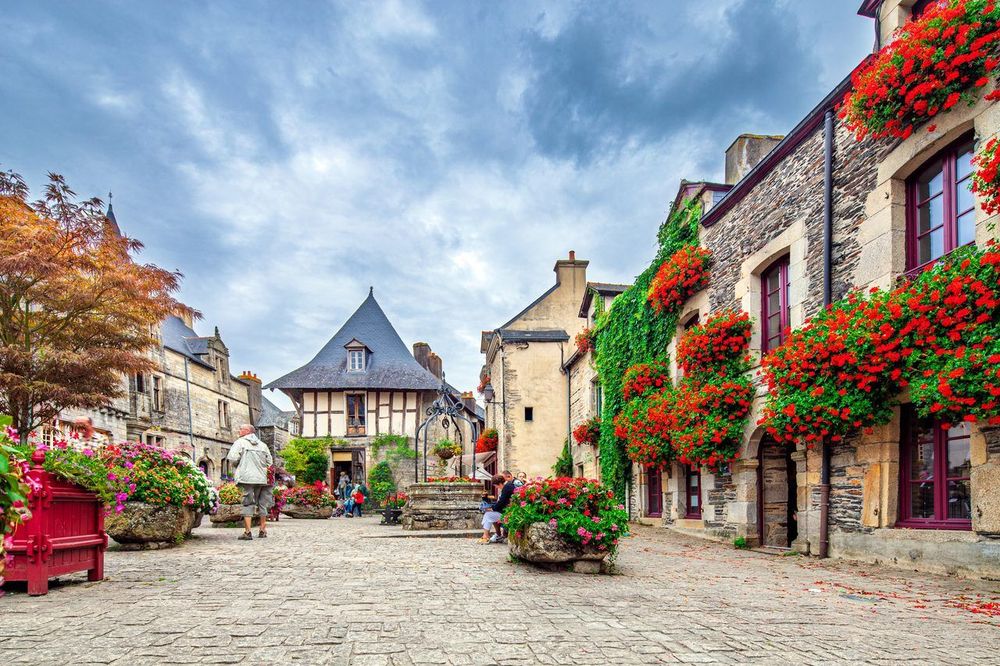
© Shutterstock
 Votre guide Ryo
The Most Beautiful Villages in Brittany in 2026: the Complete Ranking, Region by Region
Brittany has more than 1,200 communes, but a handful of them concentrate that extra soul that makes visitors say they have found the most beautiful villages in Brittany. Here, there is no manufactured scenery created for photos: the half-timbered houses of Dinan genuinely date from the 15th century, the ramparts of Guérande still watch over salt marshes worked by hand, and the bridge leading to the islet of Saint-Cado has withstood spring tides for generations. Six villages open this ranking because Google lists them first: Rochefort-en-Terre with its geranium-covered facades, Locronan frozen in its 16th-century granite, Saint-Suliac nestled on the Rance estuary, Ploumanac'h with its pink rocks sculpted by erosion, Pont-Aven where Gauguin set up his easel, and Moncontour perched on its rocky spur. Four of them carry the official Les Plus Beaux Villages de France label. Around them orbit some thirty other gems, from the feudal towns of Morbihan to the quiet hamlets of Ille-et-Vilaine, which this guide covers village by village to help you build your itinerary. And if you pass through the Gulf of Morbihan, the Ryo audio-guided tour of Vannes makes an excellent appetiser before the village route.
Rochefort-en-Terre, the Most Iconic Flower-Filled Village in Morbihan
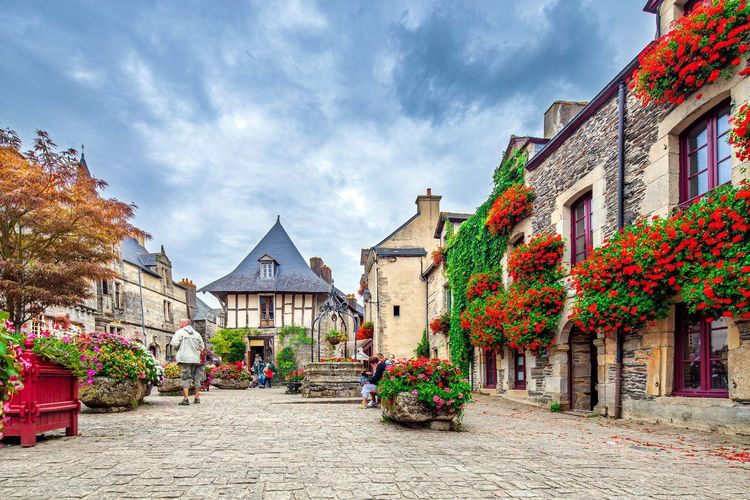
Rochefort-en-Terre (Place du Puits, 56220 Rochefort-en-Terre, rated 4.7/5 on Google with 3.1K reviews) clings to a rocky spur overlooking the Gueuzon valley, in eastern Morbihan. Its half-timbered houses and granite facades disappear under geraniums between May and September, a floral tradition that contributed greatly to its election as France's Favourite Village in 2016. Labelled a Plus Beaux Villages de France since 2009, the village draws its cobbled lanes together around the Place du Puits, its historic heart.
The village owes part of its present charm to an American painter, Alfred Klots, who settled here in the early 20th century. Captivated by the village's light, he bought the ruined castle and encouraged the inhabitants to fill their window boxes with flowers, even organising competitions. A century later, the tradition lives on: you will struggle to find a windowsill without a flower box in full season.
The park of the château de Rochefort-en-Terre offers fine views over the valley, and the estate now houses a museum dedicated to the arts of the imagination. The collegiate church of Notre-Dame-de-la-Tronchaye is worth a detour for its unusually grand Gothic proportions for such a small village. Come early in the morning or at the end of the day: the village, tiny as it is, quickly becomes overcrowded in July and August.
Staying in Vannes? Its 18 audio stops, completed in 1h20 over 3 km, tell the story of the city of the Veneti and its ramparts: a great way to understand the history of Morbihan before heading to Rochefort-en-Terre, less than an hour's drive away.
Locronan, the Granite Village Where Time Stands Still
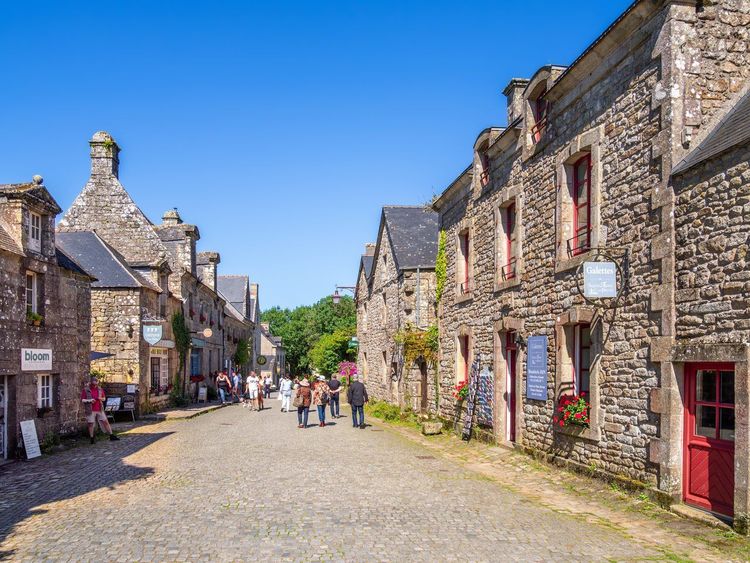
Locronan (Place de l'Église, 29180 Locronan, rated 4.7/5 on Google with 2.8K reviews) was frozen in time during the 16th and 17th centuries, at the height of the sailcloth trade. The merchants who exported their goods to Spain and England built the granite residences lined up around the Grande Place, an ensemble protected as a historic monument. The village has been a member of Les Plus Beaux Villages de France since 1982, making it the oldest labelled village in Brittany.
This architectural freeze has been a gift to filmmakers: Roman Polanski shot part of Tess here in 1979, and Philippe de Broca brought his cameras for Chouans! in 1988. Film crews have almost nothing to conceal: no visible electric cables on the square, no garish signage.
The église Saint-Ronan and its Pénity chapel house the recumbent effigy of the founding saint. The Grande Troménie, a 12 km procession that only takes place every six years, attracts thousands of walkers; the Petite Troménie is held in the intervening years. At other times, climb the mountain of Locronan for a panoramic view over the bay of Douarnenez.
Locronan belongs to the Pays de Cornouaille, of which Quimper is the historic capital. The Ryo audio-guided tour of Quimper unfolds in 23 audio stops and one hour of walking the history of this granite region, including the Saint-Corentin cathedral, just twenty minutes from the village.
Saint-Suliac, the Seaside Gem on the Rance
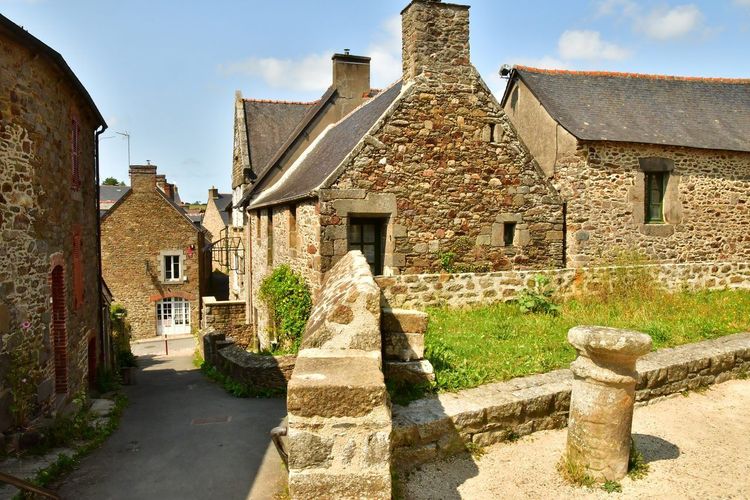
Perched on the right bank of the Rance estuary, Saint-Suliac (Place de la Grande Rive, 35430 Saint-Suliac, rated 4.7/5 on Google with 1,224 reviews) lines its granite houses and narrow lanes, known as "ruettes", all the way down to the water's edge. Labelled a Plus Beaux Villages de France since 1999, it is the only village in Ille-et-Vilaine to hold this title.
The village's strong character stems from its maritime history: the sailors of Saint-Suliac once sailed as far as Newfoundland to fish for cod, campaigns lasting several months that left a lasting mark on local identity. At low tide, you can also see the ancient fish traps emerging from the mud, large stone enclosures inherited from the Middle Ages.
Climb up to Mont Garrot, at the edge of the village, for a sweeping view over the estuary and its moored sailing boats. The viewpoint is easily reached on foot from the church.
Saint-Suliac is about fifteen kilometres from Saint-Malo: combine the two, as the Ryo audio-guided tour of the corsair city brings to life the privateer legends that also shaped the entire estuary.
Ploumanac'h, the End-of-the-World Village at Perros-Guirec
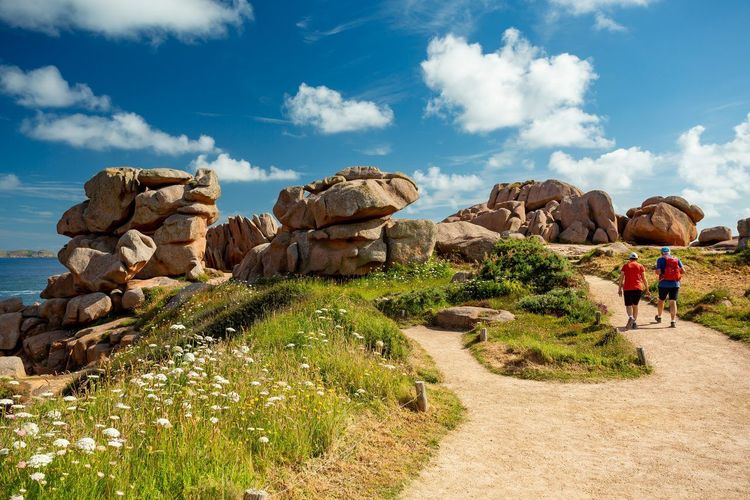
Ploumanac'h (Le Phare de Mean Ruz, 22700 Perros-Guirec, rated 4.8/5 on Google with 10,381 reviews) is not a commune but a district of Perros-Guirec, on the Pink Granite Coast of Côtes-d'Armor. Its name comes from the Breton "Poull Manac'h", meaning the monk's pool, and it was voted France's Favourite Village in 2015, one year before Rochefort-en-Terre.
The rocky chaos bordering the village invites visitors to spot a Napoleonic hat, a tortoise or a rabbit in the pink granite blocks shaped by erosion. The Mean Ruz lighthouse, planted in the middle of this mineral landscape, was rebuilt in pink granite after its destruction in 1944.
The Customs Officers' Path (GR34) between Trestraou beach and Ploumanac'h, roughly 5 km return depending on the route, remains the best way to explore the coast without a car. Allow a good two hours, more if you have children who will want to climb every rock.
Pont-Aven, the Painters' Town on the Banks of the Aven
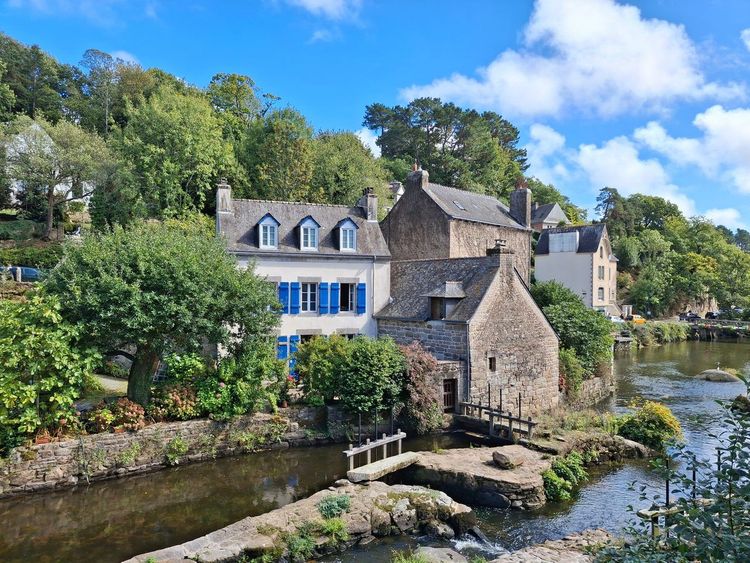
Pont-Aven (Place Paul Gauguin, 29930 Pont-Aven, rated 4.6/5 on Google with 1.5K reviews) owes its name to the bridge that crosses the Aven, but it was once celebrated for its mills: "Pont-Aven, town of renown, 14 mills, 15 houses." The waterwheels powered flour mills all along the river, and a few remains still punctuate the riverside walk.
Paul Gauguin settled in Pont-Aven in 1886, drawn by the light and the low cost of living. Around him grew the Pont-Aven School, which pioneered a style of painting using flat colours and bold outlines, breaking away from Impressionism. The Bois d'Amour, which runs along the river, owes its fame to The Talisman, painted there by Paul Sérusier in 1888 under Gauguin's direction, a founding work of the Nabis group.
The Musée de Pont-Aven, reopened in 2016 after expansion, traces this artistic movement. Art galleries now occupy a good portion of the ground floors in the village: the painterly tradition has never truly died out.
Pont-Aven is half an hour from Quimper. If you stop there, the 23 audio stops of the Quimper tour evoke the faience makers and craftspeople who forged the visual identity of Cornouaille, the very region that captivated the painters of Pont-Aven.
Moncontour, the Perched Medieval Town of Côtes-d'Armor
Moncontour (Place de la Carrière, 22510 Moncontour, rated 4.6/5 on Google with 620 reviews) occupies a rocky spur at the confluence of two valleys, a defensive position that explains its role as a fortified stronghold. Its medieval ramparts, still largely standing, encircle a village whose silhouette has changed little since the Middle Ages. The village holds both the Petite Cité de Caractère label and membership of Les Plus Beaux Villages de France since 2010.
The cobbled lanes climb towards the église Saint-Mathurin, celebrated for its 16th-century stained-glass windows. The village prospered through the linen cloth trade, the famous "bretagnes", as evidenced by the fine merchants' houses.
Allow about an hour to walk the ramparts, a little more if you stop at the craftspeople's workshops installed in the old shop units.
La Gacilly, the Arts Village of Character in Morbihan
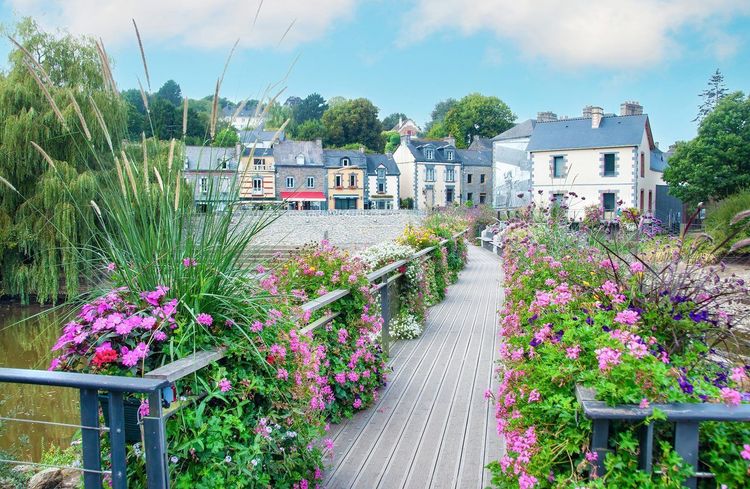
La Gacilly (Place de l'Eglise, 56200 La Gacilly, rated 4.5/5 on Google with 890 reviews) owes its reputation to Yves Rocher, born here in 1930, who founded and established his cosmetics brand in the town. The village has retained its human scale, with old houses occupied by ceramicists, glassblowers and artisan workshops.
Every summer since 2003, the Festival Photo La Gacilly transforms the streets and gardens into an open-air gallery, with large-format prints hung on the facades. The event, free to attend, attracts hundreds of thousands of visitors — a spectacular figure for a commune of around 4,000 inhabitants.
Josselin, the Feudal Town on the Banks of the Oust
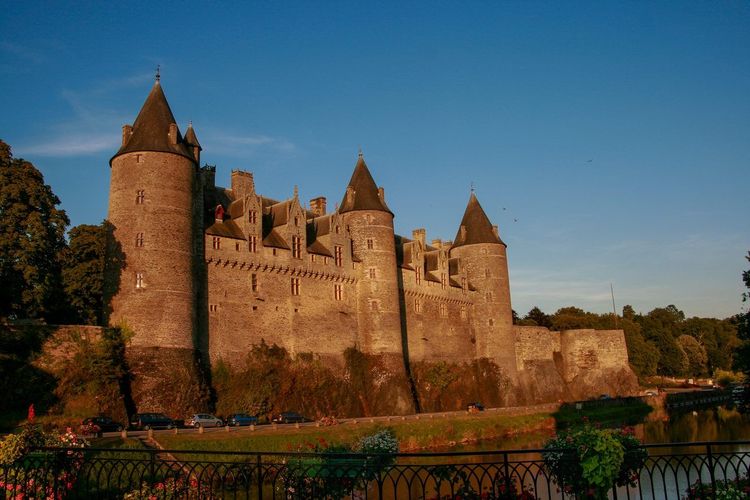
The château de Josselin (Château de Josselin, 56120 Josselin, rated 4.4/5 on Google with 8,261 reviews), owned by the Rohan family since the early 15th century, rises with its massive towers directly above the Oust. On the courtyard side, the Flamboyant Gothic facade surprises with its delicate stonework: two very different faces of the same monument.
The lower town, with its half-timbered houses clustered around the basilica of Notre-Dame-du-Roncier, hosts a grand pardon pilgrimage every 8 September, a Marian celebration that still draws several thousand worshippers.
Saint-Cado, the Secret Island of the Ria d'Étel
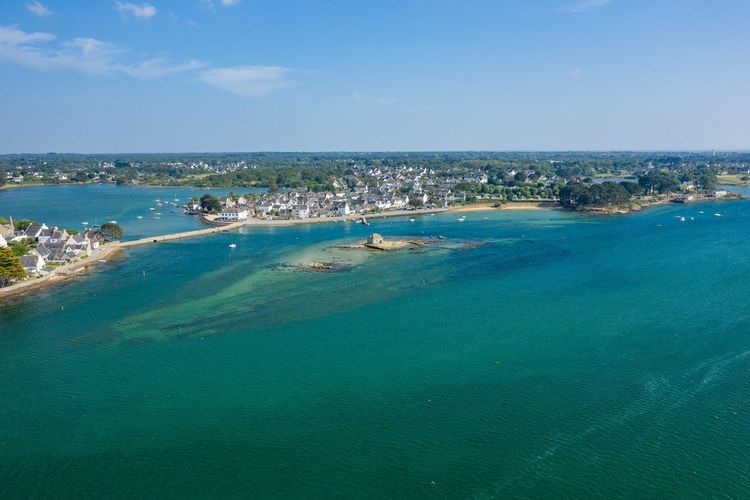
Saint-Cado (Île de Saint-Cado, 56550 Belz, rated 4.8/5 on Google with 784 reviews) is not a village but an islet, attached to the commune of Belz and connected to the mainland by a narrow stone causeway. A few fishermen's cottages, a Romanesque chapel and a calvary are all it takes to compose this setting nestled within the Ria d'Étel.
Legend has it that the devil built the bridge in a single night, in exchange for the soul of the first living creature to cross it. Saint Cado, cleverer than the devil, sent a cat across instead. Visit at high tide, when the islet seems to float on the estuary.
Sauzon, the Picturesque Harbour of Belle-Île-en-Mer
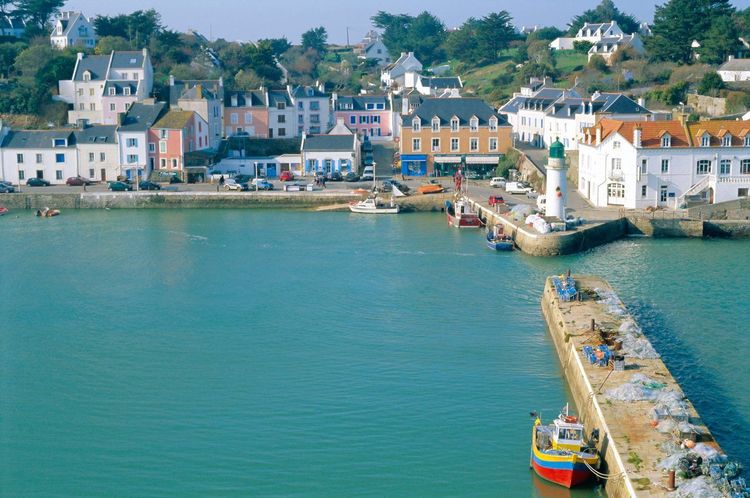
Sauzon (Port de Sauzon, 56360 Sauzon, rated 4.7/5 on Google with 943 reviews) nestles at the end of a small inlet on the northern coast of Belle-Île-en-Mer, facing the Quiberon peninsula. Its harbour is lined with houses painted in blue, green and yellow shutters, a scene so photogenic that it appears on most of the island's postcards.
At low tide, the harbour almost empties entirely and the boats lie on their sides in the mud, a spectacle best enjoyed from the terrace of the quayside cafés.
Guérande, the Medieval City of the Salt Marshes
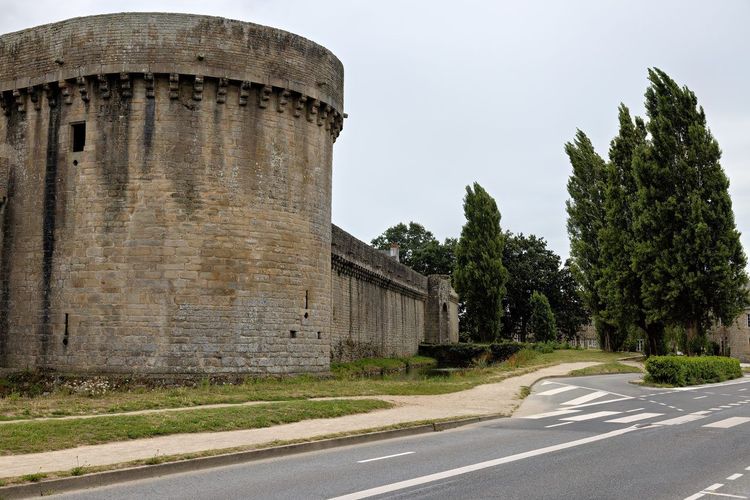
Guérande (Porte Saint-Michel, 44350 Guérande, rated 4.5/5 on Google with 519 reviews) is one of the rare Breton towns to have preserved its entire enclosure, roughly 1.4 km of ramparts punctuated by four gateways, including the Porte Saint-Michel. The collégiale Saint-Aubin, inside the walls, blends Romanesque and Gothic styles.
At the gates of the town stretch approximately 2,000 hectares of salt marshes, worked at least since the early Middle Ages. From June to September, the salt workers harvest by hand the coarse salt and the fleur de sel, the fine layer of crystals that forms on the surface in warm, windy weather. A guided tour of the marshes makes a perfect complement to a visit to the ramparts.
Guérande is the only village in this selection to have its own Ryo tour. With the Ryo audio-guided tour of Guérande, you wander through the walled town at your own pace, headphones on, before heading out to the salt pans.
Dinan, the Medieval Town of Half-Timbered Houses
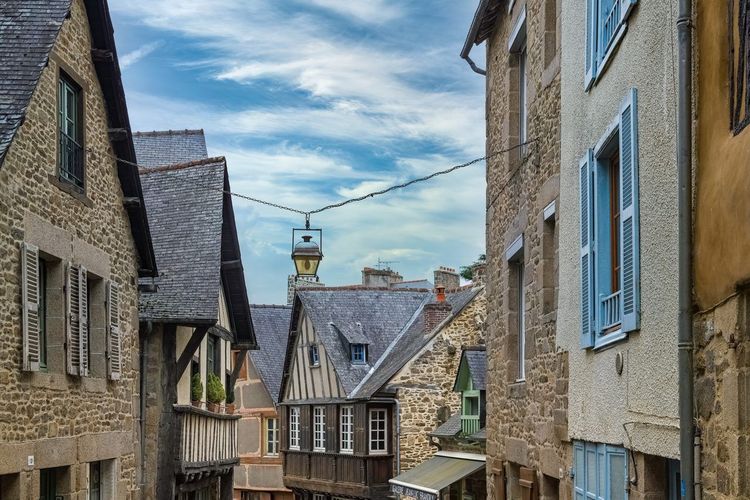
Dinan (Rue du Jerzual, 22100 Dinan, rated 4.8/5 on Google with 206 reviews) boasts one of the finest rows of half-timbered houses in Brittany along the rue du Jerzual, a cobbled street that tumbles from the historic centre down to the harbour on the Rance. The oldest of these tilting facades date from the 15th century.
The ramparts, nearly 3 km long, offer sweeping views over the Rance valley. The basilique Saint-Sauveur, blending Romanesque and Flamboyant Gothic styles, houses the cenotaph containing the heart of the constable Bertrand du Guesclin.
Concarneau and Its Fortified Ville Close
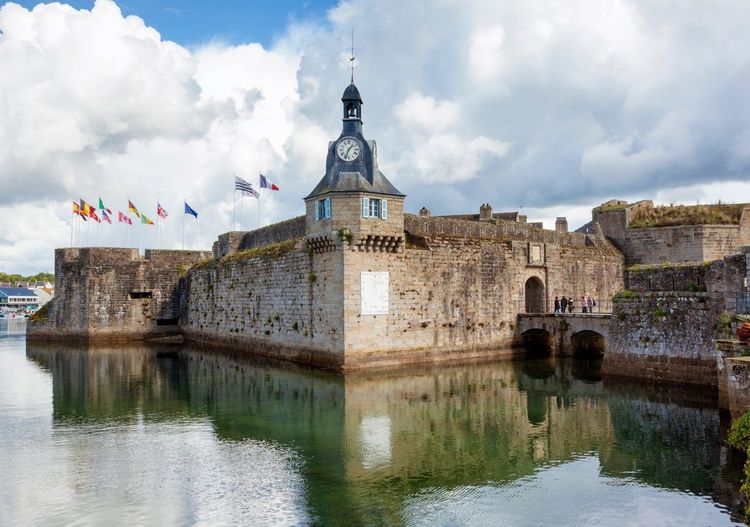
The Ville Close of Concarneau (Ville Close, 29900 Concarneau, rated 4.7/5 on Google with 18,650 reviews) occupies a fortified islet in the middle of the harbour, connected to the quay by a small bridge. The ramparts, remodelled by Vauban, enclose a maze of lanes where crêperies and craft shops have replaced the old fishermen's houses.
Concarneau remains one of France's leading fishing ports and the country's top tuna port, an activity you can sense every morning around the fish auction, a few minutes' walk from the ramparts.
Camaret-sur-Mer and Tréguier: Between Granite Legends and an Episcopal City
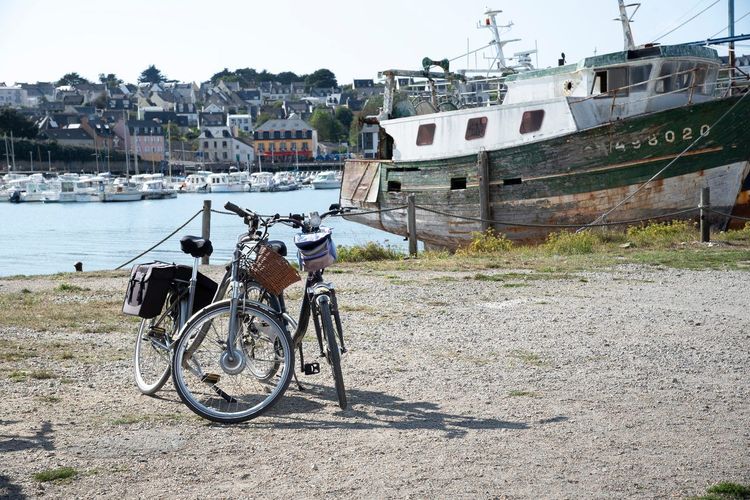
On the Crozon peninsula, Camaret-sur-Mer displays its boat graveyard, hulls of crayfish boats eaten away by salt, not far from the Vauban tower listed as a UNESCO World Heritage Site since 2008. A few minutes away, the Pointe du Toulinguet opens up one of the most striking views over the Atlantic, between cliffs and moorland.
At the other end of Brittany, in Côtes-d'Armor, Tréguier (Cathédrale Saint-Tugdual, 22220 Tréguier, rated 4.6/5 on Google with 2,454 reviews) strikes a very different note. The Gothic cathédrale Saint-Tugdual dominates this former episcopal city, the birthplace of the philosopher Ernest Renan, whose childhood home still stands at the heart of the half-timbered lanes.
Roscoff, Carantec and Landévennec, the Secret Shores of Léon
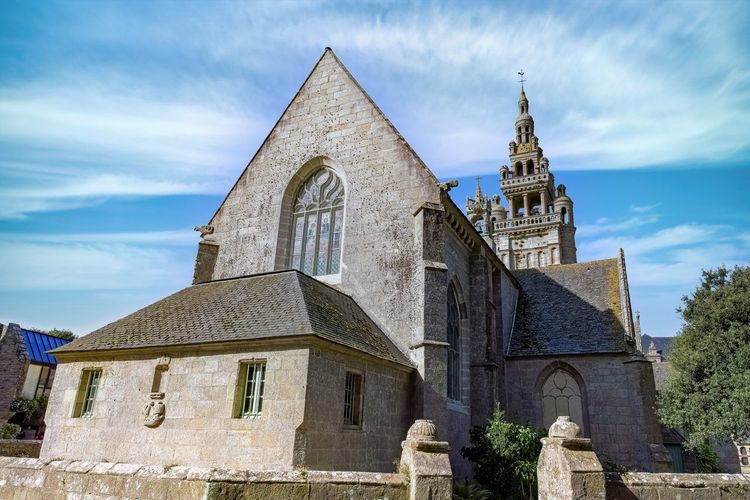
Roscoff built part of its reputation on its pink onion, sold across the Channel from the 19th century by the "Johnnies", who hung strings of onions from the handlebars of their bicycles: an image that long embodied the Breton in British eyes. The église Notre-Dame-de-Croaz-Batz and its Renaissance bell tower with lantern turrets recall the former wealth of local shipowners.
In Carantec, you can walk across to the Île Callot at low tide via a submersible crossing: a return trip that must be timed precisely to the tide tables.
Landévennec (Abbaye de Landévennec, 29560 Landévennec, rated 4.5/5 on Google with 525 reviews), at the far end of the Brest roadstead, benefits from such a mild microclimate that palm trees grow outdoors, near the ruins of the abbey founded by Saint Guénolé at the end of the 5th century, one of the oldest in Brittany.
Pont-Croix, Kernascléden and La Roche-Bernard: Granite and Inland Legends
Pont-Croix, in Cap Sizun, terraces its steep lanes above the Goyen estuary around the collegiate church of Notre-Dame-de-Roscudon, whose spire is said to have inspired those of Quimper cathedral.
At Kernascléden (Église Notre-Dame, 56540 Kernascléden, rated 4.7/5 on Google with 68 reviews), it is the interior of the church that makes the detour worthwhile: 15th-century frescoes depicting a danse macabre and a vision of Hell, an exceptionally rare ensemble for a rural church. La Roche-Bernard, perched above the Vilaine estuary, completes this trio with its old marina and its lanes bearing the Petite Cité de Caractère label.
Bécherel, Léhon, Saint-Senoux and Brain-sur-Vilaine, the Hidden Gems of Ille-et-Vilaine
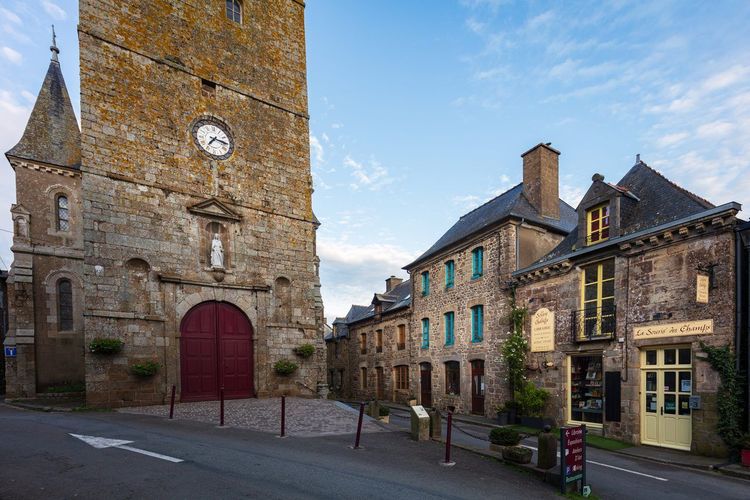
Bécherel has dominated the countryside to the north-west of Rennes from its hilltop since the 12th century, a position that made it a stronghold from early on. The village has reinvented itself as a book town: some fifteen second-hand booksellers and bookshops now occupy the old linen merchants' houses.
Léhon (Abbaye de Léhon, 22100 Léhon, rated 4.6/5 on Google with 1,152 reviews), attached to Dinan, preserves the buildings of its Saint-Magloire abbey on the banks of the Rance, with an old stone bridge and the ruins of its castle on the hill. Saint-Senoux and Brain-sur-Vilaine, further south, remain quiet rural villages in the Vilaine valley, away from the crowds and perfect if you enjoy peaceful walks.
Trentemoult, Paimbœuf, Piriac-sur-Mer and Saint-Servan, Villages Within the City
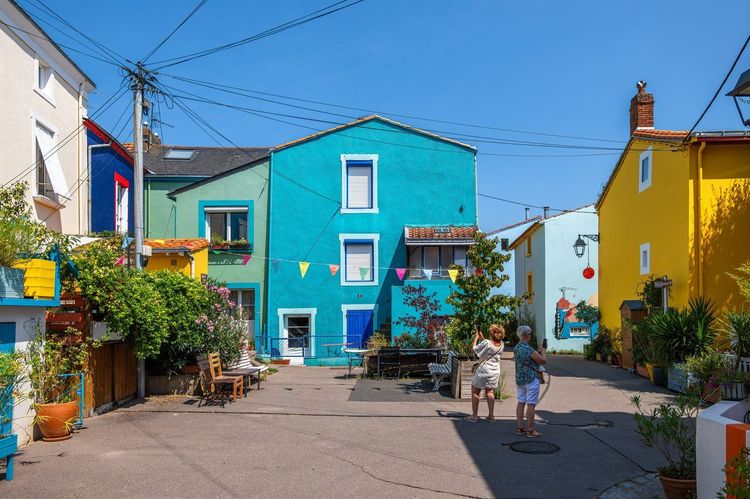
Trentemoult long lived apart from Nantes, on the south bank of the Loire: this village of long-haul sea captains with its colourful houses can now be reached in just a few minutes by Navibus. This former isolation explains why the district has retained its village scale within the commune of Rezé.
Paimbœuf, the former outer harbour of Nantes on the estuary, lines its 18th-century shipowners' houses along the quays. Piriac-sur-Mer, on the Guérande peninsula, preserves a small harbour and flower-filled lanes, far quieter than the beaches of La Baule.
Saint-Servan (Tour Solidor, 35400 Saint-Malo, rated 4.5/5 on Google with 32 reviews), merged with Saint-Malo in 1967, retains its identity around the Tour Solidor and the Anse des Sablons. To complete the walk on the intra-muros side, the Ryo audio-guided tour of Saint-Malo takes you in the footsteps of the privateers, from the ramparts to the former shipowners' mansions.
Where to Stay, When to Go and How to Get Between These Breton Villages
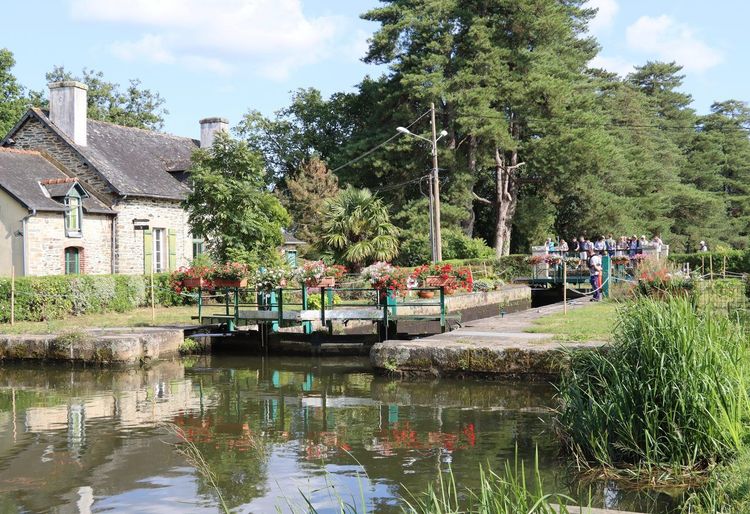
Most of these villages have few hotels: book a bed and breakfast or a gîte several weeks in advance if you are travelling in July or August. For something out of the ordinary, Brittany also offers a wealth of unusual accommodation: treehouses around the Brocéliande forest, yurts and gypsy caravans in the countryside, or nights aboard a barge on the Canal de Nantes à Brest.
May, June and September remain the best time to visit Breton villages: Rochefort-en-Terre's window boxes are in full bloom, the days are long, and the summer crowds have not yet descended on the narrowest lanes, such as those of Locronan or Saint-Suliac.
For a cycling road trip, the Vélodyssée links Roscoff to Nantes largely following the Canal de Nantes à Brest, while the Vélomaritime runs along the northern coast all the way to Mont-Saint-Michel. Allow a good week to visit around ten villages without rushing.
For souvenirs, fleur de sel from Guérande, Pont-Aven galettes in metal tins and a piece of Quimper faience all travel well and serve as long-lasting reminders of the trip.
FAQ
What is the most beautiful village in Brittany?
There is no single ranking, but Rochefort-en-Terre comes up most often at the top: voted France's Favourite Village in 2016, it is one of four Breton villages bearing the official Les Plus Beaux Villages de France label, along with Locronan, Saint-Suliac and Moncontour.
What is the most beautiful village in Morbihan?
Rochefort-en-Terre is the most frequently cited, followed by Saint-Cado for its island setting and Josselin for its castle. The choice depends mostly on the style you're looking for: floral, maritime or feudal.
What are the most beautiful Breton villages according to the British?
No British ranking carries definitive authority, but English-language guides regularly highlight Dinan, Locronan, Rochefort-en-Terre and Pont-Aven. The British know the region well thanks to the ferries linking Plymouth to Roscoff and Portsmouth to Saint-Malo, which explains their presence in the villages of northern Brittany.
How much time should you allow to visit the most beautiful villages in Brittany?
Allow two to three hours for the smallest ones (Locronan, Saint-Cado, Moncontour) and half a day for those that add a castle or a museum, such as Josselin or Pont-Aven. A week allows you to visit seven or eight villages without rushing.
What is the best time to visit Breton villages?
May–June and September offer the best compromise: the flowers are in bloom, the weather stays mild, and villages with narrow lanes, such as Saint-Suliac or Locronan, can be visited without crowds.
What souvenirs should you bring back from Brittany?
Fleur de sel from Guérande, biscuits and galettes in metal tins, a hand-painted Quimper faience piece or a marinière striped top are among the most popular souvenirs.
How do you travel between Brittany's villages without a car?
The regional BreizhGo network (trains and coaches) connects the main Breton towns (Rennes, Saint-Malo, Vannes, Quimper, Brest), but the most remote villages such as Saint-Cado or Kernascléden remain difficult to reach without a car or bicycle, due to limited regular services.
This selection does not claim to exhaust the list of Brittany's most beautiful villages: the region has dozens more, often promoted under the Petites Cités de Caractère label. But between the six villages highlighted by Google, the medieval towns of Morbihan and the rural gems of Ille-et-Vilaine, you have more than enough to put together a multi-day itinerary without retracing your steps.
Before or after the village route, make a detour via the regional capital: the Ryo audio-guided tour of Rennes covers 25 audio stops over 4.7 km, to enjoy at your own pace in 1h50, between half-timbered houses and royal squares.