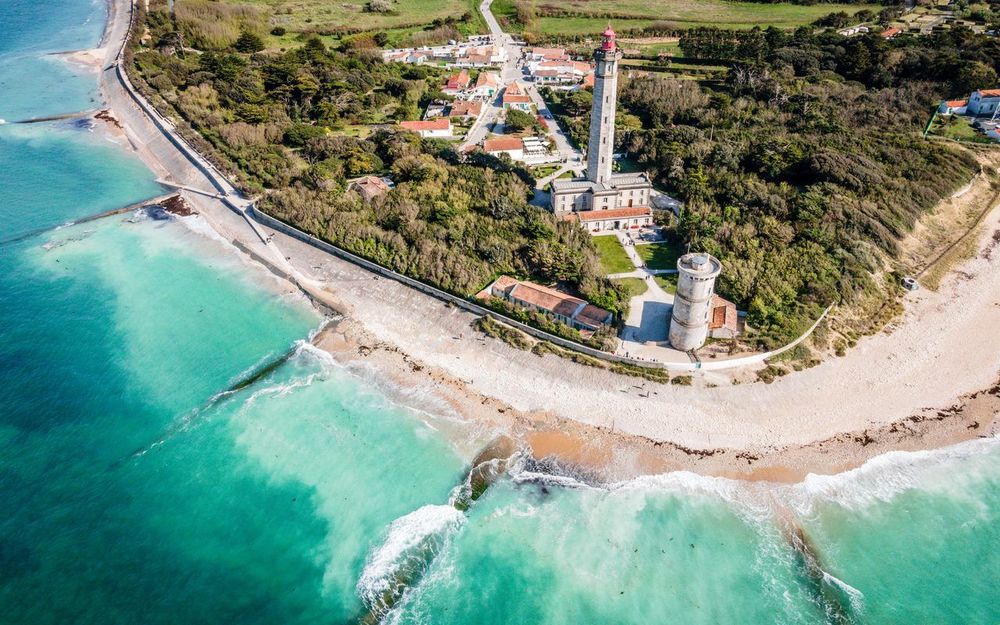
© Shutterstock
 Votre guide Ryo
Discovery of Île de Ré: The Complete 2026 Guide
Île de Ré belongs to no one, yet it becomes yours the moment you cross the bridge. These 3 km above the Atlantic work like a symbolic border: on the other side, ordinary life slows down, and something quieter and more luminous begins. Discovering Île de Ré holds surprises for those who think it is merely a chic seaside resort — the island's 85 km² contain salt marshes that still produce fleur de sel by hand, a nature reserve where 300 bird species stop during migration, a 57-metre lighthouse planted at the western tip, and villages of whitewashed lanes that even locals rediscover each season.
In 2026, the island draws around 3 million visitors a year, yet its northern edges — between Loix, Ars-en-Ré and the marshes — remain strikingly peaceful once peak season fades. This guide covers the essentials: Saint-Martin-de-Ré and its UNESCO-listed Vauban ramparts, the Phare des Baleines and its forest of wind-twisted pines, the Réserve de Lilleau des Niges, the Fort de la Prée, the salt marshes of Loix. It also covers less-travelled angles: the donkeys in trousers at La Couarde-sur-Mer, kayaking trips from La Flotte, the northern beaches where families seek calm waters. To explore other islands with the same curiosity, the Ryo app offers Ryo's audio-guided tours tailored to island destinations around the world.
Île de Ré at a Glance
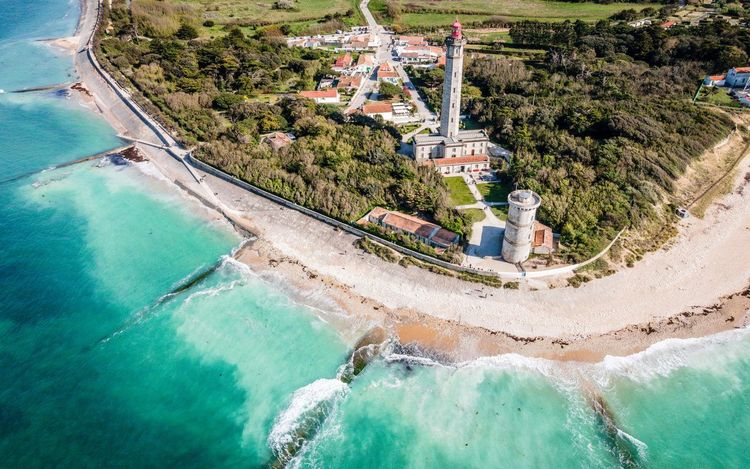
Before you set off, a few useful figures to frame the territory. The island measures 30 km long and 5 km wide at its broadest point. The eastern end, around Rivedoux-Plage and La Flotte, is more built-up: recent marinas, many shops, high density in July and August. The western tip, around Saint-Clément-des-Baleines and Les Portes-en-Ré, opens onto wild beaches where dunes still hold their own against the Atlantic.
The island has 10 communes: Saint-Martin-de-Ré (the main town), Ars-en-Ré, La Flotte, Sainte-Marie-de-Ré, Le Bois-Plage-en-Ré, La Couarde-sur-Mer, Loix, Saint-Clément-des-Baleines, Les Portes-en-Ré and Rivedoux-Plage. A network of 200 km of signposted cycle paths connects all the villages, including 110 km off-road through marshes and pine forests. The maximum elevation barely exceeds 19 metres — the island is almost entirely flat, making it one of the most accessible cycling destinations in France for all ages.
The bridge toll is €16 per car in peak season (2026 rate), free for pedestrians and cyclists. If you arrive by car but plan to get around by bike, the car parks at La Flotte and Le Bois-Plage allow you to leave your vehicle and reach the cycle paths without getting caught in traffic.
Cycling the Island: The Essential Experience
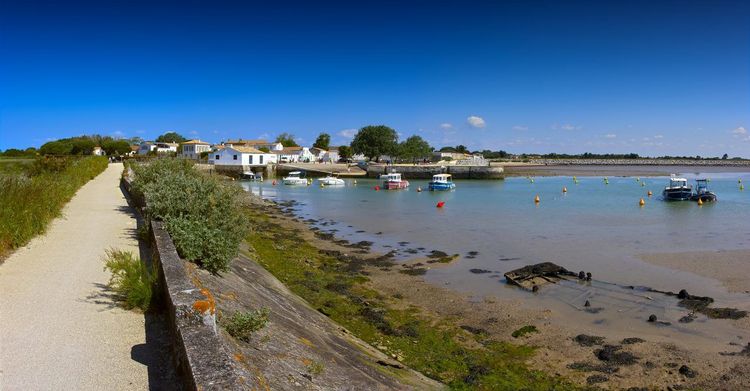
Nobody truly understands Île de Ré from inside a car. The 200 km of cycle paths criss-crossing the island make it one of the finest cycling destinations on the Atlantic coast — not because of elevation gain (almost none) but because of what they run alongside: salt marshes tinged pink at dawn, rows of maritime pines filtering the white summer light, limestone walls covered in yellow lichen, Atlantic beaches with no car park or shop in sight.
The full loop around the island covers around 70 km. Doable in a day for an experienced cyclist, but better appreciated over two days with extended stops. For a weekend, the northern loop is the most popular: Rivedoux-Plage → La Flotte → Saint-Martin-de-Ré → Ars-en-Ré → Les Portes-en-Ré → Phare des Baleines (Place d'Armes, 17410 Saint-Martin-de-Ré, rated 4.7/5 on Google from 40 reviews) — around 45 km with many stopping points. The lesser-known southern loop crosses the beaches of Sainte-Marie-de-Ré and Le Bois-Plage before rejoining La Couarde through the inland lanes.
Bike rental shops are found in every commune. Expect to pay €15 to €25 per day for a standard bike, €30 to €50 for an e-bike. In July and August, book the day before at the very least — some rental shops are fully booked by 9am. The most spectacular path on the island runs from Ars-en-Ré to Les Portes-en-Ré through the salt marshes: early in the morning, when mist still lingers over the saltpans, it is one of the most singular landscapes on the French coastline.
For families, the stretch from La Flotte to Saint-Martin-de-Ré (8 km, no gradients) is suitable for children from age 6. Wide pushchairs are not recommended on the dirt sections through the Loix marshes.
The Phare des Baleines: At the Edge of the Atlantic World
The Phare des Baleines (1 Rue du Phare, 17590 Saint-Clément-des-Baleines, rated 4.5/5 on Google from 24,204 reviews) is one of the most visited lighthouses in France — not only because it is photogenic. Planted at the north-western tip of the island, it marks the point where weather conditions shift noticeably compared to the rest of the island: the winds blow harder, the vegetation bends low, and the sense of standing at the maritime edge is fully felt.
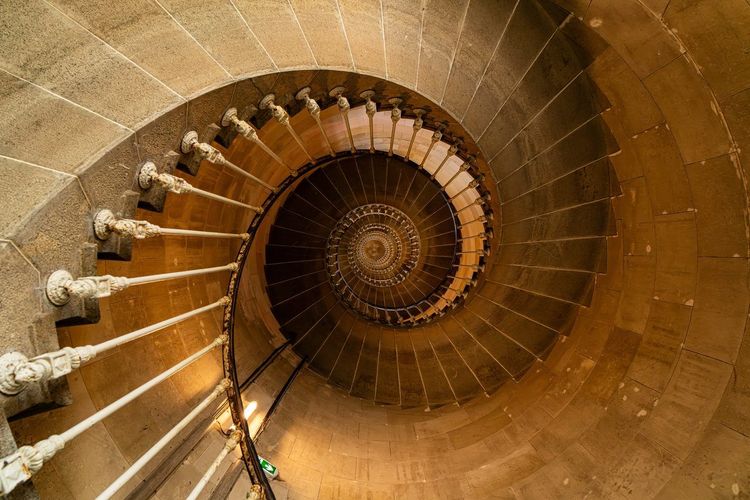
The current tower dates from 1854 and stands 57 metres tall. Its 257 stone spiral steps lead to a lantern whose light has guided ships through the Pertuis d'Antioche for more than 170 years. The view from the observation platform takes in the full length of the island on a clear day — La Rochelle and the mainland to the east, the Pertuis Breton and the Vendée coast to the north, the open Atlantic to the west with no visible horizon.
Next to the current lighthouse, the Old Phare des Baleines — a small octagonal 17th-century tower — is freely accessible and offers a historical counterpoint. The two structures face each other in a pine-shaded space where picnickers like to settle in the late afternoon, when the low-angled light turns the needles golden.
Just behind, the Forêt de Trousse-Chemise is little visited despite its proximity. This stand of maritime pines with trunks twisted by the coastal wind forms a living cathedral 200 metres from the lighthouse. It is one of those discoveries that make the difference between a quick loop around the island and a proper visit.
Lighthouse admission: €8 adult, €4.50 child (ages 6–16), free for under-6s. Open April to October.
The Salt Marshes: The Island's White Gold
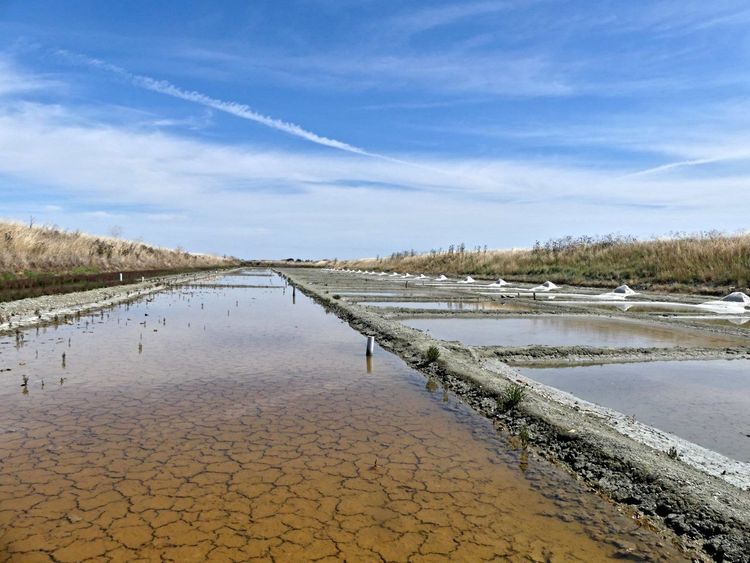
Île de Ré has produced salt since antiquity. The salt marshes spread across the north of the island, mainly around Loix and Ars-en-Ré, covering around 1,500 hectares and forming one of the last artisanal salt-production areas still active on the French Atlantic coast.
The fleur de sel of Île de Ré forms on the surface of the salt pans during hot, breezy summer days and is harvested by hand using a wooden spatula called a lousse. An experienced salt worker harvests between 20 and 50 kg of fleur de sel per day in full season, compared to 2 to 4 tonnes of coarse grey salt under the same conditions. Both products are sold directly from the salt workers' huts beside the marshes, with no middleman.
Several producers organise guided tours from May to September. The cooperative Les Marais de l'Île de Ré (Route des Marais, 17111 Loix, rated 4.4/5 on Google from 1,409 reviews) in Loix, which brings together around fifteen producers, offers tours of approximately 45 minutes for €5 to €8, including tasting. Also worth the trip: positioning yourself at the edge of the dyke paths at sunset with binoculars. Flamingos are present on the mudflats from April to October — a fact few visitors know before arriving. These birds descend from the wetlands of Spain and the Camargue, finding ideal feeding conditions in the island's saltpans in spring and autumn.
The Réserve de Lilleau des Niges: 300 Species on Stopover
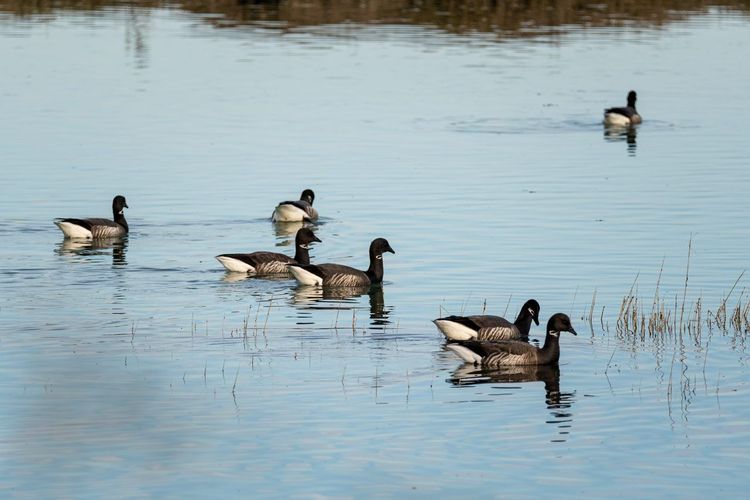
The Réserve Naturelle Nationale de Lilleau des Niges, between Ars-en-Ré and Les Portes-en-Ré, is one of the major stopover points for migratory birds on the Atlantic façade. During peak migration — September to November and February to April — a single morning can be enough to spot species that have flown in from as far as Siberia or sub-Saharan Africa.
The reserve covers around 120 hectares (close to 230 hectares including its buffer zone) of mudflats, salt meadows, reed beds and channels. Two waymarked walking trails (3 km and 6 km) allow you to explore without disturbing the wildlife. Wooden observation hides are positioned at strategic points. The LPO (French bird protection league) manages the site and organises guided outings on Saturday mornings during migration season, by reservation.
Access to the trails is free. The Maison de la Réserve in Ars-en-Ré (open April to September, €3 adult, free for children) offers a species identification space and information on the scientific monitoring programmes currently running on the island.
Saint-Martin-de-Ré: The Citadel That Keeps You Walking in Circles
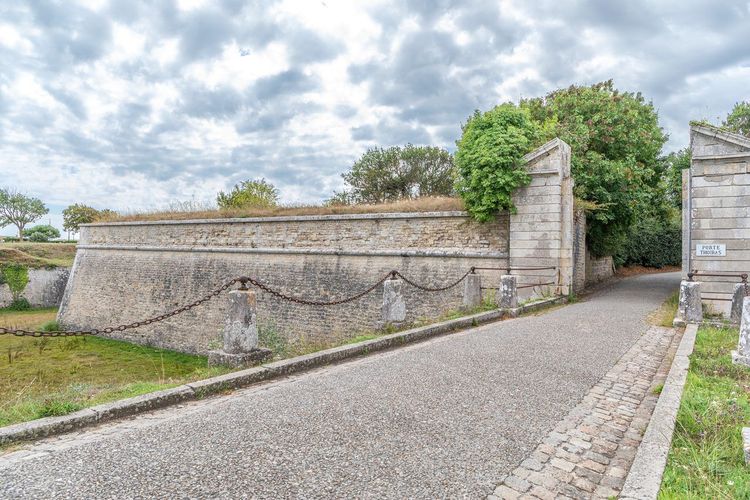
The island's main town is the kind of place you walk around wondering why you didn't come sooner. Saint-Martin-de-Ré is protected by Vauban ramparts listed as a UNESCO World Heritage Site since 2008, on the same list as the fortifications of Besançon, Briançon and Mont-Louis. These ramparts, built in the late 17th century, trace a perimeter of around 3 km — enough for an hour's stroll with the car left outside the walls.
The harbour of Saint-Martin-de-Ré is the heart of social life. Fishing boats return early in the morning, pleasure yachts occupy the pontoons in the afternoon, and the terraces along Quai Léon-Gendre begin to fill from 2pm, even outside of season. This is where residents gather once the tourists have gone.
The Église Saint-Martin (15th century, its bell tower visible from the sea) is worth a stop: the funerary slabs in the floor preserve the memory of the fishing families who lived here before the island became a tourist destination. The Musée Ernest Cognacq (7 Avenue Victor Bouthillier, 17410 Saint-Martin-de-Ré, rated 4.4/5 on Google from 190 reviews) — the founder of La Samaritaine was born in Saint-Martin — presents the history of the island and decorative arts collections in an 18th-century townhouse. Admission: €5 adult, free for under-18s.
The Citadelle de Saint-Martin (a former state prison, abandoned in the 20th century) has been undergoing partial rehabilitation since 2023. Guided tours of the accessible sections take place in July and August — enquire at the Saint-Martin tourist office.
Fans of fortified island towns will also appreciate the Ryo audio-guided tour of Palma de Mallorca, which covers the ramparts and old town in 2 hours and 5 km — a Mediterranean comparison for those who enjoy island cities with a military memory.
The Island's Villages: Ars-en-Ré, La Flotte and Loix
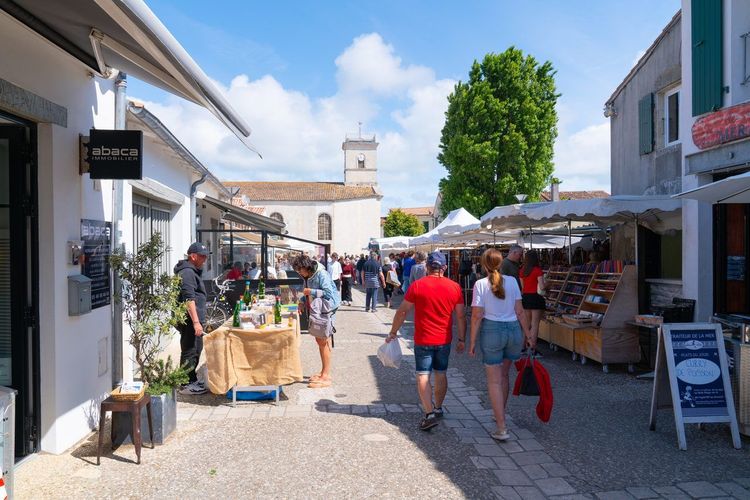
Three villages concentrate the essence of what Île de Ré has to offer beyond its main town.
Ars-en-Ré (listed among the Plus Beaux Villages de France) is immediately recognisable by its black-and-white bell tower, painted that way in the 17th century to serve as a landmark for ships. Its lanes lined with hollyhocks and mallows in summer, its low houses with blue or green lime-washed shutters, compose a scene that has changed little in two centuries. The rhythm of the village still revolves around the surrounding marshes: salt workers sell their salt each morning on the Place de la République, and cafés close at 10pm even in the height of August. The Foire aux Ânes d'Ars (late July) is one of the rare island events that draws as many residents as passing visitors.
La Flotte-en-Ré is the island's second harbour, livelier, with a popular covered market on Tuesday and Friday mornings (local produce, pertuis fish, seasonal vegetables). It is from La Flotte that sea kayaking trips and boat crossings to nearby islands depart — to the Île d'Aix, about 45 minutes by sea. The Plage des Gollandières (Chemin des Gollandières, 17630 La Flotte, rated 4.5/5 on Google from 2,062 reviews), a 5-minute bike ride from the village centre, is one of the widest beaches on the Atlantic side of the island. It splits into two sections separated by a rocky spur where children catch shrimps at low tide, well away from the crowds of Le Bois-Plage beaches in peak season.
Loix is the most secluded of the three. This village, accessible by a single road through the marshes, has never wanted a second access route. The walk from the village to the Pointe de Grignon (4 km return, entirely flat) runs alongside active saltpans on both sides of the dyke. Off-season, you will pass more little egrets than walkers. The village bakery, open all year, makes brioches with fleur de sel that have become a local ritual.
Each of these villages deserves half a day without a fixed plan. The mistake would be trying to tick them all off in a single day — slowness is part of the discovery.
Historical Heritage: the Fort de la Prée, the Abbaye des Châteliers and the Bridge
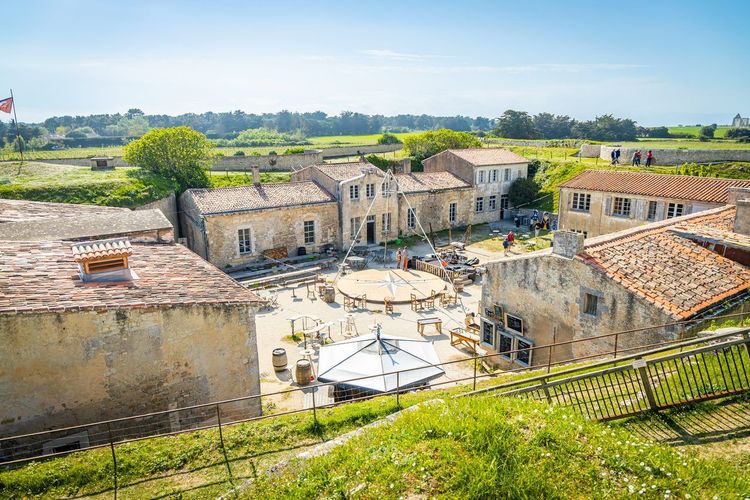
Île de Ré played a strategic role for centuries, within sight of La Rochelle and on the route of English ships. Three sites allow you to read this historical depth.
The Fort de la Prée in Rivedoux-Plage is the oldest bastioned fortification on the island. Built in 1625–1626 on the orders of Toiras, governor of the island, partly using stones taken from the nearby Abbaye des Châteliers, it played a decisive role during the English siege of 1627: it was from here that the royal troops managed to resupply and relieve Saint-Martin-de-Ré, which was besieged by the Duke of Buckingham. Now privately owned, it is open for guided tours from June to September (around €8, booking advised). The view from the moats over the estuary and the island bridge is particularly striking in the late afternoon.
The Abbaye des Châteliers between La Flotte and Saint-Martin-de-Ré is now a ruin, but a ruin of singular beauty. This Cistercian abbey founded in the 12th century still rises several metres high in the middle of the salt meadows. It is reached via a waymarked path from the main road, a 5-minute walk. Destroyed during the Wars of Religion in the 16th century and never rebuilt, it reveals pointed arches that reflect in the puddles at high tide. Access is entirely free, the site often deserted outside July and August.
The Pont de l'Île de Ré (Accès cyclable Rivedoux, 17940 Rivedoux-Plage, rated 4/5 on Google from 291 reviews) measures 2,926 metres — the third longest bridge in France when it opened in 1988. On foot or by bike, a dedicated lane allows you to cross in both directions (free from June to September). The perspective from the midpoint of the bridge — with the island on one side and La Rochelle on the other — is worth the trip even if you have nowhere particular to go on the other side.
Donkeys in Trousers and the Island's Curiosities
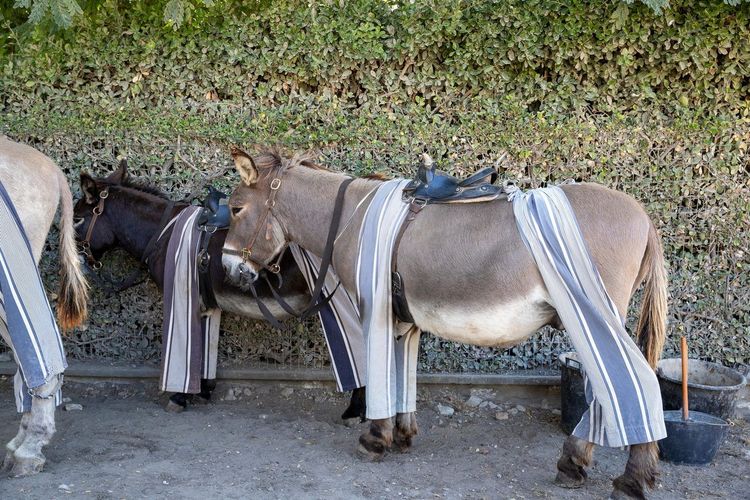
One of the most disarming traditions of Île de Ré is that of the donkeys in trousers. In the 19th century, salt workers' wives sewed canvas coverings onto their donkeys' legs and bellies to protect them from marsh mosquitoes. The practice has survived as a regional symbol: a local brotherhood keeps the tradition alive during summer festivals, and the image has become the island's visual trademark.
You can see them at La Couarde-sur-Mer, at a small farm that keeps a few costumed donkeys year-round. It is one of the most popular activities for children — and honestly, for adults too, when you see these animals roaming the marshes in canvas trousers.
The Atelier Quillet (41 Rue de la Mairie, 17410 Saint-Martin-de-Ré, rated 4.8/5 on Google from 361 reviews) in Saint-Martin-de-Ré is a curiosity of another kind. This faience and ceramic painting workshop founded in 1947 produces the azulejo tiles that decorate many houses and businesses in the centre of Saint-Martin. Weekday studio visits are possible; pieces can be purchased directly on site. Prices range from a few euros for a small tile to several hundred for large mural compositions — a genuine alternative to the standardised souvenirs sold at the harbour.
Beaches of Île de Ré: Which Ones to Choose
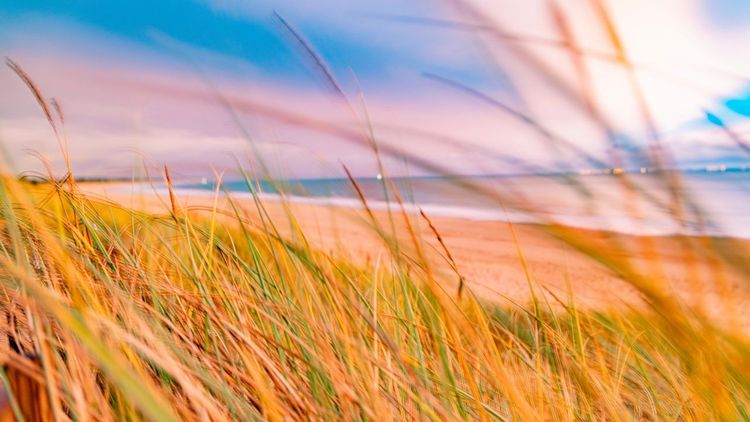
The island offers two radically different types of coastline depending on exposure, and the choice depends mainly on what you are looking for.
On the south and west (facing the Atlantic): fine sandy beaches beaten by waves, ideal for surfing and bodyboarding. The Beaches of Le Bois-Plage-en-Ré are among the widest on the island — at low tide, some stretch several hundred metres across. Le Bois-Plage is also one of the best beginner surf spots on the island. The Plage de la Conche des Baleines (Route du Phare, 17590 Saint-Clément-des-Baleines, rated 4.6/5 on Google from 937 reviews), right next to the lighthouse, is wilder and less known: no nearby shops, wind, waves that vary with the tide.
On the north (facing the Pertuis Breton): sheltered, shallow waters warmed by the sun and very popular with families with young children. The beaches of La Couarde-sur-Mer and those around Loix offer swimming with no significant currents, supervised in July and August. For something in between, the Plage des Gollandières at La Flotte combines calmer waters with an unspoilt setting.
In peak season, Le Bois-Plage beach car parks fill up by 10am. Come by bike or arrive before 9am if you are driving.
Gastronomy and Local Produce
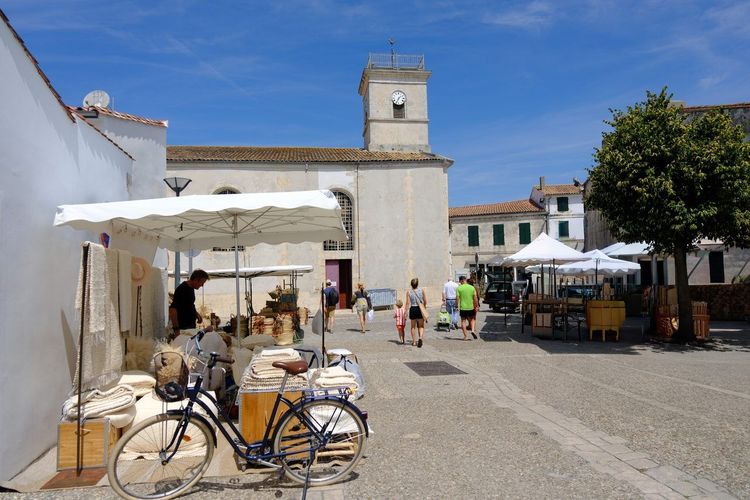
Île de Ré produces some of the most prized ingredients on the Atlantic coast, and local cooking revolves around these products without detour.
The fleur de sel is the star, but the list is long: pertuis breton oysters (matured for 3 to 4 years in the clear waters between the island and the mainland), AOP early potatoes (harvested from May to July, among the first of the season in France), pineau des Charentes (a blend of cognac and unfermented grape juice) and small cherry tomatoes grown in the island's market gardens. Each of these products can be found directly from producers or at the morning markets.
The Le Bois-Plage-en-Ré market (Tuesday and Friday, all year) is one of the best-stocked for seasonal produce. The La Flotte market (Tuesday and Friday) has a strong fish stall with fresh morning arrivals.
For restaurants, Saint-Martin-de-Ré has the best tables. Local cooking centres on two signature dishes: chaudrée (a white fish soup with white wine and butter, inherited from the cod fishermen) and mouclade (mussels with cream and Charentais curry). Book ahead in July and August — the best restaurants in Saint-Martin often have no tables left after 7pm. The island also produces a local rosé (IGP Charentais), light and mineral, which pairs naturally with pertuis oysters.
How to Get to Île de Ré and Get Around
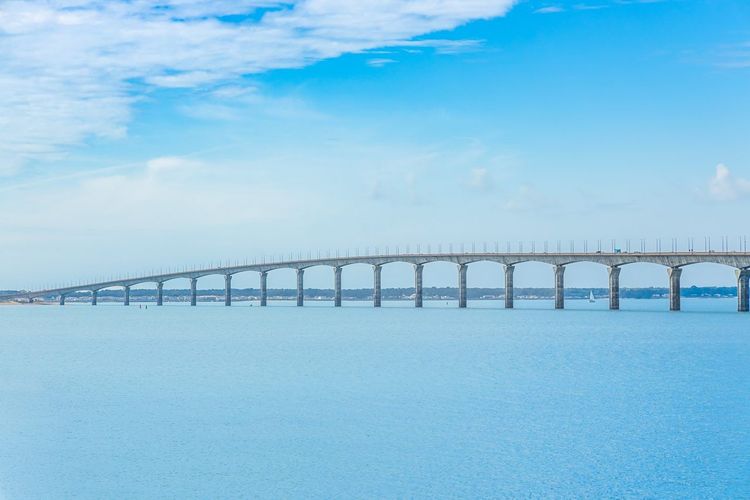
By car from La Rochelle: the Pont de l'Île de Ré (toll €16 in peak season) links Rivedoux-Plage directly to the La Rochelle ring road. From Paris, allow 4h30 via the A10 to Niort then the N11. From Bordeaux, 2 hours via the A10 and N137. In July and August, Friday evening and Sunday evening traffic at the toll can add an hour to the journey — leave before 3pm or after 8pm.
By train from Paris: La Rochelle station is connected to Paris-Montparnasse in 2h45 by TGV (5 to 6 direct services daily). From La Rochelle, regional bus line 150 (La Rochelle: Île de Ré) serves the island as far as Saint-Martin-de-Ré in 1h15. In summer, bikes are available at La Rochelle station to join the bridge cycle path directly.
On the island: the bike remains the most practical and most enjoyable way to get around. The car becomes a handicap in July and August when village car parks fill up by 10am. The regional bus network serves all communes with limited frequency off-season (1 to 2 buses per hour). Taxis are available from Saint-Martin-de-Ré, 7 days a week in season.
FAQ
What Is the Best Time to Visit Île de Ré?
May, June and September are the most pleasant months. Temperatures range between 18 and 24°C, crowds remain moderate and accommodation rates are significantly more reasonable than in peak season. July and August account for around 60% of annual visitors — the island is beautiful but car parks fill up, restaurants are fully booked without reservations, and rental prices reach levels comparable to Paris. Off-season, from November to March, the island is almost deserted, and many restaurants, hotels and bike rental shops close until spring.
How Do You Get to Île de Ré from Paris?
The fastest combination: TGV Paris-Montparnasse → La Rochelle (2h45, several daily return services) then regional bus line 150 to Saint-Martin-de-Ré (approximately 1h15). By car from Paris, the A10 to Niort then the N11 takes around 4h30 without traffic. In summer, absolutely avoid Friday evenings after 5pm and Sunday evenings after 4pm — bridge traffic can triple journey times over the last 20 kilometres.
Should You Book Your Bike in Advance?
In July and August, yes, absolutely. Most rental shops offer online booking 4 to 6 weeks ahead and sell out quickly. Off-season (October to June), booking the day before is usually sufficient. If you are travelling with children in a trailer or planning more than 40 km in a day, choose an e-bike. Favour local rental shops that have been established for several years — bike quality varies considerably from one shop to another.
How Long Does It Take to Visit Île de Ré?
A weekend (2 nights) allows you to cover Saint-Martin-de-Ré, the Phare des Baleines, Ars-en-Ré and the marshes at a brisk pace. 4 to 5 days is the ideal duration. A full week suits families with young children or holidaymakers who prefer to wander without a fixed itinerary.
Is Île de Ré Suitable for Families with Young Children?
Yes, very much so. The flat, safe cycle paths work for children from age 6 on a bike or in a trailer from a very young age. The northern beaches (La Couarde-sur-Mer, Loix) offer shallow, sun-warmed waters. The donkeys in trousers at La Couarde, boat trips from La Flotte, rockpooling at low tide and trailer bike rides are enjoyed from age 4. There is a wide choice of house rentals with gardens, and local markets make it easy to cook on site.
Where Should You Stay on Île de Ré?
Saint-Martin-de-Ré has the best hotels, with several 3- and 4-star options within the ramparts or by the harbour. Le Bois-Plage-en-Ré and La Flotte offer many house and villa rentals with gardens, well suited to families. Campsites, of which there are many on the island, charge rates comparable to a hotel in July and August (€50 to €90 per pitch) — book 6 months ahead for peak season. Ars-en-Ré and Loix have a few charming bed and breakfasts for those who prefer a village atmosphere to a marina.
What Activities Are Free on Île de Ré?
Several, and not minor ones. The walk around the ramparts of Saint-Martin-de-Ré is freely accessible at any hour. The trails of the Réserve de Lilleau des Niges and the marsh paths are free. The morning markets are open to everyone. Cycling across the bridge is free in both directions. The Plage des Gollandières in La Flotte is a public beach with no admission charge. The Abbaye des Châteliers can be visited at no cost from the exterior path. And the sunsets over the marshes of Ars-en-Ré, from the Loix dyke or the Pointe de Grignon, rank among the finest on the Charente coast — arguably the best value experience the island has to offer.
The Island Is Waiting, at Your Own Pace
Île de Ré rewards those who give it the time it deserves. Neither an open-air museum nor an interchangeable seaside resort, it holds a fragile balance between the traditions of the salt workers, village life and the summer tourist flow — a balance its residents have carefully preserved for decades. Come back in September, when the last fleur de sel harvests are drawing to a close and the flamingos are still on the mudflats: that is the island at its finest.
If this discovery makes you want to explore other islands with the same curiosity, Ryo offers audio-guided tours for several exceptional island destinations. The Ryo audio guide to Funchal takes you through the black-and-white cobbled lanes of the capital of Madeira. The audio walking tour of Fort-de-France plunges into the Creole history of Martinique. Two islands of a radically different character from Île de Ré, sharing that same intensity of landscape found only at the water's edge.