
Créé par Romane, le 17 nov. 2026
Votre guide Ryo
Funchal, Portugal
The Capital of the Island of Flowers
Parcours audioguidé pour visiter Funchal en 1 jour
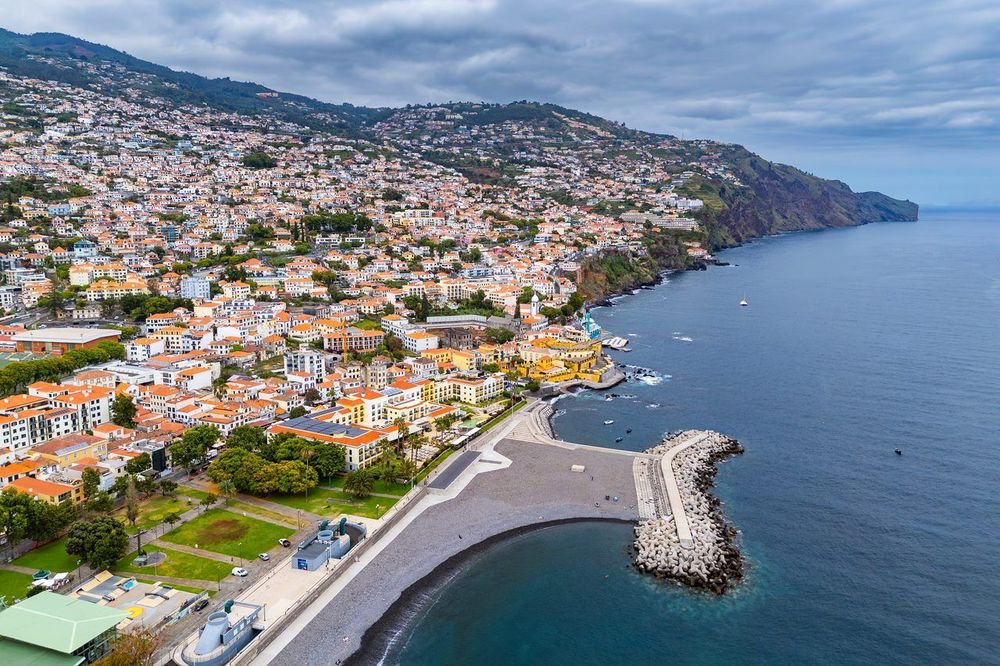
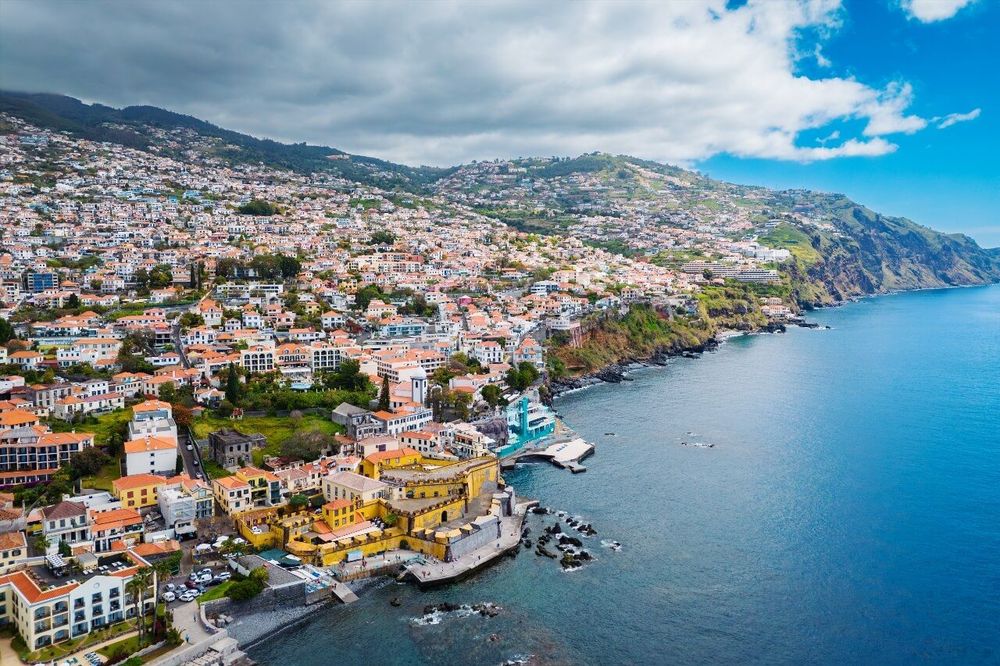
On the Atlantic coast, Funchal offers a blend of authenticity and an easygoing island lifestyle. With its historic streets, preserved heritage, and maritime landscapes, the city forms the vibrant heart of Madeira.
Quand partir à Funchal ?
Jan.
17°
9
Feb.
17°
8
March
18°
7
April
18°
6
May
20°
5
June
22°
3
July
24°
1
Aug.
25°
1
Sept.
25°
3
Oct.
23°
6
Nov.
20°
8
Dec.
18°
9
Funchal, and Madeira in general, enjoy mild weather all year round. Winters usually hover around 20°C during the day, while summers stay comfortably warm, averaging about 25°C. This means you can visit Funchal any time of the year. However, the sea temperature is cooler in winter, around 18°C, compared to a warmer 23°C in summer. So, if you’re planning to go diving, summer is the best time. Still, the most recommended season to visit Madeira is spring, when the island’s stunning flowering landscapes are in full bloom.
Départ conseillé
No need to worry about where to begin! Our tours are designed as a loop, so you can jump in wherever you are. The navigation system and audio-guide will automatically adjust to your location. However, if you happen to be nearby, we do have a preferred starting point: in front of the Cathedral.
Parking à proximité
Almirante Reis Parking : Artur de Sousa "Pinga" Street
À savoir
The tour passes by some of the city’s iconic landmarks, such as the cathedral, São Lourenço Palace, São Tiago Fort, and the covered market. Make sure to check their opening hours before your visit so you can go inside.
The official currency in Funchal is the same as in Portugal — the euro.
Découvrez 27 lieux d'intérêt pour visiter Funchal







What to see in Funchal on your 1h30 tour?
This 3.7 km loop takes about 1 hour 30 minutes and links 24 sights. From the cathedral, it follows Arriaga Avenue and the City Garden, drops to the São Lourenço Palace and the marina, crosses the seafront squares, climbs back past the Santa Luzia River toward the cable car and the Almirante Reis garden, then dives into the old quarter, between Santa Maria Street and the covered market, ending at Municipal Square. With the app in your ears, every square tells a chapter of Madeiran history.
Information checked in November 2026 and subject to change.
1 - Funchal Cathedral
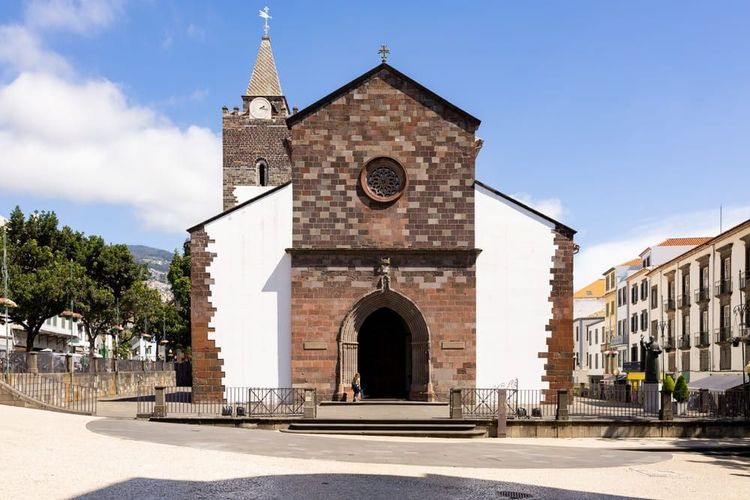
Standing since the late 15th century, this cathedral was the very first built by Portugal outside its own borders, a reflection of Madeira's importance in the age of the great voyages. Carved from volcanic stone quarried nearby, it keeps a fairly plain exterior that hides a richly decorated interior, with a gilded carved altarpiece, a finely worked local wood ceiling and a few typical tiled panels. A statue inside honours a papal visit in the early 1990s. If the doors are open, it is well worth stepping inside.
Free entry
2 - Arriaga Avenue Central Square
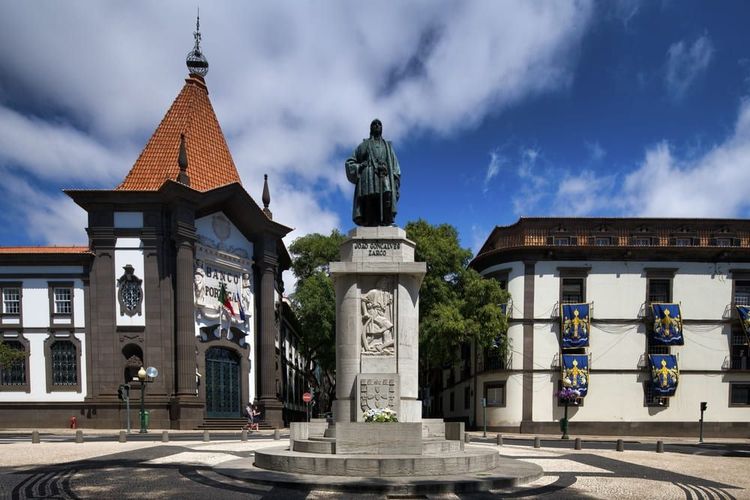
This grand avenue takes its name from the first president of the Portuguese Republic, yet another figure dominates the square: the navigator credited as the founder of the city, who landed on the island in the early 15th century as part of Portugal's great voyages of discovery. His statue, the work of a Portuguese sculptor from the 1930s, rests on a base decorated with allegories of that age of conquest. Just behind it stands the palace you'll discover a little further along this walk.
Free entry
3 - João Abel de Freitas Statue
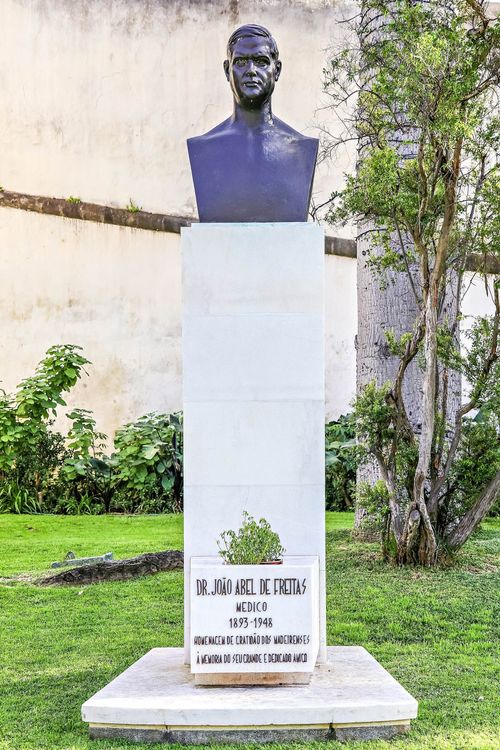
This statue honours a doctor turned politician, to whom the island owes much of its modernisation: new streets, schools, redeveloped neighbourhoods and constant involvement in local social causes. Take the chance here to look down at the pavement too: these black-and-white stones laid out in mosaic patterns belong to a typically Madeiran craft tradition, whose raw material once served as ship ballast before it came to cover the town's streets.
Free entry
4 - Funchal City Garden
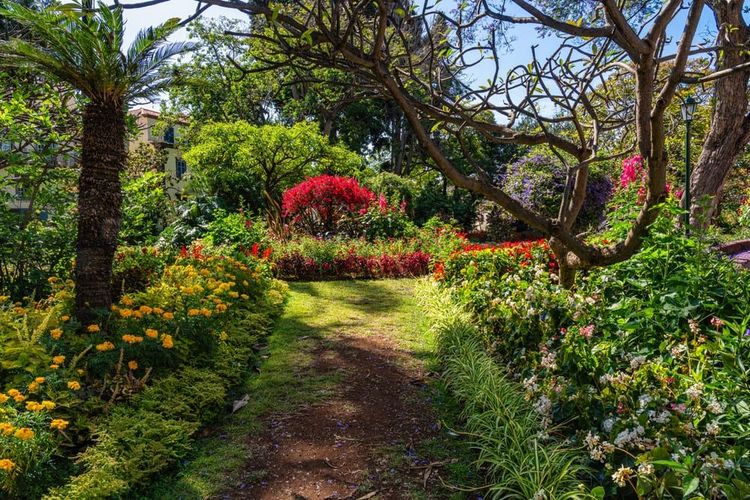
This generous green space replaced an old Franciscan convent when it was laid out at the end of the 19th century. It once bore the name of Portugal's last queen, whose reign ended abruptly with the assassination of her husband and son, an event that hastened the fall of the monarchy a couple of years later. Now simply called the City Garden, it remains a lovely spot to admire plants from Madeira and beyond, away from the bustle of the surrounding streets.
Free entry
5 - Baltazar Dias Municipal Theatre
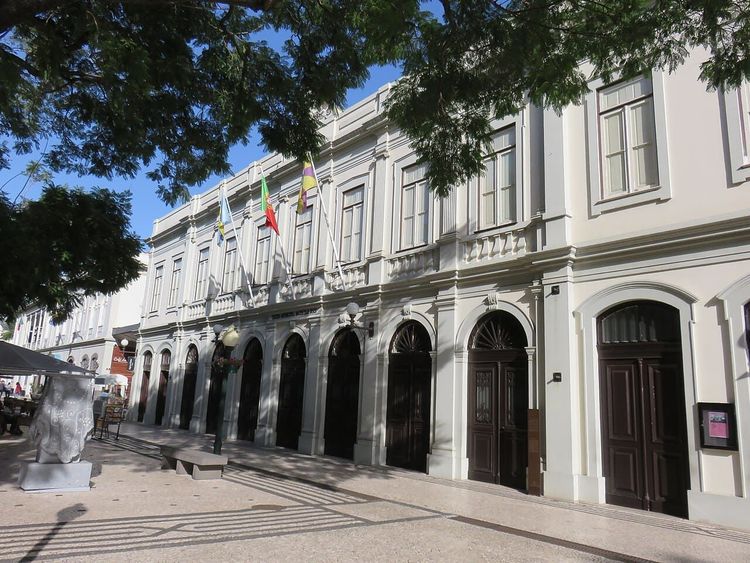
Facing the City Garden, this theatre opened at the end of the 19th century to replace an older venue. Its architecture draws directly on grand Italian opera houses, a project that changed hands more than once after its first architect died. It carries the name of a blind poet and playwright from the island who lived centuries earlier. Still active today, it remains one of the main venues for culture and live performance in Funchal.
Free to see from outside
6 - São Lourenço Palace
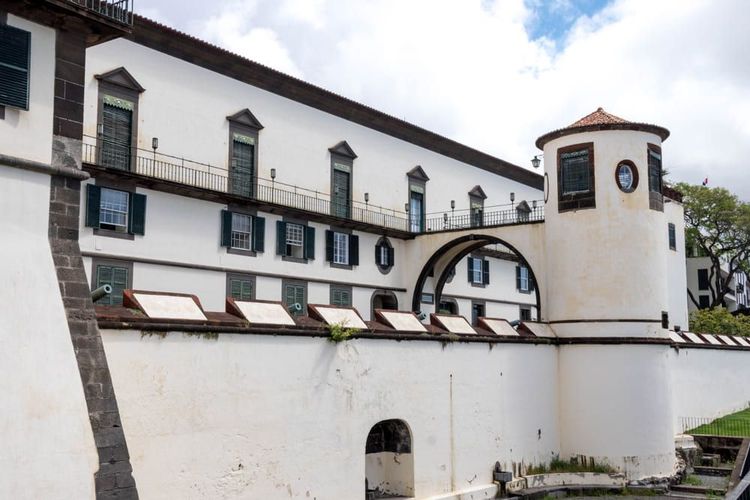
This long white building began life as a simple defensive fortress, before becoming the governors' residence once Spain took control of Portugal at the end of the 16th century. A fire partly destroyed it a few decades later, triggering major works that gave it the mix of architectural styles it shows today. Still home to the official representative of the Republic on the island, it also houses a museum displaying period furniture and royal portraits.
Free to see from outside
7 - Funchal Marina
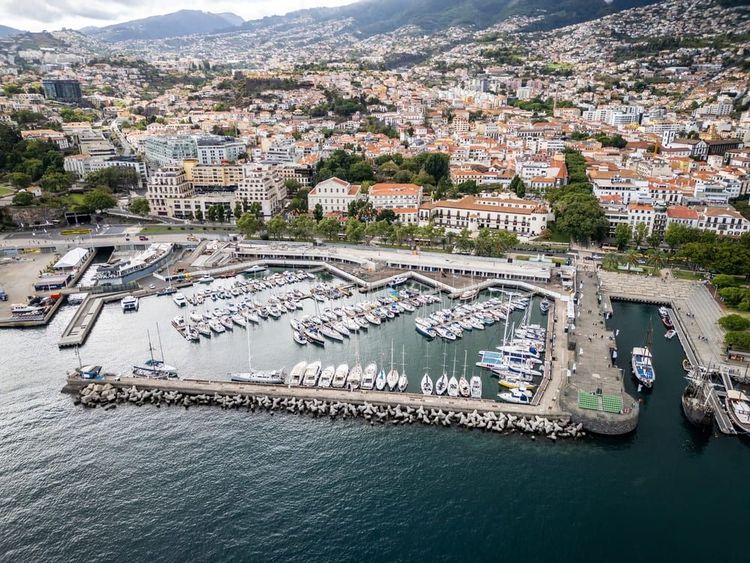
Here you reach one of the liveliest spots in town: yachts and pleasure boats crowd more than two hundred berths, surrounded by restaurants and shops offering boat trips or whale-watching outings. This harbour has existed since the 19th century and remains a key stop for vessels crossing the Atlantic. The island itself has repeatedly been named one of Europe's best cruise destinations.
Free entry
8 - People’s Square
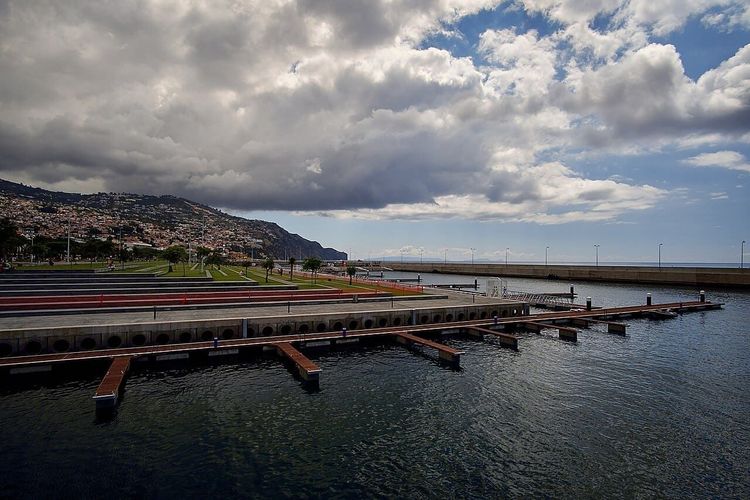
This square greets newcomers arriving from the water, a short walk from the marina. Laid out in the early 2010s, it regularly hosts open-air concerts and events, and above all offers a lovely view over the bay and the boats waiting in the harbour. The avenue running alongside it is much older, built in the 1940s during major works to redevelop the seafront, and remains a favourite spot for a stroll.
Free entry
9 - City Gates
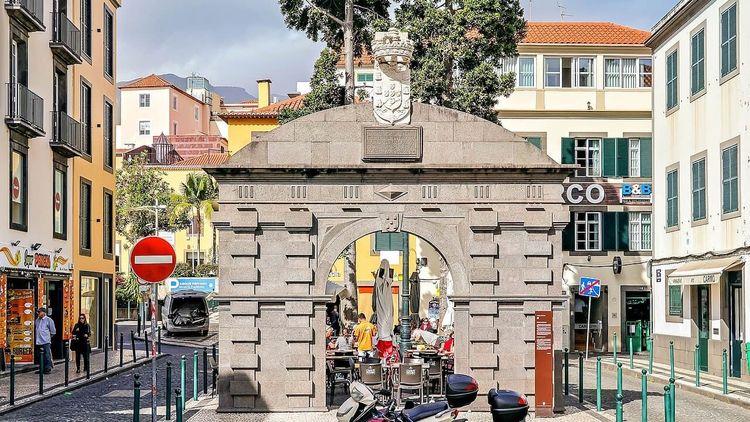
This imposing gate isn't original: it's a faithful reconstruction built in the early 2000s, copying the gate that once let people into the walled city. Erected at the end of the 17th century by a governor heavily involved in defending Funchal, the real gate was torn down in the early 20th century once the ramparts had lost their purpose. Only the crown and crest at the top genuinely come from the vanished original, kept as the last trace of that defensive architecture.
Free entry
10 - Columbus Square
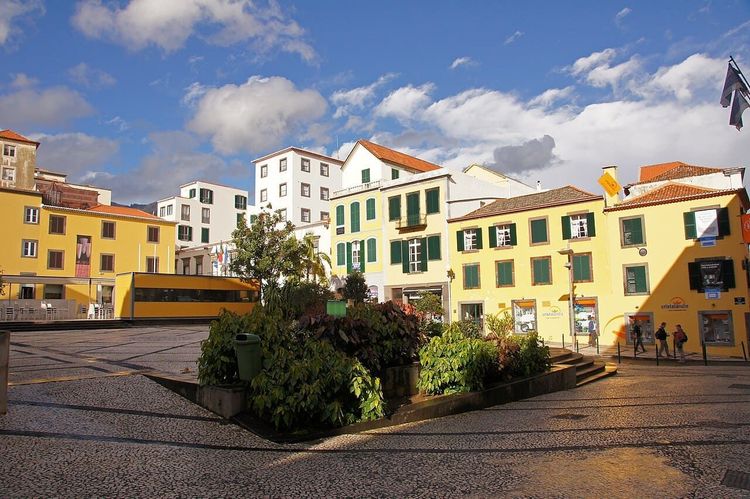
Locally nicknamed the Yellow Square for the façades surrounding it, this plaza took its current shape after archaeological digs carried out in the 1990s. Its name honours a famous navigator said to have stayed here, in the home of a wealthy local merchant, during a visit to the island at the end of the 15th century. The yellow building closing off the square houses a museum devoted to sugar, once Madeira's great source of wealth, long since overtaken by other products.
Free entry
11 - Santa Luzia River
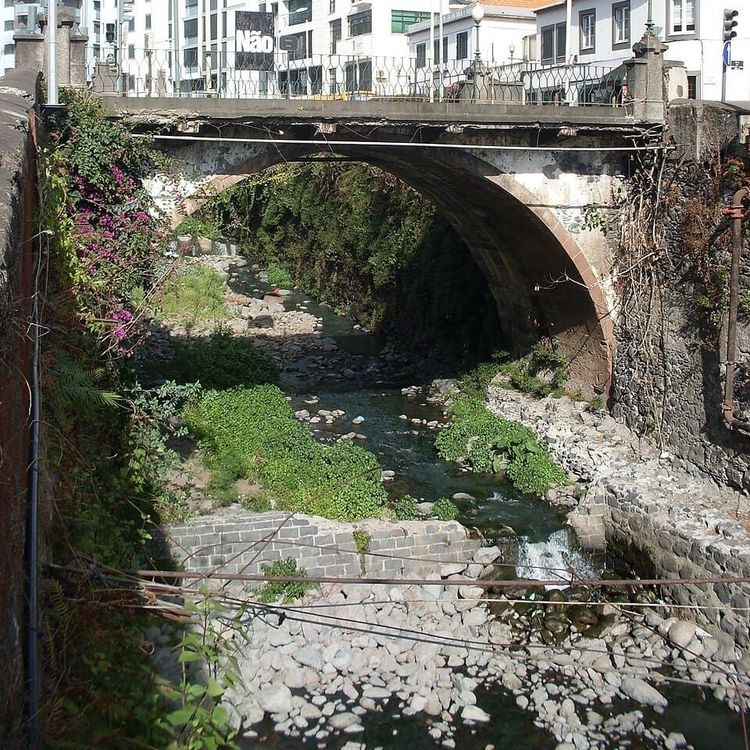
Here you cross one of the two rivers that water the city, rising high up in the island's mountains. A vast network of traditional channels, used for centuries to carry water to the driest areas, runs alongside these streams and now forms some of the most popular hiking trails on the island. A little further on, this river meets its twin near a square celebrating the political autonomy Madeira gained in the 1970s, where a few remnants of the old city wall also survive.
Free entry
12 - Electricity Museum
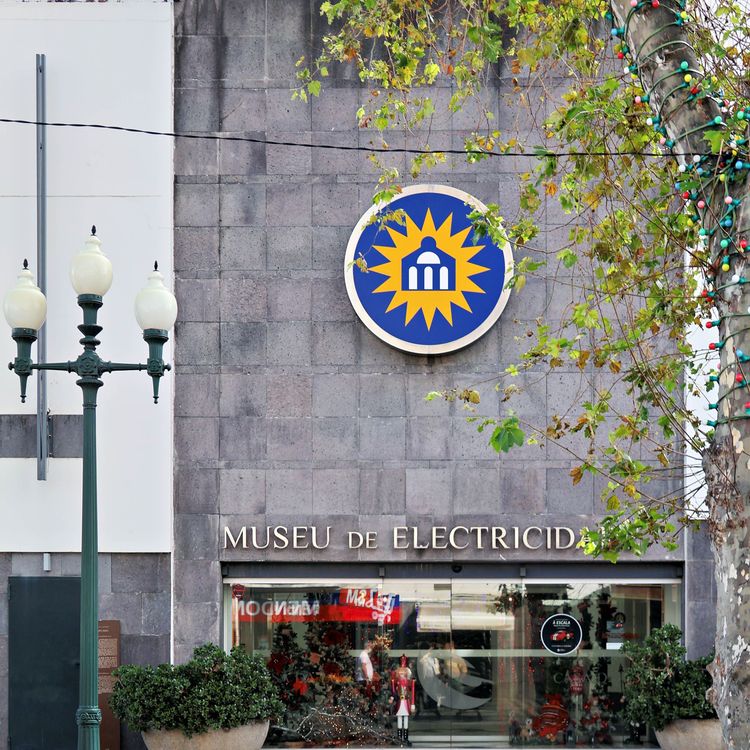
Housed in a former power station, this museum traces the whole history of electricity on the island, from early lighting to the machines that still generate it today. The rooms also display scale models of power plants and a section devoted to renewable energy, an important question for an island like Madeira. Opened in the late 1980s, it makes for an instructive and rather original visit, for a small entrance fee, for anyone curious about local industrial history.
Paid entry
13 - Madeira Story Centre
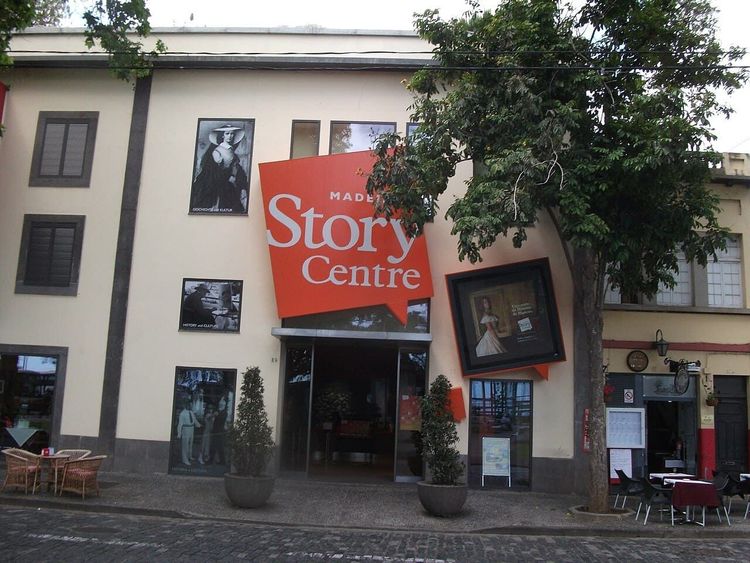
This museum offers a full overview of the island's history, from its geological formation to the heyday of its trade, taking in its discovery, the pirate raids it once endured and its role in Portuguese history along the way. Designed to be interactive, the visit ends on a terrace with a lovely view over the city centre and the seafront. Allow about an hour, for a small fee, to learn everything about this ancient territory.
Paid entry · Allow 1 h
14 - Funchal Cable Car
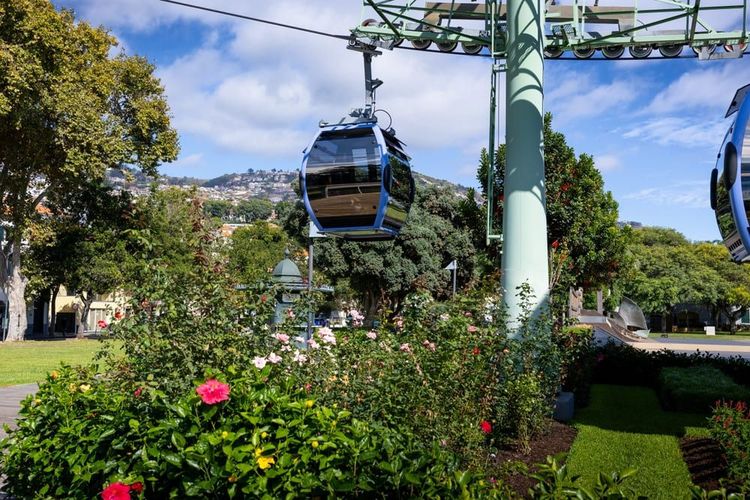
This cable car whisks you up in about fifteen minutes to the heights of the city, where a renowned tropical garden and a charming local church await. Coming back down, you have two options: ride the cable car again, or glide down in a wicker sledge steered by locals, a traditional means of transport used here since the mid-19th century to reach the city centre quickly. A rather unique experience, lasting only about ten minutes.
Paid entry (about €22)
15 - Monument to the 500th Anniversary of the Diocese of Funchal
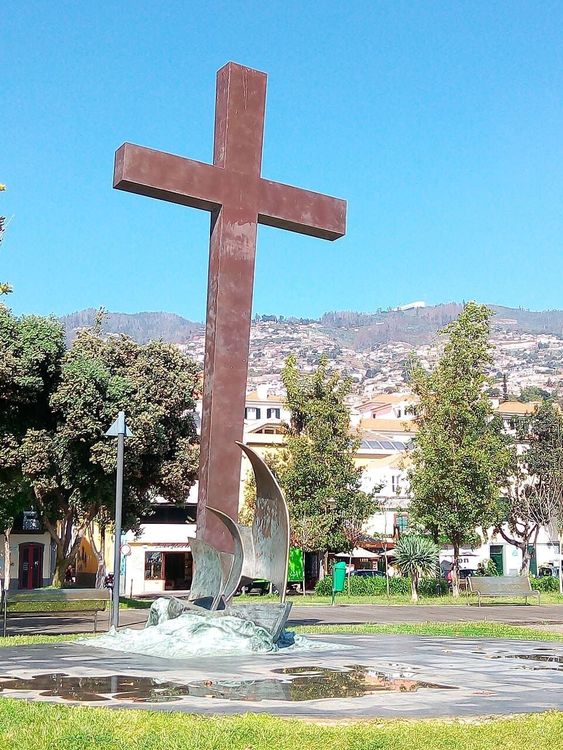
This monument marks an important anniversary: that of the very first diocese Portugal created outside its own borders, at a time when the island stood for all of the kingdom's overseas territories. Erected in the early 2010s, it combines a large religious cross with stylised sails, a clear nod to Madeira's maritime past and its role in Portugal's expansion across the world.
Free entry
Discover the Monument to the 500th Anniversary of the Diocese
16 - The Football Player
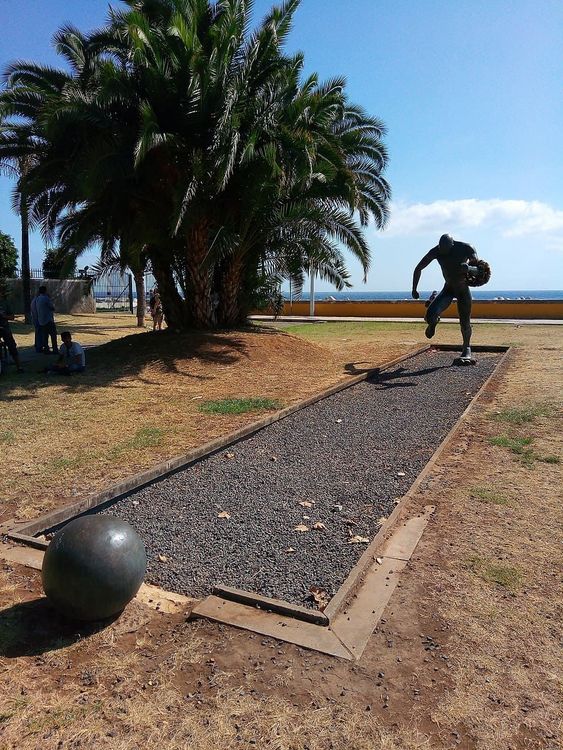
This statue shows a footballer about to strike a ball, honouring the island's earliest players, who once trained on a pitch that stood right on this spot. Madeira has had a professional club since the early 20th century, and above all saw one of football's greatest-ever players grow up here, born in Funchal. A museum entirely dedicated to this champion can be found a little further away, on the other side of the city centre.
Free entry
17 - Fort Viewpoint
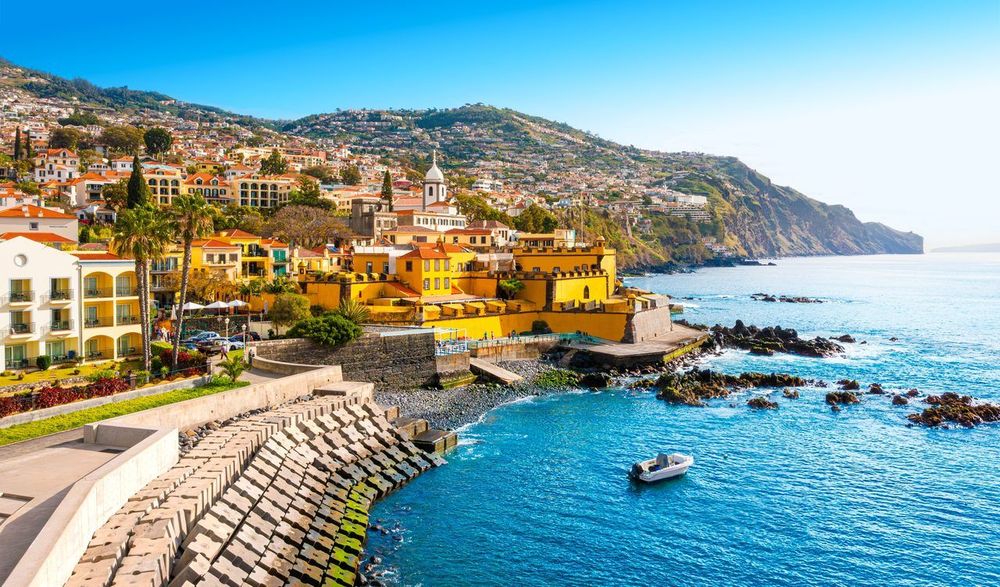
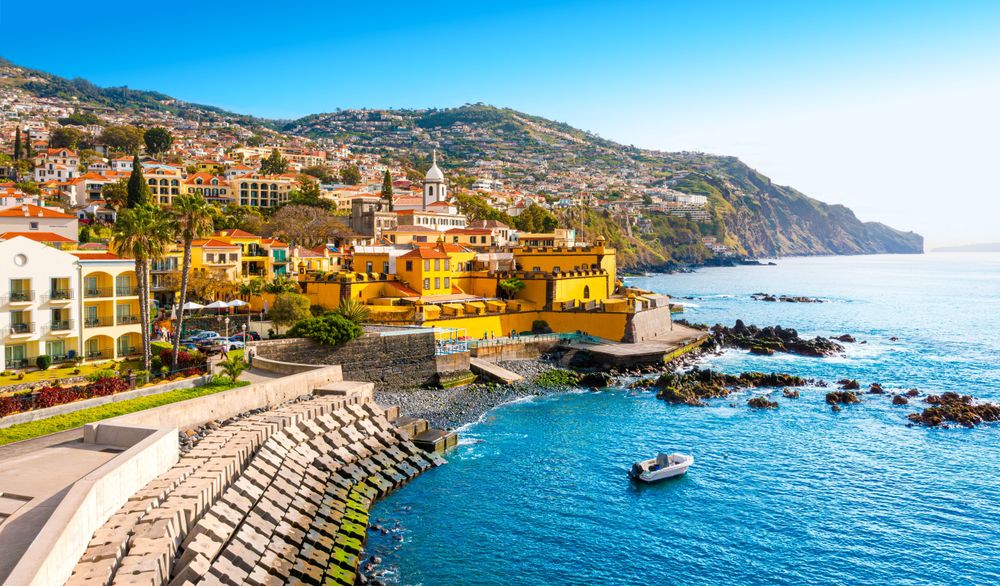
From here you get a fine view of a brightly coloured fortress overlooking the coastline. Built in the 17th century to defend the city against privateer raids, which were common at the time on such a sought-after island, it kept a military role for centuries before briefly housing a contemporary art museum. Now open to the public, it is best known for its vivid yellow walls, perfect for a memorable photo from this viewpoint.
Free to see from outside
18 - Santa Maria Street
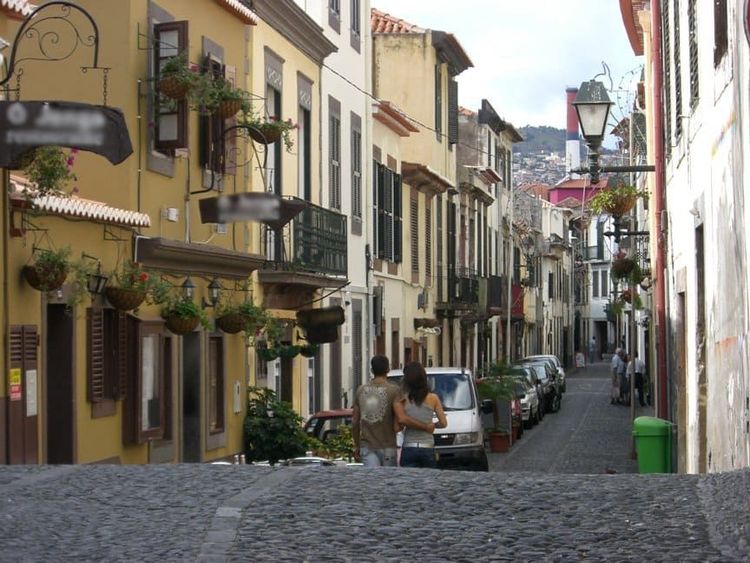
This narrow cobbled street ranks among the oldest in the city, running through the very first neighbourhood ever built in Funchal. Lined with colourful houses, small shops and traditional restaurants, it owes much of its popularity to an art project launched in the early 2010s: local artists painted the doors and some façades, turning several of them into genuine open-air artworks. Keep an eye out, you'll easily spot a few along the way.
Free entry · Best in the morning
19 - Farmers’ Market
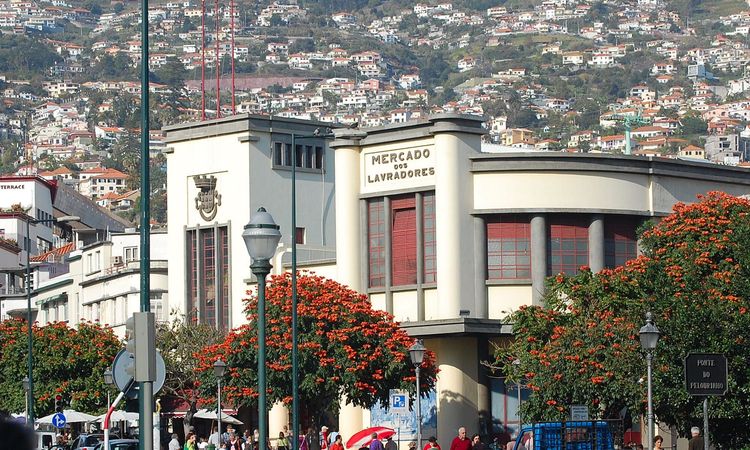
Spread across several floors of colourful stalls, this covered market has brought together the island's flavours since the mid-20th century. Its architecture, typical of the 1930s, has earned it a listing among the country's historic monuments. Some vendors still wear traditional local dress. Inside you'll find exotic fruit, fish, marinated meats and a host of typically Madeiran treats, best enjoyed with a glass of the island's famous local wine. A real treat for the senses, worth a full walk-through before buying anything.
Free entry · Best in the morning
20 - Dr. Fernão de Ornelas Street
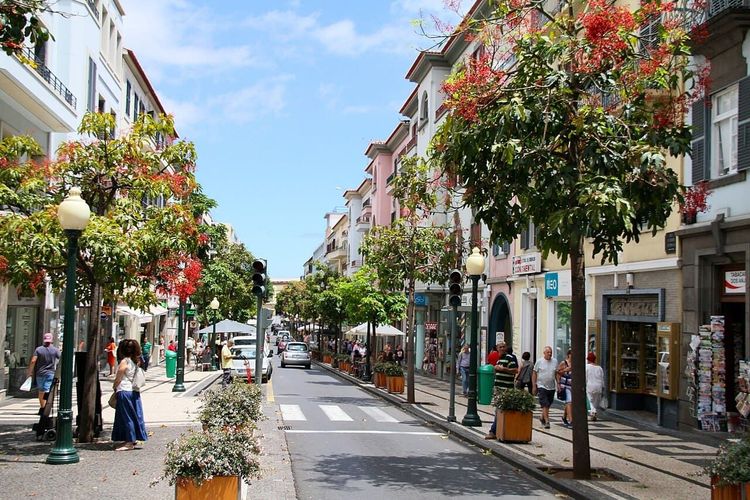
Younger than the alleys of the old centre, this street is named after a former mayor of the city, elected remarkably young in the mid-20th century and remembered for thoroughly modernising Funchal during his time in office. His work extended the city well beyond its historic neighbourhoods, giving rise to this avenue now lined with shops and café terraces. A good place to wander slowly or take a well-earned break.
Free entry
21 - Carmes Square
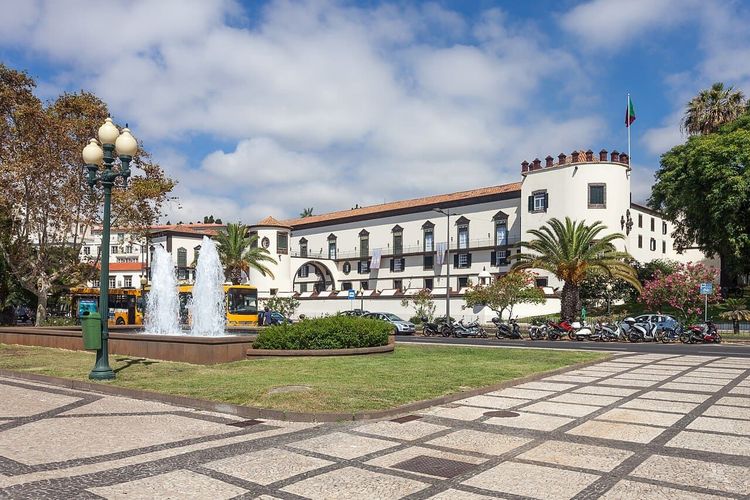
Considered one of the most picturesque squares in the city, it is surrounded by old buildings, including a pink palace slightly older than the façades around it. The ground, paved with black-and-white stones in geometric patterns, adds to the square's typically Madeiran charm. Under the arcades lining the plaza, several restaurants set out tables in summer, creating a lively atmosphere in a spot named after a convent that has long since disappeared.
Free entry
22 - Wine Institute
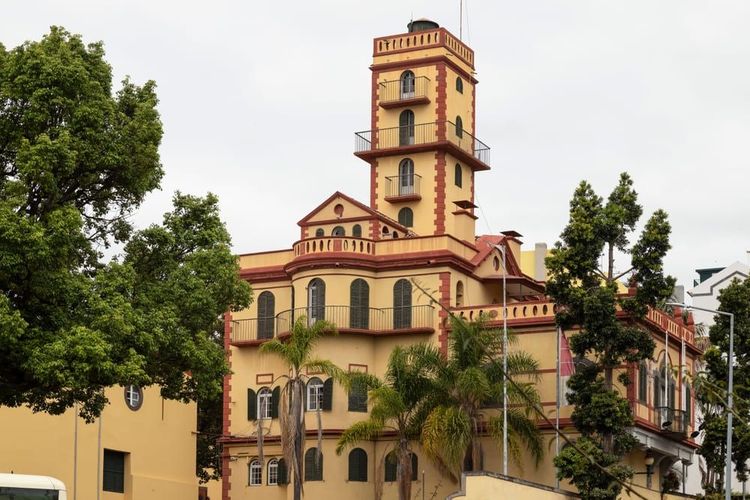
Housed in the former home of a local wine merchant, this building with its distinctive architecture holds a museum devoted to Madeira wine, a production that took over from sugar once that trade stopped paying off abroad. The island now counts several dozen different grape varieties, grouped into a few main categories by sweetness. The institute also keeps ties to another local craft, embroidery, practised here for centuries and long exported overseas.
23 - Courthouse
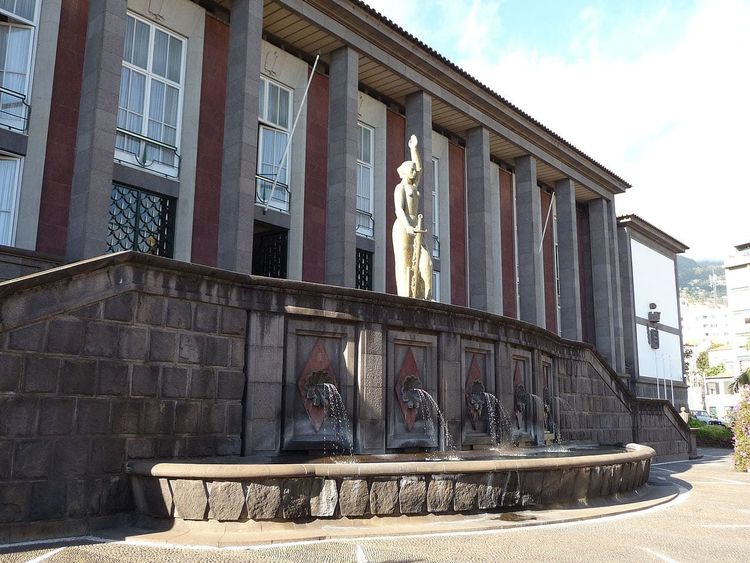
This imposing building houses the city's courthouse, handling the island's civil, criminal and administrative cases. Its rather plain, functional architecture reflects Portuguese administrative style from the last century, while still blending discreetly among older buildings nearby. In front of the entrance, a statue of a woman holding a sword symbolises the strength and rigour justice requires. It stands just steps from the town hall, your next stop.
Free to see from outside
24 - Municipal Square
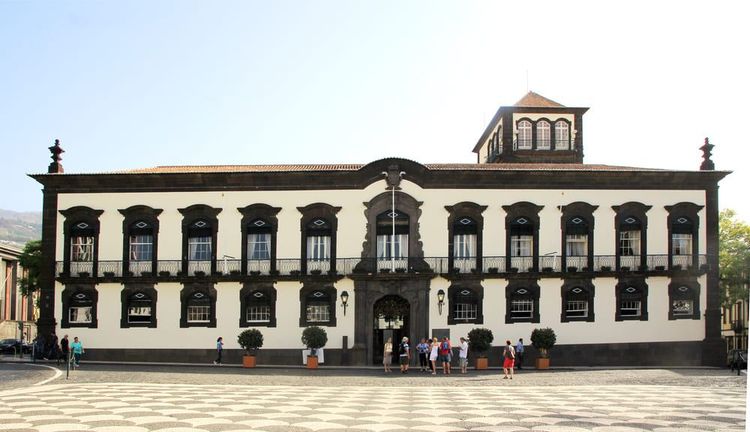
Easy to spot thanks to its wave-patterned paving, this square brings the walk to a fitting close, surrounded by several major historic buildings. The town hall, a former lordly residence from the 18th century, can be visited by appointment. Beside it, the old Jesuit college and its baroque church reveal tiled panels, painted ceilings and gilded altarpieces, while opposite, a museum devoted to sacred art occupies a former bishop's palace, displaying Portuguese and Flemish paintings and silverware.
Free entry
Which neighbourhoods does the tour cross?
The loop links the districts that each tell a chapter of Funchal's story, from the historic centre to the seafront, then on to the old town and its painted doors.
It starts at the cathedral, in the heart of the historic centre, and follows Arriaga Avenue, the city's main cultural artery, past the City Garden and the façade of the Baltazar Dias Municipal Theatre, before running alongside the São Lourenço Palace (steps 1 to 6).
The route then reaches the seafront and Avenida do Mar: the marina, whose harbour dates back to the 19th century, People's Square and the City Gates, followed by Columbus Square and the Santa Luzia River (steps 7 to 11).
From there it enters the old town, past the Electricity Museum, the Madeira Story Centre and the cable car station bound for Monte, continues to the Fort Viewpoint, then comes back along Santa Maria Street, with its painted doors, to the Farmers' Market (steps 12 to 19). The loop closes via Dr. Fernão de Ornelas Street, Carmes Square, the Wine Institute and the Courthouse, ending at Municipal Square (steps 20 to 24).
How much does it cost to visit Funchal?
Of the 24 stops on the route, 16 are freely open and 4 more are seen from the street, with no need to go inside: the Baltazar Dias Municipal Theatre, the São Lourenço Palace, the Fort Viewpoint and the Courthouse.
Among the others, 3 stops are paid: the Electricity Museum and the Madeira Story Centre, whose prices are best checked on site, and the Funchal Cable Car up to Monte, listed at €22 by the operator; the fare depends on whether you go one way or return.
Information checked in November 2026 and subject to change.
Where to stop for a bite along the tour?
With its tropical fruit stalls and fish hall, the Farmers' Market (stop 19) is the obvious place for a tasty break on the route.
At the table, try the espetada, a beef skewer marinated in garlic and grilled over wood, or the espada preta, a breaded fillet of black fish served with grilled banana and a passion-fruit sauce. Shellfish lovers turn to lapas, grilled with garlic and butter, while Portugal's classic bacalhau salt cod also makes an appearance.
To go with it, bolo de caco, a garlic-buttered flatbread, comes before local sweets: bolo de mel, made with cane-sugar honey, walnuts and almonds, queijadas, small fresh-cheese cakes, or pasteis de maracuja, a passion-fruit take on the classic pastel de nata. A glass of Madeira wine rounds off the tasting.
What to do in Funchal with children?
The Madeira Story Centre is one of the route's stops most enjoyed by families.
This interactive museum tells the story of Madeira, from its volcanic formation to its economic rise built on sugar, wine and tourism, through re-enactments and playful displays that appeal to younger visitors. Earlier on the loop, the Funchal City Garden (stop 4), laid out in 1880, offers a green break between stops, its paths lined with plants from Madeira and around the world.
What should you know before visiting Funchal?
Several stops keep their own opening hours: if you plan to go inside, check them before setting off.
The cathedral and the Carmo Church, on Carmes Square, remain active places of worship whose hours shift with the services; visits there always call for a respectful attitude. The São Lourenço Palace, meanwhile, is best seen from outside: it houses the residence of the Representative of the Republic for Madeira and a military museum, with their own access conditions. The Fort Viewpoint, finally, stays freely open, though entry into the fortress itself keeps its own hours.
As for the cable car up to Monte, the ride depends on the season and the weather: it is worth checking the schedule beforehand, especially when conditions look uncertain.
What's on in Funchal right now?
As the holidays approach, Funchal lines up several end-of-year events, just steps from the route:
- the Christmas market, the Mercadinho de Natal, sets up regional crafts and food stalls on Arriaga Avenue's central square, from 1 December to 10 January;
- the Aldeia de Natal, a Christmas village designed for children and families, fills Municipal Square with stories, traditional games and shows, from 4 December to 6 January;
- the Noites do Mercado turn the Farmers' Market into evenings of traditional song, from 9 to 23 December;
- on 31 December, the New Year's Eve fireworks, listed in the Guinness World Records, light up Funchal Bay for about 8 minutes, from 58 firing points.
Information checked in November 2026 and subject to change.
Le plein d'inspirations
Explorez le monde en totale liberté, à pied au cœur des villes ou au fil des routes. Nos guides audios transforment chaque destination en une découverte culturelle immersive et unique.










FAQ for visiting Funchal
When is the best time to visit Funchal?
Funchal enjoys a privileged climate that makes it possible to visit all year round. Winters are particularly mild, with temperatures around 20°C, while summers stay pleasant at about 25°C. If you want to enjoy swimming and diving, favour summer when the sea reaches around 23°C. Spring, however, remains the ideal season to discover Madeira in all its splendour, when the island adorns itself with its most beautiful flowers and fully lives up to its nickname, the Island of Flowers. This period offers a perfect balance between mild temperatures and exceptional floral landscapes.
How many days do you need to visit Funchal?
To discover the essentials of Funchal, generally allow two to three days. This gives you time to explore the historic centre, wander through the colourful markets, visit a few emblematic gardens and take the cable car to admire the city from above. If you want to delve deeper into your visit and include excursions in the surrounding area or make the most of the island atmosphere, four to five days is an ideal length. It also leaves you time to sample the local specialities without rushing and to soak up the Madeiran art of living that gives the capital its charm.
How do you get around Funchal?
The centre of Funchal is easy to explore on foot, especially as many attractions are concentrated in the old town and its surroundings. For longer journeys or the hillside neighbourhoods, the yellow public buses efficiently serve the whole city at generally affordable fares. Taxis are also plentiful and handy for quickly reaching certain points of interest. The cable car is both a means of transport and a tourist attraction for going up to Monte. If you prefer independence, car hire remains an interesting option, especially if you plan to explore the island beyond Funchal.
What is there to do in the historic centre of Funchal?
The historic heart of Funchal is full of treasures to discover as you stroll around. The cobbled lanes lead you to the Sé Cathedral, a masterpiece of Manueline architecture, and to the Mercado dos Lavradores, where colours and aromas immerse you in the local atmosphere. The old town area charms visitors with its doors painted by local artists, creating an open-air art gallery. For an in-depth discovery of the emblematic sites and the fascinating history of the city, the Ryo audioguide offers a guided tour that reveals the secrets of Funchal while letting you explore at your own pace.
What are the main gardens to visit in Funchal?
Funchal is home to several remarkable gardens that reflect the botanical wealth of Madeira. The Botanical Garden offers an impressive collection of exotic and endemic plants with spectacular views over the bay. The Monte Palace Tropical Garden, reached by cable car, delights visitors with its art collections, peaceful lakes and lush vegetation. The gardens of Palheiro Ferreiro are especially appealing in spring with their camellias and azaleas. Not to mention the Santa Catarina municipal park, perfect for a relaxing break with a view over the ocean. Each garden reveals a different facet of this island nicknamed the floating garden of the Atlantic.
How do you take the Funchal cable car and how much does it cost?
The Funchal cable car departs from the seafront area, near the old town, and takes you up to Monte in about fifteen minutes. This spectacular ascent offers stunning views over the bay, the harbour and the city's rooftops. Tickets are bought directly at the departure station, usually with one-way or return options. Fares vary according to the season, and discounts are often offered for children and families. It is advisable to go early in the morning or late in the afternoon to avoid the queues, particularly in the high tourist season.
Where can you taste the local specialities of Madeira?
Funchal offers many opportunities to savour authentic Madeiran cuisine. In the old town, traditional restaurants serve espetada, beef skewers grilled on laurel wood, and bolo do caco, a typical bread accompanied by garlic butter. The Mercado dos Lavradores lets you discover local exotic fruits such as custard apples and passion fruit. For the famous Madeira wine, head to the historic cellars in the city centre, where tastings are regularly offered. The small family-run tascas in the working-class neighbourhoods are often the best addresses for tasting generous, affordable local cuisine.
What transport is there from the airport to the centre of Funchal?
Cristiano Ronaldo Airport is about twenty kilometres from the centre of Funchal. The airport bus is the most economical option, with regular departures throughout the day and a journey of around forty-five minutes depending on traffic. Taxis offer more comfort and speed, generally in half an hour, with fixed fares often displayed at the airport. Private shuttle services and pre-booked transfers are also available, particularly handy if you are travelling in a group or with a lot of luggage. Car hire directly at the airport remains an interesting alternative if you plan to explore the island during your stay.
What is there to do by the sea in Funchal?
The Avenida do Mar runs along the harbour and sets the tone: a promenade lined with jacarandas, terraces, a marina full of colourful boats and sometimes a huge cruise ship at the quay. To the east, the Forte de São Tiago, an old fortress with bright yellow walls, guards the entrance to the old town of Santa Maria and opens onto the pebble beach of Barreirinha.
To the west, the walkway continues to the seaside district of Lido and to Praia Formosa, with bathing complexes carved into the volcanic rock, natural pools and direct access to the ocean. The coastal path linking these stretches is easy to walk, ideally in the late afternoon. The Ryo audio guide offers a dedicated Funchal route that connects the seafront with the lanes of the centre.
What can you see around Funchal in a day?
From Funchal, a few kilometres are enough to change the scenery completely. To the west, the fishing village of Câmara de Lobos, a favourite of Churchill's, comes before the Cabo Girão cliff and its glass platform suspended over the void. Higher up, the summits of Pico do Arieiro and Pico Ruivo often rise above a sea of clouds, linked by a demanding mountain trail.
The levadas, irrigation channels cut into the hillsides, offer gentler walks through the laurel forest, and the valley of Curral das Freiras reveals itself from a spectacular viewpoint. Bring sturdy shoes, a jacket and a torch: the weather changes quickly at altitude and some routes go through unlit tunnels.
What is the best itinerary for visiting Funchal in 3 days?
Day one is devoted to the old town: Rua Santa Maria with its painted doors, the Sé Cathedral, the Mercado dos Lavradores, then museums or a beach stop and espetada for dinner.
Day two takes you up to Monte by cable car, with the Monte Palace Tropical Garden and the wicker toboggan ride down, followed by the Botanical Garden or Blandy's Wine Lodge, then the CR7 Museum. Day three is dedicated to the ocean and surroundings: dolphin watching by boat from the marina, Cabo Girão or Curral das Freiras.
Find the day-by-day itinerary, where to stay and the budget to plan for in our guide to visiting Funchal in 3 days.
Is Funchal easy and safe to visit when travelling solo?
Yes, Funchal is a great choice for solo travellers: Madeira is known for its low crime rate, and the compact city centre, well lit and busy late into the evening, can be explored on foot or by bus, with no need to rent a car.
You can combine the Mercado dos Lavradores, the Zona Velha with its painted doors, the cable car up to Monte (€16 one way) and the botanical garden. For hikes, booking through SIMplifica is now required on the official trails.
To plan your trip, read our complete guide to exploring Madeira on foot, solo.
Vos commentaires, idées et suggestions
Aucun avis pour le moment