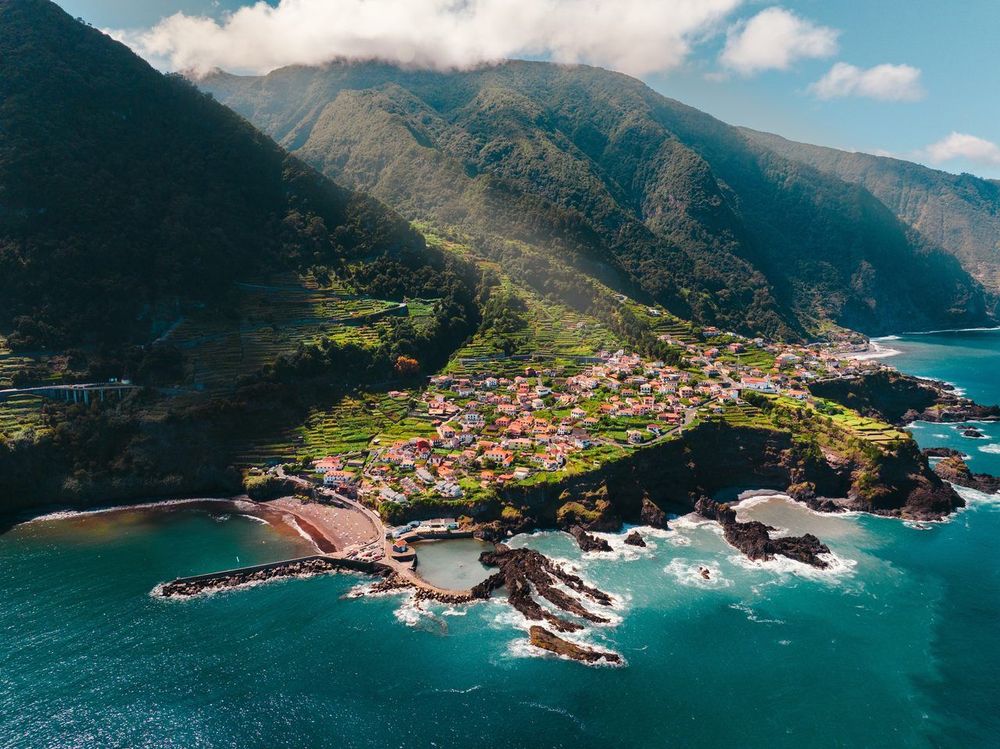
© Shutterstock
 Votre guide Ryo
Visiting Funchal Solo in 2026: The Complete Guide to Exploring Madeira on Foot
In Funchal, the seafront terraces fill up from 6 pm with solo travelers, notebook or phone in hand, without anyone batting an eye. It is one of the few entry points to the Madeira archipelago where you can do almost everything on foot or by bus, without ever booking a car. Visiting Funchal solo is therefore far from a risky adventure: the city packs a colorful market, a cobbled old town, a cable car up to the heights and a lively seafront into an area you can cover in a few days. You'll go from the Mercado dos Lavradores, where vendors pile up tropical fruit at dawn, to the alleys of the Zona Velha where each painted door tells a different story, before riding a cabin up to the village of Monte and heading back down, if you dare, in a wicker toboggan. To get your bearings without relying on a guide or a group, the Ryo audio-guided tour of Funchal already marks out the essentials of the historic center, step by step, at your own pace.
Funchal, a Reassuring Destination for Solo Travel
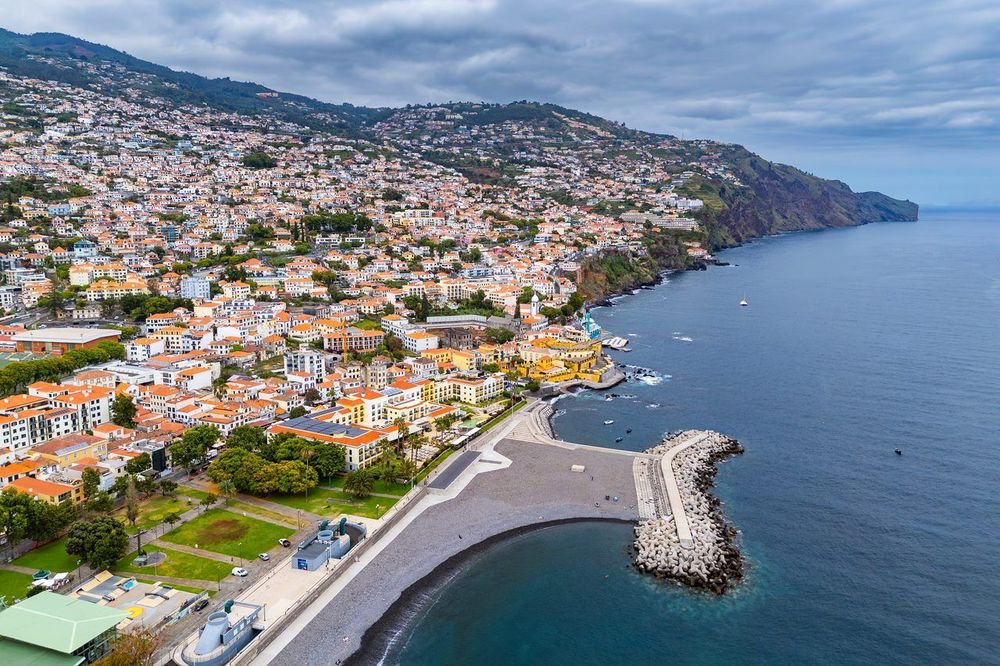
Madeira is known for its low crime rate, and Funchal, its capital, concentrates most of the shops, cafés and accommodation in a compact city center running along the ocean. Locals constantly rub shoulders there with retirees, families on vacation and solo travelers who have come for the hikes or simply for the mild air of the archipelago. You can walk late at night without any particular worry: the streets of the center remain lit and busy until the bars close, and public transport still runs in the early evening.
This kind of trip is particularly suited to those who like to move at their own tempo: a late start one day, a demanding hike the next, with no one to answer to. If you're torn between renting a car and staying in town, know that Funchal is more than self-sufficient for several days, with its historic center, hanging gardens and seafront. Public buses and organized excursions then cover the rest of the island for the more remote stops, sparing you the sometimes dizzying mountain roads.
So you never have to wonder about the day's route, that same Ryo audio guide accompanies you alley after alley, with no group to follow and no time slot to book: you move on, stop, and set off again whenever you like.
The Zona Velha, the Historic Heart to Explore on Foot
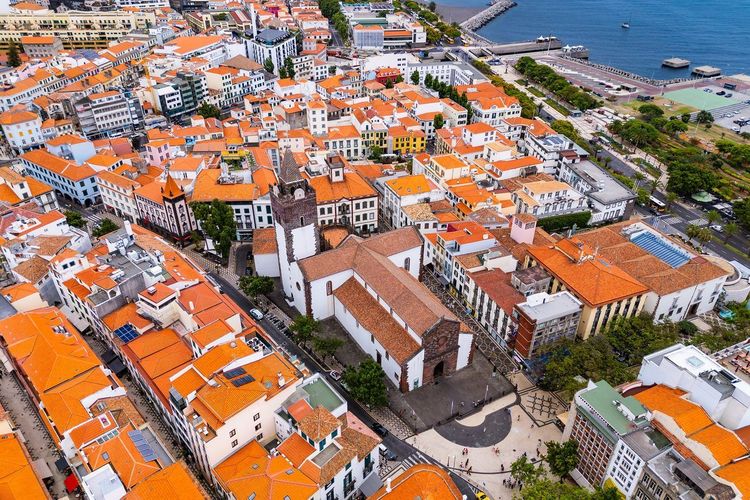
The Zona Velha alone holds a good part of Funchal's charm: uneven cobblestones, crumbling façades and that blend of melancholy and effervescence the Portuguese call saudade. You can spend an entire morning there without ever leaving a perimeter of a few streets, among craft shops, Madeira wine bars and grilled-fish restaurants with outdoor seating.
Alleys and Painted Doors of the Old Town
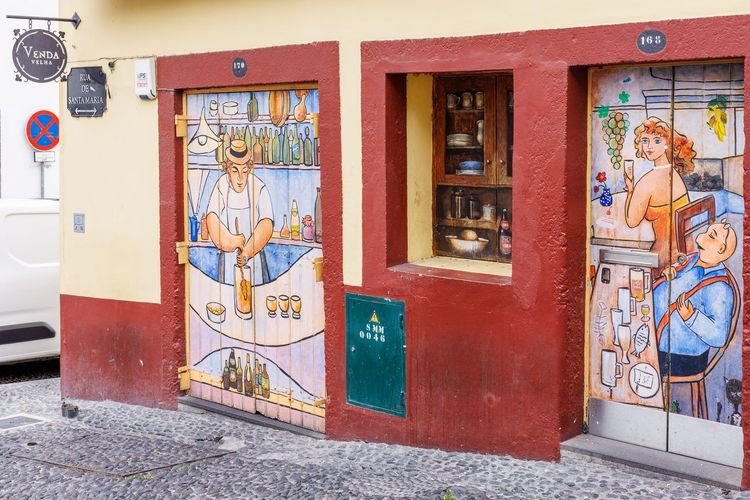
Since 2010, more than 200 doors on the Rua de Santa Maria have been repainted by local and guest artists, turning a once-dilapidated street into an open-air gallery. Each door tells its own scene: fishermen, folk figures, abstract portraits, market scenes. Some have since disappeared under a fresh coat of paint, while others are restored before the high season.
You'll quickly recognize the special atmosphere of this street at the end of the day, when the terraces with improvised fado attract the first customers sitting alone with a glass of Madeira wine. Take the time to step into one or two craft galleries: most of the makers work on site and are happy to tell passersby the story of their door.
The Mercado dos Lavradores, the Island's Colorful Market
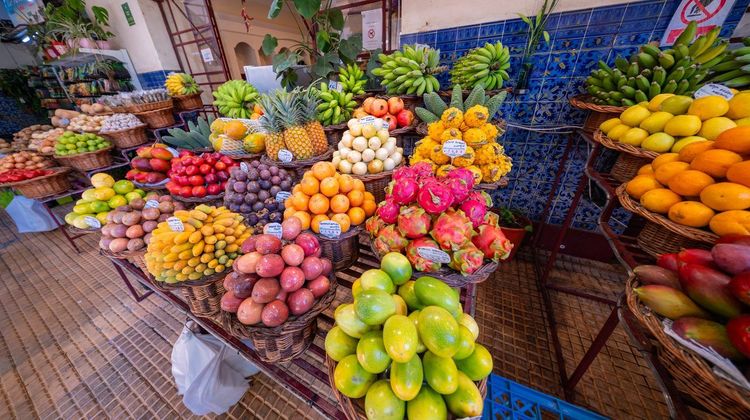
Ten minutes away on foot, the Mercado dos Lavradores (Rua Latino Coelho 39, 9050-266 Funchal, rated 4.1/5 on Google from 29,224 reviews) opens its doors at 7 am and remains the place where the island displays everything it produces: dwarf bananas, passion fruit, silvery fish freshly landed and cut flowers sold by women in traditional costume. Opened in 1940, the market spans two levels arranged around a central patio, with azulejo panels on the façade and in the entrance.
The fish hall often surprises solo visitors: the stalls of black scabbardfish, caught in deep waters off the archipelago, are a show in themselves, with silvery blades and auction calls in rapid Portuguese. As for fruit, the vendors will gladly offer a taste before you buy, making it a friendly stop even without a travel companion. Beware, though, of the prices displayed for tourists, often much higher than those in nearby supermarkets. Allow a good hour to go around without rushing, and keep some cash for the smallest stalls.
The Ryo audio-guided tour of Funchal, old town and market section links these two stops by telling you, in your ear, the story of the Mercado's vendors and the origin of some of the painted doors, with no need to check a map on your phone while walking.
Gaining Height: Cable Car, Monte and Gardens
Once you've explored the old town, the logical next step is to gain some altitude. Two experiences complement each other well in half a day, provided you start early to avoid the cable car queue in late morning.
The Funchal Cable Car to Monte
The Teleférico do Funchal leaves from the Zona Velha and climbs about 560 meters to the village of Monte, over 3.2 kilometers covered in around fifteen minutes. The view over the bay, the banana trees and the old quintas is worth the ride on its own, especially in clear weather in the morning. In 2026, expect to pay 16 euros one way and 22 euros round trip in a standard cabin.
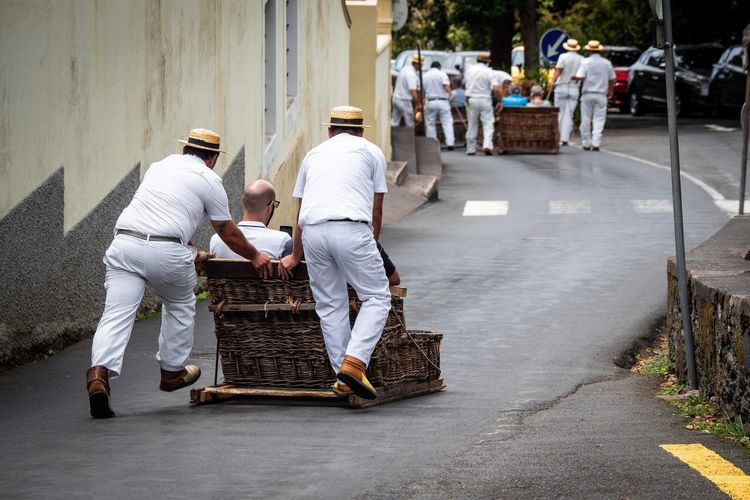
Once in Monte, the most frequently told local anecdote is that of the carreiros do Monte, those drivers in white outfits and straw boaters who speed down the slope on wicker toboggans sliding over the asphalt, a tradition born in the 19th century to quickly carry residents down to the city center. The experience is paid and optional, but it makes almost every traveler who tries it alone laugh, for lack of a witness to immortalize the descent.
The Botanical Garden and Its Floral Mosaics
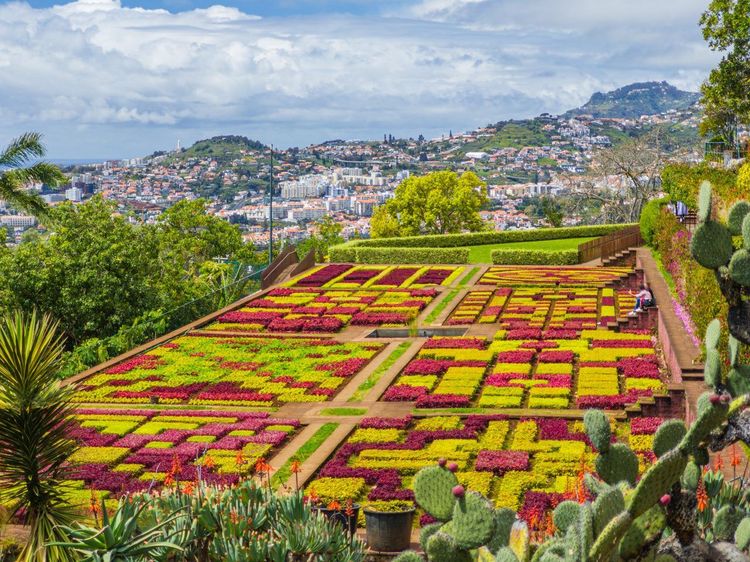
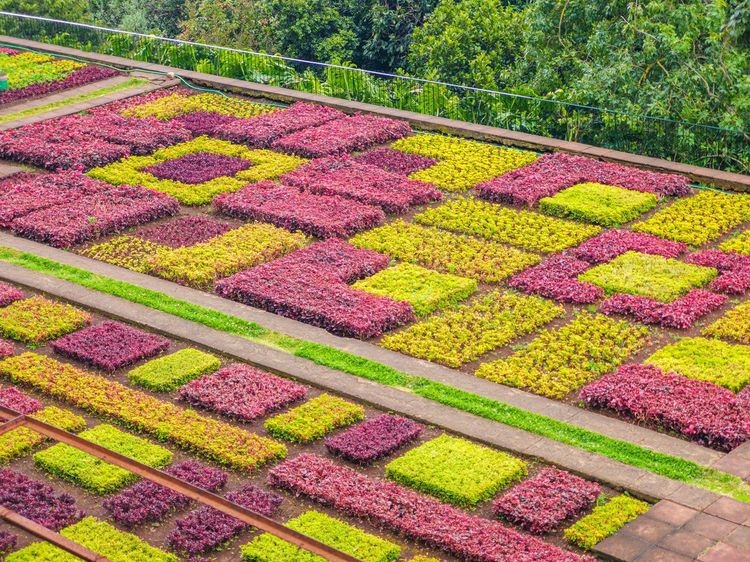
From Monte, a second cable car, opened in 2005, reaches the Jardim Botânico da Madeira (Caminho do Meio, 9064-512 Funchal, rated 4.3/5 on Google from 24,570 reviews) in about nine minutes. Its flowerbeds, trimmed into geometric mosaics, overlook the valley and the port of Funchal. You'll come across giant cacti, orchids and an aviary devoted to tropical birds, on sloping ground that invites you to sit down regularly and enjoy the panorama.
If you're traveling solo, this is a place to slow down without feeling watched: the benches scattered among the flowerbeds invite you to read, take photos or simply gaze at the bay, far from the bustle of the center.
That same Ryo audio guide also continues its story up to the outskirts of Monte, detailing along the way the history of the cable car line opened in 2000 and the legend of the wicker toboggans.
The Seafront and Parks Not to Miss
Back down on the coast, Funchal's seafront offers two contrasting stops: a peaceful public garden and a museum that leaves no one indifferent.
Santa Catarina Park and the View over the Bay
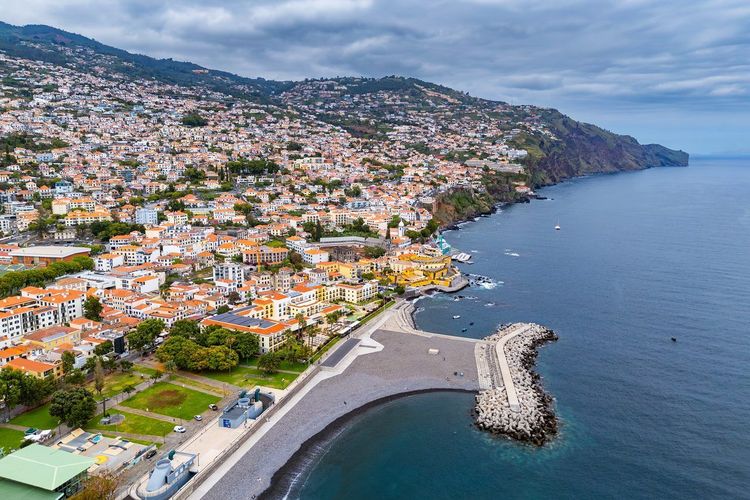
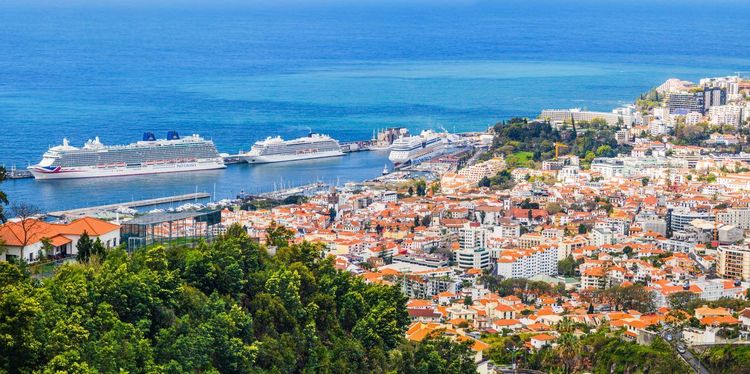
Perched on a hill above the port, the Parque de Santa Catarina (Avenida do Infante, 9000-015 Funchal, rated 4.6/5 on Google from 8,013 reviews) offers one of the best free views over the bay of Funchal, the cruise ships at the quay and the mountains closing the horizon. A small chapel founded in the 15th century and remodeled since, a duck pond and benches in the shade of jacaranda trees make it a popular spot for a break in late afternoon.
You can get there by the stairs from the Avenida Arriaga or extend the walk to the Avenida do Mar, where the terraces come alive at sunset.
The CR7 Museum, an Offbeat Stop for Football Fans
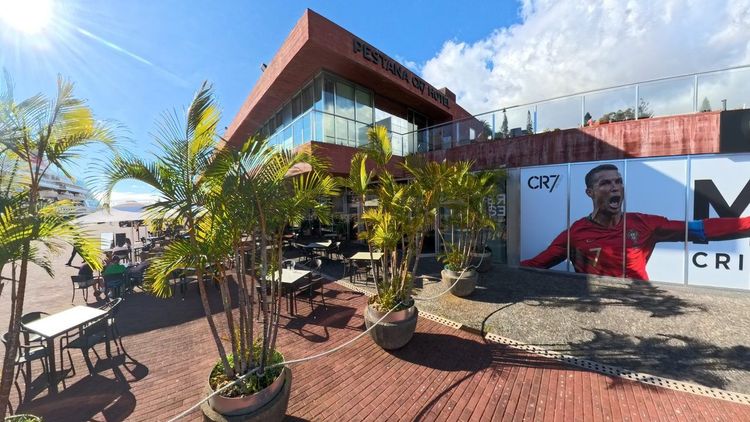
Born in Funchal, Cristiano Ronaldo lent his name to a museum entirely devoted to his career: trophies, jerseys and a life-size statue in front of the entrance, where the queue for a photo often stretches onto the sidewalk. Even if you're not a football die-hard, the place tells part of the local identity: the player remains a proudly claimed regional hero, to the point that the island's airport bears his name.
Allow 45 minutes for the visit, handy for filling a break between two showers if the weather turns during your stay.
Hikes and Levadas: Madeira's Nature Accessible Without a Car
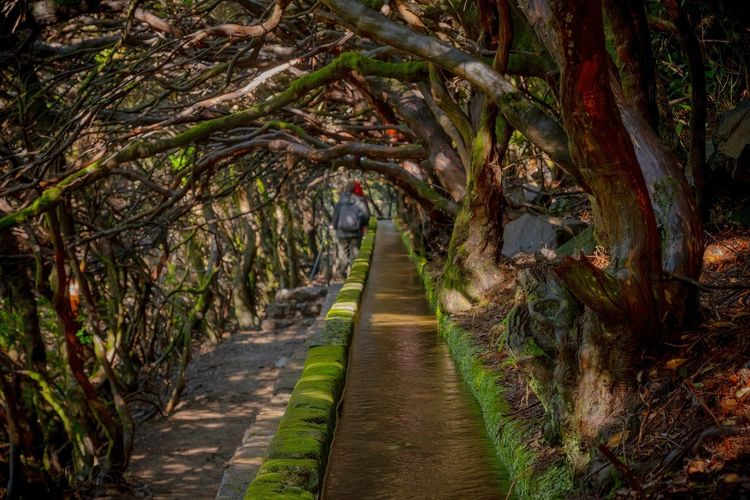
It is often the main reason to come to Madeira alone: the island has a dense network of marked trails, accessible by public bus or organized minibus, which require neither a car nor much technical experience for most of the easy routes. Since January 2026, however, the official trails (PR) require a reservation on the SIMplifica portal, with a 30-minute entry slot and fees for non-residents over 12: plan ahead before each outing.
The Levadas, a Walk Along the Irrigation Channels
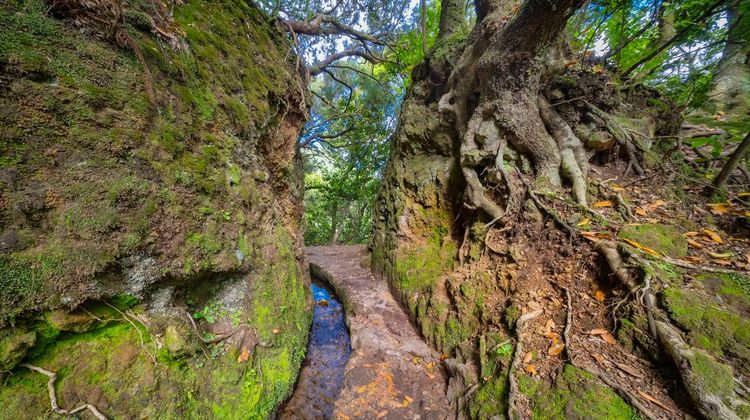
The levadas are irrigation channels dug as early as the 15th century to carry water from the wet summits to the drier crops of the south. Their service paths, often flat, cross the laurel forest (laurisilva) listed as a UNESCO World Heritage Site. The Levada dos Balcões, starting from Ribeiro Frio, and the Levada do Caldeirão Verde, longer and dotted with tunnels, are among the most accessible routes for solo hikers, well marked and used by other walkers.
Pico Ruivo and Pico do Arieiro, the Roof of the Island
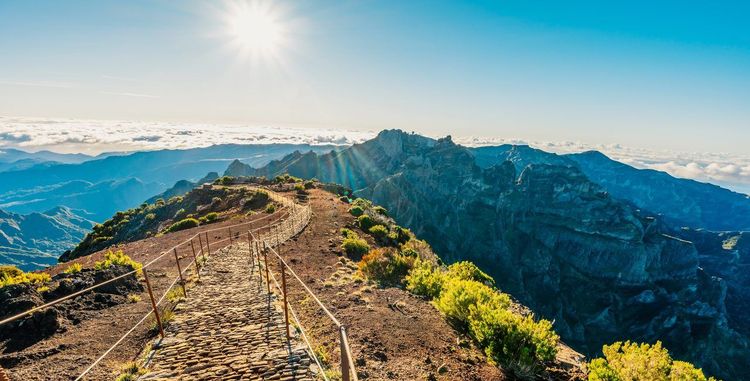
At 1,862 meters, Pico Ruivo is the highest point in Madeira, reached by a round-trip trail of about two hours from Achada do Teixeira. Pico do Arieiro, the island's third-highest summit at 1,818 meters, can be reached by car or minibus directly to the summit parking lot, offering an immediate view over a sea of clouds that often evaporates by mid-morning.
The crossing between the two summits (PR1), about 7 kilometers long with tunnel sections and steps carved into the rock, reopened in 2026 after the August 2024 fire. It is now walked one way only, from Pico do Arieiro to Pico Ruivo, with mandatory reservation (10.50 euros per person). Spectacular, it demands good physical condition and fair weather: it regularly closes in fog or strong wind, something to check the day before with your accommodation. When traveling solo, also plan the return from Achada do Teixeira, from where no bus departs: an organized minibus solves the problem.
The Saint Lawrence Point (Ponta de São Lourenço)
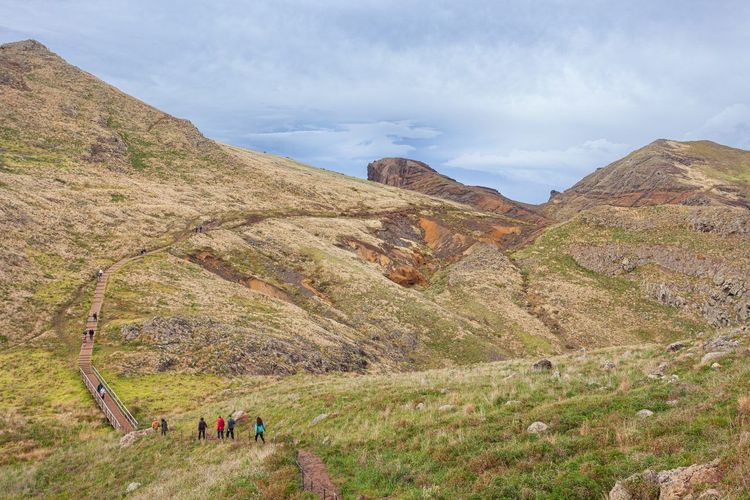
In contrast to the green landscape of the island's center, the Ponta de São Lourenço (Sítio das Ginjas, 9200 Caniçal, rated 4.8/5 on Google from 14,484 reviews) unfolds arid, ocher cliffs all the way to Madeira's eastern tip. The PR8 trail, windy and shadeless over about 7 kilometers round trip, offers dizzying views of the ocean on both sides of the peninsula.
Bus 113, which leaves from the Avenida do Mar in Funchal, drops you directly at the Baía d'Abra stop, at the start of the trail. Book your slot on SIMplifica (4.50 euros), start early to avoid the heat and bring plenty of water.
What to Do Outside Funchal: Villages and Excursions to Slow Down
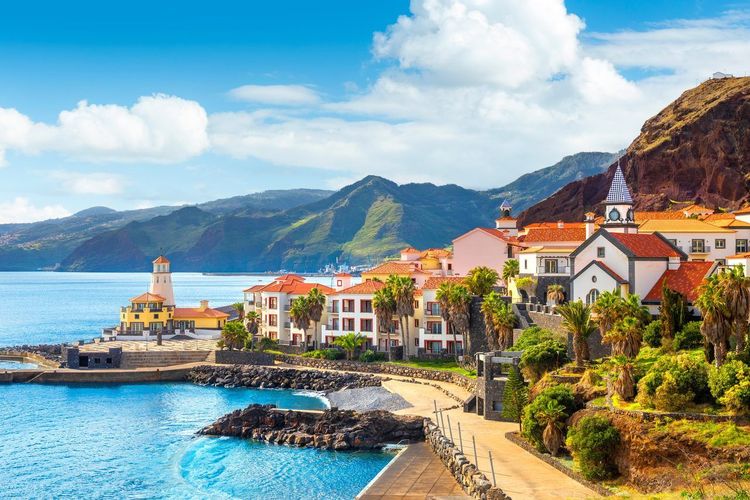
Few guides really detail what lies beyond the capital, even though these day trips are among the most memorable experiences on the island, and they can easily be booked from Funchal without driving yourself.
Mountain Villages Accessible by Bus
Santana, famous for its traditional triangular houses topped with thatch, and Curral das Freiras, a village nestled at the bottom of a dizzying crater, can both be reached by Horários do Funchal lines: the 81 to Curral das Freiras, less than an hour from the center, and the 103 to Santana, at the cost of a longer trip along the coast.
Porto Moniz and the Natural Lava Pools
On the northwest coast, Porto Moniz has turned its cooled lava flows into natural pools where the seawater is renewed with every wave. Swimming there is cool but memorable, surrounded by black rock sculpted by erosion.
The Fanal Forest, Between Mist and Centuries-Old Laurels
At around 1,100 meters of altitude, the Floresta do Fanal gathers centuries-old til trees, those giant laurels twisted by the wind, often shrouded in a dense mist that gives the place a fairy-tale air. A paved road leads there, but no bus serves it: most solo travelers discover it through an organized minibus excursion, combined with Porto Moniz and Pico do Arieiro in a single day.
If you extend your stay beyond Funchal, our article on the 10 must-sees in Madeira details more ideas for organizing these days outside the capital.
Getting Around Funchal and the Island Without a Car
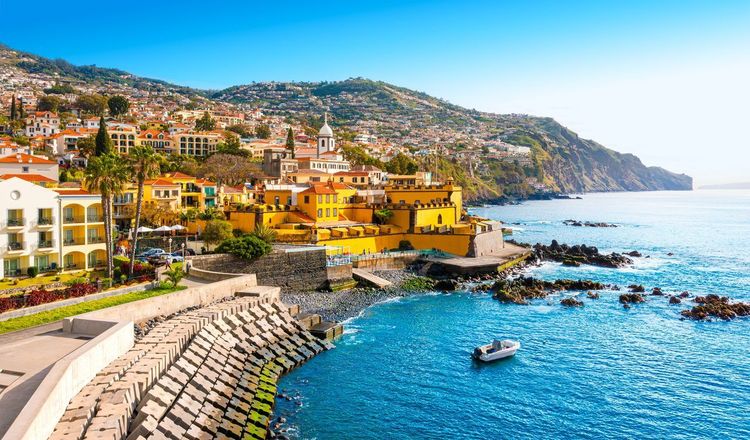
The question always comes up: do you need to rent a car to visit Madeira alone? The answer depends mainly on the number of days available and on whether you want to drive on winding mountain roads.
City Buses and Shuttles in Funchal
The Horários do Funchal network covers most of the city center and outlying neighborhoods at modest prices, with frequent stops near the seafront and the old town. Rechargeable Giro cards, available at kiosks, significantly reduce the cost compared with paying on board. For the east of the island (Caniçal, Machico), SIGA buses take over, and Rodoeste serves the west.
Organized Excursions and Minibuses for Hikes
For more remote trails such as Pico Ruivo, Fanal or Porto Moniz, minibuses seating 8 to 15 with hotel pickup remain the simplest solution when solo: you share the ride with other travelers, without having to manage a return to a starting point different from the finish, which is common on ridge crossings.
Where to Stay in Funchal When Traveling Solo
The choice of neighborhood matters as much as the choice of hotel when exploring a city on foot and alone.
The Historic Center and Seafront, Convenient on Foot
Staying in the Zona Velha or along the Avenida do Mar puts the old town, the market and the seafront a few minutes' walk away, which limits late-night taxi rides. It is the most practical choice for a first solo stay, even if it means losing a little peace and quiet on weekends.
Quiet Neighborhoods for a More Relaxed Stay
The heights around the Jardim Botânico or the São Martinho district, more residential, offer more tranquility and often a view over the bay, with a 10 to 15 minute bus ride to the center. You'll run into fewer tourists there, but also fewer dining options open late.
Where to Eat and Have a Drink Alone in Funchal
Eating solo is rarely a problem in Funchal, as long as you choose the right type of establishment.
Friendly Tables and Counters for Eating Alone
The small tascas around the Mercado dos Lavradores and the Zona Velha often offer a counter where you can sit without a reservation, to enjoy an espetada of beef on a bay-laurel skewer or a fillet of scabbardfish served with banana. The atmosphere stays lively even outside mealtimes, which makes it easy to chat with the regulars. Also try the bolo do caco, a garlic flatbread served hot as a starter.
Bars and Seaview Terraces for Evening Drinks
Along the Avenida do Mar and on the rocks of the Barreirinha Bar Café, the terraces overlooking the ocean are ideal for a glass of poncha, the local drink made with cane spirit, honey and lemon, while watching the sun go down behind the port. It is also where you most naturally meet other solo travelers.
Meeting Other Travelers in Funchal
Traveling alone doesn't mean staying isolated: Funchal attracts a growing number of solo travelers, particularly around the hikes and the hostels of the center. Guesthouse-style hostels, often equipped with a shared kitchen or a common terrace, remain the simplest meeting point in the evening.
Minibus excursions to Pico Ruivo or Porto Moniz also work as de facto social activities: several hours of shared travel naturally spark conversations. Finally, a few Facebook groups devoted to travelers and temporary residents of Madeira make it possible to organize a hike or a group dinner even before arriving on the island.
Budget, Season and Practical Info for Visiting Funchal Solo
Before packing your bags, a few figures and calendar tips help avoid unpleasant surprises.
Daily Budget to Plan For
Expect around 60 to 90 euros per day when traveling solo comfortably: 35 to 55 euros for city-center accommodation, 20 to 30 euros for meals split between tascas and a more refined dinner, and 15 to 25 euros for transport or paid entrance fees depending on the day. Minibus excursions to the summits or Porto Moniz generally cost between 35 and 55 euros per day, meals included or not depending on the organizer, not forgetting trail access fees.
When to Go: The Best Season
Madeira is practicable all year round thanks to its mild climate, but the months of April to June and September to October offer the best compromise between clear skies on the summits and reasonable crowds. July and August remain hot and busier along the coast, while winter, rainier, is still pleasant in town but complicates high-altitude hikes.
Mistakes to Avoid When Traveling Solo
The first mistake is underestimating mountain weather: a blue sky on the coast guarantees nothing on the ridges, where fog can close a trail in less than an hour. The second is showing up at a trailhead without a SIMplifica reservation, now checked on the most popular routes. The third is booking minibus excursions too late in high season, when seats fill up several days in advance. Finally, many travelers neglect a light waterproof jacket, yet essential even in midsummer on the heights.
For most visitors, two to three days are enough to cover Funchal on foot, and five to seven days allow you to add the major hikes and an excursion to Porto Moniz or Fanal. If you only have a single day, focus it on the market in the morning, the old town around midday, then the cable car and Monte in the afternoon (last departure around 5:45 pm), before closing the evening on the seafront. These tips, combined with the Ryo app installed before departure, are enough to organize a solo stay without improvising blindly once you're there.



FAQ
What can I see and do in Funchal on foot?
The Zona Velha, the Mercado dos Lavradores, the Parque de Santa Catarina and the seafront can all be covered on foot from the center, within a radius of about two kilometers. Only Monte, the botanical garden and the mountain hikes require a cable car, a bus or a minibus.
What are the 10 best things to do in Funchal?
The covered market, the old town and its painted doors, the cable car and Monte, the botanical garden, Santa Catarina Park, the Cristiano Ronaldo museum, the seafront, a poncha tasting, a day trip to Porto Moniz and a levada hike make a solid foundation for a first stay.
How long does it take to visit Funchal?
Two to three days are enough for the city center and its immediate surroundings. Allow five to seven days if you want to add the major mountain hikes and a day trip to the north coast.
What can you do in Funchal in one day?
Market in the morning, old town around midday, cable car and Monte in the afternoon, then the seafront at sunset: this loop fits into a single well-filled day, with no transport other than the cable car itself.
Is Madeira a safe destination for solo travelers?
Yes, Madeira has low crime and Funchal remains lively and well lit in the evening. The usual solo travel precautions still apply; in the mountains, the real risk is mainly the weather, which is why it's worth telling your accommodation about your itinerary.
Do you need to rent a car to visit Funchal solo?
No, not to explore the city of Funchal alone, which is well served on foot and by bus. A car only becomes useful if you want to explore the island freely over several days without depending on bus or minibus schedules.
What budget should you plan for a solo trip to Funchal?
Plan on 60 to 90 euros per day for a comfortable stay including accommodation, meals and local transport, plus 35 to 55 euros per organized excursion outside the city, and a few euros in trail fees.
Funchal turns out to be one of the easiest European cities to explore solo: compact, well connected, and lively enough that you never feel alone without ever having to join a group. Between the colorful market, the painted old town and summits reachable by minibus, there is plenty to fill a week without touching a steering wheel. To keep track of every stop without endless searching, the Ryo audio-guided tour of Funchal remains the simplest way to turn a walk through the city center into a guided visit, at your own pace and with no prior booking.