Walk
The Saint-Tropez of Portugal
Albufeira, Portugal
Walk
The Saint-Tropez of Portugal
Albufeira, Portugal
6 km
Distance
2h30
Durée
21
Audios
Loop
Parcours
There is something in Portugal that feels like a confidence shared in whispers: the country reveals itself slowly, through cobbled alleyways, the golden light of late afternoons, and the scent of salt rising from the Atlantic. Visiting Portugal means accepting the invitation to slow down, to let landscapes and stories come to you. That is precisely the spirit that Ryo audio-guided tours cultivate, from Lisbon to Funchal, inviting every traveller to explore the country at their own pace, with open eyes and open ears.
Ryo currently offers audio-guided tours across six Portuguese destinations, each providing a unique experience rooted in the living memory and fabric of the country.
Perched on its light-bathed hills, Lisbon is a city that rewards patience and invites you to savour every moment. Between the historic neighbourhoods of Alfama and Belém, the melancholic strains of fado, and the warmth of freshly baked pastéis de nata, the Portuguese capital blends tradition and modernity with effortless elegance. Along the Ryo audio-guided tour, its sloping alleyways reveal their secrets one by one.
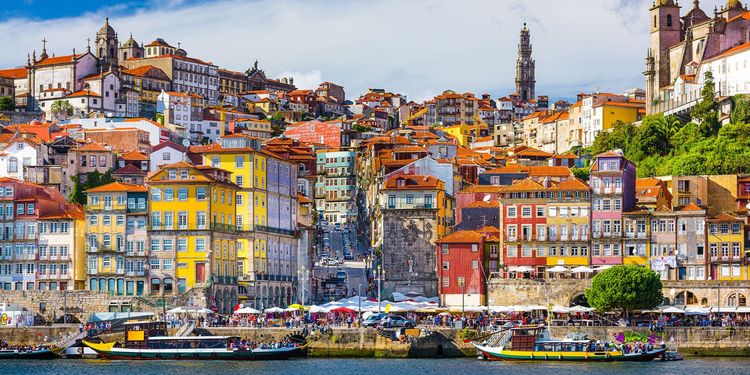
On the banks of the Douro, Porto asserts its character: façades clad in azulejos, port wine cellars perfuming the air of Vila Nova de Gaia, and the Ribeira quarter listed as a UNESCO World Heritage Site. The city is best experienced like a great vintage — complex and generous — which the Ryo audio-guided tour invites you to savour without rushing.
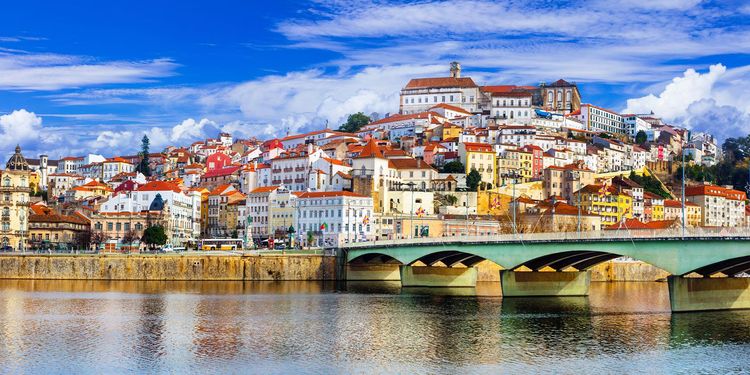
One of Europe's oldest university cities, Coimbra holds a distinctive energy — that of perpetual youth and knowledge passed down through the generations. The Joanine Library, the lanes of the Upper Town, and Coimbra's fado, more solemn than that of Lisbon, together paint a portrait of remarkable depth.
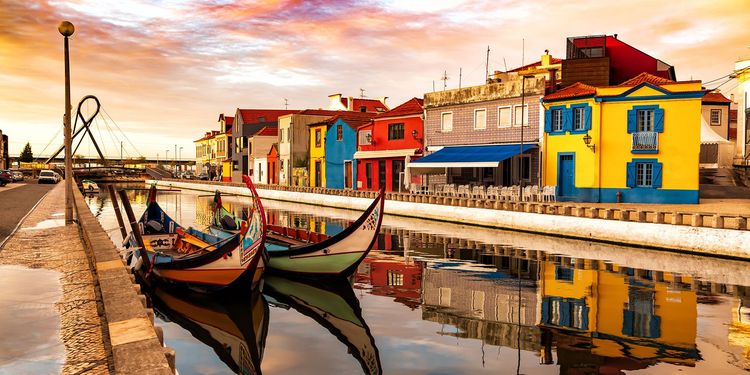
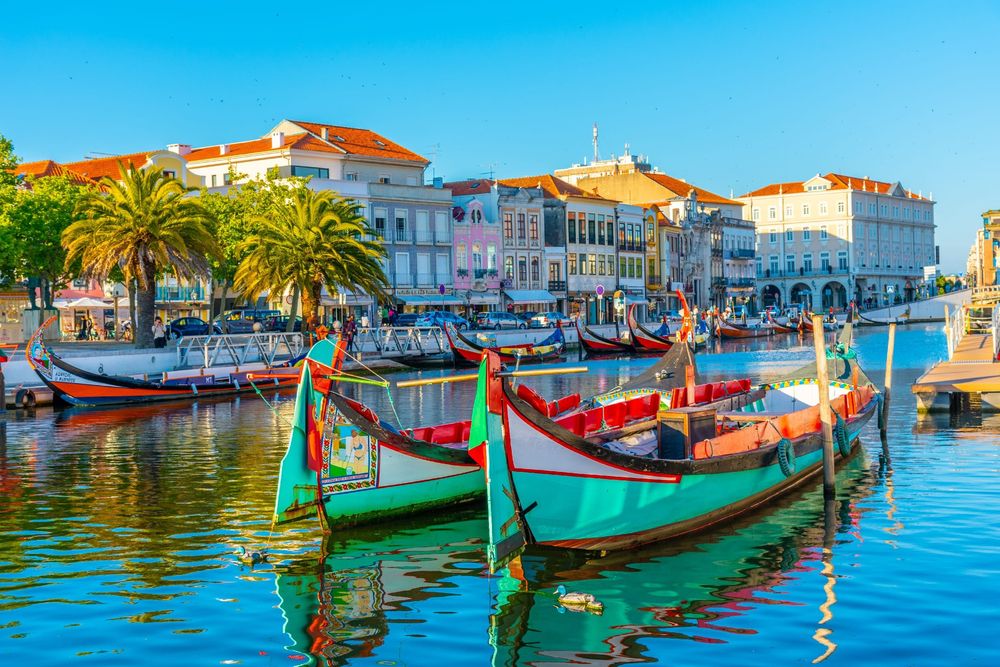
Often dubbed the Portuguese Venice, Aveiro is best discovered at the pace of the moliceiros gliding along its canals. Its Art Nouveau houses with their colourful façades and its ovos moles — the city's unmissable sweet treat — make it a stop as unique as it is unforgettable.
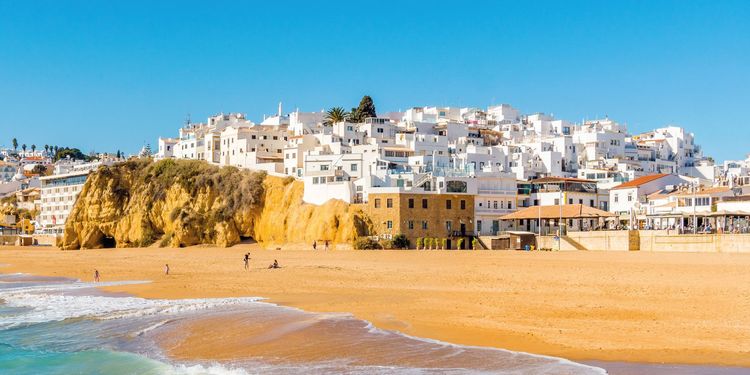
At the heart of the Algarve, Albufeira combines fine sandy beaches with turquoise waters, ochre cliffs sculpted by the Atlantic, and a lively old town that buzzes well into the night. A sun-drenched destination that embodies, all on its own, the easy way of life of southern Portugal.
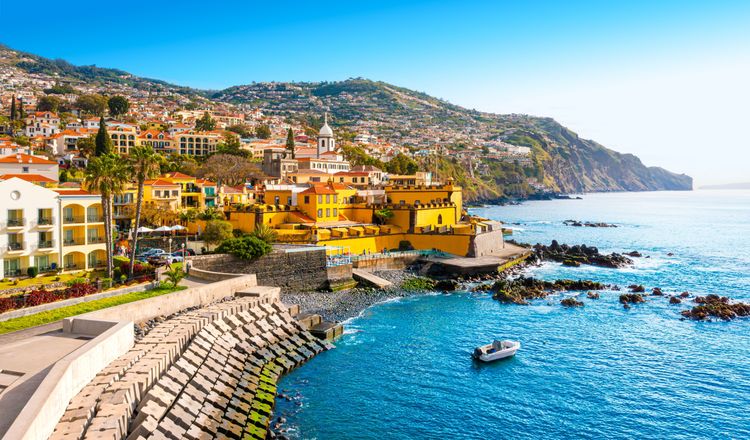
More than a thousand kilometres from the mainland, Funchal cascades down the lush green slopes of Madeira, amid luxuriant botanical gardens, levadas winding through the mountains, and Madeira wines of incomparable aroma. An island destination that lends the journey a sense of complete escape.
Beyond its cities, Portugal unfolds a remarkable diversity of landscapes. Sintra, a UNESCO World Heritage Site, rises like a fairy-tale setting with its enchanting palaces and mist-shrouded gardens, just a few kilometres from Lisbon. The Algarve has far more to offer than its famous beaches: the Southwest Alentejo and Vicentine Coast Natural Park presents a wild, breathtaking and unspoilt shoreline. Further inland, the Alentejo unfolds across golden plains, hilltop white villages, and wine routes that invite a slower pace. In the north, the Douro Valley traces its terraced vineyards above the river — a sight as beautiful in autumn as it is in spring.
Portugal enjoys a generally mild climate, but each season colours the experience differently. Spring is ideal for exploring cities and countryside in bloom, before the summer heat sets in. Summer draws visitors to the Algarve and Atlantic coasts, with long, sunny days — though the most popular sites can get quite crowded. Autumn brings mild temperatures, golden landscapes in the Douro, and a more relaxed atmosphere in the cities. Winter, mild on the mainland and even more so in Madeira, suits travellers who wish to explore Portugal's cultural heritage and gastronomy away from the summer crowds.
Portugal's rail network efficiently connects the main cities, particularly Lisbon, Porto, and Coimbra, which lie along a well-served corridor. For the Algarve or more remote regions, a car remains the most flexible option, allowing you to stop freely as the scenery takes your fancy. Madeira, as an autonomous island, is reached by plane from the mainland. Within cities, public transport, historic trams, and walking are often the best ways to soak up the local atmosphere.
Spring and autumn are generally considered the ideal seasons to visit Portugal. Temperatures are pleasant, the light is beautiful, and the most iconic sites are less crowded than in the height of summer. Summer remains very appealing for beach lovers, while winter is well suited to cultural stays, particularly in Lisbon, Porto, or Madeira.
A one-week stay allows you to explore one or two destinations in depth, such as Lisbon and Porto or the Algarve. To take in the north, centre, and south of the country along with a side trip to Madeira, at least two weeks is advisable. Portugal lends itself equally well to short city breaks and longer touring itineraries.
Among the sites most loved by travellers are the historic Ribeira quarter in Porto, the hills and miradouros of Lisbon, the palaces of Sintra, the cliffs of the Algarve, the canals of Aveiro, the old town of Coimbra, and the volcanic landscapes of Madeira. Every region of the country has its own wonders, often discovered through chance encounters and unexpected detours.
The train is an excellent option for travelling between Lisbon, Coimbra, and Porto. To explore the Alentejo, the Algarve, or the smaller inland villages, a car offers invaluable freedom. In major cities, bus and metro networks along with the famous trams make it easy to get around. Madeira can only be reached by air or sea from the mainland.
Portuguese cuisine is generous and rooted in age-old traditions. The cataplana, a fish and seafood dish slow-cooked in its copper pot, is an experience not to be missed. Pastéis de nata, small custard tarts, are an absolute must in Lisbon. Bacalhau, salt cod prepared in dozens of different ways, is the national dish par excellence. And of course, the wines of the Douro, the Alentejo, and Madeira are well worth your undivided attention.
Portugal is renowned for being a particularly welcoming destination for independent travellers. Transport infrastructure is well developed between major cities, English is widely spoken, and signage at tourist sites is often multilingual. Ryo audio-guided tours also allow you to explore cities such as Lisbon, Porto, or Funchal entirely at your own pace, with no group to follow and no set schedule to keep.