


Walk
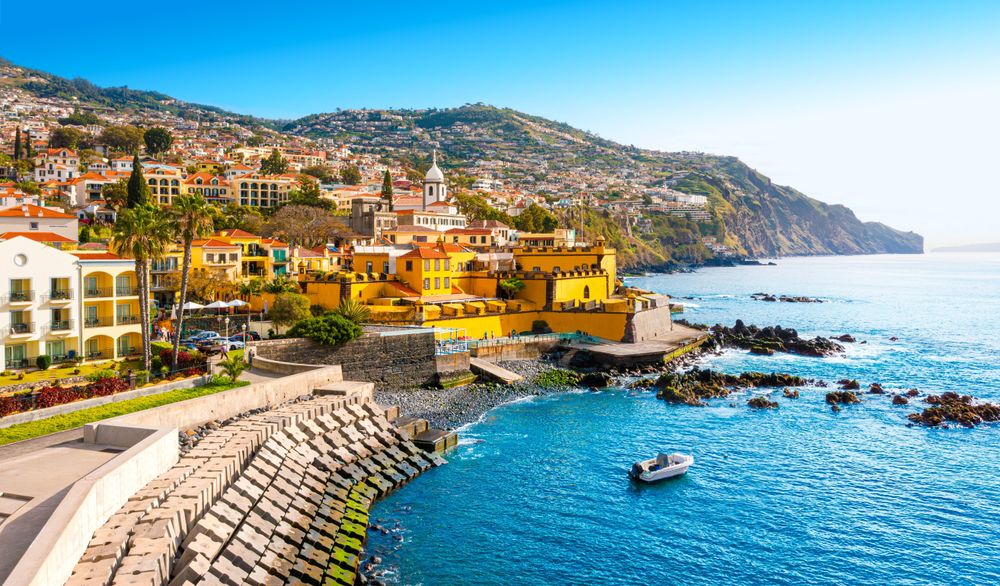
The Capital of the Island of Flowers
Funchal, Portugal
Walk
The Capital of the Island of Flowers
Funchal, Portugal
3.7 km
Distance
1h30
Durée
27
Audios
Loop
Parcours
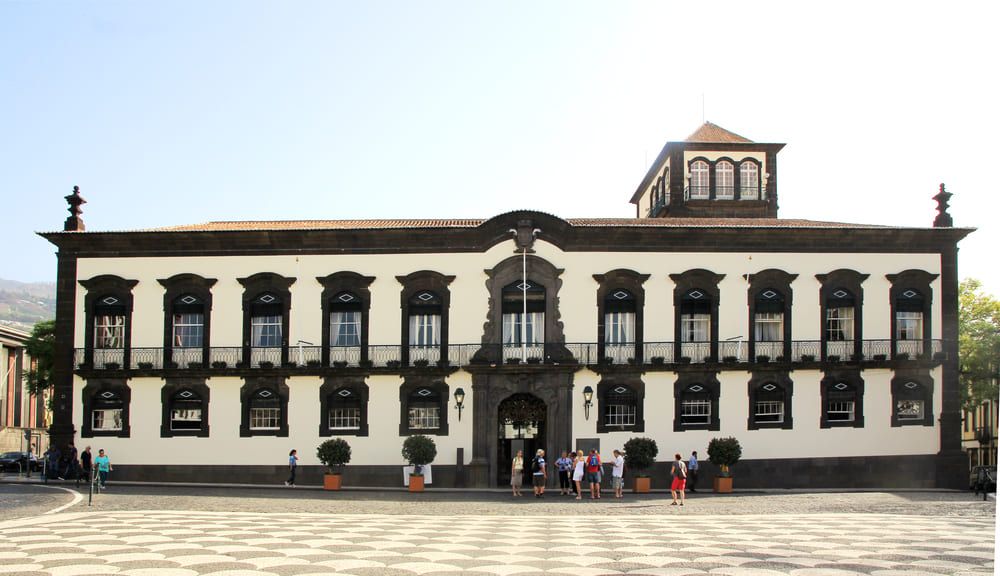
©Karelj CC BY-SA 4.0. <https://creativecommons.org/licenses/by-sa/4.0/deed.fr>via Wikipedia Commons
Praça do Município is the majestic square of the city hall of Funchal, with a black and white mosaic pavement. The Funchal audio-guided tour stops here to evoke this fine historic ensemble, one of the most elegant of the city.
Praça do Município is one of the finest squares of Funchal, famous for its pavement of black and white mosaic with geometric motifs, typical of Portugal. It is surrounded by fine buildings, including the city hall, located in a former palace, the former episcopal palace which today houses a museum of sacred art, and the College church. This harmonious ensemble, blending civil and religious power, makes the square one of the most elegant and photogenic places of the city.
You admire the black and white mosaic pavement, the city hall, the former episcopal palace become a museum of sacred art and the College church, in a harmonious ensemble. Praça do Município is one of the most elegant squares of Funchal. It is a must-see and photogenic stop, to be explored on foot.
Praça do Município lies in the heart of the historic centre of Funchal, reachable on foot. It is a public space open at all times, freely accessible and on the level; the city hall, the museum of sacred art and the church follow their own hours, which vary. It is best to check them to visit the interior.
Its black and white mosaic pavement and its fine ensemble of buildings, including the city hall, the former episcopal palace become a museum of sacred art and the College church.
In the heart of the historic centre of Funchal, in Madeira.
Aucun avis pour le moment