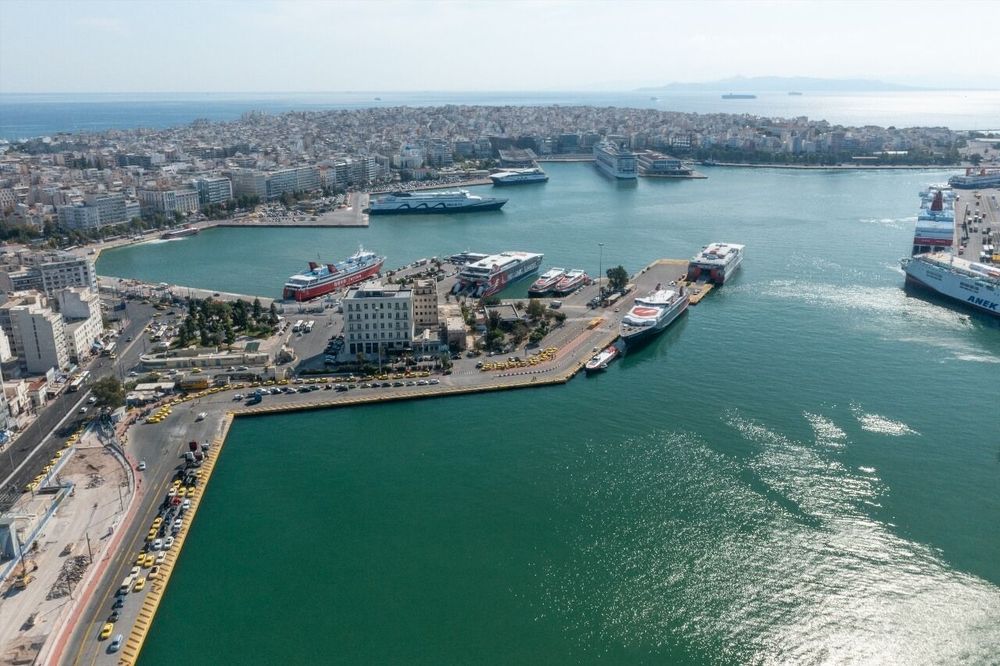
© Shutterstock
 Votre guide Ryo
The Most Beautiful Beaches Around Athens: 2026 Guide (Riviera, Sounion, Marathon)
Athens beaches have something puzzling about them: you can exit the metro in the city center, cross the city in 35°C heat, and find yourself twenty minutes later with your feet in a 26°C Aegean Sea. Yet this is exactly what Athenians have been doing every summer weekend for decades, as the Attica coast begins just 15 km from the Parthenon. Before heading to the beaches, take time to explore the city with the Ryo audio guide of Athens, 31 stops over 8.2 km that put into perspective the 5th-century temples you'll then encounter all along the coast.
This guide covers beaches within a 70 km radius of Athens, from the thermal lake of Vouliagmeni that maintains water at 28°C in the middle of January, to the 5 km of fine sand at Schinias bordered by a pine forest classified as a national park, including the wild beaches of Legrena and the double experience of sea bathing plus archaeology at Cape Sounion. Some are accessible by tram from Syntagma in less than 40 minutes. Others require a car and a well-stocked cooler. All are worth the detour depending on your profile.
The Apollo Coast: Glyfada and Kavouri
The Apollo Coast refers to the coastal axis running south from the Elliniko district to Varkiza, a thirty-kilometer stretch that concentrates most of the beaches accessible by public transport from central Athens. This is where Athenians have established their seaside resorts since the 1950s, with an increasing density of fish restaurants, beach clubs, and second homes as you move away from the city.
Glyfada is the natural gateway to this coast, 17 km from the center. The coastal tram from Syntagma Square gets you there in 35 to 40 minutes without transfers, making it the most convenient option for an impromptu afternoon. The beach itself is organized into several sections: some are paid (daily loungers around 10 to 15€), others remain free access. The sand is clean, the sea shallow for about a hundred meters, which particularly suits families with young children.
The atmosphere is nothing like a wild cove: Glyfada resembles more a real seaside resort with its shops, beach bars open until midnight, and seafront promenade that fills with families and joggers in the evening. It's a slice of Athenian life far removed from the postcard image of the Acropolis, and that's precisely what makes it endearing.
Kavouri occupies a rounded bay between Glyfada and Vouliagmeni, protected by a rocky promontory that creates a natural basin where the water remains calm even when wind blows offshore. A sand strip of about 500 meters, bordered by tamarisks that provide rare natural shade on this coast. Access is free, parking sufficient on weekdays. Two or three tavernas serve decent grilled fish at noon. If you're staying in southern Athens, Kavouri offers a quiet alternative to Glyfada without the seaside resort bustle. The tram serves Voula, from where it's a 15-minute walk or short local bus ride.
The Thermal Lake of Vouliagmeni
Vouliagmeni is probably the most unique place on the entire Attica coast, by far. You need to understand what this lake is before going there: it's not an ordinary sea beach. It's a partially underground lake fed by thermal springs that emerge from the limestone bottom, communicating with the Aegean Sea through a network of karst galleries still partially unexplored. The water oscillates between 22 and 29°C depending on the season, remains perfectly transparent year-round, and obviously never freezes. In the middle of January, regulars swim there in the rain while the surrounding coast is deserted.
The lake formed millennia ago when part of a karst cave ceiling collapsed, leaving an open-air basin at the sea's edge. The fauna is surprising: marine eels attracted by thermal currents coexist with bathers without the slightest aggression. Children search for them from wooden pontoons; adults do laps in water at heated pool temperature. Greek medical studies have documented beneficial effects on dermatoses and joint conditions, which explains the loyalty of local clientele well beyond the summer season.
Entry is paid, 17 to 19€ depending on the day, reduced rate for local residents. It's not free, but attendance remains controlled, which is rare on this coast in midsummer. The site has changing rooms, lounge chairs, and a café-restaurant whose terrace overlooks the water directly. From Athens, the coastal tram doesn't go all the way to Vouliagmeni: it drops you at its Voula terminus in about 45 minutes from Syntagma, where bus 122 takes over to the lake in about fifteen minutes. By car, allow 25 minutes via the coastal road and arrive before 10 AM in July-August: the parking overflows quickly.
Around the lake, several rocky coves allow diving into the open sea. The best known bears the name Kavouri (see previous section): crystal-clear waters, some flat rocks to lie on, unsupervised but also few people off season. For thermal bathing followed by a sea bath, combining both in one morning is not a luxury.
Astir Beach: The Premium Beach of the Riviera
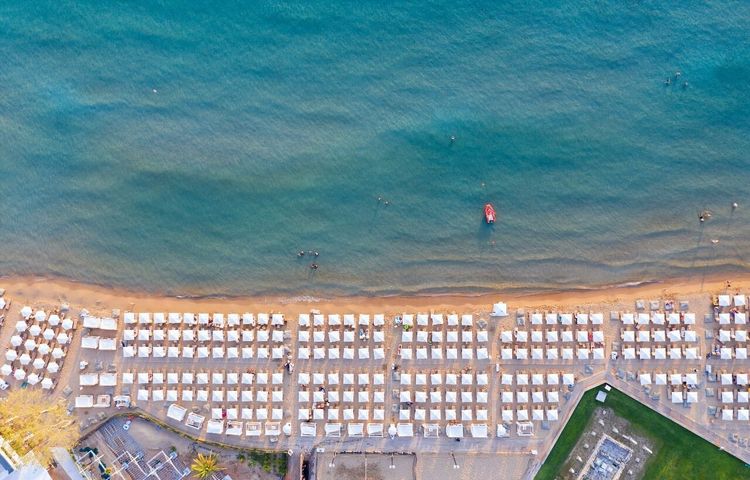
Astir Beach, also known as Asteras, occupies a rocky point between Glyfada and Vouliagmeni. Historically privatized for clients of the state hotel complex, the famous Astir Palace, bought and transformed into Four Seasons, it has repositioned itself as an upscale beach club. Count on about 100€ for two loungers in high season.
The setting justifies the positioning: two beaches framed by maritime pines, intense blue-green water against blonde rock backdrop, well-spaced loungers. It's the most "Mediterranean postcard" beach accessible from Athens without taking the ferry. For a half-day outside July weekends, Astir is the obvious choice if you seek absolute comfort. Outside these time slots, attendance rises sharply and the experience becomes somewhat diluted.
Varkiza: Wind, Kitesurfing and Long Beach
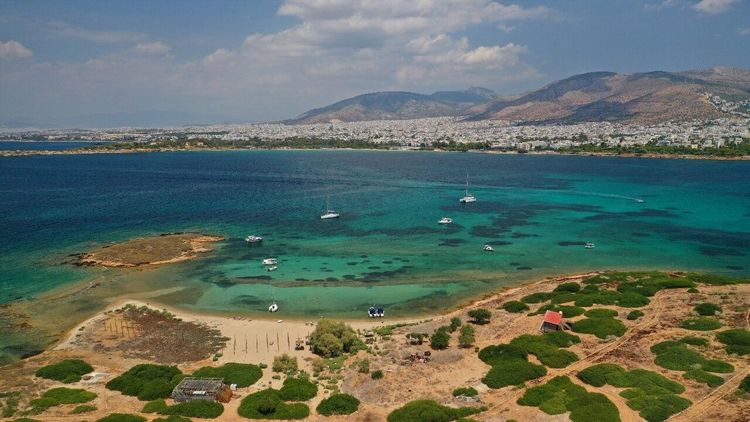
At 35 km south of the center, Varkiza marks the beginning of a different atmosphere. The main beach measures nearly a kilometer long. The sand is coarser than at Glyfada, but space is plentiful and the horizon opens frankly onto the Aegean Sea. This is where Athenians fleeing the concentration of nearby beaches find some breathing room.
Varkiza's particularity lies in the wind. The bay is directly exposed to the meltemi, that northern wind that blows over the eastern Mediterranean from June to September. Result: temperatures remain bearable even in mid-August, the sea is often rough with beautiful short waves, and windsurfing and kitesurfing spots have multiplied. Several schools offer daily lessons at rates about 30% lower than Greek island rates for comparable conditions. If you have intermediate or beginner level in kitesurfing, Varkiza is really worth the trip.
Practical side: free parking on the seafront, tavernas serving fresh fish, beach volleyball court. Direct buses connect Varkiza to Elliniko metro station in less than 30 minutes. By car from Athens via the coastal road, allow 40 minutes outside rush hours. A rarely mentioned tip: the coves located 2 to 3 km east of the main beach, accessible on foot via a trail or by car on a track, are almost deserted on weekdays. The water there is calmer, protected by a rocky promontory, and the sandy bottom is perfect for snorkeling.
Lagonissi: The Peninsula of Coves
Lagonissi is more a peninsula name than a beach in the strict sense. At 40 km from Athens, this narrow tongue of land extends into the Aegean Sea and shelters about ten successive coves, some private (luxury hotel annexes), others perfectly free access.
Lagonissi's interest lies in geographical variety: in an hour's walk on the coastal path, you pass from a sheltered cove with polished pebble bottom to an open beach facing the Aegean Sea horizon. The water is among the clearest on the Apollo Coast. Most visitors arrive by car; there's no direct bus connection from central Athens. Pack a picnic; dining options are limited outside the hotels.
Legrena: Two Kilometers of Sand at the End of the World
Legrena is the most confidential beach on the southern coast, and probably the most beautiful for those seeking the opposite of a seaside resort. It stretches for 2 km of white sand at the foot of the Cape Sounion peninsula hills, 55 km from Athens. The site is officially a naturist beach; tolerance is total, no one is forced to comply, but what attracts here above all is absolute calm and water quality, regularly classified among Attica's best by European Environment Agency environmental reports.
Access is via an unpaved road for the last 3 kilometers. Car essential, 4x4 not necessary in summer. No paid parking, no permanent snack bar (a mobile truck sometimes passes in July-August), no loungers for rent. You must bring everything, including drinking water. This lack of infrastructure is precisely what distinguishes Legrena from beaches 30 minutes from the center.
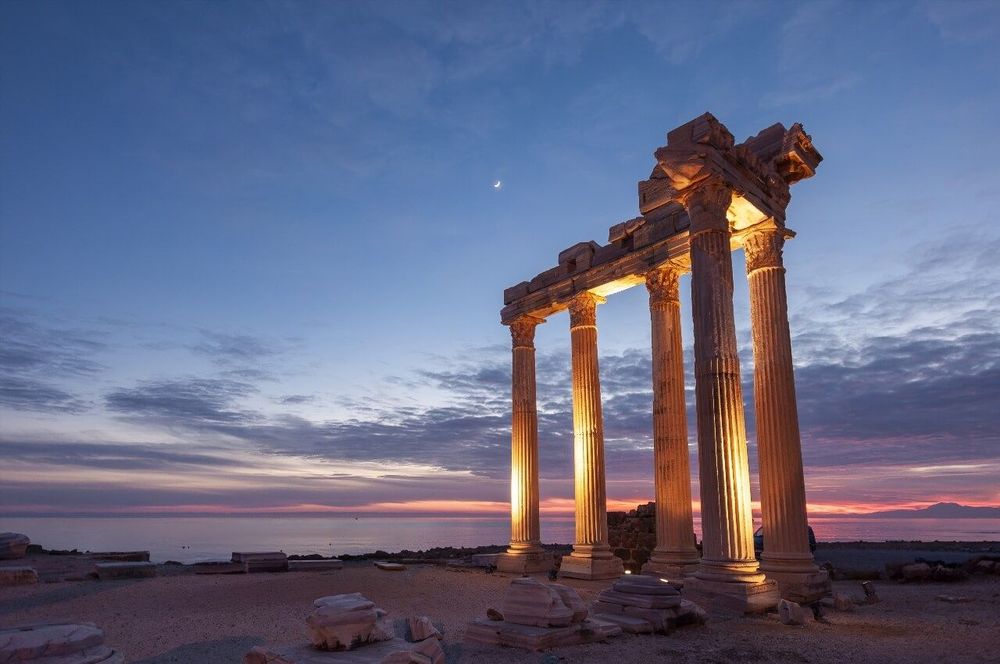
The proximity of Poseidon's temple at Cape Sounion, 8 km away, makes combining both visits in the same day almost obligatory: the beach in the morning from opening, the ruins in late afternoon when raking light gilds the white marble columns.
Cape Sounion and the Temple of Poseidon
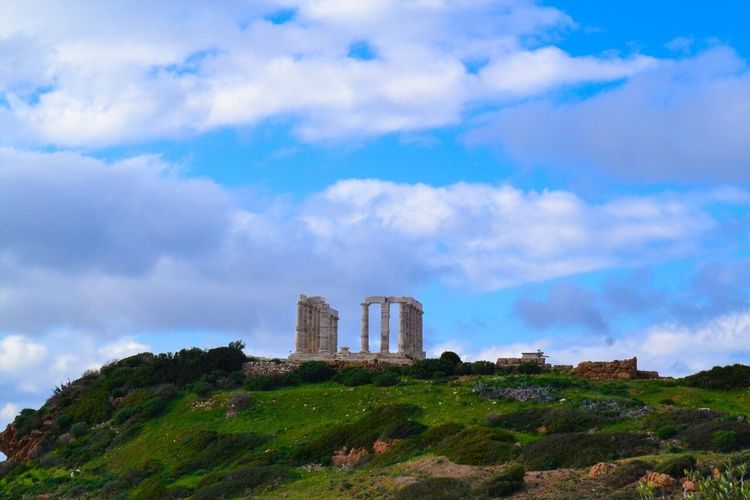
To speak of Sounion without going into detail about Cape Sounion would be missing the essential. This rocky promontory 70 km from Athens bears the Temple of Poseidon, built in the 5th century BC in Agilea marble, the same white marble barely veined with gray as that of the Acropolis. The temple is visible from the sea for kilometers; ancient Greek sailors used it as a landmark to return to Piraeus. Lord Byron carved his name into one of the pillars during his 1810 stay, a romantic gesture one obviously wouldn't dare today.
At the foot of the promontory, two beaches stretch on either side of the road. The east beach of Sounion (windy side) is the wildest: pebbles, turquoise water, no infrastructure except flat rocks to lie on. The west beach is busier, with fine sand, a restaurant, and direct view of the temple columns from the water.
From Athens, KTEL buses leave from Pedion tou Areos bus station (Mavromataion Avenue) hourly in summer toward Cape Sounion, for about 7€ one way. The journey takes about 2 hours via the coastal road, a spectacle in itself, with the sea running alongside the road for almost the entire route. By car, allow 1h10 without traffic. Temple entry ticket costs 20€ in summer, 10€ off season; swimming on surrounding beaches is free.
A tip few guides mention: arrive at Sounion in late afternoon, swim at the west beach, then go up to see the sunset from the columns. The site officially closes at sunset in summer, but the light that lingers on the white marble between 7:30 and 8:45 PM is memorable. It's one of the most evocative Greek experiences accessible without boarding a ferry, and it's often where visitors realize that ancient Greece wasn't just a collection of museums.
If you plan to explore Athens in depth before this excursion, the Ryo audio guide of Athens will give you the architectural and political context in which these 5th-century temples were designed. Sounion and the Acropolis share the same construction period and are part of the same prestige program of Pericles.
Schinias (Marathon): The Great Beach of the Northeast
Schinias is the largest beach in the Athens region, and probably the most beautiful for nature lovers. Located 40 km northeast of Athens, near the ancient site of Marathon, it extends for 5 km of fine sand along a pine forest of umbrella pines that Greeks call the "Schinias forest." The whole forms a national park protected since 2000, limiting construction along the entire coastline.
The water is exceptionally clear thanks to low urbanization around the park. The sandy bottom descends gradually. Over the 5 km length, bather density remains much lower than at Glyfada or Varkiza, even on busy August weekends. The pine forest offers rare natural shade on this coast: you can settle directly under the trees, a few meters from the water. In late afternoon, light filtered through branches creates a special atmosphere. Bike paths cross the forest; bikes are rented on site in high season to ride along the beach without having to walk.
Coming to Schinias without stopping at the Marathon tumulus would be a missed opportunity. This 9-meter high earthen mound, 3 km from the beach, contains the ashes of 192 Athenian soldiers who fell at the Battle of Marathon in 490 BC, the victory that stopped Persian expansion westward and changed, according to historians, the course of civilization history. Entry is free. Combined with the beach, this excursion offers one of the best nature/history ratios in the entire region.
To reach Schinias without a car, a KTEL bus leaves from Pedion tou Areos bus station about every hour and a half. By car from Athens, allow 50 minutes via the E75 and Marathon road. Before heading coastward, the city itself unfolds across 31 audio-guided stops.
The East Coast: Vravrona, Porto Rafti, Rafina
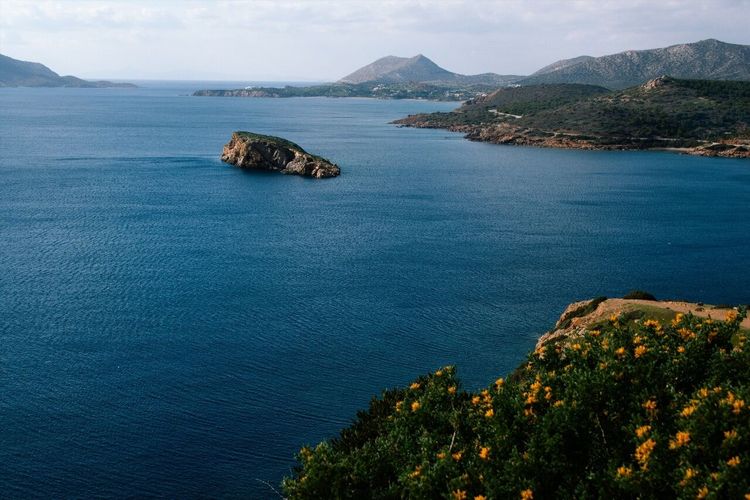
Attica's east coast is less frequented by tourists than the Apollo Coast, and that's a good reason to venture there. The beaches are individually less spectacular, but the bathing-archaeology-port taverna combination works perfectly for a full day.
Vravrona (Brauron) is known first for its ancient sanctuary of Artemis, one of Attica's least visited sites despite its importance. The temple dates from the 5th century BC; young girls were sent there to serve the goddess as part of an initiation ritual called "Artemis' bear." The site museum, small but well documented, preserves unusual sculptures representing these young arktoi. Vravrona beach extends 2 km from the sanctuary: clean water, moderate attendance, bathing-archaeology combination without complex planning. At 36 km from Athens, it's an easy half-day to organize.
Porto Rafti is the surprise of the east coast. This small fishing port 35 km east of Athens hides several beaches in a semi-closed natural bay that keeps the sea remarkably calm, practically no waves even in strong wind. The name comes from a marble statue representing a tailor ("rafti"), placed on an islet in the middle of the bay since Hellenistic times. The main beach measures about 800 meters, with fine sand, shallow waters, and several tavernas with feet in the water. It's the kind of place Athenian families pass down from generation to generation, a fishing port that hasn't yet yielded to concrete development. Boat excursions from the port allow reaching the statue islet in 10 minutes.
Rafina, 30 km northeast of Athens, is mainly known as an embarkation port to the Cyclades. But travelers who transit there miss a lovely beach: north of the ferry port, a golden sand cove stretches for 400 meters, facing the island of Evia. The water is clean, the bottom descends gently. The port's fish restaurants are among Attica's best value-for-money. If your ferry leaves early afternoon, arrive early morning for a swim and grilled octopus lunch on the quay.
Agios Kosmas and Nea Makri: The Car-Free Beaches
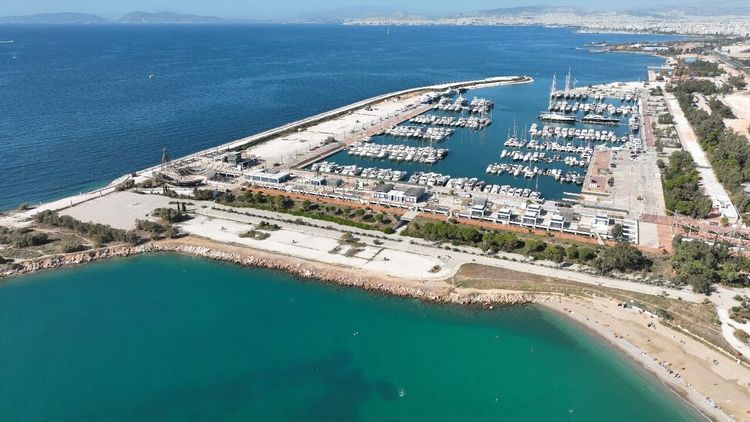
Agios Kosmas is the closest beach to central Athens with real public access: barely 15 km from the Parthenon, accessible by tram in 20 minutes from Syntagma Square. The place lacks the wild beauty of Schinias or the water clarity of Lagonissi, but it fulfills a specific function: a quick swim before or after a day of city sightseeing. The beach is maintained, waters supervised in summer, sand regularly cleaned. Nearby is the former Olympic marina from the 2004 Games, whose sailing facilities are gradually falling into disrepair: a strange backdrop that contrasts with the seaside activity.
Nea Makri is a coastal town 30 km northeast of Athens, between Marathon and Rafina. Its beach, rarely mentioned in French guides, is 3 km long, properly maintained and frequented almost exclusively by local residents. The water is more agitated than south of Athens, sometimes with small surface rollers. The seafront concentrates tavernas serving fresh fish at reasonable prices. If you're returning from Marathon or Schinias, a lunch stop at Nea Makri is an efficient way to end the day before heading back to Athens.
Organized and Free Beaches: How to Choose
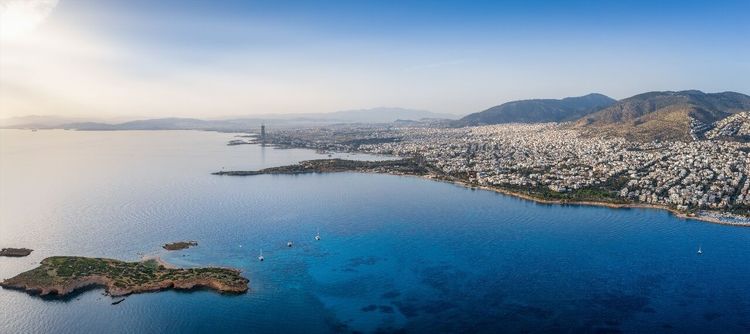
On Athens beaches, the distinction between organized and free beaches is real and worth understanding before leaving.
Organized beaches (Glyfada, Astir, main Varkiza, Agios Kosmas) offer loungers, umbrellas, showers, and supervision in July-August. Rates vary from 10 to 15€ for a pair of daily loungers up to 50 to 100€ in premium beach clubs. Water quality is generally checked and displayed. These beaches are best suited if you're traveling with young children or want a comfortable half-day without logistics.
Free beaches (Legrena, Lagonissi coves, east Sounion beach, Kavouri) are free access, little or not equipped. You must bring your things, often drinking water, and sometimes accept an unpaved access road. In return, water is often clearer, attendance lower, and atmosphere radically different. These are the beaches Athenians themselves indicate when asked for their secret spot.
Vouliagmeni thermal lake occupies a separate category: paid, highly organized, but without thermal equivalent in all of mainland Greece.
How to Reach the Beaches from Athens
The transport question is central to planning a day on Athens beaches. The good news: many Apollo Coast beaches are accessible without a car.
The coastal tram (lines T6 and T7) connects Syntagma Square to the coast, with stops at Agios Kosmas (20 min) then Glyfada (35 to 40 minutes), before continuing to its Voula terminus. The tram runs between 5:30 AM and midnight approximately, with 10 to 15 minute frequencies during the day. Single ticket is 1.20€, valid 90 minutes on the entire OASA network, metro and buses included. It's the simplest solution for Agios Kosmas and Glyfada; for Kavouri or Vouliagmeni, get off at Voula terminus and take bus 122 for the last kilometers.
KTEL buses serve more distant beaches from Pedion tou Areos bus station (Mavromataion Avenue, near Victoria metro station):
- Cape Sounion: hourly departures, 7€ one way, about 2 hours journey via coastal road
- Schinias / Marathon: departures every hour and a half, about 4€ one way, 50 min
- Varkiza: bus from Elliniko metro station, 30 min
By car, the coastal avenue (Posidonos) connects Athens to Glyfada, then continues to Vouliagmeni and Varkiza almost continuously along the sea. It's a beautiful road but congested on summer weekends. Plan to leave before 9 AM for southern beaches, before 8 AM for Marathon or Sounion. Parking is generally free except in beach clubs.
For east coast beaches (Porto Rafti, Vravrona, Rafina), a car is recommended. Bus connections exist but with reduced frequencies and sometimes complex transfers.
When to Swim Around Athens
For Athens beaches, the bathing season officially extends from mid-May to mid-October. In practice, Athenians start swimming from the first warm spells of April, and some beaches remain accessible until November.
Water reaches its maximum temperature in August (26 to 28°C in open sea). June and September offer the best compromise: sea already quite warm, significantly reduced crowds, guaranteed sunshine, open tavernas. July and August are the busiest months; arriving early or late in the day avoids the parking lot effect on the Apollo Coast on weekends.
Vouliagmeni thermal lake is the exception: accessible and pleasant year-round at 22-29°C, it attracts swimmers even in December and January on fine days.
FAQ
What are the best beaches near Athens?
Among Athens beaches, the most remarkable are Lake Vouliagmeni (thermal water at 28°C year-round, unique in mainland Greece), Schinias (5 km of sand in a pine forest classified as a national park), Cape Sounion (swimming with views of Poseidon's temple), and Varkiza (water sports and wind). For a quick swim by public transport, Glyfada and Agios Kosmas are accessible by tram from the center in less than 40 minutes.
How far are the beaches from central Athens?
The closest beaches are 15-20 km from the center, Agios Kosmas and Glyfada, accessible in 20 to 40 minutes by tram. The Apollo Coast (Vouliagmeni, Varkiza) is 25-35 km away, about 40-50 minutes by car or tram. Beaches at Cape Sounion and the east coast (Schinias, Vravrona, Porto Rafti) require 50 to 70 minutes by car or KTEL bus.
Can you swim in Athens without a car?
Yes, and it's even comfortable for nearby beaches. The coastal tram connects Syntagma to Glyfada in 35 minutes, with an intermediate stop at Agios Kosmas (20 min); for Kavouri or Vouliagmeni, bus 122 extends the journey from the Voula terminus. KTEL buses serve Varkiza, Cape Sounion, and east coast beaches from Pedion tou Areos bus station. For isolated beaches like Legrena or Lagonissi coves, a car remains essential.
When is the best time to swim around Athens?
June and September are ideal months: sea between 23 and 26°C, guaranteed sunshine, and significantly reduced crowds compared to July-August. The full season extends from mid-May to mid-October. Vouliagmeni thermal lake, maintained between 22 and 29°C by underground springs, is pleasant year-round.
Are there free beaches near Athens?
The vast majority of Athens beaches are free. The main exceptions are Lake Vouliagmeni (entry 17 to 19€) and Astir beach (premium beach club, loungers from 100€ for two). Schinias, Varkiza, Legrena, Porto Rafti, Nea Makri, Vravrona, and beaches around Sounion are all free access. On some organized beaches, paid lounger areas coexist with free zones.
Are Athens beaches clean?
Overall, yes. The Apollo Coast (from Glyfada to Varkiza) and several east coast beaches (Schinias, Porto Rafti) regularly display the European Blue Flag, guaranteeing water quality and environmental management. Legrena, despite its naturist character and lack of infrastructure, is among the best-rated waters in Attica according to annual European Environment Agency reports. The closest beach to the center, Agios Kosmas, is properly maintained but the water is slightly less clear than in the south.
Conclusion
The beaches around Athens don't resemble the Greek islands; the Cyclades remain unbeatable for postcard white and blue. But they have something the islands don't: the possibility of combining in a single day a morning on the Acropolis and an afternoon with feet in the Aegean Sea. Schinias for unspoiled nature, Sounion for historical emotion, Vouliagmeni for thermal uniqueness, Glyfada for urban convenience – each beach serves a different purpose.
Before heading to the sea, take time to explore Athens from its origins. With the Ryo audio guide of Athens, 29 stops in 3h20 tracing the civilization that built the temples you'll encounter all along the Attica coast, you'll leave with a very different reading of those white marble columns by the water.
À lire également