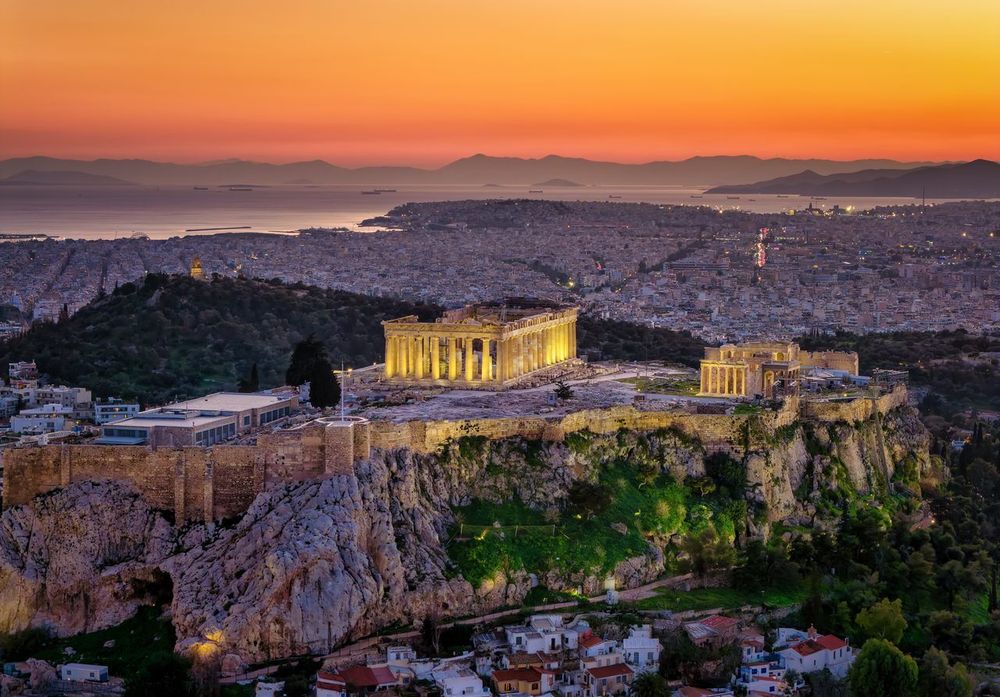
© Shutterstock
 Votre guide Ryo
The Best Neighborhoods in Athens: Where to Stay Based on Your Travel Style in 2026
Most travelers arrive in Athens thinking they have the city figured out: the Acropolis, the Parthenon, a few golden columns under the Mediterranean sun. What they don't expect is to find themselves torn between a dozen radically different Athens neighborhoods, each with its own rhythm, its accommodations at €60, its addresses tourists never set foot in. Choosing where to stay in Athens is really choosing which city you want to experience. The Ryo Athens audio guide, which covers 8.2 km in 29 stops, starts from the Ancient Agora and winds through Plaka, along Thissio, and up toward the Acropolis — a useful thread for visualizing how these neighborhoods connect.
In this guide, you will find the 12 most important neighborhoods in Athens, each with its atmosphere, accommodation prices, highlights, and the type of traveler it suits best. An Olympic stadium built entirely of white marble, a central square that Athenians defended during a constitutional revolution, flea markets open every Sunday for decades — every neighborhood has its own coordinates in time and space. The question is not which one is 'the best' but which one matches your way of traveling.
Understanding Athens' Geography Before You Choose
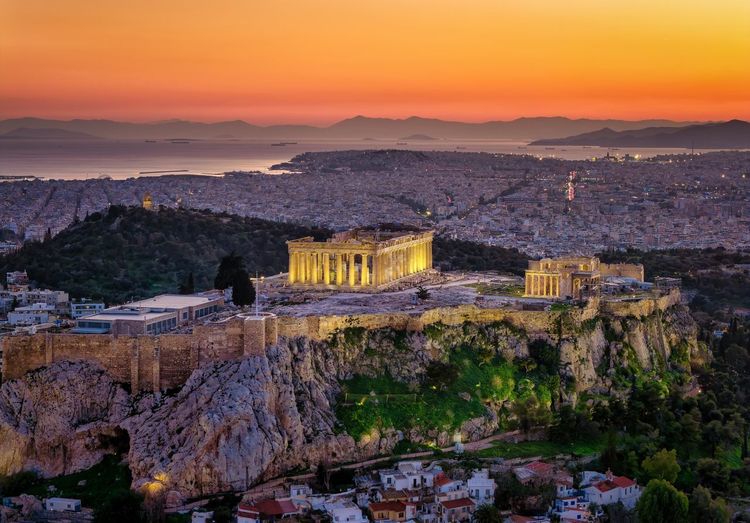
Athens is a metropolis of 3.7 million inhabitants in its urban area, but its tourist center remains remarkably compact. The majority of historical sites are concentrated within a 3-kilometer radius around the Acropolis, the rocky hill that visually anchors the entire city from any vantage point.
The historic center divides into two broad geographical logics.
To the south and west of the Acropolis: Plaka, Monastiraki, Psirri, Thissio, and Koukaki form a belt of neighborhoods directly linked to the ancient heritage. There is a lot of walking, great food, and you occasionally stumble upon a Roman column stepping out of a café.
To the north and east: Syntagma forms the modern center, flanked by Kolonaki toward the chic heights and Exarchia toward the more working-class and political north. Pangrati and Kypseli stretch even further out, where ordinary Athenian life unfolds without a tourist safety net.
Toward the repurposed industrial west: Gazi and Keramikos, once zones of gas production and ceramics, have become the city's creative and nightlife laboratory.
Toward the south and the sea: the Athenian Riviera — Glyfada, Voula, Vouliagméni — opens onto the Aegean Sea 20 kilometers from the center.
The metro (lines 1, 2, and 3) efficiently connects most of these areas. A single ticket costs €1.20. The vast majority of visitors get by with walking and the metro, never needing a taxi for trips within the city.
Plaka: the Historic Neighborhood, Ideal for First-Time Visitors
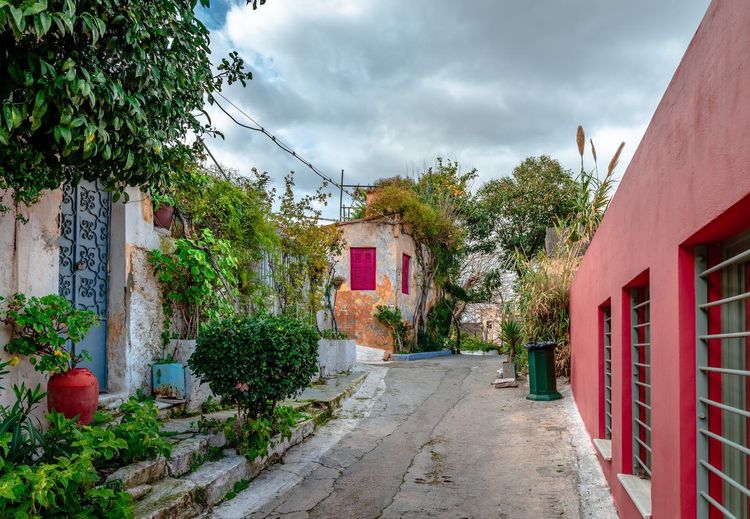
There is something moving about Plaka, even when you have been warned. The neighborhood spreads across the northern foot of the Acropolis like a city within a city: cobbled alleyways, neoclassical houses with blue shutters, cats asleep on marble doorsteps. Plaka is the oldest and most touristy neighborhood in Athens, and it owns it completely.
Why choose Plaka: you are 5 minutes on foot from the Acropolis Museum and 10 minutes from the Parthenon. In the morning, before 9 a.m., the alleyways are nearly empty and you can get lost in an atmosphere that travel guides have been describing for 150 years without ever quite exhausting. The view of the illuminated Acropolis from certain rooftop terraces at night is hard to match anywhere in the city.
The downside is well known: Plaka is very crowded from May to October. Accommodation prices are among the highest in the center — expect to pay €100 to €180 per night for a good hotel in high season. Restaurants on the main street (Kydathinaion) are often mediocre. The solution: book in the perpendicular alleyways or on the slopes toward Anafiotika rather than on the main thoroughfares.
What competitors gloss over: the Anafiotika neighborhood, nestled in the upper part of Plaka, looks more like a Greek island than a European capital. Its flat-roofed white houses were built in the 19th century by workers from the island of Anafi — an architectural and human curiosity just 10 minutes on foot from Syntagma Square. It is an Athens from another era, preserved almost by accident in the folds of the hill. You will mostly encounter cats, a few craftspeople, and residents harvesting tomatoes from their hanging gardens.
Plaka is particularly well suited to couples on their first trip to Athens, families with children (very walkable neighborhood, no steep hills), and those who want to sleep as close as possible to ancient history. Evenings here are lively until around midnight but without excess — Psirri and Gazi are there for the real nightlife.
A practical tip: if you plan to visit the Acropolis from Plaka, our article on visiting the Acropolis of Athens (Acropoli, 105 58 Athens, rated 4.8/5 on Google based on 145,094 reviews) provides opening hours, admission prices, and the best time slots to avoid the crowds — a useful resource before buying your tickets. Both the Anafiotika neighborhood and Syntagma Square feature on our audio-guided tour of the city, if you would rather let the route set the pace.
Monastiraki and Psirri: the Raw Energy of the Center
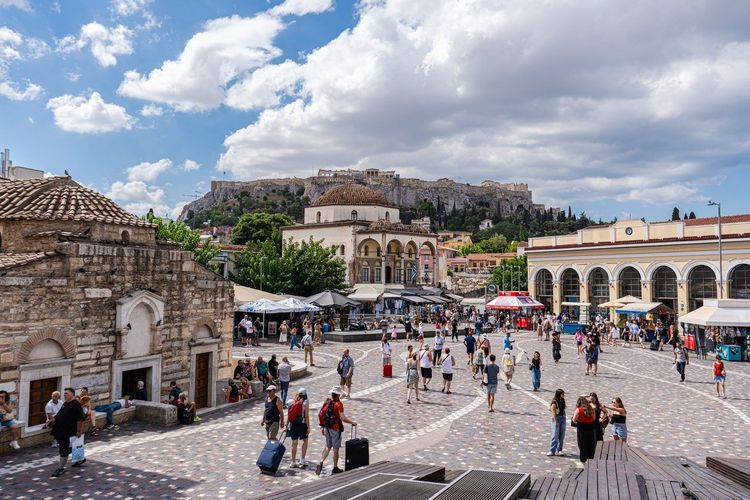
If Plaka is the postcard version of Athens, Monastiraki is the unfiltered one. The central square, buzzing 24/7 with café terraces, street musicians, and souvlaki vendors, sets the tone: here, life is lived outdoors, loudly, and without pretense.
The Ancient Agora borders the neighborhood to the west. This archaeological site — less spectacular than the Acropolis but far more intimate, with temples, reconstructed stoas, and dirt paths between fallen column drums — deserves a full morning if you want to understand how Athenian democracy functioned in the 5th century BC. In the morning, before the 8 a.m. opening, the atmosphere seen through the gate is particularly striking.
The Monastiraki flea market (Plateia Avyssinias, 105 55 Athens, rated 4.4/5 on Google based on 13,717 reviews) has been held every Sunday for generations in the Avyssinias neighborhood. You can find everything: repainted Orthodox icons, carved wooden furniture, 1970s vinyl records, Roman coins (genuine or fake — no one guarantees anything), copper utensils. Arrive before 9 a.m. for the best finds; after 11 a.m., prices rise and the crowd thickens considerably.
Psirri, the neighborhood adjoining Monastiraki to the north, has undergone a spectacular transformation since the 2000s. Once a working-class industrial area, it has become the epicenter of Athens' alternative food scene: family tavernas open for 40 years coexist with architecturally designed cocktail bars and contemporary art galleries that change exhibitions every month. Miaouli Street and its side streets are the densest concentration of great addresses. To explore the local flavors further, our article on Athens' culinary specialties details the dishes you shouldn't miss and the go-to addresses.
The Ryo Athens audio guide passes through this area, retracing the successive layers of history that overlap here — from traces of the Ottoman city visible in certain fountains to the Tzistarakis Mosque dating from the 18th century, now converted into a ceramics museum.
Where to stay in Monastiraki: hotels with rooftop views of the Acropolis are a neighborhood specialty. Expect to pay €90 to €150 per night for good value. Avoid accommodations directly on the central square — noise can carry on until 3 a.m. in summer.
Koukaki: the Trendy Neighborhood in the Shadow of the Acropolis
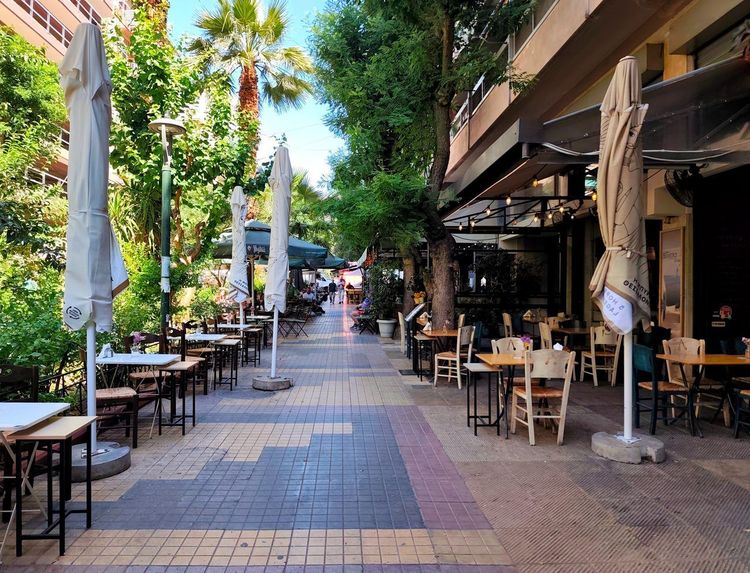
Koukaki (Koukaki, 117 41 Athens) is Athens' pleasant surprise for travelers returning for the second time. Located just south of the Acropolis Museum (Dionysiou Areopagitou 15, 117 42 Athens, rated 4.7/5 on Google based on 83,025 reviews), this residential neighborhood has undergone a gradual gentrification since the 2010s without losing its character as a living neighborhood.
Koukaki's streets are lined with orange and lemon trees. Bakeries open at 6 a.m., grocery stores selling Mount Hymettus honey and bulk olives, cafés where people read their newspaper at 10 a.m. on a Tuesday — Koukaki has the atmosphere of a Greek village printed onto the fabric of a large city.
Why it is an excellent choice for accommodation: the neighborhood is 7 minutes on foot from the Acropolis Museum, whose collection of Parthenon sculptures is every bit as worthwhile as the site itself. Accommodation prices are noticeably lower than in Plaka: €70 to €120 per night for well-maintained boutique hotels, often with flower-filled terraces.
The Veikou street concentrates the neighborhood's best cafés and lunch spots. On Sunday mornings, locals swarm a small neighborhood market selling vegetables, sheep's cheese, and sesame bread. This is where ordinary Athenian life puts itself on display without any staging for tourists. You'll see entire families doing their shopping, retirees playing cards under the orange trees, and neighborhood dogs identifiable by their colored collars (local vets sterilize and release them — a practice widespread throughout the city).
Koukaki suits travelers who want to be close to the sites without paying Plaka prices, couples looking for a calm atmosphere, and food lovers who want to eat where Athenians actually eat.
Syntagma: the Nerve Center of the Capital
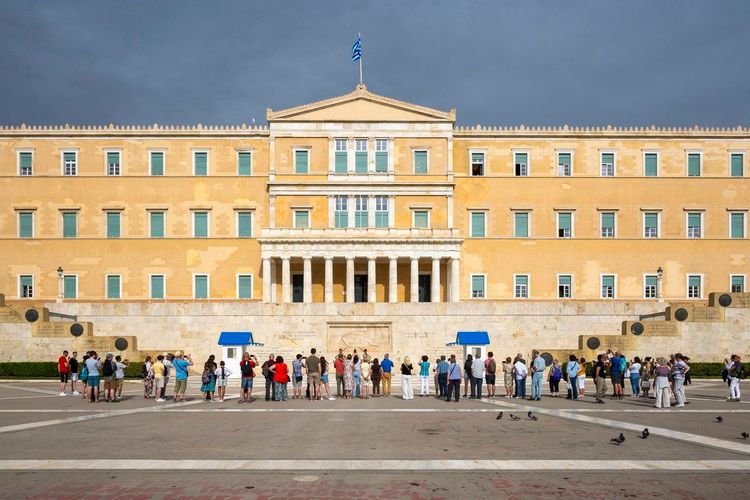
Syntagma Square (Syntágma = Constitution) is Athens' Times Square — in a more manageable version. Bordered by the Greek Parliament (Vasilissis Sofias, 100 21 Athens, rated 4.4/5 on Google based on 2,330 reviews), two underground shopping arcades, and a dozen major international hotels, it structures the official and commercial life of the capital.
The Changing of the Guard — the Evzones in traditional costume with red pompoms — takes place every hour in front of Parliament. On Sunday mornings, the grand Changing of the Guard with a military orchestra draws hundreds of spectators. Free, quirky, and unmissable photographically, it is offbeat enough to be worth an hour's attention even for travelers least drawn to official pageantry.
Syntagma is the neighborhood of major international hotels — Grande Bretagne, King George, Electra Palace — with rates starting at €200 per night in high season. It is also the best-served area for transportation: the metro, long-distance buses, and the express bus to the airport all depart from this square.
Best for: business travelers, people with reduced mobility who want to minimize walking distances, families with young children. For a deep cultural and culinary stay, neighboring neighborhoods offer more character for the same or lower budget.
Kolonaki: Athens for Museum Lovers and Elegant Living
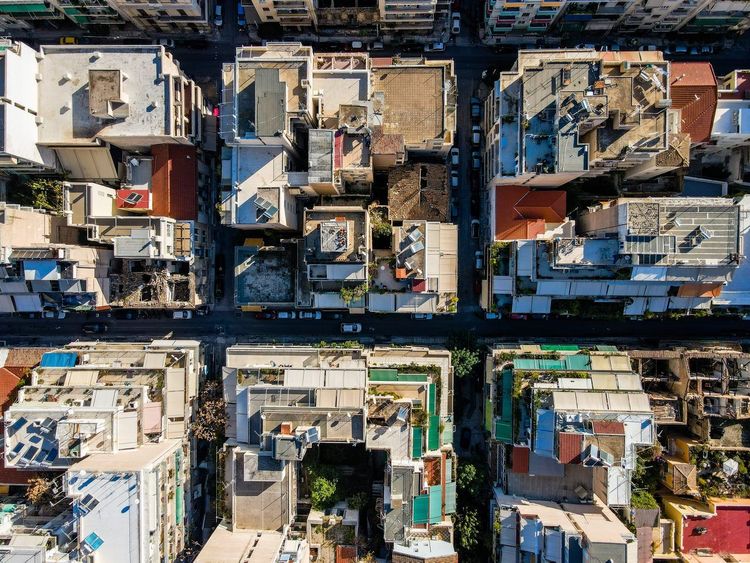
Kolonaki (Kolonaki, 106 74 Athens) is Athens' upscale neighborhood, perched on the slopes of Mount Lycabettus (Lykavittos Hill, 106 75 Athens, rated 4.8/5 on Google based on 6,140 reviews). Designer boutiques, private art galleries, pharmacies with gilded signs, café terraces where people sip their freddo cappuccino in sunglasses — Kolonaki has a very clear identity and embraces it with a certain satisfaction.
The Benaki Museum is one of the most fascinating collections in Greece: 40,000 objects spanning 5,000 years of Greek history — from the Neolithic era to the gold embroideries of the late Byzantine Empire, including remnants of Greco-Roman Egypt and uniforms from the 1821 War of Independence. Two streets away, the Museum of Cycladic Art houses one of the world's largest collections of Cycladic art — those white marble figurines with refined forms that influenced Brancusi and Picasso, and which remain, 5,000 years later, strikingly modern.
The climb up Mount Lycabettus on foot (or by funicular from the Ploutarchou station) is rewarded with a 360° panorama over Athens, the Saronic Gulf, and — on clear days — the islands of the Aegean in the distance. The amphitheater at the summit hosts open-air concerts from June to September, with an eclectic program ranging from contemporary Greek music to international jazz.
Staying in Kolonaki: the supply is more limited than in the center — mostly design boutique hotels and charming apartments. Expect to pay €120 to €200 per night. The neighborhood is less convenient if your itinerary is focused on archaeology (the major sites are 25–30 minutes on foot), but ideal if museums are your priority.
Gazi and Keramikos: Athens After Dark and Its Creative Scene
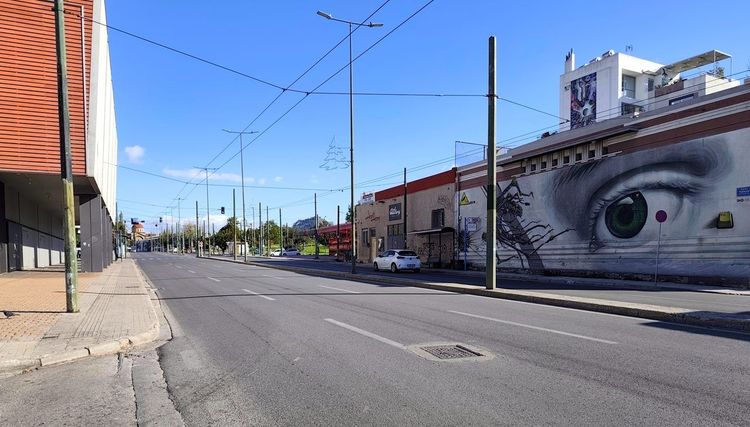
Twenty years ago, Gazi (Gazi, 118 54 Athens) was an industrial area surrounding a former gas plant. Today, Technopolis — the red-brick buildings converted into a cultural venue — hosts festivals, exhibitions, and concerts throughout the year. Gazi has become Athens' trendiest neighborhood and also its most vibrant after dark.
Voutadon Street and its side streets concentrate the majority of the city's trendy bars, clubs, and restaurants. Athens' LGBTQ+ scene is particularly visible in this area, with venues that stay open until sunrise on weekends. The clientele is generally young, creative, and decidedly international.
Keramikos, the adjacent neighborhood to the east, contains one of Athens' least visited archaeological sites: the city's ancient necropolis, with 5th-century BC funeral steles still standing in their original context. Admission costs €8 and you will rarely encounter more than twenty visitors — a striking contrast with the crowds at the Acropolis, just 15 minutes' walk away. The adjoining museum houses some of the finest white-ground lekythoi in all of classical Greek art.
Best for: nightlife enthusiasts, artists and creatives, LGBTQ+ travelers, and those who want to sleep in the heart of the city without paying the prices of the adjacent tourist neighborhoods. Accommodations here are 10 to 30% cheaper than Plaka or Monastiraki. The walk to the Ancient Agora takes 10 minutes.
Exarchia: Political and Alternative Athens
Exarchia is Athens' most controversial neighborhood — and one of its most interesting for travelers seeking something beyond archaeology. Located north of the historic center, it has been home for decades to an anarchist and alternative culture that coexists with secondhand bookshops, political cafés, underground music venues, and one of the city's best Saturday markets.
Exarchia Square is the heart of the neighborhood: terrace tables until midnight, political graffiti on every wall, young people playing guitar between philosophical debates. The atmosphere can surprise first-time visitors — signs, slogans painted in multiple languages, a palpable tension on commemorative dates — but the neighborhood is generally safe for attentive tourists, day and night.
What you will find here that you cannot find elsewhere: bookshops open until 10 p.m. selling political essays in French translation, record stores specializing in rebetiko music from the 1930s–50s and Greek rock from the 1970s, bars where ordering a drink is enough to find yourself in conversation with three philosophy students or two unemployed poets. Exarchia's live music scene — from experimental jazz to Greek punk — is among the most fertile in the city.
The National Archaeological Museum (28is Oktovriou 44, 106 82 Athens, rated 4.6/5 on Google based on 38,112 reviews) is 10 minutes on foot from Exarchia. It is the world's largest collection of ancient Greek art — often underestimated by travelers rushing to the Acropolis, but absolutely remarkable, with entire rooms dedicated to Greek bronzes, Mycenaean frescoes, and Egyptian collections. Allow at least half a day.
The Athens audio-guided tour offered by our Ryo app does not cover Exarchia in its main route — this neighborhood is best explored by instinct, without a set itinerary, wandering from the square toward the streets climbing up to Strefi Hill.
Staying in Exarchia: the hotel supply remains limited — mostly youth hostels and short-term rental apartments. Expect to pay €40 to €80 per night. Ideal for budget travelers who want an authentic experience off the tourist trail.
Thissio and Petralona: Residential Calm Facing the Acropolis
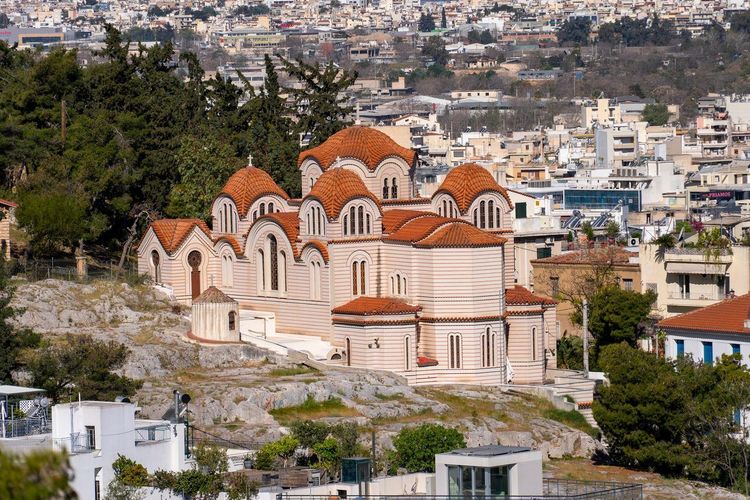
Thissio (Thissio, 118 51 Athens) is often described as the neighborhood where Athenians live when they want no noise but refuse to be far from everything. It runs along the Ancient Agora to the west, with a pedestrian walkway stretching from the Acropolis to Gazi — the Muses' Way (Dionysiou Areopagitou) — offering one of the city's finest perspectives over the archaeological sites.
The cafés on Apostolou Pavlou Street have terraces directly facing the Acropolis and the Temple of Hephaestus — the latter being one of the best-preserved ancient temples in Greece, often overlooked in favor of the Parthenon but well worth a visit in its own right. These cafés probably offer the best views from a coffee cup in the entire city.
Petralona (Petralona, 118 51 Athens), the neighboring area to the southwest, is even more residential. You will find family grocery stores open for three generations, tavernas with no English menu, and a bakery that makes the best loukoumades (honey and cinnamon fritters) in the city according to its residents. On Saturday mornings, the market on Skalistiri Street is one of the most authentic in the center.
Best for: travelers who want to be close to the sites (10 minutes on foot from the Acropolis) without the drawbacks of mass tourism. Accommodations: €70 to €110 for well-kept apartments and small family hotels.
Pangrati and Kypseli: Living Like an Athenian, No Compromises
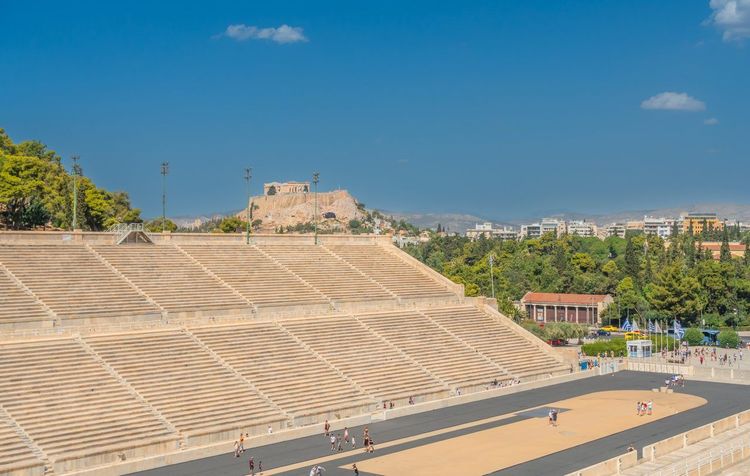
Pangrati is the neighborhood where expats and long-time Athenians live. To the east of Syntagma, beyond the Panathenaic Stadium — the white marble stadium that hosted the first modern Olympic Games in 1896 and remains open to visitors for a run on the track — Pangrati unfolds its tree-lined boulevards, producers' markets, and unpretentious tavernas.
Varnava Square is the neighborhood's center of gravity: surrounded by cafés and small affordable restaurants, it comes alive particularly on weekends with Athenian families having lunch together. The atmosphere is gentle, with no visible tourist agenda.
Kypseli (Kypseli, 113 62 Athens), further north, is currently Athens' most interesting neighborhood in transition. Long neglected after the middle-class exodus to the suburbs in the 1980s–90s, it has been attracting young creatives, craftspeople, and concept restaurants since 2018, drawn by still-affordable rents. The Art Deco architecture from the 1930s is remarkably well preserved — some buildings seem lifted from a Cavafy novel, with their marble staircases and wrought-iron balconies.
Best for: independent travelers, authenticity seekers, and return visitors to Athens who want to discover another side of the city. Transport: 15–20 minutes on foot or 10 minutes by metro from the main sites. Accommodation rates: €60 to €90 for good apartment rentals.
Piraeus: Staying Near the Port to Reach the Islands
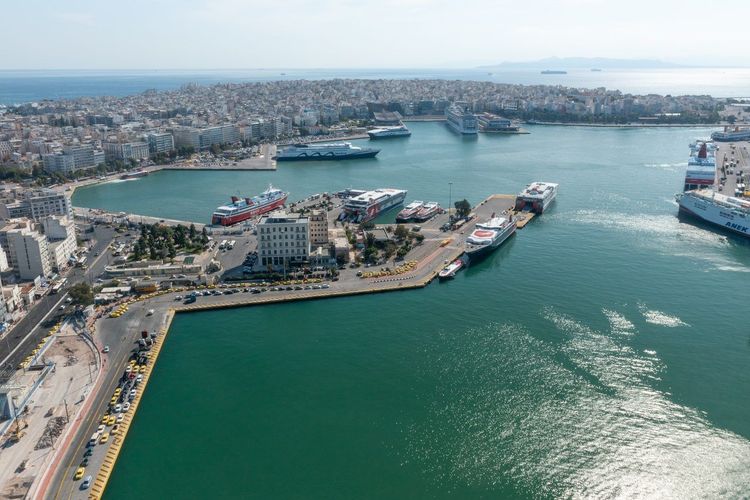
Piraeus is Europe's busiest passenger port and the departure point for all ferries to the Greek islands. If you are catching an early morning boat — some departures are at 5:30 a.m. — staying in Piraeus the night before is a practical solution that spares you a predawn journey from the center of Athens.
Beyond this transit logic, Piraeus has little to offer tourists — except its early morning fish market on the quay and a handful of excellent fish tavernas on the Mikrolimano harbor (Mikrolimano, 185 33 Piraeus, rated 4.6/5 on Google based on 10,396 reviews). This small marina, 2 km from the main port, brings together waterside terrace tables and a fishing-village atmosphere that feels improbable just 30 minutes from a capital city.
Our article on how to take the ferry to the Cyclades covers all the practical details: ferry companies, schedules, cabins or seats, and tips for boarding during busy periods.
Accommodations: functional hotels at €60 to €90 per night. No charming boutique hotels, but a direct metro connection to the center of Athens (line 1, 25 minutes) and a direct connection to the airport.
Glyfada and the Athenian Riviera: Beaches and Relaxation to the South
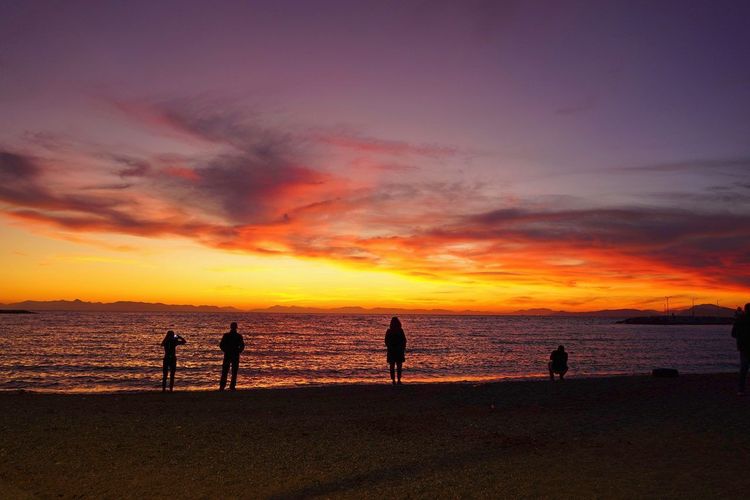
20 kilometers south of the center, Glyfada (Glyfada, 166 75 Glyfada) is the seaside resort of the Athenian bourgeoisie. Organized beaches with sun loungers, waterfront seafood restaurants, fashion boutiques, and a golf course — Glyfada is to Athens what Deauville is to Paris, in a Greek, sun-drenched version.
The Athenian Riviera stretches over 70 km of coastline between Piraeus and Cape Sounion. Vouliagméni (Vouliagmeni, 166 71 Vouliagméni, rated 4.6/5 on Google based on 5,000 reviews), with its natural thermal lake and rocky coves, is often cited as the finest seaside destination on the Attic coast.
For travelers who want to combine city exploration with time by the sea, our article on the most beautiful beaches around Athens details each spot by distance, crowd level, and public transport access.
Best for: hybrid city-and-sea stays, families with children in summer, and travelers extending their time in Athens after an island stay.
Which Neighborhood to Choose Based on Your Trip?
The right answer depends almost entirely on the type of trip you have in mind. Here is a focused summary to help you decide between Athens neighborhoods.
First trip to Athens, itinerary centered on the sites: Plaka or Monastiraki. You will be walking distance from the main monuments, with no need for transportation to reach the essentials. Accept the higher prices and foot traffic as the trade-off.
Best value and local atmosphere: Koukaki. Just 7 minutes on foot from the Acropolis Museum, reasonable prices, and a genuine neighborhood feel. The most recommended choice for the majority of travelers.
Museum-focused itinerary: Kolonaki. Ten minutes from the Benaki Museum and the Museum of Cycladic Art, in a pleasant neighborhood to live in. Higher accommodation budget in exchange.
Nightlife and creative scene: Gazi or Psirri. No compromise on energy — bring earplugs if you are a light sleeper.
Tight budget, authentic experience: Exarchia. Athenian culture in its least commercialized form, with the cheapest accommodations in the center.
Peace and proximity to the sites: Thissio or Petralona. Views of the Acropolis, car-free pedestrian walks, and a residential atmosphere that contrasts pleasantly with the intensity of the tourist center.
Off-the-beaten-path discovery: Pangrati or Kypseli. For those who already know the sites and want to understand how Athenians really live — no museum, no audio guide, just walking.
Islands in the itinerary: Piraeus the night before an early ferry departure, or a few days on the Athenian Riviera if beaches are part of the plan. Also check our guide on the most beautiful Greek islands to plan the rest of your trip.
Is Athens Safe? What You Need to Know
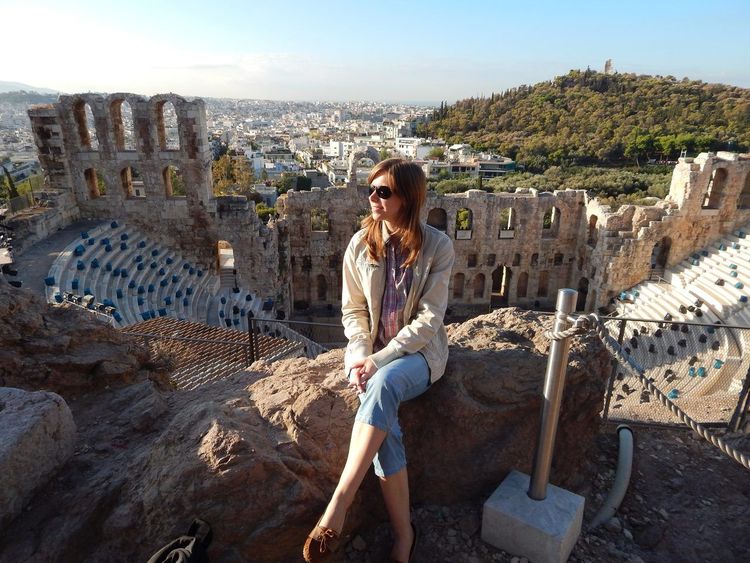
The question comes up every time and deserves a straight answer: Athens is a generally safe city for tourists. Physical assaults on visitors remain very rare. The common risks are those of any large Mediterranean city: pickpockets in busy areas (metro during rush hour, Monastiraki Square in summer), scams in tourist bars, unlicensed taxis at the airport that don't run the meter.
Areas that deserve caution:
Certain parts of Omonia, the large northern square of the center, are unwelcoming at night. Drug trafficking issues have been documented there since the crisis years of the 2010s, even if the situation has improved. Avoid the adjacent side streets after midnight if you are unfamiliar with the area.
Exarchia experiences occasional political tensions, particularly around historical anniversaries (November 17th in particular, the date of the 1973 student uprising) or during demonstrations. The atmosphere is generally calm outside of these moments, but check the situation before a stay in the neighborhood if you are visiting on those specific dates.
Piraeus — certain areas around the commercial port at night — should be avoided if you have no specific address to head to. Stick to well-lit, frequented areas.
Overall, basic precautions are sufficient: watch your belongings on the metro, avoid displaying obvious signs of wealth in working-class neighborhoods, and stay in well-lit areas after midnight.
FAQ
What is the best neighborhood for a first stay in Athens?
For a first trip, Plaka or Monastiraki offer the best strategic position: the main sites are reachable on foot in under 15 minutes, restaurants and cafés are everywhere, and the atmosphere is immediately 'Greek' in the way travelers imagine it before they leave. If you want the same location advantages with lower prices and less tourist pressure, Koukaki is the most recommended alternative — just 7 minutes on foot from the Acropolis Museum, with a genuine neighborhood life and a less commercial atmosphere.
Which neighborhood in Athens is the most affordable?
Exarchia is the cheapest neighborhood in the center, with accommodations starting from €40 per night. Kypseli and Pangrati also offer good value for money, around €60 to €90. At the other end, Plaka, Syntagma, and Kolonaki are the most expensive, with accommodations that rarely start below €100 in high season. For mid-range budgets, Koukaki, Thissio, and Gazi offer the best balance between price and quality of experience.
Are there any neighborhoods to absolutely avoid?
No neighborhood needs to be absolutely avoided during the day. At night, the immediate surroundings of Omonia Square deserve caution — stick to well-lit main streets. Exarchia can be tense during occasional political events, particularly around November 17th. Overall, the usual precautions you would take in any large European city are more than sufficient to visit all the neighborhoods described in this guide.
Plaka or Koukaki: which one to choose?
It depends on your priorities. Plaka for the maximum romantic and historical atmosphere, with the view of the illuminated Acropolis from rooftop terraces — if the budget allows (€100 to €180 per night). Koukaki for a better value for money (€70 to €120) with a more authentic atmosphere and a nearly identical position for accessing the sites. Most travelers who return to Athens for the second time choose Koukaki after having tried Plaka — not because Plaka is disappointing, but because Koukaki is a pleasant surprise.
How do you get around between Athens neighborhoods?
The metro (lines 1, 2, and 3) covers most of the center for €1.20 per journey, with well-placed stations. The center is very walkable: Plaka to Monastiraki takes 5 minutes, Monastiraki to Thissio 10 minutes, Syntagma to Kolonaki 15 minutes. Taxis are available everywhere (the FREE NOW app, formerly Beat, is recommended to avoid scams), at around €5 to €8 for trips within the center. To reach Glyfada or the Riviera, the tram from Syntagma takes 45 to 50 minutes for €1.20.
Can you visit Greek islands from Athens?
Yes — it is actually one of the most common reasons to choose Athens as a base. The port of Piraeus, 25 minutes by metro from the center, serves dozens of islands daily: the Cyclades (Santorini, Mykonos, Paros, Naxos), the Saronic Islands (Aegina, Hydra, Poros — just 1 hour by ferry), and the Sporades. Our article on the most beautiful Greek islands gives a complete overview based on your preferences, budget, and available time.
Athens resists all attempts at reduction. It is not a city you can fit into a single box — not entirely ancient, not entirely modern, not as quiet as you imagined nor as chaotic as you feared. Each neighborhood described in this guide is a different version of the same city, with its own sense of time. The Ryo Athens audio guide, with its 29 stops over 8.2 km, offers an excellent first thread for connecting these neighborhoods — starting from the Ancient Agora, climbing up through Plaka, running along Thissio, and finishing facing the Acropolis. A way to read the city in its continuity before deciding where to set down your bags.
À lire également