© Shutterstock
 Votre guide Ryo
Athens and Its Surroundings: Activities, Excursions, and Must-Sees in 2026
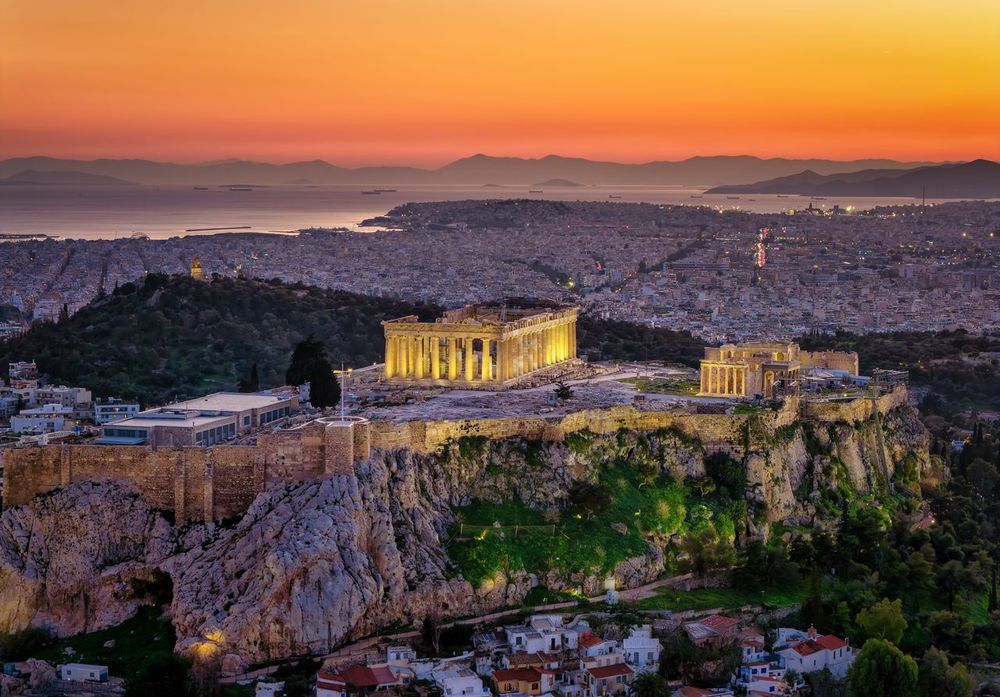
Athens catches you off guard at first: a dense, noisy Mediterranean capital, gridlocked with traffic, and suddenly, around a corner, the Parthenon rising above the rooftops. Activities in Athens and its surroundings form one of the most concentrated tourist destinations in Europe, combining world-class archaeological sites, day trips to oracles and Mycenaean fortresses, and Saronic islands reachable in 40 minutes by ferry. To get your bearings from the moment you arrive, the Ryo audio-guided tour of Athens offers 29 audio commentaries over 8.2 km — the best introduction before heading out to explore further.
This guide covers the entire Athens area: the Acropolis and its marble collections, the labyrinth of Monastiraki, day trips to Delphi (2h30 by road) and Mycenae (1h15), the Saronic Sea islands, the beaches of the Athens Riviera, and recommendations for eating and sleeping. Plan at least 4 to 5 days to do it all justice.
The Acropolis and the Sacred Hill: the Foundation of Any Visit
Some visits change an idea you have held for years. The Acropolis is one of them.
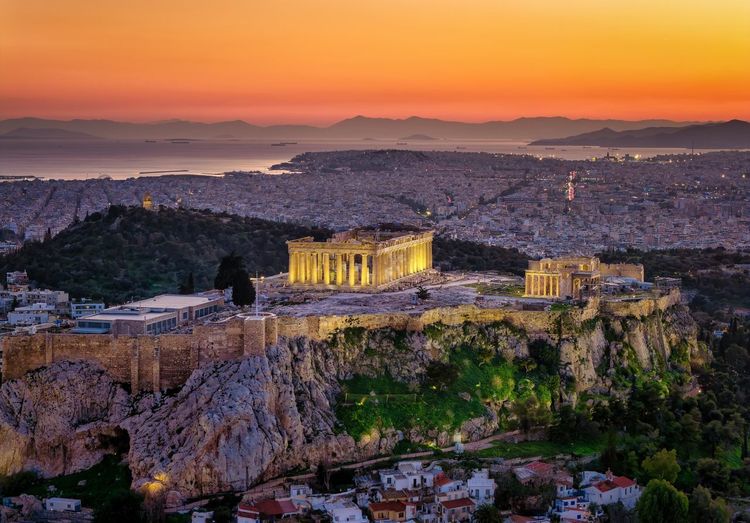
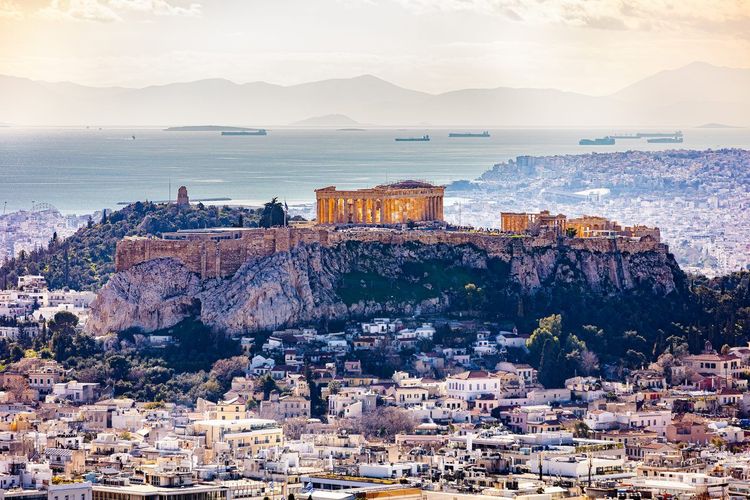
Perched at 156 meters above sea level, the Parthenon has dominated Athens since 447 BCE. The dimensions are both simple and inexplicable: 69.5 meters long, 30.9 meters wide, 46 Doric columns that have survived two millennia of fires, explosions, and looting. Acropolis admission costs €30 in high season (April 1 to October 31) and €15 in winter; the combined ticket at €30, valid for 5 days across 7 sites, costs the same as the Acropolis alone and remains the best-value investment of your stay.
The optimal strategy: arrive at opening time (8 am in summer). The raking morning light bathes the columns in gold, and you will have the Parthenon to yourself for about twenty minutes before the first groups make their way up. Don't stop only at the main temple: the Erechtheion with its Caryatids (the originals are in the museum), the Temple of Athena Nike on the southwest side, and the panoramic view from the plateau — stretching across the Athens basin all the way to the sea — each deserve their own time. In summer, the plateau is fully exposed with no shade whatsoever: a hat and at least 1.5 liters of water are essential in July and August, when temperatures often exceed 36°C.
The ascent begins at the Beulé Gate, after passing alongside the Odeon of Herodes Atticus, a 2nd-century theater still used for concerts in summer. Just below, the south slope houses the Theater of Dionysus (Dionysiou Areopagitou, Athens 117 42, rated 4.7/5 on Google from 6,589 reviews), the oldest stone theater in the world (4th century BCE) and the birthplace of Greek tragedy: Sophocles, Aeschylus, and Aristophanes all premiered their plays here. Ryo's audio-guided tour of Athens covers this entire climb with audio commentaries on each monument, from the Beulé Gate to the south slope. For a more in-depth read, our Ryo article on visiting the Acropolis of Athens details up-to-date opening hours and online bookings.
Allow 2 to 3 hours on the hill, plus 45 minutes for the museum below. The combined ticket at €30 costs the same as the Acropolis admission alone: it pays off the moment you visit even one other site.
Monastiraki, Plaka, and Anafiotika: the Living Heart of Athens
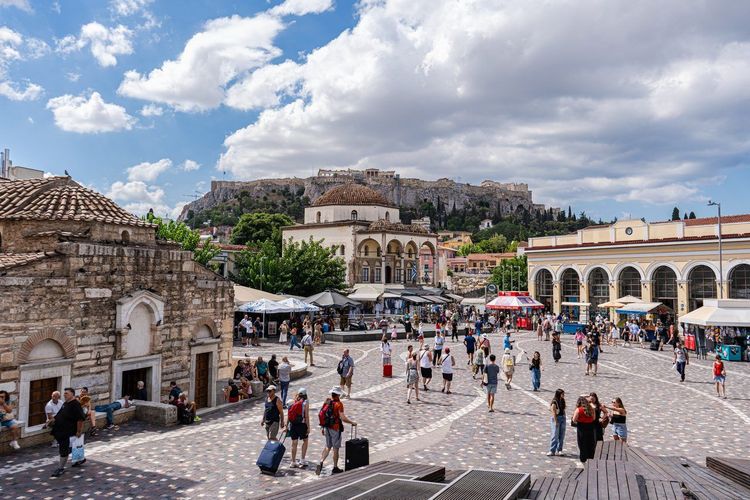
Coming down from the Acropolis via the north slope, you enter the neighborhood of Monastiraki, the most vibrant square in Athens. An 18th-century Ottoman mosque, Roman ruins accessible from the pavement, and stalls piled with vinyl records, beaten copper, and spices: the area brings three millennia of the city's history together within a few hundred square meters.
The flea market spills into the surrounding streets (Adrianou, Ifestou, Pandrossou). On Sunday mornings, it extends all the way to Avyssinias Square, where vendors set up makeshift tables with ceramics, antique silverware, and Orthodox icons. You don't need to buy anything to enjoy the scene — it is one of the most authentic urban spectacles in the Mediterranean basin.
To the east, the neighborhood of Plaka is the Ottoman old town of Athens. Sloping cobbled lanes, bougainvillea, tavernas spilling onto the pavements: the area is touristy, but its 19th-century neoclassical architecture remains intact. Continue toward Anafiotika, an enclave of whitewashed houses built in the 19th century by masons from the island of Anafi. You are suddenly in the Cyclades, a stone's throw from the Acropolis — a sense of teleportation that photographs never quite manage to capture.
Adrianou Street runs alongside the Roman Agora and the Tower of the Winds (1st century BCE), an octagonal hydraulic clock in Pentelic marble, among the best-preserved of antiquity. The ancient Agora (Greek, older and larger) is two minutes to the west: the Temple of Hephaestus overlooking it is one of the best-preserved Greek temples in the world. Allow a full half-day to explore this Monastiraki–Plaka–Anafiotika triangle at your own pace, following our audio-guided tour up Adrianou Street to the ancient Agora if you like.
The Great Athenian Museums
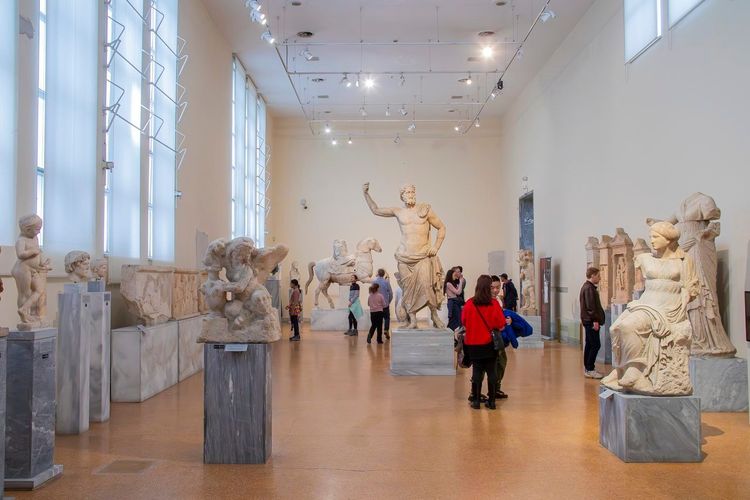
Athens is home to two museums whose collections place them among the most significant cultural institutions of the ancient world.
The Acropolis Museum (Dionysiou Areopagitou 15, Athens 117 42, rated 4.7/5 on Google from 83,338 reviews), opened in 2009, is built above archaeological excavations visible through its glass floor. It houses the original sculptures from the Parthenon — friezes, metopes, pediments — that Lord Elgin did not take to London. The Parthenon Gallery on the third level, with its glass walls looking directly onto the sacred hill, creates a visual dialogue between the marbles and the monument they decorated 2,500 years ago. Admission: €15 (€10 in low season, from November to March).
Twenty minutes' walk to the north, the National Archaeological Museum brings together 11,000 objects spanning the entire ancient Greek world: gold masks from Mycenae, Archaic kouros statues from the 6th century BCE, Classical bronze friezes, black-figure vases. It is the largest collection of Greek art in the world, and it remains undervisited relative to its true significance. Admission: €20 (flat rate since January 2026; 50% discount for EU visitors over 65 from October to May). Allow 2 to 3 hours at minimum.
For lovers of Byzantine art, the Byzantine and Christian Museum (Vassilissis Sofias Avenue) holds icons from the 5th to the 19th century and liturgical objects of exceptional rarity — a lesser-known collection that nonetheless deserves an hour and a half of your time.
Syntagma, Kolonaki, and Lycabettus
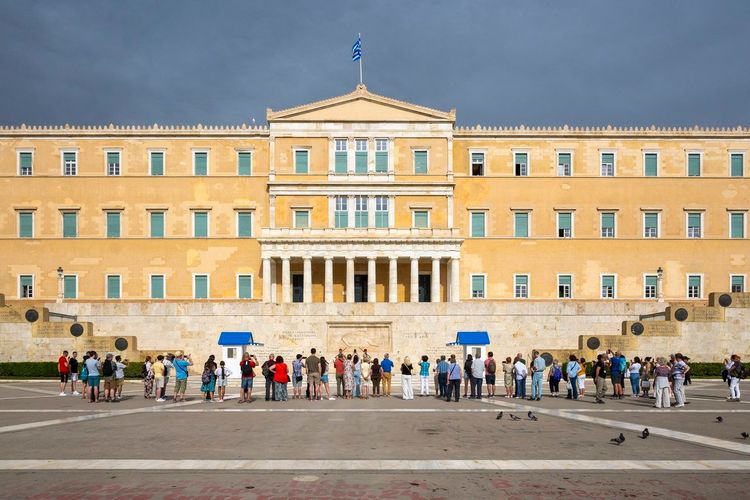
Syntagma Square is the geographic and political center of modern Athens. Twice an hour, the changing of the presidential guard in front of Parliament transforms the esplanade into a choreographic spectacle: the evzones in pleated kilts and black pompons march in slow cadence to the Tomb of the Unknown Soldier, with a deliberate pace that commands the attention of every passerby.
Above Syntagma, the Kolonaki neighborhood climbs toward the hill of Lycabettus. This limestone outcrop peaks at 277 meters and offers the finest panorama over Athens: you can make out the Acropolis, Piraeus, and on a clear day, the outline of the island of Aegina on the horizon. The funicular runs from Ploutarchou Street for €3, or allow 30 minutes on foot from Kolonaki. Going up in the late afternoon, just before sunset, is recommended for the golden light on the Parthenon.
Cape Sounion: the Temple of Poseidon at the Edge of the World
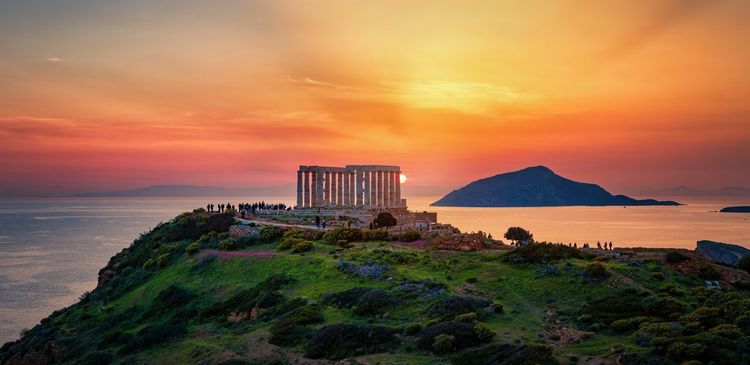
70 kilometers south of Athens, where Attica ends in white cliffs over the Aegean Sea, the Temple of Poseidon (Cape Sounion, Lavreotiki 195 00, rated 4.7/5 on Google from 21,330 reviews) stands 60 meters above the waves. Built in 444 BCE, at the same time as the Parthenon, it retains 16 of its white marble columns. Lord Byron carved his name into one of them — a notch still visible today.
The excursion from Athens can be made by KTEL bus from the Pedion tou Areos terminal (regular departures, approximately 2 hours travel time, €7–9 depending on the season), or by car via the coastal road that runs along the Athens Riviera. This road is worth attention in its own right: the seaside resorts that follow one another from Glyfada offer organized beaches (€5–15 entry) where Athenians spend their weekends. Along the way, Lake Vouliagmeni, 25 km from Athens, is worth a stop: a natural thermal lake maintained at 22 to 29°C year-round, carved into the limestone by underground springs, used since antiquity for its curative properties.
Arrive at Cape Sounion in the late afternoon. The orange light falling on the columns at sunset, with the Saronic Islands in the background, is one of the most striking images in all of Greece. Admission: €10. The last buses return to Athens around 8 pm in summer. By car, the circuit can easily be combined with a swim at Vouliagmeni on the way back.
Delphi: the Oracle of the Ancient World
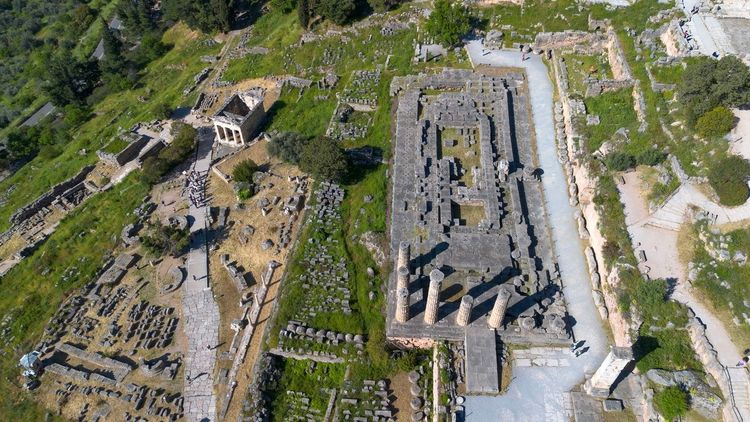
For centuries, Delphi was literally considered the center of the universe. Perched at 570 meters altitude on the slopes of Parnassus, the archaeological site overlooks a plain of olive trees descending toward the Gulf of Corinth. The Pythia, high priestess of Apollo, delivered her oracles here from the 8th century BCE onward. Delegations from Egypt, Persia, and Macedon made the journey to consult the oracle before any major political or military decision.
180 km from Athens (2h30 by car via the E962, or 3 hours by bus from the KTEL Liossion terminal), Delphi can be comfortably visited in a single day. The site includes the Sacred Way lined with votive treasuries offered by Greek city-states in gratitude for oracles, the Temple of Apollo (6th century BCE) where the Pythia officiated, the ancient theater (with a sweeping view over the entire sanctuary from the seats), and the stadium, the best-preserved in the ancient world at 183 meters long with seating for 6,500 spectators. The walk from the site entrance to the stadium takes about 40 minutes.
The Delphi Museum is not to be missed: it houses the Charioteer of Delphi (475 BCE), one of the finest bronze statues to have survived from antiquity, as well as the sculptures from the pediments of the Temple of Apollo. Combined site + museum ticket: €12. If you come by car, the village of Arachova, 10 km east of Delphi, is worth a detour for its restaurants with views over the valley. Avoid combining Delphi and Cape Sounion in the same day — the two sites lie in opposite directions from Athens.
Mycenae, Epidaurus, and Nafplio: a Day in the Peloponnese
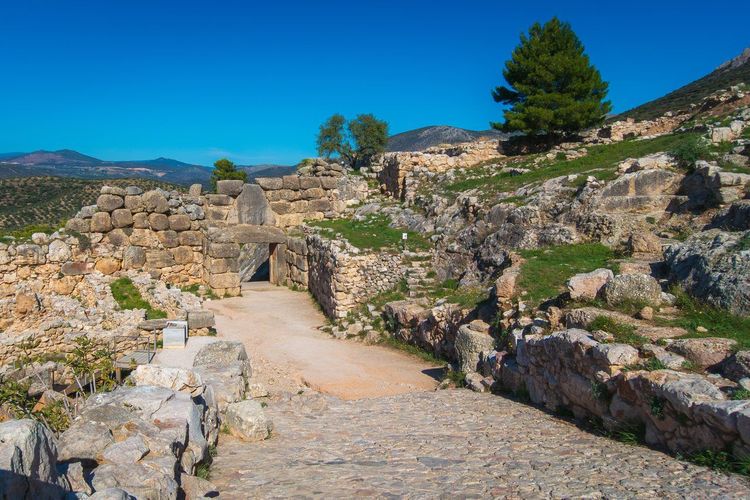
This day circuit from Athens (150 to 180 km depending on the route) concentrates three of the most historically significant sites in all of ancient and medieval Greece.
Mycenae is the logical first stop. The citadel of Agamemnon, perched on a hill between two mountain ridges 90 km from Athens (1h15 by car from the city center), is the most mythologically dense site in Greece. The Lion Gate (13th century BCE) is the oldest monumental relief in Europe — two lionesses facing each other above a column, carved in limestone. The Treasury of Atreus (so-called Tomb of Agamemnon), a beehive tomb with a 14-meter diameter cut into the hillside, creates a sense of space and silence that is hard to anticipate. Admission: €12.
30 km south of Mycenae, the Theater of Epidaurus is the ancient building whose acoustic perfection remains unexplained. Built in the 4th century BCE for 13,000 spectators, its 55 rows of limestone seating transmit a whisper from the central orchestra to the very back rows without any amplification. Every summer (July–August), the Epidaurus Festival presents Greek tragedies by evening light — the most intense cultural experience mainland Greece has to offer. Admission: €12.
The day ends in Nafplio, the former first capital of independent Greece (1828–1834). The Venetian old town, with its cobbled streets, houses with flower-filled balconies, and the Palamidi fortress commanding the Gulf of Argolis, is one of the most beautiful in Greece. Climb the 999 steps to Palamidi fort for a 360° view over the bay, the surrounding islands, and the Argos plain. Allow at least 2 hours on site and have dinner before heading back — the drive to Athens takes around 2 hours.
This circuit is doable by bus (KTEL Kifissos terminal in Athens, with a connection at Corinth or directly to Nafplio) but requires careful planning with precise timetables. By car, you set the pace yourself and can add a swim at Tolon or Karathona, the fine-sand beaches a few kilometers from Nafplio.
Corinth: the Canal between Two Seas
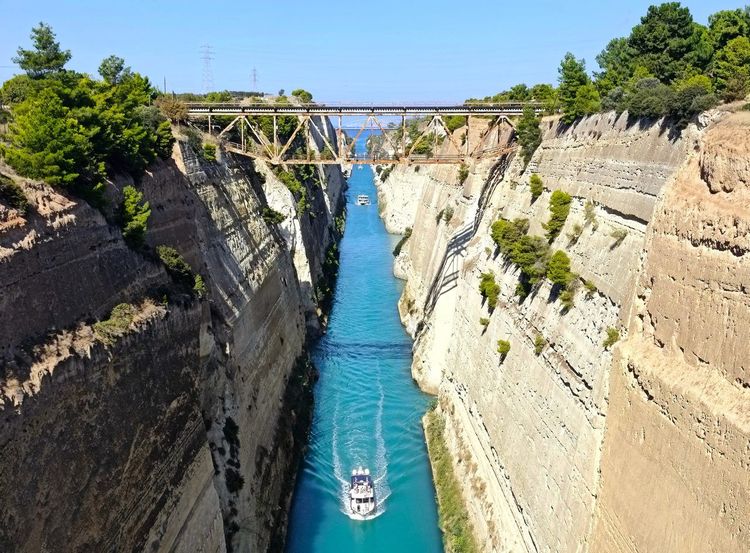
Corinth lies 85 km from Athens, on the natural road toward the Peloponnese. The ancient city, 5 km from the modern town, was in the 7th century BCE the most populous and prosperous in Greece, controlling trade between the Ionian Sea and the Aegean thanks to its position on the isthmus. The Temple of Apollo (550 BCE), with its seven remaining Doric columns still standing, overlooks the Roman forum excavations. The site museum holds Corinthian ceramics from the 8th century and Roman-era sculptures. Site + museum admission: €8.
The Corinth Canal (Isthmia, Corinth 200 00, rated 4.4/5 on Google from 10K reviews), at the entrance to the isthmus, is one of the most ambitious engineering projects of the 19th century. Inaugurated in 1893 after eleven years of construction, it cuts a trench 6.3 km long through 79 meters of limestone rock, for just 24 meters of width. From the suspension bridge above the canal, the plunging view down to the turquoise water below is immediately vertiginous. Bungee jumping (around €80) and kayaking (€30) are offered in season from the canal banks. Combining Corinth with Mycenae and Nafplio in the same day makes geographical sense — the three sites line up along the same road from Athens.
The Saronic Islands: Aegina, Hydra, and Poros
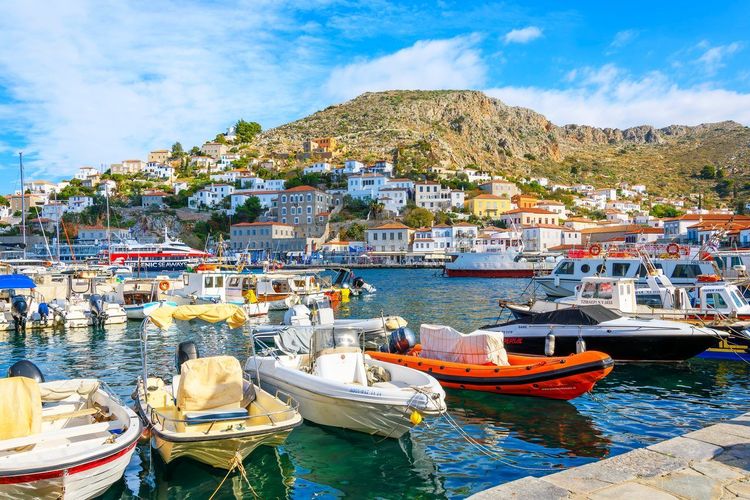
The Saronic Gulf begins 40 minutes by hydrofoil from Piraeus, Athens' main port. For travelers with limited time, it is the fastest gateway to the atmosphere of the Greek islands without a long crossing.
Aegina is the largest and most accessible. Flying Dolphin fast ferries connect Piraeus to Aegina in 40 minutes (hydrofoil, around €18) or 1h15 by regular ferry (around €9). The harbor town, with its pastel neoclassical houses and pistachio market, deserves two hours of wandering. The real reason to come is the Temple of Aphaia (Aegina 180 10, Greece, rated 4.7/5 on Google from 9,110 reviews) (5th century BCE), 12 km from the port: a Doric temple perched on a wooded hill with sea views, one of the best-preserved in Greece. Admission: €8. Aegina produces the finest pistachios in Greece — the stalls at the port will inevitably catch you on your way back.
Hydra is a radically different proposition. 1h30 from Piraeus, this 50 km² island has lived without cars, scooters, or any motorized vehicles for decades — only donkeys for carrying goods and rowboats for moving between coves. The main village, built in an amphitheater around the harbor, is one of the most beautiful in the Mediterranean basin. Inland paths lead to isolated chapels and coves accessible only on foot. Hydra justifies an overnight stay on the island if your schedule allows. Our Ryo guide to the Saronic Islands gives up-to-date ferry schedules and fares for all islands in the gulf.
Poros, 1 hour from Piraeus, is separated from the Peloponnese by a channel just a few hundred meters wide. The village built in an amphitheater facing the mainland, with its white houses and blue bell tower, creates one of the most photogenic scenes on the Saronic Sea. Ideal in combination with a day in the Peloponnese: cross from Nafplio by water taxi (15 minutes) rather than returning to Athens.
Nature and Beaches around Athens
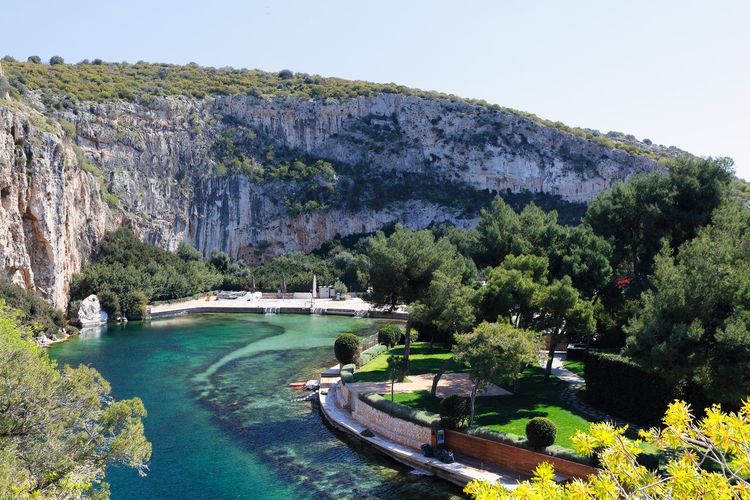
The Athens Riviera runs along the southern coast from Glyfada to Cape Sounion. The organized beaches of Vouliagmeni and Varkiza are among the most accessible from the city center (tram from Syntagma to Glyfada, then coastal bus). Access to organized beaches costs between €5 and €15 depending on the establishment, sunbeds and parasols included. Free beaches exist at Anavyssos and in the coves around Cape Sounion, but are rarer along this heavily urbanized coastline. Our Ryo article on the most beautiful beaches around Athens lists the best swimming options with public transport directions.
For inland nature, Mount Parnitha (1,413 m) is reachable by car in 45 minutes from central Athens. The national park protects forests of pine and fir, deer, fallow deer, and birds of prey — a dramatic climatic shift from the concrete of the capital. In winter (December–March), basic ski runs open at the summit. The Dafni Forest, 10 km from Athens on the road to Corinth, combines an 11th-century Byzantine monastery listed as a UNESCO World Heritage Site with shaded pine woodland.
Athenian Cuisine: Where and What to Eat
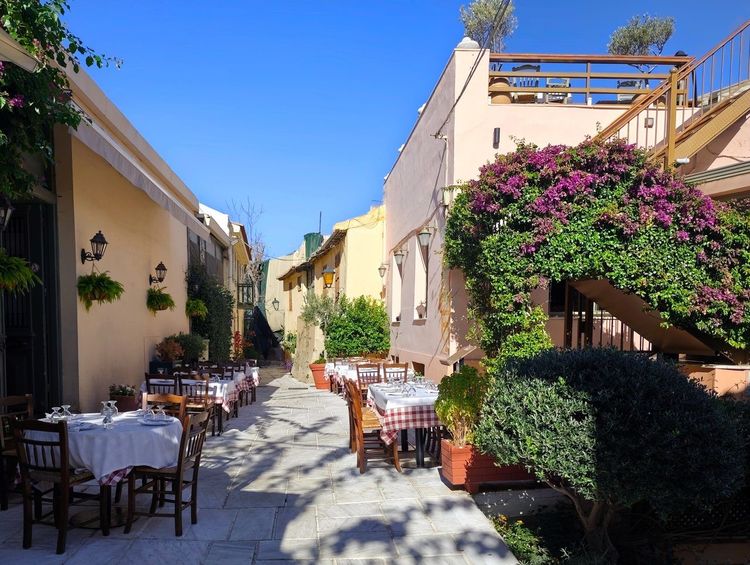
Athenian cuisine goes well beyond moussaka and counter souvlaki. Each neighborhood has its own register and style of dining.
Monastiraki and Psirri (north of the flea market) concentrate the most honest street souvlakis: €2 to €4 for a full pita, stuffed with tzatziki, tomato, and fresh onions. Mitropoleos Street, between Monastiraki and Syntagma, is lined with grill tavernas from morning to midnight. The Exarcheia neighborhood (north of the archaeological museum) is home to more creative restaurants, frequented by Athenians rather than tourists — formica tables, handwritten menus, home-style cooking at modest prices. For a terrace table with a view of the Acropolis, the Thissio neighborhood (west slope of the hill) offers the best positions for dinner.
The Athens Central Market (Varvakios Agora, Athinas Street) opens from 6 am: the stalls of meat, fresh fish, spices, olives, and cheeses are a spectacle in themselves, even without buying anything. This is where the city's restaurateurs come to stock up every morning. For more, our Ryo guide to the culinary specialties of Athens lists the must-try dishes and addresses by neighborhood.
How to Plan Your Stay in Athens and Its Surroundings
Recommended length: 4 to 5 days for Athens and its main surroundings. Two days are enough for the Acropolis, the museums, and the historic neighborhoods; two or three additional days are needed for day trips depending on your priorities. To cover the Peloponnese, Delphi, and the islands without rushing, a week is ideal.
Transport: the Athens metro (lines 1, 2, 3) efficiently connects the sites within the city. A single ticket, valid for 90 minutes, costs €1.20, the 24-hour ticket €4.10, and the 5-day pass €8.20. For day trips, KTEL buses are the budget option from their respective terminals (Liossion for the Peloponnese and Delphi, Pedion tou Areos for Cape Sounion). A rental car offers more flexibility, especially for the Mycenae–Epidaurus–Nafplio circuit. Our Ryo guide to sleeping in Athens details the best neighborhoods by budget and the types of accommodation available.
Combined ticket: the €30 ticket (7 sites over 5 days) covers the Acropolis, the ancient Agora, the Theater of Dionysus, the Roman Agora, the Tower of the Winds, Hadrian's Library, and the Temple of Olympian Zeus. If you plan to visit 4 or more of these sites, it pays for itself on the very first day. Hadrian's Library and the Tower of the Winds are also commented stops on our audio walking tour.



FAQ
How many days do you need to visit Athens and its surroundings?
Plan for a minimum of 4 to 5 days: two for the Acropolis, the museums, and the historic neighborhoods, then two or three day trips depending on your priorities. To cover the Peloponnese, Delphi, and the Saronic Islands without rushing, a week is ideal.
What is the best time to visit Athens?
April–May and September–October offer the best conditions: temperatures between 18 and 28°C, fewer tourists, and archaeological sites accessible at full opening hours. July–August is intense (35–40°C in full sun on the Acropolis), but evenings on terraces and swimming more than make up for it. Winter (December–February) is mild (10–15°C) and the museums are nearly empty.
How do you get around for day trips from Athens?
KTEL buses serve most sites from their Athens terminals (Liossion for the Peloponnese and Delphi, Pedion tou Areos for Cape Sounion). A rental car offers more flexibility for Peloponnese sites. Piraeus is accessible by metro (line 1) for ferries to the Saronic Islands.
Can you visit Cape Sounion in a single day from Athens?
Yes, without any difficulty. Allow 4 to 5 hours round trip by KTEL bus (departing from Pedion tou Areos). By car, the coastal road via Glyfada and Vouliagmeni takes slightly longer but follows the sea the entire way, with swimming possible on the way there or back.
Is Acropolis Admission Paid for All Visitors?
The standard admission is €30 in high season (April 1 to October 31), €15 in low season. The combined ticket at €30 grants access to 7 sites over 5 days, at the same price as the Acropolis alone. Free for EU residents under 25 and for all visitors on the first Sunday of the month between November and March.
Are the Saronic Islands worth the trip from Athens for a short stay?
Yes, particularly Aegina (40 min from Piraeus by hydrofoil) and Hydra (1h30). Even a half-day on Aegina radically changes the atmosphere of your trip — the sea, the calm, the fresh pistachios. For an overnight stay, Hydra is the most immersive island in the gulf.
Conclusion
Athens is one of the few European capitals where the surroundings are as rich as the city center. The Temple of Poseidon 70 km away, the oracle of Delphi at 180 km, a Mycenaean fortress at 90 km, the Saronic Islands 40 minutes by ferry: the city functions as a launchpad toward one of the densest concentrations of heritage in the world. Each excursion adds another layer to what you have already seen in the Athenian museums.
To explore Athens before heading out to its surroundings, the Ryo audio guide to Athens takes you across 8.2 km with 31 audio commentaries on the most important monuments of the sacred hill and the historic neighborhoods — the best introduction to the city.
À lire également