© Shutterstock
 Votre guide Ryo
Things to Do in Thessaloniki in 2026: 20 Experiences in the City and Beyond
On the Thessaloniki waterfront, locals gather at sunset to walk, run, or simply watch cargo ships enter the Thermaic Gulf, while the White Tower turns orange behind them. What to do in Thessaloniki when the city layers Macedonian antiquity, the Byzantine Empire, and three centuries of Ottoman occupation, sometimes within just a few square metres of the same neighbourhood? Greece's second city is not visited like Athens: here, ruins are not kept under glass — they line café terraces and tram stops. If you are used to Ryo audio-guided walks in other European cities, you will find the same pleasure of moving from one monument to the next without rushing.
This guide details twenty experiences covering the city and its immediate surroundings: a Roman rotunda that changed function four times over seventeen centuries, an Ottoman fortress turned prison and then a free viewpoint over the bay, a market where fishmongers still call out prices by auction, and two excursions to ancient royal capitals less than an hour and a half by road. Enough to fill a two-day weekend or a week-long stay, with verifiable addresses rather than a generic tourist map copied from one visitor centre to the next.
1. Climb to the Top of the White Tower
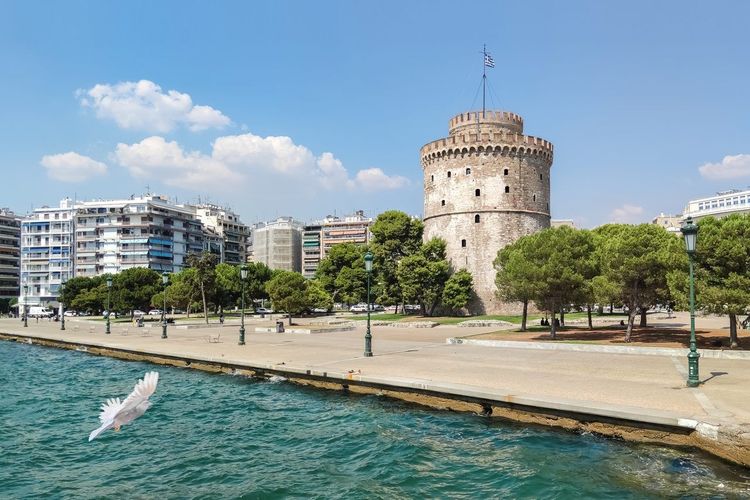
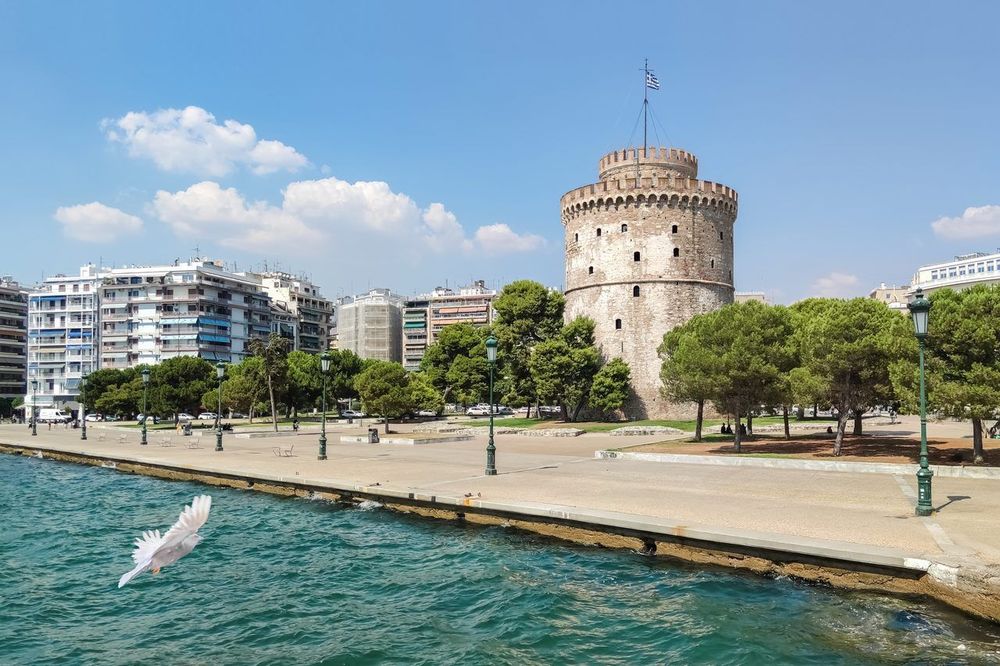
The White Tower (Leoforos Nikis, 546 22 Thessaloniki, rated 4.7/5 on Google with 65,021 reviews) is the city's visual symbol, visible from almost the entire waterfront. Built in the mid-15th century by the Ottomans on the foundations of older Byzantine and Venetian fortifications, it long bore the nickname Tower of Blood due to its use as a prison. Its white wash, applied in the late 19th century by a prisoner in exchange for his freedom according to local legend, gave it its current name and instantly recognisable silhouette.
The interior now houses a museum dedicated to the city's history, spread across six levels connected by a fairly steep spiral staircase. Each floor covers a different period, from the ancient founding to the 20th century, with interactive displays that are quite well conceived for an entrance fee of around 4 euros. The rooftop terrace offers a 360-degree panorama over the Thermaic Gulf, Ano Poli in the background, and on a clear day, the silhouette of Mount Olympus on the southern horizon. It is worth going up in the late afternoon: the raking light on the sea makes for a far more interesting photograph than at noon, when the sun flattens the contrasts. Allow an hour for the full visit, slightly less if you head straight to the terrace.
In terms of planning, aim to visit early or late in the day to avoid both the heat and the queue, which grows quickly when a cruise ship docks. The museum is open every day in high season and generally closes one day a week for the rest of the year, with hours that vary by season: check them the evening before to avoid a wasted trip. The tower stands at the end of its own esplanade, about ten minutes' walk from Aristotle Square along the seafront, making it a logical starting point for exploring Thessaloniki on foot.
2. Walk along the Waterfront to Nea Paralia
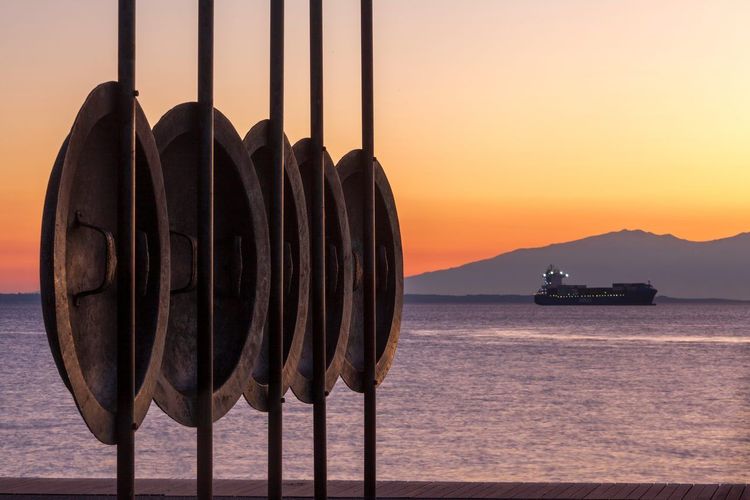
The Thessaloniki waterfront, renamed Nea Paralia (Leoforos Nikis, 546 21 Thessaloniki, rated 4.7/5 on Google with 31 reviews) after its complete renovation completed in 2013, stretches for more than three kilometres from the port to the international exhibition park. The promenade was redesigned by a Greek architecture firm around thirteen themed gardens punctuated by contemporary art installations, including the Umbrellas by Georges Zongolopoulos, a structure of metallic parasols that has become a landmark photographed at all hours.
On weekdays, the promenade belongs mainly to joggers and families on bicycles. At weekends, the café terraces lining the pavement fill up from 10 a.m., and in summer it is not unusual to encounter street vendors selling grilled corn or fresh coconut. You can rent a bike or electric scooter at the stations spaced roughly every 400 metres, a practical option if you plan to take in both the White Tower and the international exhibition park without retracing your steps through the city centre.
Each of the thirteen gardens has its own character: the Music Garden, the Mediterranean Garden, and the Sand Garden designed for children are all reasons to slow down rather than rush from one end to the other. At sunset, the stretch in front of the White Tower becomes the unmissable meeting point for Thessalonikians coming out for the evening breeze: it is probably the best moment to understand why residents regard their waterfront as the city's true living room.
3. Discover the Rotunda of Galerius
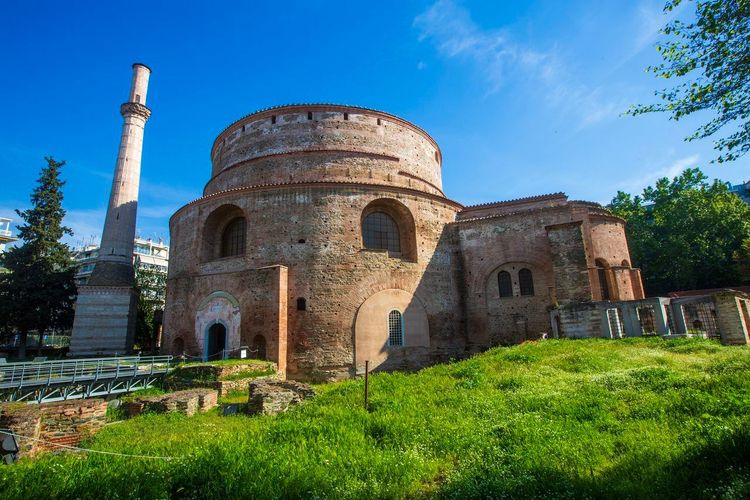
The Rotunda of Galerius (Agiou Georgiou, 546 35 Thessaloniki, rated 4.6/5 on Google with 6,575 reviews) was built at the very beginning of the 4th century AD, around 305, as a mausoleum intended for the Roman Emperor Galerius. He was never actually buried there, but the circular brick structure, more than six metres thick at its base, survived the centuries by changing function with each political shift in the city's history.
Converted into a Byzantine church dedicated to Saint George in the 5th century, it received golden mosaics considered among the finest in early Christian art, before becoming a mosque under the Ottoman Empire — which explains the minaret still standing beside it, the sole surviving example of its kind in Thessaloniki. The building has been part of the UNESCO-listed site grouping the city's early Christian and Byzantine monuments since 1988. The interior, cool even in the height of summer, rewards a long upward gaze towards the dome to make out the fragments of mosaics still in place despite successive lootings and earthquakes.
Take time to slowly walk around the dome before going back out: the mosaics, arranged in superimposed registers, originally depicted saints set against golden architectural backdrops of exceptional refinement for the early Christian period. It is one of the few sculpted testimonies of the Roman tetrarchy preserved at this scale. Admission is paid but modest, and often included in a combined ticket with other Byzantine monuments in the city. Concerts and temporary exhibitions are sometimes held here thanks to the exceptional acoustics of the circular space — a good reason to check the local programme before your visit.
4. Stop beneath the Arch of Galerius
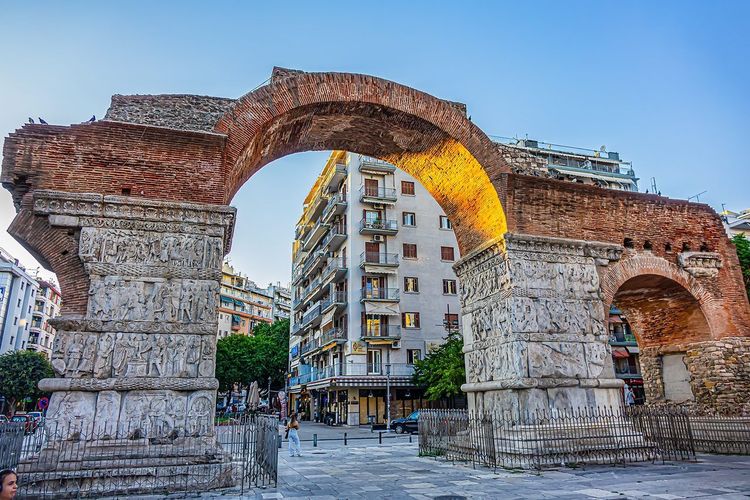
Two minutes' walk from the Rotunda, the Arch of Galerius, also known by locals as the Kamara, once marked the entrance to a vast imperial complex linking Galerius's palace to the rotunda via a processional way that has since disappeared. Erected between 298 and 305 to celebrate the emperor's victory over the Persians, the arch retains only two of its original four pillars, carved with battle scenes still legible despite erosion. The Kamara has become the city centre's informal landmark: locals have been arranging to meet there for generations, much like meeting under a railway station clock.
Look up at the bas-reliefs: register by register, they recount Galerius's victorious campaign against the Sassanid Persians, with scenes of battle, submission, and sacrifice still readable despite sixteen centuries of erosion. It is one of the rare sculpted testimonies of the Roman tetrarchy preserved at this scale. The arch stands in the middle of a pedestrian street, with no ticket booth or barrier: you can walk under it at any hour, making it a natural gathering point in the evening when the surrounding terraces come alive and the stone takes on a golden hue under the lights.
5. Get Lost in the Lanes of Ano Poli
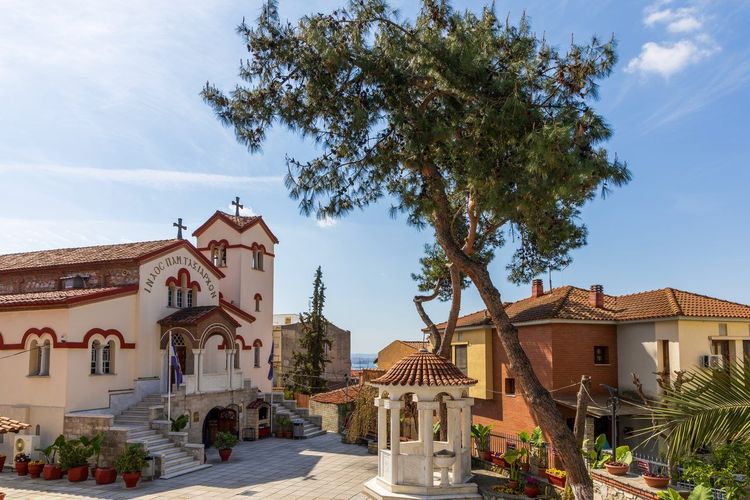
Ano Poli, the upper town, is the only neighbourhood in Thessaloniki to have escaped the great fire of 1917 that devastated the centre. It therefore retains its original Ottoman urban fabric: cobbled lanes too narrow for cars, timber-framed houses painted in bright colours, and interior courtyards enclosed by high walls. The Byzantine ramparts, some sections of which date back to the 4th century and were reinforced several times up to the Ottoman period, still encircle a good part of the neighbourhood and are part of the same UNESCO listing as the Rotunda.
The neighbourhood lends itself particularly well to the kind of stroll made for an audio-guided tour, street by street, with no set itinerary: every turning reveals a new perspective over the red-tiled rooftops and the sea below. The Trigonion Tower (Eptapyrgiou, 546 34 Thessaloniki, rated 4.7/5 on Google with 7,732 reviews), a corner bastion of the fortifications, offers one of the best free viewpoints over the lower city and the gulf, particularly at sunset when the tour coaches have already left.
Take the opportunity to stop at one of the neighbourhood's small family-run tavernas, often run by the same family for two or three generations, where the menu is chalked on a board and changes according to what the market delivered that morning. Prices are noticeably lower than in the tourist centre, a detail that adds up over a stay of several days. Allow at least two hours of walking to do the neighbourhood justice, more if you like to stop and photograph every façade.
Wear comfortable shoes: the cobblestones of Ano Poli are uneven and the climbs can be steep, but it is precisely this topography that offers, at each level, a new glimpse of the sea. Once at the top, set the map aside and simply follow the lanes that climb upwards — it is the best way to stumble upon a small Byzantine church or a flower-filled courtyard that no tourist map mentions.
6. Browse Kapani Market
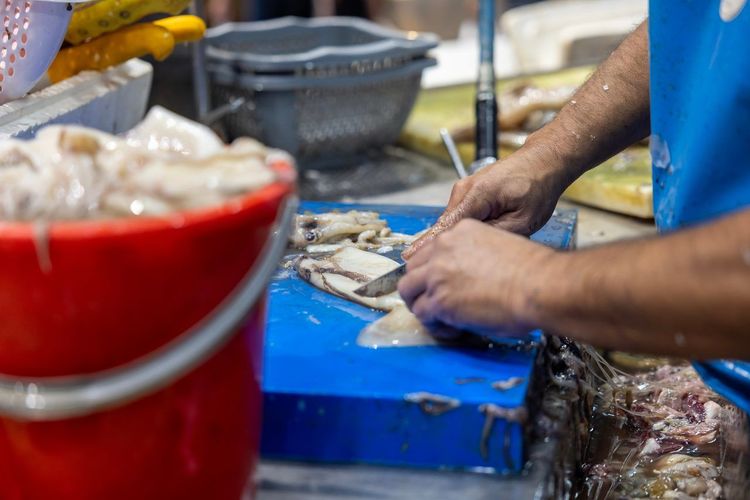
Kapani Market (Aristotelous, 546 24 Thessaloniki, rated 4.4/5 on Google with 13,553 reviews), also known locally as Vlali, is the city's oldest covered market, active for several centuries in the shadow of Aristotle Square. Fishmongers, butchers, spice merchants, and dried-fruit sellers jostle together in organised chaos, with stalls spilling out into the adjacent lanes from 7 a.m.
Unlike more visitor-friendly markets, this one still operates primarily for local residents. You will find whole Greek walnuts sold by the kilo, feta cut to order from whole wheels, and seafood stalls where prices are still haggled aloud. Visit on a weekday morning to avoid the Saturday crowds, and leave some space in your bag: packets of spices, particularly smoked paprika and wild Macedonian oregano, are easy to carry and cost a fraction of what the tourist shops in the centre charge.
Use the market as a chance to sample local food culture on the go: a few counters serve still-warm bougatsa, the flaky pastry filled with cream or cheese typical of the city, as well as olives and cheeses to enjoy standing up. It is also the best place to observe, unfiltered, the way locals do their shopping and chat with vendors they often know by first name.
7. Compare with Modiano Market
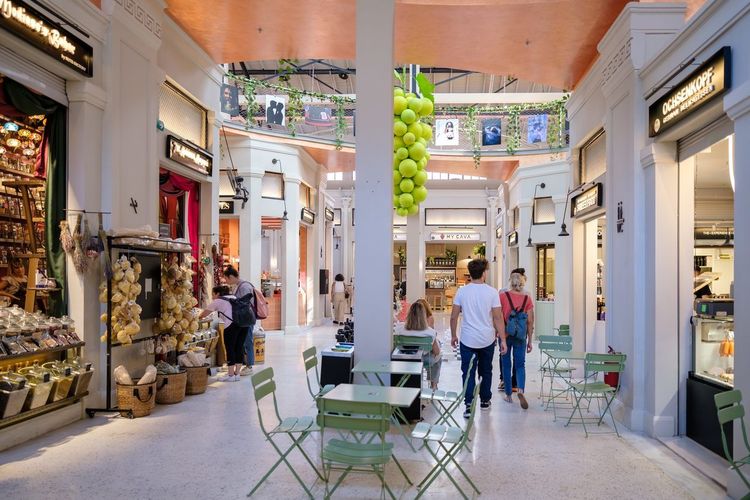
A few streets from Kapani, Modiano Market (Komninon, 546 25 Thessaloniki) occupies an Art Deco building constructed in the 1920s by the architect Eli Modiano, a member of one of the city's great Sephardic Jewish families. Closed for several years for renovation, it recently reopened in a hybrid form that blends traditional stalls with small tables where you can eat grilled fish and mezzes on the spot. The atmosphere is more tourist-oriented than Kapani but remains largely authentic on weekdays, before the arrival of organised groups late in the morning.
If you are choosing between the two markets, know that they complement rather than resemble each other: Kapani remains the city's popular heartbeat, while Modiano leans more towards gastronomy and aperitif culture. Come late morning for a mezzé washed down with a glass of tsipouro, the local spirit traditionally served with small sharing plates. The building itself is worth admiring for its metal framework and glass roof, rare survivors of the 1920s commercial architecture to have made it through the transformations of the city centre.
8. Have a Drink in the Ladadika Quarter
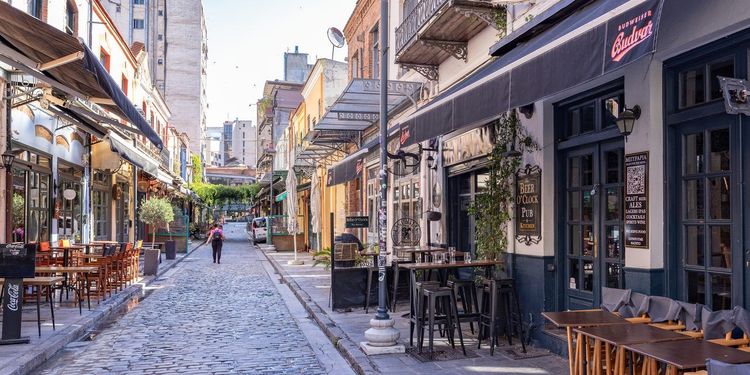
The Ladadika quarter (546 25 Thessaloniki, rated 4.5/5 on Google with 3K reviews), whose name literally means the oil quarter in reference to its past as an olive oil storage and trading zone, narrowly escaped demolition in the 1980s before being listed and restored. Its colourful facades and pedestrianised cobbled streets, a stone's throw from the port, now house the highest concentration of bars and tavernas in the city centre.
The neighbourhood changes character completely between day and night. In the afternoon, you can lunch quietly on mezzes at tables set right on the cobblestones. After 10 p.m., especially from Thursday to Saturday, the terraces fill with students and young professionals who move from ouzo to rembetiko in an atmosphere that builds steadily until late into the night. If you are looking for a taste of Thessaloniki's renowned nightlife without straying far from the historic centre, this is probably the easiest starting point.
To eat without overspending, move one or two streets away from the busiest terraces: the tavernas in the adjacent lanes, less visible, charge gentler prices and often serve more carefully prepared food, far from menus translated into five languages. One final useful reference point: the neighbourhood's central square serves as a natural meeting point in the evening, handy if you are travelling in a group and worried about getting lost in the maze of lanes.
9. Cross Aristotle Square
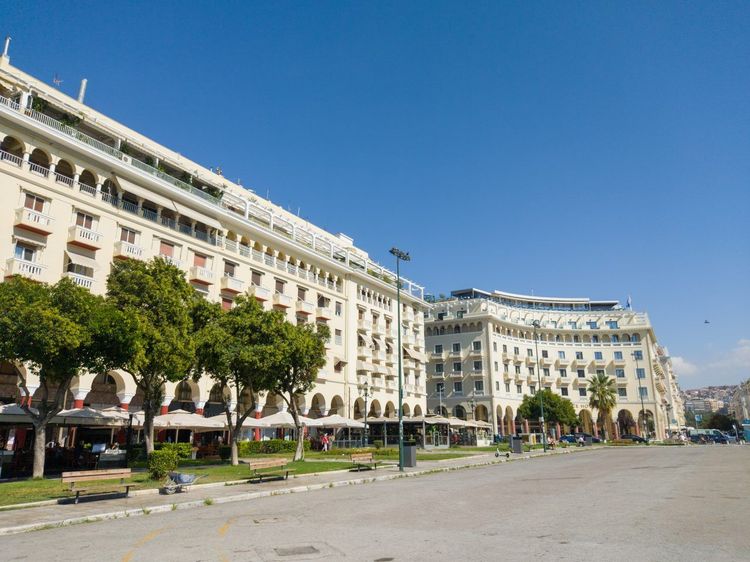
Aristotle Square, the central axis linking the waterfront to Egnatia Street, was conceived by French architect Ernest Hébrard as part of the city's reconstruction plan following the great fire of 1917, which had destroyed nearly two thirds of the historic centre. Its open perspective towards the sea, lined with neoclassical buildings with regular arcades, deliberately contrasts with the dense urban fabric inherited from the Ottoman period. Today it is the city's primary gathering place for demonstrations, open-air concerts, and, more simply, a terrace coffee at aperitif hour.
From the square, walk up Aristotelous Street towards the interior: within a few hundred metres you move from the arcaded seafront buildings to the denser commercial lanes that climb towards Egnatia. The perspective was designed to frame the sea and, on a clear day, Mount Olympus in the distance — an urban planning detail that few visitors notice. In December the square hosts a large Christmas market and illuminations; for the rest of the year its historic cafés are among the city's most popular for watching the flow of passers-by from a terrace.
10. Visit the Church of Agios Dimitrios
The church of Agios Dimitrios (Agiou Dimitriou 97, 546 34 Thessaloniki, rated 4.9/5 on Google with 11,818 reviews) is dedicated to the city's patron saint, a Roman officer martyred in the 4th century on this very site according to tradition. It is the largest church in Greece, rebuilt in a five-aisled basilica style after the fire of 1917 destroyed the original Byzantine structure, itself dating to the 5th century. The architects took care to reintegrate into the reconstruction the Byzantine mosaics that had survived, now visible around the sanctuary and regarded as masterpieces of early Christian art.
Beneath the church, a crypt accessible via a discreet staircase preserves the remains of Roman baths where the saint is said to have been imprisoned and then executed, as well as a small fountain that Orthodox faithful still come to touch as an act of devotion. Entry is free, a rare detail for a monument of this significance. Plan to wear clothing that covers the shoulders and knees, as in most Greek Orthodox places of worship, and avoid the period around 26 October — the feast day of the patron saint — if you prefer to visit without the crowds of pilgrims who come from across Greek Macedonia.
11. Admire the Mosaics of Agia Sofia
The church of Agia Sofia (Agias Sofias, 546 22 Thessaloniki), built in the 8th century, reproduces in miniature the inscribed-cross plan of its famous namesake in Istanbul, with a central dome carried on four massive pillars. Like the Rotunda and Agios Dimitrios, it belongs to the UNESCO ensemble of the city's early Christian and Byzantine monuments. The Ascension mosaic adorning the dome, dated to the 9th century, remains visible despite the layers of plaster applied during its time as an Ottoman mosque and removed during successive 20th-century restorations. The interior, darker and more intimate than the city's other great churches, invites you to sit for a few minutes on a stone bench rather than rushing from one photograph to the next.
Set slightly below street level and surrounded by a small shaded garden, Agia Sofia is easily overlooked when walking up towards Egnatia. Entry is free and the visit brief — around twenty minutes is enough — but the hours follow the rhythm of services: avoid arriving during the Sunday morning liturgy if you want to move around freely. As with the city's other Orthodox churches, clothing covering the shoulders is expected at the entrance.
12. Spend a Morning at the Archaeological Museum
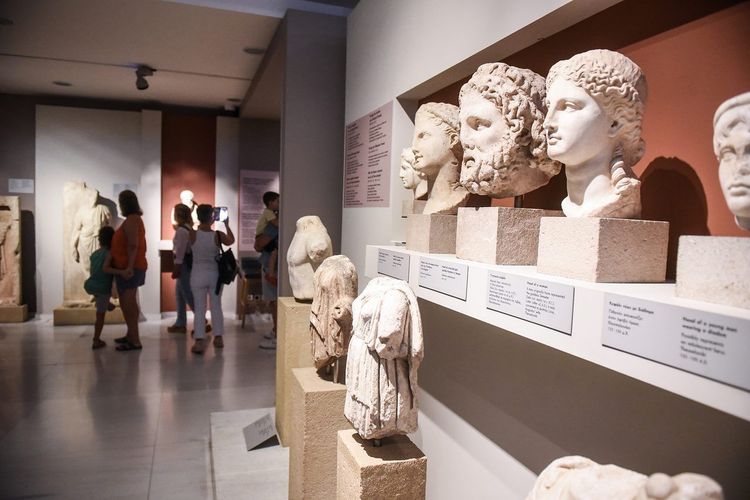
The Archaeological Museum of Thessaloniki (Manoli Andronikou 6, 546 21 Thessaloniki, rated 4.7/5 on Google with 9,230 reviews) covers the history of ancient Macedonia from prehistory to the late Roman period. Its most celebrated piece remains the Derveni Krater, a 4th-century BC bronze vase finely engraved with Dionysiac scenes, found in a Macedonian tomb near the city and considered one of the masterpieces of ancient metalwork.
The rooms devoted to Macedonian gold display jewellery and funerary crowns found in royal tombs across the region, usefully complementing the visit if you are planning an excursion to Vergina afterwards. The itinerary is dense, spread across several wings around a central courtyard, and deserves at least an hour and a half to be explored without rushing. As the Ryo app recommends for dense museum visits, it is better to target three or four rooms as a priority rather than trying to see everything in an hour. The combined ticket with the Museum of Byzantine Culture, directly opposite, allows you to move between Antiquity and Byzantium in the same morning at a reduced rate.
13. Compare with the Museum of Byzantine Culture
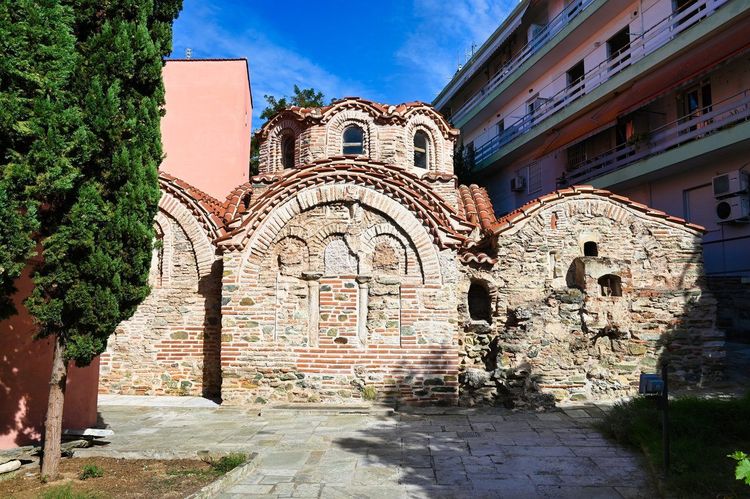
Directly opposite the Archaeological Museum, the Museum of Byzantine Culture (Leoforos Stratou 2, 546 21 Thessaloniki) was named European Museum of the Year in 2005 for its particularly clear chronological scenography, which takes visitors through a thousand years of Byzantine history without ever losing the non-specialist. The collections cover early Christian funerary architecture as well as late icons, along with everyday objects rarely displayed elsewhere, such as jewellery, textiles, and domestic pottery found during urban excavations.
The room devoted to floor mosaics, displayed flat under subdued lighting that highlights the geometric details, is alone a good reason to stop here even after a morning already packed with museums. The single-storey, air-conditioned building also offers a welcome break during the hottest summer afternoons, when temperatures in the city centre regularly exceed 35 degrees.
Allow a good hour for the visit, and do not hesitate to start here rather than at the Archaeological Museum if the heat is intense: its single-storey layout and air conditioning make it the most comfortable refuge in the area during a heatwave. The small café in the inner courtyard lets you catch your breath between rooms, in the shade, before heading back towards the nearby waterfront.
14. Understand Jewish History at the Jewish Museum of Thessaloniki
The Jewish Museum of Thessaloniki (Agiou Mina 13, 546 25 Thessaloniki), housed in one of the few buildings in the commercial quarter to have survived the fire of 1917, traces the history of the Sephardic community that settled in the city following the expulsion from Spain in 1492. At its peak, this community represented nearly half the urban population, to the point that the port closed on Saturdays to observe the Sabbath.
The rooms also document the deportation of almost the entire community to extermination camps in 1943, an episode the city long struggled to discuss publicly. The archival photographs, salvaged liturgical objects, and audio testimonies make for a dense visit of around an hour, more moving than spectacular. It is a step that is missing from many standard tourist itineraries, yet one that illuminates an entire dimension of the city's past identity.
The visit takes on its full meaning when connected to the rest of the city: the bilingual plaques scattered around the centre, certain street names, and the memory of the vanished synagogues all gain particular resonance once you have walked through these rooms. Admission is inexpensive and the visit lasts about an hour. It is undoubtedly one of the steps that makes the greatest difference between a surface-level visit and a genuine understanding of what Thessaloniki once was — long nicknamed the Jerusalem of the Balkans.
15. Climb up to the Heptapyrgion
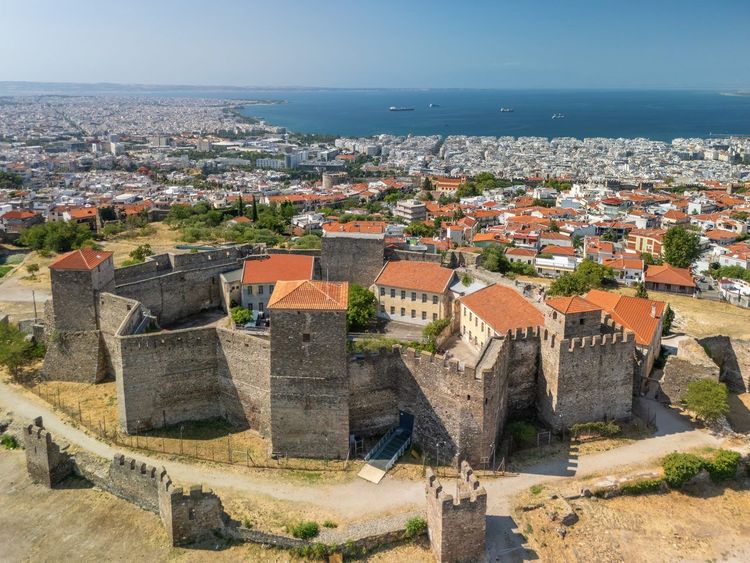
The Heptapyrgion (Eptapyrgiou, 546 34 Thessaloniki, rated 4.6/5 on Google with 7,685 reviews), the fortress whose name means the seven towers and which locals also call by its Turkish name Yedi Kule, crowns the top of the Ano Poli ramparts. Built on Byzantine foundations reinforced during the Ottoman period, it served as a Greek state prison until 1989, a late use that explains why some cells and prisoners' graffiti are still visible in the towers open to the public.
The ascent from the city centre, generally on foot through the lanes of Ano Poli, takes a good half-hour and climbs steeply towards the end, but the view from the ramparts justifies the effort: it is the highest freely accessible point in the city, with a panorama that far surpasses that of the Trigonion Tower below. The site remains lightly visited outside the summer high season, making it one of the most off-the-beaten-path experiences in Thessaloniki for anyone looking to escape the groups.
Before heading back down, walk the full length of the rampart walk: on one side the lower city and the gulf, on the other the hills stretching inland, a contrast that neatly captures the strategic position of the fortress atop its walls. If your legs are not up to the climb, a city bus connects the centre to the upper town and drops you a few minutes' walk from the entrance, a welcome alternative in the height of summer.
16. Pay Your Respects to the Statue of Alexander the Great
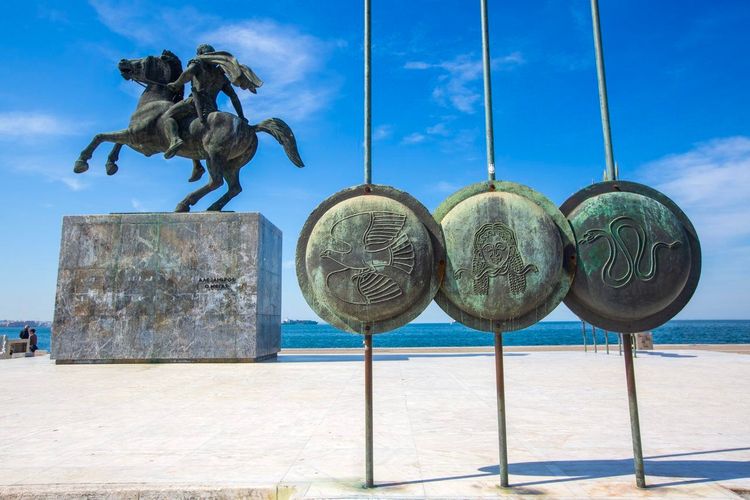
On the waterfront, not far from the international exhibition park, the equestrian statue of Alexander the Great, installed in the 1970s, depicts the Macedonian king in a conqueror's pose astride his horse Bucephalus. The choice of this monument at this precise location is not coincidental: Greek Macedonia has long laid claim to the historical legacy of the ancient kingdom, a subject that has fuelled several diplomatic disputes with the neighbouring country of the same name. The statue, less photographed than the White Tower, is nevertheless a quick but symbolic stop for anyone wishing to understand the city's regional identity.
About ten metres tall including its plinth, the statue is surrounded by sarissas — the long lances that gave the Macedonian phalanx its strength — and by shields reproducing the Star of Vergina, the dynasty's emblem. The spot lends itself well to a pause at the end of a waterfront walk, with the sea on one side and, in the distance, the silhouette of Mount Olympus on the other. It is also a good place to take in, in a single image, the connection the city claims with ancient Macedonia — a theme that runs through most of its museums and excursions.
17. Discover the Bey Hamam
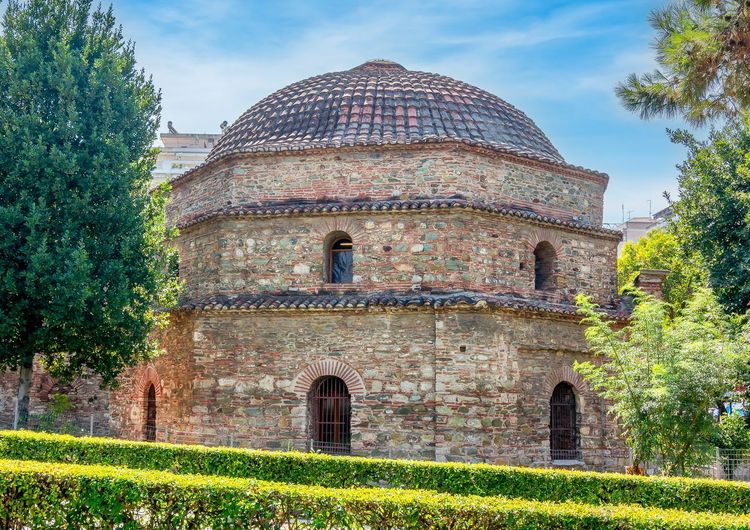
The Bey Hamam (Egnatia 92, 546 22 Thessaloniki), built in 1444, ranks among the oldest and largest Ottoman baths still standing in Greece. Its domes pierced by star-shaped openings once filtered a characteristic diffused light typical of this architectural style, an effect still perceptible today despite the building's closure as a public bath in the 1960s. The building now serves as a temporary exhibition hall, which means its interior can be visited free of charge depending on the current cultural programme — a little-known alternative to the paid tourist hammam experience.
Take time to distinguish the different rooms, arranged according to the classic Turkish bath sequence: the cold room at the entrance, the warm room, then the hot room topped by the main dome, beneath which bathers once lay on marble heated from below. Explanatory panels trace the workings of the hypocaust heating system, inherited from the Roman baths. Since access is generally free and the place rarely crowded, it makes an ideal quiet stop between two busier visits along Egnatia Street.
18. Browse the Bit Bazar Flea Market
The Bit Bazar, a flea market set up in the heart of the city around its small namesake square, spreads across several streets where antique dealers, second-hand sellers, and vinyl record vendors set up their stalls from early morning. You will find a fairly chaotic mix of old military objects, silver jewellery, rustic furniture, and vintage cameras, with bargaining the norm rather than the exception.
The atmosphere is noticeably less touristy than the historic centre's markets, and vendors rarely speak English, which makes the experience more authentic but also more demanding for those who don't know Greek. Come on a Saturday morning, when the selection is widest, and bring cash in small denominations: most stalls do not accept card payments.
Even without any intention of buying, a stroll through is worth it for the atmosphere: this is an unvarnished, working-class Thessaloniki, a world away from the polished terraces of the seafront. The cafés bordering the market, frequented by the dealers themselves, serve some of the cheapest Greek coffees in the city, to be sipped slowly while watching the negotiations from stall to stall.
19. Follow in Alexander's Footsteps at Pella and Vergina
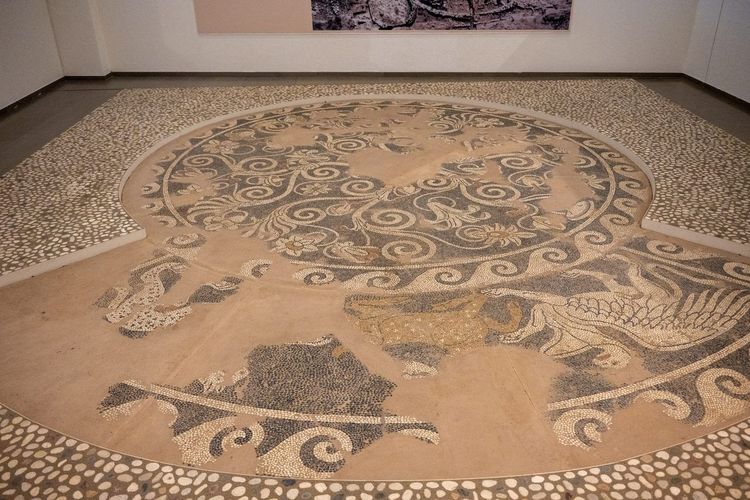
About 40 kilometres west of Thessaloniki, the archaeological site of Pella corresponds to the ancient capital of the Macedonian kingdom, where Alexander the Great is said to have been born around 356 BC. Excavations have uncovered the remains of one of the largest royal palaces in the ancient Greek world, along with remarkably well-preserved pebble mosaics, including the celebrated lion hunt scene attributed to the artist Gnosis. The site museum, built in 2009, displays these mosaics alongside everyday objects found in the surrounding dwellings.
Some thirty kilometres further south, the site of Vergina, identified as the ancient city of Aigai, the first capital of the Macedonian kingdom, houses the royal tombs discovered in 1977 by Greek archaeologist Manolis Andronikos. The tomb attributed to Philip II, father of Alexander the Great, yielded a golden larnax containing bones as well as an exceptionally crafted golden oak wreath, now displayed in an underground museum built directly above the burial mound. The site has been a UNESCO World Heritage Site since 1996.
Combining both sites in a single day from Thessaloniki is perfectly feasible by rental car, with about an hour's drive between them, but requires an early start to avoid feeling rushed on site. Without a vehicle, organised day trips depart regularly from the city centre and generally include transport, entrance tickets, and a French- or English-speaking guide — a simpler option if you do not plan to rent a car for the rest of your stay.
One tip if you are going by car: prioritise Vergina in the morning, when the underground museum, plunged in near-darkness to protect the golden objects, is at its least crowded, then head up to Pella in the afternoon. The experience of standing just centimetres from Philip II's crown, without thick glass or crowds between you and it, remains one of the great moments of any stay in the region.
20. Escape to Mount Olympus and the Beaches of Halkidiki
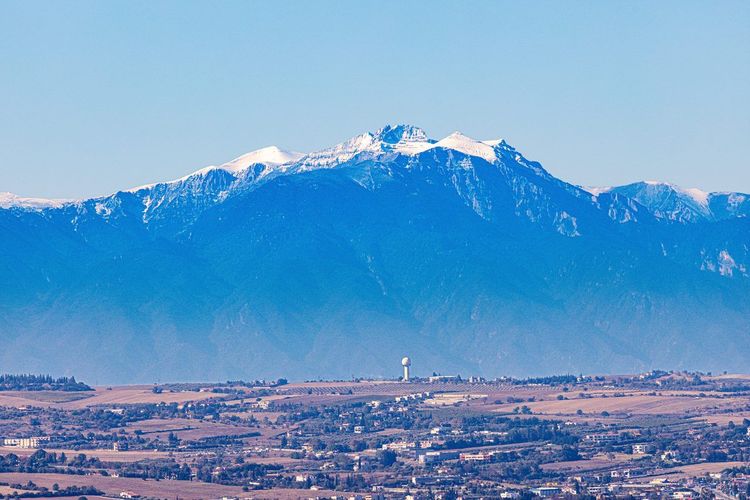
A little over an hour's drive south of Thessaloniki, Mount Olympus peaks at 2,917 metres at the Mytikas summit, making it the highest point in Greece. In mythology it was the home of the twelve Olympian gods, an imaginary world that still hangs over the hiking trails departing from the village of Litochoro, nicknamed the city beneath Olympus. The most experienced hikers climb to the Spilios Agapitos refuge in a day before attempting the summit the following morning, but shorter walks through the Enipeas gorge (Litochoro, 602 00, rated 4.9/5 on Google with 979 reviews), in the shade of ancient plane trees, are more than enough for a day trip without any particular mountain experience.
In the opposite direction, about an hour and a half's drive to the east, the Halkidiki peninsula unfolds three distinct peninsulas: Kassandra, the most developed and most festive; Sithonia, wilder and more favoured by Greek families themselves; and Mount Athos, a monastic peninsula whose access remains restricted to men holding a special permit and has been entirely forbidden to women for centuries. The fine sandy beaches lined with pine trees, particularly around Kavourotripes on Sithonia, are among the most photographed in all of mainland Greece and remain far less crowded than the most famous Aegean islands in high season. Allow a full day if you want to genuinely enjoy the sea rather than spending most of your time on the road.
Whatever your choice between mountain and sea, book your rental car well in advance in summer: demand surges in July and August and prices rise accordingly. And bear in mind that each of these escapes deserves a full day — they are hard to combine in the same short stay without skimming over both. If you had to pick just one, Olympus will appeal to walkers and Halkidiki to swimming enthusiasts, two very different faces of the Thessaloniki hinterland.



FAQ
How many days do you need to visit Thessaloniki?
Two to three days are enough to cover the essentials of the historic centre, from the Byzantine monuments to Ano Poli. Add an extra day for a trip to Pella and Vergina, and another for Mount Olympus or Halkidiki if you want to explore the surroundings at a relaxed pace.
What to do in Thessaloniki in 1 day?
Focus on the triangle of the White Tower, the Rotunda of Galerius, and Aristotle Square, with a detour through Kapani Market in the morning. Finish with a quick climb up to Ano Poli in the late afternoon for the view over the bay at sunset.
What to do in Thessaloniki in 2 days?
The first day covers the ancient and Byzantine centre described above. The second day lends itself to Ano Poli and the Heptapyrgion in the morning, then the Archaeological and Byzantine museums in the afternoon, followed by an evening in Ladadika.
What is the best time to visit Thessaloniki?
Spring, from April to June, and early autumn, in September and October, offer pleasant temperatures for walking all day. Summer becomes very hot and humid in the city centre, with temperatures regularly exceeding 35 degrees in July and August.
How do you get around Thessaloniki and its surroundings?
The city centre is entirely walkable or cyclable, with distances between the main monuments rarely exceeding twenty minutes on foot. For excursions to Pella, Vergina, Olympus, or Halkidiki, a rental car or an organised day trip remains the most practical option.
Is Thessaloniki an off-the-beaten-path destination compared to Athens?
Less known to international visitors than Athens, Thessaloniki retains a more local character, with a vibrant student and nightlife scene and Byzantine monuments often visited without the crowds found at Athenian sites. Many travellers consider it precisely the most off-the-beaten-path alternative for a first stay in mainland Greece.
Is Thessaloniki expensive for meals and sightseeing?
The cost of living remains noticeably lower than in Athens or the tourist islands. A full meal at a neighbourhood taverna typically costs between 10 and 15 euros, and several major monuments, including Agios Dimitrios and the Rotunda, are free or nearly so.
In Summary: a City Apart in Greece
Thessaloniki does not try to imitate Athens, and that is precisely what makes it a destination apart. The city embraces its layers of history without freezing them in open-air museums — you can literally have lunch at the foot of a Roman mausoleum turned Byzantine church, and end the evening in a neighbourhood once named after the olive oil stored there. The surroundings complete the picture perfectly, with ancient royal capitals and mythological mountains less than two hours away by road.
Whether you explore the city with a Ryo audio guide or in complete freedom with a map in hand, Thessaloniki reveals itself over a few days without ever giving the impression that you have seen everything. That may be its greatest quality: unlike more star-powered destinations, it still leaves room for personal discovery rather than a pre-marked trail.
À lire également