© Shutterstock
 Votre guide Ryo
Ferry in the Cyclades: The Complete Guide to Island Hopping (2026)
Taking the Cyclades ferry from island to island is not just the most practical means of transport in the archipelago, it's an experience in itself. Crossing the Aegean Sea at dawn, watching Santorin emerge from the horizon with its black rock cliffs, or seeing Mykonos turn white in the sun from the deck of a large Blue Star ferry... These crossings are part of the journey as much as the beaches and villages perched on cliffs. But navigating between the some 30 inhabited islands of the Cyclades requires real organization: multiple routes, different companies, prices varying according to season and type of boat. This guide gathers everything you need to know to plan your ferry crossings in the Cyclades in 2026, from departure ports to rates, from recommended itineraries to booking tips. You'll find island-by-island journey times, the names of companies serving each route, the ideal time to book and pitfalls to avoid, especially during August when ferries are fully booked several weeks in advance. And to extend the crossing once disembarked, you can follow a Ryo audio-guided tour like the one in Fira, which transforms arrival at the port into a walking discovery, headphones on ears.
1. How to Reach the Cyclades: Piraeus and Other Departure Ports
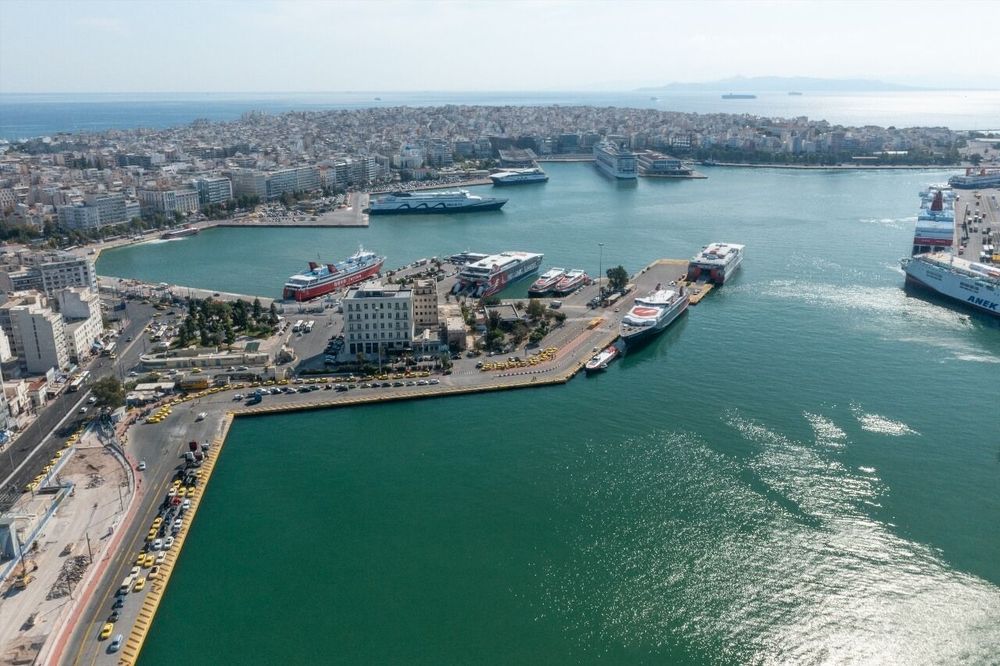
The vast majority of ferry connections to the Cyclades depart from the port of Piraeus (Akti Miaouli, 185 38 Piraeus, Greece, rated 4.1/5 on Google for 12K reviews) in Athens. It's the largest passenger port in Europe and the central hub of the entire Greek maritime network. Ferries depart mainly from Gates E1 to E12, located in the outer zone of the port. Allow about 30 minutes by metro from central Athens (line 1, Piraeus station), or one hour by taxi depending on traffic.
From Piraeus, the main routes serve the Cyclades on two main axes. The Western route covers Syros, Mykonos, Paros, Naxos, Ios and Santorin in that order, it's the backbone of the network. The Eastern route serves Syros, Amorgos and the minor islands of the eastern chain (Donoussa, Iraklia, Koufonisia, Schinoussa). Other routes reach Milos, Kimolos, Folegandros, Sikinos and Sifnos via a South-Western axis.
More interesting for those arriving from other regions of Greece: Rafina (30 km northeast of Athens) offers connections to Mykonos, Andros, Tinos and Syros, sometimes faster and cheaper than Piraeus. Lavrio (south of Athens) serves Kea, Kythnos and some minor islands. Thessaloniki has a seasonal summer connection to several Cyclades.
If you arrive by plane in Heraklion (Crete) or Rhodes, inter-island ferries allow you to reach Santorin or the eastern Cyclades directly without going through Athens again, an often ignored option that saves a day of travel.
2. Ferry Companies in the Cyclades: Blue Star, Seajets and Others
In the Cyclades, four major operators share the market in 2026. Each has its positioning, strengths and constraints.
Blue Star Ferries is the historic reference. Its large ferries, the Blue Star Delos, Blue Star Naxos, Blue Star Paros, tour the Cyclades once or twice daily depending on the season. These are large vessels (200 to 300 meters), comfortable, with cabins, restaurants, bars and swimming pool for long crossings. Allow 4 to 10 hours depending on the destination from Piraeus, at affordable rates: a deck seat (basic seat) costs between 25 and 60 €. Cabins for 2 or 4 people range from 80 to 200 € depending on distance and season. Blue Star is Seajets operates high-speed catamarans that halve crossing times. Piraeus-Mykonos in 2h30 instead of 5h30, Piraeus-Santorin in 4h30 to 5h instead of 8h, that's the main argument. In return, fares are 50 to 80% higher than conventional ferries, and weather conditions can cause more frequent cancellations outside high season. High-speed catamarans are smaller: no cabins, little outdoor space, and cars are not always accepted.
Golden Star Ferries is the other major player, especially from Rafina, where its conventional ships (Superferry, Superexpress) serve Andros, Tinos and Mykonos several times daily. Fast Ferries completes the offer departing from Rafina, while Minoan Lines operates on certain secondary routes and offers useful alternatives to fully booked Seajets or Blue Star connections. ANES Ferries and Zante Ferries cover less touristy islands like Kea, Kythnos and local connections.
The practical rule: for very busy islands (Santorin, Mykonos, Paros, Naxos), several departures per day exist. For less touristy islands (Folegandros, Anafi, Donoussa, Schinoussa), one or two ferries per week off-season, sometimes just one. Always check schedules before building your itinerary.
To compare and book, the most used platforms are Ferryhopper, Direct Ferries and Greekferries.gr. By buying directly from the operator, you sometimes save the platform commission. Reviews on Cyclades ferries converge on one point: the punctuality of major companies is good at the beginning of the season, more unpredictable in the heart of summer.
3. Types of Ferry: Long Crossing or High-Speed Catamaran?
Before booking, it's useful to understand the concrete differences between the types of vessels that navigate the Cyclades.
Large conventional ferries (Ro-Pax) are the emblematic ships of the Greek fleet. With their 150 to 300 meters long, they embark cars, motorcycles, trucks and several hundred passengers. On board: cafeteria, restaurant, bar with sea view, outdoor spaces on deck, cabins with berths for long crossings. The weak point is speed: 15 to 20 knots on average. But the strong point is stability, these ships navigate even in rough seas where catamarans remain at quay.
High-speed catamarans (High Speed/Flying Cat) reach 35 to 40 knots and halve crossing times. Comfort is more limited: airplane-type seats, no outdoor deck accessible during crossing (for safety reasons), indoor spaces only. In strong swells (frequent in the Aegean beyond force 5-6), these ships are immobilized. If your schedule is tight, a weather cancellation can be problematic.
Inter-island express ferries are intermediate-sized ships that make direct connections between neighboring islands, Paros-Naxos, Naxos-Mykonos, Santorin-Ios for example, without going through Piraeus. Faster and cheaper than catamarans, they perfectly complement a multi-island itinerary.
The choice depends on your schedule. If you have time and luggage, the large overnight ferry from Piraeus to Santorin is an economical option: board at 10 PM, sleep on board, arrive at 7 AM. If you have a week and want to chain several islands, inter-island express ferries are the right tool.
4. Santorin (Fira) by Ferry: Schedules, Durations and Advice
Santorin, officially Thira, is the queen destination of the Cyclades and, consequently, one of the busiest ferry-wise. The main port is Athinios, carved into the volcanic caldera 200 meters below the villages. Disembarkation is spectacular in itself: the black rock cliffs plunge into the water, and the white villages of Fira and Oia stand out at the very top.
From Piraeus, allow 8 to 9 hours with Blue Star Ferries (departures in late afternoon or evening, morning arrival). By Seajets high-speed catamaran: 4h30 to 5h, more convenient if you arrive during the day and want to enjoy the afternoon on site. In July-August, ferries to Santorin are often fully booked 3 to 4 weeks in advance. Book as early as possible.
From other Cyclades, crossing times vary: Naxos-Santorin: 3h to 3h30 by conventional ferry, 1h30 by express. Paros-Santorin: 3h to 3h30 by ferry, 1h30 by express. Ios-Santorin: 45 minutes to 1h30 depending on the vessel. Mykonos-Santorin: no daily direct connection, you often have to go through Naxos or Paros.
Once at Athinios, don't take expensive taxis: local buses (KTEL) shuttle to Fira for less than 2 €. Taxis are 3 to 4 times more expensive and often insufficient in number for large ferry departures.
To explore Fira at your own pace once disembarked, the Ryo audio-guided tour of Fira takes you through 16 audio stages through the volcanic capital of the Cyclades, from the central square to the caldera viewpoints, in 1 hour and 1.3 km on foot.
5. Mykonos by Ferry: Access, Durations and Practical Tips
Mykonos has two ports: the Old Port (Chora), used for small boats and local connections, and the New Port (Tourlos), 2 km north, which accommodates large ferries. Confusion between the two ports is a frequent source of error, always check which one is indicated on your ticket.
From Piraeus, the journey takes 5h30 to 6h by conventional ferry (Blue Star), and 2h30 by high-speed catamaran. From Rafina (closer to Athens airport), you save about 45 minutes: allow 4h30 to 5h by ferry, 2h15 by express. These connections from Rafina are particularly convenient if you arrive by plane in Athens and want to reach Mykonos directly without entering the city.
From neighboring islands: Paros-Mykonos: 1h by express, 2h30 by ferry. Naxos-Mykonos: 1h15 to 3h depending on vessel. Tinos-Mykonos: 30 to 45 minutes, a lightning crossing that many ignore.
Mykonos is the island that records the highest ferry saturation rate in summer, after Santorin. August is particularly tense, with crossings fully booked from early July for Friday evening and Sunday departures. Booking in advance is not an option, it's a necessity.
On the arrival side, the journey from the New Port to the center of Chora is by bus (2 €) or taxi. In high season, the taxi line can be long, allow 20 to 30 minutes wait.
6. Naxos and Paros: The Heart of the Cyclades
Paros and Naxos form the nerve center of the ferry network in the Cyclades. Almost all ferries from Piraeus stop there, and the two islands are connected several times daily, often in less than an hour. This is why Paros and Naxos frequently serve as connection hubs for multi-island itineraries.
Paros: from Piraeus, allow 4h30 to 5h by conventional ferry, 3h by catamaran. The port of Parikia is the main arrival point. Naoussa, to the north, has a small port for local connections. From Paros, you can easily reach Naxos (45 min), Mykonos (1h-2h30), Ios (2h), Santorin (3h), Sifnos (2h), Milos (3h) and many small islands. Paros is often underestimated as a destination, but its central position also makes it a base Naxos: from Piraeus, 5h30 to 6h by ferry, 3h30 by catamaran. The port of Naxos Chora is well equipped and the waterfront pleasant. Naxos is the largest island of the Cyclades and the only one partially self-sufficient in fresh water, which explains its mountain villages, vineyards and reputation for 'authentic Cyclades'. From Naxos, connections to Paros, Mykonos, Santorin and the small eastern islands (Koufonisia, Amorgos) are frequent in summer.
7. Milos, Ios and Folegandros: Volcanoes and Wild Islands
Milos has become one of the most sought-after islands in the Cyclades over the past decade, notably thanks to its volcanic tuff beaches, the most original in the entire Aegean Sea. The port of Adamas welcomes ferries from Piraeus: allow 5h30 by conventional ferry, 3h15 by high-speed catamaran. From Milos, connections serve Kimolos (30 minutes, several times daily), Sifnos (2h), Folegandros (2h30) and Santorin (3h). Demand for connections to Milos has increased strongly in recent years, book 3 to 4 weeks in advance in summer.
Ios occupies a central position between Naxos and Santorin. Long known for its nightlife, it now attracts a more varied audience thanks to its hiking and beaches. From Piraeus: 7h by ferry, 4h30 by catamaran. From Naxos: 2h by ferry. From Santorin: 45 minutes to 1h30. Ferries arrive at the port of Gialos, at the back of a sheltered bay.
Folegandros is the antithesis of Mykonos: no beaches accessible from the port, few shops, an end-of-the-world atmosphere. This is precisely what attracts its visitors. From Piraeus: 6h by conventional ferry. From Milos: 2h30. From Santorin: 2h30 to 3h. Connections to Folegandros are less frequent off-season, sometimes only one departure every two days in May or October. Plan accordingly.
8. Syros, Amorgos and Koufonisia: The Other Face of the Cyclades
Syros is the administrative capital of the Cyclades, but rarely the first destination for travelers. Wrongly so: the city of Ermoupoli is the largest in the Cyclades, with a baroque opera house and local gastronomy (Syros loukoumi, halvadopita). From Piraeus: 3h45 by ferry, 2h15 by catamaran. Syros is on the direct line, making it a frequent stopover, often short. If you have an extra day, it's a stop that pleasantly surprises those who don't expect it.
Amorgos is to the Cyclades what Folegandros is to the volcanic arc: an island for travelers seeking to escape the crowds. Known for the Chozoviotissa monastery, perched high above the sea, it is served from Piraeus in 7h to 8h by ferry. Connections pass through Syros, Naxos and Ios. From Naxos: 3h30 to 4h. The port of Katapola is the main arrival point, with a secondary port at Aegiali (north of the island) for certain connections.
Koufonisia, actually two islands, Ano Koufonisi and Kato Koufonisi, is the darling destination of Greeks in recent years. Small, flat, bordered by turquoise coves, they are served from Piraeus in 6h30 to 7h passing through Naxos, or more quickly from Naxos directly (2h). Accommodation capacity is limited, less than 300 beds total, creating strong pressure in July-August. Here too, book accommodation and ferry several weeks in advance.
9. The Discreet Islands: Sifnos, Tinos, Andros and Serifos
Sifnos is the island that Greeks themselves choose for their holidays. Less touristy than Paros or Mykonos, it is renowned for its gastronomy (Sifnian cuisine is a recognized art in Greece), mountain villages and hiking. From Piraeus: 3h to 3h30 by catamaran, 5h by conventional ferry. The port of Kamares is set in a splendid bay.
Tinos is both a pilgrimage site (the Basilica of Panagia Evangelistria attracts thousands of pilgrims every August 15) and an island of hiking and gastronomy. From Piraeus: 3h30 to 4h by ferry. From Mykonos: 30 to 45 minutes, probably the fastest and least used inter-island connection in the Cyclades. If you're in Mykonos for a few days, a day in Tinos is easily organized.
Andros is the second largest island in the Cyclades, and one of the least visited by foreign tourists. It is mainly favored by wealthy Athenian families. From Rafina (and not Piraeus): 2h by ferry. The particularity is that ferries to Andros depart from Rafina, making it not very accessible from the central Cyclades.
Serifos is the mineral island par excellence, bare hills, a white kastro perched high, few tourists. From Piraeus: 4h30 by ferry. From Milos: about 2h. An island for travelers seeking a change of scenery without crowds. Before boarding at Piraeus, our Athens audio walking tour climbs from Monastiraki to the ancient Agora in 31 stops.
10. Recommended Ferry Itinerary: 10 Days in the Cyclades
With 10 days, you can combine 4 to 5 islands without exhausting yourself with exhausting ferry logistics. Here's a tested itinerary, built to maximize landscape diversity while minimizing transport time.
Days 1-3: Santorin
Ideally arrive by overnight ferry from Piraeus (departure 10 PM, arrival 7 AM). Santorin justifies a minimum of 3 nights: Fira and its panoramas over the caldera, Oia for the sunset (arrive 2h early to get a spot), the black lava beaches of Kamari and Perivolos, and if possible a boat excursion to the active volcano of Nea Kameni. Sleep in Fira or Pyrgos rather than Oia, you'll save 30 to 50% on accommodation for similar comfort. And to not miss anything of the capital, the Ryo audio guide of Fira accompanies you step by step through its streets.
Days 3-4: Ios
Ferry Santorin-Ios: 45 minutes to 1h. On the agenda: hike to Homer's alleged tomb, Mylopotas beach, lively evening in the village if you feel like it. One or two days are enough.
Days 4-7: Naxos
Ferry Ios-Naxos: about 2h. Naxos deserves 3 nights to see it all: the Portara (Apollonian gate on the islet at the harbor entrance), the mountain villages of Apeiranthos and Halki, the sandy beaches of Plaka, and local gastronomy. Naxos is the only large island in the Cyclades where renting a car is really worth it to explore the interior.
Days 7-9: Paros
Ferry Naxos-Paros: 45 minutes. Parikia and its white marble, Naoussa and its alleys, Kolymbithres beaches with rocks sculpted by erosion. Paros is an excellent base for a day excursion to Antiparos, a small island accessible in 10 minutes by local boat from Pounta.
Days 9-10: Mykonos
Ferry Paros-Mykonos: 1h by express. Two days in Mykonos are enough to see the essentials: Chora and its pedestrian streets, the Kato Mili windmills, Platis Gialos beach. Return to Piraeus or Mykonos airport for return flight.
'Discreet islands' variant: replace Ios with Sifnos (2h from Paros) and Mykonos with Koufonisia (2h from Naxos). The attendance level drops by 80%, accommodation prices as well.
Ferry budget for this itinerary (per person, deck seats): Piraeus-Santorin (Blue Star, night): about 50 €. Santorin-Ios: about 20 €. Ios-Naxos: about 25 €. Naxos-Paros: about 15 €. Paros-Mykonos (express): about 35 €. Total ferry transport: 140 to 180 € depending on companies and season.
11. Ferry Prices in the Cyclades: How Much to Budget?
Ferry fares in the Cyclades vary according to four parameters: type of vessel (conventional vs fast), class chosen (deck/seat/cabin), distance, and season. Here's a numerical framework for 2026.
Conventional ferries (Blue Star and similar):
- Deck seat (seat or open space): 25 to 60 € depending on distance from Piraeus
- 2-person cabin (interior): 80 to 140 € for an overnight crossing
- 2-person cabin (sea view): 120 to 200 €
- Car on board: 60 to 120 € on long crossings
High-speed catamarans (Seajets and similar):
- Standard seat: 55 to 110 € depending on route
- No cabins on catamaran routes
- High-season fuel surcharge: 10 to 15 €/ticket (automatically added to price)
Short inter-island ferries (Paros-Naxos, Naxos-Mykonos, Santorin-Ios):
- 15 to 35 € per journey depending on vessel type
- Some very short connections (Tinos-Mykonos, Antiparos-Paros): 5 to 10 €
High/low season difference: basic fares remain relatively stable (they are partly regulated), but the cheapest seats go first. Book early = pay less. In July-August, deck seats on overnight crossings sell out quickly and prices rise in stages. This is the whole challenge of a cheap ferry in the Cyclades: it's not so much promotion as anticipation that brings down the bill.
Is there a ferry pass for the Cyclades? There is no multi-trip pass like InterRail for Greek ferries in 2026. Each ticket is purchased separately. Some platforms offer bundles for predefined itineraries, but the actual savings are often marginal. Better to book directly with companies or via Ferryhopper/Direct Ferries by comparing prices.
Port taxes: budget 5 to 10 € per port in the Cyclades, often included in the ticket. Check when purchasing if this is the case.
12. When to Book Your Ferry in the Cyclades?
The seasonality of ferries in the Cyclades is very marked. Understanding this calendar can save you disappointments or significant extra costs.
Opening of reservations: official summer season schedules are published by companies between February and March. This is the time to open booking platforms if you're traveling in July or August. Some time slots, notably overnight ferries from Piraeus to Santorin and Mykonos on Fridays and Saturdays, fill up within weeks of opening.
Indicative booking calendar:
- July-August: book 6 to 8 weeks in advance, at latest 3 weeks before if you have no other options
- June and September: 2 to 4 weeks is generally sufficient
- April-May and October: a few days to one week before, even same day for many connections
Off-season (November to March): the network is drastically reduced. Blue Star maintains connections to main islands 1 to 3 times per week, but crossings to small islands (Folegandros, Koufonisia, Sikinos) can be weekly or less. If traveling off-season, check schedules directly on each company's website, aggregators are not always up to date.
Weather and cancellations: wind in the Aegean (the Meltemi) blows strong from July to September, sometimes force 7-8. High-speed catamarans are first affected. Large Blue Star ferries navigate up to force 8-9. If weather is an important criterion for your schedule, opt for conventional ferries and avoid planning too tight connections between two crossings.
Modification and cancellation: most companies allow cancellation up to 24h before departure with partial refund or credit. The cheapest fares are often non-refundable. Read conditions before validating.
13. Traveling With Your Car or Motorhome by Ferry
Large conventional ferries accept vehicles, cars, motorcycles, motorhomes and even caravans. This is a distinctive point compared to high-speed catamarans, which generally don't have car decks.
Embarking your car gives you total freedom on islands that are worth it, Naxos with its mountain villages, Milos with its beaches difficult to access on foot, Andros with its hiking paths. On Santorin and Mykonos however, a car is often a constraint: streets are narrow, parking rare and expensive, and local buses cover tourist areas well.
The fare for a standard tourist car ranges between 60 and 120 € depending on route and season, in addition to the passenger ticket. For a motorhome over 6 meters, expect between 120 and 200 €, sometimes more depending on length and weight. Reservations with vehicle must be made even earlier, spaces on the car deck are limited and go before passenger seats in high season.
Arrive at the port at least 45 minutes before departure with a vehicle, the ticket control and car boarding queue takes time, and latecomers lose their space even with a ticket.
14. Practical Tips on Board Greek Ferries
A few practical points that will make the difference between a pleasant crossing and a complicated experience.
The ticket: in 2026, tickets are almost exclusively electronic. The operator's app or a PDF on your phone is sufficient. Remember to download the ticket offline if you're on limited roaming.
Night cabins: if you take a night ferry from Piraeus (departure 10-11 PM, arrival 6-8 AM), a cabin is an interesting investment, 80 to 100 € for two, but you save a hotel night. Interior cabins are identical to 'sea view' cabins for night crossings, no need to pay the supplement.
Food on board: cafeterias on large Blue Star ferries offer decent hot meals at reasonable prices (8 to 14 € per dish). Bringing sandwiches or snacks remains a valid option, no one will prevent you.
Seasickness: the Aegean can be rough, especially in July-August with the Meltemi. If you're sensitive to it, choose a seat in the center of the boat (less movement) and at water level rather than high up. Anti-emetic medications (Nausicalm, Mercalm) can be found at pharmacies in Athens before boarding.
Waiting at the port: waiting halls at Piraeus terminals can be noisy and uncomfortable. Bring water, a jacket for air conditioning, and something to keep you busy, delays of 30 to 60 minutes are not rare in high season.
Arrival port: check in advance the exact name of the port on the arrival island (some islands have two ports, like Amorgos with Katapola and Aegiali) and plan your land transport. Taxis are often insufficient in number to absorb ferry arrivals in high season, book in advance or check local bus schedules.




FAQ
What is the best departure port for the Cyclades?
Piraeus is the central departure port to reach the vast majority of the Cyclades islands. All connections to Santorin, Mykonos, Paros, Naxos, Milos, Syros, Ios and the minor islands depart from Piraeus. For Mykonos, Andros and Tinos, the port of Rafina is a valid alternative, closer to Athens airport (30 minutes) and with often faster connections to these islands. If you arrive by plane and want to avoid Athens, leave directly from Rafina.
How long does the ferry from Piraeus to Santorin take?
The Piraeus-Santorin crossing takes 8 to 9 hours with Blue Star Ferries on a conventional ferry. By high-speed catamaran (Seajets), the trip takes 4h30 to 5h. Conventional ferries generally depart in late afternoon or evening for arrival the following morning. This is the longest crossing to the main Cyclades from Piraeus.
Can you buy a ferry ticket on-site on departure day?
In theory, yes, there are sometimes places available at the port ticket offices. In practice, off-season (November to May), it's often possible without difficulties. During high season (June to September), and particularly for connections to Santorin and Mykonos, ferries are regularly fully booked weeks in advance. Don't rely on day-of availability for these destinations in summer. On small islands and local connections between neighboring Cyclades, it's generally more flexible.
What is the average price of a ferry ticket in the Cyclades?
Prices vary according to distance and type of vessel. On a conventional ferry (Blue Star), a deck seat for the Piraeus-Santorin connection costs between 45 and 60 €. For shorter crossings (Paros-Naxos, Naxos-Mykonos), expect 15 to 30 €. On high-speed catamarans, multiply the fare by 1.5 to 2. A week in the Cyclades with 4 to 5 crossings generally represents 100 to 200 € ferry budget per person.
Is there a ferry pass for the Cyclades?
There is no multi-trip pass like InterRail for Greek ferries in 2026. Each ticket is booked separately. Some agencies offer packages combining ferry tickets and accommodation, but the actual savings on tickets are often minimal. The best strategy remains to compare prices on Ferryhopper or Direct Ferries and book directly with the company when it's cheaper.
When to avoid traveling by ferry in the Cyclades?
Two periods should be approached with caution. In July-August, ferries are crowded, prices at their maximum and availability limited, book very far in advance. In winter (December to February), the network is very reduced and weather conditions (strong swells, violent winds) cause frequent cancellations. The ideal periods are May-June (good weather, few people, reasonable prices) and September (warm sea, crowds dropping from mid-September, still very good weather).
Conclusion
Navigating between the islands of the Cyclades by ferry is one of the most authentic pleasures that Greece has to offer. With good organization, advance booking in summer, thoughtful choice between large ferry and catamaran, itinerary built around connections, you can chain four or five islands without logistical stress and while controlling your budget. The priority: book as soon as schedules open (March) for July-August, and always allow for a day's margin in case of weather issues.
Once in Santorin, let yourself be guided by the Fira audio walking tour: this Ryo audio guide accompanies you through 16 audio stages through the volcanic capital, from Athinios port to the caldera viewpoints, to not miss any detail of this spectacular island.
À lire également