© Shutterstock
 Votre guide Ryo
St. Patrick's Cathedral Dublin: History, Visit, and Practical Tips 2026
There's a place in Dublin where nine centuries of stone still speak. Not metaphorically, but literally: the funerary slabs on the floor carry names carved since the Middle Ages, the stained-glass windows filter light whose colour has not changed for hundreds of years, and the choir sings polyphonies some of which date back to the 17th century. St. Patrick's Cathedral Dublin is the largest church in Ireland, and probably the most historically significant place in the entire Irish capital. If you are planning a visit to Dublin, start with the Ryo Dublin audio guide to put the city in context before entering the building — you will better understand what you are about to see.
In this guide, you will find everything you need to prepare your visit: the complete history of the monument from its founding in the 5th century, the works and curiosities not to be missed inside, updated admission prices and opening hours for 2026, and a selection of nearby places to explore. The monument also hides a popular legend about a hole in a door, is home to the tomb of Jonathan Swift, and echoes every morning with a boys' choir founded over six hundred years ago.
A Nine-Century-Old Cathedral in the Heart of Dublin
The history of St. Patrick's begins well before the current stones. According to tradition, Saint Patrick himself would have baptised converts on this site, beside a well now lost beneath the building's foundations, around 450 AD. This original well stood outside the walls of the medieval city, which explains why the church is found slightly set back from the historic centre, in the Liberties neighbourhood.
A first wooden church was erected on this site, elevated to the status of a collegiate church in 1191 by John Comyn, the first Anglo-Norman Archbishop of Dublin. Construction of the Gothic stone building began around 1220, driven by Henry de Loundres, who wished to rival the nearby Christ Church Cathedral. This competition between two cathedrals in the same city, less than a kilometre apart, is unique in Ireland and stemmed from jurisdictional rivalries between medieval religious chapters.
The monument suffered several disasters over the following centuries. A fire destroyed part of the buildings in 1316. The north-west tower collapsed in 1394 during a storm. During the Protestant Reformation under Henry VIII, St. Patrick's became, like Christ Church, an Anglican cathedral — a status it retains today, belonging to the Church of Ireland rather than the Roman Catholic Church.
In the 17th century, Oliver Cromwell converted the main nave into a stable for his horses during his occupation of Dublin between 1649 and 1650, an episode that left lasting marks on the building. The structure was then left to gradual neglect for decades, until a providential brewer entered the scene.
Between 1860 and 1865, Benjamin Lee Guinness, heir to the famous brewery, almost single-handedly funded a complete restoration of the building, investing the equivalent of several million euros in today's money. It is this Victorian restoration that gives St. Patrick's its current appearance, with its nave 91 metres long and its tower standing 43 metres tall. A statue of Guinness stands outside, opposite the main door, as a reminder of this philanthropic gesture.
Jonathan Swift: the Most Famous Dean in History
If one name is inseparable from St. Patrick's, it is that of Jonathan Swift. The author of Gulliver's Travels and A Modest Proposal served as Dean of the cathedral from 1713 to 1745, more than thirty years. He lived in the adjoining deanery and was buried there upon his death, in accordance with his own instructions.
His tomb lies in the left side aisle, marked by a black marble slab. Beside him rests Esther Johnson, known by the nickname Stella, the woman who shared his life for decades in a relationship whose exact nature — friendly, romantic, secret — has fuelled historians' debates for over two centuries. The two graves are just a few metres apart, as in life.
Swift wrote his own epitaph in Latin, engraved on a bronze plaque fixed to the wall. The text, freely translated, reads: "Here lies the body of Jonathan Swift, Dean of this cathedral, where savage indignation can no longer tear his heart. Go, traveller, and imitate, if you can, this ardent champion of manly freedom." W. B. Yeats was so struck by this epitaph that he used it as the basis for one of his own poems.
Inside, a commemorative display dedicated to Swift exhibits several of his preserved personal effects: his death mask, his desk chair, his portrait. Marsh's Library (Saint Patrick's Close, Dublin 8, Ireland, rated 4.8/5 on Google based on 477 reviews), located just next door and founded in 1701 as the first public library in Ireland, also holds some of his manuscripts and personal annotations in books from the collection. A combined visit to both sites takes about two hours and is probably the best Swift trail available in Dublin.
Gothic Architecture and Interior Treasures
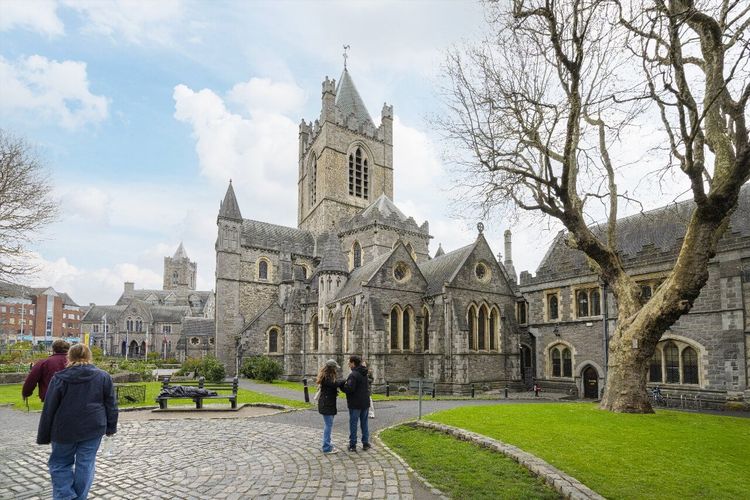
Upon entering the nave, the first impression is one of verticality. The main nave, 91 metres long, rises to 30 metres in height beneath the vault. It is the nave of an English Gothic cathedral grafted onto an Irish foundation — the pointed arches, clustered columns, and triforiums follow a layout typical of 13th-century English Gothic, influenced by the cathedrals of Salisbury and Wells.
The stained-glass windows are one of the main attractions. Several dozen windows line the side aisles and the great choir. Some date from the 19th century and depict biblical scenes in a neo-Gothic style characteristic of the Victorian restoration. Others, more recent, commemorate 20th-century Irish events. Take the time to walk along both side aisles to observe them one by one — the afternoon light is ideal for the windows on the south side.
The choir deserves particular attention. The carved wooden stalls are topped by the banners of the Order of St. Patrick, the Irish order of chivalry founded in 1783, whose insignia — helmets, swords, armorial mantles — hang from the choir ceiling in a visually unique display. The Order has had no active members since 1974, but its regalia remain in place, giving the choir the atmosphere of a military and heraldic museum as well as a place of worship.
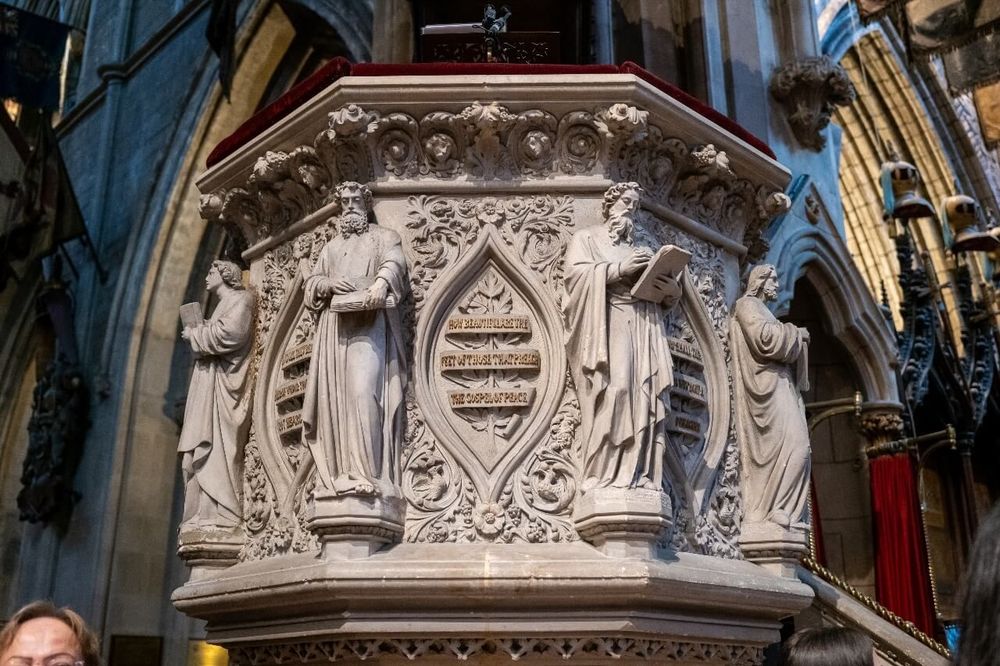
In the side chapels, several curiosities are worth noting. The 17th-century carved wooden pulpit from which Swift preached is preserved in its original state. The medieval granite baptismal font, dating back to the early centuries of the building, is one of the oldest objects in the structure. The Irish First World War flag, retrieved after decades forgotten in the archives, is displayed in the north nave with an explanatory note about the Irish soldiers who fought under British colours between 1914 and 1918.
The bell tower houses the oldest bells in Ireland still in service. The oldest dates from 1670 and weighs more than a tonne. The eight bells still ring regularly, particularly on Sundays and during solemn services. The sound carries through the streets of the Liberties neighbourhood and, on calm days, as far as the Liffey a few hundred metres to the north.
The Door with the Hole: the Legend That Gave English an Expression
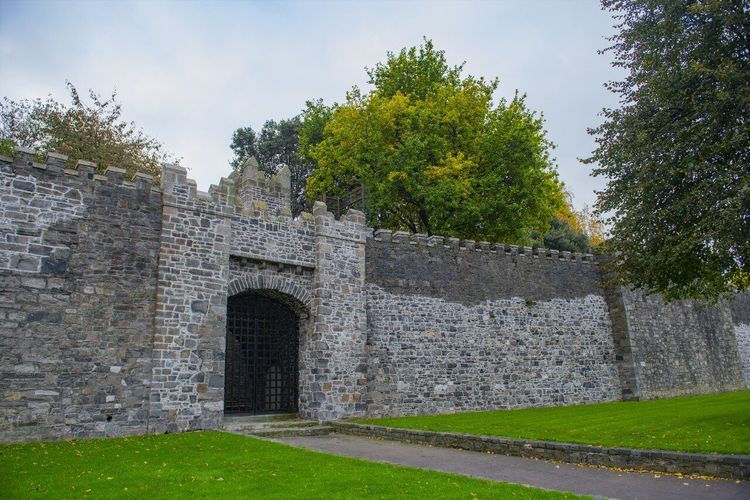
One of the most popular anecdotes associated with the monument concerns a door, a rectangular hole, and two noble Irish families on the brink of civil war.
In 1492, two great Irish clans — the Butlers and the Fitzgeralds — were in open conflict over political control of Ireland. Black James Butler, Earl of Ormond, had taken refuge in the chapter house of the church, barricading himself behind the heavy wooden door. Gerald Fitzgerald, Earl of Kildare, wished to end the quarrel. To signal his good faith without fully opening the door — and thus without exposing himself to a possible attack — Fitzgerald had a rectangular hole cut into the wooden panel and passed his arm through it to shake Butler's hand.
This gesture of mutual trust brought the conflict to an end. The door, with its famous hole, is preserved and displayed inside, in the north transept chapel. And the English expression "to chance your arm" — to take a risk, to try your luck — is said to derive directly from this episode. True or slightly embellished, this story illustrates how the building served as a place for resolving Irish civil conflicts well beyond its religious function.
Services and Musical Life: a Cathedral Still Alive
St. Patrick's is not a museum. Religious services are held there every day, and liturgical music remains at the heart of the building's life.
The cathedral choir is one of the oldest institutional choirs in Europe still active, its Choir School having been founded in 1432. Today it brings together professional adult choristers and children enrolled at the adjacent school. You can attend a choral service almost every weekday at 5:30 pm (Evensong), as well as on Sundays. These services are free and open to the public — a chance to hear English polyphony from the 16th to the 20th century in a remarkable acoustic setting.
The monument regularly hosts concerts throughout the year: organ recitals, Christmas concerts, occasional baroque programmes. The current organ dates from 1902 and was rebuilt in the 1980s. Its monumental case, visible from the central nave, is one of the largest instruments in the city. Check the calendar on St. Patrick's official website before your visit if you wish to time your trip to coincide with a concert or a particular Evensong.
The St. Patrick's Day celebrations on 17 March transform the venue into the epicentre of Dublin's festivities. Special services are held, crowds generally exceed capacity, and the atmosphere bears no resemblance to any other day of the year. If you are planning Dublin for St. Patrick's Day, book your tickets several weeks in advance. To better understand the significance of this celebration around the world, Ryo's article on the best countries to celebrate St. Patrick's Day offers an illuminating perspective.
How to Visit St. Patrick's Cathedral Dublin
Visiting St. Patrick's takes between 45 minutes and 2 hours depending on your level of interest in history and architecture. Visitors in a hurry walk through the main nave, stop at Swift's tomb, and leave in under an hour. Those who read the information panels, explore the side chapels, and linger in the choir will easily need twice as long.
An audio guide is available at the entrance in several languages including English. It offers a structured tour with around fifteen stops and covers the main works and anecdotes. If you prefer to explore Dublin more broadly, the Ryo Dublin audio guide places the monument in the context of the historic centre, with links to other sites in the Liberties neighbourhood.
A few tips for a better experience:
- Arrive at opening time (9:30 am on weekdays), before school groups and organised tours start arriving around 10:30 am.
- Avoid service times if you are coming purely for sightseeing — the church is partially closed to visitors during services (check the schedule posted at the entrance).
- Spend time in the choir: the armorial stalls of the Order of St. Patrick are a visual curiosity that most visitors pass through too quickly.
- Include Marsh's Library in your itinerary if you have two hours to spare — it is 50 metres from the main door and makes a perfect complement, especially for fans of Jonathan Swift and rare books.
- Dress code: smart casual is appreciated; covered shoulders are recommended (shawls are available at the entrance for visitors in sleeveless tops).
The monument has a gift shop at the entrance selling books on its history, stained-glass reproductions, and souvenirs. A café is set up in the former outbuildings, on the garden side — a pleasant stop in good weather before continuing towards the Liberties or Dublin Castle. If the cathedral leaves you wanting more of the old centre, our Dublin audio walking tour covers 29 stops over 8 km.
Opening Hours and Admission Prices 2026
St. Patrick's Cathedral is open year-round, including most Irish public holidays.
Opening hours (2026):
- Monday–Friday: 9:30 am–5:00 pm
- Saturday: 9:00 am–6:00 pm
- Sunday: 9:00 am–10:30 am and 12:30 pm–2:30 pm (closed during services)
Please note: Sunday hours are restricted by religious services, and last admission is approximately 30 minutes before closing. In summer, the building generally reopens on Sunday late afternoon (4:30 pm–6:00 pm) for Evensong. If you wish to attend the evening Evensong (free of charge), it takes place at 5:30 pm on weekdays.
Admission prices (2026):
- Adult: €11.50
- Student / Senior (60+): €10
- Child (ages 6–12): €5.50
- Under 6: free
- Family ticket (2 adults + up to 3 children): €31
Tickets can be purchased online on the official website or directly at the ticket desk. There is generally no queue, except during St. Patrick's Week (the week of 17 March) and the summer school holidays.
Getting There

The monument is located in the Liberties neighbourhood, south of Dublin city centre, approximately 1.5 km on foot from Trinity College.
On foot: from the Temple Bar or Grafton Street area, allow 15 to 20 minutes walking south. The route passes through the busy streets of the shopping district before entering the quieter streets around the church.
By bus: several Dublin Bus routes serve nearby stops. Lines 49, 54A, or 77A stop on Patrick Street, a few metres from the main entrance.
By Luas: the Luas Red Line (tram) stops at Four Courts or Heuston — from there, allow 10 to 15 minutes on foot.
By taxi / Uber: from Dublin Airport (T1 or T2), the taxi journey takes approximately 30–40 minutes depending on traffic, for a fare generally between €25 and €40.
The exact address is: Saint Patrick's Close, Dublin 8, D08 H6X2 (Saint Patrick's Close, Dublin 8, Ireland, rated 4.5/5 on Google based on 27,857 reviews).
Nearby Places Worth Exploring
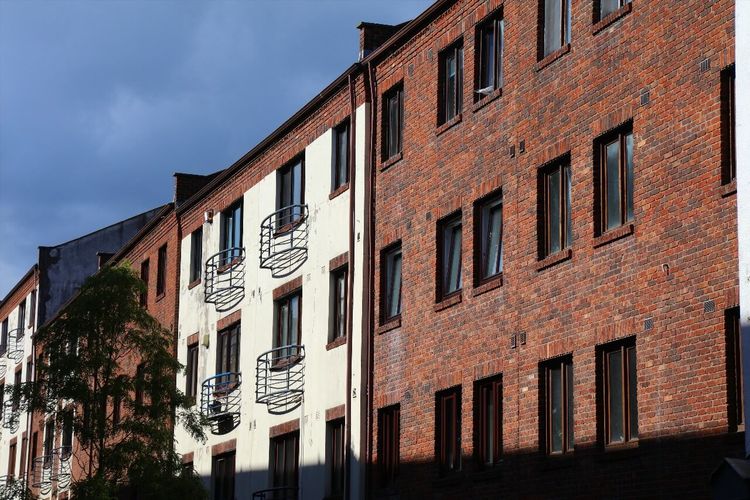
The surrounding area holds several sites that perfectly complement a visit to the cathedral. No transport is needed — everything is within a fifteen-minute walk.
Marsh's Library, 50 metres from the main door, is the first public library in Ireland, founded in 1701. It holds more than 25,000 old books, including 15th-century incunabula and manuscripts annotated by Jonathan Swift himself. The interior, with its alcoves closed off by wrought-iron gates — where readers were locked in to prevent theft of rare books — has barely changed since the 18th century. Admission is charged, but modest.
Saint Patrick's Park, which adjoins the church on its eastern side, is a quiet public garden where Dubliners come for lunch in summer. A memorial to Irish writers runs along the wall, with bronze plaques celebrating Shaw, Beckett, Wilde, and other figures of national literature.
The Liberties is the neighbourhood surrounding the monument: one of the oldest in Dublin, historically home to Huguenot weavers in the 17th century, today undergoing rapid gentrification with cafés and street markets. Take the time to walk along Thomas Street heading west to see the Victorian façades and a few converted industrial buildings.
Dublin Castle, approximately 20 minutes on foot to the north-east, is the other great medieval monument of the historic centre. A combined visit to St. Patrick's and Dublin Castle makes the best possible programme for a day dedicated to the history of the Irish capital. To plan your full itinerary, Ryo's article on the most beautiful places to visit in Ireland provides a useful overview of must-see sites.
The Guinness Storehouse (St. James's Gate, Dublin 8, rated 4.4/5 on Google based on 25,310 reviews), a 10-minute walk to the west, is the Guinness brewery museum. The visit generally lasts 2 hours and ends with a complimentary pint at the panoramic rooftop bar with views over the city. Combining the cathedral and the Guinness Storehouse in the same half-day is doable, but potentially tiring — it is better to set aside the entire afternoon if you want to give each site the time it deserves.




FAQ
How long does it take to visit St. Patrick's Cathedral Dublin?
Allow between 45 minutes and 2 hours depending on your pace. Visitors who stick to the main nave and Swift's tomb will be done in under an hour. Those who read the panels, explore the choir, the chapels, and the shop will easily need 90 minutes to 2 hours. If you continue to the nearby Marsh's Library, add another 45 minutes.
What is the admission price for St. Patrick's Cathedral Dublin in 2026?
Admission is €11.50 for an adult in 2026, €10 for students and seniors, €5.50 for children aged 6 to 12, and free for under-6s. A family ticket (2 adults and up to 3 children) is available for €31. Religious services (Evensong on weekdays at 5:30 pm, Sunday services) are completely free and open to all.
Is St. Patrick's Cathedral Dublin Catholic or Protestant?
It is Protestant, more specifically Anglican, belonging to the Church of Ireland. This may come as a surprise since Ireland is historically associated with Catholicism. St. Patrick's became Anglican during the Protestant Reformation under Henry VIII in the 16th century. Dublin actually has two Anglican cathedrals (St. Patrick's and Christ Church) and one Catholic cathedral (the Pro-Cathedral of St. Mary), an unusual configuration among European capitals.
Can you attend a choral service at St. Patrick's Cathedral?
Yes, and it is one of the best reasons to visit. Evensong (sung vespers) takes place several evenings a week at 5:30 pm and on Sundays at 3:15 pm (during the choir's school term). These services are free and open to the public without reservation. The choir, whose Choir School was founded in 1432, performs works from the Anglican tradition ranging from the 16th century to the present day. The duration is approximately 45 minutes to 1 hour.
What is the difference between St. Patrick's Cathedral and Christ Church Cathedral in Dublin?
Both cathedrals are Anglican and less than a kilometre apart in the historic centre. Christ Church (founded around 1030) is the oldest and serves as the seat of the Diocese of Dublin and Glendalough. St. Patrick's (raised to the status of a collegiate church in 1191) is the largest and is home to the memory of Jonathan Swift. Christ Church has a remarkable medieval crypt; St. Patrick's is distinguished by its armorial stalls and literary associations. Visiting both in one day is entirely feasible — they are connected by a ten-minute pedestrian street.
Is St. Patrick's Cathedral Dublin accessible for people with reduced mobility?
Access is partially adapted. The main entrance is at ground level and the central nave is wheelchair accessible. Some side chapels have steps without handrails. Accessible toilets are available inside. If you have specific needs, it is recommended to contact the team directly before your visit to check what facilities are in place at the time of your visit.
Conclusion
Visiting St. Patrick's Cathedral Dublin means crossing nine centuries of Irish history in a single building. Swift's tomb, the door with its legendary hole, the banners of the Order of St. Patrick, and the sound of a choir whose school dates back to 1432 together create an experience that no other monument in Dublin can offer. Allow a full morning if you wish to combine the church, Marsh's Library, and the adjacent park — that is the pace that allows you to truly absorb what this place has to say.
To explore the rest of the Irish capital with the same depth, the Ryo Dublin audio walking tour offers 29 audio tracks along an 8 km route through the historic centre — a way to extend your day in Dublin with a guide that knows every corner of the city.
À lire également