© Shutterstock
 Votre guide Ryo
25 Things to Do in Naples, Italy You'll Actually Remember (2026)
Naples doesn't ease you in gently. The city hits you with noise, colour, and the smell of frying dough the moment you step off the train at Napoli Centrale, and that disorienting first impression is precisely what makes it one of the most rewarding cities in Europe to explore. There are more things to do in Naples than most visitors realise: this is a city with 3,000 years of layered history, more UNESCO-listed streets than almost anywhere in Italy, and a food culture so influential it literally changed what the world eats. If you want to get under the skin of it rather than rush through the highlights, the Ryo audio guide for Naples covers 18 stops across 1h30 of walking, a sharp way to orient yourself on day one.
What follows are 25 experiences worth your time, from underground Greek tunnels that run two storeys beneath the pizza shops, to a marble sculpture so technically perfect it has baffled art historians for three centuries, to day trips that land you inside a Roman city frozen in AD 79. Some take an afternoon; others demand a full day. All of them are the real thing.
1. Naples Historic Centre, A UNESCO World Heritage Site You Walk Through, Not Just Look At
The Historic Centre of Naples (Via dei Tribunali, 80138 Naples, rated 4.6/5 on Google (232 avis)) was inscribed on the UNESCO World Heritage List in 1995, making it one of the most densely layered urban cores on earth. The boundaries stretch roughly from Piazza Garibaldi in the east to Piazza Dante in the west, and from the waterfront up to the Vomero hill, but the heart of it is a grid of streets that follows the exact layout of the ancient Greek city of Neapolis, founded around 470 BC. You are, quite literally, walking roads that are two and a half millennia old.
The main east-west axis is Via dei Tribunali, one of three ancient decumani (main arteries) that still cut across the centro storico. Walk it end to end, about 1.5 km, and you pass Gothic churches, Baroque oratories, a 14th-century castle, market stalls selling dried figs and chilli peppers, and at least four of the city's best pizzerias. The density of monuments per square kilometre here is extraordinary: the Duomo di Napoli (cathedral of San Gennaro) alone contains a baptistery from the 4th century, a crypt from the 13th, and the famous Chapel of San Gennaro with its ceiling frescoes by Domenichino and Giovanni Lanfranco.
The best strategy is to avoid treating this as a checklist. Pick one decumano, walk it slowly, duck into the churches that are open (most charge nothing or a modest fee), and let the neighbourhood reveal itself. Avoid the area between 1pm and 3pm on hot days, the narrow streets trap heat and the tourist density peaks.
The Parthenopean City audio-guided route on Ryo covers 19 annotated stops across the centro storico in 2h15 of walking (5.7 km), with audio commentary on the Greek foundations, the Spanish Viceroyalty period, and the Bourbon legacy, useful context before you dive in on foot.
2. Naples National Archaeological Museum (MANN)
If you have time for only one museum in Naples, it should be this one. The Museo Archeologico Nazionale di Napoli (Piazza Museo Nazionale 19, 80135 Naples, rated 4.6/5 on Google (36 512 avis)), universally known as MANN, holds what is widely regarded as the finest collection of Greco-Roman antiquities in the world. That is not marketing hyperbole. When Pompeii and Herculaneum were excavated in the 18th and 19th centuries, the Bourbon kings of Naples had first claim on the finds, and the best of those finds came here.
The ground floor houses the Farnese Collection, assembled by Cardinal Alessandro Farnese in the 16th century from excavations across Rome. The centrepiece is the Farnese Bull, a monolithic marble sculpture group from the 3rd century BC, at over 3.7 metres tall, it is the largest ancient sculpture ever recovered intact. Nearby stands the Farnese Hercules, a Roman copy of a Greek original by Lysippos, its muscular exhaustion rendered with almost uncomfortable precision.
The mezzanine level holds the Secret Cabinet (Gabinetto Segreto), a collection of erotic art from Pompeii that the Bourbon court kept locked for over a century. It was opened to the public only in 2000 and now requires a separate timed ticket. The pieces range from wall frescoes to small bronzes; the collection is frank, occasionally comic, and genuinely illuminating about Roman attitudes to sexuality and ritual.
The first floor is dominated by the Pompeii mosaics. The most famous is the Alexander Mosaic, a floor panel roughly 5.8 × 3.1 metres reconstructed from more than a million tesserae, depicting Alexander the Great at the Battle of Issus against Darius III. The level of detail, the reflection in the dying soldier's shield, the terror in the Persian horses, is staggering.
Book tickets online at the museum's official site and arrive at opening (9am). The rooms are large but not air-conditioned in summer, and crowds build quickly after 11am. Budget at least three hours; serious visitors spend five.
3. The Veiled Christ at Cappella Sansevero
Every major city has one artwork that stops people dead. In Naples, it is Cristo Velato, the Veiled Christ, a marble sculpture by Giuseppe Sammartino, completed in 1753 and never moved from the chapel it was made for. The subject is Christ's body laid out after the Crucifixion, covered by a marble shroud so thin and so anatomically precise that visitors have been pressing their fingers against it for 270 years to confirm it is stone, not cloth.
The chapel was commissioned by Raimondo di Sangro, Prince of Sansevero, an 18th-century polymath, Freemason, and compulsive experimenter whose reputation ranged from scientific prodigy to black magician depending on who you asked. The Cristo Velato was his centrepiece, but the entire chapel rewards close attention. The floor is a single continuous marble inlay. The ceiling fresco by Francesco Maria Russo depicts the Glorification of the Sansevero family in a vertiginous perspective illusion. Two anatomical machines in the basement, human skeletons with their arterial systems apparently intact, the product of Raimondo's experiments in preserving tissue, add a genuinely unsettling coda.
The chapel holds around 80 people at a time. Book tickets weeks in advance, this is consistently Naples' most sold-out attraction, and the entrance is timed. The experience lasts 20-30 minutes inside, but you will likely stand in front of the Veiled Christ for longer than you expect.
4. Castel dell'Ovo
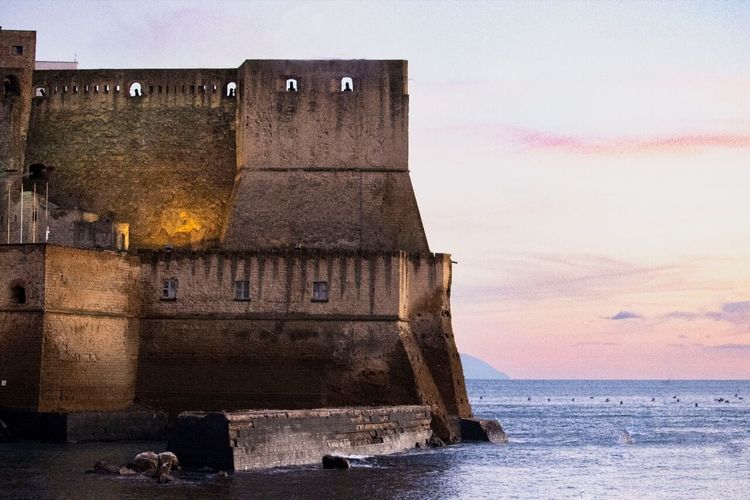
The Castel dell'Ovo sits on a small island, the Borgo Marinari, connected to the mainland by a short causeway in the Mergellina-Chiaia waterfront district. It is the oldest standing castle in Naples, with foundations dating to the Roman villa of Lucullus in the first century BC, later converted into a fortress by the Normans in the 12th century.
The name, Castle of the Egg, comes from a medieval legend that the Roman poet Virgil (who was believed in the Middle Ages to be a magician) hid a magic egg inside the foundations. If the egg broke, the castle would fall and Naples with it. The legend is almost certainly invented, but it stuck for eight centuries.
Entrance to the castle is free. The interiors host rotating exhibitions and cultural events, but the main draw is the panoramic walk around the battlements: on a clear day you can see across the Bay of Naples to Capri in one direction and Vesuvius in the other. The Borgo Marinari below is lined with seafood restaurants, expensive by Neapolitan standards but well-positioned for a long lunch with a view.
5. Piazza del Plebiscito and the Royal Palace
Piazza del Plebiscito is Naples' largest public square and one of the grandest in Italy. The neoclassical colonnade of the Basilica di San Francesco di Paola curves around the northern edge; the Palazzo Reale, the Royal Palace, closes the eastern side. In between, the paving stretches wide enough that the square feels almost too large for the city, an impression reinforced by the pair of equestrian statues of Charles III and Ferdinand I at its centre.
The Palazzo Reale deserves more attention than it usually gets. Built in the early 17th century for the Spanish viceroys, it served as the primary residence of the Bourbon kings of Naples through the 18th and 19th centuries. Today, the state apartments are open to visitors: 30 rooms across the piano nobile, furnished largely as they would have been under the Bourbon rulers, with ceiling frescoes, tapestries, and a private court theatre, the Teatro di Corte, that is one of the least-visited grand theatres in Europe.
The palace also houses the Biblioteca Nazionale (National Library) with over 2 million volumes, including the Herculaneum Papyri, carbonised scrolls from the 79 AD eruption that scholars are still trying to read using X-ray imaging. Admission to the state apartments is around €10; the library is free to visit on the ground level.
6. Naples Underground (Napoli Sotterranea)
Beneath the street grid of the centro storico runs a parallel city that most visitors never see. Napoli Sotterranea (Piazza San Gaetano 68, 80138 Naples, rated 4.5/5 on Google (30 927 avis)), Naples Underground, is a network of tunnels, cisterns, and chambers excavated primarily from Greek tuff stone beginning in the 4th century BC. The Greeks needed building material and water storage; their solution was to mine downward, leaving a honeycomb of passages that later generations used, expanded, and forgot.
The best-organised access point is through Piazza San Gaetano, where guided tours descend roughly 40 metres below street level into a series of cisterns and corridors that were still in use as an air-raid shelter during World War II. The WWII layer is the most viscerally affecting part: you walk past the graffiti left by families who sheltered here during the 1943 Allied bombing campaign, past the remains of a makeshift kitchen and a school that operated underground for months. The layers, Greek, Roman, Bourbon aqueduct, 20th-century wartime, sit directly on top of each other in a way that is impossible to absorb quickly.
Beyond the standard tunnels, there is a section where visitors navigate with candles through passages 50 cm wide, which adds a physical dimension to the experience. Tours run approximately every two hours, last about 80 minutes, and cost around €10. Book at the entrance or online; English-language tours are scheduled throughout the day. This is one of Naples' most genuinely extraordinary experiences, not just because of what you see, but because of the physical sensation of being embedded inside the city's geological and historical memory.
The underground network connects in places to Greco-Roman remains at Via Anticaglia, where two arches of the ancient theatre where Emperor Nero performed are still visible embedded in apartment buildings, visible from street level to anyone who looks up.
7. Spaccanapoli, The Street That Splits the City
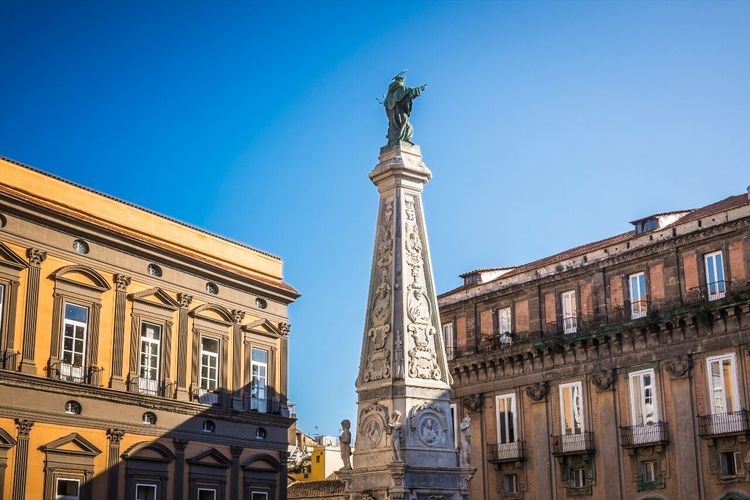
Spaccanapoli (Via Benedetto Croce, 80134 Naples, rated 4.4/5 on Google (539 avis)) is not a single street but a visual phenomenon: a straight line cutting across the entire width of the historic centre, visible from the Certosa di San Martino on the Vomero hill above as a perfect east-west slash through the urban fabric. The name means, quite literally, « Naples splitter. » Street-level, it shifts names, Via Benedetto Croce, then Via San Biagio dei Librai, then Via Vicaria Vecchia, but the axis remains unbroken.
Walking it end to end takes about 45 minutes at a purposeful pace, or a full morning if you stop. The street is one long sequence of side-street chapels, market vendors selling books and prints, pasticcerie selling sfogliatelle and pastiera, and workshops where craftspeople make nativity figures, theatrical masks, and painted ceramics. The Obelisco di San Domenico marks one anchor point; the Church of Gesù Nuovo with its lava-stone diamond-rusticated façade anchors the other. Neither requires a ticket to enter.
Go early, by 10am the street fills quickly, and the narrow width means you are navigating through camera-wielding crowds by midday.
8. Santa Chiara Monastery and the Majolica Cloister
The Complesso Monumentale di Santa Chiara (Via Benedetto Croce 16, 80134 Naples, rated 4.7/5 on Google (18 396 avis)) encompasses a 14th-century Gothic church, a convent, a small museum, and, most memorably, a cloister garden that is unlike anything else in Italy. The church was founded in 1310 by Robert of Anjou and his wife Sancia of Majorca as a double monastery for Franciscan friars and Poor Clares. What survives today is largely a post-WWII reconstruction, the complex was devastated by Allied bombing in August 1943, but the reconstruction was meticulous.
The cloister is the reason to come. Built in the 18th century on the older garden, it features a central avenue of octagonal pillars and low walls entirely covered in majolica tiles, hand-painted ceramic panels depicting pastoral scenes, hunting parties, festive dances, and landscapes in vivid blues, yellows, and greens. There are 72 pillars and over 400 tile panels, all made in the workshop of the Neapolitan potter Donato Massa between 1739 and 1742. Sitting in the garden on a weekday morning, when tour groups haven't yet arrived, is one of the more peaceful 20 minutes you can spend in Naples. Admission is around €6.
9. Capodimonte Museum and Royal Park
The Museo e Real Bosco di Capodimonte (Via Miano 2, 80131 Naples, rated 4.6/5 on Google (28 240 avis)) sits on a hill above the city in a former royal hunting reserve, about 2.5 km north of the centro storico. The palace, an 18th-century Bourbon construction, houses one of Italy's great painting collections, and the surrounding park covers 134 hectares of woodland gardens that remain largely free and undervisited.
The collection spans the 13th to 21st centuries, with particular strength in the Italian Renaissance and Baroque periods. The Farnese holdings, transferred here from Rome and Parma, include major works by Titian, Raphael, and Annibale Carracci. The Neapolitan school is exceptionally well represented: Caravaggio'sFlagellation of Christ (1607), painted during his Naples period, is considered one of his greatest works. The contemporary art floor, added in the 1990s and expanded since, brings in major international names, making Capodimonte unusual among Italian royal collections in engaging seriously with art after 1800.
The park is worth the trip alone. A good route takes you past the Porta di Mezzo, through the English-style gardens, past the porcelain factory building, and up to the terrace behind the palace with views over the Bay of Naples. Bus C63 connects the city centre to the museum entrance; the ride takes about 20 minutes from Piazza Museo. Budget a full afternoon, the combined museum and park comfortably fills four to five hours.
10. Castel Nuovo (Maschio Angioino)
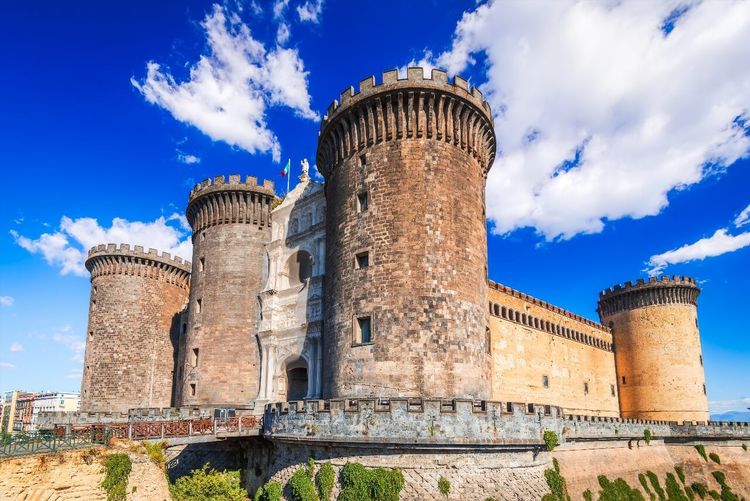
Castel Nuovo, nicknamed Maschio Angioino (Angevin Keep), stands at the edge of the port, its five cylindrical towers and dramatic white marble Triumphal Arch making it one of the most recognisable silhouettes in the city. The castle was built by Charles I of Anjou beginning in 1279 and significantly expanded under Alfonso V of Aragon in the 15th century; it was the seat of the Kingdom of Naples for over two centuries.
The Triumphal Arch between the towers, commissioned by Alfonso to celebrate his conquest of Naples in 1443, is considered one of the finest examples of early Renaissance sculpture in Italy, despite, or perhaps because of, the mix of Catalan Gothic and classical Roman influences in a single composition. Inside, the Civic Museum houses Neapolitan paintings and sculptures from the 14th to 20th centuries across two floors; the chapel on the ground level preserves frescoes by Giotto (mostly fragments, but authenticated) from his 1330s Neapolitan stay. Admission is around €6.
11. San Gregorio Armeno, The Street of Nativity Craftsmen
Via San Gregorio Armeno (Via San Gregorio Armeno, 80138 Naples, rated 4.7/5 on Google (3 451 avis)) is a single block-long street between Via dei Tribunali and Spaccanapoli, entirely given over to workshops producing Neapolitan nativity figures, presepi, a craft tradition in Naples going back to the 15th century.
The nativity workshops operate year-round, not just at Christmas. The figures range from affordable terracotta shepherds to elaborate hand-painted characters, including, by Neapolitan tradition, contemporary figures: politicians, footballers, and local celebrities regularly appear alongside the Holy Family. Prices start at a few euros for small painted clay figures and rise to several hundred for workshop-quality handmade pieces. If you're buying, ask to see the back of the studios, most workshops show their process openly.
12. Catacombs of San Gennaro
The Catacombe di San Gennaro (Via Capodimonte 13, 80136 Naples, rated 4.7/5 on Google (13 200 avis)) on the Rione Sanità hill north of the centre are among the largest early Christian burial sites in Italy, and significantly less visited than Rome's catacombs despite being more intact and more visually dramatic. Excavated from the 2nd century AD onward, they were expanded through the 5th century when San Gennaro, Naples' patron saint, was buried here, turning the site into a place of pilgrimage.
The guided tour runs through two levels of galleries cut into the volcanic tuff. The upper gallery is the older section, with 4th and 5th-century frescoes in a state of preservation rare outside the Vatican's own holdings. The portraits, faces of the deceased painted directly into the arched niches, retain extraordinary colour: deep reds, ochres, and cobalt blues still vivid after seventeen centuries. Several of the larger chambers functioned as underground basilicas, with curved apses and columns that would not look out of place in a surface church.
The Rione Sanità neighbourhood above the catacombs is one of Naples' most interesting areas to spend time in. The tour cooperative that manages the catacombs is locally staffed and reinvests in the neighbourhood; buying a ticket here is one of the more direct ways to support a genuine community project. Tours run daily, last about 50 minutes, and cost €9. Book in advance, the tour groups are capped in size and fill up, particularly in summer.
13. Quartieri Spagnoli
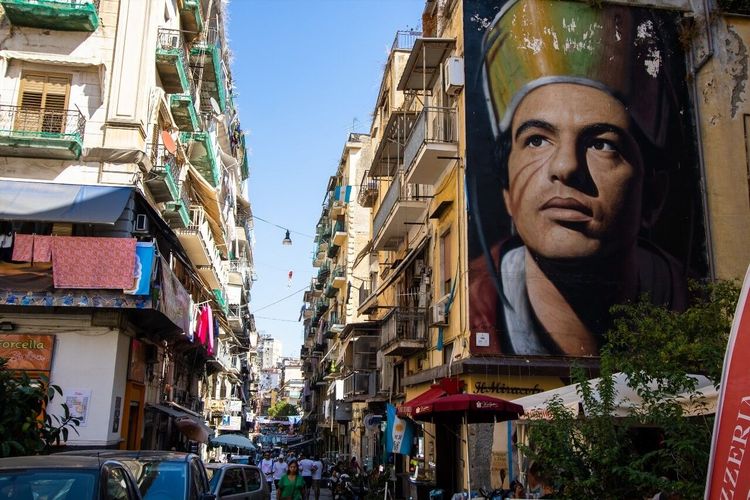
The Quartieri Spagnoli (Via Toledo, 80134 Naples, rated 4.5/5 on Google (7K avis)), Spanish Quarter, is the dense grid of streets immediately west of Piazza del Plebiscito, built in the 16th century to house the Spanish garrison and associated population. Today it is one of the most densely inhabited neighbourhoods in Europe: the streets are narrow enough that neighbours can nearly shake hands across balconies, the buildings rise six or seven storeys, and the afternoon light barely reaches street level.
It is also one of the best places in Naples for an afternoon with no fixed agenda. The neighbourhood has its own internal logic, certain streets are entirely given over to motorcycle repair shops, others to food vendors, others to small bars where locals eat standing up. The Shrine of Diego Armando Maradona on Via Emanuele de Deo is one of several scattered through the neighbourhood, a sign of how deeply the Argentine footballer's two scudetti with Napoli (1987, 1990) are woven into the local identity. Wandering without a plan here, following noise or smell, is a more authentic version of Naples than most organised tours provide. If you do want some structure afterwards, the Ryo audio-guided tour lets you set your own pace between Via Toledo and the Piazza del Plebiscito.
14. Eat Neapolitan Pizza Where It Was Born
Neapolitan pizza has UNESCO Intangible Cultural Heritage status, awarded in 2017, which makes Naples the only city in the world where eating pizza counts as engaging with a protected cultural practice. That framing is slightly absurd, but it points at something real: Neapolitan pizza is not just a food here, it is a civic institution with strict rules, fierce loyalties, and a documented history going back to the 18th century.
The canonical choice is Pizzeria da Michele (Via Cesare Sersale 1, 80139 Naples, rated 4.3/5 on Google (52 379 avis)) (Via Cesare Sersale, near Piazza Garibaldi), which has been operating since 1870 and serves exactly two pizzas: margherita and marinara. The queue is always long. Arrive before 11:30am for lunch or accept a 30-45 minute wait; the actual meal takes about 15 minutes. The pizza, thin, slightly charred at the edges, with a wet centre from San Marzano tomatoes and fior di latte, is the definitive version of the form.
For a broader comparison, Sorbillo (Via dei Tribunali) offers more variety and a similar queue culture; Starita a Materdei in the Materdei neighbourhood is the local favourite for fried pizza, pizza fritta, the pre-WWII form that predates the wood-fired oven version. A word on timing: Neapolitan pizzerias close after lunch service and reopen for dinner. If you arrive at 4pm expecting a margherita, you will be disappointed. Lunch service ends around 3pm; dinner starts from 7:30pm.
Alongside pizza, the other non-negotiable food experience is sfogliatella, a shell-shaped pastry filled with ricotta and semolina, best eaten hot from Pasticceria Pintauro (Via Toledo) or the original Pasticceria Attanasio near the station.
15. Posillipo Seafront and Marechiaro
The Posillipo hill west of the centre is where wealthy Neapolitans have built their villas since Roman times, the name derives from the Greek pausilypon, meaning « cessation of sorrow. » The clifftop road (Via Posillipo) runs for about 7 km above the sea, passing Belle Époque villas half-hidden behind umbrella pines and bougainvillea, with views across the bay that regularly appear in 19th-century travel writing as the most beautiful in Italy.
At the western end, the fishing village of Marechiaro (Via Marechiaro, 80122 Naples, rated 4.4/5 on Google (5K avis)) sits below the cliff at sea level, reachable by a steep stairway. It was immortalised in the Neapolitan song 'O mare e Marechiaro (1885), and while it is now largely given over to seafood restaurants, the setting, small boats, a baroque church, the bay opening out behind, retains its charm. The bus from Piazza Sannazaro (line 140) covers the Posillipo road in about 25 minutes, or rent a Vespa for the full period experience.
16. Certosa di San Martino
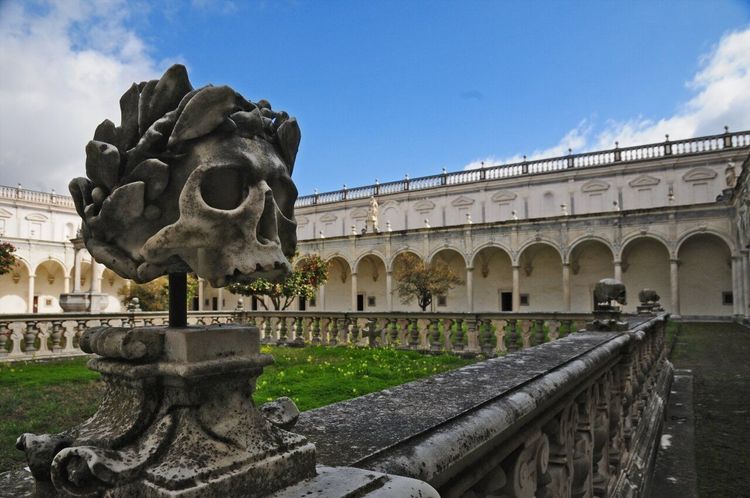
Certosa e Museo di San Martino (Largo San Martino 5, 80129 Naples, rated 4.5/5 on Google (6 606 avis)) occupies the summit of the Vomero hill, directly above the centro storico. The Carthusian monastery was founded in the 14th century and progressively enriched through the 17th and 18th centuries, the Baroque transformation of the interior was carried out over decades and involved virtually every major Neapolitan artist of the period.
The church itself is a Baroque interior of extraordinary intensity: Luca Giordano, Jusepe de Ribera, and Giovanni Lanfranco all contributed works. The inlaid marble floor of the nave is one of the most complex in Italy. The Great Cloister outside, designed by Giovanni Antonio Dosio in the late 16th century, is serene by contrast: a double arcade of white marble columns around a central garden with a well at the centre, framed by views over the bay.
The museum wing holds the world's most complete collection of Neapolitan presepi (nativity scenes), including the massive 18th-century Cuciniello presepe, a multi-room installation with hundreds of figures set against a backdrop of painted Naples. There is also a significant collection of Neapolitan decorative arts, maps, and marine objects. Admission is around €8; reach it by funicular from Via Toledo (Montesanto or Centrale line) and walk the last 10 minutes uphill, or take bus V1 from Via Scarlatti. If you want context on the way up, the Ryo audio guide for Naples threads the Vomero panorama into its 18-stop walk through the city's layered history.
17. Virgil's Tomb (Parco Vergiliano a Piedigrotta)
The Parco Vergiliano a Piedigrotta (Via Salita della Grotta 20, 80122 Naples, rated 4.3/5 on Google (693 avis)) in the Mergellina district contains what is traditionally identified as the tomb of Virgil, the Roman poet who lived in Naples for much of his life and requested burial here after his death in 19 BC. The tomb is a simple Roman columbarium, a cylindrical brick structure about 3 metres in diameter, not especially impressive architecturally.
What makes it worth the 20-minute walk from Mergellina station is the layered literary history: Petrarch visited and planted a laurel here in 1341; Boccaccio and Leopardi both came as pilgrims to the poet's grave. The park also contains the entrance to the Crypta Neapolitana, a Roman road tunnel roughly 700 metres long cut through the Posillipo hill, one of the earliest known road tunnels in the world, dating to the 1st century BC. It is sometimes open for guided visits; check locally.
18. Day Trip to Pompeii
The ancient city of Pompeii was buried under 4 to 6 metres of volcanic ash and pumice in AD 79 when Vesuvius erupted without warning. The eruption was long dated to 24 August, but a charcoal inscription uncovered in 2018, together with autumnal fruit remains found on site, has pushed the scholarly consensus toward late October AD 79. The eruption killed an estimated 2,000 people whose remains are still being found and cast. What it also did was preserve a Roman city with extraordinary completeness, houses with intact frescoes, bakeries with carbonised loaves still in the ovens, a lupanar (brothel) with illustrated menus, election graffiti on the walls, and street ruts from cart wheels worn so deep into the basalt paving that you can still see them after 2,000 years.
Pompeii is about 25 km southeast of Naples, reachable by the Circumvesuviana train from Napoli Garibaldi station in about 35 minutes (Pompeii Scavi stop, not the main Pompeii station). The Circumvesuviana is a regional railway, not the main FS network; buy tickets separately at the station.
The archaeological site covers 66 hectares, not all of it excavated, not all of what is excavated open on any given day. A focused three-hour visit covers the main streets (Via dell'Abbondanza, the Forum, the amphitheatre), the House of the Faun (with mosaic originals in some rooms), and the haunting plaster casts of the victims in the Garden of the Fugitives. A thorough visit takes a full day.
Practical notes: buy tickets online in advance through the official Parco Archeologico di Pompei site, summer queues at the gate can be 45 minutes long. The entrance fee is €18 (included in the Campania ArteCard, which also covers Naples museums). Bring water, the site has limited shade, and summer temperatures on the dark basalt streets exceed 40°C. The best time to visit is spring (April-May) or autumn (October-November): comfortable temperatures, manageable crowds, and good light for photography.
Among the highlights you shouldn't rush past: the Villa dei Misteri at the western edge of the site, with a series of 2nd-century BC frescoes depicting a Dionysiac mystery ritual across nearly 30 metres of wall, the best-preserved large-scale fresco cycle from the ancient world.
19. Day Trip to Mount Vesuvius
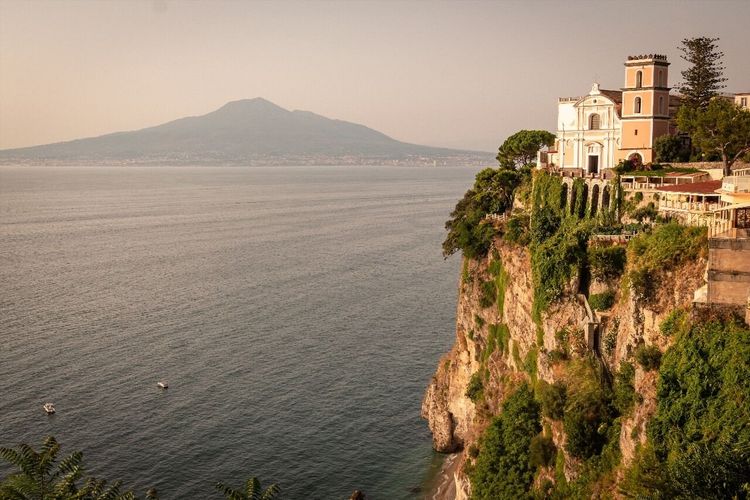
Mount Vesuvius is the only active volcano on the European mainland and one of the most dangerous on earth, not because of its current activity level (low) but because 3 million people live within its potential danger zone. The volcano last erupted in 1944; the crater at its summit has been quiet since.
Reaching the summit involves a 30-minute uphill walk on a well-maintained path from a car park at 1,000 metres altitude. The crater itself is about 450 metres in diameter and 300 metres deep, large enough to be disorienting when you're standing at the rim. Views across the Bay of Naples on a clear day extend to Capri and the Sorrentine Peninsula. The experience is genuinely physical: you are standing on the lip of the feature that destroyed Pompeii and defined the entire region's landscape.
From Naples, take the Circumvesuviana to Ercolano (Ercolano Scavi stop), then a shuttle bus up to the car park. The shuttle runs approximately every 30 minutes in season. Entry to the national park and crater path is €10. The full excursion from Naples takes about four hours including travel.
20. Day Trip to Herculaneum
Herculaneum (Italian: Ercolano) was a smaller, wealthier town than Pompeii, destroyed in the same 79 AD eruption but buried under a very different material: a roughly 16-metre deep pyroclastic surge that carbonised organic matter rather than simply burying it. The result is a site with intact wooden furniture, roof beams, food stored in jars, and even papyrus scrolls preserved in one villa (the Villa dei Papiri, partially excavated and under ongoing study).
Herculaneum is smaller than Pompeii, about 4-5 city blocks are currently open, and, for that reason, easier to absorb in a half-day. The quality of preservation is in many respects higher: in the House of Neptune and Amphitrite, a mosaic fountain decorated with seahorses and sea-god imagery is still in its original position, colours intact. In the House of the Mosaic Atrium, the original marble floors are buckled by the volcanic heat but still in place.
The site is reachable from Naples on the Circumvesuviana in about 20 minutes (Ercolano Scavi stop). You can combine Herculaneum and Vesuvius in a single day trip, which makes good logistical sense: arrive at Herculaneum by 9am, spend three hours there, take the shuttle up Vesuvius, and return to Naples by mid-afternoon. Entry is €16 (standard adult, 2026).
21. Day Trip to Procida or Ischia
The Phlegrean Islands off Naples, Ischia, Procida, and Vivara, are reached by ferry from Molo Beverello or Calata di Massa near the port, with hydrofoil and regular ferry services running throughout the day.
Procida is the smallest and least developed of the three: a fishing island of about 10,000 inhabitants, with pastel-painted harbour buildings, narrow alleys, and beaches that remain genuine local retreats rather than resort infrastructure. It became internationally known as a filming location for Il Postino (1994) and was named Italian Capital of Culture for 2022, which brought some renovation but did not fundamentally change its character. The ferry from Naples takes 35 minutes by hydrofoil.
Ischia is larger and more developed, dominated by the volcanic Epomeo mountain (789 metres) at its centre. The island has thermal spas fed by its volcanic geology, beaches of varying quality, and the dramatic Castello Aragonese on a tuff rock islet at Ischia Ponte. A full circuit by local bus takes about two hours. Hydrofoil from Naples: 55 minutes.
Both islands are feasible as day trips in spring or autumn. In summer, the crowds on Ischia and the ferry queues make a longer stay more worthwhile.
22. Day Trip to Capri
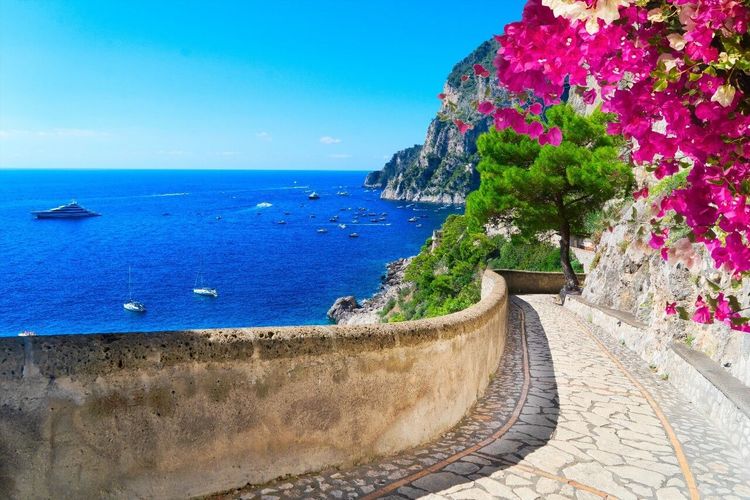
Capri needs no particular introduction. The island is one of the most visited in the Mediterranean, and in summer the main town (Capri town and Anacapri) is genuinely overcrowded between 10am and 5pm when the day-tripper boats arrive.
If you go, and the Blue Grotto, the Faraglioni sea stacks, and the Villa Jovis (Emperor Tiberius's cliff-top palace) justify it, take the first hydrofoil from Naples (departures from 7:15am, journey 50 minutes) and aim to be on the island before 9am. Leave by 3pm before the return crowds peak. The hydrofoil from Molo Beverello costs around €25 each way. Slower ferries are cheaper but take over an hour.
23. Palazzo Zevallos Stigliano
Palazzo Zevallos Stigliano (Via Toledo 185, 80132 Naples, rated 4.6/5 on Google (3 879 avis)) on Via Toledo houses a single unmissable artwork: Caravaggio's Martyrdom of Saint Ursula, painted in 1610, almost certainly the last canvas he completed before his death. The palace is a 17th-century banker's residence converted into a cultural centre by Intesa Sanpaolo bank, and admission is free.
The Martyrdom is a late Caravaggio at its most raw. There is none of the elaborate theatrical staging of his earlier work: the scene is compressed, dark, and private, Ursula absorbing the arrow at close range, the archer barely separated from his victim. Scholars believe Caravaggio painted himself in the background, watching. The painting arrived in Naples in 1610 and never left. The rest of the small collection, Neapolitan and Dutch 17th-century paintings, is solid, but the Caravaggio is the reason to come.
24. MADRE, Museum of Contemporary Art
Museo d'Arte Contemporanea Donnaregina, MADRE, occupies a 19th-century palazzo in the Rione Sanità district, about a five-minute walk from the Catacombs of San Gennaro. It opened in 2005 and has built a serious collection of Italian and international contemporary work.
The permanent collection includes works by Richard Serra, Rebecca Horn, Jeff Koons, and a strong group of Italian artists from the Arte Povera movement, Jannis Kounellis, Mario Merz, Mimmo Paladino. The building itself is part of the experience: the ground-floor atrium commissioned site-specific installations from Francesco Clemente, Mimmo Paladino, and Richard Serra for the opening, all of which remain in place. Temporary exhibitions occupy the upper floors and change roughly every three months. Admission is €8; free on Mondays after 3pm.
25. Lungomare Caracciolo, The Waterfront Walk
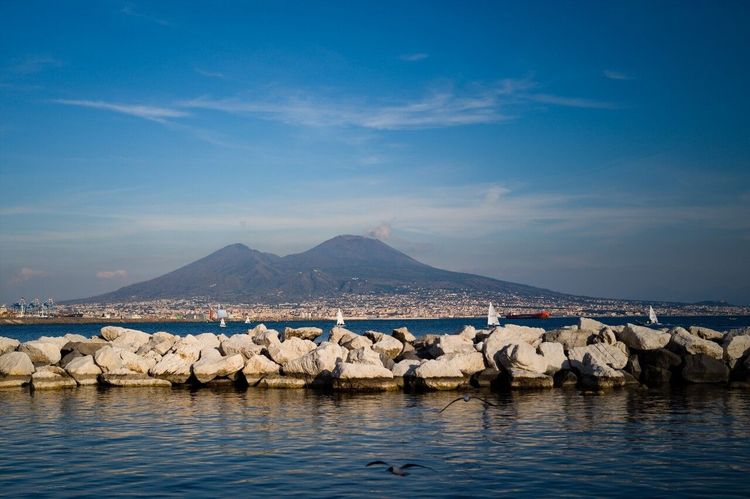
The Lungomare Caracciolo (Via Francesco Caracciolo, 80122 Naples, rated 4.8/5 on Google (1 008 avis)) runs for about 3 km along the seafront from Piazza Vittoria to Mergellina, with Vesuvius directly ahead to the east and the Castel dell'Ovo behind you. It is one of the longest traffic-free waterfront promenades in Italy, the road is closed to vehicles on weekends and most evenings, and on a clear evening the view across the Bay of Naples catches that particular golden light that made 18th-century Grand Tourists burst into verse.
The walk passes the Villa Comunale, a public park laid out in the late 18th century by the Bourbon court as a promenade garden, which contains an aquarium, the oldest in Europe, opened in 1874, still operating. It also passes a string of bars and gelaterie with outdoor tables facing the sea. The classic Neapolitan evening unfolds on this stretch: families walking slowly, teenagers on scooters, old men playing cards at café tables. Arrive around 6:30pm for the light; stay for dinner at one of the restaurants in Mergellina at the western end. The Ryo audio-guided tour of the city stops at the Castel dell'Ovo, at the other end of the same seafront, easy to cue up on the way.


FAQ
How many days do you need in Naples?
Three days is the minimum to cover the historic centre, the main museums (MANN and Capodimonte), and at least one day trip. Five days gives you time to add the Catacombs, Certosa di San Martino, an island ferry, and actual time in the neighbourhoods rather than moving between landmarks. A full week is not excessive if you plan to visit Pompeii, Herculaneum, and Vesuvius seriously.
Is Naples safe for tourists?
The city's safety reputation is significantly worse than the reality for most visitors. Petty theft, particularly bag snatching from scooters, is a genuine risk in the centro storico and near the station; use a bag worn across the front and don't display expensive equipment unnecessarily. Violent crime targeting tourists is rare. The Quartieri Spagnoli and Rione Sanità, which have rough reputations, are safe for tourists by day and by early evening. Use the same common sense you would in any large southern European city.
When is the best time to visit Naples?
April, May, and October are the best months: mild temperatures (18-25°C), manageable crowds at the archaeological sites, and all attractions open. July and August are extremely hot (regularly above 35°C in the city), and Pompeii in full summer heat is genuinely punishing. November to March is mild by northern European standards but wetter, and some boat services to the islands are reduced.
How do you get around Naples?
The centro storico is walkable, most of the key sights are within 1.5 km of each other. For the Vomero hill (Certosa di San Martino, Castel Sant'Elmo), the funicular lines (three lines, all covered by standard transit tickets) are the most practical option. The Circumvesuviana regional train connects Naples to Pompeii (35 min), Herculaneum (20 min), and the base of Vesuvius. Ferries to Capri, Procida, and Ischia depart from Molo Beverello near the port.
What is the one thing you absolutely must eat in Naples?
Pizza, obviously, but specifically a margherita at an old-school pizzeria (Da Michele, Sorbillo, or Di Matteo). Beyond pizza, the non-negotiable food experiences are: sfogliatella (the ricotta-filled shell pastry, from Pintauro on Via Toledo), ragù napoletano slow-cooked for at least four hours at a traditional trattoria, and caffè at any bar that uses a proper Neapolitan espresso machine, the city's coffee culture is genuinely distinct from the rest of Italy.
Naples rewards the visitor who doesn't try to manage it. The city is noisy, dense, occasionally chaotic, and absolutely alive, there is nowhere in Italy quite like it. If you want a soundtrack for your first walk through the centro storico, Ryo's Ryo's audio guide for Naples covers the essential history across 18 stops without requiring you to stare at a screen. After that, the best thing to do in Naples is simply to keep walking.