© Shutterstock
 Votre guide Ryo
Rome and Its Surroundings: Activities, Excursions and Getaways in 2026
Planning activities in Rome and surroundings means facing one certainty: two thousand years of history overlap in this city without getting in each other's way. A triumphal arch between two butcher shops, a baroque fountain in front of a 19th-century building, a Roman temple converted into a church fifteen centuries ago. Rome is not a museum city — it is a living city that decided to keep its monuments rather than put them under glass. To make the most of your activities in Rome and surroundings, the Ryo audio-guided tour of Rome offers an ideal audio introduction before diving into the neighbourhoods.
On the programme in this guide: the Colosseum and the Roman Forum of course, but also the catacombs of the Via Appia, the gardens of Villa Borghese, the Trastevere neighbourhood and, beyond the city walls, the villas of Tivoli with their 500 fountains, the sand-buried ruins of Ostia Antica, the volcanic lakes of the Castelli Romani, the Etruscan necropolises of Cerveteri and even an excursion to Naples for the more adventurous. Two days are enough for the city's highlights; a week is not enough to see everything.
The Colosseum and the Roman Forum: at the Heart of Antiquity
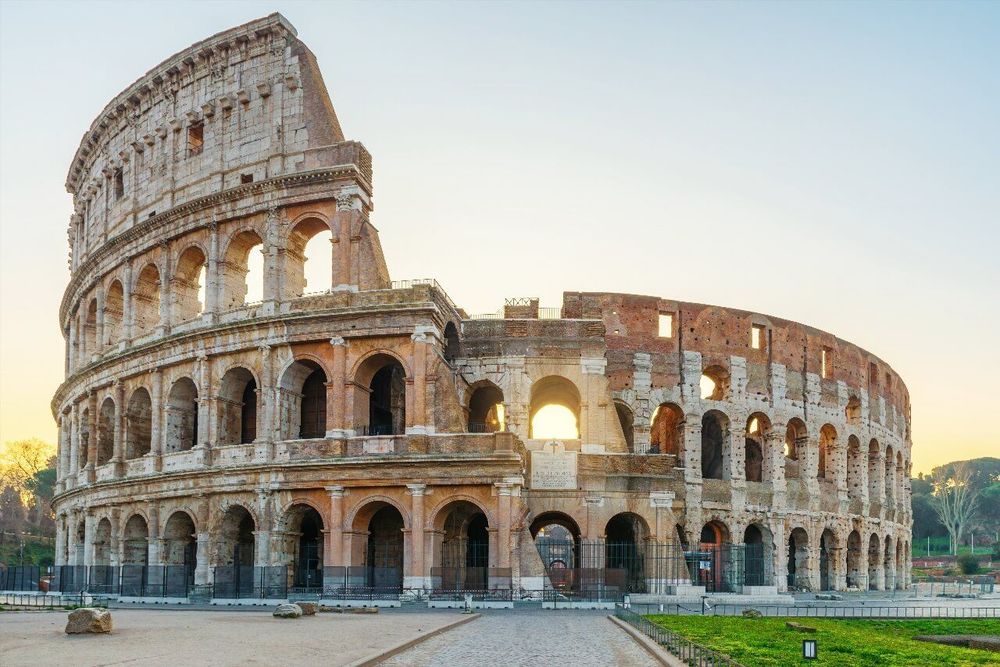
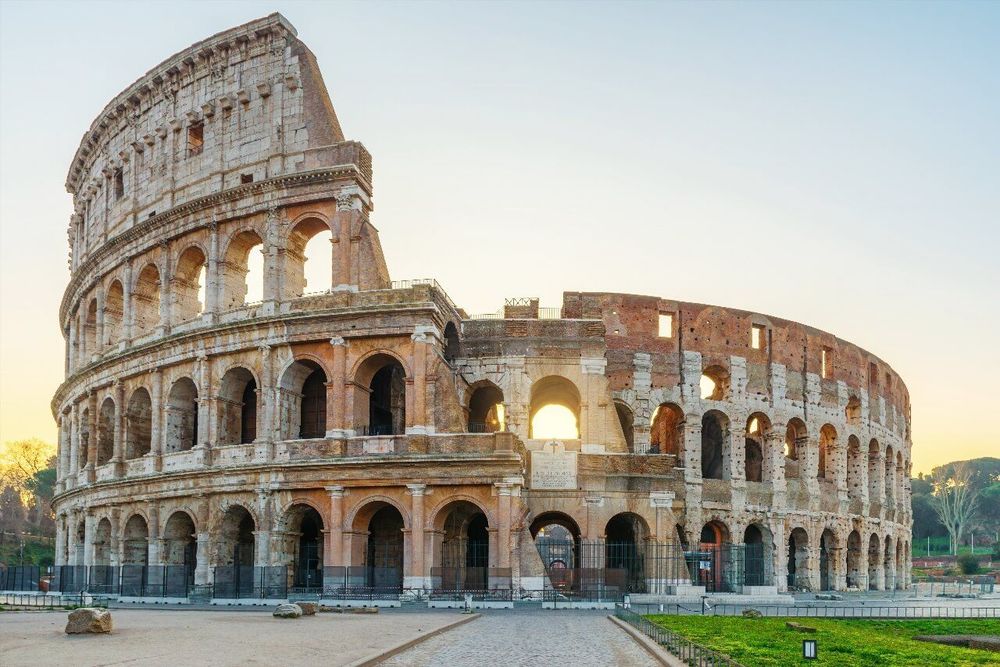
The Colosseum remains the most visited monument in Italy, with more than 7 million visitors per year. These figures can be daunting, but they shouldn't be. The building, constructed between 70 and 80 AD under emperors Vespasian and Titus, could hold between 50,000 and 80,000 spectators. It is not a simple stadium: it is the architectural expression of an empire that wanted to demonstrate its power through spectacle and engineering.
Booking tickets online several weeks in advance is essential, especially between April and October. The combined Colosseum + Roman Forum + Palatine Hill ticket (€18 in 2026, valid for 24h at the Forum and Palatine) remains one of the best deals in European tourism: three of the most important ancient sites in the world for the price of a Parisian tourist menu. "Priority entry" tickets (a few extra euros) are worth the price compared to the standard queue, which can exceed 90 minutes.
The Roman Forum stretches right alongside. Where the trials, political speeches and commercial transactions of ancient Rome once took place, you will now walk among scattered columns and half-standing arches. The Arch of Titus, erected in 81 AD, commemorates the destruction of the Temple of Jerusalem: the bas-reliefs depicting the war spoils are among the most moving of Roman Antiquity. The Via Sacra, used by victorious generals during their triumphs, crosses the forum from the Colosseum to the Capitoline Hill.
The Palatine Hill completes the visit. This is the hill of the emperors: where Augustus had his house built, where Tiberius and Domitian erected palaces that gave their name to every "palace" in the world. The view over the Forum from the edge of the hill is one of the finest in Rome. Allow between 3 and 4 hours for this trio without rushing.
A few tips for making the most of the site: arrive at opening time (9am) or in the late afternoon (after 3:30pm) to considerably reduce the crowds. In summer, a cap and a water bottle are essential as the arena has no shade. Take the time to walk along the Via Sacra after the visit: wild herbs grow between the Roman paving stones as if they had decided to reclaim their rights over the stone. The Roman Forum and the Colosseum follow one another in that order on our Eternal City audio walking tour.
Vatican City and the Sistine Chapel
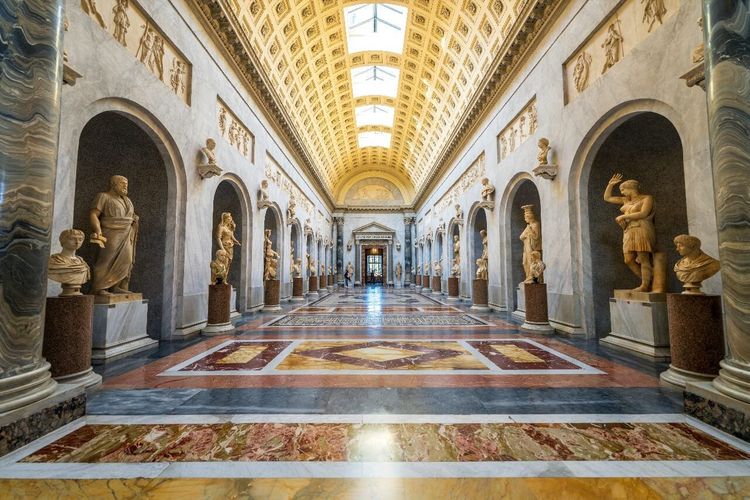
One must admit it: the Vatican Museums are exhausting. Not because of the distances, although the corridors stretch for nearly 7 kilometres, but because of the density of what they contain. From Egyptian sarcophagi to 16th-century Flemish tapestries, from geographical maps painted on the walls to Greek sculptures bought or taken over the centuries by collector popes, the collection is overwhelming.
The Sistine Chapel comes at the end of a winding path deliberately designed so that you are already overwhelmed before entering. Michelangelo's ceiling (1508–1512), commissioned by Julius II, depicts nine scenes from Genesis, including the Creation of Adam, a universal icon often wrongly reduced to a mere "finger touching another." Look up at the lunettes and the ignudi surrounding the central scenes: Michelangelo was 33 when he began this work on the scaffolding, almost alone, lying on his back. He was 37 when he came down.
Online booking is in practice mandatory: queues without a ticket exceed 2 to 3 hours during high season. Allow between €25 and €35 depending on the options. To prepare your visit, the Ryo audio-guided tour from Trevi to the Vatican covers this area with commented stops from the Trevi Fountain to the outskirts of the Vatican. Our article Visiting the Vatican in Rome details opening hours, prices and access tips to avoid unpleasant surprises.
The St. Peter's Basilica is free to visit — a fact often forgotten. The climb to the dome (€8 on foot, €10 by lift to halfway) offers a 360° view over Rome and St. Peter's Square, whose Bernini colonnades symbolically embrace the faithful. From the top, the city's orange rooftops stretch out to the hills of Lazio on a clear day. The square itself, with its 3,200-year-old Egyptian obelisk, can be visited freely and is worth a stop even if you do not go up into the basilica — it is also where our audio-guided walk from Trevi to the Vatican ends.
Trevi Fountain, Pantheon, Piazza Navona: Baroque Rome
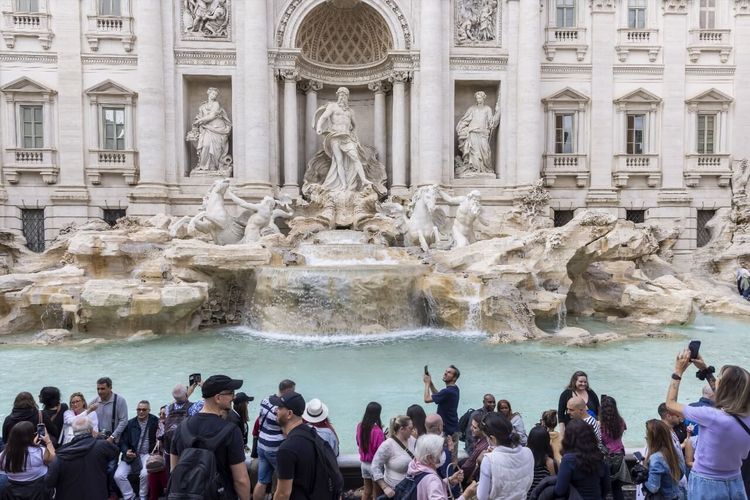
These three monuments together concentrate the essence of what the baroque invented: movement sculpted in stone, water as an architectural element, and the square as an urban theatre stage.
The Trevi Fountain, at 26 metres high and 49 metres wide, is the largest baroque fountain in the world. The central Neptune, the sea horses and the tritons surrounding him were designed by Nicola Salvi and completed in 1762. The legend of the coin tossed into the fountain dates from the film Three Coins in the Fountain (1954), but it has grown so much that Rome collects approximately €1.5 million per year from the basin, donated to the city's charitable associations.
The Pantheon, a ten-minute walk away, is the best-preserved ancient building in Rome, thanks to its conversion into a Christian church in the 7th century. Its unreinforced concrete dome, 43.3 metres in diameter, was the largest dome in the world for 1,300 years. The 9-metre oculus at the top is uncovered: when it rains, the water falls inside and drains away through an ancient drainage system that is still functioning. Entry has been paid since 2023 (€5, rising to €7 from July 2026, online booking recommended) but the monument remains open every day.
Piazza Navona occupies the exact site of Domitian's stadium (1st century), whose oval shape is still legible in the layout of the square. Bernini's Fountain of the Four Rivers (1651) represents the Nile, the Danube, the Ganges and the Río de la Plata — the four great rivers of the world known in the 17th century. The cafés around the square are expensive, but sitting with an espresso to watch the street performers remains an authentically Roman experience.
Trastevere: the Neighbourhood That Resists
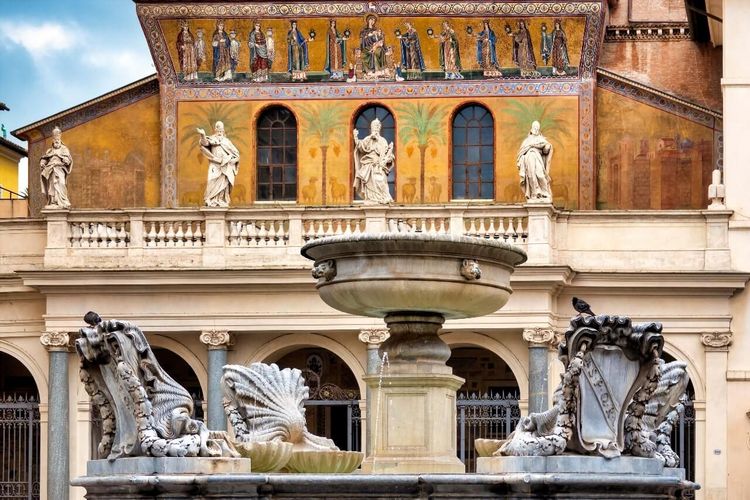
Trastevere has not changed shape since the Middle Ages. The streets are too narrow for cars, the façades retain their ochre and rust tones, and the cats settle on fountain steps as if they owned them. It is the most photographed neighbourhood in Rome, the most lively at night, and paradoxically the one where you best sense what the city was like before mass tourism.
The Basilica of Santa Maria in Trastevere (Piazza di Santa Maria in Trastevere, 00153 Roma, rated 4.8/5 on Google with 22,868 reviews) is one of the oldest in Rome: its golden mosaics from the 12th and 13th centuries light up the apse with a warmth that modern electric lighting cannot replicate. Entry is free. On the way out, turn left towards Via della Lungaretta, then get lost in the small streets that climb towards the Janiculum Hill. The view over Rome from the hill, with the cannon fired every day at noon, is well worth the detour.
To prepare your visit, see our guide Visiting the Trastevere Neighbourhood in Rome. In the evening, this neighbourhood transforms: the terraces fill up, the smells of Roman cooking (cacio e pepe, coda alla vaccinara) invade the alleyways, and residents mingle with visitors in an atmosphere that has not yet lost its popular character.
Villa Borghese and the Borghese Gallery
The Villa Borghese Gardens form the green lung of Rome: 80 hectares of parks, fountains, artificial lakes and shaded avenues right in the city centre. Access is entirely free. You can rent rowing boats on the Laghetto, cycle, picnic under umbrella pines or simply sit on a bench and watch Rome slow down.
The Borghese Gallery (Piazzale Scipione Borghese 5, 00197 Roma, rated 4.6/5 on Google with 29,758 reviews), set at the heart of the park in the former villa of Cardinal Scipione Borghese, houses a collection of Bernini sculptures that has no equal in the world. Apollo and Daphne (1622–1625) is perhaps the most astonishing: Daphne's fingers are turning into laurel leaves at the very moment Apollo seizes her. The metamorphosis is captured in marble with a precision that is dizzying.
Entry is limited to 360 people per 2-hour slot (€18, i.e. €16 entry and €2 mandatory booking fee) and reservation is essential, often several weeks in advance. It is one of Rome's strictest constraints, but it preserves something rare: the ability to see masterpieces up close, without being jostled.
Castel Sant'Angelo and the Banks of the Tiber
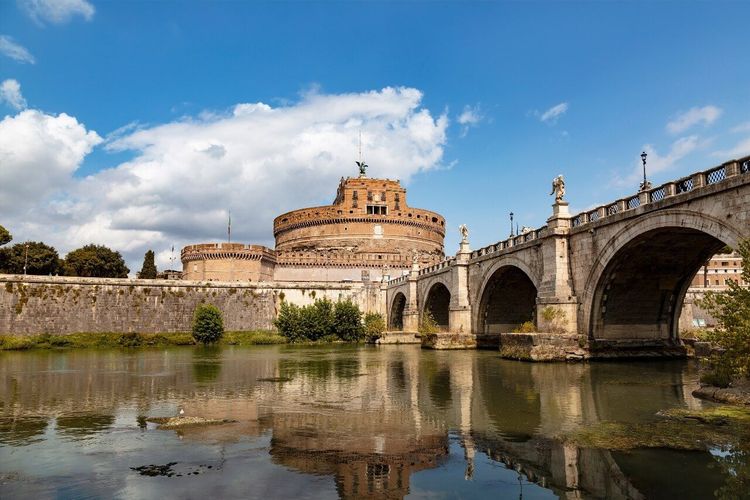
Castel Sant'Angelo (Lungotevere Castello 50, 00193 Roma, rated 4.7/5 on Google with 108,883 reviews) began its life as the mausoleum of Emperor Hadrian (135–139 AD), before being successively transformed into a papal fortress, a state prison and finally a museum. Its recognisable cylindrical form is reflected in the Tiber beneath the Ponte Sant'Angelo, whose ten angels sculpted by Bernini seem suspended between sky and river.
The internal museum traces the building's history through its successive functions: the 16th-century papal apartments contrast strikingly with the prison cells in the basement. From the rooftop terrace, the view over St. Peter's Basilica and the bend in the Tiber is one of the finest in Rome. Entry: €16 (free on the first Sunday of the month). Opening hours: 9am to 7:30pm Tuesday to Sunday, closed Monday. The Lungotevere just below is worth a walk at sunset: the lights on the river and the Trastevere façades on the opposite bank create an unexpected panorama.
The Catacombs and the Via Appia Antica
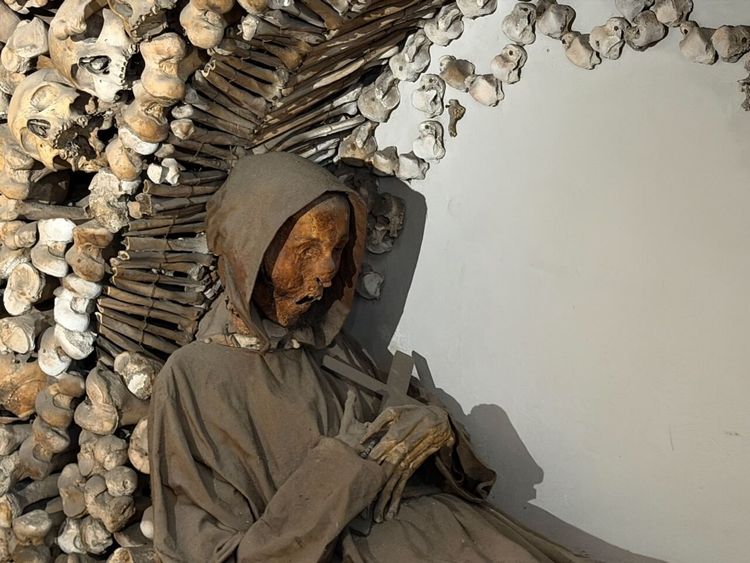
Rome has two faces: the one that shines in the sun on baroque squares, and the one that hides underground. The catacombs form an underground network of approximately 150 kilometres, dug between the 2nd and 4th centuries by the first Christian and Jewish communities, who could not bury their dead within the city walls.
The Catacombs of San Callisto, on the Via Appia Antica (Via Appia Antica 58, 00179 Roma, rated 4.6/5 on Google with 8K reviews), are the largest: across 20 kilometres of galleries, it is estimated that 500,000 people were buried there, including 16 popes from the first three centuries. The visit is guided only (included in the €9 ticket). You descend 10–15 metres underground into a cool and silent atmosphere. The niches carved into the walls — the loculi — are still visible, some with their inscriptions in Greek or Latin.
The Via Appia Antica itself deserves a separate walk. This Roman road laid out in 312 BC is partly still paved with the same original hexagonal basalt stones. At weekends, the central section is closed to cars and becomes a walking space among tombs, mausoleums and aqueduct fragments. Renting a bicycle at the entrance to the Via Appia (around €5/hour) allows you to explore the first 10 kilometres without tiring.
Tivoli: Villa d'Este and Hadrian's Villa
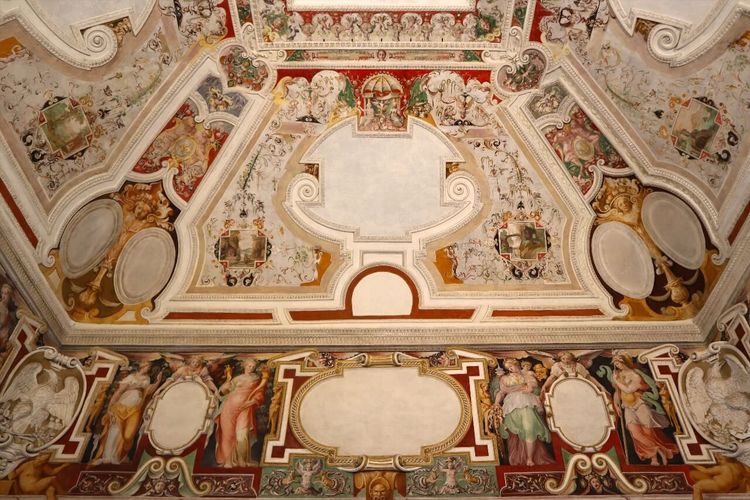
35 kilometres east of Rome, the small town of Tivoli is home to two UNESCO World Heritage sites that rank among the most impressive in Lazio. This is not a side excursion: many travellers devote a full day to it.
Villa d'Este, built in the 16th century by Cardinal Ippolito II d'Este on the site of a former Benedictine convent, is primarily known for its gardens. Not just any gardens: 500 fountains fed by the diversion of an entire river (the Aniene), arranged in terraces cascading down the hillside in waterfalls, jets and mechanical water features. The Fontana dell'Organo once produced music using water pressure alone — a 16th-century hydraulic organ that illustrates the genius of Mannerist engineering. Entry costs €15. The gardens open at 9am and are closed on Mondays.
5 kilometres away, on the plain below, Hadrian's Villa (Villa Adriana) is of an entirely different nature. Between 118 and 134 AD, Emperor Hadrian had built here an imperial residence of 120 hectares that reproduced the monuments he had admired on his travels: an Alexandrian Canopus, a Stoic Poikile inspired by Athens, monumental baths, libraries and nymphaea. The villa was in reality a city unto itself, conceived by an emperor who preferred to travel through architecture rather than by road.
Entry is €12; a combined Pass Villae ticket (around €34) covers both Tivoli villas if you plan to visit both in the same day. The site is vast (allow at least 3 hours), offers little shade in summer, and the on-site information panels remain sparse. Read our guide Visiting Hadrian's Villa near Rome before you go to contextualise what you will see. To reach Tivoli from Rome, the Cotral bus from Tiburtina (€2.20, about 1h) is the most economical option. The train from Roma Tiburtina (15–20 min) serves the town but leaves Hadrian's Villa 5 km from the centre, reachable by taxi or local bus.
Ostia Antica: the Ruins Few Travellers Know
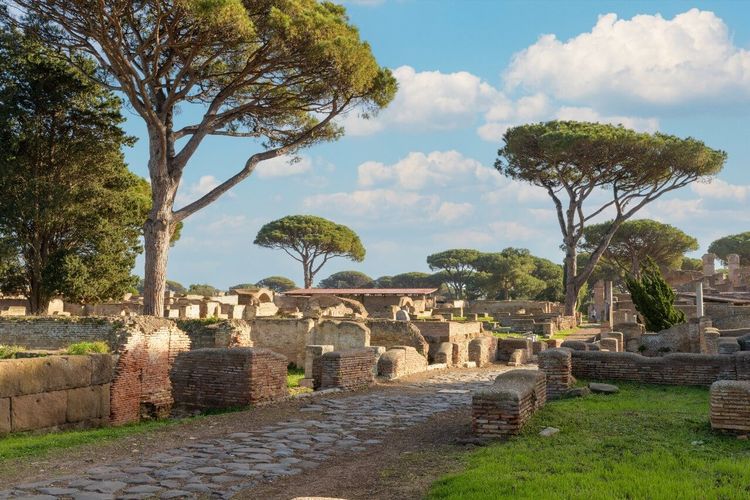
Ostia Antica (Viale dei Romagnoli 717, 00119 Ostia Antica, rated 4.6/5 on Google with 28K reviews) is often described as "the Roman Pompeii" and while the comparison is a little easy, it is not wrong. 30 kilometres west of Rome, this former port city founded in the 4th century BC was for centuries the entry point for the goods and grain that fed the capital. When the port silted up and the city was abandoned in the 5th century, the mud preserved its streets, its insulae (multi-storey rental apartment buildings), its thermopolia (ancient street restaurants), its baths and its temples.
The advantage of Ostia Antica over Pompeii: its proximity to Rome (train from Roma Porta San Paolo, 30 minutes, ticket included in the Rome transport pass at €1.50) and the almost total absence of crowds. You can stroll along the Decumanus Maximus almost alone outside spring weekends. Entry costs €12. Avoid summer middays: the site is entirely exposed and temperatures can make visiting unpleasant after 11am.
Castelli Romani and the Lakes of Lazio
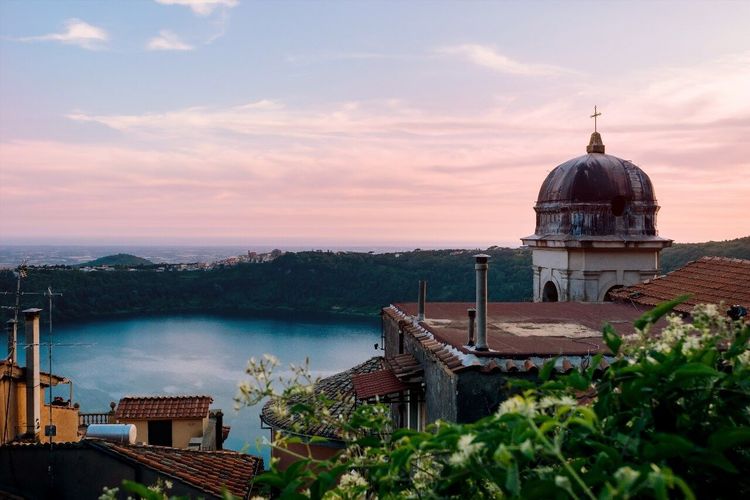
About thirty kilometres south-east of Rome, the hills of the Castelli Romani offer a verdant alternative to the city's stone. This area of extinct volcanoes has produced two crater lakes and around twenty small towns that long served as summer residences for the Roman nobility and clergy.
Castel Gandolfo, perched on the edge of its lake, long served as the summer residence of the popes. The pontifical gardens have been open to the public since 2016 (guided visit, €25, booking required). Frascati, the most accessible town by train from Roma Termini (25 min, around €2), is best known for its white wine: Frascati DOC is drunk with the porchetta (roast pork) from Saturday local markets.
Nemi is worth the detour for its spectacular position on the edge of the caldera and for its strawberries, the local product celebrated each June at a popular festival. The terrace restaurants overlooking the lake offer menus with views that alone justify the trip from the capital.
Cerveteri and the Etruscan Necropolises
The Etruscans built cities for their dead as sophisticated as those they lived in. The Necropolis of the Banditaccia, 45 kilometres north-west of Rome, is the largest Etruscan necropolis in Italy. Listed as a UNESCO World Heritage Site, it extends over several hectares with tumulus tombs that from a distance resemble natural hills.
Inside, the funerary chambers reproduce the architecture of Etruscan houses: beds carved in volcanic tufa, pillars, lintel doorways, niches for funerary objects. Some tombs date back to the 7th century BC. Entry costs €10. The town's national Etruscan museum usefully complements the visit with objects found on the site. Getting to Cerveteri from Rome: Cotral bus from Cornelia station (metro line A), about 1h.
Naples as a Day Trip
Yes, Naples is 1h10 by fast train from Roma Termini (Frecciarossa or Italo, from €15 when booking in advance). It is entirely doable in a day, provided you leave early (first train before 8am) and do not try to see everything.
Naples in a day focuses on the UNESCO-listed historic centre: Via Toledo and the Spanish Quarter with its lively vicoli, the majestic Piazza del Plebiscito (Piazza del Plebiscito, 80132 Napoli, rated 4.7/5 on Google with 90,040 reviews), Castel Nuovo with its 13th-century medieval towers, and the unmissable lunch with a margherita pizza at one of the pizzerias in the Decumani neighbourhood. For a more complete overview, our article 30 Fun Activities in Naples offers a detailed inventory to better plan the day.
Practical Tips for Visiting Rome and Its Surroundings
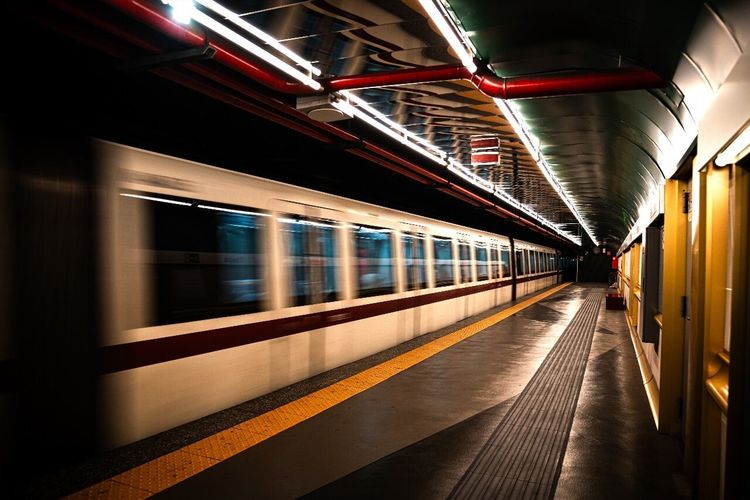
Transport in Rome: the city has a two-line metro (A and B), but the historic centre is best explored on foot. A transport ticket costs €1.50 (valid for 100 minutes, covering metro, bus and tram). The 48h pass (€7) or 72h pass (€12.50) is worthwhile if you use public transport several times a day. For excursions outside Rome, Trenitalia regional trains are reliable and economical.
Bookings: for the Colosseum, the Vatican Museums and the Borghese Gallery, book at least 3 weeks in advance between April and October. Outside peak season, one week is usually enough. For Ostia Antica, the Via Appia and the Castelli Romani: no booking required.
Best time to visit: April–May and September–October offer pleasant temperatures (18–25°C) with manageable crowds. July and August, with their 35–38°C, turn sightseeing into a physical ordeal; opt for museums and early-morning walks instead. December–February is ideal for museums (virtually no queues), but some outdoor sites close early.
Daily budget: allow between €80 and €120 per person per day (2-star accommodation, transport, 2–3 paid admissions, local meals). An espresso at the bar costs between €1 and €1.50 in the neighbourhood, but can triple on tourist squares. In short, planning your activities in Rome and surroundings revolves above all around bookings and opening hours: that is where the difference lies between a trip that just happens and one that truly succeeds.
To structure your stay over several days, the Ryo audio guide offers thematic routes through the city. Also consult our article Rome in 3, 4 or 5 Days: Complete Itineraries for day-by-day visit plans tailored to the length of your stay.
FAQ
What are the must-do activities in Rome?
The essential trio: the Colosseum + Roman Forum + Palatine Hill (combined ticket at €18), the Vatican Museums with the Sistine Chapel, and the stroll between the Trevi Fountain, the Pantheon and Piazza Navona. Round it off with an evening in Trastevere and a visit to the Borghese Gallery if you're staying more than 3 days.
How many days do you need to visit Rome and its surroundings?
For Rome alone, allow a minimum of 3 days for the essential sites. Add one day for Tivoli (Villa d'Este and Hadrian's Villa), half a day for Ostia Antica reachable by train, and one day for the Castelli Romani. A full week allows you to combine Rome in depth with two or three excursions in Lazio.
How do you get to the surroundings of Rome without a car?
Tivoli: Cotral bus from Tiburtina or train from Roma Tiburtina (under one hour). Ostia Antica: train from Roma Porta San Paolo (30 min, ticket included in the Rome transport pass). Castelli Romani: train from Roma Termini to Frascati or Castel Gandolfo (25–35 min). Cerveteri: Cotral bus from Cornelia station (line A, about 1h). Naples: Frecciarossa train from Roma Termini (1h10).
What is the best time to visit the Sistine Chapel?
In terms of crowds, October to February are the quietest months. Early-morning private visits, often offered before official opening, allow you to see the chapel in relative calm even during high season. Avoid Wednesday mornings: the papal audience at St. Peter's Square generates an overflow of visitors throughout the Vatican area.
Is Hadrian's Villa worth the trip from Rome?
It is one of the most underrated excursions in the region. The villa surpasses many ancient capitals in both size and architectural sophistication. If you have an interest in Roman history or architecture, it is well worth half a day. Combine it with Villa d'Este for a full day in Tivoli that has nothing to envy a day in the city itself.
Do you really need to book Rome's museums well in advance?
For the Colosseum and the Borghese Gallery: yes, absolutely, between April and October. For the Vatican Museums: yes, or be prepared for a queue that can exceed 2 hours. For the Pantheon: online booking (€5) is recommended but not essential outside peak season. For Ostia Antica, the catacombs and the Via Appia: no booking required in general. The Pantheon and Piazza Navona also come up freely along our audio walking tour from Trevi to the Vatican.
Conclusion
Activities in Rome and surroundings cannot be reduced to a sightseeing itinerary. They form a territory where every layer of history — Etruscan, Roman, medieval or baroque — remains legible in the stone, the streets and the Lazio countryside. To explore the city while understanding what you are seeing, our audio-guided tours of Rome turn every monument into a story and every street into context. Whether you have 48 hours or a full week, Rome and its surroundings will always have something in store that you never planned to discover.
À lire également