© Shutterstock
 Votre guide Ryo
Must-See Museums in Rome: 14 Addresses to Explore the Eternal City in 2026
Rome's museums house more masterpieces per square kilometer than any other European capital, yet most visitors see only two or three. Behind the Vatican Museums queues lie collections few guides mention: a power plant converted into an ancient sculpture gallery, a baroque palace where Caravaggios sit alongside Raphaels, ruins of imperial markets explored by digital projections. To navigate all this without losing a day waiting, the Ryo audio guide for Rome takes you neighborhood by neighborhood with the historical context that an explanatory panel cannot provide.
This article lists 14 museums and galleries in Rome in 2026, from unmissable giants to confidential addresses that rushed travelers always miss. You'll know when to book in advance (essential for the Borghese Gallery, or risk going home empty-handed), which sites are free on the first Sunday of the month, which ones are worth a full half-day and those you can slip into an afternoon. The Centrale Montemartini, almost always deserted, offers one of Europe's most beautiful visual dialogues between ancient marble and industrial steel. And the Villa Livia frescoes at Palazzo Massimo, life-sized painted gardens from the 1st century BC, surpass most modern decorations in botanical realism.
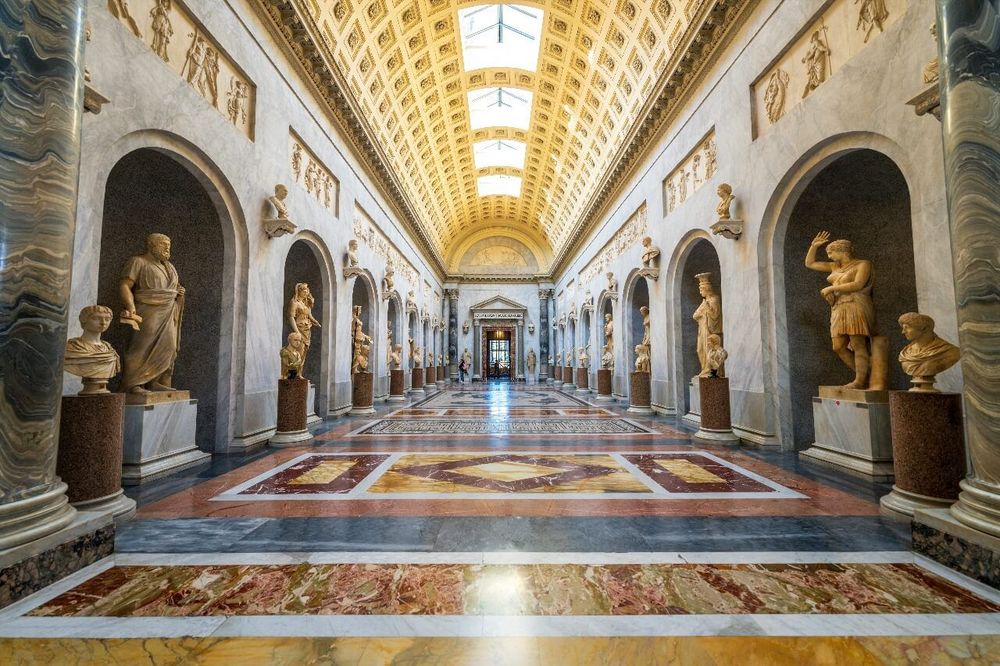
1. The Vatican Museums
With nearly 7 million visitors per year, the Vatican Museums rank among the world's four most visited museums. This figure says something about their reputation, and also about the logistical challenge of visiting them without preparation.
The collections occupy more than 54 galleries and span twenty centuries of art and history, from Egyptian antiquities brought back by popes to the geographical maps of the Gallery of Maps, 120 meters long and painted between 1580 and 1583. This gallery, often rushed through to reach the Sistine Chapel, deserves pause: the 40 cartographic panels represent Italian regions with stunning precision for the era, and the trompe-l'œil ceilings framing them are masterpieces in their own right.
The Sistine Chapel, culmination of any visit, confronts visitors with Michelangelo's frescoes commissioned by Julius II: the ceiling depicts nine scenes from Genesis, including the famous "Creation of Adam." The "Last Judgment" on the altar wall was added twenty-five years later, in 1541, when the artist was over 60. We often forget that Raphael's Room frescoes, notably the "School of Athens," are displayed in neighboring rooms, a Renaissance painting summit that rushing crowds sometimes pass without really looking.
Out of religious respect, arms and shoulders must be covered. Allow easily three to four hours for a complete tour. Book your ticket online on the official site, spontaneous queues regularly exceed two hours in high season. A rarely mentioned tip: arrive at opening, early morning, on a Tuesday or Wednesday. Cruise ship group flows concentrate peaks on Fridays and weekends.
2. The Borghese Gallery
If the Vatican Museums impress with their scale, the Borghese Gallery fascinates through its concentration. In about fifteen rooms, it brings together one of the most refined private collections ever assembled: six sculptures by young Bernini, six Caravaggio paintings, plus handpicked Raphaels, Titians and Rubens.
Cardinal Scipione Borghese, nephew of Pope Paul V, built this collection in the early 17th century with negotiating talent that bordered on extortion: he imprisoned painter Cavalier d'Arpin to extract his paintings, then convinced a collector to abandon an already-paid commission. The result is a villa-museum of rare stylistic coherence, where each room dialogues with the next. Apollo and Daphne in room III, with the nymph's metamorphosis at the precise moment her fingers become leaves and her foot roots, remains one of Rome's most photographed sculptures.
The golden rule: book at least two weeks in advance in high season. The gallery limits entries to 360 visitors every two hours, a system designed to preserve both artworks and experience. No tickets sold on-site. Plan around €20 for adult entry, reservation fees and temporary exhibitions included. If all slots show full, monitor the official site late evening: spaces regularly become available after last-minute cancellations. The Villa Borghese gardens surrounding the building are free and worth the walk alone.
3. The Capitoline Museums
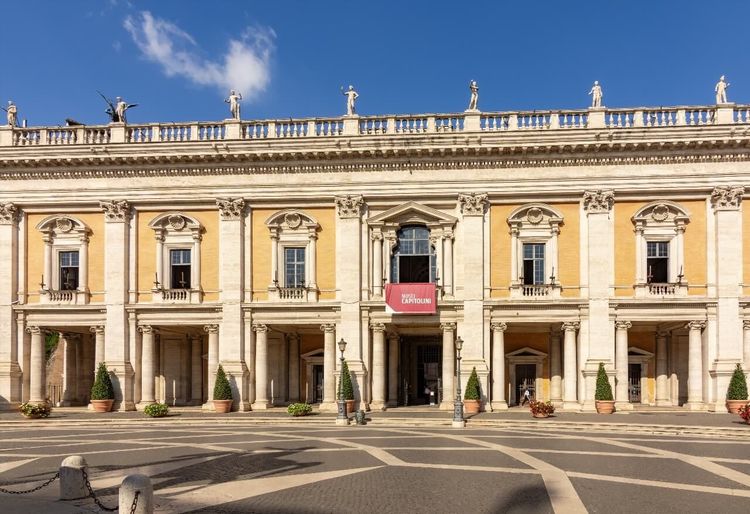
Founded in 1471 by Pope Sixtus IV, the Capitoline Museums are the world's oldest public museums still operating. Sixtus IV had gifted Romans a series of ancient bronzes, including the Capitoline Wolf, thus establishing the principle that the city's artistic treasures belong to its inhabitants, not the popes.
The collections now occupy three buildings around Piazza del Campidoglio, whose layout was redesigned by Michelangelo on commission from Paul III in 1536. The space is one of the most balanced Renaissance urban creations: trapezoidal to compensate perspective from Via del Teatro di Marcello, with star paving drawing a flattened sphere at the center. The collection's crown jewel is the bronze equestrian statue of Marcus Aurelius, whose original is preserved inside. This statue is one of the rare ancient bronze equestrian sculptures to survive: it wasn't melted down in the Middle Ages because it was believed to represent Constantine, the first Christian emperor.
The museums also offer a panoramic terrace over the Roman Forum that avoids crowds and frames the ruins differently. Price: around €16. On the first Sunday of the month, entry is free, but attendance explodes. Combined with the Tabularium (ancient Rome's archives integrated into the same complex), the site requires a full half-day.
4. The National Roman Museum, Palazzo Massimo
Two steps from Termini station, Palazzo Massimo alle Terme (Largo di Villa Peretti 2, 00185 Roma, rated 4.6/5 on Google for 6,227 reviews) is Rome's most underrated museum address. It preserves some of the most beautiful Roman bronzes and marbles ever discovered, in rooms sufficiently uncrowded that you can stop without being jostled.
The most famous piece is the Pugile a riposo (Boxer at Rest), a Hellenistic bronze masterpiece from the 2nd century BC: the fighter's exhausted posture, scars on his face, hardened leather gloves still attached to his wrists - everything in this sculpture tells the story of combat in a way marble cannot. But the real visual shock is in the basement: the Villa Livia frescoes, transferred from their original site and reconstructed in an entire room, recreate a life-sized illusionist garden. Orange trees, pomegranates and oleanders stand out against blue sky with striking botanical precision. These paintings date from the 1st century BC and are among the best preserved in the Roman world.
The combined ticket for the four National Roman Museum sites (Palazzo Massimo, Palazzo Altemps, Crypta Balbi, Terme di Diocleziano) costs around €12 and is valid for one week, an excellent option for extended stays.
5. Castel Sant'Angelo
The Castel Sant'Angelo (Lungotevere Castello 50, 00193 Roma, rated 4.7/5 on Google for 108,192 reviews), is undoubtedly Rome's most function-changed building. Hadrian's mausoleum in the 2nd century, medieval military fortress, Renaissance state prison, papal residence in times of peril, then museum: the edifice alone summarizes fifteen centuries of Roman power.
Among its famous prisoners: sculptor Benvenuto Cellini, imprisoned in 1538 whose Memoirs describe with picturesque detail his captivity and escape. The Passetto di Borgo, a fortified corridor 800 meters long linking the castle to the Vatican, allowed popes to flee during attacks. Clement VII used it during the 1527 Sack of Rome, pursued by Charles V's lansquenets as the city burned.
The national museum housed there preserves period weapons, armor and liturgical objects. But it's mainly the architecture and views that justify entry, with the summit terrace, dominated by the Archangel Michael statue, offering a panorama of the Tiber and St. Peter's dome that few viewpoints can boast. Price: around €16. Perfect to combine with a Tiber riverside walk — the very stretch our 8.4 km route from Trevi to the Vatican follows, by way of the Ponte Sant'Angelo.
6. National Gallery of Ancient Art, Palazzo Barberini
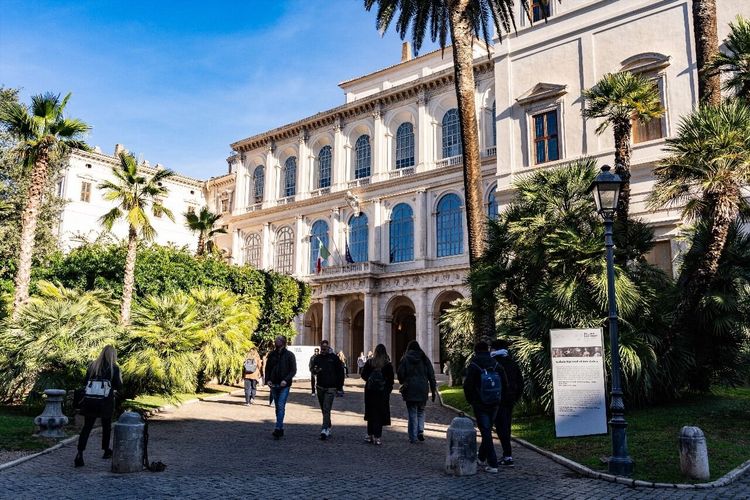
The Palazzo Barberini (Via delle Quattro Fontane 13, 00184 Roma, rated 4.6/5 on Google for 8,886 reviews) is one of Roman baroque architecture's summits, designed jointly by Maderno, Borromini and Bernini from 1625. The rivalry between the latter two is inscribed in stone: the right staircase is signed Borromini (helical, oval, vertiginous), the left by Bernini (square, monumental, reassuring). Two visions of space, two opposing characters.
The National Gallery of Ancient Art houses Raphael's "Fornarina," presumed portrait of his mistress Margherita Luti, and Artemisia Gentileschi's "Judith Beheading Holofernes," a work of frontal violence contrasting with the collection's usual gentleness. Gentileschi was raped at 17 by her painting teacher; the resulting trial lasted several months and opprobrium fell largely on her. This canvas was painted shortly after. The great salon ceiling, painted by Pietro da Cortona between 1633 and 1639, represents the triumph of Divine Providence and counts among the largest baroque compositions preserved in situ in Europe.
To extend the day in this neighborhood between the Trevi Fountain and Quirinal, the Ryo audio guide from Trevi to Vatican offers an audio reading of streets connecting these monuments. Entry: around €12, also valid for Palazzo Corsini.
7. National Etruscan Museum of Villa Giulia
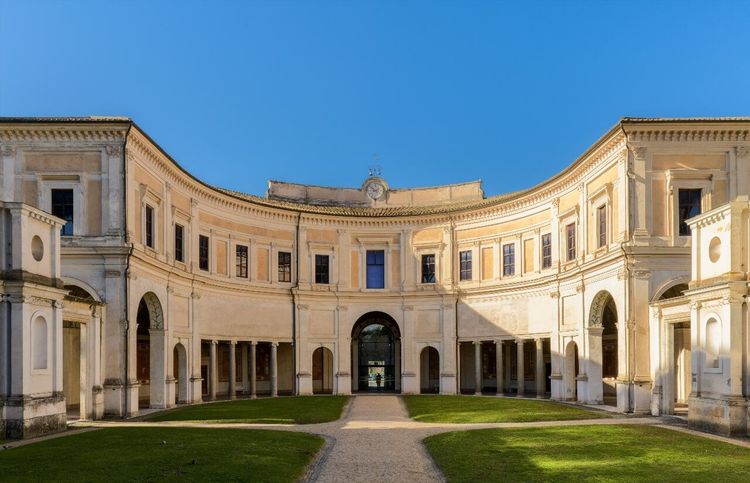
Etruscan civilization is one of Roman tourism's great forgotten, which is paradoxical: Rome owes Etruscans its sewer system, arch architecture and part of its religious rites. The National Etruscan Museum of Villa Giulia gathers the world's most complete Etruscan collection, in a 16th-century architectural setting that Julius III had built as a pleasure villa.
Its masterpiece is the Sarcophagus of the Spouses (6th century BC), depicting a couple reclining at a funerary banquet with striking tenderness and realism for such an ancient work. The woman leans naturally against the man; the archaic smiles on their faces have none of the usual stiffness of ancient funerary art. The collection also includes bronzes, goldsmith jewelry and Greek vases that transited through Etruscan ports.
The museum is almost always deserted, making it one of Rome's most pleasant places to visit without pressure or jostling. Allow one and a half to two hours to tour it. Entry: around €10.
8. MAXXI, National Museum of 21st Century Arts
Rome isn't just a city turned toward the past. MAXXI (Via Guido Reni 4A, 00196 Roma, rated 4.5/5 on Google for 12,737 reviews), inaugurated in 2010 to architect Zaha Hadid's plans, is the most convincing demonstration that the Eternal City can commission and welcome breakthrough architecture. The building itself is a work: its intersecting concrete corridors, ramps suspended in space and frosted glass facade earned Hadid the Stirling Prize in its inauguration year.
The permanent collection gathers contemporary art and design works produced since the 1960s, with particular focus on Italian and Mediterranean artists. Temporary exhibitions occupy an important place in programming, check the schedule on the official site before visiting. The museum is located in the Flaminio district, accessible by tram from downtown in about twenty minutes. Standard price: around €14.
For travelers wanting to explore this neighborhood independently, the Ryo audio guide for Rome offers a route between Piazza del Popolo and MAXXI that contextualizes Flaminio's different architectural layers, from Nervi's Olympic stadium to Renzo Piano's projects.
9. National Gallery of Modern Art (GNAM)
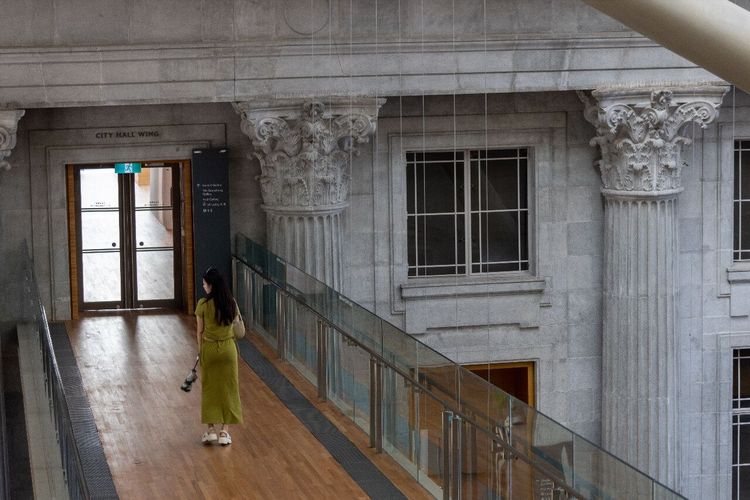
The National Gallery of Modern and Contemporary Art is often eclipsed by ancient and baroque museums' reputation, wrongly. It occupies an 1883 neoclassical palace in Villa Borghese and gathers the largest public collection of 19th and 20th century Italian art, in rooms sufficiently spacious not to be oppressive. You'll find macchiaioli paintings (the Tuscan realist movement contemporary with French impressionists), futurism rooms, works by Modigliani, De Chirico, Klimt and Jackson Pollock. The sculpture collection is particularly strong, with several Antonio Canova pieces and Rodin works acquired directly by the Italian state in the late 19th century. Entry: around €10, free the first Sunday of the month.
10. Centrale Montemartini
Here's the confidential address every museum lover should list before leaving. Centrale Montemartini (Via Ostiense 106, 00154 Roma, rated 4.7/5 on Google for 5,558 reviews) is a former power plant built in 1912 in Ostiense district, converted to a museum since 1997. It houses a Capitoline Museums branch dedicated to ancient sculptures extracted from Rome's excavations.
The visual contrast is striking and works exactly as its designers intended: white marble statues from antiquity are displayed between turbines, pistons and cast-iron boilers from an early 20th-century industrial plant. Imperial heads gaze at steam engines. Sarcophagi decorated with mythological scenes stand beside electrical distribution panels. This dialogue between ancient and industrial is unique in Rome, probably in Europe.
The site is little frequented by tourists, making it one of Rome's rare places where you can move room to room without encountering organized groups. Price: around €9, included in the Capitoline Museums combined ticket. Reaching Ostiense district from downtown takes about twenty minutes by metro (line B, Garbatella station).
11. Museum of Imperial Forums, Mercati di Traiano
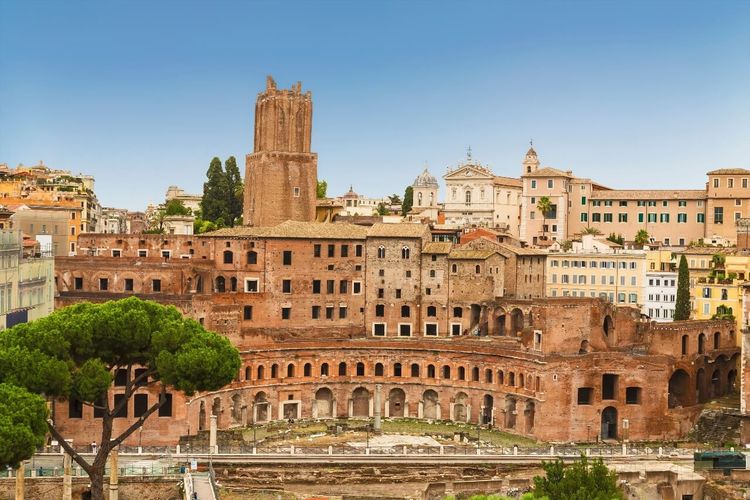
Trajan's Markets constitute a unique archaeological and museum site: you don't look at objects removed from their context, you walk in the context itself. This multi-level complex, built between 100 and 110 AD, was originally ancient Rome's largest commercial complex, with about a hundred shops organized on five floors.
The integrated imperial forums museum uses projections, models and architectural fragments to reconstruct the history of the five forums that stretched at its feet. Trajan's Column, visible from several site terraces, is one of antiquity's most complex narrative works: its 190 spiral scenes tell Trajan's two military campaigns in Dacia (current Romania) with documentary precision that allowed historians to reconstruct weapons and siege techniques of the 2nd-century Roman army.
Seen from Via dei Fori Imperiali, the site takes on an amplitude you wouldn't suspect passing by. Price: around €16, valid for archaeological site and museum.
12. Villa Farnesina
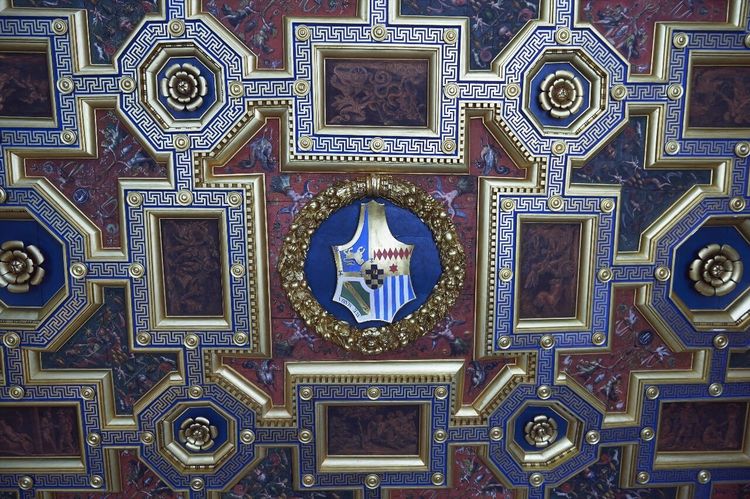
Lost in Trastevere alleys, Villa Farnesina (Via della Lungara 230, 00165 Roma, rated 4.6/5 on Google for 3,194 reviews) is one of Rome's surprises you don't always plan, and never regret. This villa built between 1506 and 1510 for Sienese banker Agostino Chigi is entirely decorated with frescoes commissioned from Roman Renaissance's greatest painters.
Raphael designed the Psyche loggia, depicting Cupid and Psyche's loves on the vault of a loggia open to gardens. The gods' banquet scene, with its fruit and vegetable garlands painted in trompe-l'œil on the ceiling, has a lightness and freshness that religious frescoes from the same years don't achieve. The building also houses Baldassare Peruzzi's Perspective Room, decorated with architectural trompe-l'œil so precise they give the illusion of looking through windows open onto 16th-century Rome.
Affordable entry: around €12. Hours are restricted (morning opening, early afternoon closure, and only one Sunday per month): check the calendar on the official site before going, or risk a wasted trip. To complete the day in this neighborhood, our article on Trastevere details other must-see curiosities.
13. Villa Medici
On the Pincio hill, Villa Medici is a building with dual identity: seat of the French Academy in Rome since 1803 (the institution itself founded in 1666), it also hosts high-quality temporary exhibitions in its restored spaces. Its Italian gardens, terraces, fountains, trimmed boxwood hedges, offer one of Rome's most peaceful views from the heights.
Ferdinand de' Medici acquired the villa in 1576 and had it decorated with a unique collage-facade: ancient reliefs are embedded in exterior walls like an open-air museum. Guided tours of apartments and gardens are offered in French several times per week, rare enough in Rome to be noted. Price varies according to current exhibitions, generally between €8 and €14.
Before or after the visit, Ryo's Rome audio-guided tour offers a route descending from Pincio to Piazza del Popolo and Via del Corso, an ideal sequence to combine culture and strolling in this northern city sector.
14. Free Museums and First Sundays of the Month
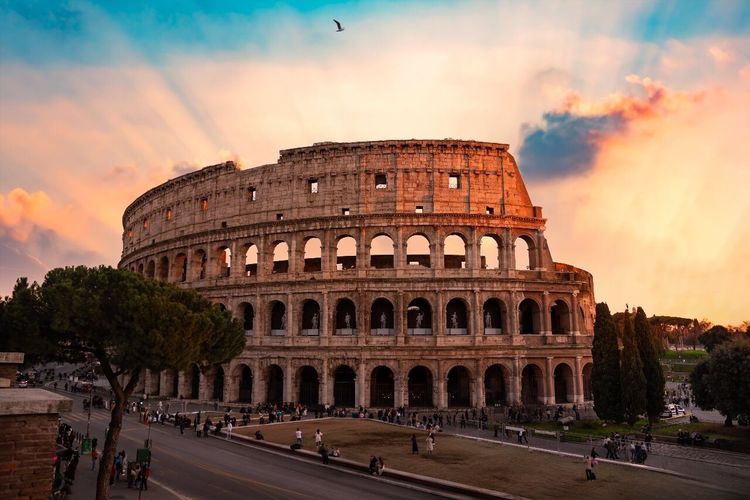
Rome practices free admission the first Sunday of each month in all national and municipal museums and archaeological sites. This includes the Capitoline Museums, Colosseum, Roman Forums, Palazzo Massimo and National Gallery of Modern Art. The predictable counterpart: lines extending several hundred meters from opening, and attendance multiplied by three or four inside.
Outside this national scheme, several sites are permanently free. St. Peter's Basilica remains accessible without charge (except dome ascent, paid). Villa Borghese gardens open freely daily. Santa Maria Maggiore church, with its medieval mosaics on gold background, houses one of Rome's most beautiful early Christian decorations, and basilica entry is free. The Pantheon (Piazza della Rotonda, 00186 Roma, rated 4.8/5 on Google for 279,673 reviews), however, has been paid since 2023 (entry: €5), a novelty that older guides haven't yet integrated. Both landmarks sit along Ryo's audio-guided walk From the Trevi Fountain to the Vatican, a 25-stop, 8.4 km route linking the Pantheon with St Peter's Square.
For a Roman cultural day without budget, our article on free activities and visits in Rome lists options by neighborhood with updated schedules for 2026.



FAQ
Which museums should you visit first in Rome if you only have two days?
With two days, focus on three sites: the Vatican Museums (advance reservation required, allow half a day), the Borghese Gallery (reservation essential at least a week in advance, two hours on site) and the Capitoline Museums (half-day with the terrace overlooking the Forum). These three locations cover the essential ancient, Renaissance and Roman baroque art without thematic overlap. If you have a free evening, add the Ara Pacis Museum or Castel Sant'Angelo, each accessible in two hours.
Do you need to book in advance for the Vatican Museums?
Yes, absolutely. Online reservation is strongly recommended, ideally several days in advance during low season and several weeks between April and October. Without a prior ticket, spontaneous queues regularly exceed two hours at the entrance, plus internal waits before the Sistine Chapel. The official website (museivaticani.va) offers time slots with standard tickets or skip-the-line options at premium prices.
Are there free museums in Rome?
The first Sunday of each month, all national and municipal museums are free, including the Colosseum, Capitoline Museums, Palazzo Massimo and GNAM. Outside this scheme, several places remain permanently free: the main basilicas including St. Peter's, the Villa Borghese gardens, and artistic treasures like the mosaics of Santa Maria Maggiore. Note: the Pantheon has been paid since 2023 (€5), information missing from many online guides.
Is the Borghese Gallery really worth the complicated reservation?
Yes, without hesitation. The Bernini-Caravaggio-Raphael combination in a single building, with a limit of 360 visitors per rotation, offers a rare experience in Rome where major museums are often overcrowded. Book on the official site (galleriaborghese.beniculturali.it), plan around €20 and arrive five minutes before your slot. If the site shows full, check availability late evening or very early morning: last-minute cancellations are regularly released.
Can you visit the Vatican Museums and Castel Sant'Angelo on the same day?
It's doable but demanding. The Vatican Museums require a minimum of three hours for the essential sections. Allow an hour for transport and lunch break in the Borgo, then two hours for Castel Sant'Angelo. Start with the Vatican from opening, early morning, continue with lunch in the neighborhood, then the castle in early afternoon. In the evening, the castle terrace at sunset fully justifies the day's organization. Our From Trevi to the Vatican audio walking tour links the Pantheon to Castel Sant'Angelo in 25 stops.
Conclusion
Rome is not a city you exhaust in a few days, and its museums are the most direct proof. Between ancient collections requiring years to be fully understood, baroque galleries where each ceiling is a complete iconographic program, and addresses like Centrale Montemartini or Villa Farnesina that offer counterpoint to classic tourist circuits, the city rewards visitors who prepare their stay.
To go beyond museum halls and discover Rome in its urban texture, the Ryo audio guide for Rome offers a commented route connecting neighborhoods, monuments and stories that textbooks abbreviate. A way to continue exploring once museum doors close.
À lire également