© Shutterstock
 Votre guide Ryo
The 9 Wonders of Ancient Rome You Absolutely Must See in 2026
The monuments of ancient Rome are unlike anything else in the world — and not just because of their beauty. Rome is a city where you walk on travertine laid by Roman workers two thousand years ago, where a pizzeria leans against a 4th-century city wall, where an ancient monument appears around every corner without warning. Start with the Ryo audio-guided tour of Rome to enter this city through the right door, with the historical context it deserves — not by squinting at a laminated sign in the November rain.
This guide covers the ancient Roman monuments you should not miss in 2026: an amphitheater capable of simultaneously accommodating the entire population of an average mid-sized city, a temple whose unreinforced concrete ceiling still defies contemporary engineering, baths where ten thousand bathers gathered daily, and an imperial palace so colossal that an entire hillside had to be excavated to build it. From the absolute must-sees to the sites forgotten by the crowds, here is how to read two millennia of history in the stone of the Eternal City.
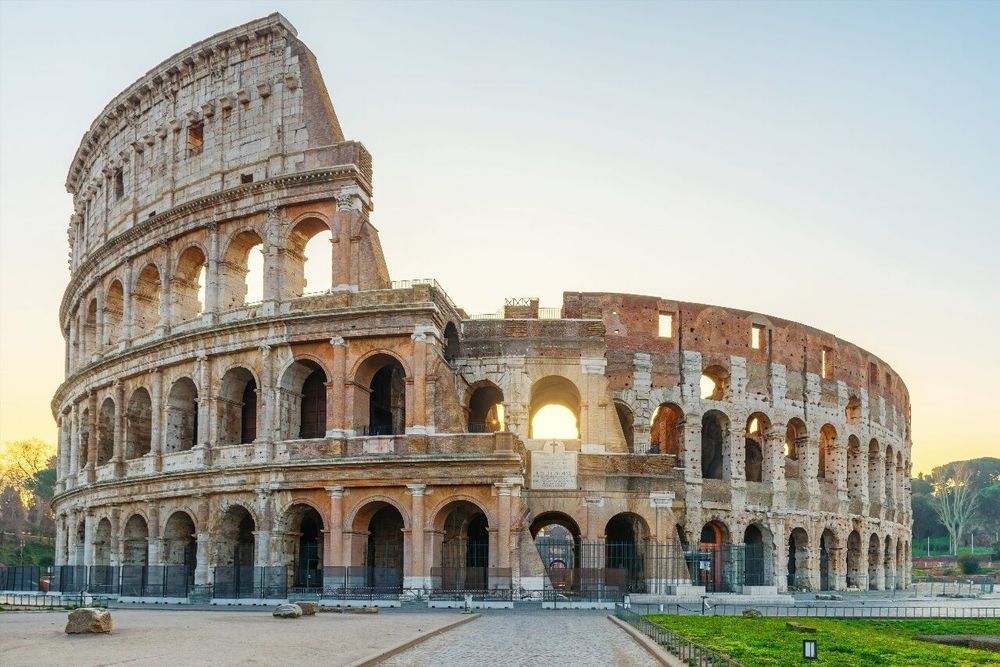
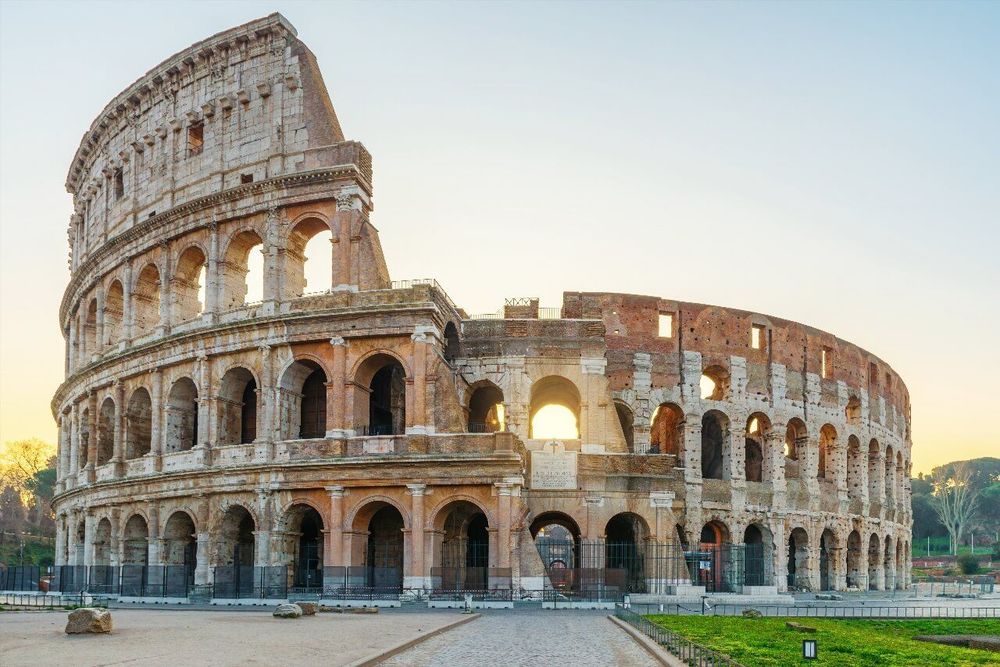
The Colosseum: 50,000 Spectators, 80 Exits, a Logistical Masterpiece
The Colosseum is the most recognizable Roman building in the world, and yet it never fails to surprise you when you stand before it for the first time. Its sheer mass is unsettling. Forty-eight meters tall, 188 meters long, 156 meters wide: the ellipse of the Flavian Amphitheater dominates the urban skyline as though nothing built in the two centuries that followed its construction ever managed to rival it in ambition.
Construction began under Vespasian in 72 AD, on the site of the artificial lake that had adorned Nero's Domus Aurea. This detail is no coincidence: by reclaiming this land, the Flavians made a powerful political gesture, symbolically returning to the Roman people a space Nero had appropriated for himself. The inauguration took place in 80 AD under Titus, with a hundred consecutive days of games. Ancient sources mention 9,000 wild animals killed during these opening celebrations.
What fascinates the engineers who study the monument is its organization. The 80 ground-floor arches corresponded to 80 numbered entrances, each indicated on a spectator's ticket by an engraved number. The public could take their seats and exit within just a few minutes — a crowd-flow rate that comparably sized modern stadiums do not always achieve. The tiered architecture across four levels could accommodate between 50,000 and 73,000 people, depending on the estimate.
Beneath the arena lies the hypogeum, the underground network of corridors and cells where animals, gladiators, and stage machinery were kept. This level is now partially accessible, and the visit reveals a staggeringly military organization: hoists allowed lions, bears, or bulls to be raised directly onto the arena floor through trapdoors, with maximum surprise effect. If you visit the Colosseum without descending into the hypogeum, you miss the most important part of understanding how the games actually worked.
Practically speaking, booking online is essential. Queues without a ticket can reach three to four hours in high season. The combined ticket generally includes the Roman Forum and the Palatine Hill; ideally all three sites are visited in the same half-day. Arrive either at opening (9 a.m.) or in the late afternoon around 4:30 p.m. to avoid the midday crowds. Those same three sites are chained in walking order on our audio-guided tour of the ancient centre, which helps in deciding what to see first.
The Roman Forum and the Palatine Hill: the Center of the Ancient World
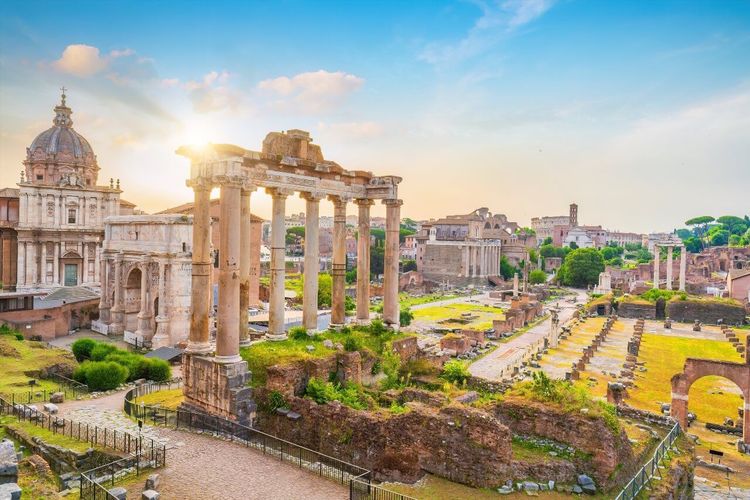
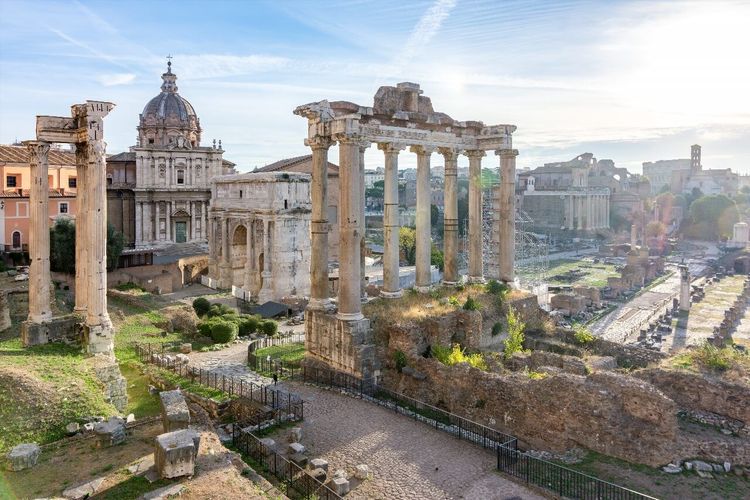
A five-minute walk from the Colosseum, the Roman Forum spreads across a depression between the Palatine and Capitoline hills. It was the political, religious, and commercial heart of Rome for nearly nine centuries. Today it is a field of ruins that visitors cross while searching for their bearings among isolated columns, triumphal arches, and temple podiums of which nothing but the base remains.
You enter via the Via Sacra, the main thoroughfare that ran through the entire Forum and along which victorious generals paraded during their triumphs. You pass the Arch of Titus, erected around 81 AD to commemorate the capture of Jerusalem; the interior reliefs show the Temple's spoils, including the famous seven-branched menorah. Further along, the white columns of the Temple of Saturn (508 BC) survived both the fall of the Empire and medieval destruction. The temple also served as the public treasury: Rome kept its gold reserves beneath its columns.
At the far end of the Forum, the Arch of Septimius Severus (203 AD) marks the approach to the Capitoline Hill, reached by climbing the Cordonata, the paved ramp designed by Michelangelo. The Capitoline square offers a sweeping view over the entire Forum below — it is the spot from which most of the iconic photographs of the Forum are taken.
The Palatine Hill deserves just as much attention as the Forum itself, and it is often rushed by hurried visitors. This hill is the oldest in Rome: according to tradition, it was here that Romulus traced the first furrows of the future city in 753 BC. In the imperial era it became the residential quarter of the emperors. The ruins of the Domus Augustana, Augustus's palace, are visible there, as are the remains of the palaces of Domitian and Tiberius. The view from the Farnese Gardens at the top takes in the entire Forum below.
Allow at least two hours for this complex, ideally three. Take the time to sit on one of the surviving stone steps and simply look: the Roman Forum is a site you understand better by standing still than by walking through it. The Forum, the Arch of Septimius Severus and the Palatine all feature on our 25-stop audio-guided tour of Rome.
The Imperial Fora and the Markets of Trajan: Rome Built by the Emperors
Facing the Roman Forum, on the other side of the Via dei Fori Imperiali, stretches a succession of forums built by successive emperors to leave their mark in stone. These Imperial Fora (Via dei Fori Imperiali, 00186 Roma, rated 5/5 on Google based on 5 reviews) — Julius Caesar, Augustus, Nerva, Vespasian, Trajan — form a monumental ensemble that the construction of the Via dell'Impero in 1932 unfortunately cut in two, but whose scale archaeology continues to reveal.
The Forum of Trajan is the largest and best-preserved of all. Inaugurated in 113 AD, it comprised a basilica, two libraries, a temple, and the famous Trajan's Column, which rises 38 meters and winds, in a spiral across its full height, the narrative of Trajan's Dacian wars. It is one of the most extraordinary historical documents of antiquity: some 2,500 sculpted figures recount the military campaigns in Dacia (present-day Romania) with an almost documentary precision — you can see bridge-building techniques, military uniforms, and negotiation scenes. The column was originally topped by a statue of Trajan, replaced in the 16th century by one of Saint Peter.
Right next door, the Markets of Trajan are perhaps the most pleasant surprise in this area. This multi-level complex, carved into the Quirinal Hill, housed shops, warehouses, and probably administrative offices in the 2nd century. It is one of the rare ancient sites in Rome where you enter remarkably well-preserved interior spaces: brick vaults, original staircases, commercial galleries that you wander through while imagining the bustle that once filled them. The Museum of the Imperial Fora (Museo dei Fori Imperiali), housed in the same building, displays the architectural elements recovered during excavations.
A tip often overlooked: the Markets of Trajan are illuminated in the evening during certain temporary exhibitions, and the night visit completely transforms the atmosphere of the place.
The Pantheon: Two Thousand Years of Unrivaled Engineering
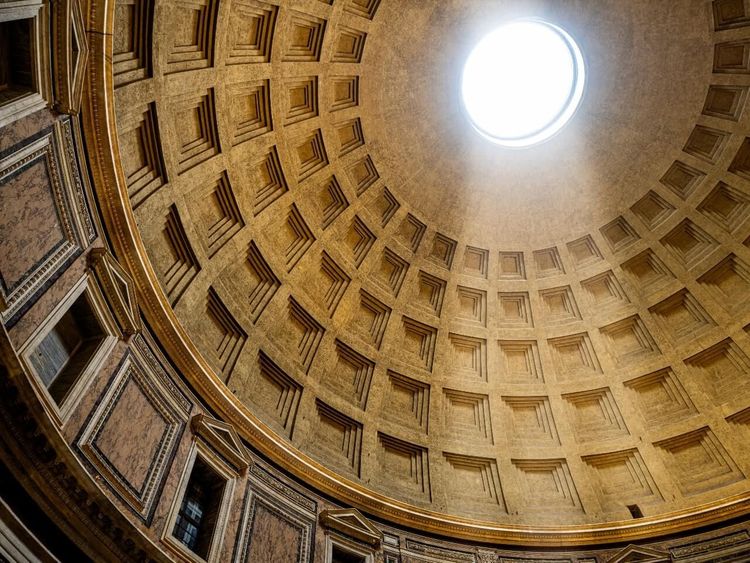
There is something mildly vertiginous about the fact that the Pantheon (Piazza della Rotonda, 00186 Roma, rated 4.8/5 on Google based on 280,304 reviews) has been standing since 125 AD. Most of the ancient monuments you visit in Rome are ruins — fragments, stone skeletons whose original form must be reconstructed through imagination. The Pantheon, by contrast, is intact. Its Egyptian granite portico, its rotunda, its famous 8.9-meter oculus open to the sky: everything is there, exactly as it was in Hadrian's day.
It is the journey from the Trevi Fountain to the Pantheon that best reveals the historical density of this neighborhood. The Ryo audio-guided tour from Trevi to the Vatican lets you walk these streets with the explanations that help you understand why every piazza, every fountain, every palazzo tells an additional layer of history.
The Pantheon's dome is the most astonishing technical achievement of ancient architecture: 43.3 meters in interior diameter, exactly the same measurement as the height of the building from floor to summit. The perfect sphere that could be inscribed within this volume is the cosmological symbol of the edifice — a temple dedicated to all the gods, in the image of the entire cosmos. To reduce the weight of the dome, the Romans used progressively lighter concrete as they built upward: travertine at the base, tufa, then volcanic pumice at the summit. This technique has never been found anywhere else in antiquity with such sophistication.
The oculus functions as a giant sundial: depending on the season and the time of day, the shaft of light that passes through the opening sweeps across the dome's coffers and the side chapels. On April 21st, the anniversary of Rome's founding, the beam of light falls precisely on the main entrance at noon.
Since 609, the Pantheon has been a Christian church (Santa Maria ad Martyres). It is this conversion that allowed it to be maintained rather than dismantled like most ancient temples. Raphael is buried here, as are several kings of Italy. Admission is now paid (5 euros) and can be booked online — good news, since it limits the overcrowding that once made a visit unpleasant.
The Baths of Caracalla: the Imperial Spa for 10,000 Bathers
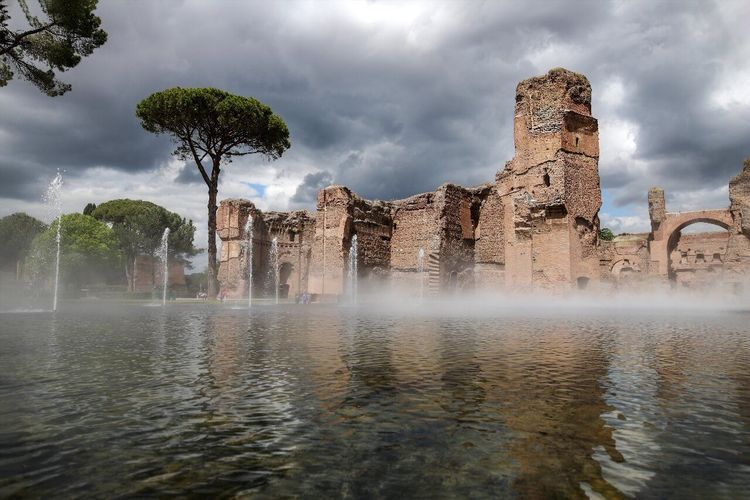
Visiting the Baths of Caracalla (Viale delle Terme di Caracalla 52, 00153 Roma, rated 4.6/5 on Google based on 25,886 reviews) without having read a few lines about how they worked is to find yourself wandering through a field of ruins without understanding what you are looking at. The baths were not simply public bathing facilities: they were the Roman equivalent of a combined sports and cultural center, open to all citizens, free or nearly so.
Built between 212 and 217 AD under Emperor Caracalla, the complex covers 11 hectares. The main building measured 228 meters by 116 — larger than St. Peter's Basilica in the Vatican. It could simultaneously accommodate between 6,000 and 10,000 people. It contained the frigidarium (cold bath), the tepidarium (warm bath), the caldarium (hot bath), gymnasiums, libraries, shops, and even gardens. The floor mosaics, some fragments of which are preserved in the National Roman Museum, depicted athletes and mythological scenes.
What the ruins do not show directly, but what excavations have revealed: the complex was heated by a system of underground pipes (hypocaust) fed by furnaces burning continuously. The enslaved workers who tended these furnaces in the tunnels beneath the baths labored in infernal heat. The water arrived via the Aqua Antoniniana, an aqueduct built specifically for this complex.
Today, the baths host open-air opera performances every summer; the natural backdrop of the ruins already served as a setting for Rome's opera productions in the 1930s. If you are in Rome in July or August, check the program: attending Verdi under the vaults of Caracalla is an experience unto itself.
The Domus Aurea: Nero's Buried Palace
The Domus Aurea (Viale della Domus Aurea, 00184 Roma, rated 4.6/5 on Google based on 3,856 reviews) is perhaps the least-known Roman monument among visitors, and certainly one of the most fascinating. Nero had it built after the great fire of 64 AD across a delirious expanse for a private residence: between 80 and 300 hectares according to estimates, covering a large part of the center of Rome. A 30-meter-tall bronze statue of Nero — the Colossus of Nero — stood at the entrance, a monument that would later lend its name to the Colosseum built on the site of the palace's artificial lake.
After Nero's death, the Flavian emperors hastened to erase this palace, the symbol of a tyranny: the terraces were filled with earth, and the Baths of Trajan were built on top. This deliberate erasure paradoxically preserved the interior decorations beneath the Esquiline Hill. In the 15th century, Romans exploring cavities discovered underground rooms covered in paintings; Raphael and Michelangelo had themselves lowered into these "grottoes" by ropes to study the frescoes. These decorations gave birth to the so-called "grotesque" style, whose name comes precisely from these caves.
Part of the visit uses augmented reality, which greatly helps in visualizing the original splendor of the now-bare rooms. Online booking is mandatory and time slots fill up quickly. The palace is damp and cool even in summer — bring an extra layer.
Castel Sant'Angelo: from Imperial Mausoleum to Papal Fortress
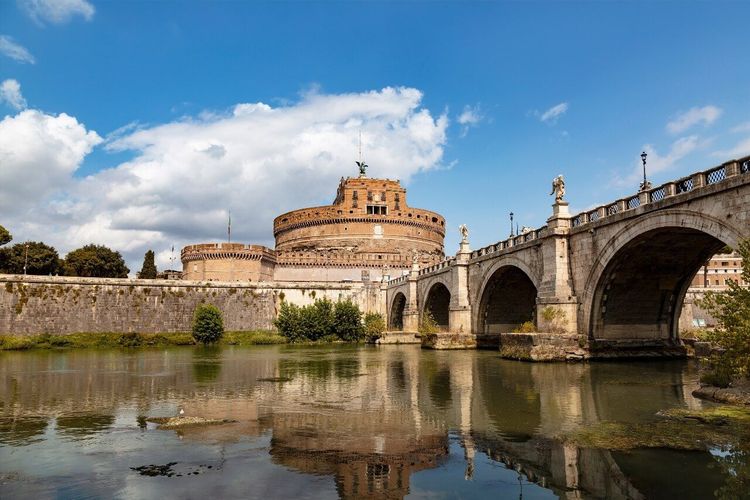
Castel Sant'Angelo (Lungotevere Castello 50, 00193 Roma, rated 4.7/5 on Google based on 108,592 reviews) has dominated the Tiber since the 2nd century, and its cylindrical silhouette is one of Rome's most recognizable landmarks. Its history alone encapsulates fifteen centuries: conceived as a mausoleum for Emperor Hadrian in 123 AD, transformed into a fortress in the Middle Ages, used as a luxury prison during the Renaissance, and today a museum.
The original monument was called the Mausoleum of Hadrian. Hadrian, that builder-emperor with a passion for Greece, designed it to receive his own remains and those of his successors — a function it served through to Caracalla. The travertine base structure is still partially visible beneath the medieval ramparts added later.
The current name "Castel Sant'Angelo" comes from a vision of Pope Gregory I in 590: during a penitential procession for a plague epidemic, he reportedly saw the Archangel Michael sheathing his sword at the top of the mausoleum — a sign that the epidemic was ending. A bronze statue of the archangel now stands at the summit.
The interior of the castle is worth visiting for two reasons. First, the helical ramp that climbs from the ground floor to the papal apartments — a feat of ancient architecture that is perfectly preserved. Second, the 15th- and 16th-century papal apartments, decorated with frescoes and stucco, which offer a striking contrast with the military structure surrounding them. The terrace provides a panoramic view over Rome and over the Ponte Sant'Angelo, with its ten angels with outstretched wings sculpted from designs by Bernini in the 17th century.
The Via Appia Antica: the Road of the Dead and the Legions
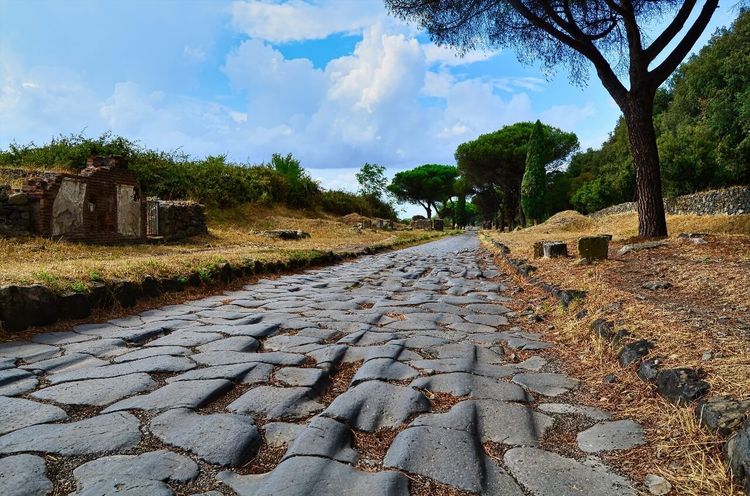
If there is one ancient Roman monument that ordinary travel guides treat as an afterthought, it is the Via Appia Antica (Via Appia Antica, 00179 Roma, rated 4.7/5 on Google based on 28K reviews). And yet this road, built in 312 BC by the censor Appius Claudius Caecus, is one of the most significant achievements of Roman engineering. It linked Rome to Brindisi — approximately 570 kilometers — and was the main commercial and military artery toward southern Italy and the eastern Mediterranean.
Along the road, tombs line the route for kilometers. Roman law prohibiting burial within the city walls meant that wealthy families built funerary monuments along the roads at Rome's exits, in plain sight of travelers. This custom explains the exceptional density of tombs along the Via Appia. The Tomb of Cecilia Metella, daughter of a Roman consul and wife of a son of Crassus, is one of the most imposing and best-preserved: a travertine cylinder 29 meters in diameter, topped by medieval battlements added in the 14th century.
Beneath the Via Appia and in its immediate surroundings lie several of the most important Christian catacombs in Rome: the catacombs of San Callisto, San Sebastiano, and Domitilla. These networks of underground galleries extend for dozens of kilometers and constitute the largest ancient Christian cemetery still visible today. The catacombs of San Callisto house the tombs of several popes from the 3rd century.
On Sundays, the Via Appia Antica is closed to motor traffic, making it the ideal outing to explore on foot or by bicycle. Several bike rental shops are located near the archaeological park.
The Circus Maximus: 250,000 Spectators for Chariot Races
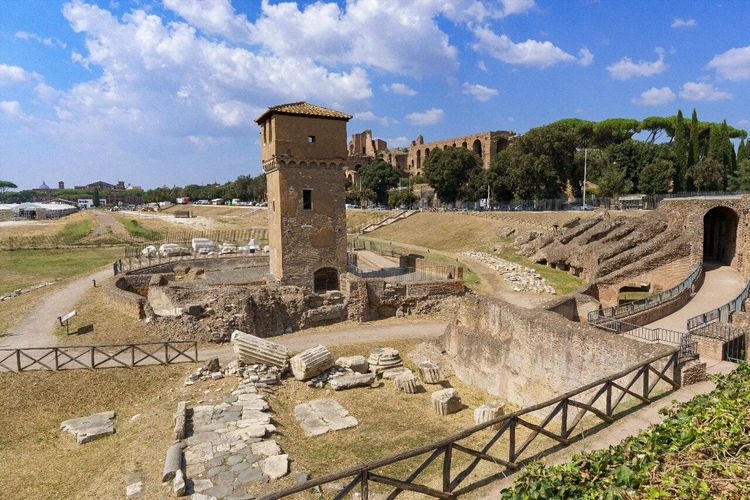
The Circus Maximus (Via del Circo Massimo, 00186 Roma, rated 4.5/5 on Google based on 61,519 reviews) is today an elongated grassy area between the Palatine and Aventine hills, used for concerts and events. Looking at this lawn, it is hard to imagine that it was once occupied by the largest entertainment structure ever built in the ancient world.
The U-shaped racetrack measured 621 meters long and 118 meters wide. Its tiers could accommodate between 150,000 and 250,000 spectators — a figure that, even if sometimes disputed by historians, was never surpassed by any entertainment structure until the great stadiums of the 20th century. Chariot races (quadrigae) were held here at intense frequency, with up to 24 races a day during the major games. The aurigae — the drivers — were the sports celebrities of the era, adulated like modern professional athletes.
Today, the foundations and some stone tiers are still partially visible. The underground multimedia museum (Circo Maximo Experience) offers a virtual reality reconstruction that greatly helps visitors grasp the scale of the place. Allow one hour for the full visit.
The Ara Pacis and the Lesser-Known Monuments
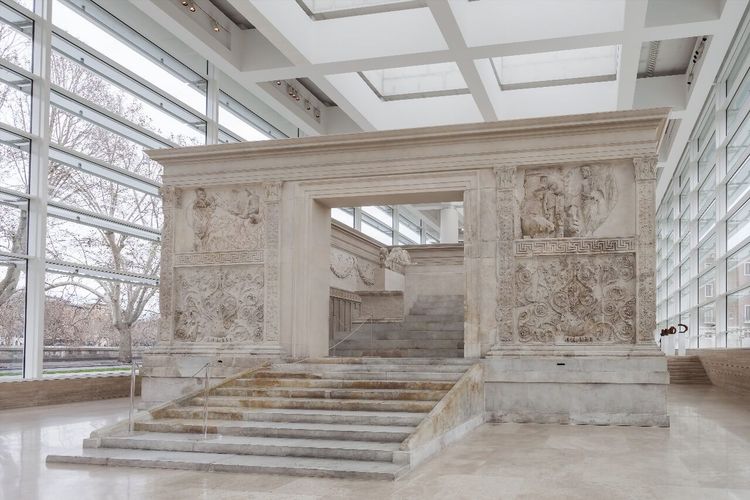
Rome contains a series of ancient monuments of remarkable architectural or archaeological quality that often go unnoticed in the shadow of the major sites. The Ara Pacis (Lungotevere in Augusta, 00186 Roma, rated 4.5/5 on Google based on 10,353 reviews) is the most striking example.
This white marble altar, commissioned by the Senate in 13 BC to celebrate Augustus's victorious return from Gaul and Spain, is considered one of the masterpieces of classical Roman sculpture. Its friezes depict a procession of the imperial family, senators, priests, and individually identifiable figures, rendered with a realism and fineness of detail that foreshadow the Renaissance portrait. Since 2006, the altar has been housed in a contemporary pavilion designed by Richard Meier, whose luminous architecture contrasts sharply — and not without controversy — with the ancient work inside.
Nearby, the Mausoleum of Augustus — circular, massive, and long fallen into ruin — has been under restoration for several decades and is gradually reopening to the public. It is Augustus's family tomb, where Livia, Tiberius, Octavia, and other members of the Julio-Claudian family also rested.
The Largo di Torre Argentina also merits a stop. This square, set below the current street level, contains four Republican temples from the 3rd and 2nd centuries BC, among the oldest still visible in Rome. It is also, according to tradition, the exact spot where Julius Caesar was assassinated on the Ides of March in 44 BC: the adjacent "Portico of Pompey" would correspond to the Senate chamber where he received the knife blows. Access down to the excavation level has been arranged, and stray cats have made their home among the ruins for decades.
Less well known still, the Theatre of Marcellus, built by Augustus between 13 and 11 BC, is the direct architectural ancestor of the Colosseum. Its exterior façade of superimposed arches directly inspired the design of the Flavian amphitheater. For centuries, apartments have been stacked above the ancient arcades — an improbable coexistence of classical heritage and private residence that is quintessentially Roman.
Finally, the Baths of Diocletian in the Termini neighborhood are worth a detour — not for their ruins (more fragmentary than Caracalla's) but for the remarkable use Michelangelo made of them: one of the bathing halls was converted into the church of Santa Maria degli Angeli, whose architect preserved the ancient proportions and vaults intact, simply repurposing them as the nave.
Ostia Antica: Rome Beyond the Walls
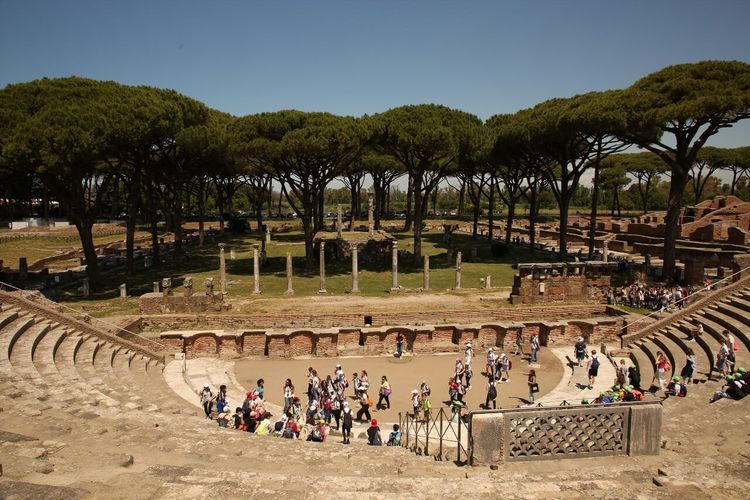
Thirty kilometers from Rome, reachable by metro and train in just under an hour, Ostia Antica (Viale dei Romagnoli 717, 00119 Ostia Antica, rated 4.7/5 on Google based on 32K reviews) is one of the best decisions you can make if you have an extra day. It was ancient Rome's main port — a city of commerce and transit that may have reached 100,000 inhabitants in the 2nd century AD, before being gradually abandoned from the 3rd century onward.
Unlike Pompeii, which was frozen by a sudden volcanic catastrophe, Ostia Antica was abandoned slowly. Its inhabitants left with their belongings, and building materials were salvaged over the centuries. What remains is therefore less spectacular in terms of preserved everyday objects, but exceptionally rich in urban terms: paved streets, insulae (multi-story rental apartment buildings), taverns with mosaic counters still standing, a theater that seated 4,000 spectators and is still used for summer performances today, well-preserved public latrines, baths, grain warehouses (horrea), and the seats of merchants' guilds (Piazzale delle Corporazioni) whose floor mosaics still identify each guild by its symbol.
Ostia Antica is often empty compared to the Colosseum. You can spend a full half-day there without ever feeling the pressure of a crowd. It offers a radically different experience of ancient Rome — less grandiose, perhaps, but more intimate, closer to ordinary life than to imperial spectacle.
If Hadrian's Villa in Tivoli also interests you, see our article on visiting Hadrian's Villa near Rome; the two sites can be combined in a single day with careful planning.
Museums to Go Deeper into Roman History
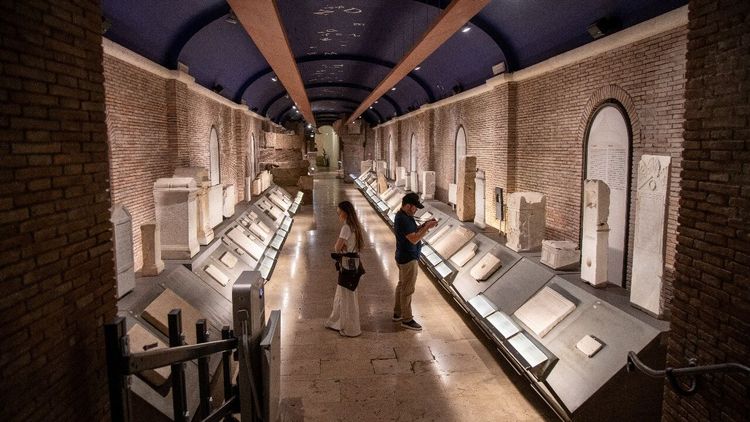
In-situ monuments only tell part of the story. The objects that came from them — sculptures, mosaics, frescoes, everyday utensils — have been moved to museums where they can be preserved in better conditions.
The National Roman Museum is made up of four separate sites. The most important for ancient Rome is the Palazzo Massimo alle Terme (Largo di Villa Peretti 2, 00185 Roma, rated 4.6/5 on Google based on 6,242 reviews), a short walk from Termini station. Its sculpture collections are among the finest in existence: the Pugile in riposo (the Resting Boxer), the Lancellotti Discobolus, and the frescoes removed from Livia's Villa depicting a breathtaking illusionistic garden. It is the kind of museum where two hours pass without your noticing.
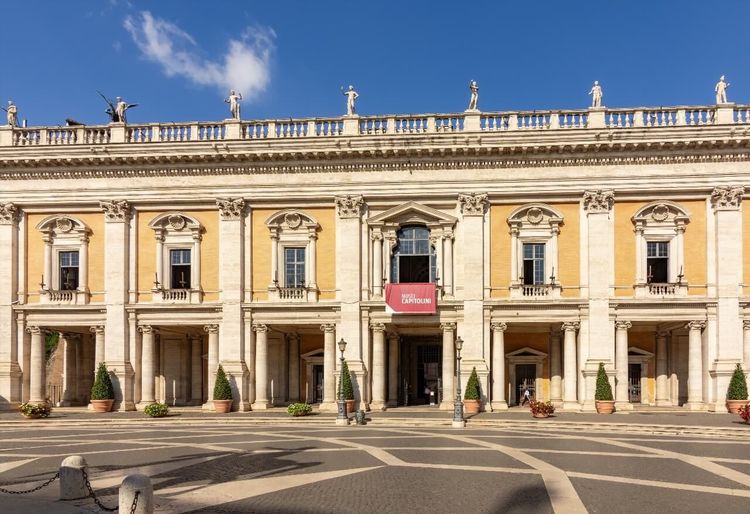
To explore further among the must-see museums of Rome, the Capitoline Museums (Musei Capitolini) on the Piazza del Campidoglio are equally unmissable. They are the oldest public museums in the world, open since 1471. The Hall of Emperors — a gallery of busts of every Roman emperor — and the room of the Capitoline Wolf are each alone worth the visit.
Finally, the Vatican Museums, even though they cover far more than ancient Rome, preserve some of the finest ancient pieces ever discovered: the Laocoön (unearthed in 1506 on the Esquiline), the Apollo Belvedere, and the bronze and Egyptian collections. A full day can easily be devoted to them; see our article on visiting the Vatican in Rome to organize this visit efficiently.
Planning Your Visit: Tickets, Hours, and Prices
Rule number one in Rome: book online. For the Colosseum, the Forum, the Palatine, the Pantheon, the Domus Aurea, Castel Sant'Angelo, and the Vatican Museums, buying tickets on the spot in high season is a considerable waste of time.
Here are the main admission prices in 2026:
- Colosseum + Roman Forum + Palatine Hill (combined ticket): €18 to €22 depending on season; the arena floor and the hypogeum are available as paid add-ons
- Pantheon: €5 (reduced to €2 for EU citizens aged 18–25; free admission on the first Sunday of each month)
- Baths of Caracalla: €8
- Domus Aurea: €14 (guided tour included, mandatory)
- Castel Sant'Angelo: €15
- Vatican Museums + Sistine Chapel: €17 online, €20 on site
- Ostia Antica: €12
- Capitoline Museums: €15
The Roma Pass (48-hour or 72-hour) can be worthwhile if you plan to visit several municipal museums, as it includes public transport. However, check the details of included sites before buying: the Colosseum is not included, and neither are the Vatican Museums.
As for opening hours, most sites open at 9 a.m. (except the Pantheon, which opens at 9 a.m. for Mass and then for visits at 10:30 a.m. on weekdays). The Colosseum closes one hour before sunset, meaning it can close as early as 4:30 p.m. in winter. Ostia Antica also closes at nightfall.
How to Organize Your Days to See Everything
It is not realistic to try to cover everything in a single trip. Here is a priority-based structure:
Day 1 — The Ancient Core: Colosseum (morning, at opening), Roman Forum and Palatine (morning), Imperial Fora (en route), Circus Maximus (late afternoon, exterior view is sufficient), Baths of Caracalla (late afternoon if you have the energy).
Day 2 — Republican and Imperial Rome: Pantheon (morning, before the crowds), Largo di Torre Argentina, Ara Pacis, Mausoleum of Augustus, Castel Sant'Angelo. The Ryo audio tour from Trevi to the Vatican covers exactly this route with audio commentary.
Day 3 — In-Depth Sites: Domus Aurea (morning only, limited slots), Markets of Trajan, Capitoline Museums.
Extra Day: Ostia Antica or Hadrian's Villa in Tivoli — these two cannot be combined without sacrificing one of them.
For a complete multi-day itinerary, see our guide Rome in 3, 4, or 5 Days.
When to Visit Rome for Its Ancient Sites
Rome is visited year-round, but conditions vary considerably by season.
April–May remains the best period: pleasant temperatures (18–22 °C), long days, and spring vegetation that bathes the Via Appia in golden light. Easter week, however, is very busy.
June–August: intense heat (often 35 °C+), maximum crowds, but also the season for open-air performances at the Baths of Caracalla. Visit sites at 9 a.m. and rest during the hottest hours.
September–October: an excellent compromise between pleasant weather and more manageable crowds. This is the recommended period if you have the choice.
November–March: few tourists, lower hotel rates, but some sites close earlier. The winter light over the ruins of the Forum has a particular beauty that high-season photographs never capture.
FAQ
What are the most important ancient Rome monuments to see?
The absolute must-sees are the Colosseum, the Roman Forum with the Palatine Hill, and the Pantheon: these three sites form the heart of ancient Rome and no visit should skip them. In a second tier, the Baths of Caracalla, the Domus Aurea, Castel Sant'Angelo, and the Via Appia Antica round out a comprehensive picture. Ostia Antica, 30 minutes from the center, ### How much time should I plan to visit the ancient monuments of Rome?
A minimum of three days is needed to cover the main ancient sites: one day for the Colosseum, the Forum, and the Palatine; a second for the Pantheon, the Ara Pacis, and Castel Sant'Angelo; a third for the Domus Aurea and the Markets of Trajan. To add Ostia Antica, the museums, and the lesser-visited sites, allow five days.
Can ancient Roman monuments be visited without a guide?
Yes, but the visit is considerably enriched by contextual explanation. For the Colosseum and the Forum, audio guides are available on site. The Domus Aurea requires a guided tour (included in the ticket). The Ryo audio guide offers a narrative approach to the neighborhood around the Trevi Fountain and the Vatican, with explanations of the layered historical strata of Rome's city center.
Are there any ancient Roman monuments that can be visited for free?
Yes. The Circus Maximus (exterior), the Largo di Torre Argentina (partially), the Theatre of Marcellus (exterior), and the Imperial Fora (exterior from the Via dei Fori Imperiali) are all visible without an entrance fee. The Pantheon is free on the first Sunday of each month. The Via Appia Antica is freely accessible; only the catacombs and museums along the road are paid.
What is the difference between the Roman Forum and the Imperial Fora?
The Roman Forum is the original public space — the political and religious center of the Roman Republic — which developed from the 7th century BC through the end of the Empire. The Imperial Fora are five extensions built successively by Julius Caesar, Augustus, Nerva, Vespasian, and Trajan from the 1st century BC onward to relieve congestion in the original Forum. Each imperial forum bore the name of the emperor who built it and served to glorify his reign.
Can you visit the Roman monuments in one day?
Visiting all of Rome's major ancient monuments in a single day is not realistic. In one intensive day, you can cover the Colosseum, the Roman Forum, and the Palatine in the morning, then the Pantheon in the afternoon — but that leaves out the Baths of Caracalla, the Domus Aurea, the Via Appia Antica, and many other essential sites. It is better to plan at least two to three days dedicated to antiquity. Spreading the Colosseum, the Forum and the Palatine over one unhurried morning is roughly the pace our audio walking tour of the ancient city keeps.
Conclusion
Ancient Rome is not a frozen open-air museum — it is a living city in which every neighborhood layers millennia of history. From the Colosseum to the catacombs of the Via Appia, from the vaults of the Pantheon to the underground galleries of the Domus Aurea, the monuments of ancient Rome tell a human story of a richness and complexity that few cities in the world can match.
To add depth to your visit, the Ryo audio guide for Rome accompanies you through the streets with the historical explanations that transform ruins from mere backdrop into living witnesses to history. Because understanding what you see is also the best way to remember it.
À lire également