© Shutterstock
 Votre guide Ryo
Rome in 2026: Activities, Visits, and Secrets of the Eternal City
Every year, some 30 million visitors converge on Rome, and yet the city still manages to surprise. It is not a theme park frozen in its heritage: it is a living metropolis where you pass under a triumphal arch built two thousand years ago to catch your bus. Activities in Rome work on this principle of accumulation — every alley hides a palace, every palace a chapel, every chapel a masterpiece you had not planned to see. To navigate all of this without losing half a day in a queue, the Ryo audio-guided tour of Rome offers a curated, commentary-rich selection of the essential sites, from the Colosseum to the least signposted neighbourhoods.
This guide covers Rome's must-sees — Colosseum, Vatican, Pantheon, Trevi Fountain — but also the corners that most guides overlook: the Aventine keyhole that perfectly frames the dome of St Peter's, the Catacombs of San Callisto descending four levels underground and housing the remains of sixteen popes, and the Villa Borghese gardens where Romans come to jog on Sunday mornings. There are also dozens of free activities — far more than most visitors imagine — for tight budgets or days already packed with pre-booked tickets.
The Colosseum: Two Thousand Years in the Arena
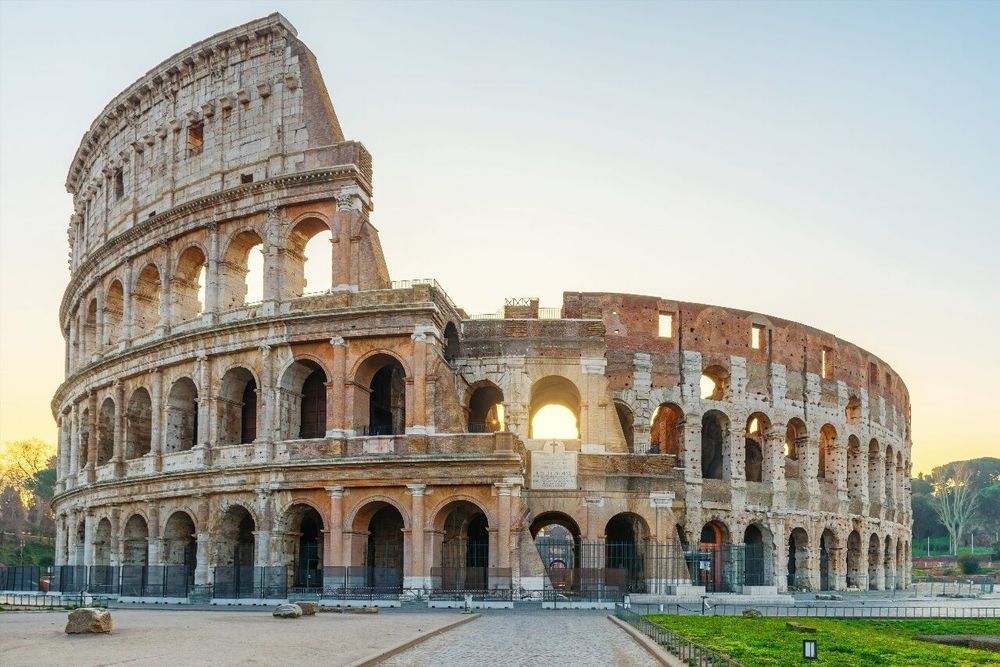
The Colosseum was built between 70 and 80 AD under emperors Vespasian and Titus. It remains the largest ancient amphitheatre ever constructed: 188 metres long, 156 metres wide, 48 metres tall. It could hold between 50,000 and 80,000 spectators, arranged according to social hierarchy — senators in the front rows on padded cushions, the plebs packed under the vaults of the fourth tier. This is not an architectural detail: it is the entire stratification of Roman society inscribed in travertine.
What most visitors do not know is that gladiatorial combat represented only a fraction of the programming. Large naval battles (naumachiae), exotic animal hunts (venationes), public executions and mythological re-enactments followed one another in this arena. Elephants, rhinoceroses and lions were brought from Africa to fuel a spectacle that could last several days in a row. The logistical infrastructure was itself a feat: 80 numbered entrances allowed 50,000 people to be evacuated in under ten minutes.
The standard entry ticket costs €18 and includes access to the Roman Forum and Palatine Hill — three sites for the price of one, valid for 24 hours. "Experience" tickets (€22) open access to the arena floor itself, the underground (hypogeum) or the third-level galleries depending on the option chosen. Booking online several days in advance is essential from March to October: without a reservation, queues regularly exceed two hours.
Come at opening time at 9am, or in the late afternoon after 4pm when organised groups have cleared the site. The low-angle evening light reveals the textures of the stone in a way that midday photographs simply cannot capture. Allow at least 1h30 for the Colosseum alone, and block out half a day if you follow on with the Forum. To explore ancient Rome beyond the Colosseum, Ryo's 9 wonders of ancient Rome presents the lesser-known but equally striking archaeological sites. Our Eternal City audio-guided tour strings the Forum and the Colosseum together across 25 stops.
The Roman Forum and Palatine Hill
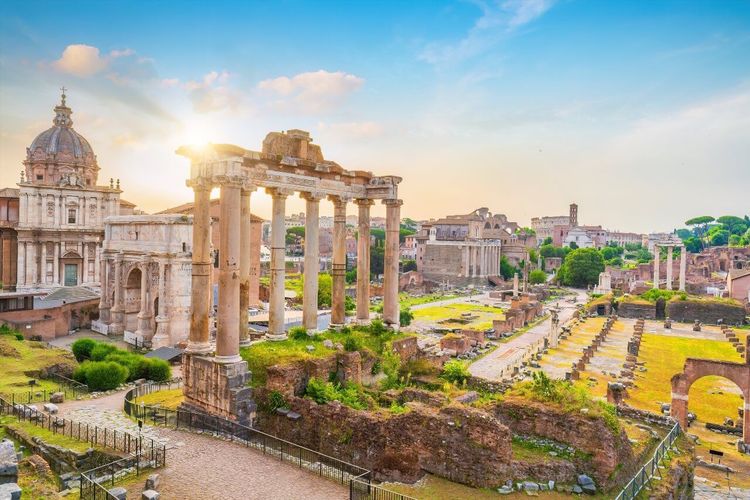
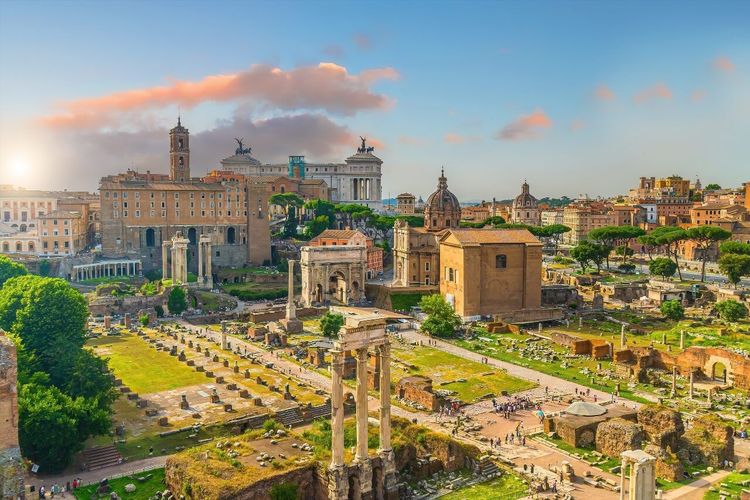
Leaving the Colosseum, the Via Sacra takes you directly into what was the nerve centre of ancient Rome. The Roman Forum is not a single monument but a complex of buildings assembled over seven centuries: temples, civic basilicas, triumphal arches, and rostra from which Cicero delivered his speeches. During the Republican era, this was where the politics of the most powerful Mediterranean empire in the known world were decided.
The highlights worth your attention in this 15-hectare space: the Arch of Titus (81 AD), the best-preserved of all Roman triumphal arches, commemorating the capture of Jerusalem; the Temple of Saturn, whose eight Doric columns have been standing for more than 2,400 years; and the Basilica of Maxentius, whose three Roman concrete vaults give a sense of the disproportionate scale of late imperial architecture.
Climbing up to Palatine Hill — the hill of origins, where Romulus is said to have founded the city in 753 BC — you reach the ruins of the imperial palaces that towered over the Forum from 50 metres above. The view over the Forum from the Farnese Gardens, planted in the 16th century over ancient ruins, is alone worth the climb. Wear closed shoes: the ground is uneven, the paths poorly marked, and the heat from 11am in July makes outdoor visits exhausting without sufficient shade. That same descent opens our Eternal City audio walking tour, which reads the Forum from the Capitoline square down to the Arch of Constantine.
The Vatican Museums and the Sistine Chapel
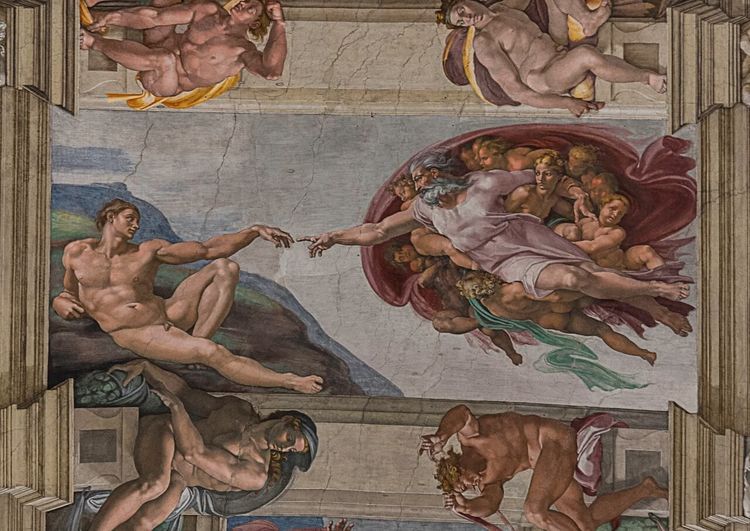
If you could book only one thing before leaving for Rome, it would be here. The Vatican Museums (Viale Vaticano, 00165 Roma, rated 4.6/5 on Google from 205,835 reviews) constitute one of the largest art collections in the world held by a single institution: 1,400 rooms, kilometres of galleries, and works accumulated over five centuries of papal patronage. The Sistine Chapel, at the end of this labyrinth, occupies just a few hundred square metres, yet it bears the ceiling Michelangelo painted lying on scaffolding between 1508 and 1512, on the commission of Pope Julius II.
The classic route first passes through the Gallery of Maps, whose 40 frescoes commissioned by Gregory XIII in 1580 represent Italy with astonishing precision for the era. You then pass through the Raphael Rooms (Stanze di Raffaello), where The School of Athens places Plato and Aristotle at the centre of an imaginary academy peopled with Greek philosophers. You arrive at last in the Sistine Chapel, where nine scenes from Genesis cover the vaulted ceiling, with the Creation of Adam at its geometric centre. The Last Judgement fresco on the far wall was added twenty-four years later (1535–1541): in it you can read the weariness and disillusionment of an artist who aged under the weight of too many ceilings.
Entry costs €20 on-site, around €25 online with the reservation included. In high season (April to October), tickets sell out weeks in advance. A lesser-known option: Friday evening night visits available from May to October, when the Museums open until 11pm with considerably smaller crowds. For everything the Vatican area has to offer, our Ryo guide to the Vatican details all options according to your available time. Allow 3 to 4 hours for the full circuit.
St Peter's Basilica: The Largest in the World
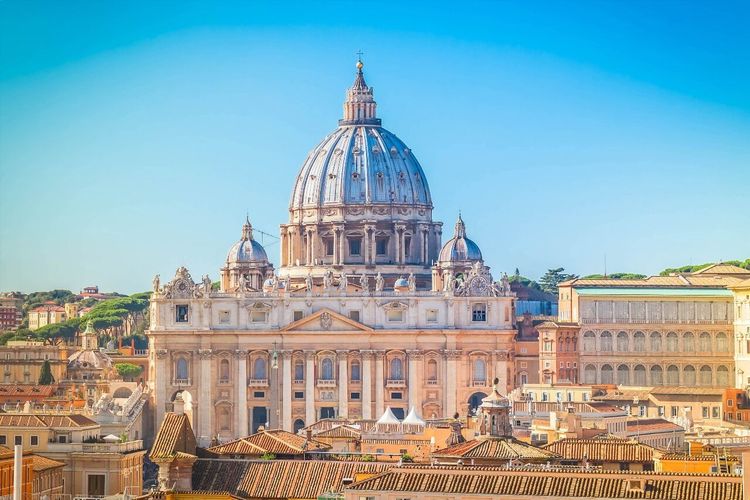
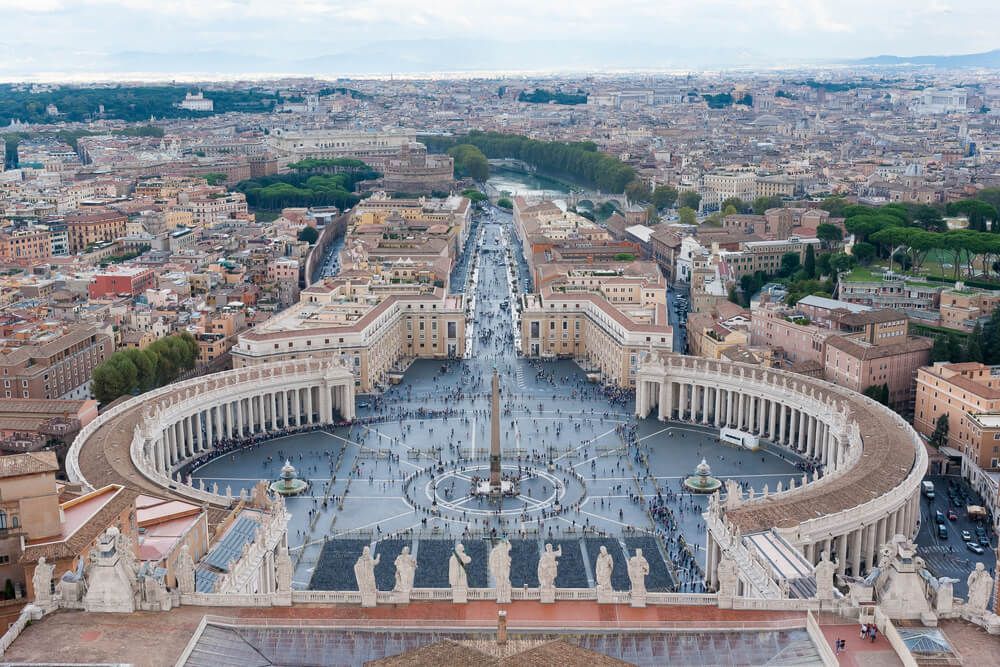
Accessible from the eponymous square, St Peter's Basilica is officially the largest church in the world, with a floor area of 23,000 square metres and a capacity of 60,000 people. The central nave is 45 metres high — you could fit an ordinary Gothic cathedral inside it. Bernini's bronze baldachin above the altar weighs 37 tonnes and rises 29 metres, the equivalent of a ten-storey building.
Entry to the basilica is free, but expect a queue of 30 to 60 minutes in the height of summer. The dress code is enforced without exception: shoulders and knees must be covered. Inside, look for Michelangelo's Pietà (1499), sculpted when he was 24 years old, protected behind glass since the 1972 attack.
Climbing Michelangelo's dome is paid (€8 on foot, €10 by lift for the first section) but the 120-metre height offers one of the finest views in Rome. A tip: take the lift up and walk down — the 320 steps of the descent run so close to the interior of the dome that you almost touch the vault mosaic from a gently tilting passage that gives a slight hint of vertigo.
The Trevi Fountain: How to Experience It in 2026
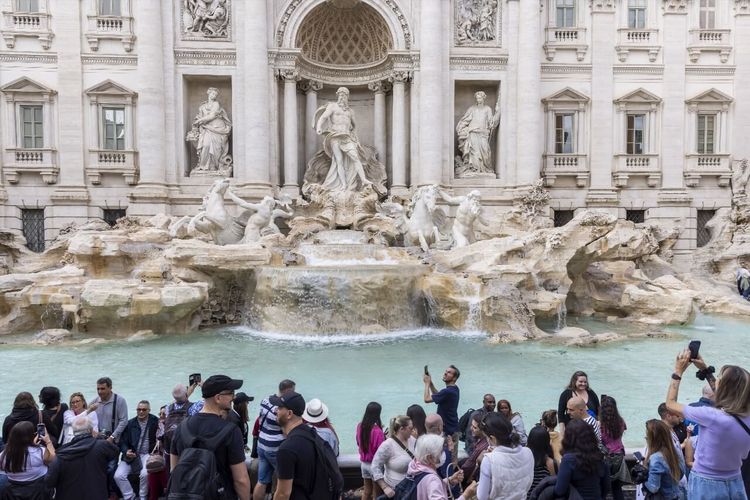
The Trevi Fountain is the largest Baroque fountain in Europe, built between 1732 and 1762 to designs by Nicola Salvi. It marks the terminus of the Roman aqueduct Aqua Virgo, in service since 19 BC. The coins thrown into its basin every day — around €3,000, totalling nearly €1.5 million per year — are donated to Caritas Rome, which funds food banks and social inclusion projects.
The problem is well known: at 11am in July, you will struggle to find an angle without two hundred smartphones in front of you. The solution: come before 8am. The fountain is lit until 1am in summer, and the blue hour before sunrise offers a quality of light you will not find during the day. On weekdays outside peak season (November to February), you can sit on the low wall without being jostled. To explore the entire area between the Trevi Fountain and the Vatican, the Ryo audio-guided tour from Trevi to the Vatican covers the essential points of this neighbourhood. Access to the square is entirely free. Our dedicated Ryo article on the Trevi Fountain goes back over the history of its construction and the best times to photograph it.
The Pantheon: Two Thousand Years of Architectural Genius
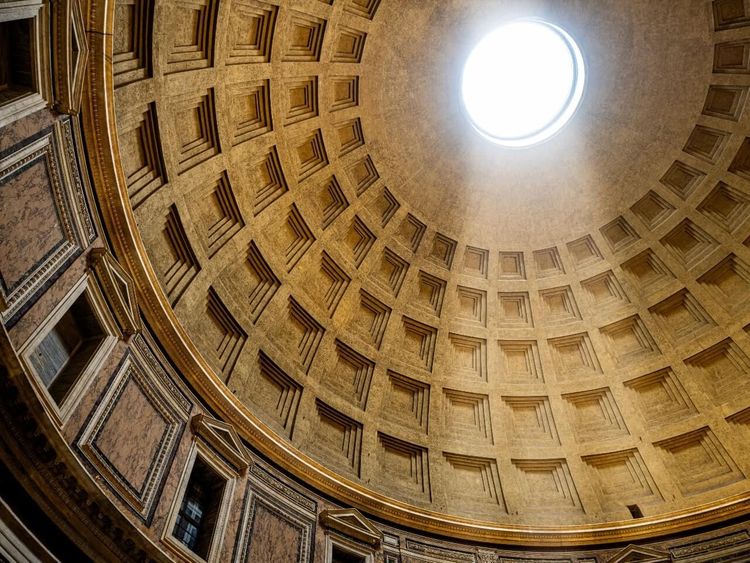
The Pantheon (Piazza della Rotonda, 00186 Roma, rated 4.8/5 on Google from 281,061 reviews) is probably the best-preserved ancient building in the world. Built by Emperor Hadrian between 118 and 128 AD, converted into a Christian church in 609, it has never ceased to be in use. The pink granite columns from Egypt that you see at the entrance were transported by ship from the eastern Mediterranean.
The central oculus, a circular opening 9 metres in diameter, is the only source of natural light. A beam of sunlight passes through the dome at certain hours and strikes the floor at a precise position depending on the season — an effect that Roman engineers had calculated. When it rains, the water simply falls into the rotunda and drains away through an ancient drainage system hidden beneath the floor slabs.
Entry costs €5 since July 2022 (free for under-18s and on the first Sunday of the month). The Pantheon houses the tombs of Raphael and two Kings of Italy. The acoustic space is striking: even with visitors present, a whisper carries to the far side of the rotunda.
Piazza Navona and Baroque in the Open Air
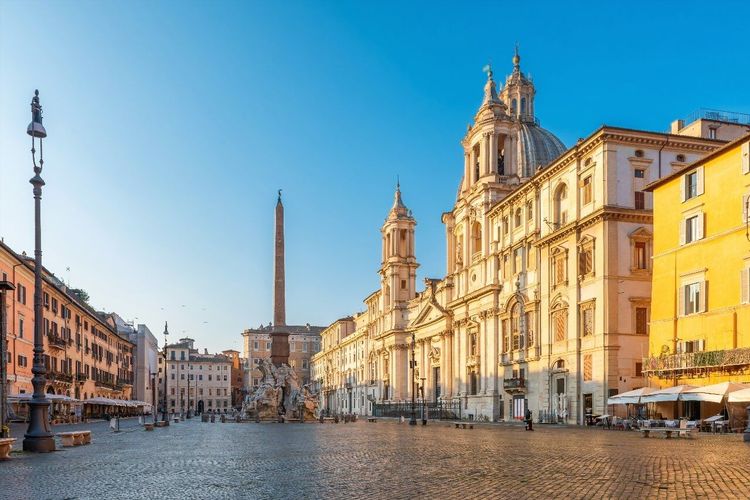
Piazza Navona occupies the exact footprint of the Stadium of Domitian (86 AD), whose elongated shape — 276 metres by 54 — has survived in the very outline of the square. It is one of the most beautiful Baroque squares in Europe and one of the free activities in Rome, animated year-round by street artists, open-air galleries and café terraces whose prices reflect the prestige of the address.
The centrepiece is the Fountain of the Four Rivers (1651) by Bernini, representing the Nile, the Danube, the Río de la Plata and the Ganges — the four rivers of the four continents then known. An urban legend claims that the figure of the Nile covers its eyes to avoid looking at the façade of the neighbouring church designed by Bernini's rival, Borromini. This is false — the fountain was built before the church — but the story still circulates. The square is free and accessible at all hours.
Castel Sant'Angelo: From Mausoleum to Papal Fortress
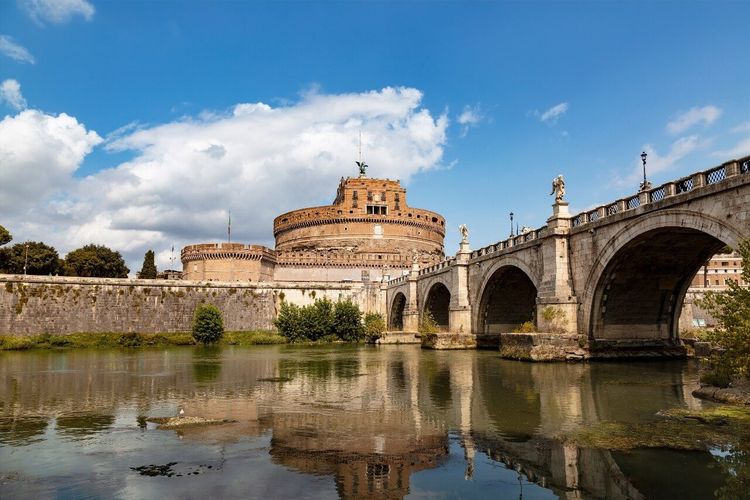
Originally built as a mausoleum for Emperor Hadrian (135 AD), Castel Sant'Angelo (Lungotevere Castello 50, 00193 Roma, rated 4.7/5 on Google from 108,872 reviews) has passed through the centuries under a dozen different identities: imperial tomb, military fortress, papal prison, refuge for fleeing popes. The covered gallery connecting it to the Vatican, the Passetto di Borgo, notably allowed Clement VII to flee during the Sack of Rome in 1527, when the troops of Charles V pillaged the city for nine months.
Entry costs €15 and gives access to the five levels that tell this layered history, from the cannon rooms on the lower level to the panoramic terrace. It is from this terrace that Tosca throws herself in Puccini's opera, and it is here that the gilded bronze Archangel Michael holds his sheathed sword — a reminder of Pope Gregory I's vision in 590, in which the archangel was said to have signalled the end of the great plague in this way. Castel Sant'Angelo is a 10-minute walk from St Peter's Basilica and combines naturally into the same afternoon, along the route our From the Trevi Fountain to the Vatican audio-guided tour takes over the Ponte Sant'Angelo.
Trastevere: A Stroll Through Working-Class Rome
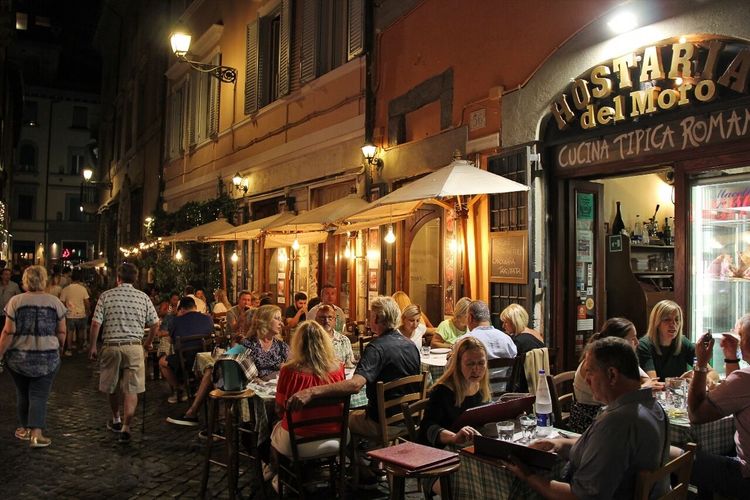
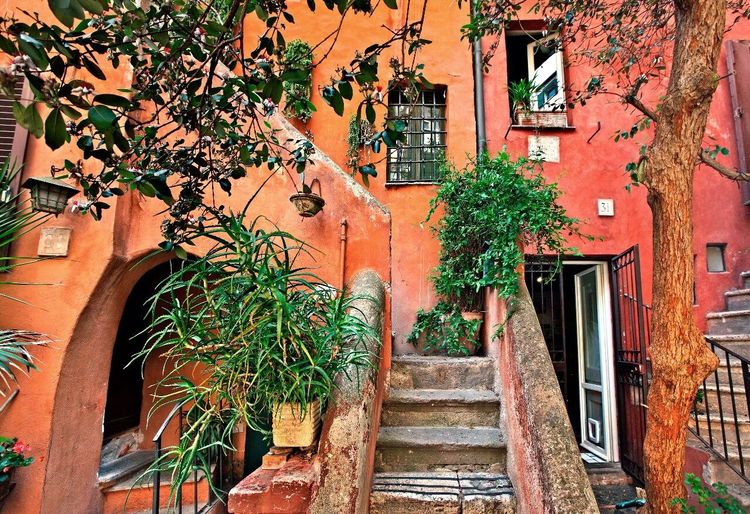
You only need to cross the Tiber to change atmosphere entirely. Trastevere, literally "across the Tiber", is the neighbourhood that still most resembles what working-class Rome looked like before the gentrification of the early century. Ochre palaces and painted wooden shutters loom over alleyways so narrow that two scooters can barely pass, and artisan stalls sit alongside restaurants spilling out onto the pavements at nightfall.
The heart of the neighbourhood is Piazza di Santa Maria in Trastevere, dominated by the basilica whose golden mosaic façade gleams even on overcast days. The church is one of the oldest in Rome — the earliest structures date to the 3rd century — and its interior, with its ancient columns taken from earlier buildings and 12th-century Byzantine mosaics, is worth a 20-minute stop.
The ideal walk: enter Trastevere through the Porta Settimiana and stroll slowly up towards the Villa Farnesina (entry €12), a Renaissance palace whose Raphael frescoes remain among the least known and most accessible in the city — rarely more than fifty visitors at a time. Continuing up to the Janiculum (Gianicolo), allow 15 minutes on foot for a 360° view over the Roman rooftops from a terrace that is never crowded.
In the evening, Trastevere transforms into a village: residents bring chairs out into the street, trattorias light up their terraces, and the smell of cacio e pepe being prepared drifts from kitchens at the back. Our Ryo article on the Trastevere neighbourhood details the best dining addresses and the best times to explore the neighbourhood according to the season.
Villa Borghese and the Borghese Gallery
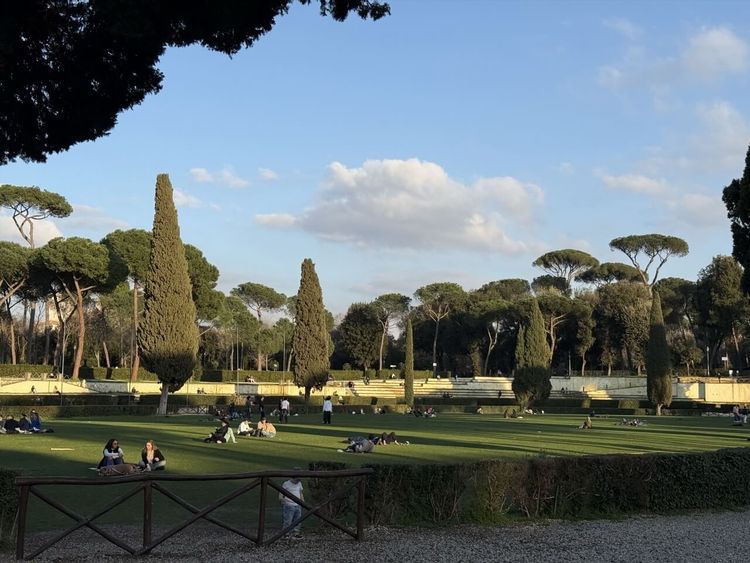
To discover Rome differently, away from the queues, the Villa Borghese gardens make up Rome's largest public park: 80 hectares of umbrella pines, fountains and tree-lined paths along the Pincian Hill. Entry is entirely free, and the panorama from the Pincian Terrace — where a hydraulic clock built in 1867 continues to function — over the Piazza del Popolo and the Roman rooftops is one of the city's least-known viewpoints for something so spectacular.
Inside the park, the Borghese Gallery (Piazzale Scipione Borghese 5, 00197 Roma, rated 4.6/5 on Google from 29,754 reviews) is an experience of an entirely different kind. The villa of Cardinal Scipione Borghese (early 17th century) houses Bernini's greatest masterpieces in the very rooms for which they were conceived: Apollo and Daphne (1625), where the marble seems to transform into wood and leaves before your eyes; the Rape of Proserpina, where Pluto's fingers sink into Proserpina's marble flesh in a deeply unsettling way; and David (1624), depicted in the instant before releasing his stone.
Entry costs around €16 (reservation mandatory, visit limited to two hours) and tickets must be booked weeks in advance. If you were unable to get one, the painting collection on the upper floor — Titian, Caravaggio, Raphael — is often overlooked by those rushing to the sculptures. To choose your museums according to your interests, the essential Rome museums selected by Ryo presents the most remarkable collections.
The Imperial Forums and Trajan's Column
Running alongside the Roman Forum, the Imperial Forums (Via dei Fori Imperiali, 00186 Roma, rated 4.7/5 on Google from 9,612 reviews) extend along the Via dei Fori Imperiali, the avenue cut through by Mussolini in 1932, destroying part of the ancient remains in the process to link the Colosseum to the Piazza Venezia. The five forums (Caesar, Augustus, Nerva, Vespasian, Trajan) were built successively from the 1st century BC to the 2nd century AD, each successor seeking to surpass the work of his predecessor.
The Forum of Trajan is the most imposing. Trajan's Column (113 AD), standing 38 metres tall, narrates the two Dacian wars in a spiral: 2,500 figures sculpted in bas-relief across a total unrolled length of 200 metres — a visual military account of documentary precision unmatched in ancient art. The view from the belvedere of the Piazza Venezia, with the Vittoriano in the background and the forums below, is Rome's most iconic — you have probably seen it a hundred times without necessarily placing it. Access to the forums is partially covered by the Colosseum ticket.
The Catacombs: Rome Below the Surface
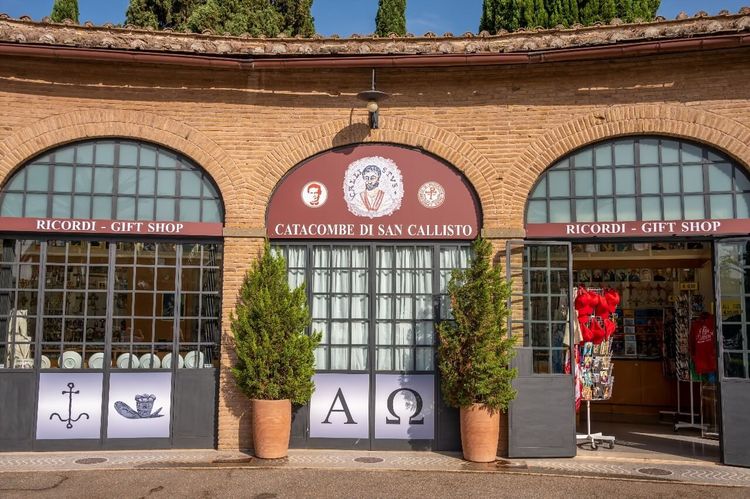
Two kilometres beyond the Gate of San Sebastiano, beneath the basalt paving stones of the Via Appia Antica, stretches a network of underground galleries totalling 300 kilometres. The Catacombs of San Callisto (Via Appia Antica 110, 00179 Roma, rated 4.5/5 on Google from 17K reviews) are the most accessible: 20 kilometres of galleries across four levels, where the remains of sixteen popes from the 2nd and 3rd centuries and hundreds of thousands of early Christians rest.
The guided tour is mandatory (around €9), lasts 45 minutes and descends about ten metres underground. The temperature is a constant 15°C year-round — a welcome relief during a Roman summer. The Catacombs of San Sebastiano, just next door, are slightly less frequented and contain remarkably well-preserved early Christian inscriptions from the 2nd and 3rd centuries. Note the closing days: Sunday for San Sebastiano, Wednesday for San Callisto.
The Aventine Keyhole and the Janiculum
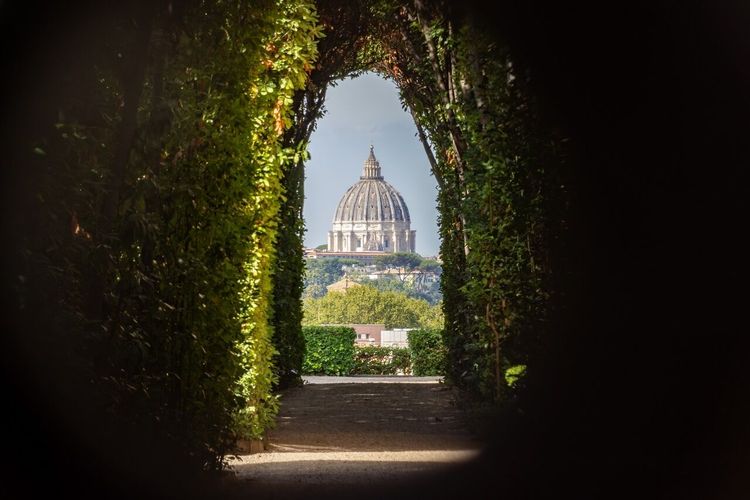
Among the free activities in Rome, two of the city's best viewpoints are systematically ignored by mainstream guides. On Aventine Hill, at the Piazza dei Cavalieri di Malta, a wooden gate conceals a wrought-iron keyhole. Peering through it, you will see the dome of St Peter's perfectly framed at the end of a corridor of clipped yew trees running through the gardens of the Villa of the Priory of Malta. The wait is generally no more than 15 minutes.
On the Janiculum (Gianicolo), the terrace facing the equestrian statue of Garibaldi offers a complete panorama over the rooftops and domes of Rome. Every day at precisely noon, a cannon shot rings out from this hill — a tradition maintained since 1847 that allowed Rome's bells to synchronise. Arrive at 11:50am to watch the firing from the terrace and then enjoy the view without the Colosseum's crowds.
Campo de' Fiori, Largo Argentina and the Jewish Ghetto
Campo de' Fiori (Campo de' Fiori, 00186 Roma, rated 4.5/5 on Google from 38K reviews) is one of the rare Roman squares without a church or Baroque fountain — a market square since the 15th century, and it remains one to this day. Monday to Saturday mornings, stalls selling fruit, vegetables, spices and flowers cover the cobblestones. At the centre, the statue of Giordano Bruno — the philosopher burned alive on this exact spot in 1600 for heresy — stares towards the Vatican with an expression that leaves little doubt about his feelings.
A 5-minute walk to the east, the Largo di Torre Argentina contains the ruins of four Republican-era temples dating from the 4th to the 2nd century BC, and it was on this site, in the adjacent Curia of Pompey, that Julius Caesar was assassinated on 15 March 44 BC. Entry is free, with recently installed explanatory panels.
A little further on, the Jewish Ghetto is one of the oldest Jewish communities in Europe: the earliest traces of Jewish presence in Rome date to the 2nd century BC. The Rome Synagogue (1904), on the banks of the Tiber, houses a museum covering twenty centuries of history. The neighbourhood's restaurants serve romano-giudaica cuisine, of which carciofi alla giudìa (artichokes fried in the Jewish style) are the absolute speciality.
The Via Appia Antica: Off the Beaten Track
Built in 312 BC by the censor Appius Claudius, the Via Appia Antica (Via Appia Antica, 00179 Roma, rated 4.7/5 on Google from 31K reviews) is the oldest surviving major Roman road — "the queen of roads" according to Statius. Along the first 9 kilometres from the Gate of San Sebastiano, the original basalt paving stones still bear traffic, flanked by tombs, umbrella pines and ruins of patrician villas that once stretched their estates along the most prestigious artery of the ancient world.
At weekends, the road is closed to cars and becomes a walking path. Bicycle hire is available at the entrance to the archaeological park (€6 to €10 for a half-day). Between the Mausoleum of Cecilia Metella, the Villa dei Quintili (the largest preserved private villa from Roman antiquity) and the catacombs, a full day is not enough to cover the whole area. This is Rome before Rome, 30 minutes from the centre by bus from the Circo Massimo stop. For day trips outside Rome, our Ryo guide to activities in Rome and the surrounding area lists other destinations reachable in a day.
What Rome Offers for Free
Contrary to its reputation, Rome is a generous city for tight budgets. Among all the activities in Rome, the entirely free sites are far more numerous than most visitors imagine, and they are more than enough to fill a stay for anyone who wants to visit Rome without spending much.
The Christian basilicas are free to enter (smart dress required): the Basilica of San Giovanni in Laterano (Piazza di San Giovanni in Laterano 4, 00184 Roma, rated 4.8/5 on Google from 33,457 reviews), Rome's official cathedral built in the 4th century; the Basilica of Santa Maria Maggiore (5th century), whose 13th-century apsidal mosaics rank among the finest in the city; and the Basilica of San Paolo Fuori le Mura, built over Paul's tomb and expanded to its current disproportionate size over the centuries.
The Villa Borghese gardens, all the major public squares (Piazza Navona, Campo de' Fiori, Piazza del Popolo), the Vittoriano's interior rooms, the Janiculum promenade, the Aventine keyhole and Largo di Torre Argentina are all free. The Trevi Fountain remains free to access from the square. On the first Sunday of every month, the national museums — including the Capitoline Museums, the Baths of Diocletian and the National Roman Museum — open free of charge to all visitors.
To alternate smartly between paid visits and free discoveries, the Ryo Rome audio guide offers a commented itinerary that combines both, giving you the historical context that turns a simple walk into a memorable experience.
Roman Food: Where and What to Eat
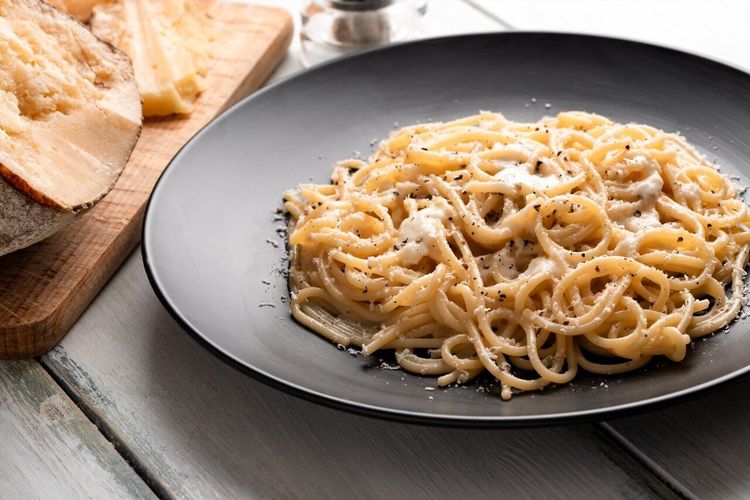
Eating is one of the activities in Rome that you do not plan but remember most. Roman cuisine is one of Italy's great regional traditions, built on a handful of simple ingredients worked with millimetric precision. Four pasta dishes define the city's culinary identity: cacio e pepe (pecorino romano and black pepper, no butter or cream), carbonara (guanciale, whole eggs and pecorino — the absence of cream is non-negotiable), amatriciana (guanciale, tomato and pecorino) and gricia (guanciale and pecorino without tomato, the supposed ancestor of carbonara). For a guide to the best addresses by neighbourhood, Rome's culinary specialities according to Ryo details the restaurants and the dishes to order.
A few principles for eating well without being ripped off: systematically avoid restaurants with laminated photo menus at the entrance, particularly in the Pantheon/Piazza Navona/Trevi Fountain triangle. Family trattorias typically serve between 12:30 and 2:30pm, then between 8pm and 10:30pm. Outside those windows, bars serve standing espresso and a cornetto (Italian-style croissant) for €1.50 to €2.
The Testaccio market, open on weekday mornings, is the most authentic of Rome's food markets. Supplì (fried rice croquettes with ragù and mozzarella) are eaten standing at bars for €1.50–2 each. Artisan gelato is recognisable by its less puffed-up texture and more muted colours compared with the industrial gelaterie with large display cases — trays covered with a metal lid are generally a better sign.
Practical Tips for Visiting Rome
Organising your activities in Rome requires a minimum of logistics, especially in high season when major sites sell out several days in advance.
Getting around: the historic centre is explored mainly on foot. The metro (lines A and B) connects distant neighbourhoods — line A serves the Vatican (Ottaviano station) and line B the Colosseum (Colosseo station). A single ticket costs €1.50, valid for 100 minutes on all public transport. A 24-hour pass costs €7, a 48-hour pass €12.50. Take only official white taxis from designated ranks, or use the ItTaxi and FreeNow apps.
When to go: the best periods are April–May and September–October, when temperatures remain pleasant (18–24°C) and queues are shorter than in peak summer. July–August is hot and humid; the heat between 1pm and 5pm makes outdoor visits exhausting. Winter (November–March) is ideal for museums with no queues and temperatures of 8–15°C.
Essential bookings: three activities in Rome must be booked in advance without fail — the Colosseum, the Vatican Museums and the Borghese Gallery — several weeks ahead in high season. Skip-the-line tickets sold on third-party platforms often cost twice the official price: if you have booked in advance on official sites, they are unnecessary.
Indicative budget: Colosseum + Forum (€18) + Vatican Museums (€20) + Borghese Gallery (€16) + Pantheon (€5) + Castel Sant'Angelo (€15) = €74 for the five major paid sites. Add transport (€7–12/day) and food (€15–35/meal at a decent trattoria outside tourist zones).
FAQ
How Many Days Do You Need to Visit Rome?
Three well-organised days are enough to cover the essential monuments — Colosseum, Forum, Vatican, Pantheon, Trevi Fountain, Trastevere — without rushing, provided you have booked tickets in advance. Five days give you time to explore the less touristy neighbourhoods (Testaccio, Prati, Ostiense), secondary museums, and to make a day trip to Tivoli or the Via Appia Antica. A week starts to give you the feeling of actually knowing the city. For detailed itineraries tailored to each duration, the Ryo itineraries for Rome in 3, 4 or 5 days offer organised programmes with timings.
What Can You Visit in Rome for Free?
The major basilicas are free: San Giovanni in Laterano, Santa Maria Maggiore, San Paolo Fuori le Mura, and St Peter's Basilica (main entrance, not the dome). The Villa Borghese gardens, the Janiculum promenade, the Aventine keyhole, the Vittoriano's interior rooms, Piazza Navona, Campo de' Fiori and Largo di Torre Argentina all cost nothing. The Pantheon is free for under-18s and on the first Sunday of the month. On that same first Sunday, the national museums (Capitoline Museums, Baths of Diocletian) open free of charge to all.
How Do You Avoid Queues in Rome?
Book your tickets online at least two weeks in advance for the Colosseum and the Vatican Museums in high season (Easter to end of October). Arrive at opening time (9am for most sites). Choose weekdays over weekends for the most popular sites. For the Trevi Fountain and Piazza Navona, very early mornings (before 8am) or the evening offer far more pleasant conditions. The Borghese Gallery requires a reservation regardless of the season; 9am slots at the start of the week are the most available at short notice.
What Are the Most Unusual Things to Do in Rome?
Several activities in Rome go off the beaten track: the Aventine keyhole for the framed view of St Peter's, the cannon shot fired from the Janiculum at noon, the Basilica of San Clemente with its three superimposed archaeological levels (medieval church, early Christian church, Mithraeum), the Vatican Grottoes beneath St Peter's (free, with papal tombs), open-air opera performances at the Baths of Caracalla in summer. And Ostia Antica, the Roman port city 30 kilometres away, as well preserved as Pompeii and far less crowded.
What Is the Best Neighbourhood to Stay in Rome?
Trastevere and Prati (on the Vatican side) combine an authentic atmosphere with easy access to the main sites. The historic centre around the Pantheon is convenient but more expensive and noisier at night. Testaccio, a former working-class neighbourhood that has become one of the liveliest in Rome, offers the best dining spots at more reasonable prices. Avoid budget hotels around Termini station — quality and safety there are less reliable than elsewhere in the centre.
Do You Need a Guide or Audio Guide to Visit Rome?
A guide is not essential, but context radically transforms the experience: standing before the Colosseum without any explanation, you see ruins; with context, you see the most sophisticated social and political machine of the ancient world. The Rome audio-guided tour available on the Ryo app lets you explore sites at your own pace with audio narrations for each location, with no group constraints or fixed schedule. It is the natural alternative to a traditional guide for anyone who wants to understand what they are looking at while keeping the freedom to move as they please.
Conclusion
Rome resists summary. Three days are not enough, nor are three weeks — every visit leaves neighbourhoods unexplored, museums postponed, alleyways spotted too late to return to. What changes between a first and a second visit is the way you let yourself be distracted: fewer monuments ticked off a list, more time on a piazza in the late afternoon with a spritz and the sun dropping behind the rooftops.
To explore Rome at your own pace with the stories and context that bring its ancient stones to life, the Ryo Rome audio-guided tour accompanies you from the Colosseum to the city's most discreet neighbourhoods, letting you stop wherever curiosity takes you.
À lire également